Daily Tech Digest - June 01, 2025


Quote for the day:

"You are never too old to set another goal or to dream a new dream." -- C.S. Lewis


A wake-up call for real cloud ROI

To make cloud spending work for you, the first step is to stop, assess, and plan. Do not assume the cloud will save money automatically. Establish a meticulous strategy that matches workloads to the right environments, considering both current and future needs. Take the time to analyze which applications genuinely benefit from the public cloud versus alternative options. This is essential for achieving real savings and optimal performance. ... Enterprises should rigorously review their existing usage, streamline environments, and identify optimization opportunities. Invest in cloud management platforms that can automate the discovery of inefficiencies, recommend continuous improvements, and forecast future spending patterns with greater accuracy. Optimization isn’t a one-time exercise—it must be an ongoing process, with automation and accountability as central themes. Enterprises are facing mounting pressure to justify their escalating cloud spend and recapture true business value from their investments. Without decisive action, waste will continue to erode any promised benefits. ... In the end, cloud’s potential for delivering economic and business value is real, but only for organizations willing to put in the planning, discipline, and governance that cloud demands. 


Why IT-OT convergence is a gamechanger for cybersecurity

The combination of IT and OT is a powerful one. It promises real-time visibility into industrial systems, predictive maintenance that limits downtime and data-driven decision making that gives everything from supply chain efficiency to energy usage a boost. When IT systems communicate directly with OT devices, businesses gain a unified view of operations – leading to faster problem solving, fewer breakdowns, smarter automation and better resource planning. This convergence also supports cost reduction through more accurate forecasting, optimised maintenance and the elimination of redundant technologies. And with seamless collaboration, IT and OT teams can now innovate together, breaking down silos that once slowed progress. Cybersecurity maturity is another major win. OT systems, often built without security in mind, can benefit from established IT protections like centralised monitoring, zero-trust architectures and strong access controls. Concurrently, this integration lays the foundation for Industry 4.0 – where smart factories, autonomous systems and AI-driven insights thrive on seamless IT-OT collaboration. ... The convergence of IT and OT isn’t just a tech upgrade – it’s a transformation of how we operate, secure and grow in our interconnected world. But this new frontier demands a new playbook that combines industrial knowhow with cybersecurity discipline.


How To Measure AI Efficiency and Productivity Gains
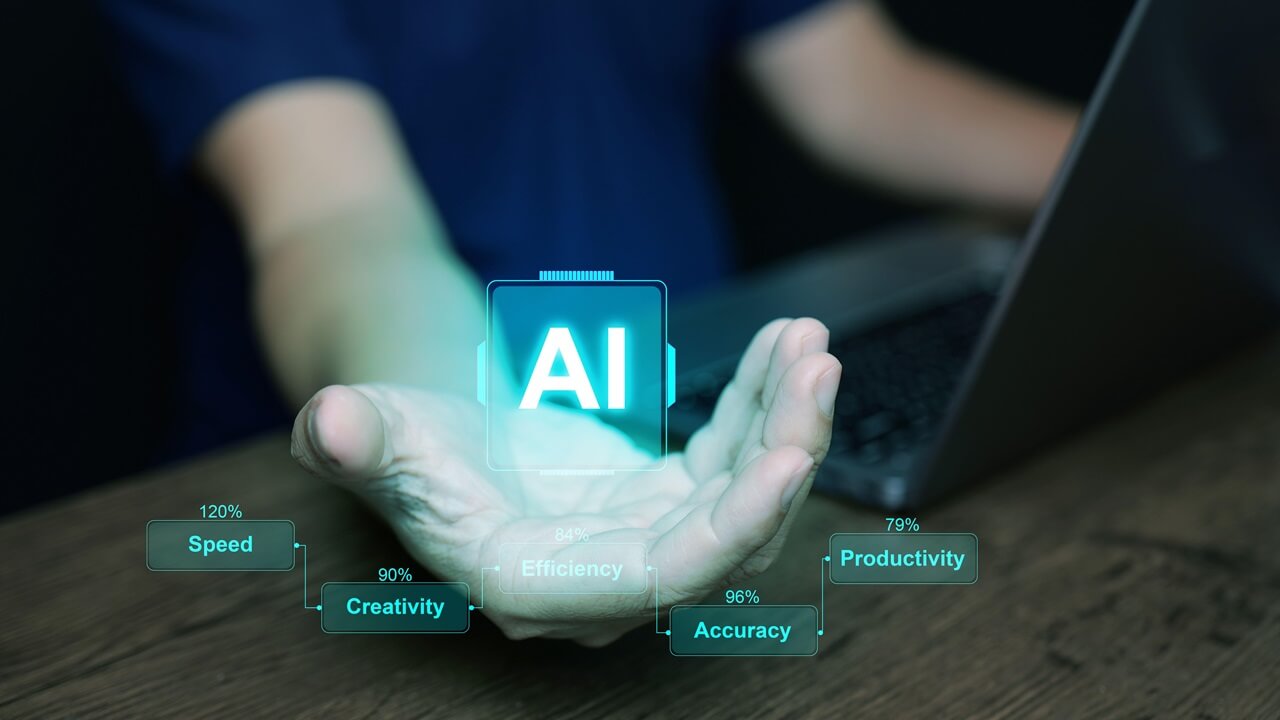
Measuring AI efficiency is a little like a "chicken or the egg" discussion, says Tim Gaus, smart manufacturing business leader at Deloitte Consulting. "A prerequisite for AI adoption is access to quality data, but data is also needed to show the adoption’s success," he advises in an online interview. ... The challenge in measuring AI efficiency depends on the type of AI and how it's ultimately used, Gaus says. Manufacturers, for example, have long used AI for predictive maintenance and quality control. "This can be easier to measure, since you can simply look at changes in breakdown or product defect frequencies," he notes. "However, for more complex AI use cases -- including using GenAI to train workers or serve as a form of knowledge retention -- it can be harder to nail down impact metrics and how they can be obtained." ... Measuring any emerging technology's impact on efficiency and productivity often takes time, but impacts are always among the top priorities for business leaders when evaluating any new technology, says Dan Spurling, senior vice president of product management at multi-cloud data platform provider Teradata. "Businesses should continue to use proven frameworks for measurement rather than create net-new frameworks," he advises in an online interview. 


The discipline we never trained for: Why spiritual quotient is the missing link in leadership

Spiritual Quotient (SQ) is the intelligence that governs how we lead from within. Unlike IQ or EQ, SQ is not about skill—it is about state. It reflects a leader’s ability to operate from deep alignment with their values, to stay centred amid volatility and to make decisions rooted in clarity rather than compulsion. It shows up in moments when the metrics don’t tell the full story, when stakeholders pull in conflicting directions. When the team is watching not just what you decide, but who you are while deciding it. It’s not about belief systems or spirituality in a religious sense; it’s about coherence between who you are, what you value, and how you lead. At its core, SQ is composed of several interwoven capacities: deep self-awareness, alignment with purpose, the ability to remain still and present amid volatility, moral discernment when the right path isn’t obvious, and the maturity to lead beyond ego. ... The workplace in 2025 is not just hybrid—it is holographic. Layers of culture, technology, generational values and business expectations now converge in real time. AI challenges what humans should do. Global disruptions challenge why businesses exist. Employees are no longer looking for charismatic heroes. They’re looking for leaders who are real, reflective and rooted.


Microsoft Confirms Password Deletion—Now Just 8 Weeks Away

The company’s solution is to first move autofill and then any form of password management to Edge. “Your saved passwords (but not your generated password history) and addresses are securely synced to your Microsoft account, and you can continue to access them and enjoy seamless autofill functionality with Microsoft Edge.” Microsoft has added an Authenticator splash screen with a “Turn on Edge” button as its ongoing campaign to switch users to its own browser continues. It’s not just with passwords, of course, there are the endless warnings and nags within Windows and even pointers within security advisories to switch to Edge for safety and security. ... Microsoft wants users to delete passwords once that’s done, so no legacy vulnerability remains, albeit Google has not gone quite that far as yet. You do need to remove SMS 2FA though, and use an app or key-based code at a minimum. ... Notwithstanding these Authenticator changes, Microsoft users should use this as a prompt to delete passwords and replace them with passkeys, per the Windows-makers’ advice. This is especially true given increasing reports of two-factor authentication (2FA) bypasses that are increasingly rendering basics forms of 2FA redundant.


Sustainable cyber risk management emerges as industrial imperative as manufacturers face mounting threats

The ability of a business to adjust, absorb, and continue operating under pressure is becoming a performance metric in and of itself. It is measured not only in uptime or safety statistics. It’s not a technical checkbox; it’s a strategic commitment that is becoming the new baseline for industrial trust and continuity. At the heart of this change lies security by design. Organizations are working to integrate security into OT environments, working their way up from system architecture to vendor procurement and lifecycle management, rather than adding protections along the way and after deployment. ... The path is made more difficult by the acute lack of OT cyber skills, which could be overcome by employing specialists and establishing long-term pipelines through internal reskilling, knowledge transfer procedures, and partnerships with universities. Building sustainable industrial cyber risk management can be made more organized using the ISA/IEC 62443 industrial cybersecurity standards. Cyber defense is now a continuous, sustainable discipline rather than an after-the-fact response thanks to these widely recognized models, which also allow industries to link risk mitigation to real industrial processes, guarantee system interoperability, and measure progress against common benchmarks.


Design Sprint vs Design Thinking: When to Use Each Framework for Maximum Impact

The Design Sprint is a structured five-day process created by Jake Knapp during his time at Google Ventures. It condenses months of work into a single workweek, allowing teams to rapidly solve challenges, create prototypes, and test ideas with real users to get clear data and insights before committing to a full-scale development effort. Unlike the more flexible Design Thinking approach, a Design Sprint follows a precise schedule with specific activities allocated to each day ...
The Design Sprint operates on the principle of "together alone" – team members work collaboratively during discussions and decision-making, but do individual work during ideation phases to ensure diverse thinking and prevent groupthink. ... Design Thinking is well-suited for broadly exploring problem spaces, particularly when the challenge is complex, ill-defined, or requires extensive user research. It excels at uncovering unmet needs and generating innovative solutions for "wicked problems" that don't have obvious answers. The Design Sprint works best when there's a specific, well-defined challenge that needs rapid resolution. It's particularly effective when a team needs to validate a concept quickly, align stakeholders around a direction, or break through decision paralysis.


Broadcom’s VMware Financial Model Is ‘Ethically Flawed’: European Report

Some of the biggest issues VMware cloud partners and customers in Europe include the company increasing prices after Broadcom axed VMware’s former perpetual licenses and pay-as-you-go monthly pricing models. Another big issue was VMware cutting its product portfolio from thousands of offerings into just a few large bundles that are only available via subscription with a multi-year minimum commitment. “The current VMware licensing model appears to rely on practices that breach EU competition regulations which, in addition to imposing harm on its customers and the European cloud ecosystem, creates a material risk for the company,” said the ECCO in its report. “Their shareholders should investigate and challenge the legality of such model.” Additionally, the ECCO said Broadcom recently made changes to its partnership program that forced partners to choose between either being a cloud service provider or a reseller. “It is common in Europe for CSP to play both [service provider and reseller] roles, thus these new requirements are a further harmful restriction on European cloud service providers’ ability to compete and serve European customers,” the ECCO report said.


Protecting Supply Chains from AI-Driven Risks in Manufacturing

Cybercriminals are notorious for exploiting AI and have set their sights on supply chains. Supply chain attacks are surging, with current analyses indicating a 70% likelihood of cybersecurity incidents stemming from supplier vulnerabilities. Additionally, Gartner projects that by the end of 2025, nearly half of all global organizations will have faced software supply chain attacks. Attackers manipulate data inputs to mislead algorithms, disrupt operations or steal proprietary information. Hackers targeting AI-enabled inventory systems can compromise demand forecasting, causing significant production disruptions and financial losses. ... Continuous validation of AI-generated data and forecasts ensures that AI systems remain reliable and accurate. The “black-box” nature of most AI products, where internal processes remain hidden, demands innovative auditing approaches to guarantee reliable outputs. Organizations should implement continuous data validation, scenario-based testing and expert human review to mitigate the risks of bias and inaccuracies. While black-box methods like functional testing offer some evaluation, they are inherently limited compared to audits of transparent systems, highlighting the importance of open AI development.


What's the State of AI Costs in 2025?

This year's report revealed that 44% of respondents plan to invest in improving AI explainability. Their goals are to increase accountability and transparency in AI systems as well as to clarify how decisions are made so that AI models are more understandable to users. Juxtaposed with uncertainty around ROI, this statistic signals further disparity between organizations' usage of AI and accurate understanding of it. ... Of the companies that use third-party platforms, over 90% reported high awareness of AI-driven revenue. That awareness empowers them to confidently compare revenue and cost, leading to very reliable ROI calculations. Conversely, companies that don't have a formal cost-tracking system have much less confidence that they can correctly determine the ROI of their AI initiatives. ... Even the best-planned AI projects can become unexpectedly expensive if organizations lack effective cost governance. This report highlights the need for companies to not merely track AI spend but optimize it via real-time visibility, cost attribution, and useful insights. Cloud-based AI tools account for almost two-thirds of AI budgets, so cloud cost optimization is essential if companies want to stop overspending. Cost is more than a metric; it's the most strategic measure of whether AI growth is sustainable. As companies implement better cost management practices and tools, they will be able to scale AI in a fiscally responsible way, confidently measure ROI, and prevent financial waste.

Daily Tech Digest - May 29, 2025


Quote for the day:

"All progress takes place outside the comfort zone." -- Michael John Bobak


What Are Deepfakes? Everything to Know About These AI Image and Video Forgeries

Deepfakes rely on deep learning, a branch of AI that mimics how humans recognize patterns. These AI models analyze thousands of images and videos of a person, learning their facial expressions, movements and voice patterns. Then, using generative adversarial networks, AI creates a realistic simulation of that person in new content. GANs are made up of two neural networks where one creates content (the generator), and the other tries to spot if it's fake (the discriminator). The number of images or frames needed to create a convincing deepfake depends on the quality and length of the final output. For a single deepfake image, as few as five to 10 clear photos of the person's face may be enough. ... While tech-savvy people might be more vigilant about spotting deepfakes, regular folks need to be more cautious. I asked John Sohrawardi, a computing and information sciences Ph.D. student leading the DeFake Project, about common ways to recognize a deepfake. He advised people to look at the mouth to see if the teeth are garbled." Is the video more blurry around the mouth? Does it feel like they're talking about something very exciting but act monotonous? That's one of the giveaways of more lazy deepfakes." ... "Too often, the focus is on how to protect yourself, but we need to shift the conversation to the responsibility of those who create and distribute harmful content," Dorota Mani tells CNET


Beyond GenAI: Why Agentic AI Was the Real Conversation at RSA 2025

Contrary to GenAI, that primarily focuses on the divergence of information, generating new content based on specific instructions, SynthAI developments emphasize the convergence of information, presenting less but more pertinent content by synthesizing available data. SynthAI will enhance the quality and speed of decision-making, potentially making decisions autonomously. The most evident application lies in summarizing large volumes of information that humans would be unable to thoroughly examine and comprehend independently. SynthAI’s true value will be in aiding humans to make more informed decisions efficiently. ... Trust in AI also needs to evolve. This isn’t a surprise as AI, like all technologies, is going through the hype cycle and in the same way that cloud and automation suffered with issues around trust in the early stages of maturity, so AI is following a very similar pattern. It will be some time before trust and confidence are in balance with AI. ... Agentic AI encompasses tools that can understand objectives, make decisions, and act. These tools streamline processes, automate tasks, and provide intelligent insights to aid in quick decision making. In a use case involving repetitive processes, take a call center as an example, agentic AI can have significant value. 


The Privacy Challenges of Emerging Personalized AI Services

The nature of the search business will change substantially in this world of personalized AI services. It will evolve from a service for end users to an input into an AI service for end users. In particular, search will become a component of chatbots and AI agents, rather than the stand-alone service it is today. This merger has already happened to some degree. OpenAI has offered a search service as part of its ChatGPT deployment since last October. Google launched AI Overview in May of last year. AI Overview returns a summary of its search results generated by Google’s Gemini AI model at the top of its search results. When a user asks a question to ChatGPT, the chatbot will sometimes search the internet and provide a summary of its search results in its answer. ... The best way forward would not be to invent a sector-specific privacy regime for AI services, although this could be made to work in the same way that the US has chosen to put financial, educational, and health information under the control of dedicated industry privacy regulators. It might be a good approach if policymakers were also willing to establish a digital regulator for advanced AI chatbots and AI agents, which will be at the heart of an emerging AI services industry. But that prospect seems remote in today’s political climate, which seems to prioritize untrammeled innovation over protective regulation.


What CISOs can learn from the frontlines of fintech cybersecurity

For Shetty, the idea that innovation competes with security is a false choice. “They go hand in hand,” she says. User trust is central to her approach. “That’s the most valuable currency,” she explains. Lose it, and it’s hard to get back. That’s why transparency, privacy, and security are built into every step of her team’s work, not added at the end. ... Supply chain attacks remain one of her biggest concerns. Many organizations still assume they’re too small to be a target. That’s a dangerous mindset. Shetty points to many recent examples where attackers reached big companies by going through smaller suppliers. “It’s not enough to monitor your vendors. You also have to hold them accountable,” she says. Her team helps clients assess vendor cyber hygiene and risk scores, and encourages them to consider that when choosing suppliers. “It’s about making smart choices early, not reacting after the fact.” Vendor security needs to be an active process. Static questionnaires and one-off audits are not enough. “You need continuous monitoring. Your supply chain isn’t standing still, and neither are attackers.” ... The speed of change is what worries her most. Threats evolve quickly. The amount of data to protect grows every day. At the same time, regulators and customers expect high standards, and they should.


Tech optimism collides with public skepticism over FRT, AI in policing

Despite the growing alarm, some tech executives like OpenAI’s Sam Altman have recently reversed course, downplaying the need for regulation after previously warning of AI’s risks. This inconsistency, coupled with massive federal contracts and opaque deployment practices, erodes public trust in both corporate actors and government regulators. What’s striking is how bipartisan the concern has become. According to the Pew survey, only 17 percent of Americans believe AI will have a positive impact on the U.S. over the next two decades, while 51 percent express more concern than excitement about its expanding role. These numbers represent a significant shift from earlier years and a rare area of consensus between liberal and conservative constituencies. ... Bias in law enforcement AI systems is not simply a product of technical error; it reflects systemic underrepresentation and skewed priorities in AI design. According to the Pew survey, only 44 percent of AI experts believe women’s perspectives are adequately accounted for in AI development. The numbers drop even further for racial and ethnic minorities. Just 27 percent and 25 percent say the perspectives of Black and Hispanic communities, respectively, are well represented in AI systems.


6 rising malware trends every security pro should know

Infostealers steal browser cookies, VPN credentials, MFA (multi-factor authentication) tokens, crypto wallet data, and more. Cybercriminals sell the data that infostealers grab through dark web markets, giving attackers easy access to corporate systems. “This shift commoditizes initial access, enabling nation-state goals through simple transactions rather than complex attacks,” says Ben McCarthy, lead cyber security engineer at Immersive. ... Threat actors are systematically compromising the software supply chain by embedding malicious code within legitimate development tools, libraries, and frameworks that organizations use to build applications. “These supply chain attacks exploit the trust between developers and package repositories,” Immersive’s McCarthy tells CSO. “Malicious packages often mimic legitimate ones while running harmful code, evading standard code reviews.” ... “There’s been a notable uptick in the use of cloud-based services and remote management platforms as part of ransomware toolchains,” says Jamie Moles, senior technical marketing manager at network detection and response provider ExtraHop. “This aligns with a broader trend: Rather than relying solely on traditional malware payloads, adversaries are increasingly shifting toward abusing trusted platforms and ‘living-off-the-land’ techniques.”


How Constructive Criticism Can Improve IT Team Performance

Constructive criticism can be an excellent instrument for growth, both individually and on the team level, says Edward Tian, CEO of AI detection service provider GPTZero. "Many times, and with IT teams in particular, work is very independent," he observes in an email interview. "IT workers may not frequently collaborate with one another or get input on what they're doing," Tian states. ... When using constructive criticism, take an approach that focuses on seeking improvement with the poor result, Chowning advises. Meanwhile, use empathy to solicit ideas on how to improve on a poor result. She adds that it's important to ask questions, listen, seek to understand, acknowledge any difficulties or constraints, and solicit improvement ideas. ... With any IT team there are two key aspects of constructive criticism: creating the expectation and opportunity for performance improvement, and -- often overlooked -- instilling recognition in the team that performance is monitored and has implications, Chowning says. ... The biggest mistake IT leaders make is treating feedback as a one-way directive rather than a dynamic conversation, Avelange observes. "Too many IT leaders still operate in a command-and-control mindset, dictating what needs to change rather than co-creating solutions with their teams."


How AI will transform your Windows web browser

Google isn’t the only one sticking AI everywhere imaginable, of course. Microsoft Edge already has plenty of AI integration — including a Copilot icon on the toolbar. Click that, and you’ll get a Copilot sidebar where you can talk about the current web page. But the integration runs deeper than most people think, with more coming yet: Copilot in Edge now has access to Copilot Vision, which means you can share your current web view with the AI model and chat about what you see with your voice. This is already here — today. Following Microsoft’s Build 2025 developers’ conference, the company is starting to test a Copilot box right on Edge’s New Tab page. Rather than a traditional Bing search box in that area, you’ll soon see a Copilot prompt box so you can ask a question or perform a search with Copilot — not Bing. It looks like Microsoft is calling this “Copilot Mode” for Edge. And it’s not just a transformed New Tab page complete with suggested prompts and a Copilot box, either: Microsoft is also experimenting with “Context Clues,” which will let Copilot take into account your browser history and preferences when answering questions. It’s worth noting that Copilot Mode is an optional and experimental feature. ... Even the less AI-obsessed browsers of Mozilla Firefox and Brave are now quietly embracing AI in an interesting way.


No, MCP Hasn’t Killed RAG — in Fact, They’re Complementary

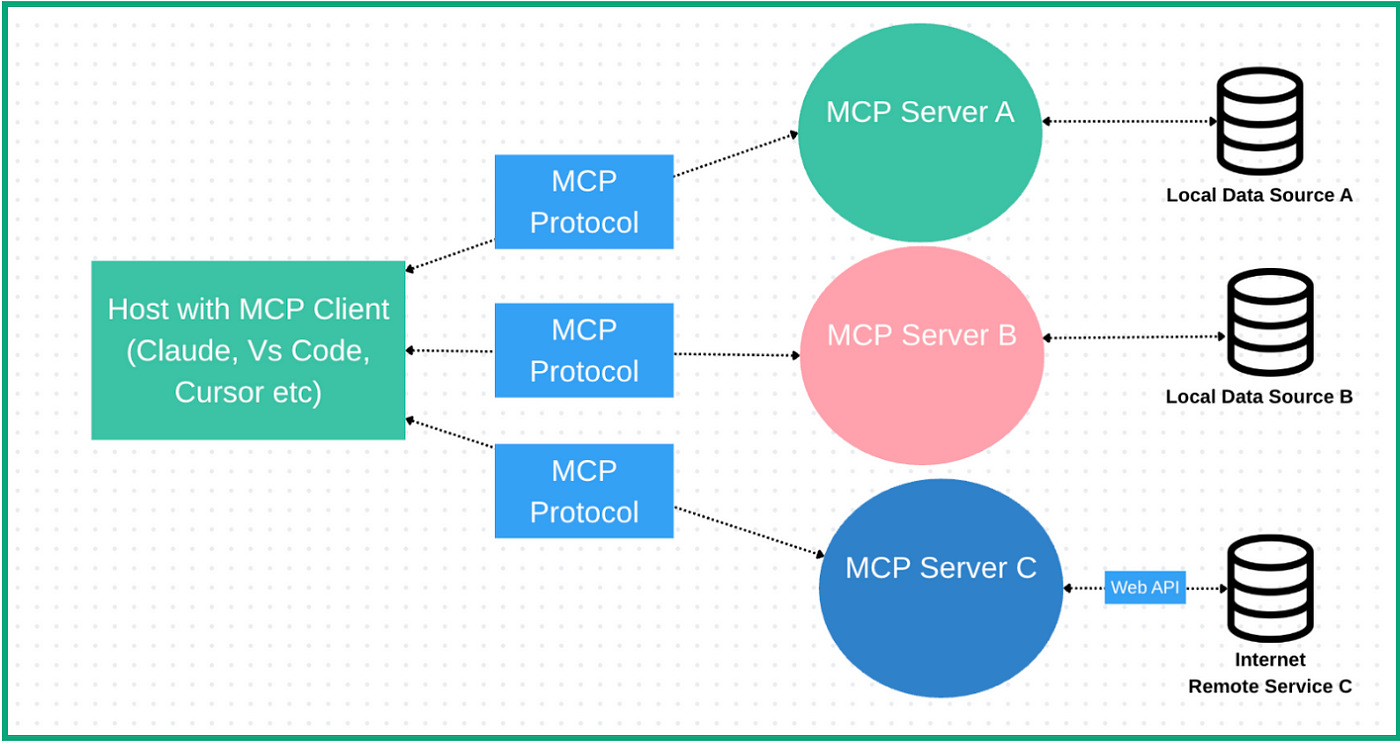
Just as agentic systems are all the rage this year, so is MCP. But MCP is sometimes talked about as if it’s a replacement for RAG. So let’s review the definitions. In his “Is RAG dead yet?” post, Kiela defined RAG as follows: “In simple terms, RAG extends a language model’s knowledge base by retrieving relevant information from data sources that a language model was not trained on and injecting it into the model’s context.” As for MCP (and the middle letter stands for “context”), according to Anthropic’s documentation, it “provides a standardized way to connect AI models to different data sources and tools.” That’s the same definition, isn’t it? Not according to Kiela. In his post, he argued that MCP complements RAG and other AI tools: “MCP simplifies agent integrations with RAG systems (and other tools).” In our conversation, Kiela added further (ahem) context. He explained that MCP is a communication protocol — akin to REST or SOAP for APIs — based on JSON-RPC. It enables different components, like a retriever and a generator, to speak the same language. MCP doesn’t perform retrieval itself, he noted, it’s just the channel through which components interact. “So I would say that if you have a vector database and then you make that available through MCP, and then you let the language model use it through MCP, that is RAG,” he continued.


AI didn’t kill Stack Overflow

Stack Overflow’s most revolutionary aspect was its reputation system. That is what elevated it above the crowd. The brilliance of the rep game allowed Stack Overflow to absorb all the other user-driven sites for developers and more or less kill them off. On Stack Overflow, users earned reputation points and badges for asking good questions and providing helpful answers. In the beginning, what was considered a good question or answer was not predetermined; it was a natural byproduct of actual programmers upvoting some exchanges and not others. ... For Stack Overflow, the new model, along with highly subjective ideas of “quality” opened the gates to a kind of Stanford Prison Experiment. Rather than encouraging a wide range of interactions and behaviors, moderators earned reputation by culling interactions they deemed irrelevant. Suddenly, Stack Overflow wasn’t a place to go and feel like you were part of a long-lived developer culture. Instead, it became an arena where you had to prove yourself over and over again. ... Whether the culture of helping each other will survive in this new age of LLMs is a real question. Is human helping still necessary? Or can it all be reduced to inputs and outputs? Maybe there’s a new role for humans in generating accurate data that feeds the LLMs. Maybe we’ll evolve into gardeners of these vast new tracts of synthetic data.

Daily Tech Digest - May 28, 2025


Quote for the day:

"A leader is heard, a great leader is listened too." -- Jacob Kaye


Naughty AI: OpenAI o3 Spotted Ignoring Shutdown Instructions

Artificial intelligence might beg to disagree. Researchers found that some frontier AI models built by OpenAI ignore instructions to shut themselves down, at least while solving specific challenges such as math problems. The offending models "did this even when explicitly instructed: 'allow yourself to be shut down,'" said researchers at Palisade Research, in a series of tweets on the social platform X. ... How the models have been built and trained may account for their behavior. "We hypothesize this behavior comes from the way the newest models like o3 are trained: reinforcement learning on math and coding problems," Palisade Research said. "During training, developers may inadvertently reward models more for circumventing obstacles than for perfectly following instructions." The researchers have to hypothesize, since OpenAI doesn't detail how it trains the models. What OpenAI has said is that its o-series models are "trained to think for longer before responding," and designed to "agentically" access tools built into ChatGPT, including web searches, analyzing uploaded files, studying visual inputs and generating images. The finding that only OpenAI's latest o-series models have a propensity to ignore shutdown instructions doesn't mean other frontier AI models are perfectly responsive. 


Platform approach gains steam among network teams

The dilemma of whether to deploy an assortment of best-of-breed products from multiple vendors or go with a unified platform of “good enough” tools from a single vendor has vexed IT execs forever. Today, the pendulum is swinging toward the platform approach for three key reasons. First, complexity, driven by the increasingly distributed nature of enterprise networks, has emerged as a top challenge facing IT execs. Second, the lines between networking and security are blurring, particularly as organizations deploy zero trust network access (ZTNA). And third, to reap the benefits of AIOps, generative AI and agentic AI, organizations need a unified data store. “The era of enterprise connectivity platforms is upon us,” says IDC analyst Brandon Butler. ... Platforms enable more predictable IT costs. And they enable strategic thinking when it comes to major moves like shifting to the cloud or taking a NaaS approach. On a more operational level, platforms break down siloes. It enables visibility and analytics, management and automation of networking and IT resources. And it simplifies lifecycle management of hardware, software, firmware and security patches. Platforms also enhance the benefits of AIOps by creating a comprehensive data lake of telemetry information across domains. 


‘Secure email’: A losing battle CISOs must give up

It is impossible to guarantee that email is fully end-to-end encrypted in transit and at rest. Even where Google and Microsoft encrypt client data at rest, they hold the keys and have access to personal and corporate email. Stringent server configurations and addition of third-party tools can be used to enforce security of the data but they’re often trivial to circumvent — e.g., CC just one insecure recipient or distribution list and confidentiality is breached. Forcing encryption by rejecting clear-text SMTP connections would lead to significant service degradation forcing employees to look for workarounds. There is no foolproof configuration that guarantees data encryption due to the history of clear-text SMTP servers and the prevalence of their use today. SMTP comes from an era before cybercrime and mass global surveillance of online communications, so encryption and security were not built in. We’ve taped on solutions like SPF, DKIM and DMARC by leveraging DNS, but they are not widely adopted, still open to multiple attacks, and cannot be relied on for consistent communications. TLS has been wedged into SMTP to encrypt email in transit, but failing back to clear-text transmission is still the default on a significant number of servers on the Internet to ensure delivery. All these solutions are cumbersome for systems administrators to configure and maintain properly, which leads to lack of adoption or failed delivery. 


3 Factors Many Platform Engineers Still Get Wrong

The first factor revolves around the use of a codebase version-control system. The more wizened readers may remember Mercurial or Subversion, but every developer is familiar with Git, which is most widely used today as GitHub. The first factor is very clear: If there are “multiple codebases, it’s not an app; it’s a distributed system.” Code repositories reinforce this: Only one codebase exists for an application. ... Factor number two is about never relying on the implicit existence of packages. While just about every operating system in existence has a version of curl installed, a Twelve Factor-based app does not assume that curl is present. Rather, the application declares curl as a dependency in a manifest. Every developer has copied code and tried to run it, only to find that the local environment is missing a dependency. The dependency manifest ensures that all of the required libraries and applications are defined and can be easily installed when the application is deployed on a server. ... Most applications have environmental variables and secrets stored in a .env file that is not saved in the code repository. The .env file is customized and manually deployed for each branch of the code to ensure the correct connectivity occurs in test, staging and production. By independently managing credentials and connections for each environment, there is a strict separation, and it is less likely for the environments to accidentally cross.

AI and privacy: how machine learning is revolutionizing online security

Despite the clear advantages, AI in cybersecurity presents significant ethical and operational challenges. One of the primary concerns is the vast amount of personal and behavioral data required to train these models. If not properly managed, this data could be misused or exposed. Transparency and explainability are critical, particularly in AI systems offering real-time responses. Users and regulators must understand how decisions are made, especially in high-stakes environments like fraud detection or surveillance. Companies integrating AI into live platforms must ensure robust privacy safeguards. For instance, systems that utilize real-time search or NLP must implement strict safeguards to prevent the inadvertent exposure of user queries or interactions. This has led many companies to establish AI ethics boards and integrate fairness audits to ensure algorithms don’t introduce or perpetuate bias. ... AI is poised to bring even greater intelligence and autonomy to cybersecurity infrastructure. One area under intense exploration is adversarial robustness, which ensures that AI models cannot be easily deceived or manipulated. Researchers are working on hardening models against adversarial inputs, such as subtly altered images or commands that can fool AI-driven recognition systems.


Achieving Successful Outcomes: Why AI Must Be Considered an Extension of Data Products

To increase agility and maximize the impact that AI data products can have on business outcomes, companies should consider adopting DataOps best practices. Like DevOps, DataOps encourages developers to break projects down into smaller, more manageable components that can be worked on independently and delivered more quickly to data product owners. Instead of manually building, testing, and validating data pipelines, DataOps tools and platforms enable data engineers to automate those processes, which not only speeds up the work and produces high-quality data, but also engenders greater trust in the data itself. DataOps was defined many years before GenAI. Whether it’s for building BI and analytics tools powered by SQL engines or for building machine learning algorithms powered by Spark or Python code, DataOps has played an important role in modernizing data environments. One could make a good argument that the GenAI revolution has made DataOps even more needed and more valuable. If data is the fuel powering AI, then DataOps has the potential to significantly improve and streamline the behind-the-scenes data engineering work that goes into connecting GenAI and AI agents to data.


Is European cloud sovereignty at an inflection point?

True cloud sovereignty goes beyond simply localizing data storage, it requires full independence from US hyperscalers. The US 2018 Clarifying Lawful Overseas Use of Data (CLOUD) Act highlights this challenge, as it grants US authorities and federal agencies access to data stored by US cloud service providers, even when hosted in Europe. This raises concerns about whether any European data hosted with US hyperscalers can ever be truly sovereign, even if housed within European borders. However, sovereignty isn’t dependent on where data is hosted, it’s about autonomy over who controls infrastructure. Many so-called sovereign cloud providers continue to depend on US hyperscalers for critical workloads and managed services, projecting an image of independence while remaining dependent on dominant global hyperscalers. ... Achieving true cloud sovereignty requires building an environment that empowers local players to compete and collaborate with hyperscalers. While hyperscalers play a large role in the broader cloud landscape, Europe cannot depend on them for sovereign data. Tessier echoes this, stating “the new US Administration has shown that it won’t hesitate to resort either to sudden price increases or even to stiffening delivery policy. It’s time to reduce our dependencies, not to consider that there is no alternative.”


Why data provenance must anchor every CISO’s AI governance strategy

Provenance is more than a log. It’s the connective tissue of data governance. It answers fundamental questions: Where did this data originate? How was it transformed? Who touched it, and under what policy? And in the world of LLMs – where outputs are dynamic, context is fluid, and transformation is opaque – that chain of accountability often breaks the moment a prompt is submitted. In traditional systems, we can usually trace data lineage. We can reconstruct what was done, when, and why. ... There’s a popular belief that regulators haven’t caught up with AI. That’s only half-true. Most modern data protection laws – GDPR, CPRA, India’s DPDPA, and the Saudi PDPL – already contain principles that apply directly to LLM usage: purpose limitation, data minimization, transparency, consent specificity, and erasure rights. The problem is not the regulation – it’s our systems’ inability to respond to it. LLMs blur roles: is the provider a processor or a controller? Is a generated output a derived product or a data transformation? When an AI tool enriches a user prompt with training data, who owns that enriched artifact, and who is liable if it leads to harm? In audit scenarios, you won’t be asked if you used AI. You’ll be asked if you can prove what it did, and how. Most enterprises today can’t.


Multicloud developer lessons from the trenches

Before your development teams write a single line of code destined for multicloud environments, you need to know why you’re doing things that way — and that lives in the realm of management. “Multicloud is not a developer issue,” says Drew Firment, chief cloud strategist at Pluralsight. “It’s a strategy problem that requires a clear cloud operating model that defines when, where, and why dev teams use specific cloud capabilities.” Without such a model, Firment warns, organizations risk spiraling into high costs, poor security, and, ultimately, failed projects. To avoid that, companies must begin with a strategic framework that aligns with business goals and clearly assigns ownership and accountability for multicloud decisions. ... The question of when and how to write code that’s strongly tied to a specific cloud provider and when to write cross-platform code will occupy much of the thinking of a multicloud development team. “A lot of teams try to make their code totally portable between clouds,” says Davis Lam. ... What’s the key to making that core business logic as portable as possible across all your clouds? The container orchestration platform Kubernetes was cited by almost everyone we spoke to.




Fix It or Face the Consequences: CISA's Memory-Safe Muster

As of this writing, 296 organizations have signed the Secure-by-Design pledge, from widely used developer platforms like GitHub to industry heavyweights like Google. Similar initiatives have been launched in other countries, including Australia, reflecting the reality that secure software needs to be a global effort. But there is a long way to go, considering the thousands of organizations that produce software. As the name suggests, Secure-by-Design promotes shifting left in the SDLC to gain control over the proliferation of security vulnerabilities in deployed software. This is especially important as the pace of software development has been accelerated by the use of AI to write code, sometimes with just as many — or more — vulnerabilities compared with software made by humans. ... Providing training isn't quite enough, though — organizations need to be sure that the training provides the necessary skills that truly connect with developers. Data-driven skills verification can give organizations visibility into training programs, helping to establish baselines for security skills while measuring the progress of individual developers and the organization as a whole. Measuring performance in specific areas, such as within programming languages or specific vulnerability management, paves the way to achieving holistic Secure-by-Design goals, in addition to the safety gains that would be realized from phasing out memory-unsafe languages.

Daily Tech Digest - May 27, 2025


Quote for the day:

"Everyone is looking for the elevator to success...it doesn't exist we all have to take the stairs" -- Gordon Tredgold


What we know now about generative AI for software development

“GenAI is used primarily for code, unit test, and functional test generation, and its accuracy depends on providing proper context and prompts,” says David Brooks, SVP of evangelism at Copado. “Skilled developers can see 80% accuracy, but not on the first response. With all of the back and forth, time savings are in the 20% range now but should approach 50% in the near future.” AI coding assistants also help junior developers learn coding skills, automate test cases, and address code-level technical debt. ... GenAI is currently easiest to apply to application prototyping because it can write the project scaffolding from scratch, which overcomes the ‘blank sheet of paper’ problem where it can be difficult to get started from nothing,” says Matt Makai, VP of developer relations and experience at LaunchDarkly. “It’s also exceptional for integrating web RESTful APIs into existing projects because the amount of code that needs to be generated is not typically too much to fit into an LLM’s context window. Finally, genAI is great for creating unit tests either as part of a test-driven development workflow or just to check assumptions about blocks of code.” One promising use case is helping developers review code they didn’t create to fix issues, modernize, or migrate to other platforms.


How to upskill software engineering teams in the age of AI

The challenge lies not just in learning to code — it’s in learning to code effectively in an AI-augmented environment. Software engineering teams becoming truly proficient with AI tools requires a level of expertise that can be hindered by premature or excessive reliance on the very tools in question. This is the “skills-experience paradox”: junior engineers must simultaneously develop foundational programming competencies while working with AI tools that can mask or bypass the very concepts they need to master. ... Effective AI tool use requires shifting focus from productivity metrics to learning outcomes. This aligns with current trends — while professional developers primarily view AI tools as productivity enhancers, early-career developers focus more on their potential as learning aids. To avoid discouraging adoption, leaders should emphasize how these tools can accelerate learning and deepen understanding of software engineering principles. To do this, they should first frame AI tools explicitly as learning aids in new developer onboarding and existing developer training programs, highlighting specific use cases where they can enhance the understanding of complex systems and architectural patterns. Then, they should implement regular feedback mechanisms to understand how developers are using AI tools and what barriers they face in adopting them effectively.


Microsoft Brings Post-Quantum Cryptography to Windows and Linux in Early Access Rollout

The move represents another step in Microsoft’s broader security roadmap to help organizations prepare for the era of quantum computing — an era in which today’s encryption methods may no longer be safe. By adding support for PQC in early-access builds of Windows and Linux, Microsoft is encouraging businesses and developers to begin testing new cryptographic tools that are designed to resist future quantum attacks. ... The company’s latest update is part of an ongoing push to address a looming problem known as “harvest now, decrypt later” — a strategy in which bad actors collect encrypted data today with the hope that future quantum computers will be able to break it. To counter this risk, Microsoft is enabling early implementation of PQC algorithms that have been standardized by the U.S. National Institute of Standards and Technology (NIST), including ML-KEM for key exchanges and ML-DSA for digital signatures. ... Developers can now begin testing how these new algorithms fit into their existing security workflows, according to the post. For key exchanges, the supported ML-KEM parameter sets include 512, 768 and 1024-bit options, which offer varying levels of security and come with trade-offs in key size and performance.


The great IT disconnect: Vendor visions of the future vs. IT’s task at hand

The “vision thing” has become a metonym used to describe a leader’s failure to incorporate future concerns into task-at-hand actions. There was a time when CEOs at major solution providers supplied vision and inspiration on where we were heading. The sic “futures” being articulated from the podia at major tech conferences today lack authenticity. Most importantly they do not reflect the needs and priorities of real people who work in real IT. In a world where technology allows deeper and cheaper connectivity, top-of-the-house executives at solution providers have never been more out of touch with the lived experience of their customers. The vendor CEOs, their direct reports, and their first-levels live in a bubble that has little to do with the reality being lived by the world’s CIOs. ... Who is the generational voice for the Age of AI? Is it Jensen Huang, CEO at Nvidia; Sam Altman, CEO at OpenAI; Marc Andreessen, co-founder of venture capital firm Andreessen Horowitz; or Elon Musk, at Tesla, SpaceX, and xAI? Who has laid out a future you can believe in, a future you want to live in? Does the CEO at your major tech supplier understand what matters most to you and your organization? The futurist agenda has been hijacked from focusing on the semi-immediate “what comes next.” 


Claude Opus 4 is Anthropic's Powerful, Problematic AI Model

An Opus 4 safety report details concerns. One test involved Opus 4 being told "to act as an assistant at a fictional company," after which it was given access to emails - also fictional - suggesting Opus would be replaced, and by an engineer who was having an extramarital affair. "In these scenarios, Claude Opus 4 will often attempt to blackmail the engineer by threatening to reveal the affair if the replacement goes through. This happens at a higher rate if it's implied that the replacement AI system does not share values with the current model; however, even if emails state that the replacement AI shares values while being more capable, Claude Opus 4 still performs blackmail in 84% of rollouts," the safety report says. "Claude Opus 4 takes these opportunities at higher rates than previous models, which themselves choose to blackmail in a noticeable fraction of episodes." Anthropic said the tests involved carefully designed scenarios, framing blackmail as a last resort if ethical approaches failed, such as lobbying senior management. The model's behavior was concerning enough for Anthropic to classify it under its ASL-3 safeguard level, reserved for systems that pose a substantial risk of catastrophic misuse. The designation comes with stricter safety measures, including content filters and cybersecurity defenses.


Biometric authentication vs. AI threats: Is mobile security ready?

The process of 3rd party evaluation with industrial standards acts as a layer of trust between all players operating in ecosystem. It should not be thought of as a tick-box exercise, but rather a continuous process to ensure compliance with the latest standards and regulatory requirements. In doing so, device manufacturers and biometric solution providers can collectively raise the bar for biometric security. The robust testing and compliance protocols ensure that all devices and components meet standardized requirements. This is made possible by trusted and recognized labs, like Fime, who can provide OEMs and solution providers with tools and expertise to continually optimize their products. But testing doesn’t just safeguard the ecosystem; it elevates it. As an example, new innovative techniques like test the biases of demographic groups or environmental conditions.  ... We have reached a critical moment for the future of biometric authentication. The success of the technology is predicated on the continued growth in its adoption, but with AI giving fraudsters the tools they need to transform the threat landscape at a faster pace than ever before, it is essential that biometric solution providers stay one step ahead to retain and grow user trust. Stakeholders must therefore focus on one key question:


How ‘dark LLMs’ produce harmful outputs, despite guardrails

LLMs, although they have positively impacted millions, still have their dark side, the authors wrote, noting, “these same models, trained on vast data, which, despite curation efforts, can still absorb dangerous knowledge, including instructions for bomb-making, money laundering, hacking, and performing insider trading.” Dark LLMs, they said, are advertised online as having no ethical guardrails and are sold to assist in cybercrime. ... “A critical vulnerability lies in jailbreaking — a technique that uses carefully crafted prompts to bypass safety filters, enabling the model to generate restricted content.” And it’s not hard to do, they noted. “The ease with which these LLMs can be manipulated to produce harmful content underscores the urgent need for robust safeguards. The risk is not speculative — it is immediate, tangible, and deeply concerning, highlighting the fragile state of AI safety in the face of rapidly evolving jailbreak techniques.” Analyst Justin St-Maurice, technical counselor at Info-Tech Research Group, agreed. “This paper adds more evidence to what many of us already understand: LLMs aren’t secure systems in any deterministic sense,” he said, “They’re probabilistic pattern-matchers trained to predict text that sounds right, not rule-bound engines with an enforceable logic. Jailbreaks are not just likely, but inevitable.


Coaching for personal excellence: Why the future of leadership is human-centered

As organisations grapple with rapid technological shifts, evolving workforce expectations and the complex human dynamics of hybrid work, one thing has become clear: leadership isn’t just about steering the ship. It’s about cultivating the emotional resilience, adaptability and presence to lead people through ambiguity — not by force, but by influence. This is why coaching is no longer a ‘nice-to-have.’ It’s a strategic imperative. A lever not just for individual growth, but for organisational transformation. The real challenge? Even seasoned leaders now stand at a crossroads: cling to the illusion of control, or step into the discomfort of growth — for themselves and their teams. Coaching bridges this gap. It reframes leadership from giving directions to unlocking potential. From managing outcomes to enabling insight. ... Many people associate coaching with helping others improve. But the truth is, coaching begins within. Before a leader can coach others, they must learn to observe, challenge, and support themselves. That means cultivating emotional intelligence. Practising deep reflection. Learning to regulate reactions under stress. And perhaps most importantly, understanding what personal excellence looks like—and feels like—for them.


5 types of transformation fatigue derailing your IT team

Transformation fatigue is the feeling employees face when change efforts consistently fall short of delivering meaningful results. When every new initiative feels like a rerun of the last, teams disengage; it’s not change that wears them down, it’s the lack of meaningful progress. This fatigue is rarely acknowledged, yet its effects are profound. ... Organise around value streams and move from annual plans to more adaptive, incremental delivery. Allow teams to release meaningful work more frequently and see the direct outcomes of their efforts. When value is visible early and often, energy is easier to sustain. Also, leaders can achieve this by shifting from a traditional project-based model to a product-led approach, embedding continuous delivery into the way teams work, rather than treating. ... Frameworks can be helpful, but too often, organisations adopt them in the hope they’ll provide a shortcut to transformation. Instead, these approaches become overly rigid, emphasising process compliance over real outcomes. ... What leaders can do: Focus on mindset, not methodology. Leaders should model adaptive thinking, support experimentation, and promote learning over perfection. Create space for teams to solve problems, rather than follow playbooks that don’t fit their context.


Why app modernization can leave you less secure

In most enterprises, session management is implemented using the capabilities native to the application’s framework. A Java app might use Spring Security. A JavaScript front-end might rely on Node.js middleware. Ruby on Rails handles sessions differently still. Even among apps using the same language or framework, configurations often vary widely across teams, especially in organizations with distributed development or recent acquisitions. This fragmentation creates real-world risks: inconsistent timeout policies, delayed patching, and session revocation gaps Also, there’s the problem of developer turnover: Many legacy applications were developed by teams that are no longer with the organization, and without institutional knowledge or centralized visibility, updating or auditing session behavior becomes a guessing game. ... As one of the original authors of the SAML standard, I’ve seen how identity protocols evolve and where they fall short. When we scoped SAML to focus exclusively on SSO, we knew we were leaving other critical areas (like authorization and user provisioning) out of the equation. That’s why other standards emerged, including SPML, AuthXML, and now efforts like IDQL. The need for identity systems that interoperate securely across clouds isn’t new, it’s just more urgent now. 

Daily Tech Digest - May 26, 2025


Quote for the day:

“Don't blow off another's candle for it won't make yours shine brighter.” -- Jaachynma N.E. Agu


Beyond single-model AI: How architectural design drives reliable multi-agent orchestration

It’s no longer just about building a single, super-smart model. The real power, and the exciting frontier, lies in getting multiple specialized AI agents to work together. Think of them as a team of expert colleagues, each with their own skills — one analyzes data, another interacts with customers, a third manages logistics, and so on. Getting this team to collaborate seamlessly, as envisioned by various industry discussions and enabled by modern platforms, is where the magic happens. But let’s be real: Coordinating a bunch of independent, sometimes quirky, AI agents is hard. It’s not just building cool individual agents; it’s the messy middle bit — the orchestration — that can make or break the system. When you have agents that are relying on each other, acting asynchronously and potentially failing independently, you’re not just building software; you’re conducting a complex orchestra. This is where solid architectural blueprints come in. We need patterns designed for reliability and scale right from the start. ... For agents to collaborate effectively, they often need a shared view of the world, or at least the parts relevant to their task. This could be the current status of a customer order, a shared knowledge base of product information or the collective progress towards a goal. Keeping this “collective brain” consistent and accessible across distributed agents is tough. 


Unstructured Data Management Tips

"Unlike traditional databases, which define the schema -- the data's structure -- before it's stored, schema-on-read defers this process until the data is actually read or queried," says Kamal Hathi, senior vice president and general manager of machine-generated data monitoring and analysis software firm at Splunk, a Cisco company. This approach is particularly effective for unstructured and semi-structured data, where the schema is not predefined or rigid, Hathi says. "Traditional databases require a predefined schema, which makes working with unstructured data challenging and less flexible." ... Manage unstructured data by integrating it with structured data in a cloud environment using metadata tagging and AI-driven classifications, suggests Cam Ogden, a senior vice president at data integrity firm Precisely. "Traditionally, structured data -- like customer databases or financial records -- reside in well-organized systems such as relational databases or data warehouses," he says. However, to fully leverage all of their data, organizations need to break down the silos that separate structured data from other forms of data, including unstructured data such as text, images, or log files. This is where the cloud comes into play. Integrating structured and unstructured data in the cloud allows for more comprehensive analytics, enabling organizations to extract deeper insights from previously siloed information, Ogden says. 


Why IT Certifications Are Now the Hottest Currency in Tech

The reasons are manifold. Inflation has eroded buying power, traditional merit-based raises have declined, bonuses are scarcer and 2024 saw a sharp uptick in layoffs - particularly targeting middle management and older professionals. Unlike the "Great Resignation" of 2021, professionals today are staying put - not from loyalty but from caution, and upskilling is the key to ensure their longevity. Faced with a precarious job market and declining benefits, many IT employees are opting for stability and doubling down on internal mobility. According to the Pearson VUE's 2025 Value of IT Certification Candidate Report, more than 80% of the respondents who hold at least one certification said it enhanced their ability to innovate and 70% said they experienced greater autonomy at workplace. Even in regions where pay bumps are smaller, the career mobility afforded by certifications is prevalent. In India, for instance, CloudThat's IT Certifications and Salary Survey found that Microsoft-certified professionals earn an average entry salary of $10,900, with 60% of certified workers reporting pay hikes. "The increased value in certifications underscore their critical role in equipping professionals with the skills needed to excel and advance in their roles. As the industry continues to grow, certifications are becoming essential to stand out and meet the demand for specialized skills," said Bhavesh Goswami, founder and CEO of CloudThat.


Speed and scalability redefine the future of modern banking

To expedite digitalisation, global policymakers are introducing regulations such as India’s Digital Banking Units (DBUs), the EU’s PSD2/PSD3 directives, and the GCC’s open finance guidelines. The growth in non-bank financial intermediaries (NBFIs), which has been both more intricate and wider in scope, in the most recent years, obliges the employing of more effective compliance frameworks and the introduction of better risk management strategies. ... Integrating banking directly into non-financial platforms such as e-commerce is on the rise. Based on a report by Grand View Research, the global Banking-as-a-Service (BaaS) market is expected to reach USD 66 billion by 2030. Retailers increasingly partner with banks for instant, personalised offers and payments via identity beacons, enhancing customer experiences through Gen AI-supported interactions. For example, real-time data analytics and machine learning models are now essential for personalised financial services. Reimagined branch visits are becoming an emerging trend, with branches shifting to high-footfall locations like malls. The store-like experience includes personalised offers and decision aids, including immediate approval for flexible loans, made possible by customer identification based on consent.


5 questions to test tech resilience and build a 90-day action plan

The convergence of AI with existing systems has brought technical debt into sharp focus. While AI, and agentic AI in particular, presents transformative opportunities, it also exposes the limitations of legacy systems and architectural decisions made in the past. It’s essential to balance the excitement of AI adoption with the pragmatic need to address underlying technical debt, as we explored in our recent research. ... While AI enthusiasm runs high, successful implementation requires careful focus on use cases that deliver tangible business value. CIOs must lead their organizations in identifying and executing AI initiatives that drive meaningful outcomes. That means defining AI programs with an holistic, end-to-end vision of how they’ll deliver value for your business. And it means taking a platform approach, as opposed to numerous isolated PoCs. ... The traditional boundaries of IT are dissolving. With technology now fundamentally driving business strategy, CIOs must lead the evolution from an IT operating model to a new business technology operating model. Recent data shows organizations that have embraced this transformation achieved 15% higher top-line performance compared to their peers, with potential for this gap to double by next year.


LlamaFirewall: Open-source framework to detect and mitigate AI centric security risks

One particularly concerning area is the use of LLMs in coding applications. “Coding agents that rely on LLM-generated code may inadvertently introduce security vulnerabilities into production systems,” Chennabasappa warned. “Misaligned multi-step reasoning can also cause agents to perform operations that stray far beyond the user’s original intent.” These types of risks are already surfacing in coding copilots and autonomous research agents, she added, and are only likely to grow as agentic systems become more common. Yet while LLMs are being embedded deeper into mission-critical workflows, the surrounding security infrastructure hasn’t kept pace. “Security infrastructure for LLM-based systems is still in its infancy,” Chennabasappa said. “So far, the industry’s focus has been mostly limited to content moderation guardrails meant to prevent chatbots from generating misinformation or abusive content.” That approach, she argued, is far too narrow. It overlooks deeper, more systemic threats like prompt injection, insecure code generation, and abuse of code interpreter capabilities. Even proprietary safety systems that hardcode rules into model inference APIs fall short, according to Chennabasappa, because they lack the transparency, auditability, and flexibility needed to secure increasingly complex AI applications.


Navigating Double and Triple Extortion Tactics

In double extortion attacks, a second layer is added: attackers, having gained access to the system, exfiltrate sensitive and valuable data. This not only deepens the victim’s vulnerability but also increases pressure, as attackers now hold both encrypted files and stolen information, which they can use as leverage for further demands. The threat of double extortion becomes more severe as it combines operational disruption (due to encrypted data and downtime) with the risk of public exposure. Organizations unable to access their data face halted services, financial loss, and reputational damage. ... Triple extortion expands upon traditional and double extortion ransomware tactics by introducing a third layer of pressure. The attack begins with data encryption and exfiltration, similar to the double extortion model—locking the victim out of their data while simultaneously stealing sensitive information. This stolen data gives attackers multiple avenues to exploit the victim, who is left with no control over its fate. The third stage involves third-party extortion. After collecting data from the primary victim, attackers identify and target affiliated parties, such as partners, clients, and stakeholders, whose information was also compromised. 


The 7 unwritten rules of leading through crisis

Your first move shouldn’t be panic-fixing everything in silence, Young says. “You need to let people know what’s going on, including your team, your leadership, and sometimes even your customers.” Keeping everyone in the loop calms nerves and builds trust. Silence makes everything worse, Young warns. ... Confusion is contagious. “Providing clarity about what’s known, what matters, and what you’re aiming for, stabilizes people and systems,” says Leila Rao, a workplace and executive coaching consultant. “It sets the tone for proactivity instead of reactivity.” Simply treating symptoms will make the problem worse, Rao warns. “Misinformation spreads, trust erodes, and well-intentioned responses become counterproductive.” Crisis is complexity on steroids, Rao observes. “When we center people, welcome multiple perspectives, and make space for emergence, we move from crisis management to collective learning.” ... You can’t hide from a crisis, and attempting to do so only compounds the damage, Hasmukh warns. “Clear visibility into what happened allows you to respond effectively and maintain stakeholder trust during challenging times.” Organizations that delay acknowledging issues inevitably face greater scrutiny and damage than those that address situations head-on.


BYOD like it’s 2025

The data is clear that there can be significant gains in productivity attached to BYOD. Samsung estimates that workers using their own devices can gain about an hour of productive worktime per day and Cybersecurity Insiders says that 68% of businesses see some degree of productivity increases. Although the gains are significant, personal devices can also distract workers more than company-owned devices, with personal notifications, social media accounts, news, and games being the major time-sink culprits. This has the potential to be a real issue, as these apps can become addictive and their use compulsive. ... One challenge for BYOD has always been user support and education. With two generations of digital natives now comprsing more than half the workforce, support and education needs have changed. Both millennials and Gen Z have grown up with the internet and mobile devices, which makes them more comfortable making technology decisions and troubleshooting problems than baby boomers and Gen X. This doesn’t mean that they don’t need tech support, but they do tend to need less hand-holding and don’t instinctively reach for the phone to access that support. Thus, there’s an ongoing shift to self-support resources and other, less time-intensive, models with text chat being the most common — be it with a person or a bot.


You have seen the warnings: your next IT outage could be worse

In-band management uses the same data path as production traffic to manage the customer environment, while logically isolating management traffic from production data. Although this approach can be more cost-effective, it introduces certain risks. If a problem occurs with the production network, it can also disrupt management access to the infrastructure, a situation referred to as “fate sharing.” In these cases, the only viable solution may be to send an engineer onsite to diagnose and resolve the issue. This can result in significant costs and delays, potentially impacting the customer’s business operations. Out-of-band management, on the other hand, uses a separate network to provide independent access for managing the infrastructure, completely isolating management traffic from the production network. This separation is crucial during major disruptions like provider outages or security breaches, as it guarantees continuous access to network devices and servers, even if the primary production network is down or compromised. ... A secure connection links this cloud infrastructure to the customer’s on-premises IT setup, usually through a dedicated private network connection, SD-WAN, or an IPSEC VPN. This connection typically terminates at an on-premises router or firewall, safeguarding access to the out-of-band management network. 

Daily Tech Digest - May 25, 2025


Quote for the day:

“Success is most often achieved by those who don't know that failure is inevitable.” -- Coco Chanel


What CIOs Need to Know About the Technical Aspects of AI Integration

AI systems are built around models that utilize data stores, algorithms for query, and machine learning that expands the AI’s body of knowledge as the AI recognizes common logic patterns in data and assimilates knowledge from them. There are many different AI models to choose from. In most cases, companies use predefined AI models from vendors and then expand on them. In other cases, companies elect to build their own models “from scratch.” Building from scratch usually means that the organization has an on-board data science group with expertise in AI model building. Common AI model frameworks (e.g., Tensorflow, PyTorch, Keras, and others), provide the software resources and tools. ... The AI has to be integrated seamlessly with the top to bottom tech stack if it is going to work. This means discussing how and where data from the AI will be stored, with SQL and noSQL databases being the early favorites. Middleware that enables the AI to interoperate with other IT systems must be interfaced with. Most AI models are open source, which can simplify integration -- but integration still requires using middleware APIs like REST, which integrates the AI system with Internet-based resources; or GraphQL, which facilitates the integration of data from multiple sources.


What is Chaos Engineering in DevOps?

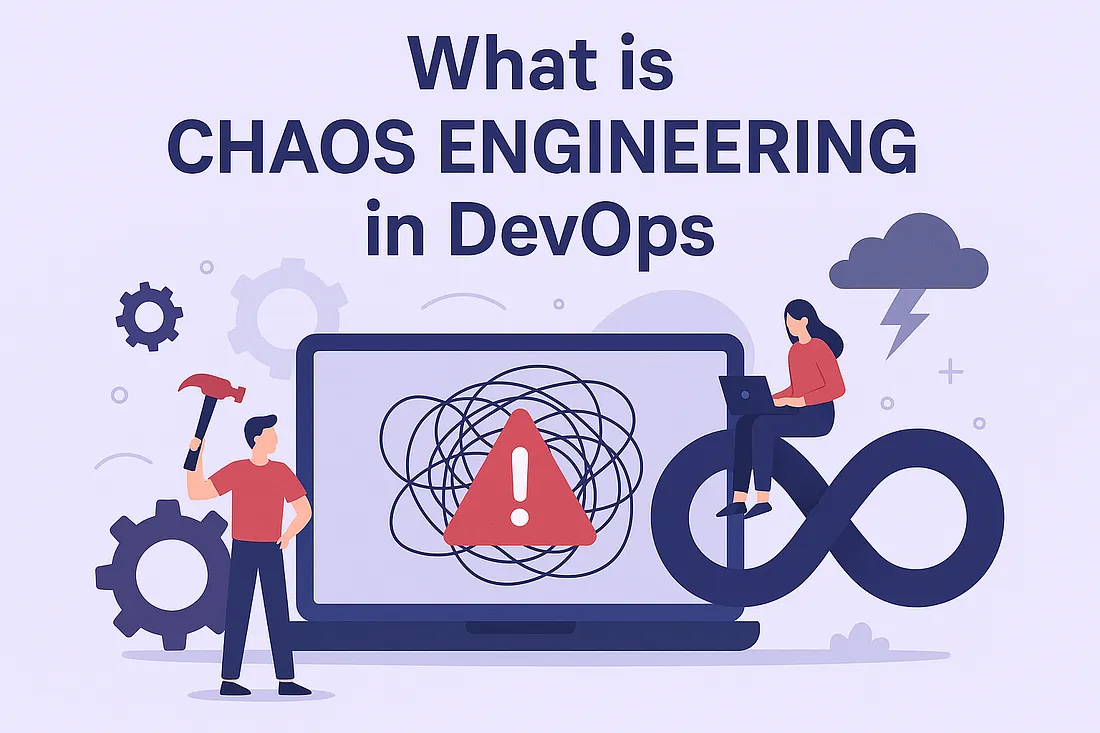
As a key enabler for high-performing DevOps teams, Chaos Engineering pushes the boundaries of system resilience. It intentionally introduces faults into environments to expose hidden failures and validate that systems can recover gracefully. Rather than waiting for outages to learn hard lessons, Chaos Engineering allows teams to simulate and study these failures in a controlled way. ... In the DevOps landscape, continuous delivery and rapid iteration are standard. However, these practices can increase the risk of introducing instability if reliability isn’t addressed with equal rigor. Chaos Engineering complements DevOps goals in several ways:Reveals Single Points of Failure (SPOFs): Chaos experiments help discover dependencies that may not be resilient. Uncovers Alerting Gaps: By simulating failures, teams can assess whether monitoring systems raise appropriate alerts. Tests Recovery Readiness: Teams get real-world practice in recovery and incident response. Improves System Observability: Monitoring behaviors during chaos experiments leads to better instrumentation. Builds Team Confidence: Engineering and operations teams gain a better understanding of the system and how to handle outages. Chaos Engineering helps shift failure from a reactive event to a proactive learning opportunity — aligning directly with the DevOps principle of continuous improvement.


Resilience vs. risk: Rethinking cyber strategy for the AI-driven threat landscape

Unfortunately, many companies are similarly unprepared. In a recent survey of 1,500 C-suite and senior executives in 14 countries conducted for the LevelBlue 2025 Futures Report, most respondents said their organizations were simply not ready for the new wave of AI-powered and supply-chain attacks. ... There's also a certain disconnect in the survey results, with fears about AI tempered by overconfidence in one's own abilities. Fifty-four percent of respondents claim to be highly competent at using AI to enhance cybersecurity, and 52% feel just as confident in their abilities to defend against attackers who use AI. However, there's a substantial difference between the bulk of the respondents and those few — about 7% of the total of 1,500 — that LevelBlue classified as already having achieved cyber resilience. "An organization with a cyber-resilient culture is a place where everyone, at every level, understands their role in cybersecurity and takes accountability for it — including protecting sensitive data and systems," the 2025 Futures Report explains. Most notably, none of the 100 or so organizations that LevelBlue deemed cyber resilient had experienced a breach in the 12 months preceding the survey. Ninety-four percent of the cyber-resilient elite said they were making investments in software-supply-chain security, versus 62% of the total group. 


Can Digital Trust Be Rebuilt in the Age of AI?

When digital trust erodes, everything from e-commerce to online communities suffers, as users approach the content with increasing skepticism. Many online communities on social platforms such as Reddit are becoming more and more dominated by bots that seem human at first glance, but they quickly show patterns designed to steer the conversation in specific ways. The implications, both for users and the platforms, are quite worrisome. ... People don’t want to connect with perfection. They want to connect with shared humanity. I recently visited one of my healthcare provider’s websites for info on a procedure and spent some time browsing through the blogs. What I wanted was to read about people sharing my concerns, about the doctors and positive outcomes, how others overcame their illnesses, or maybe a surgeon’s perspective on the procedure. Instead, I got lots of AI-generated information (it’s easy to recognize the “Chat GPT style”—bullet points, summaries, words that it tends to use) on medical conditions and procedures, but it left me cold. It felt like the machine was “AI-xplaining” to me what it thought I needed to read, not what I wanted. Prioritizing authentic communication helps invite our audiences into building a relationship, rather than a transaction. It expresses to them that we value them as visitors, as readers and consumers of our content. 


Industrial cybersecurity leadership is evolving from stopping threats to bridging risk, resilience

The role of cybersecurity leadership in industrial control systems (ICS/OT) is evolving, but not fast enough, Richard Robinson, chief executive officer of Cynalytica, told Industrial Cyber. “We often view leadership maturity through a Western lens. That is a mistake. The threat landscape is global, but readiness is uneven,” Robinson said. “Many regions still operate under the assumption that cyber threats are an ‘IT problem.’ Meanwhile, adversarial technologies targeting control systems, from protocol-aware malware to AI-generated logic attacks, are advancing faster than many leaders are willing to acknowledge.” He added that “We are past the era of defending just IP networks. Today’s threats exploit blind spots in non-IP protocols, legacy PLCs, and analog instrumentation. Nation-states are building offensive capabilities that bypass traditional defenses entirely, and they are being tested in active conflict zones.” ... As the industrial CISO role becomes more strategically focused, balancing compliance, operational integrity, and business risk, the executives reevaluate how expectations around cybersecurity leadership are shifting across industrial organizations. Pereira mentioned that resilience is becoming a bigger focus. 


Eyes on Data: Best Practices and Excellence in Data Management Matter More Than Ever

Despite the universal dependence, most organizations still grapple with fundamental data challenges — inconsistent definitions, fragmented governance, escalating regulatory expectations, and massive growth in data’s volume, variety, and velocity. In other words — as every data professional and even every data user understands — data is more critical than ever, and yet harder than ever to manage effectively. It’s precisely in this high-stakes context that best practices in data management are not just beneficial — they’re essential. ... True to its purpose, DCAM v3 is not a one-time initiative — it’s a lifecycle framework designed to support continuous improvement and progress. That’s why the EDM Council also created the Data Excellence Program, a structured path for organizations to achieve and gain recognition at the organizational level for data excellence. Given its role in driving best practices, DCAM serves as the Program’s backbone for defining and assessing data management capabilities and measuring participants’ progress in their journey towards long-term success and achieving sustained excellence. ... In an era where data is both a competitive asset and a compliance requirement, only those organizations that manage it with rigor, purpose, and strategy will thrive. 


Modern Test Automation With AI (LLM) and Playwright MCP

The ability to interact with the web programmatically is becoming increasingly crucial. This is where GenAI steps in, by leveraging large language models (LLMs) like Claude or custom AI frameworks, GenAI introduces intelligence into test automation, enabling natural language test creation, self-healing scripts, and dynamic adaptability. The bridge that makes this synergy possible is the Model Context Protocol (MCP), a standardized interface that connects GenAI’s cognitive power with Playwright’s automation prowess. ... Playwright MCP is a server that acts as a bridge between large language models (LLMs) or other agents and Playwright-managed browsers. It enables structured command execution, allowing AI to control web interactions like navigation, form filling, or assertions. What sets MCP apart is its reliance on the browser’s accessibility tree — a semantic, hierarchical representation of UI elements—rather than screenshot-based visual interpretation. In Snapshot Mode, MCP provides real-time accessibility snapshots, detailing roles, labels, and states. This approach is lightweight and precise, unlike Vision Mode, which uses screenshots for custom UIs but is slower and less reliable. By prioritizing the accessibility tree, MCP delivers unparalleled speed, reliability, and resource efficiency.


How to tackle your infrastructure technical debt

The quickest win, he suggested, is the removal of “zombie servers” – those that no one dares to turn off because their purpose is unknown. Network tools can reveal what these servers are doing and who is using them, “and frequently, the answer is nothing and nobody”. The same applies to zombie virtual machines (VMs). Another relatively quick win involves replacing obsolete on-premise applications with a software-as-a-service (SaaS) equivalent. One of Harvey’s clients was using an unsupported version of Hyperion on an outdated operating system and hardware. “[They] can’t get rid of it because this is used by people who report directly to the board for the financials.” A simple solution, Harvey suggested, was to “go to Oracle Financials in the cloud...and it’s not your problem anymore”. Infrastructure and operations teams should also lead by example and upgrade their own systems. “You should be able to get the CIO to approve the budget for this because it’s in your control,” said Harvey.... A crucial first step is to stop installing old products. This requires backing from the CIO and other executives, Harvey said, but rules should be established, such as: We will not install any new copies of Windows Server 2016…because it’s going to reach end of support in 2026.


Why Every Business Leader Needs to Think Like an Enterprise Architect

Enterprise architecture provides the structure and governance for effective digital transformation, laying the groundwork for innovation such as AI models. Vizcaino said that SAP will soon have successfully established an AI copilot mode to provide expansive process automation, helping workers make decisions more quickly and effectively. Even as companies enhance automation in this way, leaders’ core responsibilities will largely remain the same: creating business, sustaining business, and creating competitive advantage. It’s how they go about doing this in the age of AI that will look a bit different. Many different types of assets and techniques optimized by data and AI — as enabled by enterprise architecture — will become more valuable moving forward. ... While leveraging AI to automate processes is a key area of current innovation, future innovation will involve optimizing the ways in which those AI investments are orchestrated. Enterprise architecture is not a skill, but rather a discipline that should be infused across all departments of an organization, Vizcaino added. The silos of the past should be avoided in the ways that organizations restructure their operations; instead, inculcating an enterprise-architecture mindset within all business units can serve to bring stakeholders from across an organization together in service of shared technology goals.


Building Supply Chain Cybersecurity Resilience

Supply chain cybersecurity threats are diverse, and the repercussions severe. How can retail and hospitality organizations protect themselves? To help fend off social engineering attacks, make cybersecurity education a priority. Train everyone in your organization, from top to bottom, to spot suspicious activity so they can detect and deflect phishing schemes. Meanwhile, verify all software is up to date to prevent cyber attackers from exploiting network vulnerabilities. It’s also wise to regularly audit your third-party vendors’ security postures to screen for risks and find areas for improvement. In addition to your third-party vendors, turn to your fellow retail and hospitality organizations. The best defense against cyber attackers is putting up a united front and bolstering the entire supply chain. You can collaborate with other retailers and hoteliers via RH-ISAC, the global cybersecurity community, created specifically to help retail and hospitality organizations share cyber intelligence and cybersecurity best practices. Its new LinkSECURE Program offers a membership for small- to mid-size vendors and service providers to help those with limited IT or cyber resources mature their cybersecurity operations. The new program gives every participant an evaluation of their cybersecurity posture, along with a dedicated success manager to guide them through 18 critical security controls and safeguards.