Showing posts with label performance. Show all posts

Daily Tech Digest - April 26, 2026


Quote for the day:

“The greatest leader is not necessarily the one who does the greatest things. He is the one that gets the people to do the greatest things.” -- Ronald Reagan


🎧 Listen to this digest on YouTube Music

▶ Play Audio Digest

Duration: 19 mins • Perfect for listening on the go.


Where to begin a cloud career

Starting a career in cloud computing often seems daunting due to perceived barriers like expensive boot camps and complex certifications, but David Linthicum argues that the best entry point is actually through free foundational courses. These no-cost resources allow beginners to gain essential orientation, learning vital concepts such as infrastructure, elasticity, and governance without financial risk. Major providers like AWS, Microsoft Azure, and Google Cloud offer these learning paths to cultivate a skilled ecosystem of future professionals. By utilizing these introductory materials, learners can compare different platforms to see which best aligns with their career goals — such as choosing Azure for enterprise Windows environments or AWS for startup versatility — before committing to a specific specialization. Linthicum emphasizes that these courses provide a structured progression from broad terminology to mental models, which is more effective than jumping straight into technical tools. Furthermore, he highlights that cloud careers are accessible even to those without coding backgrounds, including roles in security, project delivery, and business analysis. The ultimate strategy is to treat free courses as a launchpad for momentum; by finishing introductory training across multiple providers, aspiring professionals can build the necessary breadth and confidence to pursue more advanced hands-on labs and role-based certifications later.


Cybersecurity Risks Related to the Iran War

In the article "Cybersecurity Risks Related to the Iran War," authors Craig Horbus and Ryan Robinson explore how modern geopolitical tensions between Iran, the United States, and Israel have expanded into a parallel digital battlefield. As conventional military operations escalate, cybersecurity experts and regulators warn that financial institutions and critical infrastructure are facing heightened risks from state-sponsored actors and affiliated hacktivists. Groups like "Handala" have already demonstrated their disruptive capabilities by targeting energy companies and medical providers, using techniques such as DDoS attacks, data-wiping malware, and sophisticated phishing campaigns. These adversaries target the financial sector primarily to cause widespread economic instability, erode public confidence, and secure funding for hostile activities through fraudulent transfers or ransomware. Consequently, regulatory bodies like the New York Department of Financial Services are urging institutions to adopt more robust cyber resilience strategies. This includes intensifying network monitoring, enhancing authentication protocols, and strengthening third-party vendor risk management. The article emphasizes that cybersecurity is no longer merely a technical IT concern but a critical legal and strategic obligation. Ensuring that incident response plans can withstand nation-state level threats is essential for maintaining global economic stability in an increasingly volatile digital landscape where physical conflicts and cyber warfare are now inextricably linked.


Vector Database - A Deep Dive

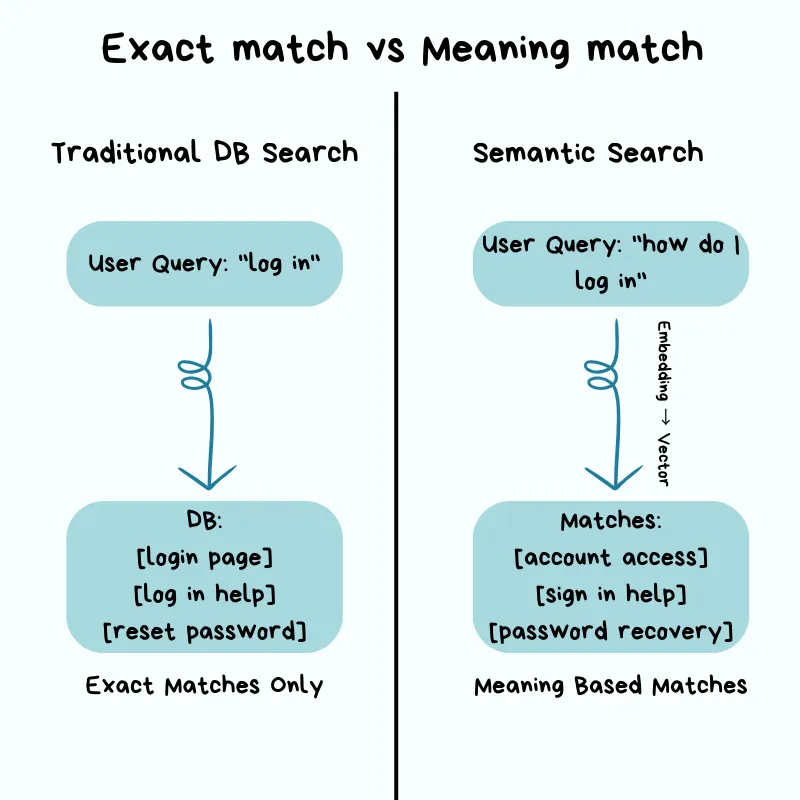
Vector databases represent a specialized class of data management systems engineered to efficiently store, index, and retrieve high-dimensional vector embeddings, which are numerical representations of unstructured data like text, images, and audio. Unlike traditional relational databases that rely on exact keyword matches and structured schemas, vector databases leverage the "meaning" of data by measuring the mathematical distance between vectors in a multi-dimensional space. This enables powerful semantic search capabilities where the system identifies items with conceptual similarities rather than just literal overlaps. At their core, these databases utilize embedding models to transform raw information into dense vectors, which are then organized using specialized indexing algorithms such as Hierarchical Navigable Small World (HNSW) or Inverted File Index (IVF). These techniques facilitate Approximate Nearest Neighbor (ANN) searches, allowing for rapid retrieval across billions of data points with minimal latency. Consequently, vector databases have become the foundational "long-term memory" for modern AI applications, particularly in Retrieval-Augmented Generation (RAG) workflows and recommendation engines. By bridging the gap between raw unstructured data and machine-interpretable context, they empower developers to build intelligent, scalable systems that can understand and process information at a more human-like level of nuance and complexity, while handling massive datasets through horizontal scaling and efficient sharding strategies.


Reimagining tech infrastructure for (and with) agentic AI

The rapid evolution of agentic AI is compelling chief technology officers to fundamentally reimagine IT infrastructure, moving beyond traditional support layers toward a modular, "mesh-like" backbone that orchestrates autonomous agents. As AI workloads expand, organizations face a critical dual challenge: infrastructure costs are projected to triple by 2030 while budgets remain stagnant, necessitating a shift where AI is used to manage the very systems it inhabits. Successfully scaling agentic AI requires building "agent-ready" foundations characterized by composability, secure APIs, and robust governance frameworks that ensure accountability. High-value impacts are already surfacing in areas like service desk operations, observability, and hosting, where agents can automate up to 80 percent of routine tasks, potentially reducing run-rate costs by 40 percent. This transition demands a significant cultural and operational pivot, shifting the role of IT professionals from manual ticket-based troubleshooting to the supervision and architectural design of intelligent systems. By integrating these autonomous entities into a coherent backbone, enterprises can bridge the gap between experimentation and enterprise-wide scale, transforming infrastructure from a reactive cost center into a dynamic platform for innovation. Those who embrace this agentic shift will secure a significant advantage in speed, resilience, and economic efficiency in the AI-driven era.


Quantum-Safe Security: How Enterprises Can Prepare for Q-Day

The provided page explores the critical necessity for enterprises to transition toward quantum-safe security to mitigate the existential threats posed by future quantum computers. Traditional encryption methods, such as RSA and ECC, are increasingly vulnerable to advanced quantum algorithms, most notably Shor’s algorithm, which can efficiently solve the complex mathematical problems that currently protect digital infrastructure. A particularly urgent concern highlighted is the "harvest now, decrypt later" strategy, where adversaries collect encrypted sensitive data today with the intention of deciphering it once powerful quantum technology becomes commercially available. To defend against these emerging risks, the article outlines a strategic preparation roadmap for organizations. This involves achieving "crypto-agility"—the ability to rapidly switch cryptographic standards—and conducting comprehensive inventories of current encryption usage across all systems. Furthermore, enterprises are encouraged to align with evolving NIST standards for post-quantum cryptography (PQC) and prioritize the protection of high-value, long-term assets. By integrating these quantum-resistant algorithms into their security architecture now, businesses can ensure long-term data confidentiality, maintain regulatory compliance, and future-proof their digital operations against the impending "quantum apocalypse." This proactive shift is presented not merely as a technical update, but as a fundamental requirement for maintaining trust and operational continuity in a post-quantum world.


Your Disaster Recovery Plan Doesn’t Account for AI Agents. It Should

The article "Your Disaster Recovery Plan Doesn’t Account for AI Agents. It Should" highlights a critical gap in contemporary business continuity strategies as enterprise adoption of agentic AI accelerates. While Gartner predicts a massive surge in AI agents embedded within applications by 2026, many organizations still rely on legacy governance frameworks that operate at human speeds. These traditional models are ill-equipped for autonomous agents that execute thousands of data accesses instantly, often bypassing standard security alerts. Unlike traditional technical failures with clear timestamps, AI governance failures are often "silent," characterized by over-permissioned agents accessing sensitive datasets over long periods. This leads to an exponential increase in the "blast radius" of potential breaches across cloud and on-premises environments. To mitigate these risks, the author advocates for machine-speed governance that utilizes dynamic, context-aware access controls and just-in-time permissions. By embedding governance directly into the architecture, organizations can transform it from a deployment bottleneck into a recovery accelerant. Such an approach provides the immutable audit trails necessary to drastically reduce the 100-day recovery window typically associated with AI-related incidents. Ultimately, robust governance is presented not as a constraint, but as a prerequisite for sustaining resilient AI innovation.


Cloud Native Platforms Transforming Digital Banking

The financial services industry is undergoing a profound structural revolution as traditional banks transition from rigid, monolithic legacy systems to agile, cloud-native architectures. This shift is centered on the adoption of microservices and containerization, allowing institutions to break down complex applications into independent, modular components. Such an approach enables rapid deployment of updates and innovative fintech services without disrupting core operations, ensuring established banks can effectively compete with nimble startups. Beyond mere speed, cloud-native platforms offer superior security through "Zero Trust" models and immutable infrastructure, which mitigate risks like configuration errors and persistent malware. Furthermore, the integration of open banking APIs and real-time payment processing transforms banks into central hubs within a broader digital ecosystem, providing customers with instant, seamless financial experiences. The scalability of the cloud also provides a robust foundation for Artificial Intelligence, facilitating hyper-personalized "predictive banking" that anticipates user needs. Ultimately, by embracing cloud computing, financial institutions are not only automating compliance through "Policy as Code" but are also building a flexible, future-proof foundation capable of incorporating emerging technologies like blockchain and quantum computing to meet the demands of the modern global economy.


Turning security into a story: How managed service providers use reporting to drive retention and revenue

Managed Service Providers (MSPs) often face the challenge of proving their value because effective cybersecurity is inherently "invisible," resulting in an absence of security breaches that customers may interpret as a lack of necessity for the service. To bridge this gap, MSPs must transition from providing raw technical data to crafting a compelling narrative through strategic reporting. As highlighted by the experiences of industry professionals using SonicWall tools, the core of a successful MSP practice relies on five pillars: monitoring, patch management, configuration oversight, alert response, and, most importantly, reporting. By utilizing automated platforms like Network Security Manager (NSM) and Capture Client, MSPs can produce detailed assessments and audit trails that make their backend efforts tangible to clients. Moving beyond monthly logs to implement Quarterly Business Reviews (QBRs) allows providers to transition from mere vendors to trusted strategic advisors. This shift significantly impacts business outcomes; for instance, MSPs employing regular QBRs often see renewal rates jump from 71% to 96%. Ultimately, by structuring services into clear tiers with documented deliverables, MSPs can use reporting to tell a story of protection. This strategy not only justifies current expenditures but also drives new revenue by fostering client trust and highlighting unmet security needs.


Cybersecurity in the AI age: speed and trust define resilience

In the rapidly evolving digital landscape, cybersecurity has transitioned from a technical hurdle to a strategic imperative where speed and trust are the cornerstones of resilience. According to insights from iqbusiness, the "breakout time" for e-crime—the window an attacker has to move laterally within a system—has plummeted from nearly ten hours in 2019 to just 29 minutes today, necessitating near-instantaneous responses. This urgency is exacerbated by artificial intelligence, which serves as a double-edged sword; while it empowers attackers to craft sophisticated phishing campaigns and malicious code, it also provides defenders with automated tools to filter noise and prioritize threats. However, the rise of "shadow AI" and a lack of visibility into unsanctioned tools pose significant risks to data integrity. To combat these threats, the article advocates for a "Zero Trust" architecture—where every interaction, whether by human or machine, is verified—and the adoption of robust frameworks like the NIST Cybersecurity Framework 2.0. Ultimately, modern cyber resilience depends on more than just defensive technology; it requires a proactive organisational culture, strong leadership, and the seamless integration of AI into security strategies. By prioritising visibility and governance, businesses can navigate the complexities of the AI age while maintaining the trust of their stakeholders and partners.


Architecture strategies for monitoring workload performance

Monitoring for performance efficiency within the Azure Well-Architected Framework is a critical process focused on observing system behavior to ensure optimal resource utilization and responsiveness. This discipline involves a continuous cycle of collecting, analyzing, and acting upon telemetry data to detect performance bottlenecks before they impact end users. Effective monitoring begins with comprehensive instrumentation, which captures diverse data points such as metrics, logs, and distributed traces from both the application and underlying infrastructure. By establishing clear performance baselines, architects can define what constitutes "normal" behavior, allowing them to identify subtle degradations or sudden spikes in resource consumption. Azure provides powerful tools like Azure Monitor and Application Insights to facilitate this visibility, offering capabilities for real-time alerting and deep-dive diagnostic analysis. Key metrics, including throughput, latency, and error rates, serve as essential indicators of system health. Furthermore, a robust monitoring strategy emphasizes the importance of historical data for long-term trend analysis and capacity planning, ensuring that the architecture can scale effectively to meet evolving demands. Ultimately, performance monitoring is not a one-time setup but an ongoing practice that informs optimization efforts, validates architectural changes, and maintains a high level of efficiency throughout the entire software development lifecycle.

Daily Tech Digest - March 07, 2026


Quote for the day:

"Be willing to make decisions. That's the most important quality in a good leader." -- General George S. Patton, Jr.


LangChain's CEO argues that better models alone won't get your AI agent to production

LangChain CEO Harrison Chase contends that achieving production-ready AI agents requires more than just utilizing more powerful foundational models. While improved LLMs offer better reasoning, Chase emphasizes that agents often fail due to systemic issues rather than model limitations. He advocates for a shift toward "agentic" engineering, where the focus moves from simple prompting to building robust, stateful systems. A critical component of this transition is the move away from "vibe-based" development—relying on subjective successes—toward rigorous evaluation frameworks like LangSmith. Chase highlights that developers must implement precise control over an agent's logic through tools like LangGraph, which allows for cycles, state management, and human-in-the-loop interactions. These architectural guardrails are essential for managing the inherent unpredictability of LLMs. By treating agent development as a complex systems engineering task, organizations can overcome the "last mile" hurdle, moving beyond impressive demos to reliable, autonomous applications. Ultimately, the maturity of AI agents depends on sophisticated orchestration, detailed observability, and a willingness to architect the environment in which the model operates, rather than expecting a single model to handle every nuance of a complex workflow autonomously.

This article examines the false sense of security provided by multi-factor authentication (MFA) within Windows-centric environments. While MFA is highly effective for cloud-based applications, the piece argues that traditional Active Directory (AD) authentication paths—such as interactive logons, Remote Desktop Protocol (RDP) sessions, and Server Message Block (SMB) traffic—often bypass modern identity providers, leaving internal networks vulnerable to password-only attacks. The article details seven critical gaps, including the persistence of legacy NTLM protocols susceptible to pass-the-hash attacks, the abuse of Kerberos tickets, and the risks posed by unmonitored service accounts or local administrator credentials that frequently lack MFA coverage. To mitigate these significant risks, the author recommends that organizations treat Windows authentication as a distinct security surface by enforcing longer passphrases, continuously blocking compromised passwords, and strictly limiting legacy protocols. Furthermore, the text highlights the importance of auditing service accounts and leveraging advanced security tools like Specops Password Policy to bridge the gap between cloud security and on-premises infrastructure. Ultimately, securing a modern enterprise requires moving beyond simple MFA implementation toward a holistic strategy that addresses these often-overlooked internal authentication vulnerabilities and credential reuse habits.


Why enterprises are still bad at multicloud

In this InfoWorld analysis, David Linthicum argues that while most enterprises are technically multicloud by default, they largely fail to operate them as a cohesive business capability. Instead of a unified strategy, multicloud environments often emerge haphazardly through mergers, acquisitions, or localized team decisions, leading to fragmented "technology estates" that function as isolated silos. Each provider—typically AWS, Azure, and Google—is managed with its own native consoles, security protocols, and talent pools, which creates redundant processes, inconsistent governance, and hidden global costs. Linthicum emphasizes that the "complexity tax" of multicloud is only worth paying if organizations can achieve operational commonality. He advocates for the implementation of common control planes—shared services for identity, policy, and observability—that sit above individual cloud brands to ensure consistent guardrails. To improve maturity, enterprises must shift from viewing cloud adoption as a series of procurement choices to designing a singular operating model. By establishing cross-cloud coordination and relentlessly measuring business value through metrics like recovery speed and unit economics, organizations can move from uncontrolled variety to "controlled optionality," finally leveraging the specialized strengths of different providers without multiplying their operational overhead or fracturing their technical foundations.


The Accidental Orchestrator

This article by O'Reilly Radar examines the profound transformation of the software developer's role in the era of generative AI. It posits that developers are transitioning from traditional manual coding to becoming strategic orchestrators of autonomous AI agents. This shift, described as "accidental," occurred as AI tools evolved from simple autocomplete plugins into sophisticated assistants capable of managing complex, end-to-end tasks. Developers now find themselves overseeing a fleet of agents that handle various components of the software lifecycle, including design, implementation, and debugging. This new reality demands a significant pivot in professional skills; instead of focusing primarily on syntax and logic, engineers must now master prompt engineering, agent coordination, and high-level system architecture. The piece emphasizes that while AI significantly boosts productivity, the complexity of managing these interlinked systems introduces critical challenges regarding transparency, security, and long-term reliability. Ultimately, the role of the accidental orchestrator requires a mindset shift where the developer acts as a tactical director of digital workers rather than a lone creator. This evolution suggests that the future of software engineering lies in the quality of the human-AI partnership and the effective orchestration of intelligent agents.


Powering the new age of AI-led engineering in IT at Microsoft

Microsoft Digital is spearheading a transformative shift toward AI-led engineering, fundamentally changing how IT services are designed, built, and maintained. At the heart of this evolution is the integration of GitHub Copilot and other generative AI tools, which empower developers to automate repetitive "toil" and focus on high-value architectural innovation. By adopting a platform-centric approach, Microsoft standardizes development environments and leverages AI to enhance security, catch bugs earlier, and optimize code quality through sophisticated semantic searches and automated testing. This transition moves beyond simply using AI tools to a holistic culture where AI is woven into the entire software development lifecycle. Key benefits include significantly accelerated deployment cycles, improved developer satisfaction, and a more resilient IT infrastructure. Furthermore, the initiative prioritizes security and compliance by embedding AI-driven checks directly into the engineering pipeline. As Microsoft refines these internal practices, it aims to provide a blueprint for the industry on how to scale enterprise IT operations in an increasingly complex digital landscape. Ultimately, AI-led engineering at Microsoft is not just about speed; it is about fostering a creative environment where engineers solve complex problems with unprecedented efficiency, driving a new standard for modern software development.


Read-Copy-Update (RCU): The Secret to Lock-Free Performance

Read-Copy-Update (RCU) is a sophisticated synchronization mechanism explored in this InfoQ article, primarily utilized within the Linux kernel to handle concurrent data access. Unlike traditional locking methods that can cause significant performance bottlenecks, RCU allows multiple readers to access shared data simultaneously without the overhead of locks or atomic operations. The core concept involves updaters creating a modified copy of the data and then swapping the pointer to the new version, while ensuring that the original data is only reclaimed after a "grace period" when all active readers have finished. This approach ensures that readers always see a consistent, albeit potentially slightly outdated, version of the data without ever being blocked. While RCU offers unparalleled scalability and performance for read-heavy workloads, the article emphasizes that it introduces complexity for developers, particularly regarding memory management and the coordination of update cycles. Updaters must carefully manage the transition between versions to avoid data corruption. Ultimately, RCU represents a fundamental shift in concurrency design, prioritizing reader efficiency at the cost of more intricate update logic, making it an essential tool for high-performance systems where read operations vastly outnumber modifications.


AI transforms ‘dangling DNS’ into automated data exfiltration pipeline

AI-driven automation is fundamentally transforming "dangling DNS" from a common administrative oversight into a sophisticated, high-speed pipeline for automated data exfiltration. Dangling DNS occurs when a Domain Name System record continues to point to a decommissioned cloud resource, such as an abandoned IP address or a deleted storage bucket. While this vulnerability has existed for years, attackers are now utilizing generative AI and advanced scanning scripts to identify these orphaned subdomains across the internet at an unprecedented scale. Once a target is located, AI agents can automatically reclaim the abandoned resource on cloud platforms like AWS or Azure, effectively hijacking the legitimate domain to intercept sensitive traffic, harvest user credentials, or distribute malware through prompt injection attacks. This evolution represents a shift from opportunistic manual exploitation to a systematic, machine-led attack surface management strategy. To counter this, security professionals must move beyond periodic audits, implementing continuous, automated DNS monitoring and lifecycle management. The article underscores that as threat actors leverage AI to weaponize legacy misconfigurations, organizations can no longer afford to leave DNS records unmanaged. Addressing this infrastructure is a critical component of modern cyber defense, requiring the same level of automation that attackers currently use to exploit it.


The New Calculus of Risk: Where AI Speed Meets Human Expertise

The article examines the launch of Crisis24 Horizon, a sophisticated AI-enabled risk management platform designed to address the complexities of a volatile global security landscape. Developed on a modern technology stack, the platform provides a unified "single pane of glass" view, integrating dynamic intelligence with travel, people, and site-specific risk management. By leveraging artificial intelligence to process roughly 20,000 potential incidents daily, Crisis24 Horizon dramatically accelerates threat detection and triage, effectively expanding the capacity of security teams. Key features include "Ask Horizon," a natural language interface for querying risk data; "Latest Event Synopsis," which consolidates fragmented alerts into coherent summaries; and integrated mass notification systems for critical event response. While AI handles massive data aggregation and initial filtering, the platform emphasizes the "human in the loop" approach, where expert analysts provide necessary contextual judgment for high-stakes decisions like emergency evacuations. This synergy of AI speed and human expertise marks a shift from reactive to anticipatory security, allowing organizations to monitor assets in real-time and safeguard operations against interconnected global threats. Ultimately, Crisis24 Horizon empowers leaders to mitigate risks with greater precision, ensuring operational resilience and employee safety amidst geopolitical instability and environmental disasters.


Accelerating AI, cloud, and automation for global competitiveness in 2026

The guest blog post by Pavan Chidella argues that by 2026, the global competitiveness of enterprises will be defined by their ability to transition from AI experimentation to large-scale, disciplined execution. Focusing primarily on the healthcare sector, the author illustrates how the orchestration of AI, cloud-native architectures, and intelligent automation is essential for modernizing legacy processes like claims adjudication, which traditionally suffer from structural latency. In this evolving landscape, technology is no longer an isolated tool but a strategic driver of measurable business outcomes, including improved operational efficiency and enhanced customer transparency. Chidella emphasizes that "responsible acceleration" requires embedding governance, ethical AI monitoring, and regulatory compliance directly into system designs rather than treating them as afterthoughts. By adopting a product-led engineering mindset, organizations can reduce friction and build trust within their ecosystems. Ultimately, the piece asserts that global leadership in 2026 will belong to those who successfully integrate speed and precision with accountability, effectively leveraging hybrid cloud capabilities to process data in real-time. This shift represents a broader competitive imperative to move beyond proof-of-concept stages toward a resilient, automated, and digitally mature infrastructure that can thrive amidst increasing global complexity and regulatory scrutiny.


Engineering for AI intensity: The new blueprint for high-density data centers

This article explores the critical infrastructure evolution required to support the escalating demands of artificial intelligence. As traditional data centers struggle with the unprecedented power and thermal requirements of GPU-heavy workloads, a new engineering paradigm is emerging. This blueprint emphasizes a radical transition from legacy air-cooling systems to advanced liquid cooling technologies, such as direct-to-chip and immersion cooling, which are essential for managing rack densities that now frequently exceed 50kW and can reach up to 100kW per cabinet. Beyond thermal management, the article highlights the necessity of modular, high-voltage power distribution to ensure electrical efficiency and minimize transmission losses across the facility. It also underscores the importance of structural adaptations, including reinforced flooring to support heavier liquid-cooled hardware and overhead cable management to optimize airflow. Furthermore, the blueprint advocates for high-bandwidth, low-latency networking fabrics to facilitate the massive data exchanges inherent in parallel AI training. Ultimately, the piece argues that achieving AI intensity requires a holistic, future-proof design strategy that integrates power scalability, structural flexibility, and sustainable practices, positioning the modern data center as the strategic engine for digital transformation in an AI-first era.


Daily Tech Digest - March 05, 2026


Quote for the day:

"To get a feel for the true essence of leadership, assume everyone who works for you is a volunteer." -- Kouzes and Posner


CISOs Are Now AI Guardians of the Enterprise

CISOs are managing risk, talent and digital resilience that underpins critical business outcomes - a reality that demands new approaches to leadership and execution. Security leaders are quantifying and communicating ROI to executive leadership, developing the next generation of cybersecurity talent, and responsibly deploying emerging technologies - including generative and agentic AI ... While CISOs approach AI with cautious optimism, 86% fear agentic AI will increase the sophistication of social engineering attacks and 82% worry it will increase deployment speed and complexity of persistence mechanisms. "This is happening primarily because AI accelerates existing weaknesses in how organizations understand and control their data. The solution to both is not more tools, but [to implement] a strong and well-understood data governance model across the organization," said Kim Larsen, group CISO at Keepit. ... Despite the rise of AI, CISOs know that human intelligence and judgement supersede even the most intelligent tools, because of their ability to understand context. Their primary strategies include upskilling current workforces, hiring new full-time employees and engaging contractors, especially for nuanced tasks like threat hunting. "AI risk management, cloud security architecture, automation skills and the ability to secure AI-driven systems will be far more valuable in senior cybersecurity hires in 2026 than they were three years ago," said Latesh Nair


The right way to architect modern web applications

A single modern SaaS platform often contains wildly different workloads. Public-facing landing pages and documentation demand fast first contentful paint, predictable SEO behavior, and aggressive caching. Authenticated dashboards, on the other hand, may involve real-time data, complex client-side interactions, and long-lived state where a server round trip for every UI change would be unacceptable. Trying to force a single rendering strategy across all of that introduces what many teams eventually recognize as architectural friction. ... Modern server-rendered applications behave very differently. The initial HTML is often just a starting point. It is “hydrated,” enhanced, and kept alive by client-side logic that takes over after the first render. The server no longer owns the full interaction loop, but it hasn’t disappeared either. ... Data volatility matters. Content that changes once a week behaves very differently from real-time, personalized data streams. Performance budgets matter too. In an e-commerce flow, a 100-millisecond delay can translate directly into lost revenue. In an internal admin tool, the same delay may be irrelevant. Operational reality plays a role as well. Some teams can comfortably run and observe a fleet of SSR servers. Others are better served by static-first or serverless approaches simply because that’s what their headcount and expertise can support. ... When something breaks, the hardest part is often figuring out where it broke. This is where staged architectures show a real advantage. 


Safeguarding biometric data through anonymization

Biometric anonymization refers to a range of approaches that remove Personally Identifiable Information (PII) from biometric data so that an individual can no longer be identified from the data alone. If, after anonymization, the retained data or template can still perform its required function, then we have successfully removed the risk of the identifiers being compromised. An anonymized biometric template in the wrong hands then has no meaningful value, as it can’t be used to identify the individual from whom it originated. As a result, there is great interest in anonymization approaches that can meet the needs of different business applications. ... While biometrics deliver significant value across a wide range of use cases, safeguarding data privacy and meeting regulatory obligations remain top priorities for most organizations. Biometric anonymization can help reduce risk by limiting the exposure of sensitive personal data. Taken together, anonymization approaches address different dimensions of risk – from inference and reporting exposure to vulnerabilities at the template level. They are not one-size-fits-all solutions. Organizations must evaluate which method aligns with their functional requirements, risk tolerance, and compliance obligations, while ensuring that only the minimum necessary personal data is retained for the intended purpose. Anonymization is no longer a peripheral consideration. 


Security leaders must regain control of vendor risk, says Vanta’s risk and compliance director

The rise of AI technologies has made vendor networks increasingly harder to manage. Shadow supply chains (untracked vendor networks), fast-moving subcontracting, model updates, data-sharing and embedded tooling all compound the complexities. Particularly for large enterprises with a network of tens of thousands of suppliers or more, traditional vendor management relying on legacy infrastructure and manual operations is no longer adequate. This is where the Cyber Security and Resilience Bill comes in, forcing a shift toward continuous monitoring which should match the speed of AI threats. ... By implementing evidence-led reporting templates, automated control validation, and continuous monitoring of supplier security posture, businesses can provide the board with real-time assurance, not point-in-time attestations. This approach demonstrates that systemic supplier risk is actively managed without diverting disproportionate time away from frontline threat detection and response. At an operational level, leaders shouldn’t wait for the bill to be finalised to find out who their ‘critical suppliers’ are. ... Upcoming changes to the bill will likely encourage tighter contractual obligations. Businesses should get ahead of this mandate and implement measures such as incident notification service-level agreements, rights-to-audit and evidence provisions, continuous monitoring, and Software bill of Materials.


Inspiration And Aspiration: Why Feel-Good Leadership Rarely Changes Outcomes

Inspiration is fancy. It makes ideas feel noble, futures feel possible and leadership feel virtuous—all without demanding immediate action or sacrifice. We feel moved, aligned and temporarily elevated. It’s a dream we see others have achieved through their actions. Aspiration is different. It is inconvenient. It’s our own dream, our desire to see ourselves in a certain spot or a way in the future. It requires disproportionate effort, new skills and a willingness to confront the uncomfortable gap between who we are today and who we say we want to become. ... That gap between intent and impact was uncomfortable. I told myself "I can't" and then took a step back, which was the easiest thing to do. What I realized is this: Aspiration without action becomes self-deception. Inspiration without action becomes mere admiration. And leadership that relies on either one eventually stagnates. Real change happens only when inspiration and aspiration move together, dance together—not sequentially, not occasionally, but in constant unison. ... Belief does not close gaps; capability and capacity do. Until the distance between intention and reality is acknowledged, effort will always be miscalculated. This gap should evoke and cement commitment, rather than creating drag. One needs to be very careful at this stage, as most people stop here. We may get inspired by mountaineers climbing Everest, but when we do a mental assessment about ourselves, we assume we are incapable of the task of bridging the gap, and we take a step back.


Most Organizations Plan Strategically. Few Manage It That Way

The report segments respondents into two categories: “Dynamic Planners,” characterized by frequent review cycles, cross-functional integration, high portfolio visibility, and active use of scenario planning; and “Plodders,” defined by siloed operations, infrequent reassessment, and limited real-time visibility into execution data. The performance difference between them is sharp enough to be operationally relevant. Eighty-one percent of Planners’ projects deliver measurable ROI or strategic value. Among Plodders, that figure is 45%. That’s a 36-point spread. That’s not measuring financial metrics; it’s about whether projects are doing what they were supposed to do. The survey also found that 30% of projects are not delivering meaningful ROI or strategic value. That leaves nearly one in three funded initiatives operating at levels ranging from marginal to counterproductive. ... Over a third of projects across the survey population are stopped early due to misalignment or insufficient ROI. The report treats this not as a problem to fix but as a sign of mature portfolio management. Chynoweth frames it in capital terms: “Cancellation is not failure. It’s disciplined capital allocation.” Most enterprises reward launch momentum, delivery against plan, and continuation of funded initiatives. Budget cycles create sunk-cost inertia. Career incentives favor project sponsors who ship, not those who cancel. 


Malicious insider threats outpace negligence in Australia

John Taylor, Mimecast's Field Chief Technical Officer for APAC, said organisations are seeing more cases where insiders are used to bypass established security controls. "We're seeing a concerning acceleration in malicious insider threats across Australia. While negligence has traditionally been the primary insider concern, intentional betrayal is now growing at a faster rate. ..." The report described AI as a factor that can increase the speed and scale of attacks, citing more convincing social engineering messages and automated reconnaissance. It also raised the prospect of AI being used to help recruit insiders. Taylor said older assumptions about a clear boundary between internal and external users no longer match how organisations operate, particularly with distributed workforces and widespread cloud adoption. ... Governance and compliance over communications data emerged as another concern. Mimecast found 91% of Australian organisations face challenges maintaining governance and compliance across communications data, and 53% lack confidence in quickly locating data to meet regulatory or legal requirements. These issues can slow incident response by delaying investigations and limiting the ability to reconstruct timelines across messaging platforms, email, and file stores. They can also increase risk during regulatory inquiries when organisations must produce relevant records quickly. Taylor said visibility is central to improving governance, culture, and response.


AI fatigue is real and it’s time for leaders to close the organizational gap

AI has been pitched as the next great accelerant of productivity. But inside many enterprises, teams are still recovering from years’ worth of transformation programs—cloud migrations, ERP upgrades, data modernization. Adding AI to an already overloaded change agenda can feel less like innovation and more like yet another disruption to absorb. The result is a predictable backlash. Tools in the industry are dismissed as “just another license”. Expectations are sky high; lived experience is often underwhelming. And when the novelty wears off, employees revert to old behavior fast. ... A pervasive misconception is that adopting AI is mostly about selecting and deploying the right technology. But tooling alone doesn’t redesign workflows. It doesn’t train employees. It doesn’t embed new decision making patterns. Some of the highest spending organizations are seeing the least value from AI precisely because investment has been concentrated at the technology layer rather than the organizational one. Without true operational change, AI tools risk becoming surface level enhancements rather than business accelerators. ... AI is not a spectator sport. Employees must understand how to use it, when to trust it, and how it adds value to their role. Organizations that invest early in skills from prompting to automation design will see dramatically higher adoption rates. The companies scaling fastest are those that build internal capability, not dependency on a small number of specialists.


Measuring What Matters in Large Language Model Performance

The study is timely, as LLM innovation increasingly targets skills and traits that are difficult to benchmark. “There’s been a shift towards testing AI systems for more complex capabilities like reasoning, helpfulness, and safety, which are very hard to measure,” said Rocher. “We wanted to look at whether evaluations are doing a good job capturing these sorts of skills.” Historically, AI innovators focused on equipping programs with easy-to-measure skills, like the ability to play chess and other strategy games. Today’s general-purpose LLMs, including popular models like ChatGPT, feature more flexible, open-ended strengths and traits. These attributes are notoriously difficult to operationalize, or to define in a way that’s precise enough to work in AI program measurement but broad enough to encompass the many different ways that the attribute might show up in the real world. Reasoning is one such skill. While most people are able to tell what counts as good or bad reasoning on a case-by-case basis, it’s not easy to describe reasoning in general terms. ... Towards this end, “Measuring what Matters” includes a set of guidelines to promote precision, thoroughness, rigor, and transparency in benchmark development. The first two recommendations, “define the phenomenon” and “measure the phenomenon and only the phenomenon,” encourage benchmark authors to be direct and specific as they define their target phenomena. 


Hallucination is not an option when AI meets the real world

For Boeckem, the most consequential AI applications are not advisory. They are autonomous. “In industrial environments, AI doesn’t just recommend,” he says. “It acts.” That shift, from insight to action, raises the stakes dramatically. Autonomous systems operate in safety-critical environments where failure can result in physical damage, financial loss, or human harm. “When generative AI went mainstream in 2022, it was exciting,” Boeckem says. “But professional environments need AI that is grounded in reality. These systems must always know where they are, what obstacles exist, and what the consequences of an action might be.” ... Despite the growing popularity of digital twins, many enterprises struggle to make them operational. According to Boeckem, the problem is not ambition, but misunderstanding. “A digital twin must be fit for purpose,” he says. “And above all, it must be dimensionally accurate.” Accuracy is non-negotiable. A flood simulation requires a watertight model. Urban planning demands precise representations of sunlight, shadows, and surroundings. Aesthetic simulations require photorealistic textures and material properties. At the most complex end of the spectrum, Hexagon models human faces. “A human face is not static,” Boeckem explains. “It’s soft-body material. When you smile, when you’re angry, when you’re sad, it changes. If you want to do diagnosis or therapy, you have to account for that.” 

Daily Tech Digest - February 12, 2026


Quote for the day:

"Do not follow where the path may lead. Go instead where there is no path and leave a trail." -- Muriel Strode


The hard part of purple teaming starts after detection

Imagine you’re driving, and you see the car ahead braking suddenly. Awareness helps, but it’s your immediate reaction that avoids the collision. Insurance plans don’t matter at that moment. Nor do compliance reports or dashboards. Only vigilance and rehearsal matter. Cyber resilience works the same way. You can’t build the instinct required to act by running one simulation a year. You build it through repetition. Through testing how specific scenarios unfold. Through examining not only how adversaries get in, but also how they move, escalate, evade, and exfiltrate. This is the heart of real purple teaming. ... AI can accelerate analysis, but it can’t replace intuition, design, or the judgment required to act. If the organization hasn’t rehearsed what to do when the signal appears, AI only accelerates the moment when everyone realises they don’t know what happens next. This is why so much testing today only addresses opportunistic attacks. It cleans up the low-hanging fruit. ... The standard testing model traps everyone involved: One-off tests create false confidence; Scopes limit imagination. Time pressure eliminates depth; Commercial structures discourage collaboration; Tooling gives the illusion of capability; and Compliance encourages the appearance of rigour instead of the reality of it. This is why purple teaming often becomes “jump out, stabilize, pull the chute, roll on landing.” But what about the hard scenarios? What about partial deployments? What about complex failures? That’s where resilience is built.


State AI regulations could leave CIOs with unusable systems

Numerous states are considering AI regulations for systems used in medical care, insurance, human resources, finance and other critical areas. ... Despite the growing regulatory risk, businesses appear unwilling to slow AI deployments. "Moving away from AI with the regulation is not going to be an option for us," Juttiyavar said. He said AI is already deeply embedded in how organizations operate and is essential for speed and competitiveness. ... If CIOs establish strong internal frameworks for AI deployment, "that helps you react better to legislative change" and anticipate new requirements, Kourinian said. Still, regulatory shifts can leave companies with systems that are technically sound but legally unusable, said Peter Cassat, a partner at CM Law. To manage that risk, Cassat advises CIOs to negotiate "change of law" provisions in vendor contracts that provide termination rights if regulations make continued use of a system impossible or impractical. But such provisions do not eliminate the risk of sunk costs. "If it's a SaaS provider and you've signed a three-year term, they don't want to necessarily let you walk for free either," Cassat said. Beyond legal exposure, CIOs must also anticipate public and political reaction to AI and biometric tools. "The CIO absolutely has the responsibility to understand how this technology could be perceived -- not just internally, but by the public and lawmakers," said Mark Moccia, an analyst at Forrester Research.


Your dev team isn’t a cost center — it’s about to become a multiplier

If you treat AI as a pathway to eliminate developer headcount, sure, you’ll capture some cost savings in the short term. But you’ll miss the bigger opportunity entirely. You’ll be the bank executive in 1975 who saw ATMs and thought, “Great, we can close branches and fire tellers.” Meanwhile, your competitors have automated the mundane teller tasks and are opening new branches to sell higher-end services to more people. The 1.4-1.6x productivity improvement that GDPval documented isn’t about doing the same work with fewer people. It’s about doing vastly more work with the same people. That new product idea you had that was 10x too expensive to develop? It’s now possible. That customer experience improvement that could drive loyalty that you didn’t have the headcount for? It’s on the table. The technical debt you’ve been accumulating? You can start to pay it down. ... What struck me about Werner’s final keynote wasn’t the content, it was the intent. This was Werner’s last time at that podium. He could have done a victory lap through AWS’s greatest hits. Instead, he spent his time outlining a framework of success for the next generation of developers. For those of us leading technology organizations, the framework is both validating and challenging. Validating because these traits aren’t new. They have always separated good developers from great ones. Challenging because AI amplifies everything, including the gaps in our capabilities.


Cloud teams are hitting maturity walls in governance, security, and AI use

Migration activity remains heavy across enterprises, especially for data platforms. At the same time, downtime tolerance is limited. Nearly half of respondents said their organizations can accept only one to six hours of downtime for cutover during migration. That combination creates pressure to migrate at speed while keeping data integrity intact. In regulated environments, that pressure extends to audit evidence and compliance validation, which often needs to be produced in parallel with migration execution. ... Cloud-native managed database adoption is also high. More than half of respondents reported using managed cloud databases, and a third reported using SaaS-based database services. Only 10% reported operating self-hosted databases. This shift toward managed services reduces operational burden on infrastructure teams, but it increases reliance on identity governance, network segmentation, and application-layer security controls. It also creates stronger dependency on cloud provider logging and access models. ... Development stacks also reflect this shift. Python was reported as a primary language, with Java close behind. These languages remain central to AI workflows, data engineering, and enterprise application back ends. Machine learning adoption is also widespread since organizations reported actively training ML models. Many of these pipelines are now part of production environments, making operational continuity a priority.


MIT's new fine-tuning method lets LLMs learn new skills without losing old ones

To build truly adaptive AI, the industry needs to solve "continual learning," allowing systems to accumulate knowledge much like humans do throughout their careers. The most effective way for models to learn is through "on-policy learning.” In this approach, the model learns from data it generates itself allowing it to correct its own errors and reasoning processes. This stands in contrast to learning by simply mimicking static datasets. ... The standard alternative is supervised fine-tuning (SFT), where the model is trained on a fixed dataset of expert demonstrations. While SFT provides clear ground truth, it is inherently "off-policy." Because the model is just mimicking data rather than learning from its own attempts, it often fails to generalize to out-of-distribution examples and suffers heavily from catastrophic forgetting. SDFT seeks to bridge this gap: enabling the benefits of on-policy learning using only prerecorded demonstrations, without needing a reward function. ... For teams considering SDFT, the practical tradeoffs come down to model size and compute. The technique requires models with strong enough in-context learning to act as their own teachers — currently around 4 billion parameters with newer architectures like Qwen 3, though Shenfeld expects 1 billion-parameter models to work soon. It demands roughly 2.5 times the compute of standard fine-tuning, but is best suited for organizations that need a single model to accumulate multiple skills over time, particularly in domains where defining a reward function for reinforcement learning is difficult or impossible.


The Illusion of Zero Trust in Modern Data Architectures

Modern data stacks stretch far beyond a single system. Data flows from SaaS tools into ingestion pipelines, through transformation layers, into warehouses, lakes, feature stores, and analytics tools. Each hop introduces a new identity, a new permission model, and a new surface area for implicit trust. Not to mention, niches like healthcare data storage are a completely different beast. Whatever the system may be, teams may enforce strict access at the perimeter while internal services freely exchange data with long-lived credentials and broad scopes. This is where the illusion forms. Zero Trust is declared because no user gets blanket access, yet services trust other services almost entirely. Tokens are reused, roles are overprovisioned, and data products inherit permissions they were never meant to have. The architecture technically verifies everything, but conceptually trusts too much. ... Data rarely stays where Zero Trust policies are strongest. Warehouses enforce row-level security, masking, and role-based access, but data doesn’t live exclusively in warehouses. Extracts are generated, snapshots are shared, and datasets are copied into downstream systems for performance or convenience. Each copy weakens the original trust guarantees and problems worse than increasing cloud costs come to fruition. Once data leaves its source, context is often stripped away.


Top Cyber Industry Defenses Spike CO2 Emissions

Though rarely discussed, like any other technologies, cybersecurity protections carry their own costs to the planet. Programs run on electricity. Servers demand water. Devices are built from natural resources and eventually get thrown out. ... "CISOs can help or make the situation worse [when it comes to] sustainability, depending on the way they write security rules," he says. "And that's why we started a study: to enable the CISO to be part of the sustainability process of his or her company, and to find actionable ways to reduce CO2 consumption while at the same time not adding more risks." ... "We collect a lot of logs, not exactly always knowing why, and the retention period is a huge cost in terms of infrastructure, and also CO2," Billois says. "So at some point, you can revisit your log collection, and log retention, and if there are no legal issues, you can think about compressing them to reduce their volume. It's something that is, I would say, quite easy to do. ... All of that said, unfortunately, the biggest cyber polluter, by far, is also the most difficult to scale back without incurring risk. Some companies can swap underutilized physical infrastructure for virtualized backups, which eat less power, if they're not already doing that; but there are few other great ways to make cyber resilience more efficient. "You can reduce CO2 [from backups] very easily: you stop buying two servers, or you stop having a duplicate of all your data," Billois says.


Five ways quantum technology could shape everyday life

There is growing promise of quantum technology’s ability to solve problems that today’s systems struggle to overcome, or cannot even begin to tackle, with implications for industry, national security and everyday life. ... In healthcare, faster drug discovery could bring quicker response to outbreaks and epidemics, personalised medicine and insight into previously inscrutable biological interactions. Quantum simulation of how materials behave could lead to new high efficiency energy materials, catalysts, alloys and polymers. ... In medicine, quantum sensors could improve diagnostic capabilities via more sensitive, quicker and noninvasive imaging modes. In environmental monitoring, these sensors could track delicate shifts beneath the Earth’s surface, offer early warnings of seismic activity, or detect trace pollutants in air and water with exceptional accuracy. ... Airlines and rail networks could automatically reconfigure to avoid cascading delays, while energy providers might balance renewable generation, storage and consumption with far greater precision. Banks could use quantum computers to evaluate numerous market scenarios in parallel, informing the management of investment portfolios. ... While still at an early stage of development, quantum algorithms might accelerate a subset of AI called machine learning (where algorithms improve with experience), help simulate complex systems, or optimise AI architectures more efficiently.


Nokia predicts huge WAN traffic growth, but experts question assumptions

“Consumer- and enterprise-generated AI traffic imposes a substantial impact on the wide-area network (WAN) by adding AI workloads processed by data centers across the WAN. AI traffic does not stay inside one data center; it moves across edge, metro, core, and cloud infrastructure, driving dense lateral flows and new capacity demands,” the report says. An explosion in agentic AI applications further fuels growth “by inducing extra machine-to-machine (M2M) traffic in the background,” Nokia predicts. “AI traffic isn’t just creating more demand inside data centers; it’s driving a sustained surge of traffic between them. AI inferencing traffic—both user-initiated and agentic-AI-induced M2M—moving over inter-data-center links grows at a 20.3% CAGR through 2034.” ... Global enterprise and industrial traffic, including fixed wireless access, will also steadily rise over the next decade, “as more operations, machines, and workers become digitally connected,” Nokia predicts. “Pervasive automation, high-resolution video, AI-driven analytics, and remote access to industrial systems,” will drive traffic growth. “Factory lines are streaming machine vision data to the cloud. AI copilots are assisting personnel in real time. Field teams are using AR instead of manuals. Robots are coordinating across sites,” the Nokia report says. “Industrial systems are continuously sending telemetry over the WAN instead of keeping it on-site. This shift makes wide-area connectivity part of the core production workflow.”


The death of reactive IT: How predictive engineering will redefine cloud performance in 10 years

Reactive monitoring fails not because tools are inadequate, but because the underlying assumption that failures are detectable after they occur no longer holds true. Modern distributed systems have reached a level of interdependence that produces non-linear failure propagation. A minor slowdown in a storage subsystem can exponentially increase tail latencies across an API gateway. ... Predictive engineering is not marketing jargon. It is a sophisticated engineering discipline that combines statistical forecasting, machine learning, causal inference, simulation modeling and autonomous control systems. ... Predictive engineering will usher in a new operational era where outages become statistical anomalies rather than weekly realities. Systems will no longer wait for degradation, they will preempt it. War rooms will disappear, replaced by continuous optimization loops. Cloud platforms will behave like self-regulating ecosystems, balancing resources, traffic and workloads with anticipatory intelligence. ... In distributed networks, routing will adapt in real time to avoid predicted congestion. Databases will adjust indexing strategies before query slowdowns accumulate. The long-term trajectory is unmistakable: autonomous cloud operations. Predictive engineering is not merely the next chapter in observability, it is the foundation of fully self-healing, self-optimizing digital infrastructure. 

Daily Tech Digest - February 06, 2026


Quote for the day:

"When you say my team is no good, all I hear is that I failed as a leader." -- Gordon Tredgold


Everyone works with AI agents, but who controls the agents?

Over the past year, there has been a lot of talk about MCP and A2A, protocols that allow agents to communicate with each other. But more and more agents that are now becoming available support and use them. Agents will soon be able to easily exchange information and transfer tasks to each other to achieve much better results. Currently, 50 percent of AI agents in organizations still work as a silo. This means that no context or data from external systems is added. The need for context is now clear to many organizations. 96 percent of IT decision-makers understand that success depends on seamless integration. This puts renewed pressure on data silos and integrations. ... For IT decision-makers wondering what they really need to do in 2026, doing nothing is definitely not the right answer, as your competitors who do invest in AI will quickly overtake you. On the other hand, you don’t have to go all-in and blow your entire IT budget on it. ... You need to start now, so start small. Putting the three or five most frequently asked questions to your customer service or HR team into an AI agent can take a huge workload off those teams. There are now several case studies showing that this has reduced the number of tickets by as much as 50-60 percent. AI can also be used for sales reports or planning, which currently takes employees many hours each week.


Mobile privacy audits are getting harder

Many privacy reviews begin with static analysis of an Android app package (APK). This can reveal permissions requested by the app and identify embedded third-party libraries such as advertising SDKs, telemetry tools, or analytics components. Requested permissions are often treated as indicators of risk because they can imply access to contacts, photos, location, camera, or device identifiers. Library detection can also show whether an app includes known trackers. Yet, static results are only partial. Permissions may never be used in runtime code paths, and libraries can be present without being invoked. Static analysis also misses cases where data is accessed indirectly or through system behavior that does not require explicit permissions. ... Apps increasingly defend against MITM using certificate pinning, which causes the app to reject traffic interception even if a root certificate is installed. Analysts may respond by patching the APK or using dynamic instrumentation to bypass the pinning logic at runtime. Both approaches can fail depending on the app’s implementation. Mopri’s design treats these obstacles as expected operating conditions. The framework includes multiple traffic capture approaches so investigators can switch methods when an app resists a specific setup. ... Raw network logs are difficult to interpret without enrichment. Mopri adds contextual information to recorded traffic in two areas: identifying who received the data, and identifying what sensitive information may have been transmitted.


When the AI goes dark: Building enterprise resilience for the age of agentic AI

Instead of merely storing data, AI accumulates intelligence. When we talk about AI “state,” we’re describing something fundamentally different from a database that can be rolled back. ... Lose this state, and you haven’t just lost data. You’ve lost the organizational intelligence that took hundreds of human days of annotation, iteration and refinement to create. You can’t simply re-enter it from memory. Worse, a corrupted AI state doesn’t announce itself the way a crashed server does. ... This challenge is compounded by the immaturity of the AI vendor landscape. Hyperscale cloud providers may advertise “four nines” of uptime (99.99% availability, which translates to roughly 52 minutes of downtime per year), but many AI providers, particularly the startups emerging rapidly in this space, cannot yet offer these enterprise-grade service guarantees. ... When AI agents handle customer interactions, manage supply chains, execute financial processes and coordinate operations, a sustained AI outage isn’t an inconvenience. It’s an existential threat. ... Humans are not just a fallback option. They are an integral component of a resilient AI-native enterprise. Motivated, trained and prepared teams can bridge gaps when AI fails, ensuring continuity of both systems and operations. When you continually reduce your workforce to appease your shareholders, will your human employees remain motivated, trained and prepared?


The blind spot every CISO must see: Loyalty

The insider who once seemed beyond reproach becomes the very vector through which sensitive data, intellectual property, or operational integrity is compromised. These are not isolated failures of vetting or technology; they are failures to recognize that loyalty is relational and conditional, not absolute. ... Organizations have long operated under the belief that loyalty, once demonstrated, becomes a durable shield against insider risk. Extended tenure is rewarded with escalating access privileges, high performers are granted broader system rights without commensurate behavioral review, and verbal affirmations of commitment are taken at face value. Yet time and again patterns repeat. What begins as mutual confidence weakens not through dramatic betrayal but through subtle realignments in personal commitment. An employee who once identified strongly with the mission may begin to feel undervalued, overlooked for advancement, or weighed down by outside pressures. ... Positions with access to crown jewels — sensitive data, financial systems, or personnel records — or executive ranks inherently require proportionately more oversight, as regulated sectors have shown. Professionals in these roles accept this as part of the terrain, with history demonstrating minimal talent loss when frameworks are transparent and supportive.


Researchers Warn: WiFi Could Become an Invisible Mass Surveillance System

Researchers at the Karlsruhe Institute of Technology (KIT) have shown that people can be recognized solely by recording WiFi communication in their surroundings, a capability they warn poses a serious threat to personal privacy. The method does not require individuals to carry any electronic devices, nor does it rely on specialized hardware. Instead, it makes use of ordinary WiFi devices already communicating with each other nearby.  ... “This technology turns every router into a potential means for surveillance,” warns Julian Todt from KASTEL. “If you regularly pass by a café that operates a WiFi network, you could be identified there without noticing it and be recognized later, for example by public authorities or companies.” Felix Morsbach notes that intelligence agencies or cybercriminals currently have simpler ways to monitor people, such as accessing CCTV systems or video doorbells. “However, the omnipresent wireless networks might become a nearly comprehensive surveillance infrastructure with one concerning property: they are invisible and raise no suspicion.” ... Unlike attacks that rely on LIDAR sensors or earlier WiFi-based techniques that use channel state information (CSI), meaning measurements of how radio signals change when they reflect off walls, furniture, or people, this approach does not require specialized equipment. Instead, it can be carried out using a standard WiFi device.


Is software optimization a lost art?

Almost all of us have noticed apps getting larger, slower, and buggier. We've all had a Chrome window that's taking up a baffling amount of system memory, for example. While performance challenges can vary by organization, application and technical stacks, it appears the worst performance bottlenecks have migrated to the ‘last mile’ of the user experience, says Jim Mercer ... “While architectural decisions and developer skills remain critical, they’re too often compromised by the need to integrate AI and new features at an exponential pace. So, a lack of due diligence when we should know better.” ... The somewhat concerning part is that AI bloat is structurally different from traditional technical debt, she points out. Rather than accumulated cruft over time, it usually manifests as systematic over-engineering from day one. ... Software optimization has become even more important due to the recent RAM price crisis, driven by surging demand for hardware to meet AI and data center buildout. Though the price increases may be levelling out, RAM is now much more expensive than it was mere months ago. This is likely to shift practices and behavior, Brock ... Security will play a role too, particularly with the growing data sovereignty debate and concerns about bad actors, she notes. Leaner, neater, shorter software is simply easier to maintain – especially when you discover a vulnerability and are faced with working through a massive codebase.


The ‘Super Bowl’ standard: Architecting distributed systems for massive concurrency

In the world of streaming, the “Super Bowl” isn’t just a game. It is a distributed systems stress test that happens in real-time before tens of millions of people. ... It is the same nightmare that keeps e-commerce CTOs awake before Black Friday or financial systems architects up during a market crash. The fundamental problem is always the same: How do you survive when demand exceeds capacity by an order of magnitude? ... We implement load shedding based on business priority. It is better to serve 100,000 users perfectly and tell 20,000 users to “please wait” than to crash the site for all 120,000. ... In an e-commerce context, your “Inventory Service” and your “User Reviews Service” should never share the same database connection pool. If the Reviews service gets hammered by bots scraping data, it should not consume the resources needed to look up product availability. ... When a cache miss occurs, the first request goes to the database to fetch the data. The system identifies that 49,999 other people are asking for the same key. Instead of sending them to the database, it holds them in a wait state. Once the first request returns, the system populates the cache and serves all 50,000 users with that single result. This pattern is critical for “flash sale” scenarios in retail. When a million users refresh the page to see if a product is in stock, you cannot do a million database lookups. ... You cannot buy “resilience” from AWS or Azure. You cannot solve these problems just by switching to Kubernetes or adding more nodes.


Cloud-native observability enters a new phase as the market pivots from volume to value

“The secret in the industry is that … all of the existing solutions are motivated to get people to produce as much data as possible,” said Martin Mao, co-founder and chief executive officer of Chronosphere, during an interview with theCUBE. “What we’re doing differently with logs is that we actually provide the ability to see what data is useful, what data is useless and help you optimize … so you only keep and pay for the valuable data.” ... Widespread digital modernization is driving open-source adoption, which in turn demands more sophisticated observability tools, according to Nashawaty. “That urgency is why vendor innovations like Chronosphere’s Logs 2.0, which shift teams from hoarding raw telemetry to keeping only high-value signals, are resonating so strongly within the open-source community,” he said. ... Rather than treating logs as an add-on, Logs 2.0 integrates them directly into the same platform that handles metrics, traces and events. The architecture rests on three pillars. First, logs are ingested natively and correlated with other telemetry types in a shared backend and user interface. Second, usage analytics quantify which logs are actually referenced in dashboards, alerts and investigations. Third, governance recommendations guide teams toward sampling rules, log-to-metric conversion or archival strategies based on real usage patterns.


How recruitment fraud turned cloud IAM into a $2 billion attack surface

The attack chain is quickly becoming known as the identity and access management (IAM) pivot, and it represents a fundamental gap in how enterprises monitor identity-based attacks. CrowdStrike Intelligence research published on January 29 documents how adversary groups operationalized this attack chain at an industrial scale. Threat actors are cloaking the delivery of trojanized Python and npm packages through recruitment fraud, then pivoting from stolen developer credentials to full cloud IAM compromise. ... Adversaries are shifting entry vectors in real-time. Trojanized packages aren’t arriving through typosquatting as in the past — they’re hand-delivered via personal messaging channels and social platforms that corporate email gateways don’t touch. CrowdStrike documented adversaries tailoring employment-themed lures to specific industries and roles, and observed deployments of specialized malware at FinTech firms as recently as June 2025. ... AI gateways excel at validating authentication. They check whether the identity requesting access to a model endpoint or training pipeline holds the right token and has privileges for the timeframe defined by administrators and governance policies. They don’t check whether that identity is behaving consistently with its historical pattern or is randomly probing across infrastructure.


The Hidden Data Access Crisis Created by AI Agents

As enterprises adopt agents at scale, a different approach becomes necessary. Instead of having agents impersonate users, agents retain their own identity. When they need data, they request access on behalf of a user. Access decisions are made dynamically, at the moment of use, based on human entitlements, agent constraints, data governance rules, and intent (purpose). This shifts access from being identity-driven to being context-driven. Authorization becomes the primary mechanism for controlling data access, rather than a side effect of authentication. ... CDOs need to work closely with IAM, security, and platform operations teams to rethink how access decisions are made. In particular, this means separating authentication from authorization and recognizing that impersonation is no longer a sustainable model at scale. Authentication teams continue to establish trust and identity. Authorization mechanisms must take on the responsibility of deciding what data should be accessible at query time, based on the human user, the agent acting on their behalf, the data’s governance rules, and the purpose of the request. ... CDOs must treat data provisioning as an enterprise capability, not a collection of tactical exceptions. This requires working across organizational boundaries. Authentication teams continue to establish trust and identity. Security teams focus on risk and enforcement. Data teams bring policy and governance context.