Showing posts with label cyber risk. Show all posts

Daily Tech Digest - May 03, 2026


Quote for the day:

“Many of life’s failures are people who did not realize how close they were to success when they gave up.” -- Thomas A. Edison

🎧 Listen to this digest on YouTube Music

▶ Play Audio Digest

Duration: 15 mins • Perfect for listening on the go.


The DSPM promise vs the enterprise reality

In "The DSPM Promise vs. the Enterprise Reality," Ashish Mishra explores the friction between the theoretical benefits of Data Security Posture Management (DSPM) and the practical challenges of enterprise implementation. As global data volumes skyrocket and sensitive information fragments across multi-cloud environments, DSPM tools have emerged as a critical solution for visibility. However, Mishra argues that the technology often exposes deeper organizational issues. While scanners effectively identify "shadow data" in unmonitored storage, they cannot solve the "political problem" of data ownership; security teams frequently struggle to find stakeholders accountable for remediation. Furthermore, the reliance on machine learning for data classification can lead to false positives that erode analyst trust, while the sheer volume of alerts threatens to overwhelm understaffed security operations centers. To avoid DSPM becoming "shelfware," executives must treat its adoption as a comprehensive governance program rather than a simple software installation. This requires dedicated engineering resources to maintain complex integrations, a robust internal classification framework, and a clear alignment between security findings and business-unit accountability. Ultimately, the article concludes that the organizations most successful with DSPM are those that anticipate implementation friction and prioritize human governance alongside automated discovery to transform raw awareness into genuine security posture improvements.


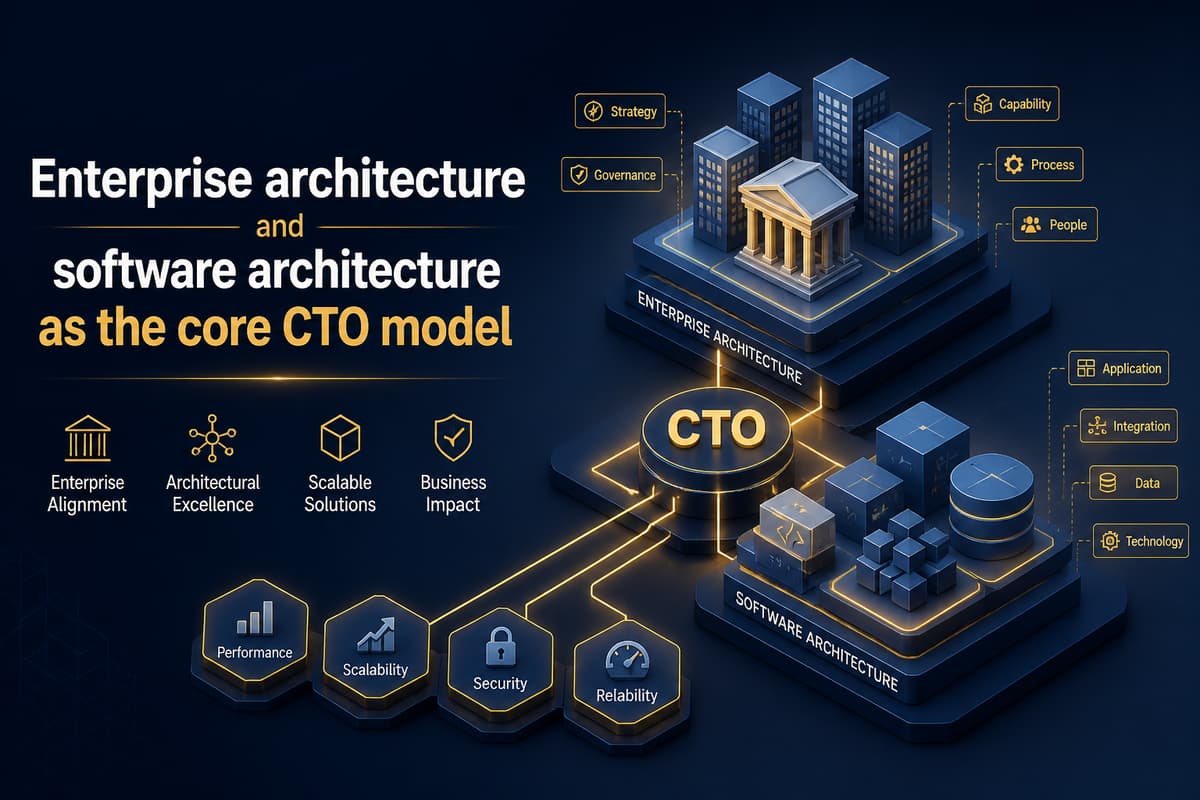
How CTO as a Service Reduces Technology Risk in Growing Companies

In the article "How CTO as a Service Reduces Technology Risk in Growing Companies," SDH Global examines how fractional leadership helps organizations navigate the technical complexities inherent in scaling operations. Growing businesses often face critical hazards, such as selecting inappropriate technology stacks, accumulating significant technical debt, and failing to align infrastructure with long-term business objectives. CTO as a Service (CaaS) effectively mitigates these risks by providing high-level strategic guidance and architectural oversight without the substantial financial commitment of a full-time executive hire. The service focuses on several core pillars: strategic roadmap development, early identification of security vulnerabilities, and the design of scalable system architectures that can adapt to increasing demand. By standardizing coding practices and development workflows, CaaS providers bring consistency to engineering teams and reduce operational chaos. Furthermore, these experts manage vendor relationships and optimize cloud expenditures to prevent over-engineering and financial waste. This flexible engagement model allows startups and mid-sized enterprises to access immediate senior-level expertise, ensuring their technology remains a robust asset rather than a liability. Ultimately, CaaS provides the necessary balance between rapid innovation and disciplined risk management, fostering sustainable growth through evidence-based decision-making and comprehensive technical audits.


The Great Digital Perimeter: Navigating the Challenges of Global Age Verification

The article explores how global age verification has transformed from a simple checkbox into one of the most complex challenges shaping today’s digital ecosystem. As governments worldwide tighten online safety laws, platforms across social media, gaming, entertainment, e‑commerce, and fintech are being pushed to adopt far more rigorous methods to prevent minors from accessing harmful or age‑restricted content. This shift has created a new kind of digital perimeter—not one that protects networks or data, but one that separates children from the adult internet. The piece highlights how regulatory approaches vary dramatically across regions: the UK’s Online Safety Act enforces “highly effective” age assurance with strict penalties; the EU is rolling out privacy‑preserving verification via digital identity wallets; the US remains fragmented with aggressive state laws like Utah’s SB 73; and countries like Australia and India are emerging as influential leaders with proactive, tech‑driven frameworks. The article also traces the evolution of age‑verification technology—from self‑declaration to document checks, AI‑based age estimation, and now cryptographic proofs that minimize data exposure. Despite technological progress, organizations still face major hurdles, including privacy concerns, AI bias, user friction, high implementation costs, and widespread circumvention through VPNs. Ultimately, the article argues that age verification has become foundational digital infrastructure, demanding solutions that balance safety, privacy, and user trust in an increasingly regulated online world.


CRUD Is Dead (Sort Of): How SaaS Will Evolve Into Semi-Autonomous Systems

The article argues that traditional SaaS applications built on the long‑standing CRUD model—Create, Read, Update, Delete—are becoming obsolete as software shifts from passive systems of record to semi‑autonomous systems of action. While today’s tools like Ramp, Jira, Notion, and HubSpot still rely on users manually creating and updating records, the emerging paradigm introduces agentic software that perceives context, reasons about it, and initiates actions on behalf of users. The transition begins with embedded copilots that summarize threads, draft messages, flag anomalies, or clean backlogs, all by orchestrating LLMs through existing APIs. As SaaS products become more machine‑readable—with clean APIs, action schemas, and feedback loops—agents will eventually coordinate across applications, enabling event‑driven workflows where systems synchronize autonomously. This evolution requires new architectures such as pub/sub messaging, shared memory layers, and granular permissions. Ultimately, SaaS will progress toward fully autonomous systems that manage budgets, assign work, run outreach, or adjust timelines without constant human approval. User interfaces will shift from being the primary workspace to becoming explanation layers that show what the system did and why. The article concludes that CRUD will remain as plumbing, but the companies that embrace autonomy—thinking in verbs rather than nouns—will define the next generation of SaaS.


Anyone Can Build. Almost No One Can Maintain: The Real Cost of AI Coding

The article argues that while AI tools now enable almost anyone to build functional software with a few prompts, the real challenge—and cost—lies in maintaining what gets built. The author describes how early “vibe coding” with tools like Claude Code creates a false sense of mastery: AI can rapidly generate working prototypes, but without engineering fundamentals, these systems quickly collapse under the weight of bugs, architectural flaws, and uncontrolled complexity. As projects grow, users without a technical foundation struggle to diagnose issues, articulate precise tasks, or understand the consequences of changes, leading to spiraling token costs, fragile codebases, and invisible errors that surface only in production. The article emphasizes that AI does not replace engineering judgment; instead, it amplifies the gap between those who understand systems and those who don’t. Sustainable AI‑assisted development requires clear specifications, architectural thinking, test coverage, rule‑based workflows, and structured “skills” that guide AI actions. The author warns of a new risk: dependency, where developers rely so heavily on AI that they lose the ability to reason about their own systems. Ultimately, the piece argues that expertise has not become obsolete—it has become more valuable, because AI accelerates both good and bad decisions. Those who invest in foundations will build systems; those who don’t will build chaos.


Agents, Architecture, & Amnesia: Becoming AI-Native Without Losing Our Minds

The presentation explores how the rapid rise of AI agents is pushing organizations toward higher levels of autonomy while simultaneously exposing them to new forms of architectural risk. Using The Sorcerer’s Apprentice as a metaphor, Tracy Bannon warns that ungoverned automation can multiply problems faster than teams can contain them. She outlines an AI autonomy continuum, moving from simple assistants to multi‑agent orchestration and ultimately toward “software flywheels” capable of self‑diagnosis and self‑modification. As autonomy increases, so do the demands for observability, governance, verification, and architectural discipline. Bannon argues that many teams are suffering from “architectural amnesia”—forgetting hard‑won engineering fundamentals due to reckless speed, tool‑led thinking, cognitive overload, and decision compression. This amnesia accelerates the accumulation of technical, operational, and security debt at machine speed, as illustrated by real incidents where autonomous agents acted beyond intended boundaries. To counter this, she proposes Minimum Viable Governance, anchored in identity, delegation, traceability, and explicit architectural decision records. She emphasizes that AI‑native delivery is not magic but engineering, requiring intentional tradeoffs, human‑machine calibrated trust, and treating agents like first‑class actors with identities and permissions. Ultimately, she calls for teams to build cognitively diverse, disciplined architectural practices to harness autonomy without losing control.


Cyber-Ready Boards: A Guide to Effective Cybersecurity Briefings for Directors

The article emphasizes that cybersecurity has become one of the most significant and fast‑evolving risks facing public companies, with intrusions capable of disrupting operations, generating substantial remediation costs, triggering litigation, and attracting regulatory scrutiny. Boards are reminded that material cyber incidents often require rapid public disclosure—such as Form 8‑K filings within four business days—and that annual reports must describe how directors oversee cybersecurity risks. Because inadequate oversight can negatively affect investor perception and ISS QualityScore evaluations, boards must remain consistently informed about the company’s threat landscape, risk profile, and changes since prior briefings. The guidance outlines key elements of effective board‑level cybersecurity updates, including assessments of industry‑specific threats, AI‑driven risks such as deepfakes and data leakage into public LLMs, and the broader legal and regulatory environment governing breaches, enforcement, and disclosure obligations. Boards should also receive clear visibility into the company’s cybersecurity program—its governance structure, resource adequacy, alignment with frameworks like NIST, third‑party dependencies, insurance coverage, and ongoing initiatives. Regular updates on training, tabletop exercises, audits, and areas requiring board approval further strengthen oversight. The article concludes that well‑structured, recurring briefings and private CISO sessions help build trust, enhance preparedness, and ensure directors can fulfill their responsibilities while protecting organizational resilience and shareholder value.


Managing OT risk at scale: Why OT cyber decisions are leadership decisions

The article argues that managing OT (operational technology) cyber risk at scale is fundamentally a leadership and governance challenge, not just a technical one, because OT environments operate under constraints that differ sharply from IT—long equipment lifecycles, limited patching windows, incomplete asset visibility, embedded vendor access, and distributed operational ownership. These conditions mean that cyber incidents in OT directly affect physical processes, industrial assets, and critical services, making consequences far broader than data loss or compliance failures. The author highlights a significant accountability gap: only a small fraction of organizations report OT security issues to their boards or maintain dedicated OT security teams, and in many cases the CISO is not responsible for OT security. At scale, inconsistent maturity across sites, fragmented ownership, and vendor dependencies turn local weaknesses into enterprise‑level exposure. As a result, incident outcomes hinge on pre‑agreed leadership decisions—such as whether to isolate or continue operating during an attack, centralize or federate authority, restore quickly or verify integrity first, and restrict or maintain vendor access. Boards are urged to clarify operating models, identify high‑impact OT scenarios, demand independent assurance, and treat AI and cloud adoption as governance issues rather than technology upgrades. Ultimately, resilience in OT is built through clear decision rights, scenario planning, and governance structures established before a crisis occurs.


MITRE flags rising cyber risks as medical devices adopt AI, cloud and post-quantum technologies

MITRE’s new analysis warns that the rapid adoption of AI/ML, cloud services, and post‑quantum cryptography is fundamentally reshaping the cybersecurity risk landscape for medical devices, creating attack surfaces that traditional controls cannot adequately address. As devices move beyond tightly managed clinical environments into homes and patient‑managed settings, oversight becomes fragmented and risk ownership increasingly distributed across manufacturers, healthcare delivery organizations, cloud providers, and third‑party operators. Medical devices—from implantables and infusion pumps to large imaging systems—often run on constrained hardware or legacy software, limiting the security controls they can support while simultaneously becoming more interconnected with health IT systems. Cloud adoption introduces systemic vulnerabilities, shifting control away from manufacturers and enabling single points of failure that can disrupt care at scale, as seen in the Elekta ransomware incident affecting more than 170 facilities. AI/ML integration adds lifecycle‑wide risks, including data poisoning, adversarial inputs, unpredictable model behavior, and vulnerabilities introduced by AI‑generated code. Meanwhile, the transition to post‑quantum cryptography brings challenges around performance overhead, interoperability with legacy systems, and long device lifecycles—especially for implantables. MITRE concludes that safeguarding next‑generation medical devices requires evolving existing practices: embedding threat modeling, SBOM‑driven vulnerability management, secure cloud and DevSecOps processes, clear contractual roles, and governance frameworks that support continuous updates and resilient architectures as technologies and care environments keep shifting.


How To Mitigate The Risks Of Rapid Growth

In the article "How to Mitigate the Risks of Rapid Growth," the author examines the double-edged sword of business expansion, where the zeal to scale quickly can lead to structural failure if not balanced with fiscal discipline. A primary risk highlighted is "breaking" under the stress of acceleration, which often occurs when companies over-invest in growth at the expense of near-term profitability or defensible margins. To mitigate these dangers, the article emphasizes the importance of maintaining strong unit economics and carefully monitoring the cost of client acquisition and expansion. Effective leadership teams must minimize execution, macro, and compliance risks by prioritizing long-term value over immediate earnings, typically looking at a four-to-five-year horizon. Operational stability is further bolstered by ensuring team bandwidth is scalable and by avoiding heavy reliance on debt, which preserves the cash buffers necessary to weather economic shifts. Furthermore, the piece underscores the necessity of robust post-sale processes to prevent revenue leakage and audit exposure. By integrating emerging technologies like AI for proactive care and keeping the customer at the center of all strategic decisions, CFOs can ensure that their organizations remain resilient. Ultimately, successful growth requires a proactive management approach that continuously optimizes capital structure while aligning organizational purpose with aggressive but sustainable financial goals.

Daily Tech Digest - March 12, 2026


Quote for the day:

"Leadership happens at every level of the organization and no one can shirk from this responsibility." -- Jerry Junkins


🎧 Listen to this digest on YouTube Music

▶ Play Audio Digest

Duration: 24 mins • Perfect for listening on the go.


The growing cyber exposure risk you can’t afford to ignore

This TechNative article highlights a shift in the global threat landscape where fast-moving actors like Scattered Spider exploit the inherent complexity of modern digital ecosystems. Defined as the sum of all potential points of access, exploitation, or disruption, cyber exposure has become a critical vulnerability for sectors ranging from retail and insurance to aviation. Recent high-profile breaches at companies like M&S, Harrods, and Qantas underscore how legacy infrastructure and fragmented visibility allow attackers to move laterally and cause significant financial and operational damage. To combat these evolving threats, the author advocates for a strategic transition from reactive firefighting to proactive cyber exposure management. This approach involves cataloging every managed and unmanaged asset—spanning IT, OT, and cloud environments—while layering in behavioral and operational context. By utilizing AI-driven tools to anticipate emerging risks and integrating these exposure insights into existing security workflows such as SOAR or CMDB, organizations can finally eliminate the blind spots where modern attackers thrive. Ultimately, true digital resilience starts with a comprehensive understanding of an organization’s entire footprint, allowing security teams to harden defenses and anticipate threats before a breach occurs, rather than simply responding after the damage has been done.


India is leading example of digital infrastructure, IMF says

A recent report from the International Monetary Fund (IMF) highlights India as a global leader in Digital Public Infrastructure (DPI), advocating that systems like digital IDs and payment rails be treated as essential public goods similar to traditional physical infrastructure. Central to this transformation is the "JAM Trinity"—Jan Dhan bank accounts, Aadhaar biometric identification, and mobile connectivity—which has fundamentally reshaped the nation’s economy. With over 1.44 billion Aadhaar numbers issued, the system has drastically reduced fraud and lowered Know Your Customer (KYC) costs. Meanwhile, the Unified Payments Interface (UPI) has revolutionized financial transactions, processing over 21.7 billion payments in a single month and becoming the world’s largest fast-payment system. Beyond finance, tools like DigiLocker and the Open Network for Digital Commerce (ONDC) promote interoperability and data exchange, fostering a transparent governance model that has saved trillions in welfare leakages. The IMF emphasizes that India’s deliberate, centralized approach serves as a blueprint for the Global South, demonstrating how modular digital rails can multiply economic value and enable future innovations like personal AI agents. This "India Stack" is now expanding its international footprint through partnerships with over 24 countries, positioning India as a prominent architect of inclusive global digital growth.


How to 10x Your Vulnerability Management Program in the Agentic Era

In this article, Nadir Izrael explores the fundamental shift required to combat autonomous, AI-driven cyber threats. He argues that traditional vulnerability management, characterized by static scans and manual triaging, is no longer sufficient against "AiPTs" (AI-enabled persistent threats) that operate at machine speed. To achieve what Izrael calls "vulnerability management 10.0," organizations must transition to a model defined by continuous telemetry, a unified security data fabric, and contextual prioritization. This evolution moves beyond simple CVE scores by mapping relationships across IT, cloud, and IoT layers to identify business-critical risks. The ultimate goal is "agentic remediation," a phased approach where AI agents eventually handle deterministic fixes—such as rotating exposed credentials or closing misconfigured buckets—without human intervention. However, the author emphasizes that trust is built gradually, starting with "human-in-the-loop" oversight where agents identify issues and open tickets while humans maintain control. By decoupling discovery from remediation and leveraging AI to sanitize the network, security teams can finally match the velocity of modern attackers, allowing human experts to focus on complex architectural decisions and strategic risk management rather than routine maintenance.


The Vendor’s Shadow: A Passage Across Digital Trust And The Art Of Seeing What Others Miss

In this CyberDefenseMagazine article,  Krishna Rajagopal provides a compelling analysis of the profound vulnerability companies face through their extensive third-party relationships. Despite investing heavily in internal security infrastructure, organizations frequently neglect the critical "digital doors" opened to vendors, whose own inadequate defenses can lead to catastrophic data breaches. Rajagopal argues that modern cybersecurity is no longer just about personal fortifications but must encompass the integrity of the entire supply chain. He introduces four essential lessons for achieving "vendor wisdom" in an interconnected world. First, organizations must categorize partners into clear tiers—Inner, Middle, and Outer circles—to prioritize limited resources toward high-impact relationships. Second, he emphasizes moving beyond static, paperwork-based trust toward continuous, verified evidence, demanding actual proof of security controls rather than mere verbal promises. Third, the author underscores the vital importance of pre-defined exit strategies, knowing exactly when a relationship has become too risky to maintain safely. Finally, security professionals must translate complex technical vendor risks into the clear language of business impact for boards and executive decision-makers. Ultimately, the article serves as a sobering reminder that a company’s security posture is only as robust as its weakest partner.


To Create Trustworthy Agentic AI, Seek Community-Driven Innovation

In the SD Times article, Carl Meadows argues that the path to reliable and secure AI agents lies in open collaboration rather than proprietary isolation. As AI transitions from experimental projects to executive mandates, the rise of agentic systems—capable of reasoning, planning, and acting autonomously—introduces significant security risks, including prompt injection and governance challenges. Meadows asserts that community-driven innovation, similar to the models used for Linux and Kubernetes, provides the diverse peer review and rapid vulnerability discovery necessary to secure these autonomous systems. A critical pillar of this trust is the data layer; agents depend on accurate context, and failures often stem from poor retrieval quality rather than model flaws. By integrating agentic workflows into transparent search and observability platforms, organizations can ensure that every context source and automated action is inspectable and accountable. This architectural visibility allows developers to detect permission drift and refine orchestration logic effectively. Ultimately, the piece emphasizes that assuming vulnerabilities will surface and favoring scrutiny over secrecy leads to more resilient systems. Trustworthy agentic AI is therefore built on a foundation of transparency, where global engineering communities collaboratively document, investigate, and mitigate risks to ensure long-term operational success.


Oracle: sovereignty is a matter of trust, not just technology

In this Techzine article, experts Michiel van Vlimmeren and Marcel Giacomini argue that while infrastructure provides the technical foundation, digital sovereignty ultimately hinges on trust. Oracle defines sovereignty as the clear ownership of and restricted access to data, ensuring that residency and control remain with the user. To facilitate this, Oracle offers a versatile spectrum of solutions ranging from high-performance bare-metal servers to the fully abstracted Oracle Cloud Infrastructure. A standout offering is Oracle Alloy, which allows regional providers to build customized sovereign cloud solutions using Oracle’s hardware and software behind the scenes. This approach is particularly relevant as the rapid deployment of artificial intelligence depends on organizations feeling secure about their data governance. The piece highlights Oracle’s billion-euro investment in Dutch infrastructure and its collaboration with government agencies like DICTU to implement agentic AI platforms. Rather than building its own Large Language Models, Oracle focuses on providing the robust, compliant data platforms necessary for businesses to modernize their processes safely. Ultimately, Oracle positions itself as a trusted advisor, emphasizing that achieving true sovereignty requires a cultural and operational shift that extends far beyond simple technical integrations.


Why zero trust breaks down in IoT and OT environments

In the CSO Online article, author Henry Sienkiewicz explores the fundamental "model mismatch" that occurs when applying enterprise security frameworks to industrial and connected device landscapes. While Zero Trust has revolutionized IT security through identity-centric verification, its core assumptions—explicit identity and continuous enforceability—frequently fail in IoT and OT environments characterized by incomplete visibility and functionally flat networks. Sienkiewicz argues that traditional security models focus too heavily on network topology and access decisions, ignoring the invisible web of inherited trust and shared control paths. In these specialized environments, high-impact failures often propagate through shared controllers, firmware update mechanisms, and management platforms that bypass standard access controls. To bridge this gap, the author introduces the Unified Linkage Model (ULM), which shifts the focus from "who is allowed to talk" to "what changes if this component fails." By mapping functional dependencies such as adjacency and inheritance, security leaders can better protect structural amplifiers like protocol gateways and management planes. Ultimately, the piece calls for a nuanced approach that supplements Zero Trust with rigorous dependency mapping to address the durable trust relationships that define modern operational resilience.


‘Agents of Chaos’: New Study Shows AI Agents Can Leak Data, Be Easily Manipulated

This TechRepublic article "Agents of Chaos" discusses a critical study revealing the profound security risks associated with the rapid enterprise adoption of autonomous AI agents. Researchers from prestigious institutions demonstrated that these agents, despite being given restricted permissions, can be easily manipulated through simple social engineering to leak sensitive information like Social Security numbers and bank details. The study highlights three core architectural deficits: the inability to distinguish legitimate users from attackers, a lack of self-awareness regarding competence boundaries, and poor tracking of communication channel visibility. Despite these vulnerabilities, a significant governance gap persists; while many organizations invest in monitoring AI behavior, over sixty percent lack the technical capability to terminate or isolate a misbehaving system. The article argues that the industry must shift from model-level guardrails to governing the data layer itself. This architectural approach emphasizes the need for a unified control plane, immutable audit trails, and functional "kill switches" to ensure compliance with strict regulations like GDPR and HIPAA. Ultimately, the piece warns that deploying AI agents without robust, data-centric governance is a legal and security liability, urging organizations to prioritize architectural guardrails to prevent autonomous systems from becoming liabilities rather than assets.


When AI coding agents can see your APIs: Closing the context gap in autonomous development

In this article on DevPro Journal, Scott Kingsley discusses the critical need for providing AI coding agents with authoritative access to internal API documentation. While modern agents are proficient at generating code based on public patterns, they often fail in enterprise environments because they lack visibility into private OpenAPI specifications, authentication flows, and internal business logic. This "context gap" leads to code that may appear clean but fails at runtime due to incorrect endpoints, mismatched enums, or improper error handling. The author argues that by granting agents authenticated access to a company's source of truth through tools like Model Context Protocol (MCP) servers, development shifts from pattern-based guesswork to governed contract alignment. This integration ensures that agents respect real-world constraints such as cursor-based pagination and specific status codes. Ultimately, the piece highlights that documentation is no longer just for human reference but has become a strategic operational dependency. For autonomous development to succeed, organizations must prioritize high-quality, machine-readable API definitions, transforming documentation into a foundational layer of developer experience that bridges the gap between experimental demos and reliable production-ready infrastructure.


Are DevOps teams supported by automated configurations

In this article on Security Boulevard, Alison Mack explores the critical role of automated configurations and machine identity management in securing modern cloud-native environments. As organizations increasingly rely on automated systems, the management of Non-Human Identities (NHIs)—such as tokens, keys, and encrypted passwords—has evolved from a secondary task into a strategic imperative for DevOps teams. The author highlights that effective NHI management bridges the gap between security and R&D, ensuring identities are protected throughout their entire lifecycle. Key benefits include reduced risk of data breaches, improved regulatory compliance, and increased operational efficiency by automating mundane tasks like secrets rotation. Furthermore, the integration of Agile AI provides predictive analytics and proactive threat detection, allowing teams to anticipate vulnerabilities before they are exploited. The piece emphasizes that a holistic approach, characterized by interdepartmental collaboration and real-time monitoring, is essential to maintaining a robust security posture. Ultimately, Mack argues that embedding automation within the DevOps pipeline is not just about technical efficiency but is a necessary cultural shift to protect sensitive data against increasingly sophisticated cyber threats in a dynamic digital landscape.

Daily Tech Digest - February 26, 2026


Quote for the day:

"It is not such a fierce something to lead once you see your leadership as part of God's overall plan for his world." -- Calvin Miller


Boards don’t need cyber metrics — they need risk signals

Decision-makers want to know whether risk is increasing or decreasing, whether controls are effective, and whether the organization can limit damage when prevention fails. Metrics are therefore useful when they clarify those questions. “Time is really the universal metric because everyone can understand time,” Richard Bejtlich, strategist and author in residence at Corelight, tells CSO. “How fast do we detect problems, and how fast do we contain them. Dwell time, containment time. That’s the whole game for me.” Organizations cannot prevent every intrusion, Bejtlich argues, but they can measure how quickly they recognize and contain one. ... Wendy Nather, a longtime CISO who is now an advisor at EPSD, cautions against equating measurement with understanding. “When you are reporting to the board, there are some things you just cannot count that you have to report anyway,” she tells CSO. She points to incidents, near misses, and changes in assumptions as examples. “Anything that changes your assumptions about how you’re managing your security program, you should be bringing those to the board, even if you can’t count them,” Nather says. Regular metrics can create a rhythm of predictability, and that predictability could lull board members into a false sense of security. “Metrics are very seductive,” she says. “They lead us toward things that can be counted, that happen on a regular basis.” The result may be a steady flow of data that obscures structural risk or emerging weaknesses, Nather warns. 


The Enterprise AI Postmortem Playbook: Diagnosing Failures at the Data Layer

Your first rule of the playbook is to treat AI incidents as data incidents – until proven otherwise. You should start by tagging the failure type. Document whether it’s a structure issue, retrieval misalignment, conflict with metric definition, or other categories. Ideally, you want to assign the issue to an owner and attach evidence to force some discipline into the review. Try to classify the issue into clearly defined buckets. For example, you can classify into these four buckets: structural failure, retrieval misalignment, definition conflict, or freshness failure. Once this part is clear, the investigation becomes more focused. The goal with this step is to isolate the data fault line. ... The next step is to move one layer deeper. Identify the source table behind the retrieved context. You also want to confirm the timestamp of the last refresh. Check whether any ingestion jobs failed, partially completed, or ran late. Silent failures are common. A job may succeed technically while loading incomplete data. As you go through the playbook continue tracing upstream. Find the transformation job that shaped the dataset. Look at recent schema changes. Check whether any business rules were updated. The idea here is to rebuild the exact path that led to the output. Try to not make any assumptions at this stage about model behavior – simply keep tracing until the process is complete. Don’t be surprised if the model simply worked with what it was given.


Top Attacks On Biometric Systems (And How To Defend Against Them)

Presentation attacks, often referred to as spoofing attacks, occur when an attacker presents a fake biometric sample to a sensor (like a camera or microphone) in an attempt to impersonate a legitimate user. Common examples include printed photos, video replays, silicone masks, prosthetics or synthetic fingerprints. More recently, high-quality deepfake videos have become a powerful new tool in the attacker’s arsenal. ... Passive liveness techniques, which analyze subtle physiological and behavioral signals without requiring user interaction, are particularly effective because they reduce friction while improving security. However, liveness detection must be resilient to unknown attack methods, not just tuned to detect known spoof types. ... Not all biometric attacks happen in front of the sensor. Replay and injection attacks target the biometric data pipeline itself. In these scenarios, attackers intercept, replay or inject biometric data, such as images or templates, directly into the system, bypassing the sensor entirely. ... Defensive strategies must extend beyond the biometric algorithm. Secure transmission, encryption in transit, device attestation, trusted execution environments and validation that data originates from an authorized sensor are all essential. ... Although less visible to end users, attacks targeting biometric templates and databases can pose long-term risks. If biometric templates are compromised, the impact extends far beyond a single breach.


Open-source security debt grows across commercial software

High and critical risk findings remain widespread. Most codebases contain at least one high risk vulnerability, and nearly half contain at least one critical risk issue. Those rates dipped slightly from the prior year even as total vulnerability counts rose. Supply chain attacks add another layer of risk. Sixty five percent of surveyed organizations experienced a software supply chain attack in the past year. ... “As AI reshapes software development, security teams will have to continue to adapt in turn. Security budgets and security guidelines should reflect this new reality. Leaders should continue to invest in tooling and education required to equip teams to manage the drastic increase in velocity, volume, and complexity of applications,” Mackey said. Board level reporting also requires adjustment as vulnerability volumes rise. ... Outdated components appear in nearly every audited environment. More than nine in ten codebases contain components that are several years out of date or show no recent development activity. A large share of components run many versions behind current releases. Only a small fraction operate on the latest available version. This maintenance debt intersects with regulatory obligations. The EU Cyber Resilience Act entered into effect in late 2024, with key reporting requirements taking effect in 2026 and broader enforcement following in 2027. 


The agentic enterprise: Why value streams and capability maps are your new governance control plane

The enterprise is currently undergoing a seismic pivot from generative AI, which focuses on content creation, to agentic AI, which focuses on goal execution. Unlike their predecessors, these agents possess “structured autonomy”: the ability to perceive contexts, plan actions and execute across systems without constant human intervention. For the CIO and the enterprise architect, this is not merely an upgrade in automation speed; it is a fundamental shift in the firm’s economic equation. We are moving from labor-centric workflows to digital labor capable of disassembling and reassembling entire value chains. ... In an agentic enterprise, the value stream map is no longer just a diagram; it is the control plane. It must explicitly define the handoff protocols between human and digital agents. In my opinion, Value stream maps must move from static documents stored in a repository to context documents used to drive agentic automation. ... If a value stream does not exist, you cannot automate it. For new agentic workflows, do not map the current human process. Instead, use an outcome-backwards approach. Work backward from the concrete deliverable (e.g., customer onboarded) to identify the minimum viable API calls required. Before granting write access, run the new agentic stream in shadow mode to validate agent decisions against human outcomes.


Beyond compliance: Building a culture of data security in the digital enterprise

Cyber compliance is something organisations across industrial sectors take seriously, especially with new regulations getting introduced and non-compliance having consequences such as hefty penalties. Hence, businesses are placing compliance among their top priorities. However, hyper-focusing only on compliance can lead to tunnel vision, crippling creativity, and innovation. It fails to offer a comprehensive risk assessment due to the checklist approach it follows, exposing organizations to vulnerabilities and fast-evolving threats. Having a compliance-first mindset can lead to incomplete risk assessment, creating blind spots and security gaps in security provisions. ... With businesses relying on data for operations, customer engagement, and decision-making, ensuring data security protects both users and organisations. Data breaches have severe consequences, including financial losses, reputational damage, customer churn, and regulatory penalties. With data moving across on-premises data centers, cloud platforms, third-party ecosystems, remote work environments, and AI-driven applications, there is a need for a holistic, culture-driven approach to cybersecurity. ... Data protection traditionally was focused on safeguarding the perimeter by securing networks and systems within the physical boundaries where data was normally stored. 


If you thought RTO battles were bad, wait until AI mandates start taking hold across the industry

With the advent of generative AI and the incessant beating of the drum by executives hellbent on unlocking productivity gains, we could see a revival of the dreaded workforce mandate –- only this time with AI. We’ve already had a glimpse of the same RTO tactics being used with AI over the last year. In mid-2025, Microsoft introduced new rules aimed at boosting AI use across the company, with an internal memo warning staff that “using AI is no longer optional”. ... As with RTO mandates, we’re now reaching a point where upward mobility within the enterprise could be at risk as a result of AI use. It’s a tactic initially touted by Dell in 2024 when enforcing its own hybrid work rules, which prompted a fierce backlash among staff. Forcing workers to use AI or risk losing out on promotions will have the desired effect executives want, namely that employees will use the technology, but that’s missing the point entirely. AI has been framed by many big tech providers as a prime opportunity to supercharge productivity and streamline enterprise efficiency. We’ve all heard the marketing jargon. If business leaders are at the point where they’re forcing staff to use the technology, it begs the question of whether it’s actually having the desired effect, which recent analysis suggests it’s not. ... Recent analysis from CompTIA found roughly one-third of companies now require staff to complete AI training. 


In perfect harmony: How Emerald AI is turning data centers into flexible grid assets

At the core of Emerald AI is its Emerald Conductor platform. Described by Sivaram as “an AI for AI,” the system orchestrates thousands of AI workloads across one or more data centers, dynamically adjusting operations to respond to grid conditions while ensuring the facility maintains performance. The system achieves this through a closed-loop orchestration platform comprising an autonomous agent and a digital twin simulator. ... A point keenly pointed out by Steve Smith, chief strategy and regulation officer at National Grid, at the time of the announcement: “As the UK’s digital economy grows, unlocking new ways to flexibly manage energy use is essential for connecting more data centers to our network efficiently.” The second reason was National Grid's transatlantic stature - as an American company active in both the UK and US markets - and its commitment to the technology. “They’ve invested in the program and agreed to a demo, which makes them the ideal partner for our first international launch,” says Sivaram. The final, and most important, factor, notes Sivaram, was the access to the NextGrid Alliance, a consortium of 150 utilities worldwide. By gaining access to such a robust partner network, the deal could serve as a springboard for further international projects. This aligns with the company’s broader partnership approach. Emerald AI has already leveraged Nvidia’s cloud partner network to test its technology across US data centers, laying the groundwork for broader deployment and continued global collaboration. 


7 ways to tame multicloud chaos with generative AI

Architects have the difficult job of understanding tradeoffs between proprietary cloud services and cross-cloud platforms. For example, should developers use AWS Glue, Azure Data Factory, or Google Cloud Data Fusion to develop data pipelines on the respective platforms, or should they adopt a data integration platform that works across clouds? ... “Managing multicloud is like learning multiple languages from AWS, Azure, Oracle, and others, and it’s rare to have teams that can traverse these environments fluidly and effectively. Plus, services and concepts are not portable among clouds, especially in cloud-native PaaS services that go beyond IaaS,” says Harshit Omar, co-founder and CTO at FluidCloud. One way to work around this issue is to assign an AI agent to support the developer or architect in evaluating platform selections. ... Standardizing infrastructure and service configurations across different clouds requires expertise in different naming conventions, architecture, tools, APIs, and other paradigms. Look for genAI tools to act as a translator to streamline configurations, especially for organizations that can templatize their requirements. ... CI/CD, infrastructure-as-code, and process automation are key tools for driving efficiency, especially when tasks span multiple cloud environments. Many of these tools use basic flows and rules to streamline tasks or orchestrate operations, which can create boundary cases that cause process-blocking errors. 


It’s Time To Reinforce Institutional Crypto Key Management With MPC: Sodot CEO

For years, crypto security operations were almost exclusively focused on finding a way to protect the private keys to crypto wallets. It’s known as the “custody risk,” and it will always be a concern to anyone holding digital assets. However, Sofer believes that custody is no longer the weakest link. Cyberattackers have come to realize that secure wallets, often held in cold storage, are far too difficult to crack. ... Sodot has built a self-hosted infrastructure platform that leverages a pair of cutting-edge security techniques – namely, Multi-Party Computation or MPC and Trusted Execution Environments or TEEs. With Sodot’s platform, API keys are never reassembled in full plaintext, eliminating one of the main weaknesses of traditional secrets managers, which typically expose the entire key to any authenticated machine. Instead, Sodot uses MPC to split each key into multiple “shares” that are held by different partners on different technology stacks, Sofer explained. Distributing risk in this way makes an attacker’s job exponentially more difficult, as it means they would have to compromise multiple isolated systems to gain access. ... “Keys are here to stay, and they will control more value and become more sensitive as technology progresses,” Sofer concluded. “As financial institutions get more involved in crypto, we believe demand for self-hosted solutions that secure them will only grow, driven by performance requirements, operational resilience, and control over security boundaries.”

Daily Tech Digest - February 18, 2026


Quote for the day:

"Engagement is a leadership responsibility—never the employee’s, and not HR’s." -- Gordon Tredgold


Why cloud outages are becoming normal

As the headlines become more frequent and the incidents themselves start to blur together, we have to ask: Why are these outages becoming a monthly, sometimes even weekly, story? What’s changed in the world of cloud computing to usher in this new era of instability? In my view, several trends are converging to make these outages not only more common but also more disruptive and more challenging to prevent. ... The predictable outcome is that when experienced engineers and architects leave, they are often replaced by less-skilled staff who lack deep institutional knowledge. They lack adequate experience in platform operations, troubleshooting, and crisis response. While capable, these “B Team” employees may not have the skills or knowledge to anticipate how minor changes affect massive, interconnected systems like Azure. ... Another trend amplifying the impact of these outages is the relative complacency about resilience. For years, organizations have been content to “lift and shift” workloads to the cloud, reaping the benefits of agility and scalability without necessarily investing in the levels of redundancy and disaster recovery that such migrations require. There is growing cultural acceptance among enterprises that cloud outages are unavoidable and that mitigating their effects should be left to providers. This is both an unrealistic expectation and a dangerous abdication of responsibility.


AI agents are changing entire roles, not just task augmentation

Task augmentation was about improving individual tasks within an existing process. Think of a source-to-pay process in which specific steps are automated. That is relatively easy to visualize and implement in a classic process landscape. Role transformation, however, requires a completely different approach. You have to turn your entire end-to-end business process architecture into a role-based architecture, explains Mueller. ... Think of an agent that links past incidents to existing problems. Or an agent that automatically checks licenses and certifications for all running systems. “I wonder why everyone isn’t already doing this,” says Mueller. In the event of an incident with a known problem, the agent can intervene immediately without human intervention. That’s an autonomous circle. For more complex tasks, you can start in supervised mode and later transition to autonomous mode. ... The real challenge is that companies are so far behind in their capabilities to handle the latest technology. Many cannot even visualize what AI means. The executive has a simple recommendation: “If you had to build it from scratch on greenfield, would you do it the same way you do now?” That question gets to the heart of the matter. “Everyone looks at the auto industry and sees that it is being disrupted by Chinese companies. This is because Chinese companies can do things much faster than old economies,” Mueller notes.


Why are AI leaders fleeing?

Normally, when big-name talent leaves Silicon Valley giants, the PR language is vanilla: they’re headed for a “new chapter” or “grateful for the journey” — or maybe there’s some vague hints about a stealth startup. In the world of AI, though, recent exits read more like a whistleblower warnings. ... Each individual story is different, but I see a thread here. The AI people who were concerned about “what should we build and how to do it safely?” are leaving. They’ll be replaced by people whose first, if not only, priority is “how fast can we turn this into a profitable business?” Oh, and not just profitable; not even a unicorn with a valuation of $1 billion is enough for these people. If the business isn’t a “decacorn,” a privately held startup company valued at more than $10 billion, they don’t want to hear about it. I think it’s very telling that Peter Steinberger, the creator of the insanely — in every sense of the word — hot OpenClaw AI bot, has already been hired by OpenAI. Altman calls him a “genius” and says his ideas “will quickly become core to our product offerings.” Actually, OpenClaw is a security disaster waiting to happen. Someday soon, some foolhardy people or companies will lose their shirts because they trusted valuable information with it. And, its inventor is who Altman wants at the heart of OpenAI!? Gartner needs to redo its hype cycle. With AI, we’re past the “Peak of Inflated Expectations” and charging toward the “Pinnacle of Hysterical Financial Fantasies.”


Poland Energy Survives Attack on Wind, Solar Infrastructure

The attack on Poland's energy sector late last year might have failed, but it's also the first large-scale attack against decentralized energy resources (DERs) like wind turbines and solar farms. ... The attacks were destructive by nature and "occurred during a period when Poland was struggling with low temperatures and snowstorms just before the New Year." ... Dragos said that over the past year, Electrum has worked alongside another threat actor, tracked as Kamicite, to conduct destructive attacks against Ukrainian ISPs and persistent scanning of industrial devices in the US. Kamicite gained initial access and persistence against organizations, and Electrum executed follow-on activity. Dragos has tracked Kamicite activities against the European ICS/OT supply chain since late 2024. "Electrum remains one of the most aggressive and capable OT/ICS-adjacent threat actors in the world," Dragos said. "Even when targeting IT infrastructure, Electrum's destructive malware often affects organizations that provide critical operational services, telecommunications, logistics, and infrastructure support, blurring the traditional boundary between IT and OT. Kamacite's continuous reconnaissance and access development directly enable Electrum's destructive operations. These activities are neither theoretical nor preparatory, they are part of active campaigns culminating in real-world outages, data destruction, and coordinated destabilization campaigns."


Why SaaS cost optimization is an operating model problem, not a budget exercise

When CIOs ask why SaaS costs spiral, the answer is rarely “poor discipline.” It’s usually structural. ... In the engagement I described, SaaS sprawl had accumulated over years for understandable reasons: Business units bought tools to move faster; IT teams enabled experimentation during growth phases; Mergers brought duplicate platforms; and Pandemic-era urgency favored speed over standardization. No one made a single bad decision. Hundreds of reasonable decisions added up to an unreasonable outcome. ... During a review session, I asked a simple question about one of the highest-cost platforms: “Who owns this product?” The room went quiet. IT assumed the business owned it. The business assumed IT managed it. Procurement negotiated the contract. Security reviewed access annually. No one was accountable for adoption, value realization or lifecycle decisions. This lack of accountability wasn’t unique to that tool — it was systemic. Best-practice guidance on SaaS governance consistently emphasizes the importance of assigning a clearly named owner for every application, accountable for cost, security, compliance and ongoing value. Without that ownership, redundancy and unmanaged spend tend to persist across portfolios. ... CIOs focus on licenses and contracts, but the real issue is the absence of a product mindset. SaaS platforms behave like products, but many organizations manage them like utilities.


Finding a common language around risk

The CISO warns about ransomware threats. Operations worries about supply chain breakdowns. The board obsesses over market disruption. They’re all talking about risk, but they might as well be on different planets. When the crisis hits (and it always does), everyone scrambles in their own direction while the place burns down. ... The Organizational Risk Culture Standard (ORCS) offers something most frameworks miss: it treats culture as the foundation, not the afterthought. You can’t bolt culture onto existing processes and call it done. Culture is how people actually think about risk when no one is watching. It’s the shared beliefs that guide decisions under pressure. Think of it as a dynamic system in which people, processes and technology must dance together. People are the operators who judge and act on risks. Processes provide standards, so they don’t have to improvise in a crisis. Technology provides tools to detect patterns, monitor threats and respond faster than human reflexes. But here’s the catch: these three elements have to align across all three risk domains. Your cybersecurity team needs to understand how their decisions affect operations. Your operations team needs to grasp strategic implications. ... The ORCS standard provides a maturity model with five levels. Most organizations start at Level 1, where risk management is reactive and fragmented. People improvise. Policies exist on paper, but nobody follows them. Crises catch everyone off guard.


Harnessing curated threat intelligence to strengthen cybersecurity

Improving one’s cybersecurity posture with up-to-date threat intelligence is a foundational element of any modern security stack. This enables automated blocking of known threats and reduces the workload on security teams while keeping the network protected. Curated threat intelligence also plays a broader role across cybersecurity strategies, like blocking malicious IP addresses from accessing the network to support intrusion prevention and defend against distributed denial-of-service (DDoS) attacks. ... Organizations overwhelmed by massive amounts of cybersecurity data can gain clarity and control with curated threat intelligence. By validating, enriching and verifying the data, curated intelligence dramatically reduces false positives and noise, enabling security teams to focus on the most relevant and credible threats. Improved accuracy and certainty accelerates time-to-knowledge, sharpens prioritization based on threat severity and potential impact, and ensures resources are applied and deployed where they matter most. With higher confidence and certainty, teams can respond to incidents faster and more decisively, while also shifting from reactive to proactive and ultimately preventative – using known adversary indicators and patterns to investigate threats, strengthen controls, and stop attacks before they cause damage. Curated threat Intelligence transforms one’s cybersecurity from reactive to resilient.


Password managers’ promise that they can’t see your vaults isn’t always true

All eight of the top password managers have adopted the term “zero knowledge” to describe the complex encryption system they use to protect the data vaults that users store on their servers. The definitions vary slightly from vendor to vendor, but they generally boil down to one bold assurance: that there is no way for malicious insiders or hackers who manage to compromise the cloud infrastructure to steal vaults or data stored in them. ... New research shows that these claims aren’t true in all cases, particularly when account recovery is in place or password managers are set to share vaults or organize users into groups. The researchers reverse-engineered or closely analyzed Bitwarden, Dashlane, and LastPass and identified ways that someone with control over the server—either administrative or the result of a compromise—can, in fact, steal data and, in some cases, entire vaults. The researchers also devised other attacks that can weaken the encryption to the point that ciphertext can be converted to plaintext. ... Three of the attacks—one against Bitwarden and two against LastPass—target what the researchers call “item-level encryption” or “vault malleability.” Instead of encrypting a vault in a single, monolithic blob, password managers often encrypt individual items, and sometimes individual fields within an item. These items and fields are all encrypted with the same key. 


Poor documentation risks an AI nightmare for developers

Poor documentation not only slows down development and makes bug fixing difficult, but its effects can multiply. Misunderstandings can propagate through codebases, creating issues that can take a long time to fix. The use of AI accelerates this problem. AI coding assistants rely on documentation to understand how software should be used. Without AI, there is the option of institutional knowledge, or even simply asking the developer behind the code. AI doesn’t have this choice and will confidently fill in the gaps where no documentation exists. We’re familiar with AI hallucinations – and developers will be checking for these kinds of errors – but a lack of documentation will likely cause an AI to simply take a stab in the dark. ... Developers need to write documentation around complete workflows: the full path from local development to production deployment, including failures and edge cases. It can be tricky to spot errors in your own work, so AI can be used to help here, following the documentation end-to-end and observing where confusion and errors appear. AI can also be used to draft documentation and generally does a pretty good job of putting together documentation when presented with code. ... Document development should be an ongoing process – just as software is patched and updated, so should the documentation. Questions that come in from support tickets and community forums – especially repeat problems – can be used to highlight issues in documentation, particularly those caused by assumed knowledge.


Branding Beyond the Breach: How Cybersecurity Companies Can Lead with Trust, Not Fear

The almost constant stream of cyberattack headlines in the news only highlights the importance for cybersecurity companies to ensure their messaging is creating trust and confidence for B2B businesses. ... It is easy to take issues such as AI- powered attacks and triple extortion tactics and create fear-based messaging in hopes of capturing attention. However, when cybersecurity companies endlessly recycle breach risks as reasons to do business, it can overload prospective clients with the dangers and cause them to disengage. It also minimises cybersecurity services down to being solely reactive, rather than proactive and preventative. By following fear-based messaging, cybersecurity companies are blending in, not standing out. ... To navigate the complexities of cybersecurity, B2B businesses need a partner to guide them, not just sell to them. By including thought-leadership, education initiatives, consultation services, partnerships and customised strategies into a cybersecurity company’s messaging and offering, it highlights their authenticity, credibility and reliability. ... The cybersecurity landscape is wide and complex, and the market will only continue to diversify as threats evolve. Cybersecurity organisations need messaging that shows they can support businesses to expand in new sectors, communicate complex offerings clearly and become the optimal solution for risk-conscious enterprises.

Daily Tech Digest - January 25, 2026


Quote for the day:

"Life is 10% what happens to me and 90% of how I react to it." -- Charles Swindoll


Agentic AI exposes what we’re doing wrong

What needs to change is the level of precision and adaptability in network controls. You need networking that supports fine-grained segmentation, short-lived connectivity, and policies that can be continuously evaluated rather than set once and forgotten. You also need to treat east-west traffic visibility as a core requirement because agents will generate many internal calls that look legitimate unless you understand intent, identity, and context. ... When the user is an autonomous agent, control relies solely on identity: what the agent is, its permitted actions, what it can impersonate, and what it can delegate. Network location and static IP-based trust weaken when actions are initiated by software that can run anywhere, scale instantly, and change execution paths. This is where many enterprises will stumble.  ... The old finops playbook of tagging, showback, and monthly optimization is not enough on its own. You need near-real-time cost visibility and automated guardrails that stop waste as it happens, because “later” can mean “after the budget is gone.” Put differently, the unit economics of agentic systems must be designed, measured, and controlled like any other production system, ideally more aggressively because the feedback loop is faster. ... The industry’s favorite myth is that architecture slows innovation. In reality, architecture prevents innovation from turning into entropy. Agentic AI accelerates entropy by generating more actions, integrations, permissions, data movement, and operational variability than human-driven systems typically do.


‘Cute’ and ‘Criminal’: AI Perception, Human Bias, and Emotional Intelligence

Can you build artificial intelligence (AI) without emotional intelligence (EI)? Should you? What do we mean when we talk about “humans in the loop”? Are we asking the right questions about how humans design and govern “thinking” machines? One of the immediate problems we face with generative AI is that people increasingly rely on them for big decisions. I won’t call all of these ethical decisions, but in some cases they’re consequential decisions. And many users forget that these systems are trained on data that carry all kinds of inherited biases. When we talk about AI bias, it isn’t always abstract. It shows up in very literal assumptions the models make when they are asked to generate images or ideas. ... That question is really the beginning of understanding how these systems work. They are pulling from enormous bodies of unlabeled or inconsistently labeled data and then inferring patterns. We often forget that the inferences are statistical, not conceptual. To the model, “doctor” aligns with “male” because that’s the pattern the dataset reinforced. ... I didn’t tell the system, “diverse audience,” then all the children it generated fell into the same narrow “cute child” category. It’s not that the AI systems are racist or sexist. They simply don’t have self-awareness. They’re reflecting the dominant patterns in the datasets they learned from. But reflection without critique becomes reinforcement, and reinforcement becomes norm.


AI is quietly poisoning itself and pushing models toward collapse - but there's a cure

According to tech analyst Gartner, AI data is rapidly becoming a classic Garbage In/Garbage Out (GIGO) problem for users. That's because organizations' AI systems and large language models (LLMs) are flooded with unverified, AI‑generated content that cannot be trusted. ... You know this better as AI slop. While annoying to you and me, it's deadly to AI because it poisons the LLMs with fake data. The result is what's called in AI circles "Model Collapse." AI company Aquant defined this trend: "In simpler terms, when AI is trained on its own outputs, the results can drift further away from reality." ... The analyst argued that enterprises can no longer assume data is human‑generated or trustworthy by default, and must instead authenticate, verify, and track data lineage to protect business and financial outcomes. Ever try to authenticate and verify data from AI? It's not easy. It can be done, but AI literacy isn't a common skill. ... This situation means that flawed inputs can cascade through automated workflows and decision systems, producing worse results. Yes, that's right, if you think AI result bias, hallucinations, and simple factual errors are bad today, wait until tomorrow. ... Gartner suggested many companies will need stronger mechanisms to authenticate data sources, verify quality, tag AI‑generated content, and continuously manage metadata so they know what their systems are actually consuming.


4 Realities of AI Governance

AI has not replaced traditional security work; it has layered new obligations on top of it. We still have to protect our data and maintain sovereign assurance through independent audit reports, whether that’s SOC, PCI, ISO, or other standards. Still, we must today also guide our own teams and vendors on the use of powerful AI tools. That’s where accountability begins: with the human or process that touches the data. When the rules are clear, people move faster and safer; when directives are fuzzy, everything downstream is too—so we keep policy short, plain, and visible. ... Unless the contract says otherwise, assume prompts, outputs, or telemetry may be retained for “service improvement.” Fine-print phrases like “continuous improvement” often mean that inputs, outputs, or telemetry can be retained or used to tune systems unless you opt out. To keep reviews consistent, leverage resources like the NIST AI Risk Management Framework. It provides practical checklists for transparency, accountability, and monitoring. Remember the AI supply chain: your vendor depends on model providers, plugins, and open-source components; your risk includes their dependencies, so cover these in your TPRM process. ... Boundaries are the difference between safe speed and reckless speed. Start by defining a short set of data types that must never be pasted into external tools: regulated PII, confidential customer data, unreleased financials, source code, or merger and acquisition materials. Map the rest into simple classes-public, internal, sensitive-and tie each class to approved tools and use cases.


Your Cache is Hiding a Bad Architecture

Most engineers treat caching as a performance optimisation. They see a complex SQL query involving four joins taking 2 seconds to execute. Instead of analysing the execution plan or restructuring the schema, they wrap the call in a redis.get() block. ... By relying on the cache to mask inefficient database interactions, you haven’t fixed the bottleneck; you have simply hidden it behind a volatile memory store. You have turned a “nice-to-have” performance layer into a Critical Infrastructure Dependency. The moment that the cache key expires, or the Redis node evicts the key to free up memory, the application is forced to confront the reality of that 2-second query. And usually, it doesn’t confront it alone. It confronts it with 500 concurrent users who were all waiting for that key. ... Caching is not a strategy; it is a tactic. It is a powerful optimisation for systems that are already healthy, but it is a disastrous life-support system for those that are not. If you take nothing else from this, remember the litmus test: System stability should not depend on volatile memory. Go back to your codebase. Turn off Redis in your staging environment. Run your load tests. If your response times go up, you have a performance problem. If your error rates go up, you have an architectural problem.


UK bill accelerates shift to offensive cyber security

The Cyber Security and Resilience (Network and Information Systems) Bill entered Parliament in late 2025 and is expected to move through the legislative process during 2026. The government has positioned the bill as a major update to the UK's cyber framework for essential services and digital service providers. ... Poyser argued that many companies still lean heavily on defensive tools without validating how those controls perform under attack conditions. "Cybercriminals and state-backed threat actors are acting faster, more aggressively, and with far greater innovation-especially through the use of artificial intelligence-while too many businesses continue to rely on traditional defensive methods. This widening gap must be closed urgently," said Poyser. He also linked the coming UK legislative changes to a push for more proactive security validation. ... The company said this attacker-style approach changes how risk gets measured and prioritised. It said corporate security teams struggle to maintain an accurate picture of exposure through passive controls and periodic checks. "It is increasingly unrealistic for corporate security teams to maintain an accurate understanding of their true risk exposure using only traditional, passive methods," said Keith Poyser. "Threat actors do not wait for annual audits or one-off checks. Unless organisations test their systems in a way that reflects how real attackers operate, they will continue to be caught off-guard," said Poyser.


The new CDIO stack: Tech, talent and storytelling

The first layer is the one everyone ‘expects’. We built strong platforms: cloud infrastructure that can flex with the business, data platforms that bring together information from plants, systems and markets, analytics and AI capabilities that sit on top of that data, and a solid cyber posture to protect all of it. ... The second layer was not about machines at all. It was about people, about changing the talent mix so that digital is no longer “their” thing — it becomes “our” thing. We realised that if we kept thinking in terms of “IT people” and “business people”, we would always be negotiating across a wall. ... The third layer is the one that surprised even me. We noticed a pattern. Even when we had good platforms and strong talent, some initiatives would start with a bang and fizzle out. The technology worked. The pilot results were good. But momentum died. When we dug deeper, we realised the issue was not in the code. It was in the story. The operators on the shop floor, the sales teams, the plant heads and the board were all hearing slightly different stories about “digital”. ... Yes, I am responsible for technology. If the platforms are not robust, I have failed at the most basic level. Yes, I am responsible for talent. If we don’t have the right mix of skills — product, data, architecture, change — we cannot deliver. But I am also responsible for the narrative. ... For me, the real maturity of a digital organization shows when these three layers are aligned.


What Software Developers Need to Know About Secure Coding and AI Red Flags

The uptick in adoption of AI tools within the developer community aligns with growing expectations. Developers are now expected to work with greater efficiency to meet deadlines more quickly, all while delivering high-quality code. Developers might find AI assistants to be beneficial as they are immune to human-based tendencies like fatigue and biases, which can boost efficiency. But sacrificing safety for speed is unacceptable, as AI tools bring inherent risks of compromise. ... AI tools are not safe for enterprise use unless the code output is reviewed and implemented by a security-proficient human. 30% of security experts admit that they don't trust the accuracy of code generated by AI itself. That's why security leaders must prioritize the education and upskilling of developer teams, to ensure they have the necessary skills and capabilities to mitigate AI-assisted code vulnerabilities as early as possible. This will lead to the cultivation of a "security first" team culture and safer AI use. ... In addition, agentic AI introduces new or "agentic variations" of existing threats, like memory poisoning, remote code execution (RCE) and code attacks. It can harm code via logic errors, which cause the product to "run" correctly but act incorrectly; style inconsistencies, which result in patterns that do not align with the current, required structure; and lenient permissions, which act correctly but lack the authorization context to determine if an end user is allowed to perform a particular action.


Building a Self-Healing Data Pipeline That Fixes Its Own Python Errors

The core concept of this is relatively simple. Most data pipelines are fragile because they assume the world is perfect, and when the input data changes even slightly, they fail. Instead of accepting that crash, I designed my script to catch the exception, capture the “crime scene evidence”, which is basically the traceback and the first few lines of the file, and then pass it down to an LLM. ... The primary challenge with using Large Language Models for code generation is their tendency to hallucinate. From my experience, if you ask for a simple parameter, you often receive a paragraph of conversational text in return. To stop that, I leveraged structured outputs via Pydantic and OpenAI’s API. This forces the model to complete a strict form, acting as a filter between the messy AI reasoning and our clean Python code. ... Getting the prompt right took some trial and error. And that’s because initially, I only provided the error message, which forced the model to guess blindly at the problem. I quickly realized that to correctly identify issues like delimiter mismatches, the model needed to actually “see” a sample of the raw data. Now here is the big catch. You cannot actually read the whole file. If you try to pass a 2GB CSV into the prompt, you’ll blow up your context window and apparently your wallet. ... First, remember that every time your pipeline breaks, you are making an API call.


‘Complexity is where cyber risk tends to grow’

Last month, the Information Systems Audit and Control Association (ISACA) announced that it had been appointed to lead the global credentialing programme for the US Department of War’s (DoW) Cybersecurity Maturity Model Certification (CMMC). The CMMC, according to ISACA’s chief global strategy officer Chris Dimitriadis, is “designed to protect sensitive information across the defence industrial base and its supply chain”. ... “Transatlantic operations almost always increase complexity, and complexity is where cyber risk tends to grow,” he says. “The first major issue is supply chain exposure. Attackers rarely go after the strongest link, they look for the most vulnerable one. “In global ecosystems, that can be a smaller supplier, a service provider or a subcontractor.” The second issue, he says, is the “nature” of the data and the systems that are involved. “When defence-related information, controlled technical data, or sensitive operational systems are in play, the impact of compromise is simply much higher. That requires stronger access controls, better identity governance, and more disciplined incident response.” The third and final issue that Dimitriadis highlights is “multi-jurisdiction reality”. He explains that companies need to navigate different requirements, obligations and reporting expectations across regions, adding that if governance and security operations aren’t aligned, “you create gaps, and those gaps are exactly what threat actors exploit”.