Showing posts with label compliance. Show all posts

Daily Tech Digest - May 12, 2026


Quote for the day:

"Leadership seems mystical. It's actually methodical. The method is learnable and repeatable — and when followed, produces results that feel magical." --  Gordon Tredgold


🎧 Listen to this digest on YouTube Music

▶ Play Audio Digest

Duration: 21 mins • Perfect for listening on the go.


The ghost in the machine: Why AI ROI dies at the human finish line

In "The Ghost in the Machine," Andrew Hallinson argues that the primary barrier to achieving a return on investment for artificial intelligence is not technical inadequacy but human psychological resistance. Despite multi-million dollar investments in advanced data stacks, many organizations suffer from what Hallinson terms an "aversion tax"—the significant loss of potential value caused by low adoption rates and human friction. This resistance stems from three psychological barriers: the "black box paradox," where lack of transparency breeds distrust; "identity threat," where employees feel the technology undermines their professional intuition and autonomy; and the "perfection trap," which involves holding algorithms to much higher standards than human peers. Hallinson illustrates a solution through his experience at ADP, where success was achieved by shifting the focus from restrictive data governance to empowering data democratization. By treating employees as strategic partners and behavioral architects rather than just data processors, leaders can overcome these hurdles. Ultimately, the article posits that technical excellence is wasted if cultural integration is ignored. For executives, the mandate is clear: building an AI-ready culture is just as critical as the engineering itself, as ignoring the human element transforms expensive AI tools into mere "shelfware" that fails to deliver on its mathematical promise.


AI Finds Code Vulnerabilities – Fixing Them Is the Real Challenge

The article "AI Finds Code Vulnerabilities – Fixing Them is the Real Challenge," published on DevOps Digest, explores the double-edged sword of utilizing artificial intelligence in software security. While AI-driven tools have revolutionized the ability to scan vast codebases and identify potential security flaws with unprecedented speed, the author argues that the industry's bottleneck has shifted from detection to remediation. Automated scanners often generate an overwhelming volume of alerts, many of which are false positives or lack the necessary context for immediate action. This "security debt" places a significant burden on development teams who must manually verify and patch each issue. Furthermore, the piece highlights that while AI can identify a problem, it often struggles to understand the complex business logic required to fix it without breaking existing functionality. The real challenge lies in integrating AI into the developer's workflow in a way that provides actionable, verified suggestions rather than just a list of problems. The article concludes that for AI to truly enhance cybersecurity, organizations must focus on automating the "fix" phase through sophisticated generative AI and better developer-security collaboration, ensuring that the speed of remediation finally matches the efficiency of automated detection.


Data Replication Strategies: Enterprise Resilience Guide

The article "Data Replication Strategies: Enterprise Resilience Guide" from Scality explores the critical methodologies for ensuring data durability and availability across physical systems. At its core, the guide highlights the fundamental tradeoff between consistency and availability, a tension that dictates how organizations architect their storage infrastructure. Synchronous replication is presented as the gold standard for zero-data-loss scenarios (RPO of zero) because it requires all replicas to acknowledge a write before completion; however, this introduces significant write latency. Conversely, asynchronous replication optimizes for performance and long-distance fault tolerance by propagating changes in the background, which decouples write speed from network latency but risks losing data not yet synchronized. Beyond timing, the content details architectural models like active-passive, where one primary site handles writes, and active-active, where multiple sites simultaneously serve traffic. The article also addresses consistency models such as strong, causal, and session consistency, emphasizing that the choice depends on specific application requirements. By aligning replication strategies with Recovery Time Objectives (RTO) and Recovery Point Objectives (RPO), the guide argues that organizations can build a resilient infrastructure capable of surviving data center failures while balancing cost, bandwidth, and performance.


When Should a DevOps Agent Act Without Human Approval?

The article titled "When Should a DevOps Agent Act Without Human Approval?" by Bala Priya C. outlines a comprehensive framework for navigating the transition from manual oversight to autonomous operations in DevOps. Central to this transition is a six-point autonomy spectrum, ranging from basic observation at Level 0 to full autonomy at Level 5. The author highlights that determining the appropriate level of independence for an agent depends on four critical factors: the reversibility of the action, the potential blast radius, the quality of incoming signals, and time sensitivity. For most organizations, the author suggests maintaining agents within Levels 1 through 3, where humans remain primary decision-makers or provide explicit approval for suggested actions. Level 4, which involves agents executing tasks and then notifying humans with a defined override window, should be reserved for narrowly defined, low-risk activities. Full Level 5 autonomy is only recommended after an agent has established a consistent, documented track record of success at lower levels. To manage these shifts safely, the article emphasizes the necessity of robust guardrails, including progressive rollouts, granular approval gates, and high signal-quality thresholds. This structured approach ensures that automation enhances operational efficiency without compromising the security or stability of the production environment, ultimately allowing engineers to focus on higher-value strategic innovation and developmental work.


8 guiding principles for reskilling the SOC for agentic AI

The article "8 guiding principles for reskilling the SOC for agentic AI" outlines a strategic roadmap for Security Operations Centers (SOCs) transitioning toward an AI-driven future. The first principle, embracing the agentic imperative, highlights that moving at "machine speed" is essential to counter advanced adversaries effectively. Leadership plays a critical role by setting a tone of rapid experimentation and "failing fast" to foster internal innovation. While cultural resistance—particularly fears regarding job displacement—is common, the article suggests addressing this by redefining roles around high-value tasks such as AI safety and governance. Hands-on training in secure sandboxes is vital for building practitioner confidence and "model intuition," allowing analysts to recognize when AI outputs are structurally flawed. Crucially, the "human-in-the-loop" principle ensures that non-deterministic AI remains under human oversight through clear escalation paths and audit trails. Beyond technology, the shift requires rethinking organizational structures to move from siloed disciplines to holistic, outcome-based orchestration. Ultimately, fostering collaboration between humans and machines allows analysts to relocate from "inside the process" to a supervisory position above it. By reimagining the operating model, CISOs can transform chaotic environments into calm, efficient hubs where agentic AI handles automated triage while humans provide strategic judgment and effective long-term accountability.


New DORA Report Claims Strong Engineering Foundations Drive AI RoI

The May 2026 InfoQ article summarizes Google Cloud's DORA report, "ROI of AI-Assisted Software Development," which offers a structured framework for calculating financial returns from AI adoption. The research argues that AI acts primarily as an amplifier; rather than repairing flawed processes, it magnifies existing organizational strengths and weaknesses. Consequently, achieving sustainable ROI necessitates robust engineering foundations, including quality internal platforms, disciplined version control, and clear workflows. A central concept introduced is the "J-Curve of value realization," where organizations typically face a temporary productivity dip due to the "tuition cost of transformation"—incorporating learning curves, verification taxes for AI-generated code, and essential process adaptations. Despite this initial drop, the report models a substantial first-year ROI of 39% for a typical 500-person organization, with a payback period of approximately eight months. However, leaders are cautioned against an "instability tax," as increased delivery speed may overwhelm manual review gates and elevate failure rates if not balanced with automated testing and continuous integration. Looking ahead, the research predicts compounding gains in years two and three, potentially reaching a 727% return as teams transition toward autonomous agentic workflows. Ultimately, the report emphasizes that AI’s true value lies in clearing systemic bottlenecks and unlocking latent human creativity, rather than pursuing simple headcount reduction.


Compliance Without Chaos In Modern Delivery

The article "Compliance Without Chaos In Modern Delivery" emphasizes transforming compliance from a disruptive, quarterly hurdle into a seamless, integrated component of the software delivery lifecycle. Rather than treating audits as high-stakes oral exams, the author advocates for building automated controls directly into existing engineering workflows. This "Policy as Code" approach effectively eliminates the ambiguity of "folklore" policies by enforcing rules through CI/CD gates, such as mandatory pull request reviews, automated testing, and artifact traceability. To maintain a state of continuous readiness, teams should implement automated evidence collection, ensuring that audit trails for changes, access, and security checks are generated as a natural byproduct of daily development work. The piece also highlights the importance of robust access management, favoring short-lived privileges and group-based permissions over static, high-risk credentials. Furthermore, continuous monitoring is described as essential for identifying silent failures in critical areas like encryption, log retention, and vulnerability status before they escalate into major incidents. By maintaining an updated evidence map and an "audit-ready pack" year-round, organizations can achieve a "boring" compliance posture. Ultimately, the goal is to shift from reactive manual efforts to a disciplined, automated machine that consistently proves security and regulatory adherence without sacrificing delivery speed or engineering focus.


Ask a Data Ethicist: What Are the Legal and Ethical Issues in Summarizing Text with an AI Tool?

The use of AI tools for text summarization introduces significant legal and ethical challenges that organizations must navigate carefully. Legally, the primary concern revolves around copyright infringement, as these tools are often trained on large datasets containing proprietary data without explicit consent, potentially leading to complex intellectual property disputes. Furthermore, privacy risks emerge when users input sensitive or personally identifiable information into external AI systems, potentially violating strict regulations like the GDPR or CCPA. From an ethical standpoint, the article highlights the danger of algorithmic bias, where AI might inadvertently emphasize or distort certain viewpoints based on inherent flaws in its training data. Hallucinations represent another critical ethical risk, as AI can generate plausible-looking but factually incorrect summaries, leading to the spread of misinformation. To mitigate these systemic issues, the author emphasizes the importance of implementing robust data governance frameworks and maintaining a consistent "human-in-the-loop" approach. This ensures that summaries are rigorously reviewed for accuracy and fairness before being utilized in professional decision-making processes. Transparency regarding the use of automated tools is also paramount to maintaining public and stakeholder trust. Ultimately, while AI summarization offers immense efficiency, its deployment requires a balanced strategy that prioritizes legal compliance and ethical integrity.


UK chief executives make AI priority but delay plans

A recent report from Dataiku, based on a Harris Poll survey of nine hundred global chief executives, indicates that UK leaders are positioning artificial intelligence as a paramount corporate priority while simultaneously exercising significant caution in its implementation. The study, which focused on organizations with annual revenues exceeding five hundred million dollars, revealed that eighty-one percent of UK CEOs rank AI strategy as a top or high priority, a figure that notably surpasses the global average of seventy-three percent. However, this high level of ambition is tempered by a growing fear of financial waste; seventy-seven percent of British respondents expressed greater concern about over-investing in the technology than under-investing, compared to sixty-five percent of their international peers. This fiscal wariness has led to tangible delays in project rollouts across the country. Specifically, fifty-one percent of UK executives admitted to postponing AI initiatives due to regulatory uncertainty, a sharp increase from twenty-six percent just one year prior. As questions regarding return on investment and governance persist, a widening gap has emerged between boardroom aspirations and practical execution. UK leaders are increasingly weighing their expenditures more carefully, shifting from rapid adoption toward a more calculated approach that prioritizes oversight and navigates the evolving legislative landscape to avoid costly mistakes.


Open Innovation and AI will define the next generation of manufacturing: Annika Olme, CTO, SKF

Annika Olme, the CTO of SKF, emphasizes that the future of manufacturing lies at the intersection of open innovation and advanced technology like Artificial Intelligence. She highlights how SKF is transitioning from being a traditional bearing manufacturer to a digital-first, data-driven leader. By fostering a culture of deep collaboration with startups, academia, and technology partners, the company accelerates the development of smart solutions that optimize industrial processes globally. AI and machine learning are central to this evolution, particularly in predictive maintenance, which allows customers to anticipate failures and reduce downtime significantly. Olme also underscores the critical role of sustainability, noting that digital transformation is intrinsically linked to circularity and energy efficiency. By leveraging sensors and real-time data analysis, SKF helps various industries minimize waste and lower their carbon footprint. The “Smart Factory” vision involves integrating these technologies into every stage of the product lifecycle, from design to end-of-use recycling. Ultimately, the goal is to create a seamless synergy between human ingenuity and machine intelligence, ensuring that manufacturing remains both competitive and environmentally responsible. This holistic approach to innovation not only boosts productivity but also redefines how global industrial leaders address modern challenges like climate change, resource scarcity, and supply chain volatility.

Daily Tech Digest - April 18, 2026


Quote for the day:

"Vision isn’t a starting point. It’s what you create every day through your actions." -- Gordon Tregold


🎧 Listen to this digest on YouTube Music

▶ Play Audio Digest

Duration: 21 mins • Perfect for listening on the go.


The 10 skills every modern integration architect must master

The article "The 10 skills every modern integration architect must master" highlights the fundamental shift of enterprise integration from a back-end technical role to a vital strategic capability. Author Sadia Tahseen argues that modern integration architects must transition from traditional middleware specialists into multifaceted leaders who act as the "digital nervous system" of the enterprise. The ten essential competencies include adopting a long-term platform mindset over isolated project thinking and mastering iPaaS alongside cloud-native capabilities. Architects must prioritize API-led and event-driven designs to decouple systems effectively, while utilizing canonical data modeling and robust governance to ensure scalability. Security-by-design, business-centric observability, and planning for continuous change are also crucial for maintaining resilience in volatile SaaS environments. Furthermore, integrating DevOps automation, gaining deep business domain expertise, and exerting enterprise-wide leadership allow architects to bridge the gap between technical execution and business priorities. Ultimately, those who master these diverse skills—ranging from coding to strategic influence—enable their organizations to adapt quickly and harness the full power of modern technology investments. By moving beyond simple app connectivity to complex workflow design, these professionals ensure that integration platforms remain scalable, secure, and ready for the emerging era of AI-driven transformation.


Nobody told legal about your RAG pipeline -- why that's a problem

The widespread adoption of Retrieval-Augmented Generation (RAG) as the standard architecture for enterprise AI has created a significant governance gap, as engineering teams prioritize performance while legal and compliance departments remain largely disconnected from the process. Although legal teams may approve AI vendors, they often lack oversight of the actual data pipelines and vector databases, leading to a state where RAG systems are "unowned" and unaudited. This structural misalignment is problematic because regulators like the SEC and FTC increasingly demand granular traceability, requiring organizations to prove the origin and handling of underlying content. Traditional legal concepts, such as document custodians and chain of custody, do not easily translate to the world of embeddings and vector retrieval, making e-discovery and compliance audits exceptionally difficult. Furthermore, specific technical processes like fine-tuning pose severe risks; when data is embedded into model weights, it cannot be selectively deleted, potentially violating "right to be forgotten" mandates under regulations like GDPR. To mitigate these risks, companies must move beyond simple accuracy and establish a comprehensive "retrieval trail" that includes source versions, model prompts, and human review steps. Without this integrated approach to AI governance, the "ragged edges" of these pipelines could lead to significant legal and regulatory surprises.


Lakehouse Tower of Babel: Handling Identifier Resolution Rules Across Database Engines

The article "Lakehouse Tower of Babel" explores a critical interoperability gap in modern lakehouse architectures, where diverse compute engines like Spark, Snowflake, and Trino interact with shared data formats such as Apache Iceberg. Although open table formats successfully standardize data and metadata, they fail to align the fundamental SQL identifier resolution and catalog naming rules across different database platforms. This "Tower of Babel" effect arises because engines vary significantly in their handling of casing; for instance, Spark is case-preserving, while Trino normalizes identifiers to lowercase, and Flink enforces strict case-sensitivity. Such inconsistencies often lead to situations where tables or columns become invisible or unqueryable when accessed by a different tool, resulting in significant pipeline reliability challenges. To mitigate these interoperability failures, the author recommends that organizations enforce a strict, uniform naming convention—specifically using lowercase characters with underscores—and treat identifier normalization as a formal part of their data contracts. Additionally, architects should proactively adjust engine-specific configuration settings and implement cross-stack validation via automated CI jobs to guarantee end-to-end portability. Ultimately, a seamless lakehouse experience requires more than just unified storage; it demands a reconciliation of the underlying philosophical divides in how various engines resolve and interpret SQL identifiers within shared catalogs.


Google’s Merkle Certificate Push Signals a Rethink of Digital Trust

Google’s initiative to advance Merkle Tree Certificates (MTCs) through the IETF’s PLANTS working group represents a foundational shift in digital trust architectures, moving away from traditional X.509 certificate chains toward an inclusion-based validation model. As the tech industry prepares for the post-quantum cryptography (PQC) era, existing Public Key Infrastructure (PKI) faces significant scaling challenges because quantum-resistant algorithms produce much larger signatures. These larger certificates increase TLS handshake overhead, heighten bandwidth demands, and cause noticeable latency across content delivery networks and mobile clients. MTCs address these issues by replacing linear chains with compact Merkle proofs anchored in signed trees, significantly reducing transmission overhead while maintaining high security. This evolution aligns with modern Certificate Transparency ecosystems and necessitates a broader "crypto-agility" within organizations, as the transition is an architectural migration rather than a simple algorithm swap. By shifting to this high-velocity, inclusion-based model, Google and its partners aim to ensure that security and system performance remain aligned in a world of shrinking certificate lifetimes and tightening revocation timelines. Ultimately, this rethink of digital trust ensures that distributed systems can scale efficiently while remaining resilient against future quantum threats, provided enterprises move beyond simple inventories to understand their deeper cryptographic dependencies.


DevOps Playbook for the Agentic Era

Agentic DevOps represents a transformative shift from traditional automation to autonomous software engineering, where AI agents act as intelligent collaborators rather than mere scripted tools. This Microsoft DevBlog article outlines the core principles and strategic evolution required to integrate these agents into the modern DevOps lifecycle. It emphasizes that robust DevOps foundations—including automated testing and infrastructure as code—are essential prerequisites, as agents amplify both healthy and broken practices. The strategic direction focuses on evolving the engineer's role from a code producer to a system designer and quality steward who orchestrates autonomous teams. Key practices include adopting specification-driven development, where structured requirements replace ad hoc prompts, and treating repositories as machine-readable interfaces with explicit skill profiles. Furthermore, the article highlights the necessity of active verifier pipelines that validate agent output against architectural standards and security constraints to mitigate risks like hallucinations and prompt injection. By progressing through a four-level maturity model, organizations can transition from reactive AI assistance to optimized, agent-native operations. Ultimately, Agentic DevOps seeks to redefine productivity by offloading cognitive overhead to specialized agents, allowing human teams to focus on high-value innovation while maintaining rigorous governance and system reliability in cloud-native environments.


Digital infrastructure shifts from spend to measurable value

In 2026, digital infrastructure strategy has pivoted from broad, ambitious spending to a disciplined focus on measurable business value and operational efficiency. As budgets tighten, organizations are moving away from parallel, uncoordinated modernization initiatives toward a maturing mindset that treats technology as a rigorous economic system. CIOs are now prioritizing "execution discipline" by consolidating platforms to eliminate tool sprawl, automating manual workflows, and implementing robust financial governance like FinOps to curb cloud cost leakage. This lean approach emphasizes extracting maximum value from existing assets and funding only those projects that demonstrate clear returns within six to twelve months. Critical foundations such as security, resilience, and data quality remain non-negotiable, but they are increasingly justified through risk mitigation and AI-readiness rather than sheer capacity expansion. The shift reflects a transition from digital ambition to digital justification, where success is defined by how intelligently infrastructure supports resilience and outcome-led growth. Ultimately, the winners in this era are not the companies launching the most projects, but those building governable, observable, and high-performing systems that minimize complexity while maximizing impact. Precision in decision-making and the ability to prove near-term ROI have become the primary benchmarks for modern enterprise leadership in a constrained environment.


The autonomous SOC: A dangerous illusion as firms shift to human-led AI security

In the article "The autonomous SOC: A dangerous illusion as firms shift to human-led AI security," author Moe Ibrahim argues that while a fully automated Security Operations Center is a tempting solution for talent shortages, it remains a fundamentally flawed concept. The core issue is that cybersecurity is not merely an execution problem but a complex decision-making challenge that demands nuanced organizational context. Ibrahim highlights that total autonomy risks significant business disruption, as algorithms lack the situational awareness to distinguish between a malicious threat and a critical business process. Consequently, the industry is pivoting toward a "human-on-the-loop" model, where human experts act as orchestrators who define policies and maintain oversight while AI manages scale and speed. This collaborative approach prioritizes transparency through three essential pillars: explainability, reversibility, and traceability. As organizations transition into "agentic enterprises" with AI agents across various departments, the need for human governance becomes even more critical to manage cross-functional risks. Ultimately, the future of security lies in empowering human analysts with machine intelligence rather than replacing them, ensuring that responses are not only fast but also accurate and accountable. This disciplined integration of capabilities avoids the dangerous pitfalls of unchecked automation and ensures long-term operational resilience.


The Golden Rule of Big Memory: Persistence Is Not Harmful

In the Communications of the ACM article "The Golden Rule of Big Memory: Persistence is Not Harmful," authors Yu Hua, Xue Liu, and Ion Stoica argue for a fundamental paradigm shift in how modern computer systems manage data. The authors propose that persistence should be embraced as the "Golden Rule"—a first-class design principle—rather than an auxiliary feature relegated to slower storage layers. Historically, system architects have viewed persistence as a "harmful" overhead that introduces significant latency and complicates memory management. However, the piece contends that this perspective is outdated in the era of byte-addressable non-volatile memory (NVM) and memory disaggregation. By integrating persistence directly into the memory hierarchy through innovative techniques like speculative and deterministic persistence, the authors demonstrate that systems can achieve DRAM-like performance without sacrificing durability. This holistic approach effectively flattens the traditional memory-storage wall, creating a unified pool that eliminates the bottlenecks of data movement and serialization. Ultimately, the authors conclude that making persistence a primary architectural goal is not only harmless but essential for the future of data-intensive applications. This shift simplifies full-stack software development and provides a robust, high-performance foundation for next-generation AI services, cloud-native databases, and large-scale distributed systems.


When Geopolitics Writes Your Compliance Roadmap

In the article "When Geopolitics Writes Your Compliance Roadmap," Jack Poller examines how shifting global power dynamics are fundamentally altering the cybersecurity regulatory landscape. Drawing from the NCC Group’s Global Cyber Policy Radar, the author argues that the era of reactive regulation is ending as three primary forces reshape compliance strategies: digital sovereignty, integrated AI governance, and increased board-level legal accountability. Digital sovereignty is leading to a fragmented technology stack characterized by data localization mandates and strict supply chain controls. Meanwhile, AI security is increasingly embedded within existing frameworks rather than through standalone legislation, requiring organizations to apply rigorous security standards to AI systems as part of their broader resilience efforts. Crucially, regulations like DORA and NIS2 are transforming board responsibility from a vague goal into a strict legal obligation, often carrying personal liability for executives. Additionally, the normalization of state-sponsored offensive cyber operations adds a new layer of complexity to corporate defense strategies. To survive this volatile environment, organizations must move beyond traditional checklists and adopt evidence-led resilience programs that align cyber risk with geopolitical realities. Those failing to integrate these external pressures into their compliance roadmaps risk being left behind in an increasingly fractured and litigious digital world.


Microservices Without Tears: A Practical DevOps Playbook

"Microservices Without Tears: A Practical DevOps Playbook" serves as a strategic manual for organizations transitioning from monolithic systems to distributed architectures. The article posits that while microservices offer significant benefits like team autonomy and independent deployment cycles, they also act as an amplifier for both good and bad engineering habits. To avoid the operational "tears" associated with increased complexity, the author advocates for a foundation built on robust automation and clear organizational ownership. Central to this playbook is the emphasis on "right-sizing" service boundaries through domain-driven design, ensuring that teams are accountable for a service's entire lifecycle—from development to on-call support. Technically, the guide champions "boring" but reliable CI/CD pipelines and minimal Kubernetes manifests that prioritize essential health checks and resource limits. Furthermore, it highlights the necessity of observability, recommending the use of correlation IDs and "golden signals" to maintain system visibility. By standardizing communication through versioned APIs and adopting a "you build it, you run it" philosophy, teams can successfully manage the overhead of distributed systems. Ultimately, the post argues that architectural flexibility must be balanced with disciplined operational standards to ensure long-term resilience and speed without sacrificing system stability.

Daily Tech Digest - April 16, 2026


Quote for the day:

“You may be disappointed if you fail, but you are doomed if you don’t try.” -- Beverly Sills


🎧 Listen to this digest on YouTube Music

▶ Play Audio Digest

Duration: 21 mins • Perfect for listening on the go.


How technical debt turns your IT infrastructure into a game you can’t win

Technical debt is compared to a high-stakes game of Jenga where every shortcut or deferred refactoring pulls a vital block from an organization’s structural foundation. Initially, quick fixes seem harmless, driven by aggressive deadlines and resource constraints; however, they eventually create a "velocity trap" where development speed plummets because engineers spend more time navigating fragile code than building new features. Beyond slow shipping, this debt manifests as a silent budget killer through architectural mismatches—such as using stateless frameworks for real-time systems—resulting in exorbitant cloud costs and significant cybersecurity vulnerabilities, evidenced by massive data breaches at firms like Equifax. While agile startups leverage modern, scalable architectures to outpace incumbents, many established organizations suffer because their internal culture discourages developers from addressing these structural issues, viewing refactoring as a distraction from value creation. To break this cycle, businesses must move beyond pretending the trade-off doesn’t exist. Successful companies explicitly measure their "technical debt ratio," tracking the percentage of engineering time spent on maintenance versus innovation. By acknowledging that high-quality code is a strategic asset rather than an optional luxury, organizations can stop pulling the "safe blocks" of their infrastructure and instead build the resilient, high-velocity systems required to survive in an increasingly competitive global market.


The Compliance Blueprint: Handling Minors’ Data in the Post-DPDP Era

The blog post titled "The Compliance Blueprint: Handling Minors’ Data in the Post-DPDP Era" explores the stringent regulatory landscape established by India’s Digital Personal Data Protection (DPDP) Act regarding users under eighteen. Under Section 9, organizations face significant mandates, including securing verifiable parental consent, prohibiting behavioral tracking, and banning targeted advertising to children. Failure to comply can result in catastrophic penalties of up to ₹200 Crore, making data protection a critical operational priority rather than a mere policy update. The author outlines various verification methods, such as utilizing government-backed tokens or linked family accounts, while highlighting the "implementation paradox" where verifying age often requires collecting even more sensitive data. Operationally, businesses must redesign user interfaces to "fork" into protective modes for minors, provide itemized notices in multiple languages, and maintain detailed audit logs. Despite the heavy compliance burden and challenges like the "death of personalization" for EdTech and gaming firms, the Act serves as a vital safeguard for India’s 450 million children. Ultimately, the article advises companies to adopt a "Safety First" mindset, viewing children’s data as a potential liability that necessitates a fundamental shift in product design and data governance to ensure long-term viability in the Indian digital ecosystem.


The need for a board-level definition of cyber resilience

The article emphasizes that the lack of a standardized definition for cyber resilience creates significant systemic risks for organizational boards and executive teams. Currently, conceptual fragmentation across various regulatory frameworks makes it difficult for leadership to determine what to oversee or how to measure success. To address this, the focus must shift from technical metrics and security controls toward broader business outcomes, such as maintaining operational continuity, preserving stakeholder confidence, and ensuring financial stability during disruptions. Cyber resilience is increasingly framed as a core leadership responsibility, with many jurisdictions now legally requiring boards to oversee these outcomes. However, a major point of contention remains regarding the scope of resilience—specifically whether it includes proactive preparedness or is limited strictly to response and recovery phases. Furthermore, resilience is no longer just about defending against cybercrime; it encompasses all forms of digital disruption, including unintentional outages. As global economies become more interdependent, an individual organization’s ability to recover quickly is essential not only for its own survival but also for overall economic stability. Ultimately, establishing a clear, board-level definition is a critical governance requirement that provides the foundation for navigating the complexities of modern digital economies and ensuring long-term institutional health.


2026 global semiconductor industry outlook: Delloite

Deloitte’s 2026 global semiconductor industry outlook forecasts a transformative year, with annual sales projected to reach a historic peak of $975 billion. Driven primarily by an intensifying artificial intelligence infrastructure boom, the sector expects a remarkable 26% growth rate following a robust 2025. This surge is reflected in the staggering $9.5 trillion market capitalization of the top ten global chip companies, though wealth remains highly concentrated among the top three leaders. While AI chips generate half of total revenue, they represent less than 0.2% of total unit volume, creating a stark structural divergence. Personal computing and smartphone markets may face declines as specialized AI demand causes consumer memory prices to spike. Technological advancements will likely focus on integrating high-bandwidth memory via 3D stacking and adopting co-packaged optics to reduce power consumption by up to 50%. However, the outlook warns of a "high-stakes paradox." While the immediate future appears solid due to backlogged orders, 2027 and 2028 may face significant headwinds from power grid constraints—requiring 92 gigawatts of additional energy—and potential return-on-investment concerns. Ultimately, long-term success hinges on balancing aggressive AI investments with proactive risk mitigation against infrastructure limits and geopolitical shifts, including India’s emergence as a vital back-end assembly hub.


New Executive Leadership Challenges Emerging—And What’s Driving Them

In the article "New Executive Leadership Challenges Emerging—And What's Driving Them," members of the Forbes Coaches Council highlight a significant shift in the corporate landscape driven by hybrid work, AI integration, and rapid systemic change. Today’s executives face a "leadership vortex," where they must navigate role compression and overwhelming demands while maintaining strategic clarity. A primary challenge is rebuilding connection in hybrid environments, where communication gaps are more visible and psychological safety is harder to cultivate. Leaders are moving beyond traditional performance metrics to focus on their "being"—cultivating a leadership identity that prioritizes generative dialogue and mutual accountability over mere individual contribution. The rise of AI has introduced systemic ambiguity, requiring a pivot from "expert" to "explorer" to manage fears of obsolescence. Furthermore, the modern era demands a heightened appetite for change and a renewed focus on team cohesion, as previous playbooks rewarding certainty and control become less effective. Ultimately, successful leadership now hinges on expanding personal capacity and translating technical uncertainty into a shared, meaningful vision. This evolution reflects a broader trend where emotional intelligence and adaptive identity are as critical as technical expertise in steering organizations through unprecedented volatility and complexity.


New US Air Force Office Will Focus on OT Cybersecurity

The U.S. Air Force has pioneered a critical shift in military defense by establishing the Cyber Resiliency Office for Control Systems (CROCS), the first dedicated office within the American military services focused specifically on operational technology (OT) cybersecurity. Launched to address vulnerabilities in essential infrastructure like power grids, water supplies, and HVAC systems, CROCS serves as a central "front door" for managing the security of non-traditional IT assets that are vital for mission readiness. While the office reached initial operating capability in 2024, its creation followed years of bureaucratic effort to recognize OT systems as primary targets for foreign adversaries seeking asymmetric advantages. A significant milestone for the office was successfully integrating OT security costs into the Department of Defense’s long-term budgeting process, ensuring that assessments, training, and mitigations are formally funded rather than treated as secondary mandates. Directed by Daryl Haegley, CROCS does not execute all security tasks directly but instead coordinates contracts, personnel, and prioritized strategies to bridge reporting gaps between engineering teams and the CIO. By modeling itself after the Air Force’s existing weapon systems resiliency office, CROCS aims to build a robust defense pipeline, ultimately securing the foundational utilities that allow the military to function globally.


Rethinking Business Processes for the Age of AI

The article "Rethinking Business Processes for the Age of AI" by Vasily Yamaletdinov explores the fundamental evolution of business architecture as organizations transition from human-centric automation to agentic AI systems. Traditionally, business processes have relied on BPMN 2.0, a notation designed for deterministic, repeatable, and rigid sequences. However, these classical methods struggle with the non-deterministic nature of AI, which requires dynamic planning and context-driven decision-making. The author argues that modern AI-native processes must shift from "rigid conveyor belts" to flexible systems that prioritize goals, guardrails, and autonomy over strict algorithmic steps. To address the limitations of traditional BPMN—such as poor exception handling and an inability to model uncertainty—the article advocates for Goal-Oriented BPMN (GO-BPMN). This approach decomposes processes into a tree of objectives and modular plans, allowing AI agents to dynamically select the best path based on real-time context. By integrating a "Human-in-the-loop" framework and supporting the "Reason-Act-Observe" cycle, GO-BPMN enables a hybrid environment where deterministic operations and intelligent agents coexist. Ultimately, while traditional modeling remains valuable for highly regulated tasks, GO-BPMN provides the necessary framework for building resilient, adaptive, and truly intelligent enterprise operations in the burgeoning age of AI.


Runtime FinOps: Making Cloud Cost Observable

The article "Runtime FinOps: Making Cloud Cost Observable" argues for transforming cloud spend from a delayed financial report into a real-time system metric. Author David Iyanu Jonathan identifies a "structural information deficit" in modern engineering, where the lag between code deployment and billing visibility prevents timely remediation of expensive inefficiencies. Runtime FinOps addresses this by integrating cost data directly into observability tools like Grafana, enabling "dollars-per-minute" tracking alongside traditional metrics like latency and CPU usage. While static infrastructure estimation tools like Infracost provide initial value, they often fail to capture variable operational costs such as data transfer and API calls that scale with traffic patterns. To bridge this gap, the piece advocates for adopting SRE-inspired practices, including cost-based error budgets, robust tagging governance, and routing anomaly alerts directly to on-call engineering teams rather than isolated finance departments. This shift fosters a culture of accountability where costs are treated as visceral signals during blameless postmortems and architectural reviews. Ultimately, the article concludes that the primary barriers to effective FinOps are cultural rather than technical; success requires clear service-level ownership and a fundamental commitment to treating cloud expenditure as a critical performance indicator that is functionally inseparable from the code itself.


Shadow AI and the new visibility gap in software development

The rise of "shadow AI" in software development has introduced a significant visibility gap, posing new challenges for organizations and managed service providers. As developers increasingly turn to unapproved AI tools and agents to boost productivity, they inadvertently create a "lethal trifecta" of risks involving sensitive private data, external communications, and vulnerability to malicious prompt injections. This unauthorized usage bypasses traditional security monitoring like SaaS discovery platforms because AI agents often operate within local engineering environments or through personal API keys. To address this, the article suggests shifting from futile attempts to block AI toward a governance-first infrastructure. By routing AI access through centrally managed platforms and implementing process-level controls at runtime, organizations can secure data flows and restrict agents to approved services without stifling innovation. This approach allows developers to maintain their preferred workflows while providing the oversight necessary to prevent code leaks and compliance breaches. Ultimately, closing the visibility gap requires building governance around fundamental development processes rather than individual tools, enabling partners to guide businesses through a secure evolution of AI integration that scales from initial modernization to advanced agentic automation.


Audit: Big Tech Often Ignores CA Privacy Law Opt-Out Requests

A recent independent audit conducted by privacy organization WebXray reveals that major technology companies, specifically Google, Meta, and Microsoft, frequently fail to honor legally mandated data collection opt-out requests in California. Despite the California Consumer Privacy Act (CCPA) requiring businesses to respect the Global Privacy Control (GPC) signal—a browser-based mechanism allowing users to decline personal data sharing—the audit found widespread non-compliance. Google emerged as the worst offender with an 86% failure rate, followed by Meta at 69% and Microsoft at 50%. Researchers observed that Google’s servers often respond to opt-out signals by explicitly commanding the creation of advertising cookies, such as the “IDE” cookie, effectively ignoring the user's preference in "plain sight." In response, Meta dismissed the findings as a “marketing ploy,” while Microsoft claimed that some cookies remain necessary for operational functions rather than unauthorized tracking. This systemic disregard for privacy signals underscores the ongoing tension between Big Tech and state regulations. To address these gaps, the report recommends that security professionals treat privacy telemetry with the same rigor as security data, conducting frequent audits of third-party data flows and aligning runtime behavior with privacy controls to ensure legitimate regulatory compliance.

Daily Tech Digest - March 24, 2026


Quote for the day:

"No person can be a great leader unless he takes genuine joy in the successes of those under him." -- W. A. Nance


🎧 Listen to this digest on YouTube Music

▶ Play Audio Digest

Duration: 22 mins • Perfect for listening on the go.


The agent security mess

The article "The Agent Security Mess" by Matt Asay highlights a critical vulnerability in enterprise security: the "persistent weak layer" of over-provisioned permissions. Historically, security risks remained dormant because humans typically ignore 96% of their granted access rights. However, the rise of AI agents changes this dynamic entirely. Unlike humans, who act as a natural governor on permission sprawl, autonomous agents inherit the full permission surface of the accounts they use. This turns latent permission debt into immediate operational risk, as agents can rapidly execute broad, potentially destructive actions across various systems without the hesitation or distraction characteristic of human users. To address this looming "avalanche," Asay argues for a shift in software architecture. Instead of allowing agents to inherit broad employee accounts, organizations must implement purpose-built identities with aggressively minimal, read-only permissions by default. This involves decoupling the ability to draft actions from the ability to execute them and ensuring every automated action is logged and reversible. Ultimately, AI agents are not creating a new crisis but are exposing a long-ignored authorization problem, forcing the industry to finally prioritize robust identity security and governance.


Faster attacks and ‘recovery denial’ ransomware reshape threat landscape

The CSO Online article, based on Mandiant’s M-Trends 2026 report, highlights a dramatic shift in the cybersecurity landscape where ransomware attacks are becoming both faster and more strategically focused on "recovery denial." A striking finding is the collapse of the "hand-off" window between initial access and secondary threat group activity, which plummeted from over eight hours in 2022 to a mere 22 seconds in 2025. This acceleration is coupled with a transition in tactics; voice phishing has overtaken email phishing as a primary infection vector, signaling a move toward real-time, interactive social engineering. Furthermore, attackers are increasingly targeting core infrastructure, such as backup environments, identity systems, and virtualization platforms, to systematically dismantle an organization’s ability to restore operations without paying a ransom. Despite these rapid execution phases, median dwell times have paradoxically risen to 14 days, as nation-state actors prioritize long-term persistence alongside financially motivated groups seeking immediate impact. These evolving threats necessitate a fundamental rethink of defense strategies, urging organizations to treat their recovery assets as critical control planes that require the same level of protection as the primary network itself to ensure true resilience.


Attackers are handing off access in 22 seconds, Mandiant finds

The Mandiant M-Trends 2026 report, based on over 500,000 hours of incident response data from 2025, highlights a dramatic acceleration in attacker efficiency and a significant shift in tactical focus. For the sixth consecutive year, exploits remained the primary infection vector, yet the most striking finding is the collapse of the "access hand-off" window; the median time between initial compromise and transfer to secondary threat groups plummeted from eight hours in 2022 to a mere 22 seconds in 2025. While overall global median dwell time rose to 14 days—largely due to prolonged espionage operations—adversaries are increasingly bypassing traditional defenses by targeting virtualization infrastructure and backup systems to ensure "recovery deadlock" during extortion. The report also identifies a surge in highly interactive voice phishing, which has overtaken email as the top vector for cloud-related compromises. Furthermore, while AI is being incrementally integrated into reconnaissance and social engineering, Mandiant emphasizes that the majority of breaches still result from fundamental systemic failures. These evolving threats, including persistent backdoors with dwell times exceeding a year, underscore the urgent need for organizations to modernize their log retention policies and prioritize the security of their "Tier-0" identity and virtualization assets.


From fragmentation to focus: Can one security framework simplify compliance?

In "From Fragmentation to Focus," Sam Peters explores the escalating complexities of the modern cybersecurity landscape, driven by geopolitical instability and a rapidly expanding attack surface. As digital transformation progresses, businesses face a "messy" regulatory environment characterized by overlapping requirements like GDPR, NIS 2, and DORA. This fragmentation often leads to duplicated efforts, increased costs, and significant compliance fatigue for organizations of all sizes. To combat these challenges, the article positions ISO 27001 as a unifying "gold standard" framework. By adopting this internationally recognized standard, companies can transition from reactive defense to proactive risk management. ISO 27001 offers a flexible, risk-based approach that can be seamlessly mapped to various global regulations, thereby streamlining operations and reducing overhead. The article argues that a consolidated security strategy does more than ensure compliance; it fosters a security-first culture, builds digital trust, and serves as a critical driver for competitive advantage and long-term business resilience. Ultimately, moving toward a single, structured framework allows leaders to navigate uncertainty with greater confidence, transforming security from a burdensome cost center into a strategic asset that supports sustainable growth in an increasingly volatile global market.


Microservices Without Drama: Practical Patterns That Work

The article "Microservices Without Drama: Practical Patterns That Work" offers a pragmatic roadmap for implementing microservices without succumbing to architectural complexity. It emphasizes that while microservices enable independent team movement, they should only be adopted when data boundaries are crisp to avoid the "distributed monolith" trap. A core principle is absolute data ownership, where each service manages its own dataset, accessed via stable, versioned contracts using OpenAPI or AsyncAPI. The author advocates for a balanced communication strategy, favoring synchronous calls for immediate reads and asynchronous events for decoupled integrations. Operational success relies on "boring fundamentals" like standardized Kubernetes deployments, GitOps for configuration, and robust observability through OpenTelemetry and Prometheus. Reliability is further bolstered by defensive patterns, including circuit breakers, retries, and idempotency, ensuring the system remains resilient during failures. Security is addressed through mTLS and strict secrets management, moving beyond fragile IP-based allowlists. Ultimately, the piece argues that microservices provide true freedom only when teams invest in consistent standards and treat interfaces as public infrastructure. By prioritizing data integrity and operational repeatability over architectural trends, organizations can reap the benefits of scalability without the associated drama of unmanaged complexity.


The end of cloud-first: What compute everywhere actually looks like

The article "The End of Cloud-First" explores a fundamental transition toward a "compute-everywhere" architecture, where centralized cloud environments are no longer the default destination for every workload. This evolution is driven by the reality that the network is not a neutral substrate; bandwidth and latency constraints, coupled with the explosion of IoT data, have made the traditional cloud-first assumption increasingly untenable. The emerging model operates across three distinct layers: a gateway layer for protocol translation, an edge layer for localized processing near data sources, and a centralized cloud layer reserved for heavy-lifting tasks like model training and global analytics. Modern machine learning advancements now allow for efficient inference on constrained devices, empowering local hardware to filter and classify data autonomously rather than merely forwarding raw telemetry. However, this decentralized approach introduces significant operational complexity. IT leaders must now manage vast fleets of devices with intermittent connectivity and navigate a landscape where partial system failures are a normal steady state. Software updates become logistical challenges rather than simple deployments. Ultimately, the focus is shifting from simple cloud migration to sophisticated orchestration, ensuring that intelligence and compute are placed precisely where they deliver value while balancing performance, cost, and reliability.


We’re fighting over GPUs and memory – but power manufacturing may decide who scales first

In this article, Matt Coffel argues that while the global tech industry remains fixated on GPU shortages and silicon supply chains, the true bottleneck for scaling artificial intelligence lies in electrical manufacturing capacity. As data center power demands are projected to surge from 33 GW to 176 GW by 2035, the availability of critical infrastructure—such as switchgear, transformers, and power distribution units—has become the decisive factor in operational readiness. AI-intensive workloads demand unprecedented power densities and constant uptime, yet the manufacturing sector is currently struggling to keep pace with the rapid acceleration of AI deployment. Traditional lead times of eighteen to twenty-four months clash with the immediate needs of hyperscalers, exacerbated by a shortage of skilled trades and over-customized engineering. To overcome these constraints, Coffel suggests that operators must shift toward standardization, modularization, and prefabricated power systems while engaging manufacturers much earlier in the design process. Ultimately, the ability to scale will not be determined solely by who possesses the most advanced chips, but by who can most efficiently deploy the resilient electrical infrastructure required to keep those processors running at scale.


Spec-Driven Development: The Key to Protecting AI-Generated Data Products

In "Spec-Driven Development: The Key to Protecting AI-Generated Data Products," Guy Adams explores the rising threat of semantic drift in the era of AI-accelerated data engineering. Semantic drift occurs when data metrics gradually lose their original meaning through successive updates, potentially leading to costly business errors when executives rely on inaccurate interpretations of "headcount" or other key figures. While traditional DataOps focuses on recording what was built, it often fails to document the underlying intent, a gap that AI-assisted development significantly widens. To counter this, Adams advocates for spec-driven development—a software engineering methodology that prioritizes clear, structured specifications before coding begins. By defining a data product’s purpose and constraints upfront, organizations can leverage agentic AI to audit every proposed change against the original requirements. This ensures that new implementations maintain coherence rather than undermining a product’s utility. Although maintaining manual specifications was historically cost-prohibitive, Adams argues that current AI capabilities make automated spec maintenance both feasible and essential. Ultimately, adopting this "left-shifted" documentation approach allows enterprises to build drift-proof data products that remain reliable even as AI agents accelerate the pace of development and modification across complex enterprise systems.


IT Leaders Report Massive M&A Wave While Facing AI Readiness and Security Challenges

According to a recent ShareGate survey published by CIO Influence, IT leaders are navigating an unprecedented surge in mergers and acquisitions (M&A), with 80% of respondents currently involved in or planning such events. This massive wave, fueled by a 43% increase in global deal value during 2025, has positioned M&A as a primary catalyst for IT modernization. However, this acceleration brings significant hurdles, particularly regarding cybersecurity and AI readiness. While 64% of organizations migrate to Microsoft 365 specifically to bolster security, 41% of leaders identify compliance and data protection as top concerns during these transitions. The study also highlights a shift in leadership; IT operations and security teams, rather than business executives, are the primary drivers of AI adoption, such as Microsoft Copilot. Despite 62% of organizations already deploying Copilot, they face substantial blockers including poor data quality, complex governance, and access control issues. Furthermore, 55% of teams select migration tools before fully assessing integration risks, which can jeopardize long-term stability. Ultimately, the report emphasizes that for M&A success, IT must evolve into a strategic partner that integrates robust governance and security into the foundation of every digital migration.


Identity discovery: The Overlooked Lever in Strategic Risk Reduction

The article "Identity Discovery: The Overlooked Lever in Strategic Risk Reduction" emphasizes that comprehensive visibility into every human, machine, and AI identity is the foundational prerequisite for modern cybersecurity. While organizations often prioritize glamorous initiatives like Zero Trust or AI-driven detection, the author argues that these controls are fundamentally incomplete without first establishing a robust identity discovery process. This is particularly critical due to the "identity explosion," where non-human identities now outnumber humans by nearly 46 to 1, creating a structural shift in the threat landscape. By implementing continuous discovery and mapping access relationships through an identity graph, organizations can uncover hidden escalation paths, lateral movement risks, and "toxic" misconfigurations that traditional dashboards often miss. Furthermore, identity security has evolved into a strategic board-level concern, with 84% of organizations recognizing its importance. Identity discovery empowers CISOs to move beyond technical metrics, providing the strategic clarity needed to quantify risk and demonstrate measurable improvements in posture to stakeholders. Ultimately, illuminating the entire identity plane transforms security from a reactive operational task into a disciplined, proactive risk management strategy that eliminates the blind spots where most modern breaches begin.

Daily Tech Digest - February 26, 2026


Quote for the day:

"It is not such a fierce something to lead once you see your leadership as part of God's overall plan for his world." -- Calvin Miller


Boards don’t need cyber metrics — they need risk signals

Decision-makers want to know whether risk is increasing or decreasing, whether controls are effective, and whether the organization can limit damage when prevention fails. Metrics are therefore useful when they clarify those questions. “Time is really the universal metric because everyone can understand time,” Richard Bejtlich, strategist and author in residence at Corelight, tells CSO. “How fast do we detect problems, and how fast do we contain them. Dwell time, containment time. That’s the whole game for me.” Organizations cannot prevent every intrusion, Bejtlich argues, but they can measure how quickly they recognize and contain one. ... Wendy Nather, a longtime CISO who is now an advisor at EPSD, cautions against equating measurement with understanding. “When you are reporting to the board, there are some things you just cannot count that you have to report anyway,” she tells CSO. She points to incidents, near misses, and changes in assumptions as examples. “Anything that changes your assumptions about how you’re managing your security program, you should be bringing those to the board, even if you can’t count them,” Nather says. Regular metrics can create a rhythm of predictability, and that predictability could lull board members into a false sense of security. “Metrics are very seductive,” she says. “They lead us toward things that can be counted, that happen on a regular basis.” The result may be a steady flow of data that obscures structural risk or emerging weaknesses, Nather warns. 


The Enterprise AI Postmortem Playbook: Diagnosing Failures at the Data Layer

Your first rule of the playbook is to treat AI incidents as data incidents – until proven otherwise. You should start by tagging the failure type. Document whether it’s a structure issue, retrieval misalignment, conflict with metric definition, or other categories. Ideally, you want to assign the issue to an owner and attach evidence to force some discipline into the review. Try to classify the issue into clearly defined buckets. For example, you can classify into these four buckets: structural failure, retrieval misalignment, definition conflict, or freshness failure. Once this part is clear, the investigation becomes more focused. The goal with this step is to isolate the data fault line. ... The next step is to move one layer deeper. Identify the source table behind the retrieved context. You also want to confirm the timestamp of the last refresh. Check whether any ingestion jobs failed, partially completed, or ran late. Silent failures are common. A job may succeed technically while loading incomplete data. As you go through the playbook continue tracing upstream. Find the transformation job that shaped the dataset. Look at recent schema changes. Check whether any business rules were updated. The idea here is to rebuild the exact path that led to the output. Try to not make any assumptions at this stage about model behavior – simply keep tracing until the process is complete. Don’t be surprised if the model simply worked with what it was given.


Top Attacks On Biometric Systems (And How To Defend Against Them)

Presentation attacks, often referred to as spoofing attacks, occur when an attacker presents a fake biometric sample to a sensor (like a camera or microphone) in an attempt to impersonate a legitimate user. Common examples include printed photos, video replays, silicone masks, prosthetics or synthetic fingerprints. More recently, high-quality deepfake videos have become a powerful new tool in the attacker’s arsenal. ... Passive liveness techniques, which analyze subtle physiological and behavioral signals without requiring user interaction, are particularly effective because they reduce friction while improving security. However, liveness detection must be resilient to unknown attack methods, not just tuned to detect known spoof types. ... Not all biometric attacks happen in front of the sensor. Replay and injection attacks target the biometric data pipeline itself. In these scenarios, attackers intercept, replay or inject biometric data, such as images or templates, directly into the system, bypassing the sensor entirely. ... Defensive strategies must extend beyond the biometric algorithm. Secure transmission, encryption in transit, device attestation, trusted execution environments and validation that data originates from an authorized sensor are all essential. ... Although less visible to end users, attacks targeting biometric templates and databases can pose long-term risks. If biometric templates are compromised, the impact extends far beyond a single breach.


Open-source security debt grows across commercial software

High and critical risk findings remain widespread. Most codebases contain at least one high risk vulnerability, and nearly half contain at least one critical risk issue. Those rates dipped slightly from the prior year even as total vulnerability counts rose. Supply chain attacks add another layer of risk. Sixty five percent of surveyed organizations experienced a software supply chain attack in the past year. ... “As AI reshapes software development, security teams will have to continue to adapt in turn. Security budgets and security guidelines should reflect this new reality. Leaders should continue to invest in tooling and education required to equip teams to manage the drastic increase in velocity, volume, and complexity of applications,” Mackey said. Board level reporting also requires adjustment as vulnerability volumes rise. ... Outdated components appear in nearly every audited environment. More than nine in ten codebases contain components that are several years out of date or show no recent development activity. A large share of components run many versions behind current releases. Only a small fraction operate on the latest available version. This maintenance debt intersects with regulatory obligations. The EU Cyber Resilience Act entered into effect in late 2024, with key reporting requirements taking effect in 2026 and broader enforcement following in 2027. 


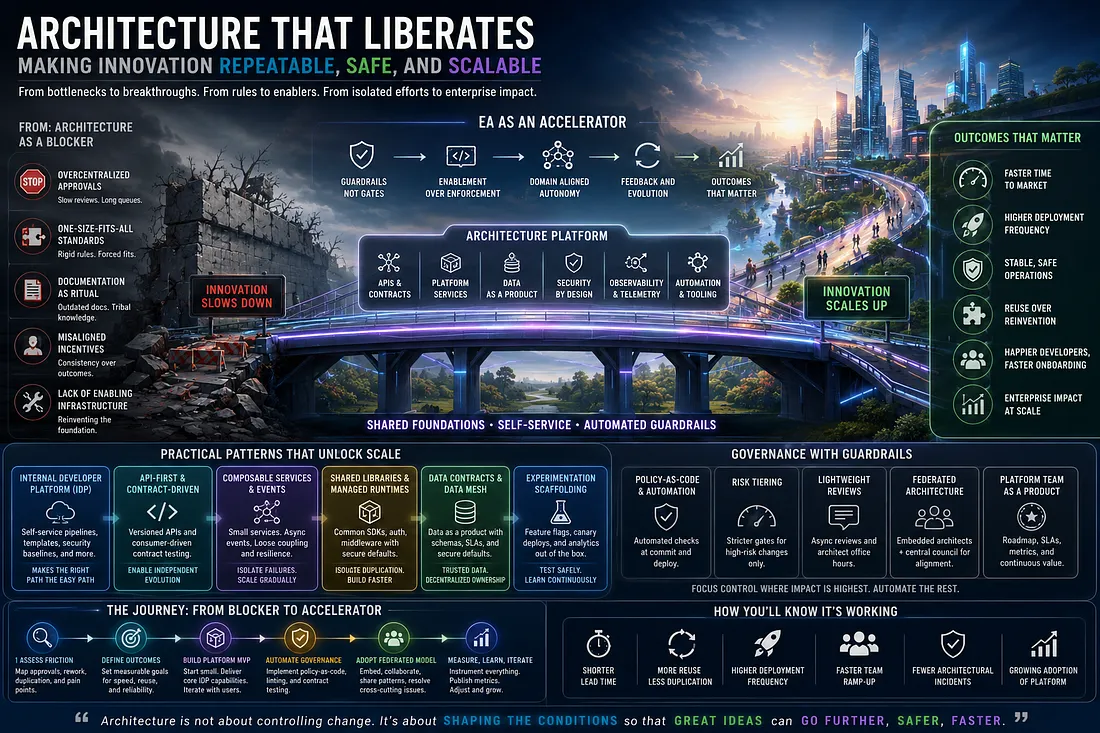
The agentic enterprise: Why value streams and capability maps are your new governance control plane

The enterprise is currently undergoing a seismic pivot from generative AI, which focuses on content creation, to agentic AI, which focuses on goal execution. Unlike their predecessors, these agents possess “structured autonomy”: the ability to perceive contexts, plan actions and execute across systems without constant human intervention. For the CIO and the enterprise architect, this is not merely an upgrade in automation speed; it is a fundamental shift in the firm’s economic equation. We are moving from labor-centric workflows to digital labor capable of disassembling and reassembling entire value chains. ... In an agentic enterprise, the value stream map is no longer just a diagram; it is the control plane. It must explicitly define the handoff protocols between human and digital agents. In my opinion, Value stream maps must move from static documents stored in a repository to context documents used to drive agentic automation. ... If a value stream does not exist, you cannot automate it. For new agentic workflows, do not map the current human process. Instead, use an outcome-backwards approach. Work backward from the concrete deliverable (e.g., customer onboarded) to identify the minimum viable API calls required. Before granting write access, run the new agentic stream in shadow mode to validate agent decisions against human outcomes.


Beyond compliance: Building a culture of data security in the digital enterprise

Cyber compliance is something organisations across industrial sectors take seriously, especially with new regulations getting introduced and non-compliance having consequences such as hefty penalties. Hence, businesses are placing compliance among their top priorities. However, hyper-focusing only on compliance can lead to tunnel vision, crippling creativity, and innovation. It fails to offer a comprehensive risk assessment due to the checklist approach it follows, exposing organizations to vulnerabilities and fast-evolving threats. Having a compliance-first mindset can lead to incomplete risk assessment, creating blind spots and security gaps in security provisions. ... With businesses relying on data for operations, customer engagement, and decision-making, ensuring data security protects both users and organisations. Data breaches have severe consequences, including financial losses, reputational damage, customer churn, and regulatory penalties. With data moving across on-premises data centers, cloud platforms, third-party ecosystems, remote work environments, and AI-driven applications, there is a need for a holistic, culture-driven approach to cybersecurity. ... Data protection traditionally was focused on safeguarding the perimeter by securing networks and systems within the physical boundaries where data was normally stored. 


If you thought RTO battles were bad, wait until AI mandates start taking hold across the industry

With the advent of generative AI and the incessant beating of the drum by executives hellbent on unlocking productivity gains, we could see a revival of the dreaded workforce mandate –- only this time with AI. We’ve already had a glimpse of the same RTO tactics being used with AI over the last year. In mid-2025, Microsoft introduced new rules aimed at boosting AI use across the company, with an internal memo warning staff that “using AI is no longer optional”. ... As with RTO mandates, we’re now reaching a point where upward mobility within the enterprise could be at risk as a result of AI use. It’s a tactic initially touted by Dell in 2024 when enforcing its own hybrid work rules, which prompted a fierce backlash among staff. Forcing workers to use AI or risk losing out on promotions will have the desired effect executives want, namely that employees will use the technology, but that’s missing the point entirely. AI has been framed by many big tech providers as a prime opportunity to supercharge productivity and streamline enterprise efficiency. We’ve all heard the marketing jargon. If business leaders are at the point where they’re forcing staff to use the technology, it begs the question of whether it’s actually having the desired effect, which recent analysis suggests it’s not. ... Recent analysis from CompTIA found roughly one-third of companies now require staff to complete AI training. 


In perfect harmony: How Emerald AI is turning data centers into flexible grid assets

At the core of Emerald AI is its Emerald Conductor platform. Described by Sivaram as “an AI for AI,” the system orchestrates thousands of AI workloads across one or more data centers, dynamically adjusting operations to respond to grid conditions while ensuring the facility maintains performance. The system achieves this through a closed-loop orchestration platform comprising an autonomous agent and a digital twin simulator. ... A point keenly pointed out by Steve Smith, chief strategy and regulation officer at National Grid, at the time of the announcement: “As the UK’s digital economy grows, unlocking new ways to flexibly manage energy use is essential for connecting more data centers to our network efficiently.” The second reason was National Grid's transatlantic stature - as an American company active in both the UK and US markets - and its commitment to the technology. “They’ve invested in the program and agreed to a demo, which makes them the ideal partner for our first international launch,” says Sivaram. The final, and most important, factor, notes Sivaram, was the access to the NextGrid Alliance, a consortium of 150 utilities worldwide. By gaining access to such a robust partner network, the deal could serve as a springboard for further international projects. This aligns with the company’s broader partnership approach. Emerald AI has already leveraged Nvidia’s cloud partner network to test its technology across US data centers, laying the groundwork for broader deployment and continued global collaboration. 


7 ways to tame multicloud chaos with generative AI

Architects have the difficult job of understanding tradeoffs between proprietary cloud services and cross-cloud platforms. For example, should developers use AWS Glue, Azure Data Factory, or Google Cloud Data Fusion to develop data pipelines on the respective platforms, or should they adopt a data integration platform that works across clouds? ... “Managing multicloud is like learning multiple languages from AWS, Azure, Oracle, and others, and it’s rare to have teams that can traverse these environments fluidly and effectively. Plus, services and concepts are not portable among clouds, especially in cloud-native PaaS services that go beyond IaaS,” says Harshit Omar, co-founder and CTO at FluidCloud. One way to work around this issue is to assign an AI agent to support the developer or architect in evaluating platform selections. ... Standardizing infrastructure and service configurations across different clouds requires expertise in different naming conventions, architecture, tools, APIs, and other paradigms. Look for genAI tools to act as a translator to streamline configurations, especially for organizations that can templatize their requirements. ... CI/CD, infrastructure-as-code, and process automation are key tools for driving efficiency, especially when tasks span multiple cloud environments. Many of these tools use basic flows and rules to streamline tasks or orchestrate operations, which can create boundary cases that cause process-blocking errors. 


It’s Time To Reinforce Institutional Crypto Key Management With MPC: Sodot CEO

For years, crypto security operations were almost exclusively focused on finding a way to protect the private keys to crypto wallets. It’s known as the “custody risk,” and it will always be a concern to anyone holding digital assets. However, Sofer believes that custody is no longer the weakest link. Cyberattackers have come to realize that secure wallets, often held in cold storage, are far too difficult to crack. ... Sodot has built a self-hosted infrastructure platform that leverages a pair of cutting-edge security techniques – namely, Multi-Party Computation or MPC and Trusted Execution Environments or TEEs. With Sodot’s platform, API keys are never reassembled in full plaintext, eliminating one of the main weaknesses of traditional secrets managers, which typically expose the entire key to any authenticated machine. Instead, Sodot uses MPC to split each key into multiple “shares” that are held by different partners on different technology stacks, Sofer explained. Distributing risk in this way makes an attacker’s job exponentially more difficult, as it means they would have to compromise multiple isolated systems to gain access. ... “Keys are here to stay, and they will control more value and become more sensitive as technology progresses,” Sofer concluded. “As financial institutions get more involved in crypto, we believe demand for self-hosted solutions that secure them will only grow, driven by performance requirements, operational resilience, and control over security boundaries.”