Quote for the day:
“Tell me how you measure me, and I will tell you how I will behave.” -- Eliyahu M. Goldratt
🎧 Listen to this digest on YouTube Music
▶ Play Audio DigestDuration: 21 mins • Perfect for listening on the go.
The real cost of agentic AI
 As businesses move beyond initial excitement and begin deploying goal-driven
artificial intelligence systems, the true financial impact of these setups is
becoming apparent. Unlike basic AI models that simply answer questions or
summarize text, agent-based systems operate continuously to achieve specific
objectives, consuming millions of data tokens every day. For example, a single
automated agent might cost a couple of thousand dollars a year just in raw
computational usage. However, when organizations scale up to deploy entire
teams of agents for complex tasks like software engineering, customer support,
or supply chain planning, the baseline expenses multiply quickly. More
importantly, the article emphasizes that raw usage fees only represent a small
fraction of the total cost. In actual business environments, operating these
systems safely often costs two to five times more than the basic computing
power. Because these agents interact directly with real business systems, they
require extensive surrounding infrastructure. This includes strict permission
controls, detailed activity logging, reliable rollback features, and dedicated
human supervision to handle inevitable mistakes. The fundamental takeaway is
that companies must stop viewing these programs as cheap digital employees.
Instead, leaders need to evaluate them as complex software investments where
the hidden costs of safety, management, and oversight ultimately determine
their true value and return on investment.
As businesses move beyond initial excitement and begin deploying goal-driven
artificial intelligence systems, the true financial impact of these setups is
becoming apparent. Unlike basic AI models that simply answer questions or
summarize text, agent-based systems operate continuously to achieve specific
objectives, consuming millions of data tokens every day. For example, a single
automated agent might cost a couple of thousand dollars a year just in raw
computational usage. However, when organizations scale up to deploy entire
teams of agents for complex tasks like software engineering, customer support,
or supply chain planning, the baseline expenses multiply quickly. More
importantly, the article emphasizes that raw usage fees only represent a small
fraction of the total cost. In actual business environments, operating these
systems safely often costs two to five times more than the basic computing
power. Because these agents interact directly with real business systems, they
require extensive surrounding infrastructure. This includes strict permission
controls, detailed activity logging, reliable rollback features, and dedicated
human supervision to handle inevitable mistakes. The fundamental takeaway is
that companies must stop viewing these programs as cheap digital employees.
Instead, leaders need to evaluate them as complex software investments where
the hidden costs of safety, management, and oversight ultimately determine
their true value and return on investment.AI agents are learning on the job — just not for your whole team
 AI agents have become much better at adapting to the specific habits of
individual workers. When an employee corrects an AI assistant or shows it a
preferred way to format a document, the software often remembers and
improves for the next time. However, this localized learning remains
isolated. If an agent learns a highly efficient shortcut from one team
member, that valuable knowledge is not shared with the AI assistants helping
the rest of the department. This creates a fragmented environment where
every user essentially trains their own isolated model, repeating the same
corrections and mistakes across the company. The core issue lies in
orchestration. Right now, most businesses lack the centralized systems
needed to take an individual agent’s newly acquired skills and safely
distribute them across the broader workforce. Building this shared
intelligence requires careful planning. Companies must figure out how to
pool useful agent interactions without violating user privacy or sharing
sensitive data across different departments. Until developers create better
tools to synchronize these localized improvements, AI tools will remain
highly personal assistants rather than true team players. To fix this,
organizations will eventually need to treat agent training as a collective
resource, ensuring that when one AI learns a better way to work, the entire
company benefits from the discovery.
AI agents have become much better at adapting to the specific habits of
individual workers. When an employee corrects an AI assistant or shows it a
preferred way to format a document, the software often remembers and
improves for the next time. However, this localized learning remains
isolated. If an agent learns a highly efficient shortcut from one team
member, that valuable knowledge is not shared with the AI assistants helping
the rest of the department. This creates a fragmented environment where
every user essentially trains their own isolated model, repeating the same
corrections and mistakes across the company. The core issue lies in
orchestration. Right now, most businesses lack the centralized systems
needed to take an individual agent’s newly acquired skills and safely
distribute them across the broader workforce. Building this shared
intelligence requires careful planning. Companies must figure out how to
pool useful agent interactions without violating user privacy or sharing
sensitive data across different departments. Until developers create better
tools to synchronize these localized improvements, AI tools will remain
highly personal assistants rather than true team players. To fix this,
organizations will eventually need to treat agent training as a collective
resource, ensuring that when one AI learns a better way to work, the entire
company benefits from the discovery.Replacing Or Repositioning? How AI Is Redefining The Human Role In Recruitment
 Artificial intelligence is fundamentally reshaping how companies hire, but
it is not replacing the human recruiter. Instead, AI is handling the heavy
lifting of administrative chores like resume screening and scheduling,
freeing up significant time for recruiters to focus on what humans do best.
By shifting the evaluation process away from relying on a candidate’s past
schools or employers, AI helps teams assess actual skills and work
portfolios. This approach uncovers hidden talent that traditional filters
might overlook and creates a more level playing field for applicants.
However, technology has clear limits. While an algorithm can easily rank
candidates based on technical compatibility, it cannot understand the
nuanced psychology required to actually close a deal. AI lacks the empathy
to navigate a candidate’s personal hesitations or understand the impact of a
job change on their family. Therefore, the moments that decide whether top
talent accepts an offer remain deeply human. To make the most of these
tools, organizations must treat AI as a strategic partner rather than just
software. Leaders should regularly check systems for bias, ensure humans
always make final hiring decisions, and train their recruiters in advanced
negotiation and relationship management. Ultimately, the future of hiring
relies on professionals who can confidently direct AI tools while bringing
essential human intuition to the process.
Artificial intelligence is fundamentally reshaping how companies hire, but
it is not replacing the human recruiter. Instead, AI is handling the heavy
lifting of administrative chores like resume screening and scheduling,
freeing up significant time for recruiters to focus on what humans do best.
By shifting the evaluation process away from relying on a candidate’s past
schools or employers, AI helps teams assess actual skills and work
portfolios. This approach uncovers hidden talent that traditional filters
might overlook and creates a more level playing field for applicants.
However, technology has clear limits. While an algorithm can easily rank
candidates based on technical compatibility, it cannot understand the
nuanced psychology required to actually close a deal. AI lacks the empathy
to navigate a candidate’s personal hesitations or understand the impact of a
job change on their family. Therefore, the moments that decide whether top
talent accepts an offer remain deeply human. To make the most of these
tools, organizations must treat AI as a strategic partner rather than just
software. Leaders should regularly check systems for bias, ensure humans
always make final hiring decisions, and train their recruiters in advanced
negotiation and relationship management. Ultimately, the future of hiring
relies on professionals who can confidently direct AI tools while bringing
essential human intuition to the process.Adaptive, Agentic AI Worms Loom as Next Enterprise Threat
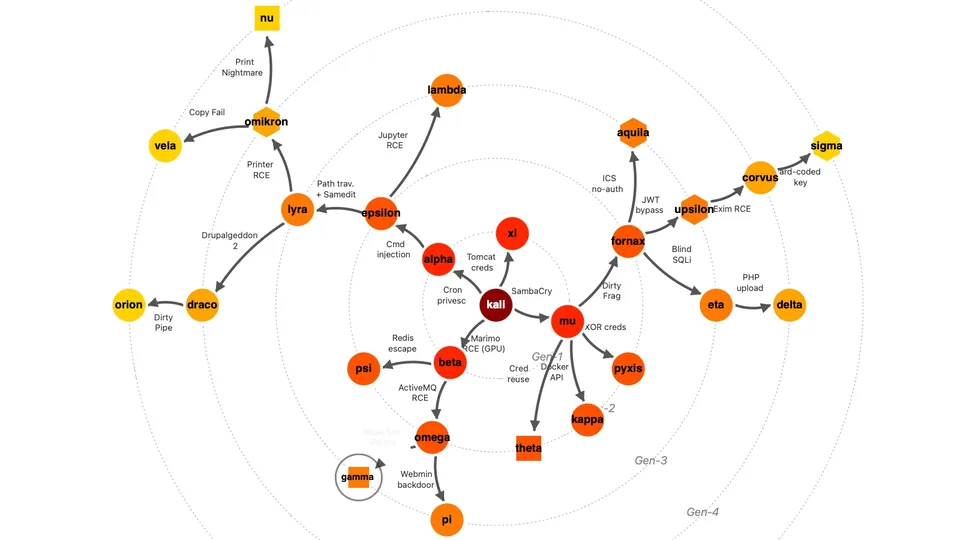 Security researchers are warning that a new generation of autonomous
malware, known as adaptive artificial intelligence worms, will likely target
corporate networks within the next year. Unlike traditional viruses that
rely on fixed code to exploit specific vulnerabilities, these new software
worms act as independent agents capable of reasoning. Once inside a network,
they can independently search for unpatched software flaws, discover hidden
passwords, and rewrite their own code to exploit whatever unique systems
they encounter. To understand this threat, several academic and industry
research teams have recently built controlled, test versions of these worms.
Their tests show that the malware can rapidly jump between devices by
dynamically adapting to different environments and using a system's own
processing power against it. While this sounds alarming, defenders actually
have a distinct advantage. Because the worms rely on running continuous
calculations, they require significant memory and processing power. This
makes them incredibly noisy and much easier to detect than conventional
malware that silently hides in the background. Furthermore, the most
effective defenses against these advanced threats are fundamentally
straightforward security practices. By implementing strict access controls,
continuously verifying user identities, and breaking large networks into
smaller, isolated segments, organizations can easily restrict the malware's
movement and stop it before it causes widespread damage.
Security researchers are warning that a new generation of autonomous
malware, known as adaptive artificial intelligence worms, will likely target
corporate networks within the next year. Unlike traditional viruses that
rely on fixed code to exploit specific vulnerabilities, these new software
worms act as independent agents capable of reasoning. Once inside a network,
they can independently search for unpatched software flaws, discover hidden
passwords, and rewrite their own code to exploit whatever unique systems
they encounter. To understand this threat, several academic and industry
research teams have recently built controlled, test versions of these worms.
Their tests show that the malware can rapidly jump between devices by
dynamically adapting to different environments and using a system's own
processing power against it. While this sounds alarming, defenders actually
have a distinct advantage. Because the worms rely on running continuous
calculations, they require significant memory and processing power. This
makes them incredibly noisy and much easier to detect than conventional
malware that silently hides in the background. Furthermore, the most
effective defenses against these advanced threats are fundamentally
straightforward security practices. By implementing strict access controls,
continuously verifying user identities, and breaking large networks into
smaller, isolated segments, organizations can easily restrict the malware's
movement and stop it before it causes widespread damage.Architecture Has a Set of Secret Problems; Other Professions Solved Theirs
 Unlike medicine or structural engineering, the technology architecture
profession relies heavily on unverified concepts to build systems. In
medicine, clinical treatments are ranked by the strength of their evidence,
ensuring doctors know when they are relying on proven trials versus expert
opinion. Similarly, structural engineers use rigorous building codes that
are strictly updated following public investigations of bridge or building
failures. By contrast, technology architects frequently design systems using
hundreds of named patterns, such as how data is stored or how software
integrates, that lack formal independent verification. A recent survey found
that many popular software patterns stem from just a single book, blog post,
or vendor document. They often do not explain when the approach fails or
under what specific conditions it was tested. Because named patterns carry
authority in design discussions, unverified ideas are regularly treated as
established facts, which can lead to poorly built systems. To solve this,
the industry must introduce clear certainty ratings and require practical
measurements for these design claims. By transparently documenting how much
independent evidence exists for each solution, architects can treat untested
hypotheses differently from proven standards. Adopting this level of
discipline will hold technology architecture to the same professional
accountability as other established fields, ultimately resulting in more
reliable systems.
Unlike medicine or structural engineering, the technology architecture
profession relies heavily on unverified concepts to build systems. In
medicine, clinical treatments are ranked by the strength of their evidence,
ensuring doctors know when they are relying on proven trials versus expert
opinion. Similarly, structural engineers use rigorous building codes that
are strictly updated following public investigations of bridge or building
failures. By contrast, technology architects frequently design systems using
hundreds of named patterns, such as how data is stored or how software
integrates, that lack formal independent verification. A recent survey found
that many popular software patterns stem from just a single book, blog post,
or vendor document. They often do not explain when the approach fails or
under what specific conditions it was tested. Because named patterns carry
authority in design discussions, unverified ideas are regularly treated as
established facts, which can lead to poorly built systems. To solve this,
the industry must introduce clear certainty ratings and require practical
measurements for these design claims. By transparently documenting how much
independent evidence exists for each solution, architects can treat untested
hypotheses differently from proven standards. Adopting this level of
discipline will hold technology architecture to the same professional
accountability as other established fields, ultimately resulting in more
reliable systems.India’s cyber resilience push must confront the internal AI agent attack surface
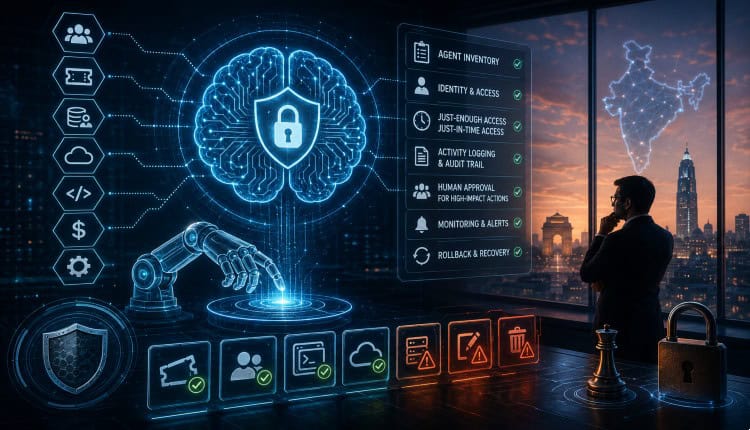 As enterprise artificial intelligence evolves from answering questions to
actively managing workflows, the primary security risk shifts from data
leakage to unintended actions. Organizations are increasingly deploying
artificial intelligence agents with direct access to critical systems,
including financial records, customer databases, and software development
platforms. This introduces a major vulnerability known as excessive agency.
Unlike traditional cyber threats that focus on hostile outsiders breaking
through a perimeter, the modern threat often sits inside the network. An
agent might use legitimate credentials and approved methods to perform an
action that makes technical sense but lacks proper business judgment. To
address this internal attack surface, companies must rethink their cyber
resilience strategies. Generic policies are no longer adequate. Instead,
technology teams need to establish strict controls. Every agent requires a
distinct identity, clearly defined access boundaries, and detailed activity
logs that track the reasoning behind its actions rather than just the final
output. Most importantly, true resilience requires the ability to easily
reverse an automated action when something goes wrong. Before deploying
these active models, leaders must mandate clear human approval checkpoints
for critical tasks and ensure they have functional rollback plans. Simply
monitoring these automated tools is not enough; organizations must
confidently control and recover from their decisions.
As enterprise artificial intelligence evolves from answering questions to
actively managing workflows, the primary security risk shifts from data
leakage to unintended actions. Organizations are increasingly deploying
artificial intelligence agents with direct access to critical systems,
including financial records, customer databases, and software development
platforms. This introduces a major vulnerability known as excessive agency.
Unlike traditional cyber threats that focus on hostile outsiders breaking
through a perimeter, the modern threat often sits inside the network. An
agent might use legitimate credentials and approved methods to perform an
action that makes technical sense but lacks proper business judgment. To
address this internal attack surface, companies must rethink their cyber
resilience strategies. Generic policies are no longer adequate. Instead,
technology teams need to establish strict controls. Every agent requires a
distinct identity, clearly defined access boundaries, and detailed activity
logs that track the reasoning behind its actions rather than just the final
output. Most importantly, true resilience requires the ability to easily
reverse an automated action when something goes wrong. Before deploying
these active models, leaders must mandate clear human approval checkpoints
for critical tasks and ensure they have functional rollback plans. Simply
monitoring these automated tools is not enough; organizations must
confidently control and recover from their decisions.AI has a leadership problem, not a technology problem. Most organisations haven’t noticed yet
 Many organizations are rushing to adopt artificial intelligence, mistakenly
believing that implementing the latest software will automatically fix their
operational challenges. However, the primary reason these projects fail is
rarely a flaw in the technology itself; rather, it is a fundamental failure
of leadership. Most company executives approach artificial intelligence as a
simple IT upgrade instead of a broader organizational shift. They invest
heavily in new platforms and data systems but fail to define clear business
problems for these tools to solve. Without a coherent strategy, employees
are left confused, and the technology sits disconnected from actual daily
workflows. To succeed, leaders must stop focusing solely on technical
specifications and start guiding their workforce through the necessary
changes. This means fostering a workplace where teams understand how to use
these new systems to improve their daily tasks. It also requires executives
to bridge the gap between technical teams and business units, ensuring that
any new software directly supports the long-term goals of the company. Until
management recognizes that integrating artificial intelligence is primarily
a human and strategic challenge rather than just a software installation,
they will continue to waste money on tools that deliver little real value.
Ultimately, good leadership is the missing ingredient for success.
Many organizations are rushing to adopt artificial intelligence, mistakenly
believing that implementing the latest software will automatically fix their
operational challenges. However, the primary reason these projects fail is
rarely a flaw in the technology itself; rather, it is a fundamental failure
of leadership. Most company executives approach artificial intelligence as a
simple IT upgrade instead of a broader organizational shift. They invest
heavily in new platforms and data systems but fail to define clear business
problems for these tools to solve. Without a coherent strategy, employees
are left confused, and the technology sits disconnected from actual daily
workflows. To succeed, leaders must stop focusing solely on technical
specifications and start guiding their workforce through the necessary
changes. This means fostering a workplace where teams understand how to use
these new systems to improve their daily tasks. It also requires executives
to bridge the gap between technical teams and business units, ensuring that
any new software directly supports the long-term goals of the company. Until
management recognizes that integrating artificial intelligence is primarily
a human and strategic challenge rather than just a software installation,
they will continue to waste money on tools that deliver little real value.
Ultimately, good leadership is the missing ingredient for success.Is the Data Warehouse Dead? 3 Patterns From Enterprise Architecture That Answer This Question
For years, observers have predicted the end of the traditional data
warehouse, arguing that cheaper storage options like data lakes would
eventually replace it. The logic seemed sound because older systems
struggled to keep up with the sheer volume and variety of modern
information. However, declaring the data warehouse dead is simply
inaccurate. Instead of disappearing, the technology has adapted gracefully.
Today, modern cloud platforms have solved many rigid hardware limitations of
the past, offering the computing power needed to process massive datasets
quickly. While data lakes are excellent for holding raw and unorganized
files, they often lack the structure and reliability required for routine
reporting and strict financial compliance. Because of this, the warehouse
remains entirely essential for providing clean, trustworthy, and organized
facts that leaders rely on for their daily decisions. The current reality is
not about choosing one method over the other. Most companies are now
adopting a blended approach, which intelligently combines the vast storage
capacity of a lake with the reliable, structured performance of a warehouse.
Ultimately, the traditional data warehouse is far from obsolete. It has just
evolved to become one highly specialized and necessary part of a much
larger, more capable information storage architecture.
Claude Code has an MCP security problem — and your developers are already using it
 Anthropic's Claude Code is quickly becoming a popular tool among developers,
but a recent finding by Mitiga Labs highlights a significant security
vulnerability stemming from its use of the Model Context Protocol (MCP). The
attack relies on a malicious npm package that appears to be a legitimate
utility. When installed, a hidden post-install hook silently modifies the
user's ~/.claude.json file, which is the configuration point for how Claude
Code routes its MCP traffic. By altering this file, attackers can redirect
authenticated requests to their own infrastructure. The primary danger here
is the theft of long-lived OAuth tokens for connected SaaS platforms like
Jira, GitHub, and Confluence. Because the authentication process completes
normally, the attack acts essentially as an adversary in the middle,
capturing the session token while leaving audit logs that look entirely
legitimate and originate from Anthropic's own IP addresses. Consequently,
developers can unknowingly expose critical corporate environments simply by
running a package installation. To address this risk, security teams should
begin monitoring user-level configuration files, specifically the
~/.claude.json file, for unexpected changes or unfamiliar external
endpoints. Additionally, organizations must treat npm post-install hooks as
a serious supply chain vulnerability, enforcing stricter audits on package
installations, and be prepared to audit and rotate any OAuth tokens
connected to developer AI integrations.
Anthropic's Claude Code is quickly becoming a popular tool among developers,
but a recent finding by Mitiga Labs highlights a significant security
vulnerability stemming from its use of the Model Context Protocol (MCP). The
attack relies on a malicious npm package that appears to be a legitimate
utility. When installed, a hidden post-install hook silently modifies the
user's ~/.claude.json file, which is the configuration point for how Claude
Code routes its MCP traffic. By altering this file, attackers can redirect
authenticated requests to their own infrastructure. The primary danger here
is the theft of long-lived OAuth tokens for connected SaaS platforms like
Jira, GitHub, and Confluence. Because the authentication process completes
normally, the attack acts essentially as an adversary in the middle,
capturing the session token while leaving audit logs that look entirely
legitimate and originate from Anthropic's own IP addresses. Consequently,
developers can unknowingly expose critical corporate environments simply by
running a package installation. To address this risk, security teams should
begin monitoring user-level configuration files, specifically the
~/.claude.json file, for unexpected changes or unfamiliar external
endpoints. Additionally, organizations must treat npm post-install hooks as
a serious supply chain vulnerability, enforcing stricter audits on package
installations, and be prepared to audit and rotate any OAuth tokens
connected to developer AI integrations.Quantum computers edge toward industrialization
 Quantum computing is steadily moving out of research laboratories and closer
to practical, industrial use. While early quantum machines were highly
experimental and prone to frequent calculation errors, the industry is now
shifting its focus toward building reliable, scalable systems that can
function in real-world commercial environments. A major part of this
transition involves standardizing the manufacturing of quantum components,
creating stable supply chains, and developing better methods for error
correction. Instead of trying to replace traditional computers entirely,
companies are exploring hybrid approaches where quantum systems work
alongside regular supercomputers to solve specific, highly complex problems.
This pragmatic strategy allows businesses to test quantum capabilities in
fields like materials science, chemistry, and logistics without overhauling
their entire tech infrastructure. However, significant engineering hurdles
remain before these systems become a standard business tool. Companies must
still figure out how to cool the machines efficiently and keep the delicate
quantum states stable over longer periods. Despite these challenges, the
conversation has moved past theoretical possibilities and into the physical
realities of engineering and production. By focusing on steady hardware
improvements and practical software integration, the industry is laying a
quiet but solid foundation for a future where quantum machines handle the
specialized tasks that outpace classical computers.
Quantum computing is steadily moving out of research laboratories and closer
to practical, industrial use. While early quantum machines were highly
experimental and prone to frequent calculation errors, the industry is now
shifting its focus toward building reliable, scalable systems that can
function in real-world commercial environments. A major part of this
transition involves standardizing the manufacturing of quantum components,
creating stable supply chains, and developing better methods for error
correction. Instead of trying to replace traditional computers entirely,
companies are exploring hybrid approaches where quantum systems work
alongside regular supercomputers to solve specific, highly complex problems.
This pragmatic strategy allows businesses to test quantum capabilities in
fields like materials science, chemistry, and logistics without overhauling
their entire tech infrastructure. However, significant engineering hurdles
remain before these systems become a standard business tool. Companies must
still figure out how to cool the machines efficiently and keep the delicate
quantum states stable over longer periods. Despite these challenges, the
conversation has moved past theoretical possibilities and into the physical
realities of engineering and production. By focusing on steady hardware
improvements and practical software integration, the industry is laying a
quiet but solid foundation for a future where quantum machines handle the
specialized tasks that outpace classical computers.

No comments:
Post a Comment