Showing posts with label design thinking. Show all posts

Daily Tech Digest - July 20, 2026


Quote for the day:

“None of us is as smart as all of us.” -- Ken Blanchard

🎧 Listen to this digest on YouTube Music

▶ Play Audio Digest

Duration: 23 mins • Perfect for listening on the go.


The Inferencing Cost Problem No One Is Talking About: Unstructured Data Quality

As companies expand their artificial intelligence budgets, many focus heavily on the initial price of building models while overlooking the ongoing expense of running them. Every single time a model answers a question, it consumes computing power and incurs a fee. While engineering teams use various tactics to manage these processing costs, they frequently ignore a major factor: the quality of the unstructured files being fed into the system. Unstructured information, like everyday documents, emails, and images, makes up a massive portion of enterprise data but typically lacks clear labels. When businesses feed disorganized or irrelevant files into artificial intelligence, they end up paying to process useless information. By properly sorting and labeling this data with descriptive tags before it ever reaches the model, organizations can drastically reduce their computing and storage expenses. Sending only the most relevant files directly lowers the volume of information processed, which in turn drops the overall cost. Proper data sorting also prevents sensitive or outdated information from being exposed, reducing legal and ethical risks. Ultimately, treating careful data preparation as a core financial strategy allows companies to control their spending while simultaneously improving the accuracy and safety of their new artificial intelligence software tools.


Six Thinking Hats: An S-Tier Behavioral Designer’s Guide

Edward de Bono’s Six Thinking Hats is a structured framework designed to eliminate the conflict and ego that derail most meetings. De Bono argued that traditional arguments force individuals to blindly defend their initial positions, preventing actual collaboration. His solution was “parallel thinking,” where everyone in a meeting adopts the exact same perspective simultaneously, represented by six colored hats. The White hat focuses strictly on facts and missing data. The Red hat allows participants to express pure emotion and gut feelings without any need for justification. The Black hat, often the default setting in business, is used to identify risks and flaws. The Yellow hat forces a rigorous search for optimism and hidden value. The Green hat generates creative alternatives without judgment. Finally, the Blue hat manages the overall process, sets the agenda, and keeps the group focused. By assigning these specific modes of thinking to hats rather than people, the framework removes the need to defend personal ideas. Instead of a tug-of-war, the meeting becomes a cooperative exploration of a problem from multiple angles. When facilitated correctly, this method can drastically reduce meeting times and lead to much smarter, more unified group decisions.


Data Governance Fails Without Culture Change

Most data governance initiatives fail not because of flawed rules, but because organizations neglect to change employee behavior. According to recent survey data, only about a quarter of organizations include culture and communication in their data strategies, while the vast majority focus strictly on technical controls and security. This oversight is costly; analysts predict that companies failing to address these cultural habits will also struggle to manage artificial intelligence effectively. To succeed, organizations should adopt a minimum effective approach. Instead of attempting massive, company-wide data cleanups that take years and cause people to lose interest, teams should focus on improving only the specific data needed to achieve immediate business goals. Once that specific data reaches an acceptable quality level, the team moves to the next priority. Furthermore, rather than forcing new rules onto unwilling employees, leaders should identify the people who are already informally fixing data issues and officially support their efforts. Acknowledging their hard work and simplifying their existing processes builds trust. Finally, keeping a program alive requires celebrating small, visible wins and ensuring that every meeting is highly relevant, so participants feel their unique input is genuinely necessary for the company's ongoing success.


Event-Driven Architecture Anti-Patterns on AWS - Failure Modes, Root Causes, and How to Design Around Them

Event-driven architectures often fail quietly in production because design mistakes remain hidden during initial testing. A recent guide outlines common anti-patterns that cause these systems to break, focusing heavily on how teams misconfigure core cloud services. One major trap is the infinite event loop, where a function writes its output directly back to the exact same location that triggered it. This creates a runaway cycle that can quickly rack up massive cloud bills, especially when the default loop detection safeguards do not cover certain routing services. Another frequent error is assuming that standard messaging queues will deliver events in the exact order they were sent. Because basic queues only offer best-effort ordering, heavy traffic will inevitably scramble the sequence and silently corrupt data unless developers explicitly enforce strict ordering rules. Furthermore, many engineers wrongly assume that a system will deliver a message exactly once. In reality, standard setups guarantee at-least-once delivery, meaning duplicate messages are completely normal. If a developer fails to design a system that can safely process the identical message multiple times, the application might execute actions twice, resulting in duplicate customer charges or incorrect inventory counts. To prevent these failures, teams must understand and design around the exact documented limits of their infrastructure.


AI workloads shake up observability market

Observability platforms are rapidly evolving beyond standard system monitoring to address the growing complexities of enterprise technology, particularly the rise of artificial intelligence. According to a recent Gartner report, vendors are heavily investing in features like autonomous investigations and operational intelligence to help technical teams identify root causes and find the best solutions quickly. A major driving force behind this shift is the need to monitor artificial intelligence workloads, tracking everything from token usage and response times to the accuracy of language models. While vendors heavily promote these new capabilities, the report notes that fully autonomous operations remain largely aspirational. Meanwhile, managing the sheer cost of collecting system data has become a top priority for businesses. Because data volumes are exploding, organizations are demanding better cost management tools to justify their investments, with some spending over ten million dollars annually on a single provider. Additionally, the widespread adoption of open data standards like OpenTelemetry has commoditized basic data collection. Consequently, vendors must now differentiate themselves by offering superior analytics, integrated automated workflows, and comprehensive full-stack platforms that turn raw system data into measurable business intelligence.


Why network recovery still depends on a site visit

The article explains why, despite major improvements in monitoring and automation, network recovery often still requires someone to physically visit a site. When a device stops responding—whether from a power issue, a failed update, aging hardware, or environmental stress—operators can usually see the problem right away. What they can’t always do is fix it remotely. That gap between detection and action becomes more costly as networks spread across rural areas, edge locations, and other hard‑to‑reach sites. A single reset may seem minor, but repeated truck rolls add up in labor, travel time, scheduling delays, and extended outages. The piece notes that many outages now carry significant financial impact, with more than half costing over $100,000. The industry has long relied on manual intervention because it feels safe and familiar, but this approach strains teams and slows recovery as footprints grow. The author argues that the next step in resilience is shifting from passive visibility to active, remote control—especially through automated power management. With the ability to reset equipment from afar, outages can shrink from hours to minutes, technicians can focus on work that truly requires their expertise, and operators can scale without multiplying manual effort. Ultimately, the article suggests that closing the gap between knowing something is broken and being able to fix it remotely is essential for modern network reliability.


Open source helps governments shift from technical debt to technical equity

Many public sector technology projects suffer from poor planning, resulting in a backlog of outdated and complex systems that are often tied to a single vendor. This ongoing burden makes future upgrades slow and expensive. To fix this, governments are encouraged to shift their focus from simply buying software to building lasting public resources. This approach relies heavily on adopting established open source software and shared standards. Instead of just asking who owns the code, public institutions need to focus on who will properly maintain, secure, and improve it over time. The root of the problem frequently begins during the purchasing process, where contracts often prioritize fast delivery over lasting usability and easy maintenance. By changing how they buy technology, public agencies can demand software that is built to be shared across multiple departments, preventing wasted effort and redundant spending. Furthermore, building inclusive, accessible, and efficient digital services from the beginning rather than treating these features as afterthoughts ensures the technology serves all citizens effectively. Ultimately, every new digital investment represents a choice. Governments can either continue piling on maintenance burdens for future teams, or they can invest in shared, adaptable technology that actively strengthens their digital capacity for years.


Digital Twins for Operational Resilience

Adam Mattis first used digital twin technology in 2018 for a custom bicycle company. Instead of physically building endless prototypes, he successfully modeled carbon fiber frames in software to test critical characteristics like flexibility and weight distribution before construction began. At the time, creating a digital twin was expensive, quite difficult, and mostly confined to specialized manufacturing circles. However, the technology has recently evolved from an obscure engineering tool into an essential business practice. The high costs and immense complexity that once intimidated companies have decreased significantly, aided by cheaper physical sensors and the growing need to prove the value of recent investments in artificial intelligence and data center infrastructure. Today, digital twins are no longer just static simulations used before building something new. They have successfully become live, continuous monitoring systems that act as crucial operational fail-safes. By mirroring a physical system in real time, a digital twin can detect subtle performance drifts well before a major failure ever occurs. Real-world systems rarely fail instantly with sudden, blaring alarms; instead, they slowly degrade over time. Digital twins allow organizations to spot this hidden deterioration early, transforming how businesses maintain system resilience and confidently prevent catastrophic operational breakdowns.


Code Is Cheap. Judgment Isn’t

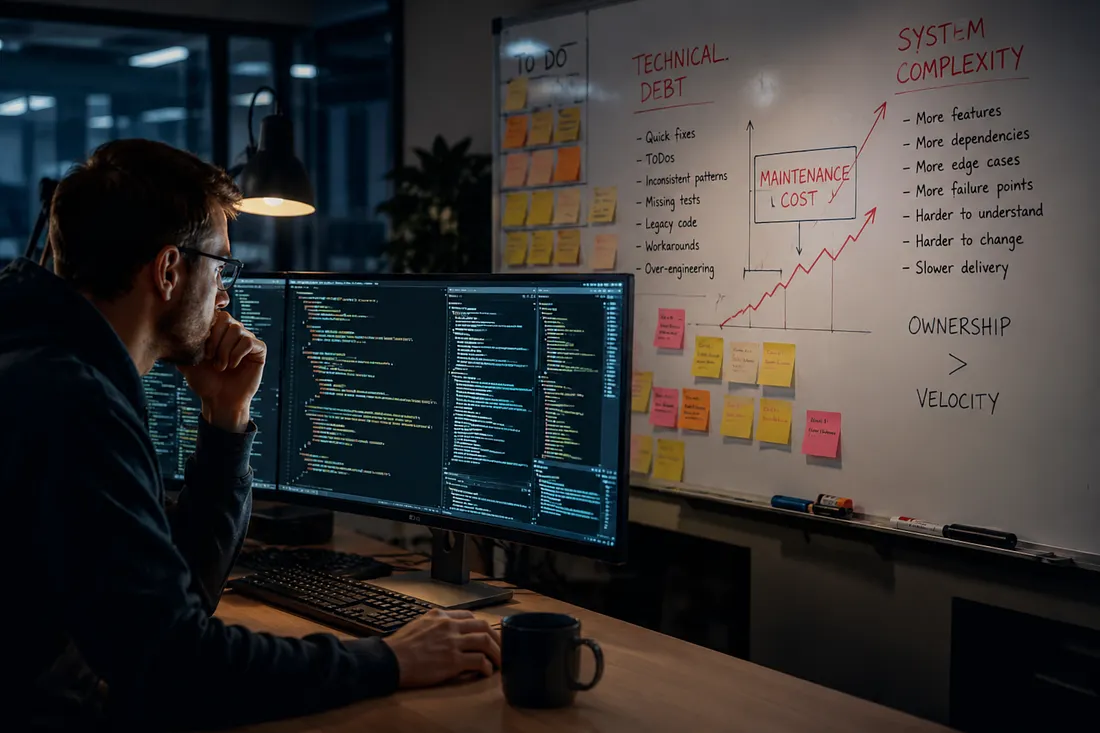
Artificial intelligence has drastically reduced the cost and time required to write software. While this increased speed seems like a massive benefit, it actually hides a dangerous trap for companies. Historically, the slow process of writing code naturally prevented unnecessary ideas from being built. Because it took days to create a single feature, developers had to carefully consider if it was truly worth the effort. Today, artificial intelligence can generate that exact same code in minutes, completely removing this natural filter. Consequently, teams are rapidly filling their systems with unnecessary features, leading to severe code bloat. This unchecked growth creates massive, fragile systems that no single person fully understands. The true expense of software is never creating it, but rather owning and maintaining it over time. Every line of code, whether written in ten minutes or two days, requires ongoing testing, updating, and explanation to new employees. Therefore, the most valuable resource in software development is no longer coding speed, but careful human judgment. Leaders must aggressively evaluate whether a feature should even exist before allowing the machine to build it. Protecting a system's simplicity is the only guaranteed way to maintain speed over the long term.


The cleanup trap: Stop asking RAG to fix bad data

Many enterprise artificial intelligence projects fail before ever reaching full operation, and technical leaders frequently blame the models themselves for these disappointing setbacks. However, the true culprit is usually a flawed data foundation. This situation is known as the cleanup trap, which is the false belief that a company can feed messy, inconsistent information into a retrieval system and easily fix it later. When a system receives raw, unvalidated data directly from operational storage, the resulting database inherits all the original noise, duplicate records, and conflicting details. Modifying the model or adjusting basic text prompts cannot adequately compensate for a broken information pipeline. If the foundation is compromised, the application will simply fail to deliver reliable results. To solve this problem, teams must stop treating data quality as a final step. Instead, they need to validate information early, establish automated checks for unusual patterns, and handle security rules strictly within the data infrastructure rather than relying on the model to enforce them. As artificial intelligence matures, success depends far less on picking the perfect model and far more on maintaining strict engineering discipline. Reliable systems require treating data infrastructure as the core foundation for enterprise intelligence rather than just a background function.

Daily Tech Digest - May 30, 2026


Quote for the day:

“Any fool can write code that a computer can understand. Good programmers write code that humans can understand.” -- Martin Fowler

🎧 Listen to this digest on YouTube Music

▶ Play Audio Digest

Duration: 18 mins • Perfect for listening on the go.


AI-Driven Bug Tsunami Prompts Exploitability Questions

The article outlines how artificial intelligence has driven a massive increase in software bug reports, pushing the Common Vulnerabilities and Exposures system toward another record year. While major platforms like Chrome and GitHub have seen a large number of reported flaws, security researchers emphasize that most of these automated findings present very little real threat. Historically, fewer than two percent of all reported vulnerabilities are actually exploitable, and current telemetry indicates that only a tiny fraction are ever widely used by attackers. A primary issue is that automated tools often generate reports that lack necessary context regarding severity, practical reachability, and real world impact, creating an unnecessary administrative burden for software maintainers who must sort through low quality duplicates. In response, open source projects like the Linux kernel and platforms like GitHub have tightened their guidelines, now requiring functional proof of concept demonstrations before prioritizing a bug or issuing rewards. Furthermore, even advanced models like Anthropic’s Mythos, despite their ability to chain minor bugs into serious exploits, have not altered underlying risks significantly. Traditional security measures and defense in depth principles remain effective. By ensuring systems are built with multiple layers of security, organizations can ensure a single software flaw will not compromise an entire product.


AI and connected systems are forcing CIOs and COOs to rethink OT security

Historically, organizations kept operational technology, such as factory equipment and utility infrastructure, isolated from corporate IT networks to maintain security and safety. However, the search for efficiency has pushed companies to introduce connected sensors, cloud data, and artificial intelligence into these industrial spaces. While this change offers clear business advantages, it also creates significant cyber risks. Older operational equipment was never designed for internet connectivity, making standard software updates or sudden network shutdowns highly impractical. Furthermore, the integration of autonomous artificial intelligence systems complicates defense strategies because they constantly exchange data with outside networks while relying on legacy internal frameworks. To address these vulnerabilities, chief information officers and chief operating officers must move away from isolated management practices and embrace shared responsibility. This coordination is essential because typical corporate security tactics, like instantly isolating a compromised system, can disrupt manufacturing schedules or cause physical damage on the factory floor. Instead of trying to replace decades of old equipment immediately, leadership teams should focus on improving basic operational visibility, monitoring the network access of outside contractors, and deploying stricter identity verification checks. Taking a deliberate, phased approach to securing these blended environments allows companies to manage hidden threats much more effectively while keeping critical machinery running safely.


Accelerating Data Strategy and Governance with AI

According to a Dataversity article featuring insights from Peter Aiken, many organizations fail with their data strategies because they treat them as static documents to be completed and shelved rather than ongoing processes. Consequently, a vast amount of corporate data often remains redundant or obsolete. To fix this, an effective data strategy should serve as a continuous pattern of choices that aligns information assets directly with broader business goals. Aiken suggests utilizing a cyclical method focused on addressing constraints, where teams repeatedly isolate and resolve single bottlenecks to build small, incremental advantages. Data governance teams provide the necessary routine execution, though they frequently face common hurdles like cultural resistance, confusion, or competing technology priorities. Artificial intelligence serves as a practical tool to ease these operational burdens and expand human worker capabilities. Rather than replacing professionals, AI automates tedious administrative chores such as labeling data, mapping information lineage, checking security risks, and updating quality rules. This shift reduces internal friction and allows data stewards to spend their time on important strategic planning. Ultimately, combining cyclical improvements with automated support helps companies steadily improve their data quality, mitigate security risks proactively, and turn abstract strategy documents into practical business actions.


India has already witnessed increasing cyber targeting of critical infrastructure sectors

In this interview, Vaibhav Dutta of Tata Communications discusses the growing cybersecurity risks facing India’s critical infrastructure as industries embrace digital modernization. As sectors like energy, utilities, and manufacturing integrate isolated operational technology with enterprise IT, cloud networks, and automated systems, they inadvertently widen their exposure to external threats. This shift changes the nature of these threats from basic data breaches to complex physical disruptions capable of destabilizing essential public services. India has already seen an uptick in malware and remote access exploitation targeting its power grids and manufacturing setups. Dutta points out major vulnerabilities in current industrial upgrades, particularly a severe lack of visibility over legacy equipment, insecure remote access pathways, and unprotected application programming interfaces. Furthermore, many organizations mistakenly treat security as a compliance box to check rather than a core operational necessity. To mitigate these risks, the text advocates for building safety controls directly into systems during the initial planning stages of any digital expansion. Moving forward, safeguarding these interconnected environments will require a unified approach that blends traditional computer network security with physical operational safety, relying on continuous verification models and intelligent monitoring to detect anomalies and maintain continuity even during an active cyber attack.


The AI inventory is the EU AI Act artefact most teams underestimate

The Information Age article highlights why the AI inventory required by the EU AI Act is a critical component that corporate teams routinely underestimate. Rather than treating it as a superficial list or spreadsheet of active tools, organizations should view the inventory as a map that connects every artificial intelligence application to real business processes. A weak register merely names products like chatbots or analytics software. In contrast, a truly comprehensive inventory details business and technical owners, data inputs, intended outcomes, human review steps, and clear accountability trails. This deep level of clarity helps prevent the common issue of ownerless systems, where unmonitored technology leads to gradual shifts in purpose and completely untracked updates. While creating an inventory does not automatically ensure legal compliance or replace deeper security and privacy reviews, it establishes the necessary shared baseline record that different departments require to work together effectively. Technology executives play a central role here because standard legal or compliance teams rarely notice the automated features quietly embedded inside third-party corporate software platforms. Ultimately, maintaining a clear and current register enables legal, security, and operational units to understand exactly what they own, paving the way for structured risk management as new regulations phase in.


Kindness and Critical Infrastructure: Rethinking OT Security

In episode 52 of the Hack the Planet podcast, titled "Kindness and Critical Infrastructure," host Bryson Bort interviews Andrea Haddad, an infrastructure architect working at a pharmaceutical manufacturing organization. Haddad shares her transition from traditional IT network engineering to the world of operational technology, where safety and production take top priority. She highlights a common tension between maintaining strong security and ensuring daily workplace convenience. For example, forcing factory technicians to manage multiple complex passwords for remote access often leads to frustration and risky habits, like password reuse. Furthermore, external equipment suppliers frequently push back against corporate network rules, sometimes introducing unauthorized remote connections that create visibility blind spots. Haddad notes that while theoretical frameworks like the Purdue model offer helpful blueprints for layering networks and establishing equipment standards, strict solutions cannot be imposed instantly. Instead, she argues that lasting security relies heavily on mutual listening and empathy, choosing kindness over rigid enforcement. Because production downtime causes massive financial losses, security teams must understand the real-world constraints under which plant engineers operate. Ultimately, true system protection comes from a continuous process of learning, open communication, and building a practical middle ground that safeguards equipment without disrupting daily work.


How to Ideate in Design Thinking: What Works, What's Overhyped, and What's Changing

The Eleken article highlights that coming up with fresh product ideas is often misunderstood as a rigid, workshop-heavy process that smaller teams cannot afford. In reality, effective problem-solving is simply about pushing past the first few obvious choices, which are usually the same generic concepts your competitors have already considered. Traditional group brainstorming sessions frequently fall short because the loudest voices dominate the room, participants fear judgment, and early suggestions accidentally restrict everyone’s thinking. To bypass these social limitations, teams can use practical alternatives like the bad idea challenge, which removes performance pressure by asking people to deliberately invent terrible solutions that can later be flipped into useful features. Other effective approaches include studying solutions from completely unrelated industries or using imaginary scenarios to challenge basic assumptions. Furthermore, artificial intelligence is steadily changing how teams work by quickly producing hundreds of starting layouts and options. Instead of replacing human creativity, these software tools handle the heavy lifting of initial volume, allowing designers to dedicate their time to reviewing, editing, and perfecting the best directions. Ultimately, the article suggests treating design thinking as a flexible toolkit rather than a strict textbook rulebook, matching the core principles to actual product timelines and real-world project constraints.


Cloud spend is now a governance issue. Finance and IT need a new model

The article highlights the shifting nature of cloud and AI infrastructure costs, framing them not as a purely technical or financial problem, but as a critical governance challenge. Traditional static budgeting models and retroactive approvals fail to match the reality of modern cloud consumption, where expenses fluctuate dynamically based on daily engineering decisions and varying workload demands. Consequently, companies frequently deal with wasted spending, often due to overprovisioning or unutilized cloud resources. To solve this, finance and technology departments must work together more closely, adopting a shared framework commonly known as FinOps. This collaborative approach distributes financial accountability directly to product and business teams, linking cloud costs directly to performance and measurable business value. By establishing metrics like cost allocation coverage, forecasting accuracy, and unit economics, such as the cost per transaction or model inference, finance leaders gain deeper context into what their spending actually accomplishes. This visibility creates a shared understanding between engineering and corporate finance, helping teams make better everyday design choices. Ultimately, the text argues that companies focusing merely on reducing costs will struggle, whereas organizations that actively manage the business value of their cloud investments can turn structural volatility into a distinct operational advantage.


Stragglers, Not Failures: How Adaptive Hedged Requests Reduce p99 Latency by 74 Percent

This InfoQ article discusses how adaptive hedged requests can effectively manage extreme response delays in distributed computer networks. In large systems, overall performance is often slowed down not by outright errors, but by requests that eventually finish but take far longer than usual due to temporary glitches like background garbage collection or minor network bottlenecks. While software engineering teams often use retries to fix these issues, resending a slow request can accidentally overload an already struggling back-end server. Instead, a hedged request proactively sends a duplicate backup request if the initial attempt takes too long, accepting whichever response returns first and canceling the slower peer. To avoid the pitfalls of static timing limits, which require constant manual adjustments as traffic patterns shift throughout the day, the author introduces an automated system. By using an open-source statistical tracking tool called DDSketch, this setup continuously analyzes real-time response times to establish accurate thresholds naturally. Additionally, a built-in safety mechanism uses a token bucket budget to cap duplicate traffic, ensuring that the system handles problems gracefully rather than multiplying load during genuine outages. Ultimately, this approach works best for repeatable operations that do not change database state across multi-instance environments.


From resilience to survivability: How AI forces a rethink of business continuity

The article by Zeus Kerravala explains how artificial intelligence is changing corporate business continuity, pushing organizations to move past traditional recovery plans toward a model of continuous survivability. Historically, maintaining business operations during an unexpected network outage meant relying on simple secondary backups. However, these systems often share hidden technical dependencies, such as the same cloud providers or identity management tools. Because modern AI workloads are deeply interconnected and control real-time decision-making systems, any downtime creates severe immediate consequences and steep financial losses. To address these vulnerabilities, businesses are adopting architectural independence, which involves running separate, parallel environments with isolated data pathways and distinct operational teams. This approach ensures that a failure in the primary system does not spread to the backup. Furthermore, companies must view AI as both a major security risk and a helpful recovery asset. On one hand, automated models introduce supply chain risks and potential data corruption. On the other hand, they can predict infrastructure failures and trigger self-healing protocols. Ultimately, technology and enterprise leaders are advised to thoroughly map their complex system dependencies, test for total model failures, and transition from reactive troubleshooting to building autonomous safeguards that keep essential operations running smoothly during unexpected disruptions.

Daily Tech Digest - November 09, 2025


Quote for the day:

"The only way to achieve the impossible is to believe it is possible." -- Charles Kingsleigh


Way too complex: why modern tech stacks need observability

Recent outages have demonstrated that a heavy dependence on digital systems can leading to cascading faults that can halt financial transactions, disrupt public transportation and even bring airport operations to a standstill. ... To operate with confidence, businesses must see across their entire digital supply chain, which is not possible with basic monitoring. Unlike traditional monitoring, which often focuses on siloed metrics or alerts, observability provides a unified, real-time view across the entire technology stack, enabling faster, data-driven decisions at scale. Implementing real-time, AI-powered observability covers every component from infrastructure and services to applications and user experience. ... Observability also enables organizations to proactively detect anomalies before they escalate into outages, quickly pinpoint root causes across complex, distributed systems and automate response actions to reduce mean time to resolution (MTTR). The result is faster, smarter and more resilient operations, giving teams the confidence to innovate without compromising system stability, a critical advantage in a world where digital resilience and speed must go hand in hand. Resilient systems must absorb shocks without breaking. This requires both cultural and technical investment, from embracing shared accountability across teams to adopting modern deployment strategies like canary releases, blue/green rollouts and feature flagging. 


Radical Empowerment From Your Leadership: Understood by Few, Essential for All

“Radical empowerment, for me, isn’t about handing people a seat at the table. It’s about making sure they know the seat is already theirs,” said Trenika Fields, Business Legal, AI Leader at Cisco, MIT Sloan EMBA Class of ’26. “I set the vision and I trust my team to execute in ways that are anchored in the mission and tied to real business outcomes. But trust without depth doesn’t work. That’s where leading with empathy comes in. It’s my secret sauce, and it has to be real. You can’t fake it. People know when it’s performative. Real empathy builds confidence, and confidence fuels bold, decisive execution. When people feel seen, trusted, and strategically aligned, they lead like builders, not bystanders. Strip that trust and empathy away, and radical disempowerment moves in fast. Voices go quiet. Momentum dies. Innovation flatlines. But when you get it right, you don’t just build teams. You build powerhouses that set the standard and raise the bar for everyone else.” Why, given how simple this is, is it so hard for senior leadership to do versus say? I worked in an environment years ago when “radical candor” was the theme du jour rather than “radical empowerment.” An executive over an executive over my boss was explaining radical candor, which very simply put, being constructive and forthright with empathy to help others grow. 


Banks Can Convert Messy Data into Unstoppable Growth

Banks recognize the potential in tapping a trove of customer data, much of it unstructured, as a tool to personalize interactions and become more proactive. They are sitting on a goldmine of unstructured information hidden in PDFs, scanned forms, call notes and emails — data that, once cleaned and organized, can unlock new business opportunities, says Drew Singer, head of product at Middesk. ... The ability to successfully turn data into insights often depends on clear parameters for how data is handled. This includes a shared understanding of who owns the data, how it will be managed and stored, and a defined governance structure — possibly through committees — for overseeing its use, Deutsch says. "If you don’t set these rules, once data starts flowing, you will lose control of it. You will most likely lose quality," he says. ... With the data governance structure firmly in place, FIs are positioned to use additional tools to garner action-oriented insights across the organization. Truist Client Pulse, for example, uses AI and machine learning to analyze customer feedback across channels. ... "We’ve got a population of teammates using the tool as it stands today, to better understand regional performance opportunities …what’s going well with certain solutions that we have, and where there are areas of opportunity to enhance experience and elevate satisfaction to drive to client loyalty," says Graziano. 


Securing Digital Supply Chains: Confronting Cyber Threats in Logistics Networks

Modern logistics networks are filled with connected devices — from IoT sensors tracking shipments and telematics in trucks, to automated sorting systems and industrial controls in smart warehouses and ports. This Internet of Things (IoT) revolution offers incredible efficiency and real-time visibility, but it also increases the attack surface. Each connected sensor, RFID reader, camera, or vehicle telemetry unit is essentially an internet entry point that could be exploited if not properly secured. The spread of IoT devices introduces new vulnerabilities that must be managed effectively. For example, a hacker who hijacks a vulnerable warehouse camera or temperature sensor might find a way into the larger corporate network. ... The tightly interwoven nature of modern supply chains amplifies the impact of any single cyber incident, highlighting the importance of robust cybersecurity measures. Companies are now digitally linked with vendors and logistics partners, sharing data and connecting systems to improve efficiency. However, this interdependence means that a security failure at one point can quickly spread outward. ... While large enterprises may invest heavily in cybersecurity, they often depend on smaller partners who might lack the same resources or maturity. Global supply chains can involve hundreds of suppliers and service providers with varying security levels. 


For OT Cyber Defenders, Lack of Data Is the Biggest Threat

Data in the OT and ICS world is transient, said Lee. Instructions - legitimate, or not - flow across the network. Once executed, they vanish. "If I don't capture it during the attack, it's gone," Lee said. Post-incident forensics is basically impossible without specialized monitoring tools already in place. "So for the companies that aren't doing that data collection, that monitoring, prior to the attacks, they have no chance at actually figuring out if a cyberattack was involved or not." And that is a problem when nation-state adversaries have pre-positioned themselves within the networks of critical infrastructure providers, apparently ready to pivot to OT exploitation in time of conflict. ... Even when critical infrastructure operators do capture OT monitoring data, the sheer complexity of modern industrial processes means that finding out what went wrong is difficult. The inability to make use of more detailed data is an indicator of immaturity in the OT security space, Bryson Bort told Information Security Media Group. "The way I summarize the OT space is, it's a generation behind traditional IT," said Bort, a U.S. Army veteran and founder of the non-profit ICS Village. Bort helps organize the annual Hack the Capitol event, but he makes his living selling security services to critical infrastructure owners and operators. Most operators still don't have visibility into the ICS devices on their work, Bort said. "What do I have? What assets are on my network?"


Cross-Border Compliance: Navigating Multi-Jurisdictional Risk with AI

The digital age has turned global expansion from an aspiration into a necessity. Yet, for companies operating across multiple countries, this opportunity comes wrapped in a Gordian knot of cross-border compliance. The sheer volume, complexity, and rapid change of multi-jurisdictional regulations—from GDPR and CCPA on data privacy to complex Anti-Money Laundering (AML) and financial reporting rules—pose an existential risk. What seems like a local detail in one jurisdiction may spiral into a costly mistake elsewhere. ... AI helps with cross-border compliance by automating risk management through real-time monitoring, analyzing vast datasets to detect fraud, and keeping up with constantly changing regulations. It navigates complex rules by using natural language processing (NLP) to interpret regulatory texts and automating tasks like document verification for KYC/KYB processes. By providing continuous, automated risk assessments and streamlining compliance workflows, AI reduces human error, improves efficiency, and ensures ongoing adherence to global requirements. AI, specifically through technologies like Machine Learning (ML) and Natural Language Processing (NLP), is the critical tool for cutting compliance costs by up to 50% while drastically improving accuracy and speed. AI and machine learning (ML) solutions, often referred to as RegTech, are streamlining compliance by automating tasks, enhancing data analysis, and providing real-time insights.


Best Practices for Building an AI-Powered OT Cybersecurity Strategy

One challenge in defending OT assets is that most industrial facilities still rely on decades-old hardware and software systems that were not designed with modern cybersecurity in mind. These legacy systems are often difficult to patch and contain documented vulnerabilities. Sophisticated adversaries know this and exploit these outdated systems as a point of entry. ... OT cybersecurity and regulatory compliance are tightly linked in manufacturing, but not interchangeable. Consider regulatory compliance the minimum bar you must clear to stay legally and contractually safe. At the same time, cybersecurity is the continuous effort you must take to protect your systems and operations. Manufacturers increasingly must prove OT cyber resilience to customers, partners, and regulators. A strong cybersecurity posture helps ensure certifications are passed, contracts are won, and reputations are protected. ... AI is a powerful tool for bolstering OT cybersecurity strategies by overcoming the common limitations of traditional, rule-based defenses. AI, whether machine learning, predictive AI, or agentic AI, provides advanced capabilities to help defenders detect threats, automate responses, manage assets, and enhance vulnerability management. ... Human oversight and expertise are vital for ensuring AI quality and contextual accuracy, especially in safety-critical OT environments. 


Training Data Preprocessing for Text-to-Video Models

Getting videos ready for a dataset is not merely a checkbox task - it’s a demanding, time-consuming process that can make or break the final model. At this stage, you’re typically dealing with a large collection of raw footage with no labels, no descriptions, and at best limited metadata like resolution or duration. If the sourcing process was well-structured, you might have videos grouped by domain or category, but even then, they’re not ready for training. The problems are straightforward but critical: there’s no guiding information (captions or prompts) for the model to learn from, and the clips are often far too long for most generative architectures, which tend to work with a context window (length of the video, like number of tokens for Large Language Models) measured in tens of seconds, not minutes. ... It might seem like the fastest approach is to label every scene you have. In reality, that’s a direct route to poor results. After all the previous steps, a dataset is rarely clean: it almost always contains broken clips, low-quality frames, and clusters of near-identical segments. The filtering stage exists to strip out this noise, leaving the model only with content worth learning from. This ensures that the model doesn’t spend time on data that won’t improve its output. ... Building a proper text-to-video dataset is an extremely complex task. However, it is impossible to build a text-to-video generation model without a good dataset.


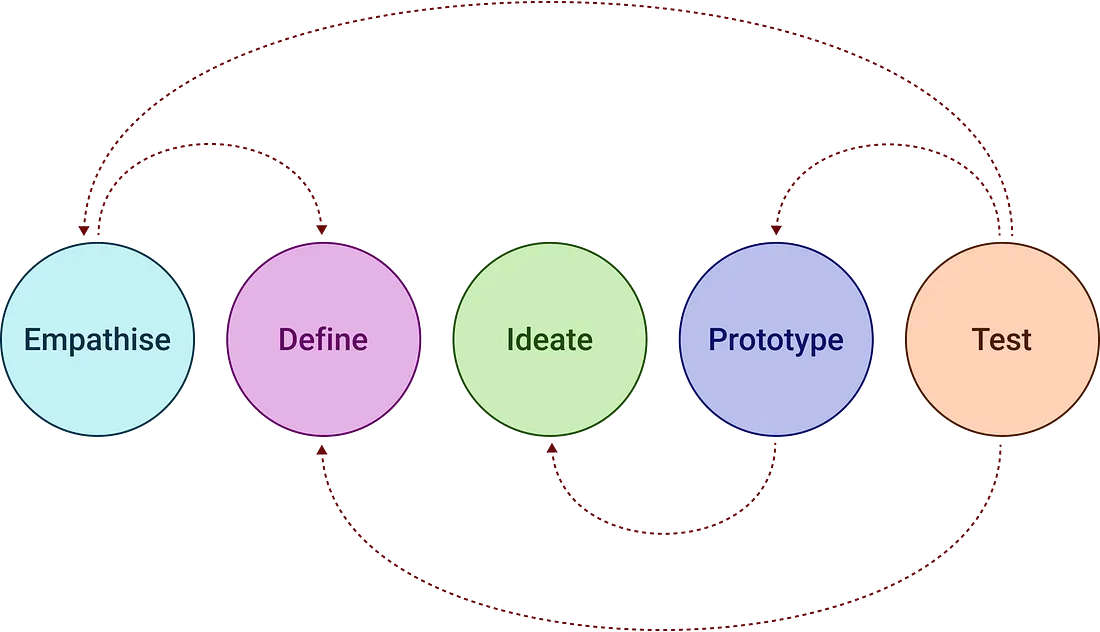
Putting Design Thinking into Practice: A Step-by-Step Guide

The key aim of this part of the design process is to frame your problem statement. This will guide the rest of your process. Once you’ve gathered insights from your users, the next step is to distil everything down to the real issue. There are many ways to do this, but if you’ve spoken to several users, start by analysing what they said to find patterns — what themes keep coming up, and what challenges do they all seem to face? ... Once you’ve got your problem statement, the next step is to start coming up with ideas. This is the fun part! The aim of this part of idea generation is not to find the perfect idea straight away, but to come up with as many ideas as possible. Quantity matters more than quality right now. Start by brainstorming everything that comes to mind, no matter how unrealistic it sounds. At this point, quantity matters more than quality — you can always refine later. Write your ideas down, sketch them, or talk them through with friends or teammates. You might be surprised at how one silly suggestion sparks a genuinely good idea. ... Testing is the “last” stage of the design process. I say last with a bit of hesitation, because while it is technically last on the diagram, you are guaranteed to get a lot of feedback that will require you to go back to earlier stages of the design process and revisit ideas.


Beyond Resilience: How AI and Digital Twin technology are rewriting the rules of supply chain recovery

For decades, supply chain resilience meant having backup plans, alternate suppliers, safety stock, and crisis playbooks. That model doesn’t hold anymore. In a post-pandemic world shaped by trade wars, climate volatility, and technology shocks, disruptions are neither rare nor isolated. They’re structural. ... The KPIs of resilience have evolved. In most companies, traditional metrics like on-time delivery or supplier lead time fail to capture the system’s true flexibility. Modern analytics teams are redefining the measurement architecture around three key indicators: Mean time to recovery (MTTR): the time between initial disruption and full operational stability;  Conditional value-at-risk (CVaR): a probabilistic measure of financial exposure under extreme stress; Supply network resilience index (SNRI): a composite score tracking substitution agility and cross-tier visibility. ... A hidden benefit of this new approach is its environmental alignment. When Schneider Electric built a multi-tier AI twin for its Asia-Pacific operations, it discovered that optimizing for resilience, diversifying ports, balancing lead times, and automating inventory allocation also reduced carbon intensity per unit shipped by 12%; This was not the goal, but it proved that sustainability and resilience share a common denominator: Efficiency. The smarter the network, the smaller its waste footprint. In boardrooms today, that realization is quietly rewriting ESG strategy.

Daily Tech Digest - June 01, 2025


Quote for the day:

"You are never too old to set another goal or to dream a new dream." -- C.S. Lewis


A wake-up call for real cloud ROI

To make cloud spending work for you, the first step is to stop, assess, and plan. Do not assume the cloud will save money automatically. Establish a meticulous strategy that matches workloads to the right environments, considering both current and future needs. Take the time to analyze which applications genuinely benefit from the public cloud versus alternative options. This is essential for achieving real savings and optimal performance. ... Enterprises should rigorously review their existing usage, streamline environments, and identify optimization opportunities. Invest in cloud management platforms that can automate the discovery of inefficiencies, recommend continuous improvements, and forecast future spending patterns with greater accuracy. Optimization isn’t a one-time exercise—it must be an ongoing process, with automation and accountability as central themes. Enterprises are facing mounting pressure to justify their escalating cloud spend and recapture true business value from their investments. Without decisive action, waste will continue to erode any promised benefits. ... In the end, cloud’s potential for delivering economic and business value is real, but only for organizations willing to put in the planning, discipline, and governance that cloud demands. 


Why IT-OT convergence is a gamechanger for cybersecurity

The combination of IT and OT is a powerful one. It promises real-time visibility into industrial systems, predictive maintenance that limits downtime and data-driven decision making that gives everything from supply chain efficiency to energy usage a boost. When IT systems communicate directly with OT devices, businesses gain a unified view of operations – leading to faster problem solving, fewer breakdowns, smarter automation and better resource planning. This convergence also supports cost reduction through more accurate forecasting, optimised maintenance and the elimination of redundant technologies. And with seamless collaboration, IT and OT teams can now innovate together, breaking down silos that once slowed progress. Cybersecurity maturity is another major win. OT systems, often built without security in mind, can benefit from established IT protections like centralised monitoring, zero-trust architectures and strong access controls. Concurrently, this integration lays the foundation for Industry 4.0 – where smart factories, autonomous systems and AI-driven insights thrive on seamless IT-OT collaboration. ... The convergence of IT and OT isn’t just a tech upgrade – it’s a transformation of how we operate, secure and grow in our interconnected world. But this new frontier demands a new playbook that combines industrial knowhow with cybersecurity discipline.


How To Measure AI Efficiency and Productivity Gains

Measuring AI efficiency is a little like a "chicken or the egg" discussion, says Tim Gaus, smart manufacturing business leader at Deloitte Consulting. "A prerequisite for AI adoption is access to quality data, but data is also needed to show the adoption’s success," he advises in an online interview. ... The challenge in measuring AI efficiency depends on the type of AI and how it's ultimately used, Gaus says. Manufacturers, for example, have long used AI for predictive maintenance and quality control. "This can be easier to measure, since you can simply look at changes in breakdown or product defect frequencies," he notes. "However, for more complex AI use cases -- including using GenAI to train workers or serve as a form of knowledge retention -- it can be harder to nail down impact metrics and how they can be obtained." ... Measuring any emerging technology's impact on efficiency and productivity often takes time, but impacts are always among the top priorities for business leaders when evaluating any new technology, says Dan Spurling, senior vice president of product management at multi-cloud data platform provider Teradata. "Businesses should continue to use proven frameworks for measurement rather than create net-new frameworks," he advises in an online interview. 


The discipline we never trained for: Why spiritual quotient is the missing link in leadership

Spiritual Quotient (SQ) is the intelligence that governs how we lead from within. Unlike IQ or EQ, SQ is not about skill—it is about state. It reflects a leader’s ability to operate from deep alignment with their values, to stay centred amid volatility and to make decisions rooted in clarity rather than compulsion. It shows up in moments when the metrics don’t tell the full story, when stakeholders pull in conflicting directions. When the team is watching not just what you decide, but who you are while deciding it. It’s not about belief systems or spirituality in a religious sense; it’s about coherence between who you are, what you value, and how you lead. At its core, SQ is composed of several interwoven capacities: deep self-awareness, alignment with purpose, the ability to remain still and present amid volatility, moral discernment when the right path isn’t obvious, and the maturity to lead beyond ego. ... The workplace in 2025 is not just hybrid—it is holographic. Layers of culture, technology, generational values and business expectations now converge in real time. AI challenges what humans should do. Global disruptions challenge why businesses exist. Employees are no longer looking for charismatic heroes. They’re looking for leaders who are real, reflective and rooted.


Microsoft Confirms Password Deletion—Now Just 8 Weeks Away

The company’s solution is to first move autofill and then any form of password management to Edge. “Your saved passwords (but not your generated password history) and addresses are securely synced to your Microsoft account, and you can continue to access them and enjoy seamless autofill functionality with Microsoft Edge.” Microsoft has added an Authenticator splash screen with a “Turn on Edge” button as its ongoing campaign to switch users to its own browser continues. It’s not just with passwords, of course, there are the endless warnings and nags within Windows and even pointers within security advisories to switch to Edge for safety and security. ... Microsoft wants users to delete passwords once that’s done, so no legacy vulnerability remains, albeit Google has not gone quite that far as yet. You do need to remove SMS 2FA though, and use an app or key-based code at a minimum. ... Notwithstanding these Authenticator changes, Microsoft users should use this as a prompt to delete passwords and replace them with passkeys, per the Windows-makers’ advice. This is especially true given increasing reports of two-factor authentication (2FA) bypasses that are increasingly rendering basics forms of 2FA redundant.


Sustainable cyber risk management emerges as industrial imperative as manufacturers face mounting threats

The ability of a business to adjust, absorb, and continue operating under pressure is becoming a performance metric in and of itself. It is measured not only in uptime or safety statistics. It’s not a technical checkbox; it’s a strategic commitment that is becoming the new baseline for industrial trust and continuity. At the heart of this change lies security by design. Organizations are working to integrate security into OT environments, working their way up from system architecture to vendor procurement and lifecycle management, rather than adding protections along the way and after deployment. ... The path is made more difficult by the acute lack of OT cyber skills, which could be overcome by employing specialists and establishing long-term pipelines through internal reskilling, knowledge transfer procedures, and partnerships with universities. Building sustainable industrial cyber risk management can be made more organized using the ISA/IEC 62443 industrial cybersecurity standards. Cyber defense is now a continuous, sustainable discipline rather than an after-the-fact response thanks to these widely recognized models, which also allow industries to link risk mitigation to real industrial processes, guarantee system interoperability, and measure progress against common benchmarks.


Design Sprint vs Design Thinking: When to Use Each Framework for Maximum Impact

The Design Sprint is a structured five-day process created by Jake Knapp during his time at Google Ventures. It condenses months of work into a single workweek, allowing teams to rapidly solve challenges, create prototypes, and test ideas with real users to get clear data and insights before committing to a full-scale development effort. Unlike the more flexible Design Thinking approach, a Design Sprint follows a precise schedule with specific activities allocated to each day ...
The Design Sprint operates on the principle of "together alone" – team members work collaboratively during discussions and decision-making, but do individual work during ideation phases to ensure diverse thinking and prevent groupthink. ... Design Thinking is well-suited for broadly exploring problem spaces, particularly when the challenge is complex, ill-defined, or requires extensive user research. It excels at uncovering unmet needs and generating innovative solutions for "wicked problems" that don't have obvious answers. The Design Sprint works best when there's a specific, well-defined challenge that needs rapid resolution. It's particularly effective when a team needs to validate a concept quickly, align stakeholders around a direction, or break through decision paralysis.


Broadcom’s VMware Financial Model Is ‘Ethically Flawed’: European Report

Some of the biggest issues VMware cloud partners and customers in Europe include the company increasing prices after Broadcom axed VMware’s former perpetual licenses and pay-as-you-go monthly pricing models. Another big issue was VMware cutting its product portfolio from thousands of offerings into just a few large bundles that are only available via subscription with a multi-year minimum commitment. “The current VMware licensing model appears to rely on practices that breach EU competition regulations which, in addition to imposing harm on its customers and the European cloud ecosystem, creates a material risk for the company,” said the ECCO in its report. “Their shareholders should investigate and challenge the legality of such model.” Additionally, the ECCO said Broadcom recently made changes to its partnership program that forced partners to choose between either being a cloud service provider or a reseller. “It is common in Europe for CSP to play both [service provider and reseller] roles, thus these new requirements are a further harmful restriction on European cloud service providers’ ability to compete and serve European customers,” the ECCO report said.


Protecting Supply Chains from AI-Driven Risks in Manufacturing

Cybercriminals are notorious for exploiting AI and have set their sights on supply chains. Supply chain attacks are surging, with current analyses indicating a 70% likelihood of cybersecurity incidents stemming from supplier vulnerabilities. Additionally, Gartner projects that by the end of 2025, nearly half of all global organizations will have faced software supply chain attacks. Attackers manipulate data inputs to mislead algorithms, disrupt operations or steal proprietary information. Hackers targeting AI-enabled inventory systems can compromise demand forecasting, causing significant production disruptions and financial losses. ... Continuous validation of AI-generated data and forecasts ensures that AI systems remain reliable and accurate. The “black-box” nature of most AI products, where internal processes remain hidden, demands innovative auditing approaches to guarantee reliable outputs. Organizations should implement continuous data validation, scenario-based testing and expert human review to mitigate the risks of bias and inaccuracies. While black-box methods like functional testing offer some evaluation, they are inherently limited compared to audits of transparent systems, highlighting the importance of open AI development.


What's the State of AI Costs in 2025?

This year's report revealed that 44% of respondents plan to invest in improving AI explainability. Their goals are to increase accountability and transparency in AI systems as well as to clarify how decisions are made so that AI models are more understandable to users. Juxtaposed with uncertainty around ROI, this statistic signals further disparity between organizations' usage of AI and accurate understanding of it. ... Of the companies that use third-party platforms, over 90% reported high awareness of AI-driven revenue. That awareness empowers them to confidently compare revenue and cost, leading to very reliable ROI calculations. Conversely, companies that don't have a formal cost-tracking system have much less confidence that they can correctly determine the ROI of their AI initiatives. ... Even the best-planned AI projects can become unexpectedly expensive if organizations lack effective cost governance. This report highlights the need for companies to not merely track AI spend but optimize it via real-time visibility, cost attribution, and useful insights. Cloud-based AI tools account for almost two-thirds of AI budgets, so cloud cost optimization is essential if companies want to stop overspending. Cost is more than a metric; it's the most strategic measure of whether AI growth is sustainable. As companies implement better cost management practices and tools, they will be able to scale AI in a fiscally responsible way, confidently measure ROI, and prevent financial waste.

Daily Tech Digest - January 24, 2025


Quote for the day:

"Leaders are people who believe so passionately that they can seduce other people into sharing their dream." -- Warren G. Bennis


What comes after Design thinking

The first and most obvious one is that we can no longer afford to design things solely for humans. We clearly need to think in non-human, non-monocentric terms if we want to achieve real, positive, long-term impact. Second, HCD fell short in making its practitioners think in systems and leverage the power of relationships to really be able to understand and redesign what has not been serving us or our planet. Lastly, while HCD accomplished great feats in designing better products and services that solve today’s challenges, it fell short in broadening horizons so that these products and systems could pave the way for regenerative systems: the ones that go beyond sustainability and actively restore and revitalize ecosystems, communities, and resources create lasting, positive impact. Now, everything that we put out in the world needs to have an answer to how it is contributing to a regenerative future. And in order to build a regenerative future, we need to start prioritizing something that is integral to nature: relationships. We need to grow relational capacity, from designing for better interpersonal relationships to establishing systems that facilitate cross-organizational collaboration. We need to think about relational networks and harness their power to recreate more just, trustful, and better functioning systems. We need to think in communities.


FinOps automation: Raising the bar on lowering cloud costs

Successful FinOps automation requires strategies that exploit efficiencies from every angle of cloud optimization. Good data management, negotiations, data manipulation capabilities, and cloud cost distribution strategies are critical to automating cost-effective solutions to minimize cloud spend. This article focuses on how expert FinOps leaders have focused their automation efforts to achieve the greatest benefits. ... Effective automation relies on well-structured data. Intuit and Roku have demonstrated the importance of robust data management strategies, focusing on AWS accounts and Kubernetes cost allocation. Good data engineering enables transparency, visibility, and accurate budgeting and forecasting. ... Automation efforts should focus on areas with the highest potential for cost savings, such as prepayment optimization and waste reduction. Intuit and Roku have achieved significant savings by targeting these high-cost areas. ... Automation tools should be accessible and user-friendly for engineers managing cloud resources. Intuit and Roku have developed tools that simplify resource management and align costs with responsible teams. Automated reporting and forecasting tools help engineers make informed decisions.


Why CISOs Must Think Clearly Amid Regulatory Chaos

At their core, CISOs are truth sayers — akin to an internal audit committee that assesses risks and makes recommendations to improve an organization's defenses and internal controls. Ultimately, though, it's the board and a company's top executives who set policy and decide what to disclose in public filings. CISOs can and should be a counselor for this group effort because they have the understanding of security risk. And yet, the advice they can offer is limited if they don't have full visibility into an organization's technology stack. "Many oversee a company's IT system, but not the products the company sells. That's crucial when it comes to data-dependent systems and devices that can provide network-access targets to cyber criminals. Those might include medical devices, or sensors and other Internet of Things endpoints used in manufacturing lines, electric grids, and other critical physical infrastructure. In short: A company's defenses are only as strong as the board and its top executives allow it to be. And if there is a breach, as in the case of SolarWinds? CISOs do not determine the materiality of a cybersecurity incident; a company's top executives and its board make that call. The CISO's responsibilities in that scenario involves responding to the incident and conducting the follow-up forensics required to help minimize or avoid future incidents.


Building Secure Multi-Cloud Architectures: A Framework for Modern Enterprise Applications

The technical controls alone cannot secure multi-cloud environments. Organizations must conduct cloud security architecture reviews before implementing any multi-cloud solution. These reviews should focus on: Data flow patterns between clouds Authentication and authorization requirements Compliance obligations across all relevant jurisdictions. Completing these tasks thoroughly and diligently will ensure that multi-cloud security is baked into the architectural layer between the clouds and in the clouds themselves. While thorough architecture reviews establish the foundation, automation brings these security principles to life at scale. Automation provides a major advantage to security operations for multi-cloud environments. By treating infrastructure and security as code, organizations can achieve consistent configurations across clouds, implement automated security testing and enable fast response to security events. This helps with the overall security and operational overhead because it allows us to do more with less and to reduce human error. Our security operations experienced a substantial enhancement when we moved to automated compliance checks. Still, we did not just throw AWS services at the problem. We engaged our security team deeply in the process. 


Scaling Dynamic Application Security Testing (DAST)

One solution is to monitor requests sent to the target web server and extrapolate an OpenAPI Specification based on those requests in real-time. This monitoring could be performed client-side, server-side, or in-between on an API gateway, load-balancer, etc. This is a scalable, automatable solution that does not require each developer’s involvement. Depending on how long it runs, this approach can be limited in comprehensively identifying all web endpoints. For example, if no users called the /logout endpoint, then the /logout endpoint would not be included in the automatically generated OpenAPI Specification. Another solution is to statically analyze the source code for a web service and generate an OpenAPI Specification based on defined API endpoint routes that the automation can gleam from the source code. Microsoft internally prototyped this solution and found it to be non-trivial to reliably discover all API endpoint routes and all parameters by parsing abstract syntax trees without access to a working build environment. This solution was also unable to handle scenarios of dynamically registered API route endpoint handlers. ... To truly scale DAST for thousands of web services, we need to automatically, comprehensively, and deterministically generate OpenAPI Specifications.


Post-Quantum Cryptography 2025: The Enterprise Readiness Gap

"Quantum technology offers a revolutionary approach to cybersecurity, providing businesses with advanced tools to counter emerging threats," said David Close, chief solutions architect at Futurex. By using quantum machine learning algorithms, organizations can detect threats faster and more accurately. These algorithms identify subtle patterns that indicate multi-vector cyberattacks, enabling proactive responses to potential breaches. Innovations such as quantum key distribution and quantum random number generators enable unbreakable encryption and real-time anomaly detection, making them indispensable in fraud prevention and secure communications, Close said. These technologies not only protect sensitive data but also ensure the integrity of financial transactions and authentication protocols. A cornerstone of quantum security is post-quantum cryptography, PQC. Unlike traditional cryptographic methods, PQC algorithms are designed to withstand attacks from quantum computers. Standards recently established by the National Institute of Standards and Technology include algorithms such as Kyber, Dilithium and SPHINCS+, which promise robust protection against future quantum threats.


Tricking the bad guys: realism and robustness are crucial to deception operations

The goal of deception technology, also known as deception techniques, operations, or tools, is to create an environment that attracts and deceives adversaries to divert them from targeting the organization’s crown jewels. Rapid7 defines deception technology as “a category of incident detection and response technology that helps security teams detect, analyze, and defend against advanced threats by enticing attackers to interact with false IT assets deployed within your network.” Most cybersecurity professionals are familiar with the current most common application of deception technology, honeypots, which are computer systems sacrificed to attract malicious actors. But experts say honeypots are merely decoys deployed as part of what should be more overarching efforts to invite shrewd and easily angered adversaries to buy elaborate deceptions. Companies selling honeypots “may not be thinking about what it takes to develop, enact, and roll out an actual deception operation,” Handorf said. “As I stressed, you have to know your infrastructure. You have to have a handle on your inventory, the log analysis in your case. But you also have to think that a deception operation is not a honeypot. It is more than a honeypot. It is a strategy that you have to think about and implement very decisively and with willful intent.”


Effective Techniques to Refocus on Security Posture

If you work in software development, then “technical debt” is a term that likely triggers strong reactions. Foundationally, technical debt serves a similar function to financial debt. When well-managed, both can be used as leverage for further growth opportunities. In the context of engineering, technical debt can help expand product offerings and operations, helping a business grow faster than paying the debt with the opportunities offered from the leverage. On the other hand, debt also comes with risks and the rate of exposure is variable, dependent on circumstance. In the context of security, acceptance of technical debt from End of Life (EoL) software and risky decisions enable threats whose greatest advantage is time, the exact resource that debt leverages. ... The trustworthiness of software is dependent on the exploitable attack surface. Part of that attack surface are exploitable vulnerabilities. If the outcome of the SBOM with a VEX attestation is a deeper understanding of those applicable and exploitable vulnerabilities, coupling that information with exploit predictive analysis like EPSS helps to bring valuable information to decision-making. This type of assessment allows for programmatic decision-making. It allows software suppliers to express risk in the context of their applications and empowers software consumers to escalate on problems worth solving.


Sustainability, grid demands, AI workloads will challenge data center growth in 2025

Uptime expects new and expanded data center developers will be asked to provide or store power to support grids. That means data centers will need to actively collaborate with utilities to manage grid demand and stability, potentially shedding load or using local power sources during peak times. Uptime forecasts that data center operators “running non-latency-sensitive workloads, such as specific AI training tasks, could be financially incentivized or mandated to reduce power use when required.” “The context for all of this is that the [power] grid, even if there were no data centers, would have a problem meeting demand over time. They’re having to invest at a rate that is historically off the charts. It’s not just data centers. It’s electric vehicles. It’s air conditioning. It’s carbonization. But obviously, they are also retiring coal plants and replacing them with renewable plants,” Uptime’s Lawrence explained. “These are much less stable, more intermittent. So, the grid has particular challenges.” ... According to Uptime, infrastructure requirements for next-generation AI will force operators to explore new power architectures, which will drive innovations in data center power delivery. As data centers need to handle much higher power densities, it will throw facilities off balance in terms of how the electrical infrastructure is designed and laid out. 


Is the Industrial Metaverse Transforming the E&U Industry?

One major benefit of the industrial metaverse is that it can monitor equipment issues and hazardous conditions in real time so that any fluctuations in the electrical grid are instantly detected. As they collect data and create simulations, digital twins can also function as proactive tools by predicting potential problems before they escalate. “You can see which components are in early stages of failure,” a Hitachi Energy spokesperson notes in this article. “You can see what the impact of failure is and what the time to failure is, so you’re able to make operational decisions, whether it’s a switching operation, deploying a crew, or scheduling an outage, whatever that looks like.” ... Digital twins also make it possible for operators to simulate and test operational changes in virtual environments before real-world implementation, reducing excessive costs. “While it will not totally replace on-site testing, it can significantly reduce physical testing, lower costs and contribute to an increased quality of the protection system,” Andrea Bonetti, a power system protection specialist at Megger, tells the Switzerland-based International Electrotechnical Commission. Shell is one of several energy providers that use digital twins to enhance operations, according to Digital Twin Insider.