Showing posts with label scalability. Show all posts

Daily Tech Digest - May 02, 2026


Quote for the day:

“The more you loose yourself in something bigger than yourself, the more energy you will have.” - Norman Vincent Peale

🎧 Listen to this digest on YouTube Music

▶ Play Audio Digest

Duration: 17 mins • Perfect for listening on the go.


The architectural decision shaping enterprise AI

In "The architectural decision shaping enterprise AI," Shail Khiyara argues that the long-term success of enterprise AI initiatives hinges on an often-overlooked architectural choice: how a system finds, relates, and reasons over information. The article outlines three primary patterns—vector embeddings, knowledge graphs, and context graphs—each offering unique advantages and trade-offs. Vector embeddings excel at identifying semantically similar unstructured data, making them ideal for rapid RAG deployments, yet they lack deep relational understanding. Knowledge graphs provide precise, traceable answers by mapping explicit relationships between entities, though they are resource-intensive to maintain. Crucially, Khiyara introduces context graphs, which capture the dynamic reasoning behind decisions to ensure continuity across multi-step workflows. Unlike static models, context graphs treat reasoning as a first-class data artifact, allowing AI to understand the "why" behind previous actions. The most effective enterprise strategies do not choose one in isolation but instead layer these patterns to balance speed, precision, and contextual awareness. Ultimately, Khiyara warns that leaving these decisions to default configurations leads to "confident mistakes" and trust erosion. For CIOs, intentional architectural design is not just a technical necessity but a fundamental business imperative to transition from isolated pilots to scalable, reliable AI ecosystems that deliver genuine organizational value.


The Evidence and Control Layer for Enterprise AI

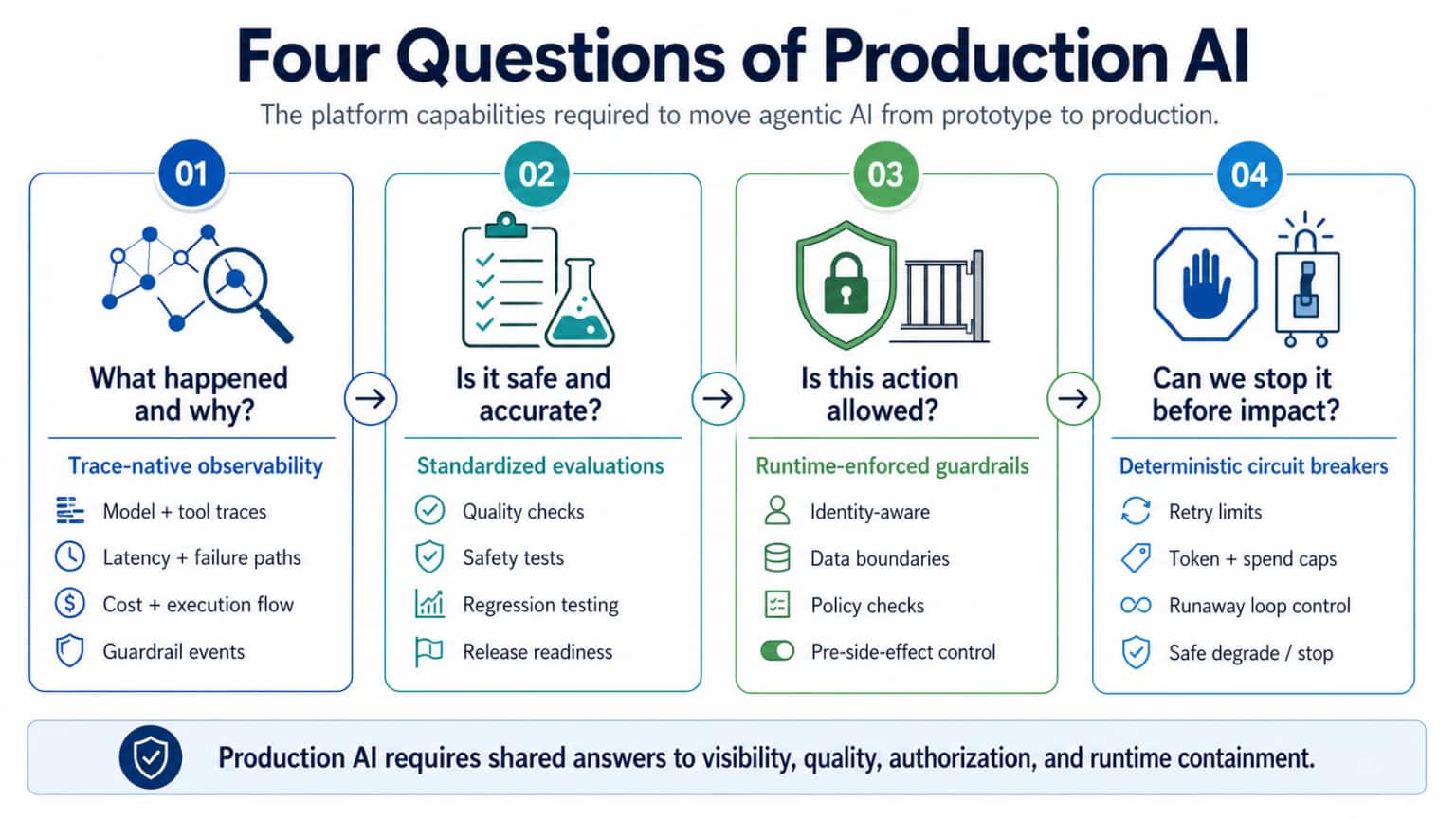
The article "The Evidence and Control Layer for Enterprise AI" by Kishore Pusukuri argues that the transition from AI prototypes to production requires a robust architectural layer to manage the inherent unpredictability of agentic systems. This "Evidence and Control Layer" acts as a shared platform substrate that mediates between agentic workloads and enterprise resources, shifting governance from retrospective reviews to proactive, in-path execution controls. The framework is built upon three core pillars: trace-native observability, continuous trace-linked evaluations, and runtime-enforced guardrails. Unlike traditional logging, trace-native observability captures the complete execution path and decision context, providing the foundation for operational trust. Continuous evaluations act as quality gates, while runtime guardrails evaluate proposed actions—such as tool calls or data transfers—before side effects occur, ensuring safety and compliance in real-time. By formalizing policy-as-code and generating structured evidence events, the layer ensures that every material action is explicit, auditable, and cost-bounded. Ultimately, this centralized approach accelerates enterprise adoption by providing reusable governance defaults, effectively closing the "stochastic gap" and transforming black-box agents into trusted, scalable enterprise assets that operate with clear authority and within defined budget constraints.


Organizational Culture As An Operating System, Not A Values System

In the article "Organizational Culture As An Operating System, Not A Values System," the author argues that the traditional definition of culture as a static set of internal values is no longer sufficient in a hyper-connected world. Modern organizational culture must be reframed as a dynamic operating system that bridges internal decision-making with external community engagement. While internal culture dictates how information flows and authority is exercised, external culture defines how a brand interacts with decentralized movements in art, fashion, and social identity. The disconnect often arises because corporate hierarchies prioritize control and predictability, whereas external cultural trends move at a high velocity from the periphery. To remain relevant, organizations must shift from a "broadcast" model to one of "co-creation," where authority is distributed to those closest to social signals and speed is enabled by trust rather than bureaucratic process. By treating culture with the same rigor as any other core business function, leaders can diagnose internal friction and align incentives to ensure the organization moves at the "speed of culture." Ultimately, success depends on building internal systems that allow companies to participate in and shape cultural conversations in real time, moving beyond corporate manifestos to authentic community collaboration.


Re‑Architecting Capability for AI: Governance, SMEs, and the Talent Pipeline Paradox

The article "Re-architecting Capability for AI Governance: SMEs and the Talent Pipeline Paradox" examines the profound obstacles small and medium-sized enterprises encounter while attempting to establish formal AI oversight. Central to the discussion is the "talent pipeline paradox," which describes how the concentration of AI expertise within large technology firms creates a vacuum that leaves smaller organizations vulnerable. To address this, the author advocates for a strategic shift from talent acquisition to capability re-architecting. Rather than competing for scarce high-end specialists, SMEs should integrate AI governance into their existing business architecture through modular and risk-based frameworks. This approach emphasizes the importance of leveraging cross-functional internal teams, automated tools, and external partnerships to manage algorithmic risks effectively. By focusing on scalable governance patterns and clear accountability, SMEs can achieve ethical and regulatory compliance without the overhead of massive administrative departments. Ultimately, the piece suggests that the key to overcoming resource limitations lies in structural agility and the democratization of governance tasks. This enables smaller firms to harness the transformative power of artificial intelligence safely while maintaining a competitive edge in an increasingly automated global marketplace where talent remains the ultimate bottleneck.


The AI scaffolding layer is collapsing. LlamaIndex's CEO explains what survives

In this VentureBeat interview, LlamaIndex CEO Jerry Liu explores the significant transformation occurring within the "AI scaffolding" layer—the software stack connecting large language models to external data and applications. As frontier models increasingly incorporate native reasoning and retrieval capabilities, Liu suggests that simplistic RAG wrappers are rapidly losing their utility, leading to a "collapse" of the middle layer. To survive this consolidation, infrastructure tools must evolve from thin architectural shells into robust systems that manage complex data pipelines and orchestrate sophisticated agentic workflows. Liu emphasizes that while base models are becoming more powerful, they still lack the specialized, proprietary context required for high-stakes enterprise tasks. Consequently, the future of AI development lies in solving "hard" data problems, such as handling heterogeneous sources and ensuring data quality at scale. Developers are encouraged to pivot away from basic integration toward building deep, specialized intelligence layers that provide the structured context models inherently lack. Ultimately, the survival of platforms like LlamaIndex depends on their ability to offer advanced orchestration and data management that transcends the capabilities of the base models alone, marking a shift toward more resilient and professionalized AI engineering.


Guide for Designing Highly Scalable Systems

The "Guide for Designing Highly Scalable Systems" by GeeksforGeeks provides a comprehensive roadmap for building architectures capable of managing increasing traffic and data volume without performance degradation. Scalability is defined as a system’s ability to grow efficiently while maintaining stability and fast response times. The guide highlights two primary scaling strategies: vertical scaling, which involves enhancing a single server’s capacity, and horizontal scaling, which distributes workloads across multiple machines. To achieve high scalability, the article emphasizes the importance of architectural decomposition and loose coupling, often implemented through microservices or service-oriented architectures. Key components discussed include load balancers for even traffic distribution, caching mechanisms like Redis to reduce backend load, and advanced data management techniques such as sharding and replication to prevent database bottlenecks. Furthermore, the guide covers essential architectural patterns like CQRS and distributed systems to improve fault tolerance and resource utilization. Modern applications must account for various non-functional requirements such as availability and consistency while scaling. By prioritizing stateless designs and avoiding single points of failure, organizations can create robust systems that handle peak usage and unpredictable growth effectively. Ultimately, designing for scalability requires balancing cost, performance, and complexity to ensure long-term reliability in a dynamic digital landscape.


Why Debugging is Harder than Writing Code?

The article "Why Debugging is Harder than Writing Code" from BetterBugs examines the fundamental reasons why developers spend nearly half their time fixing issues rather than creating new features. The core difficulty lies in the disparity between the "happy path" of initial development and the exponential state space of potential failures. While writing code involves building a single successful outcome, debugging requires navigating a combinatorially vast range of unexpected inputs and conditions. This process imposes a significant cognitive load, as developers must maintain a massive context window—often jumping between different files, servers, and logs—which incurs heavy switching costs. Furthermore, modern complexities like distributed systems, non-deterministic concurrency, and discrepancies between local and production environments add layers of friction. In concurrent systems, for instance, the mere act of observing a bug can change the timing and make the issue disappear. Ultimately, the article argues that debugging is more demanding because it forces engineers to move beyond theoretical models and confront the messy realities of hardware limits, memory leaks, and network latency. To manage these challenges, the author suggests that teams must prioritize observability and evidence-based reporting tools to bridge the gap between mental models and actual system behavior, ensuring more predictable software lifecycles.


Cybersecurity: Board oversight of operational resilience planning

The A&O Shearman guidance emphasizes that as cyberattacks grow more sophisticated and regulatory scrutiny intensifies, boards must adopt a proactive stance toward operational resilience. With the emergence of unpredictable criminal gangs and AI-driven threats, it is no longer sufficient to treat cybersecurity as a purely technical issue; it is a critical governance priority. To exercise effective oversight, boards should appoint dedicated individuals or committees to monitor cyber risks and ensure that Business Continuity and Disaster Recovery (BCDR) plans are robust, defensible, and accessible offline. Practical preparations must include clear decision-making protocols and alternative communication channels, such as Signal or WhatsApp, for use during systems outages. Additionally, leadership should oversee the development of pre-approved communication templates for stakeholders and define strict Recovery Time Objectives (RTOs). A cornerstone of this framework is the implementation of regular tabletop exercises and technical recovery drills that involve third-party providers to identify vulnerabilities. By documenting these proactive measures and integrating lessons learned into evolving strategies, boards can meet regulatory expectations for evidence-based oversight. Ultimately, this comprehensive approach to resilience planning helps organizations minimize the risk of material revenue loss and navigate the complexities of a volatile global digital landscape.


Beyond the Region: Architecting for Sovereign Fault Domains and the AI-HR Integrity Gap

In "Beyond the Region," Flavia Ballabene argues that software architects must evolve their definition of resilience from surviving mechanical failures to navigating "Sovereign Fault Domains." Traditionally, redundancy across Availability Zones addressed physical infrastructure outages; however, modern geopolitical shifts and evolving privacy laws now create "blast radii" where data becomes legally trapped or AI models suddenly non-compliant. Ballabene highlights an "AI-HR Integrity Gap," where centralized systems fail to account for regional jurisdictional constraints. To bridge this, she proposes shifting toward sovereignty-aware infrastructures. Key strategies include Managed Sovereign Cloud Models, which leverage localized partner-led controls like S3NS or T-Systems, and Cell-Based Regional Architectures, which deploy independent stacks for each major market to eliminate reliance on a global control plane. These approaches allow organizations to maintain operational continuity even when specific regions face regulatory upheavals. By auditing AI dependency graphs and prioritizing data residency, executives can transform compliance from a burden into a competitive advantage. Ultimately, the article suggests that in a fragmented global cloud, the most resilient HR and technology stacks are those built on digital trust and localized integrity, ensuring they remain robust against both technical glitches and the unpredictable tides of international policy.


Designing resilient IoT and Edge Computing with federated tinyML

The article "Real-time operating systems for embedded systems" (available via ScienceDirect PII: S1383762126000275) provides a comprehensive examination of the architectural requirements and performance constraints inherent in modern real-time operating systems (RTOS). As embedded devices become increasingly integrated into safety-critical infrastructure, the study highlights the transition from simple cyclic executives to sophisticated, preemptive multitasking environments. The authors analyze key RTOS components, including deterministic scheduling algorithms, interrupt latency management, and inter-process communication mechanisms, emphasizing their role in ensuring temporal correctness. A significant portion of the discussion focuses on the trade-offs between monolithic and microkernel architectures, particularly regarding memory footprint and system reliability. By evaluating various commercial and open-source RTOS solutions, the research demonstrates how hardware-software co-design can mitigate the overhead typically associated with complex task synchronization. Ultimately, the paper argues that the future of embedded systems lies in adaptive RTOS frameworks that can dynamically balance power efficiency with the rigorous timing demands of Internet of Things (IoT) applications. This synthesis serves as a vital resource for engineers seeking to optimize system predictability in increasingly heterogeneous computing environments, ensuring that software responses remain consistent under peak load conditions.

Daily Tech Digest - April 09, 2026


Quote for the day:

"Success… seems to be connected with action. Successful people keep moving. They make mistakes, but they don’t quit." -- Conrad Hilton


🎧 Listen to this digest on YouTube Music

▶ Play Audio Digest

Duration: 14 mins • Perfect for listening on the go.


Four actions CIOs must take to turn innovation into impact

In the article "Four actions CIOs must take to turn innovation into impact," the author outlines a strategic roadmap for technology leaders to meet high board expectations by delivering measurable value over the next 18 to 24 months. First, CIOs must scale AI for impact by moving beyond isolated pilots toward industrialization, utilizing FinOps and MLOps to embed AI across the entire software development lifecycle. Second, they should establish a unified data and AI governance framework, potentially appointing a Chief Data & AI Officer and using digital twins to create real-time feedback loops for operational redesign. Third, the article stresses the importance of transitioning toward agile, secure infrastructures through predictive observability tools and a strategic hybrid cloud approach that balances agility with sovereign control. Finally, CIOs must redefine IT performance metrics by integrating ESG goals and shifting from traditional capital expenditures to an operational expenditure model via Lean Portfolio Management. This shift allows for continuous, outcome-based funding and improved financial discipline. By orchestrating these four pillars—AI scaling, integrated governance, resilient infrastructure, and modernized performance tracking—CIOs can move from mere implementation to creating a sustained organizational rhythm where innovation consistently translates into enterprise-wide performance and growth.


LLM-generated passwords are indefensible. Your codebase may already prove it

Large language models (LLMs) are fundamentally unsuitable for generating secure passwords, as their architectural design favors predictable patterns over the true randomness required for cryptographic security. Research from firms like Irregular and Kaspersky demonstrates that LLMs produce "vibe passwords" that appear complex to human eyes and standard entropy meters but exhibit significant structural biases. These models often repeat specific character sequences and positional clusters, allowing adversaries to use model-specific dictionaries to crack credentials with far less effort than a standard brute-force attack. A critical concern is the rise of AI coding agents that autonomously inject these weak secrets into production infrastructure, such as Docker configurations and Kubernetes manifests, without explicit developer oversight. Because traditional secret scanners focus on pattern matching rather than entropy distribution, these vulnerabilities often go undetected in modern codebases. To mitigate this emerging threat, organizations must conduct retrospective audits of AI-assisted repositories, rotate any credentials not derived from a cryptographically secure pseudorandom number generator (CSPRNG), and update development guidelines to strictly prohibit LLM-sourced secrets. Ultimately, while AI excels at fluency, its reliance on training-corpus statistics makes it an indefensible choice for maintaining the mathematical unpredictability essential to robust enterprise security.


Why Zero‑Trust Privileged Access Management May Be Essential for the Semiconductor Industry

The article highlights the urgent need for the semiconductor industry to move beyond traditional "castle and moat" security models and adopt a robust Zero-Trust Architecture (ZTA). As semiconductor fabrication plants are increasingly classified as critical infrastructure, Identity and Privileged Access Management (PAM) have emerged as the most vital defensive layers. The core philosophy of Zero-Trust—"never trust, always verify"—is essential for managing the complex interactions between internal engineers, third-party vendors, and automated systems. By implementing the Principle of Least Privilege (PoLP) and Just-In-Time (JIT) access, organizations can effectively eliminate standing privileges and significantly minimize the risk of lateral movement by attackers. Beyond controlling human and machine access, ZTA safeguards sensitive assets like digital blueprints, intellectual property, and production telemetry through encryption and proactive secrets management. Modern PAM platforms play a pivotal role by unifying credential rotation, secure remote access, and real-time session monitoring into a single, policy-driven security framework. Ultimately, embracing these advanced measures is not just about meeting regulatory compliance or subsidy-linked mandates; it is a strategic necessity to ensure global economic competitiveness and long-term industrial resilience. This shift ensures the semiconductor supply chain remains secure against sophisticated cyber threats while enabling continued innovation.


Cloud migration’s biggest illusion: Why modernisation without security redesign is a strategic mistake

Cloud migration is frequently perceived as a mere technical relocation, a "lift-and-shift" approach that promises agility and resilience. However, Jayjit Biswas argues in Express Computer that this perspective is a strategic illusion. Modernization without a fundamental security redesign is a critical error because cloud environments operate on fundamentally different trust and control models compared to traditional on-premises systems. While cloud providers offer robust infrastructure, the "shared responsibility model" dictates that customers remain accountable for managing identities, configurations, and data protection. Many organizations fail to internalize this, leading to invisible but scalable vulnerabilities like excessive privileges, misconfigurations, and weak API governance. Unlike perimeter-based legacy systems, the cloud is identity-centric and dynamic, where a single administrative oversight can lead to an enterprise-wide crisis. True transformation requires shifting from a server-centric mindset to a policy-driven, identity-first architecture. Instead of treating security as a post-migration cleanup, businesses must establish rigorous security baselines as a prerequisite for moving workloads. Ultimately, the successful transition to the cloud depends on recognizing that security thinking must migrate before applications do. Without this strategic discipline, modernization efforts remain fragile, merely transporting old vulnerabilities into a faster, more exposed environment.


​Secure Digital Enterprise Architecture: Designing Resilient Integration Frameworks For Cloud-Native Companies

In "Designing Resilient Integration Frameworks For Cloud-Native Companies," the Forbes Technology Council highlights the evolution of enterprise architecture from mere connectivity to a strategic pillar for complex digital ecosystems. Modern organizations function as interconnected networks involving ERP systems, cloud platforms, and AI applications, necessitating a shift toward secure digital enterprise architecture that governs information movement across the entire enterprise. The article argues that integration frameworks must prioritize security-by-design rather than treating it as an afterthought. This involves implementing zero-trust principles, identity management, and encrypted communication protocols. Furthermore, centralized API governance is essential to maintain control and monitor system interactions effectively. To prevent operational instability, architects must ensure data integrity through clear ownership rules and validation processes. Resilience is another cornerstone, achieved through asynchronous messaging and event-driven patterns that allow the ecosystem to absorb disruptions without total failure. Ultimately, as cloud-native environments grow in complexity, the enterprise architect’s role becomes pivotal in balancing innovation with security and stability. By establishing structured integration models, organizations can scale effectively while safeguarding their digital assets and operational reliability in an increasingly distributed landscape.


AI agent intent is a starting point, not a security strategy

In this Help Net Security feature, Itamar Apelblat, CEO of Token Security, addresses the critical security vulnerabilities emerging from the rapid adoption of agentic AI. Research reveals a startling governance gap: 65.4% of agentic chatbots remain dormant after creation yet retain active access credentials, functioning essentially as high-risk orphaned service accounts. Apelblat notes that organizations frequently treat these agents as disposable experiments rather than governed identities, leading to a proliferation of standing privileges that bypass traditional security oversight. Furthermore, the report highlights that 51% of external actions rely on insecure hard-coded credentials instead of robust OAuth protocols, often because business users prioritize speed over identity hygiene. This systemic negligence is compounded by the fact that 81% of cloud-deployed agents operate on self-managed frameworks, distancing them from centralized corporate security controls. Apelblat emphasizes that relying on "agent intent" is insufficient for a comprehensive security strategy. Instead, intent must be operationalized into enforceable policies that can withstand malicious prompts or unexpected user interactions. To mitigate these risks, security teams must move beyond mere discovery to implement rigorous identity governance, ensuring that an agent’s access does not outlive its legitimate purpose or turn into a silent gateway for sophisticated cyber threats.


Malware Threats Accelerate Across Critical Infrastructure

The rapid convergence of Information Technology (IT) and Operational Technology (OT) is exposing critical infrastructure to unprecedented malware threats, as highlighted by a recent Comparitech report. Industrial Control Systems (ICS), which manage essential services like power grids, water treatment, and transportation, are increasingly being targeted due to their newfound internet connectivity. These systems often rely on legacy protocols such as Modbus, which were designed for isolated environments and lack modern security features like encryption. Consequently, vulnerability disclosures for ICS doubled between 2024 and 2025. The report identifies significant exposure in countries like the United States, Sweden, and Turkey, with real-world consequences already being felt, such as the FrostyGoop attack that disrupted heating for hundreds of residents in Ukraine. Unlike traditional IT security, protecting infrastructure is complicated by the need for continuous uptime and the long lifespans of industrial hardware. Experts warn that we have entered an "Era of Adoption" where sophisticated digital weapons are routinely deployed by nation-state actors. To mitigate these risks, organizations must move beyond opportunistic defense strategies, prioritizing network segmentation, reducing public internet exposure, and maintaining strict control over environments to prevent catastrophic kinetic damage to society.


Shrinking the IAM Attack Surface through Identity Visibility and Intelligence Platforms

The article highlights the critical challenges of modern enterprise identity management, which has reached a breaking point due to extreme fragmentation. As organizations scale, a significant portion of identity activity—estimated at 46%—operates as "Identity Dark Matter" outside the visibility of centralized Identity and Access Management (IAM) systems. This hidden layer includes unmanaged applications, local accounts, and over-permissioned non-human identities, all of which are exacerbated by the rise of Agentic AI. To address this widening security gap, the article introduces the category of Identity Visibility and Intelligence Platforms (IVIP). These platforms provide a necessary observability layer that discovers the full application estate and unifies fragmented data into a consistent operational picture. By leveraging automated remediation, real-time signal sharing, and intent-based intelligence through large language models, IVIPs move organizations from a posture of configuration-based assumptions to evidence-driven intelligence. Data shows that up to 40% of all accounts are orphaned, a risk that IVIPs can mitigate by observing actual identity behavior. Ultimately, implementing identity observability allows security teams to shrink their attack surface, improve audit efficiency, and govern the complex "dark matter" where modern attackers frequently hide, ensuring that access remains visible and controlled across the entire environment.


War is forcing banks toward continuous scenario planning

The article highlights how intensifying global conflicts are compelling financial institutions to transition from traditional, calendar-based budgeting to continuous scenario planning. In an era where war acts as a live operating variable, static annual or quarterly reviews are increasingly dangerous, as they fail to absorb rapid shifts in energy prices, inflation, and sanctions. Regulators like the European Central Bank are now demanding that banks prove their dynamic resilience through rigorous geopolitical stress tests, emphasizing that the exception is now the norm. These conflicts trigger complex chain reactions, impacting everything from credit quality in energy-intensive sectors to the operational integrity of cross-border payment corridors. Consequently, the mandate for Chief Information Officers is evolving; they must now bridge fragmented data silos to create integrated environments capable of real-time consequence modeling. By shifting to a trigger-based cadence, leadership can make explicit tradeoffs—deciding what to protect, accelerate, or stop—based on actual arithmetic rather than outdated assumptions. This strategic pivot ensures that banks move from simply narrating uncertainty to actively managing it with specific, data-driven choices. Ultimately, survival in this fragmented global order depends on decision speed and the ability to prioritize under pressure, ensuring that planning remains a repeatable discipline that moves as quickly as the geopolitical landscape itself.


Why Queues Don’t Fix Scaling Problems

The article "Queues Don't Absorb Load, They Delay Bankruptcy" argues that while queues effectively smooth out transient traffic spikes, they are not a substitute for true system scaling during sustained overloads. Many architects mistakenly treat queues as magical buffers, but if the incoming message rate consistently exceeds consumer throughput, a queue merely masks the underlying capacity deficit until it metastasizes into a reliability catastrophe. This "bankruptcy" occurs when queues hit hard limits—such as memory exhaustion or cloud provider constraints—leading to cascading failures, message loss, and service-wide instability. To avoid this death spiral, the author emphasizes the necessity of implementing explicit backpressure mechanisms, such as bounded queues and circuit breakers, which force the system to fail fast and honestly. Crucially, engineers must prioritize monitoring consumer lag rather than just queue depth, as lag indicates whether the system is gaining or losing ground in real-time. Ultimately, queues should be viewed as tools for asynchronous processing and decoupling, not as a fix for insufficient capacity. Resilience requires proactive strategies like horizontal scaling, rate limiting, and graceful degradation to ensure that systems remain stable under pressure rather than silently accumulating technical debt that eventually topples the entire infrastructure.

Daily Tech Digest - April 03, 2026


Quote for the day:

"Any fool can write code that a computer can understand. Good programmers write code that humans can understand." -- Martin Fowler


🎧 Listen to this digest on YouTube Music

▶ Play Audio Digest

Duration: 21 mins • Perfect for listening on the go.


Cybersecurity in the age of instant software

In "Cybersecurity in the Age of Instant Software," Bruce Schneier explores how artificial intelligence is revolutionizing the software lifecycle and the resulting arms race between attackers and defenders. AI facilitates the rise of "instant software"—customized, ephemeral applications created on demand—which fundamentally alters traditional security paradigms. While AI significantly enhances an attacker's ability to automatically discover and exploit vulnerabilities in open-source, commercial, and legacy IoT systems, it simultaneously empowers defenders with sophisticated tools for automated patch creation and deployment. Schneier envisions a potentially optimistic future featuring self-healing networks where AI agents continuously scan and repair code, shifting the defensive advantage toward those who can share intelligence and coordinate responses. However, significant challenges remain, including the persistence of unpatchable legacy systems and the risk of attackers shifting their focus to social engineering, deepfakes, and the manipulation of defensive AI models themselves. Ultimately, the cybersecurity landscape will depend on how effectively AI can transition from writing insecure code to producing vulnerability-free applications. This evolution requires not only technological advancement but also policy shifts regarding software licensing and the right to repair to ensure a resilient digital infrastructure in an era of rapid, AI-driven software generation.


Scaling a business: A leadership guide for the rest of us

Scaling a business effectively requires a strategic shift in leadership from direct management to systemic architectural design. According to the article, scaling is defined as the ability to increase outcomes—such as revenue or customer value—faster than the growth of effort and costs. Unlike mere growth, which can amplify inefficiencies, successful scaling creates organizational leverage, resilience, and operational flow. The leadership playbook for this transition focuses on several key pillars: aligning the team around a shared definition of scale, conducting disciplined experiments to learn without excessive risk, and managing resources by decoupling capability from location. Leaders must prioritize process flow over bureaucratic control by standardizing repeatable tasks and clarifying decision rights to prevent bottlenecks. Furthermore, scaling is fundamentally a human endeavor; it necessitates making culture explicit through role clarity and psychological safety while developing a new generation of leaders. Ultimately, the executive's role evolves from being a hands-on hero who resolves every crisis to an architect who builds repeatable systems capable of handling increased volume without a proportional rise in stress. By treating scaling as a coordinated set of moves involving metrics, technology, and people, organizations can achieve sustainable expansion while protecting the core values that initially drove their success.


Why your business needs cyber insurance

Cyber insurance has evolved from a niche product into an essential safety net for modern businesses facing an increasingly hostile digital landscape. While many firms still lack coverage, the article highlights how catastrophic incidents, such as the multi-billion-pound breach at Jaguar Land Rover, demonstrate the extreme danger of absorbing full recovery costs alone. Unlike self-insuring, which is risky due to the unpredictable nature of cyberattack expenses, a comprehensive policy provides financial protection against data breaches, ransomware, and business interruption. Beyond monetary compensation, reputable insurers offer immediate access to vetted security specialists and incident response teams, effectively aligning their interests with the victim's to ensure a rapid and cost-effective recovery. However, the market is maturing; insurers now demand rigorous security hygiene, including multi-factor authentication and regular patching, before granting coverage. Consequently, the application process itself serves as a practical security roadmap for proactive organizations. To navigate this complex terrain, businesses should engage specialist brokers and maintain total transparency on proposal forms to avoid inadvertently invalidating their claims. Ultimately, cyber insurance is no longer just about liability—it is a critical component of operational resilience, providing the expertise and resources necessary to survive a major digital crisis in an interconnected world.


How To Help Employees Grow And Strengthen Your Company

The Forbes Business Council article, "How To Help Employees Grow And Strengthen Your Company," outlines eight critical strategies for leaders to foster professional development while simultaneously enhancing organizational performance. Central to this approach is the paradigm shift of accepting that employment is often temporary; by preparing employees for their future careers through skill enhancement and ownership, companies build a powerful network of loyal alumni and advocates. Development should begin on day one, with roles designed to offer real stakes and exposure to decision-making. Furthermore, the article emphasizes investing in future-focused learning, particularly regarding emerging technologies, to ensure the workforce remains competitive and engaged. Growth must be ingrained as a core organizational value and integrated into the cultural fabric, rather than treated as an occasional initiative. Leaders are encouraged to provide employees with commercial context and genuine responsibility, transforming them into appreciating assets whose confidence compounds over time. Finally, the piece highlights the necessity of prioritizing and measuring development activities to ensure a clear return on investment in the form of improved morale and loyalty. By equipping team members to evolve continuously, leaders create a lasting legacy of success that strengthens the firm’s reputation and attracts top-tier talent


Tokenomics: Why IT leaders need to pay attention to AI tokens

In the evolving digital landscape, "tokenomics" has transitioned from the cryptocurrency sector to become a vital framework for enterprise IT leaders managing generative AI and large language models (LLMs). Tokens represent the fundamental currency of AI services, encompassing the input, reasoning, and output units processed during any interaction. As AI tasks grow in complexity—particularly with the rise of agentic AI that consumes tokens at every step—understanding these metrics is essential for effective financial planning and operational governance. Most public API providers utilize tiered or volume-based pricing, making token consumption the primary driver of operational expenses. Consequently, technology executives must balance model capabilities with cost by implementing metered usage models or negotiated enterprise licenses. Beyond simple expense management, mastering tokenomics allows organizations to achieve a measurable return on investment through significant OPEX reduction. By automating mundane business processes like market analysis or medical coding, AI can shrink task completion times from days to minutes. Ultimately, treating tokens as a strategic resource enables IT leaders to allocate departmental budgets effectively, ensuring that AI deployments remain financially sustainable while delivering high-speed, high-quality results across the organization. This shift necessitates a new policy perspective where token limits and usage visibility become core components of the modern IT toolkit.
In his article, Kannan Subbiah explores the obsolescence of traditional perimeter-based security, arguing that cloud adoption and remote work have rendered "castle-and-moat" defenses ineffective in the modern era. The shift toward Zero Trust architecture is presented as a necessary response, grounded in the core philosophy of "never trust, always verify." This comprehensive model relies on three fundamental principles: explicit verification of every access request based on context, the implementation of least privilege access, and the continuous assumption of a breach. By transitioning to an identity-centric security posture, organizations can significantly reduce their "blast radius" and improve visibility through AI-driven analytics. However, Subbiah acknowledges significant implementation hurdles, such as legacy technical debt, extreme policy complexity, and the potential for developer friction. Successful adoption requires a strategic, phased approach—focusing first on "crown jewels" while utilizing micro-segmentation, mutual TLS, and continuous authentication methods. Ultimately, Zero Trust is described not as a one-time product purchase but as a fundamental cultural and architectural journey. It moves security from defending a static network boundary to protecting the data itself, ensuring that trust is earned dynamically for every single transaction across today’s increasingly complex and distributed application environments.


Event-Driven Patterns for Cloud-Native Banking: Lessons from What Works and What Hurts

In the article "Event-Driven Patterns for Cloud-Native Banking," Chris Tacey-Green explores the strategic shift toward event-driven architecture (EDA) in the financial sector. While traditional monolithic systems often struggle with scalability, EDA enables banks to decouple internal services and create transparent, immutable activity trails essential for regulatory compliance. However, the author emphasizes that EDA is not a simple shortcut; it introduces significant complexity and new failure modes that require a fundamental mindset shift. To ensure reliability in high-stakes banking environments, developers must implement robust patterns such as the transactional outbox, idempotent consumers, and explicit fault handling to prevent data loss or duplication. A critical architectural distinction highlighted is the difference between commands—intentional requests for action—and events, which are historical statements of fact. By maintaining lean event payloads and separating internal domain events from external integration events, organizations can protect their internal models from leaking across system boundaries. Ultimately, successful adoption depends as much on organizational investment in shared standards and developer training as it does on the underlying technology. Transitioning to this model allows banks to innovate rapidly by subscribing to existing data streams rather than modifying core platforms, though it necessitates a disciplined approach to manage its inherent operational challenges.


Why Enterprise AI will depend on sovereign compute infrastructure

The rapid evolution of enterprise artificial intelligence is shifting focus from model capabilities to the necessity of sovereign compute infrastructure. As organizations in sectors like finance, healthcare, and government move beyond pilot programs, they face challenges in scaling AI while maintaining control over sensitive proprietary data. While public clouds remain relevant, approximately 80% of enterprise data resides within internal systems, making data movement costly and risky. Sovereign infrastructure extends beyond mere data localization; it encompasses control over operational layers, including identity management, telemetry, and administrative planes. This ensures that critical systems remain under an organization’s authority, even if the hardware is physically domestic. In India, where the AI market is projected to contribute significantly to the GDP by 2025, this shift is particularly vital. Consequently, enterprises are increasingly adopting private and hybrid AI architectures that bring computation closer to where the data resides. This maturation of AI strategy reflects a transition where long-term success is defined not just by advanced algorithms, but by the ability to deploy them within secure, governed environments. Ultimately, sovereign compute infrastructure provides a practical path for businesses to harness AI's power without compromising their most valuable assets or operational autonomy.


Just because they can – the biometric conundrum for law enforcement

In "Just because they can – the biometric conundrum for law enforcement," Professor Fraser Sampson explores the complex ethical and legal landscape surrounding the use of biometric technology, such as live facial recognition (LFR), in policing. Historically, the debate has centered on the principle that technical capability does not mandate usage; however, Sampson suggests this perspective is shifting toward a potential liability for inaction. Drawing on recent legal cases where companies were found negligent for failing to mitigate foreseeable harms, he posits that law enforcement may face similar scrutiny if they bypass available tools that could prevent serious crimes, such as child exploitation. As biometrics become increasingly reliable and affordable, they redefine the standards for an "effective investigation" under human rights frameworks. Sampson argues that while privacy concerns remain valid, the failure to utilize effective technology creates significant moral and legal risks for the state. Consequently, the police find themselves in a precarious position: if they insist these tools are essential for modern safety, they simultaneously increase their accountability for not deploying them. The article underscores an urgent need for robust regulatory frameworks to resolve these gaps between technological potential, public expectations, and the legal obligations of the state.


The State of Trusted Open Source Report

The "State of Trusted Open Source Report," published by Chainguard and featured on The Hacker News in April 2026, provides a comprehensive analysis of open-source consumption trends across container images, language libraries, and software builds. Drawing from extensive product data and customer insights, the report highlights a critical tension in modern engineering: while developers aspire to innovate, they are increasingly bogged down by the maintenance of aging, vulnerable software components. A primary focus of the study is the persistent prevalence of known vulnerabilities (CVEs) in standard container images, often contrasting them with "hardened" or "trusted" alternatives that aim for a zero-CVE baseline. The report underscores that the security of the software supply chain is no longer just about identifying flaws but about the speed and efficiency of remediation. By examining what teams actually pull and deploy in real-world environments, the findings reveal a growing shift toward minimal, secure-by-default images as organizations seek to reduce their attack surface and meet stricter compliance mandates. Ultimately, the report serves as a call to action for the industry to prioritize "trusted" open source as the foundation for secure software development life cycles, moving beyond reactive patching to proactive, systemic security.

Daily Tech Digest - March 21, 2026


Quote for the day:

"Management is about arranging and telling. Leadership is about nurturing and enhancing." -- Tom Peters


🎧 Listen to this digest on YouTube Music

▶ Play Audio Digest

Duration: 22 mins • Perfect for listening on the go.


Three ways AI is learning to understand the physical world

The VentureBeat article "Three ways AI is learning to understand the physical world" explores how researchers are overcoming the physical reasoning limitations of large language models through "world models." While LLMs excel at abstract knowledge, they lack grounding in causality, prompting a shift toward three distinct architectural approaches to simulate the real world. The first, Joint Embedding Predictive Architecture (JEPA), mimics human cognition by learning abstract latent features, ignoring irrelevant pixels to achieve the high efficiency required for real-time robotics. The second approach utilizes Gaussian splats to generate detailed 3D spatial environments from prompts, allowing AI agents to interact within standard physics engines like Unreal Engine. Finally, end-to-end generative models, such as DeepMind’s Genie 3 and Nvidia’s Cosmos, act as native physics engines by continuously generating frames and physical dynamics on the fly. This third method is particularly vital for creating massive synthetic data factories to safely train autonomous systems in complex edge cases. Ultimately, the analysis suggests a future defined by hybrid architectures, where LLMs provide the reasoning interface while world models serve as the foundational infrastructure for spatial data, enabling AI to move beyond digital browsers and into physical spaces.


Field workers don’t need more access, they need better security

In this interview, Chris Thompson, CISO at West Shore Home, outlines the evolving landscape of cybersecurity for field-based workforces. He emphasizes that the principle of least privilege should be applied consistently across all roles, dismissing the notion that field workers require broader access for convenience. A significant shift involves replacing antiquated, shared generic accounts with individual credentials secured by robust multifactor authentication, reflecting a modern standard where security is never sacrificed for speed. Thompson details how West Shore Home manages sensitive customer data through continuous risk assessments and bi-monthly executive reviews, ensuring mitigation strategies remain agile rather than stuck in traditional annual cycles. Addressing the logistical hurdles of training, he advocates for integrating security awareness into daily "toolbox talks" at warehouses, which proves more effective than email-based modules for employees on the move. By aligning security protocols with the technology field teams use daily, the organization fosters a unified culture where every worker understands their role in the broader security posture. Ultimately, Thompson argues that field workers do not need expanded access; they require more sophisticated, integrated security measures that support their unique operational environment without introducing unnecessary risk to the enterprise.


6 innovation curves are rewriting enterprise IT strategy

The article "6 innovation curves are rewriting enterprise IT strategy" highlights a fundamental shift from sequential technology updates to managing multiple, overlapping waves of digital transformation. These six innovation curves include transitioning from traditional software to systems of autonomous collaborators, adopting AI-native applications that embed machine learning into their core architecture, and treating enterprise memory as a queryable knowledge layer for real-time decision-making. Additionally, IT leaders must redesign human-machine interactions to enhance productivity, establish robust governance for trust and integrity in a world of synthetic data, and utilize virtual simulations to de-risk experimentation. The author emphasizes that these curves are deeply interdependent; for example, autonomous agents require high-quality memory layers to function effectively, while simulation environments provide the necessary testing grounds for AI-native interactions. To succeed, organizations must move beyond linear management models and instead develop an integrated strategy that orchestrates these curves concurrently. By focusing on areas like "AgentOps" and persistent data layers, businesses can build a resilient digital architecture capable of absorbing continuous disruption while maintaining operational priorities, effectively redefining how enterprises create value and manage risk in an AI-driven landscape.


Credential theft compounded in 2025, says new data from Recorded Future

Recorded Future’s 2025 Identity Threat Landscape Report reveals that credential theft has become the primary initial access vector for enterprise security breaches, characterized by a staggering escalation throughout the year. Data indicates that credential indexing surged by 90 percent in the final quarter compared to the first, with a significant majority of these attacks specifically targeting authentication systems to maximize unauthorized access. A particularly alarming trend is the proliferation of infostealer malware, which harvested 276 million credentials containing active session cookies. These cookies enable cybercriminals to bypass multi-factor authentication entirely, rendering traditional security measures increasingly insufficient. The report underscores that a single compromised endpoint can jeopardize an entire organization, as the average infected device now yields approximately 87 distinct stolen credentials across various corporate and personal platforms. Consequently, industry experts advocate for a transition toward "verified trust" models, which emphasize continuous, contextual identity verification using biometrics and passkeys. Despite the escalating risk, research from IDC and Ping Identity suggests that only nine percent of organizations have successfully operationalized these advanced safeguards at scale, highlighting a critical maturity gap in global digital infrastructure and a pressing need for board-level prioritization of identity security.


Configuration as a Control Plane: Designing for Safety and Reliability at Scale

The InfoQ article "Configuration as a Control Plane" explores the evolution of configuration from static deployment files into a dynamic, live control plane that actively shapes system behavior. In modern cloud-native architectures, configuration changes often move faster and impact more systems than application code, making them a primary driver of large-scale reliability incidents. Consequently, configuration management is transitioning from traditional agent-based convergence toward continuously reconciled, policy-enforced systems. The article emphasizes treating configuration as a high-leverage reliability discipline rather than a mere operational task. Key strategies discussed include using strongly typed, schema-validated configurations and policy engines like Open Policy Agent (OPA) to enforce guardrails before and during rollouts. By adopting practices such as staged regional rollouts, canary deployments, and automated diff analysis, organizations can ensure that configuration correctness is a systemic property rather than a manual checklist. Looking ahead, the integration of AI-driven risk assessment and unified configuration APIs promises to further enhance safety and resilience. Ultimately, this shift enables infrastructure to become more self-healing and predictable, allowing teams to manage complex, ephemeral workloads at scale while minimizing the risk of catastrophic human error or cascading failures.


10 Million IoT Devices Hacked: Is Yours Next?

The Medium article "10 Million IoT Devices Hacked: Is Yours Next?" explores the alarming rise of BadBox 2.0, a sophisticated global botnet that has compromised over ten million Internet of Things (IoT) devices. Highlighting a 2025 federal lawsuit by Google, the piece details how seemingly harmless gadgets—such as unbranded streaming boxes, digital picture frames, and car infotainment systems—are being transformed into criminal infrastructure. A critical revelation is that many of these devices are pre-infected with malware during manufacturing, meaning consumers are compromised the moment they connect to Wi-Fi. The vulnerability primarily affects cheap hardware running the Android Open Source Project (AOSP) without Google’s Play Protect certification. To safeguard home networks, the author recommends identifying all connected devices via router admin panels and scanning for red flags like "Seekiny Studio" apps or unusual traffic to foreign IP ranges. Ultimately, the article serves as a stark warning against purchasing low-cost, unverified electronics, urging users to prioritize "purchase hygiene" by sticking to reputable brands with verifiable firmware update histories. By verifying Play Protect status and monitoring for network anomalies, users can better defend their digital privacy against these pervasive, invisible threats.


How CISOs Can Survive the Era of Geopolitical Cyberattacks

In the current era of geopolitical cyber warfare, Chief Information Security Officers (CISOs) must pivot from traditional perimeter defense to a robust strategy of internal containment. Geopolitical attacks, exemplified by Iranian wiper campaigns like the Handala group’s strike on Stryker, differ from standard ransomware because they prioritize operational chaos and destruction over financial gain. To survive these threats, the article outlines a vital five-step playbook centered on limiting lateral movement. First, CISOs should implement identity-aware access controls to prevent compromised credentials from granting broad network access. Second, they must enforce default-deny policies on administrative ports to block common pivot points. Third, restricting privileged accounts through role-based segmentation is essential to reduce the potential blast radius of a breach. Fourth, organizations need deep visibility into internal traffic to detect covert tunnels and unauthorized connection paths. Finally, implementing automated isolation capabilities ensures that destructive activity is contained before it can spread across the entire infrastructure. Ultimately, the transition to a self-defending network that focuses on stopping an attacker’s mobility rather than just their entry is crucial. By treating internal connectivity as a primary risk factor, CISOs can ensure their organizations remain operational despite increasingly sophisticated, state-sponsored cyber disruptions.


Building A Sustainable Hustle Culture

In "Building A Sustainable Hustle Culture," Greg Dolan, CEO of Keen Decision Systems, critiques the traditional "work hard, play hard" model for its tendency to cause burnout and employee dissatisfaction. Instead, he advocates for a reimagined "smart hustle" that prioritizes work-life integration and mental well-being over relentless overwork. Central to this approach is the implementation of a four-day workweek, which Dolan argues allows for the deep rest necessary for high performance. By establishing clear temporal constraints, employees are encouraged to maximize their focus during work hours while fully disconnecting during their time off. This period of rest often serves as a catalyst for innovation, as personal interactions and downtime can unlock fresh professional insights. Despite the fact that only 22% of American employers have adopted this schedule, Dolan highlights research showing that 98% of employees feel significantly more motivated under such a model. Ultimately, the article suggests that sustainable success is achieved not through endless hours, but by valuing employee autonomy and recognizing that a refreshed workforce is inherently more productive and creative, transforming the very definition of professional ambition and organizational health in the modern era.


5 Production Scaling Challenges for Agentic AI in 2026

In the article "5 Production Scaling Challenges for Agentic AI in 2026," Nahla Davies examines the significant hurdles organizations face when moving autonomous systems from prototype to large-scale production. The first major obstacle is orchestration complexity, which grows exponentially in multi-agent environments where coordination overhead often becomes a performance bottleneck. Second, current observability tools remain inadequate for tracing the non-deterministic, multi-step decision paths inherent in agentic workflows, making debugging a profound challenge. Third, cost management is increasingly difficult as autonomous loops consume tokens rapidly, with variable execution paths creating high billing unpredictability. Fourth, traditional testing and evaluation methods are insufficient for probabilistic systems; teams must instead develop advanced simulation environments or "LLM-as-a-judge" pipelines to ensure reliability. Finally, the rapid deployment of agentic capabilities has outpaced governance and safety frameworks. Implementing robust guardrails is essential to prevent harmful real-world actions—such as unauthorized transactions or database modifications—without stifling the agent’s practical utility. Ultimately, the analysis highlights that while agentic AI is transformative, bridging the production gap requires solving these foundational infrastructure and safety problems to move beyond "pilot purgatory" into meaningful, scaled operations.


Building trust in the future of quantum computing

The article "The Future of Quantum," published on Phys.org in March 2026, outlines a pivotal transition in quantum science from experimental demonstrations to "utility-scale" industrial applications. As the field marks the centennial of quantum mechanics, researchers are shifting focus from simply increasing qubit counts to enhancing system reliability through advanced error-mitigation and standardized benchmarking. A central theme is "building trust," which involves creating transparent performance metrics that allow industries to transition from classical to quantum-enhanced workflows in sectors like drug discovery, sustainable material design, and financial modeling. Significant breakthroughs highlighted include the development of diamond-based quantum internet nodes and the emergence of "quantum batteries" that exhibit faster charging at larger scales. Additionally, the analysis emphasizes the geopolitical dimension, noting substantial national investments aimed at securing sovereign quantum capabilities for national security and economic resilience. Ultimately, the piece argues that the "second quantum revolution" is now defined by the convergence of hardware stability and sophisticated software stacks, effectively turning the strange properties of entanglement and superposition into dependable tools for global digital infrastructure and solving previously intractable computational challenges.

Daily Tech Digest - March 06, 2026


Quote for the day:

"Actions, not words, are the ultimate results of leadership." -- Bill Owens


Strategy fails when leaders confuse ambition with readiness

This article explores why bold corporate transformations often falter despite having sound strategic logic. The core issue lies in leaders mistakenly treating clear intent as a proxy for the actual capacity to change. While ambition is highly visible in presentations and public goals, organizational readiness—comprising internal skills, trust, and execution muscle—exists beneath the surface and is built slowly over time. When leadership pushes initiatives significantly faster than the organization can absorb them, it creates a "readiness gap" characterized by deep change fatigue, performative work, and eroding employee belief. Pushing harder in response often exacerbates the problem, as what looks like resistance is frequently just mental exhaustion from reaching a finite capacity for change. To succeed, leaders must treat readiness as a dynamic leadership discipline rather than a minor operational detail. This involves making difficult strategic tradeoffs, prioritizing the careful sequencing of projects, and investing in internal capabilities before attempting to scale. Ultimately, effective strategy is not just about choosing a direction but about mastering timing; true progress depends less on the volume of projects launched and more on the organization’s ability to internalize new behaviors. By bridging the gap between vision and preparedness, leaders can transform high-level ambition into sustainable, long-term impact.


Why Calm Leadership Is A Strategic Advantage In High-Risk Technology

In the Forbes article Justin Hertzberg argues that composure is not just a personality trait but a vital strategic capability for managing modern technical infrastructure. While the myth of the high-intensity executive persists, Hertzberg suggests that in sectors like AI and cybersecurity, the ability to remain steady under pressure is a fundamental form of operational risk management. This calm approach preserves cognitive bandwidth, ensuring that decision-making remains structured and analytical rather than reactive or impulsive. A critical component of this leadership style is the cultivation of psychological safety; by responding with curiosity instead of emotion, leaders encourage teams to surface small technical anomalies early, preventing them from escalating into catastrophic failures. Furthermore, calm leadership acts as a force multiplier for clarity, converting complex technical signals into actionable priorities and consistent communication rhythms. This steadiness also supports human resilience, recognizing that human operators are just as essential to system stability as the hardware and software they manage. Ultimately, Hertzberg concludes that composure is a skill that can be trained through simulation and culture. As technology becomes more interconnected, the most significant competitive edge is a leader who provides a "quiet advantage"—the discipline to stay focused when uncertainty is at its peak.


AI fraud pushing pace on need for advanced deepfake detection tools

The article highlights the urgent need for advanced deepfake detection tools as generative AI accelerates fraud capabilities, forcing organizations to reevaluate their security frameworks. Dr. Edward Amoros emphasizes that deepfake protection should be viewed as a high-ROI investment rather than an experimental control, urging Chief Information Security Officers to integrate these threats into existing risk registers like FAIR or ISO/IEC 27005. By reframing deepfakes as identity-based loss events, executives can justify the relatively modest costs of detection platforms compared to the massive financial and reputational damage of successful attacks. However, a significant "readiness gap" persists; research from DataVisor indicates that while 74 percent of financial leaders recognize AI-driven fraud as a primary threat, 67 percent still lack the necessary infrastructure to deploy effective defenses. This vulnerability is further compounded by the rapid evolution of vocal cloning, which a paper from the Bloomsbury Intelligence and Security Institute warns could soon render traditional voice biometrics obsolete. To counter these risks, the article advocates for a shift toward identity authenticity as a measurable control objective, utilizing specific metrics such as detection accuracy and response times. Ultimately, sustaining trust in digital identities requires a transition from legacy operational speeds to real-time, AI-powered defensive strategies.


Autoscaling Is Not Elasticity

In the DZone article David Iyanu Jonathan argues that while these terms are often used interchangeably, they represent fundamentally different concepts in cloud system design. Autoscaling is a reactive, algorithmic mechanism that adjusts resource counts based on specific metrics, whereas true elasticity is a resilient architectural property that allows a system to absorb load gracefully without collapsing. The author warns that "mindless" autoscaling—driven by single metrics like CPU usage without hard caps—can actually exacerbate failures, such as when a cluster scales up during a DDoS attack or saturates a downstream database like Redis, leading to cascading outages and astronomical cloud bills. To achieve genuine elasticity, organizations must implement sophisticated guardrails, including hard instance caps to protect downstream dependencies, longer cooldown periods to prevent resource oscillation, and composite triggers that monitor request rates and error percentages alongside traditional utilization signals. Furthermore, the article emphasizes the necessity of dependency health gates, manual override procedures, and cost circuit breakers to ensure operational stability. Ultimately, Jonathan posits that resilience is born from policy and testing rather than blind algorithmic faith; true elasticity requires a deep understanding of system bottlenecks and the discipline to prioritize long-term stability through proactive chaos drills and rigorous policy audits.


Meet Your New Colleague: What OpenClaw Taught Me About the Agentic Future

This blog post by Jon Duren explores the transformative impact of OpenClaw, an open-source project that has catalyzed the transition from conversational chatbots to autonomous "agentic" AI. Unlike traditional AI assistants that merely respond to prompts, OpenClaw demonstrates a system capable of assuming specific roles, maintaining deep context, and executing complex tasks using diverse digital tools. This shift represents a move toward AI as a functional "colleague" rather than just a software utility. Duren emphasizes that while OpenClaw is currently a rough proof-of-concept, its viral success has signaled a massive market appetite, prompting major foundation labs to accelerate their development of enterprise-grade agentic platforms. For organizations, this evolution necessitates immediate strategic preparation, particularly regarding robust data infrastructure and governance frameworks to ensure these autonomous agents operate within safe guardrails. The author argues that we are witnessing the start of an "AI Flywheel" effect, where early experimentation leads to compounding competitive advantages. Ultimately, the piece suggests that the future of work involves integrating these proactive agents into human teams, transforming repetitive, context-heavy workflows into streamlined processes. Leaders must develop a deep understanding of this agentic potential now to navigate an era where AI effectively functions as a productive team member.


Why digital identity is the new perimeter in a zero-trust world

In the contemporary cybersecurity landscape, the traditional network firewall has transitioned from a definitive security seal to an obsolete relic, replaced by digital identity as the primary perimeter. As organizations embrace cloud-first strategies and remote work, data is no longer confined to physical boundaries, necessitating a Zero Trust approach centered on the mantra of "never trust, always verify." Given that approximately 80% of breaches involve stolen credentials, robust Identity and Access Management (IAM) is now a strategic imperative for maintaining system integrity. This framework relies on continuous authentication and adaptive signals—such as real-time location and biometrics—to monitor risks dynamically rather than relying on static passwords. The scope of identity has also expanded significantly to include machine identities, including IoT devices and APIs, which currently outnumber human users and require automated governance to prevent unauthorized access. Furthermore, while artificial intelligence facilitates sophisticated fraud, it simultaneously empowers defenders with predictive anomaly detection and risk-based access controls. By centralizing authentication and automating the lifecycle management of both human and non-human accounts, organizations can effectively mitigate human error and ensure compliance. Ultimately, treating digital identity as the new perimeter is the only viable method to secure modern digital transformations against the evolving complexities of the current global threat landscape.


State-affiliated hackers set up for critical OT attacks that operators may not detect

Research from industrial cybersecurity firm Dragos reveals a dangerous shift in nation-state cyber strategy, as state-affiliated threat groups move beyond mere network access to actively mapping methods for disrupting physical industrial processes. Groups like China-linked Voltzite and Russia-linked Electrum are now weaponizing operational technology (OT) access to identify specific conditions that can trigger process shutdowns or destroy physical infrastructure. For instance, Voltzite has been observed manipulating engineering workstations within U.S. energy and pipeline networks, while Russian actors have expanded their destructive operations into NATO territory. Despite these escalating threats, critical infrastructure operators remain alarmingly unprepared. Dragos reports that fewer than 10% of OT networks worldwide have adequate security monitoring, and a staggering 90% of asset owners still lack the visibility to detect techniques used in the Ukraine power grid attacks a decade ago. This lack of oversight is compounded by poor network segmentation and a reliance on internet-facing devices with default credentials. Consequently, many breaches are only discovered when operators notice physical malfunctions rather than through automated alerts. As attackers deploy sophisticated wiper malware and corrupt device firmware, the inability of many organizations to detect, contain, or respond to these intrusions poses a significant risk to global industrial stability and public safety.


The Coruna exploit: Why iPhone users should be concerned

The Coruna exploit represents a significant escalation in mobile security threats, illustrating how sophisticated, state-grade hacking tools can eventually filter down into the hands of mass-scale cybercriminals. Discovered by Google’s Threat Intelligence Group and iVerify, Coruna is a highly polished exploit kit capable of hijacking iPhones running iOS 13 through iOS 17.2.1 simply when a user visits a malicious website. This complex suite utilizes twenty-three distinct vulnerabilities and five exploit chains to grant attackers root access, allowing them to exfiltrate sensitive data, including text snippets and cryptocurrency information. Evidence suggests the software may have originated from a U.S. government contractor before being utilized by various nation-state actors from Russia and China, and ultimately criminal organizations. Notably, the malware is advanced enough to detect and cease operations if an iPhone’s Lockdown Mode is active, highlighting the effectiveness of Apple’s specialized security features. While Apple has addressed these vulnerabilities in recent updates such as iOS 26, thousands of users remain at risk due to slow adoption rates for new operating systems. The proliferation of Coruna serves as a stark reminder that digital backdoors and weaponized exploits, once created, inevitably escape state control and threaten the privacy and security of ordinary citizens worldwide.


Digital sovereignty options for on-prem deployments

Digital sovereignty is rapidly evolving from a compliance requirement into a fundamental architectural necessity for global enterprises seeking to maintain absolute control over their data and infrastructure. As highlighted in the linked article, the shift away from standard public cloud services is being driven by stringent regional regulations and geopolitical concerns regarding unauthorized data access by foreign governments. To address these challenges, major technology providers like Cisco, IBM, Fortinet, and Versa Networks have introduced sophisticated on-premises and air-gapped solutions. Cisco’s Sovereign Critical Infrastructure portfolio emphasizes physical isolation and customer-controlled licensing, while IBM’s Sovereign Core focuses on securing the AI lifecycle through transparent, architecturally-enforced platforms like Red Hat OpenShift. Additionally, SASE leaders Fortinet and Versa are offering sovereign versions of their networking stacks, allowing organizations to manage security policies and data flows within their own jurisdictions. These localized deployment options provide essential safeguards for regulated sectors like government and finance, ensuring that the control plane, encryption keys, and AI inference remain entirely within the organization’s legal and physical boundaries. Ultimately, achieving true digital sovereignty requires balancing the benefits of modern cloud agility with the rigorous oversight provided by dedicated, premises-based hardware and software frameworks. By embracing these models, businesses can navigate global complexities securely.


Shift Left Has Shifted Wrong: Why AppSec Teams – Not Developers – Must Lead Security in the Age of AI Coding

The article by Bruce Fram argues that the traditional "narrow" shift-left security model—where developers are tasked with finding and fixing individual vulnerabilities—has fundamentally failed, particularly in the escalating era of AI-generated code. Fram highlights a staggering 67% increase in CVEs since 2023, noting that developers are primarily incentivized to ship features rather than master complex security nuances. This challenge is compounded by AI assistants; nearly 25% of AI-generated code contains security flaws, and as developers transition into "agent managers" who orchestrate multiple AI tools, the volume of vulnerabilities becomes unmanageable for manual human review. To address this, Fram posits that Application Security (AppSec) teams, rather than developers, must take the lead. Instead of merely reporting findings, AppSec professionals should transform into security automation engineers who utilize AI-driven tools to triage findings and automatically generate verified code fixes. In this refined workflow, developers simply review automated pull requests to ensure functional integrity. Ultimately, the piece contends that organizations must move beyond the unrealistic expectation of developer-led security, embracing automated remediation to maintain pace with the rapid, AI-driven development lifecycle and reduce the growing enterprise vulnerability backlog effectively.