Showing posts with label LLM. Show all posts

Daily Tech Digest - May 13, 2026


Quote for the day:

"You learn more from failure than from success. Don't let it stop you. Failure builds character." -- Unknown


🎧 Listen to this digest on YouTube Music

▶ Play Audio Digest

Duration: 24 mins • Perfect for listening on the go.


CISOs step into the AI spotlight

The article "CISOs step into the AI spotlight" examines the transformative impact of artificial intelligence on the role of Chief Information Security Officers (CISOs), who are increasingly transitioning from tactical overseers to central strategic business partners. With 95% of security leaders now engaging with boards multiple times a month, the CISO’s prominence is surging, often leading to direct reporting lines to the board rather than the CIO. Security experts like Barry Hensley, Shaun Khalfan, and Jeff Trudeau emphasize that modern leadership requires balancing rapid AI adoption with robust governance frameworks to ensure technology remains reliable and secure. This shift necessitates that CISOs move beyond being the "department of no" to become business enablers who translate technical risks into business value and growth. Key challenges identified include the acceleration of AI-driven phishing and automated vulnerability exploitation, which demand real-time patching and continuous, embedded security practices. Furthermore, managing the complexity of machine and human identities remains a top priority. Ultimately, the article argues that successful contemporary CISOs must actively use AI to understand its nuances, build organizational trust through consistent guidance, and foster highly cohesive teams, ensuring that cybersecurity becomes a competitive advantage rather than a friction point in the era of agent-driven transactions.


The Future Of Engineering Is Hybrid

Jo Debecker’s article, "The Future of Engineering is Hybrid," argues that the evolution of the field depends on the intentional synergy between human ingenuity and machine precision rather than AI’s solo capabilities. Far from replacing engineers, AI serves as a powerful augmentative tool that accelerates innovation and optimizes complex workflows in sectors like aerospace and defense. The author emphasizes that while AI can automate deterministic tasks and process vast datasets, human oversight remains indispensable for judgment, ethical accountability, and validating outcomes through a modern "four-eyes principle." Critical thinking and domain expertise become even more vital as the engineer’s role shifts toward selecting, grounding, and customizing AI models for specific industrial applications. Effective hybrid engineering requires a multidisciplinary approach, integrating cross-functional teams that combine technical, business, and data perspectives. Furthermore, organizations must prioritize robust governance and proactive upskilling to ensure AI adoption remains ethical and value-driven. Ultimately, the hybrid model does not present a choice between humans or machines but advocates for an "and" strategy where AI elevates human potential. By maintaining clear human control points and fostering AI fluency, the engineering landscape can achieve unprecedented efficiency and reliability while keeping human responsibility at the core of technological progress.


Why Most App Modernization Efforts Fail, and How a Capabilities-Driven Strategy Can Stop the Billion-Dollar Bleed

The article "Why Most App Modernization Efforts Fail, and How a Capabilities-Driven Strategy Can Stop the Billion-Dollar Bleed" explores the pervasive struggle of organizations to modernize their legacy systems, noting that a staggering 79% of such initiatives end in failure. These failures are primarily attributed to deep-seated issues like unsustainable technical debt, monolithic architectures that hinder scalability, and escalating security risks. Furthermore, many projects falter because they lack alignment with business value—often attempting to "boil the ocean" with overly complex, multi-year programs that succumb to the "bowl of spaghetti" problem, where minor changes trigger widespread system regressions. To combat these pitfalls, the author advocates for a capabilities-driven strategy that shifts the focus from mere technology replacement to business outcome enablement. By anchoring modernization decisions to specific organizational business capabilities—classified as strategic, core, or supporting—enterprises can ensure cross-functional alignment and create a prioritized roadmap. This approach allows for the decomposition of massive, risky programs into smaller, independently deliverable increments that provide measurable value. Ultimately, by aligning technology domains with capability boundaries, organizations can reduce the "blast radius" of individual failures, maintain stakeholder support, and achieve a sustainable architecture that truly supports digital transformation and market agility.


Why Australia's ransomware spike misses the bigger story

The article "Why Australia’s ransomware spike misses the bigger story" explains that regional surges in ransomware often distract from more critical shifts in the global threat landscape. While Australia recently experienced a prominent spike in attacks, the author contends that ransomware groups are primarily opportunistic rather than geographically focused. A drop in regional victim rankings often reflects a temporary shift in attacker attention—such as targeting specific geopolitical events—rather than a genuine improvement in local security. The "bigger story" lies in the evolving nature of cyberattacks, where the "time-to-exploit" window has collapsed from days to just hours, forcing a move from reactive to proactive defense. Modern attackers are increasingly utilizing "living-off-the-land" (LOTL) techniques to blend in with legitimate network activity, bypassing traditional malware detection. Additionally, techniques like "bring your own vulnerable driver" (BYOVD) allow them to disable system-level protections. Automation further accelerates the attack lifecycle, allowing for rapid reconnaissance and exploitation at scale. Ultimately, the article argues that organizations must stop focusing on fluctuating regional statistics and instead prioritize hardening internal defenses. This requires redefining what constitutes "normal" network behavior and implementing robust security practices that align with these faster, stealthier, and more dynamic modern threats.


AI saddles CIOs with new make-or-break expectations

The rapid rise of artificial intelligence has significantly transformed the role of Chief Information Officers (CIOs), saddling them with new "make-or-break" expectations that extend far beyond traditional IT management. According to Deloitte’s 2026 Global Leadership Technology Study, modern IT leaders are no longer just evaluated on system uptime and technical delivery; they are now increasingly judged on their ability to drive enterprise value and navigate complex organizational transformations. While many CIOs prioritize business outcomes, they face immense pressure to foster AI and data fluency across their organizations while building specialized, AI-ready teams. This shift requires CIOs to act as pathfinders and strategic evangelists who can bridge the gap between technical potential and practical workflow changes. One of the most significant hurdles remains a critical shortage of AI talent, forcing leaders to adopt creative strategies such as retraining current staff and strengthening partnerships with human resources. Furthermore, the transition necessitates a focus on psychological safety, as leaders must reassure employees by emphasizing job augmentation rather than replacement. Ultimately, successful CIOs in this era must master the art of redesigning work and decision-making processes, ensuring that the human and digital workforces can collaborate effectively to deliver tangible business results in a rapidly evolving technological landscape.


Do Software QA Engineers Need a Personal Brand?

In her insightful article, Anna Kovalova explores why software quality assurance engineers should prioritize personal branding to bridge the gap between technical expertise and professional visibility. She emphasizes that a personal brand is essentially the mental image colleagues and potential employers hold regarding your reliability and problem-solving capabilities. While many testers believe that strong work speaks for itself, Kovalova argues that talent requires a marketing multiplier to reach its full impact beyond a single team. By becoming more visible through professional platforms like LinkedIn, QA engineers can reduce uncertainty for others, making it significantly easier for new opportunities and high-level partnerships to materialize organically. The author clarifies that branding does not necessitate becoming a social media influencer; rather, it involves being consistent, clear, and human about one’s professional contributions. Practical steps include focusing on specific niche topics, sharing small but valuable lessons regularly, and using AI tools to enhance structure while maintaining a unique, authentic voice. Ultimately, personal branding serves as a career-scaling mechanism that ensures your reputation enters the room before you do. By shifting from being "invisible" to recognizable, QA professionals can unlock greater financial rewards, professional confidence, and a robust industry network that provides long-term security in an ever-evolving software testing job market.


Large Language Models in Software Security Analysis

The article "Large Language Models in Software Security Analysis" explores the revolutionary shift toward autonomous Cyber-Reasoning Systems (CRSs) powered by Large Language Models (LLMs). As modern software scales in complexity across diverse languages and environments, traditional manual security audits become increasingly unsustainable. To address this, the authors propose a consolidated CRS framework decomposed into seven essential sub-components. These include static analysis to build a system-level understanding, identifying build and execution requirements, and generating testcases designed to trigger vulnerabilities. Once a potential flaw is identified, the system moves through vulnerability analysis, generates a reproducible proof-of-vulnerability (PoV), synthesizes an automated patch, and finally validates that remediation against the original exploit. An orchestrator manages these processes, allocating resources and facilitating communication between LLM-driven and traditional analysis tools. While LLMs offer unprecedented capabilities in handling polyglot code and creative problem-solving, the paper highlights technical hurdles such as budget management and the need for holistic reasoning in heterogeneous systems. Drawing inspiration from the DARPA AI CyberChallenge, the research articulates a roadmap for integrating generative AI into the software security pipeline, transforming it from a reactive, human-centric task into a proactive, fully autonomous operation. Ultimately, the authors argue that this paradigm shift represents a fundamental transformation in how we discover and repair critical vulnerabilities at scale.


Agent Observability Shouldn't Just Be About Vulnerabilities

The SecureWorld article "Agent Observability Shouldn't Just Be About Vulnerabilities" argues that cybersecurity teams must move beyond simple risk metrics to provide leadership with a comprehensive map of how AI agents drive business value. While monitoring vulnerabilities is essential for risk management, the piece emphasizes that board-level executives are primarily concerned with ROI, productivity gains, and the operationalization of successful AI use cases. Currently, many organizations are rapidly adopting AI without robust governance, making it difficult to evaluate effectiveness. Identifying these agents is a complex, non-deterministic task that involves monitoring API traffic, logs, and account access rather than traditional file scanning. Because security teams are already doing the heavy lifting of characterizing agent behavior and data interaction, they are uniquely positioned to describe business functions to stakeholders. By categorizing telemetry into meaningful projects—such as supply chain optimization, automated customer service, or healthcare documentation—CISOs can transition from being perceived as "blockers" to being drivers of business success. Ultimately, effective agent observability provides the visibility needed to secure workloads while simultaneously uncovering where AI is creating the most significant tangible value, ensuring that cybersecurity remains integral to the organization’s broader strategic transformation and long-term innovation goals.


Time-Series Storage: Design Choices That Shape Cost and Performancet

The article "Time-Series Storage: Design Choices That Shape Cost and Performance" explores fundamental architectural decisions in time-series database design using practical tools like PostgreSQL and Apache Parquet. A central theme is the efficiency gained through normalization, where separating series identity into dedicated metadata tables can reduce storage requirements by roughly forty-two percent. The author emphasizes keeping high-cardinality fields out of these identities to prevent linear growth in indexing costs. Strategy choices like using flexible JSON for tags offer schema agility but require careful indexing to avoid performance drift. Furthermore, the article highlights time partitioning as a critical mechanism for O(1) data expiration and improved query pruning, especially when combined with a second axis like series identity to balance write loads. Downsampling is presented as a powerful optimization, drastically reducing row counts for historical data while retaining high-resolution accuracy for recent windows. For large-scale deployments, the design shifts toward decoupling compute from storage, utilizing Parquet files on object storage and open table formats like Apache Iceberg to ensure ACID compliance and broad engine compatibility. Ultimately, the piece argues that these structural choices governing row layout, compression, and partitioning influence cost and performance far more significantly than the specific database engine selected.


Data enrichment: Turning raw data into real intelligence

Data enrichment is a strategic process that transforms stagnant raw data into valuable, actionable intelligence by integrating existing datasets with additional context from internal and external sources. This practice addresses the modern challenge of being "data-rich but insight-poor" by enhancing accuracy and filling critical information gaps that hinder performance. The article categorizes enrichment into four primary types: behavioral, which tracks user actions; geographic, which adds location specifics; demographic, detailing individual characteristics; and firmographic, providing crucial B2B organizational insights. A structured workflow involving meticulous data collection, rigorous cleaning, integration, and validation is essential to ensure that the resulting intelligence is reliable and useful. By implementing these steps, organizations can achieve superior decision-making, deeper customer understanding, and more precise marketing targeting, alongside improved risk management and significant operational efficiency. However, the path to success involves navigating complex hurdles such as strict privacy regulations like GDPR, maintaining consistent data quality, and managing integration technicalities. To maximize value, the article recommends prioritizing automation, selective sourcing, and establishing a regular update cadence. Ultimately, data enrichment is not a one-off task but a continuous commitment that bridges the gap between basic information and strategic wisdom, providing a distinct competitive edge in an increasingly data-driven global landscape.

Daily Tech Digest - April 27, 2026


Quote for the day:

"Security is not a product, but a process. It is a mindset that assumes the 'impossible' will happen, and builds the walls before the water starts rising." -- Inspired by Bruce Schneier

🎧 Listen to this digest on YouTube Music

▶ Play Audio Digest

Duration: 17 mins • Perfect for listening on the go.


Your AI strategy is all wrong

In this Computerworld article, Mike Elgan argues that the prevailing corporate strategy of using artificial intelligence to slash headcount is fundamentally flawed. While mass layoffs provide immediate cost savings, Elgan cites research from the Royal Docks School of Business and Law suggesting that organizations should instead prioritize "knowledge ecosystems" built on human-AI collaboration. The core issue is that AI excels at rapid data processing and complex task execution, but it lacks the critical judgment, ethical reasoning, and contextual understanding inherent to human experts. Furthermore, an over-reliance on automated tools risks a "skills atrophy paradox," where employees lose the ability to perform independently. To avoid these pitfalls, Elgan suggests that leaders must redesign workflows around strategic handoffs rather than total replacements. This involves shifting employee training toward metacognition—learning how to effectively integrate personal expertise with AI outputs—and creating new roles focused on AI specialization. Ultimately, companies that treat AI as a tool to augment collective intelligence will achieve compounding, long-term advantages over those that merely optimize for short-term productivity gains. By keeping humans in authorship of decisions, businesses ensure they remain legally defensible and ethically grounded while leveraging the unprecedented speed and analytical power that modern AI provides.


The New Software Economics: Earn the Right to Invest Again, in 90-day Cycles

"The New Software Economics: Earn the Right to Invest Again in 90-Day Cycles" by Leonard Greski explores the evolving financial landscape of technology, emphasizing how the shift to subscription-based infrastructure and cloud computing has moved IT spending from balance sheets to income statements. This transition complicates traditional software capitalization practices, such as ASC 350-40, which often conflict with the modern reality of continuous delivery. To address these challenges, Greski proposes a breakthrough framework called "earning the right to invest again." This model shifts focus from rigid accounting treatments to accountability for value generation through 90-day investment cycles. The process involves shipping a "thin slice" of functionality within 30 to 60 days, immediately monetizing that slice through revenue increases or measurable cost reductions, and then using that evidence to fund the next tranche of development. By treating application development as a series of bounded pilots rather than fixed-scope projects, organizations can better manage uncertainty and align spending with actual end-user value. Greski concludes by recommending strategic actions for modern executives, such as prioritizing value streams over projects, pre-writing AI policies, and integrating FinOps into senior leadership, to ensure technology investments remain agile, evidence-based, and fiscally responsible in a rapidly changing digital economy.


Deepfake threats exploiting the trust inside corporate systems

The article "Deepfake threats exploiting the trust inside corporate systems" by Anthony Kimery on Biometric Update explores a dangerous evolution in cybercrime, as detailed in a new playbook by AI security firm Reality Defender. Deepfake technology has transitioned from isolated fraud schemes into sophisticated attacks that infiltrate internal corporate workflows, specifically targeting the "trust boundaries" businesses rely on for daily operations. This shift poses a severe risk to sensitive processes such as password resets, access recovery, internal meetings, and executive communications. Because traditional security models often equate seeing or hearing a person with identity assurance, synthetic media can now bypass standard technical controls by mimicking trusted colleagues or leadership. Once these digital imitations enter internal approval chains or customer service interactions, they can cause significant damage before traditional systems recognize the breach. Reality Defender emphasizes that organizations must transition from ad hoc reactions to a structured strategy involving real-time detection, procedural response, and operational containment. The fundamental issue is that modern deepfakes have effectively broken the assumption that sensory verification is foolproof. To mitigate this risk, the article suggests that early visibility and forensic accountability are more critical than absolute certainty, urging organizations to establish clear protocols for handling suspicious media.


Why Integration Tech Debt Holds Back SaaS Growth

The article "Why Integration Tech Debt Holds Back SaaS Growth" by Adam DuVander explains how a specific form of technical debt—integration debt—acts as a silent anchor for SaaS companies. While typical technical debt involves internal code quality, integration debt arises from the rapid, often "quick-and-dirty" connections made between a platform and the third-party apps its customers use. To achieve early market traction, many SaaS providers build fragile, custom integrations that lack scalability and robust error handling. Over time, these brittle connections require constant maintenance, pulling engineering resources away from core product innovation. This creates a "growth paradox" where the very integrations intended to attract new users eventually prevent the company from scaling effectively or entering enterprise markets that demand high reliability. DuVander argues that to sustain long-term growth, companies must transition from these bespoke, hard-coded integrations to a more strategic, platform-led approach. By investing in a unified integration architecture or using specialized tools to handle third-party connectivity, SaaS providers can reduce maintenance overhead, improve system reliability, and free their developers to focus on delivering unique value, thereby "paying down" the debt that stifles competitive agility.


Why GCCs Must Move to Product-Led Models to Stay Relevant

In the article "Why GCCs Must Move to Product-Led Models to Stay Relevant," the author argues that Global Capability Centers (GCCs) are at a critical crossroads. Historically established as cost-arbitrage hubs focused on back-office operations and service delivery, GCCs are now facing pressure to evolve into value-driven entities. To maintain their strategic importance within parent organizations, they must transition from a project-centric approach to a product-led operating model. This shift requires integrating engineering excellence with business outcomes, moving beyond merely executing tasks to owning end-to-end product lifecycles. A product-led GCC prioritizes user-centric design, agile methodologies, and cross-functional teams that include product managers, designers, and engineers. By fostering a culture of innovation and data-driven decision-making, these centers can accelerate speed-to-market and enhance customer experiences. Furthermore, the article highlights that a product mindset helps attract top-tier talent who seek ownership and impact rather than repetitive support roles. Ultimately, for GCCs to survive the era of digital transformation and AI, they must shed their identity as "cost centers" and emerge as "innovation engines" that proactively contribute to the global enterprise's growth, scalability, and long-term competitive advantage.


Cold Data, Hot Problem: Why AI Is Rewriting Enterprise Storage Strategy

In the article "Cold Data, Hot Problem," Brian Henderson discusses how the surge of generative AI is fundamentally altering enterprise storage strategies. Traditionally, organizations categorized data into "hot" (frequently accessed) and "cold" (archived), with the latter relegated to low-cost, slow-access tiers. However, the rise of Large Language Models (LLMs) has turned this "cold" data into a "hot" asset, as historical archives are now vital for training models and providing context through Retrieval-Augmented Generation (RAG). This shift creates a significant bottleneck: traditional archival storage cannot provide the high-throughput, low-latency access required for modern AI workloads. To solve this, Henderson argues that enterprises must modernize their data architecture by adopting high-performance "all-flash" object storage and unified data platforms. These solutions bridge the gap between performance and scale, allowing companies to leverage their entire data estate without the latency penalties of legacy silos. By integrating advanced data management and FinOps principles, organizations can ensure that their storage infrastructure is not just a passive repository, but a dynamic engine for AI innovation. Ultimately, the article emphasizes that surviving the AI era requires treating all data as potentially active, ensuring it is discoverable, accessible, and ready for immediate computational use.


Context decay, orchestration drift, and the rise of silent failures in AI systems

In "Context Decay, Orchestration Drift, and the Rise of Silent Failures in AI Systems," Sayali Patil explores the "reliability gap" in enterprise AI—a dangerous disconnect where systems appear operationally healthy but are behaviorally broken. Unlike traditional software, where failures trigger clear error codes, AI failures are often "silent," meaning the system remains functional while producing confidently incorrect or stale results. Patil identifies four critical failure patterns: context degradation, where models reason over incomplete or outdated data; orchestration drift, where complex agentic sequences diverge under real-world pressure; silent partial failure, where subtle performance drops erode user trust before reaching alert thresholds; and the automation blast radius, where a single early misinterpretation propagates across an entire business workflow. To combat these risks, the article argues that traditional infrastructure monitoring (uptime and latency) is insufficient. Instead, organizations must adopt "behavioral telemetry" and intent-based testing frameworks. By shifting the focus from "is the service up?" to "is the service behaving correctly?", enterprises can build disciplined infrastructure capable of withstanding production stress. This transition requires shared accountability across teams to ensure that AI deployments remain reliable, evidence-based, and fiscally responsible in an increasingly automated digital economy.


AI is reshaping DevSecOps to bring security closer to the code

The integration of artificial intelligence into DevSecOps is fundamentally transforming the software development lifecycle by shifting security from a reactive, post-deployment validation to a continuous, proactive enforcement mechanism. According to industry experts cited in the article, AI is reshaping three primary areas: secure coding, issue detection, and automated remediation. By embedding third-party security tooling directly into coding assistants, organizations can now provide real-time policy guidance, secrets detection, and dependency validation as code is written. This "shift left" approach ensures that security is no longer an afterthought but a foundational component of the generation workflow. Furthermore, AI-driven automation helps bridge the persistent gap between development and security teams by providing contextual fixes and reducing the manual burden of triaging vulnerabilities. Beyond mere tooling, this evolution demands a strategic shift in skills, requiring developers to become more security-conscious while security professionals transition into architectural oversight roles. Ultimately, AI-enhanced DevSecOps enables enterprises to maintain a rapid pace of innovation without compromising the integrity of the software supply chain. By leveraging intelligent agents to monitor and enforce guardrails throughout the development pipeline, businesses can more effectively mitigate risks in an increasingly complex and fast-paced digital landscape.


Unpacking the SECURE Data Act

The article "Unpacking the SECURE Data Act" by Eric Null, featured on Tech Policy Press, critically analyzes the House Republicans' newly proposed federal privacy bill, the Securing and Establishing Consumer Uniform Rights and Enforcement (SECURE) Data Act. Null argues that the legislation represents a significant step backward for American privacy protections. Rather than establishing a robust national standard, the bill mirrors industry-friendly state laws, such as Kentucky’s, but often excludes even their basic safeguards, like impact assessments or protections for smart TV and neural data. A primary concern highlighted is the bill's strong preemption regime, which would override more protective state laws, effectively turning federal law into a "ceiling" rather than a "floor." Furthermore, the Act contains broad exemptions that allow companies to bypass compliance through simple privacy policies, terms of service contracts, or by labeling data collection as "internal research" to train AI systems. Null contends that the bill’s data minimization standards are essentially the status quo, providing a "free pass" for companies to continue invasive data practices as long as they are disclosed. Ultimately, the article warns that the SECURE Data Act prioritizes industry interests over meaningful consumer rights, leaving individuals vulnerable in an increasingly AI-driven digital economy.


Why legacy data centre networks are no longer fit for purpose

The article "Why legacy data centre networks are no longer fit for purpose" highlights the critical disconnect between traditional infrastructure and the explosive demands of modern computing, particularly driven by artificial intelligence and high-performance workloads. Legacy networks, often built on rigid, three-tier architectures, struggle with the "east-west" traffic patterns prevalent in today’s virtualized environments. These older systems frequently suffer from high latency, limited scalability, and significant energy inefficiencies, making them a liability as power costs and sustainability regulations intensify. The shift toward AI-ready data centers necessitates a transition to leaf-spine architectures and software-defined networking, which provide the high-bandwidth, low-latency fabrics required for parallel processing. Furthermore, legacy hardware often lacks the integrated security and real-time observability needed to defend against sophisticated cyber threats. The piece emphasizes that staying competitive in 2026 requires more than just incremental updates; it demands a fundamental modernization of the network fabric to ensure agility and reliability. By moving away from siloed, hardware-centric models toward modular and automated infrastructure, organizations can achieve the density and flexibility required for future growth. Ultimately, the article argues that failing to replace these aging systems risks operational bottlenecks and financial strain in an increasingly cloud-native world.

Daily Tech Digest - April 11, 2026


Quote for the day:

"To accomplish great things, we must not only act, but also dream, not only plan, but also believe." -- Anatole France


🎧 Listen to this digest on YouTube Music

▶ Play Audio Digest

Duration: 18 mins • Perfect for listening on the go.


AI agents aren’t failing. The coordination layer is failing

The article "AI agents aren't failing—the coordination layer is failing" asserts that the primary bottleneck in scaling AI is not the performance of individual agents, but rather the absence of a sophisticated "coordination layer." As organizations transition to multi-agent environments, relying on direct agent-to-agent communication creates quadratic complexity that leads to race conditions, outdated context, and cascading failures. To solve these issues, the author introduces the "Event Spine" pattern, a centralized architectural foundation using ordered event streams. This approach enables agents to maintain a shared state without direct queries, significantly reducing latency and redundant processing. Implementing this infrastructure reportedly slashed end-to-end latency from 2.4 seconds to 180 milliseconds and reduced CPU utilization by 36 percent. The article concludes that multi-agent AI is effectively a distributed system requiring the same explicit coordination frameworks that the industry found essential for microservices. Enterprises must invest in this "spine" now to prevent agent proliferation from turning into unmanageable chaos. By focusing on the infrastructure connecting these agents, developers can ensure that their AI systems work as a cohesive unit rather than a collection of competing, inefficient silos that are prone to failure at scale.


Agents don’t know what good looks like. And that’s exactly the problem.

In this O’Reilly Radar article, Luca Mezzalira reflects on a discussion between Neal Ford and Sam Newman regarding the inherent limitations of agentic AI in software architecture. The central thesis is that while AI agents are exceptionally skilled at generating code and executing local tasks, they lack a fundamental understanding of what "good" looks like in a global architectural context. Agents typically optimize for immediate task completion, often neglecting long-term maintainability, systemic scalability, and the subtle trade-offs essential to sound design. This creates a significant risk where automated efficiency leads to architectural erosion and technical debt if left unchecked. Mezzalira argues that the solution lies not in making agents "smarter" in isolation, but in establishing robust human-led governance and automated guardrails that define and enforce quality standards. As agents handle more routine coding duties, the role of the human developer must evolve from a "T-shaped" specialist into a "Comb-shaped" professional who possesses both deep technical expertise and the broad systemic vision required to orchestrate these tools effectively. Ultimately, the article emphasizes that the true value of human engineers in the AI era is their unique ability to maintain architectural integrity and provide the contextual judgment that machines currently cannot replicate.


Understanding tokenization and consumption in LLMs

The article "Understanding Tokenization and Consumption in LLMs" explains the fundamental role of tokenization in how large language models (LLMs) interpret user input and calculate costs. Tokenization involves breaking text into smaller subunits, such as word fragments or punctuation, allowing models to process diverse languages and complex syntax efficiently. This granular approach is critical because LLMs generate responses iteratively, token by token, and billing is typically based on the total sum of tokens in both the prompt and the resulting output. The author compares leading platforms like ChatGPT, Claude Cowork, and GitHub Copilot, noting that while they share core principles, their specific tokenization algorithms and pricing structures vary. For instance, ChatGPT uses byte pair encoding for general efficiency, whereas GitHub Copilot is optimized for programming syntax. To manage costs and improve performance, the article suggests best practices for prompt engineering, such as using concise language, avoiding redundancy, and breaking complex tasks into smaller segments. Ultimately, a deep understanding of token consumption enables professionals to optimize their AI workflows, predict expenses accurately, and select the most appropriate platform for their specific organizational needs, whether for general content generation or specialized software development.


Data Centres Without the Compute

The article "Data Centres Without the Compute" explores a paradigm shift in data center architecture, moving away from traditional server-centric designs where compute, memory, and storage are tightly coupled. Stuart Dee argues that modern workloads, especially AI and real-time analytics, have exposed memory as a dominant constraint rather than compute. This shift is facilitated by advancements in photonics and the Innovative Optical and Wireless Network (IOWN), which dissolves physical boundaries through end-to-end optical paths. By replacing traditional electronic switching with all-optical networking, latency and energy consumption are significantly reduced, enabling memory disaggregation at scale. Consequently, data centers can evolve into specialized, software-defined environments where memory resides in dense, energy-efficient arrays that are accessed remotely by compute-heavy facilities. This "data-centric infrastructure" allows for dynamic resource composition across metropolitan distances, transforming the network into a memory backplane. Ultimately, the article suggests that the future of digital infrastructure lies in decoupling resources, allowing memory to be located where power and cooling are optimal while compute remains closer to users. This transition marks the end of the locality assumption, paving the way for a federated model where data centers serve as modular components within a broader optical system.


What Every Business Leader Needs to Understand About Sovereign AI

Sovereign AI is emerging as a critical strategic imperative for business leaders, transcending its role as a mere technical requirement to become a fundamental pillar of long-term resilience and competitive advantage. According to insights from Dataversity, sovereignty should be viewed as an offensive strategy rather than a defensive posture, enabling organizations to build robust compliance frameworks and mitigate significant risks such as reputational damage and legal fines. While many companies currently focus sovereignty efforts on data and infrastructure, a key shift involves extending this control to the intelligence layer—the AI models themselves—where crucial decision-making occurs. A hybrid sovereignty approach is recommended, balancing internal control over sensitive assets with external partnerships to foster innovation while avoiding vendor lock-in. By 2030, the global market for sovereign AI is projected to reach $600 billion, highlighting its potential to unlock new market opportunities and scale. For leaders, treating sovereignty as a structural necessity rather than discretionary spend is essential for ensuring AI accuracy and reliability. This proactive "sovereignty-by-design" methodology ultimately transforms regulatory compliance into business superiority, allowing enterprises to navigate a complex, fragmented global landscape while maintaining absolute ownership of their most valuable digital intelligence and future innovation.


Turning Military Experience Into Cyber Advantage

The blog post "Turning Military Experience Into Cyber Advantage" by Chetan Anand explores how the discipline and operational expertise of veterans translate into a strategic asset for the cybersecurity industry. Anand argues that cybersecurity should be viewed not merely as a technical IT function, but as enterprise risk management conducted within a digital battlespace—a concept inherently familiar to military personnel. Key attributes such as risk assessment, situational awareness, and structured decision-making under pressure map directly onto roles in security operations, threat modeling, and incident response. Furthermore, the article highlights the growing demand for military leadership in Governance, Risk, and Compliance (GRC) roles, where integrity and accountability are paramount. Veterans are encouraged to overcome common misconceptions, such as the necessity of coding skills, and focus on articulating their experience in business terms rather than military jargon. By prioritizing a problem-solving mindset and leveraging mentorship programs like ISACA’s, transitioning service members can bridge the gap between their tactical background and civilian career requirements. Ultimately, the piece positions military service as a foundational training ground for the rigorous demands of modern cyber defense, provided veterans effectively translate their unique skills into organizational value and business outcomes.


The Hidden ROI of Visibility: Better Decisions, Better Behavior, Better Security

In his article for SecurityWeek, Joshua Goldfarb explores the "hidden ROI" of cybersecurity visibility, arguing that its fundamental value extends far beyond traditional compliance and auditing functions. Using a personal anecdote about how home security cameras deterred a hostile neighbor, Goldfarb illustrates that visibility serves as a powerful psychological deterrent. When users and technical teams know their actions are being recorded, they are significantly more likely to adhere to security policies and avoid risky behaviors like visiting restricted sites or installing unvetted software. Beyond behavioral changes, comprehensive visibility across network, endpoint, and application layers—including APIs and AI capabilities—fosters more collaborative, data-driven relationships between security departments and application owners. This objective approach effectively shifts internal discussions from subjective friction to actionable risk management. Furthermore, high-quality data enables more informed decision-making and precise risk assessments, both of which are critical in complex, modern hybrid-cloud environments. Although achieving total transparency is often resource-intensive, Goldfarb emphasizes that the resulting honesty, improved organizational culture, and strategic clarity provide a distinct competitive advantage. Ultimately, visibility transforms security from a reactive technical function into a proactive organizational catalyst that encourages integrity and operational excellence across the entire enterprise ecosystem.


Out of the Shadows: How CIOs Are Racing to Govern AI Tools

The rise of "shadow AI"—the unauthorized deployment of artificial intelligence tools by employees—presents a critical challenge for contemporary CIOs. Unlike traditional shadow IT, these autonomous systems frequently process sensitive data and make consequential decisions without oversight from legal or security departments. Research indicates that while over 90% of employees admit to entering corporate information into AI tools without approval, more than half of organizations still lack a formal governance framework. This gap leads to significant financial liabilities, with shadow AI breaches costing enterprises an average of $4.63 million. To combat this, CIOs are moving beyond restrictive measures to establish proactive governance playbooks. These strategies include forming cross-functional AI committees, implementing real-time discovery tools, and classifying applications into sanctioned, restricted, and forbidden categories. Furthermore, experts suggest that organizations must leverage AI to monitor AI, using automated assessment pipelines to keep pace with rapid innovation. Ultimately, the goal is to create a "frictionless" official path for AI adoption that renders the shadow path obsolete. By balancing the velocity of innovation with robust security controls, leadership can protect intellectual property while empowering the workforce to utilize these transformative technologies safely and effectively within a transparent, structured environment.


Smartphones as Micro Data Centers: A Creative Edge Solution?

The article "Smartphones as Micro Data Centers: A Creative Edge Solution?" by Christopher Tozzi explores the revolutionary potential of pooling the resources of billions of mobile devices to create decentralized, miniature data centers. By clustering the CPU, memory, and storage of smartphones, organizations can deploy flexible, low-cost infrastructure capable of hosting diverse workloads. This innovative approach is particularly well-suited for edge computing and AI inference, as it places processing power closer to end-users to minimize latency and enhance real-time analysis. Furthermore, repurposing discarded handsets offers significant sustainability benefits by reducing e-waste and avoiding the capital-intensive construction of traditional facilities. However, several technical hurdles remain, including software compatibility issues arising from the ARM-based architecture of mobile chips versus conventional x86 servers. Additionally, the lack of dedicated, high-capacity GPUs and the absence of mature clustering software currently limits the ability to handle heavy AI acceleration or large-scale enterprise tasks. Despite these limitations, smartphone-based micro-data centers represent a creative and efficient shift in digital infrastructure. As the demand for localized computing continues to surge, this crowdsourced model provides a viable, sustainable pathway for scaling the internet's edge while maximizing the utility of existing global hardware resources.


Why India’s AI future needs both sovereign control and heritage depth

Arun Subramaniyan, CEO of Articul8, outlines a strategic vision for India’s AI future that balances sovereign security with cultural heritage. He argues that India must develop sovereign models to safeguard critical infrastructure and national security while simultaneously building heritage models that utilize the nation’s vast linguistic and historical knowledge. This dual approach ensures both protection and global influence, serving billions across diverse markets. For enterprises, the focus must shift from generic foundation models, which often fail in high-stakes industrial contexts, to domain-specific AI trained on deep institutional knowledge. These specialized models provide the accuracy and security required for regulated sectors like energy, manufacturing, and banking. Subramaniyan identifies data fragmentation and the rapid pace of technological change as primary bottlenecks, suggesting that platform partners can help organizations absorb this complexity. Ultimately, India’s unique position—characterized by rapid infrastructure expansion and a wealth of untapped cultural data—offers a once-in-a-generation opportunity to lead in the global AI landscape. By encoding local regulatory and business contexts into AI frameworks, India can move beyond simple pilot projects to large-scale, production-ready deployments that drive real economic value while preserving its unique intellectual legacy and ensuring digital sovereignty.

Daily Tech Digest - March 28, 2026


Quote for the day:

"We are moving from a world where we have to understand computers to a world where they will understand us." -- Jensen Huang


🎧 Listen to this digest on YouTube Music

▶ Play Audio Digest

Duration: 16 mins • Perfect for listening on the go.


When clean UI becomes cold UI

The article "When Clean UI Becomes Cold UI" explores the pitfalls of over-minimalism in modern digital interface design, arguing that a "clean" aesthetic can easily shift from elegant to emotionally distant. This "cold UI" occurs when essential guidance—such as text labels, instructions, and reassuring feedback—is stripped away in favor of a sleek, portfolio-worthy appearance. While such designs may impress other designers, they often fail real-world users by forcing them to rely on assumptions, which increases cognitive friction and erodes the human connection. The central premise is that designers must shift their focus from "clean" design to "clear" design. Every element removed for the sake of aesthetics involves a trade-off that often sacrifices functional clarity for visual simplicity. To avoid creating a "ghost town" interface, the author encourages prioritizing meaning over layout, ensuring icons are paired with labels and that the design supports users during moments of uncertainty. Ultimately, a truly successful interface is not one that is simply empty, but one that knows when to provide direction and when to step back, balancing aesthetic minimalism with the transparency required for a user to feel genuinely supported and understood.


5 Practical Techniques to Detect and Mitigate LLM Hallucinations Beyond Prompt Engineering

The article "5 Practical Techniques to Detect and Mitigate LLM Hallucinations Beyond Prompt Engineering" from Machine Learning Mastery explores advanced system-level strategies to ensure AI reliability. While basic prompting can improve performance, it often fails in production settings where strict accuracy is critical. The first technique, Retrieval-Augmented Generation (RAG), anchors model responses in real-time, external verified data, moving away from reliance on static, often outdated training memory. Second, the article advocates for Output Verification Layers, where a secondary model or automated cross-referencing system validates initial drafts before they reach the user. Third, Constrained Generation utilizes structured formats like JSON or XML to limit speculative or tangential output, ensuring machine-readable consistency. Fourth, Confidence Scoring and Uncertainty Handling encourage models to quantify their own reliability or admit ignorance through "I don’t know" responses rather than guessing. Finally, Human-in-the-Loop Systems integrate human oversight to refine results, provide feedback, and build essential user trust. Collectively, these methods transition LLM applications from experimental prototypes to robust, factual tools. By implementing these architectural patterns, developers can move beyond trial-and-error prompting to create production-ready systems capable of handling high-stakes tasks where the cost of a hallucination is significantly high.


Agentic GRC: Teams Get the Tech. The Mindset Shift Is What's Missing

In "Agentic GRC: Teams Get the Tech, the Mindset Shift Is What's Missing," Yair Kuznitsov explores the transformative impact of AI agents on Governance, Risk, and Compliance. Traditionally, GRC professionals derived value from operational competence, specifically manual evidence collection and audit management. However, agentic AI now automates these workflows, creating an identity crisis for those whose roles were defined by execution. The author argues that while technology is ready, many teams remain reluctant because they struggle to redefine their professional purpose beyond operational tasks. Crucially, GRC was intended as a strategic risk management function, but it became consumed by scaling inefficiencies. Agentic GRC offers a return to these roots, transitioning practitioners toward "GRC Engineering" where controls are managed as code via Git and CI/CD pipelines. This essential shift requires moving from a "checkbox" mentality to strategic risk leadership. Humans must provide critical judgment, define risk appetite, and translate business context into compliance logic—capabilities AI cannot replicate. Ultimately, successful organizations will empower their GRC teams to stop merely managing operational machines and start leading proactive, risk-based initiatives. This evolution represents an opportunity for professionals to finally perform the high-level work they were originally trained to do.


The Missing Layer in Agentic AI

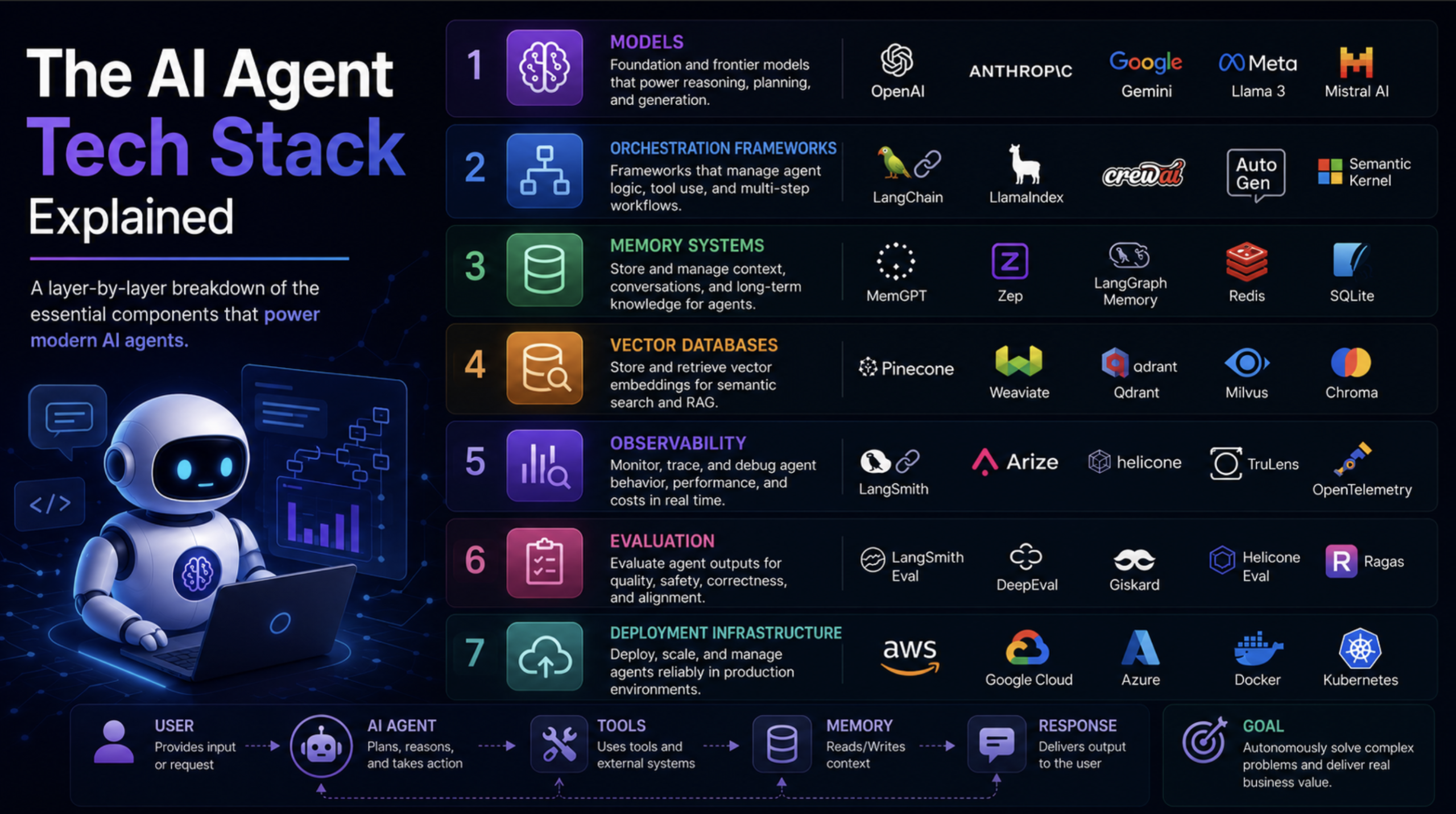
The article "The Missing Layer in Agentic AI" argues that while current AI development focuses heavily on large language models and reasoning capabilities, a critical "middleware" layer is currently absent. This missing component, referred to as an agentic orchestration layer, is essential for transforming static models into truly autonomous systems capable of executing complex, multi-step tasks in dynamic environments. The author explains that for AI agents to be effective, they require more than just raw intelligence; they need robust frameworks for memory management, tool integration, and state persistence. This layer acts as the glue that connects high-level planning with low-level execution, ensuring that agents can maintain context and recover from errors during long-running processes. Furthermore, the piece highlights that without this specialized infrastructure, developers are forced to build bespoke, brittle solutions that do not scale. By establishing a standardized orchestration layer, the industry can move toward more reliable, observable, and interoperable agentic workflows. Ultimately, the article suggests that the next frontier of AI progress lies not just in better models, but in the sophisticated software engineering required to manage how those models interact with the world and each other.


Edge clouds and local data centers reshape IT

For over a decade, enterprise cloud strategy prioritized centralization on hyperscale platforms to achieve economies of scale and reduce infrastructure sprawl. However, the rise of edge clouds and local data centers is fundamentally reshaping this paradigm toward a selectively distributed architecture. Modern digital systems increasingly require real-time responsiveness, adherence to regional data sovereignty regulations, and efficient handling of massive data volumes from sensors and video feeds. To meet these demands, enterprises are adopting a dual architecture that combines the strengths of centralized cloud platforms—well-suited for model training and storage—with localized infrastructure positioned closer to the source of interaction. This shift is visible in sectors like retail and manufacturing, where proximity reduces latency and operational costs. Despite its benefits, the transition to edge computing introduces significant complexities, including fragmented life-cycle management, security hardening, and the need for robust observability across hundreds of distributed sites. Rather than replacing the cloud, the edge serves as a coordinated layer within an integrated hybrid model. By placing workloads where they are most operationally and economically effective, organizations can navigate bandwidth limitations and physical-world complexities, ensuring their digital infrastructure remains agile and resilient in a changing technological landscape.


AI frenzy feeds credential chaos, secrets leak through code, tools, and infrastructure

GitGuardian’s State of Secrets Sprawl 2026 report highlights an alarming surge in cybersecurity risks, revealing that 28.65 million new hardcoded secrets were detected in public GitHub commits during 2025. This multi-year upward trend demonstrates that credentials, including access keys, tokens, and passwords, are increasingly leaking through code, development tools, and infrastructure. Beyond public repositories, the report underscores a significant shift toward internal environments, which often carry a higher density of sensitive production credentials. The explosion of AI development has exacerbated the problem; AI-assisted coding and the proliferation of new model providers and agent frameworks have introduced vast numbers of fresh credentials that are frequently mismanaged. Furthermore, collaboration platforms like Slack and Jira, along with self-hosted Docker registries, serve as additional points of exposure. A particularly concerning finding is the longevity of these leaks, as many credentials remain active and usable for years due to the operational complexities of remediation across fragmented systems. Ultimately, the report illustrates a widening gap between the rapid pace of software innovation and the governance required to secure the expanding surface area of modern, interconnected development workflows, leaving critical infrastructure vulnerable to exploitation.
In “Architecting Autonomy at Scale,” Shweta Aggarwal and Ron Klein argue that traditional, centralized architectural governance becomes a significant bottleneck as organizations grow, necessitating a fundamental shift toward decentralized decision-making. Utilizing a “parental metaphor,” the article describes the evolution of architecture from “infancy,” where strong central guidance is required to prevent chaos, to “adulthood,” where teams operate autonomously within established systems. The authors propose a structured framework built on clear decision boundaries, shared principles, and robust guardrails rather than restrictive approval gates. Key technical practices include documenting decisions via Architecture Decision Records (ADRs) to preserve context, utilizing “fitness functions” for automated governance within CI/CD pipelines, and leveraging AI for detecting architectural drift. By aligning architectural authority with the C4 model levels, organizations can clarify ownership and reduce delivery friction. Ultimately, the role of the architect evolves from a top-down gatekeeper to a coach and platform enabler, focusing on creating “paved roads” that allow teams to experiment safely. This transition is framed as a socio-technical transformation that requires cultural shifts, leadership support, and a trust-based governance model to successfully balance local agility with enterprise-wide coherence and long-term technical sustainability.
The European Commission is intensifying its enforcement of the Digital Services Act (DSA) by moving away from "self-declaration" as a valid method for online age assurance. Following a series of investigations, regulators have determined that simple "click-to-confirm" mechanisms on major adult content platforms, including Pornhub, Stripchat, XNXX, and XVideos, are insufficient to protect minors from harmful material. These platforms are now being urged to implement more robust, privacy-preserving age verification measures to ensure compliance with EU standards. Simultaneously, the Commission has opened a formal investigation into Snapchat over concerns that its reliance on self-declaration fails to prevent underage children from accessing the app or to provide age-appropriate experiences for teenagers. Beyond the European Commission's actions, the UK Information Commissioner's Office (ICO) is also pressuring social media giants to strengthen their age-gate systems. Potential solutions being discussed include the use of the European Digital Identity (EUDI) Wallet, facial age estimation technology, and identity document scans. This coordinated regulatory crackdown signals a major shift in the digital landscape, where platforms must now prioritize societal risks to minors over business-centric concerns. Failure to adopt these more stringent verification methods could lead to significant financial penalties across the European Union.


5 reasons why the tech industry is failing women

The CIO.com article, “Women in Tech Statistics: The Hard Truths of an Uphill Battle,” highlights the persistent gender gap and systemic challenges women face in the technology sector. Despite representing 42% of the global workforce, women hold only 26-28% of tech roles and just 12% of C-suite positions. A significant “leaky pipeline” begins in academia, where women earn only 21% of computer science degrees, and continues into the workplace. Troublingly, 50% of women leave the industry by age 35—a rate 45% higher than men—driven by toxic cultures, microaggressions, and a lack of flexible work-life balance. Economic instability further compounds these issues, with women being 1.6 times more likely to face layoffs; during 2022’s mass tech layoffs, they accounted for 69% of job losses. Financial disparities remain stark, as women earn approximately $15,000 less annually than their male counterparts. Furthermore, the rise of artificial intelligence presents new risks, with women’s roles 34% more likely to be disrupted by automation compared to 25% for men. Collectively, these statistics underscore that achieving gender parity requires more than corporate pledges; it necessitates fundamental shifts in recruitment, retention, and structural support systems.


15+ Global Banks Exploring Quantum Technologies

The article titled "15+ global banks probing the wonderful world of quantum technologies," published by The Quantum Insider on March 27, 2026, highlights the accelerating integration of quantum computing within the global financial sector. Central to this movement is the "Quantum Innovation Index," a benchmarking tool developed in collaboration with HorizonX Consulting, which identifies top performers like JPMorgan Chase, HSBC, and Goldman Sachs. These institutions are leading a group of over fifteen major banks that have transitioned from theoretical research to practical experimentation. The report details how these banks are leveraging quantum advantages for high-dimensional computational tasks, including portfolio optimization, complex risk modeling through Monte Carlo simulations, and real-time fraud detection. Furthermore, the article emphasizes a proactive shift toward "quantum readiness" to combat cryptographic threats, with banks like HSBC trialing quantum-secure trading for digital assets. With nearly 80% of the world’s fifty largest banks now exploring these frontier technologies, the narrative has shifted from whether quantum will disrupt finance to when its full-scale implementation will occur. This trend is bolstered by significant investments, such as JPMorgan’s backing of Quantinuum, underscoring a strategic imperative to maintain competitiveness and ensure systemic stability in a post-quantum world.

Daily Tech Digest - March 09, 2026


Quote for the day:

"A positive attitude will not solve all your problems. But it will annoy enough people to make it worth the effort" -- Herm Albright


Is AI Killing Sustainability?

This article examines the paradoxical relationship between the rapid growth of artificial intelligence and environmental goals. On one hand, AI's massive computational needs are driving a surge in energy consumption, with global spending projected to reach $2.52 trillion this year. This expansion is fueling an exponential rise in data center power requirements, potentially consuming as much electricity as 22% of U.S. households by 2028. However, the author argues that AI also serves as a critical tool for boosting sustainability. By analyzing vast datasets, AI can optimize supply chains, automate waste management, and enhance energy efficiency in buildings by up to 30%. The piece provides six strategic tips for organizations to utilize AI for greenhouse gas reduction, including predictive environmental risk monitoring, accurate emission reporting, and improved renewable energy integration. Despite these benefits, a tension exists between corporate "green" ambitions and financial constraints, often leading to a "lite green" approach where cost-cutting takes priority over true environmental innovation. Ultimately, while AI's infrastructure poses a significant threat to climate targets, its potential to identify high-ROI decarbonization opportunities offers a path toward reconciling technological advancement with ecological preservation, provided that organizations move beyond superficial commitments toward mature, outcome-driven strategies.


PQC roadmap remains hazy as vendors race for early advantage

The transition to post-quantum cryptography (PQC) is evolving from a theoretical concern into an urgent operational risk, prompting major security vendors to race for early market advantages. As mainstream players like Palo Alto Networks, Cisco, and IBM join specialized firms, the focus has shifted toward structured readiness offerings centered on discovery, inventory, and migration planning. A significant hurdle for organizations remains the lack of visibility into cryptographic sprawl across infrastructure, making it difficult to identify vulnerabilities in legacy algorithms like RSA. The urgency is further fueled by the “harvest now, decrypt later” threat model, where adversaries collect encrypted data today for future decryption by capable quantum computers. While NIST has finalized several PQC standards, experts suggest that the expected moment of cryptographic compromise could arrive as early as 2029, making immediate preparation essential. Despite the marketing push, some observers question whether these PQC offerings represent a new category of security tools or simply a necessary enforcement of long-overdue security hygiene, such as comprehensive asset mapping and certificate tracking. Ultimately, the migration to quantum-safe environments requires a phased approach and a commitment to crypto-agility, ensuring that enterprises can adapt to evolving cryptographic standards before legacy systems become insurmountable liabilities in a post-quantum world.


Tech Debt “For Later” Crashed Production 5 Years Later

This Devrim Ozcay’s article critiques the pervasive hype surrounding AI in DevOps, specifically addressing the gap between marketing promises and production realities. The author argues that while "autonomous remediation" and "predictive incident detection" are often touted as revolutionary, they frequently fail in complex, high-stakes environments. These tools often rely on simple logic or pattern matching, and general-purpose models like ChatGPT can be dangerous during active incidents by providing confident but entirely incorrect root cause hypotheses. Instead of relying on AI for critical judgment, the article suggests leveraging it for "assembly" tasks that alleviate the mechanical burden on engineers. This includes filtering log noise, reconstructing incident timelines from disparate sources, and drafting initial postmortem reports. By automating these time-consuming, repetitive processes, teams can reduce the duration of post-incident documentation from hours to minutes. Ultimately, the article advocates for a balanced approach where AI handles the data organization while human engineers retain sole responsibility for interpretation and decision-making. This shift allows practitioners to focus on high-leverage problem-solving rather than tedious transcription, ensuring that incident response remains both efficient and reliable without succumbing to the unrealistic expectations often presented at tech conferences.


What Is Sampling in LLMs and How Does It Relate to Ethics?

This article explores the technical mechanisms behind how AI models choose their words and the subsequent moral responsibilities of developers. Sampling is the process by which an LLM selects the next token from a probability distribution. Techniques such as temperature, Top-K, and Top-P (nucleus sampling) are used to balance creativity with accuracy. Higher temperature settings introduce more randomness, which can foster innovation but also increases the likelihood of "hallucinations" or the generation of biased and harmful content. Conversely, lower settings make the model more deterministic and reliable for factual tasks but can lead to repetitive and uninspired responses. From an ethical standpoint, the choice of sampling strategy is never neutral. It requires a delicate balance between providing a diverse range of perspectives and ensuring the safety and truthfulness of the output. The author emphasizes that organizations must transparently define their sampling parameters to mitigate risks like misinformation. Ultimately, ethical AI development hinges on understanding these technical levers, as they directly influence how a model perceives and interacts with human values, necessitating a cautious approach to model tuning that prioritizes user safety and informational integrity.


AI Won't Fix Cybersecurity, But It Could Rebalance It

The article explores the nuanced role of artificial intelligence in cybersecurity, debunking the myth that it serves as a total panacea while highlighting its potential to rebalance the long-standing asymmetric advantage held by attackers. Traditionally, cybercriminals have enjoyed a lower barrier to entry and a higher success rate because defenders must be perfect across every surface, whereas attackers only need to succeed once. With the advent of generative AI, malicious actors are leveraging the technology to craft sophisticated phishing campaigns, automate vulnerability discovery, and democratize complex malware creation. Conversely, AI empowers defenders by automating routine monitoring, identifying anomalous patterns at machine speed, and bridging the significant talent gap within the industry. This technological shift creates a perpetual arms race where AI functions as a force multiplier for both sides. Rather than eliminating threats, AI recalibrates the battlefield, allowing security teams to process vast datasets and respond to incidents with unprecedented agility. However, the human element remains indispensable; strategic oversight and critical thinking are essential to guide AI tools. Ultimately, while AI will not "fix" the inherent vulnerabilities of digital infrastructure, it offers a vital mechanism to shift the strategic advantage back toward those safeguarding the digital frontier.


AI Is Not Here to Replace People, It’s Here to Replace Waiting

In this insightful interview, Aliaksei Tulia, the Chief Technical Officer at CoinsPaid, argues that the true purpose of artificial intelligence in the financial sector is not to displace human judgment but to eliminate the friction of waiting. Tulia emphasizes that AI acts as a powerful catalyst for efficiency and speed within the digital payment ecosystem by automating repetitive, high-volume tasks that traditionally create operational bottlenecks. By handling routine duties such as document summarization, log scanning, and boilerplate coding, AI allows for a significant compression of cycle times while maintaining necessary human oversight. The article highlights how CoinsPaid integrates these intelligent tools to enhance consistency and visibility, ensuring that the platform remains robust without sacrificing control. Furthermore, the discussion explores the essential division of labor where technology manages data-heavy routine processes, freeing professionals to focus on high-level strategic decisions, complex problem-solving, and improving the overall customer experience. This pragmatic approach represents a shift where AI handles the disciplined "first pass," allowing people to dedicate their expertise to tasks requiring creativity and accountability. Ultimately, Tulia envisions a future where AI-driven automation defines industry standards, proving that the technology’s primary value lies in its ability to streamline operations for a global audience.


Dynamic UI for dynamic AI: Inside the emerging A2UI model

The article "Dynamic UI for Dynamic AI: Inside the Emerging A2UI Model" explores the transformative shift from traditional graphical user interfaces to Agent-to-User Interfaces. As AI agents become increasingly autonomous, the standard chat-based "command line" is no longer sufficient for managing complex workflows. A2UI represents a fundamental paradigm shift where the interface is dynamically generated by the AI to match the specific context and requirements of a task. Unlike static SaaS platforms with fixed menus, A2UI allows agents to create ephemeral, highly functional components—such as interactive charts, data tables, or specialized dashboards—on demand. This movement is powered by advancements like Vercel’s AI SDK and features like Anthropic’s Artifacts, which allow for real-time rendering of code and UI. The goal is to bridge the gap between human intent and machine execution by providing a rich, interactive medium that transcends simple text responses. By embracing generative UI, developers are enabling a more fluid collaboration where the software adapts to the user, rather than the user being forced to navigate rigid software structures. This evolution signals the end of "one-size-fits-all" application design, ushering in a future where every interaction produces a bespoke, temporary interface tailored specifically to the immediate problem.


AI Use at Work Is Causing “Brain Fry,” Researchers Find, Especially Among High Performers

The Futurism article "AI Use at Work Is Causing 'Brain Fry'" highlights a concerning trend where artificial intelligence, despite its promises of productivity, is significantly damaging employee mental health. A study of 1,500 workers conducted by Boston Consulting Group and the University of California, Riverside, introduced the term "AI brain fry" to describe the cognitive exhaustion resulting from excessive interaction with AI tools. Approximately 14 percent of employees—predominantly high performers in fields like software development and finance—reported symptoms such as mental "static," brain fog, and headaches. This fatigue is largely driven by information overload, rapid task-switching, and the constant, draining necessity of overseeing multiple AI agents. Rather than lightening the load, these tools often force users to work harder to manage the technology than to solve actual problems. The consequences are severe for both individuals and organizations; the research found a 33 percent increase in decision fatigue and a higher likelihood of employees quitting their jobs. Ultimately, the piece argues that while AI is marketed as a way to supercharge efficiency, it often acts as a "burnout machine" that compromises cognitive capacity and leads to costly errors or paralysis in professional environments.


Submarine cables move to the center of critical infrastructure security debate

The article examines the escalating strategic significance of submarine cables, which facilitate the vast majority of international data traffic but are increasingly vulnerable to geopolitical tensions and physical threats. A new sector report highlights how high-profile incidents, such as the 2024 Baltic Sea cable severing, have transitioned these underwater assets from ignored infrastructure into critical security priorities. Beyond intentional sabotage or "grey-zone" activities, the industry faces significant resilience challenges, including an annual average of two hundred cable faults primarily caused by commercial fishing and anchoring. This vulnerability is exacerbated by a critical shortage of specialized repair vessels and experienced personnel, complicating rapid incident response. Furthermore, the shift in ownership dynamics, where cloud hyperscalers are now primary investors, creates commercial friction with traditional operators while reshaping infrastructure architecture. Technological advancements, particularly AI-driven distributed acoustic sensing, are transforming cables into active monitoring tools, yet technical solutions alone remain insufficient. The report concludes that long-term security depends on improved international coordination and unified governance frameworks between governments and private entities. Ultimately, protecting these vital conduits requires a holistic approach that integrates technical controls, organizational readiness, and cross-border cooperation to match the scale of modern digital dependency and evolving global risks.


How DevOps Broke Accessibility

In this article on DevOps Digest, the author explores the unintended consequences that the rapid adoption of DevOps practices has had on web accessibility. While DevOps has revolutionized software development by emphasizing speed, continuous integration, and frequent deployments, these very priorities have often sidelined the inclusive design and rigorous accessibility testing required for users with disabilities. The shift-left mentality, which aims to catch bugs early, frequently fails to incorporate accessibility checks into the automated pipeline, leading to a "move fast and break things" culture that disproportionately affects those relying on assistive technologies. Furthermore, the reliance on automated testing tools—which can only detect about 30% of accessibility issues—creates a false sense of security among development teams. This technical debt accumulates quickly in fast-paced environments, making retroactive fixes costly and complex. The article argues that for DevOps to truly succeed, accessibility must be integrated as a core pillar of the development lifecycle, rather than being treated as an afterthought. Ultimately, the piece calls for a cultural shift where developers and stakeholders prioritize human-centric design alongside technical efficiency to ensure the digital world remains open and equitable for every user regardless of their physical or cognitive abilities.