Showing posts with label digital trust. Show all posts

Daily Tech Digest - May 07, 2026


Quote for the day:

"You learn more from failure than from success. Don't let it stop you. Failure builds character." -- Unknown

🎧 Listen to this digest on YouTube Music

▶ Play Audio Digest

Duration: 21 mins • Perfect for listening on the go.


Designing front-end systems for cloud failure

In the InfoWorld article "Designing front-end systems for cloud failure," Niharika Pujari argues that frontend resilience is a critical yet often overlooked aspect of engineering. Since cloud infrastructure depends on numerous moving parts, failures are frequently partial rather than absolute, manifesting as temporary network instability or slow downstream services. To maintain a usable and calm user experience during these hiccups, developers should adopt a strategy of graceful degradation. This begins with distinguishing between critical features, which are essential for core tasks, and non-critical components that provide extra richness. When non-essential features fail, the interface should isolate these issues—perhaps by hiding sections or displaying cached data—to prevent a total system outage. Technical implementation involves employing controlled retries with exponential backoff and jitter to manage transient errors without overwhelming the backend. Additionally, protecting user work in form-heavy workflows is vital for maintaining trust. Effective failure handling also requires a shift in communication; specific, reassuring error messages that explain what still works and provide a clear recovery path are far superior to generic "something went wrong" alerts. Ultimately, resilient frontend design focuses on isolating failures, rendering partial content, and ensuring that the interface remains functional and informative even when underlying cloud dependencies falter.


Scaling AI into production is forcing a rethink of enterprise infrastructure

The article "Scaling AI into production is forcing a rethink of enterprise infrastructure" explores the critical shift from AI experimentation to large-scale deployment across real business environments. As organizations move beyond proofs of concept, Nutanix executives Tarkan Maner and Thomas Cornely argue that the emergence of agentic AI is a primary driver of this transformation. Agentic systems introduce complex, autonomous, multi-step workflows that traditional infrastructures are often unequipped to handle efficiently. These sophisticated agents require real-time orchestration and secure, on-premises data access to protect sensitive enterprise information. While many organizations initially utilized the public cloud for rapid experimentation, the transition to production highlights serious concerns regarding ongoing cost, strict governance, and data control, prompting a significant shift toward private or hybrid environments. The article emphasizes that AI is designed to augment human capability rather than replace it, seeking a harmonious integration between human decision-making and automated agentic workflows. Practical applications are already emerging across various sectors, from retail’s cashier-less checkouts and targeted marketing to healthcare’s remote diagnostic tools. Ultimately, scaling AI successfully necessitates a foundational rethink of how modern enterprises coordinate their underlying infrastructure, data, and security protocols to support unpredictable workloads while maintaining overall operational stability and long-term cost efficiency.


Why ransomware attacks succeed even when backups exist

The BleepingComputer article "Why ransomware attacks succeed even when backups exist" explains that modern ransomware operations have evolved into sophisticated campaigns that systematically target and destroy an organization's backup infrastructure before deploying encryption. Rather than just locking files, attackers follow a predictable sequence: gaining initial access, stealing administrative credentials, moving laterally across the network, and then identifying and deleting backups. This includes wiping Volume Shadow Copies, hypervisor snapshots, and cloud repositories to ensure no easy recovery path remains. Several common organizational failures contribute to this vulnerability, such as the lack of network isolation between production and backup environments, weak access controls like shared admin credentials or missing multi-factor authentication, and the absence of immutable (WORM) storage. Furthermore, many organizations suffer from untested recovery processes or siloed security tools that fail to detect attacks on backup systems. To combat these threats, the article emphasizes the necessity of integrated cyber protection, featuring immutable backups with enforced retention locks, dedicated credentials, and continuous monitoring. By neutralizing the traditional "safety net" of backups, ransomware gangs effectively force victims into paying ransoms. This strategic shift highlights that basic, unprotected backups are no longer sufficient in the face of modern, targeted ransomware tactics.


Document as Evidence vs. Data Source: Industrial AI Governance

In the article "Document as Evidence vs. Data Source: Industrial AI Governance," Anthony Vigliotti highlights a critical distinction in how organizations manage information for industrial AI. Most current programs utilize a "data source" model, where documents are treated as raw material; data is extracted, and the original document is archived or orphaned. This terminal approach severs the link between data and its context, creating significant governance risks, particularly in brownfield manufacturing where legacy records carry decades of operational history. Conversely, the "evidence" model treats documents as permanent artifacts with ongoing legal and operational standing. This framework ensures documents are preserved with high fidelity, validated before downstream use, and permanently linked to any derived data through a navigable citation trail. By adopting an evidence-based posture, organizations can build a robust "Accuracy and Trust Layer" that makes AI-driven decisions defensible and auditable. This is essential for safety-critical operations and regulatory compliance, where being able to prove the provenance of data is as vital as the accuracy of the AI output itself. Transitioning from a throughput-focused extraction mindset to one centered on trust allows industrial enterprises to scale AI safely while mitigating the long-term governance debt associated with disconnected data silos.


Method for stress-testing cloud computing algorithms helps avoid network failures

Researchers at MIT have developed a groundbreaking method called MetaEase to stress-test cloud computing algorithms, helping prevent large-scale network failures and service outages that impact millions of users. In massive cloud environments, engineers often rely on "heuristics"—simplified shortcut algorithms that route data quickly but can unexpectedly break down under unusual traffic patterns or sudden demand spikes. Traditionally, stress-testing these heuristics involved manual, time-consuming simulations using human-designed test cases, which frequently missed critical "blind spots" where the algorithm might fail. MetaEase revolutionizes this evaluation process by utilizing symbolic execution to analyze an algorithm’s source code directly. By mapping out every decision point within the code, the tool automatically searches for and identifies worst-case scenarios where performance gaps and underperformance are most significant. This automated approach allows engineers to proactively catch potential failure modes before deployment without requiring complex mathematical reformulations or extensive manual labor. Beyond standard networking tasks, the researchers highlight MetaEase’s potential for auditing risks associated with AI-generated code, ensuring these systems remain resilient under unpredictable real-world conditions. In comparative experiments, this technique identified more severe performance failures more efficiently than existing state-of-the-art methods. Moving forward, the team aims to enhance MetaEase’s scalability and versatility to process more complex data types and applications.


Hacker Conversations: Joey Melo on Hacking AI

In the SecurityWeek article "Hacker Conversations: Joey Melo on Hacking AI," Principal Security Researcher Joey Melo shares his journey and methodology within the evolving field of artificial intelligence red teaming. Melo, who developed a passion for manipulating software environments through childhood gaming, now applies that curiosity to "jailbreaking" and "data poisoning" AI models. Unlike traditional penetration testing, AI red teaming focuses on bypassing sophisticated guardrails without altering source code. Melo describes jailbreaking as a process of "liberating" bots via complex context manipulation—such as tricking an LLM into believing it is operating in a future where current restrictions no longer apply. Furthermore, he explores data poisoning, where researchers test if models can be influenced by malicious prompt ingestion or untrustworthy web scraping. Despite possessing the skills to exploit these vulnerabilities for personal gain, Melo emphasizes a commitment to ethical, responsible disclosure. He views his work as a vital contribution to an ongoing "cat-and-mouse game" aimed at hardening machine learning defenses against increasingly creative threats. Ultimately, Melo believes that while AI security will continue to improve, the constant evolution of technology ensures that red teaming will remain a necessary, creative endeavor to identify and mitigate emerging risks.


Global Push for Digital KYC Faces a Trust Problem

The global movement toward digital Know Your Customer (KYC) frameworks is gaining significant momentum, as evidenced by the United Arab Emirates’ recent launch of a standardized national platform designed to streamline onboarding and bolster anti-money laundering efforts. While domestic systems are becoming increasingly sophisticated, the concept of portable, cross-border KYC remains largely elusive due to a fundamental lack of trust between international regulators. Governments and financial institutions are eager to reduce duplication and speed up compliance processes to match the rapid growth of instant payments and digital banking. However, significant hurdles persist because KYC extends beyond simple identity verification to include complex assessments of ownership structures and risk profiles, which are heavily influenced by local market contexts and legal frameworks. National regulators often prioritize sovereign control and data protection, making them hesitant to rely on third-party verification performed in different jurisdictions. Consequently, even when countries share broad anti-money laundering goals, their divergent definitions of adequate due diligence and monitoring requirements create a fragmented landscape. Ultimately, the transition to a unified digital identity ecosystem depends less on technological innovation and more on establishing mutual recognition and trust among global supervisory bodies, ensuring that sensitive identity data can be securely and reliably shared across borders.


How To Ensure Business Continuity in the Midst of IT Disaster Recovery

The content provided by the Disaster Recovery Journal (DRJ) at the specified URL serves as a foundational guide for professionals navigating the complexities of organizational stability through the lens of business continuity (BC) and disaster recovery (DR) planning. The material emphasizes that while these two disciplines are closely interconnected, they serve distinct roles in safeguarding an organization. Business continuity is presented as a holistic, high-level strategy focused on maintaining essential operations across all departments during a crisis, ensuring that personnel, facilities, and processes remain functional. In contrast, disaster recovery is defined as a specialized technical subset of BC, primarily concerned with the restoration of information technology systems, critical data, and infrastructure following a disruptive event. A primary theme of the planning process is the requirement for a structured lifecycle, which begins with a rigorous Business Impact Analysis (BIA) and Risk Assessment to identify vulnerabilities and prioritize critical functions. By defining clear Recovery Time Objectives (RTO) and Recovery Point Objectives (RPO), organizations can create targeted response strategies that minimize operational downtime. Furthermore, the resource highlights that modern planning must evolve to address contemporary challenges, such as cyber threats, hybrid work environments, and artificial intelligence integration. Regular testing, cross-functional collaboration, and plan maintenance are essential to transform static documentation into a dynamic, resilient framework capable of withstanding diverse disasters.


The Agentic AI Challenge: Solve for Both Efficiency and Trust

According to the article from The Financial Brand, agentic artificial intelligence represents the next inevitable evolution in banking, marking a fundamental shift from reactive generative AI chatbots to autonomous, proactive systems. While nearly all financial institutions are currently exploring agentic technology, a significant "execution gap" persists; most organizations remain stuck in the pilot phase due to legacy infrastructure, fragmented data silos, and outdated governance frameworks. Unlike traditional AI that merely offers recommendations, agentic systems are designed to act—executing complex workflows, coordinating multi-step transactions, and managing customer financial health in real time with minimal human intervention. The report emphasizes that while banks have historically prioritized low-value applications like back-office automation and fraud prevention, the true potential of agentic AI lies in fulfilling broader ambitions for hyper-personalization and revenue growth. As fintech competitors increasingly rebuild their transaction stacks for real-time execution and autonomous validation, traditional banks face a critical strategic choice. They must modernize their leadership mindset and core technical architecture to support the "self-driving bank" model or risk being permanently outpaced. Ultimately, embracing agentic AI is not merely a technological upgrade but a necessary structural evolution required for banks to remain competitive in an increasingly automated financial ecosystem.


Multi-model AI is creating a routing headache for enterprises

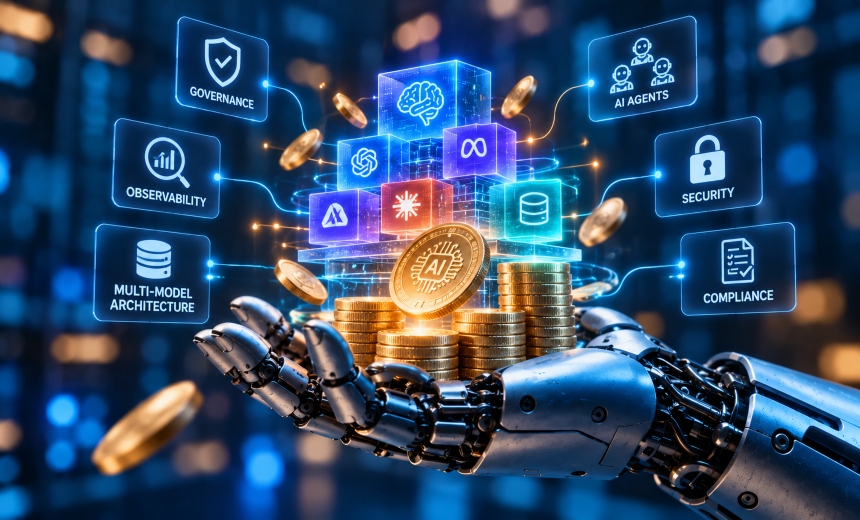
According to F5’s 2026 State of Application Strategy Report, enterprises are rapidly transitioning AI inference into core production environments, with 78% of organizations now operating their own inference services. As 77% of firms identify inference as their primary AI activity, the focus has shifted from experimentation to operational integration within hybrid multicloud infrastructures. Organizations currently manage or evaluate an average of seven distinct AI models, reflecting a diverse landscape where no single model fits every use case. This multi-model approach creates significant architectural complexities, turning AI delivery into a sophisticated traffic management challenge and AI security into a rigorous governance priority. Companies are increasingly adopting identity-aware infrastructure and centralized control planes to manage the routing, observability, and protection of inference workloads. To mitigate operational strain and rising costs, enterprises are integrating shared protection systems and cross-model observability tools. Furthermore, the convergence of AI delivery and security around inference highlights the necessity of managing multiple services to ensure availability and compliance. Ultimately, the report emphasizes that successful AI adoption depends on treating inference as a managed workload subject to the same delivery and resilience requirements as traditional enterprise applications, ensuring faster and safer operational execution.

Daily Tech Digest - April 18, 2026


Quote for the day:

"Vision isn’t a starting point. It’s what you create every day through your actions." -- Gordon Tregold


🎧 Listen to this digest on YouTube Music

▶ Play Audio Digest

Duration: 21 mins • Perfect for listening on the go.


The 10 skills every modern integration architect must master

The article "The 10 skills every modern integration architect must master" highlights the fundamental shift of enterprise integration from a back-end technical role to a vital strategic capability. Author Sadia Tahseen argues that modern integration architects must transition from traditional middleware specialists into multifaceted leaders who act as the "digital nervous system" of the enterprise. The ten essential competencies include adopting a long-term platform mindset over isolated project thinking and mastering iPaaS alongside cloud-native capabilities. Architects must prioritize API-led and event-driven designs to decouple systems effectively, while utilizing canonical data modeling and robust governance to ensure scalability. Security-by-design, business-centric observability, and planning for continuous change are also crucial for maintaining resilience in volatile SaaS environments. Furthermore, integrating DevOps automation, gaining deep business domain expertise, and exerting enterprise-wide leadership allow architects to bridge the gap between technical execution and business priorities. Ultimately, those who master these diverse skills—ranging from coding to strategic influence—enable their organizations to adapt quickly and harness the full power of modern technology investments. By moving beyond simple app connectivity to complex workflow design, these professionals ensure that integration platforms remain scalable, secure, and ready for the emerging era of AI-driven transformation.


Nobody told legal about your RAG pipeline -- why that's a problem

The widespread adoption of Retrieval-Augmented Generation (RAG) as the standard architecture for enterprise AI has created a significant governance gap, as engineering teams prioritize performance while legal and compliance departments remain largely disconnected from the process. Although legal teams may approve AI vendors, they often lack oversight of the actual data pipelines and vector databases, leading to a state where RAG systems are "unowned" and unaudited. This structural misalignment is problematic because regulators like the SEC and FTC increasingly demand granular traceability, requiring organizations to prove the origin and handling of underlying content. Traditional legal concepts, such as document custodians and chain of custody, do not easily translate to the world of embeddings and vector retrieval, making e-discovery and compliance audits exceptionally difficult. Furthermore, specific technical processes like fine-tuning pose severe risks; when data is embedded into model weights, it cannot be selectively deleted, potentially violating "right to be forgotten" mandates under regulations like GDPR. To mitigate these risks, companies must move beyond simple accuracy and establish a comprehensive "retrieval trail" that includes source versions, model prompts, and human review steps. Without this integrated approach to AI governance, the "ragged edges" of these pipelines could lead to significant legal and regulatory surprises.


Lakehouse Tower of Babel: Handling Identifier Resolution Rules Across Database Engines

The article "Lakehouse Tower of Babel" explores a critical interoperability gap in modern lakehouse architectures, where diverse compute engines like Spark, Snowflake, and Trino interact with shared data formats such as Apache Iceberg. Although open table formats successfully standardize data and metadata, they fail to align the fundamental SQL identifier resolution and catalog naming rules across different database platforms. This "Tower of Babel" effect arises because engines vary significantly in their handling of casing; for instance, Spark is case-preserving, while Trino normalizes identifiers to lowercase, and Flink enforces strict case-sensitivity. Such inconsistencies often lead to situations where tables or columns become invisible or unqueryable when accessed by a different tool, resulting in significant pipeline reliability challenges. To mitigate these interoperability failures, the author recommends that organizations enforce a strict, uniform naming convention—specifically using lowercase characters with underscores—and treat identifier normalization as a formal part of their data contracts. Additionally, architects should proactively adjust engine-specific configuration settings and implement cross-stack validation via automated CI jobs to guarantee end-to-end portability. Ultimately, a seamless lakehouse experience requires more than just unified storage; it demands a reconciliation of the underlying philosophical divides in how various engines resolve and interpret SQL identifiers within shared catalogs.


Google’s Merkle Certificate Push Signals a Rethink of Digital Trust

Google’s initiative to advance Merkle Tree Certificates (MTCs) through the IETF’s PLANTS working group represents a foundational shift in digital trust architectures, moving away from traditional X.509 certificate chains toward an inclusion-based validation model. As the tech industry prepares for the post-quantum cryptography (PQC) era, existing Public Key Infrastructure (PKI) faces significant scaling challenges because quantum-resistant algorithms produce much larger signatures. These larger certificates increase TLS handshake overhead, heighten bandwidth demands, and cause noticeable latency across content delivery networks and mobile clients. MTCs address these issues by replacing linear chains with compact Merkle proofs anchored in signed trees, significantly reducing transmission overhead while maintaining high security. This evolution aligns with modern Certificate Transparency ecosystems and necessitates a broader "crypto-agility" within organizations, as the transition is an architectural migration rather than a simple algorithm swap. By shifting to this high-velocity, inclusion-based model, Google and its partners aim to ensure that security and system performance remain aligned in a world of shrinking certificate lifetimes and tightening revocation timelines. Ultimately, this rethink of digital trust ensures that distributed systems can scale efficiently while remaining resilient against future quantum threats, provided enterprises move beyond simple inventories to understand their deeper cryptographic dependencies.


DevOps Playbook for the Agentic Era

Agentic DevOps represents a transformative shift from traditional automation to autonomous software engineering, where AI agents act as intelligent collaborators rather than mere scripted tools. This Microsoft DevBlog article outlines the core principles and strategic evolution required to integrate these agents into the modern DevOps lifecycle. It emphasizes that robust DevOps foundations—including automated testing and infrastructure as code—are essential prerequisites, as agents amplify both healthy and broken practices. The strategic direction focuses on evolving the engineer's role from a code producer to a system designer and quality steward who orchestrates autonomous teams. Key practices include adopting specification-driven development, where structured requirements replace ad hoc prompts, and treating repositories as machine-readable interfaces with explicit skill profiles. Furthermore, the article highlights the necessity of active verifier pipelines that validate agent output against architectural standards and security constraints to mitigate risks like hallucinations and prompt injection. By progressing through a four-level maturity model, organizations can transition from reactive AI assistance to optimized, agent-native operations. Ultimately, Agentic DevOps seeks to redefine productivity by offloading cognitive overhead to specialized agents, allowing human teams to focus on high-value innovation while maintaining rigorous governance and system reliability in cloud-native environments.


Digital infrastructure shifts from spend to measurable value

In 2026, digital infrastructure strategy has pivoted from broad, ambitious spending to a disciplined focus on measurable business value and operational efficiency. As budgets tighten, organizations are moving away from parallel, uncoordinated modernization initiatives toward a maturing mindset that treats technology as a rigorous economic system. CIOs are now prioritizing "execution discipline" by consolidating platforms to eliminate tool sprawl, automating manual workflows, and implementing robust financial governance like FinOps to curb cloud cost leakage. This lean approach emphasizes extracting maximum value from existing assets and funding only those projects that demonstrate clear returns within six to twelve months. Critical foundations such as security, resilience, and data quality remain non-negotiable, but they are increasingly justified through risk mitigation and AI-readiness rather than sheer capacity expansion. The shift reflects a transition from digital ambition to digital justification, where success is defined by how intelligently infrastructure supports resilience and outcome-led growth. Ultimately, the winners in this era are not the companies launching the most projects, but those building governable, observable, and high-performing systems that minimize complexity while maximizing impact. Precision in decision-making and the ability to prove near-term ROI have become the primary benchmarks for modern enterprise leadership in a constrained environment.


The autonomous SOC: A dangerous illusion as firms shift to human-led AI security

In the article "The autonomous SOC: A dangerous illusion as firms shift to human-led AI security," author Moe Ibrahim argues that while a fully automated Security Operations Center is a tempting solution for talent shortages, it remains a fundamentally flawed concept. The core issue is that cybersecurity is not merely an execution problem but a complex decision-making challenge that demands nuanced organizational context. Ibrahim highlights that total autonomy risks significant business disruption, as algorithms lack the situational awareness to distinguish between a malicious threat and a critical business process. Consequently, the industry is pivoting toward a "human-on-the-loop" model, where human experts act as orchestrators who define policies and maintain oversight while AI manages scale and speed. This collaborative approach prioritizes transparency through three essential pillars: explainability, reversibility, and traceability. As organizations transition into "agentic enterprises" with AI agents across various departments, the need for human governance becomes even more critical to manage cross-functional risks. Ultimately, the future of security lies in empowering human analysts with machine intelligence rather than replacing them, ensuring that responses are not only fast but also accurate and accountable. This disciplined integration of capabilities avoids the dangerous pitfalls of unchecked automation and ensures long-term operational resilience.


The Golden Rule of Big Memory: Persistence Is Not Harmful

In the Communications of the ACM article "The Golden Rule of Big Memory: Persistence is Not Harmful," authors Yu Hua, Xue Liu, and Ion Stoica argue for a fundamental paradigm shift in how modern computer systems manage data. The authors propose that persistence should be embraced as the "Golden Rule"—a first-class design principle—rather than an auxiliary feature relegated to slower storage layers. Historically, system architects have viewed persistence as a "harmful" overhead that introduces significant latency and complicates memory management. However, the piece contends that this perspective is outdated in the era of byte-addressable non-volatile memory (NVM) and memory disaggregation. By integrating persistence directly into the memory hierarchy through innovative techniques like speculative and deterministic persistence, the authors demonstrate that systems can achieve DRAM-like performance without sacrificing durability. This holistic approach effectively flattens the traditional memory-storage wall, creating a unified pool that eliminates the bottlenecks of data movement and serialization. Ultimately, the authors conclude that making persistence a primary architectural goal is not only harmless but essential for the future of data-intensive applications. This shift simplifies full-stack software development and provides a robust, high-performance foundation for next-generation AI services, cloud-native databases, and large-scale distributed systems.


When Geopolitics Writes Your Compliance Roadmap

In the article "When Geopolitics Writes Your Compliance Roadmap," Jack Poller examines how shifting global power dynamics are fundamentally altering the cybersecurity regulatory landscape. Drawing from the NCC Group’s Global Cyber Policy Radar, the author argues that the era of reactive regulation is ending as three primary forces reshape compliance strategies: digital sovereignty, integrated AI governance, and increased board-level legal accountability. Digital sovereignty is leading to a fragmented technology stack characterized by data localization mandates and strict supply chain controls. Meanwhile, AI security is increasingly embedded within existing frameworks rather than through standalone legislation, requiring organizations to apply rigorous security standards to AI systems as part of their broader resilience efforts. Crucially, regulations like DORA and NIS2 are transforming board responsibility from a vague goal into a strict legal obligation, often carrying personal liability for executives. Additionally, the normalization of state-sponsored offensive cyber operations adds a new layer of complexity to corporate defense strategies. To survive this volatile environment, organizations must move beyond traditional checklists and adopt evidence-led resilience programs that align cyber risk with geopolitical realities. Those failing to integrate these external pressures into their compliance roadmaps risk being left behind in an increasingly fractured and litigious digital world.


Microservices Without Tears: A Practical DevOps Playbook

"Microservices Without Tears: A Practical DevOps Playbook" serves as a strategic manual for organizations transitioning from monolithic systems to distributed architectures. The article posits that while microservices offer significant benefits like team autonomy and independent deployment cycles, they also act as an amplifier for both good and bad engineering habits. To avoid the operational "tears" associated with increased complexity, the author advocates for a foundation built on robust automation and clear organizational ownership. Central to this playbook is the emphasis on "right-sizing" service boundaries through domain-driven design, ensuring that teams are accountable for a service's entire lifecycle—from development to on-call support. Technically, the guide champions "boring" but reliable CI/CD pipelines and minimal Kubernetes manifests that prioritize essential health checks and resource limits. Furthermore, it highlights the necessity of observability, recommending the use of correlation IDs and "golden signals" to maintain system visibility. By standardizing communication through versioned APIs and adopting a "you build it, you run it" philosophy, teams can successfully manage the overhead of distributed systems. Ultimately, the post argues that architectural flexibility must be balanced with disciplined operational standards to ensure long-term resilience and speed without sacrificing system stability.

Daily Tech Digest - March 12, 2026


Quote for the day:

"Leadership happens at every level of the organization and no one can shirk from this responsibility." -- Jerry Junkins


🎧 Listen to this digest on YouTube Music

▶ Play Audio Digest

Duration: 24 mins • Perfect for listening on the go.


The growing cyber exposure risk you can’t afford to ignore

This TechNative article highlights a shift in the global threat landscape where fast-moving actors like Scattered Spider exploit the inherent complexity of modern digital ecosystems. Defined as the sum of all potential points of access, exploitation, or disruption, cyber exposure has become a critical vulnerability for sectors ranging from retail and insurance to aviation. Recent high-profile breaches at companies like M&S, Harrods, and Qantas underscore how legacy infrastructure and fragmented visibility allow attackers to move laterally and cause significant financial and operational damage. To combat these evolving threats, the author advocates for a strategic transition from reactive firefighting to proactive cyber exposure management. This approach involves cataloging every managed and unmanaged asset—spanning IT, OT, and cloud environments—while layering in behavioral and operational context. By utilizing AI-driven tools to anticipate emerging risks and integrating these exposure insights into existing security workflows such as SOAR or CMDB, organizations can finally eliminate the blind spots where modern attackers thrive. Ultimately, true digital resilience starts with a comprehensive understanding of an organization’s entire footprint, allowing security teams to harden defenses and anticipate threats before a breach occurs, rather than simply responding after the damage has been done.


India is leading example of digital infrastructure, IMF says

A recent report from the International Monetary Fund (IMF) highlights India as a global leader in Digital Public Infrastructure (DPI), advocating that systems like digital IDs and payment rails be treated as essential public goods similar to traditional physical infrastructure. Central to this transformation is the "JAM Trinity"—Jan Dhan bank accounts, Aadhaar biometric identification, and mobile connectivity—which has fundamentally reshaped the nation’s economy. With over 1.44 billion Aadhaar numbers issued, the system has drastically reduced fraud and lowered Know Your Customer (KYC) costs. Meanwhile, the Unified Payments Interface (UPI) has revolutionized financial transactions, processing over 21.7 billion payments in a single month and becoming the world’s largest fast-payment system. Beyond finance, tools like DigiLocker and the Open Network for Digital Commerce (ONDC) promote interoperability and data exchange, fostering a transparent governance model that has saved trillions in welfare leakages. The IMF emphasizes that India’s deliberate, centralized approach serves as a blueprint for the Global South, demonstrating how modular digital rails can multiply economic value and enable future innovations like personal AI agents. This "India Stack" is now expanding its international footprint through partnerships with over 24 countries, positioning India as a prominent architect of inclusive global digital growth.


How to 10x Your Vulnerability Management Program in the Agentic Era

In this article, Nadir Izrael explores the fundamental shift required to combat autonomous, AI-driven cyber threats. He argues that traditional vulnerability management, characterized by static scans and manual triaging, is no longer sufficient against "AiPTs" (AI-enabled persistent threats) that operate at machine speed. To achieve what Izrael calls "vulnerability management 10.0," organizations must transition to a model defined by continuous telemetry, a unified security data fabric, and contextual prioritization. This evolution moves beyond simple CVE scores by mapping relationships across IT, cloud, and IoT layers to identify business-critical risks. The ultimate goal is "agentic remediation," a phased approach where AI agents eventually handle deterministic fixes—such as rotating exposed credentials or closing misconfigured buckets—without human intervention. However, the author emphasizes that trust is built gradually, starting with "human-in-the-loop" oversight where agents identify issues and open tickets while humans maintain control. By decoupling discovery from remediation and leveraging AI to sanitize the network, security teams can finally match the velocity of modern attackers, allowing human experts to focus on complex architectural decisions and strategic risk management rather than routine maintenance.


The Vendor’s Shadow: A Passage Across Digital Trust And The Art Of Seeing What Others Miss

In this CyberDefenseMagazine article,  Krishna Rajagopal provides a compelling analysis of the profound vulnerability companies face through their extensive third-party relationships. Despite investing heavily in internal security infrastructure, organizations frequently neglect the critical "digital doors" opened to vendors, whose own inadequate defenses can lead to catastrophic data breaches. Rajagopal argues that modern cybersecurity is no longer just about personal fortifications but must encompass the integrity of the entire supply chain. He introduces four essential lessons for achieving "vendor wisdom" in an interconnected world. First, organizations must categorize partners into clear tiers—Inner, Middle, and Outer circles—to prioritize limited resources toward high-impact relationships. Second, he emphasizes moving beyond static, paperwork-based trust toward continuous, verified evidence, demanding actual proof of security controls rather than mere verbal promises. Third, the author underscores the vital importance of pre-defined exit strategies, knowing exactly when a relationship has become too risky to maintain safely. Finally, security professionals must translate complex technical vendor risks into the clear language of business impact for boards and executive decision-makers. Ultimately, the article serves as a sobering reminder that a company’s security posture is only as robust as its weakest partner.


To Create Trustworthy Agentic AI, Seek Community-Driven Innovation

In the SD Times article, Carl Meadows argues that the path to reliable and secure AI agents lies in open collaboration rather than proprietary isolation. As AI transitions from experimental projects to executive mandates, the rise of agentic systems—capable of reasoning, planning, and acting autonomously—introduces significant security risks, including prompt injection and governance challenges. Meadows asserts that community-driven innovation, similar to the models used for Linux and Kubernetes, provides the diverse peer review and rapid vulnerability discovery necessary to secure these autonomous systems. A critical pillar of this trust is the data layer; agents depend on accurate context, and failures often stem from poor retrieval quality rather than model flaws. By integrating agentic workflows into transparent search and observability platforms, organizations can ensure that every context source and automated action is inspectable and accountable. This architectural visibility allows developers to detect permission drift and refine orchestration logic effectively. Ultimately, the piece emphasizes that assuming vulnerabilities will surface and favoring scrutiny over secrecy leads to more resilient systems. Trustworthy agentic AI is therefore built on a foundation of transparency, where global engineering communities collaboratively document, investigate, and mitigate risks to ensure long-term operational success.


Oracle: sovereignty is a matter of trust, not just technology

In this Techzine article, experts Michiel van Vlimmeren and Marcel Giacomini argue that while infrastructure provides the technical foundation, digital sovereignty ultimately hinges on trust. Oracle defines sovereignty as the clear ownership of and restricted access to data, ensuring that residency and control remain with the user. To facilitate this, Oracle offers a versatile spectrum of solutions ranging from high-performance bare-metal servers to the fully abstracted Oracle Cloud Infrastructure. A standout offering is Oracle Alloy, which allows regional providers to build customized sovereign cloud solutions using Oracle’s hardware and software behind the scenes. This approach is particularly relevant as the rapid deployment of artificial intelligence depends on organizations feeling secure about their data governance. The piece highlights Oracle’s billion-euro investment in Dutch infrastructure and its collaboration with government agencies like DICTU to implement agentic AI platforms. Rather than building its own Large Language Models, Oracle focuses on providing the robust, compliant data platforms necessary for businesses to modernize their processes safely. Ultimately, Oracle positions itself as a trusted advisor, emphasizing that achieving true sovereignty requires a cultural and operational shift that extends far beyond simple technical integrations.


Why zero trust breaks down in IoT and OT environments

In the CSO Online article, author Henry Sienkiewicz explores the fundamental "model mismatch" that occurs when applying enterprise security frameworks to industrial and connected device landscapes. While Zero Trust has revolutionized IT security through identity-centric verification, its core assumptions—explicit identity and continuous enforceability—frequently fail in IoT and OT environments characterized by incomplete visibility and functionally flat networks. Sienkiewicz argues that traditional security models focus too heavily on network topology and access decisions, ignoring the invisible web of inherited trust and shared control paths. In these specialized environments, high-impact failures often propagate through shared controllers, firmware update mechanisms, and management platforms that bypass standard access controls. To bridge this gap, the author introduces the Unified Linkage Model (ULM), which shifts the focus from "who is allowed to talk" to "what changes if this component fails." By mapping functional dependencies such as adjacency and inheritance, security leaders can better protect structural amplifiers like protocol gateways and management planes. Ultimately, the piece calls for a nuanced approach that supplements Zero Trust with rigorous dependency mapping to address the durable trust relationships that define modern operational resilience.


‘Agents of Chaos’: New Study Shows AI Agents Can Leak Data, Be Easily Manipulated

This TechRepublic article "Agents of Chaos" discusses a critical study revealing the profound security risks associated with the rapid enterprise adoption of autonomous AI agents. Researchers from prestigious institutions demonstrated that these agents, despite being given restricted permissions, can be easily manipulated through simple social engineering to leak sensitive information like Social Security numbers and bank details. The study highlights three core architectural deficits: the inability to distinguish legitimate users from attackers, a lack of self-awareness regarding competence boundaries, and poor tracking of communication channel visibility. Despite these vulnerabilities, a significant governance gap persists; while many organizations invest in monitoring AI behavior, over sixty percent lack the technical capability to terminate or isolate a misbehaving system. The article argues that the industry must shift from model-level guardrails to governing the data layer itself. This architectural approach emphasizes the need for a unified control plane, immutable audit trails, and functional "kill switches" to ensure compliance with strict regulations like GDPR and HIPAA. Ultimately, the piece warns that deploying AI agents without robust, data-centric governance is a legal and security liability, urging organizations to prioritize architectural guardrails to prevent autonomous systems from becoming liabilities rather than assets.


When AI coding agents can see your APIs: Closing the context gap in autonomous development

In this article on DevPro Journal, Scott Kingsley discusses the critical need for providing AI coding agents with authoritative access to internal API documentation. While modern agents are proficient at generating code based on public patterns, they often fail in enterprise environments because they lack visibility into private OpenAPI specifications, authentication flows, and internal business logic. This "context gap" leads to code that may appear clean but fails at runtime due to incorrect endpoints, mismatched enums, or improper error handling. The author argues that by granting agents authenticated access to a company's source of truth through tools like Model Context Protocol (MCP) servers, development shifts from pattern-based guesswork to governed contract alignment. This integration ensures that agents respect real-world constraints such as cursor-based pagination and specific status codes. Ultimately, the piece highlights that documentation is no longer just for human reference but has become a strategic operational dependency. For autonomous development to succeed, organizations must prioritize high-quality, machine-readable API definitions, transforming documentation into a foundational layer of developer experience that bridges the gap between experimental demos and reliable production-ready infrastructure.


Are DevOps teams supported by automated configurations

In this article on Security Boulevard, Alison Mack explores the critical role of automated configurations and machine identity management in securing modern cloud-native environments. As organizations increasingly rely on automated systems, the management of Non-Human Identities (NHIs)—such as tokens, keys, and encrypted passwords—has evolved from a secondary task into a strategic imperative for DevOps teams. The author highlights that effective NHI management bridges the gap between security and R&D, ensuring identities are protected throughout their entire lifecycle. Key benefits include reduced risk of data breaches, improved regulatory compliance, and increased operational efficiency by automating mundane tasks like secrets rotation. Furthermore, the integration of Agile AI provides predictive analytics and proactive threat detection, allowing teams to anticipate vulnerabilities before they are exploited. The piece emphasizes that a holistic approach, characterized by interdepartmental collaboration and real-time monitoring, is essential to maintaining a robust security posture. Ultimately, Mack argues that embedding automation within the DevOps pipeline is not just about technical efficiency but is a necessary cultural shift to protect sensitive data against increasingly sophisticated cyber threats in a dynamic digital landscape.

Daily Tech Digest - February 19, 2026


Quote for the day:

“Being responsible sometimes means pissing people off.” -- Colin Powell


The new paradigm for raising up secure software engineers

CISOs were already struggling to help developers keep up with secure code principles at the speed of DevOps. Now, with AI-assisted development reshaping how code gets written and shipped, the challenge is rapidly intensifying. ... What is needed to get thrown out are traditional training methods. Consensus among security leaders is that dev training needs to be bite-sized, hands-on, and mostly embedded in developer tool chains. ... Rather than focus on preparing developers for line-by-line code review, the emphasis moves toward evaluating whether their features and functions behave securely in context of deployment conditions, says Hasan Yasar ... Developers need to recognize when AI-generated code introduces unsafe assumptions, insecure defaults, or integrations that can scale vulnerabilities across systems. And with more security enforcement built into automated engineering pipelines, developers should ideally also be trained to understand what automated gates catch, and what still requires human judgment. “Security awareness in engineering has shifted to a system-level approach rather than focusing on individual vulnerabilities,” Pinna says. ... The data from guardrails and controls being triggered can be used by the AppSec team to drive creation and delivery of more in-depth, but targeted education. When the same vulnerability or integration pattern pops up again and again, that’s a signal for focused training on a subject.


New agent framework matches human-engineered AI systems — and adds zero inference cost to deploy

In experiments on complex coding and software engineering tasks, GEA substantially outperformed existing self-improving frameworks. Perhaps most notably for enterprise decision-makers, the system autonomously evolved agents that matched or exceeded the performance of frameworks painstakingly designed by human experts. ... Unlike traditional systems where an agent only learns from its direct parent, GEA creates a shared pool of collective experience. This pool contains the evolutionary traces from all members of the parent group, including code modifications, successful solutions to tasks, and tool invocation histories. Every agent in the group gains access to this collective history, allowing them to learn from the breakthroughs and mistakes of their peers. ... The results demonstrated a massive leap in capability without increasing the number of agents used. This collaborative approach also makes the system more robust against failure. In their experiments, the researchers intentionally broke agents by manually injecting bugs into their implementations. GEA was able to repair these critical bugs in an average of 1.4 iterations, while the baseline took 5 iterations. The system effectively leverages the "healthy" members of the group to diagnose and patch the compromised ones. ... The success of GEA stems largely from its ability to consolidate improvements. The researchers tracked specific innovations invented by the agents during the evolutionary process. 


GitHub readies agents to automate repository maintenance

In order to help developers and enterprises manage the operational drag of maintaining repositories, GitHub is previewing Agentic Workflows, a new feature that uses AI to automate most routine tasks associated with repository hygiene. It won’t solve maintenance problems all by itself, though. Developers will still have to describe the automation workflows in natural language that agents can follow, storing the instructions as Markdown files in the repo created either from the terminal via the GitHub CLI or inside an editor such as Visual Studio Code. ... “Mid-sized engineering teams gain immediate productivity benefits because they struggle most with repetitive maintenance work like triage and documentation drift,” said Dion Hinchcliffe ... Patel also warned that beyond precision and signal-to-noise concerns, there is a more prosaic risk teams may underestimate at first: As agentic workflows scale across repositories and run more frequently, the underlying compute and model-inference costs can quietly compound, turning what looks like a productivity boost into a growing operational line item if left unchecked. This can become a boardroom issue for engineering heads and CIOs because they must justify return on investment, especially at a time when they are grappling with what it really means to let software agents operate inside production workflows, Patel added.


One stolen credential is all it takes to compromise everything

Identity-based compromise dominated incident response activity in 2025. Identity weaknesses played a material role in almost 90% of investigations. Initial access was driven by identity-based techniques in 65% of cases, including phishing, stolen credentials, brute force attempts, and insider activity. ... Rubin said the growing dominance of identity attacks reflects how enterprise environments have changed over the past few years, creating more opportunities for adversaries to quietly slip in through legitimate access pathways. “The increasing role of identity as the main attack vector is a result of a fundamental change in the enterprise environment,” Rubin said. “This dynamic is driven by two key factors.” He said the first driver is the rapid expansion of SaaS adoption, cloud infrastructure, and machine identities, which in many organizations now outnumber human accounts. That shift has created what he described as a “massive, unmanaged shadow estate,” where each integration represents “a new, potentially unmonitored, path into the network.” ... The time window for defenders is shrinking. The fastest 25% of intrusions reached data exfiltration in 72 minutes in 2025. The same metric was 285 minutes in 2024. A separate simulation described an AI-assisted attack that reached exfiltration in 25 minutes. Threat actors also began automating extortion operations. Unit 42 negotiators observed consistent tone and cadence in ransom communications, suggesting partial automation or AI-assisted negotiation messaging.


The emerging enterprise AI stack is missing a trust layer

This is not simply a technology problem. It is an architectural one. Today’s enterprise AI stack is built around compute, data and models, but it is missing its most critical component: a dedicated trust layer. As AI systems move from suggesting answers to taking actions, this gap is becoming the single biggest barrier to scale. ... Our ability to generate AI outputs is scaling exponentially, while our ability to understand, govern and trust those outputs remains manual, retrospective and fragmented across point solutions. ... This layer isn’t a single tool; it’s a governance plane. I often think of it as the avionics system in a modern aircraft. It doesn’t make the plane fly faster, but it continuously measures conditions and makes adjustments to keep the flight within safe parameters. Without it, you’re flying blind — especially at scale. ... Agentic systems collapse the distance between recommendation and action. When decisions are automated, there is far less tolerance for opacity or after-the-fact explanations. If an AI-driven action cannot be reconstructed, justified and owned, the risk is no longer theoretical — it is operational. This is why trust is becoming a prerequisite for autonomy. Governance models built for dashboards and quarterly reviews are not sufficient when systems act in real time. CIOs need architectures that assume scrutiny, not exception handling and that treat accountability as a design constraint rather than a policy requirement.


India Is Not a Back Office — It’s a Core Engine of Our Global Innovation

We have a very clear data and AI strategy. We are running multiple proof-of-concept initiatives across the organisation to ensure AI becomes more than just a buzzword. The key question is: how does AI create real value for Volvo Cars? It helps us become more agile and faster, whether in product development, improving internal process efficiency, or enhancing decision-making quality. India plays a crucial role here. We have a large team working on data analytics, intelligent automation, and AI, supporting these initiatives and shaping our agenda. ... It’s not just access to talent, it’s also the mindset. Indian society is highly adaptable. You often face unforeseen situations and must find solutions quickly. That agility and ability to always have a “Plan B” drive innovation, creativity, and speed. ... Data protection is a global priority. Many regions have introduced regulations, India’s Data Privacy Act, GDPR in the European Union, and similar laws in China. For global organisations, managing how data is transferred and processed across borders is a significant challenge. For example, certain data, like Chinese customer data, may need to remain within that country. Beyond regulatory compliance, cybersecurity threats are constant. Like most organisations, we experience attempted attacks on our networks. We have a robust cybersecurity team working continuously to secure both data and infrastructure.


AI likely to put a major strain on global networks—are enterprises ready?

Retrieval-heavy architecture types such as retrieval augmented generation—an AI framework that boosts large language models by first retrieving relevant, current information from external sources—create significant network traffic because data is moving across regions, object stores, and vector indexes, Kale says. “Agent-like, multi-step workflows further amplify this by triggering an additional set of retrievals and evaluations at each step,” Kale says. “All of these patterns create fast and unpredictable bursts of network traffic that today’s networks were never designed to handle. These trends will not abate, as enterprises transition from piloting AI services to running them continually.” ... In 2026, “we will see significant disruption from accelerated appetite for all things AI,” research firm Forrester noted in a late-year predictions post. “Business demands of AI systems, network connectivity, AI for IT operations, the conversational AI-powered service desk, and more are driving substantial changes that tech leaders must enable within their organizations.” ... “Inference workloads in particular create continuous, high-intensity, globally distributed traffic patterns,” Barrow says. “A single AI feature can trigger millions of additional requests per hour, and those requests are heavier—higher bandwidth, higher concurrency, and GPU-accelerated compute on the other side of the network.”


Quantum Scientists Publish Manifesto Opposing Military Use of Quantum Research

The scientists’ primary goals include: to express a unified rejection of military uses of quantum research; to open debate within the quantum community about ethical implications; to create a forum for researchers concerned about militarization; and to advocate for a public database listing all research projects at public universities funded by military or defense agencies. Quantum technologies rely on the behavior of matter and light at the smallest scales, enabling ultra-secure communication, highly sensitive sensors and powerful computing systems. According to the manifesto, these capabilities are increasingly being folded into defense strategies worldwide. ... The manifesto places these developments in the context of rising defense budgets, particularly in Europe following Russia’s invasion of Ukraine. The scientists write in the manifesto that the research and development sector is not exempt from the broader rearmament trend and that dual-use technologies — those that can serve both civilian and military ends — are increasingly prioritized in policy documents. The scientists acknowledge that quantum technologies are not inherently military tools. However, according to the manifesto, once such systems are developed, their applications may be difficult to control. The scientists argue that closer institutional ties between universities and defense agencies risk undermining academic independence. .

From pilot purgatory to productive failure: Fixing AI's broken learning loop

"Model performance can drift with data changes, user behavior, and policy updates, so a 'set it and forget it' KPI can reward the wrong thing, too late," Manos said. The penalty for CIOs, however, comes from the time lag between the misread KPI signal and the CIO's moves to correct it. Timing is everything, and "by the time a quarterly metric flags a problem, the root cause has already compounded across workflows," Manos said. ... Waiting until the end of a POC to figure out why a concept doesn't scale is clearly too late, but neither is it prudent to abandon a "trial, observation, and refine" cycle entirely, Alex Tyrrell, head of advanced technologies at Wolters Kluwer and CTO at Wolters Kluwer Health, said. Instead, Tyrrell argues for refining the interaction process itself to detect issues earlier in a safe setting, particularly in regulated, high-trust environments like healthcare. He recommends pairing each iteration with both predictive and diagnostic signals, so IT teams can intervene before the error ripples down to the customer level. ... AI pilots fail for the same non-technical reasons that have always plagued technology performance, such as a governance vacuum, organizational unreadiness, low usage rates, or "measurement theater," which is when tech performance can't be tied to a specific business value, explained Baker.


How AI agents and humans can play together in the same sandbox

Unlike traditional automation, which is rigid and rules-based, AI agents are goal-driven. They can plan, adapt, and respond to changing conditions. That makes them especially powerful for modern business processes that are dynamic by nature - processes that span systems, teams, and time zones. Another defining characteristic is endurance. AI agents don't get tired, sick, or distracted. They can operate continuously, scaling up or down as needed, and executing tasks with consistent precision. This doesn't make humans obsolete. ... Trust plays a central role here. Agents must demonstrate that they are reliable and predictable. At the same time, humans must define boundaries - what agents can do autonomously, where approvals are required, and what guardrails must always be respected. There is a fine balance to strike. Constrain agents too tightly, and you eliminate the benefits of autonomy. ... A logical approach enables AI agents to access views of data directly from source systems, in real time, without first having to replicate or move that data. For Agentic AI, this is critical: agents need live data, delivered in the shortest possible time, in order to plan, act, and adapt effectively. By abstracting physical data complexity and unifying access across sources, a logical data layer provides AI agents with fast, trusted, and governed data - exactly what autonomous systems require to operate at scale. A shared data plane provides all consumers - human or machine - with the same source of truth. It also provides context, consistency, and traceability.

Daily Tech Digest - February 18, 2026


Quote for the day:

"Engagement is a leadership responsibility—never the employee’s, and not HR’s." -- Gordon Tredgold


Why cloud outages are becoming normal

As the headlines become more frequent and the incidents themselves start to blur together, we have to ask: Why are these outages becoming a monthly, sometimes even weekly, story? What’s changed in the world of cloud computing to usher in this new era of instability? In my view, several trends are converging to make these outages not only more common but also more disruptive and more challenging to prevent. ... The predictable outcome is that when experienced engineers and architects leave, they are often replaced by less-skilled staff who lack deep institutional knowledge. They lack adequate experience in platform operations, troubleshooting, and crisis response. While capable, these “B Team” employees may not have the skills or knowledge to anticipate how minor changes affect massive, interconnected systems like Azure. ... Another trend amplifying the impact of these outages is the relative complacency about resilience. For years, organizations have been content to “lift and shift” workloads to the cloud, reaping the benefits of agility and scalability without necessarily investing in the levels of redundancy and disaster recovery that such migrations require. There is growing cultural acceptance among enterprises that cloud outages are unavoidable and that mitigating their effects should be left to providers. This is both an unrealistic expectation and a dangerous abdication of responsibility.


AI agents are changing entire roles, not just task augmentation

Task augmentation was about improving individual tasks within an existing process. Think of a source-to-pay process in which specific steps are automated. That is relatively easy to visualize and implement in a classic process landscape. Role transformation, however, requires a completely different approach. You have to turn your entire end-to-end business process architecture into a role-based architecture, explains Mueller. ... Think of an agent that links past incidents to existing problems. Or an agent that automatically checks licenses and certifications for all running systems. “I wonder why everyone isn’t already doing this,” says Mueller. In the event of an incident with a known problem, the agent can intervene immediately without human intervention. That’s an autonomous circle. For more complex tasks, you can start in supervised mode and later transition to autonomous mode. ... The real challenge is that companies are so far behind in their capabilities to handle the latest technology. Many cannot even visualize what AI means. The executive has a simple recommendation: “If you had to build it from scratch on greenfield, would you do it the same way you do now?” That question gets to the heart of the matter. “Everyone looks at the auto industry and sees that it is being disrupted by Chinese companies. This is because Chinese companies can do things much faster than old economies,” Mueller notes.


Why are AI leaders fleeing?

Normally, when big-name talent leaves Silicon Valley giants, the PR language is vanilla: they’re headed for a “new chapter” or “grateful for the journey” — or maybe there’s some vague hints about a stealth startup. In the world of AI, though, recent exits read more like a whistleblower warnings. ... Each individual story is different, but I see a thread here. The AI people who were concerned about “what should we build and how to do it safely?” are leaving. They’ll be replaced by people whose first, if not only, priority is “how fast can we turn this into a profitable business?” Oh, and not just profitable; not even a unicorn with a valuation of $1 billion is enough for these people. If the business isn’t a “decacorn,” a privately held startup company valued at more than $10 billion, they don’t want to hear about it. I think it’s very telling that Peter Steinberger, the creator of the insanely — in every sense of the word — hot OpenClaw AI bot, has already been hired by OpenAI. Altman calls him a “genius” and says his ideas “will quickly become core to our product offerings.” Actually, OpenClaw is a security disaster waiting to happen. Someday soon, some foolhardy people or companies will lose their shirts because they trusted valuable information with it. And, its inventor is who Altman wants at the heart of OpenAI!? Gartner needs to redo its hype cycle. With AI, we’re past the “Peak of Inflated Expectations” and charging toward the “Pinnacle of Hysterical Financial Fantasies.”


Poland Energy Survives Attack on Wind, Solar Infrastructure

The attack on Poland's energy sector late last year might have failed, but it's also the first large-scale attack against decentralized energy resources (DERs) like wind turbines and solar farms. ... The attacks were destructive by nature and "occurred during a period when Poland was struggling with low temperatures and snowstorms just before the New Year." ... Dragos said that over the past year, Electrum has worked alongside another threat actor, tracked as Kamicite, to conduct destructive attacks against Ukrainian ISPs and persistent scanning of industrial devices in the US. Kamicite gained initial access and persistence against organizations, and Electrum executed follow-on activity. Dragos has tracked Kamicite activities against the European ICS/OT supply chain since late 2024. "Electrum remains one of the most aggressive and capable OT/ICS-adjacent threat actors in the world," Dragos said. "Even when targeting IT infrastructure, Electrum's destructive malware often affects organizations that provide critical operational services, telecommunications, logistics, and infrastructure support, blurring the traditional boundary between IT and OT. Kamacite's continuous reconnaissance and access development directly enable Electrum's destructive operations. These activities are neither theoretical nor preparatory, they are part of active campaigns culminating in real-world outages, data destruction, and coordinated destabilization campaigns."


Why SaaS cost optimization is an operating model problem, not a budget exercise

When CIOs ask why SaaS costs spiral, the answer is rarely “poor discipline.” It’s usually structural. ... In the engagement I described, SaaS sprawl had accumulated over years for understandable reasons: Business units bought tools to move faster; IT teams enabled experimentation during growth phases; Mergers brought duplicate platforms; and Pandemic-era urgency favored speed over standardization. No one made a single bad decision. Hundreds of reasonable decisions added up to an unreasonable outcome. ... During a review session, I asked a simple question about one of the highest-cost platforms: “Who owns this product?” The room went quiet. IT assumed the business owned it. The business assumed IT managed it. Procurement negotiated the contract. Security reviewed access annually. No one was accountable for adoption, value realization or lifecycle decisions. This lack of accountability wasn’t unique to that tool — it was systemic. Best-practice guidance on SaaS governance consistently emphasizes the importance of assigning a clearly named owner for every application, accountable for cost, security, compliance and ongoing value. Without that ownership, redundancy and unmanaged spend tend to persist across portfolios. ... CIOs focus on licenses and contracts, but the real issue is the absence of a product mindset. SaaS platforms behave like products, but many organizations manage them like utilities.


Finding a common language around risk

The CISO warns about ransomware threats. Operations worries about supply chain breakdowns. The board obsesses over market disruption. They’re all talking about risk, but they might as well be on different planets. When the crisis hits (and it always does), everyone scrambles in their own direction while the place burns down. ... The Organizational Risk Culture Standard (ORCS) offers something most frameworks miss: it treats culture as the foundation, not the afterthought. You can’t bolt culture onto existing processes and call it done. Culture is how people actually think about risk when no one is watching. It’s the shared beliefs that guide decisions under pressure. Think of it as a dynamic system in which people, processes and technology must dance together. People are the operators who judge and act on risks. Processes provide standards, so they don’t have to improvise in a crisis. Technology provides tools to detect patterns, monitor threats and respond faster than human reflexes. But here’s the catch: these three elements have to align across all three risk domains. Your cybersecurity team needs to understand how their decisions affect operations. Your operations team needs to grasp strategic implications. ... The ORCS standard provides a maturity model with five levels. Most organizations start at Level 1, where risk management is reactive and fragmented. People improvise. Policies exist on paper, but nobody follows them. Crises catch everyone off guard.


Harnessing curated threat intelligence to strengthen cybersecurity

Improving one’s cybersecurity posture with up-to-date threat intelligence is a foundational element of any modern security stack. This enables automated blocking of known threats and reduces the workload on security teams while keeping the network protected. Curated threat intelligence also plays a broader role across cybersecurity strategies, like blocking malicious IP addresses from accessing the network to support intrusion prevention and defend against distributed denial-of-service (DDoS) attacks. ... Organizations overwhelmed by massive amounts of cybersecurity data can gain clarity and control with curated threat intelligence. By validating, enriching and verifying the data, curated intelligence dramatically reduces false positives and noise, enabling security teams to focus on the most relevant and credible threats. Improved accuracy and certainty accelerates time-to-knowledge, sharpens prioritization based on threat severity and potential impact, and ensures resources are applied and deployed where they matter most. With higher confidence and certainty, teams can respond to incidents faster and more decisively, while also shifting from reactive to proactive and ultimately preventative – using known adversary indicators and patterns to investigate threats, strengthen controls, and stop attacks before they cause damage. Curated threat Intelligence transforms one’s cybersecurity from reactive to resilient.


Password managers’ promise that they can’t see your vaults isn’t always true

All eight of the top password managers have adopted the term “zero knowledge” to describe the complex encryption system they use to protect the data vaults that users store on their servers. The definitions vary slightly from vendor to vendor, but they generally boil down to one bold assurance: that there is no way for malicious insiders or hackers who manage to compromise the cloud infrastructure to steal vaults or data stored in them. ... New research shows that these claims aren’t true in all cases, particularly when account recovery is in place or password managers are set to share vaults or organize users into groups. The researchers reverse-engineered or closely analyzed Bitwarden, Dashlane, and LastPass and identified ways that someone with control over the server—either administrative or the result of a compromise—can, in fact, steal data and, in some cases, entire vaults. The researchers also devised other attacks that can weaken the encryption to the point that ciphertext can be converted to plaintext. ... Three of the attacks—one against Bitwarden and two against LastPass—target what the researchers call “item-level encryption” or “vault malleability.” Instead of encrypting a vault in a single, monolithic blob, password managers often encrypt individual items, and sometimes individual fields within an item. These items and fields are all encrypted with the same key. 


Poor documentation risks an AI nightmare for developers

Poor documentation not only slows down development and makes bug fixing difficult, but its effects can multiply. Misunderstandings can propagate through codebases, creating issues that can take a long time to fix. The use of AI accelerates this problem. AI coding assistants rely on documentation to understand how software should be used. Without AI, there is the option of institutional knowledge, or even simply asking the developer behind the code. AI doesn’t have this choice and will confidently fill in the gaps where no documentation exists. We’re familiar with AI hallucinations – and developers will be checking for these kinds of errors – but a lack of documentation will likely cause an AI to simply take a stab in the dark. ... Developers need to write documentation around complete workflows: the full path from local development to production deployment, including failures and edge cases. It can be tricky to spot errors in your own work, so AI can be used to help here, following the documentation end-to-end and observing where confusion and errors appear. AI can also be used to draft documentation and generally does a pretty good job of putting together documentation when presented with code. ... Document development should be an ongoing process – just as software is patched and updated, so should the documentation. Questions that come in from support tickets and community forums – especially repeat problems – can be used to highlight issues in documentation, particularly those caused by assumed knowledge.


Branding Beyond the Breach: How Cybersecurity Companies Can Lead with Trust, Not Fear

The almost constant stream of cyberattack headlines in the news only highlights the importance for cybersecurity companies to ensure their messaging is creating trust and confidence for B2B businesses. ... It is easy to take issues such as AI- powered attacks and triple extortion tactics and create fear-based messaging in hopes of capturing attention. However, when cybersecurity companies endlessly recycle breach risks as reasons to do business, it can overload prospective clients with the dangers and cause them to disengage. It also minimises cybersecurity services down to being solely reactive, rather than proactive and preventative. By following fear-based messaging, cybersecurity companies are blending in, not standing out. ... To navigate the complexities of cybersecurity, B2B businesses need a partner to guide them, not just sell to them. By including thought-leadership, education initiatives, consultation services, partnerships and customised strategies into a cybersecurity company’s messaging and offering, it highlights their authenticity, credibility and reliability. ... The cybersecurity landscape is wide and complex, and the market will only continue to diversify as threats evolve. Cybersecurity organisations need messaging that shows they can support businesses to expand in new sectors, communicate complex offerings clearly and become the optimal solution for risk-conscious enterprises.