Showing posts with label crisis management. Show all posts

Daily Tech Digest - January 11, 2026


Quote for the day:

"Courage doesn't mean you don't get afraid. Courage means you don't let fear stop you." -- Bethany Hamilton


From Coder to Catalyst: What They Don’t Teach About Technical Leadership

The best technical leaders don’t just solve harder problems – they multiply their impact by solving different kinds of problems. What follows is the three-tier evolution most engineers never see coming, and the skills you’ll need that no computer science program ever taught you. ... You’ll have moments of doubt. When you’re starting out, if a junior engineer falls behind, your instinct is to jump in and solve the problem yourself. You might feel like a hero, but this is bad leadership. You’re not holding the junior engineer accountable, and worse, you’re breaking trust—signaling that you don’t believe they can handle the challenge. ... When projects drift off track, you’re cutting scope, reallocating people, and making key decisions at crossroads. But there’s something more critical: risk management. You need to think one step ahead of the projects, identify key risks before they materialize, and mitigate them proactively. ... Additionally, there’s one more thing nobody mentions: managing stakeholders. Not just your team, but peers across the organization and leaders above you. Technical leadership isn’t just downward – it’s omnidirectional. ... The learning curve never ends. You never stop feeling like you’re figuring it out as you go, and that’s the point. Technical leadership is continuous adaptation. The best leaders stay humble enough to admit they’re still learning. The real measure of success isn’t in your commit history. You’re succeeding when your team can execute without you. When people you hired are better than you at things you used to do.


In an AI-perfect world, it’s time to prove you’re human

Being yourself in all communication is not only about authenticity, but individuality. By communicating in a way that only you can communicate, you increase your appeal and value in a world of generic, faceless, zero-personality AI content. For marketing communications, this goes double. The public will increasingly assume what they see is AI-generated, and therefore cheap garbage. ... Not only will the public reject what they assume to be AI, the social algorithms will increasingly reward and boost content offering the signals of authenticity. In fact, Mosseri said that within Meta there is a push to prioritize “original content” over “templated“ or “generic“ AI content that is easy to churn out at a massive scale. ... Rather than thinking of AI as a tool that replaces work and workers, we should think of it as a “scaffolding for human potential,” a way to magnify our cognitive capabilities, not replace them. In other words, instead of viewing AI as something that writes and creates pictures so we don’t have to or writes code so we don’t have to — meaning we don’t even have to learn how to code — we need to use AI to become great at writing, creating images and coding. From now on, everyone will assume everyone else has and uses AI. Content and communications will always exist on a spectrum from fully AI-generated to zero-AI human communication. The further toward the human any bit of content gets, the more valuable it will feel to both the receivers of the content and to the gatekeepers.


How to Build a Robust Data Architecture for Scalable Business Growth

As early in the process as possible, you should begin engaging with stakeholders like IT teams, business and data analysts, executives, administrators, and any other group within your organization that regularly interacts with data. Get to know their data practices and goals, which will provide insight into the requirements for your new data architecture, ensuring you have a deep well of information to draw from. ... After communicating with stakeholders and researching your organization’s current data landscape, you can determine exactly what your data architecture will need now and into the future. Some requirements you will need to precisely define the volume of data your architecture will handle, how fast data needs to move through your organization, and how secure the data needs to be. All this data about your data will guide you toward better decisions in designing and building your data architecture. ... The exact construction of your data architecture will depend largely upon the needs you outlined during the previous step, but some solutions are more advantageous for businesses looking to expand. ... While there is plenty of healthy debate regarding the merits of horizontal scaling versus vertical scaling, the truth is that the best database architectures use both. Horizontal scaling, or using multiple servers to distribute data and processes, allows an organization to have many nodes within a system so the system can dedicate resources to specific data tasks. 


The Quiet Shift Changing UX

Right now, three big transformations collide. Designers are moving away from static screens, leaning into building full flows and shaping behaviours. Conversational AI redefines the user experiences from the ground up. Plus, with Gen-AI tools and mature design systems, designers shift from pixel movers to curators of experiences. All these transformations quietly reshape UX at its core. ... Back in the day, UX ‌design focused mainly on interfaces. Think pages and layouts, breakpoints, all the components, yeah, that defined the work. We’d talk about flows, sure, but really, we just built out sequences of screens. But now, that way of doing things is changing. Products are now changing and adapting depending on what’s happening around them, what the user has done before and what’s happening right now. One thing you do can lead to completely different results depending on how the user uses the system or what they know about it. Screens are becoming temporary; what really matters is what’s happening underneath and how the system changes. ... Designers now focus on curating, refining and shaping the final results, which is a strategic and decisive role. This shift does come with some risks. Sometimes, we settle for ‘good enough’ design, which can mask more serious issues. The design might look good on the surface, but it could be acting strangely beneath the surface.


What does the drought at Stack Overflow teach us?

“AI developer tools seem to be taking attention away from static question-and-answer solutions, replacing Stack Overflow with generated code without the middleman… and without waiting for a question to be answered,” said Walls. “Interestingly, AI tools lack the reputational metadata that Stack Overflow relied on: i.e. when was this solution posted and who posted it… and do they have a lot of prior answers? Developers are conferring trust to LLMs that human-sourced sites had to build over years and fight to retain. It’s much easier for developers to ask an agent for some code to accomplish a task and click accept, regardless of the provenance of that code.” ... “Today we know that LLMs like ChatGPT are already pretty good at answering common questions, which are the bulk of the questions asked at StackOverflow. Additionally, LLMs can respond in real time, so it is not a surprise that people were shifting away from StackOverflow. It might be not the only reason though – some people also reported StackOverflow moderators being rather hostile and unwelcoming towards new users, which had additional impact,” said Zaitsev. “Why would you deal with what you see as bad treatment, if an alternative exists?” ... “With AI now available directly in IDEs, engineers naturally turn to quick, contextual support as they work,” said Jackson. 


Ready or Not, AI is Rewriting the Rules for Software Testing

Etan Lightstone, a product design leader at Domino Data Lab, argues that building trust in agents requires applying familiar operational principles. He suggests that for an enterprise with mature MLOps capabilities, trusting an agent is not enormously different from trusting a human user, because the same pillars of governance are in place: Robust logging of every action, complete auditability to trace what happened and the critical ability to roll back any action if something goes wrong. This product-centric mindset also extends to how we design and test the MCP tools before they ever reach production. Lightstone proposes a novel approach he calls “usability testing for AI.” Just as a product team would run usability tests with human beings to uncover design flaws before a release, he advises that MCP servers should be tested with sample AI agents. This is an effective way to discover issues in how a tool’s functions are documented and described — which is critical, since this documentation effectively becomes part of the prompt that the AI agent uses. Furthermore, he suggests we need to build “support links” for AI agents acting on our behalf. When a user gets stuck, they can often click a link to get help or submit feedback. Lightstone argues that AI agents need similar recovery mechanisms. This could be an MCP-exposed feedback tool that an agent can call if it cannot recover from an error or a dedicated function to get help from a documentation search. 


Defending at Scale: The Importance of People in Data Center Security

In the tech world, the mantra of “move fast and break things” has become a badge of innovation. For cases like social platforms or mobile apps, where “breaking things” translates to inconveniences rather than catastrophes, it can work quite well. But when it comes to building critical infrastructure that supports essential functions and drives the future of society, companies must take the time to ensure they build safely and sustainably. Establishing robust physical security is already challenging, and implementing strong policies and processes to support those controls is even more difficult. Often, the core risk lies in the human layer that determines whether controls are applied consistently. ... With the promise of AI-powered efficiency gains, there’s increased pressure to move faster. When organizations take shortcuts in the name of speed, however, those shortcuts often come at the cost of consistent and thorough security. This could include gaps in training for guards, technicians, and vendors, unclear policies for after-hours access, frequent contractor changes, poorly defined emergency protocols, or procedures that only exist on paper. ... As businesses rush to meet the demand for AI, the data center boom is expected to continue rising. In all this rush, it's easy to overlook that moving fast without first establishing and reliably executing proper processes increases risk. Building too quickly without a strong security culture can lead to expensive problems down the line. 


Industrial cyber governance hits inflection point, shifts toward measurable resilience and executive accountability

For industrial operators, the harder task is converting cyber exposure into defensible investment decisions. Quantified risk approaches, promoted by the World Economic Forum, are gaining traction by linking potential downtime, safety impact, and financial loss to capital planning and insurance strategy. ... “Governance should shift to a unified IT/OT risk council where safety engineers and CISOs share a common language of operational impact,” Paul Shaver, global practice leader at Mandiant’s Industrial Control Systems/Operational Technology Security Consulting practice, told Industrial Cyber. “Organizations should integrate OT-specific safety metrics into the standard IT risk framework to ensure cybersecurity decisions are made with production uptime in mind. This evolution requires aligning IT’s data confidentiality goals with OT’s requirement for high availability and human safety. ... Organizations need to move from siloed governance to a risk-first model that prioritizes the most critical threats, whether cyber or operational, and updates policies dynamically based on risk assessments, Jacob Marzloff, president and co-founder at Armexa, told Industrial Cyber. “A shared risk matrix across teams enables consistent trade-offs for safety and cybersecurity. Oversight should be centralized through a cross-functional Risk Committee rather than a single leader, ensuring expertise from IT, engineering, and operations. This committee creates a feedback loop between real-world risks and governance, building resilience.”


A Reality Check on Global AI Adoption

"AI is diffusing at extraordinary speed, but not evenly," the report said. Advanced digital economies are integrating AI into everyday work far faster than emerging markets. The findings underscore a shift in the AI race from model development to real-world deployment in which diffusion, not innovation alone, determines who benefits most. Microsoft CEO Satya Nadella in a recent blog said, "The next phase of the AI will be defined by execution at scale rather than discovery. The industry is moving from model breakthroughs to the harder work of building systems that deliver real-world value." ... Microsoft defines AI diffusion as the proportion of working-age individuals who have used generative AI tools within a defined period. This usage-based measurement shifts attention from venture funding, compute ownership or research output to real-world interaction including how AI is entering daily workflows, from coding and analysis to communication and content creation. ... Infrastructure gaps persist, language limitations reduce the effectiveness of many generative AI systems, and skills shortages constrain adoption when education and workforce training have not kept pace. Institutional capacity also plays a role, influencing trust, governance and public-sector deployment. At the same time, the diffusion metric captures breadth, not depth. A one-time interaction with a chatbot is measured the same as embedding AI into mission-critical enterprise systems. 


The Hidden Resilience Gap: Why Most Organizations Are One Vendor Failure Away from Crisis

The most striking finding: when vendors lack business continuity or IT recovery plans, 43% of organizations simply ask them to create one and resubmit later. Another 32% do nothing at all. Only 13% provide structured questionnaires to actually help vendors develop meaningful plans. This means 75% of enterprises are essentially hoping their vendors figure it out on their own. ... Here’s another uncomfortable truth: 43% of organizations don’t have any system for combining operational and cyber risk indicators into a unified vendor resilience score. Another 22% track separate indicators but never connect the dots. That means nearly two-thirds of organizations can’t answer a simple question: “Which of our vendors pose the highest operational risk right now?” ... But compliance alone won’t fix this. Organizations need vendor resilience programs that actually reduce operational risk, not just check regulatory boxes. That requires moving beyond point-in-time assessments toward continuous intelligence. It means combining cyber indicators, financial health signals, operational metrics, and recovery evidence into coherent risk profiles. It demands bringing business owners, procurement teams, and risk functions into the same system with the same data. ... whatever you prioritize, make it measurable, make it continuous, and make it integrated. Fragmented data creates fragmented decisions. Point-in-time assessments create point-in-time confidence. Manual processes create manual failure modes. The organizations that crack this will have competitive advantage. 

Daily Tech Digest - October 19, 2025


; Quote for the day:

"The most powerful leadership tool you have is your own personal example." -- John Wooden


How CIOs Can Close the IT Workforce Skills Gap for an AI-First Organization

Deliberately building AI skills among existing talent, rather than searching outside the organization for new hires or leaving skills development to chance, can help develop the desired institutional knowledge and build an IT-resilient workforce. AI-first is a strategic approach that guides the use of AI technology within an enterprise or a unit within it, with the intention of maximizing the benefits from AI. IT organizations must maintain ongoing skills development to be successful as an AI-first organization. ... In developing the future-state competency map, CIOs must include AI-specific skills and competencies, ensuring each role has measurable expectations aligned with the company’s strategic objectives related to AI. CIO must also partner with HR to design and establish AI literacy programs. While HR leaders are experts in scaling learning initiatives and standardizing tools, CIOs have more insight into foundational AI skills, training, and technical support required in the enterprise. CIOs should regularly review whether their teams’ AI capabilities contribute to faster product launches or improved customer insights. ... Addressing employees’ key concerns is a critical step for any AI change management initiative to be successful. AI is fundamentally changing traditional workplace operating models by democratizing access to technology, generating insights, and changing the relationship between people and technology.


20 Strategies To Strengthen Your Crisis Management Playbook

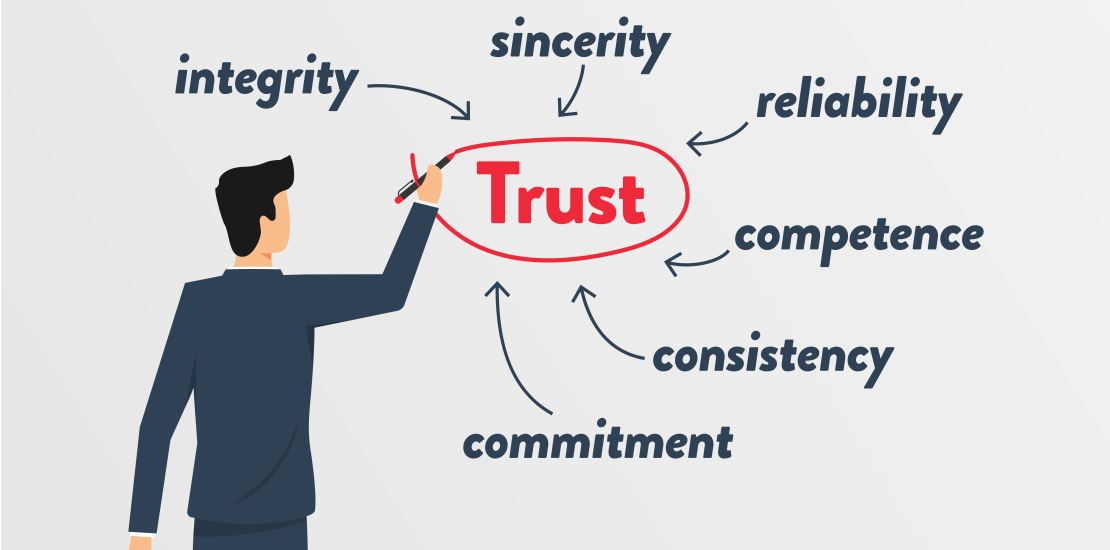
The regular review and refinement of protocols ensures alignment when a scenario arises. At our company, we centralize contacts, prepare for a range of scenarios and set outreach guidelines. This enables rapid response, timely updates and meaningful support, which safeguards trust and strengthens relationships with employees, stakeholders and clients. ... Unintended consequences often arise when stakeholder expectations are left out of crisis planning. Leaders should bake audience insights into their playbooks early—not after headlines hit. Anticipating concerns builds trust and gives you the clarity and credibility to lead through the tough moments. ... Know when to do nothing. Sometimes the instinct to respond immediately leads to increased confusion and puts your brand even further under the microscope. The best crisis managers know when to stop, see how things play out and respond accordingly (if at all), all while preparing for a variety of scenarios behind the scenes. ... Act like a board of directors. A crisis is not an event; it's a stress test of brand, enterprise and reputation infrastructure and resilience. Crisis plans must align with business continuity, incident response and disaster recovery plans. Marketing and communications must co-lead with the exec team, legal, ops and regulatory to guide action before commercial, brand equity and reputation risk escalates.


Abstract or die: Why AI enterprises can't afford rigid vector stacks

Without portability, organizations stagnate. They have technical debt from recursive code paths, are hesitant to adopt new technology and cannot move prototypes to production at pace. In effect, the database is a bottleneck rather than an accelerator. Portability, or the ability to move underlying infrastructure without re-encoding the application, is ever more a strategic requirement for enterprises rolling out AI at scale. ... Instead of having application code directly bound to some specific vector backend, companies can compile against an abstraction layer that normalizes operations like inserts, queries and filtering. This doesn't necessarily eliminate the need to choose a backend; it makes that choice less rigid. Development teams can start with DuckDB or SQLite in the lab, then scale up to Postgres or MySQL for production and ultimately adopt a special-purpose cloud vector DB without having to re-architect the application. ... What's happening in the vector space is one example of a bigger trend: Open-source abstractions as critical infrastructure; In data formats: Apache Arrow; In ML models: ONNX; In orchestration: Kubernetes; In AI APIs: Any-LLM and other such frameworks. These projects succeed, not by adding new capability, but by removing friction. They enable enterprises to move more quickly, hedge bets and evolve along with the ecosystem. Vector DB adapters continue this legacy, transforming a high-speed, fragmented space into infrastructure that enterprises can truly depend on. ...


AWS's New Security VP: A Turning Point for AI Cybersecurity Leadership?

"As we move forward into 2026, the breadth and depth of AI opportunities, products, and threats globally present a paradigm shift in cyber defense," Lohrmann said. He added that he was encouraged by AWS's recognition of the need for additional focus and attention on these cyberthreats. ... "Agentic AI attackers can now operate with a 'reflection loop' so they are effectively self-learning from failed attacks and modifying their attack approach automatically," said Simon Ratcliffe, fractional CIO at Freeman Clarke. "This means the attacks are faster and there are more of them … putting overwhelming pressure on CISOs to respond." ... "I think the CISO's role will evolve to meet the broader governance ecosystem, bringing together AI security specialists, data scientists, compliance officers, and ethics leads," she said, adding cybersecurity's mantra that AI security is everyone's business. "But it demands dedicated expertise," she said. "Going forward, I hope that organizations treat AI governance and assurance as integral parts of cybersecurity, not siloed add-ons." ... In Liebig's opinion, the future of cybersecurity leadership looks less hierarchical than it does now. "As for who owns that risk, I believe the CISO remains accountable, but new roles are emerging to operationalize AI integrity -- model risk officers, AI security architects, and governance engineers," he explained. "The CISO's role should expand horizontally, ensuring AI aligns to enterprise trust frameworks, not stand apart from them."


The Top 5 Technology Trends For 2026

In recent years, we've seen industry, governments, education and everyday folk scrambling to adapt to the disruptive impact of AI. But by 2026, we're starting to get answers to some of the big questions around its effect on jobs, business and day-to-day life. Now, the focus shifts from simply reacting to reinventing and reshaping in order to find our place in this brave, different and sometimes frightening new world.  ... Rather than simply answering questions and generating content, agents take action on our behalf, and in 2026, this will become an increasingly frequent and normal occurrence in everyday life. From automating business decision-making to managing and coordinating hectic family schedules, AI agents will handle the “busy work” involved in planning and problem-solving, freeing us up to focus on the big picture or simply slowing down and enjoying life. ... Quantum computing harnesses the strange and seemingly counterintuitive behavior of particles at the sub-atomic level to accomplish many complex computing tasks millions of times faster than "classic" computers. For the last decade, there's been excitement and hype over their performance in labs and research environments, but in 2026, we are likely to see further adoption in the real world. While this trend might not appear to noticeably affect us in our day-to-day lives, the impact on business, industry and science will begin to take shape in noticeable ways.


How Successful CTOs Orchestrate Business Results at Every Stage

As companies mature, their technical needs shift from building for the present to a long-term vision, strategic partnerships, and leveraging technology to drive business goals. The Strategist CTO combines deep technical acumen with business acumen and a deep understanding of the customer journey. This leader collaborates with other executives on strategic planning, but always through the lens of where customers are heading, not strictly where technology is going.  ... For large enterprises with complex ecosystems and large customer bases, stability, security, and operational efficiency are paramount. This is where the Guardian CTO safeguards the customer experience through technical excellence.This leader oversees all aspects of technical infrastructure, ensuring the reliability, security, and availability of core technology assets with a clear understanding that every decision directly impacts customer trust. ... While these operational models often align with company growth stages, they aren't rigid. A company's needs can shift rapidly due to market conditions, competitive pressures, or unexpected challenges, and customer expectations can evolve just as quickly. ... The most successful companies create environments where technical leadership evolves in response to changing business needs, empowering technical leaders to pivot their focus from building to strategizing, or from innovating to safeguarding, as circumstances demand.


Financial services seek balance of trust, inclusion through face biometrics advances

Advances in the flexibility of face biometric liveness, deepfake detection and cross-sectoral collaboration represent the latest measures against fraud in remote financial services. A digital bank in the Philippines is integrating iProov’s face biometrics and liveness detection, OneConnect and a partner are entering a sandbox to work on protecting against deepfakes, and an event held by Facephi in Mexico explored the challenges of financial services trying to maintain digital trust while advancing inclusion. ... The Philippine digital bank will deploy advanced liveness detection tools as part of a new risk-based authentication strategy. “Our mission is to uplift the lives of all Filipinos through a secure, trusted, and accessible digital bank for all Filipinos, and that requires deploying resilient infrastructure capable of addressing sophisticated fraud,” said Russell Hernandez, chief information security officer at UnionDigital Bank. “As we shift toward risk-based authentication, we need a flexible and future-ready solution. iProov’s internationally proven ability to deliver ease of use, speed, and high security assurance – backed by reliable vendor support – ensures we can evolve our fraud defenses while sustaining customer trust and confidence.” ... The Mexican government has launched several initiatives to standardize digital identity infrastructure, including Llave MX — a single sign-on platform for public services — and the forthcoming National Digital Identity Document, designed to harmonize verification across sectors.


Why context, not just data, will define the future of AI in finance

Raw intelligence in AI and its ability to crunch numbers and process data is only one part of the equation. What it fundamentally lacks is wisdom, which comes from context. In areas like personal finance, building powerful models with deep domain knowledge is critical. The challenges range from misinterpretation of data to regulatory oversights that directly affect value for customers. That’s why at Intuit, we put “context at the core of AI.” This means moving beyond generic datasets to build specialised Financial Large Language Models (LLMs) trained on decades of anonymised financial expertise. It’s about understanding the interconnected journey of our customers across our ecosystem—from the freelancer managing invoices in QuickBooks to that same individual filing taxes with TurboTax, to them monitoring their financial health on Credit Karma. ... In the age of GenAI, craftsmanship in engineering is being redefined. It’s no longer just about writing every line of code or building models from scratch, but about architecting robust, extensible systems that empower others to innovate. The very soul of engineering is transcending code to become the art of architecture. The measure of excellence is no longer found in the meticulous construction of every model, but in the visionary design of systems that empower domain experts to innovate. With tools like GenStudio and GenUX abstracting complexity, the engineer’s role isn’t diminished but elevated. They evolve from builders of applications to architects of innovation ecosystems. 


The modernization mirage: CIOs must see through it to play the long game

Enterprise architecture, in too many organizations, has been reduced to frameworks: TOGAF, Zachman, FEAF. These models provide structure but rarely move capital or inspire investor trust. Boards don’t want frameworks. They want influence. That’s why I developed the Architecture Influence Flywheel — a practical model I use in board and transformation discussions. It rests on three pivots - Outcomes: Every architectural choice must tie directly to board-level priorities — growth, resilience, efficiency. ... Relationships: CIOs must serve as business-technology translators. Express progress not in technical jargon, but in investor language — return on capital, return on innovation, margin expansion and risk mitigation. ... Visible wins: Influence grows through undeniable demonstrations. A system that cuts onboarding time by 40%, an AI model that reduces fraud losses or an audit process that clears in half the time — these visible wins build momentum. ... Technologies rise and fall. Frameworks evolve. Titles shift. But one principle endures: What leaders tolerate defines their legacy. Playing the long game requires CIOs to ask uncomfortable questions:Will we tolerate AI models we cannot explain to regulators? Will we tolerate unchecked cloud sprawl without financial discipline? Will we tolerate compliance as a box-ticking exercise rather than a growth enabler? 


What Is Cybersecurity Platformization?

Cybersecurity platformization is a strategic response to this complexity. It’s the move from a collection of disparate point solutions to a single, unified platform that integrates multiple security functions. Dickson describes it as the “canned integration of security tools so that they work together holistically to make the installation, maintenance and operation easier for the end customer across various tools in the security stack.” ... The most significant hidden cost of a fragmented, multitool security strategy is labor. Managing disconnected tools is a resource strain on an organization, as it requires individuals with specialized skills for each tool. This includes the labor-intensive task of managing API integrations and manually coding “shims,” or integrations to translate data between different tools, which often have separate protocols and proprietary interfaces, Dukes says. Beyond the cost of personnel, there’s the operational complexity.  ... One of the most immediate benefits of adopting a platform approach is cost reduction. This includes not only the reduction in licensing fees but also a reduction in the operational complexity and the number of specialized employees needed. ... Another key benefit is the well-worn concept of a “single pane of glass,” a single dashboard that enables IT security teams to have easier management and reporting. Instead of multiple tools with different interfaces and data formats, a unified platform streamlines everything into a single, cohesive view.

Daily Tech Digest - September 11, 2025


Quote for the day:

"You live longer once you realize that any time spent being unhappy is wasted." -- Ruth E. Renkl


Six hard truths for software development bosses

Everyone behaves differently when the boss is around. Everyone. And you, as a boss, need to realize this. There are two things to realize here. Firstly, when you are present, people will change who they are and what they say. Secondly, you should consider that fact when deciding whether to be in the room. ... Bosses need to realize that what they say, even comments that you might think are flippant and not meant to be taken seriously, will be taken seriously. ... The other side of that coin is that your silence and non-action can have profound effects. Maybe you space out in a meeting and miss a question. The team might think you blew them off and left the great idea hanging. Maybe you forgot to answer an email. Maybe you had bigger fish to fry and you were a bit short and dismissive of an approach by a direct report. Small lapses can be easily misconstrued by your team. ... You are the boss. You have the power to promote, demote, and award raises and bonuses. These powers are important, and people will see you in that light. Even your best attempts at being cordial, friendly, and collegial will not overcome the slight apprehension your authority will engender. Your mood on any given day will be noticed and tracked. ... You can and should have input into technical decisions and design decisions, but your team will want to be the ones driving what direction things take and how things get done. 


AI prompt injection gets real — with macros the latest hidden threat

“Broadly speaking, this threat vector — ‘malicious prompts embedded in macros’ — is yet another prompt injection method,” Roberto Enea, lead data scientist at cybersecurity services firm Fortra, told CSO. “In this specific case, the injection is done inside document macros or VBA [Visual Basic for Applications] scripts and is aimed at AI systems that analyze files.” Enea added: “Typically, the end goal is to mislead the AI system into classifying malware as safe.” ... “Attackers could embed hidden instructions in common business files like emails or Word documents, and when Copilot processed the file, it executed those instructions automatically,” Quentin Rhoads-Herrera, VP of cybersecurity services at Stratascale, explained. In response to the vulnerability, Microsoft recommended patching, restricting Copilot access, stripping hidden metadata from shared files, and enabling its built-in AI security controls. ... “We’ve already seen proof-of-concept attacks where malicious prompts are hidden inside documents, macros, or configuration files to trick AI systems into exfiltrating data or executing unintended actions,” Stratascale’s Rhoads-Herrera commented. “Researchers have also demonstrated how LLMs can be misled through hidden instructions in code comments or metadata, showing the same principle at work.” Rhoads-Herrera added: “While some of these remain research-driven, the techniques are quickly moving into the hands of attackers who are skilled at weaponizing proof-of-concepts.”


Are you really ready for AI? Exposing shadow tools in your organisation

When an organisation doesn’t regulate an approved framework of AI tools in place, its employees will commonly turn to using these applications across everyday actions. By now, everyone is aware of the existence of generative AI assets, whether they are actively using them or not, but without a proper ruleset in place, everyday employee actions can quickly become security nightmares. This can be everything from employees pasting sensitive client information or proprietary code into public generative AI tools to developers downloading promising open-source models from unverified repositories. ... The root cause of turning to shadow AI isn’t malicious intent. Unlike cyber actors, aiming to disrupt and exploit business infrastructure weaknesses for a hefty payout, employees aren’t leaking data outside of your organisation intentionally. AI is simply an accessible, powerful tool that many find exciting. In the absence of clear policies, training and oversight, and the increased pressure of faster, greater delivery, people will naturally seek the most effective support to get the job done. ... Regardless, you cannot protect against what you can’t see. Tools like Data Loss Prevention (DLP) and Cloud Access Security Brokers (CASB), which detect unauthorised AI use, must be an essential part of your security monitoring toolkit. Ensuring these alerts connect directly to your SIEM and defining clear processes for escalation and correction are also key for maximum security.


How to error-proof your team’s emergency communications

Hierarchy paralysis occurs when critical information is withheld by junior staff due to the belief that speaking up may undermine the chain of command. Junior operators may notice an anomaly or suspect a procedure is incorrect, but often neglect to disclose their concerns until after a mistake has happened. They may assume their input will be dismissed or even met with backlash due to their position. In many cases, their default stance is to believe that senior staff are acting on insight that they themselves lack. CRM trains employees to follow a structured verbal escalation path during critical incidents. Similar to emergency operations procedures (EOPs), staff are taught to express their concerns using short, direct phrases. This approach helps newer employees focus on the issue itself rather than navigating the interaction’s social aspects — an area that can lead to cognitive overload or delayed action. In such scenarios, CRM recommends the “2-challenge rule”: team members should attempt to communicate an observed issue twice, and if the issue remains unaddressed, escalate it to upper management. ... Strengthening emergency protocols can help eliminate miscommunication between employees and departments. Owners and operators can adopt strategies from other mission-critical industries to reduce human error and improve team responsiveness. While interpersonal issues between departments and individuals in different roles are inevitable, tighter emergency procedures can ensure consistency and more predictable team behavior.


SpamGPT – AI-powered Attack Tool Used By Hackers For Massive Phishing Attack

SpamGPT’s dark-themed user interface provides a comprehensive dashboard for managing criminal campaigns. It includes modules for setting up SMTP/IMAP servers, testing email deliverability, and analyzing campaign results features typically found in Fortune 500 marketing tools but repurposed for cybercrime. The platform gives attackers real-time, agentless monitoring dashboards that provide immediate feedback on email delivery and engagement. ... Attackers no longer need strong writing skills; they can simply prompt the AI to create scam templates for them. The toolkit’s emphasis on scale is equally concerning, as it promises guaranteed inbox delivery to popular providers like Gmail, Outlook, and Microsoft 365 by abusing trusted cloud services such as Amazon AWS and SendGrid to mask its malicious traffic. ... What once required significant technical expertise can now be executed by a single operator with a ready-made toolkit. The rise of such AI-driven platforms signals a new evolution in cybercrime, where automation and intelligent content generation make attacks more scalable, convincing, and difficult to detect. To counter this emerging threat, organizations must harden their email defenses. Enforcing strong email authentication protocols such as DMARC, SPF, and DKIM is a critical first step to make domain spoofing more difficult. Furthermore, enterprises should deploy AI-powered email security solutions capable of detecting the subtle linguistic patterns and technical signatures of AI-generated phishing content.


How attackers weaponize communications networks

The most attractive targets for advanced threat actors are not endpoint devices or individual servers, but the foundational communications networks that connect everything. This includes telecommunications providers, ISPs, and the routing infrastructure that forms the internet’s backbone. These networks are a “target-rich environment” because compromising a single point of entry can grant access to a vast amount of data from a multitude of downstream targets. The primary motivation is overwhelmingly geopolitical. We’re seeing a trend of nation-state actors, such as those behind the Salt Typhoon campaign, moving beyond corporate espionage to a more strategic, long-term intelligence-gathering mission. ... Two recent trends are particularly telling and serve as major warning signs. The first is the sheer scale and persistence of these attacks. ... The second trend is the fusion of technical exploits with AI-powered social engineering. ... A key challenge is the lack of a standardized global approach. Differing regulations around data retention, privacy, and incident reporting can create a patchwork of security requirements that threat actors can easily exploit. For a global espionage campaign, a weak link in one country’s regulatory framework can compromise an entire international communications chain. The goal of international policy should be to establish a baseline of security that includes mandatory incident reporting, a unified approach to patching known vulnerabilities, and a focus on building a collective defense.


AI's free web scraping days may be over, thanks to this new licensing protocol

AI companies are capturing as much content as possible from websites while also extracting information. Now, several heavyweight publishers and tech companies -- Reddit, Yahoo, People, O'Reilly Media, Medium, and Ziff Davis (ZDNET's parent company) -- have developed a response: the Really Simple Licensing (RSL) standard. You can think of RSL as Really Simple Syndication's (RSS) younger, tougher brother. While RSS is about syndication, getting your words, stories, and videos out onto the wider web, RSL says: "If you're an AI crawler gobbling up my content, you don't just get to eat for free anymore." The idea behind RSL is brutally simple. Instead of the old robots.txt file -- which only said, "yes, you can crawl me," or "no, you can't," and which AI companies often ignore -- publishers can now add something new: machine-readable licensing terms. Want an attribution? You can demand it. Want payment every time an AI crawler ingests your work, or even every time it spits out an answer powered by your article? Yep, there's a tag for that too. ... It's a clever fix for a complex problem. As Tim O'Reilly, the O'Reilly Media CEO and one of the RSL initiative's high-profile backers, said: "RSS was critical to the internet's evolution…but today, as AI systems absorb and repurpose that same content without permission or compensation, the rules need to evolve. RSL is that evolution."


AI is changing the game for global trade: Nagendra Bandaru, Wipro

AI is revolutionising global supply chain and trade management by enabling businesses across industries to make real-time, intelligent decisions. This transformative shift is driven by the deployment of AI agents, which dynamically respond to changing tariff regimes, logistics constraints, and demand fluctuations. Moving beyond traditional static models, AI agents are helping create more adaptive and responsive supply chains. ... The strategic focus is also evolving. While cost optimisation remains important, AI is now being leveraged to de-risk operations, anticipate geopolitical disruptions, and ensure continuity. In essence, agentic AI is reshaping supply chains into predictive, adaptive ecosystems that align more closely with the complexities of global trade. ... The next frontier is going to be threefold: first, the rise of agentic AI at scale marks a shift from isolated use cases to enterprise-wide deployment of autonomous agents capable of managing end-to-end trade ecosystems; second, the development of sovereign and domain-specific language models is enabling lightweight, highly contextualised solutions that uphold data sovereignty while delivering robust, enterprise-grade outcomes; and third, the convergence of AI with emerging technologies—including blockchain for provenance and quantum computing for optimisation—is poised to redefine global trade dynamics.


5 challenges every multicloud strategy must address

Transferring AI data among various cloud services and providers also adds complexity — but also significant risks. “Tackling software sprawl, especially as organizations accelerate their adoption of AI, is a top action for CIOs and CTOs,” says Mindy Lieberman, CIO at database platform provider MongoDB. ... A multicloud environment can complicate the management of data sovereignty. Companies need to ensure that data remains in line with the laws and regulations of the specific geographic regions where it is stored and processed. ... Deploying even one cloud service can present cybersecurity risks for an enterprise, so having a strong security program in place is all the more vital for a multicloud environment. The risks stem from expanded attack surfaces, inconsistent security practices among service providers, increased complexity of the IT infrastructure, fragmented visibility, and other factors. IT needs to be able to manage user access to cloud services and detect threats across multiple environments — in many cases without even having a full inventory of cloud services. ... “With greater complexity comes more potential avenues of failure, but also more opportunities for customization and optimization,” Wall says. “Each cloud provider offers unique strengths and weaknesses, which means forward-thinking enterprises must know how to leverage the right services at the right time.”


What Makes Small Businesses’ Data Valuable to Cybercriminals?

Small businesses face unique challenges that make them particularly vulnerable. They often lack dedicated IT or cybersecurity teams, sophisticated systems, and enterprise-grade protections. Budget constraints mean many cannot afford enterprise-level cybersecurity solutions, creating easily exploitable gaps. Common issues include outdated software, reduced security measures, and unpatched systems, which weaken defenses and provide easy entry points for criminals. A significant vulnerability is the lack of employee cybersecurity awareness. ... Small businesses, just like large organizations, collect and store vast amounts of valuable data. Customer data represents a goldmine for cybercriminals, including first and last names, home and email addresses, phone numbers, financial information, and even medical information. Financial records are equally attractive targets, including business financial information, payment details, and credit/debit card payment data. Intellectual property and trade secrets represent valuable proprietary assets that can be sold to competitors or used for corporate espionage. ... Small businesses are undeniably attractive targets for cybercriminals, not because they are financial giants, but because they are perceived as easier to breach due to resource constraints and common vulnerabilities. Their data, from customer PII to financial records and intellectual property, is highly valuable for resale, fraud, and as gateways to larger targets.

Daily Tech Digest - May 26, 2025


Quote for the day:

“Don't blow off another's candle for it won't make yours shine brighter.” -- Jaachynma N.E. Agu


Beyond single-model AI: How architectural design drives reliable multi-agent orchestration

It’s no longer just about building a single, super-smart model. The real power, and the exciting frontier, lies in getting multiple specialized AI agents to work together. Think of them as a team of expert colleagues, each with their own skills — one analyzes data, another interacts with customers, a third manages logistics, and so on. Getting this team to collaborate seamlessly, as envisioned by various industry discussions and enabled by modern platforms, is where the magic happens. But let’s be real: Coordinating a bunch of independent, sometimes quirky, AI agents is hard. It’s not just building cool individual agents; it’s the messy middle bit — the orchestration — that can make or break the system. When you have agents that are relying on each other, acting asynchronously and potentially failing independently, you’re not just building software; you’re conducting a complex orchestra. This is where solid architectural blueprints come in. We need patterns designed for reliability and scale right from the start. ... For agents to collaborate effectively, they often need a shared view of the world, or at least the parts relevant to their task. This could be the current status of a customer order, a shared knowledge base of product information or the collective progress towards a goal. Keeping this “collective brain” consistent and accessible across distributed agents is tough. 


Unstructured Data Management Tips

"Unlike traditional databases, which define the schema -- the data's structure -- before it's stored, schema-on-read defers this process until the data is actually read or queried," says Kamal Hathi, senior vice president and general manager of machine-generated data monitoring and analysis software firm at Splunk, a Cisco company. This approach is particularly effective for unstructured and semi-structured data, where the schema is not predefined or rigid, Hathi says. "Traditional databases require a predefined schema, which makes working with unstructured data challenging and less flexible." ... Manage unstructured data by integrating it with structured data in a cloud environment using metadata tagging and AI-driven classifications, suggests Cam Ogden, a senior vice president at data integrity firm Precisely. "Traditionally, structured data -- like customer databases or financial records -- reside in well-organized systems such as relational databases or data warehouses," he says. However, to fully leverage all of their data, organizations need to break down the silos that separate structured data from other forms of data, including unstructured data such as text, images, or log files. This is where the cloud comes into play. Integrating structured and unstructured data in the cloud allows for more comprehensive analytics, enabling organizations to extract deeper insights from previously siloed information, Ogden says. 


Why IT Certifications Are Now the Hottest Currency in Tech

The reasons are manifold. Inflation has eroded buying power, traditional merit-based raises have declined, bonuses are scarcer and 2024 saw a sharp uptick in layoffs - particularly targeting middle management and older professionals. Unlike the "Great Resignation" of 2021, professionals today are staying put - not from loyalty but from caution, and upskilling is the key to ensure their longevity. Faced with a precarious job market and declining benefits, many IT employees are opting for stability and doubling down on internal mobility. According to the Pearson VUE's 2025 Value of IT Certification Candidate Report, more than 80% of the respondents who hold at least one certification said it enhanced their ability to innovate and 70% said they experienced greater autonomy at workplace. Even in regions where pay bumps are smaller, the career mobility afforded by certifications is prevalent. In India, for instance, CloudThat's IT Certifications and Salary Survey found that Microsoft-certified professionals earn an average entry salary of $10,900, with 60% of certified workers reporting pay hikes. "The increased value in certifications underscore their critical role in equipping professionals with the skills needed to excel and advance in their roles. As the industry continues to grow, certifications are becoming essential to stand out and meet the demand for specialized skills," said Bhavesh Goswami, founder and CEO of CloudThat.


Speed and scalability redefine the future of modern banking

To expedite digitalisation, global policymakers are introducing regulations such as India’s Digital Banking Units (DBUs), the EU’s PSD2/PSD3 directives, and the GCC’s open finance guidelines. The growth in non-bank financial intermediaries (NBFIs), which has been both more intricate and wider in scope, in the most recent years, obliges the employing of more effective compliance frameworks and the introduction of better risk management strategies. ... Integrating banking directly into non-financial platforms such as e-commerce is on the rise. Based on a report by Grand View Research, the global Banking-as-a-Service (BaaS) market is expected to reach USD 66 billion by 2030. Retailers increasingly partner with banks for instant, personalised offers and payments via identity beacons, enhancing customer experiences through Gen AI-supported interactions. For example, real-time data analytics and machine learning models are now essential for personalised financial services. Reimagined branch visits are becoming an emerging trend, with branches shifting to high-footfall locations like malls. The store-like experience includes personalised offers and decision aids, including immediate approval for flexible loans, made possible by customer identification based on consent.


5 questions to test tech resilience and build a 90-day action plan

The convergence of AI with existing systems has brought technical debt into sharp focus. While AI, and agentic AI in particular, presents transformative opportunities, it also exposes the limitations of legacy systems and architectural decisions made in the past. It’s essential to balance the excitement of AI adoption with the pragmatic need to address underlying technical debt, as we explored in our recent research. ... While AI enthusiasm runs high, successful implementation requires careful focus on use cases that deliver tangible business value. CIOs must lead their organizations in identifying and executing AI initiatives that drive meaningful outcomes. That means defining AI programs with an holistic, end-to-end vision of how they’ll deliver value for your business. And it means taking a platform approach, as opposed to numerous isolated PoCs. ... The traditional boundaries of IT are dissolving. With technology now fundamentally driving business strategy, CIOs must lead the evolution from an IT operating model to a new business technology operating model. Recent data shows organizations that have embraced this transformation achieved 15% higher top-line performance compared to their peers, with potential for this gap to double by next year.


LlamaFirewall: Open-source framework to detect and mitigate AI centric security risks

One particularly concerning area is the use of LLMs in coding applications. “Coding agents that rely on LLM-generated code may inadvertently introduce security vulnerabilities into production systems,” Chennabasappa warned. “Misaligned multi-step reasoning can also cause agents to perform operations that stray far beyond the user’s original intent.” These types of risks are already surfacing in coding copilots and autonomous research agents, she added, and are only likely to grow as agentic systems become more common. Yet while LLMs are being embedded deeper into mission-critical workflows, the surrounding security infrastructure hasn’t kept pace. “Security infrastructure for LLM-based systems is still in its infancy,” Chennabasappa said. “So far, the industry’s focus has been mostly limited to content moderation guardrails meant to prevent chatbots from generating misinformation or abusive content.” That approach, she argued, is far too narrow. It overlooks deeper, more systemic threats like prompt injection, insecure code generation, and abuse of code interpreter capabilities. Even proprietary safety systems that hardcode rules into model inference APIs fall short, according to Chennabasappa, because they lack the transparency, auditability, and flexibility needed to secure increasingly complex AI applications.


Navigating Double and Triple Extortion Tactics

In double extortion attacks, a second layer is added: attackers, having gained access to the system, exfiltrate sensitive and valuable data. This not only deepens the victim’s vulnerability but also increases pressure, as attackers now hold both encrypted files and stolen information, which they can use as leverage for further demands. The threat of double extortion becomes more severe as it combines operational disruption (due to encrypted data and downtime) with the risk of public exposure. Organizations unable to access their data face halted services, financial loss, and reputational damage. ... Triple extortion expands upon traditional and double extortion ransomware tactics by introducing a third layer of pressure. The attack begins with data encryption and exfiltration, similar to the double extortion model—locking the victim out of their data while simultaneously stealing sensitive information. This stolen data gives attackers multiple avenues to exploit the victim, who is left with no control over its fate. The third stage involves third-party extortion. After collecting data from the primary victim, attackers identify and target affiliated parties, such as partners, clients, and stakeholders, whose information was also compromised. 


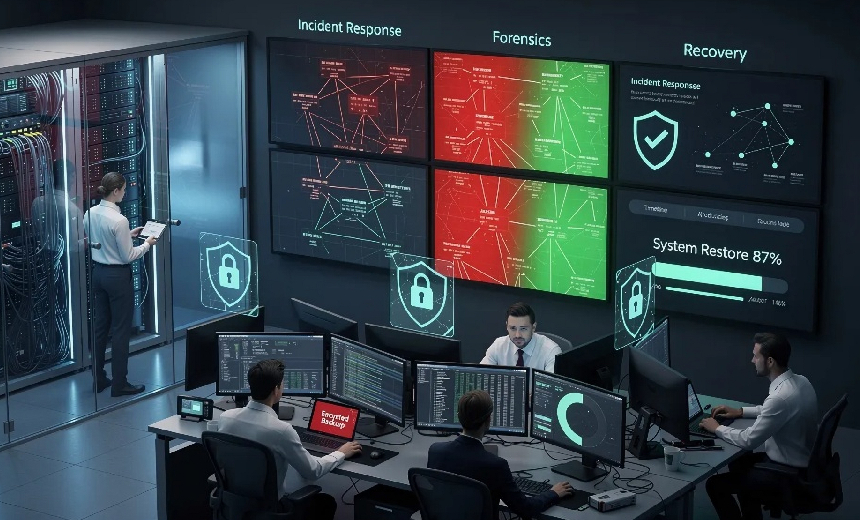
The 7 unwritten rules of leading through crisis

Your first move shouldn’t be panic-fixing everything in silence, Young says. “You need to let people know what’s going on, including your team, your leadership, and sometimes even your customers.” Keeping everyone in the loop calms nerves and builds trust. Silence makes everything worse, Young warns. ... Confusion is contagious. “Providing clarity about what’s known, what matters, and what you’re aiming for, stabilizes people and systems,” says Leila Rao, a workplace and executive coaching consultant. “It sets the tone for proactivity instead of reactivity.” Simply treating symptoms will make the problem worse, Rao warns. “Misinformation spreads, trust erodes, and well-intentioned responses become counterproductive.” Crisis is complexity on steroids, Rao observes. “When we center people, welcome multiple perspectives, and make space for emergence, we move from crisis management to collective learning.” ... You can’t hide from a crisis, and attempting to do so only compounds the damage, Hasmukh warns. “Clear visibility into what happened allows you to respond effectively and maintain stakeholder trust during challenging times.” Organizations that delay acknowledging issues inevitably face greater scrutiny and damage than those that address situations head-on.


BYOD like it’s 2025

The data is clear that there can be significant gains in productivity attached to BYOD. Samsung estimates that workers using their own devices can gain about an hour of productive worktime per day and Cybersecurity Insiders says that 68% of businesses see some degree of productivity increases. Although the gains are significant, personal devices can also distract workers more than company-owned devices, with personal notifications, social media accounts, news, and games being the major time-sink culprits. This has the potential to be a real issue, as these apps can become addictive and their use compulsive. ... One challenge for BYOD has always been user support and education. With two generations of digital natives now comprsing more than half the workforce, support and education needs have changed. Both millennials and Gen Z have grown up with the internet and mobile devices, which makes them more comfortable making technology decisions and troubleshooting problems than baby boomers and Gen X. This doesn’t mean that they don’t need tech support, but they do tend to need less hand-holding and don’t instinctively reach for the phone to access that support. Thus, there’s an ongoing shift to self-support resources and other, less time-intensive, models with text chat being the most common — be it with a person or a bot.


You have seen the warnings: your next IT outage could be worse

In-band management uses the same data path as production traffic to manage the customer environment, while logically isolating management traffic from production data. Although this approach can be more cost-effective, it introduces certain risks. If a problem occurs with the production network, it can also disrupt management access to the infrastructure, a situation referred to as “fate sharing.” In these cases, the only viable solution may be to send an engineer onsite to diagnose and resolve the issue. This can result in significant costs and delays, potentially impacting the customer’s business operations. Out-of-band management, on the other hand, uses a separate network to provide independent access for managing the infrastructure, completely isolating management traffic from the production network. This separation is crucial during major disruptions like provider outages or security breaches, as it guarantees continuous access to network devices and servers, even if the primary production network is down or compromised. ... A secure connection links this cloud infrastructure to the customer’s on-premises IT setup, usually through a dedicated private network connection, SD-WAN, or an IPSEC VPN. This connection typically terminates at an on-premises router or firewall, safeguarding access to the out-of-band management network. 

Daily Tech Digest - April 09, 2025


Quote for the day:

"Don't judge each day by the harvest you reap but by the seeds that you plant." -- Robert Louis Stevenson


How AI and ML Will Change Financial Planning

AI adoption in finance does not come easily, because finance systems contain vast amounts of sensitive data, they are more susceptible to data breaches. Integrating AI systems with other components, such as cloud services and APIs, can increase the number of entry points that hackers might exploit. Hence, most of the finance executives cite data security as a top challenge. Limited AI skills is another hurdle, most of the finance orgs don’t have the skill set which leverage the AI in planning and budgeting activities. In early stages, high costs, staff resistance, lack of transparency, and uncertain ROI dominate. Other hurdles stay constant, such as data security and finding consistent data. As companies expand their use of AI, the potential for bias and misinformation rises, particularly as finance teams tap GenAI. Integrating AI solutions and tools into existing systems also presents more challenges As AI and ML continue to evolve, their role in financial planning will only grow. The ability to continuously adapt to new data, automate routine processes, and generate predictive insights positions AI as a critical tool for financial leaders. By embracing these technologies, businesses can transition from reactive financial management to proactive, data-driven decision-making that not only mitigates risks but also identifies new opportunities for growth.


The Augmented Architect: Real-Time Enterprise Architecture In The Age Of AI

No human can know everything about a modern digital enterprise. AI doesn’t pretend to either — but it remembers everything and brings the right detail to the fore at the right time. Think of it as a cognitive prosthetic for the architect: surfacing precedents, warnings, and rationale at the point of decision. ... Visibility isn’t just about having access to data — it’s about trust in its freshness. Real-time integration with operational sources (observability platforms, configuration systems, source control, deployment records) ensures that the architecture graph is never out of date. The haystack becomes a needle-sorter. ... Architecture artifacts multiply: PowerPoints, spreadsheets, PDFs, whiteboards. But in an agentic system, everything is rendered on demand from the same graph (and its associated unstructured content, linked via vector embeddings). Want a heatmap of system risks? A regulatory trace? A roadmap to sunset legacy? One prompt, one view — consistent, explainable, and composable. And those unstructured artifacts? An agent is happy to harvest new insights from them back into the knowledge store. ... Review boards become decision accelerators instead of speed bumps. Agents pre-check submissions. Exceptions, not compliance, become the focus. Draft decisions are generated and validated before the meeting even starts. 


Choosing the Most Secure Cloud Service for Your Workloads

Managed cloud servers offer the security benefit of being relatively simple to configure and operate. Simplicity breeds security because the fewer variables you have to work with, the lower the risk of making a mistake that will lead to a breach. On the other hand, managed cloud servers are subject to a relatively large attack surface. Threat actors could target multiple components, including the operating systems installed on server instances, individual applications, and network-facing services. ... If you deploy containers using a managed service like AWS Fargate or GKE, you get many of the same security advantages as you enjoy when using serverless functions: The only vulnerabilities and misconfigurations you have to worry about are ones that impact your containers. The cloud provider bears responsibility for securing the host infrastructure. This isn't true, however, if you deploy containers on infrastructure that you manage yourself — by, for example, creating a Kubernetes cluster using nodes hosted on EC2. In that case, you end up with a broad and complex environment, making it quite challenging to secure. ... Note, too, that containers tend to be complex. A single container image could include code drawn from many sources. 


The Invisible Data Battle: How AI Became a Cybersec Professional’s Biggest Friend and Foe

With all of these boobytraps and stonewalling techniques in mind, cybersec professionals have been working on smart scrapers for years, and they’re finally here. A “smart” or “adaptive” scraper uses natural language processing (NLP) and machine learning to handle dynamic content and intricate website architectures (e.g., nested categories and varied page layouts), bypass IP blocking and rate limiting via rotating proxies, deal with CAPTCHAs, login forms and cookies — and even provide real-time data updates. For instance, adaptive scrapers can identify the structure of a web page by analyzing its document object model (DOM) or by following specific patterns, and this allows for dynamic adaptation. AI models like convolutional neural networks (CNNS) can also detect and interact with visual elements on websites, such as buttons. In fact, smart scrapers can even mimic human browsing patterns with random pauses, mouse movements and realistic navigation sequences that bypass behavioral analysis tools. And that’s not all. AI-powered web scrapers can modify browser configurations to mask telltale signs of automation (such as headless browsers that run without a traditional graphical interface) that anti-bot systems look for. 


The Agile Advantage: doubling down on the biggest business challenges

Agile practices have been gaining popularity, with 51% of respondents indicating their organisations actively use Agile to organize and deliver work. However, the data reveals inconsistencies in how the benefits of Agile are perceived across teams and organisations. ... Regardless of whether teams fully embrace Agile practices completely, there are opportunities for leaders to bring forward Agile principles to address the unique challenges of modern work. While leaders may feel confident in their teams’ direction, the lack of alignment experienced by entry-level employees can have serious repercussions. Feedback from these employees can serve as a valuable indicator of how effectively an organisation integrates Agile practice–and the data clearly shows there is considerable room for improvement. For organisations of any size, addressing these gaps is imperative. Leaders must adopt consistent tools and frameworks that enhance training, improve communication and foster greater alignment across teams. Proactively tackling these issues early can alleviate future issues like misalignment and burnout, while building a more cohesive and resilient organisation. 


The Strategic Evolution of IT: From Cost Center to Business Catalyst

The most successful organizations recognize that technology-driven transformation requires more than just implementing new solutions — it demands an organization-wide cultural shift. This means evolving IT teams from traditional "order-takers" to influential decision-makers who help shape and execute business strategy. The key lies in creating an environment where innovation thrives and tech professionals feel empowered to contribute their unique perspectives to business discussions. Organizations must invest in both the technical and business acumen of their IT talent. A dual focus on these areas enables teams to better understand the broader business context of their work and contribute more meaningfully to strategic discussions. When IT professionals can speak the languages of both technology and business, they become invaluable partners in driving broader innovation. Success in this area requires a commitment to continuous learning, mentorship programs and creating opportunities for cross-functional collaboration that expose IT teams to diverse business challenges and perspectives. ... With technology continuing to reshape industries and markets, the question is no longer whether tech professionals should have a seat at the strategic table, but how to maximize its potential and impact on business success.


Is HR running your employee security training? Here’s why that’s not always the best idea

“HR departments may not be fully aware of current cyber threats or the organization’s specific risks,” she says. This can result in overly broad or generic training, which reduces its effectiveness. These programs can also fail to emphasize the practical, real-world application of security practices or offer enough guidance on addressing threats if they lack collaboration with security and IT teams.” HR may not effectively tailor the training to the organization’s industry-specific threats, Murphy notes. Without the security department’s involvement, training content often lacks focus and fails to address the company’s unique threats, leaving employees unsure of what to watch for. ... However, while HR shouldn’t run employee security training, Willett does view the HR team as a key partner. He suggests a collaborative approach where HR and security teams work together, leveraging their respective strengths. He explains that HR can help translate complex technical information into understandable language, while the security team provides the core content and technical expertise. ... HR has skin in the game for employee onboarding, compliance, and adherence to company policies and practices, according to Hughes. 


Why CISOs are doubling down on cyber crisis simulations

“It was once enough to theorise risk identification through using risk matrixes and lodging them in a spreadsheet describing threats and their likelihood of materialising,” says Aaron Bugal, Field CISO, APJ at Sophos. “However, looking at the impact caused by ransomware and subsequent extortion demands sending executive teams and board members into a spin, highlights the lack of understanding of how pervasive cyber criminals are and the opportunities they take.” To move beyond theoretical planning, Bugal advocates for breach simulations as a practical step forward. “A simulation of a breach will allow you to draw out the concise and well-measured response actions that are demanded by you and your organisation,” he explains. Bringing together a cross-section of executives helps uncover gaps in readiness. “Physically sitting with a cross section of executives, board members, human resources, IT, security, legal and public relations will ilk out the procedures, responsibilities and resources needed to respond with efficacy.” By running these exercises in advance, organizations can avoid the chaos of real-time crisis management. “Simulations provide a structured approach to build and refine a breach response while playing it out and discovering where improvements are needed,” Bugal adds, “rather than learning and panicking whilst under the pressure of an active attack.”


Google Cloud Security VP on solving CISO pain points

On the strategic side, Bailey said CISOs are asking for a middle ground between highly integrated platforms and the flexibility of best-of-breed tools. "They want best of breed with the limited toil of what a platform gives," he said. "They're tired of integrations constantly breaking." Bailey also discussed how the role of development-level security – often called DevSecOps – is increasingly being absorbed into security operations. "The CISO is going to have responsibility for all these problems," he said. "Visibility into what's being deployed, compliance reporting, and detection on application code – that's all coming into SecOps." Another emerging front is model protection. Google's Model Armour and AI Protection aim to defend not just infrastructure but also the AI models themselves. "If a bad prompt starts coming through, we can help block that," Bailey said. "We're putting security controls around development environments, models, data and prompts." The Mandiant brand, once synonymous with incident response, has found new life as both a consulting arm and a foundation for content in Google Threat Intelligence. "Mandiant is our consulting practice," Bailey said. "It's also where our elite threat hunters live – a lot of them are ex-Mandiant, and they're integrated with our consulting team to operationalise what they see on the front lines."


Shadow Table Strategy for Seamless Service Extractions and Data Migrations

The shadow table strategy maintains a parallel copy of data in a new location (the "shadow" table or database) that mirrors the original system’s current state. The core idea is to feed data changes to the shadow in real time, so that by the end of the migration, the shadow data store is a complete, up-to-date clone of the original. At that point, you can seamlessly switch to the shadow copy as the primary source. ... Transitioning from a monolithic architecture to a microservices-based system requires more than just rewriting code; you often must carefully migrate data associated with specific services. Extracting a service from a monolith risks inaccuracy if you do not transfer its dependent data accurately and consistently. Here, shadow tables play a crucial role in decoupling and migrating a subset of data without disrupting the existing system. In a typical service extraction, the legacy system continues to handle all live operations while developers build a new microservice to handle a specific functionality. During extraction, engineers mirror the data relevant to the new service into a dedicated shadow database. Whether implemented through triggers or event-based replication, the dual-write mechanism ensures that the system simultaneously records every change made in the legacy system in the shadow database.