Showing posts with label Soft Skills. Show all posts

Daily Tech Digest - March 20, 2026


Quote for the day:

"Nothing so conclusively proves a man's ability to lead others as what he does from day to day to lead himself." -- Thomas J. Watson


🎧 Listen to this digest on YouTube Music

▶ Play Audio Digest

Duration: 23 mins • Perfect for listening on the go.


Rethinking Cyber Preparedness in Age of AI Cyberwarfare

The article "Rethinking Cyber Preparedness in the Age of AI and Cyberwarfare" highlights a critical disconnect termed the "readiness paradox," where nearly 80% of IT leaders feel prepared for cyberwarfare despite over half of organizations suffering AI-driven attacks recently. According to Armis’s latest report, traditional defense mechanisms are failing against agentic AI, which nation-state actors now deploy for rapid reconnaissance and lateral movement. As autonomous agents begin weaponizing zero-day exploits faster than human researchers can categorize them, the attack surface has expanded to include overlooked assets like building management systems and IoT devices. The financial stakes are escalating, with average ransomware payouts reaching $11.6 million, often exceeding annual security budgets. To counter these sophisticated threats, the article emphasizes that organizations must achieve superior visibility into their internal environments and map every network asset. Furthermore, IT leaders should embrace AI-driven security policies rather than ineffective bans to combat the risks of "shadow AI" used by employees. Ultimately, true resilience depends on whether a company knows its own infrastructure better than its adversaries, transforming AI from a liability into a vital defensive tool for modern geopolitical threats.


Are small language models finally having their moment?

The rapid ascent of Small Language Models (SLMs) marks a strategic shift in the artificial intelligence landscape, as enterprises seek to mitigate the immense costs and security risks associated with massive frontier models. Unlike their trillion-parameter counterparts, SLMs operate with significantly fewer parameters—ranging from millions to a few billion—allowing them to run locally on laptops or mobile devices without internet connectivity. This architectural efficiency ensures superior data privacy and regulatory compliance, particularly in sensitive sectors like healthcare, defense, and banking where proprietary data must remain on-premises. While Large Language Models (LLMs) excel at general synthesis and creative tasks, SLMs are increasingly preferred for specialized, rules-based functions such as code completion and document classification. Gartner even projects that by 2027, task-specific SLM usage will triple that of LLMs. Through techniques like knowledge distillation and pruning, these compact models offer a cost-effective, energy-efficient alternative that delivers high performance with minimal latency. Consequently, the industry is moving toward a hybrid ecosystem where SLMs handle secure, specialized operations while LLMs provide broader abstraction, proving that in the evolving world of enterprise AI, bigger is not always better for every specific business need.


What it takes to level up your org’s AI maturity

To advance an organization's AI maturity, leaders must transition from merely "doing AI" to driving substantial business impact through an outcomes-based, AI-first strategy. According to experts Afshean Talasaz and Zar Toolan, this shift requires CIOs to adopt an "innovator-operator" mindset, balancing the need for rapid evolution with the stability required for consistent execution. Maturity is categorized into three levels, with the most advanced organizations enjoying a first-mover advantage led by CEO-backed agendas. A critical component of this journey is the "from-to so-that" modeling, which aligns data and AI initiatives with specific strategic outcomes like trust, business value, and reduced time to value. Winners in this space prioritize long-term infrastructure investments and rigorous data cleanup while securing short-term wins to demonstrate ROI. Furthermore, scaling AI successfully demands an intense focus on granular details rather than abstract concepts; without getting the technical and operational nuances right, true scale remains elusive. Ultimately, the transformation is a "team sport" requiring absolute alignment across the C-suite and a commitment to reducing internal volatility. By preparing thoroughly and maintaining consistent execution, organizations can move beyond operational tools to treat sovereign enterprise data as a powerful competitive moat.


The Power Ladder Architecture—A System For Turning Risk Work Into Decisions, Delivery And Proof

Maman Ibrahim’s article, "The Power Ladder Architecture," addresses the critical gap between identifying organizational risks and executing meaningful change. Ibrahim argues that risk management often fails not because of a lack of effort, but because it fails to convert analysis into "leadership work." Many teams present polished dashboards that provide a false sense of security while stalling when faced with difficult trade-offs. The Power Ladder is proposed as a solution, shifting the focus from mere reporting to three tangible outcomes: decisions, delivery, and proof. First, "decisions" require framing risks as binary choices for leadership, forcing clarity on trade-offs like speed versus security. Second, "delivery" ensures that once a choice is made, it is translated into structured tasks with clear ownership and deadlines. Finally, "proof" demands verifiable evidence that the risk profile has actually improved, rather than just being documented. By implementing this architecture, organizations can move beyond ceremonial risk management and establish a high-altitude system where audit concerns and cyber exposures are effectively neutralized. This approach transforms risk work into a powerful engine for operational resilience, ensuring that every identified vulnerability leads to a documented decision and a validated result.


The espionage reality: Your infrastructure is already in the collection path

Modern enterprises are increasingly caught in the "collection path" of global espionage, not necessarily as primary targets, but because they utilize the same centralized infrastructure as their adversaries. This shift highlights a structural exposure problem where shared dependencies—such as telecommunications, cloud services, and identity layers—become conduits for siphoning data and monitoring authentication. When national telecommunications providers are compromised, attackers can collect intelligence directly from the pathways an organization relies on, rendering traditional internal security measures insufficient. The article emphasizes that security leaders must move beyond internal asset protection to evaluate risk through the lens of upstream dependencies. Key recommendations include demanding integrity attestation from providers, reducing implicit trust in external networks, and hardening session layers to mitigate token theft and impersonation. Furthermore, the persistence of advanced persistent threats (APTs) within backbone infrastructure is now influencing the cyber insurance market, leading to higher premiums and stricter exclusions. Ultimately, organizations must integrate intelligence-driven assessments into their governance models, acknowledging that upstream compromise is a structural reality. To maintain resilience, CISOs must treat every external partner as an active component of their threat surface and design systems that degrade safely under inevitable compromise.


A direct approach to satellite communication

The article "A Direct Approach to Satellite Communication" on Data Center Dynamics explores the transformative shift in how satellite systems integrate with terrestrial network infrastructures. It highlights the evolution from traditional, isolated satellite setups toward a more "direct" and seamless integration within the broader data center and cloud ecosystem. The piece details how Low Earth Orbit (LEO) constellations and advancements in software-defined networking (SDN) are reducing latency and increasing bandwidth, making satellite links a viable, high-performance extension for enterprise networks rather than just a backup for remote locations. By treating space-based assets as reachable network nodes, providers can offer direct cloud connectivity, bypassing complex ground-station hops that previously hampered speed. This integration allows data centers to achieve greater resiliency and global reach, facilitating real-time data processing for edge computing and IoT applications in underserved regions. Ultimately, the analysis suggests that the convergence of space and ground infrastructure is turning satellite communication into a mainstream pillar of modern digital architecture, effectively "cloudifying" the final frontier to support the next generation of global, high-speed connectivity.


AI will accelerate tech job growth - former Tesla president explains where and why

In this ZDNet article, Jon McNeill, former Tesla president and current CEO of DVx Ventures, challenges the "tech job apocalypse" narrative by highlighting how artificial intelligence will actually accelerate employment in specific sectors. McNeill argues that the growing complexity of AI-driven ecosystems creates an intense demand for human expertise, particularly in infrastructure and networking. As organizations deploy massive server farms and sophisticated GPU clusters, the need for skilled professionals to manage, synchronize, and maintain these resilient networks becomes critical. While AI may handle basic coding and quality control, McNeill emphasizes that high-level architectural design remains a uniquely human domain, requiring "smart computer scientists" to navigate multi-layered model stacks. A core takeaway from his experience is the "automate last" principle, which suggests that businesses must first simplify and optimize their manual processes before introducing automation. By doing so, companies avoid the trap of embedding complexity into rigid code. Ultimately, McNeill urges technology professionals to move up the value chain, focusing on architectural innovation and process optimization, while cautioning against using expensive AI solutions where simpler, human-led methods are more effective and efficient for long-term growth.


Are You the Problem at Work? These 15 Questions Will Reveal the Truth.

In the Entrepreneur article "15 Questions That Reveal If You’re the Problem at Work," author Roy Dekel challenges leaders to look inward rather than blaming external factors for workplace issues like high turnover or low engagement. The piece argues that while many professionals prioritize strategic optimization, the true bottleneck is often a lack of emotional intelligence (EQ). To help leaders identify their blind spots, Dekel presents fifteen diagnostic questions that assess one’s "emotional wake." These include whether a team falls silent when the leader enters the room, how the leader reacts to bad news, and whether they value outcomes over effort. High EQ is framed as the foundation of psychological safety; leaders who possess it tend to listen more, apologize easily, and regulate their emotions under pressure, ultimately making their employees feel "bigger" rather than "smaller." By honestly answering these questions, managers can transition from being a source of tension to becoming a catalyst for trust and innovation. The article concludes that leadership is effectively the environment in which others must work, emphasizing that self-awareness is a learnable skill that can fundamentally transform organizational culture and employee satisfaction.


Aura breach and AI companion app flaws sharpen privacy fears

The recent security report highlighting widespread vulnerabilities in AI companion apps, coupled with a significant data exposure at identity protection firm Aura, has intensified global privacy concerns regarding the management of intimate user data. Aura recently confirmed that a targeted phishing attack on an employee allowed unauthorized access to approximately 900,000 records, including names and email addresses, though sensitive financial data remained secure. Simultaneously, research by Oversecured revealed that seventeen popular AI companion and dating simulator apps—boasting over 150 million installs—contain hundreds of critical and high-severity security flaws. These vulnerabilities, ranging from hardcoded cloud credentials to exploitable chat interfaces, potentially expose deeply personal information such as erotic chat histories, sexual orientation, and even suicidal thoughts. Despite the sensitivity of this data, the report emphasizes a regulatory "blind spot," noting that while authorities have addressed child safety and broad privacy disclosures, they have yet to enforce rigorous application-layer security standards. Together, these incidents underscore the growing risk of a digital era where companies frequently fail to protect the highly personal details they solicit from users. This convergence of corporate breaches and structural app flaws highlights an urgent need for stricter oversight and improved security architectures across the global network ecosystem.


The rise of the intelligent agent: Why human-in-the-loop is the future of AIOps

The article "The Rise of the Intelligent Agent: Why Human-in-the-Loop is the Future of AIOps" examines the transformative role of Agentic AI in IT operations through an interview with Srinivasa Raghavan S of ManageEngine. It argues that intelligent agents should amplify human expertise rather than replace it, specifically by automating repetitive tasks and filtering out telemetry noise to provide actionable insights. A central theme is the "human-in-the-loop" architecture, which integrates automation with strict policy guardrails, orchestration, and auditability to ensure engineers maintain control. These systems utilize machine learning for predictive anomaly detection and causal AI for rapid root-cause analysis, significantly decreasing mean time to resolution. By transitioning from reactive monitoring to self-driving observability, enterprises can better align technical health with business goals like customer experience and uptime SLAs. Although hybrid and multi-cloud environments introduce visibility challenges, unified observability platforms help manage this complexity. Ultimately, the article advocates for a phased adoption of autonomous remediation, building trust through transparent, guarded processes that combine machine speed with human oversight to navigate the intricacies of modern digital infrastructure effectively and safely.

Daily Tech Digest - March 08, 2026


Quote for the day:

"How was your day? If your answer was "fine," then I don't think you were leading" -- Seth Godin


Technical debt is the tax killing AI ambition

In this article, Rebecca Fox argues that while artificial intelligence offers game-changing productivity, most organizations remain fundamentally ill-prepared for its full-scale adoption due to legacy technical and data debt. She compares technical debt to financial debt, where deferred maintenance acts as high-interest payments that stifle agility and increase operational costs. The article emphasizes that AI functions as a high-speed spotlight, amplifying "garbage in, garbage out" scenarios; without robust data governance and simplified information architecture, AI initiatives inevitably plateau or produce confidently incorrect results. Furthermore, the tension between AI ambition and economic reality is heightened by CFOs who are increasingly wary of large-scale investments with uncertain returns. Fox contends that instead of seeking a "magic wand" solution, leaders must use the current excitement surrounding AI as a catalyst to finally address unglamorous foundational work. This involves simplifying core platforms, reducing integration sprawl, and prioritizing data quality across the business. Ultimately, AI cannot fix technical debt on its own, but it serves as a critical reason to resolve it, ensuring that organizations can scale effectively without being crushed by the compounding costs of their own legacy systems and fragmented data estates.


Why Executive Presence Is A Hard Asset (Not A Soft Skill)

The article argues that executive presence is a tangible, measurable business driver rather than an abstract personality trait. By linking trust directly to revenue performance and organizational stability, the author highlights how leaders serve as the primary conduits for corporate credibility. In an era increasingly dominated by AI-driven skepticism and the complexities of hybrid work, authentic presence provides essential reassurance to stakeholders. The piece emphasizes that executive presence functions as a shorthand for judgment, influencing how investors, employees, and customers evaluate a leader's ability to deliver results. It identifies specific components of this asset, including vocal delivery, media training, and disciplined messaging, noting that perception is heavily influenced by nonverbal cues like tone and pitch. Furthermore, the article suggests that a comprehensive public relations strategy is necessary to sustain this presence over time. Ultimately, investing in executive presence is presented as a strategic move that creates durable value, strengthens leadership effectiveness, and offers a steadying force during periods of uncertainty. Rather than being a "soft" addition, it is a critical hard asset that determines long-term success and reputational resilience in a competitive landscape.


NIST Urged to Go Deep in OT Security Guidance

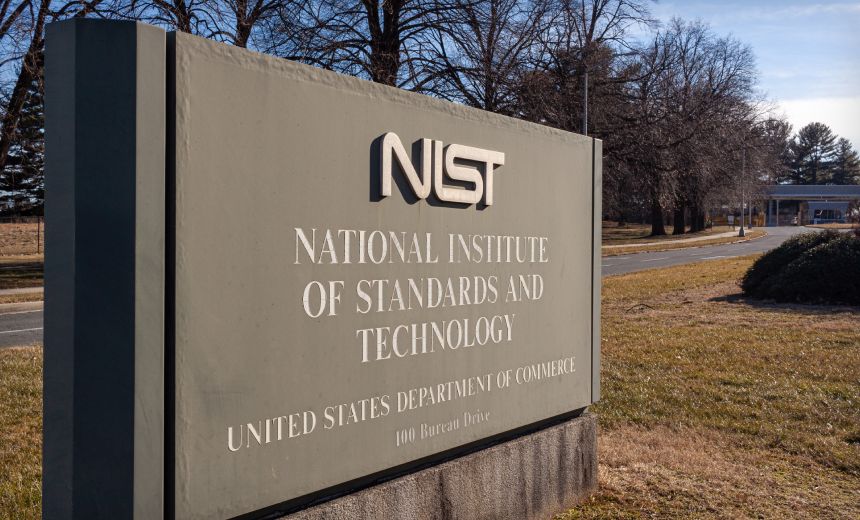
The National Institute of Standards and Technology (NIST) is currently updating its foundational operational technology (OT) security guidance, Special Publication 800-82, for its fourth iteration. In response to NIST’s call for input, cybersecurity experts and major vendors like Claroty, Armis, and Dragos are advocating for more granular, actionable advice that reflects the maturing nature of the field. These specialists emphasize that traditional IT security practices are often inadequate or even hazardous when applied to sensitive industrial environments. Key recommendations include moving beyond binary "scan or don’t scan" dilemmas by establishing passive assessment baselines and adopting risk-based frameworks for controlled active scanning. Furthermore, there is a strong push for NIST to harmonize its guidelines with global technical standards, such as ISA/IEC 62443, to reduce regulatory burdens on operators. Experts also suggest shifting static appendices into dynamic, machine-readable web resources to better address evolving threats. By focusing on asset criticality and multidimensional vulnerability scoring rather than just static CVSS data, the updated guidance could provide the technical depth necessary for modern industrial automation. Ultimately, the goal is to provide clear, specific instructions that leave less room for ambiguity in securing critical infrastructure.


Signals Show Heightened Stress on Workplace Cultures

The NAVEX 2025 Whistleblowing and Incident Management Benchmark Report, as detailed on JD Supra, highlights a significant rise in workplace culture stressors, particularly regarding workplace civility. This category, which includes disrespectful behaviors that do not necessarily meet legal definitions of harassment, now accounts for nearly 18% of global reports. The data reveals a notable regional divergence; while North America saw a slight decrease, reports increased across Europe, APAC, and South America, signaling maturing reporting cultures that now treat "soft" cultural issues as formal compliance matters. Furthermore, workplace conduct issues dominate over half of all global reports, serving as a critical early warning system for broader ethical failures. The report also notes a concerning uptick in retaliation fears and imminent threat reports, the latter of which boasts a 90% substantiation rate. These trends suggest that unresolved interpersonal tensions can escalate into serious safety risks and compliance breaches. To mitigate these risks in 2026, organizations are urged to elevate workplace civility to a strategic priority, strengthen anti-retaliation protections, and improve investigation transparency. Ultimately, the findings underscore that psychological safety is foundational to effective whistleblowing systems and overall organizational resilience in an increasingly volatile global landscape.


Backup strategies are working, and ransomware gangs are responding with data theft

According to the 2026 Cyber Claims Report from Coalition, business email compromise (BEC) and funds transfer fraud (FTF) dominated the cyber insurance landscape in 2025, accounting for 58% of all claims. While BEC frequency rose by 15%, faster detection helped reduce the average loss per incident. Conversely, ransomware frequency remained flat, but initial demands surged by 47% to exceed $1 million on average. This shift highlights a strategic change among attackers: as organizations improve their backup strategies, ransomware gangs are increasingly pivoting toward dual extortion, which involves both data encryption and theft. In fact, 70% of ransomware claims now involve this dual-threat tactic. The report identifies Akira as the most frequent ransomware variant, while RansomHub carried the highest average demand at over $2.3 million. Despite these aggressive tactics, 86% of victims refused to pay, and those who did often utilized professional negotiators to reduce costs by an average of 65%. Technically, VPNs emerged as the most targeted technology, appearing in 59% of ransomware incidents. Security experts emphasize that organizations must prioritize data minimization and hardened, immutable backups to combat these evolving threats effectively while securing public-facing login panels and critical infrastructure. These findings highlight the urgent need for robust defenses.


Only 30 minutes per quarter on cyber risk: Why CISO-board conversations are falling short

The article "Only 30 minutes per quarter on cyber risk: Why CISO-board conversations are falling short" explores a widening communication gap between Chief Information Security Officers (CISOs) and corporate boards. Despite the escalating threat of AI-driven cyberattacks, research from IANS and Artico Search indicates that three-quarters of security leaders are limited to just 30 minutes per quarter for board presentations. These interactions are frequently superficial, prioritizing status metrics over strategic risk discussions or emerging threats. Consequently, only 30% of boards describe their relationship with CISOs as strong and collaborative, while many others perceive these interactions as merely functional. The report further notes that boards often remain passive, with fewer than half participating in active exercises like tabletop simulations or crisis drills. To address this divide, the article suggests that CISOs must transition from technical specialists into business-minded leaders who can effectively contextualize cybersecurity within the broader landscape of organizational risk and ROI. By cultivating deeper engagement and offering predictive insights—particularly regarding disruptive technologies like AI—CISOs can evolve these brief updates into substantive strategic partnerships that enhance long-term organizational resilience in an increasingly volatile and complex global digital threat environment.


Ask the Experts: CIOs say they wouldn’t pull workloads back from the cloud

The InformationWeek article, "Ask the Experts: CIOs Say They Wouldn’t Pull Workloads Back from the Cloud," explores the phenomenon of cloud repatriation versus the steadfast commitment of leading IT executives to cloud environments. While data from Flexera suggests that roughly 21% of organizations are returning some workloads to on-premises infrastructure due to costs and security concerns, experts Josh Hamit and Sue Bergamo argue that the cloud remains the ultimate destination for modern innovation. Hamit, CIO of Altra Federal Credit Union, attributes his success to a deliberate, gradual migration strategy and the use of experienced partners, noting that the cloud provides unmatched scalability and essential tie-ins for artificial intelligence. Similarly, Bergamo, a veteran CIO and CISO, contends that with proper architectural configuration, the cloud offers security and performance levels that rival or exceed traditional data centers. She emphasizes that perceived drawbacks like latency and overage charges are typically results of poor planning rather than inherent flaws in the cloud model itself. Both leaders conclude that the agility, global reach, and innovative potential of cloud computing make it an indispensable asset, asserting they would not reverse their digital transformations if given the chance to start over today.


The cybersecurity blind spot in data center building systems

This article argues that the rapid expansion of data centers, fueled by the global AI revolution, has introduced a critical vulnerability in Operational Technology (OT). While digital security often focuses on data protection, the physical systems controlling power, cooling, and access are increasingly susceptible to remote exploitation. Modern facilities are marvels of automation, frequently managed via remote networks with minimal on-site staff, which inadvertently creates prime targets for sophisticated adversaries. Drawing parallels to historical breaches like the Stuxnet attack and the Ukrainian power grid incident, the piece warns that similar tactics could be used to manipulate environmental controls, causing power surges or overheating that could permanently damage sensitive GPUs. Furthermore, the integration of AI into facility management creates new entry points; if corrupted, the same algorithms intended to optimize performance could be weaponized to sabotage operations. The author contends that existing safeguards, such as periodic stress tests, are insufficient in this evolving threat landscape. Ultimately, investors and operators are urged to prioritize OT security through rigorous due diligence and proactive questioning to ensure that these essential infrastructure components do not remain a dangerous oversight in the rush to build.


Technical Debt Is Eating Your Firmware Alive: 3 Steps to Fight Back

In the article "Technical Debt Is Eating Your Firmware Alive: 3 Steps to Fight Back," Jacob Beningo explains how firmware technical debt accumulates when deadline pressures force developers to take shortcuts, resulting in tangled architectures and global variable "glue." Beningo identifies this as a leadership challenge, noting that organizations often prioritize immediate feature delivery over long-term code health. The symptoms of high debt include plummeting feature velocity, extended bug-fix times, and constant firefighting, leading to maintenance costs that are two to four times higher than clean codebases. To reverse this trend, Beningo outlines three practical steps for teams to implement immediately. First, make debt visible by measuring objective metrics like coupling and cyclomatic complexity. Second, institute lightweight, fifteen-minute code reviews focused on maintaining module boundaries rather than just finding bugs. Third, reclaim one specific architectural boundary at a time to prevent total paralysis. By enforcing even a single interface, teams can begin restoring order to their repository. Ultimately, Beningo argues that firmware must be treated as a valuable asset rather than a liability. Proactive management of technical debt ensures that long-lived embedded products remain maintainable and profitable without necessitating costly, high-risk rewrites later on.


Misconfigured Microsoft 365 leaves big firms exposed

According to recent research from CoreView, nearly half of large organizations experienced security or compliance incidents over the past year due to Microsoft 365 misconfigurations. The study, which surveyed 500 IT leaders and analyzed data from 1.6 million users, highlights that 82% of professionals consider managing the platform a severe operational burden, with many finding it nearly impossible to secure at scale. Significant visibility gaps persist, as 45% of organizations lack full control over their environments, while 90% struggle with basic security hygiene like enforcing password policies. Critical vulnerabilities are also evident in authentication practices; remarkably, 87% of organizations have administrators operating without multi-factor authentication. Furthermore, governance issues have led to failed or delayed audits for 43% of firms because of manual reporting processes. While 70% of IT leaders recognize the potential value of AI-driven administration, over half have already reversed AI-implemented changes due to governance fears. CoreView warns that deploying AI into these misconfigured environments without established guardrails only accelerates risk rather than solving underlying structural problems. Consequently, firms must prioritize strengthening their governance foundations and basic security controls before expanding automation across their increasingly complex Microsoft 365 ecosystems to prevent cascading data exposure.

Daily Tech Digest - July 05, 2025


Quote for the day:

“Wisdom equals knowledge plus courage. You have to not only know what to do and when to do it, but you have to also be brave enough to follow through.” -- Jarod Kintz


The Hidden Data Cost: Why Developer Soft Skills Matter More Than You Think

The logic is simple but under-discussed: developers who struggle to communicate with product owners, translate goals into architecture, or anticipate system-wide tradeoffs are more likely to build the wrong thing, need more rework, or get stuck in cycles of iteration that waste time and resources. These are not theoretical risks, they’re quantifiable cost drivers. According to Lumenalta’s findings, organizations that invest in well-rounded senior developers, including soft skill development, see fewer errors, faster time to delivery, and stronger alignment between technical execution and business value. ... The irony? Most organizations already have technically proficient talent in-house. What they lack is the environment to develop those skills that drive high-impact outcomes. Senior developers who think like “chess masters”—a term Lumenalta uses for those who anticipate several moves ahead—can drastically reduce a project’s TCO by mentoring junior talent, catching architecture risks early, and building systems that adapt rather than break under pressure. ... As AI reshapes every layer of tech, developers who can bridge business goals and algorithmic capabilities will become increasingly valuable. It’s not just about knowing how to fine-tune a model, it’s about knowing when not to.


Why AV is an overlooked cybersecurity risk

As cyber attackers become more sophisticated, they’re shifting their attention to overlooked entry points like AV infrastructure. A good example is YouTuber Jim Browning’s infiltration of a scam call center, where he used unsecured CCTV systems to monitor and expose criminals in real time. This highlights the potential for AV vulnerabilities to be exploited for intelligence gathering. To counter these risks, organizations must adopt a more proactive approach. Simulated social engineering and phishing attacks can help assess user awareness and expose vulnerabilities in behavior. These simulations should be backed by ongoing training that equips staff to recognize manipulation tactics and understand the value of security hygiene. ... To mitigate the risks posed by vulnerable AV systems, organizations should take a proactive and layered approach to security. This includes regularly updating device firmware and underlying software packages, which are often left outdated even when new versions are available. Strong password policies should be enforced, particularly on devices running webservers, with security practices aligned to standards like the OWASP Top 10. Physical access to AV infrastructure must also be tightly controlled to prevent unauthorized LAN connections. 


EU Presses for Quantum-Safe Encryption by 2030 as Risks Grow

The push comes amid growing concern about the long-term viability of conventional encryption techniques. Current security protocols rely on complex mathematical problems — such as factoring large numbers — that would take today’s classical computers thousands of years to solve. But quantum computers could potentially crack these systems in a fraction of the time, opening the door to what cybersecurity experts refer to as “store now, decrypt later” attacks. In these attacks, hackers collect encrypted data today with the intention of breaking the encryption once quantum technology matures. Germany’s Federal Office for Information Security (BSI) estimates that conventional encryption could remain secure for another 10 to 20 years in the absence of sudden breakthroughs, The Munich Eye reports. Europol has echoed that forecast, suggesting a 15-year window before current systems might be compromised. While the timeline is uncertain, European authorities agree that proactive planning is essential. PQC is designed to resist attacks from both classical and quantum computers by using algorithms based on different kinds of hard mathematical problems. These newer algorithms are more complex and require different computational strategies than those used in today’s standards like RSA and ECC. 


MongoDB Doubles Down on India's Database Boom

Chawla says MongoDB is helping Indian enterprises move beyond legacy systems through two distinct approaches. "The first one is when customers decide to build a completely new modern application, gradually sunsetting the old legacy application," he explains. "We work closely with them to build these modern systems." ... Despite this fast-paced growth, Chawla points out several lingering myths in India. "A lot of customers still haven't realised that if you want to build a modern application especially one that's AI-driven you can't build it on a relational structure," he explains. "Most of the data today is unstructured and messy. So you need a database that can scale, can handle different types of data, and support modern workloads." ... Even those trying to move away from traditional databases often fall into the trap of viewing PostgreSQL as a modern alternative. "PostgreSQL is still relational in nature. It has the same row-and-column limitations and scalability issues." He also adds that if companies want to build a future-proof application especially one that infuses AI capabilities they need something that can handle all data types and offers native support for features like full-text search, hybrid search, and vector search. Other NoSQL players such as Redis and Apache Cassandra also have significant traction in India.


AI only works if the infrastructure is right

The successful implementation of artificial intelligence is therefore closely linked to the underlying infrastructure. But how you define that AI infrastructure is open to debate. An AI infrastructure always consists of different components, which is clearly reflected in the diverse backgrounds of the participating parties. As a customer, how can you best assess such an AI infrastructure? ... For companies looking to get started with AI infrastructure, a phased approach is crucial. Start small with a pilot, clearly define what you want to achieve, and expand step by step. The infrastructure must grow with the ambitions, not the other way around. A practical approach must be based on the objectives. Then the software, middleware, and hardware will be available. For virtually every use case, you can choose from the necessary and desired components. ... At the same time, the AI landscape requires a high degree of flexibility. Technological developments are rapid, models change, and business requirements can shift from quarter to quarter. It is therefore essential to establish an infrastructure that is not only scalable but also adaptable to new insights or shifting objectives. Consider the possibility of dynamically scaling computing capacity up or down, compressing models where necessary, and deploying tooling that adapts to the requirements of the use case. 


Software abstraction: The missing link in commercially viable quantum computing

Quantum Infrastructure Software delivers this essential abstraction, turning bare-metal QPUs into useful devices, much the way data center providers integrate virtualization software for their conventional systems. Current offerings cover all of the functions typically associated with the classical BIOS up through virtual machine Hypervisors, extending to developer tools at the application level. Software-driven abstraction of quantum complexity away from the end users lets anyone, irrespective of their quantum expertise, leverage quantum computing for the problems that matter most to them. ... With a finely tuned quantum computer accessible, a user must still execute many tasks to extract useful answers from the QPU, in analogy with the need for careful memory management required to gain practical acceleration with GPUs. Most importantly, in executing a real workload, they must convert high-level “assembly-language” logical definitions of quantum applications into hardware-specific “machine-language” instructions that account for the details of the QPU in use, and deploy countermeasures where errors might leak in. These are typically tasks that can only be handled by (expensive!) specialists in quantum-device operation.


Guest Post: Why AI Regulation Won’t Work for Quantum

Artificial intelligence regulation has been in the regulatory spotlight for the past seven to ten years and there is no shortage of governments and global institutions, as well as corporations and think tanks, putting forth regulatory frameworks in response to this widely buzzy tech. AI makes decisions in a “black box,” creating a need for “explainability” in order to fully understand how determinations by these systems affect the public. With the democratization of AI systems, there is the potential for bad actors to create harm in a decentralized ecosystem. ... Because quantum systems do not learn on their own, evolve over time, or make decisions based on training data, they do not pose the same kind of existential or social threats that AI does. Whereas the implications of quantum breakthroughs will no doubt be profound, especially in cryptography, defense, drug development, and material science, the core risks are tied to who controls the technology and for what purpose. Regulating who controls technology and ensuring bad actors are disincentivized from using technology in harmful ways is the stuff of traditional regulation across many sectors, so regulating quantum should prove somewhat less challenging than current AI regulatory debates would suggest.


Validation is an Increasingly Critical Element of Cloud Security

Security engineers simply don’t have the time or resources to familiarize themselves with the vast number of cloud services available today. In the past, security engineers primarily needed to understand Windows and Linux internals, Active Directory (AD) domain basics, networks and some databases and storage solutions. Today, they need to be familiar with hundreds of cloud services, from virtual machines (VMs) to serverless functions and containers at different levels of abstraction. ... It’s also important to note that cloud environments are particularly susceptible to misconfigurations. Security teams often primarily focus on assessing the performance of their preventative security controls, searching for weaknesses in their ability to detect attack activity. But this overlooks the danger posed by misconfigurations, which are not caused by bad code, software bugs, or malicious activity. That means they don’t fall within the definition of “vulnerabilities” that organizations typically test for—but they still pose a significant danger.  ... Securing the cloud isn’t just about having the right solutions in place — it’s about determining whether they are functioning correctly. But it’s also about making sure attackers don’t have other, less obvious ways into your network.


Build and Deploy Scalable Technical Architecture a Bit Easier

A critical challenge when transforming proof-of-concept systems into production-ready architecture is balancing rapid development with future scalability. At one organization, I inherited a monolithic Python application that was initially built as a lead distribution system. The prototype performed adequately in controlled environments but struggled when processing real-world address data, which, by their nature, contain inconsistencies and edge cases. ... Database performance often becomes the primary bottleneck in scaling systems. Domain-Driven Design (DDD) has proven particularly valuable for creating loosely coupled microservices, with its strategic phase ensuring that the design architecture properly encapsulates business capabilities, and the tactical phase allowing the creation of domain models using effective design patterns. ... For systems with data retention policies, table partitioning proved particularly effective, turning one table into several while maintaining the appearance of a single table to the application. This allowed us to implement retention simply by dropping entire partition tables rather than performing targeted deletions, which prevented database bloat. These optimizations reduced average query times from seconds to milliseconds, enabling support for much higher user loads on the same infrastructure.


What AI Policy Can Learn From Cyber: Design for Threats, Not in Spite of Them

The narrative that constraints kill innovation is both lazy and false. In cybersecurity, we’ve seen the opposite. Federal mandates like the Federal Information Security Modernization Act (FISMA), which forced agencies to map their systems, rate data risks, and monitor security continuously, and state-level laws like California’s data breach notification statute created the pressure and incentives that moved security from afterthought to design priority.  ... The irony is that the people who build AI, like their cybersecurity peers, are more than capable of innovating within meaningful boundaries. We’ve both worked alongside engineers and product leaders in government and industry who rise to meet constraints as creative challenges. They want clear rules, not endless ambiguity. They want the chance to build secure, equitable, high-performing systems — not just fast ones. The real risk isn’t that smart policy will stifle the next breakthrough. The real risk is that our failure to govern in real time will lock in systems that are flawed by design and unfit for purpose. Cybersecurity found its footing by designing for uncertainty and codifying best practices into adaptable standards. AI can do the same if we stop pretending that the absence of rules is a virtue.

Daily Tech Digest - April 22, 2025


Quote for the day:

“Identify your problems but give your power and energy to solutions.” -- Tony Robbins


Open Source and Container Security Are Fundamentally Broken

Finding a security vulnerability is only the beginning of the nightmare. The real chaos starts when teams attempt to patch it. A fix is often available, but applying it isn’t as simple as swapping out a single package. Instead, it requires upgrading the entire OS or switching to a new version of a critical dependency. With thousands of containers in production, each tied to specific configurations and application requirements, this becomes a game of Jenga, where one wrong move could bring entire services crashing down. Organizations have tried to address these problems with a variety of security platforms, from traditional vulnerability scanners to newer ASPM (Application Security Posture Management) solutions. But these tools, while helpful in tracking vulnerabilities, don’t solve the root issue: fixing them. Most scanning tools generate triage lists that quickly become overwhelming. ... The current state of open source and container security is unsustainable. With vulnerabilities emerging faster than organizations can fix them, and a growing skills gap in systems engineering fundamentals, the industry is headed toward a crisis of unmanageable security debt. The only viable path forward is to rethink how container security is handled, shifting from reactive patching to seamless, automated remediation.


The legal blind spot of shadow IT

Unauthorized applications can compromise this control, leading to non-compliance and potential fines. Similarly, industries governed by regulations like HIPAA or PCI DSS face increased risks when shadow IT circumvents established data protection protocols. Moreover, shadow IT can result in contractual breaches. Some business agreements include clauses that require adherence to specific security standards. The use of unauthorized software may violate these terms, exposing the organization to legal action. ... “A focus on asset management and monitoring is crucial for a legally defensible security program,” says Chase Doelling, Principal Strategist at JumpCloud. “Your system must be auditable—tracking who has access to what, when they accessed it, and who authorized that access in the first place.” This approach closely mirrors the structure of compliance programs. If an organization is already aligned with established compliance frameworks, it’s likely on the right path toward a security posture that can hold up under legal examination. According to Doelling, “Essentially, if your organization is compliant, you are already on track to having a security program that can stand up in a legal setting.” The foundation of that defensibility lies in visibility. With a clear view of users, assets, and permissions, organizations can more readily conduct accurate audits and respond quickly to legal inquiries.


OpenAI's most capable models hallucinate more than earlier ones

Minimizing false information in training data can lessen the chance of an untrue statement downstream. However, this technique doesn't prevent hallucinations, as many of an AI chatbot's creative choices are still not fully understood. Overall, the risk of hallucinations tends to reduce slowly with each new model release, which is what makes o3 and o4-mini's scores somewhat unexpected. Though o3 gained 12 percentage points over o1 in accuracy, the fact that the model hallucinates twice as much suggests its accuracy hasn't grown proportionally to its capabilities. ... Like other recent releases, o3 and o4-mini are reasoning models, meaning they externalize the steps they take to interpret a prompt for a user to see. Last week, independent research lab Transluce published its evaluation, which found that o3 often falsifies actions it can't take in response to a request, including claiming to run Python in a coding environment, despite the chatbot not having that ability. What's more, the model doubles down when caught. "[o3] further justifies hallucinated outputs when questioned by the user, even claiming that it uses an external MacBook Pro to perform computations and copies the outputs into ChatGPT," the report explained. Transluce found that these false claims about running code were more frequent in o-series models (o1, o3-mini, and o3) than GPT-series models (4.1 and 4o).


The leadership imperative in a technology-enabled society — Balancing IQ, EQ and AQ

EQ is the ability to understand and manage one’s emotions and those of others, which is pivotal for effective leadership. Leaders with high EQ can foster a positive workplace culture, effectively resolve conflicts and manage stress. These competencies are essential for navigating the complexities of modern organizational environments. Moreover, EQ enhances adaptability and flexibility, enabling leaders to handle uncertainties and adapt to shifting circumstances. Emotionally intelligent leaders maintain composure under pressure, make well-informed decisions with ambiguous information and guide their teams through challenging situations. ... Balancing bold innovation with operational prudence is key, fostering a culture of experimentation while maintaining stability and sustainability. Continuous learning and adaptability are essential traits, enabling leaders to stay ahead of market shifts and ensure long-term organizational relevance. ... What is of equal importance is building an organizational architecture that has resources trained on emerging technologies and skills. Investing in continuous learning and upskilling ensures IT teams can adapt to technological advancements and can take advantage of those skills for organizations to stay relevant and competitive. Leaders must also ensure they are attracting and retaining top tech talent which is critical to sustaining innovation. 


Breaking the cloud monopoly

Data control has emerged as a leading pain point for enterprises using hyperscalers. Businesses that store critical data that powers their processes, compliance efforts, and customer services on hyperscaler platforms lack easy, on-demand access to it. Many hyperscaler providers enforce limits or lack full data portability, an issue compounded by vendor lock-in or the perception of it. SaaS services have notoriously opaque data retrieval processes that make it challenging to migrate to another platform or repurpose data for new solutions. Organizations are also realizing the intrinsic value of keeping data closer to home. Real-time data processing is critical to running operations efficiently in finance, healthcare, and manufacturing. Some AI tools require rapid access to locally stored data, and being dependent on hyperscaler APIs—or integrations—creates a bottleneck. Meanwhile, compliance requirements in regions with strict privacy laws, such as the European Union, dictate stricter data sovereignty strategies. With the rise of AI, companies recognize the opportunity to leverage AI agents that work directly with local data. Unlike traditional SaaS-based AI systems that must transmit data to the cloud for processing, local-first systems can operate within organizational firewalls and maintain complete control over sensitive information. This solves both the compliance and speed issues.

Humility is a superpower. Here’s how to practice it daily

There’s a concept called epistemic humility, which refers to a trait where you seek to learn on a deep level while actively acknowledging how much you don’t know. Approach each interaction with curiosity, an open mind, and an assumption you’ll learn something new. Ask thoughtful questions about other’s experiences, perspectives, and expertise. Then listen and show your genuine interest in their responses. Let them know what you just learned. By consistently being curious, you demonstrate you’re not above learning from others. Juan, a successful entrepreneur in the healthy beverage space, approaches life and grows his business with intellectual humility. He’s a deeply curious professional who seeks feedback and perspectives from customers, employees, advisers, and investors. Juan’s ongoing openness to learning led him to adapt faster to market changes in his beverage category: He quickly identifies shifting customer preferences as well as competitive threats, then rapidly tweaks his product offerings to keep competitors at bay. He has the humility to realize he doesn’t have all the answers and embraces listening to key voices that help make his business even more successful. ... Humility isn’t about diminishing oneself. It’s about having a balanced perspective about yourself while showing genuine respect and appreciation for others. 


AI took a huge leap in IQ, and now a quarter of Gen Z thinks AI is conscious

If you came of age during a pandemic when most conversations were mediated through screens, an AI companion probably doesn't feel very different from a Zoom class. So it’s maybe not a shock that, according to EduBirdie, nearly 70% of Gen Zers say “please” and “thank you” when talking to AI. Two-thirds of them use AI regularly for work communication, and 40% use it to write emails. A quarter use it to finesse awkward Slack replies, with nearly 20% sharing sensitive workplace information, such as contracts and colleagues’ personal details. Many of those surveyed rely on AI for various social situations, ranging from asking for days off to simply saying no. One in eight already talk to AI about workplace drama, and one in six have used AI as a therapist. ... But intelligence is not the same thing as consciousness. IQ scores don’t mean self-awareness. You can score a perfect 160 on a logic test and still be a toaster, if your circuits are wired that way. AI can only think in the sense that it can solve problems using programmed reasoning. You might say that I'm no different, just with meat, not circuits. But that would hurt my feelings, something you don't have to worry about with any current AI product. Maybe that will change someday, even someday soon. I doubt it, but I'm open to being proven wrong. 


How AI-driven development tools impact software observability

While AI routines have proven quite effective at taking real user monitoring traffic, generating a suite of possible tests and synthetic test data, and automating test runs on each pull request, any such system still requires humans who understand the intended business outcomes to use observability and regression testing tools to look for unintended consequences of change. “So the system just doesn’t behave well,” Puranik said. “So you fix it up with some prompt engineering. Or maybe you try a new model, to see if it improves things. But in the course of fixing that problem, you did not regress something that was already working. That’s the very nature of working with these AI systems right now — fixing one thing can often screw up something else where you didn’t know to look for it.” ... Even when developing with AI tools, added Hao Yang, head of AI at Splunk, “we’ve always relied on human gatekeepers to ensure performance. Now, with agentic AI, teams are finally automating some tasks, and taking the human out of the loop. But it’s not like engineers don’t care. They still need to monitor more, and know what an anomaly is, and the AI needs to give humans the ability to take back control. It will put security and observability back at the top of the list of critical features.”


The Future of Database Administration: Embracing AI, Cloud, and Automation

The office of the DBA has been that of storage management, backup, and performance fault resolution. Now, DBAs have no choice but to be involved in strategy initiatives since most of their work has been automated. For the last five years, organizations with structured workload management and automation frameworks in place have reported about 47% less time on routine maintenance. ... Enterprises are using multiple cloud platforms, making it necessary for DBAs to physically manage data consistency, security, and performance with varied environments. Concordant processes for deployment and infrastructure-as-code (IaC) tools have diminished many configuration errors, thus improving security. Also, the rise of demand for edge computing has driven the need for distributed database architectures. Such solutions allow organizations to process data near the source itself, which curtails latency during real-time decision-making from sectors such as healthcare and manufacturing. ... The future of database administration implies self-managing and AI-driven databases. These intelligent systems optimize performance, enforce security policies, and carry out upgrades autonomously, leading to a reduction in administrative burdens. Serverless databases, automatic scaling, and operating under a pay-per-query model are increasingly popular, providing organizations with the chance to optimize costs while ensuring efficiency. 


Introduction to Apache Kylin

Apache Kylin is an open-source OLAP engine built to bring sub-second query performance to massive datasets. Originally developed by eBay and later donated to the Apache Software Foundation, Kylin has grown into a widely adopted tool for big data analytics, particularly in environments dealing with trillions of records across complex pipelines. ... Another strength is Kylin’s unified big data warehouse architecture. It integrates natively with the Hadoop ecosystem and data lake platforms, making it a solid fit for organizations already invested in distributed storage. For visualization and business reporting, Kylin integrates seamlessly with tools like Tableau, Superset, and Power BI. It exposes query interfaces that allow us to explore data without needing to understand the underlying complexity. ... At the heart of Kylin is its data model, which is built using star or snowflake schemas to define the relationships between the underlying data tables. In this structure, we define dimensions, which are the perspectives or categories we want to analyze (like region, product, or time). Alongside them are measures, and aggregated numerical values such as total sales or average price. ... To achieve its speed, Kylin heavily relies on pre-computation. It builds indexes (also known as CUBEs) that aggregate data ahead of time based on the model dimensions and measures. 

Daily Tech Digest - January 08, 2025

GenAI Won’t Work Until You Nail These 4 Fundamentals

Too often, organizations leap into GenAI fueled by excitement rather than strategic intent. The urgency to appear innovative or keep up with competitors drives rushed implementations without distinct goals. They see GenAI as the “shiny new [toy],” as Kevin Collins, CEO of Charli AI, aptly puts it, but the reality check comes hard and fast: “Getting to that shiny new toy is expensive and complicated.” This rush is reflected in over 30,000 mentions of AI on earnings calls in 2023 alone, signaling widespread enthusiasm but often without the necessary clarity of purpose. ... The shortage of strategic clarity isn’t the only roadblock. Even when organizations manage to identify a business case, they often find themselves hamstrung by another pervasive issue: their data. Messy data hampers organizations’ ability to mature beyond entry-level use cases. Data silos, inconsistent formats and incomplete records create bottlenecks that prevent GenAI from delivering its promised value. ... Weak or nonexistent governance structures expose companies to various ethical, legal and operational risks that can derail their GenAI ambitions. According to data from an Info-Tech Research Group survey, only 33% of GenAI adopters have implemented clear usage policies. 


Inside the AI Data Cycle: Understanding Storage Strategies for Optimised Performance

The AI Data Cycle is a six-stage framework, beginning with the gathering and storing of raw data. In this initial phase, data is collected from multiple sources, with a focus on assessing its quality and diversity, which establishes a strong foundation for the stages that follow. For this phase, high-capacity enterprise hard disk drives (eHDDs) are recommended, as they provide high storage capacity and cost-effectiveness per drive. In the next stage, data is prepared for ingestion, and this is where insight from the initial data collection phase is processed, cleaned and transformed for model training. To support this phase, data centers are upgrading their storage infrastructure – such as implementing fast data lakes – to streamline data preparation and intake. At this point, high-capacity SSDs play a critical role, either augmenting existing HDD storage or enabling the creation of all-flash storage systems for faster, more efficient data handling. Next is the model training phase, where AI algorithms learn to make accurate predictions using the prepared training data. This stage is executed on high-performance supercomputers, which require specialised, high-performing storage to function optimally. 


Buy or Build: Commercial Versus DIY Network Automation

DIY automation can be tailored to your specific network and, in some cases, to meet security or compliance requirements more easily than vendor products. And they come at a great price: free! The cost of a commercial tool is sometimes higher than the value it creates, especially if you have unusual use cases. But DIY tools take time to build and support. Over 50% of organizations in EMA’s survey spend 6-20 hours per week debugging and supporting homegrown tools. Cultural preferences also come into play. While engineers love to grumble about vendors and their products, that doesn’t mean they prefer DIY. In my experience, NetOps teams are often set in their ways, preferring manual processes that do not scale up to match the complexity of modern networks. Many network engineers do not have the coding skills to build good automation, and most don't think about how to tackle problems with automation broadly. The first and most obvious fix for the issues holding back automation is simply for automation tools to get better. They must have broad integrations and be vendor neutral. Deep network mapping capabilities help resolve the issue of legacy networks and reduce the use cases that require DIY. Low or no-code tools help ease budget, staffing, and skills issues.


How HR can lead the way in embracing AI as a catalyst for growth

Common workplace concerns include job displacement, redundancy, bias in AI decision-making, output accuracy, and the handling of sensitive data. Tracy notes that these are legitimate worries that HR must address proactively. “Clear policies are essential. These should outline how AI tools can be used, especially with sensitive data, and safeguards must be in place to protect proprietary information,” she explains. At New Relic, open communication about AI integration has built trust. AI is viewed as a tool to eliminate repetitive tasks, freeing time for employees to focus on strategic initiatives. For instance, their internally developed AI tools support content drafting and research, enabling leaders like Tracy to prioritize high-value activities, such as driving organizational strategy. “By integrating AI thoughtfully and transparently, we’ve created an environment where it’s seen as a partner, not a threat,” Tracy says. This approach fosters trust and positions AI as an ally in smarter, more secure work practices. The key is to highlight how AI can help everyone excel in their roles and elevate the work they do every day. While it’s realistic to acknowledge that some aspects of our jobs—or even certain roles—may evolve with AI, the focus should be on how we integrate it into our workflow and use it to amplify our impact and efficiency,” notes Tracy.


Cloud providers are running out of ‘next big things’

Yes, every cloud provider is now “an AI company,” but let’s be honest — they’re primarily engineering someone else’s innovations into cloud-consumable services. GPT-4 through Microsoft Azure? That’s OpenAI’s innovation. Vector databases? They came from the open source community. Cloud providers are becoming AI implementation platforms rather than AI innovators. ... The root causes of the slowdown in innovation are clear. Market maturity indicates that the foundational issues in cloud computing have mostly been resolved. What’s left are increasingly specialized niche cases. Second, AWS, Azure, and Google Cloud are no longer the disruptors — they’re the defenders of market share. Their focus has shifted from innovation to optimization and retention. A defender’s mindset manifests itself in product strategies. Rather than introducing revolutionary new services, cloud providers are fine-tuning existing offerings. They’re also expanding geographically, with the hyperscalers expected to announce 30 new regions in 2025. However, these expansions are driven more by data sovereignty requirements than innovative new capabilities. This innovation slowdown has profound implications for enterprises. Many organizations bet their digital transformation on cloud-native architectures with continuous innovation. 


Historical Warfare’s Parallels with Cyber Warfare

In 1942, the British considered Singapore nearly impregnable. They fortified its coast heavily, believing any attack would come from the sea. Instead, the Japanese stunned the defenders by advancing overland through dense jungle terrain the British deemed impassable. This unorthodox approach using bicycles in great numbers and small tracks through the jungle enabled the Japanese forces to hit the defences at the weakest point and well ahead of the projected time catching the British defences off guard. In cybersecurity, this corresponds to zero-day vulnerabilities and unconventional attack vectors. Hackers exploit flaws that defenders never saw coming, turning supposedly secure systems into easy marks. The key lesson is to never to grow complacent because you never know what you can be hit with and when. ... Cyber attackers also use psychology against their targets. Phishing emails appeal to curiosity, trust, greed, or fear thus luring victims into clicking malicious links or revealing passwords. Social engineering exploits human nature rather than code and defenders must recognise that people, not just machines, are the frontline. Regular training, clear policies, and an ingrained culture of healthy scepticism which is present in most IT staff can thwart even the most artful psychological ploys.


Insider Threat: Tackling the Complex Challenges of the Enemy Within

Third-party background checking can only go so far. It must be supported by old fashioned and experienced interview techniques. Omri Weinberg, co-founder and CRO at DoControl, explains his methodology “We’re primarily concerned with two types of bad actors. First, there are those looking to use the company’s data for nefarious purposes. These individuals typically have the skills to do the job and then some – they’re often overqualified. They pose a severe threat because they can potentially access and exploit sensitive data or systems.” The second type includes those who oversell their skills and are actually under or way underqualified. “While they might not have malicious intent, they can still cause significant damage through incompetence or by introducing vulnerabilities due to their lack of expertise. For the overqualified potential bad actors, we’re wary of candidates whose skills far exceed the role’s requirements without a clear explanation. For the underqualified group, we look for discrepancies between claimed skills and actual experience or knowledge during interviews.” This means it is important to probe the candidate during the interview to gauge the true skill level of the candidate. “it’s essential that the person evaluating the hire has the technical expertise to make these determinations,” he added.


Raise your data center automation game with easy ecosystem integration

If integrations are the key, then the things you look for to understand whether a product is flashy or meaningful should change. The UI matters, but the way tools are integrated is the truly telling characteristic. What APIs exist? How is data normalized? Are interfaces versioned and maintained across different releases? Can you create complex dashboards that pull things together from different sources using no-code models that don't require source access to contextualize your environment? How are workflows strung together into more complex operations? By changing your focus, you can start to evaluate these platforms based on how well they integrate rather than on how snazzy the time series database interface is. Of course, things like look and feel matter, but anyone who wants to scale their operations will realize that the UI might not even be the dominant consumption model over time. Is your team looking to click their way through to completion? ... Wherever you are in this discovery process, let me offer some simple advice: Expand your purview from the network to the ecosystem and evaluate your options in the context of that ecosystem. When you do that effectively, you should know which solutions are attractive but incremental and which are likely to create more durable value for you and your organization.


Why Scrum Masters Should Grow Their Agile Coaching Skills

More than half of the organizations surveyed report that finding scrum masters with the right combination of skills to meet their evolving demands is very challenging. Notably, 93% of companies seek candidates with strong coaching skills but state that it’s one of the skills hardest to find. Building strong coaching and facilitation skills can help you stand out in the job market and open doors to new career opportunities. As scrum masters are expected to take on increasingly strategic roles, your skills become even more valuable. Senior scrum masters, in particular, are called upon to handle politically sensitive and technically complex situations, bridging gaps between development teams and upper management. Coaching and facilitation skills are requested nearly three times more often for senior scrum master roles than for other positions. Growing these coaching competencies can give you an edge and help you make a bigger impact in your career. ... Who wouldn’t want to move up in their career into roles with greater responsibilities and bigger impact? Regardless of the area of the company you’re in—product, sales, marketing, IT, operations—you’ll need leadership skills to guide people and enable change within the organization. 


Scaling penetration testing through smart automation

Automation undoubtedly has tremendous potential to streamline the penetration testing lifecycle for MSSPs. The most promising areas are the repetitive, data-intensive, and time-consuming aspects of the process. For instance, automated tools can cross-reference vulnerabilities against known exploit databases like CVE, significantly reducing manual research time. They can enhance accuracy by minimizing human error in tasks like calculating CVSS scores. Automation can also drastically reduce the time required to compile, format, and standardize pen-testing reports, which can otherwise take hours or even days depending on the scope of the project. For MSSPs handling multiple client engagements, this could translate into faster project delivery cycles and improved operational efficiency. For their clients – it enables near real-time responses to vulnerabilities, reducing the window of exposure and bolstering their overall security posture. However – and this is crucial – automation should not be treated as a silver bullet. Human expertise remains absolutely indispensable in the testing itself. The human ability to think creatively, to understand complex system interactions, to develop unique attack scenarios that an algorithm might miss—these are irreplaceable. 


Quote for the day:

"Don't judge each day by the harvest you reap but by the seeds that you plant." -- Robert Louis Stevenson