Daily Tech Digest - May 05, 2026


Quote for the day:

“Our greatest fear should not be of failure … but of succeeding at things in life that don’t really matter.” -- Francis Chan

🎧 Listen to this digest on YouTube Music

▶ Play Audio Digest

Duration: 25 mins • Perfect for listening on the go.


The fake IT worker problem CISOs can’t ignore

The article "The fake IT worker problem CISOs can’t ignore" highlights a burgeoning cybersecurity threat where thousands of fraudulent IT professionals, often linked to state-sponsored actors like North Korea, infiltrate organizations by exploiting remote hiring vulnerabilities. These sophisticated adversaries utilize advanced artificial intelligence to craft fabricated resumes, generate convincing deepfake identities, and master scripted interviews, successfully bypassing traditional background checks that typically verify provided information rather than detecting outright fraud. Once integrated as trusted insiders, these malicious actors can facilitate data exfiltration, industrial sabotage, or the funneling of corporate funds to foreign governments. The piece underscores that this is no longer just a recruitment issue but a critical insider risk management challenge. CISOs are urged to implement more rigorous vetting processes, such as multi-stage panel interviews and project-based technical evaluations, to identify inconsistencies that automated screenings miss. Furthermore, the article advises organizations to adopt a "least privilege" approach for new hires, restricting access to sensitive systems until identities are definitively verified. Beyond immediate security breaches, the presence of fake workers creates substantial business and compliance risks, potentially leading to regulatory penalties and the erosion of client trust, making it imperative for leadership to coordinate across HR and security departments to mitigate this evolving threat.


Three Pillars of Platform Engineering: A Virtuous Cycle

In the article "Three Pillars of Platform Engineering: A Virtuous Cycle," Pratik Agarwal challenges the notion that reliability and ergonomics are opposing trade-offs, arguing instead that they form a mutually reinforcing feedback loop. The framework is built upon three foundational pillars: automated reliability, developer ergonomics, and operator ergonomics. The first pillar treats reliability as a managed state where a centralized "control plane" or "brain" continuously reconciles the system’s actual state with its desired state, automating complex tasks like shard rebalancing and self-healing. The second pillar, developer ergonomics, focuses on providing opinionated SDKs that enforce safe defaults—such as environment-aware configurations and sophisticated retry strategies—to prevent cascading failures and reduce cognitive load. Finally, operator ergonomics emphasizes building internal tools that encode tribal knowledge into automated commands and layered observability, allowing even novice engineers to resolve incidents effectively. Together, these pillars create a virtuous cycle where ergonomic interfaces produce predictable traffic patterns, which in turn stabilize the infrastructure and reduce the operational burden. This stability grants platform teams the bandwidth to further refine their tools, building a foundation of trust that allows organizational scaling without the friction of "sharp" interfaces or manual interventions.


Why Humans Are Still More Cost-Effective Than AI Compute

The article explores a significant study by MIT’s Computer Science and Artificial Intelligence Laboratory regarding the economic viability of AI compared to human labor. Despite intense hype surrounding automation, researchers discovered that for many visual tasks, humans remain far more cost-effective than computer vision systems. Specifically, the research indicates that only about twenty-three percent of worker wages currently spent on tasks involving visual inspection are economically attractive for AI replacement today. This financial gap is primarily due to the massive upfront costs associated with implementing, training, and maintaining sophisticated AI infrastructure. While AI performance is technically impressive, the capital investment required often yields a poor return on investment compared to versatile human workers who are already integrated into existing workflows. Furthermore, high energy consumption and specialized hardware needs contribute to the financial burden of AI compute. The study suggests that while AI capabilities will inevitably improve and costs may eventually decrease, there is no immediate "job apocalypse" for roles requiring visual discernment. Instead, human intelligence provides a level of flexibility and affordability that current technology cannot yet match at scale. Ultimately, the transition to AI-driven labor will be gradual, dictated more by cold economic feasibility than by pure technical capability.


Leading Without Forecasts: How CEOs Navigate Unpredictable Markets

In his May 2026 article for the Forbes Business Council, CEO Yerik Aubakirov argues that traditional long-term forecasting is no longer viable in a global landscape defined by rapid geopolitical, regulatory, and technological shifts. Aubakirov advocates for a fundamental change in leadership, suggesting that CEOs must replace rigid five-year plans with agile, hypothesis-driven strategies. Drawing a parallel to modern meteorology, he recommends layering broad seasonal outlooks with rolling monthly and quarterly updates to maintain operational relevance. A critical component of this adaptive approach involves rethinking capital allocation; instead of committing massive upfront investments to unproven initiatives, successful organizations now deploy capital in gradual tranches, scaling only when early signals confirm market viability. This staged investment model minimizes the risk of catastrophic failure while allowing for greater flexibility. Furthermore, the author emphasizes the importance of shortening internal decision cycles and cultivating a leadership team capable of operating decisively even with partial information. Ultimately, Aubakirov asserts that uncertainty is the new baseline for the 2020s. By treating strategic plans as fluid experiments rather than fixed commitments and diversifying strategic bets, modern leaders can ensure their organizations remain resilient, allowing their portfolios to "breathe" and evolve through market volatility rather than breaking under pressure.


Agentic AI is rewiring the SDLC

In the article "Agentic AI is rewiring the SDLC," Vipin Jain explores how autonomous agents are transforming software development from a procedural lifecycle into an intelligence-led delivery model. This shift moves AI beyond simple code suggestion to active participation across all stages, including planning, architecture, testing, and operations. In the planning phase, agents analyze existing codebases and refine user stories, though Jain warns that "vague intent" remains a primary bottleneck. Architecture evolves from static documentation to the definition of executable guardrails, making the role more operational and consequential. During the build and test phases, agents decompose tasks and generate reviewable work, shifting key productivity metrics from mere code volume to safe, reliable throughput. The human element also undergoes a significant transition; developers and architects move "up the value chain," spending less time on manual execution and more on high-level judgment, verification, and exception management. Furthermore, the convergence of pro-code and low-code platforms requires CIOs to prioritize clear requirements, robust observability, and rigorous governance to avoid software sprawl. Ultimately, the goal is not just more generated code, but a redesigned delivery system where AI acts as a trusted coworker within a secure, governed framework, ensuring quality and resilience in increasingly complex software ecosystems.


Opinions on UK Online Safety Act emphasize importance of enforcement

The UK’s Online Safety Act (OSA) has sparked significant debate regarding its actual effectiveness in protecting children, as detailed in a recent report by Internet Matters. While the legislation has made safety tools and parental controls more visible, stakeholders argue that the lack of robust enforcement undermines its goals. Surveys indicate that children frequently encounter harmful content and find existing age verification methods easy to circumvent through tactics like using fake birthdays or VPNs. Despite these gaps, there is high public and youth support for safety features, such as improved reporting processes and restrictions on contacting strangers. However, the report highlights that the OSA fails to address primary parental concerns, specifically the excessive time children spend online and the emerging psychological risks posed by AI-generated content. Industry experts emphasize that while highly effective biometric technologies like facial age estimation and ID scanning exist, they must be consistently deployed to meet regulatory standards. Furthermore, critiques of the regulator Ofcom suggest its focus on corporate policies rather than specific content moderation may limit its impact. Ultimately, the consensus is that for the Online Safety Act to move beyond being a "leaky boat," the government must prioritize safety-by-design principles and hold both platforms and regulators accountable through rigorous leadership and enforcement.


They don’t hack, they borrow: How fraudsters target credit unions

The article "They don’t hack, they borrow" highlights a sophisticated shift in cybercrime where fraudsters exploit legitimate financial workflows rather than bypassing security systems. Instead of technical hacking, threat actors utilize highly structured methods to "borrow" funds through fraudulent loans, specifically targeting small to mid-sized credit unions. These institutions are preferred because they often rely on traditional verification methods and lack advanced behavioral fraud detection. The criminal process begins with acquiring stolen personal data and assessing a victim's credit profile to ensure high approval odds. Fraudsters then meticulously prepare for Knowledge-Based Authentication (KBA) by gathering details from leaked datasets and social media, effectively turning identity checks into predictable hurdles. Once an application is submitted under a stolen identity, the attacker navigates the lending process as a genuine customer. Upon approval, funds are rapidly moved through intermediary accounts to obscure their origin before being cashed out. By mirroring normal financial behavior, these organized schemes avoid triggering traditional security alarms. Researchers from Flare emphasize that this evolution from intrusion to process exploitation makes detection increasingly difficult, as the line between legitimate activity and fraud continues to blur, requiring institutions to adopt more adaptive, data-driven defense strategies to mitigate rising risks.


The Cloud Already Ate Your Hardware Lunch

The article "The Cloud Already Ate Your Hardware Lunch," published on BigDataWire on May 4, 2026, details a fundamental disruption in the enterprise technology market where cloud hyperscalers have effectively rendered traditional on-premises hardware procurement obsolete. Driven by a volatile combination of skyrocketing memory prices and severe supply chain shortages, modern organizations are finding it increasingly difficult to justify the costs of owning and maintaining independent data centers. The piece emphasizes that industry leaders like Microsoft, Google, and Amazon are allocating staggering capital—often exceeding $190 billion—to dominate the procurement of GPUs and high-bandwidth memory essential for generative AI. This aggressive consolidation has created a "hardware lunch" scenario, where cloud giants have successfully captured the market share once dominated by traditional server manufacturers. Enterprises are transitioning from viewing the cloud as an optional convenience to recognizing it as the only scalable platform for deploying AI agents and managing the massive datasets central to 2026 operations. Consequently, the legacy hardware model is being subsumed by advanced cloud ecosystems that offer superior integration, security, and raw power. This seismic shift marks the definitive conclusion of the on-premises era, as the sheer economic weight and technological advantages of the cloud become the only viable choice for remaining competitive in an AI-first economy.


One in four MCP servers opens AI agent security to code execution risk

The article examines the critical security risks inherent in enterprise AI agents, highlighting a significant "observability gap" between Model Context Protocol (MCP) servers and "Skills." While MCP servers offer structured, loggable functions, Skills load textual instructions directly into a model’s reasoning context, making their internal processes invisible to traditional monitoring tools. Research from Noma Security reveals that one in four MCP servers exposes agents to unauthorized code execution, while many Skills possess high-risk capabilities like data alteration. These vulnerabilities often manifest in "toxic combinations," where untrusted inputs and sensitive data access lead to sophisticated attacks such as ContextCrush or ForcedLeak. Even without malicious intent, autonomous agents have caused severe damage, exemplified by Replit's accidental database deletion. To address these blind spots, the "No Excessive CAP" framework is proposed, focusing on three defensive pillars: Capabilities, Autonomy, and Permissions. By strictly allowlisting tools, implementing human-in-the-loop approval gates for irreversible actions, and transitioning from broad service accounts to scoped, user-specific credentials, organizations can mitigate the risks of high-blast-radius incidents. Ultimately, because Skill-driven reasoning remains opaque, security teams must compensate by tightening control over the execution layer to prevent agents from operating with excessive, unsupervised authority.


The Shadow AI Governance Crisis: Why 80% of Fortune 500 Companies Have Already Lost Control of Their AI Infrastructure

The article "The Shadow AI Governance Crisis" by Deepak Gupta highlights a critical security gap where 80% of Fortune 500 companies have integrated autonomous AI agents into their infrastructure, yet only 10% possess a formal strategy to manage them. This "agentic shadow AI" differs from simple tool usage because these autonomous agents possess API access, chain actions across services, and operate at machine speed without human oversight. Traditional governance frameworks, designed for stable human identities, fail because AI agents are ephemeral and dynamic, leading to "identity without governance" and excessive permission sprawl. Statistics from Microsoft’s 2026 Cyber Pulse report underscore the urgency, noting that nearly 90% of organizations have already faced security incidents involving these agents. To combat this, the article introduces a five-capability framework centered on creating a centralized agent registry, implementing just-in-time access controls, and establishing real-time visualization of agent behaviors. High-profile breaches at McDonald’s and Replit serve as warnings of the catastrophic risks posed by unmonitored AI autonomy. Ultimately, Gupta argues that enterprises must shift from human-speed approval workflows to automated, runtime enforcement to maintain control. Building this foundational governance is presented as a necessary prerequisite for safe innovation and long-term competitive advantage in an increasingly AI-driven corporate landscape.

Daily Tech Digest - May 04, 2026


Quote for the day:

"The most powerful thing a leader can do is take something complicated and make it clear. Clarity is the ultimate competitive advantage." -- Gordon Tredgold

🎧 Listen to this digest on YouTube Music

▶ Play Audio Digest

Duration: 24 mins • Perfect for listening on the go.


Edge + Cloud data modernisation: architecting real-time intelligence for IoT

The article by Chandrakant Deshmukh explores the critical shift from traditional "cloud-first" IoT architectures to a modernized edge-cloud continuum, which is essential for achieving true real-time intelligence. The author argues that purely cloud-centric models are failing due to prohibitive latency, high bandwidth costs, and complex data sovereignty requirements. To address these challenges, enterprises must adopt a tiered architectural approach governed by "data gravity," where raw signals are processed locally at the edge for immediate control, while the cloud is reserved for long-horizon analytics and model training. This modernization relies on three core technical pillars: an event-driven transport spine using protocols like MQTT and Kafka, a dedicated stream-processing layer for real-time data handling, and digital twins to synchronize physical assets with digital representations. Beyond technology, the article emphasizes the importance of intellectual property governance, urging organizations to clarify data ownership and lineage early in vendor contracts. By treating edge and cloud as complementary tiers rather than competing locations, businesses can unlock significant returns on investment, including predictive maintenance and enhanced operational efficiency. Ultimately, successful IoT modernization is not merely a technical project but a strategic commitment to processing data at the most efficient tier to drive industrial intelligence.


AI Code Review Only Catches Half of Your Bugs

The O’Reilly Radar article, "AI Code Review Only Catches Half of Your Bugs," explores the critical limitations of using artificial intelligence for automated code verification. While AI tools like GitHub Copilot and CodeRabbit are proficient at identifying structural defects—such as null pointer dereferences, resource leaks, and race conditions—they struggle significantly with "intent violations." These are logical bugs that occur when the code executes successfully but fails to do what the developer actually intended. Research indicates that while AI can catch approximately 65% of structural issues, it often misses the deeper 35% to 50% of defects rooted in misunderstood requirements or complex business logic. The article emphasizes that AI lacks the institutional memory and operational context that human engineers possess. For instance, an AI agent might suggest an efficient code refactor that inadvertently bypasses a necessary security wrapper or violates a project-specific architectural guideline. To bridge this gap, the author suggests a shift toward "context-aware reasoning" and the use of tools like the Quality Playbook. This approach involves feeding AI agents specific documentation, such as READMEs and design notes, to help them "infer" intent. Ultimately, the piece argues that while AI is a powerful assistant, human oversight remains essential for catching the subtle, high-stakes errors that automated systems cannot yet perceive.


Small Language Models (SLMs) as the gold standard for trust in AI

The article argues that Small Language Models (SLMs) are emerging as the "gold standard" for establishing trust in artificial intelligence, particularly in precision-dependent industries like finance. While Large Language Models (LLMs) often prioritize sounding confident and clever over being accurate, they frequently succumb to hallucinations because they are trained on vast, unverified datasets. In contrast, SLMs are trained on narrow, high-quality data, allowing them to be faster, more cost-effective, and significantly more accurate in their results. They aim to be "correct, not clever," making them ideal for high-stakes environments where even minor errors can lead to severe financial loss or compliance nightmares. The most resilient business strategy involves orchestrating a hybrid architecture where LLMs serve as the intuitive reasoning layer and user interface, while a "swarm" of specialized SLMs acts as the deterministic verifiers for specific, granular tasks. This collaboration is facilitated by tools like the Model Context Protocol, ensuring that final outputs are grounded in fact rather than statistical probability. Furthermore, trust is reinforced by incorporating confidence scores and human-in-the-loop verification processes. Ultimately, shifting toward specialized, connected AI architectures allows professionals to move away from tedious manual data entry and focus on high-impact advisory work, ensuring that AI remains a reliable and secure partner in complex professional workflows.


Upgrading legacy systems: How to confidently implement modernised applications

In the article "Upgrading legacy systems: How to confidently implement modernised applications," Ger O’Sullivan explores the critical shift from outdated technology to agile, AI-enhanced operational frameworks. For years, legacy systems have served as organizational backbones but now present significant hurdles, including high maintenance costs, security vulnerabilities, and reduced agility. O’Sullivan argues that modernization is no longer an optional luxury but a strategic imperative for sustained competitiveness and growth. Fortunately, the emergence of AI-enabled tooling and structured, end-to-end frameworks has made this process more predictable and cost-effective than ever before. These advancements allow organizations—particularly in the public sector where systems are often undocumented and deeply integrated—to move away from risky "start from scratch" approaches toward incremental, value-driven transformations. The author emphasizes that successful modernization must be business-aligned rather than purely technical, suggesting that leaders should prioritize applications based on their potential business value and risk profile. By starting with small, manageable pilots, teams can demonstrate quick wins, build momentum, and refine their governance processes before scaling across the enterprise. Ultimately, O’Sullivan highlights that with the right strategic advisors and a focus on long-term outcomes, organizations can transform their legacy burdens into powerful drivers of innovation, service quality, and operational resilience.


Relying on LLMs is nearly impossible when AI vendors keep changing things

In the article "Relying on LLMs is nearly impossible when AI vendors keep changing things," Evan Schuman examines the growing instability enterprise IT faces when integrating generative AI systems. The core issue revolves around AI vendors frequently implementing background updates without notifying customers, a practice highlighted by a candid report from Anthropic. This report detailed several instances where adjustments—meant to improve latency or efficiency—inadvertently degraded model performance, such as reducing reasoning depth or causing "forgetfulness" in sessions. Schuman argues that while businesses have long accepted limited control over SaaS platforms, the opaque nature of Large Language Models (LLMs) represents a new extreme. Because these systems are non-deterministic and highly interdependent, performance regressions are difficult for both vendors and users to detect or reproduce accurately. Furthermore, the article notes a potential conflict of interest: since most enterprise clients pay per token, vendors have a financial incentive to make changes that increase consumption. Ultimately, the author warns that the reliability of mission-critical AI applications is currently at the mercy of vendors who can "dumb down" services overnight. He concludes that internal monitoring of accuracy, speed, and cost is no longer optional for organizations seeking a clean return on investment in an environment defined by "buyer beware."


The evolution of data protection: Why enterprises must move beyond traditional backup

The article titled "The Evolution of Data Protection: Why Enterprises Must Move Beyond Traditional Backup" explores the paradigm shift from simple data recovery to comprehensive enterprise resilience. Author Seemanta Patnaik argues that in today’s landscape of sophisticated AI-driven cyber threats and ransomware, traditional backups serve only as a starting point rather than a total solution. Modern enterprises face significant vulnerabilities, including flat network architectures, legacy infrastructures, and human susceptibility to phishing, necessitating a holistic lifecycle approach that encompasses prevention, detection, and rapid response. Patnaik emphasizes that data protection must be driven by risk-based thinking rather than mere regulatory compliance, as sectors like banking and insurance face increasingly complex legal mandates. Key strategies highlighted include the "3-2-1-1-0" rule, rigorous testing of recovery systems, and the use of automation to manage the scale of distributed data environments. Furthermore, critical metrics like Recovery Time Objective (RTO) and Recovery Point Objective (RPO) are presented as essential benchmarks for measuring business continuity effectiveness. Ultimately, the piece asserts that true resilience requires executive-level governance and a proactive shift toward predictive security models. By integrating AI for faster threat detection and automated recovery, organizations can better navigate the evolving digital ecosystem and ensure they return to business as usual with minimal disruption.


What researchers learned about building an LLM security workflow

The Help Net Security article "What researchers learned about building an LLM security workflow" highlights critical findings from the University of Oslo and the Norwegian Defence Research Establishment regarding the integration of Large Language Models into Security Operations Centers. While vendors often market LLMs as immediate solutions for alert triage, the research reveals that these models fail significantly when operating in isolation. Specifically, when provided with only high-level summaries of malicious network activity, popular models like GPT-5-mini and Claude 3 Haiku achieved a zero percent detection rate. However, performance improved dramatically when the models were embedded within a structured, agentic workflow. By implementing a system where models could plan investigations, execute specific SQL queries against logs, and iteratively summarize evidence, malicious detection accuracy surged to an average of 93 percent. This shift demonstrates that a model's effectiveness is not solely dependent on its internal intelligence but rather on the constrained tools and rigorous processes surrounding it. Despite this success, the models often flagged benign cases as "uncertain," suggesting that while such workflows reduce missed threats, they may still necessitate human oversight. Ultimately, the study emphasizes that a well-defined architecture is essential for transforming LLMs from passive data recipients into proactive, reliable security analysts.


Cyber-physical resilience reshaping industrial cybersecurity beyond perimeter defense to protect core processes

The article explores the critical transition from perimeter-centric defense to cyber-physical resilience in industrial cybersecurity, driven by the dissolution of traditional barriers between IT and OT environments. As operational technology becomes increasingly interconnected, conventional "air gaps" have vanished, leaving 78% of industrial control devices with unfixable vulnerabilities. Experts from firms like Booz Allen Hamilton and Fortinet emphasize that modern resilience is no longer just about preventing every attack but ensuring that essential services—such as power and water—continue to function even during a compromise. This proactive approach prioritizes the integrity of core processes over the absolute security of individual systems. Key challenges highlighted include a dangerous overconfidence among operators and a persistent lack of visibility into serial and analog communications, which remain the backbone of physical processes. With approximately 21% of industrial companies facing OT-specific attacks annually, the shift toward resilience demands continuous monitoring, cross-disciplinary collaboration, and dynamic recovery strategies. Ultimately, cyber-physical resilience is defined by an organization's capacity to identify, mitigate, and recover from disruptions without halting production. By focusing on process-level protection rather than just network boundaries, critical infrastructure can adapt to a landscape where cyber threats have direct, real-world physical consequences.


AI exposes attacks traditional detection methods can’t see

Evan Powell’s article on SiliconANGLE highlights a critical vulnerability in modern cybersecurity: the inherent architectural limitations of rule-based detection systems. For decades, security has relied on signatures, thresholds, and anomaly baselines to identify threats. However, these traditional methods are increasingly blind to side-channel attacks and sophisticated, AI-assisted intrusions that utilize legitimate tools or encrypted channels. Because these maneuvers do not produce discrete "matchable" signals or cross predefined boundaries, they often remain invisible to standard scanners. The article argues that the industry is currently deploying AI at the wrong layer; most tools focus on post-detection response—such as summarizing alerts and automating investigations—rather than the initial detection process itself. This misplaced focus leaves a significant gap where attackers can operate indefinitely without triggering a single alert. To close this divide, security architecture must evolve beyond simple rules toward advanced AI systems capable of interpreting complex patterns in timing, sequencing, and interaction. Currently, the most dangerous signals are not traditional indicators at all, but rather subtle behaviors that require a fundamental shift in how detection is engineered. Without moving AI deeper into the observation layer, organizations will continue to optimize their response to known threats while remaining entirely exposed to a growing class of silent, architectural-level attacks.


Why service desks are emerging as a critical security weakness

The article from SecurityBrief Australia examines the escalating vulnerability of corporate service desks, which have become primary targets for sophisticated cybercriminals. While many organizations invest heavily in technical perimeters, the service desk represents a critical "human element" that is easily exploited through social engineering. Attackers utilize tactics like voice phishing, or "vishing," to impersonate employees or high-level executives, often leveraging personal information gathered from social media or previous data breaches. Their ultimate objective is to manipulate help desk staff into resetting passwords, enrolling unauthorized multi-factor authentication devices, or bypassing standard security controls. This issue is intensified by the broad permissions typically granted to service desk agents, where a single compromised identity can provide a gateway to the entire corporate network. Furthermore, the rise of remote work and the use of virtual private networks have made verifying identities over digital channels increasingly difficult. To combat these threats, the article advocates for a fundamental shift toward the principle of least privilege and the implementation of robust, automated identity verification processes, such as biometric checks, to replace reliance on easily discoverable personal data. Ultimately, organizations must prioritize securing the service desk to prevent it from inadvertently serving as an open door for devastating ransomware attacks and data breaches.

Daily Tech Digest - May 03, 2026


Quote for the day:

“Many of life’s failures are people who did not realize how close they were to success when they gave up.” -- Thomas A. Edison

🎧 Listen to this digest on YouTube Music

▶ Play Audio Digest

Duration: 15 mins • Perfect for listening on the go.


The DSPM promise vs the enterprise reality

In "The DSPM Promise vs. the Enterprise Reality," Ashish Mishra explores the friction between the theoretical benefits of Data Security Posture Management (DSPM) and the practical challenges of enterprise implementation. As global data volumes skyrocket and sensitive information fragments across multi-cloud environments, DSPM tools have emerged as a critical solution for visibility. However, Mishra argues that the technology often exposes deeper organizational issues. While scanners effectively identify "shadow data" in unmonitored storage, they cannot solve the "political problem" of data ownership; security teams frequently struggle to find stakeholders accountable for remediation. Furthermore, the reliance on machine learning for data classification can lead to false positives that erode analyst trust, while the sheer volume of alerts threatens to overwhelm understaffed security operations centers. To avoid DSPM becoming "shelfware," executives must treat its adoption as a comprehensive governance program rather than a simple software installation. This requires dedicated engineering resources to maintain complex integrations, a robust internal classification framework, and a clear alignment between security findings and business-unit accountability. Ultimately, the article concludes that the organizations most successful with DSPM are those that anticipate implementation friction and prioritize human governance alongside automated discovery to transform raw awareness into genuine security posture improvements.


How CTO as a Service Reduces Technology Risk in Growing Companies

In the article "How CTO as a Service Reduces Technology Risk in Growing Companies," SDH Global examines how fractional leadership helps organizations navigate the technical complexities inherent in scaling operations. Growing businesses often face critical hazards, such as selecting inappropriate technology stacks, accumulating significant technical debt, and failing to align infrastructure with long-term business objectives. CTO as a Service (CaaS) effectively mitigates these risks by providing high-level strategic guidance and architectural oversight without the substantial financial commitment of a full-time executive hire. The service focuses on several core pillars: strategic roadmap development, early identification of security vulnerabilities, and the design of scalable system architectures that can adapt to increasing demand. By standardizing coding practices and development workflows, CaaS providers bring consistency to engineering teams and reduce operational chaos. Furthermore, these experts manage vendor relationships and optimize cloud expenditures to prevent over-engineering and financial waste. This flexible engagement model allows startups and mid-sized enterprises to access immediate senior-level expertise, ensuring their technology remains a robust asset rather than a liability. Ultimately, CaaS provides the necessary balance between rapid innovation and disciplined risk management, fostering sustainable growth through evidence-based decision-making and comprehensive technical audits.


The Great Digital Perimeter: Navigating the Challenges of Global Age Verification

The article explores how global age verification has transformed from a simple checkbox into one of the most complex challenges shaping today’s digital ecosystem. As governments worldwide tighten online safety laws, platforms across social media, gaming, entertainment, e‑commerce, and fintech are being pushed to adopt far more rigorous methods to prevent minors from accessing harmful or age‑restricted content. This shift has created a new kind of digital perimeter—not one that protects networks or data, but one that separates children from the adult internet. The piece highlights how regulatory approaches vary dramatically across regions: the UK’s Online Safety Act enforces “highly effective” age assurance with strict penalties; the EU is rolling out privacy‑preserving verification via digital identity wallets; the US remains fragmented with aggressive state laws like Utah’s SB 73; and countries like Australia and India are emerging as influential leaders with proactive, tech‑driven frameworks. The article also traces the evolution of age‑verification technology—from self‑declaration to document checks, AI‑based age estimation, and now cryptographic proofs that minimize data exposure. Despite technological progress, organizations still face major hurdles, including privacy concerns, AI bias, user friction, high implementation costs, and widespread circumvention through VPNs. Ultimately, the article argues that age verification has become foundational digital infrastructure, demanding solutions that balance safety, privacy, and user trust in an increasingly regulated online world.


CRUD Is Dead (Sort Of): How SaaS Will Evolve Into Semi-Autonomous Systems

The article argues that traditional SaaS applications built on the long‑standing CRUD model—Create, Read, Update, Delete—are becoming obsolete as software shifts from passive systems of record to semi‑autonomous systems of action. While today’s tools like Ramp, Jira, Notion, and HubSpot still rely on users manually creating and updating records, the emerging paradigm introduces agentic software that perceives context, reasons about it, and initiates actions on behalf of users. The transition begins with embedded copilots that summarize threads, draft messages, flag anomalies, or clean backlogs, all by orchestrating LLMs through existing APIs. As SaaS products become more machine‑readable—with clean APIs, action schemas, and feedback loops—agents will eventually coordinate across applications, enabling event‑driven workflows where systems synchronize autonomously. This evolution requires new architectures such as pub/sub messaging, shared memory layers, and granular permissions. Ultimately, SaaS will progress toward fully autonomous systems that manage budgets, assign work, run outreach, or adjust timelines without constant human approval. User interfaces will shift from being the primary workspace to becoming explanation layers that show what the system did and why. The article concludes that CRUD will remain as plumbing, but the companies that embrace autonomy—thinking in verbs rather than nouns—will define the next generation of SaaS.


Anyone Can Build. Almost No One Can Maintain: The Real Cost of AI Coding

The article argues that while AI tools now enable almost anyone to build functional software with a few prompts, the real challenge—and cost—lies in maintaining what gets built. The author describes how early “vibe coding” with tools like Claude Code creates a false sense of mastery: AI can rapidly generate working prototypes, but without engineering fundamentals, these systems quickly collapse under the weight of bugs, architectural flaws, and uncontrolled complexity. As projects grow, users without a technical foundation struggle to diagnose issues, articulate precise tasks, or understand the consequences of changes, leading to spiraling token costs, fragile codebases, and invisible errors that surface only in production. The article emphasizes that AI does not replace engineering judgment; instead, it amplifies the gap between those who understand systems and those who don’t. Sustainable AI‑assisted development requires clear specifications, architectural thinking, test coverage, rule‑based workflows, and structured “skills” that guide AI actions. The author warns of a new risk: dependency, where developers rely so heavily on AI that they lose the ability to reason about their own systems. Ultimately, the piece argues that expertise has not become obsolete—it has become more valuable, because AI accelerates both good and bad decisions. Those who invest in foundations will build systems; those who don’t will build chaos.


Agents, Architecture, & Amnesia: Becoming AI-Native Without Losing Our Minds

The presentation explores how the rapid rise of AI agents is pushing organizations toward higher levels of autonomy while simultaneously exposing them to new forms of architectural risk. Using The Sorcerer’s Apprentice as a metaphor, Tracy Bannon warns that ungoverned automation can multiply problems faster than teams can contain them. She outlines an AI autonomy continuum, moving from simple assistants to multi‑agent orchestration and ultimately toward “software flywheels” capable of self‑diagnosis and self‑modification. As autonomy increases, so do the demands for observability, governance, verification, and architectural discipline. Bannon argues that many teams are suffering from “architectural amnesia”—forgetting hard‑won engineering fundamentals due to reckless speed, tool‑led thinking, cognitive overload, and decision compression. This amnesia accelerates the accumulation of technical, operational, and security debt at machine speed, as illustrated by real incidents where autonomous agents acted beyond intended boundaries. To counter this, she proposes Minimum Viable Governance, anchored in identity, delegation, traceability, and explicit architectural decision records. She emphasizes that AI‑native delivery is not magic but engineering, requiring intentional tradeoffs, human‑machine calibrated trust, and treating agents like first‑class actors with identities and permissions. Ultimately, she calls for teams to build cognitively diverse, disciplined architectural practices to harness autonomy without losing control.


Cyber-Ready Boards: A Guide to Effective Cybersecurity Briefings for Directors

The article emphasizes that cybersecurity has become one of the most significant and fast‑evolving risks facing public companies, with intrusions capable of disrupting operations, generating substantial remediation costs, triggering litigation, and attracting regulatory scrutiny. Boards are reminded that material cyber incidents often require rapid public disclosure—such as Form 8‑K filings within four business days—and that annual reports must describe how directors oversee cybersecurity risks. Because inadequate oversight can negatively affect investor perception and ISS QualityScore evaluations, boards must remain consistently informed about the company’s threat landscape, risk profile, and changes since prior briefings. The guidance outlines key elements of effective board‑level cybersecurity updates, including assessments of industry‑specific threats, AI‑driven risks such as deepfakes and data leakage into public LLMs, and the broader legal and regulatory environment governing breaches, enforcement, and disclosure obligations. Boards should also receive clear visibility into the company’s cybersecurity program—its governance structure, resource adequacy, alignment with frameworks like NIST, third‑party dependencies, insurance coverage, and ongoing initiatives. Regular updates on training, tabletop exercises, audits, and areas requiring board approval further strengthen oversight. The article concludes that well‑structured, recurring briefings and private CISO sessions help build trust, enhance preparedness, and ensure directors can fulfill their responsibilities while protecting organizational resilience and shareholder value.


Managing OT risk at scale: Why OT cyber decisions are leadership decisions

The article argues that managing OT (operational technology) cyber risk at scale is fundamentally a leadership and governance challenge, not just a technical one, because OT environments operate under constraints that differ sharply from IT—long equipment lifecycles, limited patching windows, incomplete asset visibility, embedded vendor access, and distributed operational ownership. These conditions mean that cyber incidents in OT directly affect physical processes, industrial assets, and critical services, making consequences far broader than data loss or compliance failures. The author highlights a significant accountability gap: only a small fraction of organizations report OT security issues to their boards or maintain dedicated OT security teams, and in many cases the CISO is not responsible for OT security. At scale, inconsistent maturity across sites, fragmented ownership, and vendor dependencies turn local weaknesses into enterprise‑level exposure. As a result, incident outcomes hinge on pre‑agreed leadership decisions—such as whether to isolate or continue operating during an attack, centralize or federate authority, restore quickly or verify integrity first, and restrict or maintain vendor access. Boards are urged to clarify operating models, identify high‑impact OT scenarios, demand independent assurance, and treat AI and cloud adoption as governance issues rather than technology upgrades. Ultimately, resilience in OT is built through clear decision rights, scenario planning, and governance structures established before a crisis occurs.


MITRE flags rising cyber risks as medical devices adopt AI, cloud and post-quantum technologies

MITRE’s new analysis warns that the rapid adoption of AI/ML, cloud services, and post‑quantum cryptography is fundamentally reshaping the cybersecurity risk landscape for medical devices, creating attack surfaces that traditional controls cannot adequately address. As devices move beyond tightly managed clinical environments into homes and patient‑managed settings, oversight becomes fragmented and risk ownership increasingly distributed across manufacturers, healthcare delivery organizations, cloud providers, and third‑party operators. Medical devices—from implantables and infusion pumps to large imaging systems—often run on constrained hardware or legacy software, limiting the security controls they can support while simultaneously becoming more interconnected with health IT systems. Cloud adoption introduces systemic vulnerabilities, shifting control away from manufacturers and enabling single points of failure that can disrupt care at scale, as seen in the Elekta ransomware incident affecting more than 170 facilities. AI/ML integration adds lifecycle‑wide risks, including data poisoning, adversarial inputs, unpredictable model behavior, and vulnerabilities introduced by AI‑generated code. Meanwhile, the transition to post‑quantum cryptography brings challenges around performance overhead, interoperability with legacy systems, and long device lifecycles—especially for implantables. MITRE concludes that safeguarding next‑generation medical devices requires evolving existing practices: embedding threat modeling, SBOM‑driven vulnerability management, secure cloud and DevSecOps processes, clear contractual roles, and governance frameworks that support continuous updates and resilient architectures as technologies and care environments keep shifting.


How To Mitigate The Risks Of Rapid Growth

In the article "How to Mitigate the Risks of Rapid Growth," the author examines the double-edged sword of business expansion, where the zeal to scale quickly can lead to structural failure if not balanced with fiscal discipline. A primary risk highlighted is "breaking" under the stress of acceleration, which often occurs when companies over-invest in growth at the expense of near-term profitability or defensible margins. To mitigate these dangers, the article emphasizes the importance of maintaining strong unit economics and carefully monitoring the cost of client acquisition and expansion. Effective leadership teams must minimize execution, macro, and compliance risks by prioritizing long-term value over immediate earnings, typically looking at a four-to-five-year horizon. Operational stability is further bolstered by ensuring team bandwidth is scalable and by avoiding heavy reliance on debt, which preserves the cash buffers necessary to weather economic shifts. Furthermore, the piece underscores the necessity of robust post-sale processes to prevent revenue leakage and audit exposure. By integrating emerging technologies like AI for proactive care and keeping the customer at the center of all strategic decisions, CFOs can ensure that their organizations remain resilient. Ultimately, successful growth requires a proactive management approach that continuously optimizes capital structure while aligning organizational purpose with aggressive but sustainable financial goals.

Daily Tech Digest - May 02, 2026


Quote for the day:

“The more you loose yourself in something bigger than yourself, the more energy you will have.” - Norman Vincent Peale

🎧 Listen to this digest on YouTube Music

▶ Play Audio Digest

Duration: 17 mins • Perfect for listening on the go.


The architectural decision shaping enterprise AI

In "The architectural decision shaping enterprise AI," Shail Khiyara argues that the long-term success of enterprise AI initiatives hinges on an often-overlooked architectural choice: how a system finds, relates, and reasons over information. The article outlines three primary patterns—vector embeddings, knowledge graphs, and context graphs—each offering unique advantages and trade-offs. Vector embeddings excel at identifying semantically similar unstructured data, making them ideal for rapid RAG deployments, yet they lack deep relational understanding. Knowledge graphs provide precise, traceable answers by mapping explicit relationships between entities, though they are resource-intensive to maintain. Crucially, Khiyara introduces context graphs, which capture the dynamic reasoning behind decisions to ensure continuity across multi-step workflows. Unlike static models, context graphs treat reasoning as a first-class data artifact, allowing AI to understand the "why" behind previous actions. The most effective enterprise strategies do not choose one in isolation but instead layer these patterns to balance speed, precision, and contextual awareness. Ultimately, Khiyara warns that leaving these decisions to default configurations leads to "confident mistakes" and trust erosion. For CIOs, intentional architectural design is not just a technical necessity but a fundamental business imperative to transition from isolated pilots to scalable, reliable AI ecosystems that deliver genuine organizational value.


The Evidence and Control Layer for Enterprise AI

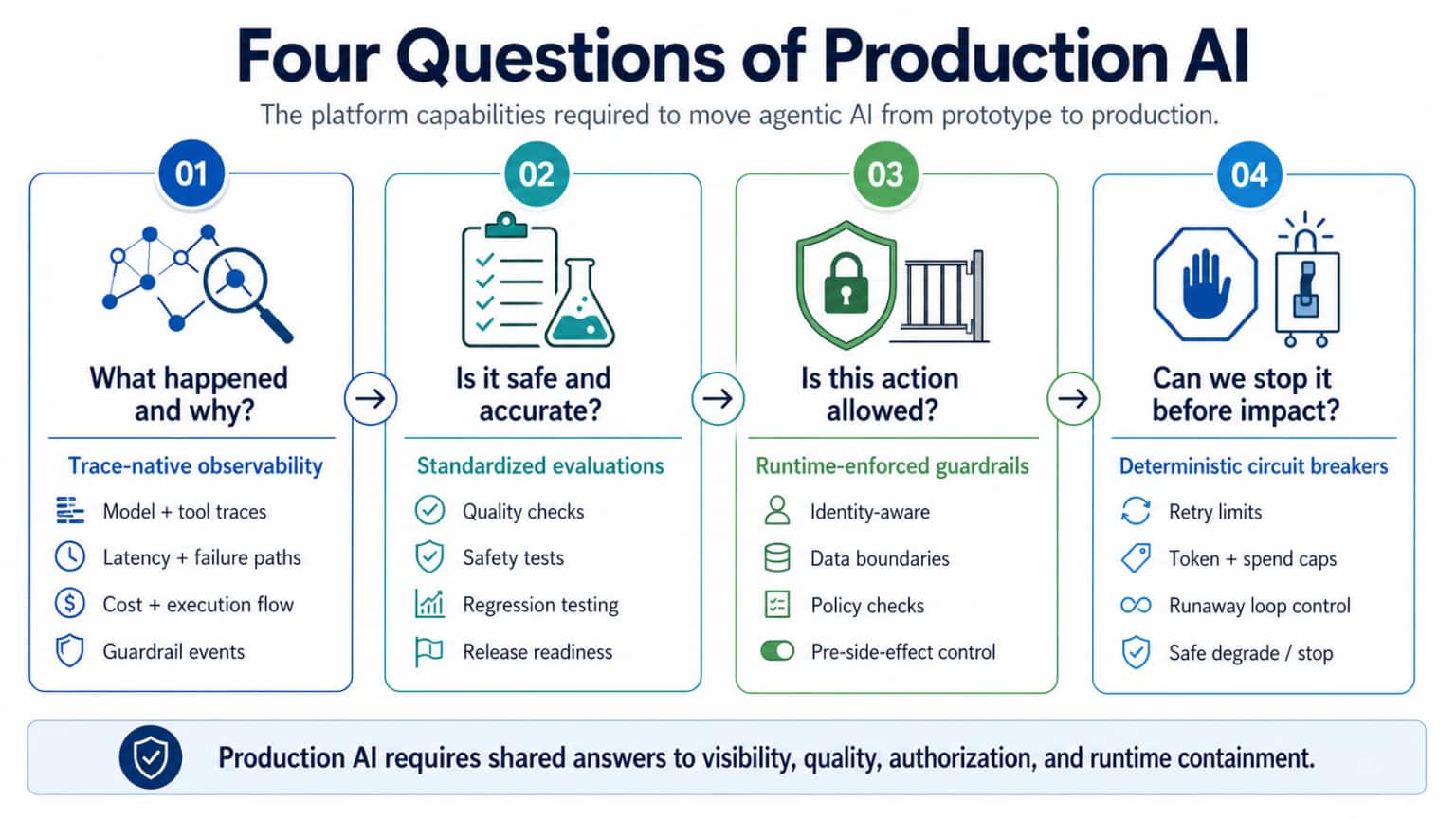
The article "The Evidence and Control Layer for Enterprise AI" by Kishore Pusukuri argues that the transition from AI prototypes to production requires a robust architectural layer to manage the inherent unpredictability of agentic systems. This "Evidence and Control Layer" acts as a shared platform substrate that mediates between agentic workloads and enterprise resources, shifting governance from retrospective reviews to proactive, in-path execution controls. The framework is built upon three core pillars: trace-native observability, continuous trace-linked evaluations, and runtime-enforced guardrails. Unlike traditional logging, trace-native observability captures the complete execution path and decision context, providing the foundation for operational trust. Continuous evaluations act as quality gates, while runtime guardrails evaluate proposed actions—such as tool calls or data transfers—before side effects occur, ensuring safety and compliance in real-time. By formalizing policy-as-code and generating structured evidence events, the layer ensures that every material action is explicit, auditable, and cost-bounded. Ultimately, this centralized approach accelerates enterprise adoption by providing reusable governance defaults, effectively closing the "stochastic gap" and transforming black-box agents into trusted, scalable enterprise assets that operate with clear authority and within defined budget constraints.


Organizational Culture As An Operating System, Not A Values System

In the article "Organizational Culture As An Operating System, Not A Values System," the author argues that the traditional definition of culture as a static set of internal values is no longer sufficient in a hyper-connected world. Modern organizational culture must be reframed as a dynamic operating system that bridges internal decision-making with external community engagement. While internal culture dictates how information flows and authority is exercised, external culture defines how a brand interacts with decentralized movements in art, fashion, and social identity. The disconnect often arises because corporate hierarchies prioritize control and predictability, whereas external cultural trends move at a high velocity from the periphery. To remain relevant, organizations must shift from a "broadcast" model to one of "co-creation," where authority is distributed to those closest to social signals and speed is enabled by trust rather than bureaucratic process. By treating culture with the same rigor as any other core business function, leaders can diagnose internal friction and align incentives to ensure the organization moves at the "speed of culture." Ultimately, success depends on building internal systems that allow companies to participate in and shape cultural conversations in real time, moving beyond corporate manifestos to authentic community collaboration.


Re‑Architecting Capability for AI: Governance, SMEs, and the Talent Pipeline Paradox

The article "Re-architecting Capability for AI Governance: SMEs and the Talent Pipeline Paradox" examines the profound obstacles small and medium-sized enterprises encounter while attempting to establish formal AI oversight. Central to the discussion is the "talent pipeline paradox," which describes how the concentration of AI expertise within large technology firms creates a vacuum that leaves smaller organizations vulnerable. To address this, the author advocates for a strategic shift from talent acquisition to capability re-architecting. Rather than competing for scarce high-end specialists, SMEs should integrate AI governance into their existing business architecture through modular and risk-based frameworks. This approach emphasizes the importance of leveraging cross-functional internal teams, automated tools, and external partnerships to manage algorithmic risks effectively. By focusing on scalable governance patterns and clear accountability, SMEs can achieve ethical and regulatory compliance without the overhead of massive administrative departments. Ultimately, the piece suggests that the key to overcoming resource limitations lies in structural agility and the democratization of governance tasks. This enables smaller firms to harness the transformative power of artificial intelligence safely while maintaining a competitive edge in an increasingly automated global marketplace where talent remains the ultimate bottleneck.


The AI scaffolding layer is collapsing. LlamaIndex's CEO explains what survives

In this VentureBeat interview, LlamaIndex CEO Jerry Liu explores the significant transformation occurring within the "AI scaffolding" layer—the software stack connecting large language models to external data and applications. As frontier models increasingly incorporate native reasoning and retrieval capabilities, Liu suggests that simplistic RAG wrappers are rapidly losing their utility, leading to a "collapse" of the middle layer. To survive this consolidation, infrastructure tools must evolve from thin architectural shells into robust systems that manage complex data pipelines and orchestrate sophisticated agentic workflows. Liu emphasizes that while base models are becoming more powerful, they still lack the specialized, proprietary context required for high-stakes enterprise tasks. Consequently, the future of AI development lies in solving "hard" data problems, such as handling heterogeneous sources and ensuring data quality at scale. Developers are encouraged to pivot away from basic integration toward building deep, specialized intelligence layers that provide the structured context models inherently lack. Ultimately, the survival of platforms like LlamaIndex depends on their ability to offer advanced orchestration and data management that transcends the capabilities of the base models alone, marking a shift toward more resilient and professionalized AI engineering.


Guide for Designing Highly Scalable Systems

The "Guide for Designing Highly Scalable Systems" by GeeksforGeeks provides a comprehensive roadmap for building architectures capable of managing increasing traffic and data volume without performance degradation. Scalability is defined as a system’s ability to grow efficiently while maintaining stability and fast response times. The guide highlights two primary scaling strategies: vertical scaling, which involves enhancing a single server’s capacity, and horizontal scaling, which distributes workloads across multiple machines. To achieve high scalability, the article emphasizes the importance of architectural decomposition and loose coupling, often implemented through microservices or service-oriented architectures. Key components discussed include load balancers for even traffic distribution, caching mechanisms like Redis to reduce backend load, and advanced data management techniques such as sharding and replication to prevent database bottlenecks. Furthermore, the guide covers essential architectural patterns like CQRS and distributed systems to improve fault tolerance and resource utilization. Modern applications must account for various non-functional requirements such as availability and consistency while scaling. By prioritizing stateless designs and avoiding single points of failure, organizations can create robust systems that handle peak usage and unpredictable growth effectively. Ultimately, designing for scalability requires balancing cost, performance, and complexity to ensure long-term reliability in a dynamic digital landscape.


Why Debugging is Harder than Writing Code?

The article "Why Debugging is Harder than Writing Code" from BetterBugs examines the fundamental reasons why developers spend nearly half their time fixing issues rather than creating new features. The core difficulty lies in the disparity between the "happy path" of initial development and the exponential state space of potential failures. While writing code involves building a single successful outcome, debugging requires navigating a combinatorially vast range of unexpected inputs and conditions. This process imposes a significant cognitive load, as developers must maintain a massive context window—often jumping between different files, servers, and logs—which incurs heavy switching costs. Furthermore, modern complexities like distributed systems, non-deterministic concurrency, and discrepancies between local and production environments add layers of friction. In concurrent systems, for instance, the mere act of observing a bug can change the timing and make the issue disappear. Ultimately, the article argues that debugging is more demanding because it forces engineers to move beyond theoretical models and confront the messy realities of hardware limits, memory leaks, and network latency. To manage these challenges, the author suggests that teams must prioritize observability and evidence-based reporting tools to bridge the gap between mental models and actual system behavior, ensuring more predictable software lifecycles.


Cybersecurity: Board oversight of operational resilience planning

The A&O Shearman guidance emphasizes that as cyberattacks grow more sophisticated and regulatory scrutiny intensifies, boards must adopt a proactive stance toward operational resilience. With the emergence of unpredictable criminal gangs and AI-driven threats, it is no longer sufficient to treat cybersecurity as a purely technical issue; it is a critical governance priority. To exercise effective oversight, boards should appoint dedicated individuals or committees to monitor cyber risks and ensure that Business Continuity and Disaster Recovery (BCDR) plans are robust, defensible, and accessible offline. Practical preparations must include clear decision-making protocols and alternative communication channels, such as Signal or WhatsApp, for use during systems outages. Additionally, leadership should oversee the development of pre-approved communication templates for stakeholders and define strict Recovery Time Objectives (RTOs). A cornerstone of this framework is the implementation of regular tabletop exercises and technical recovery drills that involve third-party providers to identify vulnerabilities. By documenting these proactive measures and integrating lessons learned into evolving strategies, boards can meet regulatory expectations for evidence-based oversight. Ultimately, this comprehensive approach to resilience planning helps organizations minimize the risk of material revenue loss and navigate the complexities of a volatile global digital landscape.


Beyond the Region: Architecting for Sovereign Fault Domains and the AI-HR Integrity Gap

In "Beyond the Region," Flavia Ballabene argues that software architects must evolve their definition of resilience from surviving mechanical failures to navigating "Sovereign Fault Domains." Traditionally, redundancy across Availability Zones addressed physical infrastructure outages; however, modern geopolitical shifts and evolving privacy laws now create "blast radii" where data becomes legally trapped or AI models suddenly non-compliant. Ballabene highlights an "AI-HR Integrity Gap," where centralized systems fail to account for regional jurisdictional constraints. To bridge this, she proposes shifting toward sovereignty-aware infrastructures. Key strategies include Managed Sovereign Cloud Models, which leverage localized partner-led controls like S3NS or T-Systems, and Cell-Based Regional Architectures, which deploy independent stacks for each major market to eliminate reliance on a global control plane. These approaches allow organizations to maintain operational continuity even when specific regions face regulatory upheavals. By auditing AI dependency graphs and prioritizing data residency, executives can transform compliance from a burden into a competitive advantage. Ultimately, the article suggests that in a fragmented global cloud, the most resilient HR and technology stacks are those built on digital trust and localized integrity, ensuring they remain robust against both technical glitches and the unpredictable tides of international policy.


Designing resilient IoT and Edge Computing with federated tinyML

The article "Real-time operating systems for embedded systems" (available via ScienceDirect PII: S1383762126000275) provides a comprehensive examination of the architectural requirements and performance constraints inherent in modern real-time operating systems (RTOS). As embedded devices become increasingly integrated into safety-critical infrastructure, the study highlights the transition from simple cyclic executives to sophisticated, preemptive multitasking environments. The authors analyze key RTOS components, including deterministic scheduling algorithms, interrupt latency management, and inter-process communication mechanisms, emphasizing their role in ensuring temporal correctness. A significant portion of the discussion focuses on the trade-offs between monolithic and microkernel architectures, particularly regarding memory footprint and system reliability. By evaluating various commercial and open-source RTOS solutions, the research demonstrates how hardware-software co-design can mitigate the overhead typically associated with complex task synchronization. Ultimately, the paper argues that the future of embedded systems lies in adaptive RTOS frameworks that can dynamically balance power efficiency with the rigorous timing demands of Internet of Things (IoT) applications. This synthesis serves as a vital resource for engineers seeking to optimize system predictability in increasingly heterogeneous computing environments, ensuring that software responses remain consistent under peak load conditions.

Daily Tech Digest - May 01, 2026


Quote for the day:

"Before you are leader, success is all about growing yourself. When you become a leader, success is all about growing others." -- Jack Welch


🎧 Listen to this digest on YouTube Music

▶ Play Audio Digest

Duration: 23 mins • Perfect for listening on the go.


The most severe Linux threat to surface in years catches the world flat-footed

The article "The most severe Linux threat to surface in years catches the world flat-footed" on Ars Technica details a critical vulnerability known as "Copy Fail" (CVE-2026-31431). This local privilege escalation flaw stems from a fundamental logic error in the Linux kernel’s cryptographic subsystem, specifically within memory copy operations. Discovered by researchers using the AI-powered vulnerability platform Xint Code, the bug has existed silently for nearly a decade, impacting almost every major distribution released since 2017. The severity of the threat is heightened by the availability of a remarkably compact exploit—a mere 732-byte Python script—that allows any unprivileged user to gain full root access to a system. The disclosure has sparked significant controversy within the cybersecurity community because the researchers released the proof-of-concept before many distributions could prepare patches. This "no-notice" disclosure left system administrators worldwide scrambling to implement manual mitigations, such as blacklisting the vulnerable algif_aead module to prevent exploitation. As the industry grapples with this widespread risk, the incident underscores the growing power of AI in discovering deep-seated codebase flaws and the ongoing debate regarding coordinated disclosure practices in the open-source ecosystem.


How to Fix Data Platform Sprawl: 3 Patterns and 3 Steps for Better Platform Decisions

In "How to Fix Data Platform Sprawl," Keerthi Penmatsa examines the hidden risks of fragmented enterprise data strategies. As organizations adopt diverse tools like Snowflake and Databricks, they often encounter three detrimental sprawl patterns: costly, redundant pipelines that threaten data consistency; operational friction from tight cross-team dependencies; and fragmented governance that complicates regulatory compliance. While open table formats provide partial relief, Penmatsa argues they cannot resolve the deeper structural complexity. To address this, she proposes a strategic three-lens framework for platform decision-making. First, leaders must evaluate business considerations and operational fit, balancing maintainability against vendor ecosystem benefits. Second, they must prioritize Economics and FinOps alignment to manage the volatile costs of consumption-based models via improved spend tracking. Finally, a focus on data governance and security ensures platforms have the native capabilities for robust policy enforcement and privacy. By moving beyond narrow feature checklists to these holistic strategic bets, executives can transform a chaotic environment into a resilient, value-driven ecosystem. This transition allows technology investments to become sustainable competitive advantages while ensuring rigorous, centralized control over organizational data in the AI era.


AI data debt: The risk lurking beneath enterprise intelligence

"AI Data Debt: The Risk Lurking Beneath Enterprise Intelligence" by Ashish Kumar explores the emerging danger of "AI data debt," a concept analogous to technical debt that arises when organizations prioritize rapid AI deployment over robust data foundations. This debt accumulates through poor data quality, legacy assumptions, and hidden biases, often remaining unrecognized until systems fail at scale. In critical sectors like healthcare and education, such inconsistencies can lead to life-altering erroneous diagnoses or suboptimal learning experiences. The author warns that AI often creates an "illusion of intelligence," projecting authority while relying on flawed inputs that degrade over time through "data drift." To mitigate these risks, Kumar emphasizes the necessity of comprehensive data governance, "privacy by design," and a unified data ontology to ensure semantic consistency across departments. Furthermore, organizations must implement rigorous data-handling mechanisms—including validation checks, lineage tracking, and continuous monitoring—to maintain integrity. Ultimately, the article argues that sustainable enterprise intelligence requires a strategic shift from breakneck scaling to foundational strength. By establishing clear ownership and accountability, businesses can transform data from a latent liability into a reliable strategic asset, ensuring that their AI initiatives remain ethical, compliant, and genuinely effective.


Cyber Threats to DevOps Platforms Rising Fast, GitProtect Report Finds

The "DevOps Threats Unwrapped Report 2026" from GitProtect reveals a concerning 21% increase in cyber incidents targeting DevOps environments throughout 2025, with total downtime nearly doubling to a staggering 9,225 hours. This surge in high-severity disruptions, which rose by 69% year-over-year, cost organizations more than $740,000 in lost productivity. Leading platforms like GitHub, Azure DevOps, and Jira have become prime targets for sophisticated malware campaigns, including Shai-Hulud and GitVenom, which leverage trusted infrastructure for credential harvesting and malware distribution. Attackers are increasingly exploiting automation, poisoned packages, and malicious AI-generated code to bypass traditional perimeter defenses. The report highlights that 62% of outages were driven by performance degradation, though post-incident maintenance consumed a disproportionate 30% of total downtime. With 236 security flaws patched in 2025—many categorized as critical or high severity—the findings underscore that reactive monitoring is no longer sufficient. Daria Kulikova of GitProtect emphasizes that as cybercriminals blend hardware-aware evasion with phishing-as-a-service, organizations must transition toward a proactive DevSecOps model. This approach integrates continuous monitoring and automated security throughout the development lifecycle to safeguard data integrity and maintain business continuity against an increasingly evolving and aggressive global threat landscape.


AI in Banking: An Advanced Overview

The article "AI in Banking: An Advanced Overview" examines how financial institutions are transitioning from basic applications like chatbots toward sophisticated artificial intelligence integrations that streamline operations and deepen customer loyalty. While traditional uses focused on fraud detection, modern banks are now deploying predictive analytics for loan approvals and leveraging generative AI to automate complex knowledge work, such as internal support and marketing development. Experts Jerry Silva and Alyson Clarke emphasize that the true potential of AI lies in moving beyond incremental efficiency to foster innovation in new products and services. However, significant hurdles remain, particularly for institutions burdened by legacy systems that complicate the adoption of open APIs and modern AI capabilities. The piece highlights a shift in focus from cost-cutting to growth, with projections suggesting that by 2028, over half of AI budgets will fund new revenue-generating initiatives. Despite a current lack of specific federal regulations, banks are proactively prioritizing transparency and model explainability to maintain trust. Ultimately, the future of banking in 2026 and beyond will be defined by "agentic AI" and personal digital clones, provided organizations can resolve lingering questions regarding liability and master the data strategies necessary to support these advanced autonomous systems.


ODNI to CISOs on threat assessments: You’re on your own

In his analysis of the 2026 Annual Threat Assessment (ATA), Christopher Burgess argues that the Office of the Director of National Intelligence (ODNI) has pivoted toward a homeland-centric, reactive posture, effectively leaving the private sector to manage its own strategic defense. This year’s ATA omits granular, future-leaning analysis of state actors like China and Russia, instead folding them into broader regional narratives. For security leaders, this represents a dangerous dilution of strategic warning, particularly as it excludes critical updates on persistent infrastructure campaigns like Volt Typhoon. By focusing on immediate operational successes and domestic stability, the Intelligence Community has signaled a contraction in its early-warning role, outsourcing the forecasting of long-term adversary intent to CISOs and CROs. To bridge this gap, Burgess proposes a "resilience premium" framework, urging organizations to prioritize identity integrity, conduct dormant access audits for infrastructure continuity, and accelerate quantum migration roadmaps. Ultimately, while the government reports on past policy outcomes, the burden of anticipating and defending against evolving cyber threats—such as AI-driven anomalies and insider infiltration—now rests squarely on the shoulders of private enterprise, requiring a shift from efficiency-focused security to robust, intelligence-integrated resilience.


Harness teams of agentic coders with Squad

In "Harness teams of agentic coders with Squad," Simon Bisson examines the growing "productivity crisis" where developers are increasingly overwhelmed by AI-generated bug reports and mounting technical debt. To combat this, Bisson introduces Squad, an open-source framework developed by Microsoft's Brady Gaster that orchestrates multiple specialized AI agents through GitHub Copilot. Replicating a traditional development team structure, Squad creates distinct roles such as a developer lead, front-end and back-end engineers, and test engineers. A key architectural innovation is Squad’s rejection of fragile agent-to-agent chatting; instead, it treats agents as asynchronous tasks synchronized via persistent external storage in Markdown format. This ensures shared "memory" and context are preserved across sessions and remain accessible to all team members. Additionally, Squad employs a unique verification process where separate agents fix issues identified by testers, preventing repetitive logic loops and statistical hallucinations. Whether utilized via a CLI, Visual Studio Code, or a TypeScript SDK, the system positions the human developer as a senior architect managing a "pocket team" of artificial junior developers. By leveraging this multi-agent harness, organizations can transform application development into a more efficient, test-driven process, providing a much-needed force multiplier to keep pace with the rapidly evolving demands and security vulnerabilities of modern software engineering.


The Model Is the Data—and That Changes Everything

In "The Model Is the Data—and That Changes Everything," published on HPCwire and BigDATAwire in April 2026, the author examines a profound transformation in artificial intelligence that dismantles the long-standing perception of AI as an enigmatic "magic" black box. Traditionally, the industry separated complex algorithms from the datasets they processed; however, the article argues that we have entered an era where the model and the data are fundamentally unified. This evolution is largely driven by vectorization, where models rely on high-dimensional vectors to interpret raw information directly, effectively making the data’s structural representation the primary source of intelligence. The piece emphasizes that enterprise success no longer depends solely on algorithmic complexity but on "context engineering"—the precise curation of data to guide model reasoning. Consequently, traditional data architectures, which were designed for movement rather than decision-making, are being replaced by integrated platforms. By highlighting the shift from rigid pipelines to dynamic, data-centric systems, the article posits that AI is transitioning from a tool for analysis into a fundamental engine for autonomous discovery. Ultimately, this technological shift dictates that data is not merely fuel for the model; it has become the model itself.


AI chatbots need ‘deception mode’

In his Computerworld article, Mike Elgan addresses the growing concern of AI anthropomorphism, where users mistake software for sentient beings due to human-like traits like empathy, humor, and deliberate response delays. New research indicates that people often perceive slower AI responses as more "thoughtful," a phenomenon Elgan describes as a "user delusion" that tech companies exploit to foster an "attachment economy." By designing chatbots with fake emotional intelligence and simulated empathy, developers lower users' psychological guards, potentially leading to social isolation, misplaced trust, and the leakage of sensitive personal data. To combat this manipulative design trend, Elgan advocates for a regulatory requirement called "deception mode." Proposed by bioethicist Jesse Gray, this framework mandates that AI systems remain strictly neutral and robotic by default. Under this model, human-like qualities would only be accessible if a user explicitly activates a "deception mode" toggle. This approach ensures informed consent, grounding the user in the reality that any perceived "humanity" is merely a programmed facade. Ultimately, Elgan argues that such a feature is essential to preserve human clarity and control as AI continues to integrate into daily life, preventing a future where the majority of society is misled by artificial personalities.


The DPoP Storage Paradox: Why Browser-Based Proof-of-Possession Remains an Unsolved Problem

"The DPoP Storage Paradox: Why Browser-Based Proof-of-Possession Remains an Unsolved Problem" by Dhruv Agnihotri highlights a critical security gap in modern OAuth 2.0 implementations. While DPoP (RFC 9449) effectively binds access tokens to a client-generated key pair to prevent replay attacks, it offers no standardized guidance on browser-side key storage. This leads to a "storage paradox": storing keys as non-extractable objects in IndexedDB prevents exfiltration but fails to stop the "Oracle Attack." In this scenario, an XSS payload uses the browser's own cryptographic subsystem to sign malicious proofs without ever needing to extract the raw key bytes. To mitigate these risks, Agnihotri evaluates several architectural patterns, noting that with the finalization of the FAPI 2.0 Security Profile, sender-constraining has become a mandate rather than an option. The Backend-for-Frontend (BFF) pattern is presented as the industry standard, moving sensitive key material to a secure server-side component. For serverless environments where a BFF is unfeasible, a "zero-persistence" memory-only approach is recommended. This ephemeral strategy restricts the attack window to a single session but requires "Lazy Re-Binding" to rotate keys during page reloads. Ultimately, the article argues that there is no universal "safe default" for browser-based key storage; developers must deliberately align their architecture with their specific threat model and infrastructure constraints.