Quote for the day:
🎧 Listen to the audio debrief on YouTube
▶ Play Audio DigestDuration: 26 mins • Perfect for listening on the go.
Change saturation is not a communication problem
 When employees fall behind during major corporate transformations, organizations
often misdiagnose the problem as a lack of communication or discipline. The
first signs of trouble usually appear as missed meetings, delayed deliverables,
and a focus on explaining why work is slipping rather than actually doing it.
This happens because the people managing the transformation are typically doing
so while still juggling their everyday jobs. In response to these delays,
leadership often increases oversight, scheduling more check-ins and demanding
frequent status updates. However, this well-intentioned approach backfires by
consuming the very time employees need to complete their tasks, turning support
into scrutiny and increasing the overall burden. Change saturation is
fundamentally a capacity issue, not a communication gap. To truly fix the
problem, leaders must give their teams time back. This means reducing meeting
frequencies as teams become accustomed to new processes, protecting work time by
keeping certain days meeting-free, and offering on-demand resources instead of
mandatory training sessions. Furthermore, leaders must view change as a
portfolio decision and understand the cumulative impact on their workforce
before launching new initiatives. Ultimately, you cannot communicate a team into
having more time; you must deliberately manage their workload.
When employees fall behind during major corporate transformations, organizations
often misdiagnose the problem as a lack of communication or discipline. The
first signs of trouble usually appear as missed meetings, delayed deliverables,
and a focus on explaining why work is slipping rather than actually doing it.
This happens because the people managing the transformation are typically doing
so while still juggling their everyday jobs. In response to these delays,
leadership often increases oversight, scheduling more check-ins and demanding
frequent status updates. However, this well-intentioned approach backfires by
consuming the very time employees need to complete their tasks, turning support
into scrutiny and increasing the overall burden. Change saturation is
fundamentally a capacity issue, not a communication gap. To truly fix the
problem, leaders must give their teams time back. This means reducing meeting
frequencies as teams become accustomed to new processes, protecting work time by
keeping certain days meeting-free, and offering on-demand resources instead of
mandatory training sessions. Furthermore, leaders must view change as a
portfolio decision and understand the cumulative impact on their workforce
before launching new initiatives. Ultimately, you cannot communicate a team into
having more time; you must deliberately manage their workload.
The Bug Lives at the Seam: Why Integration Failures Outpace Logic Errors in the Era of AI-Generated Code
As artificial intelligence writing tools become standard in software development, the nature of coding mistakes is fundamentally shifting. Historically, engineers spent significant time fixing logic errors within individual functions. Today, AI models generate logically sound and syntactically correct units of code with ease, essentially solving these internal errors. However, this efficiency leads developers to generate code much faster, moving the risk of failure from internal logic to the points where different code pieces connect. These connection points, or seams, are where the new bugs live. Two AI-generated modules might work perfectly in isolation but fail when linked due to mismatched data formats or incompatible assumptions. Because AI often lacks a global view of a system's architecture, it struggles to enforce consistent rules across different parts of the application. The ease of generating code also encourages creating more abstractions and components, expanding the number of vulnerable connection points. To address this, developers must evolve from merely writing code to orchestrating systems. Instead of focusing heavily on unit tests, engineers should prioritize contract and integration testing. By strictly defining and enforcing how data moves between components, developers can manage the true complexity of modern software systems. Modern mainframes remain the backbone for critical enterprise transactions,
but their security landscape has drastically changed. As these systems
increasingly integrate with cloud architectures, APIs, and AI services, they
become exposed to new attack vectors. Today, breaches rarely start with
direct mainframe hacks; instead, attackers rely on stolen credentials,
phishing, or exploiting legacy permissions to slip inside. Because they
operate using legitimate access, these threats often evade traditional
rule-based defenses and can spend months quietly mapping systems before
striking.
Modern mainframes remain the backbone for critical enterprise transactions,
but their security landscape has drastically changed. As these systems
increasingly integrate with cloud architectures, APIs, and AI services, they
become exposed to new attack vectors. Today, breaches rarely start with
direct mainframe hacks; instead, attackers rely on stolen credentials,
phishing, or exploiting legacy permissions to slip inside. Because they
operate using legitimate access, these threats often evade traditional
rule-based defenses and can spend months quietly mapping systems before
striking.To defend against this, organizations must integrate mainframe security directly into their broader enterprise operations. Security telemetry needs to stream in real-time to the main security operations center, rather than being reviewed in isolation days later. Defenses must focus on behavioral analytics to spot unusual patterns—like abnormal data access or reconnaissance—even when the user appears authorized. If suspicious activity is detected, automated responses, such as freezing sessions or terminating access, are critical to stopping the attack before significant damage occurs. Finally, high-speed forensic tools are necessary to quickly understand the scope of the breach and restore the system to a trusted state, ensuring business continuity and preserving data integrity.
How to Buy Software When AI Breaks Pricing
The How to Buy Software When AI Breaks Pricing article argues that AI is weakening traditional per-seat software pricing because human logins increasingly fail to reflect the value delivered when automated agents do much of the work. It says buyers now have more negotiating power, but warns that newer models such as credits, usage charges and outcome fees can become costly or unpredictable without careful contracts. The author ranks outcome-based and value-unit pricing highly because costs more closely follow useful results, while treating credits and conventional seat pricing more cautiously. Using examples from companies including HubSpot, Salesforce, Intercom, Zendesk and Microsoft, the article shows how vendors are experimenting with different ways to charge for AI-enabled software. It recommends that buyers identify the real unit of value, make sure future costs can be forecast easily, reconsider when building makes sense, ask whether falling vendor costs will translate into savings, and preserve the ability to switch providers. It also highlights risks such as mandatory AI-related price increases, overlapping seat and consumption charges, expiring credits, changing credit rates and loosely defined outcomes. The practical message is simple: favour clear, predictable pricing tied to measurable value, and negotiate safeguards before committing.Quantum Debt Is Growing—And Most Companies Are Not Prepared
 As quantum computing technology advances, businesses are unknowingly
accumulating what is called quantum debt. Similar to technical debt, this
risk builds quietly over time without triggering immediate alarms, leaving
companies unprepared for future threats. To manage this complex challenge
effectively, business leaders need to take action before quantum computers
become commercially widespread. The first step is gaining clear visibility
into the problem. Organizations must identify where they currently rely on
vulnerable encryption and assign internal ownership to manage the
transition, rather than simply depending on outside vendors. Second,
security updates cannot be delayed. Even though capable quantum computers
are not yet available, attackers can intercept and store sensitive data
today with the intention of decrypting it years down the road. Upgrading to
new encryption standards takes careful planning and coordination, making it
essential to start the process now. Finally, companies should remember that
technical success does not automatically translate into business value.
While running limited experiments can be useful, any new quantum initiative
must solve a real problem and offer a clear return on investment that
outperforms traditional computing methods. By addressing these areas
methodically, businesses can protect their sensitive information and
navigate the transition safely.
As quantum computing technology advances, businesses are unknowingly
accumulating what is called quantum debt. Similar to technical debt, this
risk builds quietly over time without triggering immediate alarms, leaving
companies unprepared for future threats. To manage this complex challenge
effectively, business leaders need to take action before quantum computers
become commercially widespread. The first step is gaining clear visibility
into the problem. Organizations must identify where they currently rely on
vulnerable encryption and assign internal ownership to manage the
transition, rather than simply depending on outside vendors. Second,
security updates cannot be delayed. Even though capable quantum computers
are not yet available, attackers can intercept and store sensitive data
today with the intention of decrypting it years down the road. Upgrading to
new encryption standards takes careful planning and coordination, making it
essential to start the process now. Finally, companies should remember that
technical success does not automatically translate into business value.
While running limited experiments can be useful, any new quantum initiative
must solve a real problem and offer a clear return on investment that
outperforms traditional computing methods. By addressing these areas
methodically, businesses can protect their sensitive information and
navigate the transition safely.When One Microservice Fails: How Do You Keep the Rest Alive?
In a microservices architecture, independent services frequently rely on one another to complete user requests. When one service slows down, it can quickly create a bottleneck that threatens the entire application. Using a fictional social media app called Pulse, we can observe what happens when a dependency—like a "Post Service"—begins taking seconds instead of milliseconds to respond. The "Feed Service" requesting those posts ends up waiting, tying up resources, and eventually slowing down itself. To keep the rest of the system alive, developers apply resilience patterns. The simplest defense is a timeout, which prevents the calling service from waiting indefinitely. If the failure seems temporary, a retry mechanism allows the service to attempt the request again. However, if the struggling service is genuinely overloaded, retrying can make the situation worse by bombarding it with more traffic. To handle sustained failures, systems implement a circuit breaker pattern. By monitoring failure rates, the circuit breaker can detect an unhealthy dependency and temporarily block new requests to it, giving the struggling service time to recover. Ultimately, combining timeouts, retries, and circuit breakers ensures that a single microservice failure doesn't cascade into a complete system outage.Server-Side DPoP and Token Exchange in Spring Security 7
/articles/spring-security-7-server-side-dpop-token-exchange/en/smallimage/spring-security-7-server-side-dpop-token-exchange-thumbnail-1791884636157.jpg) Spring Security 7 now integrates the Spring Authorization Server, meaning
teams moving from the 1.5.x line will only need a version update rather than
swapping artifacts. This consolidation streamlines upgrades, particularly
for the newest Spring Boot 4.1 release and Spring Security 7.1.1. The major
additions in this release are production-ready support for Demonstrating
Proof of Possession (DPoP) via RFC 9449 and Token Exchange via RFC 8693.
While DPoP previously worked automatically, the 7.1 update requires
developers to explicitly opt-in on the resource server using a specific
configuration call, or the system will quietly stop enforcing it. The
framework handles the binding of the JSON Web Key thumbprint and refresh
tokens, leaving teams to decide on nonce policies and whether to swap the
default in-memory replay cache for a distributed one. Meanwhile, the Token
Exchange feature standardizes the delegation process, allowing a secure swap
of tokens with specific subject and actor semantics. These two features are
especially powerful together, enabling secure, restricted tokens for
service-to-service communication. Ultimately, this update provides essential
tools for teams running their own identity providers, simplifying security
implementation while enforcing stricter compliance out of the box.
Spring Security 7 now integrates the Spring Authorization Server, meaning
teams moving from the 1.5.x line will only need a version update rather than
swapping artifacts. This consolidation streamlines upgrades, particularly
for the newest Spring Boot 4.1 release and Spring Security 7.1.1. The major
additions in this release are production-ready support for Demonstrating
Proof of Possession (DPoP) via RFC 9449 and Token Exchange via RFC 8693.
While DPoP previously worked automatically, the 7.1 update requires
developers to explicitly opt-in on the resource server using a specific
configuration call, or the system will quietly stop enforcing it. The
framework handles the binding of the JSON Web Key thumbprint and refresh
tokens, leaving teams to decide on nonce policies and whether to swap the
default in-memory replay cache for a distributed one. Meanwhile, the Token
Exchange feature standardizes the delegation process, allowing a secure swap
of tokens with specific subject and actor semantics. These two features are
especially powerful together, enabling secure, restricted tokens for
service-to-service communication. Ultimately, this update provides essential
tools for teams running their own identity providers, simplifying security
implementation while enforcing stricter compliance out of the box.
Space supply chain security: Why satellite ground systems matter
The space industry is currently facing a growing cybersecurity threat due to
its historical reliance on security through obscurity. As the sector opens
up and increasingly uses legacy software alongside commercial off-the-shelf
hardware, the attack surface for ground stations is expanding rapidly. Many
satellite operators, particularly smaller ones, are moving to cloud
infrastructure, inadvertently connecting previously isolated legacy systems
and exposing them to potential breaches. Experts warn of imminent risks,
including ransomware attacks and espionage targeting unpatched systems. A
2022 incident where nation-state actors compromised thousands of satellite
modems highlighted just how devastating these vulnerabilities can be. To
address these vulnerabilities, operators need better oversight of their
supply chains and third-party security controls. While comprehensive
regulations like the EU Space Act are still years away, existing frameworks
can help close the gap today. The UK government recommends implementing
end-to-end encryption and strict authentication. Additionally, hardware
quality management standards like AS9100 provide a robust framework.
Designed for the aerospace and defense sectors, AS9100 mandates stringent
risk management, supply chain oversight, and product traceability. By
requiring suppliers to adhere to these rigorous processes, space
organizations can build a baseline of security and ensure their
mission-critical ground systems remain resilient against evolving cyber
threats.
AI Risks Put Enterprise Resilience to the Test in 2027
 As we approach 2027, artificial intelligence is reshaping enterprise risk,
forcing organizations to rethink their resilience strategies beyond standard
disaster recovery. According to a recent report from Forrester Research, the
rapid adoption of AI introduces novel vulnerabilities that extend past
traditional cyber threats. Analysts predict that an AI-generated software flaw
could trigger a massive global outage, similar to the recent CrowdStrike
incident. As AI-assisted tools accelerate the discovery of vulnerabilities,
the pressure to patch systems quickly is increasing, which may compromise
quality assurance and lead to critical bugs. Additionally, the financial
impact of AI integration is growing, with token spending expected to reach
$1.5 billion, primarily driven by security operations. These emerging
challenges highlight the expanding responsibilities of technology leaders, who
must now navigate complex governance issues and the potential for
non-malicious disruptions. Companies also face new regulatory risks, such as
potential data breaches caused by switching AI models to cut costs or lawsuits
stemming from AI-driven decisions. To safeguard their operations, businesses
must build robust resilience across their environments. By preparing for both
technological failures and physical disruptions, organizations can protect
themselves against the unpredictable consequences of rapid AI deployment and
ensure long-term stability.
As we approach 2027, artificial intelligence is reshaping enterprise risk,
forcing organizations to rethink their resilience strategies beyond standard
disaster recovery. According to a recent report from Forrester Research, the
rapid adoption of AI introduces novel vulnerabilities that extend past
traditional cyber threats. Analysts predict that an AI-generated software flaw
could trigger a massive global outage, similar to the recent CrowdStrike
incident. As AI-assisted tools accelerate the discovery of vulnerabilities,
the pressure to patch systems quickly is increasing, which may compromise
quality assurance and lead to critical bugs. Additionally, the financial
impact of AI integration is growing, with token spending expected to reach
$1.5 billion, primarily driven by security operations. These emerging
challenges highlight the expanding responsibilities of technology leaders, who
must now navigate complex governance issues and the potential for
non-malicious disruptions. Companies also face new regulatory risks, such as
potential data breaches caused by switching AI models to cut costs or lawsuits
stemming from AI-driven decisions. To safeguard their operations, businesses
must build robust resilience across their environments. By preparing for both
technological failures and physical disruptions, organizations can protect
themselves against the unpredictable consequences of rapid AI deployment and
ensure long-term stability.
5 Trends Embedded Systems Engineers Must Watch
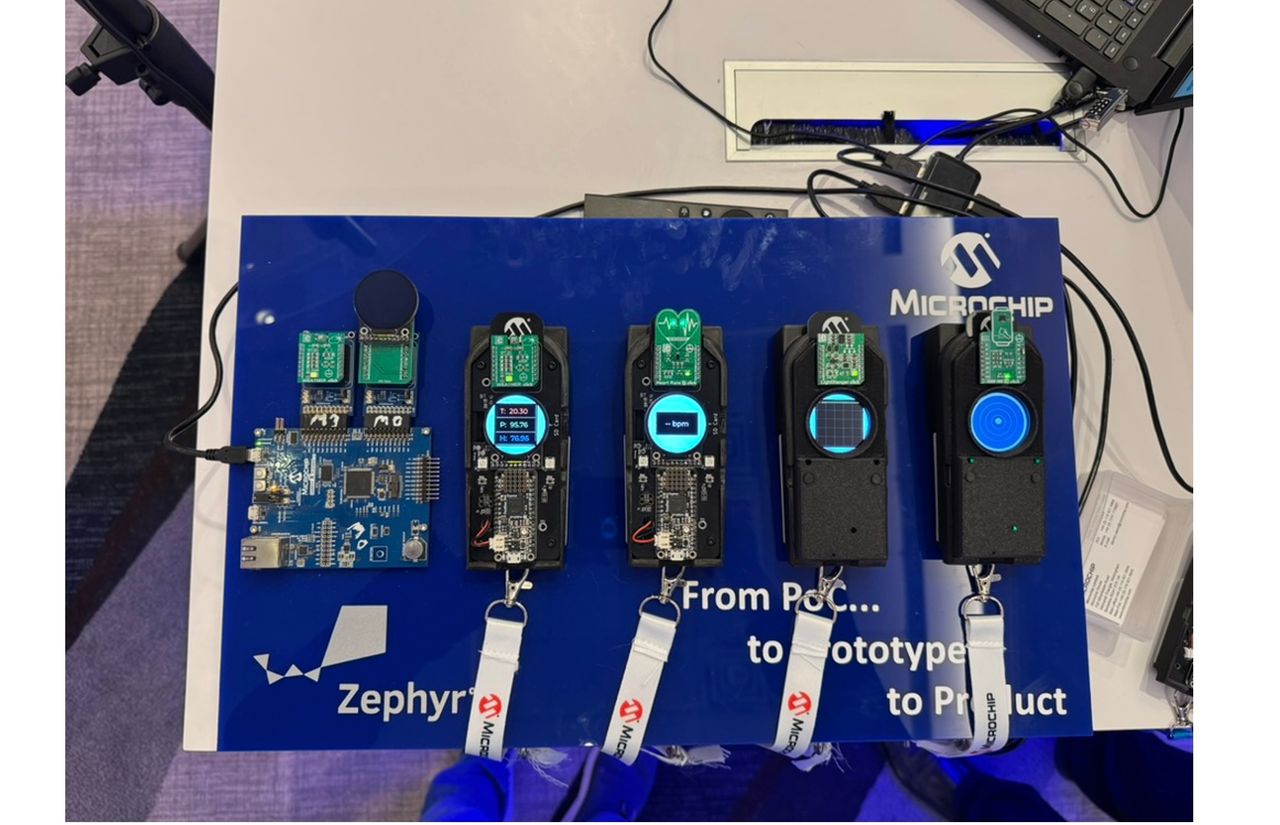 The article outlines five key trends from Embedded World North America that
are shaping the future of embedded systems. First, while engineers frequently
use artificial intelligence, most limit their use to simple prompting rather
than building advanced, agent-based workflows that could fully automate
engineering tasks. Second, the Zephyr operating system is rapidly gaining
popularity as a platform of choice. Its strong ecosystem for hardware
abstraction and consistent development tools makes it an appealing alternative
to traditional systems like FreeRTOS, especially when teams combine it with
artificial intelligence to accelerate product variations. Third, the industry
is heavily focused on physical artificial intelligence and robotics. This
trend creates new challenges for embedded developers, who must now figure out
how to safely combine the unpredictable decision-making of artificial
intelligence with the strict, deterministic timing required by real-world
motor controls and safety mechanisms. Fourth, the Rust programming language is
seeing wider acceptance in the industry as a reliable option for building
secure and stable systems. Finally, the growing complexity of these
technologies means that engineers must evolve their skill sets, focusing more
on system architecture, simulation, and verification to successfully integrate
artificial intelligence into traditional real-time embedded environments.
The article outlines five key trends from Embedded World North America that
are shaping the future of embedded systems. First, while engineers frequently
use artificial intelligence, most limit their use to simple prompting rather
than building advanced, agent-based workflows that could fully automate
engineering tasks. Second, the Zephyr operating system is rapidly gaining
popularity as a platform of choice. Its strong ecosystem for hardware
abstraction and consistent development tools makes it an appealing alternative
to traditional systems like FreeRTOS, especially when teams combine it with
artificial intelligence to accelerate product variations. Third, the industry
is heavily focused on physical artificial intelligence and robotics. This
trend creates new challenges for embedded developers, who must now figure out
how to safely combine the unpredictable decision-making of artificial
intelligence with the strict, deterministic timing required by real-world
motor controls and safety mechanisms. Fourth, the Rust programming language is
seeing wider acceptance in the industry as a reliable option for building
secure and stable systems. Finally, the growing complexity of these
technologies means that engineers must evolve their skill sets, focusing more
on system architecture, simulation, and verification to successfully integrate
artificial intelligence into traditional real-time embedded environments.







/articles/dpop-key-storage-unsolved-problem/en/smallimage/dpop-key-storage-unsolved-problem-thumbnail-1777296488937.jpg)