Quote for the day:
"Vision isn’t a starting point. It’s what you create every day through your actions." -- Gordon Tregold
🎧 Listen to this digest on YouTube Music
▶ Play Audio DigestDuration: 21 mins • Perfect for listening on the go.
The 10 skills every modern integration architect must master
 The article "The 10 skills every modern integration architect must master"
highlights the fundamental shift of enterprise integration from a back-end
technical role to a vital strategic capability. Author Sadia Tahseen argues
that modern integration architects must transition from traditional middleware
specialists into multifaceted leaders who act as the "digital nervous system"
of the enterprise. The ten essential competencies include adopting a long-term
platform mindset over isolated project thinking and mastering iPaaS alongside
cloud-native capabilities. Architects must prioritize API-led and event-driven
designs to decouple systems effectively, while utilizing canonical data
modeling and robust governance to ensure scalability. Security-by-design,
business-centric observability, and planning for continuous change are also
crucial for maintaining resilience in volatile SaaS environments. Furthermore,
integrating DevOps automation, gaining deep business domain expertise, and
exerting enterprise-wide leadership allow architects to bridge the gap between
technical execution and business priorities. Ultimately, those who master
these diverse skills—ranging from coding to strategic influence—enable their
organizations to adapt quickly and harness the full power of modern technology
investments. By moving beyond simple app connectivity to complex workflow
design, these professionals ensure that integration platforms remain scalable,
secure, and ready for the emerging era of AI-driven transformation.
The article "The 10 skills every modern integration architect must master"
highlights the fundamental shift of enterprise integration from a back-end
technical role to a vital strategic capability. Author Sadia Tahseen argues
that modern integration architects must transition from traditional middleware
specialists into multifaceted leaders who act as the "digital nervous system"
of the enterprise. The ten essential competencies include adopting a long-term
platform mindset over isolated project thinking and mastering iPaaS alongside
cloud-native capabilities. Architects must prioritize API-led and event-driven
designs to decouple systems effectively, while utilizing canonical data
modeling and robust governance to ensure scalability. Security-by-design,
business-centric observability, and planning for continuous change are also
crucial for maintaining resilience in volatile SaaS environments. Furthermore,
integrating DevOps automation, gaining deep business domain expertise, and
exerting enterprise-wide leadership allow architects to bridge the gap between
technical execution and business priorities. Ultimately, those who master
these diverse skills—ranging from coding to strategic influence—enable their
organizations to adapt quickly and harness the full power of modern technology
investments. By moving beyond simple app connectivity to complex workflow
design, these professionals ensure that integration platforms remain scalable,
secure, and ready for the emerging era of AI-driven transformation.Nobody told legal about your RAG pipeline -- why that's a problem
 The widespread adoption of Retrieval-Augmented Generation (RAG) as the
standard architecture for enterprise AI has created a significant governance
gap, as engineering teams prioritize performance while legal and compliance
departments remain largely disconnected from the process. Although legal teams
may approve AI vendors, they often lack oversight of the actual data pipelines
and vector databases, leading to a state where RAG systems are "unowned" and
unaudited. This structural misalignment is problematic because regulators like
the SEC and FTC increasingly demand granular traceability, requiring
organizations to prove the origin and handling of underlying content.
Traditional legal concepts, such as document custodians and chain of custody,
do not easily translate to the world of embeddings and vector retrieval,
making e-discovery and compliance audits exceptionally difficult. Furthermore,
specific technical processes like fine-tuning pose severe risks; when data is
embedded into model weights, it cannot be selectively deleted, potentially
violating "right to be forgotten" mandates under regulations like GDPR. To
mitigate these risks, companies must move beyond simple accuracy and establish
a comprehensive "retrieval trail" that includes source versions, model
prompts, and human review steps. Without this integrated approach to AI
governance, the "ragged edges" of these pipelines could lead to significant
legal and regulatory surprises.
The widespread adoption of Retrieval-Augmented Generation (RAG) as the
standard architecture for enterprise AI has created a significant governance
gap, as engineering teams prioritize performance while legal and compliance
departments remain largely disconnected from the process. Although legal teams
may approve AI vendors, they often lack oversight of the actual data pipelines
and vector databases, leading to a state where RAG systems are "unowned" and
unaudited. This structural misalignment is problematic because regulators like
the SEC and FTC increasingly demand granular traceability, requiring
organizations to prove the origin and handling of underlying content.
Traditional legal concepts, such as document custodians and chain of custody,
do not easily translate to the world of embeddings and vector retrieval,
making e-discovery and compliance audits exceptionally difficult. Furthermore,
specific technical processes like fine-tuning pose severe risks; when data is
embedded into model weights, it cannot be selectively deleted, potentially
violating "right to be forgotten" mandates under regulations like GDPR. To
mitigate these risks, companies must move beyond simple accuracy and establish
a comprehensive "retrieval trail" that includes source versions, model
prompts, and human review steps. Without this integrated approach to AI
governance, the "ragged edges" of these pipelines could lead to significant
legal and regulatory surprises.Lakehouse Tower of Babel: Handling Identifier Resolution Rules Across Database Engines
/articles/lakehouse-sql-identifier-rules/en/smallimage/lakehouse-sql-identifier-rules-thumbnail-1776241856705.jpg) The article "Lakehouse Tower of Babel" explores a critical interoperability
gap in modern lakehouse architectures, where diverse compute engines like
Spark, Snowflake, and Trino interact with shared data formats such as Apache
Iceberg. Although open table formats successfully standardize data and
metadata, they fail to align the fundamental SQL identifier resolution and
catalog naming rules across different database platforms. This "Tower of
Babel" effect arises because engines vary significantly in their handling of
casing; for instance, Spark is case-preserving, while Trino normalizes
identifiers to lowercase, and Flink enforces strict case-sensitivity. Such
inconsistencies often lead to situations where tables or columns become
invisible or unqueryable when accessed by a different tool, resulting in
significant pipeline reliability challenges. To mitigate these
interoperability failures, the author recommends that organizations enforce a
strict, uniform naming convention—specifically using lowercase characters with
underscores—and treat identifier normalization as a formal part of their data
contracts. Additionally, architects should proactively adjust engine-specific
configuration settings and implement cross-stack validation via automated CI
jobs to guarantee end-to-end portability. Ultimately, a seamless lakehouse
experience requires more than just unified storage; it demands a
reconciliation of the underlying philosophical divides in how various engines
resolve and interpret SQL identifiers within shared catalogs.
The article "Lakehouse Tower of Babel" explores a critical interoperability
gap in modern lakehouse architectures, where diverse compute engines like
Spark, Snowflake, and Trino interact with shared data formats such as Apache
Iceberg. Although open table formats successfully standardize data and
metadata, they fail to align the fundamental SQL identifier resolution and
catalog naming rules across different database platforms. This "Tower of
Babel" effect arises because engines vary significantly in their handling of
casing; for instance, Spark is case-preserving, while Trino normalizes
identifiers to lowercase, and Flink enforces strict case-sensitivity. Such
inconsistencies often lead to situations where tables or columns become
invisible or unqueryable when accessed by a different tool, resulting in
significant pipeline reliability challenges. To mitigate these
interoperability failures, the author recommends that organizations enforce a
strict, uniform naming convention—specifically using lowercase characters with
underscores—and treat identifier normalization as a formal part of their data
contracts. Additionally, architects should proactively adjust engine-specific
configuration settings and implement cross-stack validation via automated CI
jobs to guarantee end-to-end portability. Ultimately, a seamless lakehouse
experience requires more than just unified storage; it demands a
reconciliation of the underlying philosophical divides in how various engines
resolve and interpret SQL identifiers within shared catalogs.Google’s Merkle Certificate Push Signals a Rethink of Digital Trust
 Google’s initiative to advance Merkle Tree Certificates (MTCs) through the
IETF’s PLANTS working group represents a foundational shift in digital trust
architectures, moving away from traditional X.509 certificate chains toward an
inclusion-based validation model. As the tech industry prepares for the
post-quantum cryptography (PQC) era, existing Public Key Infrastructure (PKI)
faces significant scaling challenges because quantum-resistant algorithms
produce much larger signatures. These larger certificates increase TLS
handshake overhead, heighten bandwidth demands, and cause noticeable latency
across content delivery networks and mobile clients. MTCs address these issues
by replacing linear chains with compact Merkle proofs anchored in signed
trees, significantly reducing transmission overhead while maintaining high
security. This evolution aligns with modern Certificate Transparency
ecosystems and necessitates a broader "crypto-agility" within organizations,
as the transition is an architectural migration rather than a simple algorithm
swap. By shifting to this high-velocity, inclusion-based model, Google and its
partners aim to ensure that security and system performance remain aligned in
a world of shrinking certificate lifetimes and tightening revocation
timelines. Ultimately, this rethink of digital trust ensures that distributed
systems can scale efficiently while remaining resilient against future quantum
threats, provided enterprises move beyond simple inventories to understand
their deeper cryptographic dependencies.
Google’s initiative to advance Merkle Tree Certificates (MTCs) through the
IETF’s PLANTS working group represents a foundational shift in digital trust
architectures, moving away from traditional X.509 certificate chains toward an
inclusion-based validation model. As the tech industry prepares for the
post-quantum cryptography (PQC) era, existing Public Key Infrastructure (PKI)
faces significant scaling challenges because quantum-resistant algorithms
produce much larger signatures. These larger certificates increase TLS
handshake overhead, heighten bandwidth demands, and cause noticeable latency
across content delivery networks and mobile clients. MTCs address these issues
by replacing linear chains with compact Merkle proofs anchored in signed
trees, significantly reducing transmission overhead while maintaining high
security. This evolution aligns with modern Certificate Transparency
ecosystems and necessitates a broader "crypto-agility" within organizations,
as the transition is an architectural migration rather than a simple algorithm
swap. By shifting to this high-velocity, inclusion-based model, Google and its
partners aim to ensure that security and system performance remain aligned in
a world of shrinking certificate lifetimes and tightening revocation
timelines. Ultimately, this rethink of digital trust ensures that distributed
systems can scale efficiently while remaining resilient against future quantum
threats, provided enterprises move beyond simple inventories to understand
their deeper cryptographic dependencies.
DevOps Playbook for the Agentic Era
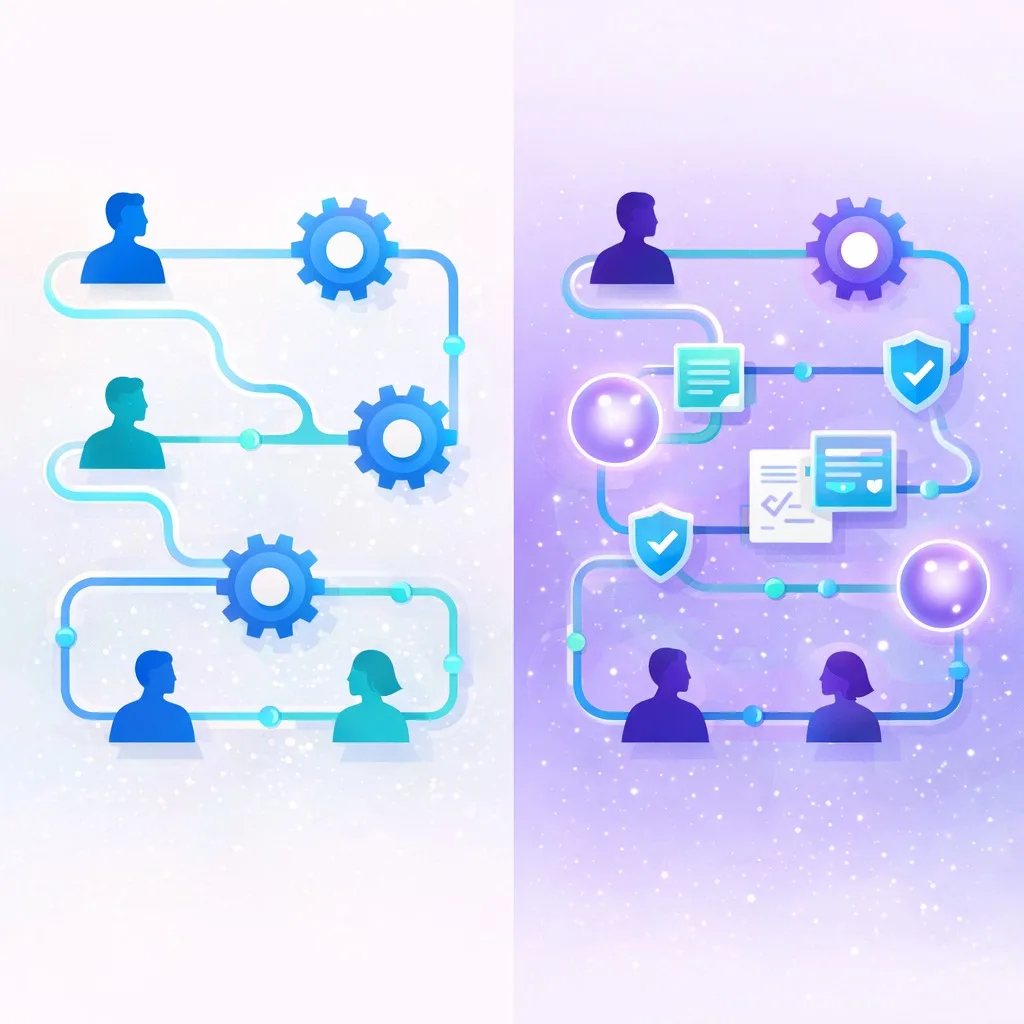 Agentic DevOps represents a transformative shift from traditional automation
to autonomous software engineering, where AI agents act as intelligent
collaborators rather than mere scripted tools. This Microsoft DevBlog article
outlines the core principles and strategic evolution required to integrate
these agents into the modern DevOps lifecycle. It emphasizes that robust
DevOps foundations—including automated testing and infrastructure as code—are
essential prerequisites, as agents amplify both healthy and broken practices.
The strategic direction focuses on evolving the engineer's role from a code
producer to a system designer and quality steward who orchestrates autonomous
teams. Key practices include adopting specification-driven development, where
structured requirements replace ad hoc prompts, and treating repositories as
machine-readable interfaces with explicit skill profiles. Furthermore, the
article highlights the necessity of active verifier pipelines that validate
agent output against architectural standards and security constraints to
mitigate risks like hallucinations and prompt injection. By progressing
through a four-level maturity model, organizations can transition from
reactive AI assistance to optimized, agent-native operations. Ultimately,
Agentic DevOps seeks to redefine productivity by offloading cognitive overhead
to specialized agents, allowing human teams to focus on high-value innovation
while maintaining rigorous governance and system reliability in cloud-native
environments.
Agentic DevOps represents a transformative shift from traditional automation
to autonomous software engineering, where AI agents act as intelligent
collaborators rather than mere scripted tools. This Microsoft DevBlog article
outlines the core principles and strategic evolution required to integrate
these agents into the modern DevOps lifecycle. It emphasizes that robust
DevOps foundations—including automated testing and infrastructure as code—are
essential prerequisites, as agents amplify both healthy and broken practices.
The strategic direction focuses on evolving the engineer's role from a code
producer to a system designer and quality steward who orchestrates autonomous
teams. Key practices include adopting specification-driven development, where
structured requirements replace ad hoc prompts, and treating repositories as
machine-readable interfaces with explicit skill profiles. Furthermore, the
article highlights the necessity of active verifier pipelines that validate
agent output against architectural standards and security constraints to
mitigate risks like hallucinations and prompt injection. By progressing
through a four-level maturity model, organizations can transition from
reactive AI assistance to optimized, agent-native operations. Ultimately,
Agentic DevOps seeks to redefine productivity by offloading cognitive overhead
to specialized agents, allowing human teams to focus on high-value innovation
while maintaining rigorous governance and system reliability in cloud-native
environments.Digital infrastructure shifts from spend to measurable value
/vnd/media/media_files/2026/04/18/digital-transformation-hits-budget-reality-2026-04-18-12-25-06.jpg) In 2026, digital infrastructure strategy has pivoted from broad, ambitious
spending to a disciplined focus on measurable business value and operational
efficiency. As budgets tighten, organizations are moving away from parallel,
uncoordinated modernization initiatives toward a maturing mindset that treats
technology as a rigorous economic system. CIOs are now prioritizing "execution
discipline" by consolidating platforms to eliminate tool sprawl, automating
manual workflows, and implementing robust financial governance like FinOps to
curb cloud cost leakage. This lean approach emphasizes extracting maximum
value from existing assets and funding only those projects that demonstrate
clear returns within six to twelve months. Critical foundations such as
security, resilience, and data quality remain non-negotiable, but they are
increasingly justified through risk mitigation and AI-readiness rather than
sheer capacity expansion. The shift reflects a transition from digital
ambition to digital justification, where success is defined by how
intelligently infrastructure supports resilience and outcome-led growth.
Ultimately, the winners in this era are not the companies launching the most
projects, but those building governable, observable, and high-performing
systems that minimize complexity while maximizing impact. Precision in
decision-making and the ability to prove near-term ROI have become the primary
benchmarks for modern enterprise leadership in a constrained environment.
In 2026, digital infrastructure strategy has pivoted from broad, ambitious
spending to a disciplined focus on measurable business value and operational
efficiency. As budgets tighten, organizations are moving away from parallel,
uncoordinated modernization initiatives toward a maturing mindset that treats
technology as a rigorous economic system. CIOs are now prioritizing "execution
discipline" by consolidating platforms to eliminate tool sprawl, automating
manual workflows, and implementing robust financial governance like FinOps to
curb cloud cost leakage. This lean approach emphasizes extracting maximum
value from existing assets and funding only those projects that demonstrate
clear returns within six to twelve months. Critical foundations such as
security, resilience, and data quality remain non-negotiable, but they are
increasingly justified through risk mitigation and AI-readiness rather than
sheer capacity expansion. The shift reflects a transition from digital
ambition to digital justification, where success is defined by how
intelligently infrastructure supports resilience and outcome-led growth.
Ultimately, the winners in this era are not the companies launching the most
projects, but those building governable, observable, and high-performing
systems that minimize complexity while maximizing impact. Precision in
decision-making and the ability to prove near-term ROI have become the primary
benchmarks for modern enterprise leadership in a constrained environment.The autonomous SOC: A dangerous illusion as firms shift to human-led AI security
In the article "The autonomous SOC: A dangerous illusion as firms shift to human-led AI security," author Moe Ibrahim argues that while a fully automated Security Operations Center is a tempting solution for talent shortages, it remains a fundamentally flawed concept. The core issue is that cybersecurity is not merely an execution problem but a complex decision-making challenge that demands nuanced organizational context. Ibrahim highlights that total autonomy risks significant business disruption, as algorithms lack the situational awareness to distinguish between a malicious threat and a critical business process. Consequently, the industry is pivoting toward a "human-on-the-loop" model, where human experts act as orchestrators who define policies and maintain oversight while AI manages scale and speed. This collaborative approach prioritizes transparency through three essential pillars: explainability, reversibility, and traceability. As organizations transition into "agentic enterprises" with AI agents across various departments, the need for human governance becomes even more critical to manage cross-functional risks. Ultimately, the future of security lies in empowering human analysts with machine intelligence rather than replacing them, ensuring that responses are not only fast but also accurate and accountable. This disciplined integration of capabilities avoids the dangerous pitfalls of unchecked automation and ensures long-term operational resilience.The Golden Rule of Big Memory: Persistence Is Not Harmful
 In the Communications of the ACM article "The Golden Rule of Big Memory:
Persistence is Not Harmful," authors Yu Hua, Xue Liu, and Ion Stoica argue for
a fundamental paradigm shift in how modern computer systems manage data. The
authors propose that persistence should be embraced as the "Golden Rule"—a
first-class design principle—rather than an auxiliary feature relegated to
slower storage layers. Historically, system architects have viewed persistence
as a "harmful" overhead that introduces significant latency and complicates
memory management. However, the piece contends that this perspective is
outdated in the era of byte-addressable non-volatile memory (NVM) and memory
disaggregation. By integrating persistence directly into the memory
hierarchy through innovative techniques like speculative and deterministic
persistence, the authors demonstrate that systems can achieve DRAM-like
performance without sacrificing durability. This holistic approach effectively
flattens the traditional memory-storage wall, creating a unified pool that
eliminates the bottlenecks of data movement and serialization. Ultimately, the
authors conclude that making persistence a primary architectural goal is not
only harmless but essential for the future of data-intensive applications.
This shift simplifies full-stack software development and provides a robust,
high-performance foundation for next-generation AI services, cloud-native
databases, and large-scale distributed systems.
In the Communications of the ACM article "The Golden Rule of Big Memory:
Persistence is Not Harmful," authors Yu Hua, Xue Liu, and Ion Stoica argue for
a fundamental paradigm shift in how modern computer systems manage data. The
authors propose that persistence should be embraced as the "Golden Rule"—a
first-class design principle—rather than an auxiliary feature relegated to
slower storage layers. Historically, system architects have viewed persistence
as a "harmful" overhead that introduces significant latency and complicates
memory management. However, the piece contends that this perspective is
outdated in the era of byte-addressable non-volatile memory (NVM) and memory
disaggregation. By integrating persistence directly into the memory
hierarchy through innovative techniques like speculative and deterministic
persistence, the authors demonstrate that systems can achieve DRAM-like
performance without sacrificing durability. This holistic approach effectively
flattens the traditional memory-storage wall, creating a unified pool that
eliminates the bottlenecks of data movement and serialization. Ultimately, the
authors conclude that making persistence a primary architectural goal is not
only harmless but essential for the future of data-intensive applications.
This shift simplifies full-stack software development and provides a robust,
high-performance foundation for next-generation AI services, cloud-native
databases, and large-scale distributed systems.When Geopolitics Writes Your Compliance Roadmap
In the article "When Geopolitics Writes Your Compliance Roadmap," Jack Poller
examines how shifting global power dynamics are fundamentally altering the
cybersecurity regulatory landscape. Drawing from the NCC Group’s Global Cyber
Policy Radar, the author argues that the era of reactive regulation is ending
as three primary forces reshape compliance strategies: digital sovereignty,
integrated AI governance, and increased board-level legal accountability.
Digital sovereignty is leading to a fragmented technology stack characterized
by data localization mandates and strict supply chain controls. Meanwhile, AI
security is increasingly embedded within existing frameworks rather than
through standalone legislation, requiring organizations to apply rigorous
security standards to AI systems as part of their broader resilience efforts.
Crucially, regulations like DORA and NIS2 are transforming board
responsibility from a vague goal into a strict legal obligation, often
carrying personal liability for executives. Additionally, the normalization of
state-sponsored offensive cyber operations adds a new layer of complexity to
corporate defense strategies. To survive this volatile environment,
organizations must move beyond traditional checklists and adopt evidence-led
resilience programs that align cyber risk with geopolitical realities. Those
failing to integrate these external pressures into their compliance roadmaps
risk being left behind in an increasingly fractured and litigious digital
world.
Microservices Without Tears: A Practical DevOps Playbook
 "Microservices Without Tears: A Practical DevOps Playbook" serves as a
strategic manual for organizations transitioning from monolithic systems to
distributed architectures. The article posits that while microservices offer
significant benefits like team autonomy and independent deployment cycles,
they also act as an amplifier for both good and bad engineering habits. To
avoid the operational "tears" associated with increased complexity, the author
advocates for a foundation built on robust automation and clear organizational
ownership. Central to this playbook is the emphasis on "right-sizing" service
boundaries through domain-driven design, ensuring that teams are accountable
for a service's entire lifecycle—from development to on-call support.
Technically, the guide champions "boring" but reliable CI/CD pipelines and
minimal Kubernetes manifests that prioritize essential health checks and
resource limits. Furthermore, it highlights the necessity of observability,
recommending the use of correlation IDs and "golden signals" to maintain
system visibility. By standardizing communication through versioned APIs and
adopting a "you build it, you run it" philosophy, teams can successfully
manage the overhead of distributed systems. Ultimately, the post argues that
architectural flexibility must be balanced with disciplined operational
standards to ensure long-term resilience and speed without sacrificing system
stability.
"Microservices Without Tears: A Practical DevOps Playbook" serves as a
strategic manual for organizations transitioning from monolithic systems to
distributed architectures. The article posits that while microservices offer
significant benefits like team autonomy and independent deployment cycles,
they also act as an amplifier for both good and bad engineering habits. To
avoid the operational "tears" associated with increased complexity, the author
advocates for a foundation built on robust automation and clear organizational
ownership. Central to this playbook is the emphasis on "right-sizing" service
boundaries through domain-driven design, ensuring that teams are accountable
for a service's entire lifecycle—from development to on-call support.
Technically, the guide champions "boring" but reliable CI/CD pipelines and
minimal Kubernetes manifests that prioritize essential health checks and
resource limits. Furthermore, it highlights the necessity of observability,
recommending the use of correlation IDs and "golden signals" to maintain
system visibility. By standardizing communication through versioned APIs and
adopting a "you build it, you run it" philosophy, teams can successfully
manage the overhead of distributed systems. Ultimately, the post argues that
architectural flexibility must be balanced with disciplined operational
standards to ensure long-term resilience and speed without sacrificing system
stability.

No comments:
Post a Comment