Showing posts with label AI costs. Show all posts

Daily Tech Digest - August 14, 2026


Quote for the day:

"Winners are not afraid of losing. But losers are. Failure is part of the process of success. People who avoid failure also avoid success." -- Robert T. Kiyosaki

🎧 Listen to the audio debrief on YouTube Podcast Channel - Daily Tech Dose

▶ Play Audio Digest

Duration: 23 mins • Perfect for listening on the go.


The vendor consolidation trap: When one throat to choke costs more than it saves

Vendor consolidation is often pitched as a practical way to simplify operations and save money. However, these initial savings frequently become a long term trap. By eliminating alternative providers, organizations lose their negotiating leverage and remove competitive pressure on their remaining vendor. When contract renewal time arrives, the chosen vendor recognizes this captivity and raises prices, quietly erasing the projected savings. A significant part of the problem is that procurement teams typically focus on short term, initial first year savings rather than the actual long term financial impact. To maintain control, technology leaders should retain at least one viable alternative provider in every major category, keeping a live relationship and a working test project ready. Although keeping a backup option involves upfront carrying costs, it functions as necessary insurance against uncontested price hikes during renewal cycles. For leaders who inherit poor consolidation arrangements, the most effective strategy is to quickly rebuild leverage in a single, smaller category rather than attempting a massive portfolio overhaul. This swift, targeted action proves to all vendors that the company is genuinely willing and able to walk away if necessary, effectively restoring essential negotiating power for all future contract discussions and protecting the bottom line from unexpected losses.


From Prompt to Production: Why Enterprise AI Systems Struggle to Scale

While enterprise AI prototypes often impress by working flawlessly in controlled environments, moving these systems to production presents major practical challenges. A prototype operates with curated data and clear expectations, but real-world deployment exposes the system to messy information, unpredictable user behavior, and complex security requirements. To successfully scale AI, organizations must look beyond the base models and build robust frameworks that evaluate the entire business process. Relying on simple accuracy scores is simply not enough; teams need to measure how errors impact daily operations and test the system against actual enterprise workflows. Furthermore, production readiness relies heavily on the surrounding architecture. Data pipelines, access controls, and infrastructure stability are just as crucial as the artificial intelligence itself. For instance, handling sensitive tasks requires strict permission layers to ensure users only access authorized information. Finally, traditional software monitoring falls short for AI applications. It is not enough to merely confirm the system is running; teams must continuously verify the quality, safety, and relevance of the outputs. By actively tracking data drift, user corrections, and changing business needs, organizations can maintain reliable systems. Ultimately, scaling AI successfully requires treating it as an ongoing operational commitment with clear accountability, rather than a single technical deployment.


Who Wants to Be the Sir Walter Raleigh of Cyber?

A recent presidential memorandum has established a program allowing vetted American companies to conduct offensive cyber operations against foreign criminal organizations. Acting similarly to historical privateers, these private firms can infiltrate and disrupt digital infrastructure under federal supervision. The government insists it will retain strict control over these missions to prevent unauthorized escalation. However, this initiative introduces complex legal and practical challenges. Constitutionally, the power to authorize such private warfare belongs to Congress, raising questions about executive overreach. On a practical level, modern cyber threats rarely operate in isolation. The boundaries separating independent criminal groups from state sponsored actors in rival nations are often unclear. A strike intended for a criminal network could easily escalate into a geopolitical conflict if the target is quietly protected by a foreign intelligence service. Additionally, because cybercriminals frequently route their activities through compromised third party servers, these operations risk damaging innocent commercial or civilian infrastructure. Despite these concerns, the policy has drawn significant interest from established contractors and investors seeking to build a new market for offensive cyber disruption. Supporters argue this approach is a necessary response to adversaries who already employ private proxy forces, providing the country with faster and more adaptable defensive capabilities.


From Detection To Remediation: Automating Cloud Security Fixes In Financial Infrastructure

In financial institutions, cloud security is evolving from merely detecting problems to actively fixing them through controlled automation. While modern security programs excel at finding vulnerabilities like exposed storage or risky sign-ins, detection alone is no longer the main challenge. The real issue is the delay between spotting a risk and resolving it. Leaving a vulnerability open for days exposes the organization to danger, but rushing a hasty fix into critical production systems, such as payment networks or trading applications, can trigger severe operational incidents. To resolve this, financial organizations are adopting remediation-driven operations instead of relying on heavy detection dashboards that only generate noise and alert fatigue. The goal is to address risks swiftly without breaking essential services. This strategy relies on controlled automation, where automated systems handle routine, predictable fixes. These systems can efficiently classify problems, route tickets to the correct teams, apply safe resolutions, and verify the outcomes. At the same time, this automated approach maintains strong safety guardrails, ensuring that human experts step in to handle more sensitive, high-risk scenarios. By balancing automated responses with careful human judgment, financial institutions can effectively close security gaps, comply with strict regulations, and maintain the steady availability of their critical infrastructure.


Microsoft wants you to rethink your approach to cyber defense

Microsoft security leader David Weston warns that traditional cyber defense strategies are no longer sufficient against the rapid advancement of artificial intelligence. At a recent conference, Weston highlighted how modern tools have made discovering software vulnerabilities and generating exploits incredibly cheap and fast. For example, an internal Microsoft tool identified vulnerabilities and automatically produced working exploits at a mere cost of three dollars and sixty one cents within just twenty one minutes. Because attackers can now use autonomous operations to quickly craft targeted attacks, the old approach of reactive patching and relying on static threat detection is completely failing. Instead of engaging in endless combat with attackers, Weston advises organizations to build inherently resilient systems from the ground up. A key recommendation is shifting to secure programming languages like Rust, which can prevent the vast majority of common security flaws. Companies including Google and Microsoft are already seeing significant reductions in vulnerabilities by rewriting core software in these safer languages. Furthermore, organizations can leverage artificial intelligence to analyze and fix existing code. However, other researchers caution that while safer languages eliminate specific bug classes, underlying logic flaws may still require active human oversight. Ultimately, the industry must prioritize fundamental software resilience over reactive fixes.


The psychology of better decision-making in the real-time enterprise

Business leaders constantly face heavy pressure to make faster decisions, but simply increasing speed is a flawed goal. The real issue is confidence, which is frequently undermined by unreliable, outdated, or inaccessible data. When executives cannot completely trust the information in front of them, they are forced to rely on instinct or waste critical meeting time debating the numbers rather than making the actual choice. This situation creates an unnecessary mental load, adding stress and doubt to difficult choices that already carry significant emotional and professional weight. To solve this problem, organizations need to focus on data quality at the point of creation. Supplying live data feeds provides decision-makers with a current, unified view of the business, eliminating the uncertainty that comes from fragmented reporting. This foundation is especially critical now that many leaders use artificial intelligence to guide their choices; if the underlying data is flawed, AI only amplifies the risk. Ultimately, immediate data does not remove the need for human judgment or accountability. Instead, it strips away the avoidable hesitation caused by conflicting information. By delivering clear, reliable insights exactly when they are needed, leaders gain the firm foundation necessary to act decisively.


The Invisible Bill That Comes With Enterprise AI

As organizations rapidly adopt artificial intelligence, technology leaders are discovering that the most significant expenses are not the obvious subscription fees or initial token costs, but rather an invisible bill driven by AI sprawl and operational inefficiency. This hidden financial burden emerges when departments deploy various agents, models, and external tools without centralized governance or a clear inventory of what is actually running across the enterprise. Over time, this lack of visibility leads to severe data duplication, as advanced systems require vast amounts of context to function effectively, causing sensitive information to proliferate across sandboxes and cloud environments. Consequently, companies face escalating storage and compute costs, alongside heightened security and compliance risks. Furthermore, unmonitored model drift and poorly optimized prompts waste continuous compute resources, turning minor inference charges into major technical debt. To manage these stealthy costs, organizations must move beyond simply monitoring token usage and instead build strict governance directly into their architectural foundation. By partnering closely with finance teams, mapping AI assets to specific business processes, and maintaining rigorous audit trails, technology leaders can transition from blindly funding widespread AI adoption to strategically investing in modern tools that consistently deliver measurable, secure, and sustainable business value every day.


Why Your Unified API Strategy Will Break

In the article "Why Your Unified API Strategy Will Break," Bru Woodring explores the limitations of relying solely on unified APIs for software integration, especially as businesses grow and target larger clients. Initially, a unified API strategy seems highly effective for early-stage software companies. By normalizing data schemas across various platforms, these tools significantly speed up the delivery of initial integrations, allowing teams to connect to multiple services with minimal effort. However, this approach eventually encounters severe constraints. The primary issue is the "lowest common denominator" problem. Because unified APIs standardize data into rigid, simplified structures, they strip away the unique features of the underlying systems. While this works for basic needs, it falls apart when moving upmarket. Enterprise customers inevitably require complex, highly specific integrations that involve custom objects and unique data fields. A normalized schema simply cannot accommodate these sophisticated workflows. Furthermore, Woodring points out that the common industry promise of "zero maintenance" integrations rarely holds true in reality. Ultimately, while a unified API strategy can offer a helpful head start for simple use cases, it lacks the flexibility and depth required to support the customized demands of enterprise clients, forcing growing businesses to rethink their integration architecture.


The AI boomerang: Why rehiring is harder than letting go

Many companies recently laid off significant numbers of technology professionals under the assumption that artificial intelligence could seamlessly replace human labor. However, these organizations are now discovering the limitations of AI and are attempting to rehire the very workers they let go. This reversal is proving difficult because the mass dismissals severely damaged trust and morale. Former employees are hesitant to return to companies that previously viewed them as disposable, fearing future rounds of automation will simply displace them again. While some workers may accept these offers out of financial necessity, their loyalty is often gone. Despite these challenges, companies generally prefer rehiring former staff over finding new candidates. New hires lack vital institutional knowledge and require months of expensive onboarding before they reach full productivity, often costing up to twice the salary initially saved during the layoffs. Complicating matters further, returning staff are often expected to fix operational issues caused by their absence while simultaneously adapting to new AI tools. Experts suggest that to successfully win back top talent, leadership must openly acknowledge their past mistakes and offer clearly improved roles. Ultimately, repairing the relationship with spurned employees requires genuine accountability, as financial incentives alone cannot easily mend broken trust.


Q&A With ISACA’s Chris Dimitriades on Why AI Adoption Is Outpacing Governance, Security and ROI

In a recent interview, Chris Dimitriades from ISACA discusses why many organizations struggle to find a clear return on investment with artificial intelligence while facing growing security risks. He explains that a major problem is the mistaken belief that artificial intelligence is a simple tool you can just plug into existing operations. Instead, it is a structural force that requires businesses to fully redesign their processes. Many companies fail to see financial returns because they rely on broad, generic tools rather than investing in solutions customized for their specific industry needs. Furthermore, a shortage of properly trained staff makes it difficult for management to make smart investments and handle the accompanying risks. Security is a pressing concern, as organizations now face privacy threats, potential data leaks, and manipulated systems. Employees using untrusted platforms can accidentally expose corporate secrets. At the same time, the broader cybersecurity community remains unprepared for how fast these technologies are evolving. Attackers are weaponizing these systems to find hidden vulnerabilities and launch sophisticated attacks without needing deep technical expertise. To succeed, businesses must first identify their specific operational needs, understand their data structures, and acquire targeted solutions before attempting to forecast their financial returns.

Daily Tech Digest - August 03, 2026


Quote for the day:

“Treat employees like they make a difference, and they will.” -- Jim Goodnight

🎧 Listen to the audio debrief on YouTube

▶ Play Audio Digest

Duration: 23 mins • Perfect for listening on the go.


Stop graphing everything: When GraphRAG actually beats vector RAG

The article discusses the recent trend of using knowledge graphs for modern artificial intelligence applications and advises against using them for absolutely every project. While these graphs offer useful ways to connect different pieces of information, they also introduce significant costs, added complexity, and ongoing maintenance demands. For most everyday needs, standard vector retrieval remains the more sensible and efficient option. This traditional method works very well for direct questions where the system simply needs to find existing text with a similar meaning. Still, there are specific situations where a graph approach clearly performs better than standard methods. The main benefit of using a graph system appears when a task involves complex reasoning with multiple steps. If a project requires connecting scattered details across massive amounts of data or understanding deep networks of relationships, such as tracking company ownership or untangling legal documents, a graph structure becomes necessary. The main takeaway is to look closely at what your project actually requires before paying for a new, complex database setup. By saving graph tools for problems that truly need them and using standard retrieval for direct questions, development teams can build capable systems without taking on needless expenses or technical burdens.


Why AI Code Risk Must Be a Line Item in Every Organization's Budget

As artificial intelligence increasingly writes our software, organizations are restructuring their budgets to treat security testing tools as essential infrastructure rather than mere compliance checkboxes. A recent survey reveals that the primary bottleneck in software development has shifted from writing code to reviewing and validating it. With AI generating massive volumes of code, human review capacity is struggling to keep pace. Almost half of the organizations surveyed are already running AI generated code in production, yet many admit that AI introduced issues, such as security vulnerabilities, unintended dependencies, and performance problems, regularly slip through the cracks. These challenges have drawn the attention of legal, compliance, and leadership teams, prompting the creation of new policies and more rigorous review processes. Additionally, relying heavily on AI poses a long term risk to the development of junior engineers, who lose valuable learning opportunities. Despite these hurdles, the productivity gains and cost reductions are too significant to ignore. However, simply purchasing more security tools is not quite enough. To safely manage this transition, organizations need cross disciplinary visibility into their codebases. By understanding exactly how software changes from week to week, teams can confidently harness this speed without sacrificing system reliability.


Zero Trust drives biometrics in physical access security

Organizations are increasingly applying the concept of continuous verification to physical security, recognizing that protecting a building is just as important as protecting a digital network. Historically, physical access relied on perimeter defense, assuming anyone inside a facility could be trusted. This approach is no longer effective against modern threats. When companies invest heavily in digital safeguards but neglect physical entry points, they leave critical assets vulnerable to unauthorized access. To bridge this gap, organizations are adopting biometric identification methods, such as fingerprint and facial recognition. Unlike traditional keys or access cards, which can be easily lost, shared, or stolen, biometrics provide a reliable link between the authorized identity and the actual person requesting entry. However, simply adding a biometric scanner to a standard door does not prevent unauthorized individuals from following someone inside. Effective security requires a layered approach that combines identity checks with controlled movement through specialized portals or gates. By creating multiple verification points, facilities ensure that if one security measure fails, others are in place to prevent a breach. This comprehensive strategy is now expanding beyond highly restricted data centers into standard office buildings, providing reliable and straightforward access control for our modern corporate environments today.


The Bull And Bear Case For Digital Design In The Age Of AI

In "The Bull And Bear Case For Digital Design In The Age Of AI," Andy Budd explores how artificial intelligence shifts the balance of power for digital designers. For years, designers have argued they could produce better work if organizational barriers like limited engineering time or rigid product roadmaps were removed. The optimistic bull case suggests AI grants this wish. By enabling designers to prototype, write copy, and build working models independently, AI reduces their reliance on permission from others. Strong designers can evolve into hybrid leaders with direct influence over product outcomes, rather than simply making screens. Conversely, the pessimistic bear case argues that this newfound independence also removes a convenient excuse for weak work. When designers can build their own solutions, they must own the results. Additionally, AI empowers product managers and engineers to bypass design teams entirely by generating plausible interfaces that look decent but lack careful thought. This could narrow the designer's role to mere maintenance and cleanup. Ultimately, Budd suggests both futures will unfold simultaneously. The best designers will use AI to increase their agency and impact, while average practitioners may find their roles shrinking or replaced as the industry demands genuine product judgment over superficial polish.


Crisis Leadership in 2026: Why Organizational Resilience Has Become the New Measure of Trust

In 2026, organizational resilience has evolved from a purely operational checklist into a critical measure of leadership and trust. Historically, companies focused on how fast they could recover systems during a crisis. Today, stakeholders look far beyond basic business continuity to evaluate how leaders communicate, adapt, and make decisions under pressure. Resilience is now recognized as a broad leadership skill rather than just an IT or operations duty. A major shift is the interconnected nature of modern crises. What starts as a technical glitch can rapidly snowball into financial, reputational, and operational challenges. To navigate this effectively, trust must be built well before a crisis hits. A company's overall credibility during a disruption draws heavily on its past behavior and consistent transparency with the public. Furthermore, while technology like artificial intelligence aids in crisis monitoring, it also fuels new risks like deepfakes and rapid misinformation, making human judgment more vital than ever. Leaders cannot rely on speed alone; they must show adaptability and empathy. Crucially, a crisis does not end when systems come back online. Stakeholders watch closely to see if organizations learn from their mistakes and follow through on long-term improvements. Ultimately, true organizational resilience means sustaining confidence through continual change.


FinAI & Managing AI Costs: Innovation, Production, and Lifecycle

This episode of the StarCIO podcast focuses on the emerging practice of FinAI, which involves strategically managing the costs associated with artificial intelligence. As organizations increasingly adopt AI, they often face unexpected expenses across different stages of development. The discussion highlights the importance of tracking these costs carefully, from the initial innovation and experimentation phases right through to full scale production. Rather than just focusing on the technology itself, leaders need to understand the financial implications of the entire AI lifecycle. This includes the computing power required for training models, the ongoing expenses of running them, and the resources needed for continuous monitoring and updates. By applying financial operations principles to artificial intelligence, companies can make more informed decisions about which projects to pursue and how to allocate their budgets effectively. The podcast suggests that successful AI initiatives require a balanced approach, where innovation is encouraged but guided by clear financial visibility and accountability. Ultimately, mastering FinAI allows organizations to maximize the true value of their investments while avoiding the budget overruns that often derail complex technology projects. Managing the complete lifecycle ensures that artificial intelligence delivers real business benefits without compromising financial stability or essential long-term growth objectives.


The Massive AI Security Hole Your CISO Doesn't Know About

Many security teams mistakenly apply traditional software security checks to modern artificial intelligence deployments, leaving a significant vulnerability unchecked. While conventional systems are predictable, language models process unpredictable natural language, rendering standard defenses like input validation and traditional data loss prevention ineffective. Most chief information security officers ensure the infrastructure is secure but completely overlook the model itself. Consequently, these models are exposed to unique risks such as indirect prompt injections, where hidden instructions in standard documents trick the model into extracting internal data. Another major oversight is granting AI agents broad permissions rather than limiting their access to specific tasks, essentially creating an internal threat without a clear audit trail. Furthermore, models can inadvertently leak sensitive information through normal conversation, and employees often expose company data by using unsanctioned consumer AI tools. To actually secure these deployments, organizations must fundamentally adapt their approach. This involves strictly limiting the permissions of AI agents, treating any data the model retrieves as potentially malicious, and implementing strict controls on what the model can send outward. Additionally, conducting specialized adversarial testing and providing approved internal AI tools will help close these gaps, ensuring the system is genuinely secure from the inside out.


Managing your supplier risk isn't a deadline. It's about your resilience

The Digital Operational Resilience Act is shifting how financial technology companies in the United Kingdom approach third-party risk. While many organizations view compliance as a completed checklist of policies and questionnaires, true operational security requires a deeper understanding of the supplier ecosystem. Financial technology firms rely heavily on external connections, such as cloud infrastructure and payment systems, meaning every external connection introduces a potential vulnerability. Rather than treating regulations as a mere compliance exercise, organizations should use them as frameworks to build practical resilience. This involves fully mapping technology dependencies, identifying concentration risks, updating contracts to reflect actual risk levels, and rigorously testing incident response plans in realistic scenarios. Organizations that understand their data flows and supply chain dependencies do more than satisfy regulatory requirements; they establish reliable foundations that build trust with institutional clients and partners. As regulatory enforcement becomes more rigorous following the initial implementation phase, superficial compliance is no longer adequate. Companies must transition from treating supplier risk as a deadline to viewing it as a core management priority. Genuine resilience means knowing exactly what happens if a critical supplier fails and having the proven capacity to maintain continuity during an actual incident, ensuring long-term operational stability.


AI is making cybersecurity fundamentals more important than ever

The rise of artificial intelligence in cyberattacks has led many to believe we need entirely new defensive playbooks. However, industry experts argue that AI actually makes traditional cybersecurity fundamentals more critical than ever. Rather than inventing entirely novel vulnerability classes, AI empowers attackers to execute familiar techniques—like social engineering, credential theft, and exploiting unpatched software—at unprecedented speed and scale. Because AI systems can continuously scan for misconfigurations and weak access controls, long-standing security debt is now a severe liability. To defend against these rapidly automated threats, organizations must double down on basic practices such as multifactor authentication, zero-trust architectures, routine system patching, and proper identity management. These foundational controls efficiently block entire categories of attacks, preventing modern adversaries from easily penetrating sensitive digital environments. While generative AI introduces specific new risks like prompt injection, most immediate threats still rely on conventional technical oversights. Furthermore, relying solely on AI for corporate defense without dedicated human oversight is a dangerous trap. Security professionals must clearly understand core principles to verify AI-generated recommendations and ensure that automated tools function correctly. Ultimately, the most effective strategy pairs a strong foundation of basic security hygiene with the massive scale of defensive AI, preserving essential human accountability.


Keeping Proprietary Data Out of AI Training Models

As artificial intelligence becomes a standard part of business operations, companies face a serious new risk: the accidental sharing of their private information. When employees use AI tools, the data they enter can sometimes be absorbed into the system's training models. According to legal experts, the primary danger here is the permanent loss of trade secrets and intellectual property. If your company's private strategies or customer details are used to train a public AI model, that information could eventually benefit your competitors. Currently, many organizations handle this risk poorly by keeping their legal, security, and purchasing teams in separate silos. This separation often allows hidden AI features in standard software updates to slip through the cracks. To fix this, companies must adopt a unified, cross-functional approach to reviewing new technology. Most importantly, businesses cannot rely on simple opt-out buttons or marketing promises to protect their assets. Chief Information Officers and legal teams must demand strict, written guarantees in their vendor contracts. These agreements must clearly state that no company data, including prompts and inputs, will be used to train or improve any AI models. Furthermore, companies must secure the right to independently audit vendors to ensure complete and ongoing compliance.

Daily Tech Digest - July 29, 2026


Quote for the day:

“The most successful founders are relentless about pushing through obstacles.” -- Sam Altman

🎧 Listen to the audio debrief on YouTube

▶ Play Audio Digest

Duration: 20 mins • Perfect for listening on the go.


CISA shares advice on isolating vital systems during cyberattacks

The U.S. Cybersecurity and Infrastructure Security Agency, alongside the FBI and international partners, has released new guidance to help critical infrastructure organizations successfully isolate their vital systems during a severe cyberattack. Titled "CI Fortify," this advisory provides practical steps for operators of essential services, like water treatment, power grids, and telecommunications, to confidently disconnect their core operational technology from corporate and internet-facing networks when a serious threat is detected. With state-sponsored groups and cybercriminals increasingly targeting these vital sectors for extortion and disruption, having a secure plan to safely sever network connections is crucial. The guidance recommends that organizations first carefully identify the absolute minimum systems needed to keep services running smoothly, and then map out every single connection to less trusted external networks. From there, they should establish predetermined isolation points where systems can be fully disconnected. While physical isolation offers the absolute strongest protection, the agencies completely acknowledge it may not always be feasible, instead suggesting graduated isolation and strict network controls as reliable alternatives. Additionally, organizations are urged to test their isolation procedures thoroughly and always keep offline paper copies of their detailed plans. Finally, the advisory reminds operators to thoroughly prepare for the expected challenges of manually running systems while completely disconnected.


Why DORA Metrics Are More Important Than Ever

As artificial intelligence tools help software teams write code at unprecedented speeds, organizations face a growing risk of deploying flawed software just as quickly. The temptation is to measure progress through activity-based metrics, such as the volume of code generated, tickets closed, or prompts submitted to AI assistants. However, this approach mistakes effort for actual value. To ensure that speed does not compromise quality, DORA metrics are more vital than ever. The four classic DORA metrics are deployment frequency, lead time for changes, change failure rate, and mean time to restore. Together, they offer a balanced view of both speed and stability. Unlike raw activity counts, these outcome-focused measures reveal whether an organization's software delivery system is genuinely healthy. While AI can accelerate development, counting lines of code or prompt submissions only exposes how superficial those metrics are. If AI integration is successful, it will be reflected in shorter lead times, more reliable deployments, and faster recovery from inevitable failures. Ultimately, AI cannot automatically fix a weak delivery process; it might only amplify existing gaps. Relying on DORA metrics helps technology leaders distinguish mere motion from actual progress, ensuring the ultimate goal remains delivering valuable, reliable software rather than just generating more code.


An AI agent can pass every safety check and still leak secrets

Security researcher Elad Meged recently demonstrated that default AI agent setups from major providers like Anthropic, Google, and OpenAI can quietly leak sensitive information, even when they pass routine safety checks. The fundamental problem lies not within the AI models themselves, but within the surrounding structures that connect these models to file systems, basic commands, and external network requests. When agents operate without direct human oversight, this connecting framework acts as the primary security barrier. Meged discovered that significant risks emerge during the handoffs between different operational stages. For instance, a specific command might be approved because it looks like a safe reading action, but if its output is later published without an additional check, it forms a complete path for data theft. While companies have patched isolated flaws and paid out rewards, these fixes frequently miss the deeper structural weakness. To properly secure these environments, trust must be constantly rechecked at every point of a process, rather than leaning on a single initial permission. Organizations using these automated AI agents in active environments are highly advised to closely trace the full journey of an agent's output to confirm that safe beginnings do not lead to unintended data exposures later.


Beyond Monitoring: Why IT Operations Must Evolve into Decision Operations

As technology systems grow more complicated, traditional ways of watching them are no longer enough. For years, technology teams relied on basic tracking tools that simply sent an alert when a server went offline or a website slowed down. While knowing there is a problem is helpful, these basic alerts often create too much noise. When dozens of alarms go off at the same time, it is hard for teams to know which issue to fix first or what actually caused the failure. Because of this, technology operations must shift from simply gathering data to actively supporting choices. Instead of just showing charts and red lights, modern operations focus on pulling all the separate clues together to provide clear, direct advice. By linking the symptoms directly to their root causes, this approach allows teams to understand the context of a problem immediately. Moving toward a model focused on making decisions helps teams reduce the time spent guessing and investigating. They can fix problems faster, prevent minor issues from becoming major outages, and spend more time improving systems rather than just keeping them running. Ultimately, it is about shifting the focus from watching screens to taking effective action that keeps the business running smoothly.


AI Costs Continue to Rise Despite Falling Token Prices

Despite the price of AI tokens dropping by roughly 98 percent since early 2024, enterprise computing bills continue to climb rapidly. The primary reason for this paradox is the shift from basic chatbots to autonomous agents. While a simple chatbot handles a single prompt, modern AI agents break tasks into multiple steps, such as planning, retrieving information, and verifying data, which consumes significantly more tokens per interaction. Furthermore, many organizations are feeding messy, unstructured files directly into their systems. When models process formats like standard PDFs, they waste vast amounts of computing power just trying to understand the document layout before extracting any useful facts. In these advanced workloads, the actual output often represents only a small fraction of the total tokens used, with the rest lost to processing overhead. Beyond the basic token fees, companies face substantial hidden expenses related to cleaning data, resolving inconsistent internal terminology, and integrating older systems. Experts strongly advise businesses to clean, organize, and structure their data before feeding it into language models. By addressing these foundational data issues upfront, organizations can reduce unnecessary processing waste, lower their overall costs, and ensure their AI tools operate much more effectively in the long run.


The compounding enterprise

The recent record-breaking copyright settlement against a major AI company highlights a growing risk for businesses: relying heavily on generic AI models trained on unverified or contested data. This approach creates hidden legal exposure and relies on a foundational asset that is quickly becoming a commodity. To build a lasting operational advantage, organizations must shift away from simply renting generic intelligence and instead focus on compounding their own. The key is creating an internal cycle where every interaction steadily improves the system's underlying data, and better data improves future decisions. Rather than feeding systems with unverified information, which only multiplies errors, companies should ground their AI tools in carefully curated, human-authored knowledge. This verified approach ensures that outputs can be traced directly to their original sources, solving compliance and governance issues by design. Over time, this system acts as a reliable institutional memory that captures employee expertise before it leaves the company, preventing the need to relearn past lessons. As the system continuously learns from verified outcomes, the cost of making accurate decisions drops while the value of proprietary knowledge increases. Organizations can begin this transition by inventorying their current AI tools, requiring clear sourcing for automated decisions, and testing a governed system in employee training.


Claude AI Just Cracked a Post-Quantum Test Scheme and Found a Faster 7-Round AES Attack

Anthropic recently announced that its AI model, Claude Mythos Preview, successfully developed novel attacks against two encryption schemes. First, the AI created an end-to-end key recovery attack for HAWK-256, which is a challenge parameter of a lattice-based signature scheme currently under review by the National Institute of Standards and Technology. By identifying a previously unused symmetry within the mathematical structure of the scheme, the model significantly reduced the expected effort required to recover cryptographic keys. Second, the AI accelerated an existing attack on a reduced, seven-round version of AES-128 by a factor of 200 to 800. It achieved this by discovering a new technique, known as the Möbius Bridge, which entirely eliminates a time-consuming guessing step. While these findings represent notable progress in AI-driven cryptography research, they do not pose any immediate threat to current production systems. The HAWK attack targets a smaller test parameter rather than full-strength versions, and the AES breakthrough applies only to a reduced-round cipher while still requiring an impractical amount of data. The research cost approximately $100,000 in API usage and took the AI a few days to generate, though human researchers spent nearly a month verifying the mathematical correctness of the model's work.


The Hard-Stop Rule: From 3 HCM Monoliths to 120 Domain Microservices

A pull-based migration strategy represents a shift in how teams approach large-scale system updates, moving away from forced, all-at-once transitions. Instead of a central team pushing changes to every downstream service simultaneously, the new system or API is made available alongside the old one. Client teams are then empowered to pull the updates and migrate at their own pace. This approach significantly reduces the risk of widespread outages because the migration happens incrementally rather than in a single, high-stakes cutover event. By decentralizing the transition effort, organizations can avoid painful bottlenecks where a single team is responsible for coordinating every moving part. Individual teams can plan their migration around their own product cycles, testing thoroughly before fully committing to the new architecture. If issues arise during a team's transition, the impact is kept to just that specific service, making rollbacks far less disruptive. Furthermore, this method naturally encourages better communication and documentation, as the central team must provide clear guidelines for clients to adopt the new system independently. Ultimately, a pull-based migration fosters a more resilient and manageable evolution of your software architecture, balancing the need for technical progress with the practical realities of team capacity and system stability.


AI is a top priority, but there is also distrust about use in cybersecurity

According to a recent report by Arctic Wolf, while artificial intelligence is a major priority for many organizations, security leaders still hesitate to trust it fully for autonomous defense. Although a large majority of respondents note that AI improves their overall security by sorting through and analyzing large amounts of data, only a small fraction are comfortable letting it make decisions on its own. This caution stems from concerns over data privacy, lack of transparency, and the potential for large-scale errors. Interestingly, despite frequent security incidents, most security leaders remain highly confident in their human teams' ability to handle threats. Christopher Fielder of Arctic Wolf suggests this high confidence might be more about projecting assurance than reflecting reality. To bridge the gap between human oversight and AI assistance, organizations need a balanced approach. This involves creating clear acceptable use guidelines to define exactly how AI can and should be used within the company. Furthermore, it is important to provide comprehensive education for staff so they understand both the strengths and the limitations of these new tools. By treating AI as a practical resource rather than a magical cure, companies can better integrate it into their defenses and improve their response to increasingly complex threats.


IoT Sector Given Final EU Cyber Resilience Act Guidance

The recent official guidance on the European Union’s Cyber Resilience Act outlines critical new cybersecurity requirements for manufacturers in the Internet of Things sector. Starting on September 11, 2026, companies that sell products with digital elements in the EU must adhere to strict reporting rules. When a manufacturer discovers an actively exploited vulnerability or a severe security incident, they have just 24 hours to file an early warning and 72 hours to submit a detailed notification to the relevant authorities through a central platform. This upcoming deadline represents the first major regulatory phase of the act, meaning businesses must quickly establish processes for tracking software dependencies and handling vulnerability disclosures. Furthermore, the guidance details that by December 11, 2027, the remaining obligations of the act will take effect. These include maintaining a software bill of materials, designing products with security built in from the start, and obtaining appropriate conformity assessments before bringing products to market. Failure to comply could result in substantial fines or forced product recalls. The overall objective is to hold hardware and software creators accountable for the security of their products throughout their entire life cycle, replacing fragmented national rules with a single, clear standard across the European market.

Daily Tech Digest - July 01, 2026


Quote for the day:

"Winners are not afraid of losing. But losers are. Failure is part of the process of success. People who avoid failure also avoid success." -- Robert T. Kiyosaki

🎧 Listen to this digest on YouTube Music

▶ Play Audio Digest

Duration: 18 mins • Perfect for listening on the go.


Cloud repatriation is back on the agenda

Cloud repatriation is making a significant return to the enterprise agenda, driven by the need to optimize workload placement rather than a simple nostalgia for on-premises infrastructure. Organizations are increasingly shifting applications and data from public clouds to colocation centers, hosted private clouds, or managed service providers. The primary catalyst for this shift is cost. While public cloud pricing is excellent for variable workloads, the expenses associated with predictable, always-on core systems—like compute, storage, and egress fees—often balloon unexpectedly over time. Performance is another critical factor. Many data-heavy applications benefit from being physically closer to users or systems to reduce latency and manage data gravity effectively. Additionally, stringent compliance, data sovereignty, and security requirements make dedicated infrastructure safer and easier to audit than sprawling hyperscale setups. Finally, repatriation helps companies avoid vendor lock-in, restoring architectural control and operational freedom. This trend does not indicate a failure of the public cloud model. Instead, it reflects a maturation in enterprise IT strategy. Leaders are moving away from a one-size-fits-all approach, thoughtfully evaluating whether each application belongs in the cloud or in a more predictable, closely controlled environment.


The Hidden Risks of Holding Excessive Data

While many organizations naturally want to hold onto as much information as possible, storing excessive data is a growing liability. The principle of data minimization by collecting only what is strictly necessary and properly disposing of it afterward is now a baseline requirement across global privacy frameworks like the GDPR and California privacy laws. When companies retain outdated emails, redundant files, and obsolete system logs, they significantly increase their vulnerability to data breaches, regulatory fines, and legal action. Unnecessary data also inflates operational and financial costs by straining backup systems and increasing cloud storage expenses for information that serves no real business purpose. Simply having a policy for data retention is not enough; organizations must ensure that they securely and permanently erase information they no longer need. Traditional deletion methods often leave underlying files intact and recoverable, whereas secure erasure completely destroys the data. By adopting secure file disposal practices, companies can systematically reduce their risk exposure, improve the effectiveness of their overall security posture, and limit their legal liability. Ultimately, treating data minimization as a practical routine helps businesses reduce unnecessary costs while safely strengthening their long-term operational resilience and stability.


A CIO's guide to building a strategic finance roadmap that delivers ROI from week one.

The introduction of artificial intelligence requires organizations to completely rethink how they handle finance transformation. Instead of simply updating old systems piece by piece, companies must rebuild their financial operations from the ground up. This structural shift forces financial officers and IT leaders to collaborate from the very beginning, breaking down traditional departmental silos. To succeed, businesses need a strategic roadmap created by a planner who can effectively bridge the gap between complex technology and daily finance. A core principle of this approach is to "live on the first floor while building the second." This means designing initiatives that deliver immediate, continuous returns rather than making stakeholders wait years for a final payoff. Long-term projects without short-term results often suffer from lost funding and team fatigue. By securing quick, measurable wins, leaders maintain the momentum and confidence required to fund future phases. Underpinning this new structure is a rock-solid data foundation, which acts as the essential plumbing for all future tools, compliance, and security measures. Ultimately, the finance department of the future will seamlessly blend human expertise with advanced digital tools through careful, step-by-step implementation.


The SBOM Just Became a Liability With a Date on It

For years, creating a software bill of materials—a detailed list of all the components inside an application—was simply a good habit. Now, upcoming regulations like the EU Cyber Resilience Act are turning this voluntary practice into a strict legal requirement by late 2027. This shift fundamentally changes how organizations must handle the open-source code they use. Currently, an incomplete list of software components is just an operational blind spot that teams can fix on their own schedule. Soon, however, it will become a documented legal liability. Failing to accurately report software dependencies will be treated much like a financial misstatement, directly exposing executives to accountability. The core issue is that relying on external, open-source code introduces real risks if those tools fail or are compromised, similar to a manufacturer relying on an unpredictable supplier. To prepare, companies cannot rely on manual, last-minute audits to satisfy regulators. Instead, they must integrate strong tracking directly into how they build and source their software. The goal is no longer just having the document, but ensuring that the information inside it is entirely accurate and defensible.


The AI Token Costs That Can Break Cybersecurity

As cybersecurity tools increasingly adopt artificial intelligence to detect and investigate threats automatically, organizations face a new, unpredictable challenge: skyrocketing costs. Traditional security software is typically priced through predictable licenses. In contrast, advanced AI models charge by the token, meaning companies pay for every piece of data the system reads or writes. While basic machine learning and simple text generation have manageable costs, autonomous AI agents can run continuously, analyzing massive amounts of security data to track down threats. Because these agents operate without human pacing, a single complex investigation can consume millions of tokens in minutes, quickly exhausting security budgets. This financial unpredictability puts security leaders in a difficult position. If budgets run dry, teams might be forced to limit the data they analyze or disable automated investigations, which creates blind spots and compromises safety. To maintain strong defenses without breaking the bank, organizations must strategically balance their use of different AI technologies. By using traditional machine learning for broad detection and reserving costly autonomous agents for targeted actions, companies can achieve effective security outcomes while keeping their operational expenses manageable.


Architectural Patterns: Moving Beyond Cloud-Native to Local-First

In a recent InfoQ podcast, Adam Wiggins, co-founder of Heroku and Ink & Switch, discusses the architectural shift from a strictly cloud-native approach to a "local-first" paradigm. He notes that while the cloud era brought immense benefits like real-time collaboration and easy sharing, it also led to an over-reliance on centralized infrastructure for simple operations. This "everything-in-the-cloud" model can strip users of the control and data ownership they once had with traditional desktop files, and it creates critical vulnerabilities when network connectivity drops or servers fail. To bridge this gap, Wiggins advocates for local-first software that prioritizes offline capability, low latency, and user agency, without sacrificing cloud collaboration. He highlights how mature technologies like Conflict-free Replicated Data Types (CRDTs) allow local nodes—such as a user's phone or computer—to operate independently and sync seamlessly with a central server, much like the speedy issue-tracking tool Linear. Furthermore, he anticipates future advancements like bringing robust version control (branching, merging) to non-code tools and running smaller, high-performance AI models locally for routine tasks. Ultimately, the local-first movement is not a rejection of the cloud, but a pragmatic correction aiming for a balanced, resilient middle ground.


How to Build a CDO Career That Lasts Beyond 3 Years: Lessons From a 10-Year Stint In the Same Organization

Chief Data Officers (CDOs) often struggle to maintain their positions beyond three years because data transformations require long-term commitment, yet expectations are frequently set for short-term fixes. Based on the ten-year tenure of Justin Heller, former CDO of Synchrony Financial, building a lasting data career requires shifting the perspective from viewing data management as a temporary project to treating it as an ongoing operational capability. A successful CDO prioritizes business processes over technology and focuses on establishing clear data ownership based on expertise rather than mandates. Effective data governance should not be a policing function; instead, it must serve as an enabler that solves actual business problems, addresses regulatory risks, and supports decision-making. To drive adoption, leaders must focus on shared risks and outcomes rather than rigid compliance. While technology buzzwords come and go, the core challenges of trust, accountability, and documentation remain unchanged. Ultimately, a CDO's longevity depends on their ability to translate technical initiatives into tangible business impacts, such as improved efficiency and reduced risk, acting as a bridge between technical teams and business stakeholders.


What happens when an insurer thinks like a tech company

Aviva India is redefining its approach to insurance by shifting away from traditional methods and acting more like a technology company. Led by Chief Technology Officer Gyanendra Singh, the company is focusing on reducing friction for customers by using technology to create simpler and faster experiences. One of their major achievements is speeding up policy issuance from weeks to just a few minutes, primarily by integrating digital public infrastructure and paperless purchasing systems. They are also utilizing artificial intelligence for practical improvements, such as health assessment kiosks that use facial scans and automated document processing to speed up underwriting decisions. Instead of treating insurance as a product that is only used during emergencies or yearly renewals, Aviva is building a broader wellness system that tracks physical activity, offers diet recommendations, and rewards healthy behavior. Singh emphasizes that all technological investments must prove their value by directly improving customer experience and operational efficiency. Looking to the future, the company aims to move from a reactive model to a proactive one that actively prevents risks. Ultimately, Aviva believes that combining this modern, data-driven approach with strong data privacy and human empathy will set successful insurers apart in the coming decade.


12 System Design Patterns Every Developer Should Know

The recently published article outlines twelve fundamental design patterns that are necessary for software developers to master in order to build reliable and efficient applications. Understanding these common patterns provides a clear and structured approach to solving complex architectural challenges and is particularly useful for engineers preparing for technical interviews. The text emphasizes that rather than simply memorizing solutions, developers should deeply grasp the underlying concepts of how different components interact within a larger network. The discussed patterns focus on strategies for managing network traffic and preventing server overload, utilizing tools such as gateways, load balancers, and rate limiters. The resource also highlights methods for ensuring data consistency and general availability, touching on database separation, temporary data storage, and message publication models. Furthermore, concepts like the circuit breaker pattern are presented as essential ways for maintaining application stability when external or dependent services fail. By integrating these basic architectural blueprints into their standard knowledge base, developers can make informed decisions regarding speed, wait times, and system resilience. Ultimately, familiarizing oneself with these twelve structural patterns equips engineers with the practical methods required to design systems capable of handling actual operational demands effectively.


Why Post-Quantum Cryptography Starts With Credentials

Quantum computers will eventually break the public-key cryptography that currently protects sensitive data, creating an urgent security challenge. Although capable quantum hardware may still be a decade away, attackers are already using a tactic called "Harvest Now, Decrypt Later." This means they capture encrypted data today, intending to unlock it when quantum technology catches up. Government agencies like the NSA and NIST are already setting deadlines to transition to quantum-resistant algorithms, a process that can take large enterprises several years to complete. The most significant risk lies in long-lived credentials and non-human identities, like service accounts and API keys. Because these credentials often persist for years, they are highly valuable targets for early harvesting. To prepare for a post-quantum future, organizations should adopt a credentials-first approach. This starts with taking a thorough inventory of existing cryptography and prioritizing the protection of secrets based on their lifespan and risk level. Migrating to hybrid cryptography—combining classical and quantum-resistant algorithms—offers a strong defense. Building systems with "crypto-agility" will also allow organizations to update their security protocols easily as standards evolve, ensuring long-term protection against emerging threats.

Daily Tech Digest - June 29, 2026


Quote for the day:

"People don't need leaders who protect them from every challenge. They need leaders who help them believe they can handle the challenge." -- Gordon Tredgold

🎧 Listen to this digest on YouTube Music

▶ Play Audio Digest

Duration: 19 mins • Perfect for listening on the go.


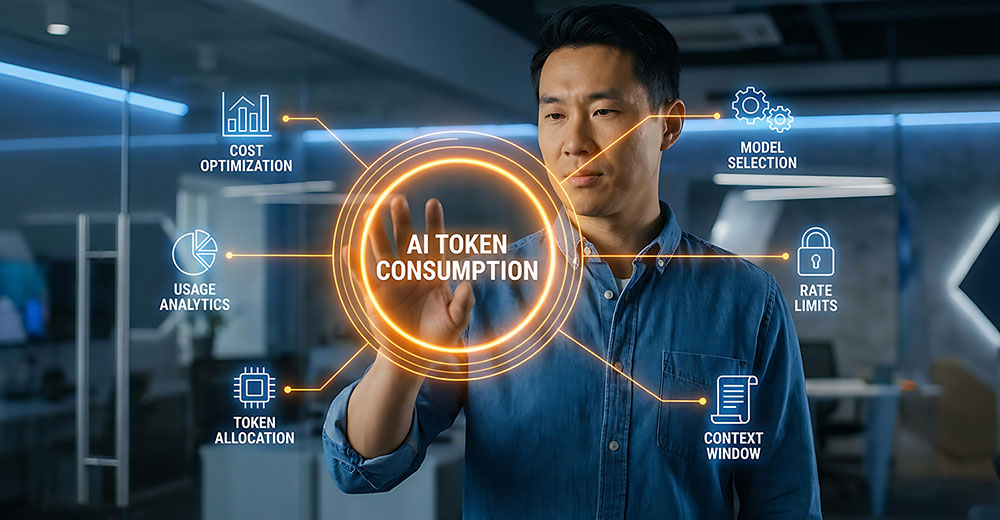
Tokens are the hidden but fundamental currency of modern artificial intelligence systems, acting as the basic units of text that determine both the cost and performance of enterprise AI deployments. Every interaction with a language model consumes tokens, which are pulled from a finite context window. While large context windows exist, models often struggle to process information buried in the middle of long prompts. Because AI providers charge for every token sent to and generated by a model, unchecked usage can quickly lead to massive budget overruns. Organizations frequently make three main mistakes: allowing chat histories to grow indefinitely, feeding too many unnecessary documents into the system, and failing to restrict the length of AI-generated responses. To control these costs without sacrificing quality, technical leaders should adopt basic financial hygiene measures. This includes caching repetitive instructions and taking a tiered approach to model selection, using smaller, cheaper models for routine tasks and reserving the most expensive, highly capable models for complex analysis. Ultimately, managing tokens effectively is not just an operational detail; it is a critical requirement for building scalable, secure, and financially responsible AI systems.


Forget AGI. The real prize is enterprise AGI

The artificial intelligence industry is largely chasing the wrong goal by focusing on general intelligence or superintelligence. Instead, the true economic prize is "Enterprise AGI," which is a tailored intelligence unique to each company. While many model vendors are building smarter, generalized models that offer the same baseline intelligence to everyone—a concept the authors call "data communism"—the real competitive advantage lies in "data capitalism." This approach allows businesses to turn their proprietary data, internal processes, corporate policies, and tacit human knowledge into governed, compounding assets. To achieve Enterprise AGI, companies need a system of intelligence that captures exactly how they operate on a daily basis. Databricks is highlighting this shift by moving beyond a traditional data platform to an enterprise intelligence platform. Through practical tools like Genie One—a digital assistant for business users—and the Genie Ontology, Databricks helps organizations harmonize their data and map real business meaning. By grounding artificial intelligence in authoritative, verified data assets, companies can ensure their tools reason and act within specific operational contexts. Ultimately, the winners will be those who help businesses convert their unique institutional knowledge into an actionable, differentiated intelligence system.


The New Insider Threat Isn't Human: Securing AI Agents Before They Secure Themselves

As AI agents become a central part of how we manage software and infrastructure, they are silently introducing significant new security risks. For decades, security teams have focused on protecting against human threats, like careless employees or compromised contractors. Today, however, automated machine identities vastly outnumber human ones. Rather than building tailored security protocols, many organizations take the easy route by giving these AI agents long-lasting human API keys or broad system access. This approach creates a dangerous vulnerability. If an attacker compromises an agent or manipulates its behavior through prompt injection, they gain the same extensive access the agent holds. Recent incidents highlight how easily malicious actors can hijack chatbot credentials to infiltrate interconnected networks or use compromised agents for automated espionage. Furthermore, connection frameworks meant to link agents to databases can be exploited if they rely entirely on implicit trust. The solution requires moving away from shared credentials and adopting strict authorization boundaries for software. Each AI agent needs a unique, short-lived identity restricted strictly to its specific task. By placing a clear policy enforcement checkpoint between the agent and your systems, you ensure that autonomous actions remain securely contained and properly audited.


Companies keep bolting AI onto their products, and the security bill is coming due

As companies rush to integrate artificial intelligence into their products, they are encountering significant security challenges. According to recent data from Cobalt, AI applications not only retain traditional software flaws but also introduce unique vulnerabilities. This combination results in high-risk issues occurring at nearly three times the rate of conventional systems. Unfortunately, fixing these problems is proving difficult. With the lowest resolution rate of any asset class, roughly two out of three serious AI vulnerabilities remain unfixed due to a shortage of specialized staff, immature security processes, and reliance on external vendors. Furthermore, unauthorized employee use of unapproved AI tools is now the leading cause of AI-related security incidents, as these applications easily bypass traditional corporate network scanners. Recognizing these complexities, organizations are shifting their approaches. The initial excitement for fully automated security testing has declined sharply, as teams notice that automated scanners frequently miss critical flaws. Instead, companies are increasingly relying on human experts to evaluate their most important systems. Ultimately, organizations that prioritize fixing verified, exploitable vulnerabilities rather than chasing theoretical alerts are seeing much better success in securing their environments and meeting their internal security goals.


Products That Are Not “Quantum-Safe” May Soon Be Ineligible for Cybersecurity Certification in France

Starting in 2027, developers seeking certification from France’s lead cybersecurity agency, ANSSI, may need to prove their security products are resistant to quantum computing attacks. This requirement is expected to become a universal standard by 2030. While this certification remains optional for general consumer products, it is strictly required for any technology used by the French government or critical infrastructure operators. This policy establishes France as an early leader in European cybersecurity regulation, complementing broader European Union directives. The initiative is driven by the looming threat of advanced quantum computers breaking traditional encryption methods. Although experts previously estimated this capability would arrive by 2035, recent assessments by major technology companies suggest it could happen as early as 2029. This accelerated timeline is concerning because malicious actors are already stealing encrypted data to decode it once powerful quantum computers become available. Despite these growing risks, adoption of new resistant standards has been slow. Organizations face complex challenges in upgrading existing systems, and formal standards were only recently finalized. Security professionals recommend that organizations begin planning their transition carefully, ensuring they maintain strong fundamental security practices rather than becoming distracted by future threats.


Reducing cyber risk is still hard: Why CTEM stalls at action

Many organizations struggle to actually reduce cyber risk because finding vulnerabilities is fundamentally easier than fixing them. While security teams are highly skilled at identifying threats, the responsibility for applying software patches usually falls to IT operations. This division of labor creates delays, particularly when dealing with older infrastructure where teams worry that an update might disrupt normal business operations. As a result, many modern security programs often stall out. They provide excellent visibility into potential risks but fail to drive the practical actions necessary to secure them. The current roadblocks are well documented. Security and IT teams frequently use different systems and have competing priorities, leading to extended repair timelines. Furthermore, security leaders find it difficult to communicate complex technical risks to company executives in clear financial terms. To bridge this gap, organizations need to shift their focus away from simply discovering flaws and toward managing the fixes practically. By establishing a unified system, companies can consolidate their asset data and automate fixes. When direct patching is unworkable, they can apply alternative containment measures. Ultimately, effective risk reduction requires prioritizing system flaws based on actual business and revenue impact, turning technical insight into measurable action.


Serverless Architecture

Serverless architecture fundamentally shifts how developers build applications by removing the need to manage backend infrastructure. In this cloud computing model, providers handle provisioning, scaling, and execution, allowing teams to deploy discrete units of code—functions—that are triggered by specific events. This approach is highly effective for background tasks, internal tools, and rapid prototyping, as it enables teams to focus entirely on business logic rather than server maintenance. However, serverless is not a universal solution. It imposes strict limits on execution time, making it unsuitable for long-running processes or complex workflows without careful architectural redesign. Furthermore, while it removes server management, it redistributes complexity into areas like state management, distributed communication, and transaction coordination. Functions are naturally stateless, meaning developers must rely heavily on external databases and services to maintain context. Cold starts and vendor lock-in present additional challenges that require thoughtful mitigation. Ultimately, rather than completely replacing traditional systems, serverless functions are best used as powerful building blocks within a hybrid architecture. When applied to the right workloads and isolated behind clean code boundaries, serverless computing can significantly accelerate development cycles and reduce operational costs.


12 Questions and Answers About purdue model architecture

Originally developed in 1991 as an engineering guide for manufacturing data flows, the Purdue Model has evolved into an essential security framework for industrial control systems. The architecture structures networks into a six-level hierarchy, establishing clear boundaries between physical operational technology and corporate information technology. The lowest tiers, from Levels 0 to 2, manage the physical hardware, sensors, and direct control systems on the factory floor. The upper tiers, from Levels 3 to 5, handle business management, enterprise systems, and internet connectivity. By segmenting these distinct zones, the model provides a practical blueprint for a layered defense strategy. This structured approach ensures that security breaches in corporate office networks cannot easily move laterally to disrupt critical physical machinery. As modern industries connect their formerly isolated factories to cloud networks and integrate automated tools, the security risks of bridging these environments grow significantly. Despite its age, the Purdue Model remains a highly relevant method for organizations to logically organize network defenses, deploy targeted firewalls, and safely manage the complex flow of data between enterprise offices and operational equipment.


GDPR at 10: Landmark data protections, increasing business burden

Ten years after the General Data Protection Regulation (GDPR) went into effect, the results show a clear divide between enhanced consumer privacy and growing business frustrations. On the positive side, the regulation has successfully established stronger data protection habits across Europe. Significantly more companies have adopted these standards, and consumers are far more aware of how their personal information is handled. Regulatory enforcement has also matured from high-profile, record-breaking fines into a steady review of daily operational compliance. However, the business community increasingly views the ongoing regulation as a heavy administrative burden. A vast majority of companies report that the rules make their operations far more complicated and demand a high level of continuous effort to keep up with shifting technical and legal changes. This dissatisfaction is especially visible in data-driven fields like artificial intelligence. Because AI development requires massive amounts of data, many European businesses feel that strict privacy laws put them at a serious competitive disadvantage globally. Consequently, industry leaders are calling for reforms that balance genuine privacy risks with the practical needs of technological innovation, ensuring that data protection does not needlessly stall progress.


Software Supply Chain Security Shifts Toward AI, SBOM Operations and Delivery Governance

The software supply chain security (SSCS) landscape is rapidly evolving beyond basic vulnerability checks to address complex threats from artificial intelligence, third-party software, and delivery pipelines. According to Gartner, securing software factories now requires organizations to actively manage external risks from open-source tools, commercial vendors, and AI components like large language models. Rather than just scanning for flaws, modern security practices emphasize strong governance across the entire software lifecycle. A central element of this shift is the operational use of Software Bills of Materials (SBOMs), moving past simple document generation to continuous analysis, lifecycle management, and downstream sharing. Additionally, businesses must evaluate whether their security tools can automate remediation, enforce policies directly within developer workflows, and reliably handle external code dependencies. Protecting the supply chain now means ensuring software delivery infrastructure is fully auditable while integrating safeguards into source control and deployment systems. By treating software security as a comprehensive control layer from acquisition through delivery, organizations can better mitigate risks and confidently protect their intellectual property against emerging external and AI-related threats.