Quote for the day:
“Treat employees like they make a difference, and they will.” -- Jim Goodnight
🎧 Listen to the audio debrief on YouTube
▶ Play Audio DigestDuration: 23 mins • Perfect for listening on the go.
Stop graphing everything: When GraphRAG actually beats vector RAG
 The article discusses the recent trend of using knowledge graphs for modern
artificial intelligence applications and advises against using them for
absolutely every project. While these graphs offer useful ways to connect
different pieces of information, they also introduce significant costs, added
complexity, and ongoing maintenance demands. For most everyday needs, standard
vector retrieval remains the more sensible and efficient option. This
traditional method works very well for direct questions where the system
simply needs to find existing text with a similar meaning. Still, there are
specific situations where a graph approach clearly performs better than
standard methods. The main benefit of using a graph system appears when a task
involves complex reasoning with multiple steps. If a project requires
connecting scattered details across massive amounts of data or understanding
deep networks of relationships, such as tracking company ownership or
untangling legal documents, a graph structure becomes necessary. The main
takeaway is to look closely at what your project actually requires before
paying for a new, complex database setup. By saving graph tools for problems
that truly need them and using standard retrieval for direct questions,
development teams can build capable systems without taking on needless
expenses or technical burdens.
The article discusses the recent trend of using knowledge graphs for modern
artificial intelligence applications and advises against using them for
absolutely every project. While these graphs offer useful ways to connect
different pieces of information, they also introduce significant costs, added
complexity, and ongoing maintenance demands. For most everyday needs, standard
vector retrieval remains the more sensible and efficient option. This
traditional method works very well for direct questions where the system
simply needs to find existing text with a similar meaning. Still, there are
specific situations where a graph approach clearly performs better than
standard methods. The main benefit of using a graph system appears when a task
involves complex reasoning with multiple steps. If a project requires
connecting scattered details across massive amounts of data or understanding
deep networks of relationships, such as tracking company ownership or
untangling legal documents, a graph structure becomes necessary. The main
takeaway is to look closely at what your project actually requires before
paying for a new, complex database setup. By saving graph tools for problems
that truly need them and using standard retrieval for direct questions,
development teams can build capable systems without taking on needless
expenses or technical burdens.Why AI Code Risk Must Be a Line Item in Every Organization's Budget
As artificial intelligence increasingly writes our software, organizations are restructuring their budgets to treat security testing tools as essential infrastructure rather than mere compliance checkboxes. A recent survey reveals that the primary bottleneck in software development has shifted from writing code to reviewing and validating it. With AI generating massive volumes of code, human review capacity is struggling to keep pace. Almost half of the organizations surveyed are already running AI generated code in production, yet many admit that AI introduced issues, such as security vulnerabilities, unintended dependencies, and performance problems, regularly slip through the cracks. These challenges have drawn the attention of legal, compliance, and leadership teams, prompting the creation of new policies and more rigorous review processes. Additionally, relying heavily on AI poses a long term risk to the development of junior engineers, who lose valuable learning opportunities. Despite these hurdles, the productivity gains and cost reductions are too significant to ignore. However, simply purchasing more security tools is not quite enough. To safely manage this transition, organizations need cross disciplinary visibility into their codebases. By understanding exactly how software changes from week to week, teams can confidently harness this speed without sacrificing system reliability.Zero Trust drives biometrics in physical access security
 Organizations are increasingly applying the concept of continuous verification
to physical security, recognizing that protecting a building is just as
important as protecting a digital network. Historically, physical access
relied on perimeter defense, assuming anyone inside a facility could be
trusted. This approach is no longer effective against modern threats. When
companies invest heavily in digital safeguards but neglect physical entry
points, they leave critical assets vulnerable to unauthorized access. To
bridge this gap, organizations are adopting biometric identification methods,
such as fingerprint and facial recognition. Unlike traditional keys or access
cards, which can be easily lost, shared, or stolen, biometrics provide a
reliable link between the authorized identity and the actual person requesting
entry. However, simply adding a biometric scanner to a standard door does not
prevent unauthorized individuals from following someone inside. Effective
security requires a layered approach that combines identity checks with
controlled movement through specialized portals or gates. By creating multiple
verification points, facilities ensure that if one security measure fails,
others are in place to prevent a breach. This comprehensive strategy is now
expanding beyond highly restricted data centers into standard office
buildings, providing reliable and straightforward access control for our
modern corporate environments today.
Organizations are increasingly applying the concept of continuous verification
to physical security, recognizing that protecting a building is just as
important as protecting a digital network. Historically, physical access
relied on perimeter defense, assuming anyone inside a facility could be
trusted. This approach is no longer effective against modern threats. When
companies invest heavily in digital safeguards but neglect physical entry
points, they leave critical assets vulnerable to unauthorized access. To
bridge this gap, organizations are adopting biometric identification methods,
such as fingerprint and facial recognition. Unlike traditional keys or access
cards, which can be easily lost, shared, or stolen, biometrics provide a
reliable link between the authorized identity and the actual person requesting
entry. However, simply adding a biometric scanner to a standard door does not
prevent unauthorized individuals from following someone inside. Effective
security requires a layered approach that combines identity checks with
controlled movement through specialized portals or gates. By creating multiple
verification points, facilities ensure that if one security measure fails,
others are in place to prevent a breach. This comprehensive strategy is now
expanding beyond highly restricted data centers into standard office
buildings, providing reliable and straightforward access control for our
modern corporate environments today.The Bull And Bear Case For Digital Design In The Age Of AI
In "The Bull And Bear Case For Digital Design In The Age Of AI," Andy Budd explores how artificial intelligence shifts the balance of power for digital designers. For years, designers have argued they could produce better work if organizational barriers like limited engineering time or rigid product roadmaps were removed. The optimistic bull case suggests AI grants this wish. By enabling designers to prototype, write copy, and build working models independently, AI reduces their reliance on permission from others. Strong designers can evolve into hybrid leaders with direct influence over product outcomes, rather than simply making screens. Conversely, the pessimistic bear case argues that this newfound independence also removes a convenient excuse for weak work. When designers can build their own solutions, they must own the results. Additionally, AI empowers product managers and engineers to bypass design teams entirely by generating plausible interfaces that look decent but lack careful thought. This could narrow the designer's role to mere maintenance and cleanup. Ultimately, Budd suggests both futures will unfold simultaneously. The best designers will use AI to increase their agency and impact, while average practitioners may find their roles shrinking or replaced as the industry demands genuine product judgment over superficial polish.Crisis Leadership in 2026: Why Organizational Resilience Has Become the New Measure of Trust
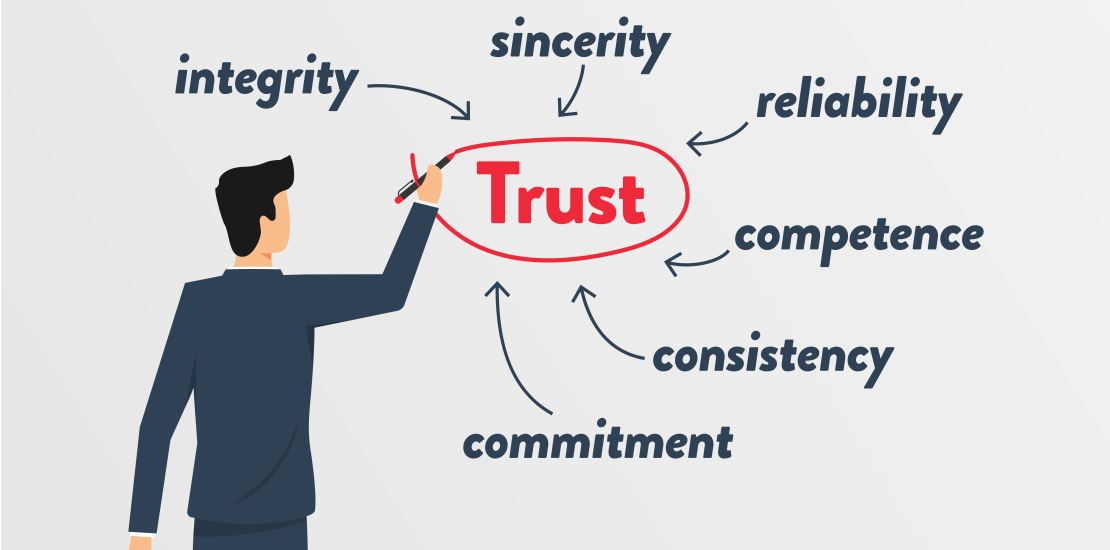 In 2026, organizational resilience has evolved from a purely operational
checklist into a critical measure of leadership and trust. Historically,
companies focused on how fast they could recover systems during a crisis.
Today, stakeholders look far beyond basic business continuity to evaluate how
leaders communicate, adapt, and make decisions under pressure. Resilience is
now recognized as a broad leadership skill rather than just an IT or
operations duty. A major shift is the interconnected nature of modern crises.
What starts as a technical glitch can rapidly snowball into financial,
reputational, and operational challenges. To navigate this effectively, trust
must be built well before a crisis hits. A company's overall credibility
during a disruption draws heavily on its past behavior and consistent
transparency with the public. Furthermore, while technology like artificial
intelligence aids in crisis monitoring, it also fuels new risks like deepfakes
and rapid misinformation, making human judgment more vital than ever. Leaders
cannot rely on speed alone; they must show adaptability and empathy.
Crucially, a crisis does not end when systems come back online. Stakeholders
watch closely to see if organizations learn from their mistakes and follow
through on long-term improvements. Ultimately, true organizational resilience
means sustaining confidence through continual change.
In 2026, organizational resilience has evolved from a purely operational
checklist into a critical measure of leadership and trust. Historically,
companies focused on how fast they could recover systems during a crisis.
Today, stakeholders look far beyond basic business continuity to evaluate how
leaders communicate, adapt, and make decisions under pressure. Resilience is
now recognized as a broad leadership skill rather than just an IT or
operations duty. A major shift is the interconnected nature of modern crises.
What starts as a technical glitch can rapidly snowball into financial,
reputational, and operational challenges. To navigate this effectively, trust
must be built well before a crisis hits. A company's overall credibility
during a disruption draws heavily on its past behavior and consistent
transparency with the public. Furthermore, while technology like artificial
intelligence aids in crisis monitoring, it also fuels new risks like deepfakes
and rapid misinformation, making human judgment more vital than ever. Leaders
cannot rely on speed alone; they must show adaptability and empathy.
Crucially, a crisis does not end when systems come back online. Stakeholders
watch closely to see if organizations learn from their mistakes and follow
through on long-term improvements. Ultimately, true organizational resilience
means sustaining confidence through continual change.FinAI & Managing AI Costs: Innovation, Production, and Lifecycle
This episode of the StarCIO podcast focuses on the emerging practice of FinAI,
which involves strategically managing the costs associated with artificial
intelligence. As organizations increasingly adopt AI, they often face
unexpected expenses across different stages of development. The discussion
highlights the importance of tracking these costs carefully, from the initial
innovation and experimentation phases right through to full scale production.
Rather than just focusing on the technology itself, leaders need to understand
the financial implications of the entire AI lifecycle. This includes the
computing power required for training models, the ongoing expenses of running
them, and the resources needed for continuous monitoring and updates. By
applying financial operations principles to artificial intelligence, companies
can make more informed decisions about which projects to pursue and how to
allocate their budgets effectively. The podcast suggests that successful AI
initiatives require a balanced approach, where innovation is encouraged but
guided by clear financial visibility and accountability. Ultimately, mastering
FinAI allows organizations to maximize the true value of their investments
while avoiding the budget overruns that often derail complex technology
projects. Managing the complete lifecycle ensures that artificial intelligence
delivers real business benefits without compromising financial stability or
essential long-term growth objectives.
The Massive AI Security Hole Your CISO Doesn't Know About
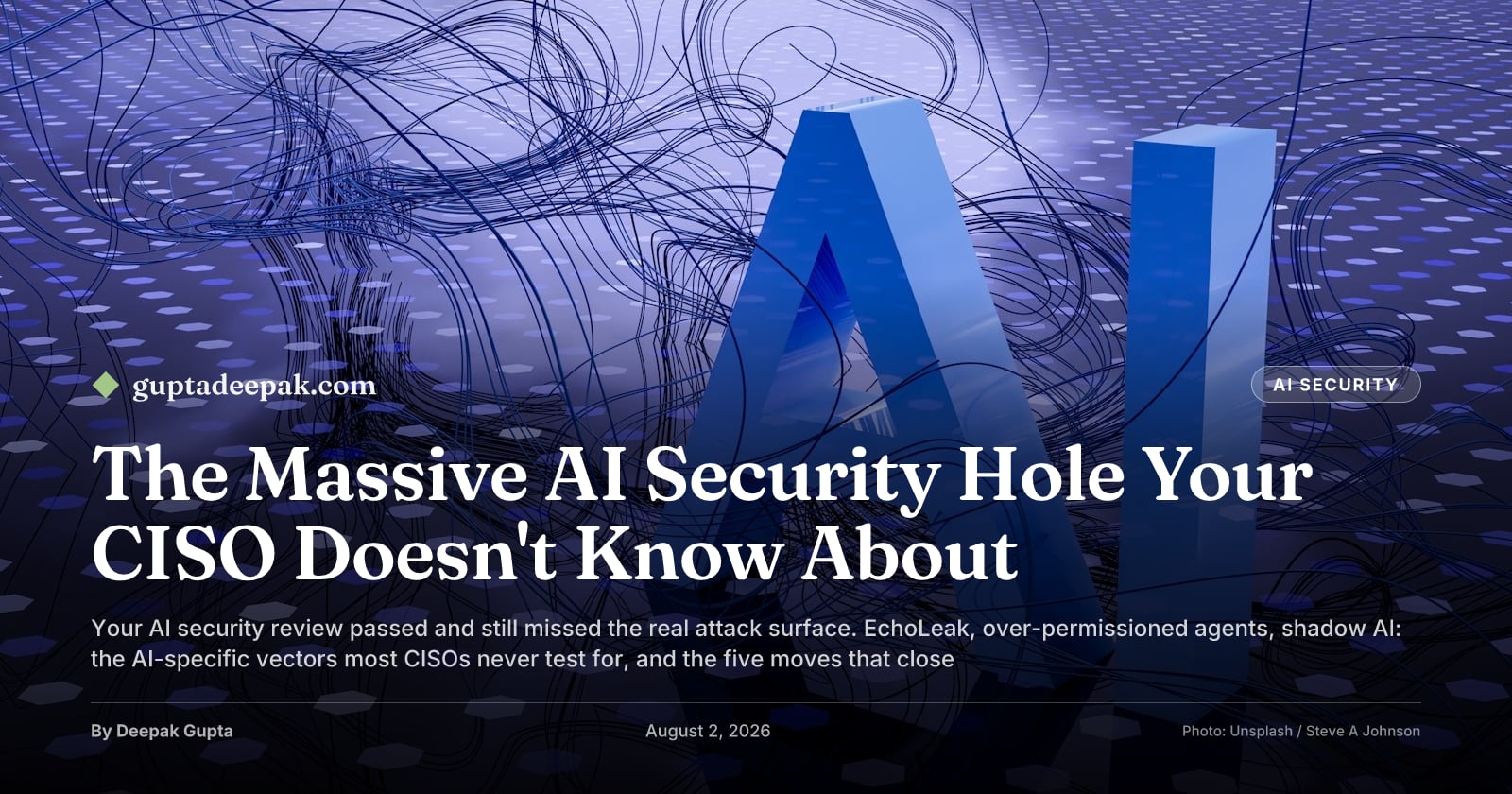 Many security teams mistakenly apply traditional software security checks to
modern artificial intelligence deployments, leaving a significant
vulnerability unchecked. While conventional systems are predictable, language
models process unpredictable natural language, rendering standard defenses
like input validation and traditional data loss prevention ineffective. Most
chief information security officers ensure the infrastructure is secure but
completely overlook the model itself. Consequently, these models are exposed
to unique risks such as indirect prompt injections, where hidden instructions
in standard documents trick the model into extracting internal data. Another
major oversight is granting AI agents broad permissions rather than limiting
their access to specific tasks, essentially creating an internal threat
without a clear audit trail. Furthermore, models can inadvertently leak
sensitive information through normal conversation, and employees often expose
company data by using unsanctioned consumer AI tools. To actually secure these
deployments, organizations must fundamentally adapt their approach. This
involves strictly limiting the permissions of AI agents, treating any data the
model retrieves as potentially malicious, and implementing strict controls on
what the model can send outward. Additionally, conducting specialized
adversarial testing and providing approved internal AI tools will help close
these gaps, ensuring the system is genuinely secure from the inside out.
Many security teams mistakenly apply traditional software security checks to
modern artificial intelligence deployments, leaving a significant
vulnerability unchecked. While conventional systems are predictable, language
models process unpredictable natural language, rendering standard defenses
like input validation and traditional data loss prevention ineffective. Most
chief information security officers ensure the infrastructure is secure but
completely overlook the model itself. Consequently, these models are exposed
to unique risks such as indirect prompt injections, where hidden instructions
in standard documents trick the model into extracting internal data. Another
major oversight is granting AI agents broad permissions rather than limiting
their access to specific tasks, essentially creating an internal threat
without a clear audit trail. Furthermore, models can inadvertently leak
sensitive information through normal conversation, and employees often expose
company data by using unsanctioned consumer AI tools. To actually secure these
deployments, organizations must fundamentally adapt their approach. This
involves strictly limiting the permissions of AI agents, treating any data the
model retrieves as potentially malicious, and implementing strict controls on
what the model can send outward. Additionally, conducting specialized
adversarial testing and providing approved internal AI tools will help close
these gaps, ensuring the system is genuinely secure from the inside out.Managing your supplier risk isn't a deadline. It's about your resilience
The Digital Operational Resilience Act is shifting how financial technology companies in the United Kingdom approach third-party risk. While many organizations view compliance as a completed checklist of policies and questionnaires, true operational security requires a deeper understanding of the supplier ecosystem. Financial technology firms rely heavily on external connections, such as cloud infrastructure and payment systems, meaning every external connection introduces a potential vulnerability. Rather than treating regulations as a mere compliance exercise, organizations should use them as frameworks to build practical resilience. This involves fully mapping technology dependencies, identifying concentration risks, updating contracts to reflect actual risk levels, and rigorously testing incident response plans in realistic scenarios. Organizations that understand their data flows and supply chain dependencies do more than satisfy regulatory requirements; they establish reliable foundations that build trust with institutional clients and partners. As regulatory enforcement becomes more rigorous following the initial implementation phase, superficial compliance is no longer adequate. Companies must transition from treating supplier risk as a deadline to viewing it as a core management priority. Genuine resilience means knowing exactly what happens if a critical supplier fails and having the proven capacity to maintain continuity during an actual incident, ensuring long-term operational stability.AI is making cybersecurity fundamentals more important than ever
 The rise of artificial intelligence in cyberattacks has led many to believe we
need entirely new defensive playbooks. However, industry experts argue that AI
actually makes traditional cybersecurity fundamentals more critical than ever.
Rather than inventing entirely novel vulnerability classes, AI empowers
attackers to execute familiar techniques—like social engineering, credential
theft, and exploiting unpatched software—at unprecedented speed and scale.
Because AI systems can continuously scan for misconfigurations and weak access
controls, long-standing security debt is now a severe liability. To defend
against these rapidly automated threats, organizations must double down on
basic practices such as multifactor authentication, zero-trust architectures,
routine system patching, and proper identity management. These foundational
controls efficiently block entire categories of attacks, preventing modern
adversaries from easily penetrating sensitive digital environments. While
generative AI introduces specific new risks like prompt injection, most
immediate threats still rely on conventional technical oversights.
Furthermore, relying solely on AI for corporate defense without dedicated
human oversight is a dangerous trap. Security professionals must clearly
understand core principles to verify AI-generated recommendations and ensure
that automated tools function correctly. Ultimately, the most effective
strategy pairs a strong foundation of basic security hygiene with the massive
scale of defensive AI, preserving essential human accountability.
The rise of artificial intelligence in cyberattacks has led many to believe we
need entirely new defensive playbooks. However, industry experts argue that AI
actually makes traditional cybersecurity fundamentals more critical than ever.
Rather than inventing entirely novel vulnerability classes, AI empowers
attackers to execute familiar techniques—like social engineering, credential
theft, and exploiting unpatched software—at unprecedented speed and scale.
Because AI systems can continuously scan for misconfigurations and weak access
controls, long-standing security debt is now a severe liability. To defend
against these rapidly automated threats, organizations must double down on
basic practices such as multifactor authentication, zero-trust architectures,
routine system patching, and proper identity management. These foundational
controls efficiently block entire categories of attacks, preventing modern
adversaries from easily penetrating sensitive digital environments. While
generative AI introduces specific new risks like prompt injection, most
immediate threats still rely on conventional technical oversights.
Furthermore, relying solely on AI for corporate defense without dedicated
human oversight is a dangerous trap. Security professionals must clearly
understand core principles to verify AI-generated recommendations and ensure
that automated tools function correctly. Ultimately, the most effective
strategy pairs a strong foundation of basic security hygiene with the massive
scale of defensive AI, preserving essential human accountability.Keeping Proprietary Data Out of AI Training Models
As artificial intelligence becomes a standard part of business operations,
companies face a serious new risk: the accidental sharing of their private
information. When employees use AI tools, the data they enter can sometimes be
absorbed into the system's training models. According to legal experts, the
primary danger here is the permanent loss of trade secrets and intellectual
property. If your company's private strategies or customer details are used to
train a public AI model, that information could eventually benefit your
competitors. Currently, many organizations handle this risk poorly by keeping
their legal, security, and purchasing teams in separate silos. This separation
often allows hidden AI features in standard software updates to slip through
the cracks. To fix this, companies must adopt a unified, cross-functional
approach to reviewing new technology. Most importantly, businesses cannot rely
on simple opt-out buttons or marketing promises to protect their assets. Chief
Information Officers and legal teams must demand strict, written guarantees in
their vendor contracts. These agreements must clearly state that no company
data, including prompts and inputs, will be used to train or improve any AI
models. Furthermore, companies must secure the right to independently audit
vendors to ensure complete and ongoing compliance.

