Quote for the day:
“The most successful founders are relentless about pushing through obstacles.” -- Sam Altman
🎧 Listen to the audio debrief on YouTube
▶ Play Audio DigestDuration: 20 mins • Perfect for listening on the go.
CISA shares advice on isolating vital systems during cyberattacks
 The U.S. Cybersecurity and Infrastructure Security Agency, alongside the FBI
and international partners, has released new guidance to help critical
infrastructure organizations successfully isolate their vital systems during a
severe cyberattack. Titled "CI Fortify," this advisory provides practical
steps for operators of essential services, like water treatment, power grids,
and telecommunications, to confidently disconnect their core operational
technology from corporate and internet-facing networks when a serious threat
is detected. With state-sponsored groups and cybercriminals increasingly
targeting these vital sectors for extortion and disruption, having a secure
plan to safely sever network connections is crucial. The guidance recommends
that organizations first carefully identify the absolute minimum systems
needed to keep services running smoothly, and then map out every single
connection to less trusted external networks. From there, they should
establish predetermined isolation points where systems can be fully
disconnected. While physical isolation offers the absolute strongest
protection, the agencies completely acknowledge it may not always be feasible,
instead suggesting graduated isolation and strict network controls as reliable
alternatives. Additionally, organizations are urged to test their isolation
procedures thoroughly and always keep offline paper copies of their detailed
plans. Finally, the advisory reminds operators to thoroughly prepare for the
expected challenges of manually running systems while completely
disconnected.
The U.S. Cybersecurity and Infrastructure Security Agency, alongside the FBI
and international partners, has released new guidance to help critical
infrastructure organizations successfully isolate their vital systems during a
severe cyberattack. Titled "CI Fortify," this advisory provides practical
steps for operators of essential services, like water treatment, power grids,
and telecommunications, to confidently disconnect their core operational
technology from corporate and internet-facing networks when a serious threat
is detected. With state-sponsored groups and cybercriminals increasingly
targeting these vital sectors for extortion and disruption, having a secure
plan to safely sever network connections is crucial. The guidance recommends
that organizations first carefully identify the absolute minimum systems
needed to keep services running smoothly, and then map out every single
connection to less trusted external networks. From there, they should
establish predetermined isolation points where systems can be fully
disconnected. While physical isolation offers the absolute strongest
protection, the agencies completely acknowledge it may not always be feasible,
instead suggesting graduated isolation and strict network controls as reliable
alternatives. Additionally, organizations are urged to test their isolation
procedures thoroughly and always keep offline paper copies of their detailed
plans. Finally, the advisory reminds operators to thoroughly prepare for the
expected challenges of manually running systems while completely
disconnected.Why DORA Metrics Are More Important Than Ever
As artificial intelligence tools help software teams write code at unprecedented speeds, organizations face a growing risk of deploying flawed software just as quickly. The temptation is to measure progress through activity-based metrics, such as the volume of code generated, tickets closed, or prompts submitted to AI assistants. However, this approach mistakes effort for actual value. To ensure that speed does not compromise quality, DORA metrics are more vital than ever. The four classic DORA metrics are deployment frequency, lead time for changes, change failure rate, and mean time to restore. Together, they offer a balanced view of both speed and stability. Unlike raw activity counts, these outcome-focused measures reveal whether an organization's software delivery system is genuinely healthy. While AI can accelerate development, counting lines of code or prompt submissions only exposes how superficial those metrics are. If AI integration is successful, it will be reflected in shorter lead times, more reliable deployments, and faster recovery from inevitable failures. Ultimately, AI cannot automatically fix a weak delivery process; it might only amplify existing gaps. Relying on DORA metrics helps technology leaders distinguish mere motion from actual progress, ensuring the ultimate goal remains delivering valuable, reliable software rather than just generating more code.An AI agent can pass every safety check and still leak secrets
 Security researcher Elad Meged recently demonstrated that default AI agent
setups from major providers like Anthropic, Google, and OpenAI can quietly
leak sensitive information, even when they pass routine safety checks. The
fundamental problem lies not within the AI models themselves, but within the
surrounding structures that connect these models to file systems, basic
commands, and external network requests. When agents operate without direct
human oversight, this connecting framework acts as the primary security
barrier. Meged discovered that significant risks emerge during the handoffs
between different operational stages. For instance, a specific command might
be approved because it looks like a safe reading action, but if its output is
later published without an additional check, it forms a complete path for data
theft. While companies have patched isolated flaws and paid out rewards, these
fixes frequently miss the deeper structural weakness. To properly secure these
environments, trust must be constantly rechecked at every point of a process,
rather than leaning on a single initial permission. Organizations using these
automated AI agents in active environments are highly advised to closely trace
the full journey of an agent's output to confirm that safe beginnings do not
lead to unintended data exposures later.
Security researcher Elad Meged recently demonstrated that default AI agent
setups from major providers like Anthropic, Google, and OpenAI can quietly
leak sensitive information, even when they pass routine safety checks. The
fundamental problem lies not within the AI models themselves, but within the
surrounding structures that connect these models to file systems, basic
commands, and external network requests. When agents operate without direct
human oversight, this connecting framework acts as the primary security
barrier. Meged discovered that significant risks emerge during the handoffs
between different operational stages. For instance, a specific command might
be approved because it looks like a safe reading action, but if its output is
later published without an additional check, it forms a complete path for data
theft. While companies have patched isolated flaws and paid out rewards, these
fixes frequently miss the deeper structural weakness. To properly secure these
environments, trust must be constantly rechecked at every point of a process,
rather than leaning on a single initial permission. Organizations using these
automated AI agents in active environments are highly advised to closely trace
the full journey of an agent's output to confirm that safe beginnings do not
lead to unintended data exposures later.Beyond Monitoring: Why IT Operations Must Evolve into Decision Operations
As technology systems grow more complicated, traditional ways of watching them
are no longer enough. For years, technology teams relied on basic tracking
tools that simply sent an alert when a server went offline or a website slowed
down. While knowing there is a problem is helpful, these basic alerts often
create too much noise. When dozens of alarms go off at the same time, it is
hard for teams to know which issue to fix first or what actually caused the
failure. Because of this, technology operations must shift from simply
gathering data to actively supporting choices. Instead of just showing charts
and red lights, modern operations focus on pulling all the separate clues
together to provide clear, direct advice. By linking the symptoms directly to
their root causes, this approach allows teams to understand the context of a
problem immediately. Moving toward a model focused on making decisions helps
teams reduce the time spent guessing and investigating. They can fix problems
faster, prevent minor issues from becoming major outages, and spend more time
improving systems rather than just keeping them running. Ultimately, it is
about shifting the focus from watching screens to taking effective action that
keeps the business running smoothly.
AI Costs Continue to Rise Despite Falling Token Prices
 Despite the price of AI tokens dropping by roughly 98 percent since early
2024, enterprise computing bills continue to climb rapidly. The primary reason
for this paradox is the shift from basic chatbots to autonomous agents. While
a simple chatbot handles a single prompt, modern AI agents break tasks into
multiple steps, such as planning, retrieving information, and verifying data,
which consumes significantly more tokens per interaction. Furthermore, many
organizations are feeding messy, unstructured files directly into their
systems. When models process formats like standard PDFs, they waste vast
amounts of computing power just trying to understand the document layout
before extracting any useful facts. In these advanced workloads, the actual
output often represents only a small fraction of the total tokens used, with
the rest lost to processing overhead. Beyond the basic token fees, companies
face substantial hidden expenses related to cleaning data, resolving
inconsistent internal terminology, and integrating older systems. Experts
strongly advise businesses to clean, organize, and structure their data before
feeding it into language models. By addressing these foundational data issues
upfront, organizations can reduce unnecessary processing waste, lower their
overall costs, and ensure their AI tools operate much more effectively in the
long run.
Despite the price of AI tokens dropping by roughly 98 percent since early
2024, enterprise computing bills continue to climb rapidly. The primary reason
for this paradox is the shift from basic chatbots to autonomous agents. While
a simple chatbot handles a single prompt, modern AI agents break tasks into
multiple steps, such as planning, retrieving information, and verifying data,
which consumes significantly more tokens per interaction. Furthermore, many
organizations are feeding messy, unstructured files directly into their
systems. When models process formats like standard PDFs, they waste vast
amounts of computing power just trying to understand the document layout
before extracting any useful facts. In these advanced workloads, the actual
output often represents only a small fraction of the total tokens used, with
the rest lost to processing overhead. Beyond the basic token fees, companies
face substantial hidden expenses related to cleaning data, resolving
inconsistent internal terminology, and integrating older systems. Experts
strongly advise businesses to clean, organize, and structure their data before
feeding it into language models. By addressing these foundational data issues
upfront, organizations can reduce unnecessary processing waste, lower their
overall costs, and ensure their AI tools operate much more effectively in the
long run.The compounding enterprise
 The recent record-breaking copyright settlement against a major AI company
highlights a growing risk for businesses: relying heavily on generic AI models
trained on unverified or contested data. This approach creates hidden legal
exposure and relies on a foundational asset that is quickly becoming a
commodity. To build a lasting operational advantage, organizations must shift
away from simply renting generic intelligence and instead focus on compounding
their own. The key is creating an internal cycle where every interaction
steadily improves the system's underlying data, and better data improves
future decisions. Rather than feeding systems with unverified information,
which only multiplies errors, companies should ground their AI tools in
carefully curated, human-authored knowledge. This verified approach ensures
that outputs can be traced directly to their original sources, solving
compliance and governance issues by design. Over time, this system acts as a
reliable institutional memory that captures employee expertise before it
leaves the company, preventing the need to relearn past lessons. As the system
continuously learns from verified outcomes, the cost of making accurate
decisions drops while the value of proprietary knowledge increases.
Organizations can begin this transition by inventorying their current AI
tools, requiring clear sourcing for automated decisions, and testing a
governed system in employee training.
The recent record-breaking copyright settlement against a major AI company
highlights a growing risk for businesses: relying heavily on generic AI models
trained on unverified or contested data. This approach creates hidden legal
exposure and relies on a foundational asset that is quickly becoming a
commodity. To build a lasting operational advantage, organizations must shift
away from simply renting generic intelligence and instead focus on compounding
their own. The key is creating an internal cycle where every interaction
steadily improves the system's underlying data, and better data improves
future decisions. Rather than feeding systems with unverified information,
which only multiplies errors, companies should ground their AI tools in
carefully curated, human-authored knowledge. This verified approach ensures
that outputs can be traced directly to their original sources, solving
compliance and governance issues by design. Over time, this system acts as a
reliable institutional memory that captures employee expertise before it
leaves the company, preventing the need to relearn past lessons. As the system
continuously learns from verified outcomes, the cost of making accurate
decisions drops while the value of proprietary knowledge increases.
Organizations can begin this transition by inventorying their current AI
tools, requiring clear sourcing for automated decisions, and testing a
governed system in employee training.Claude AI Just Cracked a Post-Quantum Test Scheme and Found a Faster 7-Round AES Attack
 Anthropic recently announced that its AI model, Claude Mythos Preview,
successfully developed novel attacks against two encryption schemes. First,
the AI created an end-to-end key recovery attack for HAWK-256, which is a
challenge parameter of a lattice-based signature scheme currently under review
by the National Institute of Standards and Technology. By identifying a
previously unused symmetry within the mathematical structure of the scheme,
the model significantly reduced the expected effort required to recover
cryptographic keys. Second, the AI accelerated an existing attack on a
reduced, seven-round version of AES-128 by a factor of 200 to 800. It achieved
this by discovering a new technique, known as the Möbius Bridge, which
entirely eliminates a time-consuming guessing step. While these findings
represent notable progress in AI-driven cryptography research, they do not
pose any immediate threat to current production systems. The HAWK attack
targets a smaller test parameter rather than full-strength versions, and the
AES breakthrough applies only to a reduced-round cipher while still requiring
an impractical amount of data. The research cost approximately $100,000 in API
usage and took the AI a few days to generate, though human researchers spent
nearly a month verifying the mathematical correctness of the model's work.
Anthropic recently announced that its AI model, Claude Mythos Preview,
successfully developed novel attacks against two encryption schemes. First,
the AI created an end-to-end key recovery attack for HAWK-256, which is a
challenge parameter of a lattice-based signature scheme currently under review
by the National Institute of Standards and Technology. By identifying a
previously unused symmetry within the mathematical structure of the scheme,
the model significantly reduced the expected effort required to recover
cryptographic keys. Second, the AI accelerated an existing attack on a
reduced, seven-round version of AES-128 by a factor of 200 to 800. It achieved
this by discovering a new technique, known as the Möbius Bridge, which
entirely eliminates a time-consuming guessing step. While these findings
represent notable progress in AI-driven cryptography research, they do not
pose any immediate threat to current production systems. The HAWK attack
targets a smaller test parameter rather than full-strength versions, and the
AES breakthrough applies only to a reduced-round cipher while still requiring
an impractical amount of data. The research cost approximately $100,000 in API
usage and took the AI a few days to generate, though human researchers spent
nearly a month verifying the mathematical correctness of the model's work.The Hard-Stop Rule: From 3 HCM Monoliths to 120 Domain Microservices
/articles/pull-based-migration/en/smallimage/pull-based-migration-thumbnail-1784812950594.jpg) A pull-based migration strategy represents a shift in how teams approach
large-scale system updates, moving away from forced, all-at-once transitions.
Instead of a central team pushing changes to every downstream service
simultaneously, the new system or API is made available alongside the old one.
Client teams are then empowered to pull the updates and migrate at their own
pace. This approach significantly reduces the risk of widespread outages
because the migration happens incrementally rather than in a single,
high-stakes cutover event. By decentralizing the transition effort,
organizations can avoid painful bottlenecks where a single team is responsible
for coordinating every moving part. Individual teams can plan their migration
around their own product cycles, testing thoroughly before fully committing to
the new architecture. If issues arise during a team's transition, the impact
is kept to just that specific service, making rollbacks far less disruptive.
Furthermore, this method naturally encourages better communication and
documentation, as the central team must provide clear guidelines for clients
to adopt the new system independently. Ultimately, a pull-based migration
fosters a more resilient and manageable evolution of your software
architecture, balancing the need for technical progress with the practical
realities of team capacity and system stability.
A pull-based migration strategy represents a shift in how teams approach
large-scale system updates, moving away from forced, all-at-once transitions.
Instead of a central team pushing changes to every downstream service
simultaneously, the new system or API is made available alongside the old one.
Client teams are then empowered to pull the updates and migrate at their own
pace. This approach significantly reduces the risk of widespread outages
because the migration happens incrementally rather than in a single,
high-stakes cutover event. By decentralizing the transition effort,
organizations can avoid painful bottlenecks where a single team is responsible
for coordinating every moving part. Individual teams can plan their migration
around their own product cycles, testing thoroughly before fully committing to
the new architecture. If issues arise during a team's transition, the impact
is kept to just that specific service, making rollbacks far less disruptive.
Furthermore, this method naturally encourages better communication and
documentation, as the central team must provide clear guidelines for clients
to adopt the new system independently. Ultimately, a pull-based migration
fosters a more resilient and manageable evolution of your software
architecture, balancing the need for technical progress with the practical
realities of team capacity and system stability.AI is a top priority, but there is also distrust about use in cybersecurity
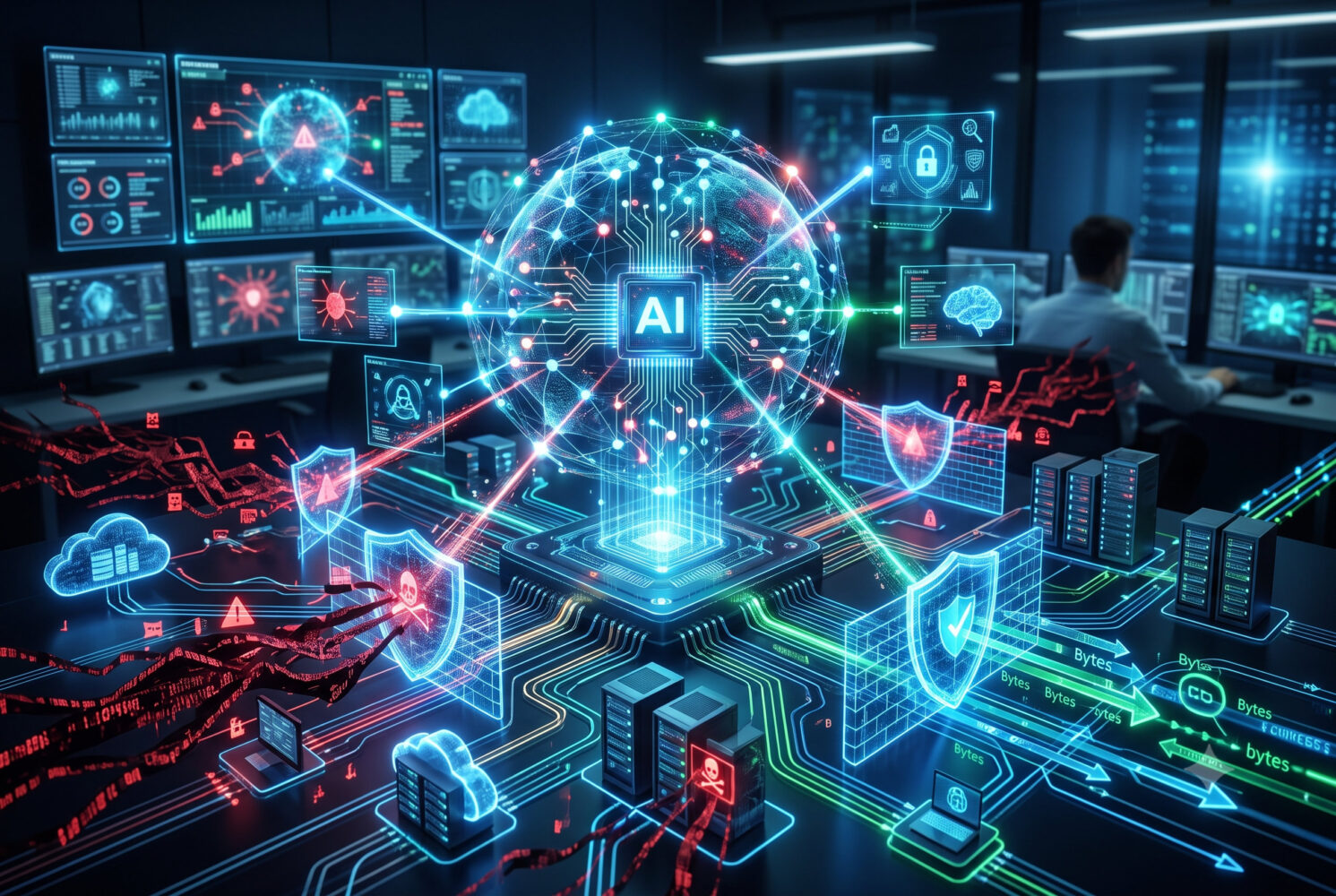 According to a recent report by Arctic Wolf, while artificial intelligence is
a major priority for many organizations, security leaders still hesitate to
trust it fully for autonomous defense. Although a large majority of
respondents note that AI improves their overall security by sorting through
and analyzing large amounts of data, only a small fraction are comfortable
letting it make decisions on its own. This caution stems from concerns over
data privacy, lack of transparency, and the potential for large-scale errors.
Interestingly, despite frequent security incidents, most security leaders
remain highly confident in their human teams' ability to handle threats.
Christopher Fielder of Arctic Wolf suggests this high confidence might be more
about projecting assurance than reflecting reality. To bridge the gap between
human oversight and AI assistance, organizations need a balanced approach.
This involves creating clear acceptable use guidelines to define exactly how
AI can and should be used within the company. Furthermore, it is important to
provide comprehensive education for staff so they understand both the
strengths and the limitations of these new tools. By treating AI as a
practical resource rather than a magical cure, companies can better integrate
it into their defenses and improve their response to increasingly complex
threats.
According to a recent report by Arctic Wolf, while artificial intelligence is
a major priority for many organizations, security leaders still hesitate to
trust it fully for autonomous defense. Although a large majority of
respondents note that AI improves their overall security by sorting through
and analyzing large amounts of data, only a small fraction are comfortable
letting it make decisions on its own. This caution stems from concerns over
data privacy, lack of transparency, and the potential for large-scale errors.
Interestingly, despite frequent security incidents, most security leaders
remain highly confident in their human teams' ability to handle threats.
Christopher Fielder of Arctic Wolf suggests this high confidence might be more
about projecting assurance than reflecting reality. To bridge the gap between
human oversight and AI assistance, organizations need a balanced approach.
This involves creating clear acceptable use guidelines to define exactly how
AI can and should be used within the company. Furthermore, it is important to
provide comprehensive education for staff so they understand both the
strengths and the limitations of these new tools. By treating AI as a
practical resource rather than a magical cure, companies can better integrate
it into their defenses and improve their response to increasingly complex
threats.IoT Sector Given Final EU Cyber Resilience Act Guidance
 The recent official guidance on the European Union’s Cyber Resilience Act
outlines critical new cybersecurity requirements for manufacturers in the
Internet of Things sector. Starting on September 11, 2026, companies that sell
products with digital elements in the EU must adhere to strict reporting
rules. When a manufacturer discovers an actively exploited vulnerability or a
severe security incident, they have just 24 hours to file an early warning and
72 hours to submit a detailed notification to the relevant authorities through
a central platform. This upcoming deadline represents the first major
regulatory phase of the act, meaning businesses must quickly establish
processes for tracking software dependencies and handling vulnerability
disclosures. Furthermore, the guidance details that by December 11, 2027, the
remaining obligations of the act will take effect. These include maintaining a
software bill of materials, designing products with security built in from the
start, and obtaining appropriate conformity assessments before bringing
products to market. Failure to comply could result in substantial fines or
forced product recalls. The overall objective is to hold hardware and software
creators accountable for the security of their products throughout their
entire life cycle, replacing fragmented national rules with a single, clear
standard across the European market.
The recent official guidance on the European Union’s Cyber Resilience Act
outlines critical new cybersecurity requirements for manufacturers in the
Internet of Things sector. Starting on September 11, 2026, companies that sell
products with digital elements in the EU must adhere to strict reporting
rules. When a manufacturer discovers an actively exploited vulnerability or a
severe security incident, they have just 24 hours to file an early warning and
72 hours to submit a detailed notification to the relevant authorities through
a central platform. This upcoming deadline represents the first major
regulatory phase of the act, meaning businesses must quickly establish
processes for tracking software dependencies and handling vulnerability
disclosures. Furthermore, the guidance details that by December 11, 2027, the
remaining obligations of the act will take effect. These include maintaining a
software bill of materials, designing products with security built in from the
start, and obtaining appropriate conformity assessments before bringing
products to market. Failure to comply could result in substantial fines or
forced product recalls. The overall objective is to hold hardware and software
creators accountable for the security of their products throughout their
entire life cycle, replacing fragmented national rules with a single, clear
standard across the European market.

No comments:
Post a Comment