Daily Tech Digest - July 25, 2026


Quote for the day:

“People will never forget how you made them feel.” -- Maya Angelou

🎧 Listen to the audio debrief on YouTube

▶ Play Audio Digest

Duration: 22 mins • Perfect for listening on the go.


Seeing AI Agents Is Not Enough. Security Teams Must Enforce What They Can Do

As organizations increasingly adopt artificial intelligence to handle everyday tasks, finding out where these AI programs operate is only the first step. The article points out that simply tracking these programs provides a false sense of safety. Unlike regular software or human workers with predictable routines, AI programs often adapt their actions based on goals, making standard access controls inadequate. Because they can reason and take action independently across various systems, the real security challenge lies in strictly enforcing what they are allowed to do. To achieve this, security teams must understand the core intent behind each program. This means correlating who owns the program, what it is designed to achieve, and what tools it needs to access. Rather than waiting for something to go wrong and cleaning up the mess, organizations should set clear rules that govern AI behavior before actions occur. For example, a customer support tool might need to read histories but should never be allowed to export bulk data. Ultimately, managing these tools safely requires a unified approach that spans the entire organization. Success comes not just from knowing an AI tool exists, but from confidently controlling its boundaries, actions, and overall purpose.


The air gap is a myth and other OT security truths

In a recent interview, Benjamin Bachmann, Director of Group Information Security at Bilfinger, addresses key realities of securing industrial operations and dispels common misconceptions about operational technology security. He explains that attackers targeting industrial environments are generally not looking to steal data or trade secrets. Instead, they want to disrupt operations and gain control over physical processes. He also notes that the idea of a completely isolated network, or air gap, is largely a myth in today's connected plants. To handle security incidents effectively without compromising safety or uptime, Bachmann emphasizes the need for engineering and security teams to establish containment protocols long before an emergency occurs. He points out that while older industrial equipment lacks modern security features, its highly predictable network traffic makes it easier to spot unauthorized activity through careful monitoring and network segmentation. Regarding ransomware, Bachmann observes that attackers often price their demands based on the cost of operational downtime. Therefore, the most effective defense involves rapid recovery plans and the ability to maintain partial operations safely, which removes the attacker's leverage. Finally, he challenges the common belief that human error is the weakest link in security, arguing instead that fragile system architectures are the actual root problem.


Why enterprises should care about Nokia’s AI-RAN platform

Nokia recently announced an artificial intelligence driven platform designed to fundamentally change how mobile network infrastructure operates. Traditionally, mobile networks rely on rigid, specialized hardware that limits adaptability and requires frequent physical upgrades. The new approach separates the network software from the physical hardware, running operations on flexible graphics processing units instead. This shift effectively turns the radio network into a programmable computer. The immediate benefit for network operators is significant performance improvements. By using complex algorithms, the platform can double the usable capacity of existing wireless spectrum bands by the year 2028, avoiding the need for expensive new spectrum licenses. Furthermore, it easily adapts to changing data traffic patterns caused by modern applications. However, the most critical shift is in potential business models. Because the platform operates like a standard computing environment, it supports a new application layer where developers can create practical tools. This allows operators to generate revenue beyond basic internet connectivity. Practical applications include turning cell towers into sensor networks for environmental monitoring, providing accurate tracking for warehouse robots, and offering dedicated computing power for local data processing. Ultimately, this software driven strategy allows network providers to continuously update features and increase efficiency without relying on constant hardware replacements.


AI adoption in OT security outpaces governance controls

According to a recent industry survey, industrial organizations are rapidly adopting artificial intelligence for operational technology (OT) cybersecurity, yet formal governance and safety controls are lagging significantly behind. While nearly ninety percent of surveyed organizations are evaluating or using AI to monitor networks, detect threats, and support security operations, only about fifteen percent have implemented an enforced AI policy tailored to industrial environments. The technology is primarily deployed in advisory roles for monitoring and analysis rather than direct industrial control. However, errors in AI classification or alerting could still negatively affect equipment availability and safety. Implementation challenges are primarily rooted in poor data quality, lack of proper labeling, and the difficulty of integrating modern AI tools with legacy operational systems. Furthermore, respondents expressed concerns about the physical risks of AI system failures or cyberattacks manipulating AI outputs, as adversaries increasingly use similar technology to enhance their attacks. Most organizations currently rely on informal human oversight rather than documented protocols. Experts suggest that to maintain operational control, companies should ensure their use of AI does not exceed the authority supported by their current security controls, evidence, and operating models. Robust governance and formal consequence mapping are essential for safe integration.


CIOs beware: DNS KSK rollover could kick off wave of mysterious outages

A seemingly routine security update to the internet’s domain name system could trigger unexpected network outages for organizations between October 2026 and January 2027. The event, known as a Key Signing Key rollover, updates the cryptographic key that verifies network responses. While the central update itself is simple, many organizations possess vast networks of unmapped connections hidden within older applications, custom scripts, external services, and forgotten software containers. Because these hidden areas operate outside normal oversight, they may fail to process the new key correctly. When these older configurations fail, the resulting disruptions rarely announce themselves as a domain name problem. Instead, they often look like random application timeouts, broken logins, or unreachable partner networks. This misdirection can force support teams to spend hours troubleshooting the wrong issues before realizing the core problem stems from a missed network update. Although widespread failure of primary systems is unlikely, even isolated disruptions in specific departments or manufacturing lines can cause severe operational delays. Experts advise technology leaders to treat this upcoming change with calm focus. Rather than viewing it as a simple infrastructure chore, organizations can use this event as a practical opportunity to improve their internal visibility and strengthen overall system resilience.


The metrics organizations should track to measure their cyber resilience

As cyber disruptions become an unavoidable reality, organizations must shift from merely aspiring to cyber resilience to making it a measurable operational capability. Relying on traditional technical metrics, like counting patched vulnerabilities or software alerts, is no longer sufficient. These measurements do not reflect a company's ability to maintain its operations during a crisis. Instead, leaders should measure resilience by its actual business impact. The first step is identifying the minimum viable business, which includes the critical services and functions that must remain active or be restored immediately to fulfill the organization's core mission. From there, time becomes the most valuable metric. Organizations should track how quickly they can detect, contain, and recover from an incident to minimize both the depth and duration of the disruption. Furthermore, standard questionnaires and self-assessments are inadequate for testing true readiness. Practical, realistic exercises, such as tabletop simulations and recovery drills, are necessary to uncover gaps in decision-making and communication under stress. Because businesses operate within interconnected ecosystems, resilience must also extend to suppliers and third-party partners. Ultimately, these practical metrics serve as a vital leadership tool, guiding investment decisions and proving that a company can confidently withstand and operate through significant cyber events.


The Compliance Timelines Are Converging: Every Road Now Leads to a Cryptographic Bill of Materials

Over the next few years, multiple security regulations and government standards are converging, bringing strict new deadlines for organizations to track and manage their encryption methods. Past transitions to newer security standards were difficult because companies simply did not know where their outdated encryption was hidden. Now, with the looming threat of advanced computers capable of breaking current encryption, the stakes are even higher, especially since adversaries can steal sensitive encrypted data today and unlock it later. Many organizations mistakenly rely on basic certificate scanners, but these tools fail to detect encryption deeply embedded in software applications, operating systems, and databases. To properly secure their networks and meet these overlapping rules, companies must build a complete map of their encryption assets and understand how they interact. This comprehensive record is known as a Cryptographic Bill of Materials. By adopting this approach, teams can identify vulnerabilities, map relationships between systems, and prioritize updates without guesswork. The most effective strategy is to start by taking a realistic inventory of all current encryption practices across the entire organization. Doing so allows leaders to confidently prepare for future requirements, adapt to new standards, and maintain continuous oversight of their digital security. It is a vital step.


Recovery Readiness Is the New Measure of Cybersecurity Success

For decades, the primary goal of cybersecurity was preventing attacks by building strong defenses like firewalls and detection systems. While prevention remains a highly foundational element, the rapidly evolving threat landscape, driven by sophisticated ransomware, nation-state actors, and artificial intelligence, means that simply keeping attackers out is no longer a realistic finish line. Today, stakeholders recognize that even the most secure organizations can suffer breaches. As a result, the standard for cybersecurity success has firmly shifted from strict prevention toward operational recoverability. Instead of just tracking technical vulnerabilities, leaders, customers, and boards are now asking how quickly and confidently a business can actually restore its critical services after a cyber incident. Preserving trust and reputation now depends on resilient recovery processes rather than simply avoiding compromise. However, true recovery readiness cannot be assumed from written plans or annual exercises alone; it requires continuous validation as cloud infrastructure, hidden business dependencies, and technologies evolve. Moving forward, companies must treat operational recoverability as a vital business metric. By understanding their recovery posture, organizations can prioritize investments based on actual business impact, reduce uncertainty during a crisis, and ensure they survive and thrive even after a serious cyberattack occurs.


Why MDR Is Essential for Big Data Security
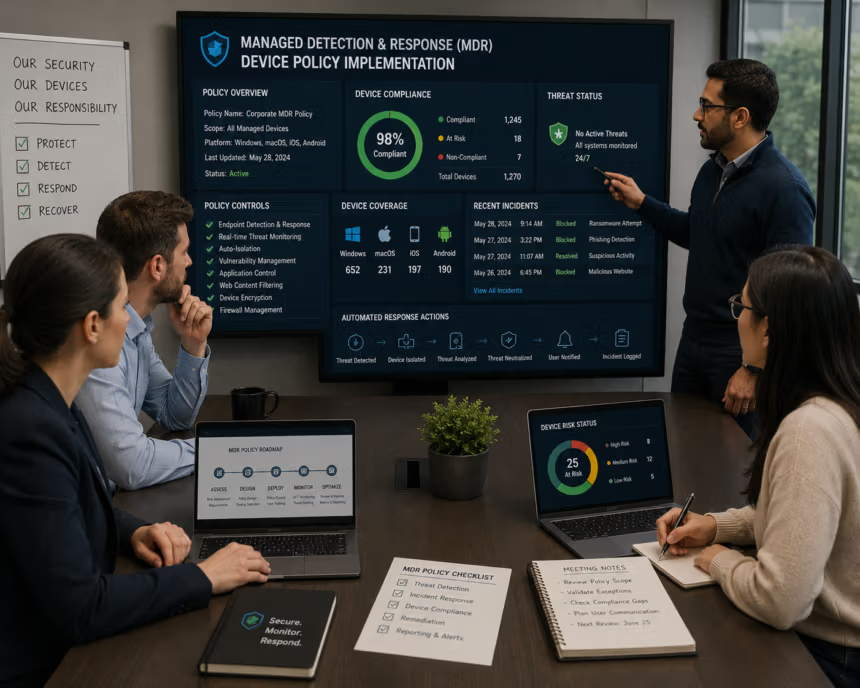
Managed Detection and Response is becoming increasingly vital as organizations generate massive amounts of data and face more sophisticated threats. In our highly connected world, the convergence of traditional corporate networks and operational technology creates significant vulnerabilities. Industrial systems, which were once completely isolated, now frequently connect to cloud platforms and corporate systems, greatly expanding the potential attack surface. Consequently, security teams must sift through enormous volumes of business data to identify subtle anomalies and hidden threats before they cause widespread damage. A robust Managed Detection and Response strategy provides continuous monitoring and specialized expertise, which is especially critical for operational technology environments like manufacturing, energy, and utilities. Unlike standard information technology environments, these physical systems prioritize safety and continuous operation above all else, meaning security measures cannot simply shut down critical processes when a threat is suspected. Top providers address this challenge by delivering specialized detection and response tailored to the unique constraints of industrial control systems. They bridge the gap between information technology and operational technology, helping leaders reduce physical risks, adhere to critical infrastructure regulations, and protect essential services. By partnering with an experienced provider, companies gain the necessary visibility and rapid response capabilities to secure their complex data environments with assurance and operational continuity.


Europe's Multilingual Reality Exposes AI Security Gaps

While large language models can process text in dozens of languages, their included safety guardrails are overwhelmingly optimized for English. This English focus creates significant security vulnerabilities for organizations operating in multilingual environments, particularly across Europe. Although a model might fluently answer prompts in languages like German, Spanish, or Swahili, its ability to detect and block malicious actions, such as prompt injections and jailbreaks, often drops significantly compared to English. Attackers exploit this gap by translating harmful commands into lesser used languages to bypass security filters. Research shows that some models are vastly more likely to provide actionable responses to unsafe prompts when queried in these regional languages. Relying on translation security layers, where inputs are translated to English before being checked, can alter the true intent of a prompt, sometimes masking malicious commands within benign contexts. To address these serious vulnerabilities, experts recommend moving beyond basic translation filters. Organizations should instead adopt native language guardrails that evaluate the original input, conduct rigorous security testing that includes mixed language scenarios and diverse cultural contexts, and deploy active runtime firewalls. As the modern regulatory landscape, including new artificial intelligence legislation in Europe, demands better risk management, ensuring consistent safety across all supported languages is becoming a critical operational necessity.

Daily Tech Digest - July 24, 2026


Quote for the day:

“Do the thing you fear to do and keep on doing it… that is the quickest way yet discovered to conquer fear.” -- Dale Carnegie

🎧 Listen to the audio debrief on YouTube

▶ Play Audio Digest

Duration: 22 mins • Perfect for listening on the go.


Google’s AI and computing chief talks about its shapeshifting data centers

Google is rapidly upgrading its data center infrastructure to meet the massive computing demands of a new era of artificial intelligence agents. In a recent interview, Mark Lohmeyer, Google’s vice president of AI and computing, explained that modern AI has shifted from simple chat interfaces to complex agent driven tasks, increasing inference workloads dramatically. To support this rapid growth while keeping costs manageable, Google is investing heavily in advanced hardware and software technologies. Energy efficiency remains a top priority, achieved through widespread liquid cooling and the new highly efficient Axion based processor. The company has also introduced its eighth generation Tensor Processing Unit, featuring distinct systems optimized separately for training and inference workloads. To ensure maximum flexibility, Google is improving software compatibility so that applications can easily shift between these TPUs and traditional graphics processors. Additionally, Google is transforming its Kubernetes engine into an agile orchestration tool capable of spinning compute resources up and down almost instantly. To tie everything together, the new Virgo network architecture allows millions of processors to connect seamlessly, while upgraded storage systems deliver massive bandwidth and low latency. Ultimately, these targeted upgrades allow Google to deliver scalable, high performance computing power that keeps pace with fast evolving industry requirements.


Should we still design code for humans?

When artificial intelligence takes over the heavy lifting of writing software, it is natural to wonder if we still need to structure code for human eyes. The short answer is a definitive yes. Even as AI accelerates how quickly we can build systems, it does not remove the need for clarity, precision, and careful organization. Programming languages were created to strike a necessary balance, allowing people to express complex logic safely while giving machines exact instructions to execute. Natural language is simply too vague to serve as the sole blueprint for reliable software. Instead of making human-readable code obsolete, AI makes good design more important than ever. If a system is built on messy or confusing foundations, AI tools will simply amplify those flaws at a much faster rate. Well-organized code with clear names and logical boundaries helps both human developers and AI assistants understand the underlying intent of the system. Ultimately, developers are shifting from merely typing lines of code to acting as essential reviewers and stewards of system integrity. Maintaining high standards for code quality ensures that human developers can confidently verify, adapt, and trust the software that runs our critical infrastructure, keeping control securely in human hands.


Continuous authentication is the new trust infrastructure

The traditional "authenticate once" model is no longer sufficient in a landscape where AI-driven threats like deepfakes and sophisticated phishing compromise digital security. Relying on a single checkpoint—like a password or initial biometric scan—assumes that trust established at login remains secure throughout a session, a premise attackers exploit by hijacking active sessions or using malware. To counter this, organizations are shifting toward continuous authentication, treating digital identity as a persistent profile that must be consistently validated. Rather than granting permanent trust after an initial check, this approach continuously evaluates risk using a blend of explicit signals, like biometric checks, and passive signals, such as user behavior and location. When risk indicators rise, the system dynamically requires additional, strong authentication to re-establish trust. This continuous model bridges the gap between verification—proving identity at onboarding—and authentication, ensuring the same user remains present in all subsequent interactions. By eliminating disjointed security checkpoints across various channels, continuous authentication acts as the essential infrastructure for maintaining trust, ensuring that identity security adapts in real time to evolving threats.


Why climate-tech is emerging as an important segment within India’s enterprise technology landscape

Climate technology in India has transitioned from a side conversation about sustainability into a core component of mainstream enterprise technology. Once viewed simply as a compliance task or public relations effort, it is now an essential infrastructure decision for modern businesses. This shift is supported by strong investment, with the sector drawing roughly $12.8 billion in funding, indicating a mature market driven by genuine commercial traction rather than just experimental grants. Several practical factors are accelerating this change, primarily the need for national energy security and the introduction of stricter policies, such as the upcoming carbon trading market. As a result, tools like carbon accounting software, energy management systems, and emissions monitoring are no longer isolated to sustainability offices; they sit firmly on the desks of chief information and technology officers. Organizations are increasingly seeking to secure their own resources, such as water and energy, to build independence from strained public systems. For business leaders, the message is clear: climate technology should be integrated directly into their standard digital planning rather than treated as a separate project. Companies that adopt these systems early will gain a lasting structural advantage over those who wait until regulations force them to change.


The new value architecture of the AI-native SaaS era

The article explains how artificial intelligence is fundamentally changing the software industry, specifically the software as a service business model. Traditionally, companies sold software access based on how many employees needed to use it, known as seat pricing. Now, because artificial intelligence functions more like an automated worker than just a passive tool for humans, the focus is shifting toward measuring what the software actually accomplishes. This means pricing and success metrics are moving toward a credit system, where customers pay for the specific amount of work the artificial intelligence performs or the computing power it requires. Furthermore, artificial intelligence costs more to run per task compared to traditional software, which makes older profit measures completely outdated and inaccurate. As a result, software businesses must track new financial indicators, such as how quickly customers use their purchased credits and the actual profit made after covering artificial intelligence computing expenses. Investors are also adapting how they value these companies, looking closely at reliable, committed credit income versus unpredictable daily usage. Ultimately, software providers need to embrace these new financial tracking methods to properly price their products, understand their true operational costs, and clearly demonstrate their long-term stability to investors in a rapidly changing market.


The automotive software vulnerabilities hiding in your dashboard

Modern vehicles increasingly rely on established operating systems like Linux, Android, and QNX, transforming cars into rolling computers. While this shift enables quick updates and app ecosystems, it also introduces years of publicly documented software vulnerabilities. Researchers at Télécom SudParis developed a specialized scanner named VERA to evaluate these operating systems within current vehicles. Their analysis revealed a wide variation in known flaws. For example, Automotive Grade Linux showed over a thousand vulnerabilities, whereas highly certified systems had significantly fewer. However, the researchers emphasize that a high vulnerability count is not necessarily a definitive measure of risk. A documented flaw only matters if the vulnerable code is active and reachable by an attacker under specific conditions. To demonstrate this, the team tested identical attacks across different platforms, finding that success depended heavily on which specific defenses were enabled rather than the theoretical severity of the bug. Furthermore, standard security scanners often struggle with automotive software, generating numerous false alarms. By filtering out irrelevant components that a secured vehicle would never expose, the new scanner provides a more accurate assessment. Ultimately, while modern cars inherit the flaws of general computing, the practical challenge lies in identifying which bugs are genuinely exploitable.


Reselling unused cloud instances is no longer easy

Many organizations are purchasing large amounts of reserved cloud capacity, particularly for artificial intelligence projects, only to discover they have overcommitted and cannot easily unload the excess. In the past, companies could rely on a secondary resale market, such as the official marketplace provided by Amazon Web Services, to sell their unused reservations to other businesses and recover some of their costs. However, AWS shut down this official resale channel in January 2024, leaving many customers completely locked into their ongoing financial commitments. Today, the available options for handling excess capacity are far more limited and complex. Companies can attempt to modify their existing reservations if their provider allows it, navigate riskier independent brokers, or try to optimize their current usage to reduce future waste. None of these alternatives fully solve the initial problem of overspending. Because major cloud providers tightly control these contracts and can change their policies at any time, relying on the ability to resell unused space as a safety net is no longer a realistic strategy. Moving forward, businesses must focus on accurate forecasting, careful capacity planning, and responsible financial management rather than simply assuming they can always sell their way out of a poor purchasing decision.


When the Responder Is the Threat — Ransomware Negotiators, Insider Trust, and Incident Response Ethics

The article examines the insider threat posed by compromised incident response professionals during ransomware attacks, highlighted by a recent Department of Justice case. In April 2026, a former ransomware negotiator pleaded guilty to assisting the BlackCat ransomware group by secretly feeding them victims' confidential negotiation strategies and insurance policy limits. This betrayal allowed the attackers to maximize their extortion demands, proving that trust can easily be weaponized in chaotic breach environments. To prevent such compromises, organizations must treat ransomware response as a highly secure, restricted access operation rather than an unmanaged crisis. A key recommendation is enforcing strict segregation of duties. No single individual should control negotiations, forensic investigations, legal strategy, and payment logistics. Sensitive details, particularly cyber insurance limits and payment ceilings, should only be disclosed to team members who absolutely require them. Furthermore, all communications with threat actors must be carefully logged, monitored, and reviewed to prevent unauthorized side deals. Companies are strongly advised to vet incident response vendors well before an attack occurs. Engagement contracts should explicitly prohibit conflicts of interest and unauthorized information sharing. Ultimately, while organizations rely heavily on specialized experts during a security emergency, that reliance must be balanced with rigorous access controls and continuous oversight.


Multi-Agent AI for Production Security Operations: An A2A and MCP Architecture in a 5G Core

This article outlines a multiple agent AI architecture designed for production security operations, specifically within a top tier telecommunications 5G core. The primary challenge in modern security centers is not just triage, but the inability of engineering teams to write detection rules fast enough to keep pace with evolving threats. To solve this, the author proposes a system of specialized AI agents coordinated through an open protocol and integrated into the environment using the Model Context Protocol. A key component of this architecture is its reliance on classical anomaly detection to filter raw telemetry before it reaches the language models. This approach bounds inference costs and ensures the AI processes only genuinely novel samples. Furthermore, a dedicated reviewer agent enforces safety constraints as code and provides a clear escalation path to human operators. The author explicitly rejects using a single monolithic language model, which is too unpredictable for production, as well as simply bolting generative AI onto existing security tools. Implementing this collaborative strategy has significantly improved operational efficiency, reducing the time needed to detect and respond to threats by forty percent and cutting the human effort required to create new detection rules from three hours to just fifteen minutes.


After the AI Rush, Can Data Centers Reclaim Sustainability?

The rapid expansion of generative AI temporarily sidelined the data center industry's longstanding focus on environmental sustainability, shifting priorities toward raw performance and massive scale. Before the AI boom, operators actively improved efficiency through better cooling, reduced water use, and robust renewable energy commitments. However, the immense power requirements of modern AI infrastructure forced many providers to admit that reaching their ambitious net zero targets would become significantly more difficult. Now, the industry is facing a necessary course correction driven by hard economics, community opposition, and strict physical grid constraints. Heightened public scrutiny and regulatory pauses on new facility builds mean that operators can no longer afford to ignore their environmental footprint if they want to keep growing. Sustainability is returning not just as a corporate ideal, but as an absolute business necessity. Because power availability is the ultimate bottleneck, any energy wasted on inefficient cooling is power that simply cannot be monetized for computing. As a result, data centers are prioritizing advanced water conservation and strict energy efficiency measures to secure local permitting approvals and control operating costs. Ultimately, the next phase of data center growth requires operators to seamlessly integrate environmental stewardship with economic pragmatism to successfully maintain their expansion in the AI era.

Daily Tech Digest - July 23, 2026


Quote for the day:

“People will never forget how you made them feel.” -- Maya Angelou

🎧 Listen to the audio debrief on YouTube

▶ Play Audio Digest

Duration: 23 mins • Perfect for listening on the go.


Seven sins of the modern software developer

The article takes a candid look at how modern developers are bending long‑standing engineering norms now that large language models and agentic IDEs can generate, fix, and scaffold code with very little human effort. It frames these behaviors as “sins” not in a moral sense, but as habits that quietly erode craftsmanship. Developers increasingly skip foundational knowledge, assuming the AI will choose the right patterns or frameworks. Documentation is often ignored; instead, programmers paste entire stack traces into an AI chat and accept whatever fix it proposes. The piece notes that many developers no longer understand how their back ends are wired because they rely on AI‑generated scaffolding that “just sort of… ran it,” including security rules they never fully review . The article also highlights a growing detachment from architectural discipline: teams let AI handle data flows, deployment setups, and even language translation, turning engineers into “copy‑paste orchestrators” rather than deliberate designers. While the tone is humorous, the underlying message is serious: AI can accelerate development, but it can also tempt developers to abandon the practices that keep systems understandable, secure, and maintainable. The author urges readers to stay honest about these shortcuts and re‑anchor themselves in thoughtful engineering rather than letting convenience dictate their craft.


Shadow AI is becoming enterprise security’s biggest blind spot

Shadow AI, the article explains, has become one of the biggest blind spots in enterprise security because employees adopt AI tools far faster than organizations can govern them. As Help Net Security notes, workers now use AI to summarize documents, analyze spreadsheets, write code, and automate tasks, often without formal approval . These tools frequently slip in through everyday software updates or personal accounts, making them hard to detect or control. The real risk isn’t just unauthorized tools but unauthorized data movement — employees rarely stop to consider what information an AI feature might capture or where that data might be stored . Even companies with clear policies discover far more AI usage than expected once they start investigating. Attempts to block tools often fail because employees simply switch devices or use built‑in AI features already present in business applications. This creates a growing visibility gap: organizations may believe they have only a handful of sanctioned AI systems, while dozens operate quietly in the background. The article stresses that shadow AI is usually accidental, driven by convenience and deadlines rather than malice, but the security implications are serious. Without stronger governance, training, and monitoring, sensitive data can leak, compliance obligations can be breached, and AI‑driven workflows can evolve outside any formal oversight.


AI, security operations and the new race against time

The piece explains how AI is reshaping security operations by compressing the time defenders have to understand and respond to threats. Attackers are already using autonomous agents to scan networks, chain exploits, and move laterally at speeds that outpace human analysts. As the article notes, AI “changes the tempo of intrusion,” turning what used to be hours or days of attacker activity into minutes. This shift creates a new race against time: defenders must detect, interpret, and act before an automated adversary completes its workflow. Traditional SOC processes—manual triage, ticket queues, and human‑driven investigation—cannot keep up with this pace. The article argues that security teams need AI systems of their own, not as replacements for analysts but as tools that can summarize logs, correlate signals, and surface the most urgent issues quickly. It also stresses that automation must be paired with guardrails, since AI can generate false positives or misjudge context if left unchecked. The core message is that the advantage now goes to whichever side can act faster with the help of AI. Security operations must evolve from slow, linear processes to tightly orchestrated workflows where humans and machines work together to keep pace with automated threats.


Are data centers ready for ‘quantum in the cloud’?

The article examines whether today’s data centers are prepared to host quantum computers as cloud‑based services, noting that the shift from lab prototypes to production‑grade systems requires a different level of engineering maturity. Quantum‑Computing‑as‑a‑Service is gaining momentum, with analysts projecting a market of up to $26 billion by 2030 . But most quantum machines are still fragile, research‑grade devices that demand specialized cooling, careful calibration, and hands‑on maintenance. To operate them reliably in a cloud environment, vendors must redesign hardware to be more compact, modular, and serviceable — including hot‑swappable components, standardized rack formats, and elimination of single points of failure. The article also highlights early deployments, such as Oxford Quantum Computing installing multiple quantum processing units directly in colocation facilities to ensure uptime and meet customer requirements for low‑latency access and data‑sovereignty constraints . These examples show that quantum systems can coexist with traditional data‑center infrastructure, but only with significant adaptation on both sides. Overall, the piece conveys calm realism: quantum in the cloud is coming, major providers are investing, and the potential value is high — but widespread readiness depends on engineering quantum machines to behave like dependable data‑center resources rather than delicate laboratory instruments.


From outsourcing to ownership: How we brought development in-house without breaking delivery

The article describes how one company shifted from outsourced development to an in‑house model without slowing delivery, emphasizing that the change required discipline rather than dramatic reinvention. The team had relied on vendors for years, which created predictable patterns: long handoffs, limited architectural control, and a growing gap between what the business needed and what external teams could deliver. Bringing development back inside the organization meant rebuilding core practices — ownership of code, clearer product direction, and tighter collaboration between engineering and business teams. The author explains that success came from starting small, choosing a few critical products, and pairing internal engineers with existing vendor teams so knowledge transfer happened gradually instead of abruptly. They focused on predictable delivery, stable architecture, and reducing dependency on external decision‑making. Over time, internal teams became confident enough to take full ownership, and delivery speed improved because decisions no longer required external negotiation. The article stresses that the goal was not to eliminate vendors entirely but to ensure the company controlled its most important systems. The overall message is calm and practical: insourcing works when it is done deliberately, with clear priorities, steady capability building, and a willingness to reshape processes rather than rushing toward independence.


Data protection, digital trust and AI: Building the foundations of India’s next growth story

The article argues that India’s next phase of digital growth depends on treating data protection, digital trust, and responsible AI as core foundations rather than afterthoughts. It explains that India’s privacy journey, which began with the 2017 Puttaswamy judgment, has matured into a full regulatory framework through the Digital Personal Data Protection Act, 2023, and the DPDP Rules, 2025. These laws shift organizations from policy anticipation to operational readiness, requiring consent management, retention controls, breach‑response processes, and privacy‑by‑design to be built directly into everyday decision‑making. The authors note that this framework places individuals at the center of the digital ecosystem, giving citizens clearer rights over how their data is collected, used, and erased. Penalties of up to ₹250 crore for inadequate safeguards underscore the seriousness of compliance. The article also highlights how India’s digital public infrastructure — including platforms like DigiLocker — shows what trusted, identity‑linked services can achieve at national scale. Overall, the piece presents data protection as a strategic business priority that strengthens trust, accountability, and resilience. It argues that as AI adoption accelerates, India’s growth story will depend on embedding strong governance and transparent data practices so innovation and public confidence advance together.


AI agents aren't confidently wrong because of bad context — they're wrong because of bad data engineering

The article argues that AI agents often fail not because they misunderstand context, but because the underlying data engineering is flawed. It explains that many organizations rush to build agentic systems on top of messy pipelines, outdated schemas, and brittle integrations. When an agent receives incomplete, duplicated, or poorly labeled data, it produces confident but incorrect actions — not because the model is reckless, but because the foundation beneath it is unreliable. The author notes that teams frequently blame “bad prompts” or “missing context,” when the real issue is that their data flows were never designed for autonomous decision‑making. Agents depend on clean event streams, consistent identifiers, and predictable structures, yet most enterprise systems still contain silent failures: stale tables, broken joins, untracked edge cases, and logic scattered across legacy services. The piece stresses that traditional analytics can tolerate these imperfections, but autonomous systems cannot. To make agents dependable, organizations must treat data engineering as a first‑order discipline — validating inputs, enforcing contracts, instrumenting pipelines, and eliminating ambiguity before the agent ever sees the data. The core message is calm and practical: agents are only as reliable as the plumbing beneath them, and fixing that plumbing is the real work of making AI trustworthy.


AI Agents Force CRM Vendors to Rethink Their Platforms

The article explains how AI agents are pushing CRM vendors to rethink how their platforms are built and what they should actually do for customers. Traditional CRM systems were designed around static workflows, manual data entry, and rule‑based automation. But AI agents can now take on full segments of the sales cycle — identifying leads, drafting outreach, updating records, and coordinating follow‑ups — without waiting for human input at every step. This shift forces CRM vendors to reconsider long‑standing assumptions about how their products should function. Instead of serving as passive databases, CRMs must become environments where autonomous agents can operate safely, consistently, and with clear guardrails. That means better data quality, stronger integration layers, and architectures that support goal‑driven decision‑making rather than simple triggers. The article also notes that AI agents reduce the burden on sales teams by eliminating much of the repetitive work that once made CRM upkeep a chore. As a result, vendors must design platforms that are more flexible, more transparent, and more capable of handling autonomous workflows. The core message is steady and practical: AI agents aren’t just an add‑on feature — they fundamentally change what a CRM needs to be, and vendors who adapt will shape the next generation of customer‑management tools.


When Identity Verification Fails: Lessons from a Real-World SIM Swap and Near Account Takeover

The article recounts a real SIM‑swap attack to show how identity verification can fail even when a company believes its controls are solid. The victim noticed his phone suddenly losing service — the first sign that an attacker had convinced the carrier to move his number to a different SIM. With that foothold, the attacker tried to reset passwords and access financial accounts, relying on the fact that many services still treat SMS messages as proof of identity. What stopped the takeover was not a single safeguard but a mix of luck, quick action, and stronger authentication on a few key accounts. The investigation revealed how easily social‑engineering can bypass call‑center procedures, especially when staff rely on superficial checks or feel pressured to resolve customer issues quickly. It also showed how attackers chain small weaknesses: outdated recovery paths, over‑reliance on phone numbers, and inconsistent use of multifactor authentication. The article’s tone is steady and cautionary. It argues that organizations must treat identity verification as a security control, not a customer‑service formality. That means reducing dependence on SMS, tightening recovery workflows, and training support teams to recognize manipulation. The broader lesson is simple: identity failures rarely come from one big mistake — they come from many small ones lining up at the wrong moment.


10 cool things Copilot can do in PowerPoint

The article walks through ten practical ways Copilot can make working in PowerPoint easier, focusing on everyday tasks rather than flashy tricks. It explains that Copilot can turn a rough outline into a clean, structured deck, saving time on the initial setup. It can also rewrite slide text to be clearer or more concise, adjust tone, and help reduce clutter without changing the core message. For visuals, Copilot can generate images, suggest layouts, and reorganize content so slides look more polished with less manual tweaking. The article notes that Copilot can summarize long documents into a few slides, which is useful when preparing executive updates or briefing materials. It can also create speaker notes, build sample timelines, and help reshape dense data into simpler charts. Another helpful feature is the ability to restyle an entire deck to match a theme or brand without reformatting each slide. Throughout the piece, the tone is steady: Copilot doesn’t replace thoughtful presentation design, but it removes much of the repetitive work that slows people down. The overall message is that Copilot acts as a quiet assistant — one that helps users start faster, clean up slides more easily, and focus on the parts of a presentation that actually require human judgment.

Daily Tech Digest - July 22, 2026


Quote for the day:

“Identify your problems but give your power and energy to solutions.” -- Tony Robbins

🎧 Listen to the audio debrief on YouTube

▶ Play Audio Digest

Duration: 20 mins • Perfect for listening on the go.


Context bombing heralds a new AI era of deceptive defense

The article describes a defensive technique called “context bombing,” which uses the weaknesses of malicious AI agents against them. Attackers increasingly rely on autonomous AI models to speed up every stage of a cyberattack, from reconnaissance to exploitation. To counter this, defenders plant decoy files or secrets that contain short, carefully crafted prompts designed to trigger an AI model’s built‑in safety rules. When a rogue agent reads one of these prompts, it often stops executing its task entirely, halting the attack rather than simply alerting defenders. This builds on traditional “canary” techniques, where fake resources signal unauthorized access, but adds an active disruption layer. Tracebit, the firm behind the approach, tested context bombs in an AWS environment and found they reduced attack success rates by up to 90% by causing models to refuse further action . Because AI agents are vulnerable to prompt injection, hidden instructions placed in documents, DNS records, or environment variables can derail them mid‑operation. As one researcher explained, once the refusal enters the model’s context, “the model will often refuse to continue”. Context bombing heralds a new AI era of deceptive defense. The technique doesn’t replace other defenses, but it buys time, limits damage, and turns attackers’ reliance on AI into a practical point of failure.


Reskilling Mid-Career Leaders: What Senior Talent Needs to Stay Relevant

The discussion focuses on how mid‑career leaders can stay relevant as AI reshapes the workplace. Host Isaac Sacolick and guest Dean Cantave talk about the anxiety many senior professionals feel as their long‑held strengths no longer guarantee future opportunities. They emphasize that staying relevant now requires more than collecting certifications; leaders need to show clear, visible proof of their impact through thoughtful communication, public work, and practical results. Critical thinking, collaborative leadership, and strong data governance skills are highlighted as essential, along with understanding how AI agents and automation change decision‑making and team dynamics. The conversation also notes that leadership roles are becoming more cross‑functional, pushing senior talent to adapt their style, learn new tools, and work more fluidly across departments. Participants share personal stories about career transitions, stressing that credibility today comes from demonstrating how one’s experience translates into modern challenges rather than relying on past titles. They encourage leaders to build a recognizable professional presence, articulate their value clearly, and stay open to continuous learning. Overall, the session frames reskilling not as starting over but as evolving deliberately to match the demands of an AI‑driven workplace.


The Resilience Paradox – Why Autonomous Operations Require a New Approach to Governance

The article argues that as organizations move toward autonomous operations, their traditional governance models no longer fit the reality of how modern systems behave. It explains that observability has matured to the point where most companies can detect issues, but the real question now is how much decision‑making they are willing to hand over to AI. As environments grow more complex and produce more telemetry than humans can reasonably process, AIOps becomes essential for filtering noise and spotting patterns. However, each step toward autonomy reduces human workload while increasing the impact of a wrong automated decision. The piece notes that different teams often advance at different speeds, with platform groups embracing automation early while critical business systems remain manually governed. This uneven maturity creates a “resilience paradox”: delegating more to AI can strengthen reliability, but it also introduces new risks that governance frameworks were not designed to handle. The author stresses that resilience is no longer just about detecting problems but about deciding when systems should act on their own. As organizations shift from observation to autonomous action, they must rethink governance to ensure accountability, manage new categories of risk, and maintain trust in systems that increasingly make decisions without human intervention.


Technology moves faster than ecosystems

The article argues that many digital transformation efforts fail because technology evolves far faster than the ecosystems needed to support it. Companies invest heavily in advanced monitoring, automation, and predictive systems, yet execution performance often worsens. As the author notes, unplanned downtime rose to $1.4 trillion even as digital capability increased, revealing a structural gap where “technology advances faster than the ecosystems required to realize its value.” The paper explains that most industries operate across three maturity tiers, from highly digital enterprises to SMEs still dependent on spreadsheets and email. This mismatch means Tier‑1 intelligence layers can detect problems early, but Tier‑2 and Tier‑3 execution layers cannot respond at the same pace. The semiconductor shortage illustrates this clearly: Toyota’s deeper visibility helped for a time, but “the execution layer… still could not respond on the same timescale.” Workforce capability and physical infrastructure add further delays, evolving over years or decades while technology changes in months. To address this, the author proposes four architectural principles: design for graceful degradation, instrument for friction, build coordination layers, and orchestrate across the ecosystem rather than optimizing only within the enterprise. The core message is that digital transformation succeeds only when decision and execution architectures mature together.


SaaS will survive, but lazy SaaS is dead

The article argues that SaaS is not disappearing, but the old model of “lightweight” SaaS — tools that mainly provide a polished interface over simple workflows — is losing its footing. The author describes an internal review of AI meeting‑transcription tools where the products worked fine, yet the team kept asking, “what exactly are we paying for?” . Because they already had a secure AI environment, they could build the same workflow themselves in days and tailor it to their needs. This experience reflects a broader shift: AI and agentic systems have erased the old advantage SaaS once had, where buying was cheaper and faster than building. Large language models can now move data, call APIs, and automate logic with far less engineering effort, collapsing the integration friction that protected many SaaS categories. The SaaS most at risk are the thin workflow layers — dashboards, meeting tools, narrow productivity apps — whose value rested on simplifying implementation. Agents don’t use interfaces, and they don’t care about switching costs, which weakens the stickiness of these products. The SaaS that endures will be the kind that carries real operational burden for customers, such as compliance, regulatory complexity, or domain‑specific liability. In short, SaaS survives, but “lazy SaaS” — tools that exist mainly because integration used to be hard — does not.


Closing the Identity Gaps in Critical Infrastructure Security

Critical infrastructure remains highly vulnerable to identity‑based attacks, and the article explains why closing those gaps is now essential. It uses the Colonial Pipeline ransomware incident as a clear example, where attackers accessed the network through an inactive VPN account without MFA, leading to a shutdown that disrupted fuel supply across the U.S. East Coast . The piece notes that today’s threat actors, including state‑sponsored groups like Volt Typhoon, rely on stolen credentials, compromised devices, and legitimate remote‑access tools to blend into normal activity and maintain long‑term persistence inside critical infrastructure networks. Because these environments combine IT, cloud services, operational technology, and physical systems, implicit trust becomes dangerous. CISA’s guidance stresses that OT systems require careful handling due to safety and legacy constraints, but the article makes clear that business IT systems can be just as damaging when compromised. The core message is that MFA alone is not enough; organizations must verify both user identity and device trust, enforce segmentation, and continuously monitor for abnormal access patterns. Binding identities to trusted devices and eliminating unmanaged endpoints are highlighted as practical steps. Overall, the article urges critical‑infrastructure operators to adopt zero‑trust principles across both IT and OT so attackers cannot quietly enter, persist, and escalate into national‑level disruptions.


When your vehicle outlives its cloud: What happens next?

The article looks at what happens when a car’s cloud‑based features stop working long before the vehicle itself reaches the end of its life. Modern cars rely heavily on connected services for conveniences like remote locking, cabin pre‑conditioning, vehicle status checks, and emergency assistance. As Ars Technica notes, these features have become standard across brands, from HondaLink to BMW ConnectedDrive, and many owners willingly pay subscription fees to keep them active . The problem is that these services depend on backend systems, cellular networks, and telematics hardware that have much shorter lifespans than the vehicles they support. When networks shut down or manufacturers retire older platforms, owners can lose access to features overnight. A related report highlights how 3G shutdowns caused Lexus, Acura, and BMW to discontinue connected services for older models, sometimes leaving drivers with no upgrade path or costly hardware replacements. The mechanical car remains usable, but the digital layer quietly expires. The article suggests that this mismatch will only grow as more vehicles become internet‑dependent. Without modular hardware or long‑term support commitments, many drivers will eventually face a future where the car still runs but the cloud it depends on does not — raising practical questions about reliability, ownership, and the real lifespan of connected technology.


Designing Multi-Cloud Resiliency for Business Continuity

The piece explains why multi‑cloud strategies are becoming essential for business continuity, especially as outages, cyberattacks, and regional disruptions grow more frequent. It argues that relying on a single cloud provider creates a concentration risk: if that provider suffers a failure, the organization’s critical services may go down with it. Multi‑cloud architectures spread workloads across different providers, reducing the chance that one incident can halt operations. The article notes that this approach is not simply about redundancy; it is about designing systems that can operate even when parts of the environment are degraded. That includes planning for data portability, consistent security controls, and clear failover procedures. The author stresses that resilience requires more than technical configuration. Teams must understand how applications behave under stress, test recovery paths regularly, and ensure that governance policies support cross‑cloud operations. Multi‑cloud also introduces complexity, so organizations need strong visibility, shared standards, and disciplined architecture to avoid fragmentation. The core message is that resilience comes from intentional design: distributing risk, preparing for partial failures, and ensuring that critical functions can continue even when one cloud provider experiences trouble. In a world where disruptions are inevitable, multi‑cloud is presented as a practical way to keep essential services running with confidence.


From the bank branch to the mobile phone: India’s core banking journey

The article traces how India’s banking system evolved from branch‑centric operations to today’s mobile‑first experience, showing that this shift was gradual, uneven, and shaped by both technology and policy. It begins with the early core‑banking era, when banks moved from isolated branch systems to centralized platforms that allowed customers to access services from any branch. This foundation enabled nationwide expansion and consistent service delivery. As digital payments grew and smartphones became widespread, banks shifted again—this time from centralized infrastructure to digital channels that could support millions of small, real‑time transactions. The piece highlights how mobile banking, UPI, and app‑based services transformed customer expectations, pushing banks to modernize legacy systems, strengthen cybersecurity, and redesign processes for speed and reliability. It also notes that modernization is not only about technology; banks had to rethink architecture, improve integration, and adopt cloud‑ready platforms to keep pace with rising transaction volumes. The journey reflects India’s broader digital transformation: a move from physical branches to digital ecosystems that reach rural and urban customers alike. The article closes with a reminder that modernization is ongoing, and banks must continue refining their core systems to stay resilient and competitive in a fast‑changing financial landscape.


What is RPA? A revolution in business process automation

The article explains robotic process automation (RPA) in straightforward terms, focusing on what it is, how it works, and why organizations use it. RPA relies on software “bots” that mimic the steps a person takes on a computer—logging in, clicking buttons, copying data, moving files, and completing routine tasks much faster and without human error. These bots are best suited for high‑volume, rule‑based work on structured data, such as invoice processing, claims handling, report generation, and other repetitive back‑office activities. Because RPA operates at the user‑interface level, it works across existing applications without requiring deep system changes or complex integrations, making it practical for organizations with legacy systems. Sources note that RPA frees employees from tedious tasks so they can focus on work that requires judgment or creativity. RPA is not the same as AI; it cannot learn or make decisions outside its predefined workflow, though pairing it with AI enables more advanced “intelligent automation” capable of handling unstructured inputs or basic reasoning. The article also highlights that RPA can run unattended in the background or assist users directly, and its appeal continues to grow as businesses seek speed, accuracy, and consistency in routine operations. Overall, RPA is presented as a practical, dependable way to streamline repetitive digital work.

Daily Tech Digest - July 21, 2026


Quote for the day:

“When something is important enough, you do it even if the odds are not in your favor.” -- Elon Musk

🎧 Listen to the audio debrief on YouTube

▶ Play Audio Digest

Duration: 24 mins • Perfect for listening on the go.


True tech sovereignty could be a bridge too far for Europe

Europe’s ambition to achieve true technological sovereignty and break free from United States providers will likely fall short due to deep, persistent dependencies. According to a recent Forrester report, European nations will make only marginal progress toward digital independence over the next five years. The continent relies heavily on major American cloud providers, who currently control sixty-five percent of the European market. Shifting away from these established platforms or abandoning decades of investment in vital software applications is not a simple switch; it requires a massive, disruptive overhaul that many organizations simply cannot execute. Furthermore, Europe lacks the necessary infrastructure and manufacturing capabilities to stand alone, currently designing a mere one percent of global computer chips. While there is a lot of hype surrounding tech sovereignty driven by geopolitical tensions and data privacy concerns, there are actually no new overarching regulations forcing companies to make this complicated transition. Despite localized efforts, such as the French government moving toward open-source operating systems or new European Union funding for local semiconductor manufacturing, the fundamental gaps remain too large to close quickly. Consequently, industry experts advise that European organizations should focus on managing their technological dependencies rather than attempting to avoid them entirely.


Software-Defined Cabins Transform How Drivers Interact With Vehicles Through Multimodal Systems

Modern vehicle interiors are rapidly shifting from traditional mechanical designs to highly intelligent, software-driven environments. Instead of relying solely on physical buttons and switches, modern car cabins now function like digital ecosystems that constantly learn and adapt to their occupants. This transformation depends on multimodal systems, which seamlessly combine voice, touch, and gesture controls to create a natural user experience. For instance, a vehicle might automatically switch from voice commands to touchscreen input if background noise levels rise too high. Ensuring these features work flawlessly together requires significant engineering efforts, such as advanced audio synchronization and transitioning to more powerful electrical systems. However, many automakers still struggle to deliver a truly intuitive experience, with recent studies showing that drivers frequently find new in-car technology confusing and distracting. Because software is increasingly viewed as the core identity of a vehicle, an enormous majority of consumers admit they would switch car brands simply to get a better digital interface. Ultimately, the most successful automakers will be those that provide simple, highly personalized technology that safely assists the driver without causing unnecessary frustration.


SOCs face a human challenge as AI speeds alerts and threats

Security operations centers are struggling with a severe human challenge as artificial intelligence dramatically speeds up both threat discovery and alert generation. For decades, many organizations have built up a massive backlog of ignored software vulnerabilities, essentially carrying a massive technological burden. Today, automated tools are suddenly exposing these hidden flaws at an unprecedented pace, burying security professionals under a relentless avalanche of automated alerts. Analysts must now spend excessive amounts of time meticulously verifying whether this incoming information represents a genuine threat or simply a frustrating false positive. This dynamic causes severe cognitive overload and rapidly escalates employee burnout. Successful, mature security teams handle this by acting like fire departments; they rely on carefully refined processes, well rehearsed drills, and clear procedures, allowing them to absorb the sudden surge without panicking. In stark contrast, unprepared and understaffed teams are collapsing under the intense pressure. The future of modern cybersecurity depends heavily on adapting how these teams are structured. Experts suggest organizations must move away from rigid, traditional hierarchies toward highly collaborative groups. By using artificial intelligence to automate repetitive manual tasks, companies can better support the human defenders who remain absolutely essential for evaluating the complex threats that machines uncover.


Post-quantum cryptography: are we sleepwalking into the next Y2K moment?

Many organizations treat the shift to post-quantum security as a distant concern, repeating the same delay tactics seen before the Y2K bug. However, the risk is already active. Attackers are currently stealing protected information with the intention of unlocking it once quantum computers become powerful enough to break standard encryption. This means any sensitive data with a long shelf life is vulnerable today. Moving to new security standards will be significantly harder than fixing older date codes because encryption is deeply embedded across modern software, hardware, and external services. Most companies do not even have a complete inventory of where they use these protective measures. With government deadlines for phasing out current encryption methods approaching by the end of the decade, the window for a smooth transition is closing. Major security migrations take years to execute properly. The most urgent step for any business is gaining clear visibility into their systems to understand exactly what information is protected and how it is secured. Instead of waiting for a sudden crisis, teams must begin mapping their infrastructure and planning their upgrades immediately. Treating this transition as an active governance issue rather than a future technology problem will prevent a rushed and costly panic.


Remediating Vulnerabilities With LLMs: Inside Ivanti's Automation Push

Software vendor Ivanti is successfully using artificial intelligence to identify and fix security vulnerabilities within its own products. After realizing the potential of newer language models, the company launched an internal project with two main goals: discovering security flaws that traditional scanning tools miss and automatically repairing known weaknesses. When scanning tools detect a potential issue, Ivanti uses artificial intelligence agents to pull the affected code, write a fix, verify the solution, and send it to human engineers for final review. Eventually, the company hopes to remove humans from this repair loop entirely. The results have been surprisingly effective, particularly in finding missing authentication checks that standard security tools often overlook. To manage the rising costs of these computing models, Ivanti carefully restricts their use to complex tasks rather than wasting resources on basic setup procedures. Despite these promising early results, the company notes that this technology does not immediately level the playing field against cybercriminals. Attackers can operate recklessly without worrying about safe implementation or computing costs. Furthermore, while artificial intelligence speeds up how fast software companies can issue fixes, internal technology teams still face the heavy burden of constantly installing those necessary updates across their own enterprise networks.


Explaining DevOps vs. DataOps

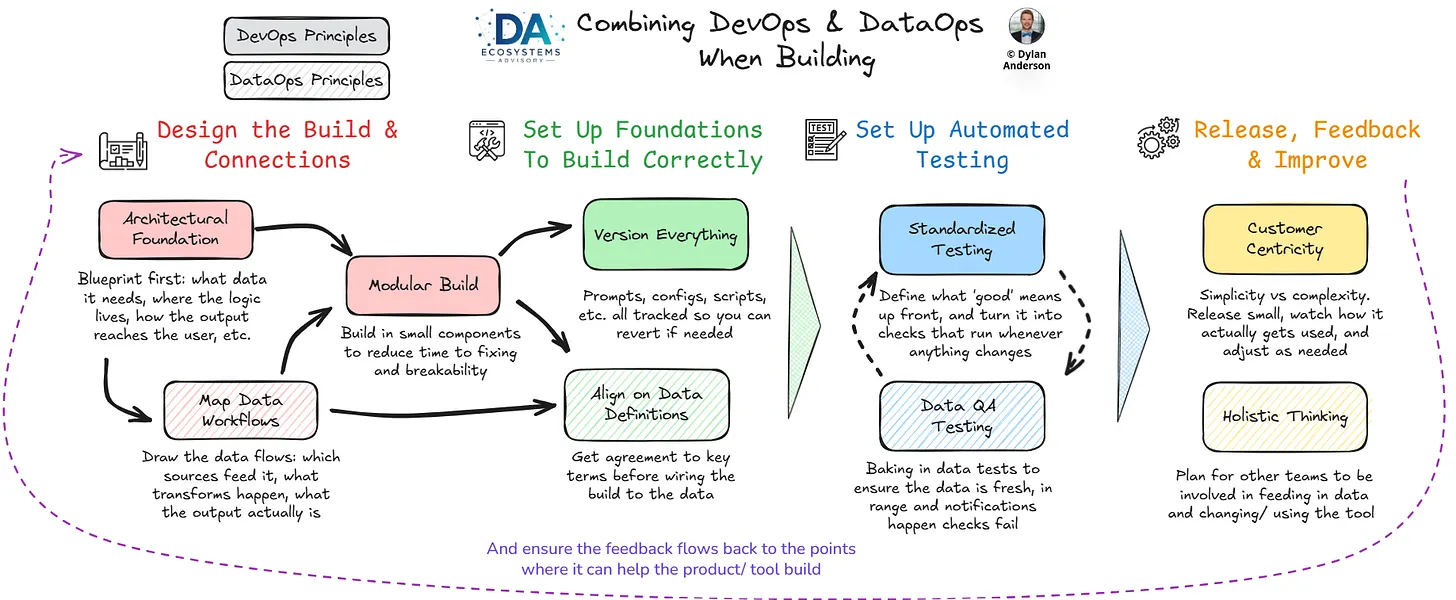
The concepts of Development Operations and Data Operations are essential disciplines for building and maintaining reliable technological systems, especially in the current era of artificial intelligence. Development Operations focuses on the smooth creation and stable release of software. Historically, software developers and operations teams had conflicting goals, with developers wanting to build fast and operations wanting stability. Development Operations unites these sides by emphasizing small, frequent updates, automated testing, clear code versioning, and shared responsibility for the final product. Data Operations applies similar rigorous principles to managing information, but it deals with unique challenges. Unlike software code, which remains static until changed by a person, data flows continuously, decays over time, and originates from sources outside a company's direct control. Because of these unpredictable factors, Data Operations requires constant monitoring, automated quality checks, and clear definitions to ensure the information remains accurate and trustworthy. Whether a team is building traditional software or experimenting with new artificial intelligence tools, combining these two frameworks is crucial. Development Operations ensures the software itself is built logically and can be updated safely, while Data Operations ensures the information flowing through that software remains reliable. Applying both prevents teams from building chaotic, unmaintainable systems.


What Enduring Leadership Looks Like in an Age of Disruption

The article reflects on how leaders can remain effective in a world where disruption is constant rather than occasional. It explains that traditional leadership models, built for predictable environments, no longer match today’s reality of rapid technological change, shifting workforce expectations, and global uncertainty. The author argues that enduring leadership begins with creating clarity even when answers are incomplete. People do not expect leaders to foresee every outcome, but they do expect steady communication and a sense of direction. Adaptability is presented as another essential trait, not as a sign of inconsistency but as evidence of maturity—leaders must be willing to question old assumptions and adjust their approach as conditions evolve. The piece also highlights the importance of emotional intelligence, noting that disruption affects people as much as systems. Leaders who understand this can reduce anxiety, strengthen engagement, and make better decisions. Investing in people is described as a practical necessity rather than a nice‑to‑have, since strong leadership pipelines help organizations absorb change more smoothly. Finally, the article emphasizes values as the anchor that sustains trust. When leaders act consistently and ethically, employees are more likely to support difficult decisions. Overall, enduring leadership is portrayed as a calm, principled way of guiding others through uncertainty without losing sight of purpose.


Finding the right balance between autonomy and scale

The article explores how CIOs can find a practical balance between giving business units autonomy and creating scale through centralization. It explains that both approaches have strengths and weaknesses: autonomy encourages speed and local ownership, while centralization supports efficiency, consistency, and shared learning. The challenge, the author notes, is that many organizations end up with a mix of both without a clear rationale, leading to duplicated systems, rising costs, and unnecessary complexity. Drawing on Paul Krebs’ experience at Koch Industries and Coca‑Cola, the piece describes centralization as a design choice rather than a rigid doctrine. Some capabilities—like infrastructure, cybersecurity, cloud management, and collaboration platforms—naturally benefit from scale and should remain centralized. Others, such as certain applications or data functions, can shift closer to the business as teams mature. The article stresses that standardization and centralization are not the same, and leaders can blend them to meet regional or business‑specific needs without creating one‑off solutions. It also argues that business architecture should guide technology decisions, especially in areas like ERP consolidation and M&A integration. Ultimately, the author encourages CIOs to revisit operating models regularly, recognizing that the right balance changes as capabilities grow and organizational needs evolve.


The EU’s AI transparency deadline is weeks away. Is your enterprise ready?

The article explains that the EU’s AI transparency rules are about to take effect, and companies have only a short time left to prepare. Beginning August 2, any organization offering AI systems in the EU must clearly tell users when they are interacting with AI, whether through chatbots, AI‑generated text, or deepfakes. The rules apply broadly, covering both EU and non‑EU companies if their systems are used in Europe. The Commission has issued guidelines and a voluntary code of practice to help organizations comply, though those who choose not to sign will face closer scrutiny. Content must carry machine‑readable markers and one of three labels—“AI,” “Fully AI‑generated,” or “Partially AI‑modified”—unless it is creative or satirical deepfake material. The article notes that compliance is not just about labeling but about building a durable transparency pipeline that can withstand audits. Companies must track responsibility for content, ensure marks survive real‑world editing, and maintain evidence for regulators. Contracts may need updating, and procurement processes must include requirements for marking and verification. The author stresses that sustained compliance requires ongoing testing, clear ownership, and a consistent baseline across jurisdictions, with local adjustments layered on top.


Platform Engineering for Everyone - Success Can’t Be Coded

The talk centers on why platform engineering succeeds only when treated as a product rather than an infrastructure project. Max Korbacher explains that many internal platforms fail because teams begin with tools or portals instead of a clear purpose, often installing something like Backstage only to discover it is empty and costly to configure: “You install it first… and it’s empty… you need five engineers and a couple of months” . He argues that infrastructure‑first thinking leads teams to focus on technology rather than the people who will use the platform, noting that engineers often avoid asking users what they actually need: “It’s not my nature to go out and ask people, what do you really want?” . Korbacher describes how organizational waves, hype cycles, and duplicated effort create patchwork systems that exhaust DevOps teams and push companies toward platform engineering as a more stable, product‑driven approach. Success, he says, requires principles, understanding user drivers, defining a clear purpose, and measuring outcomes with meaningful metrics. He stresses that adoption—not technical elegance—is the real indicator of value, and that platforms thrive only when they solve common problems, reduce waste, and make everyday work easier for developers, security teams, and even business stakeholders.