Showing posts with label DNS. Show all posts

Daily Tech Digest - March 07, 2026


Quote for the day:

"Be willing to make decisions. That's the most important quality in a good leader." -- General George S. Patton, Jr.


LangChain's CEO argues that better models alone won't get your AI agent to production

LangChain CEO Harrison Chase contends that achieving production-ready AI agents requires more than just utilizing more powerful foundational models. While improved LLMs offer better reasoning, Chase emphasizes that agents often fail due to systemic issues rather than model limitations. He advocates for a shift toward "agentic" engineering, where the focus moves from simple prompting to building robust, stateful systems. A critical component of this transition is the move away from "vibe-based" development—relying on subjective successes—toward rigorous evaluation frameworks like LangSmith. Chase highlights that developers must implement precise control over an agent's logic through tools like LangGraph, which allows for cycles, state management, and human-in-the-loop interactions. These architectural guardrails are essential for managing the inherent unpredictability of LLMs. By treating agent development as a complex systems engineering task, organizations can overcome the "last mile" hurdle, moving beyond impressive demos to reliable, autonomous applications. Ultimately, the maturity of AI agents depends on sophisticated orchestration, detailed observability, and a willingness to architect the environment in which the model operates, rather than expecting a single model to handle every nuance of a complex workflow autonomously.

This article examines the false sense of security provided by multi-factor authentication (MFA) within Windows-centric environments. While MFA is highly effective for cloud-based applications, the piece argues that traditional Active Directory (AD) authentication paths—such as interactive logons, Remote Desktop Protocol (RDP) sessions, and Server Message Block (SMB) traffic—often bypass modern identity providers, leaving internal networks vulnerable to password-only attacks. The article details seven critical gaps, including the persistence of legacy NTLM protocols susceptible to pass-the-hash attacks, the abuse of Kerberos tickets, and the risks posed by unmonitored service accounts or local administrator credentials that frequently lack MFA coverage. To mitigate these significant risks, the author recommends that organizations treat Windows authentication as a distinct security surface by enforcing longer passphrases, continuously blocking compromised passwords, and strictly limiting legacy protocols. Furthermore, the text highlights the importance of auditing service accounts and leveraging advanced security tools like Specops Password Policy to bridge the gap between cloud security and on-premises infrastructure. Ultimately, securing a modern enterprise requires moving beyond simple MFA implementation toward a holistic strategy that addresses these often-overlooked internal authentication vulnerabilities and credential reuse habits.


Why enterprises are still bad at multicloud

In this InfoWorld analysis, David Linthicum argues that while most enterprises are technically multicloud by default, they largely fail to operate them as a cohesive business capability. Instead of a unified strategy, multicloud environments often emerge haphazardly through mergers, acquisitions, or localized team decisions, leading to fragmented "technology estates" that function as isolated silos. Each provider—typically AWS, Azure, and Google—is managed with its own native consoles, security protocols, and talent pools, which creates redundant processes, inconsistent governance, and hidden global costs. Linthicum emphasizes that the "complexity tax" of multicloud is only worth paying if organizations can achieve operational commonality. He advocates for the implementation of common control planes—shared services for identity, policy, and observability—that sit above individual cloud brands to ensure consistent guardrails. To improve maturity, enterprises must shift from viewing cloud adoption as a series of procurement choices to designing a singular operating model. By establishing cross-cloud coordination and relentlessly measuring business value through metrics like recovery speed and unit economics, organizations can move from uncontrolled variety to "controlled optionality," finally leveraging the specialized strengths of different providers without multiplying their operational overhead or fracturing their technical foundations.


The Accidental Orchestrator

This article by O'Reilly Radar examines the profound transformation of the software developer's role in the era of generative AI. It posits that developers are transitioning from traditional manual coding to becoming strategic orchestrators of autonomous AI agents. This shift, described as "accidental," occurred as AI tools evolved from simple autocomplete plugins into sophisticated assistants capable of managing complex, end-to-end tasks. Developers now find themselves overseeing a fleet of agents that handle various components of the software lifecycle, including design, implementation, and debugging. This new reality demands a significant pivot in professional skills; instead of focusing primarily on syntax and logic, engineers must now master prompt engineering, agent coordination, and high-level system architecture. The piece emphasizes that while AI significantly boosts productivity, the complexity of managing these interlinked systems introduces critical challenges regarding transparency, security, and long-term reliability. Ultimately, the role of the accidental orchestrator requires a mindset shift where the developer acts as a tactical director of digital workers rather than a lone creator. This evolution suggests that the future of software engineering lies in the quality of the human-AI partnership and the effective orchestration of intelligent agents.


Powering the new age of AI-led engineering in IT at Microsoft

Microsoft Digital is spearheading a transformative shift toward AI-led engineering, fundamentally changing how IT services are designed, built, and maintained. At the heart of this evolution is the integration of GitHub Copilot and other generative AI tools, which empower developers to automate repetitive "toil" and focus on high-value architectural innovation. By adopting a platform-centric approach, Microsoft standardizes development environments and leverages AI to enhance security, catch bugs earlier, and optimize code quality through sophisticated semantic searches and automated testing. This transition moves beyond simply using AI tools to a holistic culture where AI is woven into the entire software development lifecycle. Key benefits include significantly accelerated deployment cycles, improved developer satisfaction, and a more resilient IT infrastructure. Furthermore, the initiative prioritizes security and compliance by embedding AI-driven checks directly into the engineering pipeline. As Microsoft refines these internal practices, it aims to provide a blueprint for the industry on how to scale enterprise IT operations in an increasingly complex digital landscape. Ultimately, AI-led engineering at Microsoft is not just about speed; it is about fostering a creative environment where engineers solve complex problems with unprecedented efficiency, driving a new standard for modern software development.


Read-Copy-Update (RCU): The Secret to Lock-Free Performance

Read-Copy-Update (RCU) is a sophisticated synchronization mechanism explored in this InfoQ article, primarily utilized within the Linux kernel to handle concurrent data access. Unlike traditional locking methods that can cause significant performance bottlenecks, RCU allows multiple readers to access shared data simultaneously without the overhead of locks or atomic operations. The core concept involves updaters creating a modified copy of the data and then swapping the pointer to the new version, while ensuring that the original data is only reclaimed after a "grace period" when all active readers have finished. This approach ensures that readers always see a consistent, albeit potentially slightly outdated, version of the data without ever being blocked. While RCU offers unparalleled scalability and performance for read-heavy workloads, the article emphasizes that it introduces complexity for developers, particularly regarding memory management and the coordination of update cycles. Updaters must carefully manage the transition between versions to avoid data corruption. Ultimately, RCU represents a fundamental shift in concurrency design, prioritizing reader efficiency at the cost of more intricate update logic, making it an essential tool for high-performance systems where read operations vastly outnumber modifications.


AI transforms ‘dangling DNS’ into automated data exfiltration pipeline

AI-driven automation is fundamentally transforming "dangling DNS" from a common administrative oversight into a sophisticated, high-speed pipeline for automated data exfiltration. Dangling DNS occurs when a Domain Name System record continues to point to a decommissioned cloud resource, such as an abandoned IP address or a deleted storage bucket. While this vulnerability has existed for years, attackers are now utilizing generative AI and advanced scanning scripts to identify these orphaned subdomains across the internet at an unprecedented scale. Once a target is located, AI agents can automatically reclaim the abandoned resource on cloud platforms like AWS or Azure, effectively hijacking the legitimate domain to intercept sensitive traffic, harvest user credentials, or distribute malware through prompt injection attacks. This evolution represents a shift from opportunistic manual exploitation to a systematic, machine-led attack surface management strategy. To counter this, security professionals must move beyond periodic audits, implementing continuous, automated DNS monitoring and lifecycle management. The article underscores that as threat actors leverage AI to weaponize legacy misconfigurations, organizations can no longer afford to leave DNS records unmanaged. Addressing this infrastructure is a critical component of modern cyber defense, requiring the same level of automation that attackers currently use to exploit it.


The New Calculus of Risk: Where AI Speed Meets Human Expertise

The article examines the launch of Crisis24 Horizon, a sophisticated AI-enabled risk management platform designed to address the complexities of a volatile global security landscape. Developed on a modern technology stack, the platform provides a unified "single pane of glass" view, integrating dynamic intelligence with travel, people, and site-specific risk management. By leveraging artificial intelligence to process roughly 20,000 potential incidents daily, Crisis24 Horizon dramatically accelerates threat detection and triage, effectively expanding the capacity of security teams. Key features include "Ask Horizon," a natural language interface for querying risk data; "Latest Event Synopsis," which consolidates fragmented alerts into coherent summaries; and integrated mass notification systems for critical event response. While AI handles massive data aggregation and initial filtering, the platform emphasizes the "human in the loop" approach, where expert analysts provide necessary contextual judgment for high-stakes decisions like emergency evacuations. This synergy of AI speed and human expertise marks a shift from reactive to anticipatory security, allowing organizations to monitor assets in real-time and safeguard operations against interconnected global threats. Ultimately, Crisis24 Horizon empowers leaders to mitigate risks with greater precision, ensuring operational resilience and employee safety amidst geopolitical instability and environmental disasters.


Accelerating AI, cloud, and automation for global competitiveness in 2026

The guest blog post by Pavan Chidella argues that by 2026, the global competitiveness of enterprises will be defined by their ability to transition from AI experimentation to large-scale, disciplined execution. Focusing primarily on the healthcare sector, the author illustrates how the orchestration of AI, cloud-native architectures, and intelligent automation is essential for modernizing legacy processes like claims adjudication, which traditionally suffer from structural latency. In this evolving landscape, technology is no longer an isolated tool but a strategic driver of measurable business outcomes, including improved operational efficiency and enhanced customer transparency. Chidella emphasizes that "responsible acceleration" requires embedding governance, ethical AI monitoring, and regulatory compliance directly into system designs rather than treating them as afterthoughts. By adopting a product-led engineering mindset, organizations can reduce friction and build trust within their ecosystems. Ultimately, the piece asserts that global leadership in 2026 will belong to those who successfully integrate speed and precision with accountability, effectively leveraging hybrid cloud capabilities to process data in real-time. This shift represents a broader competitive imperative to move beyond proof-of-concept stages toward a resilient, automated, and digitally mature infrastructure that can thrive amidst increasing global complexity and regulatory scrutiny.


Engineering for AI intensity: The new blueprint for high-density data centers

This article explores the critical infrastructure evolution required to support the escalating demands of artificial intelligence. As traditional data centers struggle with the unprecedented power and thermal requirements of GPU-heavy workloads, a new engineering paradigm is emerging. This blueprint emphasizes a radical transition from legacy air-cooling systems to advanced liquid cooling technologies, such as direct-to-chip and immersion cooling, which are essential for managing rack densities that now frequently exceed 50kW and can reach up to 100kW per cabinet. Beyond thermal management, the article highlights the necessity of modular, high-voltage power distribution to ensure electrical efficiency and minimize transmission losses across the facility. It also underscores the importance of structural adaptations, including reinforced flooring to support heavier liquid-cooled hardware and overhead cable management to optimize airflow. Furthermore, the blueprint advocates for high-bandwidth, low-latency networking fabrics to facilitate the massive data exchanges inherent in parallel AI training. Ultimately, the piece argues that achieving AI intensity requires a holistic, future-proof design strategy that integrates power scalability, structural flexibility, and sustainable practices, positioning the modern data center as the strategic engine for digital transformation in an AI-first era.


Daily Tech Digest - December 19, 2025


Quote for the day:

"A leader's dynamic does not come from special powers. It comes from a strong belief in a purpose and a willingness to express that conviction." -- Kouzes & Posner


AI tops CEO earnings calls as bubble fears intensify

Research by Hamburg-based IoT Analytics examined around 10,000 earnings calls from about 5,000 global companies listed in the US. The firm's latest quarterly study found that AI rose to the top of CEO agendas for the first time in the period, while concerns about a possible AI-related asset bubble also increased sharply. Mentions of an "AI bubble" climbed 64% compared with the previous quarter. IoT Analytics said executives often paired announcements of new AI investments with comments that questioned the sustainability of current market valuations and the pace of capital inflows into the sector. ... While the number of AI-related references reached a new high, comments that explicitly mentioned a "bubble" in connection with technology or financial markets grew even faster in percentage terms. The study recorded the strongest quarter-on-quarter jump in bubble-related language since it began tracking the metric. Executives used the term "bubble" in several contexts. Some discussed venture funding and valuations for private AI companies. Others raised questions about the level of spending on compute infrastructure and the potential for overcapacity. A smaller group linked bubble concerns to individual asset classes such as AI-related equities. The increase in bubble-related discussion came alongside continued announcements of long-term AI spending plans. 


AI governance becomes a board mandate as operational reality lags

Executives have clearly moved fast to formalize oversight. But the foundations needed to operationalize those frameworks—processes, controls, tooling, and skills embedded in day-to-day work—have not kept pace, according to the report. ... Many organizations still lack a comprehensive view of where AI is being used across their business, Singh explained. Shadow AI and unsanctioned tools proliferate, while sanctioned projects are not always cataloged in a central inventory. Without this map of AI systems and use cases, governance bodies are effectively trying to manage risk they cannot fully see. The second gap is conceptual. “There’s a myth that governance is the same as regulation,” Singh said. “Unfortunately, it’s not.” Governance, she argued, is much broader: It includes understanding and mitigating risk, but also proving out product quality, reliability, and alignment with organizational values. Treating governance as a compliance checkbox leaves major gaps in how AI actually behaves in production. The final one is AI literacy. “You can’t govern something you don’t use or understand,” Singh said. If only a small AI team truly grasps the technology while the rest of the organization is buying or deploying AI-enabled tools, governance frameworks will not translate into responsible decisions on the ground. ... What good governance looks like, Singh argued, is highly contextual. Organizations need to anchor governance in what they care about most. 


Legal Issues for Data Professionals: Data Centers in Space

If data is processed, copied, or stored on satellites, courts may be forced to decide whether space-based computing falls outside the scope of a “worldwide” license. A licensor could argue that the licensee exceeded the grant by moving data “off-planet,” creating an unintended new use. Moreover, even defining the equivalent of “territory” as “throughout the universe” raises questions as well as addressing them. The legal issues and regulatory rules involving data governance and legal rights in data centers in orbit have antecedents. ... Satellite-based data centers raise new questions: Where is an unauthorized copy of copyrighted material made for legal purposes, and which jurisdiction’s laws apply? A location in space complicates these legal issues and has implications for data governance. ... On Earth, IP enforcement against infringement relies on tools like forensic imaging, seizure of hard drives, discovery of server logs, and on-site inspections. Space breaks these tools. A court cannot easily order the seizure of a satellite. Inspecting hardware in orbit is not possible without specialized spacecraft. From a user’s perspective, retrieving logs may depend entirely on a vendor’s operation. ... Most cloud contracts and cyber insurance policies assume all processing happens on Earth. They do not address such things as satellite collisions, radiation damage, solar storms, loss of access due to orbital debris, or the failure of a satellite-to-Earth data link.


DNS as a Threat Vector: Detection and Mitigation Strategies

DNS is a critical control plane for modern digital infrastructure — resolving billions of queries per second, enabling content delivery, SaaS access, and virtually every online transaction. Its ubiquity and trust assumptions make it a high‑value target for attackers and a frequent root cause of outages. Unfortunately, this essential service can be exploited as a DoS vector. Attackers can harness misconfigured authoritative DNS servers, open DNS resolvers, or the networks that support such activities to initiate a flood of traffic to a target, impacting the service availability and causing disruptions in a large scale. This misuse of DNS capabilities makes it a potent tool in the hands of cybercriminals. ... DNS detection strategies focus on analyzing traffic patterns and query content for anomalies (like long/random subdomains, high volume, rare record types) to spot threats like tunneling, Domain Generation Algorithms, or malware, using AI/ML, threat intel, and SIEMs for real-time monitoring, payload analysis, and traffic analysis, complemented by DNSSEC and rate limiting for prevention. Legacy security tools often miss DNS threats. ... DNS mitigation strategies involve securing servers, controlling access (MFA, strong passwords), monitoring traffic for anomalies, rate-limiting queries, hardening configurations, and using specialized DDoS protection services to prevent amplification, hijacking, and spoofing attacks, ensuring domain integrity and availability.


The ‘chassis strategy’: How to build an innovation system that compounds value

The chassis strategy starts with a simple principle: centralize what must be common and decentralize what should evolve. You don’t need a monolithic innovation platform. You need a spine — a shared foundation of data, models and governance — that everything else plugs into. That spine ensures no matter who builds the next great idea — your team, a startup or a strategic partner — the learning, data and IP stay inside your system. ... You don’t need five years or an enterprise overhaul. A minimal but functional chassis can be built in nine months. The first three months are about framing and simplification. Pick three or four innovation domains — formulation, packaging, pricing or supply chain. Define the shared spine: your data schema, APIs and key metrics. Draw a bright line between what you’ll own (core) and what you’ll source (modules). The next three months are about building the core. Set up a unified data layer, model registry, API gateway and an experimentation sandbox. Keep it lightweight. No monoliths, no “innovation cloud.” Just the essentials that make reuse possible. The final three months are about plugging and proving. Integrate a few external modules — a supplier-insight engine, a generative packaging designer, a formulation optimizer. Track time to activation and reuse rate. The goal isn’t more features; it’s showing that vendors can connect fast, share data safely and strengthen the system.


AI is creating more software flaws – and they're getting worse

The CodeRabbit study found 10.83 issues with AI pull requests versus 6.45 for human-only ones, adding that AI pull requests were far more likely to have critical or major issues. "Even more striking: high-issue outliers were much more common in AI PRs, creating heavy review workloads," Loker said. Logic and correctness was the worst area for AI code, followed by code quality and maintainability and security. Because of that, CodeRabbit advised reviewers to watch out for those types of errors in AI code. ... "These include business logic mistakes, incorrect dependencies, flawed control flow, and misconfigurations," Loker wrote. "Logic errors are among the most expensive to fix and most likely to cause downstream incidents." AI code was also spotted omitting null checks, guardrails, and other error checking, which Loker noted are issues that can lead to outages in the real world. When it came to security, the most common mistake by AI was improper password handling and insecure object references, Loker noted, with security issues 2.74 times more common in AI code than that written by humans. Another major difference between AI code and human written-code was readability. "AI-produced code often looks consistent but violates local patterns around naming, clarity, and structure," Loker added.


Identity risk is changing faster than most security teams expect

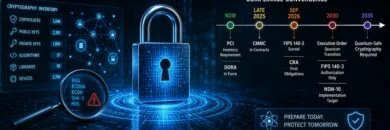
Two forces are expected to influence trust systems in 2026. The first is the rise of autonomous AI agents. These agents run onboarding attempts, learn from rejection, and retry with improved tactics. Their speed compresses the window for detecting weaknesses and demands faster defensive responses. The second force comes from the long tail of quantum disruption. Growing quantum capability is putting pressure on classical cryptographic methods, which lose strength once computation reaches certain thresholds. Data encrypted today can be harvested and unlocked in the future. In response, some organizations are adopting quantum resilient hashing and beginning the transition toward post quantum cryptography that can withstand newer forms of computational power. ... A three part structure is emerging as a practical response. Hashing establishes integrity that cannot be altered. Encryption protects data while standards evolve. Predictive analysis identifies early drift and synthetic behavior before it scales. Together these elements support a continuous trust posture that strengthens as it absorbs more identity events. This model also addresses rising threats such as presentation spoofing, identity drift, and credential replay. All three are expected to increase in 2026 based on observed anomaly patterns. Since these vectors rely on repeated behaviors, long term monitoring is essential.


D&O liability protection rising for security leaders — unless you’re a midtier CISO

CISOs have the potential for more than one safety net, the first of which is a company’s indemnification provisions — rules typically embedded in the company’s articles of incorporation and bylaws. “The language of a company’s indemnification provisions must be properly worded — typically achieved by the general counsel and a board vote — to provide indemnification for a CISO equal to every other director or officer of a company,” explains John Peterson of World Insurance Associates, a provider of employment practice liability insurance. The second safety net for a CISO is the D&O liability insurance policy procured by the CISO’s company through an insurance broker. Even when a company has D&O insurance in place, Peterson advises CISOs to review those policies to make sure they are covered as an “insured person.” ... While enterprise CISOs often have access to legal teams and crisis PR advisors to help shield them, a midrange firm often has one or two people — possibly more — wearing multiple hats, like compliance, IT, and security all rolled into one. This can become an issue because “regulators, customers, and even the courts won’t lower the expectations just because the company is smaller,” Bagnall says. “Without legal protection, CISOs face significant personal and professional risk,” Bagnall said. 


The CIO Conundrum: Balancing Security and Innovation in the Age of AI SaaS

AI tools are now accessible, inexpensive, and often solve workflow friction that teams have lived with for years. The business is moving fast because the barrier to entry is low. This pace raises important questions for CIOs:Are we creating unnecessary friction where teams expect velocity? Have we made the “right path” faster than the workaround? Do our processes match how people work today? Shadow IT grows when official paths feel slow or unclear. Not because teams want to hide things, but because they feel innovation can’t wait. Governance must evolve to match that reality. ... Security should accelerate productivity, not constrain it. With strong identity controls, clear data boundaries, and automated configuration standards, we can introduce new tools without adding friction. These guardrails reduce the workload on security teams and create a predictable environment for employees. The business moves faster. IT gains visibility. The organization avoids the drift that creates risk and inefficiency. ... The question isn’t whether teams will continue exploring new tools, it’s whether we provide a responsible, scalable path forward. When intake is transparent, vetting is calibrated, and guardrails are embedded, the organization can innovate with confidence. The CIO’s job is to design frameworks that keep pace with the business, not frameworks the business waits on.


From hype to reality: The three forces defining security in 2026

Organisations should stop asking “what might agentic AI do” and start identifying the repeatable security workflows they want automated; for example: incident triage, patrol optimisation, evidence packaging; then measure agent performance against those KPIs. The winners in 2026 will be platforms that expose safe, auditable agent APIs and vendors who integrate them into end-to-end operational playbooks. ... Looking ahead, the widespread adoption of digital twins is poised to reshape the security industry’s approach to risk management and operational planning. With a unified, real-time view of complex environments, digital twins enable proactive decision-making, allowing security teams to anticipate threats, optimise resource allocation and continuously refine standard operating procedures. Over time, this capability will shift the industry from reactive incident response to predictive and preventative security strategies, where investment in training, infrastructure and technology is guided through simulated outcomes rather than historical events. ... AR and wearables have had turbulent history, but their resurgence in 2026 will be different — and AI is the reason. AI transforms wearables from simple capture devices into intelligent companions. It elevates AR from a visual overlay to a real-time, context-aware guidance layer. 

Daily Tech Digest - June 11, 2025


Quote for the day:

"The key to success is to focus on goals, not obstacles." -- Unknown


The future of RPA ties to AI agents

“Unlike RPA bots, that follow predefined rules, AI agents are learning from data, making decisions, and adapting to changing business logic,” Khan says. “AI agents are being used for more flexible tasks such as customer interactions, fraud detection, and predictive analytics.” Kahn sees RPA’s role shifting in the next three to five years, as AI agents become more prevalent. Many organizations will embrace hyperautomation, which uses multiple technologies, including RPA and AI, to automate business processes. “Use cases for RPA most likely will be integrated into broader AI-powered workflows instead of functioning as standalone solutions,” he says. ... “RPA isn’t dying — it’s evolving,” he says. “We’ve tested various AI solutions for process automation, but when you need something to work the same way every single time —without exceptions, without interpretations — RPA remains unmatched.” Radich and other automation experts see AI agents eventually controlling RPA bots, with various robotic processes in a toolbox for agents to choose from. “Today, we build separate RPA workflows for different scenarios,” Radich says. “Tomorrow, with our agentic capabilities, an agent will evaluate an incoming request and determine whether it needs RPA for data processing, API calls for system integration, or human handoff for complex decisions.”


The path to better cybersecurity isn’t more data, it’s less noise

SOCs deal with tens of thousands of alerts every day. It’s more than any person can realistically keep up with. When too much data comes in at once, things get missed. Responses slow down and, over time, the constant pressure can lead to burnout. ... The trick is to start spotting patterns. Look at what helped in past investigations. Was it a login from an odd location? An admin running commands they normally don’t? A device suddenly reaching out to strange domains? These are the kinds of details that stand out once you understand what typical system behavior looks like. At first, you won’t. That’s okay. Spend time reading through old incident reports. Watch how the team reacts to real alerts. Learn which ones actually spark investigations and which ones get dismissed without a second glance. ... Start by removing logs and alerts that don’t add value. Many logs are never looked at because they don’t contain useful information. Logs showing every successful login might not help if those logins are normal. Some logs repeat the same information, like system status messages. ... Next, think about how long to keep different types of logs. Not all logs need to be saved for the same amount of time. Network traffic logs might only be useful for a few days because threats usually show up quickly. 


The EU challenges Google and Cloudflare with its very own DNS resolver that can filter dangerous traffic

The DNS4EU wants to be an alternative to major US-based public DNS services (like Google and Cloudflare) to boost the EU's digital autonomy by reducing European reliance on foreign infrastructure. This isn't only an EU-developed DNS, though. The DNS4EU comes with built-in filters against malicious domains, like those hosting malware, phishing, or other cybersecurity threats. The home user version also includes the possibility to block ads and/or adult content. ... The DNS4EU, which the EU ensures "will not be forced on anyone," has been developed to meet different users' needs. The home users' version is a public and free DNS resolver that comes with the option to add filters to block ads, malware, adult content, or all of these, or none. There's also a dedicated version for government entities and telecom providers that operate within the European Union. As mentioned earlier, the DNS4EU comes with a built-in filter to block dangerous traffic alongside the ability to provide regional threat intelligence. This means that a malicious threat discovered in one country could be blocked simultaneously across several regions and countries, de facto halting its spread. ... The Senior Director for European Government and Regulatory Affairs at the Internet Society, David Frautschy Heredia, also warns against potential risks related to content filtering, arguing that "safeguards should be developed to prevent abuse."


AgenticOps: How Cisco is Rewiring Network Operations for the AI Age

AI Canvas is where AgenticOps comes to life. It’s the industry’s first generative UI built for cross-domain IT operations, unifying NetOps, SecOps, IT, and executives into one collaborative environment. Powered by real-time telemetry from Meraki, ThousandEyes, Splunk, and more, AI Canvas brings together data from across the stack into one intelligent, always-on view. But this isn’t just visibility. It’s AI already operating. When a service issue hits, AI Canvas pulls in the right data, connects the dots, and surfaces a live picture of what matters—before anyone even asks. Every session starts with context, whether launched by AI or by an IT engineer. Embedded into the AI Canvas is the Cisco AI Assistant, your interface to the agentic system. Ask a question in natural language. Dig into root cause. Explore options. The AI Assistant guides you through diagnostics, decisions, and actions, all grounded in live telemetry. And when you’re ready to share, just drag your findings into AI Canvas. From there, with one click you can invite collaborators—and that’s when the canvas comes fully alive. Every insight becomes part of a shared investigation with AI Canvas actively thinking, collaborating, and evolving the UI at every step. But it doesn’t stop at diagnosis—AI Canvas acts. It applies changes, monitors impact and share outcomes in real time.


8 things CISOs have learned from cyber incidents

Brown believes there are often important lessons that come out of breaches, whether it’s high-profile ones that end up in textbooks and university courses, or experiences that can be shared among peers through conference panels and other events. “Always look for good to come from events. How can you help the industry forward? Can you help the CISO community?” he says. ... Many incident-hardened CISOs will shift their approach and their mindset about experiencing an attack first-hand. “You’ll develop an attack-minded perspective, where you want to understand your attack surface better than your adversary, and apply your resources accordingly to insulate against risk,” says Cory Michel, VP security and IT at AppOmni, who’s been on several incident response teams. In practice, shifting from defense to offence means preparing for different types of incidents, be it platform abuse, exploitation or APTs, and tailoring responses. ... The playbook needs clear guidance on communication, during and after an incident, because this can be overlooked while dealing with the crisis, but in the end, it may come to define the lasting impact of a breach that becomes common knowledge. “Every word matters during a crisis,” says Brown. “Of what you publish, what you say, how you say it. So, it’s very important to be prepared for that.”


The five security principles driving open source security apps at scale

Open-source AI’s ability to act as an innovation catalyst is proven. What is unknown is the downside or the paradox that’s being created with the all-out focus on performance and the ubiquity of platform development and support. At the center of the paradox for every company building with open-source AI is the need to keep it open to fuel innovation, yet gain control over security vulnerabilities and the complexity of compliance. ... Regulatory compliance is becoming more complex and expensive, further fueling the paradox. Startup founders, however, tell VentureBeat that the high costs of compliance can be offset by the data their systems generate. They’re quick to point out that they do not intend to deliver governance, risk, and compliance (GRC) solutions; however, their apps and platforms are meeting the needs of enterprises in this area, especially across Europe. ... “EU AI Act, for example, is starting its enforcement in February, and the pace of enforcement and fines is much higher and aggressive than GDPR. From our perspective, we want to help organizations navigate those frameworks, ensuring they’re aware of the tools available to leverage AI safely and map them to risk levels dictated by the Act.”


What We Wish We Knew About Container Security

Each container maps to a process ID in Linux. The illusion of separation is created using kernel namespaces. These namespaces hide resources like filesystems, network interfaces and process trees. But the kernel remains shared. That shared kernel becomes the attack surface. And in the event of a container escape, that attack surface becomes a liability. Common attack vectors include exploiting filesystem mounts, abusing symbolic links or leveraging misconfigured privileges. These exploits often target the host itself. Once inside the kernel, an attacker can affect other containers or the infrastructure that supports them. This is not just theoretical. Container escapes happen, and when they do, everything on that node becomes suspect. ... Virtual machines fell out of favor because of performance overhead and slow startup times. But many of those drawbacks have since been addressed. Projects leveraging paravirtualization, for example, now offer performance comparable to containers while restoring strong workload isolation. Paravirtualization modifies the guest OS to interact efficiently with the hypervisor. It eliminates the need to emulate hardware, reducing latency and improving resource usage. Several open source projects have explored this space, demonstrating that it’s possible to run containers within lightweight virtual machines. 


The unseen risks of cloud data sharing and how companies can safeguard intellectual property

For many technology-driven sectors, intellectual property lies at their core. This is particular to the fields of software development, pharmaceuticals, and design innovation. For companies in these fields, IP theft can have serious consequences. Unfortunately, cybercriminals increasingly target valuable IP because it can be sold or used to undermine the original creators. According to the Verizon 2025 Data Breach Investigation Report, nearly 97 per cent of these attacks in the Asia-Pacific region are fuelled by social engineering, system intrusion and web app attacks. This alarming trend highlights the urgent need for stronger data protection measures. ... While cloud platforms present unique challenges for securing IP, they also offer some potential solutions. One of the most effective ways to protect data is through encryption. Encrypting files before they are uploaded to the cloud ensures that even if unauthorised access is gained, the data remains unreadable without the proper decryption key. For organisations that rely on cloud platforms for collaboration, file-level encryption is crucial. This form of encryption ensures that sensitive data is protected not just at rest but throughout its entire lifecycle in the cloud. Many cloud platforms offer built-in encryption tools, but companies can also implement third-party solutions to enhance the protection of their intellectual property.


The Critical Role of a Data Pipeline in Security

By implementing a data pipeline and prioritizing the optimization and reduction of data volume before it reaches the SIEM, organizations can stay on budget and still ensure that all necessary data can be thoroughly examined. Data pipelines also lead to tangible reductions in both storage and processing expenses. ... The decrease in the sheer volume of data that the SIEM must handle directly can significantly reduce the total cost of SIEM operations. In addition to volume reduction, data pipelines improve the quality of data delivered to SIEMs and other tools — filtering out repetitive noise and enriching logs for faster queries, increased relevance, and prioritization of the most critical security events. Data pipelines also introduce efficiency by automating the collection, processing, and routing of data. By reducing alert fatigue through intelligent anomaly detection and prioritization, data pipelines can significantly speed up incident resolution times. Beyond immediate threat detection and cost savings, data pipelines also aid in maintaining compliance with privacy regulations like GDPR, CCPA, and PCI. They help provide clear data lineage, making it easier to track the origin and transformations of data. 


Why you need diverse third-party data to deliver trusted AI solutions

Data diversity refers to the variety and representation of different attributes, groups, conditions, or contexts within a dataset. It ensures that the dataset reflects the real-world variability in the population or phenomenon being studied. The diversity of your data helps ensure that the insights, predictions, and decisions derived from it are fair, accurate, and generalizable. ... Before you start your data analysis, it’s important to understand what you want to do with your data. A keen understanding of your use cases and data applications can help identify gaps and hypotheses you need to work to solve. It also gives you a method for seeking the data that fits your specific use case. In the same way, starting with a clear question provides direction, focus, and purpose to the whole process of text data analysis. Without one, you’ll inevitably gather irrelevant data, overlook key variables, or find yourself looking at a dataset that’s irrelevant to what you actually want to know. ... When certain voices, topics, or customer segments are over- or underrepresented in the data, models trained on that data may produce skewed results: misunderstanding user needs, overlooking key issues, or favoring one group over another. This can result in poor customer experiences, ineffective personalization efforts, and biased decision-making. 

Daily Tech Digest - June 04, 2025


Quote for the day:

"Thinking should become your capital asset, no matter whatever ups and downs you come across in your life." -- Dr. APJ Kalam


Rethinking governance in a decentralized identity world

“Security leaders can take three discrete actions to improve identity and access management across a complex, distributed environment, starting with low hanging fruit before maturing the processes,” Karen Walsh, CEO of Allegro Solutions, told Help Net Security. The first step, Walsh said, is to implement SSO across all standard accounts. “The same way they limit the attack surface by segmenting networks, they can use SSO to consolidate identity management.” Next, security teams should give employees a password manager for both business and personal use, something many organizations overlook despite the risks. “Compromised and weak passwords are a primary attack vector, but too many organizations fail to give their employees a way to improve their password hygiene. Then, they should allow the password manager plugin on all corporate approved browsers. ...” ... The third action is often the most technically demanding: linking human user accounts to machine identities. “They should assign a human user account and identity to all machine identities, including IoT, RPA, and network devices,” Walsh explained. “This provides an additional level of insight into and monitoring over how these typically unmanaged assets behave on networks to mitigate risks from attackers exploiting vulnerabilities.”


A Chief AI Officer Won’t Fix Your AI Problems

Rather than creating an isolated AI leadership role, forward-thinking companies are integrating AI into existing C-suite domains. In my experience working with large enterprises, this approach leads to better alignment, faster adoption, and clearer accountability. CTOs, for example, have long driven AI adoption by ensuring it supports broader digital transformation efforts. Companies like Microsoft and Amazon have taken this route by embedding AI leadership within their technology teams. ... Industries that are slower to adopt AI often face unique challenges that make implementation more complex. Many operate with deeply entrenched legacy systems, strict regulatory requirements, or a more cautious approach to adopting new technologies.  ... The push to appoint a Chief AI Officer often reflects deeper organizational challenges, such as poor cross-functional collaboration, a lack of clarity in digital transformation strategy, or resistance to change. These issues aren’t solved by adding another executive to the leadership team. What is truly needed is a cultural shift—one that promotes AI literacy across the organization, empowers existing leaders to incorporate AI into their strategies, and encourages collaboration between technical and business teams to drive adoption where it matters.


Akamai Addresses DNS Security and Compliance Challenges with Industry-First DNS Posture Management

“DNS security often flies under the radar, but it’s vital in keeping businesses secure and running smoothly,” said Sean Lyons, SVP and General Manager, Infrastructure Security Solutions & Services, Akamai. “For many organisations, the challenge isn’t setting up DNS — it’s knowing whether all their systems are actually properly configured and secured. Those organisations really need a simple way to see what’s happening across their DNS environment to take action quickly. That’s the problem we’re solving with DNS Posture Management. Security practitioners get a clear, unified view that helps them identify priority issues early, stay compliant, and keep their networks performing at their best.” Domains often show known high-risk vulnerabilities or misconfigurations. These weaknesses could impact DNS uptime and resolution reliability while increasing exposure to serious threats such as unauthorised SSL/TLS certificate issuance, DNS spoofing, and cache poisoning. This could embolden threat actors to abuse a company’s DNS to create fake websites that imitate the organisation’s brand for purposes like fraud, data theft, and phishing. Other vulnerabilities allow attackers to bring DNS down entirely, causing network outages for the business and its customers.


Lightspeed: Photonic networking in data centers

Using photonics is seen as a potential way to alleviate this. By transmitting information using photons, vendors say they can make big efficiency and performance gains. The use of photonics in data centers is not new - DCD profiled Google’s Mission Apollo, which saw optical switches introduced to the search giant’s data centers, in 2023 - but interest in the technology has ramped up in recent months, with several vendors raising funds to develop their own particular flavors of photonics. ... Regan, a photonics industry veteran who was brought on board by the Oriole founders to help bring their vision to life, believes this radical approach to redesigning data center networks is required to realize the promise of photonics. “If you want to get the real benefits, you have to get rid of electronic packet switching completely,” he argues. “Google introduced its switches in a bunch of its data centers - they’re very slow but they allow you to reconfigure a network based on demands, and sits alongside electronic packet switching. ... These drawbacks include “complexity, cost, and compatibility concerns,” Lewis said, adding: “With further research and development, there may be possibilities for photonic components to replace electronics in the future; however, for now, electric components remain the status quo.” 


Employees with AI Skills Enjoy Increased Job Security

Frankel said companies that proactively invest in training and reskilling their teams will certainly fare better than those that lollygag. "If you're working in IT, I think the key is to focus on diving in and learning how to leverage new tech to your benefit and tie your efforts to the company's goals," he said. Kausik Chaudhuri, CIO at Lemongrass, added that many organizations are partnering with online learning platforms to deliver targeted courses, while also building internal academies for continuous learning. "Training is tailored to specific job functions, ensuring IT, analytics, and operations teams can effectively manage and optimize AI-driven processes," he explained. Additionally, companies are promoting cross-functional collaboration, encouraging both technical and non-technical teams to build AI literacy. ... For soft skills, adaptability, problem-solving, cross-functional communication, ethical awareness, and change management are essential as AI reshapes business processes. "This shift is pushing IT professionals to be both technically proficient and strategically adaptable," Chaudhuri said. Frankel noted that there's a lot of experimentation going on as organizations grapple with the potential and pitfalls of AI integration. "While AI will get better, I think a lot of places are realizing that AI tools alone won't get them where they need to go," he said.


Lessons learned from the trojanized KeePass incident

All fake KeePass installation packages were signed with a valid digital signature, so they didn’t trigger any alarming warnings in Windows. The five newly discovered distributions had certificates issued by four different software companies. The legitimate KeePass is signed with a different certificate, but few people bother to check what the Publisher line says in Windows warnings. ... Distributors of password-stealing malware indiscriminately target any unsuspecting user. The criminals analyze any passwords, financial data, or other valuable information they manage to steal, sort it into categories, and sell whatever is needed to other cybercriminals for their underground operations. Ransomware operators will buy credentials for corporate networks, scammers will purchase personal data and bank card numbers, and spammers will acquire login details for social media or gaming accounts. That’s why the business model for stealer distributors is to grab anything they can get their hands on and use all kinds of lures to spread their malware. Trojans can be hidden inside any type of software — from games and password managers to specialized applications for accountants or architects.


Do you trust AI? Here’s why half of users don’t

Jason Hardy, CTO at Hitachi Vantara, called the trust gap “The AI Paradox.” As AI grows more advanced, its reliability can drop. He warned that without quality training data and strong safeguards, such as protocols for verifying outputs, AI systems risk producing inaccurate results. “A key part of understanding the increasing prevalence of AI hallucinations lies in being able to trace the system’s behavior back to the original training data, making data quality and context paramount to avoid a ‘hallucination domino’ effect,” Hardy said in an email reply to Computerworld. AI models often struggle with multi-step, technical problems, where small errors can snowball into major inaccuracies — a growing issue in newer systems, according to Hardy. With original training data running low, models now rely on new, often lower-quality sources. Treating all data as equally valuable worsens the problem, making it harder to trace and fix AI hallucinations. As global AI development accelerates, inconsistent data quality standards pose a major challenge. While some systems prioritize cost, others recognize that strong quality control is key to reducing errors and hallucinations long-term, he said. 


Curves Ahead: The Promises and Perils of AI in Mobile App Development

AI-based development tools also increase risks stemming from dependency chain opacity in mobile applications. Blind spots in the software supply chain will increase as AI agents and coding assistants are tasked with autonomously selecting and integrating dependencies. Since AI simultaneously pulls code from multiple sources, traditional methods of dependency tracking will prove insufficient. ... The developer trend of intuitive "vibe coding" may take package hallucinations into serious bad trip territory. The term refers to developers using casual AI prompts to generally describe a desired mobile app outcome; the AI tool then generates code to achieve it. Counter to the common wisdom of zero trust, vibe coding tends to lean heavily on trust; developers very often copy and paste code results without any manual review checks. Any hallucinated packages that get carried over can become easy entry points for threat actors. ... While some predict that agentic AI will disrupt the mobile application landscape by ultimately replacing traditional apps, other modes of disruption seem more immediate. For instance, researchers recently discovered an indirect prompt injection flaw in GitLab's built-in AI assistant Duo. This could allow attackers to steal source code or inject untrusted HTML into Duo's responses and direct users to malicious websites.


CockroachDB’s distributed vector indexing tackles the looming AI data explosion

The Cockroach Labs engineering team had to solve multiple problems simultaneously: uniform efficiency at massive scale, self-balancing indexes and maintaining accuracy while underlying data changes rapidly. Kimball explained that the C-SPANN algorithm solves this by creating a hierarchy of partitions for vectors in a very high multi-dimensional space. ... The coming wave of AI-driven workloads creates what Kimball terms “operational big data”—a fundamentally different challenge from traditional big data analytics. While conventional big data focuses on batch processing large datasets for insights, operational big data demands real-time performance at massive scale for mission-critical applications. “When you really think about the implications of agentic AI, it’s just a lot more activity hitting APIs and ultimately causing throughput requirements for the underlying databases,” Kimball explained. ... Implementing generic query plans in distributed systems presents unique challenges that single-node databases don’t face. CockroachDB must ensure that cached plans remain optimal across geographically distributed nodes with varying latencies. “In distributed SQL, the generic query plans, they’re kind of a slightly heavier lift, because now you’re talking about a potentially geo-distributed set of nodes with different latencies,” Kimball explained.


Burnout: Combatting the growing burden on IT teams

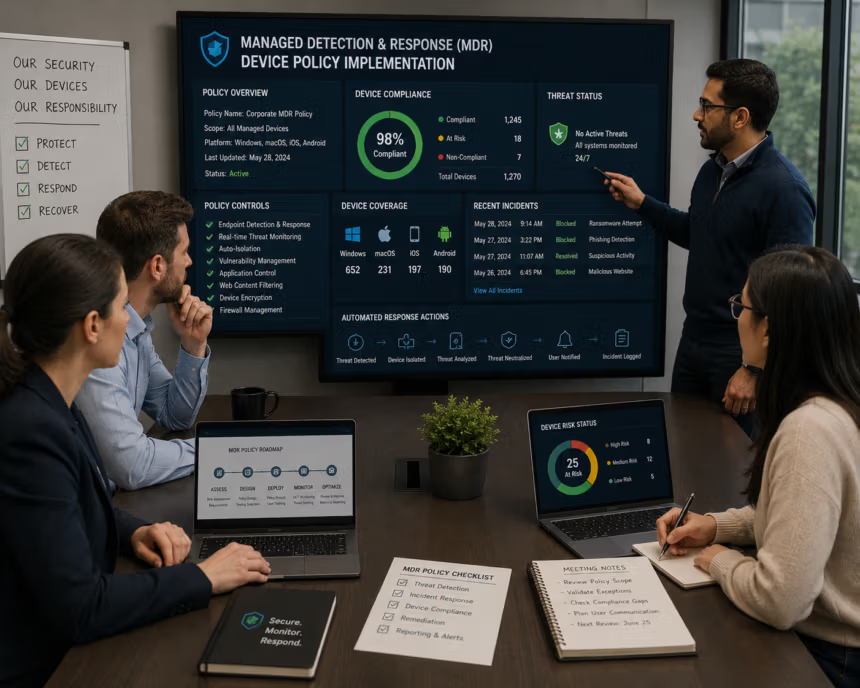
From preventing breaches to troubleshooting system failures, IT teams are the unsung heroes in many organisations, ensuring business continuity, day and night. However, the relentless pace of requests and the sprawl of endpoints to manage, combined with the increasing variety of IT demands, has led to unprecedented levels of burnout. ... IT professionals, particularly those in high-alert environments such as network operations centres (NOC) and security operations centres (SOC), face an almost never-ending deluge of alerts and notifications. Today, IT workers can only respond to roughly 85% of the tickets they receive daily, leaving critical alerts at risk of being overlooked. The pressure to sift through numerous alerts also slows down decision-making processes, erodes wider-business confidence, and leads to IT teams feeling helpless and unsupported. This vicious cycle can be incredibly difficult to break, contributing to high levels of burnout and consequently high employee turnover rates. ... Navigating Complex Compliance Challenges The regulatory landscape is evolving rapidly, placing additional pressure on IT teams. Managing these changes is no easy task, especially as many businesses are riddled with outdated legacy systems making compliance seem daunting. With new frameworks such as DORA and NIS2 coming into effect, 80% of CISOs report that compliance regulations are negatively impacting their mental health.

Daily Tech Digest - April 18, 2025


Quote for the day:

“Failures are finger posts on the road to achievement.” -- C.S. Lewis


How to Use Passive DNS To Trace Hackers Command And Control Infrastructure

This technology works through a network of sensors that monitor DNS query-response pairs, forwarding this information to central collection points for analysis without disrupting normal network operations. The resulting historical databases contain billions of unique records that security analysts can query to understand how domain names have resolved over time. ... When investigating potential threats, analysts can review months or even years of DNS resolution data without alerting adversaries to their investigation—a critical advantage when dealing with sophisticated threat actors. ... The true power of passive DNS in C2 investigation comes through various pivoting techniques that allow analysts to expand from a single indicator to map entire attack infrastructures. These techniques leverage the interconnected nature of DNS to reveal relationships between seemingly disparate domains and IP addresses. IP-based pivoting represents one of the most effective approaches. Starting with a known malicious IP address, analysts can query passive DNS to identify all domains that have historically resolved to that address. This technique often reveals additional malicious domains that share infrastructure but might otherwise appear unrelated.


Why digital identity is the cornerstone of trust in modern business

The foundation of digital trust is identity. It is no longer sufficient to treat identity management as a backend IT concern. Enterprises must now embed identity solutions into every digital touchpoint, ensuring that user interactions – whether by customers, employees, or partners – are both frictionless and secure. Modern enterprises must shift from fragmented, legacy systems to a unified identity platform. This evolution allows organisations to scale securely, eliminate redundancies and deliver the streamlined experiences users now expect. ... Digital identity is also a driver of customer experience. In today’s hyper-competitive digital landscape, the sign-up process can make or break a brand relationship. Clunky login screens or repeated verification prompts are quick ways to lose a customer. ... The foundation of digital trust is identity. It is no longer sufficient to treat identity management as a backend IT concern. Enterprises must now embed identity solutions into every digital touchpoint, ensuring that user interactions – whether by customers, employees, or partners – are both frictionless and secure. Modern enterprises must shift from fragmented, legacy systems to a unified identity platform. This evolution allows organisations to scale securely, eliminate redundancies and deliver the streamlined experiences users now expect.


Is your business ready for the IDP revolution?

AI-powered document processing offers significant advantages. Using advanced ML, IDP systems accurately interpret even complex and low-quality documents, including those with intricate tables and varying formats. This reduces manual work and the risk of human error. ... IDP also significantly improves data quality and accuracy by eliminating manual data entry, ensuring critical information is captured correctly and consistently. This leads to better decision-making, regulatory compliance and increased efficiency. IDP has wide-ranging applications. In healthcare, it speeds up claims processing and improves patient data management. In finance, it automates invoice processing and streamlines loan applications. In legal, it assists with contract analysis and due diligence. And in insurance, IDP automates information extraction from claims and reports, accelerating processing and boosting customer satisfaction. One specific example of this innovation in action is DocuWare’s own Intelligent Document Processing (DocuWare IDP). Our AI-powered solution streamlines how businesses handle even the most complex documents. Available as a standalone product, in the DocuWare Cloud or on-premises, DocuWare IDP automates text recognition, document classification and data extraction from various document types, including invoices, contracts and ID cards.


Practical Strategies to Overcome Cyber Security Compliance Standards Fatigue

The suitability of a cyber security framework must be determined based on applicable laws, industry standards, organizational risk profile, business goals, and resource constraints. It goes without saying that organizations providing critical services to the USA federal government will pursue NIST compliance while Small and Medium-sized Enterprises (SMEs) may want to focus on CIS Top 20, given resource constraints. Once the cyber security team has selected the most suitable framework, they should seek endorsement from the executive team or cyber risk governance committee to ensure shared sense of purpose. ... Mapping will enable organizations to identify overlapping controls to create a unified control set that addresses the requirements of multiple frameworks. This way, the organization can avoid redundant controls and processes, which in turn reduces cyber security team fatigue, accelerates innovation and lowers the cost of security. ... Cyber compliance standards play an integral role to ensure organizations prioritize the protection of consumer confidential and sensitive information above profits. But to reduce pressure on cyber teams already battling stress, cyber leaders must take a pragmatic approach that carefully balances compliance with innovation, agility and efficiency.


The Elaboration of a Modern TOGAF Architecture Maturity Model

This innovative TOGAF architecture maturity model provides a structured framework for assessing and enhancing an organization’s enterprise architecture capabilities in organizations that need to become more agile. By defining maturity levels across ten critical domains, the model enables organizations to transition from unstructured, reactive practices to well-governed, data-driven, and continuously optimized architectural processes. The five maturity levels—Initial, Under Development, Defined, Managed, and Measured—offer a clear roadmap for organizations to integrate EA into strategic decision-making, align business and IT investments, and establish governance frameworks that enhance operational efficiency. Through this approach, EA evolves from a support function into a key driver of innovation and business transformation. This model emphasizes continuous improvement and strategic alignment, ensuring that EA not only supports but actively contributes to an organization’s long-term success. By embedding EA into business strategy, security, governance, and solution delivery, enterprises can enhance agility, mitigate risks, and drive competitive advantage. Measuring EA’s impact through financial metrics and performance indicators further ensures that architecture initiatives provide tangible business value. 


Securing digital products under the Cyber Resilience Act

CRA explicitly states that products should have appropriate level of cybersecurity based on the risks, the risk based approach is fundamental in the regulation. This has the advantage that we can set the bar wherever we want as long as we make a good risk based argumentation for this level. This implies that we must have a methodical categorization of risk, hence we need application risk profiles. In order to implement this we can follow the quality criteria of maturity level 1, 2 and 3 of the application risk profiles practice. This includes having a clearly agreed upon, understood, accessible and updated risk classification system. ... Many companies already have SAMM assessments, if you do not have SAMM assessments but use another maturity framework such as OWASP DSOMM or NIST CSF you could use the available mappings to accelerate the translation to SAMM. Otherwise we recommend doing SAMM assessments and identifying the gaps in the processes needed. Then deciding on a roadmap to develop the processes and capabilities in time. ... In CRA we need to demonstrate that we have adequate security processes in place, and that we do not ship products with known vulnerabilities. So apart from having a good picture of the data flows we need to have a good picture of the processes in place.


Insider Threats, AI and Social Engineering: The Triad of Modern Cybersecurity Threats

Insiders who are targeted or influenced by external adversaries to commit data theft may not be addressed by traditional security solutions because attackers might use a combination of manipulation techniques with tactics to get access to the confidential data of an organization.  This can be seen in the case of Insider Threats carried out by Famous Chollima, a cyber-criminal group that targeted organizations through the employees, that were working for the criminal group. This criminal group collected individuals, falsified their identities, and helped them secure employment with the organization. Once inside, the group got access to sensitive information through the employees they helped get into the organization. ... Since AI can mimic user behavior, it is hard for security teams to detect the difference between normal activity and AI-generated activity. AI can also be used by insiders to assist in their plans, such as like an insider could use AI or train AI models to analyze user activity and pinpoint the window of least activity to deploy malware onto a critical system at an optimal time and disguise this activity under a legitimate action, to avoid detection with monitoring solutions.


How Successful Leaders Get More Done in Less Time

In order to be successful, leaders must make a conscious shift to move from reactive to intentional. They must guard their calendars, build in time for deep work, and set clear boundaries to focus on what truly drives progress. ... Time-blocking is one of the simplest, most powerful tools a leader can use. At its core, time-blocking is the practice of assigning specific blocks of time to different types of work: deep focus, meetings, admin, creative thinking or even rest. Why does it work? Because it eliminates context-switching, which is the silent killer of productivity. Instead of bouncing between tasks and losing momentum, time-blocking gives your day structure. It creates rhythm and ensures that what matters most actually gets done. ... Not everything on your to-do list matters. But without a clear system to prioritize, everything feels urgent. That's how leaders end up spending hours on reactive work while their most impactful tasks get pushed to "tomorrow." The fix? Use prioritization frameworks like the 80/20 rule (20% of tasks drive 80% of results) to stay focused on what actually moves the needle. ... If you're still doing everything yourself, there's a chance you're creating a bottleneck. The best leaders know that delegation buys back time and creates opportunities for others to grow. 


The tech backbone creating the future of infrastructure

Governments and administrators around the world are rapidly realizing the benefits of integrated infrastructure. A prime example is the growing trend for connecting utilities across borders to streamline operations and enhance efficiency. The Federal-State Modern Grid Deployment Initiative, involving 21 US states, is a major step towards modernizing the power grid, boosting reliability and enhancing resource management. Across the Atlantic, the EU is linking energy systems; by 2030, each member nation should be sharing at least 15% of its electricity production with its neighbors. On a smaller scale, the World Economic Forum is encouraging industrial clusters—including in China, Indonesia, Ohio and Australia—to share resources, infrastructure and risks to maximize economic and environmental value en route to net zero. ... Data is a nation’s most valuable asset. It is now being collected from multiple infrastructure points—traffic, energy grids, utilities. Infusing it with artificial intelligence (AI) in the cloud enables businesses to optimize their operations in real time. Centralizing this information, such as in an integrated command-and-control center, facilitates smoother collaboration and closer interaction among different sectors. 


No matter how advanced the technology is, it can all fall apart without strong security

One cybersecurity trend that truly excites me is the convergence of Artificial Intelligence (AI) with cybersecurity, especially in the areas of threat detection, incident response, and predictive risk management. This has motivated me to pursue a PhD in Cybersecurity using AI. Unlike traditional rule-based systems, AI is revolutionising cybersecurity by enabling proactive and adaptive defence strategies through contextual intelligence, shifting the focus from reactive to proactive measures. ... The real magic lies in combining AI with human judgement — what I often refer to as “human-in-the-loop cybersecurity.” This balance allows teams to scale faster, stay sharp, and focus on strategic defence instead of chasing every alert manually. What I have learnt from all this is the fusion of AI and cybersecurity is not just an enhancement, it’s a paradigm shift. However, the key is achieving balance. Hence, AI should augment human intelligence, rather than supplant them.... In the realm of financial cybersecurity, the most significant risk isn’t solely technical; it stems from the gap between security measures and business objectives. As the CISO, my responsibility extends beyond merely protecting against threats; I aim to integrate cybersecurity into the core of the organisation, transforming it into a strategic enabler rather than a reactive measure.