Quote for the day:
“When people are financially invested, they want a return. When people are emotionally invested, they want to contribute.” -- Simon Sinek
🎧 Listen to this digest on YouTube Music
▶ Play Audio DigestDuration: 22 mins • Perfect for listening on the go.
The next killer AI feature? No AI at all
 As artificial intelligence increasingly saturates everyday technology, a
growing number of people are experiencing frustration rather than excitement.
While tech companies forcefully integrate these capabilities into search
engines, email, and productivity apps, many users find the additions
unhelpful, invasive, and distracting. This widespread fatigue is creating an
unexpected opportunity in the technology market: the ability to pay for
services that are completely free of artificial intelligence. Consumers are
demonstrating a willingness to spend money on platforms that prioritize
simplicity and privacy over automated features. For example, Kagi, a paid
search engine that omits automated summaries and advertisements, has seen its
subscriber base double as people seek out cleaner, more reliable search
results. Similarly, privacy-focused alternatives like DuckDuckGo are
experiencing increased adoption whenever major providers push more automated
features. This shift highlights a distinct gap between what companies are
building and what users actually want. Ultimately, the next highly
sought-after software feature might simply be the absence of automated
assistance, allowing people to work peacefully and deliberately without forced
interruptions. For organizations willing to deliver high-quality, streamlined
tools, providing an escape from this technological clutter could prove to be a
highly successful and reliable long-term business strategy.
As artificial intelligence increasingly saturates everyday technology, a
growing number of people are experiencing frustration rather than excitement.
While tech companies forcefully integrate these capabilities into search
engines, email, and productivity apps, many users find the additions
unhelpful, invasive, and distracting. This widespread fatigue is creating an
unexpected opportunity in the technology market: the ability to pay for
services that are completely free of artificial intelligence. Consumers are
demonstrating a willingness to spend money on platforms that prioritize
simplicity and privacy over automated features. For example, Kagi, a paid
search engine that omits automated summaries and advertisements, has seen its
subscriber base double as people seek out cleaner, more reliable search
results. Similarly, privacy-focused alternatives like DuckDuckGo are
experiencing increased adoption whenever major providers push more automated
features. This shift highlights a distinct gap between what companies are
building and what users actually want. Ultimately, the next highly
sought-after software feature might simply be the absence of automated
assistance, allowing people to work peacefully and deliberately without forced
interruptions. For organizations willing to deliver high-quality, streamlined
tools, providing an escape from this technological clutter could prove to be a
highly successful and reliable long-term business strategy.Practical challenges in managing Kubernetes at enterprise scale
 Managing Kubernetes at an enterprise scale introduces complex challenges that
go far beyond basic engineering and deployment tasks. While the system
effectively automates container orchestration, running it in a large
organization shifts the focus heavily toward governance and standardization.
Rather than relying on developers to become infrastructure experts, companies
must create a structured environment with clear guidelines, approved
templates, and standard security controls. Access permissions and network
policies require continuous review and rigorous testing to prevent security
gaps, as default settings are rarely sufficient over extended periods of time.
Additionally, resource management becomes a direct financial concern, meaning
engineering teams must collaborate closely with finance departments to monitor
operational efficiency and control rising cloud costs. Automation features
like autoscaling require careful configuration using relevant performance
signals, and system observability must be designed to answer specific
operational questions rather than just collecting endless data logs. Routine
upgrades demand thorough, complete testing instead of last minute heroic
efforts. Ultimately, Kubernetes cannot fix poorly built applications on its
own. Success requires the platform team to operate with a product mindset,
building a reliable internal system that balances developer speed with strict
security and financial accountability.
Managing Kubernetes at an enterprise scale introduces complex challenges that
go far beyond basic engineering and deployment tasks. While the system
effectively automates container orchestration, running it in a large
organization shifts the focus heavily toward governance and standardization.
Rather than relying on developers to become infrastructure experts, companies
must create a structured environment with clear guidelines, approved
templates, and standard security controls. Access permissions and network
policies require continuous review and rigorous testing to prevent security
gaps, as default settings are rarely sufficient over extended periods of time.
Additionally, resource management becomes a direct financial concern, meaning
engineering teams must collaborate closely with finance departments to monitor
operational efficiency and control rising cloud costs. Automation features
like autoscaling require careful configuration using relevant performance
signals, and system observability must be designed to answer specific
operational questions rather than just collecting endless data logs. Routine
upgrades demand thorough, complete testing instead of last minute heroic
efforts. Ultimately, Kubernetes cannot fix poorly built applications on its
own. Success requires the platform team to operate with a product mindset,
building a reliable internal system that balances developer speed with strict
security and financial accountability.Strategic Board Oversight: Architecting Institutional Fidelity in 2026
 Effective board oversight requires more than passively checking boxes for
compliance; it demands an active dedication to an organization’s core purpose.
With upcoming regulatory changes, such as the UK’s 2026 requirement for
explicit declarations on internal controls, directors must shift from simply
observing past operations to actively guiding future strategy. Currently, over
half of board members lack access to real-time data between meetings, leaving
them vulnerable to significant blind spots. To close this gap, boards need to
adopt clear frameworks and digital tools that provide continuous, reliable
information without crossing the line into micromanagement. The key is
maintaining a healthy balance where directors support their executives while
rigorously testing their underlying assumptions. This approach relies on
fostering an environment of complete honesty, where management feels safe
sharing bad news early. Practical methods, like applying a structured test to
every proposal to clearly check its aim, authority, evidence, and risks, help
ensure that decisions are based on hard facts rather than hopeful assumptions.
Ultimately, strong oversight protects the long-term value and historical
knowledge of the institution, ensuring that leaders act with clear authority
and objective evidence to navigate complex challenges confidently.
Effective board oversight requires more than passively checking boxes for
compliance; it demands an active dedication to an organization’s core purpose.
With upcoming regulatory changes, such as the UK’s 2026 requirement for
explicit declarations on internal controls, directors must shift from simply
observing past operations to actively guiding future strategy. Currently, over
half of board members lack access to real-time data between meetings, leaving
them vulnerable to significant blind spots. To close this gap, boards need to
adopt clear frameworks and digital tools that provide continuous, reliable
information without crossing the line into micromanagement. The key is
maintaining a healthy balance where directors support their executives while
rigorously testing their underlying assumptions. This approach relies on
fostering an environment of complete honesty, where management feels safe
sharing bad news early. Practical methods, like applying a structured test to
every proposal to clearly check its aim, authority, evidence, and risks, help
ensure that decisions are based on hard facts rather than hopeful assumptions.
Ultimately, strong oversight protects the long-term value and historical
knowledge of the institution, ensuring that leaders act with clear authority
and objective evidence to navigate complex challenges confidently.Why Entrepreneurs Who Master the Art of the Value Chain Have a Greater Advantage
The article argues that entrepreneurs gain a meaningful advantage when they
learn to see any product or service as a composition of interconnected parts
rather than a single, isolated offering. This perspective, described as
mastering the “art of the value chain,” helps entrepreneurs understand that
opportunities usually sit within broader systems of value. Instead of focusing
only on what customers see, the article encourages looking at the underlying
elements that make a product work — technology, processes, expertise,
infrastructure, distribution and support — and recognizing how these pieces
rely on one another. The author explains that strong entrepreneurial judgment
comes from identifying where within this composition one can add value,
strengthen weak links or reorganize existing elements to create better
outcomes. Many successful ventures, such as Airbnb and Netflix, did not invent
entirely new products; they reconfigured existing value structures in ways
that improved utility for everyone involved. The article also stresses that
some of the most valuable positions in a value chain are not the most visible
ones, but the ones that quietly enable other parts to function well. As
industries grow more complex and technologies multiply, the ability to
understand how value flows through a system becomes an increasingly important
entrepreneurial skill.
Standalone CDPs Fade as Enterprise Suites Expand
 The customer data platform industry is undergoing a significant shift. For
years, businesses relied on standalone systems to gather customer information
from different sources—like websites, mobile apps, and physical stores—and
piece it together into a single, unified profile. Now, these independent
systems are slowly fading out. Instead, companies prefer to manage customer
data directly within their existing cloud setups or larger, integrated
marketing toolkits. This change is driven by a desire for efficiency. Rather
than moving data into a separate platform, businesses want to use it right
where it lives. This approach prevents data duplication and keeps everything
streamlined. However, it also brings new challenges. When data stays in its
original storage, its quality must be excellent from the start, and analyzing
it frequently can drive up computing costs. Furthermore, as businesses rely
more on artificial intelligence to make real-time decisions based on this
data, they need to implement strict safeguards. Marketers must understand
exactly how these automated systems make choices to ensure fair and accurate
outcomes. Ultimately, the focus has shifted away from simply collecting and
organizing data. Today, the priority is putting that information to work
seamlessly within broader, more powerful business systems.
The customer data platform industry is undergoing a significant shift. For
years, businesses relied on standalone systems to gather customer information
from different sources—like websites, mobile apps, and physical stores—and
piece it together into a single, unified profile. Now, these independent
systems are slowly fading out. Instead, companies prefer to manage customer
data directly within their existing cloud setups or larger, integrated
marketing toolkits. This change is driven by a desire for efficiency. Rather
than moving data into a separate platform, businesses want to use it right
where it lives. This approach prevents data duplication and keeps everything
streamlined. However, it also brings new challenges. When data stays in its
original storage, its quality must be excellent from the start, and analyzing
it frequently can drive up computing costs. Furthermore, as businesses rely
more on artificial intelligence to make real-time decisions based on this
data, they need to implement strict safeguards. Marketers must understand
exactly how these automated systems make choices to ensure fair and accurate
outcomes. Ultimately, the focus has shifted away from simply collecting and
organizing data. Today, the priority is putting that information to work
seamlessly within broader, more powerful business systems.
The Hidden Security Risks of Reduced Summer IT Coverage
 The article explains that summer often creates quiet but significant security
risks for organizations because IT and security teams typically operate with
fewer people. Attackers take advantage of this seasonal slowdown, knowing that
reduced oversight and slower response times make it easier to slip past
defenses. The piece notes that common issues such as delayed patching, slower
investigations and missing institutional knowledge can turn routine alerts
into overlooked threats. Phishing and business email compromise become
especially dangerous when approval chains are disrupted and employees are less
inclined to verify unusual requests. The article also highlights how modern
attacks move quickly, often using automation and AI, while many organizations
still rely on manual processes that depend on someone being available at the
right moment. This mismatch becomes more pronounced during vacation periods.
To counter these gaps, the article stresses the value of automation, including
automated patching, intelligent alert prioritization and runbook execution,
which help maintain steady protection even when staffing is thin. Continuous
monitoring ensures threats are detected and contained regardless of schedules.
The overall message is that summer exposes weaknesses, but the real solution
is building year‑round resilience that does not depend solely on human
availability.
The article explains that summer often creates quiet but significant security
risks for organizations because IT and security teams typically operate with
fewer people. Attackers take advantage of this seasonal slowdown, knowing that
reduced oversight and slower response times make it easier to slip past
defenses. The piece notes that common issues such as delayed patching, slower
investigations and missing institutional knowledge can turn routine alerts
into overlooked threats. Phishing and business email compromise become
especially dangerous when approval chains are disrupted and employees are less
inclined to verify unusual requests. The article also highlights how modern
attacks move quickly, often using automation and AI, while many organizations
still rely on manual processes that depend on someone being available at the
right moment. This mismatch becomes more pronounced during vacation periods.
To counter these gaps, the article stresses the value of automation, including
automated patching, intelligent alert prioritization and runbook execution,
which help maintain steady protection even when staffing is thin. Continuous
monitoring ensures threats are detected and contained regardless of schedules.
The overall message is that summer exposes weaknesses, but the real solution
is building year‑round resilience that does not depend solely on human
availability.IT isn’t holding AI back, your business processes are
 While most IT leaders feel confident in their ability to deploy artificial
intelligence, the real barrier to realizing its value lies in outdated
business processes. According to a recent survey, over 80% of senior IT
executives trust their teams to roll out AI, yet 75% recognize that their
operating models must change significantly. The core issue is that applying
advanced technology to inefficient, manual routines such as spreadsheet data
entry will not yield meaningful improvements. Instead of treating AI as a
basic software upgrade or simply hosting prompt engineering workshops,
organizations need to fundamentally redesign how work gets done. This requires
a deep understanding of current workflows to identify where tasks stall and
where AI can actually help. True progress demands that companies stop treating
AI like a fancy word processor and start examining their core operations to
determine what should be automated, supported by technology, or left to
humans. To succeed, this shift requires strong commitment from top executives
and tight collaboration between IT and business operations. IT teams cannot
build systems in isolation; they must understand practical business problems,
data quality, and management rules from the start. Ultimately, unlocking the
full potential of artificial intelligence is less about overcoming
technological limits and more about restructuring how an enterprise operates
day to day.
While most IT leaders feel confident in their ability to deploy artificial
intelligence, the real barrier to realizing its value lies in outdated
business processes. According to a recent survey, over 80% of senior IT
executives trust their teams to roll out AI, yet 75% recognize that their
operating models must change significantly. The core issue is that applying
advanced technology to inefficient, manual routines such as spreadsheet data
entry will not yield meaningful improvements. Instead of treating AI as a
basic software upgrade or simply hosting prompt engineering workshops,
organizations need to fundamentally redesign how work gets done. This requires
a deep understanding of current workflows to identify where tasks stall and
where AI can actually help. True progress demands that companies stop treating
AI like a fancy word processor and start examining their core operations to
determine what should be automated, supported by technology, or left to
humans. To succeed, this shift requires strong commitment from top executives
and tight collaboration between IT and business operations. IT teams cannot
build systems in isolation; they must understand practical business problems,
data quality, and management rules from the start. Ultimately, unlocking the
full potential of artificial intelligence is less about overcoming
technological limits and more about restructuring how an enterprise operates
day to day.India’s Aadhaar Shows Foreign Dependencies Reach Beyond US-China
When India introduced its Aadhaar digital identity system, the government
presented it as a homegrown achievement. It was framed as a sovereign
infrastructure built to free the country from relying on American or Chinese
technology. However, this narrative overlooks a critical reality: the system
relies heavily on the Japanese multinational firm NEC Corporation, which
provided the core fingerprint matching technology. Because Japan maintains
strong relations with India and lacks a colonial history, NEC has largely
escaped the strict scrutiny applied to Western and Chinese firms. This
situation highlights a significant flaw in current debates about digital
sovereignty. Often, the push for technological independence simply means
substituting one foreign dependency for another based on geopolitical
convenience rather than genuine autonomy. While NEC technology performs well
in controlled testing, its practical application in India has struggled.
Authentication success rates hover around 94 percent, resulting in millions of
failed attempts every month and cutting off vulnerable rural populations from
essential services. Because NEC operates behind the scenes, there is a
distinct lack of accountability for these failures. Ultimately, selecting
preferred foreign suppliers does not equate to actual control over digital
infrastructure. True digital sovereignty requires transparent and democratic
oversight rather than just picking more favorable international partners.
India’s DPDP Act and the GenAI paradox in the context of sovereignty
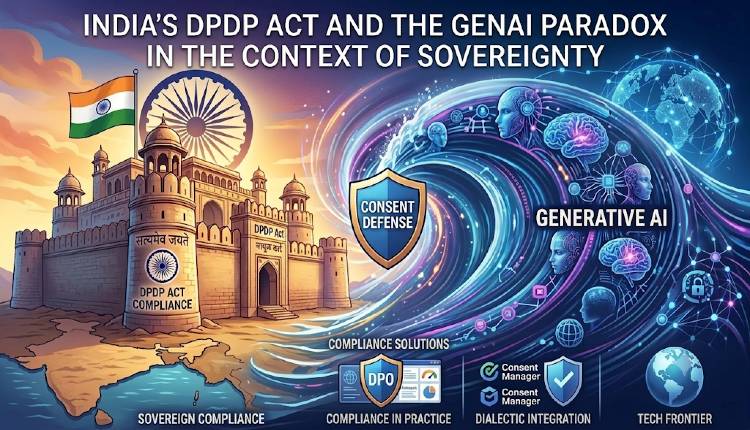 India recently introduced the Digital Personal Data Protection Act to secure
the privacy of its citizens. The law focuses on clear rules like gathering
only necessary data, strictly defining its purpose, securing explicit consent,
and allowing people to delete their personal information. However, this
creates a major conflict with generative artificial intelligence. These models
operate by absorbing massive amounts of information without a specific end
goal in mind, which makes securing specific consent almost impossible.
Furthermore, once personal data is permanently integrated into a complex
model, extracting and deleting it becomes incredibly difficult and expensive.
This mismatch presents a deep paradox for policymakers trying to govern
borderless technology with rigid, location-based rules. Beyond basic consumer
privacy, the government is increasingly concerned about national security.
Officials worry that foreign platforms could analyze patterns in the queries
submitted by government employees, potentially revealing sensitive strategic
information. As a result, businesses are currently working hard to adjust
their operations to comply with these strict new regulations, while the
government simultaneously limits the use of certain foreign tools and invests
heavily in domestic alternatives. Ultimately, India faces the complex
challenge of comprehensively protecting its people's data and maintaining its
national sovereignty without stalling necessary technological progress.
India recently introduced the Digital Personal Data Protection Act to secure
the privacy of its citizens. The law focuses on clear rules like gathering
only necessary data, strictly defining its purpose, securing explicit consent,
and allowing people to delete their personal information. However, this
creates a major conflict with generative artificial intelligence. These models
operate by absorbing massive amounts of information without a specific end
goal in mind, which makes securing specific consent almost impossible.
Furthermore, once personal data is permanently integrated into a complex
model, extracting and deleting it becomes incredibly difficult and expensive.
This mismatch presents a deep paradox for policymakers trying to govern
borderless technology with rigid, location-based rules. Beyond basic consumer
privacy, the government is increasingly concerned about national security.
Officials worry that foreign platforms could analyze patterns in the queries
submitted by government employees, potentially revealing sensitive strategic
information. As a result, businesses are currently working hard to adjust
their operations to comply with these strict new regulations, while the
government simultaneously limits the use of certain foreign tools and invests
heavily in domestic alternatives. Ultimately, India faces the complex
challenge of comprehensively protecting its people's data and maintaining its
national sovereignty without stalling necessary technological progress.How Hyperscale Infrastructure, Sovereign AI And Quantum Computing Redefine Enterprise Strategy
 Data centers are no longer just places to store static information; they have
become the central engines of the digital economy. Modern "hyperscale data
centers" are filled with advanced processors working together to analyze
information and create new content continuously. Because processing power is
now essential for survival, huge amounts of money that used to go into
traditional industries are now flowing into artificial intelligence
infrastructure. Recognizing this shift, many countries are building their own
local tech hubs. This push for "sovereign AI" allows nations to keep their
data secure while training systems that reflect their unique languages and
cultures. This move is reshaping international alliances, as countries secure
the critical minerals and technology they need to stay independent. Looking
ahead, adding quantum computing into these data centers will be the next major
leap, potentially solving incredibly complex problems in seconds and upending
current security protocols. For business leaders, this means that computing
power is no longer just a basic tech expense but a core part of long-term
strategy. Organizations and nations that invest in their own infrastructure
and talent will secure their competitive edge, while those that do not risk
falling behind and relying entirely on outside technology.
Data centers are no longer just places to store static information; they have
become the central engines of the digital economy. Modern "hyperscale data
centers" are filled with advanced processors working together to analyze
information and create new content continuously. Because processing power is
now essential for survival, huge amounts of money that used to go into
traditional industries are now flowing into artificial intelligence
infrastructure. Recognizing this shift, many countries are building their own
local tech hubs. This push for "sovereign AI" allows nations to keep their
data secure while training systems that reflect their unique languages and
cultures. This move is reshaping international alliances, as countries secure
the critical minerals and technology they need to stay independent. Looking
ahead, adding quantum computing into these data centers will be the next major
leap, potentially solving incredibly complex problems in seconds and upending
current security protocols. For business leaders, this means that computing
power is no longer just a basic tech expense but a core part of long-term
strategy. Organizations and nations that invest in their own infrastructure
and talent will secure their competitive edge, while those that do not risk
falling behind and relying entirely on outside technology.


No comments:
Post a Comment