Daily Tech Digest - November 27, 2020

Algorithmic transparency obligations needed in public sector

“The Centre for Data Ethics and Innovation has today set out a range of measures to help the UK achieve this, with a focus on enhancing transparency and accountability in decision-making processes that have a significant impact on individuals. Not only does the report propose a roadmap to tackle the risks, but it highlights the opportunity that good use of data presents to address historical unfairness and avoid new biases in key areas of life.” ... These include historical bias, in which data reflecting previously biased human decision-making or historical social inequalities is used to build the model; data selection bias, in which the data collection methods used mean it is not representative; and algorithmic design bias, in which the design of the algorithm itself leads to an introduction of bias. Bias can also enter the algorithmic decision-making process because of human error as, depending on how humans interpret or use the outputs of an algorithm, there is a risk of bias re-entering the process as they apply their own conscious or unconscious biases to the final decision. “There is also risk that bias can be amplified over time by feedback loops, as models are incrementally retrained on new data generated, either fully or partly, via use of earlier versions of the model in decision-making,” says the review.


Kick-off Your Transformation by Imagining It Had Failed

An effective way to get the team into the right mindset – i.e. to think as if they’re not merely looking into the future but are actually in it – is to have everyone participate in telling the story of the transformation. What did happen? What noteworthy events took place? What were the highs and lows of the transformation? The power of this exercise is that it challenges the team to ‘go deep’ into this prospective hindsight narrative, constructing a plausible chain of events that must logically lead to the outcome (the failure of the transformation). This opens a broader spectrum of potential reasons for failure, further enriching the conversation and providing us with a goldmine of potential insights.  One way to collaboratively write the story of the transformation is by constructing a timeline. Ask the team to break into small groups of 3 or 4. Each small group will work to chronologically list significant events that they believe led to the failure of the transformation. The timeline should be divided into meaningful time periods (taking into account how long back we are looking) – e.g. quarterly.


Have attitudes to tech investment changed at board level due to Covid-19?

“There has been a great acceleration of thinking around technology and its role in business,” says Chapman. “Technology has been a crucial lifeline through this pandemic, essential to maintaining business efficiency and productivity.” The adoption of collaborative tools and the use of the cloud has allowed workforces to continue working effectively in remote environments, as much of the world went into lockdown. Chapman explains that this has helped change the attitude of boards of directors towards technology, for two reasons. First, technology has proved itself by successfully enabling entire workforces to work from home. “If this pandemic had happened even five years ago, IT teams would not have succeeded, but they did in 2020 because the technology was ready, and so was the appetite from users to adopt it,” he says. The second reason is that the pandemic demonstrated clearly what was possible – digital modernisation has accelerated across nearly every industry. According to a recent IFS study, 70% of businesses increased or maintained digital transformation spend during the pandemic. The survey data indicated that enterprise plans to increase spending on digital transformation tracks closely with concerns about economic conditions disrupting business.


Bandook: Signed & Delivered

Check Point Research recently observed a new wave of campaigns against various targets worldwide that utilizes a strain of a 13-year old backdoor Trojan named Bandook. Bandook, which had almost disappeared from the threat landscape, was featured in 2015 and 2017 campaigns, dubbed “Operation Manul” and “Dark Caracal“, respectively. These campaigns were presumed to be carried out by the Kazakh and the Lebanese governments, as uncovered by the Electronic Frontier Foundation (EFF) and Lookout. During this past year, dozens of digitally signed variants of this once commodity malware started to reappear in the threat landscape, reigniting interest in this old malware family. In the latest wave of attacks, we once again identified an unusually large variety of targeted sectors and locations. ... The full infection chain of the attack can be broken down into three main stages. The first stage starts, as in many other infection chains, with a malicious Microsoft Word document delivered inside a ZIP file. Once the document is opened, malicious macros are downloaded using the external template feature. The macros’ code in turn drops and executes the second stage of the attack, a PowerShell script encrypted inside the original Word document. Finally, the PowerShell script downloads and executes the last stage of the infection: the Bandook backdoor.


Cybersecurity Predictions for 2021: Robot Overlords No, Connected Car Hacks Yes

One of the reasons we’ll see more internal attacks is that password-management tools and multi-factor authentication (MFA) will become more prevalent. This will help slow the rate of account-compromise attacks through phishing and data theft. These tools are very effective at reducing the threat from compromised accounts, with token-based MFA being the more effective of the two, but usage has grown slowly over the years. However, inexpensive physical tokens and software-based equivalents make them accessible. User acceptance will still be a challenge going into the new year and, probably, for several years more. We’re also likely to see a growth in risk-based access control technologies, where security analytics tools are used to help decide what level of authentication is appropriate on a case-by-case bases. This will reduce the burden on users by only requiring additional authentication when needed, while making it more difficult for attackers by tying behavior analysis techniques into the security stack. This also ties into zero-trust architectures, which should also see growth moving into 2021 and beyond. Security analytics as a technology will see more use, being incorporated into existing security stacks by seamlessly merging into existing solutions.


Enterprises addressing data security and e-waste issues generated by remote work

“The flood of technology investment which followed the beginning of the pandemic has created clear issues for both e-waste and secure data management,” said Alan Bentley, President of Global Strategy at Blancco. “The switch to remote work spurred on a wave of new device purchases, but these new, widely distributed devices have left enterprises feeling vulnerable. It’s fascinating that so many businesses have implemented roles to manage the e-waste issue resulting from COVID-19, demonstrating corporate social responsibility (CSR), but also their concern around how these devices will be dealt with when they reach end-of-life. “It’s crucial that this issue is not overlooked and that these devices are appropriately disposed of. But it’s just as crucial to ensure the safeguarding of sensitive data during that process. “Appropriate data sanitization might at times be overlooked as an element of e-waste policies, but it is the perfect opportunity to engage data management best practices. Because not only will this reduce environmental impact, it will also remove the risk of a data breach when disposing of devices at end-of-life.” The report concludes that enterprises must rethink their device management practices.


Fix bottlenecks before tackling business process automation

Describing the approach the company took to optimise the process, Novais says: “We started with pen and paper to define the process, then modelled it using Tibco, to identify gaps in how it was working and to describe what we wanted to achieve.” The overall objective of the employee onboarding process was to ensure new employees get all the applications they need for their job at Cosentino. Putting in place new and improved business processes is most successful if someone from the business can champion the change. Novais adds: “It is not easy to show someone they are not efficient.” Cosentino identified key users who could help others to understand how the business process improves the way they work. Novais says dashboards are used to help the company assess business processes to understand bottlenecks. “We can review processes on a regular basis,” he adds. The company has a cloud strategy based on Microsoft Azure and the Tibco cloud and is actively building applications that extend its legacy SAP enterprise resource planning (ERP) system. For instance, Novais says Cosentino is extracting data from the ERP for a new purchase-to-pay business process that is being run outside the ERP.


Use social design to help your distributed team self-organize

An alternative to the top-down approach is to let function drive form, supporting those most directly connected to creating value for customers. Think of it as bottom-up or outside-in. One discipline useful in such efforts is social design, a subspecialty of design that aspires to solve complex human issues by supporting, facilitating, and empowering cultures and communities. Its practitioners design systems, not simply beautiful things. I spoke with one of the pioneers in this area, Cheryl Heller, author of The Intergalactic Design Guide: Harnessing the Creative Potential of Social Design. Her current work at Arizona State University centers on integrating design thinking and practice into functions that don't typically utilize design principles. “People’s work is often their only source of stability right now,” she told me. “You have to be careful, because people are brittle.” Beware the fear-inducing “burning platform” metaphor frequently used in change management (the idea being, essentially, that people must be forced to overcome resistance to change). Heller explained that people using traditional business thinking are often in a hurry to “get to outcomes” and that haste is counterproductive when dealing with human relationships because it can lead to disengagement and ultimately failure.


Overcoming the pandemic era with a solid business continuity plan

IT leaders also felt that the pandemic had exposed their lack of preparedness for different working arrangements (28%). Nearly six months after the coronavirus upended our traditional working practices, businesses across the world are grappling to turn their temporary fixes into more sustainable processes that will support many employees that expect to work from home for the foreseeable future. This means employing the right technology solutions to ensure workers can be as productive and efficient at home as they are in the office. Whether that means migrating to the cloud to ensure easy access to tools and documents from remote locations, or implementing collaboration tools that enable quicker, easier, and simpler communication between employees but at the same time remaining secure. But it’s important that this challenge isn’t just viewed in the context of a technical fix. Businesses will also need to reassess processes and ensure employee benefits packages reflect a remote working structure. For example, this may involve providing the right physical set-up to ensure people can work comfortably, or launching wellness programmes to support the emotional and mental health of their employees.


Failing Toward Zero: Why Your Security Needs to Fail to Get Better

Cybercriminals need to succeed only once, but organizations need to succeed every time. While it's more than likely that your organization will be the target of a successful cyberattack, a successful cyberattack doesn't necessarily make a catastrophic data breach. If you know your security is going to fail at some point, you can prepare for this eventuality and mitigate its impact on operations. It's at this intersection of antifragility and cybersecurity that we get a model I'm calling "failing toward zero." Failing toward zero is a state in which each security incident leads to a successive reduction in future incidences of the same type. Organizations that fail toward zero embrace failure and learn from their mistakes. Our data suggests that smart companies are already starting to do this. The Data Science and Engineering team at Malwarebytes examined all detection data on business endpoints for the past three years. It's no surprise that malware detections on business endpoints went up every single year, from 7,553,354 in 2017 to around 49 million in 2020 — and the year isn't even over yet. However, the detections we're facing today are different from those we saw just a few years ago.


Quote for the day:

"If you want staff to give great service, give great service to staff." -- Ari Weinzweig

Daily Tech Digest - November 26, 2020

How to master microservices data architecture design

Optimizing microservices applications for data management takes the right combination of application design and database technology. It isn't a matter of simply choosing one database model over another, or placing a database in some external container. Instead, it comes down to staying focused on a set of database attributes known as ACID: atomicity, consistency, isolation and durability. Atomicity dictates that database operations should never be left partially complete: It either happens, or it doesn't. These operations shouldn't be parsed or broken out into smaller sets of independent tasks. Consistency means that the database never violates the rules that govern how it handles failures. For example, if a multistep change fails halfway through execution, the database must always roll back the operation completely to avoid retaining inaccurate data. Isolation is the principle that every single database transaction should operate without relying on or affecting the others. This allows the database to consistently accommodate multiple operations at once while still keeping its own failures contained. Durability is another word for a database's resilience. Architects should always plan for failure and disruptions by implementing the appropriate rollback mechanisms, remaining mindful of couplings, and regularly testing the database's response to certain failures.


Building a Self-Service Cloud Services Brokerage at Scale

The concepts and architecture behind a cloud brokerage are continually evolving. In a recent cloud brokerage survey on pulse.qa, an online community of IT executives, 29 % of the respondents answered that they outsourced the development of their cloud brokerage to a regional systems integrator (SI) or professional services firms. More interesting, is that 56% of the respondents built and launched their brokerage using a hybrid team of their own staff and expert outside contractors. When choosing a third-party SI or professional services firm, look for a provider with experience building brokerages for other customers like your organization. You should also investigate their strategic alliances with the CSPs and tools providers your organization requires in your brokerage. When it comes to expert outside contractors, the same rules apply. You might get lucky with finding such highly skilled contractors through contingent staffing firms – the so-called body shops – if you’re willing to go through enough resumes. However, when finding contractors for your cloud brokerage you’ll probably need to exercise your own team member’s professional networks to find the right caliber of cloud contractor.


The Future of Developer Careers

As a developer in a world with frequent deploys, the first few things I want to know about a production issue are: When did it start happening? Which build is, or was, live? Which code changes were new at that time? And is there anything special about the conditions under which my code is running? The ability to correlate some signal to a specific build or code release is table stakes for developers looking to grok production. Not coincidentally, “build ID” is precisely the sort of “unbounded source” of metadata that traditional monitoring tools warn against including. In metrics-based monitoring systems, doing so commits to an infinitely increasing set of metrics captured, negatively impacting the performance of that monitoring system AND with the added “benefit” of paying your monitoring vendor substantially more for it. Feature flags — and the combinatorial explosion of possible parameters when multiple live feature flags intersect — throw additional wrenches into answering Question 1. And yet, feature flags are here to stay; so our tooling and techniques simply have to level up to support this more flexibly defined world. ...  A developer approach to debugging prod means being able to isolate the impact of the code by endpoint, by function, by payload type, by response status, or by any other arbitrary metadata used to define a test case. 


Brain researchers get NVMe-over-RoCE for super-fast HPC storage

NVMe-over-fabrics is a storage protocol that allows NVMe solid-state drives (SSDs) to be treated as extensions of non-volatile memory connected via the server PCIe bus. It does away with the SCSI protocol as an intermediate layer, which tends to form a bottleneck, and so allows for flow rates several times faster compared to a traditionally connected array. NVMe using RoCE is an implementation of NVMe-over-Fabrics that uses pretty much standard Ethernet cables and switches. The benefit here is that this is an already-deployed infrastructure in a lot of office buildings. NVMe-over-RoCE doesn’t make use of TCP/IP layers. That’s distinct from NVMe-over-TCP, which is a little less performant and doesn’t allow for storage and network traffic to pass across the same connections. “At first, we could connect OpenFlex via network equipment that we had in place, which was 10Gbps. But it was getting old, so in a fairly short time we moved to 100Gbps, which allowed OpenFlex to flex its muscles,” says Vidal. ICM verified the feasibility of the deployment with its integration partner 2CRSi, which came up with the idea of implementing OpenFlex like a SAN in which the capacity would appear local to each workstation.


Understanding Zapier, the workflow automation platform for business

In addition to using Zapier to connect workflows, companies have turned to it for help during the COVID-19 pandemic. Foster said his company has helped smaller firms move their business online quickly, connecting and updating various applications such as CRM records.  “Many small business owners don’t have the technical expertise or someone on staff that can build these sites for them,” he said. “So they turn to no-code tools to create professional websites, and built automations with Zapier to reach new customers, manage inventory, and ensure leads didn’t slip through the cracks.” Saving employees time spent on repetitive tasks is a common benefit, said Andrew Davison, founder of Luhhu, a UK-based workflow automation consultancy and Zapier expert. He pointed to the amount of time wasted when workers have to key in the same data in different systems; that situation is only getting worse as businesses rely on more and more apps. “Zapier can eliminate this, meaning staffing costs can be reduced outright, or staff can be redeployed to more meaningful, growth-orientated work,” he said. “And human error with data entry is avoided — which can definitely be an important thing for some businesses in sensitive areas — like legal, for example.”


Microsoft's low-code tools: Now everyone can be a developer

Microsoft's new wave of low- and no-code tools in the Power Platform builds on this, providing tooling for UI construction, for business process automation, and for working with data. This fits in well with the current demographic shifts, with new entrant workers coming from the generation that grew up with open-world building games like Minecraft. Low-code tools might not look like Minecraft worlds, but they give users the same freedom to construct a work environment. There's a lot of demand, as Charles Lamanna, Microsoft CVP, Low Code Application Platform, notes: "Over 500 million new apps will be built during the next five years, which is more than all the apps built in the last 40 years." Most of those apps need to be low-code, as there's more than an app gap -- there's also a developer gap, as there's more demand for applications than there are developers to build that code. Much of that demand is being driven by a rapid, unexpected, digital transformation. People who suddenly find themselves working from home and outside the normal office environment need new tools to help manage what were often manual business processes. The asynchronous nature of modern business makes no-code tooling an easy way of delivering these new applications, as Lamanna notes: "It's kind of come into its own over the last year with the fastest period of adoption we've ever seen across the board from like a usage point of view, and that's just because of all these trends are coming to a head right now."


How to build the right data architecture for customer analytics

Whatever your tools, they’re only as good as the data that feeds them – so when building any data architecture, you need to pay attention to the foundations. Customer data platforms (CDPs) are the way to go for this, as they centralise, clean and consolidate all the data your business is collecting from thousands of touchpoints. They coordinate all of your different data sources – almost like the conductor in an orchestra – and channel that data to all the places you need it. As a central resource, a CDP eliminates data silos and ensures that every team across your company has live access to reliable, consistent information. CDPs can also segment customer data – sorting it into audiences and profiles – and most importantly, can easily integrate with the types of analytics or marketing tools already mentioned. CDPs are often seen as a more modern replacement for DMP (Data management platform) and CRM (customer relationship management) systems, which are unsuited to the multiplicity of digital customer touchpoints that businesses now have to deal with. ... When you have the basics in place, deep learning and artificial intelligence can allow you to go further. These cutting-edge applications learn from existing customer data to take the experience to the next level, for instance by automatically suggesting new offers based on past behaviour.


Staying Flexible With Hybrid Workplaces

Once employers start tracking the ways in which their teams communicate and learn, they can begin to find solutions to better spread that knowledge. For example, is most of the learning coming from an outdated employee handbook, or is there one person on the team that everyone goes to when there’s a question? Is that technology that you’re using causing more confusion - and do you see your team focusing on workarounds as opposed to the ideal solution?  Technology and tools should be our friends. And it’s in the best interest of your organization to understand how people use them. That way you can optimize the ones in place. Or find something that’s more suitable to your specific needs. If you see that your workforce is spending unneeded energy wrestling with clunky software. Or they bypass certain guidelines and processes for something simpler, then you have a disconnect. And this issue is only going to widen when your teams are driven apart by distance. Which will inevitably damage productivity, efficiency, and project success. Getting feedback from employees is the most effective way to uncover these learning processes. Whether this is done through internal surveys or in recurring check-ins. Through this feedback, you can weed out what isn’t working from what is.


Edge computing in hybrid cloud: 3 approaches

The edge tier is a small and inexpensive device that mounts on the motorcycle, which uses direct Bluetooth communication to connect with a dozen sensors on the bike, as well as a smartwatch that the rider wears to monitor biotelemetry. Finally, a Lidar-based scanner tracks other moving vehicles near the bike, including ones that are likely to be a threat. The data the edge device gathers is also responsible for real-time alerting for things such as speed, behavior, and direction of other close vehicles that are likely to put the rider at risk. This alerts the rider about hazardous road conditions and obstacles such as gravel or ice, as well as issues with the motorcycle itself, such as overheated brakes that may take longer to stop, a lean angle that's too aggressive for your current speed, and hundreds of other conditions that will generate alerts to the rider to avoid accidents. Moreover, the edge device will alert the rider if heart rate, blood pressure, or other vitals exceed a threshold. Keep in mind that you need the edge device here to deal instantaneously with data such as speed, blood pressure, the truck about to rear-end the rider, and so on. However, it makes sense to transmit the data to a public cloud for deeper processing—for example, the ability to understand emerging patterns that may lead up to an accident, or even bike maintenance issues that could lead to a dangerous situation.


Using Agile with a Data Science Team

The idea for applying agile to data science was that all four steps would be completed in each sprint and there would be a demo at the end. When applied this way, they could understand together if the agile model was feasible or not. Satti conducted agile ways of working sessions with the team to teach them the importance of collaboration, interactions, respect, ownership, improvement, learning cycles and delivering value. The team had to go through a cultural and mind shift change because they believed that agile in data science would only work if data scientists understood and trusted the advantages of agile, Satti said. The main benefit of introducing agile to the team was that they saw an immediate increase in productivity, as the team members were clear on their priorities and were able to focus on the specific task, Satti said. Due to this, the team was able to commit to deliverables and timelines. Most of the time the committed deadlines were met, making the stakeholders happy, hence increasing the confidence in the team. Having the buy-in of their Data Science team was quite crucial and they had to be taken through a journey of agile instead of forcing it on them, Satti mentioned. 


Quote for the day:

"Blessed are the people whose leaders can look destiny in the eye without flinching but also without attempting to play God" -- Henry Kissinger

Daily Tech Digest - November 25, 2020

To do in 2021: Get up to speed with quantum computing 101

For business leaders who are new to quantum computing, the overarching question is whether to invest the time and effort required to develop a quantum strategy, Savoie wrote in a recent column for Forbes. The business advantages could be significant, but developing this expertise is expensive and the ROI is still long term. Understanding early use cases for the technology can inform this decision. Savoie said that one early use for quantum computing is optimization problems, such as the classic traveling salesman problem of trying to find the shortest route that connects multiple cities. "Optimization problems hold enormous importance for finance, where quantum can be used to model complex financial problems with millions of variables, for instance to make stock market predictions and optimize portfolios," he said. Savoie said that one of the most valuable applications for quantum computing is to create synthetic data to fill gaps in data used to train machine learning models. "For example, augmenting training data in this way could improve the ability of machine learning models to detect rare cancers or model rare events, such as pandemics," he said. 


SmartKey And Chainlink To Collaborate In Govt-Approved Blockchain Project

Chainlink is the missing link in developing and delivering a virtually limitless number of smart city integrations that combine SmartKey’s API and blockchain-enabled hardware with real world data and systems to harness the power of automated data-driven IoT applications with tangible value. The two protocols are complementary: The SmartKey protocol manages access to different physical devices across the Blockchain of Things (BoT) space (e.g. opening a gate), while the Chainlink Network allows developers to connect SmartKey functionalities with different sources of data (e.g. weather data, user web apps). The integration focuses on connecting all the data and events sourced and delivered by the Chainlink ecosystem to the SmartKey connector, which then turns that data (commands issued by Ethereum smart contracts) into instructions for IoT devices (e.g., active sensors GSM — GPS). Our connectors can also deliver information to Chainlink oracles confirming these real world instructions were carried out (e.g. gate was opened), potentially leading to additional smart contract outputs. The confirmation of service delivery is a “contract key” that connects both ecosystems into one “world” and relays an Ethereum action to IoT devices.


DevOps + Serverless = Event Driven Automation

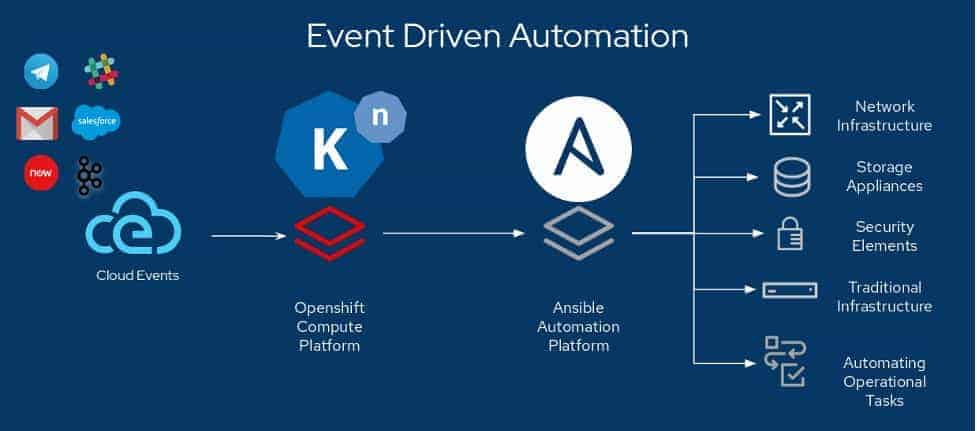
For the most part, Serverless is seen as Function as a Service (FaaS). While it is definitely true that most Serverless code being implemented today is FaaS, that’s not the destination, but the pitstop. The Serverless space is still evolving. Let’s take a journey and explore how far Serverless has come, and where it is going. Our industry started with what I call “Phase 1.0”, when we just started talking or hearing about Serverless, and for the most part just thought about it as Functions – small snippets of code running on demand and for a short period of time. AWS Lambda made this paradigm very popular, but it had its own limitations around execution time, protocols, and poor local development experience. Since then, more people have realized that the same serverless traits and benefits could be applied to microservices and Linux containers. This leads us into what I’m calling the “Phase 1.5”. Some solutions here completely abstract Kubernetes, delivering the serverless experience through an abstraction layer that sits on top of it, like Knative. By opening up Serverless to containers, users are not limited to function runtimes and can now use any programming language they want.


Self-documenting Architecture

A self-documenting architecture would reduce the learning curve. It would accentuate poor design choices and help us to make better ones. It would help us to see the complexity we are adding to the big picture as we make changes in the small and help us to keep complexity lower. And it would save us from messy whiteboard diagrams that explain how one person incorrectly thinks the system works . ... As software systems gradually evolve on a continual basis, individual decisions may appear to make sense in isolation, but from a big picture architectural perspective those changes may add unnecessary complexity to the system. With a self-documenting architecture, everybody who makes changes to the system can easily zoom out to the bigger picture and consider the wider implications of their changes. One of the reasons I use the Bounded Context Canvas is because it visualises all of the key design decisions for an individual service. Problems with inconsistent naming, poorly-defined boundaries, or highly-coupled public interfaces jump out at you. When these decisions are made in isolation they seem OK, it is only when considered in the bigger picture that the overall design appears sub-optimal.


Is graph technology the fuel that’s missing for data-based government?

Another government context for use of graphs is global smart city projects. For instance, in Turku, Finland, graph databases are being deployed to leverage IoT data to make better decisions about urban planning. According to Jussi Vira, CEO of Turku City Data, the IT services company that is assisting the city of Turku to achieve its ideas: “A lack of clear ways to bridge the gap between data and business problems was inhibiting our ability to innovate and generate value from data”. By deploying graphs, his team is able to represent many real-world business problems as people, objects, locations and events, and their interrelationships. Turku City Data found graphs represent data in the same way in which business problems are described, so it was easier to match relevant datasets to concrete business problems. Adopting graph technology has enabled the city of Turku to deliver daily supplies to elderly citizens who cannot leave their homes because of the Covid-19 pandemic. The service determines routes through the city that optimise delivery speed and minimise transportation resources while maintaining unbroken temperature-controlled shipping requirements for foodstuffs and sensitive medication. 


The Relationship Between Software Architecture And Business Models (and more)

A software architecture has to implement the domain concepts in order to deliver the how of the business model. There are an unlimited number of ways to model a business domain, however. It is not a deterministic, sequential process. A large domain must be decomposed into software sub-systems. Where should the boundaries be? Which responsibilities should live in each sub-system? There are many choices to make and the arbiter is the business model. A software architecture, therefore, is an opinionated model of the business domain which is biased towards maximising the business model. When software systems align poorly with the business domain, changes become harder and the business model is less successful. When developers have to mentally translate from business language to the words in code it takes longer and mistakes are more likely. When new pieces of work always slice across-multiple sub-systems, it takes longer to make changes and deploy them. It is, therefore, fundamentally important to align the architecture and the domain as well as possible. 


In 2021, edge computing will hit an inflection point

Data center marketplaces will emerge as a new edge hosting option. When people talk about the location of "the edge," their descriptions vary widely. Regardless of your own definition, edge computing technology needs to sit as close to "the action" as possible. It may be a factory floor, a hospital room, or a North Sea oil rig. In some cases, it can be in a data center off premises but still as close to the action as makes sense. This rules out many of the big data centers run by cloud providers or co-location services that are close to major population centers. If your enterprise is highly distributed, those centers are too far. We see a promising new option emerging that unites smaller, more local data centers in a cooperative marketplace model. New data center aggregators such as Edgevana and Inflect allow you to think globally and act locally, expanding your geographic technology footprint. They don't necessarily replace public cloud, content delivery networks, or traditional co-location services — in fact, they will likely enhance these services. These marketplaces are nascent in 2020 but will become a viable model for edge computing in 2021.


Why Security Awareness Training Should Be Backed by Security by Design

The concepts of "safe by design" or "secure by design" are well-established psychological enablers of behavior. For example, regulators and technical architects across the automobile and airlines industries prioritize safety above all else. "This has to emanate across the entire ecosystem, from the seatbelts in vehicles, to traffic lights, to stringent exams for drivers," says Daniel Norman, senior solutions analyst for ISF and author of the report. "This ecosystem is designed in a way where an individual's ability to behave insecurely is reduced, and if an unsafe behavior is performed, then the impacts are minimized by robust controls." As he explains, these principles of security by design can translate to cybersecurity in a number of ways, including how applications, tools, policies, and procedures are all designed. The goal is to provide every employee role "with an easy, efficient route toward good behavior." This means sometimes changing the physical office environment or the digital user interface (UI) environment. For example, security by design to improve phishing susceptibility might include implementing easy-to-use phishing reporting buttons within employee email clients. Similarly, it might mean creating colorful pop-ups in email platforms to remind users not to send confidential information.


Tech Should Enable Change, Not Drive It

Technology should remove friction and allow people to do their jobs, while enabling speed and agility. This means ensuring a culture of connectivity where there is trust, free-flowing ideation, and the ability to collaborate seamlessly. Technology can also remove interpersonal friction, by helping to build trust and transparency — for example, blockchain and analytics can help make corporate records more trustworthy, permitting easy access for regulators and auditors that may enhance trust inside and outside the organization. This is important; one study found that transparency from management is directly proportional to employee happiness. And happy employees are more productive employees. Technology should also save employees time, freeing them up to take advantage of opportunities for human engagement (or, in a pandemic scenario, enabling virtual engagement), as well as allowing people to focus on higher-value tasks. ... It’s vital that businesses recognize diversity and inclusion as a moral and a business imperative, and act on it. Diversity can boost creativity and innovation, improve brand reputation, increase employee morale and retention, and lead to greater innovation and financial performance.


Researchers bring deep learning to IoT devices

The customized nature of TinyNAS means it can generate compact neural networks with the best possible performance for a given microcontroller – with no unnecessary parameters. “Then we deliver the final, efficient model to the microcontroller,” say Lin. To run that tiny neural network, a microcontroller also needs a lean inference engine. A typical inference engine carries some dead weight – instructions for tasks it may rarely run. The extra code poses no problem for a laptop or smartphone, but it could easily overwhelm a microcontroller. “It doesn’t have off-chip memory, and it doesn’t have a disk,” says Han. “Everything put together is just one megabyte of flash, so we have to really carefully manage such a small resource.” Cue TinyEngine. The researchers developed their inference engine in conjunction with TinyNAS. TinyEngine generates the essential code necessary to run TinyNAS’ customized neural network. Any deadweight code is discarded, which cuts down on compile-time. “We keep only what we need,” says Han. “And since we designed the neural network, we know exactly what we need. That’s the advantage of system-algorithm codesign.”


Quote for the day:

"Empowerment is the magic wand that turns a frog into a prince. Never estimate the power of the people, through true empowerment great leaders are born." -- Lama S. Bowen

Daily Tech Digest - November 24, 2020

Why securing the DNS layer is crucial to fight cyber crime

When left insecure, DNS servers can result in devastating consequences for businesses that fall victim to attack. Terry Bishop, solutions architect at RiskIQ, says: “Malicious actors are constantly looking to exploit weak links in target organisations. A vulnerable DNS server would certainly be considered a high-value target, given the variety of directions that could be taken once compromised. “At RiskIQ, we find most organisations are unaware of about 30% of their external-facing assets. That can be websites, mail servers, remote gateways, and so on. If any of these systems are left unpatched, unmonitored or unmanaged, it presents an opportunity for compromise and further potential exploit, whether that is towards company assets, or other more valuable infrastructure such as DNS servers are dependent on the motives of the attacker and the specifics of the breached environment.” Kevin Curran, senior member at the Institute of Electrical and Electronics Engineers (IEEE) and professor of cyber security at Ulster University, agrees that DNS attacks can be highly disruptive. In fact, an improperly working DNS layer would effectively break the internet, he says.


The Dark Side of AI: Previewing Criminal Uses

Criminals' Top Goal: Profit, If that's the high level, the applied level is that criminals have never shied away from finding innovative ways to earn an illicit profit, be it through social engineering refinements, new business models or adopting new types of technology. And AI is no exception. "Criminals are likely to make use of AI to facilitate and improve their attacks by maximizing opportunities for profit within a shorter period, exploiting more victims and creating new, innovative criminal business models - all the while reducing their chances of being caught," according to the report. Thankfully, all is not doom and gloom. "AI promises the world greater efficiency, automation and autonomy," says Edvardas Å ileris, who heads Europol's European Cybercrime Center, aka EC3. "At a time where the public is getting increasingly concerned about the possible misuse of AI, we have to be transparent about the threats, but also look into the potential benefits from AI technology." ... Even criminal uptake of deepfakes has been scant. "The main use of deepfakes still overwhelmingly appears to be for non-consensual pornographic purposes," according to the report. It cites research from last year by the Amsterdam-based AI firm Deeptrace , which "found 15,000 deepfake videos online..."


Flash storage debate heats up over QLC SSDs vs. HDDs

Rosemarin said some vendors front end QLC with TLC flash, storage class memory or DRAM to address caching and performance issues, but they run the risk of scaling problems and destroying the cost advantage that the denser flash technology can bring. "We had to launch a whole new architecture with FlashArray//C to optimize and run QLC," Rosemarin said. "Otherwise, you're very quickly going to get in a position where you're going to tell clients it doesn't make sense to use QLC because [the] architecture can't do it cost-efficiently." Vast Data's Universal Storage uses Intel Optane SSDs, built on faster, more costly 3D XPoint technology, to buffer writes, store metadata and improve latency and endurance. But Jeff Denworth, co-founder and chief marketing officer at the startup, said the system brings cost savings over alternatives through better longevity and data-reduction code, for starters. "We ask customers all the time, 'If you had the choice, would you buy a hard drive-based system, if cost wasn't the only issue?' And not a single customer has ever said, 'Yeah, give me spinning rust,'" Denworth said. Denser NAND flash chip technology isn't the only innovation that could help to drive down costs of QLC flash. Roger Peene, a vice president in Micron's storage business unit, spotlighted the company's latest 176-layer 3D NAND that can also boost density and lower costs.


Instrumenting the Network for Successful AIOps

The highest quality network data is obtained by deploying devices such as network TAPs that mirror the raw network traffic. Many vendors offer physical and virtual versions of these to gather packet data from the data center as well as virtualized segments of the network. AWS and Google Cloud have both launched Virtual Private Cloud (VPC)traffic/packet mirroring features in the last year that allow users to duplicate traffic to and from their applications and forward it to cloud-native performance and security monitoring tools, so there are solid options for gathering packet data from cloud-hosted applications too.  The network taps let network monitoring tools view the raw data without impacting the actual data-plane. When dealing with high sensitivity applications such as ultra-low-latency trading, high quality network monitoring tools use timestamping with nanosecond accuracy to identify bursts with millisecond resolution which might cause packet drops that normal SNMP type counters can’t explain. This fidelity of data is relevant in other high quality applications such as real-time video decoding, gaming multicast servers, HPC and other critical IOT control systems. 


How to create an effective software architecture roadmap

The iteration model demonstrates how the architecture and related software systems will change and evolve on the way to a final goal. Each large iteration segment represents one milestone goal of an overall initiative, such as updating a particular application database or modernizing a set of legacy services. Then, each one of those segments contains a list of every project involved in meeting that milestone. For instance, a legacy service modernization iteration requires a review of the code, refactoring efforts, testing phases and deployment preparations. While architects may feel pressured to create a realistic schedule from the start of the iteration modeling phase, Richards said that it's not harmful to be aspirational, imaginative or even mildly unrealistic at this stage. Since this is still an unrefined plan, try to ignore limitations like cost and staffing, and focus on goals. ... Once an architect has an iteration model in place, the portfolio model injects reality into the roadmap. In this stage, the architect or software-side project lead analyzes the feasibility of the overall goal. They examine the initiative, the requirements for each planned iteration and the resources available for the individual projects within those iterations. 


How new-age data analytics is revolutionising the recruitment and hiring segment

There are innumerable advantages attached to opting for AI over an ordinary recruitment team. With the introduction of AI, companies can easily lower the costs involved in maintaining a recruitment team. The highly automated screening procedures select quality candidates that in turn will help the organization grow and retain better personnel – a factor that is otherwise overlooked in the conventional recruitment process. Employing AI and ML automates the whole recruitment process and helps eliminate the probability of human errors. Automation increases efficiency and improves the performance of other departments of the company. The traditional recruitment process tends to be very costly. Several teams are often needed for the purpose of hiring people in a company. But with the help of AI and ML, the unnecessary costs can be done away with and the various stages of hiring can all be conducted on a single dedicated platform. Additionally, if the company engages in a lot of contract work, then AI can be used for analysing the project plan and predicting the kinds, numbers, ratio and skills of workers that may be required for the purpose. The scope of AI and ML cannot be undermined by the capabilities of current systems.


6 experts share quantum computing predictions for 2021

"Next year is going to be when we start seeing what algorithms are going to show the most promise in this near term era. We have enough qubits, we have really high fidelities, and some capabilities to allow brilliant people to have a set of tools that they just haven't had access to," Uttley said. "Next year what we will see is the advancement into some areas that really start to show promise. Now you can double down instead of doing a scattershot approach. You can say, 'This is showing really high energy, let's put more resources and computational time against it.' Widespread use, where it's more integrated into the typical business process, that is probably a decade away. But it won't be that long before we find applications for which we're using quantum computers in the real world. That is in more the 18-24 month range." Uttley noted that the companies already using Honeywell's quantum computer are increasingly interested in spending more and more time with it. Companies working with chemicals and the material sciences have shown the most interest he said, adding that there are also healthcare applications that would show promise.


How Industrial IoT Security Can Catch Up With OT/IT Convergence

The bigger challenge, he says, is not in the silicon of servers and networking appliances but in the brains of security professionals. "The harder problem, I think, is the skills problem, which is that we have very different expertise existing within companies and in the wider security community, between people who are IT security experts and people who are OT security experts," Tsonchev says. "And it's very rare to find one individual where those skills converge." It's critical that companies looking to solve the converged security problem, whether in technology or technologists, to figure out what the technology and skills need to look like in order to support their business goals. And they need to recognize that the skills to protect both sides of the organization may not reside in a single person, Tsonchev says. "There's obviously a very deep cultural difference that comes from the nature of the environments characterized by the standard truism that confidentiality is the priority in IT and availability is the priority in OT," he explains. And that difference in mindset is natural – and to some extent essential – based on the requirements of the job. Where the two can begin to come together, Tsonchev says, is in the evolution away from a protection-based mindset to a way of looking at security based on risk and risk tolerance.


Dark Data: Goldmine or Minefield?

The issue here is that companies are still thinking in terms of sandboxes even when they are face-to-face with the entire beach. A system that considers analytics and governance flip sides of the same coin and incorporates them synergistically across all enterprise data is called for. Data that has been managed has the potential to capture the corpus of human knowledge within the organization, reflecting the human intent of a business. can offer substantial insight into employee work patterns, communication networks, subject matter expertise, and even organizational influencers and business processes. It also holds the potential for eliminating duplicative human effort, which can be an excellent tool to increase productivity and output. The results of this alone are a sure-fire way to boost productivity, spot common pain points that may not be effective to the workstream and can share insights to organizations where untapped potential may lay. Companies that have successfully bridged information management with analytics are answering fundamental business questions that have massive impact on revenue: Who are the key employees? ... With the increase in sophistication of analytics and its convergence with information governance, we will likely see a renaissance for this dark data that is presently largely a liability.


NCSC issues retail security alert ahead of Black Friday sales

“We want online shoppers to feel confident that they’re making the right choices, and following our tips will reduce the risk of giving an early gift to cyber criminals. If you spot a suspicious email, report it to us, or if you think you’ve fallen victim to a scam, report the details to Action Fraud and contact your bank as soon as you can.” Helen Dickinson, chief executive of the British Retail Consortium (BRC), added: “With more and more of us browsing and shopping online, retailers have invested in cutting-edge systems and expertise to protect their customers from cyber threats, and the BRC recently published a Cyber Resilience Toolkit for extra support to help to make the industry more secure. “However, we as customers also have a part to play and should follow the NCSC’s helpful tips for staying safe online.” The NCSC’s advice, which can be accessed online at its website, includes a number of tips, including being selective about where you shop, only providing necessary information, using secure and protected payments, securing online accounts, identifying potential phishing attempts, and how to deal with any problems. Carl Wearn, head of e-crime at Mimecast, commented: “Some of the main things to look out for include phishing emails and brand spoofing, as we are likely to see an increase in both.


Quote for the day:

“Focus on the journey, not the destination. Joy is found not in finishing an activity but in doing it.” -- Greg Anderson

Daily Tech Digest - November 23, 2020

Superhuman resources: How HR leaders have redefined their C-suite role

CHROs have to be able to envision how the strategy will be executed, the talents and skills required to accomplish the work, and the qualities needed from leaders to maximize the organization’s potential. Increasingly, that requires a nuanced understanding of how technology and humans will interact. “HR leaders sit at a crossroads because of the rise of artificial intelligence and can really predict whether a company is going to elevate their humans or eliminate their humans,” said Ellyn Shook, the CHRO of professional-services firm Accenture. “We’re starting to see new roles and capabilities in our own organization, and we’re seeing a whole new way of doing what we call work planning. The real value that can be unlocked lies in human beings and intelligent technologies working together.” ... CHROs must operate at a slightly higher altitude than their peers on the leadership team to ensure that the different parts of the business work well together. At their best, these leaders view the entire organization as a dynamic 3D model, and can see where different parts are meshing well and building on other parts, and also where there are gaps and seams. The key is to make the whole organization greater than the sum of its parts.


Three IT strategies for the new era of hybrid work

While the hyper-automation strategy will make life much easier for IT teams by delivering on greater automated experiences, there will always be issues that humans will have to resolve. Organisations must equip their IT teams with the tools to handle these issues remotely and securely to succeed in an increasingly complex environment. This begins with utilising AI and building on deep learning capabilities that provide critical information to IT teams in real time. Say an employee is unable to access restricted customer information from his home network to complete a sales order and needs to enable VPN access. With the right software platforms, the IT representative will be able to guide him remotely, to push the necessary VPN software to his device, configure the necessary access information and provision his access through automation scripts. IT would also be able to discover the model of the router used in his home network if required and assist in router settings if the employee assigns the rights and authorisation. IT can also assess its vulnerabilities and advise the employee accordingly. In the past, the work would have to completed in the office. With hybrid work environments, going back to the office may not even be an option.


Security pros fear prosecution under outdated UK laws

MP Ruth Edwards, who previously led on cyber security policy for techUK, said: “The Computer Misuse Act, though world-leading at the time of its introduction, was put on the statute book when 0.5% of the population used the internet. The digital world has changed beyond recognition, and this survey clearly shows that it is time for the Computer Misuse Act to adapt. “This year has been dominated by a public health emergency – the coronavirus pandemic, but it has also brought our reliance on cyber security into stark relief. We have seen attempts to hack vaccine trials, misinformation campaigns linking 5G to coronavirus, a huge array of coronavirus-related scams, an increase in remote working and more services move online. “Our reliance on safe and resilient digital technologies has never been greater. If ever there was going to be a time to prioritise the rapid modernisation of our cyber legislation, and review the Computer Misuse Act, it is now,” she said. The study is the first piece of work to quantify and analyse the views of the wider security community in the UK on this issue, and the campaigners say they have found substantial concerns and confusion about the CMA that are hampering the UK’s cyber defences.


An In-Depth Explanation of Code Complexity

By knowing how many independent paths there are through a piece of code, we know how many paths there are to test. I'm not advocating for 100% code coverage by the way—that's often a meaningless software metric. However, I always advocate for as high a level of code coverage as is both practical and possible. So, by knowing how many code paths there are, we can know how many paths we have to test. As a result, you have a measure of how many tests are required, at a minimum, to ensure that the code's covered. ... By reducing software complexity, we can develop with greater predictability. What I mean by that is we're better able to say—with confidence—how long a section of code takes to complete. By knowing this, we're better able to predict how long a release takes to ship. Based on this knowledge the business or organization is better able to set its goals and expectations, especially ones that are directly dependent on said software. When this happens, it’s easier to set realistic budgets, forecasts, and so on. Helping developers learn and grow is the final benefit of understanding why their code is considered complex. The tools I've used to assess complexity up until this point don't do that. What they do is provide an overall or granular complexity score.


How DevOps Teams Get Automation Backwards

Do you know what data (and metadata) needs to be backed up in order to successfully restore? Do you know how it will be stored, protected and monitored? Does your storage plan comply with relevant statutes, such as CCPA and GDPR. Do you regularly execute recovery scenarios, to test the integrity of your backups and the effectiveness of your restore process? At the heart of each of the above examples, the problem is due in large part to a top-down mandate, and a lack of buy-in from the affected teams. If the DevOps team has a sense of ownership over the new processes, then they will be much more eager to take on any challenges that arise. DevOps automation isn’t the solution to every problem. Automated UI tests are a great example of an automation solution that’s right for some types of organizations, but not for others. These sorts of tests, depending on frequency of UI changes, can be fragile and difficult to manage. Therefore, teams looking to adopt automated UI testing should first assess whether the anticipated benefits are worth the costs, and then ensure they have a plan for monitoring and maintaining the tests. Finally, beware of automating any DevOps process that you don’t use on a frequent basis.


Security by Design: Are We at a Tipping Point?

A big contributor for security flat-footedness is the traditional “trust but verify” approach, with bolt-on and reactive architectures (and solutions) that make security complex and expensive. Detecting a threat, assessing true vs. false alerts, responding to incidents holistically and doing it all in a timely fashion demands a sizeable security workforce; a strong, well-practiced playbook; and an agile security model. As we have learned over the years, this has been hard to achieve in practice—even harder for small or mid-size organizations and those with smaller budgets. Even though dwell time has reduced in the last few years, attackers routinely spend days, weeks or months in a breached environment before being detected. Regulations like the EU General Data Protection Regulation (GDPR) mandate reporting of notifiable data breaches within 72 hours, even as the median dwell time stands at 56 days, rising to 141 days for breaches not detected internally. Forrester analyst John Kindervag envisioned a new approach in 2009, called “zero trust.” It was founded on the belief that trust itself represents a vulnerability and security must be designed into business with a “never trust, always verify” model.


Distributors adding security depth

“With the rapidly changing security landscape, and home working seemingly here to stay, this partnership will help organisations alleviate these security pressures through one consolidated cloud solution. Together with Cloud Distribution, we will continue to expand our UK Partner network, ensuring we are offering robust cloud security solutions with our approach that takes user organisations beyond events and alerts, and into 24/7 automated attack prevention,” he said.  Other distributors have also taken steps to add depth to their portfolios. Last month, e92plus also moved to bolster its offerings with the signing of web security player Source Defense. The distie is responding to the threats around e-commerce and arming resellers with tools to help customers that have been forced to sell online during the pandemic. The shift online has come as threats have spiked and the criminal activity around online transactions has increased. “As more businesses look to transact business online, bad actors are exploiting client-side vulnerabilities that aren’t protected by traditional solutions like web application firewalls,” said Sam Murdoch, managing director at e92cloud.


3 Steps CISOs Can Take to Convey Strategy for Budget Presentations

CISOs recognize they cannot reduce their organization's cyber-risk to zero. Still, they can reduce it as much as possible by focusing on eliminating the most significant risks first. Therefore, when developing a budget, CISOs should consider a proactive risk-based approach that homes in on the biggest cyber-risks facing the business. This risk-based approach allows the CISO to quantify the risk across all areas of cyber weakness, and then prioritize where efforts are best expended. This ensures maximum impact from fixed budgets and teams. The fact is, the National Institute of Standards and Technology reports that an average breach can cost an organization upward of $4 million — more costly than the overall budget for many organizations. Consider a scenario where one CISO invests heavily in proactive measures, successfully avoiding a major breach, while another invests primarily in reactive measures and ends up cleaning up after a major breach. The benefit is that one (the proactively inclined CISO) ends up spending 10x less overall. ... While there is more awareness among top leadership and board members regarding the daunting challenges of cybersecurity, a board member's view of cybersecurity is primarily concerned with cybersecurity as a set of risk items, each with a certain likelihood of happening with some business impact.


Keeping data flowing could soon cost billions, business warned

As soon as the UK leaves the EU, it will also cease to be part of the GDPR-covered zone – and other mechanisms will be necessary to allow data to move between the two zones. The UK government, for its part, has already green-lighted the free flow of digital information from the UK to the EU, and has made it clear that it hopes the EU will return the favor. This would be called an adequacy agreement – a recognition that UK laws can adequately protect the personal data of EU citizens. But whether the UK will be granted adequacy is still up for debate, with just over one month to go. If no deal is achieved on data transfers, companies that rely on EU data will need to look at alternative solutions. These include standard contractual clauses (SCCs), for example, which are signed contracts between the sender and the receiver of personal data that are approved by an EU authority, and need to be drawn for each individual data transfer. SCCs are likely to be the go-to data transfer mechanism in the "overwhelming majority of cases," according to the report, and drafting the contracts for every single relevant data exchange will represent a costly bureaucratic and legal exercise for many firms. UCL's researchers estimated, for example, that the London-based university would have to amend and update over 5,000 contracts.


Even the world’s freest countries aren’t safe from internet censorship

Ensafi’s team found that censorship is increasing in 103 of the countries studied, including unexpected places like Norway, Japan, Italy, India, Israel and Poland. These countries, the team notes, are rated some of the world’s freest by Freedom House, a nonprofit that advocates for democracy and human rights. They were among nine countries where Censored Planet found significant, previously undetected censorship events between August 2018 and April 2020. They also found previously undetected events in Cameroon, Ecuador and Sudan. While the United States saw a small uptick in blocking, mostly driven by individual companies or internet service providers filtering content, the study did not uncover widespread censorship. However, Ensafi points out that the groundwork for that has been put in place here. “When the United States repealed net neutrality, they created an environment in which it would be easy, from a technical standpoint, for ISPs to interfere with or block internet traffic,” she said. “The architecture for greater censorship is already in place and we should all be concerned about heading down a slippery slope.”


Quote for the day:

"Beginnings are scary, endings are usually sad, but it's the middle that counts the most." -- Birdee Pruitt

Daily Tech Digest - November 22, 2020

It's time for banks to rethink how they secure customer information

To sum it up, banks and credit card companies really don't care to put too much effort into securing the accounts of customers. That's crazy, right?  The thing is, banks and credit card companies know they have a safety net to prevent them from crashing to the ground. That safety net is fraud insurance. When a customer of a bank has their account hacked or card number stolen, the institution is fairly confident that it will get its--I mean, the customer's--money back. But wait, the revelations go even deeper. These same institutions also admit (not to the public) that hackers simply have more resources than they do. Banks and credit card companies understand it's only a matter of time before a customer account is breached--these institutions deal with this daily. These companies also understand the futility of pouring too much investment into stopping hackers from doing their thing. After all, the second a bank invests millions into securing those accounts from ne'er-do-wells, the ne'er-do-wells will figure out how to get around the new security methods and protocols. From the bank's point of view, that's money wasted. It's that near-nihilistic point of view that causes customers no end of frustration, but it doesn't have to be that way.


The New Elements of Digital Transformation

Even as some companies are still implementing traditional automation approaches such as enterprise resource planning, manufacturing execution, and product life cycle management systems, other companies are moving beyond them to digitally reinvent operations. Amazon’s distribution centers deliver inventory to workers rather than sending workers to collect inventory. Rio Tinto, an Australian mining company, uses autonomous trucks, trains, and drilling machinery so that it can shift workers to less dangerous tasks, leading to higher productivity and better safety. In rethinking core process automation, advanced technologies are useful but not prerequisites. Asian Paints transformed itself from a maker of coatings in 13 regions in India to a provider of coatings, painting services, design services, and home renovations in 17 countries by first establishing a common core of digitized processes under an ERP system. This provided a foundation to build upon and a clean source of data to generate insights. Later, the company incorporated machine learning, robotics, augmented reality, and other technologies to digitally enable its expansion.


AI startup Graphcore says most of the world won't train AI, just distill it

Graphcore is known for building both custom chips to power AI, known as accelerators, and also full computer systems to house those chips, with specialized software. In Knowles's conception of the pecking order of deep learning, the handful of entities that can afford "thousands of yotta-FLOPS" of computing power -- the number ten raised to the 24th power -- are the ones that will build and train trillion-parameter neural network models that represent "universal" models of human knowledge. He offered the example of huge models that can encompass all of human languages, rather like OpenAI's GPT-3 natural language processing neural network. "There won't be many of those" kinds of entities, Knowles predicted. Companies in the market for AI computing equipment are already talking about projects underway to use one trillion parameters in neural networks. By contrast, the second order of entities, the ones that distill the trillion-parameter models, will require far less computing power to re-train the universal models to something specific to a domain. And the third entities, of course, even less power. Knowles was speaking to the audience of SC20, a supercomputing conference which takes place in a different city each year, but this year is being held as a virtual event given the COVID-19 pandemic.


5 Reasons for the Speedy Adoption of Blockchain Technology

Blockchain technology can only handle three to seven transactions per second, while the legacy transaction processing system is able to process tens of thousands of them every second. This led many observers to be unsure of the potential of blockchain as a viable option for large-scale applications. However, recent developments have resulted in promising way to close this performance gap and a new consensus mechanism is being developed. This mechanism is enabling participants (some of who are unknown to each other) to trust the validity of the transactions. While the performance may be sluggish and a lot of computational resources may be spent in the mechanism involving blockchain, the better performance is the key that is popularizing the use of the blockchain technology. Latest designs are aiming to reduce the time and energy intensive mining required to validate every transaction. Various blockchain-based applications are able to choose between performance, functionality, and security to suit what is most appropriate for the application. This consensus model is being especially appreciated in industries like auto-leasing, insurance, healthcare, supply chain management, trading, and more.


How next gen Internal Audit can play strategic role in risk management post-pandemic

The purpose of a business continuity plan is to ensure that the business is ready to survive a critical incident. It permits an instantaneous response to the crisis so as to shorten recovery time and mitigate the impact. This pandemic has conferred an unprecedented “critical incident” for the globe. With unknown reach and period, worldwide implications, and no base for accurate projections, we are very much into unchartered territories. Many organizations used to develop a disaster recovery plan and business continuity procedure that was rarely put to the test in a real crisis situation. With the arrival of newer risks e.g. cyber-attacks, data transfer confidentiality issues struggle with maintaining supply levels, workforce management, physical losses, operational disruptions, change of marketing platforms, increased volatility and interdependency of the global economy, etc. the traditionally accepted Business Continuity & Crisis Management Models are getting continuously & constructively challenged rapidly. Therefore, organizations need adequate planning resulting in immediate response, better decision-making, maximum recovery, effective communications, and sound contingency plans for various scenarios that may suddenly arise.


How to Build a Production Grade Workflow with SQL Modelling

A constructor creates a test query where a common table expression (CTE) represents each input mock data model, and any references to production models (identified using dbt’s ‘ref’ macro) are replaced by references to the corresponding CTE. Once you execute a query, you can compare the output to an expected result. In addition to an equality assertion, we extended our framework to support all expectations from the open-source Great Expectations library to provide more granular assertions and error messaging. The main downside to this framework is that it requires a roundtrip to the query engine to construct the test data model given a set of inputs. Even though the query itself is lightweight and processes only a handful of rows, these roundtrips to the engine add up. It becomes costly to run an entire test suite on each local or CI run. To solve this, we introduced tooling both in development and CI to run the minimal set of tests that could potentially break given the change. This was straightforward to implement with accuracy because of dbt’s lineage tracking support; we simply had to find all downstream models (direct and indirect) for each changed model and run their tests.


Google Services Weaponized to Bypass Security in Phishing, BEC Campaigns

For its part, Google stresses the company is taking every measure to keep malicious actors off their platforms. “We are deeply committed to protecting our users from phishing abuse across our services, and are continuously working on additional measures to block these types of attacks as methods evolve,” a Google spokesperson told Threatpost by email. The statement added that Google’s abuse policy prohibits phishing and emphasized that the company is aggressive in combating abuse. “We use proactive measures to prevent this abuse and users can report abuse on our platforms,” the statement said. “Google has strong measures in place to detect and block phishing abuse on our services.” Sambamoorthy told Threatpost that the security responsibility does not rest on Google alone and that organizations should not rely solely on Google’s security protections for their sensitive data. “Google faces a fundamental dilemma because what makes their services free and easy to use also lowers the bar for cybercriminals to build and launch effective phishing attacks,” he said. “It’s important to remember that Google is not an email security company — their primary responsibility is to deliver a functioning, performant email service.”


Democratize Data to Empower your Organization and Unleash More Value

Organizations, unsure whether they can trust their data, limit access, instead of empowering the whole enterprise to achieve new insights for practical uses. To drive new value—such as expanded customer marketing and increasing operational efficiencies—democratizing data demands building out a trusted, governed data marketplace, enabling mastered and curated data to drive your innovations that leapfrog the competition. To do this, trust assurance has become the critical enabler. But how to accomplish trust assurance? Trust Assurance Helps You Accelerate Reliable Results So, what is trust assurance, and how can data governance help accelerate it? If an organization is to convert data insights into value that drives new revenue, improves customer experience, and enables more efficient operations, the data needs controls to help ensure it’s both qualitative for reliable results as well as protected for appropriate, and compliant, use. According to IDC, we’re seeing a 61 percent compound annual growth rate (CAGR) in worldwide data at this moment—a rate of increase that will result in 175 zettabytes of data worldwide by 2025. 


DDoS mitigation strategies needed to maintain availability during pandemic

According to Graham-Cumming, enterprises should start the process of implementing mitigating measures by conducting thorough due diligence of their entire digital estate and its associated infrastructure, because that is what attackers are doing. “The reality is, particularly for the ransomware folks, these people are figuring out what in your organisation is worth attacking,” he says.“It might not be the front door, it might not be the website of the company as that might not be worth it – it might be a critical link to a datacentre where you’ve got a critical application running, so we see people doing reconnaissance to figure out what the best thing to attack is. “Do a survey of what you’ve got exposed to the internet, and that will give you a sense of where attackers might go. Then look at what really needs to be exposed to the internet and, if it does, there are services out there that can help.” This is backed up by Goulding at Nominet, who says that while most reasonably mature companies will have already considered DDoS mitigation, those that have not can start by identifying which assets they need to maintain availability for and where they are located.


Empathy: The glue we need to fix a fractured world

Our most difficult moments force us to contend with our vulnerability and our mortality, and we realize how much we need each other. We’ve seen this during the pandemic and the continued struggle for racial justice. There has been an enormous amount of suffering but also an intense desire to come together, and a lot of mutual aid and support. This painful moment has produced a lot of progress and clarity around our values. Yet modern life, especially in these pandemic times, makes it harder than ever to connect with each other, and this disconnectedness can erode our empathy. But we can fight back. We can work to empathize more effectively. The pandemic, the economic collapse associated with it, and the fight for racial justice have increased all sorts of feelings, including empathy, anger, intolerance, fear, and stress. A big question for the next two to five years is which tide will prevail. ... Another problem is that there’s tribalism within organizations, especially larger organizations and those that are trying to put different groups of people with different goals under a single tent. For instance, I’ve worked with companies that include both scientists and people who are trying to market the scientists’ work. 


Quote for the day:

"Superlative leaders are fully equipped to deliver in destiny; they locate eternally assigned destines." -- Anyaele Sam Chiyson