Showing posts with label OWASP. Show all posts

Daily Tech Digest - January 30, 2026


Quote for the day:

"In my experience, there is only one motivation, and that is desire. No reasons or principle contain it or stand against it." -- Jane Smiley


Crooks are hijacking and reselling AI infrastructure: Report

In a report released Wednesday, researchers at Pillar Security say they have discovered campaigns at scale going after exposed large language model (LLM) and MCP endpoints – for example, an AI-powered support chatbot on a website. “I think it’s alarming,” said report co-author Ariel Fogel. “What we’ve discovered is an actual criminal network where people are trying to steal your credentials, steal your ability to use LLMs and your computations, and then resell it.” ... How big are these campaigns? In the past couple of weeks alone, the researchers’ honeypots captured 35,000 attack sessions hunting for exposed AI infrastructure. “This isn’t a one-off attack,” Fogel added. “It’s a business.” He doubts a nation-state it behind it; the campaigns appear to be run by a small group. ... Defenders need to treat AI services with the same rigor as APIs or databases, he said, starting with authentication, telemetry, and threat modelling early in the development cycle. “As MCP becomes foundational to modern AI integrations, securing those protocol interfaces, not just model access, must be a priority,” he said.  ... Despite the number of news stories in the past year about AI vulnerabilities, Meghu said the answer is not to give up on AI, but to keep strict controls on its usage. “Do not just ban it, bring it into the light and help your users understand the risk, as well as work on ways for them to use AI/LLM in a safe way that benefits the business,” he advised.


AI-Powered DevSecOps: Automating Security with Machine Learning Tools

Here's the uncomfortable truth: AI is both causing and solving the same problem. A Snyk survey from early 2024 found that 77% of technology leaders believe AI gives them a competitive advantage in development speed. That's great for quarterly demos and investor decks. It's less great when you realize that faster code production means exponentially more code to secure, and most organizations haven't figured out how to scale their security practice at the same rate. ... Don't try to AI-ify your entire security stack at once. Pick one high-pain problem — maybe it's the backlog of static analysis findings nobody has time to triage, or maybe it's spotting secrets accidentally committed to repos — and deploy a focused tool that solves just that problem. Learn how it behaves. Understand its failure modes. Then expand. ... This is non-negotiable, at least for now. AI should flag, suggest, and prioritize. It should not auto-merge security fixes or automatically block deployments without human confirmation. I've seen two different incidents in the past year where an overzealous ML system blocked a critical hotfix because it misclassified a legitimate code pattern as suspicious. Both cases were resolved within hours, but both caused real business impact. The right mental model is "AI as junior analyst." ... You need clear policies around which AI tools are approved for use, who owns their output, and how to handle disagreements between human judgment and AI recommendations.


AI & the Death of Accuracy: What It Means for Zero-Trust

The basic idea is that as the signal quality degrades over time through junk training data, models can remain fluent and fully interact with the user while becoming less reliable. From a security standpoint, this can be dangerous, as AI models are positioned to generate confident-yet-plausible errors when it comes to code reviews, patch recommendations, app coding, security triaging, and other tasks. More critically, model degradation can erode and misalign system guardrails, giving attackers the opportunity exploit the opening through things like prompt injection. ... "Most enterprises are not training frontier LLMs from scratch, but they are increasingly building workflows that can create self-reinforcing data stores, like internal knowledge bases, that accumulate AI-generated text, summaries, and tickets over time," she tells Dark Reading.  ... Gartner said that to combat the potential impending issue of model degradation, organizations will need a way to identify and tag AI-generated data. This could be addressed through active metadata practices (such as establishing real-time alerts for when data may require recertification) and potentially appointing a governance leader that knows how to responsibly work with AI-generated content. ... Kelley argues that there are pragmatic ways to "save the signal," namely through prioritizing continuous model behavior evaluation and governing training data.


The Friction Fix: Change What Matters

Friction is the invisible current that sinks every transformation. Friction isn’t one thing, it’s systemic. Relationships produce friction: between the people, teams and technology. ... When faced with a systemic challenge, our human inclination is to blame. Unfortunately, we blame the wrong things. We blame the engineering team for failing to work fast enough or decide the team is too small, rather than recognize that our Gantt chart was fiction, which is an oversimplification of a complex dynamic. ... The fix is to pause and get oriented. Begin by identifying the core domain, the North Star. What is the goal of the system? For Fedex, it is fast package delivery. Chances are, when you are experiencing counterintuitive behavior, it is because people are navigating in different directions while using the same words. ... Every organization trying to change has that guy: the gatekeeper, the dungeon master, the self-proclaimed 10x engineer who knows where the bodies are buried. They also wield one magic word: No. ... It’s easy to blame that guy’s stubborn personality. But he embodies behavior that has been rewarded and reinforced. ... Refusal to change is contagious. When that guy shuts down curiosity, others drift towards a fixed mindset. Doubt becomes the focus, not experimentation. The organization can’t balance avoiding risk with trying something new. The transformation is dead in the water.


From devops to CTO: 8 things to start doing now

Devops leaders have the opportunity to make a difference in their organization and for their careers. Lead a successful AI initiative, deploy to production, deliver business value, and share best practices for other teams to follow. Successful devops leaders don’t jump on the easy opportunities; they look for the ones that can have a significant business impact. ... Another area where devops engineers can demonstrate leadership skills is by establishing standards for applying genAI tools throughout the software development lifecycle (SDLC). Advanced tools and capabilities require effective strategies to extend best practices beyond early adopters and ensure that multiple teams succeed. ... If you want to be recognized for promotions and greater responsibilities, a place to start is in your areas of expertise and with your team, peers, and technology leaders. However, shift your focus from getting something done to a practice leadership mindset. Develop a practice or platform your team and colleagues want to use and demonstrate its benefits to the organization. Devops engineers can position themselves for a leadership role by focusing on initiatives that deliver business value. ... One of the hardest mindset transitions for CTOs is shifting from being the technology expert and go-to problem-solver to becoming a leader facilitating the conversation about possible technology implementations. If you want to be a CTO, learn to take a step back to see the big picture and engage the team in recommending technology solutions.


The stakes rise for the CIO role in 2026

The CIO's days as back-office custodian of IT are long gone, to be sure, but that doesn't mean the role is settled. Indeed, Seewald and others see plenty of changes still underway. In 2026, the CIO's role in shaping how the business operates and performs is still expanding. It reflects a nuanced change in expectations, according to longtime CIOs, analysts and IT advisors -- and one that is showing up in many ways as CIOs become more directly involved in nailing down competitive advantage and strategic success across their organizations. ... "While these core responsibilities remain the same, the environment in which CIOs operate has become far more complex," Tanowitz added. Conal Gallagher, CIO and CISO at Flexera, said the CIO in 2026 is now "accountable for outcomes: trusted data, controlled spend, managed risk and measurable productivity. "The deliverable isn't a project plan," Gallagher said. "It's proof that the business runs faster, safer and more cost-disciplined because of the operating model IT enables." ... In 2026, the CIO role is less about being the technology owner and more about being a business integrator, Hoang said. At Commvault, that shift places greater emphasis on governance and orchestration across ecosystems. "We're operating in a multicloud, multivendor, AI-infused environment," she said. "A big part of my job is building guardrails and partnerships that enable others to move fast -- safely," she said. 


Inside the Shift to High-Density, AI-Ready Data Centres

As density increases, design philosophy must evolve. Power infrastructure, backup systems, and cooling can no longer be treated as independent layers; they have to be tightly integrated. Our facilities use modular and scalable power and cooling architectures that allow us to expand capacity without disrupting live environments. Rated-4 resilience is non-negotiable, even under continuous, high-density AI workloads. The real focus is flexibility. Customers shouldn’t be forced into an all-or-nothing transition. Our approach allows them to move gradually to higher densities while preserving uptime, efficiency, and performance. High-density AI infrastructure is less about brute force and more about disciplined engineering that sustains reliability at scale. ... The most common misconception is that AI data centres are fundamentally different entities. While AI workloads do increase density, power, and cooling demands, the core principles of reliability, uptime, and efficiency remain unchanged. AI readiness is not about branding; it’s about engineering and operations. Supporting AI workloads requires scalable and resilient power delivery, precision cooling, and flexible designs that can handle GPUs and accelerators efficiently over sustained periods. Simply adding more compute without addressing these fundamentals leads to inefficiency and risk. The focus must remain on mission-critical resilience, cost-effective energy management, and sustainability. 


Software Supply Chain Threats Are on the OWASP Top Ten—Yet Nothing Will Change Unless We Do

As organizations deepen their reliance on open-source components and embrace AI-enabled development, software supply chain risks will become more prevalent. In the OWASP survey, 50% of respondents ranked software supply chain failures number one. The awareness is there. Now the pressure is on for software manufacturers to enhance software transparency, making supply chain attacks far less likely and less damaging. ... Attackers only need one forgotten open-source component from 2014 that still lives quietly inside software to execute a widespread attack. The ability to cause widespread damage by targeting the software supply chain makes these vulnerabilities alluring for attackers. Why break into a hardened product when one outdated dependency—often buried several layers down—opens the door with far less effort? The SolarWinds software supply chain attack that took place in 2020 demonstrated the access adversaries gain when they hijack the build process itself. ... “Stable” legacy components often go uninspected for years. These aging libraries, firmware blocks, and third-party binaries frequently contain memory-unsafe constructs and unpatched vulnerabilities that could be exploited. Be sure to review legacy code and not give it the benefit of the doubt. ... With an SBOM in hand, generated at every build, you can scan software for vulnerabilities and remediate issues before they are exploited. 


What the first 24 hours of a cyber incident should look like
When a security advisory is published, the first question is whether any assets are potentially exposed. In the past, a vendor’s claim of exploitation may have sufficed. Given the precedent set over the past year, it is unwise to rely solely on a vendor advisory for exploited-in-the-wild status. Too often, advisories or exploitation confirmations reach teams too late or without the context needed to prioritise the response. CISA’s KEV, trusted third-party publications, and vulnerability researchers should form the foundation of any remediation programme. ... Many organisations will leverage their incident response (IR) retainers to assess the extent of the compromise or, at a minimum, perform a rudimentary threat hunt for indicators of compromise (IoCs) before involving the IR team. As with the first step, accurate, high-fidelity intelligence is critical. Simply downloading IoC lists filled with dual-use tools from social media will generate noise and likely lead to inaccurate conclusions. Arguably, the cornerstone of the initial assessment is ensuring that intelligence incorporates decay scoring to validate command-and-control (C2) infrastructure. For many, the term ‘threat hunt’ translates to little more than a log search on external gateways. ... The approach at this stage will be dependent on the results of the previous assessments. There is no default playbook here; however, an established decision framework that dictates how a company reacts is key.


NIST’s AI guidance pushes cybersecurity boundaries

For CISOs, what should matter is that NIST is shifting from a broad, principle-based AI risk management framework toward more operationally grounded expectations, especially for systems that act without constant human oversight. What is emerging across NIST’s AI-related cybersecurity work is a recognition that AI is no longer a distant or abstract governance issue, but a near-term security problem that the nation’s standards-setting body is trying to tackle in a multifaceted way. ... NIST’s instinct to frame AI as an extension of traditional software allows organizations to reuse familiar concepts — risk assessment, access control, logging, defense in depth — rather than starting from zero. Workshop participants repeatedly emphasized that many controls do transfer, at least in principle. But some experts argue that the analogy breaks down quickly in practice. AI systems behave probabilistically, not deterministically, they say. Their outputs depend on data that may change continuously after deployment. And in the case of agents, they may take actions that were not explicitly scripted in advance. ... “If you were a consumer of all of these documents, it was very difficult for you to look at them and understand how they relate to what you are doing and also understand how to identify where two documents may be talking about the same thing and where they overlap.”

Daily Tech Digest - May 21, 2025


Quote for the day:

"A true dreamer is one who knows how to navigate in the dark." -- John Paul Warren


How Microsoft wants AI agents to use your PC for you

Microsoft’s concept revolves around the Model Context Protocol (MCP), which was created by Anthropic (the company behind the Claude chatbot) last year. That’s an open-source protocol that AI apps can use to talk to other apps and web services. Soon, Microsoft says, you’ll be able to let a chatbot — or “AI agent” — connect to apps running on your PC and manipulate them on your behalf. ... Compared to what Microsoft is proposing, past “agentic” AI solutions that promised to use your computer for you aren’t quite as compelling. They’ve relied on looking at your computer’s screen and using that input to determine what to click and type. This new setup, in contrast, is neat — if it works as promised — because it lets an AI chatbot interact directly with any old traditional Windows PC app. But the Model Context Protocol solution is even more advanced and streamlined than that. Rather than a chatbot having to put together a Spotify playlist by dragging and dropping songs in the old-fashioned way, it would give the AI the ability to give instructions to the Spotify app in a more simplified form. On a more technical level, Microsoft will let application developers make their applications function as MCP servers — a fancy way of saying they’d act like a bridge between the AI models and the tasks they perform. 


How vulnerable are undersea cables?

The only way to effectively protect a cable against sabotage is to bury the entire cable, says Liwång, which is not economically justifiable. In the Baltic Sea, it is easier and more sensible to repair the cables when they break, and it is more important to lay more cables than to try to protect a few.
Burying all transoceanic cables is hardly feasible in practice either. ... “Cable breaks are relatively common even under normal circumstances. In terrestrial networks, they can be caused by various factors, such as excavators working near the fiber installation and accidentally cutting it. In submarine cables, cuts can occur, for example due to irresponsible use of anchors, as we have seen in recent reports,” says Furdek Prekratic. Network operators ensure that individual cable breaks do not lead to widespread disruptions, she notes: “Optical fiber networks rely on two main mechanisms to handle such events without causing a noticeable disruption to public transport. The first is called protection. The moment an optical connection is established over a physical path between two endpoints, resources are also allocated to another connection that takes a completely different path between the same endpoints. If a failure occurs on any link along the primary path, the transmission quickly switches to the secondary path. The second mechanism is called failover. Here, the secondary path is not reserved in advance, but is determined after the primary path has suffered a failure.” 


Driving business growth through effective productivity strategies

In times of economic uncertainty, it is to be expected that businesses grow more cautious with their spending. However, this can result in missed opportunities to improve productivity in favour of cost reductions. While cutting costs can seem an attractive option in light of economic doubts, it is merely a short-term solution. When businesses hold back from knee-jerk reactions and maintain a focus on sustainable productivity gains, they will find themselves reaping rewards in the long term. Strategic investments in technology solutions are essential to support businesses in driving their productivity strategies forward. With new technology constantly being introduced, there are a lot of options for business decision makers to consider. Most obviously, there are technology features in our ERP systems, and in our project management and collaboration tools, that can be used to facilitate significant flexibility or performance advantages compared to legacy approaches and processes. ... While technology is a vital part of any innovative productivity model, it’s just one piece of the puzzle. It is no use installing modern technology if internal processes remain outdated. Businesses must also look to weed out inefficient practices to improve and streamline resource management. 


Synthetic data’s fine line between reward and disaster

Generating large volumes of training data on demand is appealing compared to slow, expensive gathering of real-world data, which can be fraught with privacy concerns, or just not available. Synthetic data ought to help preserve privacy, speed up development, and be more cost effective for long-tail scenarios enterprises couldn’t otherwise tackle, she adds. It can even be used for controlled experimentation, assuming you can make it accurate enough. Purpose-built data is ideal for scenario planning and running intelligent simulations, and synthetic data detailed enough to cover entire scenarios could predict future behavior of assets, processes, and customers, which would be invaluable for business planning. ... Created properly, synthetic data mimics statistical properties and patterns of real-world data without containing actual records from the original dataset, says Jarrod Vawdrey, field chief data scientist at Domino Data Lab. And David Cox, VP of AI Models at IBM Research suggests viewing it as amplifying rather than creating data. “Real data can be extremely expensive to produce, but if you have a little bit of it, you can multiply it,” he says. “In some cases, you can make synthetic data that’s much higher quality than the original. The real data is a sample. It doesn’t cover all the different variations and permutations you might encounter in the real world.”


AI Interventions to Reduce Cycle Time in Legacy Modernization

As the software becomes difficult to change, businesses may choose to tolerate conceptual drift or compensate for it through their operations. When the difficulty of modifying the software poses a significant enough business risk, a legacy modernization effort is undertaken. Legacy modernization efforts showcase the problem of concept recovery. In these circumstances, recovering a software system’s underlying concept is the labor-intensive bottleneck step to any change. Without it, the business risks a failed modernization or losing customers that depend on unknown or under-considered functionality. ... The goal of a software modernization’s design phase is to perform enough validation of the approach to be able to start planning and development while minimizing the amount of rework that could result due to missed information. Traditionally, substantial lead time is spent in the design phase inspecting legacy source code, producing a target architecture, and collecting business requirements. These activities are time-intensive, mutually interdependent, and usually the bottleneck step in modernization. While exploring how to use LLMs for concept recovery, we encountered three challenges to effectively serving teams performing legacy modernizations: which context was needed and how to obtain it, how to organize context so humans and LLMs can both make use of it, and how to support iterative improvement of requirements documents. 


OWASP proposes a way for enterprises to automatically identify AI agents

“The confusion about ANS versus protocols like MCP, A2A, ACP, and Microsoft Entra is understandable, but there’s an important distinction to make: ANS is a discovery service, not a communication protocol,” Narajala said. “MCP, A2A and ACP define how agents talk to each other once connected, like HTTP for web. ANS defines how agents find and verify each other before communication, like DNS for web. Microsoft Entra provides identity services, but primarily within Microsoft’s ecosystem.” ... “We’re fast approaching the point where the need for a standard to identify AI agents becomes painfully obvious. Right now, it’s a mess. Companies are spinning up agents left and right, with no trusted way to know what they are, what they do, or who built them,” Tvrdik said. “The Wild West might feel exciting, but we all know how most of those stories end. And it’s not secure.” As for ANS, he said. “it makes sense in theory. Treat agents like domains. Give them names, credentials, and a way to verify who’s talking to what. That helps with security, sure, but also with keeping things organized. Without it, we’re heading into chaos.” But Tvrdik stressed that the deployment mechanisms will ultimately determine if ANS works.


Driving DevOps With Smart, Scalable Testing

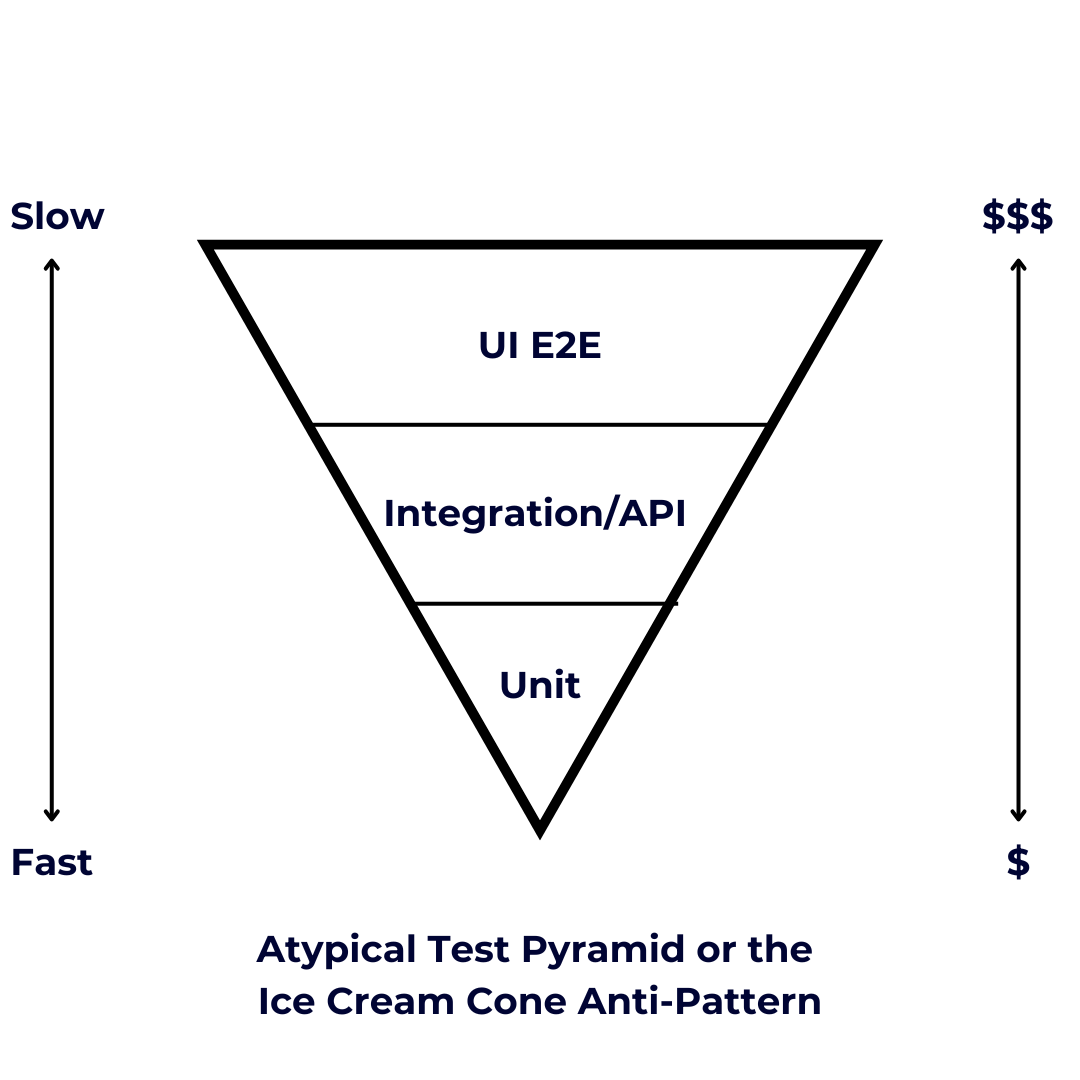
Testing apps manually isn’t easy and consumes a lot of time and money. Testing complex ones with frequent releases requires an enormous number of human hours when attempted manually. This will affect the release cycle, results will take longer to appear, and if shown to be a failure, you’ll need to conduct another round of testing. What’s more, the chances of doing it correctly, repeatedly and without any human error, are highly unlikely. Those factors have driven the development of automation throughout all phases of the testing process, ranging from infrastructure builds to actual testing of code and applications. As for who should write which tests, as a general rule of thumb, it’s a task best-suited to software engineers. They should create unit and integration tests as well as UI e2e tests. QA analysts should also be tasked with writing UI E2E tests scenarios together with individual product owners. QA teams collaborating with business owners enhance product quality by aligning testing scenarios with real-world user experiences and business objectives. ... AWS CodePipeline can provide completely managed continuous delivery that creates pipelines, orchestrates and updates infrastructure and apps. It also works well with other crucial AWS DevOps services, while integrating with third-party action providers like Jenkins and Github. 


Bridging the Digital Divide: Understanding APIs

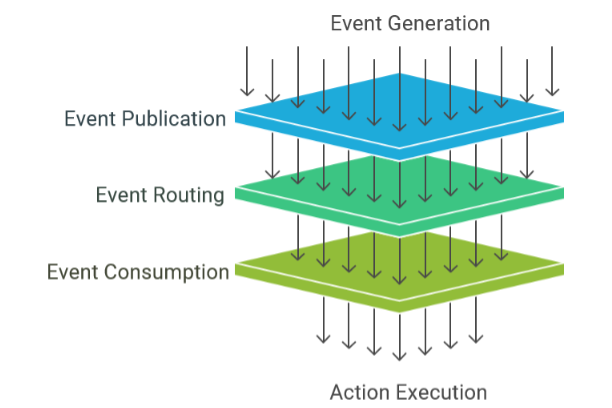
While both Event-Driven Architecture (EDA) and Data-Driven Architecture (DDA) are crucial for modern enterprises, they serve distinct purposes, operate on different core principles, and manifest through different architectural characteristics. Understanding these differences is key for enterprise architects to effectively leverage their individual strengths and potential synergies. While EDA is often highly operational and tactical, facilitating immediate responses to specific triggers, DDA can span both operational and strategic domains. A key differentiator between the two lies in the “granularity of trigger.” EDA is typically triggered by fine-grained, individual events—a single mouse click, a specific sensor reading, a new message arrival. Each event is a distinct signal that can initiate a process. DDA, on the other hand, often initiates its processes or derives its triggers from aggregated data, identified patterns, or the outcomes of analytical models that have processed numerous data points. For example, an analytical process in DDA might be triggered by the availability of a complete daily sales dataset, or an alert might be generated when a predictive model identifies an anomaly based on a complex evaluation of multiple data streams over time. This distinction in trigger granularity directly influences the design of processing logic, the selection of underlying technologies, and the expected immediacy and nature of the system’s response.


What good threat intelligence looks like in practice

The biggest shortcoming is often in the last mile, connecting intelligence to real-time detection, response, and risk mitigation. Another challenge is organizational silos. In many environments, the CTI team operates separately from SecOps, incident response, or threat hunting teams. Without seamless collaboration between those functions, threat intelligence remains a standalone capability rather than a force multiplier. This is often where threat intelligence teams can be challenged to demonstrate value into security operations. ... Rather than picking one over the other, CISOs should focus on blending these sources and correlating them with internal telemetry. The goal is to reduce noise, enhance relevance, and produce enriched insights that reflect the organization’s actual threat surface. Feed selection should also consider integration capabilities — intelligence is only as useful as the systems and people that can act on it. When threat intelligence is operationalized, a clear picture can be formed from the variety of available threat feeds. ... The threat intel team should be seen not as another security function, but as a strategic partner in risk reduction and decision support. CISOs can encourage cross-functional alignment by embedding CTI into security operations workflows, incident response playbooks, risk registers, and reporting frameworks.


4 ways to safeguard CISO communications from legal liabilities

“Words matter incredibly in any legal proceeding,” Brown agreed. “The first thing that will happen will be discovery. And in discovery, they will collect all emails, all Teams, all Slacks, all communication mechanisms, and then run queries against that information.” Speaking with professionalism is not only a good practice in building an effective cybersecurity program, but it can go a long way to warding off legal and regulatory repercussions, according to Scott Jones, senior counsel at Johnson & Johnson. “The seriousness and the impact of your words and all other aspects of how you conduct yourself as a security professional can have impacts not only on substantive cybersecurity, but also what harms might befall your company either through an enforcement action or litigation,” he said. ... CISOs also need to pay attention to what they say based on the medium in which they are communicating. Pay attention to “how we communicate, who we’re communicating with, what platforms we’re communicating on, and whether it’s oral or written,” Angela Mauceri, corporate director and assistant general counsel for cyber and privacy at Northrop Grumman, said at RSA. “There’s a lasting effect to written communications.” She added, “To that point, you need to understand the data governance and, more importantly, the data retention policy of those electronic communication platforms, whether it exists for 60 days, 90 days, or six months.”

Daily Tech Digest - November 05, 2024

GenAI in healthcare: The state of affairs in India

Currently, the All-India Institute of Medical Sciences (AIIMS) Delhi is the only public healthcare institution exploring AI-driven solutions. AIIMS, in collaboration with the Ministry of Electronics & Information Technology and the Centre for Development of Advanced Computing (C-DAC) Pune, launched the iOncology.ai platform to support oncologists in making informed cancer treatment decisions. The platform uses deep learning models to detect early-stage ovarian cancer, and available data shows this has already improved patient outcomes while reducing healthcare costs. This is one of the few key AI-driven initiatives in India. Although AI adoption in the healthcare provider segment is relatively high at 68%, a large portion of deployments are still in the PoC phase. What could transform India’s healthcare with Generative AI? What could help bring care to those who need it most? ... India has tremendous potential in machine intelligence, especially as we develop our own Gen AI capabilities. In healthcare, however, the pace of progress is hindered by financial constraints and a shortage of specialists in the field. Concerns over data breaches and cybersecurity incidents also contribute to this aversion. 


OWASP Beefs Up GenAI Security Guidance Amid Growing Deepfakes

To help organizations develop stronger defenses against AI-based attacks, the Top 10 for LLM Applications & Generative AI group within the Open Worldwide Application Security Project (OWASP) released a trio of guidance documents for security organizations on Oct. 31. To its previously released AI cybersecurity and governance checklist, the group added a guide for preparing for deepfake events, a framework to create AI security centers of excellence, and a curated database on AI security solutions. ... The trajectory of deepfakes is quite easy to predict — even if they are not good enough to fool most people today, they will be in the future, says Eyal Benishti, founder and CEO of Ironscales. That means that human training will likely only go so far. AI videos are getting eerily realistic, and a fully digital twin of another person controlled in real time by an attacker — a true "sock puppet" — is likely not far behind. "Companies want to try and figure out how they get ready for deepfakes," he says. "The are realizing that this type of communication cannot be fully trusted moving forward, which ... will take people some time to realize and adjust." In the future, since the telltale artifacts will be gone, better defenses are necessary, Exabeam's Kirkwood says.


Open-source software: A first attempt at organization after CRA

The Cyber Resilience Act was a shock that awakened many people from their comfort zone: How dare the “technical” representatives of the European Union question the security of open-source software? The answer is very simple: because we never told them, and they assumed it was because no one was concerned about security. ... The CRA requires software with automatic updates to roll out security updates automatically by default, while allowing users to opt out.  Companies must conduct a cyber risk assessment before a product is released and throughout 10 years or its expected lifecycle, and must notify the EU cybersecurity agency ENISA of any incidents within 24 hours of becoming aware of them, as well as take measures to resolve them. In addition to that, software products must carry the CE marking to show that they meet a minimum level of cybersecurity checks. Open-source stewards will have to care about the security of their products but will not be asked to follow these rules. In exchange, they will have to improve the communication and sharing of best security practices, which are already in place, although they have not always been shared. So, the first action was to create a project to standardize them, for the entire open-source software industry.


10 ways hackers will use machine learning to launch attacks

Attackers aren’t just using machine-learning security tools to test if their messages can get past spam filters. They’re also using machine learning to create those emails in the first place, says Adam Malone, a former EY partner. “They’re advertising the sale of these services on criminal forums. They’re using them to generate better phishing emails. To generate fake personas to drive fraud campaigns.” These services are specifically being advertised as using machine learning, and it’s probably not just marketing. “The proof is in the pudding,” Malone says. “They’re definitely better.” ... Criminals are also using machine learning to get better at guessing passwords. “We’ve seen evidence of that based on the frequency and success rates of password guessing engines,” Malone says. Criminals are building better dictionaries to hack stolen hashes. They’re also using machine learning to identify security controls, “so they can make fewer attempts and guess better passwords and increase the chances that they’ll successfully gain access to a system.” ... The most frightening use of artificial intelligence are the deep fake tools that can generate video or audio that is hard to distinguish from the real human. “Being able to simulate someone’s voice or face is very useful against humans,” says Montenegro.


Breaking Free From the Dead Zone: Automating DevOps Shifts for Scalable Success

If ‘Shift Left’ is all about integrating processes closer to the source code, ‘Shift Right’ offers a complementary approach by tackling challenges that arise after deployment. Some decisions simply can’t be made early in the development process. For example, which cloud instances should you use? How many replicas of a service are necessary? What CPU and memory allocations are appropriate for specific workloads? These are classic ‘Shift Right’ concerns that have traditionally been managed through observability and system-generated recommendations. Consider this common scenario: when deploying a workload to Kubernetes, DevOps engineers often guess the memory and CPU requests, specifying these in YAML configuration files before anything is deployed. But without extensive testing, how can an engineer know the optimal settings? Most teams don’t have the resources to thoroughly test every workload, so they make educated guesses. Later, once the workload has been running in production and actual usage data is available, engineers revisit the configurations. They adjust settings to eliminate waste or boost performance, depending on what’s needed. It’s exhausting work and, let’s be honest, not much fun.


5 cloud market trends and how they will impact IT

“Capacity growth will be driven increasingly by the even larger scale of those newly opened data centers, with generative AI technology being a prime reason for that increased scale,” Synergy Research writes. Not surprisingly, the companies with the broadest data center footprint are Amazon, Microsoft, and Google, which account for 60% of all hyperscale data center capacity. And the announcements from the Big 3 are coming fast and furious. ... “In effect, industry cloud platforms turn a cloud platform into a business platform, enabling an existing technology innovation tool to also serve as a business innovation tool,” says Gartner analyst Gregor Petri. “They do so not as predefined, one-off, vertical SaaS solutions, but rather as modular, composable platforms supported by a catalog of industry-specific packaged business capabilities.” ... There are many reasons for cloud bills increasing, beyond simple price hikes. Linthicum says organizations that simply “lifted and shifted” legacy applications to the public cloud, rather than refactoring or rewriting them for cloud optimization, ended up with higher costs. Many organizations overprovisioned and neglected to track cloud resource utilization. On top of that, organizations are constantly expanding their cloud footprint.


The Modern Era of Data Orchestration: From Data Fragmentation to Collaboration

Data systems have always needed to make assumptions about file, memory, and table formats, but in most cases, they've been hidden deep within their implementations. A narrow API for interacting with a data warehouse or data service vendor makes for clean product design, but it does not maximize the choices available to end users. ... In a closed system, the data warehouse maintains its own table structure and query engine internally. This is a one-size-fits-all approach that makes it easy to get started but can be difficult to scale to new business requirements. Lock-in can be hard to avoid, especially when it comes to capabilities like governance and other services that access the data. Cloud providers offer seamless and efficient integrations within their ecosystems because their internal data format is consistent, but this may close the door on adopting better offerings outside that environment. Exporting to an external provider instead requires maintaining connectors purpose-built for the warehouse's proprietary APIs, and it can lead to data sprawl across systems. ... An open, deconstructed system standardizes its lowest-level details. This allows businesses to pick and choose the best vendor for a service while having the seamless experience that was previously only possible in a closed ecosystem.


New OAIC AI Guidance Sharpens Privacy Act Rules, Applies to All Organizations

The new AI guidance outlines five key takeaways that require attention, and though the term “guidance” is used some of these constitute expansions of application of existing rules. The first of these is that Privacy Act requirements for personal information apply to AI systems, both in terms of user input and what the system outputs. ... The second AI guidance takeaway stipulates that privacy policies must be updated to have “clear and transparent” information about public-facing AI use. The third takeaway notes that the generation of images of real people, whether it be due to a hallucination or intentional creation of something like a deepfake, are also covered by personal information privacy rules. The fourth AI guidance takeaway states that any personal information input into AI systems can only be used for the primary purpose for which it was collected, unless consent is collected for other uses or those secondary uses can be reasonably expected to be necessary. The fifth and final takeaway is perhaps a case of burying the lede; the OAIC simply suggests that organizations not collect personal information through AI systems at all due to the ” significant and complex privacy risks involved.”


DevOps Moves Beyond Automation to Tackle New Challenges

“The future of DevOps is DevSecOps,” Jonathan Singer, senior product marketing manager at Checkmarx, told The New Stack. “Developers need to consider high-performing code as secure code. Everything is code now, and if it’s not secure, it can’t be high-performing,” he added. Checkmarx is an application security vendor that allows enterprises to secure their applications from the first line of code to deployment in the cloud, Singer said. The DevOps perspective has to be the same as the application security perspective, he noted. Some people think of seeing the environment around the app, but Checkmarx thinks of seeing the code in the application and making sure it’s safe and secure when it’s deployed, he added. “It might look like the security teams are giving more responsibility to the dev teams, and therefore you need security people in the dev team,” Singer said Checkmarx is automating the heavy mental lifting by prioritizing and triaging scan results. With the amount of code, especially for large organizations, finding ten thousand vulnerabilities is fairly common, but they will have different levels of severity. If a vulnerability is not exploitable, you can knock it out of the results list. “Now we’re in the noise reduction game,” he said.


How Quantum Machine Learning Works

While quantum computing is not the most imminent trend data scientists need to worry about today, its effect on machine learning is likely to be transformative. “The really obvious advantage of quantum computing is the ability to deal with really enormous amounts of data that we can't really deal with any other way,” says Fitzsimons. “We've seen the power of conventional computers has doubled effectively every 18 months with Moore's Law. With quantum computing, the number of qubits is doubling about every eight to nine months. Every time you add a single qubit to a system, you double its computational capacity for machine learning problems and things like this, so the computational capacity of these systems is growing double exponentially.” ... Quantum-inspired software techniques can also be used to improve classical ML, such as tensor networks that can describe machine learning structures and improve computational bottlenecks to increase the efficiency of LLMs like ChatGPT. “It’s a different paradigm, entirely based on the rules of quantum mechanics. It’s a new way of processing information, and new operations are allowed that contradict common intuition from traditional data science,” says Orús.


Quote for the day:

"I find that the harder I work, the more luck I seem to have." -- Thomas Jefferson

Daily Tech Digest - November 15, 2023

The IT Jobs AI Could Replace and the Ones It Could Create

Knowledge base managers and data scientists will be essential roles for enterprises as more and more data is fed into large language models (LLMs). “It's still a garbage in, garbage out problem, and if AI will now do more of our work, what we feed them is more important than ever,” says Katz. De Ridder expects to see prompt engineering to emerge as an important skill in the IT field rather than a distinct job. He describes new jobs that could come of the AI boom: agent and multiagent engineers. Agent engineers would maintain and adjust the AI agent processes, while multi-agent system engineers would function as project managers overseeing the complex processes and outcomes supported by multiple AI agents. These jobs will have myriad specializations tied to different fields, according to De Ridder. As more and more AI use cases emerge, IT workers could increasingly be looked at as AI co-pilots. How will they work alongside this technology to improve productivity, and how will they oversee AI capabilities to ensure the desired outcomes?


Microsoft Zero-Days Allow Defender Bypass, Privilege Escalation

But as with every Microsoft monthly update, there are several bugs in the latest batch that security experts agreed merit greater attention than others. The three actively exploited zero-day bugs fit that category. One of them is CVE-2023-36036, a privilege escalation vulnerability in Microsoft's Windows Cloud Files Mini Filter Driver that gives attackers a way to acquire system-level privileges. Microsoft has assessed the vulnerability as being a moderate — or important — severity threat but has provided relatively few other details about the issue. Satnam Narang, senior staff research engineer at Tenable, identified the bug as something that is likely going to be of interest to threat actors from a post-compromise activity standpoint. An attacker requires local access to an affected system to exploit the bug. The exploitation involves little complexity, user interaction, or special privileges. Windows Cloud Files Mini Filter Driver is a component that is essential to the functioning of cloud-stored files on Windows systems, says Saeed Abbasi, manager of vulnerability and threat research at Qualys. 


How to infuse strategy into everything your company does

The strategic goal-setting landscape is evolving, moving beyond global companies like Patagonia. It’s shifting from top-down mandates to a dynamic, bidirectional model that fosters ambition and collaboration at all levels. In highly successful organizations like LeanIX, an enterprise architecture management firm, we have watched how OKRs have been both a philosophy and a recipe for success and growth. LeanIX’s use of OKRs is not just a way to break down the company’s strategy and to agree on a common focus for the quarter; it’s an integral part of adopting a growth mindset. This ensures that the entire organization is continuously thinking big, aiming high, and trying out new approaches to achieve the next significant leap. ... Contemporary boardrooms have to echo the aspirations and values of Gen Z, emphasising both diversity and innovation. Merely having organizational strategies and cultural values framed and displayed on walls won’t suffice. They must be actively lived and practiced. Over a third of Gen Z expect leaders to not just lead but inspire. They demand a transparency that goes beyond open communication. 


The Art of Digital Continuity: Ensuring Data Availability in Disasters

During disasters, managers and IT employees bear the emotional burden of maintaining a calm and efficient work environment. This emotional labor can lead to stress and burnout, so managing it is key to maintaining productivity and data security during disasters. Here are some ways these professionals can cope with the emotional toll: Communication - Open and honest communication about the disaster’s impact is key for managing emotions. Keeping employees informed can help them feel more in control of the situation. Support - Providing psychological support, such as counseling or mental health resources, can help employees cope with stress and anxiety during a disaster. Training - Prioritizing training on disaster response and emotional management can prepare IT professionals for high-stress situations better. ... Remember that disaster preparedness is not a one-time effort — it requires continuous monitoring, testing, and adaptation to protect valuable data. When disaster strikes and data is lost, the first step is to create a new and improved information security plan. 


Four Levels of Agile Requirements

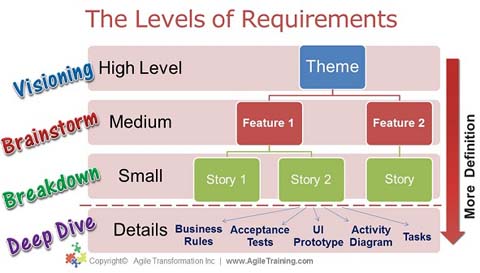
Visioning: This is the initial step of gathering requirements. The goal is to help identify all the Themes and some features desired. This exercise begins to define the scope of what is expected. Brainstorming: The goal of this step is to identify all the features and stories desired. The key here is Breadth First, Depth Later. So instead of discussing the details of each feature and story, our main goal is to FIND all the features and stories. Breakdown: The goal of this step to break down and slice the stories that are still too large (EPICs) into smaller chunks. You probably have already done a lot of slicing during brainstorming, but as you comb your backlog, the team will realize that some stories are still too large to be completed within an iteration. Slicing stories is an art and I will dedicate an entire blog to it! Deep Dive: This is the step everyone wants to jump into right away! Yes, finally, let’s talk about the details. What will be on the screen, what are the exact business rules and how will we test them, what will the detailed process look like, what are the tasks we need to get done to complete this story.


Dynamic Availability: Protocol-Based Assurances

The distinctive feature of proof-based consensus protocols is the fact that the protocol continues to function even when there is only one miner. Therefore miner nodes are free to leave and re-enter the competition at any time. Thus, the protocol maintains availability even under undesirable network conditions. To deal with cases where there are multiple leaders (concurrent solvers of the puzzle), honest nodes follow a simple rule: select the ledger with the highest number of blocks (i.e., the longest chain). In cases where chains have equal lengths, pick the one that you witnessed the earliest. Note that, in the given scenario, there is no way to determine whether there is a set of adversaries that are processing a parallel ledger without informing the rest of the network until their ledger becomes longer than the chain of the benevolent node. When they have a longer chain, they reveal their chain, waiting for the rest of the network to adapt to it, thus effectively ignoring all transactions that were in the neglected blocks. Due to this, one can never be sure whether a transaction is irreversible.


Are firms using mergers and acquisitions to inherit talent?

“I don’t think there’ll be an explosion in the number of acquisitions over the year ahead, but the people and team acquisition element will play a bigger role than in the past,” she says. “Technology is moving so fast that if you acquire a team already working well together on bleeding-edge technology, you can be up and running from day one.” But purchasing a business to get hold of talent is one thing. Holding onto that talent to deliver on the hoped-for value from the acquisition is quite another. The problem here is that if employees are unhappy with the move, feel uncertain about the future, or cannot see any post-deal career progression opportunities, they will simply vote with their feet. ... A key problem with the way many M&A transactions are conducted though, he believes, is that “people tend to come last on the priority list after financing and geography” - even though “you’re asking them to do the equivalent of move home, which because the decision isn’t theirs, can feel threatening”. But Robbins warns: “You fundamentally need to retain people, skills and capabilities if the deal is going to be a success. The business depends on two things - its customers and its staff, and if you’re not giving them what they want, it’s not going to go well.”


Why the Future for Enterprise Success Has to be Agile

Agile solutions enable enterprises to mitigate risks and reduce project failures, gaining a competitive edge and seize new opportunities in the digital age. Through iterative development and continuous feedback cycles, organizations can identify and address potential issues early on. This piece-by-piece approach minimizes the likelihood of costly mistakes and allows for corrections and updates in real-time, ensuring successful project delivery. Working in an Agile way also means that enterprises can be better prepared for the hype points in technology, such as the boom of generative AI this year. Agile enterprises are much better positioned to react and readjust their offerings in real time, addressing the interests of their market, than those with lengthy, drawn-out development timelines. This isn’t to say that Agile enterprises aren’t planning ahead, but instead that they follow a test-and-learn approach, with their plans being flexible and malleable to the ebbs and flows of the market.


Developer Empowerment Via Platform Engineering, Self-Service Tooling

“As a developer the way we build, test and deploy has gotten more complex,” Medina said, in her role play as a developer, lamenting her loss of autonomy in this time of public cloud, serverless workloads and Kubernetes. “Unfortunately that means that, as a developer, if I want to have access to the things that I need when I want them, I’m at the mercy of other teams to bring things up for me. I’m at the mercy of the platform engineering team and I hate waiting for people to do things for me,” she said. Indeed a platform engineering team never is short on backlog items. But often they are stuck performing the operations role so much that they aren’t able to build those golden paths and automation. “OK, as platform engineers, we have the keys to the so-called cloud kingdom, but, listen, it’s not all about you. It’s not all about DevEx. We also have to maintain reliable systems. And it’s too much work and we are super stressed. We are at the point where we are drowning in Jira tickets,” Villela replied, wearing the hat of a platform engineer.


Understanding OWASP’s Bill of Material Maturity Model: Not all SBOMs are created equal

Much as with other industry efforts such as zero trust, the journey towards establishing widespread mature BOMs with sufficient detail and depth will be just that — a journey. That said, resources such as OWASP's SBOM Guide and the BOM Maturity Model can serve as great tools that organizations, software suppliers and consumers can use to mature their implementation of SBOMs and ensure they are providing sufficient insight and details to be used in activities such as software asset inventory, vulnerability management and software supply chain security. ... While the journey may seem daunting, the alternative is continuing the historical status quo of blind software consumption with limited transparency and insight into the software we are consuming, its lineage, who's been involved in it and what has occurred to it along the way. We wouldn't settle for this level of opaque risky consumption in other industries such as food and pharmaceuticals and with software increasingly driving nearly every aspect of society, we shouldn't settle for a lack of transparency here either.


Quote for the day:

"Difficulties strengthen the mind, as labor does the body." -- Seneca