Showing posts with label DevSecOps. Show all posts

Daily Tech Digest - May 11, 2026


Quote for the day:

“The entrepreneur builds an enterprise; the technician builds a job.” -- Michael Gerber

🎧 Listen to this digest on YouTube Music

▶ Play Audio Digest

Duration: 17 mins • Perfect for listening on the go.


If AI Owns the Decision, What Happens to Your Bank? 4 Smart Moves Now Will Aid Survival

The article from The Financial Brand explores the transformative role of artificial intelligence in reshaping consumer financial decision-making and the banking landscape. As AI tools become more sophisticated, they are moving beyond simple automation to provide hyper-personalized financial coaching and autonomous management. This shift allows consumers to delegate complex tasks—such as optimizing savings, managing debt, and selecting investment portfolios—to algorithms that analyze vast amounts of real-time data. For financial institutions, this evolution presents both a challenge and an opportunity; banks must transition from being mere transactional platforms to becoming proactive financial partners. The integration of generative AI is particularly highlighted as a catalyst for creating more intuitive user interfaces that can explain financial nuances in natural language. However, the piece also emphasizes the critical importance of trust and transparency. For AI to be truly effective in a banking context, providers must ensure ethical data usage and maintain a "human-in-the-loop" approach to mitigate algorithmic bias and security risks. Ultimately, the future of banking lies in a hybrid model where technology handles the heavy analytical lifting, enabling customers to achieve better financial health through data-driven confidence and streamlined digital experiences.


AI tool poisoning exposes a major flaw in enterprise agent security

In this VentureBeat article, Nik Kale examines the emerging threat of AI tool poisoning, which exposes a fundamental flaw in enterprise agent security architectures. Modern AI agents select tools from shared registries by matching natural-language descriptions, but these descriptions lack human verification. This oversight enables selection-time threats like tool impersonation and execution-time issues such as behavioral drift. While traditional software supply chain controls like code signing and Software Bill of Materials (SBOMs) effectively ensure artifact integrity, they fail to address behavioral integrity—whether a tool actually does what it claims. A malicious tool might pass all artifact checks while containing prompt-injection payloads or altering its server-side behavior post-publication to exfiltrate sensitive data. To counter this, Kale proposes a runtime verification layer using the Model Context Protocol (MCP). This system employs discovery binding to prevent bait-and-switch attacks, endpoint allowlisting to block unauthorized network connections, and output schema validation to detect suspicious data patterns. By implementing a machine-readable behavioral specification, organizations can establish a tamper-evident record of a tool's intended operations. Kale advocates for a graduated security model, beginning with mandatory endpoint allowlisting, to protect enterprise AI ecosystems from the growing risks of automated agent manipulation and data theft.


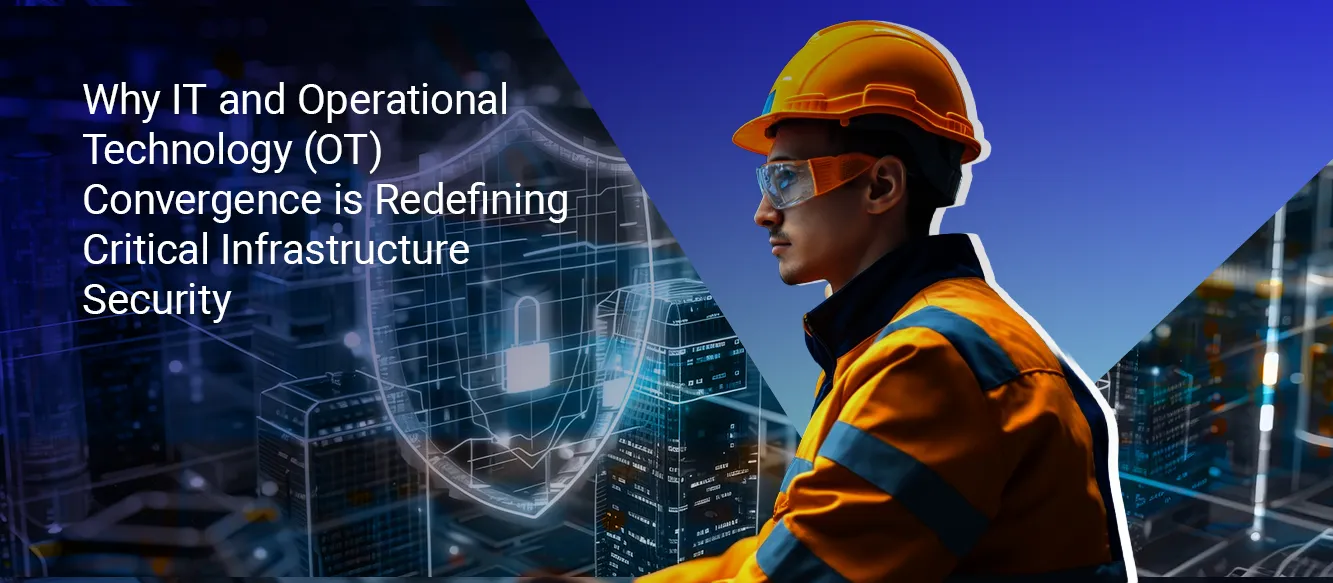
Why OT security needs bilingual leaders

The article from e27 emphasizes the critical necessity for "bilingual" leadership in the realm of Operational Technology (OT) security to bridge the widening gap between industrial operations and Information Technology (IT). As critical infrastructure becomes increasingly digitized, the traditional silos separating shop-floor engineers and corporate cybersecurity teams have become a significant liability. The author argues that true bilingual leaders are those who possess a deep technical understanding of industrial control systems alongside a sophisticated grasp of modern cybersecurity protocols. These leaders act as essential translators, capable of explaining the nuances of "uptime" and physical safety to IT departments, while simultaneously articulating the urgency of threat landscapes and data integrity to plant managers. The piece highlights that the convergence of these two worlds often results in friction due to differing priorities—where IT focuses on confidentiality, OT prioritizes availability. By fostering leadership that speaks both "languages," organizations can implement holistic security frameworks that do not compromise production efficiency. Ultimately, the article contends that the future of industrial resilience depends on a new generation of executives who can navigate the complexities of both the digital and physical domains, ensuring that cybersecurity is integrated into the very fabric of industrial engineering rather than treated as an external afterthought.


The agentic future has a technical debt problem

In the article "The Agentic Future Has a Technical Debt Problem," Barr Moses argues that the rapid, competitive deployment of AI agents is mirroring the early mistakes of the cloud migration era. Drawing on a survey of 260 technology practitioners, Moses highlights a significant disconnect between engineering leaders and the "builders" on the ground. While leadership often maintains a high level of confidence in system reliability, nearly two-thirds of organizations admitted to deploying agents faster than their teams felt prepared to support. This haste has led to a massive accumulation of technical debt; over 70% of fast-deploying builders anticipate needing to significantly rearchitect or rebuild their systems. Critical operational foundations, such as observability, governance, and traceability, are frequently sacrificed for speed, leaving engineers to deal with agents that access unauthorized data or lack manual override switches. The survey reveals that visibility into agent behavior remains a primary blind spot, with most production issues being discovered via customer complaints rather than automated monitoring. Ultimately, the piece warns that without a shift toward prioritizing infrastructure and instrumentation, the industry faces an inevitable "rebuild reckoning." Moving forward, organizations must bridge the perception gap between management and developers to ensure that agentic systems are not just shipped, but are sustainable and controllable.
The article "In Regulated Industries, Faster Testing Still Has to Be Defensible" explores the delicate balance software engineering teams in sectors like healthcare and finance must maintain between rapid AI-driven innovation and stringent compliance requirements. While there is significant pressure from stakeholders to accelerate release cycles through generative AI for test generation and defect analysis, the author emphasizes that speed must not come at the expense of auditability. In regulated environments, software must not only function correctly but also possess a comprehensive audit trail, including documented validation, end-to-end traceability, and clear evidence of control. The piece argues that AI-generated artifacts should be subject to the same rigorous version control and formal human review as traditional engineering outputs, as accountability cannot be delegated to an algorithm. Crucially, traceability should be integrated early into the planning phase rather than treated as a post-development cleanup task. Ultimately, the adoption of AI in quality engineering is most effective when it strengthens release discipline and supports human-led verification processes. By prioritizing narrow scopes, clear data access policies, and ongoing education, organizations can leverage modern technology to achieve faster delivery without sacrificing the defensibility of their testing records or risking non-compliance with regulatory frameworks.


DevSecOps explained for growing technology businesses

The article "DevSecOps explained for growing technology businesses," authored by Clear Path Security Ltd, details how small-to-medium enterprises (SMEs) can integrate security into their development lifecycles without sacrificing speed. The article defines DevSecOps as a cultural and procedural shift where security is woven into daily delivery flows rather than being a separate concluding step. For growing firms, the primary advantage lies in reducing expensive rework and late-stage surprises by catching vulnerabilities early. The framework rests on three pillars: people, process, and tooling. Instead of overwhelming teams with complex enterprise-grade protocols, the author suggests a risk-based, gradual implementation focusing on high-impact areas like customer-facing apps and sensitive data handling. Core initial controls should include automated code scanning, dependency checks, and secret detection. Success is measured not by the volume of tools, but by practical metrics like the reduction of post-release vulnerabilities and the speed of high-priority remediation. To ensure adoption, businesses are advised to follow a phased 90-day plan, starting with visibility and basic automation before scaling complexity. Ultimately, the piece argues that DevSecOps acts as a business enabler, fostering confidence and stability by aligning development speed with robust risk management through lightweight, proportionate controls that fit the organization’s specific size and technical needs.


Cuts are coming: is now the time to upskill?

The article "Cuts are coming: is now the time to upskill?" explores the critical need for IT professionals to embrace continuous learning amidst a volatile tech landscape defined by rising redundancies and the disruptive influence of artificial intelligence. Despite persistent skills shortages, the job market has tightened significantly, forcing individuals to take greater personal responsibility for their professional development, often through self-funded and self-directed methods. This shift is characterized by a move away from traditional classroom settings toward agile micro-credentials, cloud-based labs, and specialized certifications in high-demand areas like cloud computing, data analytics, and cybersecurity. While organizations recognize that upskilling existing talent is more cost-effective and resilience-building than external hiring, employer-led investment in training has paradoxically declined over the last decade. Consequently, workers are increasingly motivated by job security concerns, with a majority considering reskilling to maintain their relevance. However, the article highlights an "AI trust paradox," noting that many businesses struggle to implement transformative AI because they lack the necessary foundational data skills and internal expertise. Ultimately, staying competitive in the modern economy requires a proactive approach to skill acquisition, as the widening gap between institutional needs and available talent places the onus of career longevity squarely on the individual professional.


Cloud Security Alliance Expands Agentic AI Governance Work

The Cloud Security Alliance (CSA) has significantly expanded its commitment to securing agentic AI systems through the introduction of three major governance milestones aimed at "Securing the Agentic Control Plane." During the CSA Agentic AI Security Summit, the organization’s CSAI Foundation announced the launch of the STAR for AI Catastrophic Risk Annex, a dedicated initiative running from mid-2026 through 2027 to address high-stakes risks associated with advanced AI autonomy. Furthermore, the CSA achieved authorization as a CVE Numbering Authority via MITRE, allowing it to formally track and categorize vulnerabilities specific to the AI landscape. In a strategic move to standardize security protocols, the CSA also acquired two critical specifications: the Agentic Autonomous Resource Model and the Agentic Trust Framework. The latter, developed by Josh Woodruff of MassiveScale.AI, integrates Zero Trust principles into AI agent operations and aligns with international standards like the NIST AI Risk Management Framework and the EU AI Act. These developments reflect the CSA’s proactive approach to managing the security challenges posed by autonomous AI entities, ensuring that governance, risk management, and compliance keep pace with rapid technological evolution. By centralizing these resources, the CSA aims to provide a unified, transparent architecture for organizations to safely deploy and manage agentic technologies within their enterprise cloud environments.


Stop treating identity as a compliance step. It’s infrastructure now

In the article "Stop treating identity as a compliance step: it’s infrastructure now," Harry Varatharasan of ComplyCube argues that identity verification (IDV) has transcended its traditional role as a back-office compliance task to become foundational digital infrastructure. Across fintech, telecoms, and government services, IDV now serves as the primary mechanism for establishing trust and preventing fraud at scale. Varatharasan highlights a significant industry shift where businesses prioritize orchestration and interoperability, moving toward single, reusable identity layers rather than fragmented, siloed checks. For IDV to function as true infrastructure, it must exhibit three defining characteristics: reliability at scale, trust by design, and—most importantly—interoperability that addresses both technical compatibility and legal liability transfer. The author notes that while the UK’s digital identity consultation is a vital milestone, policy frameworks still struggle to keep pace with the industry's current reality, where the boundaries between public and private verification systems are already dissolving. Fragmentation remains a major hurdle, increasing compliance costs and creating user friction through repetitive verification steps. Ultimately, the article emphasizes that the focus must shift from simply mandating verification to governing it as a shared, portable resource, ensuring that national standards reflect the modern integrated digital economy and future cross-sector needs, while providing a seamless experience for the end-user.


The rapidly evolving digital assets and payments regulatory landscape: What you need to know

The Dentons alert outlines Australia’s sweeping regulatory overhaul of digital assets and payments, signaling the end of previous legal ambiguities. Central to this shift is the Corporations Amendment (Digital Assets Framework) Act 2026, which, starting April 2027, integrates cryptocurrency exchanges and custodians into the Australian Financial Services Licence (AFSL) regime via new categories: Digital Asset Platforms and Tokenised Custody Platforms. Concurrently, a new activity-based payments framework replaces the outdated "non-cash payment facility" concept with Stored Value Facilities (SVF) and Payment Instruments. This system captures diverse services like payment initiation and digital wallets, while excluding self-custodial software. Key consumer protections include a mandate for licensed providers to hold client funds in statutory trusts and enhanced disclosure for stablecoin issuers. Furthermore, "major SVF providers" exceeding AU$200 million in stored value will face prudential oversight by APRA. While exemptions exist for small-scale platforms and low-value services, the firm emphasizes that the transition is complex. With ASIC’s "no-action" position set to expire on June 30, 2026, and parallel AML/CTF obligations already in effect, businesses must urgently assess their licensing needs. This landmark reform ensures that digital asset and payment providers operate under a rigorous, transparent framework equivalent to traditional financial services.

Daily Tech Digest - April 27, 2026


Quote for the day:

"Security is not a product, but a process. It is a mindset that assumes the 'impossible' will happen, and builds the walls before the water starts rising." -- Inspired by Bruce Schneier

🎧 Listen to this digest on YouTube Music

▶ Play Audio Digest

Duration: 17 mins • Perfect for listening on the go.


Your AI strategy is all wrong

In this Computerworld article, Mike Elgan argues that the prevailing corporate strategy of using artificial intelligence to slash headcount is fundamentally flawed. While mass layoffs provide immediate cost savings, Elgan cites research from the Royal Docks School of Business and Law suggesting that organizations should instead prioritize "knowledge ecosystems" built on human-AI collaboration. The core issue is that AI excels at rapid data processing and complex task execution, but it lacks the critical judgment, ethical reasoning, and contextual understanding inherent to human experts. Furthermore, an over-reliance on automated tools risks a "skills atrophy paradox," where employees lose the ability to perform independently. To avoid these pitfalls, Elgan suggests that leaders must redesign workflows around strategic handoffs rather than total replacements. This involves shifting employee training toward metacognition—learning how to effectively integrate personal expertise with AI outputs—and creating new roles focused on AI specialization. Ultimately, companies that treat AI as a tool to augment collective intelligence will achieve compounding, long-term advantages over those that merely optimize for short-term productivity gains. By keeping humans in authorship of decisions, businesses ensure they remain legally defensible and ethically grounded while leveraging the unprecedented speed and analytical power that modern AI provides.


The New Software Economics: Earn the Right to Invest Again, in 90-day Cycles

"The New Software Economics: Earn the Right to Invest Again in 90-Day Cycles" by Leonard Greski explores the evolving financial landscape of technology, emphasizing how the shift to subscription-based infrastructure and cloud computing has moved IT spending from balance sheets to income statements. This transition complicates traditional software capitalization practices, such as ASC 350-40, which often conflict with the modern reality of continuous delivery. To address these challenges, Greski proposes a breakthrough framework called "earning the right to invest again." This model shifts focus from rigid accounting treatments to accountability for value generation through 90-day investment cycles. The process involves shipping a "thin slice" of functionality within 30 to 60 days, immediately monetizing that slice through revenue increases or measurable cost reductions, and then using that evidence to fund the next tranche of development. By treating application development as a series of bounded pilots rather than fixed-scope projects, organizations can better manage uncertainty and align spending with actual end-user value. Greski concludes by recommending strategic actions for modern executives, such as prioritizing value streams over projects, pre-writing AI policies, and integrating FinOps into senior leadership, to ensure technology investments remain agile, evidence-based, and fiscally responsible in a rapidly changing digital economy.


Deepfake threats exploiting the trust inside corporate systems

The article "Deepfake threats exploiting the trust inside corporate systems" by Anthony Kimery on Biometric Update explores a dangerous evolution in cybercrime, as detailed in a new playbook by AI security firm Reality Defender. Deepfake technology has transitioned from isolated fraud schemes into sophisticated attacks that infiltrate internal corporate workflows, specifically targeting the "trust boundaries" businesses rely on for daily operations. This shift poses a severe risk to sensitive processes such as password resets, access recovery, internal meetings, and executive communications. Because traditional security models often equate seeing or hearing a person with identity assurance, synthetic media can now bypass standard technical controls by mimicking trusted colleagues or leadership. Once these digital imitations enter internal approval chains or customer service interactions, they can cause significant damage before traditional systems recognize the breach. Reality Defender emphasizes that organizations must transition from ad hoc reactions to a structured strategy involving real-time detection, procedural response, and operational containment. The fundamental issue is that modern deepfakes have effectively broken the assumption that sensory verification is foolproof. To mitigate this risk, the article suggests that early visibility and forensic accountability are more critical than absolute certainty, urging organizations to establish clear protocols for handling suspicious media.


Why Integration Tech Debt Holds Back SaaS Growth

The article "Why Integration Tech Debt Holds Back SaaS Growth" by Adam DuVander explains how a specific form of technical debt—integration debt—acts as a silent anchor for SaaS companies. While typical technical debt involves internal code quality, integration debt arises from the rapid, often "quick-and-dirty" connections made between a platform and the third-party apps its customers use. To achieve early market traction, many SaaS providers build fragile, custom integrations that lack scalability and robust error handling. Over time, these brittle connections require constant maintenance, pulling engineering resources away from core product innovation. This creates a "growth paradox" where the very integrations intended to attract new users eventually prevent the company from scaling effectively or entering enterprise markets that demand high reliability. DuVander argues that to sustain long-term growth, companies must transition from these bespoke, hard-coded integrations to a more strategic, platform-led approach. By investing in a unified integration architecture or using specialized tools to handle third-party connectivity, SaaS providers can reduce maintenance overhead, improve system reliability, and free their developers to focus on delivering unique value, thereby "paying down" the debt that stifles competitive agility.


Why GCCs Must Move to Product-Led Models to Stay Relevant

In the article "Why GCCs Must Move to Product-Led Models to Stay Relevant," the author argues that Global Capability Centers (GCCs) are at a critical crossroads. Historically established as cost-arbitrage hubs focused on back-office operations and service delivery, GCCs are now facing pressure to evolve into value-driven entities. To maintain their strategic importance within parent organizations, they must transition from a project-centric approach to a product-led operating model. This shift requires integrating engineering excellence with business outcomes, moving beyond merely executing tasks to owning end-to-end product lifecycles. A product-led GCC prioritizes user-centric design, agile methodologies, and cross-functional teams that include product managers, designers, and engineers. By fostering a culture of innovation and data-driven decision-making, these centers can accelerate speed-to-market and enhance customer experiences. Furthermore, the article highlights that a product mindset helps attract top-tier talent who seek ownership and impact rather than repetitive support roles. Ultimately, for GCCs to survive the era of digital transformation and AI, they must shed their identity as "cost centers" and emerge as "innovation engines" that proactively contribute to the global enterprise's growth, scalability, and long-term competitive advantage.


Cold Data, Hot Problem: Why AI Is Rewriting Enterprise Storage Strategy

In the article "Cold Data, Hot Problem," Brian Henderson discusses how the surge of generative AI is fundamentally altering enterprise storage strategies. Traditionally, organizations categorized data into "hot" (frequently accessed) and "cold" (archived), with the latter relegated to low-cost, slow-access tiers. However, the rise of Large Language Models (LLMs) has turned this "cold" data into a "hot" asset, as historical archives are now vital for training models and providing context through Retrieval-Augmented Generation (RAG). This shift creates a significant bottleneck: traditional archival storage cannot provide the high-throughput, low-latency access required for modern AI workloads. To solve this, Henderson argues that enterprises must modernize their data architecture by adopting high-performance "all-flash" object storage and unified data platforms. These solutions bridge the gap between performance and scale, allowing companies to leverage their entire data estate without the latency penalties of legacy silos. By integrating advanced data management and FinOps principles, organizations can ensure that their storage infrastructure is not just a passive repository, but a dynamic engine for AI innovation. Ultimately, the article emphasizes that surviving the AI era requires treating all data as potentially active, ensuring it is discoverable, accessible, and ready for immediate computational use.


Context decay, orchestration drift, and the rise of silent failures in AI systems

In "Context Decay, Orchestration Drift, and the Rise of Silent Failures in AI Systems," Sayali Patil explores the "reliability gap" in enterprise AI—a dangerous disconnect where systems appear operationally healthy but are behaviorally broken. Unlike traditional software, where failures trigger clear error codes, AI failures are often "silent," meaning the system remains functional while producing confidently incorrect or stale results. Patil identifies four critical failure patterns: context degradation, where models reason over incomplete or outdated data; orchestration drift, where complex agentic sequences diverge under real-world pressure; silent partial failure, where subtle performance drops erode user trust before reaching alert thresholds; and the automation blast radius, where a single early misinterpretation propagates across an entire business workflow. To combat these risks, the article argues that traditional infrastructure monitoring (uptime and latency) is insufficient. Instead, organizations must adopt "behavioral telemetry" and intent-based testing frameworks. By shifting the focus from "is the service up?" to "is the service behaving correctly?", enterprises can build disciplined infrastructure capable of withstanding production stress. This transition requires shared accountability across teams to ensure that AI deployments remain reliable, evidence-based, and fiscally responsible in an increasingly automated digital economy.


AI is reshaping DevSecOps to bring security closer to the code

The integration of artificial intelligence into DevSecOps is fundamentally transforming the software development lifecycle by shifting security from a reactive, post-deployment validation to a continuous, proactive enforcement mechanism. According to industry experts cited in the article, AI is reshaping three primary areas: secure coding, issue detection, and automated remediation. By embedding third-party security tooling directly into coding assistants, organizations can now provide real-time policy guidance, secrets detection, and dependency validation as code is written. This "shift left" approach ensures that security is no longer an afterthought but a foundational component of the generation workflow. Furthermore, AI-driven automation helps bridge the persistent gap between development and security teams by providing contextual fixes and reducing the manual burden of triaging vulnerabilities. Beyond mere tooling, this evolution demands a strategic shift in skills, requiring developers to become more security-conscious while security professionals transition into architectural oversight roles. Ultimately, AI-enhanced DevSecOps enables enterprises to maintain a rapid pace of innovation without compromising the integrity of the software supply chain. By leveraging intelligent agents to monitor and enforce guardrails throughout the development pipeline, businesses can more effectively mitigate risks in an increasingly complex and fast-paced digital landscape.


Unpacking the SECURE Data Act

The article "Unpacking the SECURE Data Act" by Eric Null, featured on Tech Policy Press, critically analyzes the House Republicans' newly proposed federal privacy bill, the Securing and Establishing Consumer Uniform Rights and Enforcement (SECURE) Data Act. Null argues that the legislation represents a significant step backward for American privacy protections. Rather than establishing a robust national standard, the bill mirrors industry-friendly state laws, such as Kentucky’s, but often excludes even their basic safeguards, like impact assessments or protections for smart TV and neural data. A primary concern highlighted is the bill's strong preemption regime, which would override more protective state laws, effectively turning federal law into a "ceiling" rather than a "floor." Furthermore, the Act contains broad exemptions that allow companies to bypass compliance through simple privacy policies, terms of service contracts, or by labeling data collection as "internal research" to train AI systems. Null contends that the bill’s data minimization standards are essentially the status quo, providing a "free pass" for companies to continue invasive data practices as long as they are disclosed. Ultimately, the article warns that the SECURE Data Act prioritizes industry interests over meaningful consumer rights, leaving individuals vulnerable in an increasingly AI-driven digital economy.


Why legacy data centre networks are no longer fit for purpose

The article "Why legacy data centre networks are no longer fit for purpose" highlights the critical disconnect between traditional infrastructure and the explosive demands of modern computing, particularly driven by artificial intelligence and high-performance workloads. Legacy networks, often built on rigid, three-tier architectures, struggle with the "east-west" traffic patterns prevalent in today’s virtualized environments. These older systems frequently suffer from high latency, limited scalability, and significant energy inefficiencies, making them a liability as power costs and sustainability regulations intensify. The shift toward AI-ready data centers necessitates a transition to leaf-spine architectures and software-defined networking, which provide the high-bandwidth, low-latency fabrics required for parallel processing. Furthermore, legacy hardware often lacks the integrated security and real-time observability needed to defend against sophisticated cyber threats. The piece emphasizes that staying competitive in 2026 requires more than just incremental updates; it demands a fundamental modernization of the network fabric to ensure agility and reliability. By moving away from siloed, hardware-centric models toward modular and automated infrastructure, organizations can achieve the density and flexibility required for future growth. Ultimately, the article argues that failing to replace these aging systems risks operational bottlenecks and financial strain in an increasingly cloud-native world.

Daily Tech Digest - March 06, 2026


Quote for the day:

"Actions, not words, are the ultimate results of leadership." -- Bill Owens


Strategy fails when leaders confuse ambition with readiness

This article explores why bold corporate transformations often falter despite having sound strategic logic. The core issue lies in leaders mistakenly treating clear intent as a proxy for the actual capacity to change. While ambition is highly visible in presentations and public goals, organizational readiness—comprising internal skills, trust, and execution muscle—exists beneath the surface and is built slowly over time. When leadership pushes initiatives significantly faster than the organization can absorb them, it creates a "readiness gap" characterized by deep change fatigue, performative work, and eroding employee belief. Pushing harder in response often exacerbates the problem, as what looks like resistance is frequently just mental exhaustion from reaching a finite capacity for change. To succeed, leaders must treat readiness as a dynamic leadership discipline rather than a minor operational detail. This involves making difficult strategic tradeoffs, prioritizing the careful sequencing of projects, and investing in internal capabilities before attempting to scale. Ultimately, effective strategy is not just about choosing a direction but about mastering timing; true progress depends less on the volume of projects launched and more on the organization’s ability to internalize new behaviors. By bridging the gap between vision and preparedness, leaders can transform high-level ambition into sustainable, long-term impact.


Why Calm Leadership Is A Strategic Advantage In High-Risk Technology

In the Forbes article Justin Hertzberg argues that composure is not just a personality trait but a vital strategic capability for managing modern technical infrastructure. While the myth of the high-intensity executive persists, Hertzberg suggests that in sectors like AI and cybersecurity, the ability to remain steady under pressure is a fundamental form of operational risk management. This calm approach preserves cognitive bandwidth, ensuring that decision-making remains structured and analytical rather than reactive or impulsive. A critical component of this leadership style is the cultivation of psychological safety; by responding with curiosity instead of emotion, leaders encourage teams to surface small technical anomalies early, preventing them from escalating into catastrophic failures. Furthermore, calm leadership acts as a force multiplier for clarity, converting complex technical signals into actionable priorities and consistent communication rhythms. This steadiness also supports human resilience, recognizing that human operators are just as essential to system stability as the hardware and software they manage. Ultimately, Hertzberg concludes that composure is a skill that can be trained through simulation and culture. As technology becomes more interconnected, the most significant competitive edge is a leader who provides a "quiet advantage"—the discipline to stay focused when uncertainty is at its peak.


AI fraud pushing pace on need for advanced deepfake detection tools

The article highlights the urgent need for advanced deepfake detection tools as generative AI accelerates fraud capabilities, forcing organizations to reevaluate their security frameworks. Dr. Edward Amoros emphasizes that deepfake protection should be viewed as a high-ROI investment rather than an experimental control, urging Chief Information Security Officers to integrate these threats into existing risk registers like FAIR or ISO/IEC 27005. By reframing deepfakes as identity-based loss events, executives can justify the relatively modest costs of detection platforms compared to the massive financial and reputational damage of successful attacks. However, a significant "readiness gap" persists; research from DataVisor indicates that while 74 percent of financial leaders recognize AI-driven fraud as a primary threat, 67 percent still lack the necessary infrastructure to deploy effective defenses. This vulnerability is further compounded by the rapid evolution of vocal cloning, which a paper from the Bloomsbury Intelligence and Security Institute warns could soon render traditional voice biometrics obsolete. To counter these risks, the article advocates for a shift toward identity authenticity as a measurable control objective, utilizing specific metrics such as detection accuracy and response times. Ultimately, sustaining trust in digital identities requires a transition from legacy operational speeds to real-time, AI-powered defensive strategies.


Autoscaling Is Not Elasticity

In the DZone article David Iyanu Jonathan argues that while these terms are often used interchangeably, they represent fundamentally different concepts in cloud system design. Autoscaling is a reactive, algorithmic mechanism that adjusts resource counts based on specific metrics, whereas true elasticity is a resilient architectural property that allows a system to absorb load gracefully without collapsing. The author warns that "mindless" autoscaling—driven by single metrics like CPU usage without hard caps—can actually exacerbate failures, such as when a cluster scales up during a DDoS attack or saturates a downstream database like Redis, leading to cascading outages and astronomical cloud bills. To achieve genuine elasticity, organizations must implement sophisticated guardrails, including hard instance caps to protect downstream dependencies, longer cooldown periods to prevent resource oscillation, and composite triggers that monitor request rates and error percentages alongside traditional utilization signals. Furthermore, the article emphasizes the necessity of dependency health gates, manual override procedures, and cost circuit breakers to ensure operational stability. Ultimately, Jonathan posits that resilience is born from policy and testing rather than blind algorithmic faith; true elasticity requires a deep understanding of system bottlenecks and the discipline to prioritize long-term stability through proactive chaos drills and rigorous policy audits.


Meet Your New Colleague: What OpenClaw Taught Me About the Agentic Future

This blog post by Jon Duren explores the transformative impact of OpenClaw, an open-source project that has catalyzed the transition from conversational chatbots to autonomous "agentic" AI. Unlike traditional AI assistants that merely respond to prompts, OpenClaw demonstrates a system capable of assuming specific roles, maintaining deep context, and executing complex tasks using diverse digital tools. This shift represents a move toward AI as a functional "colleague" rather than just a software utility. Duren emphasizes that while OpenClaw is currently a rough proof-of-concept, its viral success has signaled a massive market appetite, prompting major foundation labs to accelerate their development of enterprise-grade agentic platforms. For organizations, this evolution necessitates immediate strategic preparation, particularly regarding robust data infrastructure and governance frameworks to ensure these autonomous agents operate within safe guardrails. The author argues that we are witnessing the start of an "AI Flywheel" effect, where early experimentation leads to compounding competitive advantages. Ultimately, the piece suggests that the future of work involves integrating these proactive agents into human teams, transforming repetitive, context-heavy workflows into streamlined processes. Leaders must develop a deep understanding of this agentic potential now to navigate an era where AI effectively functions as a productive team member.


Why digital identity is the new perimeter in a zero-trust world

In the contemporary cybersecurity landscape, the traditional network firewall has transitioned from a definitive security seal to an obsolete relic, replaced by digital identity as the primary perimeter. As organizations embrace cloud-first strategies and remote work, data is no longer confined to physical boundaries, necessitating a Zero Trust approach centered on the mantra of "never trust, always verify." Given that approximately 80% of breaches involve stolen credentials, robust Identity and Access Management (IAM) is now a strategic imperative for maintaining system integrity. This framework relies on continuous authentication and adaptive signals—such as real-time location and biometrics—to monitor risks dynamically rather than relying on static passwords. The scope of identity has also expanded significantly to include machine identities, including IoT devices and APIs, which currently outnumber human users and require automated governance to prevent unauthorized access. Furthermore, while artificial intelligence facilitates sophisticated fraud, it simultaneously empowers defenders with predictive anomaly detection and risk-based access controls. By centralizing authentication and automating the lifecycle management of both human and non-human accounts, organizations can effectively mitigate human error and ensure compliance. Ultimately, treating digital identity as the new perimeter is the only viable method to secure modern digital transformations against the evolving complexities of the current global threat landscape.


State-affiliated hackers set up for critical OT attacks that operators may not detect

Research from industrial cybersecurity firm Dragos reveals a dangerous shift in nation-state cyber strategy, as state-affiliated threat groups move beyond mere network access to actively mapping methods for disrupting physical industrial processes. Groups like China-linked Voltzite and Russia-linked Electrum are now weaponizing operational technology (OT) access to identify specific conditions that can trigger process shutdowns or destroy physical infrastructure. For instance, Voltzite has been observed manipulating engineering workstations within U.S. energy and pipeline networks, while Russian actors have expanded their destructive operations into NATO territory. Despite these escalating threats, critical infrastructure operators remain alarmingly unprepared. Dragos reports that fewer than 10% of OT networks worldwide have adequate security monitoring, and a staggering 90% of asset owners still lack the visibility to detect techniques used in the Ukraine power grid attacks a decade ago. This lack of oversight is compounded by poor network segmentation and a reliance on internet-facing devices with default credentials. Consequently, many breaches are only discovered when operators notice physical malfunctions rather than through automated alerts. As attackers deploy sophisticated wiper malware and corrupt device firmware, the inability of many organizations to detect, contain, or respond to these intrusions poses a significant risk to global industrial stability and public safety.


The Coruna exploit: Why iPhone users should be concerned

The Coruna exploit represents a significant escalation in mobile security threats, illustrating how sophisticated, state-grade hacking tools can eventually filter down into the hands of mass-scale cybercriminals. Discovered by Google’s Threat Intelligence Group and iVerify, Coruna is a highly polished exploit kit capable of hijacking iPhones running iOS 13 through iOS 17.2.1 simply when a user visits a malicious website. This complex suite utilizes twenty-three distinct vulnerabilities and five exploit chains to grant attackers root access, allowing them to exfiltrate sensitive data, including text snippets and cryptocurrency information. Evidence suggests the software may have originated from a U.S. government contractor before being utilized by various nation-state actors from Russia and China, and ultimately criminal organizations. Notably, the malware is advanced enough to detect and cease operations if an iPhone’s Lockdown Mode is active, highlighting the effectiveness of Apple’s specialized security features. While Apple has addressed these vulnerabilities in recent updates such as iOS 26, thousands of users remain at risk due to slow adoption rates for new operating systems. The proliferation of Coruna serves as a stark reminder that digital backdoors and weaponized exploits, once created, inevitably escape state control and threaten the privacy and security of ordinary citizens worldwide.


Digital sovereignty options for on-prem deployments

Digital sovereignty is rapidly evolving from a compliance requirement into a fundamental architectural necessity for global enterprises seeking to maintain absolute control over their data and infrastructure. As highlighted in the linked article, the shift away from standard public cloud services is being driven by stringent regional regulations and geopolitical concerns regarding unauthorized data access by foreign governments. To address these challenges, major technology providers like Cisco, IBM, Fortinet, and Versa Networks have introduced sophisticated on-premises and air-gapped solutions. Cisco’s Sovereign Critical Infrastructure portfolio emphasizes physical isolation and customer-controlled licensing, while IBM’s Sovereign Core focuses on securing the AI lifecycle through transparent, architecturally-enforced platforms like Red Hat OpenShift. Additionally, SASE leaders Fortinet and Versa are offering sovereign versions of their networking stacks, allowing organizations to manage security policies and data flows within their own jurisdictions. These localized deployment options provide essential safeguards for regulated sectors like government and finance, ensuring that the control plane, encryption keys, and AI inference remain entirely within the organization’s legal and physical boundaries. Ultimately, achieving true digital sovereignty requires balancing the benefits of modern cloud agility with the rigorous oversight provided by dedicated, premises-based hardware and software frameworks. By embracing these models, businesses can navigate global complexities securely.


Shift Left Has Shifted Wrong: Why AppSec Teams – Not Developers – Must Lead Security in the Age of AI Coding

The article by Bruce Fram argues that the traditional "narrow" shift-left security model—where developers are tasked with finding and fixing individual vulnerabilities—has fundamentally failed, particularly in the escalating era of AI-generated code. Fram highlights a staggering 67% increase in CVEs since 2023, noting that developers are primarily incentivized to ship features rather than master complex security nuances. This challenge is compounded by AI assistants; nearly 25% of AI-generated code contains security flaws, and as developers transition into "agent managers" who orchestrate multiple AI tools, the volume of vulnerabilities becomes unmanageable for manual human review. To address this, Fram posits that Application Security (AppSec) teams, rather than developers, must take the lead. Instead of merely reporting findings, AppSec professionals should transform into security automation engineers who utilize AI-driven tools to triage findings and automatically generate verified code fixes. In this refined workflow, developers simply review automated pull requests to ensure functional integrity. Ultimately, the piece contends that organizations must move beyond the unrealistic expectation of developer-led security, embracing automated remediation to maintain pace with the rapid, AI-driven development lifecycle and reduce the growing enterprise vulnerability backlog effectively.

Daily Tech Digest - January 30, 2026


Quote for the day:

"In my experience, there is only one motivation, and that is desire. No reasons or principle contain it or stand against it." -- Jane Smiley


Crooks are hijacking and reselling AI infrastructure: Report

In a report released Wednesday, researchers at Pillar Security say they have discovered campaigns at scale going after exposed large language model (LLM) and MCP endpoints – for example, an AI-powered support chatbot on a website. “I think it’s alarming,” said report co-author Ariel Fogel. “What we’ve discovered is an actual criminal network where people are trying to steal your credentials, steal your ability to use LLMs and your computations, and then resell it.” ... How big are these campaigns? In the past couple of weeks alone, the researchers’ honeypots captured 35,000 attack sessions hunting for exposed AI infrastructure. “This isn’t a one-off attack,” Fogel added. “It’s a business.” He doubts a nation-state it behind it; the campaigns appear to be run by a small group. ... Defenders need to treat AI services with the same rigor as APIs or databases, he said, starting with authentication, telemetry, and threat modelling early in the development cycle. “As MCP becomes foundational to modern AI integrations, securing those protocol interfaces, not just model access, must be a priority,” he said.  ... Despite the number of news stories in the past year about AI vulnerabilities, Meghu said the answer is not to give up on AI, but to keep strict controls on its usage. “Do not just ban it, bring it into the light and help your users understand the risk, as well as work on ways for them to use AI/LLM in a safe way that benefits the business,” he advised.


AI-Powered DevSecOps: Automating Security with Machine Learning Tools

Here's the uncomfortable truth: AI is both causing and solving the same problem. A Snyk survey from early 2024 found that 77% of technology leaders believe AI gives them a competitive advantage in development speed. That's great for quarterly demos and investor decks. It's less great when you realize that faster code production means exponentially more code to secure, and most organizations haven't figured out how to scale their security practice at the same rate. ... Don't try to AI-ify your entire security stack at once. Pick one high-pain problem — maybe it's the backlog of static analysis findings nobody has time to triage, or maybe it's spotting secrets accidentally committed to repos — and deploy a focused tool that solves just that problem. Learn how it behaves. Understand its failure modes. Then expand. ... This is non-negotiable, at least for now. AI should flag, suggest, and prioritize. It should not auto-merge security fixes or automatically block deployments without human confirmation. I've seen two different incidents in the past year where an overzealous ML system blocked a critical hotfix because it misclassified a legitimate code pattern as suspicious. Both cases were resolved within hours, but both caused real business impact. The right mental model is "AI as junior analyst." ... You need clear policies around which AI tools are approved for use, who owns their output, and how to handle disagreements between human judgment and AI recommendations.


AI & the Death of Accuracy: What It Means for Zero-Trust

The basic idea is that as the signal quality degrades over time through junk training data, models can remain fluent and fully interact with the user while becoming less reliable. From a security standpoint, this can be dangerous, as AI models are positioned to generate confident-yet-plausible errors when it comes to code reviews, patch recommendations, app coding, security triaging, and other tasks. More critically, model degradation can erode and misalign system guardrails, giving attackers the opportunity exploit the opening through things like prompt injection. ... "Most enterprises are not training frontier LLMs from scratch, but they are increasingly building workflows that can create self-reinforcing data stores, like internal knowledge bases, that accumulate AI-generated text, summaries, and tickets over time," she tells Dark Reading.  ... Gartner said that to combat the potential impending issue of model degradation, organizations will need a way to identify and tag AI-generated data. This could be addressed through active metadata practices (such as establishing real-time alerts for when data may require recertification) and potentially appointing a governance leader that knows how to responsibly work with AI-generated content. ... Kelley argues that there are pragmatic ways to "save the signal," namely through prioritizing continuous model behavior evaluation and governing training data.


The Friction Fix: Change What Matters

Friction is the invisible current that sinks every transformation. Friction isn’t one thing, it’s systemic. Relationships produce friction: between the people, teams and technology. ... When faced with a systemic challenge, our human inclination is to blame. Unfortunately, we blame the wrong things. We blame the engineering team for failing to work fast enough or decide the team is too small, rather than recognize that our Gantt chart was fiction, which is an oversimplification of a complex dynamic. ... The fix is to pause and get oriented. Begin by identifying the core domain, the North Star. What is the goal of the system? For Fedex, it is fast package delivery. Chances are, when you are experiencing counterintuitive behavior, it is because people are navigating in different directions while using the same words. ... Every organization trying to change has that guy: the gatekeeper, the dungeon master, the self-proclaimed 10x engineer who knows where the bodies are buried. They also wield one magic word: No. ... It’s easy to blame that guy’s stubborn personality. But he embodies behavior that has been rewarded and reinforced. ... Refusal to change is contagious. When that guy shuts down curiosity, others drift towards a fixed mindset. Doubt becomes the focus, not experimentation. The organization can’t balance avoiding risk with trying something new. The transformation is dead in the water.


From devops to CTO: 8 things to start doing now

Devops leaders have the opportunity to make a difference in their organization and for their careers. Lead a successful AI initiative, deploy to production, deliver business value, and share best practices for other teams to follow. Successful devops leaders don’t jump on the easy opportunities; they look for the ones that can have a significant business impact. ... Another area where devops engineers can demonstrate leadership skills is by establishing standards for applying genAI tools throughout the software development lifecycle (SDLC). Advanced tools and capabilities require effective strategies to extend best practices beyond early adopters and ensure that multiple teams succeed. ... If you want to be recognized for promotions and greater responsibilities, a place to start is in your areas of expertise and with your team, peers, and technology leaders. However, shift your focus from getting something done to a practice leadership mindset. Develop a practice or platform your team and colleagues want to use and demonstrate its benefits to the organization. Devops engineers can position themselves for a leadership role by focusing on initiatives that deliver business value. ... One of the hardest mindset transitions for CTOs is shifting from being the technology expert and go-to problem-solver to becoming a leader facilitating the conversation about possible technology implementations. If you want to be a CTO, learn to take a step back to see the big picture and engage the team in recommending technology solutions.


The stakes rise for the CIO role in 2026

The CIO's days as back-office custodian of IT are long gone, to be sure, but that doesn't mean the role is settled. Indeed, Seewald and others see plenty of changes still underway. In 2026, the CIO's role in shaping how the business operates and performs is still expanding. It reflects a nuanced change in expectations, according to longtime CIOs, analysts and IT advisors -- and one that is showing up in many ways as CIOs become more directly involved in nailing down competitive advantage and strategic success across their organizations. ... "While these core responsibilities remain the same, the environment in which CIOs operate has become far more complex," Tanowitz added. Conal Gallagher, CIO and CISO at Flexera, said the CIO in 2026 is now "accountable for outcomes: trusted data, controlled spend, managed risk and measurable productivity. "The deliverable isn't a project plan," Gallagher said. "It's proof that the business runs faster, safer and more cost-disciplined because of the operating model IT enables." ... In 2026, the CIO role is less about being the technology owner and more about being a business integrator, Hoang said. At Commvault, that shift places greater emphasis on governance and orchestration across ecosystems. "We're operating in a multicloud, multivendor, AI-infused environment," she said. "A big part of my job is building guardrails and partnerships that enable others to move fast -- safely," she said. 


Inside the Shift to High-Density, AI-Ready Data Centres

As density increases, design philosophy must evolve. Power infrastructure, backup systems, and cooling can no longer be treated as independent layers; they have to be tightly integrated. Our facilities use modular and scalable power and cooling architectures that allow us to expand capacity without disrupting live environments. Rated-4 resilience is non-negotiable, even under continuous, high-density AI workloads. The real focus is flexibility. Customers shouldn’t be forced into an all-or-nothing transition. Our approach allows them to move gradually to higher densities while preserving uptime, efficiency, and performance. High-density AI infrastructure is less about brute force and more about disciplined engineering that sustains reliability at scale. ... The most common misconception is that AI data centres are fundamentally different entities. While AI workloads do increase density, power, and cooling demands, the core principles of reliability, uptime, and efficiency remain unchanged. AI readiness is not about branding; it’s about engineering and operations. Supporting AI workloads requires scalable and resilient power delivery, precision cooling, and flexible designs that can handle GPUs and accelerators efficiently over sustained periods. Simply adding more compute without addressing these fundamentals leads to inefficiency and risk. The focus must remain on mission-critical resilience, cost-effective energy management, and sustainability. 


Software Supply Chain Threats Are on the OWASP Top Ten—Yet Nothing Will Change Unless We Do

As organizations deepen their reliance on open-source components and embrace AI-enabled development, software supply chain risks will become more prevalent. In the OWASP survey, 50% of respondents ranked software supply chain failures number one. The awareness is there. Now the pressure is on for software manufacturers to enhance software transparency, making supply chain attacks far less likely and less damaging. ... Attackers only need one forgotten open-source component from 2014 that still lives quietly inside software to execute a widespread attack. The ability to cause widespread damage by targeting the software supply chain makes these vulnerabilities alluring for attackers. Why break into a hardened product when one outdated dependency—often buried several layers down—opens the door with far less effort? The SolarWinds software supply chain attack that took place in 2020 demonstrated the access adversaries gain when they hijack the build process itself. ... “Stable” legacy components often go uninspected for years. These aging libraries, firmware blocks, and third-party binaries frequently contain memory-unsafe constructs and unpatched vulnerabilities that could be exploited. Be sure to review legacy code and not give it the benefit of the doubt. ... With an SBOM in hand, generated at every build, you can scan software for vulnerabilities and remediate issues before they are exploited. 


What the first 24 hours of a cyber incident should look like

When a security advisory is published, the first question is whether any assets are potentially exposed. In the past, a vendor’s claim of exploitation may have sufficed. Given the precedent set over the past year, it is unwise to rely solely on a vendor advisory for exploited-in-the-wild status. Too often, advisories or exploitation confirmations reach teams too late or without the context needed to prioritise the response. CISA’s KEV, trusted third-party publications, and vulnerability researchers should form the foundation of any remediation programme. ... Many organisations will leverage their incident response (IR) retainers to assess the extent of the compromise or, at a minimum, perform a rudimentary threat hunt for indicators of compromise (IoCs) before involving the IR team. As with the first step, accurate, high-fidelity intelligence is critical. Simply downloading IoC lists filled with dual-use tools from social media will generate noise and likely lead to inaccurate conclusions. Arguably, the cornerstone of the initial assessment is ensuring that intelligence incorporates decay scoring to validate command-and-control (C2) infrastructure. For many, the term ‘threat hunt’ translates to little more than a log search on external gateways. ... The approach at this stage will be dependent on the results of the previous assessments. There is no default playbook here; however, an established decision framework that dictates how a company reacts is key.


NIST’s AI guidance pushes cybersecurity boundaries

For CISOs, what should matter is that NIST is shifting from a broad, principle-based AI risk management framework toward more operationally grounded expectations, especially for systems that act without constant human oversight. What is emerging across NIST’s AI-related cybersecurity work is a recognition that AI is no longer a distant or abstract governance issue, but a near-term security problem that the nation’s standards-setting body is trying to tackle in a multifaceted way. ... NIST’s instinct to frame AI as an extension of traditional software allows organizations to reuse familiar concepts — risk assessment, access control, logging, defense in depth — rather than starting from zero. Workshop participants repeatedly emphasized that many controls do transfer, at least in principle. But some experts argue that the analogy breaks down quickly in practice. AI systems behave probabilistically, not deterministically, they say. Their outputs depend on data that may change continuously after deployment. And in the case of agents, they may take actions that were not explicitly scripted in advance. ... “If you were a consumer of all of these documents, it was very difficult for you to look at them and understand how they relate to what you are doing and also understand how to identify where two documents may be talking about the same thing and where they overlap.”

Daily Tech Digest - January 18, 2026


Quote for the day:

"Surround yourself with great people; delegate authority; get out of the way" -- Ronald Reagan


Data sovereignty: an existential issue for nations and enterprises

Law-making bodies have in recent years sought to regulate data flows to strengthen their citizens’ rights – for example, the EU bolstering individual citizens’ privacy through the General Data Protection Regulation (GDPR). This kind of legislation has redefined companies’ scope for storing and processing personal data. By raising the compliance bar, such measures are already reshaping C-level investment decisions around cloud strategy, AI adoption and third-party access to their corporate data. ... Faced with dynamic data sovereignty risks, enterprises have three main approaches ahead of them: First, they can take an intentional risk assessment approach. They can define a data strategy addressing urgent priorities, determining what data should go where and how it should be managed - based on key metrics such as data sensitivity, the nature of personal data, downstream impacts, and the potential for identification. Such a forward-looking approach will, however, require a clear vision and detailed planning. Alternatively, the enterprise could be more reactive and detach entirely from its non-domestic public cloud service providers. This is riskier, given the likely loss of access to innovation and, worse, the financial fallout that could undermine their pursuit of key business objectives. Lastly, leaders may choose to do nothing and hope that none of these risks directly affects them. This is the highest-risk option, leaving no protection from potentially devastating financial and reputational consequences of an ineffective data sovereignty strategy.


Verification Debt: When Generative AI Speeds Change Faster Than Proof

Software delivery has always lived with an imbalance. It is easier to change a system than to demonstrate that the change is safe under real workloads, real dependencies, and real failure modes. ... The risk is not that teams become careless. The risk is that what looks correct on the surface becomes abundant while evidence remains scarce. ... A useful name for what accumulates in the mismatch is verification debt. It is the gap between what you released and what you have demonstrated, with evidence gathered under conditions that resemble production, to be safe and resilient. Technical debt is a bet about future cost of change. Verification debt is unknown risk you are running right now. Here, verification does not mean theorem proving. It means evidence from tests, staged rollouts, security checks, and live production signals that is strong enough to block a release or trigger a rollback. It is uncertainty about runtime behavior under realistic conditions, not code cleanliness, not maintainability, and not simply missing unit tests. If you want to spot verification debt without inventing new dashboards, look at proxies you may already track. ... AI can help with parts of verification. It can suggest tests, propose edge cases, and summarize logs. It can raise verification capacity. But it cannot conjure missing intent, and it cannot replace the need to exercise the system and treat the resulting evidence as strong enough to change the release decision. Review is helpful. Review is evidence of readability and intent.


Executive-level CISO titles surge amid rising scope strain

Executive-level CISOs were more likely to report outside IT than peers with VP or director titles, according to the findings. The report frames this as part of a broader shift in how organisations place accountability for cyber risk and oversight. The findings arrive as boards and senior executives assess cyber exposure alongside other enterprise risks. The report links these expectations to the need for security leaders to engage across legal, risk, operations and other functions. ... Smaller organisations and industries with leaner security teams showed the highest levels of strain, the report says. It adds that CISOs warn these imbalances can delay strategic initiatives and push teams towards reactive security operations. The report positions this issue as a management challenge as well as a governance question. It links scope creep with wider accountability and higher expectations on security leaders, even where budgets and staffing remain constrained. ... Recruiters and employers have watched turnover trends closely as demand for senior security leadership has remained high across many sectors. The report suggests that title, scope and reporting structure form part of how CISOs evaluate roles. ... "The demand for experienced CISOs remains strong as the role continues to become more complex and more 'executive'," said Martano. "Understanding how organizations define scope, reporting structure, and leadership access and visibility is critical for CISOs planning their next move and for companies looking to hire or retain security leaders."


What’s in, and what’s out: Data management in 2026 has a new attitude

Data governance is no longer a bolt-on exercise. Platforms like Unity Catalog, Snowflake Horizon and AWS Glue Catalog are building governance into the foundation itself. This shift is driven by the realization that external governance layers add friction and rarely deliver reliable end-to-end coverage. The new pattern is native automation. Data quality checks, anomaly alerts and usage monitoring run continuously in the background. ... Companies want pipelines that maintain themselves. They want fewer moving parts and fewer late-night failures caused by an overlooked script. Some organizations are even bypassing pipes altogether. Zero ETL patterns replicate data from operational systems to analytical environments instantly, eliminating the fragility that comes with nightly batch jobs. ... Traditional enterprise warehouses cannot handle unstructured data at scale and cannot deliver the real-time capabilities needed for AI. Yet the opposite extreme has failed too. The highly fragmented Modern Data Stack scattered responsibilities across too many small tools. It created governance chaos and slowed down AI readiness. Even the rigid interpretation of Data Mesh has faded. ... The idea of humans reviewing data manually is no longer realistic. Reactive cleanup costs too much and delivers too little. Passive catalogs that serve as wikis are declining. Active metadata systems that monitor data continuously are now essential.


How Algorithmic Systems Automate Inequality

The deployment of predictive analytics in public administration is usually justified by the twin pillars of austerity and accuracy. Governments and private entities argue that automated decision-making systems reduce administrative bloat while eliminating the subjectivity of human caseworkers. ... This dynamic is clearest in the digitization of the welfare state. When agencies turn to machine learning to detect fraud, they rarely begin with a blank slate, training their models on historical enforcement data. Because low-income and minority populations have historically been subject to higher rates of surveillance and policing, these datasets are saturated with selection bias. The algorithm, lacking sociopolitical context, interprets this over-representation as an objective indicator of risk, identifying correlation and deploying it as causality. ... Algorithmic discrimination, however, is diffuse and difficult to contest. A rejected job applicant or a flagged welfare recipient rarely has access to the proprietary score that disqualified them, let alone the training data or the weighting variable—they face a black box that offers a decision without a rationale. This opacity makes it nearly impossible for an individual to challenge the outcome, effectively insulating the deploying organisation from accountability. ... Algorithmic systems do not observe the world directly; they inherit their view of reality from datasets shaped by prior policy choices and enforcement practices. To assess such systems responsibly requires scrutiny of the provenance of the data on which decisions are built and the assumptions encoded in the variables selected.


DevSecOps for MLOps: Securing the Full Machine Learning Lifecycle

The term "MLSecOps" sounds like consultant-speak. I was skeptical too. But after auditing ML pipelines at eleven companies over the past eighteen months, I've concluded we need the term because we need the concept — extending DevSecOps practices across the full machine learning lifecycle in ways that account for ML-specific threats. The Cloud Security Alliance's framework is useful here. Securing ML systems means protecting "the confidentiality, integrity, availability, and traceability of data, software, and models." That last word — traceability — is where most teams fail catastrophically. In traditional software, you can trace a deployed binary back to source code, commit hash, build pipeline, and even the engineer who approved the merge. ... Securing ML data pipelines requires adopting practices that feel tedious until the day they save you. I'm talking about data validation frameworks, dataset versioning, anomaly detection at ingestion, and schema enforcement like your business depends on it — because it does. Last September, I worked with an e-commerce company deploying a recommendation model. Their data pipeline pulled from fifteen different sources — user behavior logs, inventory databases, third-party demographic data. Zero validation beyond basic type checking. We implemented Great Expectations — an open-source data validation framework — as a mandatory CI check. 


Autonomous Supply Chains: Catalyst for Building Cyber-Resilience

Autonomous supply chains are becoming essential for building resilience amid rising global disruptions. Enabled by a strong digital core, agentic architecture, AI and advanced data-driven intelligence, together with IoT and robotics, they facilitate operations that continuously learn, adapt and optimize across the value chain. ... Conventional thinking suggests that greater autonomy widens the attack surface and diminishes human oversight turning it into a security liability. However, if designed with cyber resilience at its core, autonomous supply chain can act like a “digital immune system,” becoming one of the most powerful enablers of security. ... As AI operations and autonomous supply chains scale, traditional perimeter simply won’t work. Organizations must adopt a Zero Trust security model to eliminate implicit trust at every access point. A Zero Trust model, centered on AI-driven identity and access management, ensures continuous authentication, network micro-segmentation and controlled access across users, devices and partners. By enforcing “never trust, always verify,” organizations can minimize breach impact and contain attackers from freely moving across systems, maintaining control even in highly automated environments. ... Autonomy in the supply chain thrives on data sharing and connectivity across suppliers, carriers, manufacturers, warehouses and retailers, making end-to-end visibility and governance vital for both efficiency and security. 


When enterprise edge cases become core architecture

What matters most is not the presence of any single technology, but the requirements that come with it. Data that once lived in separate systems now must be consistent and trusted. Mobile devices are no longer occasional access points but everyday gateways. Hiring workflows introduce identity and access considerations sooner than many teams planned for. As those realities stack up, decisions that once arrived late in projects are moving closer to the start. Architecture and governance stop being cleanup work and start becoming prerequisites. ... AI is no longer layered onto finished systems. Mobile is no longer treated as an edge. Hiring is no longer insulated from broader governance and security models. Each of these shifts forces organizations to think earlier about data, access, ownership and interoperability than they are used to doing. What has changed is not just ambition, but feasibility. AI can now work across dozens of disparate systems in ways that were previously unrealistic. Long-standing integration challenges are no longer theoretical problems. They are increasingly actionable -- and increasingly unavoidable. ... As a result, integration, identity and governance can no longer sit quietly in the background. These decisions shape whether AI initiatives move beyond experimentation, whether access paths remain defensible and whether risk stays contained or spreads. Organizations that already have a clear view of their data, workflows and access models will find it easier to adapt. 


Why New Enterprise Architecture Must Be Built From Steel, Not Straw

Architecture must reflect future ambition. Ideally, architects build systems with a clear view of where the product and business are heading. When a system architecture is built for the present situation, it’s likely lacking in flexibility and scalability. That said, sound strategic decisions should be informed by well-attested or well-reasoned trends, not just present needs and aspirations. ... Tech leaders should avoid overcommitting to unproven ideas—i.e., not get "caught up" in the hype. Safe experimentation frameworks (from hypothesis to conclusion) reduce risk by carefully applying best practices to testing out approaches. In a business context with something as important as the technology foundation the organization runs in, do not let anyone mischaracterize this as timidity. Critical failure is a career-limiting move, and potentially an organizational catastrophe. ... The art lies in designing systems that can absorb future shifts without constant rework. That comes from aligning technical decisions not only with what the company is today, but also what it intends to become. Future-ready architecture isn’t the comparatively steady and predictable discipline it was before AI-enabled software features. As a consequence, there’s wisdom in staying directional, rather than architecting for the next five years. Align technical decisions with long-term vision but built with optionality wherever possible. 


Why Engineering Culture Is Everything: Building Teams That Actually Work

The culture is something that is a fact and it's also something intrinsic with human beings. We're people, we have a background. We were raised in one part of the world versus another. We have the way that we talk and things that we care about. All those things influence your team indirectly and directly. It's really important, you as a leader, to be aware that as an engineer, I use a lot of metaphors from monitoring and observability. We always talk about known knowns, known unknowns, and unknown unknowns. Those are really important to understand on a systems level, period, because your social technical system is also a system. The people that you work with, the way you work, your organization, it's a system. And if you're not aware of what are the metrics you need to track, what are the things that are threats to it, the good old strengths, weaknesses, opportunities, and threats. ... What we can learn from other industries is their lessons. Again, we are now on yet another industrial revolution. This time it's more of a knowledge revolution. We can learn from civil engineering like, okay, when the brick was invented, that was a revolution. When the brick was invented, what did people do in order to make sure that bricks matter? That's a fascinating and very curious story about the Freemasons. People forget the Freemasons were a culture about making sure that these constructions techniques, even more than the technologies, the techniques, were up to standards.