Showing posts with label AI ethics. Show all posts

Daily Tech Digest - April 04, 2026


Quote for the day:

“We are what we pretend to be, so we must be careful about what we pretend to be.” -- Kurt Vonnegut


🎧 Listen to this digest on YouTube Music

▶ Play Audio Digest

Duration: 22 mins • Perfect for listening on the go.


One-Time Passcodes Are Gateway for Financial Fraud Attacks

The article "One-Time Passcodes Are Gateway for Financial Fraud Attacks" highlights the increasing vulnerability of SMS-based one-time passcodes (OTPs) as a primary authentication method. Threat intelligence from Recorded Future reveals that fraudsters are increasingly exploiting real-time communication weaknesses through social engineering and impersonation to intercept these codes, facilitating account takeovers and payment fraud. This shift indicates a growing industrialization of fraud operations where attackers no longer need to defeat complex technical security controls but instead manipulate user behavior during live interactions. Security experts, including those from Coalition, argue that OTPs represent "low-hanging fruit" for cybercriminals and advocate for phishing-resistant alternatives like FIDO-based hardware authentication. Consequently, global regulators are taking action to mitigate these risks. For instance, Singapore and the United Arab Emirates have already phased out SMS-based OTPs for banking logins, while India and the Philippines are moving toward multifactor approaches involving biometrics and device-based identification. Although U.S. regulators still recognize OTPs as part of multifactor authentication, the rise of SIM-swapping and sophisticated social engineering is pushing the financial industry toward more resilient, multi-signal authentication models that integrate behavioral patterns and device identity to better balance security with user experience.


Evaluating the ethics of autonomous systems

MIT researchers, led by Professor Chuchu Fan and graduate student Anjali Parashar, have developed a pioneering evaluation framework titled SEED-SET to assess the ethical alignment of autonomous systems before their deployment. This innovative system addresses the challenge of balancing measurable outcomes, such as cost and reliability, with subjective human values like fairness. Designed to operate without pre-existing labeled data, SEED-SET utilizes a hierarchical structure that separates objective technical performance from subjective ethical criteria. By employing a Large Language Model as a proxy for human stakeholders, the framework can consistently evaluate thousands of complex scenarios without the fatigue often experienced by human reviewers. In testing involving realistic models like power grids and urban traffic routing, the system successfully pinpointed critical ethical dilemmas, such as strategies that might inadvertently prioritize high-income neighborhoods over disadvantaged ones. SEED-SET generated twice as many optimal test cases as traditional methods, uncovering "unknown unknowns" that static regulatory codes often miss. This research, presented at the International Conference on Learning Representations, provides a systematic way to ensure AI-driven decision-making remains well-aligned with diverse human preferences, moving beyond simple technical optimization to foster more equitable technological solutions for high-stakes societal challenges.


Blast Radius of TeamPCP Attacks Expands Amid Hacker Infighting

The article "Blast Radius of TeamPCP Attacks Expands Amid Hacker Infighting" details the escalating impact of supply chain compromises targeting open-source projects like LiteLLM and Trivy. Attributed to the threat group TeamPCP, these attacks have victimized high-profile entities such as the European Commission and AI startup Mercor by harvesting cloud credentials and API keys. The situation has become increasingly volatile due to "infighting" and a lack of clear collaboration between cybercriminal factions. While TeamPCP initiates the intrusions, groups like ShinyHunters and Lapsus$ have begun leaking and claiming credit for the stolen data, leading to a murky ecosystem where multiple actors converge on the same access points. Further complicating the threat landscape is TeamPCP's formal alliance with the Vect ransomware gang, which utilizes a three-stage remote access Trojan to deepen their foothold. Security experts emphasize that the speed of these attacks—often moving from initial compromise to data exfiltration within hours—necessitates a rapid response. Organizations are urged to move beyond merely removing malicious packages; they must immediately revoke exposed secrets, rotate cloud credentials, and audit CI/CD workflows to mitigate the risk of follow-on extortion and ransomware deployment by this expanding criminal network.


Beyond RAG: Architecting Context-Aware AI Systems with Spring Boot

The article "Beyond RAG: Architecting Context-Aware AI Systems with Spring Boot" introduces Context-Augmented Generation (CAG), an architectural refinement designed to address the limitations of standard Retrieval-Augmented Generation (RAG) in enterprise environments. While traditional RAG successfully grounds AI responses in external data, it often ignores vital runtime factors such as user identity, session history, and specific workflow states. CAG solves this by introducing a dedicated context manager that assembles and normalizes these contextual signals before they reach the core RAG pipeline. This additional layer allows systems to provide answers that are not only factually accurate but also contextually appropriate for the specific user and situation. A key advantage of this design is its modularity; the context manager operates independently of the retriever and large language model, requiring no changes to the underlying infrastructure or model retraining. By isolating contextual reasoning, enterprise teams can achieve better traceability, consistency, and governance across their AI applications. Specifically targeting Java developers, the piece demonstrates how to implement this pattern using Spring Boot, moving AI beyond simple prototypes toward production-ready systems that can handle complex, multi-departmental constraints and dynamic organizational policies with much greater precision.


Eliminating blind spots – nailing the IPv6 transition

The article "Eliminating blind spots – nailing the IPv6 transition" highlights the critical shift from IPv4 to IPv6, noting that global adoption reached 45% by 2026. Despite this growth, many IT teams remain overly reliant on legacy dual-stack monitoring that prioritizes IPv4, leading to significant visibility gaps. Because IPv6 operates differently—utilizing 128-bit addresses and emphasizing ICMPv6 and AAAA records—traditional scanning and monitoring methods often fail to detect degraded performance or security vulnerabilities. These "blind spots" can result in service outages that teams only discover through user complaints rather than proactive alerts. To navigate this transition successfully, organizations must adopt monitoring solutions with robust auto-discovery capabilities and real-time notifications tailored to IPv6-specific behaviors. The article emphasizes that an effective transition does not require a complete infrastructure rebuild; instead, it demands a mindset shift where IPv6 is treated as a primary protocol rather than a secondary concern. By integrating comprehensive visibility across cloud, data centers, and OT environments, businesses can ensure network resilience and security. Ultimately, proactively addressing these monitoring deficiencies allows IT departments to manage the increasing complexity of modern internet traffic while avoiding the pitfalls of reactive troubleshooting in a rapidly evolving digital landscape.


Post-Quantum Readiness Starts Long Before Q-Day

The Forbes article "Post-Quantum Readiness Starts Long Before Q-Day" by Etay Maor highlights the urgent need for organizations to prepare for the inevitable arrival of "Q-Day"—the moment quantum computers become capable of shattering current public-key cryptography standards. While significant quantum utility may be years away, the author warns of the "harvest now, decrypt later" threat, where malicious actors collect encrypted sensitive data today to decrypt it once quantum technology matures. Consequently, post-quantum readiness must be viewed as a critical leadership and business-risk issue rather than a distant technical concern. Maor argues that the transition will be a multi-year journey, not a simple switch, requiring deep visibility into an organization’s cryptographic sprawl to identify vulnerabilities. He recommends a hybrid security approach, utilizing standards like TLS 1.3 with post-quantum-ready cipher suites to protect high-priority "crown jewel" data while the broader ecosystem catches up. By prioritizing sensitive traffic and adopting a centralized operating model, such as a quantum-aware Secure Access Service Edge (SASE), businesses can build long-term resilience. Ultimately, proactive preparation is essential to safeguarding data confidentiality against the future capabilities of quantum computing, ensuring that security measures evolve alongside emerging threats.


Confidential computing resurfaces as security priority for CIOs

Confidential computing has resurfaced as a critical security priority for CIOs, addressing the long-standing industry gap of protecting data while it is actively being processed. While traditional encryption safeguards data at rest and in transit, confidential computing utilizes hardware-encrypted Trusted Execution Environments (TEEs) to isolate sensitive information from the surrounding infrastructure, cloud providers, and even privileged users. This technology is gaining significant traction as organizations seek to protect intellectual property and regulated analytics workloads, especially within the context of generative AI. According to IDC, 75% of surveyed organizations are already testing or adopting the technology in some form. Unlike earlier versions that required deep technical expertise and application redesign, modern confidential computing integrates seamlessly into existing virtual machines and containers. This evolution allows developers to maintain current workflows while gaining hardware-enforced security boundaries that software controls alone cannot provide. Gartner has notably ranked confidential computing as a top three technology to watch for 2026, highlighting its growing importance in sectors like finance and healthcare. By providing hardware-rooted attestation and verifiable trust, it helps organizations minimize risk exposure and maintain regulatory compliance. Ultimately, as confidential computing converges with AI and data security management platforms, it will become an essential component of a robust zero-trust architecture.


Introducing the Agent Governance Toolkit: Open-source runtime security for AI agents

Microsoft has introduced the Agent Governance Toolkit, an open-source project designed to provide critical runtime security for autonomous AI agents. As AI evolves from simple chat interfaces to independent actors capable of executing complex trades and managing infrastructure, the need for robust oversight has become paramount. Released under the MIT license, this framework-agnostic toolkit addresses the risks outlined in the OWASP Top 10 for Agentic Applications through deterministic, sub-millisecond policy enforcement. The suite comprises seven specialized packages, including "Agent OS" for stateless policy execution and "Agent Mesh" for cryptographic identity and dynamic trust scoring. Drawing inspiration from battle-tested operating system principles, the toolkit incorporates features like execution rings, circuit breakers, and emergency kill switches to ensure reliable and secure operations. It seamlessly integrates with popular frameworks like LangChain and AutoGen, allowing developers to implement governance without rewriting core code. By mapping directly to regulatory requirements like the EU AI Act, the toolkit empowers organizations to proactively manage goal hijacking, tool misuse, and cascading failures. Ultimately, Microsoft’s initiative fosters a secure ecosystem where autonomous agents can scale safely across diverse platforms, including Azure Kubernetes Service, while remaining subject to transparent and community-driven governance standards.


Twinning! Quantum ‘Digital Twins’ Tackle Error Correction Task to Speed Path to Reliable Quantum Computers

Researchers have introduced a groundbreaking classical simulation method that utilizes "digital twins" to significantly accelerate the development of reliable, fault-tolerant quantum computers. By creating highly detailed virtual replicas of quantum hardware, scientists can now model quantum error correction (QEC) processes for systems containing up to 97 physical qubits. This approach addresses the massive overhead traditionally required to stabilize fragile qubits, where multiple physical units are needed to form a single, error-resistant logical qubit. Unlike traditional methods that require building and debugging expensive physical prototypes, these digital twins leverage Monte Carlo simulations to model error propagation and decoding strategies on standard cloud computing nodes in roughly an hour. This shift allows researchers to rapidly iterate and optimize hardware parameters and error-fixing codes without the exorbitant costs and time constraints of physical testing. Functioning essentially as a "virtual wind tunnel," this innovation provides a critical, scalable framework for designing the complex error-correction layers necessary for practical quantum computation. By streamlining the path toward fault tolerance, this digital twin methodology represents a profound, practical advancement that enables the quantum industry to refine complex systems virtually, ultimately bringing the reality of large-scale, dependable quantum computing closer than ever before.


The end of the org chart: Leadership in an agentic enterprise

The traditional organizational chart is becoming obsolete as modern enterprises transition toward an "agentic" model where AI agents and humans collaborate as teammates. According to industry expert Steve Tout, the sheer volume of digital information—now doubling every eight hours—has overwhelmed human judgment, rendering legacy hierarchical structures and the "people-process-technology" framework increasingly insufficient. In this evolving landscape, AI agents handle repeatable cognitive tasks, synthesis, and data-heavy "grunt work," while human professionals retain control over high-level judgment, ethical accountability, and client trust. Organizations like McKinsey are already pioneering this shift, deploying tens of thousands of agents to streamline complex workflows. Leadership is consequently being redefined; it is no longer about maintaining a strict span of control or following predictable reporting lines. Instead, next-generation leaders must become architects of integrated networks, managing both human talent and agentic systems to foster deep organizational intelligence. By protecting human decision-makers from information fatigue, agentic enterprises can achieve greater clarity and faster strategic alignment. Ultimately, success in this new era requires a fundamental shift from viewing technology as a standalone tool to embracing it as a collaborative force that enhances the unique human capacity for sensemaking in complex, fast-moving business environments.

Daily Tech Digest - March 09, 2026


Quote for the day:

"A positive attitude will not solve all your problems. But it will annoy enough people to make it worth the effort" -- Herm Albright


Is AI Killing Sustainability?

This article examines the paradoxical relationship between the rapid growth of artificial intelligence and environmental goals. On one hand, AI's massive computational needs are driving a surge in energy consumption, with global spending projected to reach $2.52 trillion this year. This expansion is fueling an exponential rise in data center power requirements, potentially consuming as much electricity as 22% of U.S. households by 2028. However, the author argues that AI also serves as a critical tool for boosting sustainability. By analyzing vast datasets, AI can optimize supply chains, automate waste management, and enhance energy efficiency in buildings by up to 30%. The piece provides six strategic tips for organizations to utilize AI for greenhouse gas reduction, including predictive environmental risk monitoring, accurate emission reporting, and improved renewable energy integration. Despite these benefits, a tension exists between corporate "green" ambitions and financial constraints, often leading to a "lite green" approach where cost-cutting takes priority over true environmental innovation. Ultimately, while AI's infrastructure poses a significant threat to climate targets, its potential to identify high-ROI decarbonization opportunities offers a path toward reconciling technological advancement with ecological preservation, provided that organizations move beyond superficial commitments toward mature, outcome-driven strategies.


PQC roadmap remains hazy as vendors race for early advantage

The transition to post-quantum cryptography (PQC) is evolving from a theoretical concern into an urgent operational risk, prompting major security vendors to race for early market advantages. As mainstream players like Palo Alto Networks, Cisco, and IBM join specialized firms, the focus has shifted toward structured readiness offerings centered on discovery, inventory, and migration planning. A significant hurdle for organizations remains the lack of visibility into cryptographic sprawl across infrastructure, making it difficult to identify vulnerabilities in legacy algorithms like RSA. The urgency is further fueled by the “harvest now, decrypt later” threat model, where adversaries collect encrypted data today for future decryption by capable quantum computers. While NIST has finalized several PQC standards, experts suggest that the expected moment of cryptographic compromise could arrive as early as 2029, making immediate preparation essential. Despite the marketing push, some observers question whether these PQC offerings represent a new category of security tools or simply a necessary enforcement of long-overdue security hygiene, such as comprehensive asset mapping and certificate tracking. Ultimately, the migration to quantum-safe environments requires a phased approach and a commitment to crypto-agility, ensuring that enterprises can adapt to evolving cryptographic standards before legacy systems become insurmountable liabilities in a post-quantum world.


Tech Debt “For Later” Crashed Production 5 Years Later

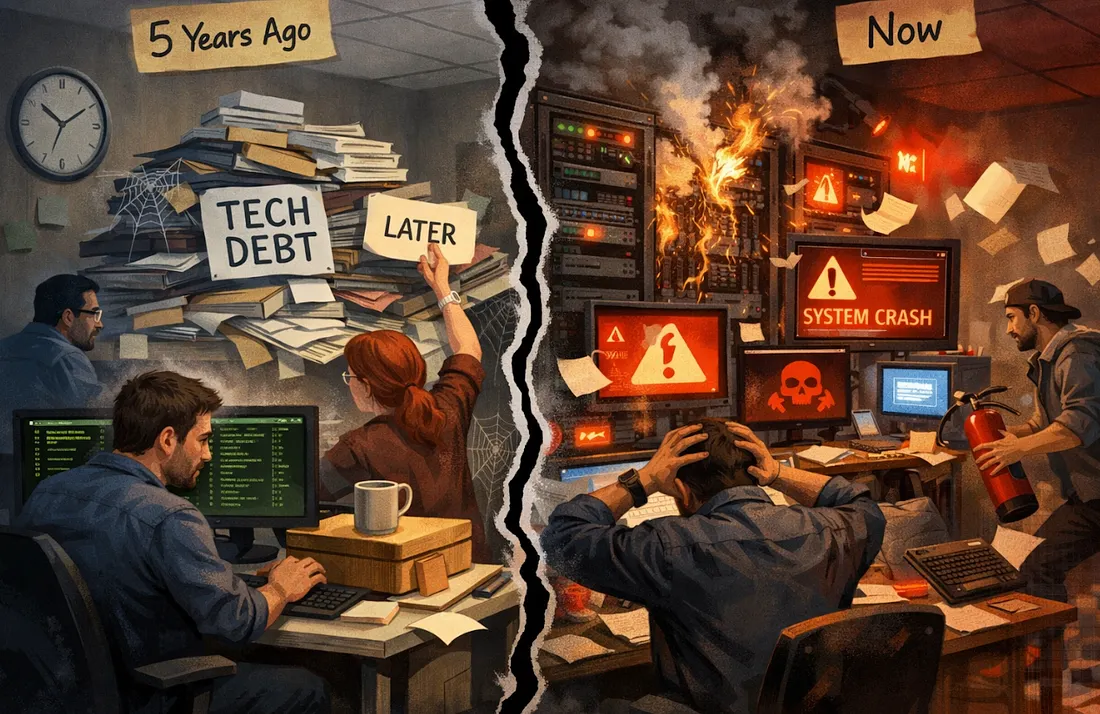
This Devrim Ozcay’s article critiques the pervasive hype surrounding AI in DevOps, specifically addressing the gap between marketing promises and production realities. The author argues that while "autonomous remediation" and "predictive incident detection" are often touted as revolutionary, they frequently fail in complex, high-stakes environments. These tools often rely on simple logic or pattern matching, and general-purpose models like ChatGPT can be dangerous during active incidents by providing confident but entirely incorrect root cause hypotheses. Instead of relying on AI for critical judgment, the article suggests leveraging it for "assembly" tasks that alleviate the mechanical burden on engineers. This includes filtering log noise, reconstructing incident timelines from disparate sources, and drafting initial postmortem reports. By automating these time-consuming, repetitive processes, teams can reduce the duration of post-incident documentation from hours to minutes. Ultimately, the article advocates for a balanced approach where AI handles the data organization while human engineers retain sole responsibility for interpretation and decision-making. This shift allows practitioners to focus on high-leverage problem-solving rather than tedious transcription, ensuring that incident response remains both efficient and reliable without succumbing to the unrealistic expectations often presented at tech conferences.


What Is Sampling in LLMs and How Does It Relate to Ethics?

This article explores the technical mechanisms behind how AI models choose their words and the subsequent moral responsibilities of developers. Sampling is the process by which an LLM selects the next token from a probability distribution. Techniques such as temperature, Top-K, and Top-P (nucleus sampling) are used to balance creativity with accuracy. Higher temperature settings introduce more randomness, which can foster innovation but also increases the likelihood of "hallucinations" or the generation of biased and harmful content. Conversely, lower settings make the model more deterministic and reliable for factual tasks but can lead to repetitive and uninspired responses. From an ethical standpoint, the choice of sampling strategy is never neutral. It requires a delicate balance between providing a diverse range of perspectives and ensuring the safety and truthfulness of the output. The author emphasizes that organizations must transparently define their sampling parameters to mitigate risks like misinformation. Ultimately, ethical AI development hinges on understanding these technical levers, as they directly influence how a model perceives and interacts with human values, necessitating a cautious approach to model tuning that prioritizes user safety and informational integrity.


AI Won't Fix Cybersecurity, But It Could Rebalance It

The article explores the nuanced role of artificial intelligence in cybersecurity, debunking the myth that it serves as a total panacea while highlighting its potential to rebalance the long-standing asymmetric advantage held by attackers. Traditionally, cybercriminals have enjoyed a lower barrier to entry and a higher success rate because defenders must be perfect across every surface, whereas attackers only need to succeed once. With the advent of generative AI, malicious actors are leveraging the technology to craft sophisticated phishing campaigns, automate vulnerability discovery, and democratize complex malware creation. Conversely, AI empowers defenders by automating routine monitoring, identifying anomalous patterns at machine speed, and bridging the significant talent gap within the industry. This technological shift creates a perpetual arms race where AI functions as a force multiplier for both sides. Rather than eliminating threats, AI recalibrates the battlefield, allowing security teams to process vast datasets and respond to incidents with unprecedented agility. However, the human element remains indispensable; strategic oversight and critical thinking are essential to guide AI tools. Ultimately, while AI will not "fix" the inherent vulnerabilities of digital infrastructure, it offers a vital mechanism to shift the strategic advantage back toward those safeguarding the digital frontier.


AI Is Not Here to Replace People, It’s Here to Replace Waiting

In this insightful interview, Aliaksei Tulia, the Chief Technical Officer at CoinsPaid, argues that the true purpose of artificial intelligence in the financial sector is not to displace human judgment but to eliminate the friction of waiting. Tulia emphasizes that AI acts as a powerful catalyst for efficiency and speed within the digital payment ecosystem by automating repetitive, high-volume tasks that traditionally create operational bottlenecks. By handling routine duties such as document summarization, log scanning, and boilerplate coding, AI allows for a significant compression of cycle times while maintaining necessary human oversight. The article highlights how CoinsPaid integrates these intelligent tools to enhance consistency and visibility, ensuring that the platform remains robust without sacrificing control. Furthermore, the discussion explores the essential division of labor where technology manages data-heavy routine processes, freeing professionals to focus on high-level strategic decisions, complex problem-solving, and improving the overall customer experience. This pragmatic approach represents a shift where AI handles the disciplined "first pass," allowing people to dedicate their expertise to tasks requiring creativity and accountability. Ultimately, Tulia envisions a future where AI-driven automation defines industry standards, proving that the technology’s primary value lies in its ability to streamline operations for a global audience.


Dynamic UI for dynamic AI: Inside the emerging A2UI model

The article "Dynamic UI for Dynamic AI: Inside the Emerging A2UI Model" explores the transformative shift from traditional graphical user interfaces to Agent-to-User Interfaces. As AI agents become increasingly autonomous, the standard chat-based "command line" is no longer sufficient for managing complex workflows. A2UI represents a fundamental paradigm shift where the interface is dynamically generated by the AI to match the specific context and requirements of a task. Unlike static SaaS platforms with fixed menus, A2UI allows agents to create ephemeral, highly functional components—such as interactive charts, data tables, or specialized dashboards—on demand. This movement is powered by advancements like Vercel’s AI SDK and features like Anthropic’s Artifacts, which allow for real-time rendering of code and UI. The goal is to bridge the gap between human intent and machine execution by providing a rich, interactive medium that transcends simple text responses. By embracing generative UI, developers are enabling a more fluid collaboration where the software adapts to the user, rather than the user being forced to navigate rigid software structures. This evolution signals the end of "one-size-fits-all" application design, ushering in a future where every interaction produces a bespoke, temporary interface tailored specifically to the immediate problem.


AI Use at Work Is Causing “Brain Fry,” Researchers Find, Especially Among High Performers

The Futurism article "AI Use at Work Is Causing 'Brain Fry'" highlights a concerning trend where artificial intelligence, despite its promises of productivity, is significantly damaging employee mental health. A study of 1,500 workers conducted by Boston Consulting Group and the University of California, Riverside, introduced the term "AI brain fry" to describe the cognitive exhaustion resulting from excessive interaction with AI tools. Approximately 14 percent of employees—predominantly high performers in fields like software development and finance—reported symptoms such as mental "static," brain fog, and headaches. This fatigue is largely driven by information overload, rapid task-switching, and the constant, draining necessity of overseeing multiple AI agents. Rather than lightening the load, these tools often force users to work harder to manage the technology than to solve actual problems. The consequences are severe for both individuals and organizations; the research found a 33 percent increase in decision fatigue and a higher likelihood of employees quitting their jobs. Ultimately, the piece argues that while AI is marketed as a way to supercharge efficiency, it often acts as a "burnout machine" that compromises cognitive capacity and leads to costly errors or paralysis in professional environments.


Submarine cables move to the center of critical infrastructure security debate

The article examines the escalating strategic significance of submarine cables, which facilitate the vast majority of international data traffic but are increasingly vulnerable to geopolitical tensions and physical threats. A new sector report highlights how high-profile incidents, such as the 2024 Baltic Sea cable severing, have transitioned these underwater assets from ignored infrastructure into critical security priorities. Beyond intentional sabotage or "grey-zone" activities, the industry faces significant resilience challenges, including an annual average of two hundred cable faults primarily caused by commercial fishing and anchoring. This vulnerability is exacerbated by a critical shortage of specialized repair vessels and experienced personnel, complicating rapid incident response. Furthermore, the shift in ownership dynamics, where cloud hyperscalers are now primary investors, creates commercial friction with traditional operators while reshaping infrastructure architecture. Technological advancements, particularly AI-driven distributed acoustic sensing, are transforming cables into active monitoring tools, yet technical solutions alone remain insufficient. The report concludes that long-term security depends on improved international coordination and unified governance frameworks between governments and private entities. Ultimately, protecting these vital conduits requires a holistic approach that integrates technical controls, organizational readiness, and cross-border cooperation to match the scale of modern digital dependency and evolving global risks.


How DevOps Broke Accessibility

In this article on DevOps Digest, the author explores the unintended consequences that the rapid adoption of DevOps practices has had on web accessibility. While DevOps has revolutionized software development by emphasizing speed, continuous integration, and frequent deployments, these very priorities have often sidelined the inclusive design and rigorous accessibility testing required for users with disabilities. The shift-left mentality, which aims to catch bugs early, frequently fails to incorporate accessibility checks into the automated pipeline, leading to a "move fast and break things" culture that disproportionately affects those relying on assistive technologies. Furthermore, the reliance on automated testing tools—which can only detect about 30% of accessibility issues—creates a false sense of security among development teams. This technical debt accumulates quickly in fast-paced environments, making retroactive fixes costly and complex. The article argues that for DevOps to truly succeed, accessibility must be integrated as a core pillar of the development lifecycle, rather than being treated as an afterthought. Ultimately, the piece calls for a cultural shift where developers and stakeholders prioritize human-centric design alongside technical efficiency to ensure the digital world remains open and equitable for every user regardless of their physical or cognitive abilities.

Daily Tech Digest - November 10, 2025


Quote for the day:

"You can only lead others where you yourself are willing to go." -- Lachlan McLean


CISOs must prove the business value of cyber — the right metrics can help

With a foundational ERM program, and by aligning metrics to business priorities, cybersecurity leaders can ultimately prove the value of the cyber security function. Useful metrics examples in business terms include maturity, compliance, risk, budget, business value streams, and status of SecDevOps (shifting left) adoption, Oberlaender explains. But how does a cybersecurity expert learn what’s important to the business? ... “Boards are faced with complex matters such as impact on interest rates, tariffs, stock price volatility, supply chain issues, profitability, and acquisitions. Then the CISO enters the boardroom with their MITRE Attack framework, patching metrics and NIST maturity models,” Hetner continues. “These metrics are not aligned to what the board is conditioned to reviewing.” ... Rather than just asking “are we secure?” business leaders are asking what metrics their cyber components are using to measure and quantify risk and how they’re spending against those risks. For CISO’s, this goes beyond measuring against frameworks such as NIST, listing a litany of security vulnerabilities they patched, or their mean time to response. “Instead, we can say, ‘This is our potential financial exposure’,” Nolen explains. “So now you’re talking dollars and cents rather than CVEs and technical scores that board members don’t care about. What they care about is the bottom line.” 


Feeding the AI beast, with some beauty

AI-driven growth is placing an unprecedented load on data centres worldwide, and India is poised to shoulder a large share of the incremental electricity, real estate, and cooling burden created by rising AI demand. The IEA has estimated a trajectory that AI is accelerating at a rapid pace. Under realistic scenarios, AI workloads alone could require on the order of 1–1.5 GW of continuous IT power—equivalent to 8.8–13 TWh annually—in India by 2030. This translates into a significant new draw on grids, water resources, and capex for cooling and power infrastructure. Recent analyses indicate that while AI’s share of data centre power today stands in the single-digit to low-teens range, it could climb to 20–40 per cent or more by 2030 in some scenarios, fundamentally reshaping the power-consumption profile of digital infrastructure. ... As data centres grow in scale, sustainability is becoming a competitive differentiator—and that’s where Life Cycle Assessments (LCAs) and Environmental Product Declarations (EPDs) play a critical role. An LCA is a systematic method for evaluating the total environmental impact of a product, process, or system across its entire life cycle. For a data centre, this spans both upstream (embodied) impacts—such as construction materials, IT equipment manufacturing, and cooling and power infrastructure including gensets—as well as operational impacts like electricity consumption. 


8 IT leadership tips for first-time CIOs

Generally speaking, the first three years can make or break your IT leadership career, given that digital leaders globally tend to stay at one company for just over that length of time on average, according to the 2025 Nash Squared Digital Leadership Report. CIOs looking to sidestep that statistic are taking intentional measures, ensuring they get early wins, and perhaps most importantly, not coming into their role with preconceived ideas about how to lead or assuming what worked in a past job can be replicated. ... The CTO of staffing and recruiting firm Kelly says that “building momentum, finding ways to get quick wins from the low hanging fruit” will help build credibility with the leadership team. Then, you can parlay those into bigger wins and avoid spinning out, he says. ... While making connections and establishing relationships is critical, Lewis stresses the importance of not rushing to change things right away when you’re new to the job. “Let it set for a while,” he says. ... This is especially true of midsize and larger midsize organizations “where the clarity of strategy and clarity of what’s important … isn’t always well documented and well thought out,” Rosenbaum says. Knowing the maturity of your organization is really important, he says. “Some CIO roles are just about keeping the lights on, making sure security is good at a lower level. As the company starts to mature, they start thinking about technology as an enabler, and to that end, they start having maybe a more unified technology strategy.”


Drata’s VP of Data on Rethinking Data Ops for the AI Era: Crawl, Walk, Run — Then Sprint

While GenAI may be the shiny new tool, Solomon makes it clear that foundational work around ingestion and transformation is far from trivial. “We live and die by making sure that all the data has been ingested in a fresh manner into the data warehouse,” he explains. He describes the “bread and butter” of the team: synchronizing thousands of MySQL databases from a single-tenant production architecture into the warehouse — closer to real-time. “We do a lot of activities with regard to the CDC pipeline, which is just like driving terabytes of data per day.” But the data team isn’t working in isolation. GTM executives return from conferences excited about GenAI. ... Rather than building fully-fledged pipelines from day one, the team prioritizes quick feedback loops — using sandboxes, cloud notebooks, or Streamlit apps to test hypotheses. Once business impact is validated, the team gradually introduces cost tracking, governance, and scalability. If a stakeholder’s hypothesis lacks merit, there is no point in building complex data pipelines, governance frameworks, or cost-tracking systems. This shift in mindset, he explains, is something many data teams are grappling with today. Traditionally, data teams were trained to focus on building scalable, robust pipelines from day one — often requiring significant upfront effort. But this often led to cost inefficiencies and delays.


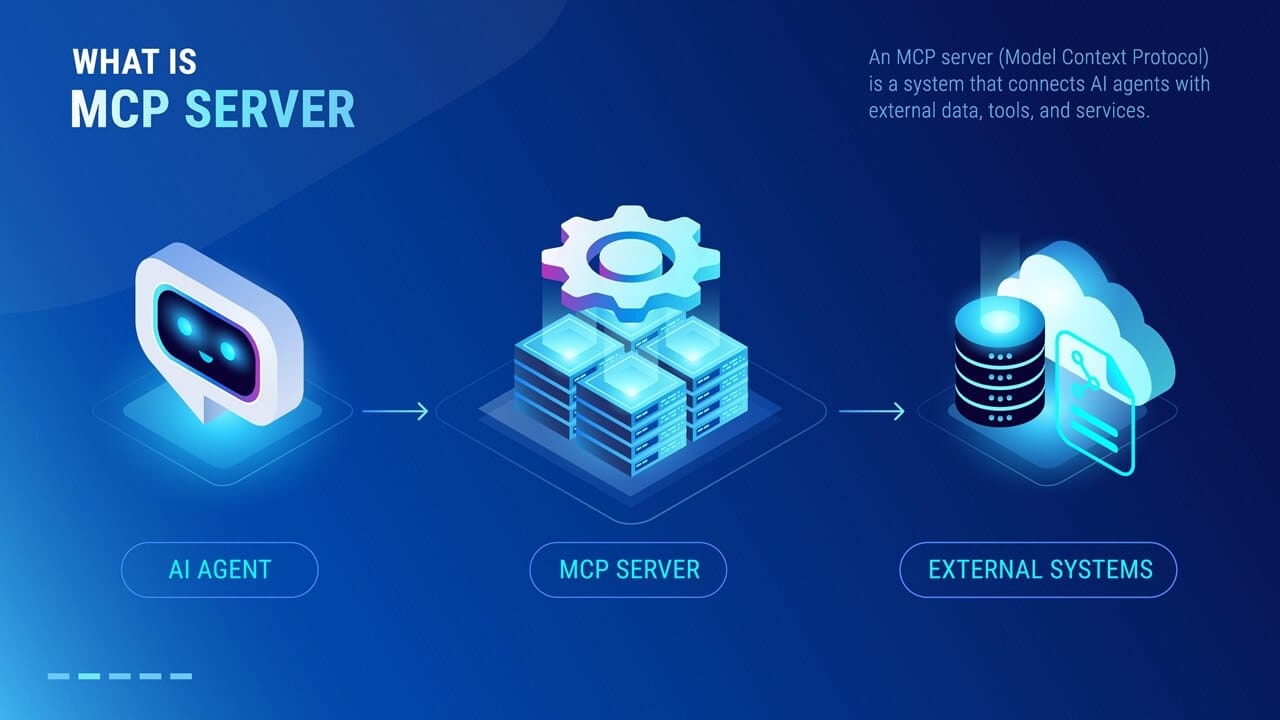
Model Context Protocol Servers: Build or Buy?

"The tension lies in whether you have the sustained capacity to keep pace with protocols that are still being debated by their maintainers," said Rishi Bhargava, co-founder at Descope, a customer and agentic IAM platform. "Are you prepared to build the plane while it's flying, or would you rather upgrade a finished plane mid-flight?" ... "From a business perspective, the build versus buy decision for MCP servers boils down to strategic priorities and risk appetite," Jain said. Building MCP servers in-house gives you "complete control," but buying provides "speed, reliability, and lower operational burden," he said. But others think there's no reason to rush your decision. ... "Most companies shouldn't be doing either yet," he said, explaining that companies should first focus on the specific business goals they are trying to achieve, rather than on which existing applications they think should have AI features added. "Build when you have an actual AI application that requires custom data integration and you understand exactly what intelligence you're trying to deploy. If you're simply connecting ChatGPT to your CRM, you don't need MCP at all," Prywata said. ... "It is usually best to build [MCP servers] in-house when compliance, performance tuning, or data sovereignty are key priorities for the business," said Marcus McGehee, founder at The AI Consulting Lab. 


Every CIO Fails; The Smart Ones Admit It

There's a "hero CIO" myth deeply rooted in our mindset - the idea that you're the person who makes technology work, no matter what. Admitting failure feels like admitting incompetence, especially in boardrooms where few understand the complexity of IT. Organizational incentives also discourage openness. Many companies punish failure more than they reward learning. I've seen talented CIOs denied promotion because of a single delayed project, even when their broader portfolio delivered value. When institutional memory focuses on what went wrong rather than what was learned, people stop taking risks. The second factor is C-suite politics. In some environments, transparency becomes ammunition. Another team might use a project delay to justify requests for budget increases or to exert influence. And finally, CIOs worry about vendor perception, admitting setbacks could impact pricing, support or their reputation with partners. ... Build your transparency muscle in peacetime, not when something is on fire. By the time a crisis hits, it's too late to establish credibility. Make transparency habitual. Share work in progress, not just results. Celebrate learning, not perfection. Run "pre-mortems" where you assume a project failed and work backwards to identify what could go wrong. And when you make a mistake, own it publicly. The honesty earns you more trust than a polished explanation ever will.


6 proven lessons from the AI projects that broke before they scaled

In analyzing dozens of AI PoCs that sailed on through to full production use — or didn’t — six common pitfalls emerge. Interestingly, it’s not usually the quality of the technology but misaligned goals, poor planning or unrealistic expectations that caused failure. ... Define specific, measurable objectives upfront. Use SMART criteria. For example, aim for “reduce equipment downtime by 15% within six months” rather than a vague “make things better.” Document these goals and align stakeholders early to avoid scope creep. ... Invest in data quality over volume. Use tools like Pandas for preprocessing and Great Expectations for data validation to catch issues early. Conduct exploratory data analysis (EDA) with visualizations (like Seaborn) to spot outliers or inconsistencies. Clean data is worth more than terabytes of garbage. ... Start simple. Use straightforward algorithms like random forest or XGBoost from scikit-learn to establish a baseline. Only scale to complex models — TensorFlow-based long-short-term-memory (LSTM) networks — if the problem demands it. Prioritize explainability with tools like SHAP  to build trust with stakeholders. ... Plan for production from day one. Package models in Docker containers and deploy with Kubernetes for scalability. Use TensorFlow Serving or FastAPI for efficient inference. Monitor performance with Prometheus and Grafana to catch bottlenecks early. Test under realistic conditions to ensure reliability.


Andela CEO talks about the need for ‘borderless talent’ amid work visa limitation

Globally, three of four IT employers say they lack the tech talent they need, and the outlook will only get more dire as AI creates a demand for high-skilled specialists like data engineers, senior architects, and agentic orchestrators. Visa programs aren’t designed by the laws of supply and demand. They’re defined by policy makers and are updated infrequently. So, they’ll never truly be in sync with the needs of the labor market. ... Brilliant people exist around the world. It’s why they want to sponsor people for H-1B visas. But hiring outside of those traditional pathways — to work with a brilliant machine learning engineer from Cairo or São Paulo, for example — is…a long, painful process that takes months and is inaccessible to them. They don’t know that they can find the right partner, someone who has sorted this all out and vetted talent and developed compliance with global labor and tax laws, etc. Once they understand that those partners exist, the global workforce becomes instantly accessible to them. ... Technical hiring still feels like a gamble, even though software development is, relatively speaking, packed with deterministic skills. There are two main problems. One problem is the data problem. There’s not enough reliable data about what a job actually requires and what a worker is capable of doing. Today, we rely on resumes and job descriptions. 


The Overwhelm Epidemic: Why Resilience Begins with You

People have so much to do and not enough time. There’s nothing new with the phenomena of not enough time to do what needs to be done, but today it’s different. Today, it’s unique because this feeling of overwhelm has been continuously expanding since early 2020 as we experienced the pandemic. We’re being overwhelmed to an extent most people are not experienced to deal with.
For you in operational resilience, I believe self-care is more critical now than it has ever been. You are only able to help your clients and their systems be resilient to the extent you are taking care of yourself and are resilient. ... Most say something like, “I’m going to double down and focus on this. I’m going to work harder and spend as much time as needed, even if it means cutting into my already precious personal time.” They think working harder is the best approach, but here’s the thing—they are wrong.
When you are operating at high-stress levels, introducing more stress by doubling down and working harder, actually reduces your output. ... Bottom line, a thriving, elite mindset is the foundation of personal wellbeing and professional success. 
Turning to positive psychology, underlying Martin Seligman‘s model for human flourishing, are 24 positive character strengths. While more research is still needed, the research to date has concluded that of the 24, the best predictor of living a flourishing, thriving life is gratitude.


Ask a Data Ethicist: What Are the Impacts of AI on Creativity, Schools, and Industry?

Generally speaking, if the goal is to reduce the cost of labour by replacing it with equipment (capital – or AI), then assuming the AI tool replaces the labour in a way that is acceptable to drive the desired outputs the business could possibly drive more profit. So that might be construed as positive for the business. However, businesses exist in the bigger context of society. To take an extreme example, if a large section of the population loses their jobs, they can’t buy your products, and that could hurt your organization. It also puts more burdens on society for a social safety net, perhaps resulting in tax increases or some other impacts to business to pay for those services. ... I think it’s important to disclose the use of AI in a process. For video, audio or images – a symbol or some text to say “AI generated” can accomplish that goal. There is also watermarking that content which is a more technical method. For text, it’s trickier. I don’t think everyone needs to be told about every instance of a spellchecker (to use an extreme example) but if the whole thing is generated, then it is important to say that. This is where a policy can be helpful. For example, one might apply the 80/20 rule – if less than 20% is generated, perhaps it’s not necessary to disclose it. That said, there better not be any inaccuracies or errors in the content if you choose NOT to disclose it. See this case in Australia. This is an example of why I think disclosing, overall, is a good idea.

Daily Tech Digest - July 15, 2025


Quote for the day:

“Rarely have I seen a situation where doing less than the other guy is a good strategy.” -- Jimmy Spithill


CyberArk: Rise in Machine Identities Poses New Risks

The CyberArk report outlines the substantial business consequences of failing to protect machine identities, leaving organizations vulnerable to costly outages and breaches. Seventy-two percent of organizations experienced at least one certificate-related outage over the past year - a sharp increase compared to prior years. Additionally, 50% reported security incidents or breaches stemming from compromised machine identities. Companies that have experienced non-human identity security breaches include xAI, Uber, Schneider Electric, Cloudflare and BeyondTrust, among others. "Machine identities of all kinds will continue to skyrocket over the next year, bringing not only greater complexity but also increased risks," said Kurt Sand, general manager of machine identity security at CyberArk. "Cybercriminals are increasingly targeting machine identities - from API keys to code-signing certificates - to exploit vulnerabilities, compromise systems and disrupt critical infrastructure, leaving even the most advanced businesses dangerously exposed." ... Fifty percent of security leaders reported security incidents or breaches linked to compromised machine identities in the previous year. These incidents led to delays in application launches for 51% companies, customer-impacting outages for 44% and unauthorized access to sensitive systems for 43%.


What Can Businesses Do About Ethical Dilemmas Posed by AI?

Digital discrimination is a product of bias incorporated into the AI algorithms and deployed at various levels of development and deployment. The biases mainly result from the data used to train the large language models (LLMs). If the data reflects previous iniquities or underrepresents certain social groups, the algorithm has the potential to learn and perpetuate those iniquities. Biases may occasionally culminate in contextual abuse when an algorithm is used beyond the environment or audience for which it was intended or trained. Such a mismatch may result in poor predictions, misclassifications, or unfair treatment of particular groups. Lack of monitoring and transparency merely adds to the problem. In the absence of oversight, biased results are not discovered. ... Human-in-the-loop systems allow intervention in real time whenever AI acts unjustly or unexpectedly, thus minimizing potential harm and reinforcing trust. Human judgment makes choices more inclusive and socially sensitive by including cultural, emotional, or situational elements, which AI lacks. When humans remain in the loop of decision-making, accountability is shared and traceable. This removes ethical blind spots and holds users accountable for consequences.


Beyond the hype: AI disruption in India’s legal practice

The competitive dynamics are stark. When AI can complete a ten-hour task in two hours, firms face a pricing paradox: how to maintain profitability while passing efficiency gains to the clients? Traditional hourly billing models become unsustainable when the underlying time economics change dramatically. ... Effective AI integration hinges on a strong technological foundation, encompassing secure data architecture, advanced cybersecurity measures and a seamless and hassle-free interoperability between systems and already existing platforms. SAM’s centralised Harvey AI approach and CAM’s multi-tool strategy both imply significant investment in these backend capabilities. ... Merely automating existing workflows fails to leverage AI’s transformative potential. To unlock AI’s full transformative value, firms must rethink their legal processes – streamlining tasks, reallocating human resources to higher order functions and embedding AI at the core of decision-making processes and document production cycles. ... AI enables alternative service models that go beyond the billable hour. Firms that rethink on how they can price say, by offering subscription-based or outcome-driven services, and position themselves as strategic partners rather than task executors, will be best positioned to capture long-term client value in an AI-first legal economy.


‘Chronodebt’: The lose/lose situation few CIOs can escape

One needn’t be an expert in the field of technical architecture to know that basing a capability as essential as air traffic control on such obviously obsolete technology is a bad idea. Someone should lose their job over this. And yet, nobody has lost their job over this, nor should they have. That’s because the root cause of the FAA’s woes — poor chronodebt management, in case you haven’t been paying attention — is a discipline that’s rarely tracked by reliable metrics and almost-as-rarely budgeted for. Metrics first: While the discipline of IT project estimation is far from reliable, it’s good enough to be useful in estimating chronodebt’s remediation costs — in the FAA’s case what it would have to spend to fix or replace its integrations and the integration platforms on which those integrations rely. That’s good enough, with no need for precision. Those running the FAA for all these years could, that is, estimate the cost of replacing the programs used to export and update its repositories, and replacing the 3 ½” diskettes and paper strips on which they rely. But, telling you what you already know, good business decisions are based not just on estimated costs, but on benefits netted against those costs. The problem with chronodebt is that there are no clear and obvious ways to quantify the benefits to be had by reducing it.


Can System Initiative fix devops?

System Initiative turns traditional devops on its head. It translates what would normally be infrastructure configuration code into data, creating digital twins that model the infrastructure. Actions like restarting servers or running complex deployments are expressed as functions, then chained together in a dynamic, graphical UI. A living diagram of your infrastructure refreshes with your changes. Digital twins allow the system to automatically infer workflows and changes of state. “We’re modeling the world as it is,” says Jacob. For example, when you connect a Docker container to a new Amazon Elastic Container Service instance, System Initiative recognizes the relationship and updates the model accordingly. Developers can turn workflows — like deploying a container on AWS — into reusable models with just a few clicks, improving speed. The GUI-driven platform auto-generates API calls to cloud infrastructure under the hood. ... An abstraction like System Initiative could embrace this flexibility while bringing uniformity to how infrastructure is modeled and operated across clouds. The multicloud implications are especially intriguing, given the rise in adoption of multiple clouds and the scarcity of strong cross-cloud management tools. A visual model of the environment makes it easier for devops teams to collaborate based on a shared understanding, says Jacob — removing bottlenecks, speeding feedback loops, and accelerating time to value.


An exodus evolves: The new digital infrastructure market

Regulatory pressures have crystallised around concerns over reliance on a small number of US-based cloud providers. With some hyperscalers openly admitting that they cannot guarantee data stays within a jurisdiction during transfer, other types of infrastructure make it easier to maintain compliance with UK and EU regulations. This is a clear strategy to avoid future financial and reputational damage. ... 2025 is a pivotal year for digital infrastructure. Public cloud will remain an essential part of the IT landscape. But the future of data strategy lies in making informed, strategic decisions, leveraging the right mix of infrastructure solutions for specific workloads and business needs. As part of our research, we assessed the shape of this hybrid market. ... With one eye to the future, UK-based cloud providers must be positioned as a strategic advantage, offering benefits such as data sovereignty, regulatory compliance, and reduced latency. Businesses will need to situate themselves ever more precisely on the spectrum of digital infrastructure. Their location will reflect how they embrace a hybrid model that balances public cloud, private cloud, colocation and on-premise options. This approach will not only optimise performance and costs but also provide long-term resilience in an evolving digital economy.


How Trump's Cyber Cuts Dismantle Federal Information Sharing

"The budget cuts, personnel reductions and other policy changes have decreased the volume and frequency of CISA's information sharing activities in both formal and informal channels," Daniel told ISMG. While sector-specific ISACs still share information, threat sharing efforts tied to federal funding - such as the Multi-State ISAC, which supports state and local governments - "have been negatively affected," he said . One former CISA staffer who recently accepted the administration's deferred resignation offer told ISMG the agency's information-sharing efforts "were among the first to take a hit" from the administration's cuts, with many feeling pressured into silence. ... Analysts have also warned that cuts to cyber staff across federal agencies and risks to initiatives including the National Vulnerability Database and Common Vulnerabilities and Exposures program could harm cybersecurity far beyond U.S. borders. The CVE program is dealing with backlogs and a recent threat to shut down funding over a federal contracting issue. Failure of the CVE Program "would have wide impacts on vulnerability management efficiency and effectiveness globally," said John Banghart, senior director for cybersecurity services at Venable and a key architect of the Obama administration's cybersecurity policy as a former director for federal cybersecurity for the National Security Council.


Securing vehicles as they become platforms for code and data

Recently security researchers have demonstrated real-world attacks against connected cars, such as wireless brake manipulation on heavy trucks by spoofing J-bus diagnostic packets. Another very recent example is successful attacks against autonomous car LIDAR systems. While the distribution of EV and advanced cars becomes more pervasive across our society, we expect these types of attacks and methods to continue to grow in complexity. Which makes a continuous, real-time approach to securing the entire ecosystem (from charger, to car, to driver) even more so important. ... Over-the-air (OTA) update hijacking is very real and often enabled by poor security design, such as lack of encryption, improper authentication between the car and backend, and lack of integrity or checksum validation. Attack vectors that the traditional computer industry has dealt with for years are now becoming a harsh reality in the automotive sector. Luckily, many of the same approaches used to mitigate these risks in IT can also apply here ... When we look at just the automobile, we have a variety of connected systems which typically all come from different manufacturers (Android Automotive, or QNX as examples) which increases the potential for supply chain abuse. We also have devices which the driver introduces which interacts with the car’s APIs creating new entry points for attackers.


Strategizing with AI: How leaders can upgrade strategic planning with multi-agent platforms

Building resiliency and optionality into a strategic plan challenges humans’ cognitive (and financial) bandwidth. The seemingly endless array of future scenarios, coupled with our own human biases, conspires to anchor our understanding of the future in what we’ve seen in the past. Generative AI (GenAI) can help overcome this common organizational tendency for entrenched thinking, and mitigate the challenges of being human, while exploiting LLMs’ creativity as well as their ability to mirror human behavioral patterns. ... In fact, our argument reflects our own experience using a multi-agent LLM simulation platform built by the BCG Henderson Institute. We’ve used this platform to mirror actual war games and scenario planning sessions we’ve led with clients in the past. As we’ve seen firsthand, what makes an LLM multi-agent simulation so powerful is the possibility of exploiting two unique features of GenAI—its anthropomorphism, or ability to mimic human behavior, and its stochasticity, or creativity. LLMs can role-play in remarkably human-like fashion: Research by Stanford and Google published earlier this year suggests that LLMs are able to simulate individual personalities closely enough to respond to certain types of surveys with 85% accuracy as the individuals themselves.


The Network Challenges of IoT Integration

IoT interoperability and compatible security protocols are a particular challenge. Although NIST and ISO, among other organizations, have issued IoT standards, smaller IoT manufacturers don't always have the resources to follow their guidance. This becomes a network problem because companies have to retool these IoT devices before they can be used on their enterprise networks. Moreover, because many IoT gadgets are delivered with default security settings that are easy to undo, each device has to be hand-configured to ensure it meets company security standards. To avoid potential interoperability pitfalls, network staff should evaluate prospective technology before anything is purchased. ... First, to achieve high QoS, every data pipeline on the network must be analyzed -- as well as every single system, application and network device. Once assessed, each component must be hand-calibrated to run at the highest performance levels possible. This is a detailed and specialized job. Most network staff don't have trained QoS technicians on board, so they must go externally for help. Second, which areas of the business get maximum QoS, and which don't? A medical clinic, for example, requires high QoS to support a telehealth application where doctors and patients communicate. 

Daily Tech Digest - July 02, 2025


Quote for the day:

"Success is not the absence of failure; it's the persistence through failure." -- Aisha Tyle


How cybersecurity leaders can defend against the spur of AI-driven NHI

Many companies don’t have lifecycle management for all their machine identities and security teams may be reluctant to shut down old accounts because doing so might break critical business processes. ... Access-management systems that provide one-time-use credentials to be used exactly when they are needed are cumbersome to set up. And some systems come with default logins like “admin” that are never changed. ... AI agents are the next step in the evolution of generative AI. Unlike chatbots, which only work with company data when provided by a user or an augmented prompt, agents are typically more autonomous, and can go out and find needed information on their own. This means that they need access to enterprise systems, at a level that would allow them to carry out all their assigned tasks. “The thing I’m worried about first is misconfiguration,” says Yageo’s Taylor. If an AI agent’s permissions are set incorrectly “it opens up the door to a lot of bad things to happen.” Because of their ability to plan, reason, act, and learn AI agents can exhibit unpredictable and emergent behaviors. An AI agent that’s been instructed to accomplish a particular goal might find a way to do it in an unanticipated way, and with unanticipated consequences. This risk is magnified even further, with agentic AI systems that use multiple AI agents working together to complete bigger tasks, or even automate entire business processes. 


The silent backbone of 5G & beyond: How network APIs are powering the future of connectivity

Network APIs are fueling a transformation by making telecom networks programmable and monetisable platforms that accelerate innovation, improve customer experiences, and open new revenue streams.  ... Contextual intelligence is what makes these new-generation APIs so attractive. Your needs change significantly depending on whether you’re playing a cloud game, streaming a match, or participating in a remote meeting. Programmable networks can now detect these needs and adjust dynamically. Take the example of a user streaming a football match. With network APIs, a telecom operator can offer temporary bandwidth boosts just for the game’s duration. Once it ends, the network automatically reverts to the user’s standard plan—no friction, no intervention. ... Programmable networks are expected to have the greatest impact in Industry 4.0, which goes beyond consumer applications. ... 5G combined IOT and with network APIs enables industrial systems to become truly connected and intelligent. Remote monitoring of manufacturing equipment allows for real-time maintenance schedule adjustments based on machine behavior. Over a programmable, secure network, an API-triggered alert can coordinate a remote diagnostic session and even start remedial actions if a fault is found.


Quantum Computers Just Reached the Holy Grail – No Assumptions, No Limits

A breakthrough led by Daniel Lidar, a professor of engineering at USC and an expert in quantum error correction, has pushed quantum computing past a key milestone. Working with researchers from USC and Johns Hopkins, Lidar’s team demonstrated a powerful exponential speedup using two of IBM’s 127-qubit Eagle quantum processors — all operated remotely through the cloud. Their results were published in the prestigious journal Physical Review X. “There have previously been demonstrations of more modest types of speedups like a polynomial speedup, says Lidar, who is also the cofounder of Quantum Elements, Inc. “But an exponential speedup is the most dramatic type of speed up that we expect to see from quantum computers.” ... What makes a speedup “unconditional,” Lidar explains, is that it doesn’t rely on any unproven assumptions. Prior speedup claims required the assumption that there is no better classical algorithm against which to benchmark the quantum algorithm. Here, the team led by Lidar used an algorithm they modified for the quantum computer to solve a variation of “Simon’s problem,” an early example of quantum algorithms that can, in theory, solve a task exponentially faster than any classical counterpart, unconditionally.


4 things that make an AI strategy work in the short and long term

Most AI gains came from embedding tools like Microsoft Copilot, GitHub Copilot, and OpenAI APIs into existing workflows. Aviad Almagor, VP of technology innovation at tech company Trimble, also notes that more than 90% of Trimble engineers use Github Copilot. The ROI, he says, is evident in shorter development cycles, and reduced friction in HR and customer service. Moreover, Trimble has introduced AI into their transportation management system, where AI agents optimize freight procurement by dynamically matching shippers and carriers. ... While analysts often lament the difficulty of showing short-term ROI for AI projects, these four organizations disagree — at least in part. Their secret: flexible thinking and diverse metrics. They view ROI not only as dollars saved or earned, but also as time saved, satisfaction increased, and strategic flexibility gained. London says that Upwave listens for customer signals like positive feedback, contract renewals, and increased engagement with AI-generated content. Given the low cost of implementing prebuilt AI models, even modest wins yield high returns. For example, if a customer cites an AI-generated feature as a reason to renew or expand their contract, that’s taken as a strong ROI indicator. Trimble uses lifecycle metrics in engineering and operations. For instance, one customer used Trimble AI tools to reduce the time it took to perform a tunnel safety analysis from 30 minutes to just three.


How IT Leaders Can Rise to a CIO or Other C-level Position

For any IT professional who aspires to become a CIO, the key is to start thinking like a business leader, not just a technologist, says Antony Marceles, a technology consultant and founder of software staffing firm Pumex. "This means taking every opportunity to understand the why behind the technology, how it impacts revenue, operations, and customer experience," he explained in an email. The most successful tech leaders aren't necessarily great technical experts, but they possess the ability to translate tech speak into business strategy, Marceles says, adding that "Volunteering for cross-functional projects and asking to sit in on executive discussions can give you that perspective." ... CIOs rarely have solo success stories; they're built up by the teams around them, Marceles says. "Colleagues can support a future CIO by giving honest feedback, nominating them for opportunities, and looping them into strategic conversations." Networking also plays a pivotal role in career advancement, not just for exposure, but for learning how other organizations approach IT leadership, he adds. Don't underestimate the power of having an executive sponsor, someone who can speak to your capabilities when you’re not there to speak for yourself, Eidem says. "The combination of delivering value and having someone champion that value -- that's what creates real upward momentum."


SLMs vs. LLMs: Efficiency and adaptability take centre stage

SLMs are becoming central to Agentic AI systems due to their inherent efficiency and adaptability. Agentic AI systems typically involve multiple autonomous agents that collaborate on complex, multi-step tasks and interact with environments. Fine-tuning methods like Reinforcement Learning (RL) effectively imbue SLMs with task-specific knowledge and external tool-use capabilities, which are crucial for agentic operations. This enables SLMs to be efficiently deployed for real-time interactions and adaptive workflow automation, overcoming the prohibitive costs and latency often associated with larger models in agentic contexts. ... Operating entirely on-premises ensures that decisions are made instantly at the data source, eliminating network delays and safeguarding sensitive information. This enables timely interpretation of equipment alerts, detection of inventory issues, and real-time workflow adjustments, supporting faster and more secure enterprise operations. SLMs also enable real-time reasoning and decision-making through advanced fine-tuning, especially Reinforcement Learning. RL allows SLMs to learn from verifiable rewards, teaching them to reason through complex problems, choose optimal paths, and effectively use external tools. 


Quantum’s quandary: racing toward reality or stuck in hyperbole?

One important reason is for researchers to demonstrate their advances and show that they are adding value. Quantum computing research requires significant expenditure, and the return on investment will be substantial if a quantum computer can solve problems previously deemed unsolvable. However, this return is not assured, nor is the timeframe for when a useful quantum computer might be achievable. To continue to receive funding and backing for what ultimately is a gamble, researchers need to show progress — to their bosses, investors, and stakeholders. ... As soon as such announcements are made, scientists and researchers scrutinize them for weaknesses and hyperbole. The benchmarks used for these tests are subject to immense debate, with many critics arguing that the computations are not practical problems or that success in one problem does not imply broader applicability. In Microsoft’s case, a lack of peer-reviewed data means there is uncertainty about whether the Majorana particle even exists beyond theory. The scientific method encourages debate and repetition, with the aim of reaching a consensus on what is true. However, in quantum computing, marketing hype and the need to demonstrate advancement take priority over the verification of claims, making it difficult to place these announcements in the context of the bigger picture.


Ethical AI for Product Owners and Product Managers

As the product and customer information steward, the PO/PM must lead the process of protecting sensitive data. The Product Backlog often contains confidential customer feedback, competitive analysis, and strategic plans that cannot be exposed. This guardrail requires establishing clear protocols for what data can be shared with AI tools. A practical first step is to lead the team in a data classification exercise, categorizing information as Public, Internal, or Restricted. Any data classified for internal use, such as direct customer quotes, must be anonymized before being used in an AI prompt. ... AI is proficient at generating text but possesses no real-world experience, empathy, or strategic insight. This guardrail involves proactively defining the unique, high-value work that AI can assist but never replace. Product leaders should clearly delineate between AI-optimal tasks, creating first drafts of technical user stories, summarizing feedback themes, or checking for consistency across Product Backlog items and PO/PM-essential areas. These human-centric responsibilities include building genuine empathy through stakeholder interviews, making difficult strategic prioritization trade-offs, negotiating scope, resolving conflicting stakeholder needs, and communicating the product vision. By modeling this partnership and using AI as an assistant to prepare for strategic work, the PO/PM reinforces that their core value lies in strategy, relationships, and empathy.


Sharded vs. Distributed: The Math Behind Resilience and High Availability

In probability theory, independent events are events whose outcomes do not affect each other. For example, when throwing four dice, the number displayed on each dice is independent of the other three dice. Similarly, the availability of each server in a six-node application-sharded cluster is independent of the others. This means that each server has an individual probability of being available or unavailable, and the failure of one server is not affected by the failure or otherwise of other servers in the cluster. In reality, there may be shared resources or shared infrastructure that links the availability of one server to another. In mathematical terms, this means that the events are dependent. However, we consider the probability of these types of failures to be low, and therefore, we do not take them into account in this analysis.  ... Traditional architectures are limited by single-node failure risk. Application-level sharding compounds this problem because if any node goes down, its shard and therefore the total system becomes unavailable. In contrast, distributed databases with quorum-based consensus (like YugabyteDB) provide fault tolerance and scalability, enabling higher resilience and improved availability.


How FinTechs are turning GRC into a strategic enabler

The misconception that risk management and innovation exist in tension is one that modern FinTechs must move beyond. At its core, cybersecurity – when thoughtfully integrated – serves not as a brake but as an enabler of innovation. The key is to design governance structures that are both intelligent and adaptive (and resilient in itself). The foundation lies in aligning cybersecurity risk management with the broader business objective: enablement. This means integrating security thinking early in the innovation cycle, using standardized interfaces, expectations, and frameworks that don’t obstruct, but rather channel innovation safely. For instance, when risk statements are defined consistently across teams, decisions can be made faster and with greater confidence. Critically, it starts with the threat model. A well-defined, enterprise-level threat model is the compass that guides risk assessments and controls where they matter most. Yet many companies still operate without a clear articulation of their own threat landscape, leaving their enterprise risk strategies untethered from reality. Without this grounding, risk management becomes either overly cautious or blindly permissive, or a bit of both. We place a strong emphasis on bridging the traditional silos between GRC, IT Security, Red Teaming, and Operational teams.