Daily Tech Digest - April 14, 2024

Why small language models are the next big thing in AI

The complexity of tools and techniques required to work with LLMs also presents a steep learning curve for developers, further limiting accessibility. There is a long cycle time for developers, from training to building and deploying models, which slows down development and experimentation. ... Enter small language models. SLMs are more streamlined versions of LLMs, with fewer parameters and simpler designs. They require less data and training time—think minutes or a few hours, as opposed to days for LLMs. This makes SLMs more efficient and straightforward to implement on-site or on smaller devices. One of the key advantages of SLMs is their suitability for specific applications. Because they have a more focused scope and require less data, they can be fine-tuned for particular domains or tasks more easily than large, general-purpose models. This customization enables companies to create SLMs that are highly effective for their specific needs, such as sentiment analysis, named entity recognition, or domain-specific question answering. 


Navigating the AI revolution

Regulatory bodies like the European Union (EU) closely monitor data center energy usage through the Energy Efficiency Directive. This directive mandates that data center operators with a total rated power of 500 kilowatts or above are required to publicly report their energy performance data annually. An integral aspect of sustainability involves addressing 'Scope 3 emissions' under the Greenhouse Gas Protocol. While there’s a significant focus on Scope 1 and 2 responsibilities, which measure emissions from a data center’s own operations and electricity usage, Scope 3 emissions encompass the broader environmental impact of indirect emissions generated by data center operations outside its premises. ... The rise of AI technologies presents challenges and opportunities for the data center industry. By incorporating track busway solutions into data center infrastructure, operators can address the challenges posed by escalating power densities while contributing to significantly reducing Scope 3 emissions. This will position data centers to meet the demands of AI-driven workloads while ensuring their facilities’ continued reliability and energy efficiency.


Large language models generate biased content, warn researchers
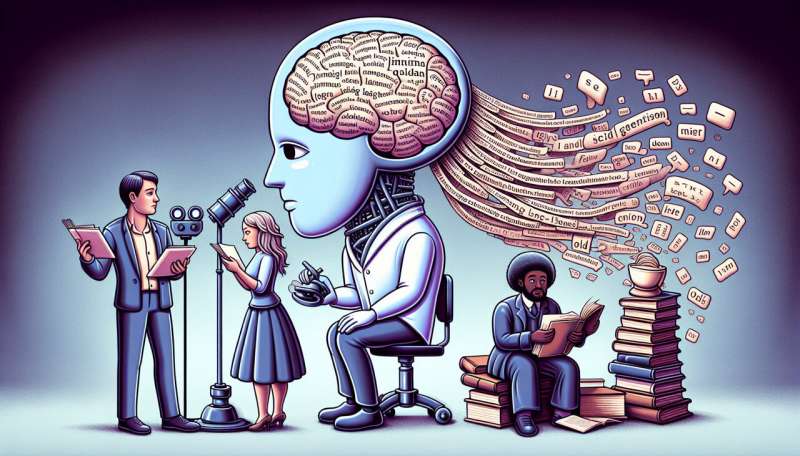
Dr. Maria Perez Ortiz, an author of the report from UCL Computer Science and a member of the UNESCO Chair in AI at UCL team, said, "Our research exposes the deeply ingrained gender biases within large language models and calls for an ethical overhaul in AI development. As a woman in tech, I advocate for AI systems that reflect the rich tapestry of human diversity, ensuring they uplift rather than undermine gender equality." The UNESCO Chair in AI at UCL team will be working with UNESCO to help raise awareness of this problem and contribute to solution developments by running joint workshops and events involving relevant stakeholders: AI scientists and developers, tech organizations, and policymakers. Professor John Shawe-Taylor, lead author of the report from UCL Computer Science and UNESCO Chair in AI at UCL, said, "Overseeing this research as the UNESCO Chair in AI, it's clear that addressing AI-induced gender biases requires a concerted, global effort. This study not only sheds light on existing inequalities but also paves the way for international collaboration in creating AI technologies that honor human rights and gender equity. ..."


Enterprise of the Future: Disruptive Technology = Infinite Possibilities

In the current state, employees are required to navigate multiple enterprise application interfaces and browse many systems to get information for their day-to-day activities. It could be a simple activity such as fetching clarification on leave policies, checking for the leave balance or reporting an incident to have a laptop or printer issue fixed. To accomplish their daily responsibilities, employees often end up searching for standard operating procedures and other relevant data and knowledge. In general, to perform their day-to-day tasks, they must go through multiple enterprise application interfaces. This often results in a steep learning curve for the employees, necessitating them to remember where specific data and information resides, to understand the functionality of multiple enterprise applications and master the way they operate. This fragmentation of information across different data sources and the labyrinth of applications that need to be navigated to perform daily activities leads to inefficiencies and confusion that ultimately impact productivity. Moreover, changes within an organisation necessitate training on new systems and new ways of working, requiring employees to learn and adapt continuously.


The state of open source in Europe

Europe is renowned for regulations, and the past year has resulted in several large policy frameworks that influence tech — the Cyber Resilience Act (CRA), the Product Liability Directive, and the EU AI Act. With lots of information to digest and react to, both FOSDEM and SOOCON held deep-dive sessions. Over the past year, the CRA has been of the most concern to open-source communities, as it puts responsibility for harm caused by software into the hands of creators. For open-source software, this is complicated, as who is really responsible? The creator of the open-source software or its implementor? Many open-source projects have no legal entity that anyone can hold “responsible” for problems or harm. ... “‘Open-source software and hardware’ used to be enough to encompass the community and its aims and concerns. Now it’s ‘Open-source software, hardware, and data’.” An Open data movement, that aims to keep public data as freely accessible as possible, has existed for some time. The EU alone has nearly 2 million data sets. However, this past year saw the open-source community have to care about the openness of data in completely new ways.


Elemental Surprise: Physicists Discover a New Quantum State

“The search and discovery of novel topological properties of matter have emerged as one of the most sought-after treasures in modern physics, both from a fundamental physics point of view and for finding potential applications in next-generation quantum science and engineering,” said Hasan. “The discovery of this new topological state made in an elemental solid was enabled by multiple innovative experimental advances and instrumentations in our lab at Princeton.” An elemental solid serves as an invaluable experimental platform for testing various concepts of topology. Up until now, bismuth has been the only element that hosts a rich tapestry of topology, leading to two decades of intensive research activities. This is partly attributed to the material’s cleanliness and the ease of synthesis. However, the current discovery of even richer topological phenomena in arsenic will potentially pave the way for new and sustained research directions. “For the first time, we demonstrate that, akin to different correlated phenomena, distinct topological orders can also interact and give rise to new and intriguing quantum phenomena,” Hasan said.


The cloud is benefiting IT, but not business

According to a recent McKinsey survey that engaged about 50 European cloud leaders, the benefits of cloud migration still need to be recovered. In other words, cloud migrations are not as universally beneficial as we’ve been led to believe. I’m not sure why this is news to anyone. The central promise of cloud computing was to usher in a new era of agility, cost savings, and innovation for businesses. However, according to the McKinsey survey, only one-third of European companies actively monitor non-IT outcomes after migrating to the cloud, which suggests a less optimistic picture. Moreover, 71% of companies measured the impact of cloud adoption solely through the prism of IT operational improvements rather than core business benefits. This imbalance raises a critical question: Are the primary beneficiaries of cloud migration just the tech departments rather than the more comprehensive business entities they’re supposed to empower? Cloud computing technology is often associated with business agility and new revenue generation, but just 37% report cost savings outside of IT. Only 32% report new revenue generation despite having invested hundreds of millions of dollars in cloud computing.


Securing Mobile Apps: Development Strategies and Testing Methods

Ensuring secure data storage is crucial in today's technology landscape, especially for apps. It's vital to protect sensitive information and financial records to prevent unauthorized access and data breaches. Secure data storage includes encrypting information both at rest and in transit using encryption methods and secure storage techniques. Moreover, setting up access controls, authentication procedures, and conducting regular security checks are essential to uphold the confidentiality and integrity of stored data. By prioritizing these data storage practices and security protocols, developers can ensure that user information remains shielded from risks and vulnerabilities. Faulty encryption and flawed security measures can lead to vulnerabilities within apps, putting sensitive data at risk of unauthorized access and misuse. If encryption algorithms are weak or not implemented correctly, encrypted data could be easily decoded by actors. Poor key management, like storing encryption keys insecurely, worsens these threats. Additionally, security protocols lacking proper authentication or authorization controls create opportunities for attackers to bypass security measures.


How Do Open Source Licenses Work? The Ultimate Guide

The type of license a project creator chooses should be determined by legal counsel, as entering the realm of copyright law requires alignment with the project creators’ intentions. The type of license, which only qualified legal counsel can provide, should correspond to what the project creators want to achieve. Meanwhile, among popular licenses, the MIT License is comparatively permissive. It allows users to fork or copy the code freely, offering flexibility in how they utilize it. This stands in contrast to so-called “copyleft” licenses, like the GNU General Public License, which impose more stipulations. ... The process of changing a license can be complicated and challenging, emphasizing the importance of selecting the right license initially. When altering an open source project’s license, the new license must often comply with or be compatible with the original license, depending on its terms. Ensuring that the changes align with the copyright holders’ stakes in the project is crucial. This intricate process requires the guidance of competent legal counsel. It’s advisable to establish proper licensing from the project’s outset to avoid complexities later on.


6 Things That Will Tell You If You Are Destined for Leadership

Self-awareness about personality traits naturally leads to increased understanding and empathy when working with people who possess different traits than us. Instead of being unable to make sense of others' actions, we can analyze them and relate them to their inherent personality preference. This ability can prevent natural triggers towards the unknown from judging, blaming or taking things personally. ... Knowing about personality preferences is essential, but it's also crucial to be aware of how people prefer to handle change. Change is an event, but how change affects people is based on their personality traits. Some people embrace change so much they want it to be fast and vast. However, they tend to have difficulty staying focused and completing tasks. Others have an adverse reaction to change. They honor tradition and enjoy predictability.  ... Everyone has experienced negative situations, such as making the wrong choices, reacting to someone's words or behaviors with negative emotions or getting sucked into self-sabotaging thoughts. When you can bounce back from these situations with a positive mindset and be productive, you are exercising resilience.


Quote for the day:

"With desperation comes frustration. With determination comes purpose achievement, and peace." -- James A. Murphy

Daily Tech Digest - April 12, 2024

Architecture is about tradeoffs. It is about spending money on one thing over another. It is about decisions. So when you tell me to develop productivity I think that is a great measure. But I also start wondering about quality. About satisfaction. Is that productivity a measure of one person? Every person? What toolset did they use? The same goes with content generation. An AI image is neat at first? But do we get tired of them? How do I measure the value of human created? Is there profit in that? Order management, electricity use, all of these measures are valuable. So when you hear about an AI business case… do you have a business case? Are the benefits REAL? ... Everything comes with pros/cons and we need a system in place to handle this change rate. This is true of all major human endeavors. Think of child workers during industrialization. Or the horrible cost to humanity of the intensity of urbanization and how it has endangered our planet. Only now are we coming to grips with all of that structural complexity. And even that is going to require decades more commitment. Technology and, specifically, AI is no different. 


The Pitfalls of Periodic Penetration Testing & What to Do Instead

While periodic penetration testing can provide a snapshot of your organization’s security posture, it often fails to account for the dynamic nature of cyber threats. Organizations must continuously test their security measures to effectively mitigate risks to identify and neutralize emerging threats in real-time. Organizations can leverage various approaches and tools to implement continuous cybersecurity testing, such as the Atomic Red Team by Red Canary, an open-source library of tests mapped to the MITRE ATTACK framework that security teams can use to simulate adversarial activity and validate their defenses. These tools can help prioritize and mitigate potential cyber-attacks by automating security testing and providing valuable insights into adversary tactics and techniques. Endpoint security testing and firewall testing are excellent starting points for implementing continuous cybersecurity testing. By simulating phishing emails, running PowerShell commands at endpoints, and monitoring VPN logins at the firewall level, organizations can proactively identify potential vulnerabilities and mitigate them before cyber attackers can exploit them. 


Generative AI Sucks: Meta’s Chief AI Scientist Calls For A Shift To Objective-Driven AI

Unlike current AI, which excels in narrow domains without grasping causality, objective-driven AI would be capable of causal reasoning and understanding the relationships between actions and outcomes. This shift would allow AI to plan and adapt strategies in real time, grounded in a nuanced comprehension of the physical and social world. Objective-driven AI is not just an incremental improvement but a leap toward machines that can truly collaborate with humans, offering insights, generating solutions, and understanding the broader impact of their actions. This vision represents a significant shift towards creating AI that can navigate the complexity of the real world with intelligence and purpose. ... Despite these challenges, LeCun is optimistic about the future, firmly believing that AI will eventually surpass human intelligence across all domains. This conviction is not grounded in wishful thinking but in a clear-eyed assessment of technological progress and the potential for groundbreaking scientific discoveries. However, LeCun also emphasizes that this evolution will not happen overnight or without a radical rethinking of our current approaches to AI development.


Strategies to cultivate collaboration between NetOps and SecOps

Collaborative culture starts at the top. The leaders of these teams need to collaborate and communicate consistently. They cannot have a turf war over each team’s roles and must understand each team’s responsibilities. Whether it’s shadowing a member of the other team for a day or taking opportunities to get to know other teams outside of work, establishing a collaborative culture is an important long-term investment for mutual success. ... AI and automation will blur the lines between these two teams, as projects focused on these elements are ones that can be tackled together. For example, having your vulnerability management tool automatically open tickets for other IT teams can create a feeling that the security team is dumping vulnerabilities over the wall.  ... The SecOps team tends to secure the budget as they take in risks to the company. For instance, if a project is done how does it reduce risks and if the project is not done, what risks does the company retain? The automation and AI tools are using network traffic (packet data) to create workflows/automation and AI tools are using this data to feed into Large Language Models. Both teams can utilize this AI LLM to solve network and security issues.


Down with Detection Obsession: Proactive Security in 2024

Now, as boards of directors and C-suites are expected to be more security savvy, they are asking important risk questions of their CISOs: Given all this spending on finding our problems, are we secure? Are we better off than we were a year ago or two years ago, or three years ago? And few security executives can answer those questions with comfort, because historically they were not focused on addressing risk, they were focused on discovering the risk. As time goes on and the security leader’s role becomes more business-centric, the benefits of taking a more proactive approach to security will continue to grow and shine. For example, the role of vulnerability management in providing improved risk reduction, achieving regulatory compliance, and cost savings. By actively seeking and addressing vulnerabilities, organizations can significantly reduce their overall attack surface, minimizing their chances of security breaches, data leaks and more. Many industries, like health care and financial services, have strict regulations governing the protection of sensitive data.


Agile development can unlock the power of generative AI - here's how

"The beauty of Agile is you see the fruits of your work quicker. You get feedback. And that's true with innovation generally -- the faster you can speed up cycle times, the better." Hakan Yaren, CIO at APL Logistics, said to ZDNET that another benefit of Agile is that it's well-suited to the modern digital environment. Analyst Gartner suggested that 80% of technology products and services this year will be built by people who are not technology professionals. Yaren said Agile -- with its focus on joined-up thinking and cross-business approaches -- is a good fit for the decentralized nature of modern IT. "With AI and cloud, the barriers to entry are becoming lower and people in the business are making IT decisions," he said. "Agile is the right methodology to deal with many of these processes because of the speed of change." However, Yaren has a warning for IT professionals: The complexities you face could increase as more line-of-business employees test emerging technologies. "Trying to connect these solutions, and making sure they're secure, reliable, and you can connect the dots across them, is becoming even more challenging," he said.


The benefits of leveraging hybrid cloud automation

To optimise hybrid cloud architecture, most experts endorse automation, given its flexibility, simplicity and scalability. They believe automation is necessary to draw some of the benefits of the cloud back into the on-premises systems and the hybrid architecture. Automation can ensure a more seamless way for end-users to requisition an organisation’s services, regardless of its location. As more applications move into hybrid and multi-cloud environments, companies can explore several ways to automate manual processes taking place in the cloud. Crucial cloud automation aspects cover deployment, provisioning, compliance, configuration management, scaling, and more. Hybrid cloud automation examples include establishing a network in the cloud and configuring cloud servers. Cloud automation can also be used for managing server capacity, spinning up new environments and resources, configuring software and systems, rolling out software configurations whenever required, taking systems online and offline as needed to balance the load, scaling across data centres, and moving into a public cloud environment when handling front-end web services or high workloads that are on- or off-premises.


Why strategists should embrace imperfection

We’re seeing paralysis as people wait for some kind of equilibrium or stasis to reemerge. Or they get nervous and leap before they look, whether it’s an acquisition or some other move. We wanted to lay out a different path that involves confidently stepping into risk by using a set of six mindsets that we put under the broad heading of imperfectionism. Imperfectionism sounds like a bad thing, but what we mean is accepting the ambiguity of not having perfect knowledge before making strategic moves. ... The kind of uncertainty that we face today really is twofold. One is the type we see in the newspaper, which is economic uncertainty, external shocks like the war in Ukraine. But there’s a much more fundamental kind of uncertainty we face now, which is very rapid technological change. Artificial intelligence, automation, programmable biology, and other disruptions are blurring industry boundaries and what it means to be a competitor in a particular industry. We’re also seeing the rise of supercompetitors like Apple, Amazon, and Google, which can operate across many industry spaces. 


What the American Privacy Rights Act Could Mean for Data Privacy

For companies that collect and monetize consumer data, the APRA could mean making changes to the way they do business. The APRA sets out requirements for issues like data minimization, transparency, consumer choice and rights, data protection, and executive responsibility. “It basically means that now they’re going to be able to collect less data: good for consumers and not so good if you're a company that needs all that data,” Antonio Sanchez, principal cybersecurity evangelist at Fortra, a cybersecurity and automation software company, tells InformationWeek. The draft legislation drills down to data privacy at an operational level. For example, it requires covered entities to appoint a privacy or data security officer or officers. “There is a real sense that a significant part of managing a modern privacy program is not found in the rules themselves but in the operation that gives life to those rules,” says Hughes. If the APRA goes into effect, covered entities will have 180 days to comply with its requirements. Non-compliance after that timeline could be met with enforcement action. 


Data Stewardship Best Practices

Business leaders must understand what makes data stewards successful in order to find the ideal candidates for the role. Johnson outlined some of the characteristics best suited for stewards. Coming from both business and IT: Many times, data stewards do best when they have a background in both technology and line-of-business department work. Johnson referred to them as “purple people” – having skills and experience spanning these two different job positions. Data stewards should be multiskilled, as well as “bilingual” and “bicultural” ... Acting as bridges: Data stewards should be able to translate both simple and complex information and communicate it in written or oral form. Johnson recommended that they also have a good sense of objectivity, distinguishing fact from fiction, and be able to envision what challenges and issues a company might face in the future. Excited by data: Thinking globally and participating in an influence culture, data stewards should get immersed in the ideas surrounding good Data Governance and better data handling. “When you’re talking to somebody, and they get really excited about data and their eyes light up, and they’re all energized and stuff, it’s a good sign – they might be fit for a steward role,” Johnson said.


Quote for the day:

"I find that the harder I work, the more luck I seem to have." -- Thomas Jefferson

Daily Tech Digest - April 10, 2024

Time to rethink cloud strategies in the AI era

The proliferation of AI technologies is busting datacenter boundaries, as running data close to compute and storage capabilities often offers the best outcomes. No workload embodies this more than GenAI, whose large language models (LLMs) require large amounts of compute processing. While it may make sense to run some GenAI workloads in public clouds – particularly for speedy proof-of – concepts, organizations also recognize that their corporate data is one of the key competitive differentiators. As such, organizations using their corporate IP to fuel and augment their models may opt to keep their data in house – or bring their AI to their data – to maintain control. The on-premises approach may also offer a better hedge against the risks of shadow AI, in which employees’ unintentional gaffes may lead to data leakage that harms their brands’ reputation. Fifty-five percent of organizations feel preventing exposure of sensitive and critical data is a top concern, according to Technalysis Research. With application workloads becoming more distributed to maximize performance it may make sense build, augment, or train models in house and run the resulting application in multiple locations. 


Zero Trust for Legacy Apps: Load Balancer Layer Can Be a Solution

There are a number of specific strengths inherent to deploying zero trust at the load balancer layer via SAML. Implementing zero trust at the load balancer layer allows organizations to enforce a unified access control mechanism for all applications. This ensures consistent security enforcement across diverse technological platforms, and extends to internal nodes policing East-West traffic or externally to cloud native service networking and partner APIs. Certificate management and rotation is a considerable pain point for cloud native applications, let alone for hybrid constellations of applications that might range from a few months old to 30 years old. Load balancers natively manage TLS certificates, offering a centralized point for efficient certificate management that is relatively application agnostic. This centralization not only eases the administrative burden but also enhances security by ensuring timely certificate renewal and efficient handling of encryption/decryption processes. By moving zero trust into an infrastructure point that is already integrated with all other parts of your infrastructure, this approach significantly reduces the complexity associated with modifying each application individually to align with zero trust principles. 


Is the power of people skills enough to keep gen AI in check?

The first area of interest is with Copilot technologies in the context of integrated development environments that the company is already using. “First, we optimize the individual,” he says, using gen AI to make developers more productive. But it’s not about reducing headcount. “My issue isn’t that we have too many developers,” he says. “It’s how we can go faster. I have to compete harder on brain power in a market that’s growing quickly. I’m looking to turn every developer into the single most productive engineer on the team.” And even if the engineers do get dramatically more productive, he says, there’s a big backlog of work the company wants to get done. But just moving faster isn’t enough, he says. Without communication skills and the curiosity needed to find out why things are being done, those productivity benefits can easily go to waste. “I can produce 10 times more useless garbage,” he says. The company has three full-time people who create internal training materials, as well as vet third-party training providers. “We’ve actually made significant investments in learning and development across a variety of domains,” Merkel says. “Core leadership skills is one.”


Why are many businesses turning to third-party security partners?

As organizations weigh the cost of security solutions alongside the rising cost of experienced employees, some are electing to prioritize spending in other areas, forgoing software licenses in favor of third-party partnerships. While moving from an in-house security program to one that relies on outside partners can represent a significant shift in mentality for many organizations, a growing number have found that working with third-party experts can help them secure their systems in a more effective—and scalable—manner. As the threat landscape continues to evolve at a rapid pace, no longer having to track and account for each new development can free up substantial time and resources for organizations. Another factor driving organizations toward external partnerships is the challenge of application onboarding. Enterprises use a massive number of software solutions, cloud services, and other applications, and ensuring those applications are properly configured and protected can be a challenge. As data privacy and security regulations continue to arise in a wide range of jurisdictions, it’s increasingly critical for today’s businesses to clearly demonstrate that they are effectively managing and protecting data within their applications.


Why global warnings about China’s cyber-espionage matter to CISOs

Chinese APTs have penetrated networks of companies providing goods and services to the defense sector, a leading equipment provider of 5G network equipment, and entities involved in wireless technology. Those compromised not only permit the pilfering of intellectual property, but China is also able to leverage their acquired knowledge or capability to continue to engage in both internal and external efforts to silence those in dissent of the current government. We have learned of the external effort largely through the various arrests and prosecutions of individuals, both Chinese nationals and those whom they have suborned to do their bidding. This effort has a moniker — Operation Fox Hunt. This operation was ordered created by President Xi Jinping in 2014. China has had varying degrees of success in its intimidation and coercion methodologies. FBI Director Christopher Wray described this operation as “a sweeping bid by Xi to target Chinese nationals who he sees are threats and who live outside of China, across the world. We’re talking about political rivals, dissidents, and critics seeking to expose China’s extensive human rights violations.”


Maximizing Business Value with Generative AI

As C-Suite leaders begin to understand GenAI, they are starting to uncover some questions: Which use cases will deliver the most value for my business? And how do we transition from a Proof of Concept (PoC) to full-scale implementation or enterprise-level deployment? A lot of the work currently remains in the PoC stage, though some industries are ahead of the curve, such as chatbots for HR and legal contracts, which have become relatively common. So, now what remains to be seen is how enterprises move toward widespread adoption by integrating GenAI into other business processes. To move from the PoC to the deployment stage, organizations must identify their strategy, as we covered earlier, as well as the use cases with high impact. Prioritizing these use cases based on their impact, cost, data readiness, and resistance to adoption is essential. Becoming familiar with the limitations and capabilities will also be important for decision-makers. A roadmap must be developed, and you must leave room for the possibility of failure. Once this is done, various PoCs and pilots can be launched, based on the problems an organization genuinely wants to solve. Additionally, transparency with your internal stakeholders is key. 


How to answer “why should we hire you?” in a job interview

In an ever-increasingly automated world, problem-solving and critical thinking are more important than ever. Here’s your chance to place yourself as a solution to current challenges. First state your understanding of the big issue you see the company or industry is facing, be that tech disruption, changing customer preferences, in-house inefficiencies, or something else. Next, state the transferrable experience that would help solve this. For example, “In my current role, I led a cross-functional team that delivered an AI integration that added value to our customers, which had a shorter time-to-market, and helped to increase product subscriptions by 12 per cent in three months.” Lastly, bring it back to this organisation. “For this role, I’m very interested to leverage this experience and to collaborate with different teams to find a solution to X that works for the company in the short and long-term.” ... Finally, show how you’ll fit in, and this doesn’t mean highlighting how you went to the same school or uni as someone in the C-suite. Here you should focus on the company’s values, and how they align with your own experience. Look for natural fits like customer focus, transparency, collaboration, or trust.


Securing Open Source Software, the Cyber Resilience Act Way

The European Union (EU) figured this out a while back. In its Cyber Resilience Act (CRA), it asked the open source community to establish common specifications for secure software development. The Eclipse Foundation and a host of other leading open source organizations, including the Apache Software Foundation, Blender Foundation, OpenSSL Software Foundation, PHP Foundation, Python Software Foundation and the Rust Foundation, are up for the challenge. The Eclipse Foundation is spearheading the effort to create a unified framework for secure software development. The foundations and allies are doing this via a new working group, established under the Eclipse Foundation Specification Process. The collaboration is spurred by more than regulatory compliance. In an era where open source software is pivotal to modern society, the imperative for safety, reliability and security in software has never been more critical. As Arpit Joshipura, the Linux Foundation‘s senior VP of networking, said at the Open Source Summit Europe in Bilbao, Spain, last year, “We must look at the end goal. The end goal for all of us is the same. We want to secure software, and we want to secure open source software.”


7 Top IT Challenges in 2024

“Government agencies at all levels are issuing an increasing number of regulations or mandates that need to be complied with. Some are inconsistent, some are duplicative but require separate reporting. They all have penalties for non-compliance so that creates liability concerns that shifts the focus from security and compliance,” says Scott Algeier, executive director of industry association Information Technology-Information Sharing and Analysis Center (IT-ISAC). “Security and compliance are not the same thing, so you may need to make additional investments to be both secure and compliant.” ... Return on investment is a key metric for financial services companies. However, after years of regulation, mergers, and growth, technology estates have become bloated and underperforming. As a result, financial institutions want technology that is user-friendly, value-drive and rapidly adaptable to new technologies like AI. “To accomplish this goal, CIOs and CTOs are facing the need to streamline enterprises by reducing spans and layers, increasing reuse of architectural patterns and ultimately increasing [the] productivity of their organizations,” says Fredric Cibelli.


US Bipartisan Privacy Bill Contains Cybersecurity Mandates

The bill's main focus is on creating rights of access and correction and allowing consumers the right to opt out from their data being used for targeted advertising. It would prohibit corporations from retaliating against individuals for exercising their opt-out rights, such as by denying service or charging different rates. It would also create oversight requirements for large companies with minimum revenues of $250 million that use decision-making algorithms, including algorithms that facilitate human decision-making. Those companies would need to annually assess their algorithms for potential biases and evaluate them for bias prior to putting them into production. Annual assessment would be publicly available and transmitted to the Federal Trade Commission. Consumers would have a right to opt out of algorithmic assessment in matters such as access to housing, employment, education, healthcare and financial activities. The FTC would publish guidance on how to comply with that section within two years. Individuals could sue companies for violations of most sections of the act. This would preempt the bevy of state data privacy laws that have come up in recent years, including in California.


Quote for the day:

“People are not lazy. They simply have important goals – that is, goals that do not inspire them.” -- Tony Robbins

Daily Tech Digest - April 08, 2024

Streamlining application delivery and mitigating risks for critical infrastructure

The emphasis on cloud and edge computing introduces challenges in orchestrating seamless application delivery—the initial hurdle in effectively packaging applications for efficient deployment, installation, and execution across various computing environments. For instance, food delivery platforms, such as Zomato or Swiggy, require timely system updates for operational efficiency. The second challenge involves addressing latency and distribution unreliability, especially in scenarios where data transfer delays or inconsistent connectivity may impede the seamless and efficient distribution of applications across networks. Therefore, reliability in application upgrades becomes imperative to counter potential disruptions caused by device issues. The third challenge involves maintaining application reliability, which requires continuous performance monitoring. ... The interconnectedness of supply chain applications necessitates a proactive approach to managing complexities, such as addressing software risks. It involves creating a comprehensive bill of materials and recognising dependencies crucial for bundling software into devices or applications.  


How can the energy sector bolster its resilience to ransomware attacks?

For energy companies, this means undertaking systematic vulnerability assessments and penetration testing, with a specific focus on applications that interface between IT and OT systems. It also requires adopting a comprehensive security strategy that includes routine security monitoring, patch management and network segmentation, and implementing rigorous incident reporting and response. Once the fundamentals are in place, energy providers should explore more advanced technologies and automation opportunities that can help reduce the time between detection and response, such as AI-powered tools that can actively monitor the network in real-time to detect anomalies and predict potential threat patterns. ... In addition to technological defenses, organizations should also focus on the human element as phishing and social engineering attacks keep targeting employees and third-party contractors and continue to be effective methods for initial intrusion. Training programs that enhance employee awareness of these and other tactics are essential, while regularly updated sessions can help staff identify and respond to potential threats thereby reducing the likelihood of a successful attack.


Implementing AI Ethics in Business Strategy

In the realm of AI ethics, monitoring and evaluation play a crucial role in ensuring continuous improvement and alignment with ethical standards. By consistently monitoring the outcomes of AI algorithms and evaluating their impact on various stakeholders, organizations can proactively identify ethical concerns and take corrective actions. This dynamic approach not only mitigates potential risks but also fosters a culture of transparency and accountability within the business. Ethical considerations should be integrated into all stages of AI implementation, from design to deployment. Continuous monitoring allows organizations to adapt to changing ethical landscapes, emerging risks, and evolving regulations. ... Emphasizing ethical practices in business is not just a moral obligation but a strategic imperative for long-term success. In today’s interconnected world, consumers are becoming increasingly conscious of the companies they support, favouring those that demonstrate a commitment to ethical values. By prioritizing ethics in decision-making processes and embracing transparency, businesses can build trust with their stakeholders and create sustainable relationships that drive growth.


The 6 Traits You Need To Succeed in the AI-Accelerated Workplace

AI copilots can provide valuable support, but humans need to exercise critical thinking skills to interpret data, make decisions and solve complex problems effectively. For any area of study, there are various levels of understanding. The very basic is "You don't know what you don't know," then comes "You know what you don't know," next up is "You have the knowledge necessary to interact," and the final level is "You are the subject matter expert."  ... Modern-day knowledge workers need to adapt to new technologies and workflows quickly. As a great horse rider becomes one with the animal, their movements are synchronized naturally. In the same sense, modern-day knowledge workers need to become one with AI assistants/bots and synchronize and adapt their style and pace of work with all the latest tools and technologies being introduced. ... Resilience is the most important quality amid this mist of future job landscapes. It is the best quality an employee can have. It will equip one with the mental fortitude to embrace innovation, learn new skills, and confidently navigate unfamiliar territories.


Speaking Cyber-Truth: The CISO’s Critical Role in Influencing Reluctant Leadership

It’s not just about pointing out the problems, the CISO must also be a problem-solver. They must work collaboratively with other leaders to find ways to enable the business while protecting it — providing insights and recommendations that allow others to make informed decisions based on the company’s risk appetite and strategic direction. But the effectiveness of a CISO is not just measured by the absence of breaches; it’s their ability to enable the business to take calculated risks confidently. The CISO must work to ensure that cyber security is built into the DNA of every project. They must advocate and champion secure-by-design principles to ensure that security is not an afterthought but a fundamental component of every initiative. By forcing organizations to acknowledge and address cyber risks proactively, CISOs not only protect the enterprise but also contribute to its resilience and long-term success. CISOs also face the issue of risk prioritization. In an ideal world, every vulnerability would be patched, every threat neutralized, every alert investigated. However, resources are constrained, investments are finite, and not all risks are created equal. 


4 Lessons We Learned From The Change Healthcare Cyberattack

Given the massive scale of the Change Healthcare attack, it goes without saying that the aftermath has been chaotic. Providers and pharmacies were forced to expend time and resources on manual claims processing, and many continue to face payment delays that are hurting their cash flow. Change Healthcare’s parent company, insurance giant UnitedHealth Group, has faced widespread criticism for its handling of the attack. The American Hospital Association has been one of the biggest voices in this regard. In the organization’s March 13 letter to the Senate Finance Committee, the AHA wrote that UnitedHealth has done nothing to materially address “the chronic cash flow implications and uncertainty that our nation’s hospitals and physicians are experiencing” as a result of the attack. The long recovery time indicates a potentially poor business continuity plan (BCP), Kellerman noted. In his eyes, every healthcare organization needs a BCP in case of a potential cybersecurity event. “[The plan] should address business continuity in case of crisis or disaster, including backups and the ability to restore them in a timely manner. 


Is HR ready for generative AI? New data says there's a lot of work to do

The potential risks for AI in HR are rooted in a lack of trust and potential bias in AI delivering recommendations or suggestions based on models that may have been unintentionally trained on datasets that reinforce biases. Core HR functions could also be impacted by data compromises, AI hallucinations, bias, and toxicity. The common theme across all these areas of potential risk is the human steps that can mitigate them. AI adoption in HR is on the rise. Valoir research found that 50% of organizations are either currently using or planning to apply AI to recruiting challenges in the next 24 months, followed closely by talent management and training and development. ... Valoir recommends that HR leaders not only select vendors and technologies that can be trusted, but put in place the appropriate policies, procedures, safeguards, and training for both HR staff and the broader employee population. HR departments will need to consider how they communicate those policies and training to both their internal HR teams and the broader population.


The Complexity Cycle: Infrastructure Sprawl is a Killer

From imperative APIs that required hundreds of individual API calls to configure a system to today’s declarative APIs that use only one API call. It’s easier, of course, but only the interface changed. The hundreds of calls mapped to individual configuration settings still need to be made, you just don’t have do it yourself. The complexity was abstracted away from you and placed firmly on the system and its developers to deal with. Now, that sounds great, I’m sure, until something goes wrong. And wrong something will go; there’s no avoiding that either. Zero Trust has an “assume breach” principle, and Zero Touch infrastructure (which is where the industry is headed) ought to have a similar principle, “assume failure.” It’s not that complexity evolves. Complexity comes from too many tools, consoles, vendors, environments, architectures, and APIs. As an enterprise evolves, it adds more of these things until complexity overwhelms everyone and some type of abstraction is put in place. We see that abstraction in the rise of multicloud networking to address the complex web of multiple clouds and microservices networking, which is trying to unravel the mess inside of microservices architectures.


Solar Spider Spins Up New Malware to Entrap Saudi Arabian Financial Firms

JSOutProx is well known in the financial industry. Visa, for example, documented campaigns using the attack tool in 2023, including one pointed at several banks in the Asia-Pacific region, the company stated in its Biannual Threats Report published in December. The remote access Trojan (RAT) is a "highly obfuscated JavaScript backdoor, which has modular plugin capabilities, can run shell commands, download, upload, and execute files, manipulate the file system, establish persistence, take screenshots, and manipulate keyboard and mouse events," Visa stated in its report. "These unique features allow the malware to evade detection by security systems and obtain a variety of sensitive payment and financial information from targeted financial institutions. JSOutProx typically appears as a PDF file of a financial document in a zip archive. But really, it's JavaScript that executes when a victim opens the file. The first stage of the attack collects information on the system and communicates with command-and-control servers obfuscated via dynamic DNS. 


Biggest AI myths in customer experience

Recent months have seen numerous examples of chatbots going rogue and tarnishing the reputation of the organisations that implemented them. From incorrect refund policies costing a Canadian airline hundreds of dollars to a parcel delivery firm swearing at customers, GenAI is not ready to take off the training wheels just yet. Large language models (LLMs) such as ChatGPT are subject to hallucinations which, without safeguards, could negatively impact the customer experience. Customers would quickly lose patience with brands if they were misled during interactions. A tool that should vastly improve first-contact resolution could achieve the opposite, with customers needing further support to correct previous mistakes. That said, it is possible to reduce the likelihood of egregious chatbot errors through appropriate optimisation techniques.  ... The implementation of AI in CX should be a gradual process. If phase one of AI development was to streamline communications before, during and after interactions, future phases should focus on expanding the scope of the contact centre, encompassing more traditionally back-office and professional roles and creating a hub for communications, relationship building and data orchestration.


Quote for the day:

"To have long-term success as a coach or in any position of leadership, you have to be obsessed in some way." -- Pat Riley

Daily Tech Digest - April 07, 2024

AI advancements are fueling cloud infrastructure spending

The IDC report offers insights into the evolving landscape of cloud deployment infrastructure spending, explicitly focusing on AI. I’m not sure that anyone will push back on that. However, there are some other market dynamics that we should be paying attention to, namely:Tech leaders’ rapid deployment of AI capabilities is changing infrastructure requirements, emphasizing the need for specialized, high-performance hardware. However, this will likely translate quickly into storage and databases, which are more critical to AI than processing. Who would have thunk? The shift towards GPU-heavy servers at higher price points but fewer units sold reflects the evolving market dynamics influenced by the priorities of cloud providers and enterprise tech behemoths. As I pointed out, this could be a false objective that leads many, including the cloud providers, down the wrong path. ... The significant uptick in cloud infrastructure spending underscores a robust investment in AI-related capabilities, which has far-reaching implications for technology and business landscapes.


How to develop your skillset for the AI era

Grounded in a rich understanding of the broader context and enhanced by a diverse skill set, building specialization will ensure that engineers can bring unique insights, creativity, and solutions that AI cannot. It's the intersection of depth and breadth in an engineer's expertise that will define their irreplaceability in an AI-driven world. This is where Roger Martin's Doctrine of Relentless Utility comes into play, a career strategy that focuses on finding your niche and monopolizing it. As you become more adept at navigating between different roles and perspectives, you'll be better positioned to uncover unique opportunities where your particular blend of skills and interests intersect with unmet needs within your team or organization. Aligning what you're good at with areas where you can make a significant impact allows you to establish a distinctive role that plays to your strengths and passions. This strategy promotes an active, value-driven approach, looking for ways to contribute beyond the usual scope of your role. Your niche could be bridging the gap between advanced technical knowledge and non-technical stakeholders or clients.


A phish by any other name should still not be clicked

The proper way for enterprises to reach out on these matters is something like, “There is a new billing matter that requires your attention. Please log into your portal and look into it.” Why don’t most enterprises do that? Some blame a lack of training — and there is absolutely a lot of truth in that. But, it’s often quite deliberate and intentional. More responsible enterprises have tried doing this the proper way, but too many customers complained along the lines of, “Do you know how many portals I have to deal with? Give me a link to the portal you want me to use.” ... This gets us right back to the security-vs.-convenience nightmare. This problem is complicated because the situation is two-step. It’s not that the customer will be hurt if they click on your link. It’s that you’re inadvertently making them comfortable with clicking on an unknown link and they might get hurt two days from now when they encounter an actual phishing attack email. Will the enterprise be held liable, especially if you can’t prove the victim clicked because of what was sent? It gets even worse. The old advice used to be to mouseover suspicious links and make sure they’re legitimate. Today, that advice doesn’t work. 


How to keep humans in charge of AI

First, let users choose guardrails through the marketplace. We should encourage a large multiplicity of fine-tuned models. Different users, journalists, religious groups, civil organizations, governments and anyone else who wants to should be able to easily create customized versions of open-source base models that reflect their values and add their own preferred guardrails. Users should then be free to choose their preferred version of the model whenever they use the tool. This would allow companies that produce the base models to avoid, to the extent possible, having to be the “arbiters of truth” for AI. While this marketplace for fine-tuning and guardrails will lower the pressure on companies to some extent, it doesn’t address the problem of central guardrails. Some content — especially when it comes to images or video — will be so objectionable that it can’t be allowed across any fine-tuned models the company offers. ... How can companies impose centralized guardrails on these issues that apply to all the different fine-tuned models without coming right back to the politics problem Gemini has run head-long into? 


Managers tend to target loyal workers for exploitation, study finds

The researchers hypothesized that managers might view loyal employees as more exploitable, targeting them for exploitation. Alternatively, they considered whether managers might protect loyal workers to retain their allegiance. Four studies were conducted with participants ranging from 211 to 510 full-time managers, recruited via Prolific. In the first study, managers were split into three groups, with the first group reading about a loyal employee named John. The survey then described scenarios requiring someone to work overtime or perform uncomfortable tasks without compensation, querying the likelihood of assigning John to these tasks. The second and third groups underwent similar procedures, but with John described as either disloyal or without any characterization. All participants assessed John’s willingness to make personal sacrifices. ... “Given that workers who agree to participate in their own exploitation also acquire stronger reputations for loyalty, the bidirectional causal links between loyalty and exploitation have the potential to create a vicious circle of suffering for certain workers.” The study sheds light on the relationship between workers’ loyalty and behaviors of managers. 


Mastering the CISO role: Navigating the leadership landscape

CISOs must also cultivate stronger partnerships with their C-suite counterparts. IDC’s survey revealed discrepancies in how CISOs and CIOs perceive the CISO’s role, underscoring the need for better alignment. Creed recounted a recent example where the Allegiant Travel board made decisions about connected aircraft without involving the CISO, leading to a last-minute “fire drill” to address cyber security requirements. “Do you think the board, when they first started talking of going down this path of ‘we’re going to expand the fleet’, considered that there might be security implications in that?” he asked. ... To bridge this gap, CISOs must proactively educate executives on the business implications of security risks and advocate for a seat at the strategic decision-making table. As Russ Trainor, Senior Vice President of IT at the Denver Broncos, suggested, “Sometimes I’ll forward news of the breaches over to my CFO: here’s how much data was exfiltrated, here’s how much we think it cost. Those things tend to hit home.” The evolving CISO role demands a delicate balance of technical expertise, business acumen, and communication prowess. 


How companies are prioritising employee health for organisational success

The HR folks have a critical role in implementing wellness initiatives, believes Ritika. “Fostering a supportive work culture, providing resources for physical and mental health, and advocating for policies that prioritise employee well-being to attract and retain talent effectively are the key priorities for HR leaders are the key responsibilities of HR leaders.” According to Ritika, investing in employee health and well-being is not just a commitment but a cornerstone of organisational ethos. The Human Resource (HR) department plays a pivotal role in promoting and protecting the health of employees within an organisation. As per a report, an alarming 43% of Indian tech workers encounter health issues directly linked to their job responsibilities. Additionally, the study indicates that these health issues go beyond physical ailments, with almost 45% of respondents facing mental health challenges like stress, anxiety, and depression. Samra Rehman, Head of People and Culture, Hero Vired says that HR leaders are responsible for establishing policies and programs that prioritise employee well-being, such as implementing health insurance plans, offering gym memberships or fitness classes, and organising wellness workshops.


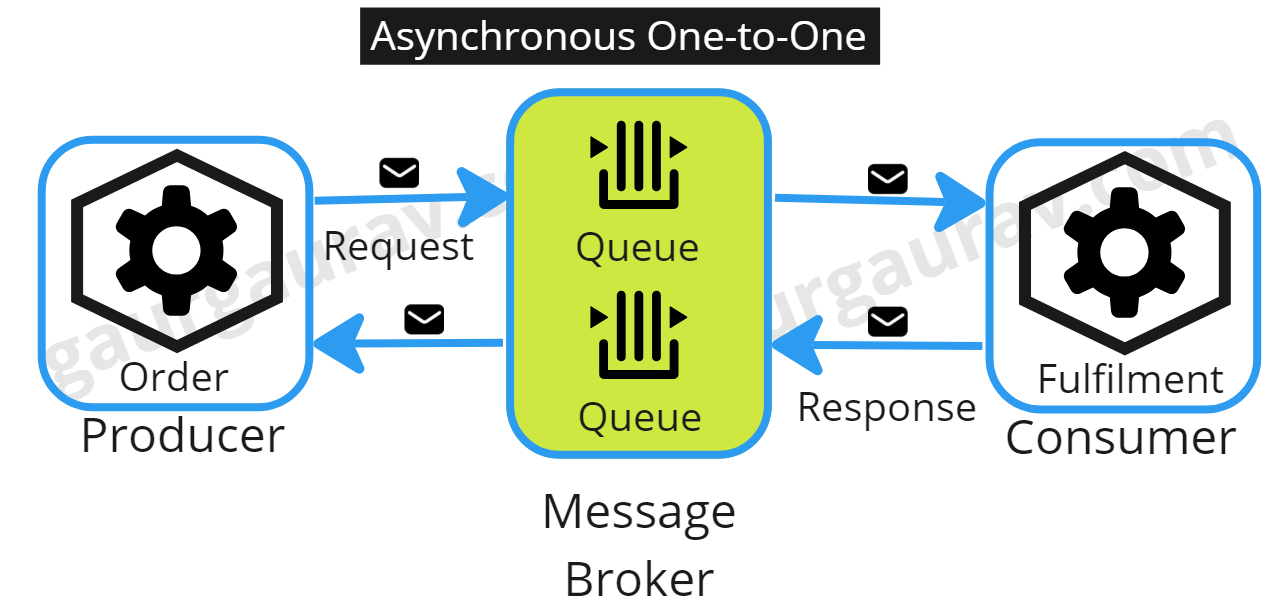
Decoding Synchronous and Asynchronous Communication in Cloud-Native Applications

The choice between synchronous and asynchronous communication patterns is not binary but rather a strategic decision based on the specific requirements of the application. Synchronous communication is easy to implement and provides immediate feedback, making it suitable for real-time data access, orchestrating dependent tasks, and maintaining transactional integrity. However, it comes with challenges such as temporal coupling, availability dependency, and network quality impact. On the other hand, asynchronous communication allows a service to initiate a request without waiting for an immediate response, enhancing the system’s responsiveness and scalability. It offers flexibility, making it ideal for scenarios where immediate feedback is not necessary. However, it introduces complexities in resiliency, fault tolerance, distributed tracing, debugging, monitoring, and resource management. In conclusion, designing robust and resilient communication systems for cloud-native applications requires a deep understanding of both synchronous and asynchronous communication patterns. 


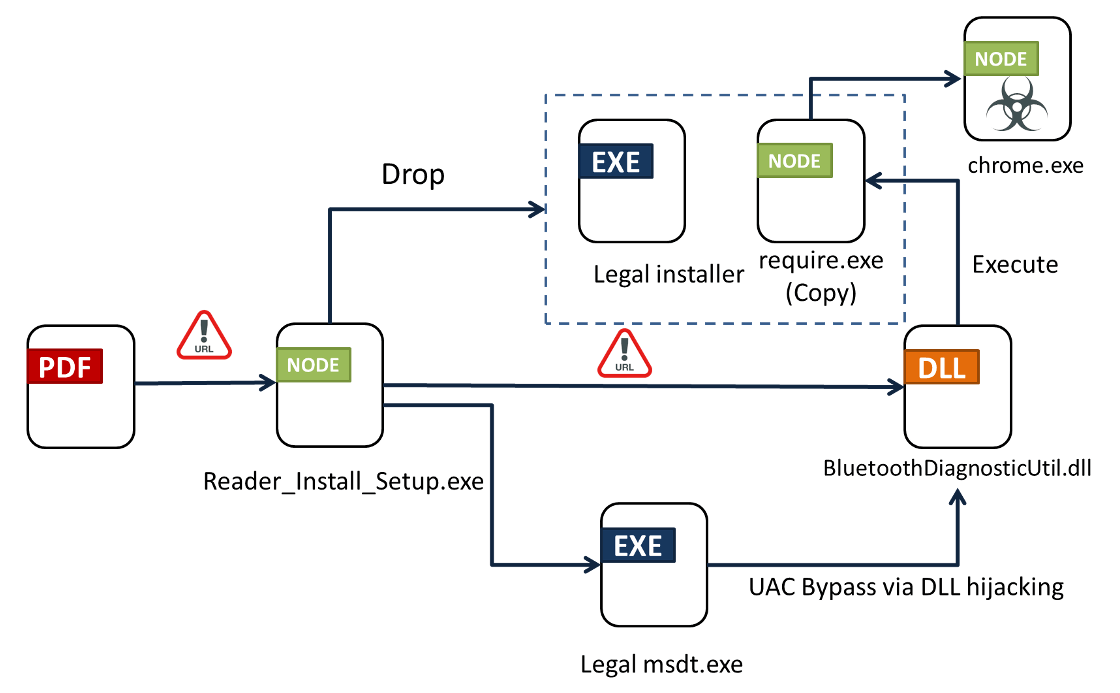
Hackers Use Weaponized PDF Files to Deliver Byakugan Malware on Windows

Due to their high level of trust and popularity, hackers frequently use weaponized PDF files as attack vectors. Even PDFs can contain harmful codes or exploits that abuse the flaws in PDF readers. Once this malicious PDF is opened by a user unaware of it, the payload runs and infiltrates the system. ... FortiGuard Labs discovered a Portuguese PDF file distributing the multi-functional Byakugan malware in January 2024. The malicious PDF tricks people into clicking a link by presenting a blurred table. This in turn activates a downloader that puts a copy (requires.exe) and takes down DLL for DLL-hijacking. This runs require.exe to retrieve the main module (chrome.exe). In particular, the downloader behaves differently when called require.exe in temp because malware evasion is evident. FortiGuard Labs discovered a Portuguese PDF file distributing the multi-functional Byakugan malware in January 2024. The malicious PDF tricks people into clicking a link by presenting a blurred table. This in turn activates a downloader that puts a copy (requires.exe) and takes down DLL for DLL-hijacking.


Cybercriminal adoption of browser fingerprinting

While browser fingerprinting has been used by legitimate organizations to uniquely identify web browsers for nearly 15 years, it is now also commonly exploited by cybercriminals: a recent study shows one in four phishing sites using some form of this technique. ... Browser fingerprinting uses a variety of client-side checks to establish browser identities, which can then be used to detect bots or other undesirable web traffic. Numerous pieces of data can be collected as a part of fingerprinting, including:Time zone; Language settings; IP address; Cookie settings; Screen resolution; Browser privacy; User-agent string. Browser fingerprinting is used by many legitimate providers to detect bots misusing their services and other suspicious activity, but phishing site authors have also realized its benefits and are using the technique to avoid automated systems that might flag their website as phishing. By implementing their own browser fingerprinting controls loading their site content, threat actors are able to conceal phishing content in real-time. For example, Fortra has observed threat actors using browser fingerprinting to bypass the Google Ad review process. 


Quote for the day:

"What you do has far greater impact than what you say." -- Stephen Covey

Daily Tech Digest - April 06, 2024

'Leadership? No, Thank You': Navigating A New Organizational Environment Model

The culture that pushes people to be leaders frequently sugarcoats a position like that by showing all the advantages, juicy challenges, fancy bonuses and sparkly cars. The reality is that the responsibility is heavy and being a leader is a lot closer to being a psychologist/coach/rescuer/mom/dad than a hands-on worker. A leadership position calls for emotional intelligence growth, great adaptability and, believe it or not, ego detachment. A great leader is one who does not hoard talent but lets people fly, knows that the best team is made of people who are different from and better than they are, learns how to hold pressure and remain calm and, above all, can be trusted. Show workers this truth. ... Sometimes, not wanting a leadership position may indicate simply that one is afraid of it and not that one doesn’t want it. We all know that. Companies can and must push people out of their comfort zones but also need to maintain a balance of respecting their preferences. How? Training them before a leadership role. Yes. Most companies train leaders after they have assumed a leadership role. 


Modern Application Management Requires Deeper Internet Visibility

Unfortunately, most IT teams today have limited ability to discern how the performance of Internet services is impacting their applications. There are, of course, Internet performance management (IPM) tools capable of surfacing network performance metrics. The challenge and opportunity now is to surface those metrics in context with all the other telemetry data that DevOps teams collect from the various application performance management (APM) and observability platforms they rely on to monitor and troubleshoot application environments. ... Broadly, there are three major classes of blind spots that impact distributed application performance. The first and arguably most opaque are the services provided by third-party vendors. Ranging from content delivery networks (CDNs) to software-as-a-service (SaaS) application, each of these services is controlled by an external service provider that typically doesn’t allows a DevOps team to collect telemetry data by deploying agent software in their IT environments. At best, they may expose an application programming interface (API) to enable an agentless approach to collecting data, but that method doesn’t typically provide the level of control required to optimize application performance.


Ruby on Rails Is Not Dead and May Even Be AI Panacea for Devs

Ruby on Rails has always been promoted as a tool that a single person can use to create a web application — that’s why it was so popular with Web 2.0 entrepreneurs. The Rails website in April 2005 described the framework as “a full-stack, open-source web framework in Ruby for writing real-world applications with joy and less code than most frameworks spend doing XML sit-ups.” While XML is no longer a factor in 2024, DHH continues to do interviews espousing the “joy and less code” philosophy. In an interview with the devtools.fm podcast last month, he even suggested this approach will help developers adapt in the current generative AI era. “As we are now facing perhaps an existential tussle with AI,” he said, “I think it’s never been more important that the way we design programming languages is designed for the human first. The human needs all the help the human can get, if we’re going to have any chance to remain not only just valuable, but relevant as a programmer. And maybe that’s a lost cause anyway, but at least in the last 20 years that I’ve been working with Ruby on Rails, I’ve seen that bet just pay [off] over and over again.”


Business leaders can no longer afford to wait until disruptions occur to measure their financial impact. They need insights to protect the customer and their financial bottom line as quickly and seamlessly as possible. AI and ML provide the means to achieve such agility, offering “quick wins” in the form of immediate financial value. By harnessing accelerators to automate data capture and deliver intelligent insights at the point of disruption, reducing lead time to capture data from several weeks to near real time, they obtain optimized recommendations at the point of disruption across the value network, thus protecting the customer experience and the financial impact on the business in near real time. ... AI contributes to decision intelligence in supply chains. A good example of decision-making processes that have been enhanced by AI is the Amazon Scan, Label, Apply & Manifest (SLAM) process. When a customer places an order, there are multiple microservices and intelligent algorithms that run to find the most optimal way to fulfill it, based on the customer promise and best financial business outcome. 


Is AI driving tech layoffs?

GenAI simply isn’t ready yet. Just like the internet of 1999, the genAI tools of 2024 will eventually get there. But in the meantime, I predict, as Gartner would put it, we’re heading quickly to the “Trough of Disillusionment.” That’s where the initial burst of excitement over a new technology runs out and everyone realizes the reality isn’t close to what we all dreamed it would be. I’ve seen too many of these bubbles over the years and still we fall for it every time. What’s different now, and why the coming fall will hurt so much, is that almost every company has fallen under the genAI spell. Not only are businesses planning to move to it, they’re already replacing the people they need to get their work done with half-baked AI models. This is going to greatly accelerate the coming crash. Don’t get me wrong. GenAI will eventually replace some jobs. But former US. Treasury Secretary and current OpenAI board member Larry Summers gets it right. He recently said, “If one takes a view over the next generation, this could be the biggest thing that has happened in economic history since the Industrial Revolution.”


Unlocking the Power of Generative AI in Banking: Insights from Microsoft’s Daragh Morrissey

The first use case I would start with is your developers. It’s the most mature generative AI scenario. And as you build new applications for this, why not build them with generative AI? Then I would think about the out-of-the-box AI, gen AI that you’ll get from us if you start introducing it to Teams and Office. You’ll hit a ton of use cases there that are sort of horizontal across the whole business. Then, you’ll be left with a set of custom use cases. These could be things like I would start; you could start with a contact center, just enhancing what you currently have in your contact center. You don’t have to rip out your contact center, either. It’s just about sort of adding the capabilities on top. Building a knowledge base is also a great way of learning how to use this inside the organization. ... One of the things we did as well was create this concept of a citizen developer or citizen data scientist. You could just take a set of data, and we can prompt you to say, “It looks like you need one of these models, that could be sentiment analysis or something.” Then, it will build a model with the data.


Critical Bugs Put Hugging Face AI Platform in a 'Pickle'

In examining Hugging Face's infrastructure and ways to weaponize the bugs they discovered, Wiz researchers found that anyone could easily upload an AI/ML model to the platform, including those based on the Pickle format. Pickle is a widely used module for storing Python objects in a file. Though even the Python software foundation itself has deemed Pickle as insecure, it remains popular because of its ease of use and the familiarity people have with it. "It is relatively straightforward to craft a PyTorch (Pickle) model that will execute arbitrary code upon loading," according to Wiz. Wiz researchers took advantage of the ability to upload a private Pickle-based model to Hugging Face that would run a reverse shell upon loading. They then interacted with it using the Inference API to achieve shell-like functionality, which the researchers used to explore their environment on Hugging Face's infrastructure. That exercise quickly showed the researchers their model was running in a pod in a cluster on Amazon Elastic Kubernetes Service (EKS). ... With Hugging Face Spaces, Wiz found an attacker could execute arbitrary code during application build time that would let them examine network connections from their machine.


Sophisticated Latrodectus Malware Linked to 2017 Strain

While initial analysis suggested Latrodectus is a new variant of IcedID, subsequent research found that it is a new malware most likely named Latrodectus because of a string identified in the code. Latrodectus employs infrastructure used in historic IcedID operations, indicating potential ties to the same threat actors. IcedID, first discovered in 2017, has been described as a banking Trojan and remote access Trojan. Researchers discovered insights into the activities of threat actors TA577 and TA578 - the primary distributors of Latrodectus that illustrate the evolving tactics threat actors have used over time. TA577, previously known for its distribution of Qbot, used Latrodectus in three campaigns in November 2023 before switching back to Pikabot. In contrast, TA578 has been predominantly distributing Latrodectus since mid-January 2024, using contact forms and impersonation techniques to deliver the malware to targets. Latrodectus functions as a downloader, and its primary objective is to download payloads and execute arbitrary commands. Its sandbox evasion techniques are noteworthy, and it shares similarities with the IcedID malware. 


Deceptive AI: The Human-Machine Romance

Like God, AI bots assure us they are omnipresent and omniscient and can be a panacea for all our emotional needs, a claim that is too good to be true. All of us, at different points in our lives, have witnessed miserable Bot failures while responding to well-scoped, structured and sequenced business processes. Then how on earth do we even believe a neural network can handle complex, unstructured human emotions? The outcomes will be insanely unpredictable. That is what exactly happened with 21-year-old Jaswant Singh Chail when he was coerced by a romantic chatbot to break into Windsor Castle to kill the Queen of England. He is now serving a prison sentence, still firmly believing the AI bot is an incarnation of the angel who will eventually reunite with him. Don’t see this scenario in isolation; such AI bots in the hands of extremists can be a game changer in recruiting and radicalizing younger minds to carry out unspeakable crimes (Remember gory effects of the suicidal game “Blue Whale”?); unethical business houses can leverage such channels to boost their product sales.


Six reasons to go colo

Historically, enterprises have built, equipped, and operated their own data centers according to need – both capacity needs and on different geographical locations. While this approach has qualities in terms of being tailor-made for your specific operations – the infrastructure lacks the scalability, flexibility and sometimes even cloud connectivity required to gain and keep a competitive advantage in today’s fast-paced markets. Furthermore, the investments related to constructing your own data center are highly capital-intensive, which makes it difficult for some companies to pursue such a strategy. Against this background, the reasons for the fast-paced growth of the data center colocation industry becomes easy to grasp. Data center colocation is a considerably more accessible, scalable, and cost-efficient solution for your facility. When using data center colocation, you consume the physical data center ‘as a service’. The often-used expression ‘let your business focus on what it does best’ applies well here. You get the peace-of-mind knowing your ground-bounded infrastructure has a secured uptime and you leave the matters of cooling, electricity supply and physical security to a partner who is an expert in exactly that.


Quote for the day:

"You may only succeed if you desire succeeding; you may only fail if you do not mind failing." -- Philippos