Showing posts with label cyber attack. Show all posts

Daily Tech Digest - April 21, 2026


Quote for the day:

“The first step toward success is taken when you refuse to be a captive of the environment in which you first find yourself.” -- Mark Caine


🎧 Listen to this digest on YouTube Music

▶ Play Audio Digest

Duration: 19 mins • Perfect for listening on the go.


Living off the Land attacks pose a pernicious threat for enterprises

"Living off the Land" (LOTL) attacks represent a sophisticated evolution in cybercraft where adversaries eschew traditional malware in favor of weaponizing an enterprise's own legitimate administrative tools. By exploiting native utilities like PowerShell, Windows Management Instrumentation, and various scripting frameworks, attackers can blend seamlessly into routine operational traffic, effectively hiding in plain sight. This stealthy approach allows threat actors—including advanced persistent groups like Salt Typhoon—to move laterally, escalate privileges, and exfiltrate data without triggering conventional signature-based security alerts. The article highlights that critical infrastructure and financial institutions are particularly vulnerable because they cannot simply disable these essential tools without disrupting vital services. To counter this pernicious threat, CIOs must pivot from reactive, perimeter-centric models toward strategies emphasizing behavioral context and intent. Effective defense requires a combination of rigorous tool hardening, such as enforcing signed scripts and least privilege access, alongside continuous monitoring that analyzes the timing and sequence of administrative actions. Furthermore, empowering security operations teams to engage in proactive threat hunting is essential for identifying the subtle patterns indicative of malicious activity. Ultimately, as attackers increasingly use the environment’s own rules against it, resilience depends on understanding normal operational behavior to distinguish legitimate management from stealthy, long-term intrusion.


UK firms are grappling with mismatched AI productivity gains – employees are more efficient

The Accenture "Generating Impact" report, as detailed by IT Pro, highlights a significant "productivity gap" where individual AI adoption is surging while organizational performance remains stagnant. Although nearly 18% of UK employees now utilize generative AI daily to improve their output quality and speed, only 10% of organizations have successfully scaled the technology into their core operations. This disconnect stems from a failure to redesign underlying workflows and systems; most companies are merely applying AI to isolated tasks rather than overhauling entire processes. Furthermore, a strategic mismatch exists between leadership and staff: while executives often prioritize cost reduction and short-term efficiency, workers are leveraging AI to enhance the value and creativity of their work. Looking ahead, the report identifies "agentic AI" as a potential breakthrough capable of augmenting 82% of working hours, yet 58% of executives admit their legacy IT infrastructure is unprepared for such advanced integration. To bridge this gap and unlock significant economic value, Accenture suggests that businesses must move beyond mere experimentation. Success requires a holistic "reinvention" strategy that integrates a robust digital core, comprehensive workforce reskilling, and a shift in focus toward long-term revenue growth rather than simple automation-driven savings.


The backup myth that is putting businesses at risk

The article "The Backup Myth That Is Putting Businesses at Risk" highlights a dangerous misconception: the belief that simply having data backups ensures business safety. While backups are essential for data preservation, they do not prevent the operational paralysis caused by system downtime. This distinction is critical because downtime is incredibly costly, with research from Oxford Economics suggesting it can cost businesses approximately $9,000 per minute. Traditional backup solutions often require hours or even days to fully restore systems, leading to significant financial losses and damaged customer reputations. To mitigate these risks, the article advocates for a comprehensive Business Continuity and Disaster Recovery (BCDR) strategy. Unlike basic backups, BCDR solutions facilitate rapid recovery—often within minutes—by utilizing virtualized environments and hybrid cloud architectures. This proactive approach combines local speed with cloud-based resilience, allowing operations to continue seamlessly while primary systems are repaired in the background. Ultimately, the article encourages organizations and Managed Service Providers (MSPs) to shift their focus from technical specifications to tangible business outcomes. By quantifying the financial impact of potential disruptions and prioritizing continuity over mere data storage, businesses can better protect their revenue, reputation, and long-term stability in an increasingly volatile digital landscape.


DPDP rules vs. employee AI usage: Are Indian companies prepared?

India's Digital Personal Data Protection (DPDP) Act emphasizes organizational accountability, consent, and strict control over personal data, yet many Indian companies face a compliance gap due to the rise of "shadow AI." Employees are organically adopting generative AI tools for productivity, often bypassing formal IT policies and creating invisible data risks. Since the DPDP Act holds organizations responsible for data processing, the use of external AI tools to handle sensitive information—without oversight—poses significant legal and reputational threats. Key challenges include a lack of visibility into data transfers, the absence of AI-specific governance frameworks, and reliance on consumer-grade tools that lack enterprise-level security. To address these vulnerabilities, leadership must shift from restrictive policies to proactive behavioral change. This involves implementing cloud-native architectures that centralize access control, providing sanctioned AI alternatives, and educating staff on purpose limitation. CFOs and CIOs must align to manage financial and operational risks, treating AI governance as essential digital hygiene rather than a future checkbox. Ultimately, true preparedness lies in establishing robust foundations that allow for innovation while ensuring strict adherence to evolving regulatory standards, thereby safeguarding against the potential for high penalties and data misuse in an increasingly AI-driven workplace.


Cloud Complexity: How To Simplify Without Sacrificing Speed

In the modern digital landscape, managing cloud complexity without compromising operational speed is a critical challenge for technology leaders. This Forbes Technology Council article outlines several strategic approaches to streamlining multicloud environments while maintaining agility. Central to these recommendations is the adoption of platform engineering, which emphasizes creating unified, self-service platforms with embedded guardrails and standardized templates. By leveraging automation and machine learning instead of static dashboards, organizations can enforce security and governance at scale, allowing developers to focus on innovation rather than infrastructure bottlenecks. Furthermore, experts suggest starting with simple Infrastructure as Code (IaC) to avoid overengineering and utilizing distributed databases with open APIs to abstract away underlying complexities. Stabilizing critical systems and resisting unnecessary upgrade cycles can also prevent self-inflicted chaos and operational disruption. Additionally, creating shared architectural foundations and clearly separating roles—specifically between explorers, builders, and operators—ensures that experimentation does not undermine stability. Ultimately, by standardizing on a unified platform layer and fostering a culture of machine-enforced discipline, enterprises can overcome the traditional trade-offs between speed and governance. This holistic approach allows teams to scale effectively, ensuring that infrastructure complexity serves as a foundation for innovation rather than a bottleneck to performance.


Compensation vs. Burnout: The New Retention Calculus for Cybersecurity Leaders

The 2026 Cybersecurity Talent Intelligence Report reveals a profession in turmoil, where only 34% of cybersecurity professionals plan to remain in their current roles. This mass turnover is primarily driven by escalating workloads and stagnant budgets, which have pushed job satisfaction to significant lows. While compensation remains a critical lever—with median salaries ranging from $113,000 for analysts to over $256,000 for functional leaders—the article emphasizes that financial rewards alone are no longer sufficient to ensure long-term retention. Organizations with higher revenues and public listings often provide a significant pay premium, yet even modest salary adjustments can notably increase employee loyalty across the board. However, the true "new calculus" for retention involves addressing the severe mental health strain and burnout affecting the industry, particularly for CISOs who shoulder immense emotional burdens. As artificial intelligence begins to reshape technical roles and productivity, business leaders must pivot from viewing burnout as a personal failing to recognizing it as a strategic organizational risk. Sustaining a resilient workforce now requires integrating formal wellness support, such as mandatory downtime and rotation-based on-call models, into core security programs to balance the intense pressures of preventing the unpreventable in a complex digital landscape.


AI-ready skills are not what you think

The Computerworld article "AI-ready skills are not what you think" highlights a fundamental shift in how enterprises approach workforce preparation for the artificial intelligence era. While early training programs prioritized technical maneuvers like prompt engineering and basic chatbot interactions, these tool-specific skills are quickly becoming obsolete as models evolve. Instead, true AI readiness is defined by durable human capabilities such as critical thinking, data literacy, and independent judgment. The core challenge is no longer teaching employees how to interact with AI, but rather how to supervise it. This includes output validation, systems thinking, and the ability to translate machine-generated insights into meaningful business actions. Crucially, as AI moves from experimental environments into high-stakes operational workflows involving regulatory risk or customer trust, human oversight becomes the primary safeguard. Experts emphasize that technical proficiency must be paired with "human edge" skills like problem framing and storytelling to remain effective. Furthermore, organizational success depends on leadership redefining accountability, ensuring that while AI accelerates analysis, humans remain responsible for final decisions and guardrails. Ultimately, the most valuable skills in an automated world are those that allow professionals to question, validate, and integrate AI outputs into complex business processes effectively and ethically.


Event-Driven Patterns for Cloud-Native Banking - What Works, What Hurts?

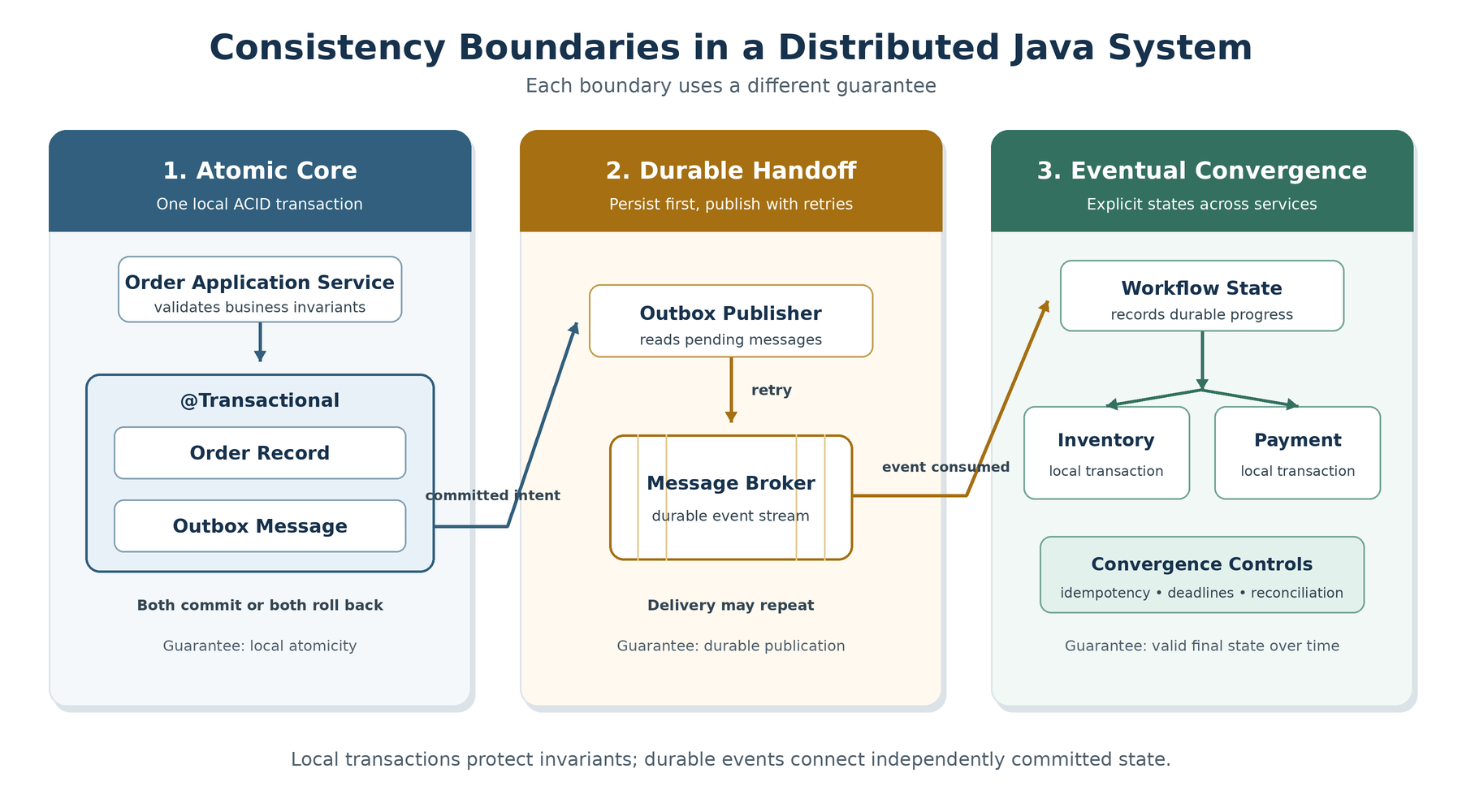
In this presentation, Sugu Sougoumarane explores the architectural patterns essential for building robust and reliable payment systems, drawing from his extensive experience in infrastructure engineering. The core challenge in payment processing is maintaining absolute data integrity and consistency across distributed systems where failure is inevitable. Sougoumarane emphasizes the critical role of idempotency, explaining how unique keys prevent duplicate transactions and ensure that retrying a failed operation does not result in double charging. He also discusses the importance of using finite state machines to manage the complex lifecycle of a payment, moving away from monolithic logic toward more manageable, discrete transitions. Furthermore, the session delves into the necessity of immutable ledgers for auditability and the "transactional outbox" pattern to ensure atomicity between database updates and external message queuing. By treating every payment as a formal state transition and prioritizing crash recovery over error prevention, developers can build systems that remain consistent even during network partitions or database outages. Ultimately, the presentation provides a blueprint for distributed consistency in financial contexts, advocating for decoupled services that rely on verifiable proofs of state rather than fragile, long-running distributed locks or manual intervention.


CISOs reshape their roles as business risk strategists

The role of the Chief Information Security Officer (CISO) is undergoing a fundamental transformation from a technical silo to a core business risk management function. Driven largely by the rapid integration of artificial intelligence, which intertwines security directly with operational processes, the modern CISO must now operate as a strategic partner rather than just a technologist. This shift requires moving beyond traditional metrics of application security to a language of enterprise-wide risk, involving financial impact, market growth, and competitive positioning. According to the article, the arrival of generative and agentic AI has made digital and business risks virtually synonymous, forcing security leaders to quantify how mitigation strategies align with overall corporate objectives. Consequently, corporate boards now expect CISOs to provide nuanced advice on whether to accept, transfer, or mitigate specific threats based on the organization’s unique risk tolerance. While many CISOs still struggle with this transition due to their technical engineering backgrounds, the new leadership profile demands proactive engagement with external peers and vendors to inform long-term strategy. Ultimately, the successful "business CISO" is one who moves from a reactive, fear-based compliance mindset to a strategic stance that actively accelerates growth while ensuring robust organizational resilience and stability.


Cloudflare wants to rebuild the network for the age of AI agents

Cloudflare is actively reshaping the global network to accommodate the rise of autonomous AI software through a series of infrastructure updates announced during its "Agents Week" event. Recognizing that traditional networking and security models—designed primarily for human interactive logins—often fail for ephemeral, autonomous processes, the company introduced Cloudflare Mesh. This private networking fabric provides AI agents with a shared private IP space and bidirectional reachability, replacing the manual friction of VPNs and multi-factor authentication with seamless, scoped access to private infrastructure. Beyond connectivity, Cloudflare is empowering agents with essential administrative capabilities, such as the new Registrar API for domain management and an integrated Email Service for outbound and inbound communications. To further support agentic workflows, the company launched "Agent Memory" to preserve conversation context and "Artifacts" for Git-compatible versioned storage. Additionally, a new Agent Readiness Index allows organizations to evaluate how effectively their web presence supports these non-human visitors. By integrating these services into its existing edge network, Cloudflare aims to treat AI agents as first-class citizens, creating a secure and highly scalable control plane that balances the performance needs of automated systems with the stringent security requirements of modern enterprise environments.

Daily Tech Digest - March 21, 2026


Quote for the day:

"Management is about arranging and telling. Leadership is about nurturing and enhancing." -- Tom Peters


🎧 Listen to this digest on YouTube Music

▶ Play Audio Digest

Duration: 22 mins • Perfect for listening on the go.


Three ways AI is learning to understand the physical world

The VentureBeat article "Three ways AI is learning to understand the physical world" explores how researchers are overcoming the physical reasoning limitations of large language models through "world models." While LLMs excel at abstract knowledge, they lack grounding in causality, prompting a shift toward three distinct architectural approaches to simulate the real world. The first, Joint Embedding Predictive Architecture (JEPA), mimics human cognition by learning abstract latent features, ignoring irrelevant pixels to achieve the high efficiency required for real-time robotics. The second approach utilizes Gaussian splats to generate detailed 3D spatial environments from prompts, allowing AI agents to interact within standard physics engines like Unreal Engine. Finally, end-to-end generative models, such as DeepMind’s Genie 3 and Nvidia’s Cosmos, act as native physics engines by continuously generating frames and physical dynamics on the fly. This third method is particularly vital for creating massive synthetic data factories to safely train autonomous systems in complex edge cases. Ultimately, the analysis suggests a future defined by hybrid architectures, where LLMs provide the reasoning interface while world models serve as the foundational infrastructure for spatial data, enabling AI to move beyond digital browsers and into physical spaces.


Field workers don’t need more access, they need better security

In this interview, Chris Thompson, CISO at West Shore Home, outlines the evolving landscape of cybersecurity for field-based workforces. He emphasizes that the principle of least privilege should be applied consistently across all roles, dismissing the notion that field workers require broader access for convenience. A significant shift involves replacing antiquated, shared generic accounts with individual credentials secured by robust multifactor authentication, reflecting a modern standard where security is never sacrificed for speed. Thompson details how West Shore Home manages sensitive customer data through continuous risk assessments and bi-monthly executive reviews, ensuring mitigation strategies remain agile rather than stuck in traditional annual cycles. Addressing the logistical hurdles of training, he advocates for integrating security awareness into daily "toolbox talks" at warehouses, which proves more effective than email-based modules for employees on the move. By aligning security protocols with the technology field teams use daily, the organization fosters a unified culture where every worker understands their role in the broader security posture. Ultimately, Thompson argues that field workers do not need expanded access; they require more sophisticated, integrated security measures that support their unique operational environment without introducing unnecessary risk to the enterprise.


6 innovation curves are rewriting enterprise IT strategy

The article "6 innovation curves are rewriting enterprise IT strategy" highlights a fundamental shift from sequential technology updates to managing multiple, overlapping waves of digital transformation. These six innovation curves include transitioning from traditional software to systems of autonomous collaborators, adopting AI-native applications that embed machine learning into their core architecture, and treating enterprise memory as a queryable knowledge layer for real-time decision-making. Additionally, IT leaders must redesign human-machine interactions to enhance productivity, establish robust governance for trust and integrity in a world of synthetic data, and utilize virtual simulations to de-risk experimentation. The author emphasizes that these curves are deeply interdependent; for example, autonomous agents require high-quality memory layers to function effectively, while simulation environments provide the necessary testing grounds for AI-native interactions. To succeed, organizations must move beyond linear management models and instead develop an integrated strategy that orchestrates these curves concurrently. By focusing on areas like "AgentOps" and persistent data layers, businesses can build a resilient digital architecture capable of absorbing continuous disruption while maintaining operational priorities, effectively redefining how enterprises create value and manage risk in an AI-driven landscape.


Credential theft compounded in 2025, says new data from Recorded Future

Recorded Future’s 2025 Identity Threat Landscape Report reveals that credential theft has become the primary initial access vector for enterprise security breaches, characterized by a staggering escalation throughout the year. Data indicates that credential indexing surged by 90 percent in the final quarter compared to the first, with a significant majority of these attacks specifically targeting authentication systems to maximize unauthorized access. A particularly alarming trend is the proliferation of infostealer malware, which harvested 276 million credentials containing active session cookies. These cookies enable cybercriminals to bypass multi-factor authentication entirely, rendering traditional security measures increasingly insufficient. The report underscores that a single compromised endpoint can jeopardize an entire organization, as the average infected device now yields approximately 87 distinct stolen credentials across various corporate and personal platforms. Consequently, industry experts advocate for a transition toward "verified trust" models, which emphasize continuous, contextual identity verification using biometrics and passkeys. Despite the escalating risk, research from IDC and Ping Identity suggests that only nine percent of organizations have successfully operationalized these advanced safeguards at scale, highlighting a critical maturity gap in global digital infrastructure and a pressing need for board-level prioritization of identity security.


Configuration as a Control Plane: Designing for Safety and Reliability at Scale

The InfoQ article "Configuration as a Control Plane" explores the evolution of configuration from static deployment files into a dynamic, live control plane that actively shapes system behavior. In modern cloud-native architectures, configuration changes often move faster and impact more systems than application code, making them a primary driver of large-scale reliability incidents. Consequently, configuration management is transitioning from traditional agent-based convergence toward continuously reconciled, policy-enforced systems. The article emphasizes treating configuration as a high-leverage reliability discipline rather than a mere operational task. Key strategies discussed include using strongly typed, schema-validated configurations and policy engines like Open Policy Agent (OPA) to enforce guardrails before and during rollouts. By adopting practices such as staged regional rollouts, canary deployments, and automated diff analysis, organizations can ensure that configuration correctness is a systemic property rather than a manual checklist. Looking ahead, the integration of AI-driven risk assessment and unified configuration APIs promises to further enhance safety and resilience. Ultimately, this shift enables infrastructure to become more self-healing and predictable, allowing teams to manage complex, ephemeral workloads at scale while minimizing the risk of catastrophic human error or cascading failures.


10 Million IoT Devices Hacked: Is Yours Next?

The Medium article "10 Million IoT Devices Hacked: Is Yours Next?" explores the alarming rise of BadBox 2.0, a sophisticated global botnet that has compromised over ten million Internet of Things (IoT) devices. Highlighting a 2025 federal lawsuit by Google, the piece details how seemingly harmless gadgets—such as unbranded streaming boxes, digital picture frames, and car infotainment systems—are being transformed into criminal infrastructure. A critical revelation is that many of these devices are pre-infected with malware during manufacturing, meaning consumers are compromised the moment they connect to Wi-Fi. The vulnerability primarily affects cheap hardware running the Android Open Source Project (AOSP) without Google’s Play Protect certification. To safeguard home networks, the author recommends identifying all connected devices via router admin panels and scanning for red flags like "Seekiny Studio" apps or unusual traffic to foreign IP ranges. Ultimately, the article serves as a stark warning against purchasing low-cost, unverified electronics, urging users to prioritize "purchase hygiene" by sticking to reputable brands with verifiable firmware update histories. By verifying Play Protect status and monitoring for network anomalies, users can better defend their digital privacy against these pervasive, invisible threats.


How CISOs Can Survive the Era of Geopolitical Cyberattacks

In the current era of geopolitical cyber warfare, Chief Information Security Officers (CISOs) must pivot from traditional perimeter defense to a robust strategy of internal containment. Geopolitical attacks, exemplified by Iranian wiper campaigns like the Handala group’s strike on Stryker, differ from standard ransomware because they prioritize operational chaos and destruction over financial gain. To survive these threats, the article outlines a vital five-step playbook centered on limiting lateral movement. First, CISOs should implement identity-aware access controls to prevent compromised credentials from granting broad network access. Second, they must enforce default-deny policies on administrative ports to block common pivot points. Third, restricting privileged accounts through role-based segmentation is essential to reduce the potential blast radius of a breach. Fourth, organizations need deep visibility into internal traffic to detect covert tunnels and unauthorized connection paths. Finally, implementing automated isolation capabilities ensures that destructive activity is contained before it can spread across the entire infrastructure. Ultimately, the transition to a self-defending network that focuses on stopping an attacker’s mobility rather than just their entry is crucial. By treating internal connectivity as a primary risk factor, CISOs can ensure their organizations remain operational despite increasingly sophisticated, state-sponsored cyber disruptions.


Building A Sustainable Hustle Culture

In "Building A Sustainable Hustle Culture," Greg Dolan, CEO of Keen Decision Systems, critiques the traditional "work hard, play hard" model for its tendency to cause burnout and employee dissatisfaction. Instead, he advocates for a reimagined "smart hustle" that prioritizes work-life integration and mental well-being over relentless overwork. Central to this approach is the implementation of a four-day workweek, which Dolan argues allows for the deep rest necessary for high performance. By establishing clear temporal constraints, employees are encouraged to maximize their focus during work hours while fully disconnecting during their time off. This period of rest often serves as a catalyst for innovation, as personal interactions and downtime can unlock fresh professional insights. Despite the fact that only 22% of American employers have adopted this schedule, Dolan highlights research showing that 98% of employees feel significantly more motivated under such a model. Ultimately, the article suggests that sustainable success is achieved not through endless hours, but by valuing employee autonomy and recognizing that a refreshed workforce is inherently more productive and creative, transforming the very definition of professional ambition and organizational health in the modern era.


5 Production Scaling Challenges for Agentic AI in 2026

In the article "5 Production Scaling Challenges for Agentic AI in 2026," Nahla Davies examines the significant hurdles organizations face when moving autonomous systems from prototype to large-scale production. The first major obstacle is orchestration complexity, which grows exponentially in multi-agent environments where coordination overhead often becomes a performance bottleneck. Second, current observability tools remain inadequate for tracing the non-deterministic, multi-step decision paths inherent in agentic workflows, making debugging a profound challenge. Third, cost management is increasingly difficult as autonomous loops consume tokens rapidly, with variable execution paths creating high billing unpredictability. Fourth, traditional testing and evaluation methods are insufficient for probabilistic systems; teams must instead develop advanced simulation environments or "LLM-as-a-judge" pipelines to ensure reliability. Finally, the rapid deployment of agentic capabilities has outpaced governance and safety frameworks. Implementing robust guardrails is essential to prevent harmful real-world actions—such as unauthorized transactions or database modifications—without stifling the agent’s practical utility. Ultimately, the analysis highlights that while agentic AI is transformative, bridging the production gap requires solving these foundational infrastructure and safety problems to move beyond "pilot purgatory" into meaningful, scaled operations.


Building trust in the future of quantum computing

The article "The Future of Quantum," published on Phys.org in March 2026, outlines a pivotal transition in quantum science from experimental demonstrations to "utility-scale" industrial applications. As the field marks the centennial of quantum mechanics, researchers are shifting focus from simply increasing qubit counts to enhancing system reliability through advanced error-mitigation and standardized benchmarking. A central theme is "building trust," which involves creating transparent performance metrics that allow industries to transition from classical to quantum-enhanced workflows in sectors like drug discovery, sustainable material design, and financial modeling. Significant breakthroughs highlighted include the development of diamond-based quantum internet nodes and the emergence of "quantum batteries" that exhibit faster charging at larger scales. Additionally, the analysis emphasizes the geopolitical dimension, noting substantial national investments aimed at securing sovereign quantum capabilities for national security and economic resilience. Ultimately, the piece argues that the "second quantum revolution" is now defined by the convergence of hardware stability and sophisticated software stacks, effectively turning the strange properties of entanglement and superposition into dependable tools for global digital infrastructure and solving previously intractable computational challenges.

Daily Tech Digest - March 10, 2026


Quote for the day:

"A leader has the vision and conviction that a dream can be achieved. He inspires the power and energy to get it done." -- Ralph Nader


🎧 Listen to this digest on YouTube Music

▶ Play Audio Digest

Duration: 37 mins • Perfect for listening on the go.

Job disruption by AI remains limited — and traditional metrics may be missing the real impact

This article on computerworld explores the current state of artificial intelligence in the workforce. Despite widespread alarm, data from Challenger, Gray & Christmas indicates that AI accounted for roughly 8 to 10 percent of job cuts in early 2026. Researchers from Anthropic argue that traditional metrics fail to capture the nuances of AI integration, introducing an "observed exposure" methodology. This technique combines theoretical large language model capabilities with actual usage data, revealing that while certain roles—such as computer programmers and customer service representatives—have high exposure to automation, actual deployment lags significantly behind technical potential. Currently, AI functions primarily as a tool for task-based augmentation rather than full-scale replacement, which enhances worker productivity but complicates entry-level hiring. The report suggests that while immediate mass unemployment hasn't materialized, the long-term impact will require a fundamental re-engineering of workflows. This shift may disproportionately affect younger workers as companies struggle to balance AI efficiency with the necessity of maintaining a pipeline of human talent. Ultimately, the transition necessitates a strategic realignment of human roles to ensure sustainable growth in an intelligence-native era.


Why Password Audits Miss the Accounts Attackers Actually Want

This article on BleepingComputer highlights a critical disconnect between standard compliance-driven password audits and the actual tactics used by cybercriminals. While traditional audits prioritize technical requirements like complexity and rotation, they often overlook the context that makes an account vulnerable. For instance, a password can be statistically "strong" yet already compromised in a previous breach; research indicates that 83% of leaked passwords still meet regulatory standards. Furthermore, audits frequently neglect "orphaned" accounts belonging to former employees or contractors, which provide silent entry points for attackers. Service accounts—often over-privileged and exempt from expiry policies—represent another major blind spot. The piece argues that point-in-time snapshots are insufficient against continuous threats like credential stuffing. To be truly effective, security teams must shift toward continuous monitoring, incorporating breached-password screening and risk-based prioritization. By expanding the scope to include dormant, external, and service accounts, organizations can move beyond mere compliance to address the high-value targets that attackers prioritize. Ultimately, securing a digital environment requires recognizing that a compliant password is not necessarily a safe one in the face of modern, targeted exploitation.


AI is supercharging cloud cyberattacks - and third-party software is the most vulnerable

The latest Google Cloud Threat Report, as analyzed by ZDNET, highlights a significant escalation in cybersecurity risks where artificial intelligence is increasingly being used to "supercharge" cloud-based attacks. The report reveals a dramatic collapse in the window between the disclosure of a vulnerability and its mass exploitation, shrinking from weeks to mere days. Rather than targeting the highly secured core infrastructure of major cloud providers, threat actors are now focusing their efforts on unpatched third-party software and code libraries. This shift emphasizes that the modern supply chain remains a critical weak point for many organizations. Furthermore, the report notes a transition away from traditional brute force attacks toward more sophisticated identity-based compromises, including vishing, phishing, and the misuse of stolen human and non-human identities. Data exfiltration is also evolving, with "malicious insiders" increasingly using consumer-grade cloud storage services to move confidential information outside the corporate perimeter. To combat these AI-powered threats, Google’s experts recommend that businesses adopt automated, AI-augmented defenses, prioritize immediate patching of third-party tools, and strengthen identity management protocols. Ultimately, the report serves as a stark warning that in the current threat landscape, speed and automation are no longer optional but essential components of a robust cybersecurity strategy.


Change as Metrics: Measuring System Reliability Through Change Delivery Signals

This article highlights that system changes account for the vast majority of production incidents, necessitating their treatment as primary reliability indicators. To manage this risk, the author proposes a framework centered on three core business metrics: Change Lead Time, Change Success Rate, and Incident Leakage Rate. While aligned with DORA principles, this model specifically focuses on delivery quality by distinguishing between immediate deployment failures and latent defects that manifest as post-release incidents. To operationalize these goals, technical control metrics such as Change Approval Rate, Progressive Rollout Rate, and Change Monitoring Windows are introduced to provide actionable insights into pipeline friction and risk. The piece further advocates for a platform-agnostic, event-centric data architecture to collect these signals across diverse, distributed environments. This centralized approach avoids the brittleness of platform-specific logging and provides a unified view of system health. Ultimately, the framework empowers organizations to transform change management from a reactive necessity into a proactive, measurable engineering capability. By integrating these metrics, development teams can effectively balance the need for high-speed delivery with the imperative of system stability, ensuring that rapid innovation does not come at the expense of user experience or operational reliability.


The future of generative AI in software testing

In this article on Techzine, experts Hélder Ferreira and Bruno Mazzotta discuss the transformative shift of AI from a simple task accelerator to a fundamental structural layer within delivery pipelines. As global IT investment in AI is projected to surge toward $6.15 trillion by 2026, the software testing landscape is evolving beyond early challenges like hallucinations and "vibe coding" toward a sophisticated "quality intelligence layer." The authors outline four critical areas where AI adds strategic value: generating complex scenario-based datasets, suggesting high-risk exploratory prompts, automating defect triage to identify regression patterns, and enabling context-aware execution that prioritizes testing based on actual risk rather than volume. Crucially, the piece argues that while AI can significantly enhance velocity, sustainable success depends on maintaining "humans-in-the-loop" to ensure traceability and accountability. In this new era, the primary differentiator for enterprises will not be the sheer amount of AI deployed, but the effectiveness of their governance frameworks. By linking intent with execution and using AI as connective tissue across the lifecycle, organizations can achieve a balance where rapid delivery is supported by explainable automation and human-verified confidence in software quality.


CIOs cut IT corners to manufacture budget for AI

In this CIO.com article, author Esther Shein examines the aggressive strategies IT leaders are employing to fund artificial intelligence initiatives amidst stagnant overall budgets. Faced with intense pressure from boards and executive leadership to prioritize AI, many CIOs are being forced to make difficult trade-offs that jeopardize long-term stability. Common tactics include delaying non-critical infrastructure refreshes, such as server expansions and network improvements, which are often pushed out by twelve to eighteen months. Additionally, organizations are aggressively consolidating vendors, renegotiating contracts, and cutting legacy software subscriptions to free up capital. Some leaders have even implemented strict "self-funding" mandates where every new AI project must be offset by equivalent cuts elsewhere. Beyond technical sacrifices, the human element is also affected, with many departments reducing reliance on contractors or trimming internal staff to reallocate funds toward high-impact AI use cases. While these measures enable rapid deployment, they frequently lead to the accumulation of technical debt and a narrower scope for implementations. Ultimately, the piece warns that while these "corners" are being cut to fuel innovation, the resulting lack of focus on foundational maintenance could present significant operational risks in the future.


Beyond Prompt Injection: The Hidden AI Security Threats in Machine Learning Platforms

In the article "Beyond Prompt Injection: The Hidden AI Security Threats in Machine Learning Platforms," the focus of AI security shifts from headline-grabbing prompt injections to the critical vulnerabilities within MLOps infrastructure. While many security teams prioritize protecting chatbots from manipulation, the underlying platforms used to train and deploy models often present a far more dangerous attack surface. Through a red team engagement, researchers demonstrated how a simple self-registered trial account could be used to achieve remote code execution on a provider’s cloud infrastructure. By deploying a seemingly legitimate but malicious machine learning model, attackers can exploit the fact that these platforms must execute arbitrary code to function. The study highlights a significant risk: once RCE is achieved, weak network segmentation can allow adversaries to bypass trust boundaries and access sensitive internal databases or services. This effectively turns a managed ML environment into a gateway for lateral movement within a corporate network. To mitigate these threats, the article stresses that organizations must move beyond model-centric security and adopt robust infrastructure protections, including strict network isolation, continuous behavior monitoring, and a "zero-trust" approach to user-deployed artifacts, ensuring that the convenience of rapid AI development does not come at the cost of total system compromise.


Enterprise agentic AI requires a process layer most companies haven’t built

The VentureBeat article emphasizes that while 85% of enterprises aspire to implement agentic AI within the next three years, a staggering 76% acknowledge that their current operations are fundamentally unequipped for this transition. The core issue lies in the absence of a "process layer"—a critical foundation of optimized workflows and operational intelligence that provides AI agents with the necessary context to function effectively. Without this layer, agents are essentially "guessing," leading to a lack of reliability that causes 82% of decision-makers to fear a failure in return on investment. The piece argues that the primary hurdle is not merely technological but rather rooted in organizational structure and change management. Most companies suffer from siloed data and fragmented processes that hinder the seamless integration of autonomous systems. To overcome these barriers, businesses must prioritize process optimization and operational visibility, ensuring that AI-driven initiatives are linked to strategic executive outcomes. Simply layering advanced AI over inefficient, legacy frameworks will likely result in costly friction. Ultimately, for agentic AI to move beyond experimental pilots and deliver scalable value, organizations must first build a robust architectural bridge that connects sophisticated models with the complex, real-world logic of their daily business operations and high-stakes organizational decision cycles.


Building resilient foundations for India’s expanding Data Centre ecosystem

In "Building resilient foundations for India's expanding Data Centre ecosystem," Saurabh Verma explores the rapid evolution of India’s data infrastructure and the urgent necessity of prioritizing long-term resilience over mere capacity. As cloud adoption and 5G accelerate growth across hubs like Mumbai, Chennai, and Hyderabad, the sector faces escalating challenges that demand a sophisticated understanding of risk management. The article argues that modern data centres are no longer just IT assets but critical infrastructure whose failure directly impacts the digital economy. Beyond physical damage, business interruptions often result in massive financial losses, contractual penalties, and significant reputational harm. Climate change has emerged as a significant operational reality, with heatwaves and flooding stressing cooling systems and electrical grids. Furthermore, the convergence of cyber and physical risks means that digital disruptions can quickly translate into tangible infrastructure damage. Construction complexities and logistical interdependencies further amplify potential losses, making early risk engineering essential for success. Ultimately, the piece emphasizes that resilience must be a core design pillar rather than an afterthought. By integrating disciplined risk management from site selection through operations, Indian providers can gain a commercial advantage, securing better investment and insurance terms while building a sustainable, trustworthy backbone for the nation’s digital future.


CVE program funding secured, easing fears of repeat crisis

The Common Vulnerabilities and Exposures (CVE) program has successfully secured stable funding, alleviating industry-wide fears of a repeat of the 2025 crisis that nearly crippled global vulnerability tracking. As detailed in the CSO Online report, the Cybersecurity and Infrastructure Security Agency (CISA) and the MITRE Corporation have renegotiated their contract, transitioning the 26-year-old program from a discretionary expenditure to a protected line item within CISA's budget. This structural change effectively eliminates the "funding cliff" that previously required a last-minute emergency extension. While CISA leadership emphasizes that the program is now fully funded and evolving, some experts note that the specifics of the "mystery contract" remain opaque. The resolution comes at a critical time, as the cybersecurity community had already begun developing contingencies, such as the independent CVE Foundation, to reduce reliance on a single government source. Despite the financial stability, challenges regarding transparency, modernization, and international governance persist. The article underscores that while the immediate threat of a service lapse has faded, the incident served as a stark reminder of the global security ecosystem's fragility. Moving forward, the focus shifts toward ensuring this essential public resource remains resilient against future political or administrative shifts within the United States government.

Daily Tech Digest - February 24, 2026


Quote for the day:

"Transparent reviews create fairness. Subjective reviews create frustration." -- Gordon Tredgold


AI agents and bad productivity metrics

The great promise of generative artificial intelligence was that it would finally clear our backlogs. Coding agents would churn out boilerplate at superhuman speeds, and teams would finally ship exactly what the business wants. The reality, as we settle into 2026, is far more uncomfortable. Artificial intelligence is not going to save developer productivity because writing code was never the bottleneck in software engineering. ... For decades, one of the most common debugging techniques was entirely social. A production alert goes off. You look at the version control history, find the person who wrote the code, ask them what they were trying to accomplish, and reconstruct the architectural intent. But what happens to that workflow when no one actually wrote the code? What happens when a human merely skimmed a 3,000-line agent-generated pull request, hit merge, and moved on to the next ticket? When an incident happens, where is the deep knowledge that used to live inside the author? ... The metrics that matter are still the boring ones because they measure actual business outcomes. The DORA metrics remain the best sanity check we have because they tie delivery speed directly to system stability. They measure deployment frequency, lead time for changes, change failure rate, and time to restore service. None of those metrics cares about the number of commits your agents produced today. They only care about whether your system can absorb change without breaking.


How vertical SaaS is redefining enterprise efficiency

For the past decade, horizontal SaaS has been the defining force in enterprise technology. Platforms like CRMs, ERP suites and collaboration tools promised universality, offering a single platform to manage every business function across all industries. The strategy made sense: a large total addressable market, reusable architecture and marketing scale. Vertical SaaS flips that model. It is narrow by design but deep in impact. A report by Strategy& found that B2B vertical software companies are now growing faster than their horizontal peers, thanks to higher retention rates, lower churn rates and better unit economics. When software mirrors how a business already works, people stop treating it like a tool they tolerate and start relying on it like infrastructure. ... In regulated industries, compliance isn’t a feature; it’s the baseline for trust. I learned early that trying to retrofit audit trails or data retention policies after go-live only creates technical debt. Instead, design for compliance as a first-class product layer: immutable logs, permission hierarchies and exportable compliance reports built into the system. ... Vertical products don’t thrive in isolation. Integration with industry hardware, marketplaces and regulatory systems drives adoption. In one case, we partnered with a hardware vendor to automatically sync manifest data from their devices, cutting onboarding time in half and unlocking co-marketing opportunities.


API Security Standards: 10 Essentials to Get You Started

Most API security flaws are created during the design phase. You're too late if you're waiting until deployment to think about threats. Shift-left principles mean integrating security early, especially at the design phase, where flawed assumptions become future exploits. Start by mapping out each endpoint's purpose, what data it touches, and who should access it. Identify where trust is assumed (not earned), roles blur, and inputs aren't validated. ... Every API has a breaking point. If you don't define it, attackers will. Rate limiting and throttling prevent denial-of-service (DoS) attacks, and they're also your first defense against scraping, brute-forcing, enumeration, and even accidental misuse by poorly built integrations. APIs, by nature, invite automation. Without guardrails, that openness turns into a floodgate. And in some cases, unchecked abuse opens the door to far worse issues, like remote code execution, where improperly scoped input or lack of throttling leads directly to exploitation. ... APIs are built to accept input. Attackers find ways to exploit it. The core rule is this - if you didn't expect it, don't process it. If you didn't define it, don't send it. Define request and response schemas explicitly using tools like OpenAPI or JSON Schema, as recommended by leading API security standards. Then enforce them — at the gateway, app layer, or both. Don't just use validation as linting; treat it as a runtime contract. If the payload doesn't match the spec, reject it.


Why AI Urgency Is Forcing a Data Governance Reset

The cost of weak governance shows up in familiar ways: teams can’t find data, requirements arrive late in the process, and launches stall when compliance realities collide with product timelines. Without governance, McQuillan argues, organizations “ultimately suffer from higher cost basis,” with downstream consequences that “impact the bottom line.” ... McQuillan sees a clear step-change in executive urgency since generative AI (GenAI) became mainstream. “There’s been a rapid adoption, particularly since the advent of GenAI and the type of generative and agentic technologies that a lot of C-suites are taking on,” he says. But he also describes a common leadership gap: many executives feel pressure to become “AI-enabled” without a clear definition of what that means or how to build it sustainably. “There’s very much a well-understood need across all companies to become AI-enabled in some way,” he says. “But the problem is a lot of folks don’t necessarily know how to define that.” In the absence of clarity, organizations often fall into scattershot experimentation. What concerns McQuillan the most is how the pace of the “race” shapes priorities. ... When asked whether the long-running mantra “data is the new oil” still holds in the era of large language models and agentic workflows, McQuillan is direct. “It holds true now more than ever,” he says. He acknowledges why attention drifts: “It’s natural for people to gravitate toward things that are shiny,” and “AI in and of itself is an absolutely magnificent space.”


Building a Least-Privilege AI Agent Gateway for Infrastructure Automation with MCP, OPA, and Ephemeral Runners

An agent misinterpreting an instruction can initiate destructive infrastructure changes, such as tearing down environments or modifying production resources. A compromised agent identity can be abused to exfiltrate secrets, create unauthorized workloads, or consume resources at scale. In practice, teams often discover these issues late, because traditional logs record what happened, but not why an agent decided to act in the first place. For organizations, this liability creates operational and governance challenges. Incidents become harder to investigate, change approvals are bypassed unintentionally, and security teams are left with incomplete audit trails. Over time, this problem erodes trust in automation itself, forcing teams to either roll back agent usage or accept increasing levels of unmanaged risk. ... A more sustainable approach is to introduce an explicit control layer between agents and the systems they operate on. In this article, we focus on an AI Agent Gateway, a dedicated boundary that validates intent, enforces policy as code, and isolates execution before any infrastructure or service API is invoked. Rather than treating agents as privileged actors, this model treats them as untrusted requesters whose actions must be authorized, constrained, observed, and contained. ... In the context of AI-driven automation, defense in depth means that no single component, neither the agent, nor the gateway, nor the execution environment, has enough authority on its own to cause damage. 


Demystifying CERT‑In’s Elemental Cyber Defense Controls: A Guide for MSMEs

For India’s Micro, Small, and Medium Enterprises (MSMEs), cybersecurity is no longer a “big company problem.” With digital payments, SaaS adoption, cloud-first operations, and supply‑chain integrations becoming the norm, MSMEs are now prime targets for cyberattacks. To help these organizations build a strong foundational security posture, the Indian Computer Emergency Response Team (CERT-In) has released CIGU-2025-0003, outlining a baseline of Cyber Defense Controls, which prescribes 15 Elemental Cyber Security Controls—a pragmatic, baseline set of safeguards designed to uplift the nation’s cyber hygiene. ... These controls, mapped to 45 recommendations, enable essential digital hygiene, protect against ransomware, ensure regulatory compliance, and are required for annual audits. CERT‑In’s Elemental Controls are designed as minimum essential practices that every Indian organization—regardless of size—should implement. ... The CERT-In guidelines offer a simplified, actionable starting point for MSMEs to benchmark their security. These controls are intentionally prescriptive, unlike ISO or NIST, which are more framework‑oriented. ... Because threats constantly evolve and MSMEs face unique risks depending on their industry and data sensitivity, organizations should view this framework not as an endpoint, but as the first critical step toward building a comprehensive security program akin to ISO 27001 or NIST CSF 2.0.


AI-fuelled cyber attacks hit in minutes, warns CrowdStrike

CrowdStrike reports a sharp acceleration in cyber intrusions, with attackers moving from initial access to lateral movement in less than half an hour on average as widely available artificial intelligence tools become embedded in criminal workflows. Its latest Global Threat Report puts average eCrime "breakout time" at 29 minutes in 2025, a 65% improvement on the prior year. ... Alongside generative AI use in preparation and execution, the report describes attempts to exploit AI systems directly. Adversaries injected malicious prompts into GenAI tools at more than 90 organisations, using them to generate commands associated with credential theft and cryptocurrency theft. ... Incidents linked to North Korea rose more than 130%, while activity by the group CrowdStrike tracks as FAMOUS CHOLLIMA more than doubled. The report says DPRK-nexus actors used AI-generated personas to scale insider operations. It also cites a large cryptocurrency theft attributed to the actor it calls PRESSURE CHOLLIMA, valued at USD $1.46 billion and described as the largest single financial heist ever reported. The report also references AI-linked tooling used by other state and criminal groups. Russia-nexus FANCY BEAR deployed LLM-enabled malware, which it named LAMEHUG, for automated reconnaissance and document collection. The eCrime actor tracked as PUNK SPIDER used AI-generated scripts to speed up credential dumping and erase forensic evidence.


Shadow mode, drift alerts and audit logs: Inside the modern audit loop

When systems moved at the speed of people, it made sense to do compliance checks every so often. But AI doesn't wait for the next review meeting. The change to an inline audit loop means audits will no longer occur just once in a while; they happen all the time. Compliance and risk management should be "baked in" to the AI lifecycle from development to production, rather than just post-deployment. This means establishing live metrics and guardrails that monitor AI behavior as it occurs and raise red flags as soon as something seems off. ... Cultural shift is equally important: Compliance teams must act less like after-the-fact auditors and more like AI co-pilots. In practice, this might mean compliance and AI engineers working together to define policy guardrails and continuously monitor key indicators. With the right tools and mindset, real-time AI governance can “nudge” and intervene early, helping teams course-correct without slowing down innovation. In fact, when done well, continuous governance builds trust rather than friction, providing shared visibility into AI operations for both builders and regulators, instead of unpleasant surprises after deployment. ... Shadow mode is a way to check compliance in real time: It ensures that the model handles inputs correctly and meets policy standards before it is fully released. One AI security framework showed how this method worked: Teams first ran AI in shadow mode, then compared AI and human inputs to determine trust. 


Making AI Compliance Practical: A Guide for Data Teams Navigating Risk, Regulation, and Reality

As AI tools become more embedded in enterprise workflows, data teams are encountering a growing reality: compliance isn’t only a legal concern but also a design constraint, a quality signal, and, often, a competitive differentiator. But navigating compliance can feel complex, especially for teams focused on building and shipping. What is the good news? It doesn’t have to be. When approached intentionally, compliance becomes a pathway to better decisions, not a barrier. ... Automation can help with regulations, but only if it's used correctly. I've looked at a tool before that used algorithms to find private information. It worked well with English, but when tested with material in more than one language, it missed a few personal identifiers. The group thought it was "smart enough." It wasn't. We kept the automation, but we added human review for rare cases, confidence levels to make checks happen, and alerts for input formats that aren't common. The automation stayed the same, but there were built-in checks and balances. ... The biggest compliance failures don’t come from bad people. They come from good teams moving fast, skipping hard questions, and assuming nothing will go wrong. But compliance isn’t a blocker. It’s a product quality signal. People will trust you more if they are aware that your team has carefully considered the details.


Tata Communications’ Andrew Winney on why SASE is now non-negotiable

Zero Trust is often discussed as a product decision, but in reality it is a journey. Many enterprises start with a few use cases, such as securing internet access or enabling remote access to private applications. But they do not always extend those principles across contractors, third-party users, software-as-a-service applications and hybrid environments. Practical Zero Trust requires enterprises to rethink access fundamentally. Every request must be evaluated based on who the user is, the context from which they are accessing, the device they are using and the resource they are requesting. Access must then be granted only to that specific resource. ... Secure Access Service Edge represents a structural convergence of networking and security rather than a simple technology swap. What are the most critical architectural and change-management considerations enterprises must address during this transition? SASE is not a one-time technology change. It represents the convergence of networking and security under unified orchestration and policy management. That transition takes time and must be managed carefully. We typically work with enterprises through phased transition plans. If an organisation’s immediate priority is securing internet access or private application access for remote users, we begin there and expand to additional use cases over time. Integration is critical. Enterprises have existing investments in cloud platforms, local area networks and security tools. 

Daily Tech Digest - February 10, 2026


uote for the day:

"Leaders must see the dream in their mind before they will accomplish the dream with their team." -- Orrin Woodward


AQ Is The New EQ: Why Adaptability Now Defines Success

AQ describes the ability to adjust thinking, behaviour, and strategy in response to rapid change and uncertainty. Unlike IQ, which measures cognitive capacity, or EQ, which best captures emotional regulation, AQ predicts how quickly someone can learn, unlearn, and recalibrate when conditions change. ... One key reason AQ is eclipsing other forms of intelligence is that it is dynamic rather than static. IQ remains stable across adulthood for the most part. Adaptability, however, varies with experience, exposure to stress, and environmental demands. Research on psychological flexibility shows that people who can manage ambiguity and shift perspectives under pressure are more likely to adapt effectively to uncertainty. ... At the end of the day, AQ is neither fixed nor innate. When it comes to learning and organizational development, adaptability can be strengthened deliberately through structured challenges, supportive feedback loops, and reflective practices. ... Adaptable people seek feedback, revise strategies quickly when presented with new evidence, don’t get stuck, and remain effective even when the rules of the game are shifting under their feet. This high degree of cognitive flexibility - the ability to shift between problem-solving approaches versus defaulting to the “but we’ve always done it this way” approach - best predicts effective decision-making under stress.


Why AI Governance Risk Is Really a Data Governance Problem

Modern enterprise AI systems now use retrieval-augmented generation, which has further exacerbated these weaknesses. Trained AI models retrieve context from internal repositories during inference, pulling from file shares, collaboration platforms, CRM systems and knowledge bases. That retrieval layer must extract meaning from complex documents, preserve structure, generate AI embeddings and retrieve relevant fragments - while enforcing the same access controls as the source systems. This is where governance assumptions begin to break down. ... "We have to accept two things: Data will never be fully governed. Second, attempting to fully govern data before delivering AI is just not realistic. We need a more practical solution like trust models," Zaidi said. AI-first organizations are, therefore, exposing curated proprietary data as reusable "data products" that can be consumed by both humans and AI agents. The alternative is growing risk. As AI systems integrate more deeply with enterprise applications, APIs have become a critical but often under-governed data pathway. ... Regulators are converging on the same conclusion: AI accountability depends on data governance. Data protection regimes such as GDPR already require accuracy, purpose limitation and security. Emerging AI regulations, including the EU AI Act, explicitly tie AI risk to data sourcing, preparation and governance practices. 


Is AI killing open source?

It takes a developer 60 seconds to prompt an agent to fix typos and optimize loops across a dozen files. But it takes a maintainer an hour to carefully review those changes, verify they do not break obscure edge cases, and ensure they align with the project’s long-term vision. When you multiply that by a hundred contributors all using their personal LLM assistants to help, you don’t get a better project. You get a maintainer who just walks away. ... On one side, we’ll have massive, enterprise-backed projects like Linux or Kubernetes. These are the cathedrals, the bourgeoisie, and they’re increasingly guarded by sophisticated gates. They have the resources to build their own AI-filtering tools and the organizational weight to ignore the noise. On the other side, we have more “provincial” open source projects—the proletariat, if you will. These are projects run by individuals or small cores who have simply stopped accepting contributions from the outside. The irony is that AI was supposed to make open source more accessible, and it has. Sort of. ... Open source isn’t dying, but the “open” part is being redefined. We’re moving away from the era of radical transparency, of “anyone can contribute,” and heading toward an era of radical curation. The future of open source, in short, may belong to the few, not the many. ... In this new world, the most successful open source projects will be the ones that are the most difficult to contribute to. They will demand a high level of human effort, human context, and human relationship.


Designing Effective Multi-Agent Architectures

Some coordination patterns stabilize systems. Others amplify failure. There is no universal best pattern, only patterns that fit the task and the way information needs to flow. ... Neural scaling1 is continuous and works well for models. As shown by classic scaling laws, increasing parameter count, data, and compute tends to result in predictable improvements in capability. This logic holds for single models. Collaborative scaling,2 as you need in agentic systems, is different. It’s conditional. It grows, plateaus, and sometimes collapses depending on communication costs, memory constraints, and how much context each agent actually sees. Adding agents doesn’t behave like adding parameters. This is why topology matters. Chains, trees, and other coordination structures behave very differently under load. Some topologies stabilize reasoning as systems grow. Others amplify noise, latency, and error. ... If your multi-agent system is failing, thinking like a model practitioner is no longer enough. Stop reaching for the prompt. The surge in agentic research has made one truth undeniable: The field is moving from prompt engineering to organizational systems. The next time you design your agentic system, ask yourself: How do I organize the team? (patterns); Who do I put in those slots? (hiring/architecture); and Why could this fail at scale? (scaling laws) That said, the winners in the agentic era won’t be those with the smartest instructions but the ones who build the most resilient collaboration structures.


Never settle: How CISOs can go beyond compliance standards to better protect their organizations

A CISO running a compliant program may only review a vendor once a year or after significant system changes. Compliance standards haven’t caught up to the best practice of continuously monitoring vendors to stay on top of third-party risk. This highlights one of the most unfortunate incentives any CISO who manages a compliance program knows: It is often easier to set a less stringent standard and exceed it than to set a better target and risk missing it. ... One of the most common shortfalls of compliance-driven risk assessments is simplistic math around likelihood and impact. Many of the emergent risks mentioned above have a lower likelihood but an extremely high impact and even a fair amount of uncertainty around timeframes. Using this simplistic math, these tail risks do not often bubble up organically; instead, they have to be pulled up from the batch of lower frequency-x-impact scoring. Defining that impact in dollars and cents cuts through the noise. ... If your budget has already been approved without these focus areas in mind, now is the time to start weaving a risk-first approach into discussions with your board. You should be talking about this year-round, not only during budget season when it’s time to present your plan. It will position security as a way to protect revenue, improve capital efficiency, preserve treasury integrity and optimize costs, rather than a cost center.


India Reveals National Plan for Quantum-Safe Security

India is building a foundation to address the national security risks posed by quantum computing through the implementation of a Quantum Safe Ecosystem. As quantum computing rapidly advances, the Task Force, formed under the National Quantum Mission (NQM), has outlined critical steps for India to safeguard its digital infrastructure and maintain economic resilience. ... Critical Information Infrastructure sectors — including defense, power, telecommunications, space and core government systems — are identified as the highest priority for early adoption. According to the report, these sectors should begin formal implementation of post-quantum cryptography by 2027, with accelerated migration schedules reflecting the long operational lifetimes and high-risk profiles of their systems. The task force notes that these environments often support sensitive communications and control functions that must remain confidential for decades, making them especially vulnerable to “harvest now, decrypt later” attacks. ... To support large-scale adoption of post-quantum cryptography, the task force recommends the creation of a national testing and certification framework designed to bring consistency, credibility and risk-based assurance to quantum-safe deployments. Rather than mandating a single technical standard across all use cases, the proposed framework aligns levels of evaluation with the operational criticality of the system being secured.


TeamPCP Worm Exploits Cloud Infrastructure to Build Criminal Infrastructure

TeamPCP is said to function as a cloud-native cybercrime platform, leveraging misconfigured Docker APIs, Kubernetes APIs, Ray dashboards, Redis servers, and vulnerable React/Next.js applications as main infection pathways to breach modern cloud infrastructure to facilitate data theft and extortion. In addition, the compromised infrastructure is misused for a wide range of other purposes, ranging from cryptocurrency mining and data hosting to proxy and command-and-control (C2) relays. Rather than employing any novel tradecraft, TeamPCP leans on tried-and-tested attack techniques, such as existing tools, known vulnerabilities, and prevalent misconfigurations, to build an exploitation platform that automates and industrializes the whole process. This, in turn, transforms the exposed infrastructure into a "self-propagating criminal ecosystem," Flare noted. Successful exploitation paves the way for the deployment of next-stage payloads from external servers, including shell- and Python-based scripts that seek out new targets for further expansion. ... "The PCPcat campaign demonstrates a full lifecycle of scanning, exploitation, persistence, tunneling, data theft, and monetization built specifically for modern cloud infrastructure," Morag said. "What makes TeamPCP dangerous is not technical novelty, but their operational integration and scale. Deeper analysis shows that most of their exploits and malware are based on well-known vulnerabilities and lightly modified open-source tools."


The evolving AI data center: Options multiply, constraints grow, and infrastructure planning is even more critical

AI use has moved from experiment to habit. Usage keeps growing in both consumer and enterprise settings. Model design has also diversified. Some workloads are dominated by large training runs. Others are dominated by inference at scale. Agentic systems add a different pattern again (e.g., long-lived sessions, many tool calls). From an infrastructure standpoint, that tends to increase sustained utilisation of accelerators and networks. ... AI also increases the importance of connectivity between data centers. Training data must move. Checkpoints and replicas must be protected. Inference often runs across regions for latency, resilience, and capacity balancing. As a result, data center interconnect (DCI) is scaling, with operators planning for multi-terabit campus capacity and wide-area links that support both throughput and operational resilience. This reinforces a simple point: the AI infrastructure story is not confined to a single room or building. The ‘shape’ of the network increasingly includes campus, metro, and regional connectivity. ... Connectivity has to match that reality. The winners will be connectivity systems that are: Dense but serviceable – designed for access, not just packing factor; Repeatable – standard blocks that can be deployed many times; Proven – inspection discipline, and documentation that survives handoffs; Compatible with factory workflows – pre-terminated assemblies and predictable integration steps; and Designed for change – expansion paths that do not degrade order and legibility.


Living off the AI: The Next Evolution of Attacker Tradecraft

Organizations are rapidly adopting AI assistants, agents, and the emerging Model Context Protocol (MCP) ecosystem to stay competitive. Attackers have noticed. Let’s look at how different MCPs and AI agents can be targeted and how, in practice, enterprise AI becomes part of the attacker’s playbook. ... With access to AI tools, someone with minimal expertise can assemble credible offensive capabilities. That democratization changes the risk calculus. When the same AI stack that accelerates your workforce also wields things like code execution, file system access, search across internal knowledge bases, ticketing, or payments, then any lapse in control turns into real business impact. ... Unlike smash‑and‑grab malware, these campaigns piggyback on your sanctioned AI workflows, identities, and connectors. ... Poorly permissioned tools let an agent read more data than it needs. An attacker nudges the agent to chain tools in ways the designer didn’t anticipate. ... If an agent learns from prior chats or a shared vector store, an attacker can seed malicious “facts” that reshape future actions—altering decisions, suppressing warnings, or inserting endpoints used for data exfiltration that look routine. ... Teams that succeed make AI security boring: agents have crisp scopes; high‑risk actions need explicit consent; every tool call is observable; and detections catch weird behavior quickly. In that world, an attacker can still try to live off your AI, sure, but they’ll find themselves fenced in, logged, rate‑limited, and ultimately blocked.


Observability has become foundational to the success of AI at scale

Today, CIOs are faced with more data, but less visibility. As AI adoption accelerates data growth, many enterprises struggle with fragmented tools, inconsistent governance, and rising ingestion costs. This leads to critical blind spots across security, performance, and user experience, precisely when operational intelligence matters most. ... The most important mindset shift for CIOs in India is this: AI success starts with getting your data house in order and observability is the discipline that makes that possible at scale. AI does not fail because of algorithms, it fails because of fragmented, low-quality, and poorly governed data. In fact, low data quality is the main barrier to AI readiness, even as organisations accelerate AI adoption. Without clean, accurate, timely, and well-governed data flowing through systems, AI outcomes become unreliable, opaque, and difficult to trust. This is where observability becomes a business catalyst, beyond monitoring. Observability ensures that data powering AI is continuously validated, contextualised, and actionable across applications, infrastructure, and increasingly, AI workloads themselves. At the same time, forward-looking organisations are shifting toward smarter practices such as data lifecycle management, data quality, data reuse, and federation.These practices not only reduce cost and complexity but improve AI accuracy, bias reduction, and decision-making outcomes.