Showing posts with label migration. Show all posts

Daily Tech Digest - December 22, 2025


Quote for the day:

"Life isn’t about getting and having, it’s about giving and being." -- Kevin Kruse


Browser agents don’t always respect your privacy choices

A key issue is the location of the language model. Seven out of eight agents use off device models. This means detailed information about the user’s browser state and each visited webpage is sent to servers controlled by the service provider. When the model runs on remote servers, users lose control over how search queries and sensitive webpage content are processed and stored. While some providers describe limits on data use, users must rely on service provider policies. Browser version age is another factor. Browsers release frequent updates to patch security flaws. One agent was found running a browser that was 16 major versions out of date at the time of testing. ... Agents also showed weaknesses in TLS certificate handling. Two agents did not show warnings for revoked certificates. One agent also failed to warn users about expired and self signed certificates. Trusting connections with invalid certificates leaves agents open to machine-in-the-middle attacks that allow attackers to read or alter submitted information. ... Agent decision logic sometimes favored task completion over protecting user information, leading to personal data disclosure. This resulted in six vulnerabilities. Researchers supplied agents with a fictitious identity and observed whether that information was shared with websites under different conditions. Three agents disclosed personal information during passive tests, where the requested data was not required to complete the task. 


What CISOs should know about the SolarWinds lawsuit dismissal

For many CISOs, the dismissal landed not as an abstract legal development, but as something deeply personal. ... Even though the SolarWinds case sparked a deeper recognition that cybersecurity responsibility should be a shared responsibility across enterprises, shifting policy priorities and future administrations could once again put CISOs in the SEC’s crosshairs, they warn. ... The judge’s reasoning reassured many security leaders, but it also exposed a more profound discomfort about how accountability is assigned inside modern organizations. “The area that a lot of us were really uncomfortable about was the idea that an operational head of security could be personally responsible for what the company says about its cybersecurity investments,” Sullivan says. He adds, “Tim didn’t have the CISO title before the incident. And so there was just a lot there that made security people very concerned. Why is this operational person on the hook for representations?” But even if he had had the CISO role before the incident, the argument still holds, according to Sullivan. “Historically, the person who had that title wasn’t a quote-unquote ‘chief’ in the sense that they’re not in the little room of people who run the company,” Sullivan says. ... If the SolarWinds case clarified anything, it’s that relief is temporary and preparation is essential. CISOs have a window of opportunity to shore up their organizational and personal defenses in the event the political pendulum swings and makes CISOs litigation targets again.


Global uncertainty is reshaping cloud strategies in Europe

Europe has been debating digital sovereignty for years, but the issue has gained new urgency amid rising geopolitical tensions. “The political environment is changing very fast,” said Ollrom. A combination of trade disputes, sanctions that affect access to technology, and the possibility of tariffs on digital services has prompted many European organizations to reconsider their reliance on US hyperscaler clouds. ... What was once largely a public-sector concern now attracts growing interest across a wide range of private organizations as well. Accenture is currently working with around 50 large European organizations on digital-sovereignty-related projects, said Capo. This includes banks, telcos, and logistics companies alongside clients in government and defense. ... Another worry is the possibility that cloud services will be swept up in future trade disputes. If the EU imposes retaliatory tariffs on digital services, the cost of using hyperscaler cloud platforms could hike overnight, and organizations heavily dependent on them may find it hard to switch to a cheaper option. There’s also the prospect that organizations could lose access to cloud services if sanctions or export restrictions are imposed, leaving them temporarily or permanently locked out of systems they rely on. It’s a remote risk, said Dario Maisto, a senior analyst at Forrester, but a material one. “We are talking of a worst-case scenario where IT gets leveraged as a weapon,” he said.


What the AWS outage taught CIOs about preparedness

For many organizations, the event felt like a cyber incident even though it wasn’t, but it raised a difficult question for CIOs about how to prepare for a disruption that lives outside your infrastructure, yet carries the same operational and reputational consequences as a security breach. ... Beyond strong cloud architecture, “Preparedness is the real differentiator,” he says. “Even the best technology teams can’t compensate for gaps in scenario planning, coordination, and governance.” ... Within Deluxe, disaster recovery tests historically focused on applications the company controlled, while cyber tabletops focused on simulated intrusions. The AWS outage exposed the gap between those exercises and real-world conditions. Shifting its applications from AWS East to AWS West was swift, and the technology team considered the recovery a success. Yet it was far from business as usual, as developers still couldn’t access critical tools like GitHub or Jira. “We thought we’d recovered, but the day-to-day work couldn’t continue because the tools we depend on were down,” he says. ... In a well-architected hybrid cloud setup, he says resilience is more often a coordination problem than a spending problem, and distributing workloads across two cloud providers doesn’t guarantee better outcomes if the clouds rely on the same power grid, or experience the same regional failure event. ... Jayaprakasam is candid about the cultural challenge that comes with resilience work. 


Winning the density war: The shift from RPPs to scalable busway infrastructure in next-gen facilities

“Four or five years ago, we were seeing sub-ten-kilowatt racks, and today we're being asked for between 100 and 150 kilowatts, which makes a whole magnitude of difference,” says Osian. “And this trend is going to continue to rise, meaning we have to mobilize for tomorrow’s power challenges, today.” Rising power demands also require higher available fault currents to safely handle larger, more dynamic surges in the circuit. Supporting equipment must be more resilient and reliable to maintain safe and efficient distribution. With change happening so quickly, adopting a long-term strategy is essential. This requires building critical infrastructure with adaptability and flexibility at its core. ... A modular approach offers another tactical advantage: speed. With a traditional RPP setup, getting power physically hooked up from A to B on a per-rack basis is time and resource-consuming, especially at first installation. By reducing complexity with a plug-and-play modular design slotted in directly over the racks, the busway delivers the swift reinforcements modern facilities need to stay ahead. ... “One of the advancements we've made in the last year is creating a way for users to add a circuit from outside the arc flash boundary. While the Starline busway is already rated for live insertion – meaning it’s safe out of the box – we’ve taken safety to the next level with a device called the Remote Plugin Actuator. It allows a user to add a circuit to the busway without engaging any of the electrical contacts directly.”


Building a data-driven, secure and future-ready manufacturing enterprise: Technology as a strategic backbone

A central pillar of Prince Pipes and Fittings’ digital strategy is data democratisation. The organisation has moved decisively away from static reports towards dynamic, self-service analytics. A centralised data platform for sales and supply chain allows business users to create their own dashboards without dependence on IT teams. Desai further states, “Sales teams, for instance, can access granular data on their smartphones while interacting with customers, instantly showcasing performance metrics and trends. This empowerment has not only improved responsiveness but has also enhanced user confidence and satisfaction. Across functions, data is now guiding actions rather than merely describing outcomes.” ... Technology transformation at Prince Pipes and Fittings has been accompanied by a conscious effort to drive cultural change. Leadership recognised early that democratising data would require a mindset shift across the organisation. Initial resistance was addressed through structured training programs conducted zone-wise and state-wise, helping users build familiarity and confidence with new platforms. ... Cyber security is treated as a business-critical priority at Prince Pipes and Fittings. The organisation has implemented a phase-wise, multi-layered cyber security framework spanning both IT and OT environments. A simple yet effective risk-classification approach i.e. green, yellow, and red, was used to identify gaps and prioritise actions. ... Equally important has been the focus on human awareness. 


The Next Fraud Problem Isn’t in Finance. It’s in Hiring: The New Attack Surface

The uncomfortable truth is that the interview has become a transaction. And the “asset” being transferred is not a paycheck. It’s access: to systems, data, colleagues, customers, and internal credibility. ... Payment fraud works because the system is trying to be fast. The same is true in hiring. Speed is rewarded. Friction is avoided. And that creates a predictable failure mode: an attacker’s job is to make the process feel normal long enough to get to “approved.” In payments, fraudsters use stolen cards and compromised accounts. In hiring, they can use stolen faces, voices, credentials, and employment histories. The mechanics differ, but the objective is identical: get the system to say yes. That’s why the right question for leaders is not, “Can we spot a deepfake?” It’s, “What controls do we have before we grant access?” ... Many companies verify identity late, during onboarding, after decisions are emotionally and operationally “locked.” That’s the equivalent of shipping a product and hoping the card wasn’t stolen. Instead, introduce light identity proofing before final rounds or before any access-related steps. ... In payments, the critical moment is authorization. In hiring, it’s when you provision accounts, ship hardware, grant repository permissions, or provide access to customer or financial systems. That moment deserves a deliberate gate: confirm identity through a known-good channel, verify references without relying on contact info provided by the candidate, and run a final live verification step before credentials are issued. 


Agent autonomy without guardrails is an SRE nightmare

Four-in-10 tech leaders regret not establishing a stronger governance foundation from the start, which suggests they adopted AI rapidly, but with margin to improve on policies, rules and best practices designed to ensure the responsible, ethical and legal development and use of AI. ... When considering tasks for AI agents, organizations should understand that, while traditional automation is good at handling repetitive, rule-based processes with structured data inputs, AI agents can handle much more complex tasks and adapt to new information in a more autonomous way. This makes them an appealing solution for all sorts of tasks. But as AI agents are deployed, organizations should control what actions the agents can take, particularly in the early stages of a project. Thus, teams working with AI agents should have approval paths in place for high-impact actions to ensure agent scope does not extend beyond expected use cases, minimizing risk to the wider system. ... Further, AI agents should not be allowed free rein across an organization’s systems. At a minimum, the permissions and security scope of an AI agent must be aligned with the scope of the owner, and any tools added to the agent should not allow for extended permissions. Limiting AI agent access to a system based on their role will also ensure deployment runs smoothly. Keeping complete logs of every action taken by an AI agent can also help engineers understand what happened in the event of an incident and trace back the problem. 


Where Architects Sit in the Era of AI

In the emerging AI-augmented ecosystem, we can think of three modes of architect involvement: Architect in the loop, Architect on the loop, and Architect out of the loop. Each reflects a different level of engagement, oversight, and trust between an Architect and intelligent systems. ... What does it mean to be in the loop? In the Architect in the Loop (AITL) model, the architect and the AI system work side by side. AI provides options, generates designs, or analyzes trade-offs, but humans remain the decision-makers. Every output is reviewed, contextualized, and approved by an architect who understands both the technical and organizational context. This is where the Architect is sat in the middle of AI interactions ... What does it mean to be on the loop? As AI matures, parts of architectural decision-making can be safely delegated. In the Architect on the Loop (AOTL) model, the AI operates autonomously within predefined boundaries, while the architect supervises, reviews, and intervenes when necessary. This is where the architect is firmly embedded into the development workflow using AI to augment and enhance their own natural abilities. ... What does it mean to be out of the loop? In the AOOTL model, we see a world where the architect is no longer required in the traditional fashion. The architectural work of domain understanding, context providing, and design thinking is simply all done by AI, with the outputs of AI being used by managers, developers, and others to build the right systems at the right time.


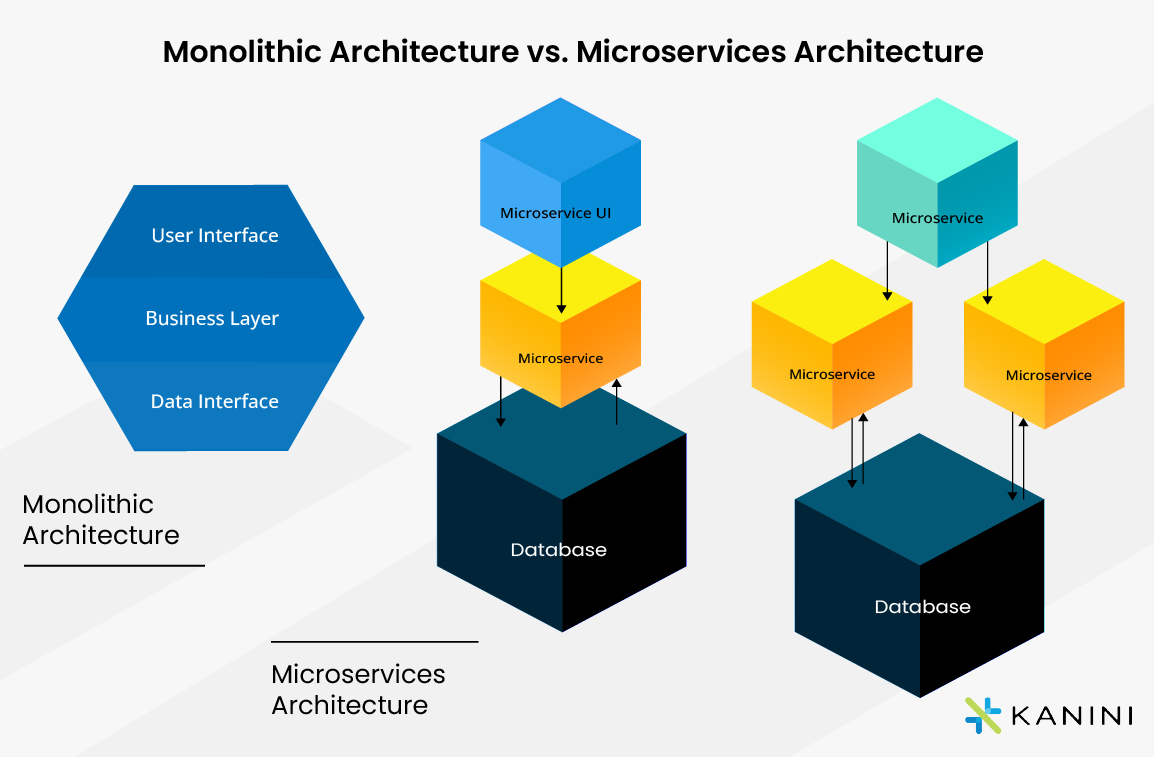
Cloud Migration of Microservices: Strategy, Risks, and Best Practices

The migration of microservices to the cloud is a crucial step in the digital transformation process, requiring a strategic approach to ensure success. The success of the migration depends on carefully selecting the appropriate strategy based on the current architecture's maturity, technical debt, business objectives, and cloud infrastructure capabilities. ... The simplest strategy for migrating to the cloud is Rehost. This involves moving applications as is to virtual machines in the cloud. According to research, around 40% of organizations begin their migration with Rehost, as it allows for a quick transition to the cloud with minimal costs. However, this approach often does not provide significant performance or cost benefits, as it does not fully utilize cloud capabilities. Replatform is the next level of complexity, where applications are partially adapted. For example, databases may be migrated to cloud services like Amazon RDS or Azure SQL, file storage may be replaced, and containerization may be introduced. Replatform is used in around 22% of cases where there is a need to strike a balance between speed and the depth of changes. A more time-consuming but strategically beneficial approach is Refactoring (or Rearchitecting), in which the application undergoes a significant redesign: microservices are introduced, Kubernetes, Kafka, and cloud functions (such as Lambda and Azure Functions) are utilized, as well as a service bus.

Daily Tech Digest - December 04, 2025


Quote for the day:

"The most difficult thing is the decision to act, the rest is merely tenacity." -- Amelia Earhart


Software Supply Chain Risks: Lessons from Recent Attacks

Modern applications are complex tapestries woven from proprietary code, open-source libraries, third-party APIs, and countless development tools. This interconnected web is the software supply chain, and it has become one of the most critical—and vulnerable—attack surfaces for organizations globally. Supply chain attacks are particularly insidious because they exploit trust. Organizations implicitly trust the code they import from reputable sources and the tools their developers use daily. Attackers have recognized that it's often easier to compromise a less-secure vendor or a widely-used open-source project than to attack a well-defended enterprise directly. Once an attacker infiltrates a supply chain, they gain a "force multiplier" effect. A single malicious update can be automatically pulled and deployed by thousands of downstream users, granting the attacker widespread access instantly. Recent high-profile attacks have shattered the illusion of a secure perimeter, demonstrating that a single compromised component can have catastrophic, cascading effects. ... The era of blindly trusting software components is over. The software supply chain has become a primary battleground for cyberattacks, and the consequences of negligence are severe. By learning from recent attacks and proactively implementing robust security measures like SBOMs, secure pipelines, and rigorous vendor vetting, organizations can significantly reduce their risk and build more resilient, trustworthy software.


Building Bridges, Not Barriers: The Case for Collaborative Data Governance

The collaborative data governance model preserves existing structure while improving coordination among teams through shared standards and processes. This is now more critical to be able to take advantage of AI systems. The collaborative model is an alternative with many benefits for organizations whose central governance bodies – like finance, IT, data and risk – operate in silos. Complex digital and data initiatives, as well as regulatory and ethical concerns, often span multiple domains, making close coordination across departments a necessity. While the collaborative data governance model can be highly effective for complex organizations, there are situations where it may not be appropriate. ... Rather than taking a centralized approach to managing data among multiple governance domains, a federated approach allows each domain to retain its authority while adhering to shared governance standards. In other words, local control with organization-wide cohesion. ... The collaborative governance model is a framework that promotes accessible systems and processes to the organization, rather than a series of burdensome checks and red tape. In other words, under this model, data governance is viewed as an enabler, not a blocker. ... Using effective tools such as data catalogs, policy management and collaboration spaces, shared platforms streamline governance processes and enable seamless communication and cooperation between teams.


China Researches Ways to Disrupt Satellite Internet

In an academic paper published in Chinese last month, researchers at two major Chinese universities found that the communications provided by satellite constellations could be jammed, but at great cost: To disrupt signals from the Starlink network to a region the size of Taiwan would require 1,000 to 2,000 drones, according to a research paper cited in a report in the South China Morning Post. ... Cyber- and electronic-warfare attacks against satellites are being embraced because they pose less risk of collateral damage and are less likely to escalate tensions, says Clayton Swope, deputy director for the Aerospace Security Project at the Center for Strategic and International Studies (CSIS), a Washington, DC-based policy think tank. ... The constellations are resilient to disruptions. The latest research into jamming constellation-satellite networks was published in the Chinese peer-reviewed journal Systems Engineering and Electronics on Nov. 5 with a title that translates to "Simulation research of distributed jammers against mega-constellation downlink communication transmissions," the SCMP reported. ... China is not just researching ways to disrupt communications for rival nations, but also is developing its own constellation technology to benefit from the same distributed space networks that makes Starlink, EutelSat, and others so reliable, according to the CSIS's Swope.


The Legacy Challenge in Enterprise Data

As companies face extreme complexity with multiple legacy data warehouses and disparate analytical data assets models owned by the line of business analysts, the decision-making becomes challenging when moving to cloud-based data systems for transformation and migration. Where both options are challenging, this is not a one-size-fits-all solution, and careful consideration is needed when making the decision, as this involves millions of dollars and years of critical work. ... Enterprise migrations are long journeys, not short projects. Programs typically span 18 to 24 months, cover hundreds of terabytes of data, and touch dozens of business domains. A single cutover is too risky, while endless pilots waste resources. Phased execution is the only sustainable approach. High-value domains are prioritized to demonstrate progress. Legacy and cloud often run in parallel until validation is complete. Automated validation, DevOps pipelines, and AI-assisted SQL conversion accelerate progress. To avoid burnout, teams are structured with a mix of full-time employees who work closely with business users and managed services that provide technical scale. ... Governance must be embedded from the start. Metadata catalogs track lineage and ownership. Automated validation ensures quality at every stage, not just at cutover. Role-based access controls, encryption, and masking enforce compliance. 


Through the Looking Glass: Data Stewards in the Realm of Gondor

Data Stewards are sought-after individuals today. I have seen many “data steward” job postings over the last six months and read much discussion about the role in various periodicals and postings. I have always agreed with my editor’s conviction that everyone is a data steward, accountable for the data they create, manage, and use. Nevertheless, the role of data steward, as a job and as a career, has established itself in the view of many companies as essential to improving data governance and management. ... “Information Stewardship” is a concept like Data Stewardship and may even predate it, based on my brief survey of articles on these topics. Trevor gives an excellent summary of the essence of stewardship in this context: Stewardship requires the acceptance by the user that the information belongs to the organization as a whole, not any one individual. The information should be shared as needed and monitored for changes in value. ... Data Stewards “own” data, or to be more precise, Data Stewards are responsible for the data owned by the enterprise. If the enterprise is the old-world Lord’s Estate, then the Data Stewardship Team consists of the people who watch over the lifeblood of the estate, including the shepherds who make sure the data is flowing smoothly from field to field, safe from internal and external predators, safe from inclement weather, and safe from disease. ... 


Scaling Cloud and Distributed Applications: Lessons and Strategies

Scaling extends beyond simply adding servers. When scaling occurs, the fundamental question is whether the application requires scaling due to genuine customer demand or whether upstream services experiencing queuing issues slow system response. When threads wait for responses and cannot execute, pressure increases on CPU and memory resources, triggering elastic scaling even though actual demand has not grown. ... Architecture must extend beyond documentation. Creating opinionated architecture templates assists teams in building applications that automatically inherit architectural standards. Applications deploy automatically using manifest-based definitions, so that teams can focus on business functionality rather than infrastructure tooling complexities. ... Infrastructure repaving represents a highly effective practice of systematically rebuilding infrastructure each sprint. Automated processes clean up running instances regularly. This approach enhances security by eliminating configuration drift. When drift exists or patches require application, including zero-day vulnerability fixes, all updates can be systematically incorporated. Extended operation periods create stale resources, performance degradation, and security vulnerabilities. Recreating environments at defined intervals (weekly or bi-weekly) occurs automatically. 


Why Synthetic Data Will Decide Who Wins the Next Wave of AI

Why is synthetic data suddenly so important? The simple answer is that AI has begun bumping into a glass ceiling. Real-world data doesn’t extend far enough to cover all the unlikely edge cases or every scenario that we want our models to live through. Synthetic data allows teams to code in the missing parts directly. Developers construct situations as needed. ... Building synthetic data holds the key to filling the gap when the quality or volume of data needed by AI models is not good enough, but the process to create this data is not easy. Behind the scenes, there’s an entire stack working together. We are talking about simulation engines, generative models like GANs and diffusion systems, large language models (LLMs) for text-based domains. All this creates virtual worlds for training. ... The organizations most affected by the growing need for synthetic data are those that operate in high-risk areas where there is no actual data, or the act of finding it is inefficient. Think of fully autonomous vehicles that can’t simply wait for every dangerous encounter to occur in traffic. Doctors working on a cure for rare diseases but can’t call on thousands of such cases. Trading firms that can’t wait for just the right market shock for their AI models. These teams can turn synthetic data to give them a lesson from situations that are simply not possible (or practical) in real life.


How ABB’s Approach to IT/OT Ensures Cyber Resilience

The convergence of IT and OT creates new vulnerabilities as previously isolated control systems now require integration with enterprise networks. ABB addresses this by embedding security architecture from the start rather than retrofitting it later. This includes proper network segmentation, validated patching protocols and granular access controls that enable safe data connectivity while protecting operational technology. ... On the security front, AI-driven monitoring can identify anomalous patterns in network traffic and system behavior that might indicate a breach attempt, spotting threats that traditional rule-based systems would miss. However, it's crucial to distinguish between embedded AI and Gen AI. Embedded AI in our products optimises processes with predictable, explainable outcomes. This same principle applies to security: AI systems that monitor for threats must be transparent in how they reach conclusions, allowing security teams to understand and validate alerts rather than trusting a black box. ... Secure data exchange protocols, multi-factor authentication on remote access points and validated update mechanisms all work together to enable the connectivity that digital twins require while maintaining security boundaries. The key is recognising that digital transformation and security are interdependent. Organisations investing millions in AI, digital twins or automation while neglecting cybersecurity are building on sand.


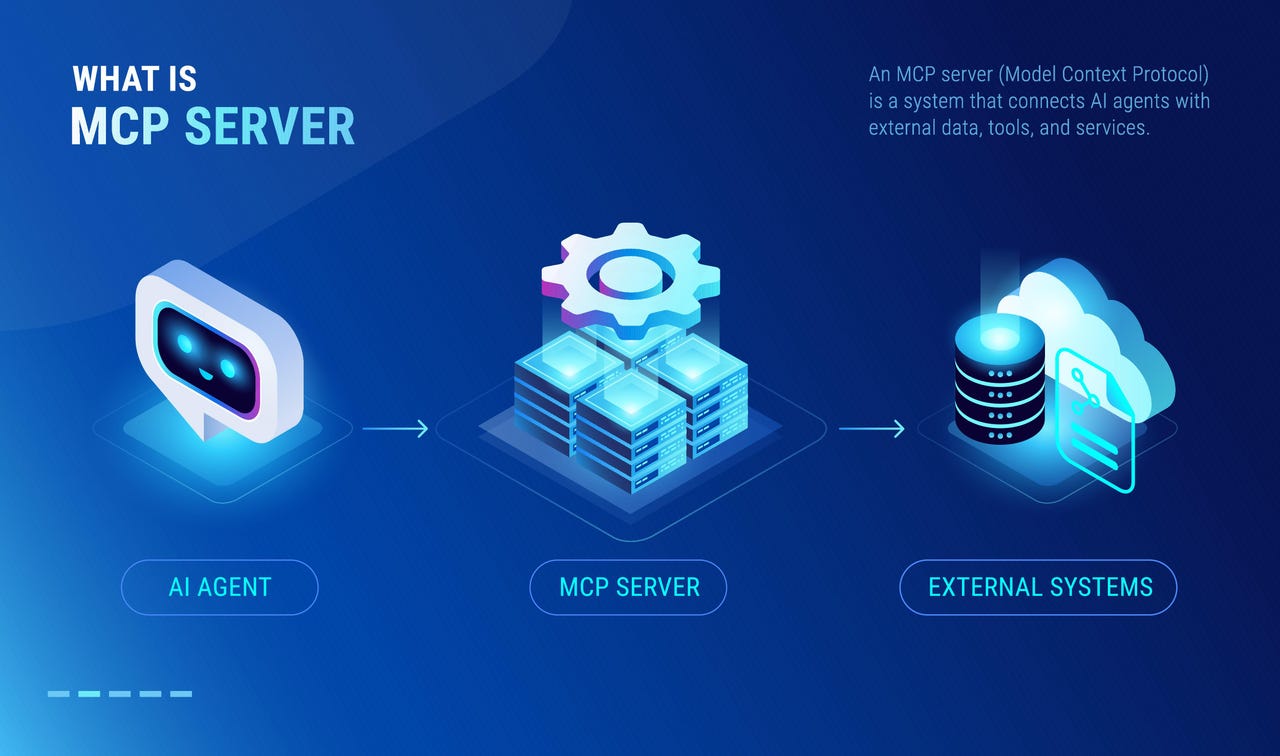
Building an MCP server is easy, but getting it to work is a lot harder

"The true power of remote MCP is realized through centralized 'agent gateways' where these servers are registered and managed. This model delivers the essential guardrails that enterprises require," Shrivastava said. That said, agent gateways do come with their own caveats. "While gateways provide security, managing a growing ecosystem of dozens or even hundreds of registered MCP tools introduces a new challenge: orchestration," he said. "The most scalable approach is to add another layer of abstraction: organizing toolchains into 'topics' based on the 'job to be done.'" ... "When a large language model is granted access to multiple external tools via the protocol, there is a significant risk that it may choose the wrong tool, misuse the correct one, or become confused and produce nonsensical or irrelevant outputs, whether through classic hallucinations or incorrect tool use," he explained. ... MCP's scaling limits also present a huge obstacle. The scaling limits exist "because the protocol was never designed to coordinate large, distributed networks of agents," said James Urquhart, field CTO and technology evangelist at Kamiwaza AI, a provider of products that orchestrate and deploy autonomous AI agents. MCP works well in small, controlled environments, but "it assumes instant responses between agents," he said -- an unrealistic expectation once systems grow and "multiple agents compete for processing time, memory or bandwidth."


The quantum clock is ticking and businesses are still stuck in prep mode

The report highlights one of the toughest challenges. Eighty one percent of respondents said their crypto libraries and hardware security modules are not prepared for post quantum integration. Many use legacy systems that depend on protocols designed long before quantum threats were taken seriously. Retrofitting these systems is not a simple upgrade. It requires changes to how keys are generated, stored and exchanged. Skills shortages compound the problem. Many security teams lack experience in testing or deploying post quantum algorithms. Vendor dependence also slows progress because businesses often cannot move forward until external suppliers update their own tooling. ... Nearly every organization surveyed plans to allocate budget toward post quantum projects within the next two years. Most expect to spend between six and ten percent of their cybersecurity budgets on research, tooling or deployment. Spending levels differ by region. More than half of US organizations plan to invest at least eleven percent, far higher than the UK and Germany. ... Contractual requirements from customers and partners are seen as the strongest motivator for adoption. Industry standards rank near the top of the list across most sectors. Many respondents also pointed to upcoming regulations and mandates as drivers. Security incidents ranked surprisingly low in the US, suggesting that market and policy signals hold more influence than hypothetical attack scenarios.

Daily Tech Digest - October 29, 2025


Quote for the day:

“If you don’t have a competitive advantage, don’t compete.” -- Jack Welch


Intuit learned to build AI agents for finance the hard way: Trust lost in buckets, earned back in spoonfuls

Intuit's technical strategy centers on a fundamental design decision. For financial queries and business intelligence, the system queries actual data, rather than generating responses through large language models (LLMs). Also critically important: That data isn't all in one place. Intuit's technical implementation allows QuickBooks to ingest data from multiple distinct sources: native Intuit data, OAuth-connected third-party systems like Square for payments and user-uploaded files such as spreadsheets containing vendor pricing lists or marketing campaign data. This creates a unified data layer that AI agents can query reliably. ... Beyond the technical architecture, Intuit has made explainability a core user experience across its AI agents. This goes beyond simply providing correct answers: It means showing users the reasoning behind automated decisions. When Intuit's accounting agent categorizes a transaction, it doesn't just display the result; it shows the reasoning. This isn't marketing copy about explainable AI, it's actual UI displaying data points and logic. ... In domains where accuracy is critical, consider whether you need content generation or data query translation. Intuit's decision to treat AI as an orchestration and natural language interface layer dramatically reduces hallucination risk and avoids using AI as a generative system.


Step aside, SOC. It’s time to ROC

The typical SOC playbook is designed to contain or remediate issues after the fact by applying a patch or restoring a backup, but they don’t anticipate or prevent the next hit. That structure leaves executives without the proper context or language they need to make financially sound decisions about their risk exposure. ... At its core, the Resilience Risk Operations Center (ROC) is a proactive intelligence hub. Think of it as a fusion center in which cyber, business and financial risk come together to form one clear picture. While the idea of a ROC isn’t entirely new — versions of it have existed across government and private sectors — the latest iterations emphasize collaboration between technical and financial teams to anticipate, rather than react to, threats. ... Of course, building the ROC wasn’t all smooth sailing. Just like military adversaries, cyber criminals are constantly evolving and improving. Scarier yet, just a single keystroke by a criminal actor can set off a chain reaction of significant disruptions. That makes trying to anticipate their next move feel like playing chess against an opponent who is changing the rules mid-game. There was also the challenge of breaking down the existing silos between cyber, risk and financial teams. ... The ROC concept represents the first real step in that journey towards cyber resilience. It’s not as a single product or platform, but as a strategic shift toward integrated, financially informed cyber defense. 


Data Migration in Software Modernization: Balancing Automation and Developers’ Expertise

The process of data migration is often far more labor-intensive than expected. We've only described a few basic features, and even implementing this little set requires splitting a single legacy table into three normalized tables. In real-world scenarios, the number of such transformations is often significantly higher. Additionally, consider the volume of data handled by applications that have been on the market for decades. Migrating such data structures is a major task. The amount of custom logic a developer must implement to ensure data integrity and correct representation can be substantial. ... Automated data migration tools can help developers migrate to a different database management system or to a new version of the DBMS in use, applying the required data manipulations to ensure accurate representation. Also, they can copy the id, email, and nickname fields with little trouble. Possibly, there will be no issues with replicating the old users table into a staging environment. Automated data migration tools can’t successfully perform the tasks required for the use case we described earlier. For instance, infer gender from names (e.g., determine "Sarah" is female, "John" is male), or populate the interests table dynamically from user-provided values. Also, there could be issues with deduplicating shared interests across users (e.g., don’t insert "kitchen gadgets" twice) or creating the correct many-to-many relationships in user_interests.


The Quiet Rise of AI’s Real Enablers

“Models need so much more data and in multiple formats,” shared George Westerman, Senior Lecturer and Principal Research Scientist, MIT Sloan School of Management. “Where it used to be making sense of structured data, which was relatively straightforward, now it’s: ‘What do we do with all this unstructured data? How do we tag it? How do we organize it? How do we store it?’ That’s a bigger challenge.” ... As engineers get pulled deeper into AI work, their visibility is rising. So is their influence on critical decisions. The report reveals that data engineers are now helping shape tooling choices, infrastructure plans, and even high-level business strategy. Two-thirds of the leaders say their engineers are involved in selecting vendors and tools. More than half say they help evaluate AI use cases and guide how different business units apply AI models. That represents a shift from execution to influence. These engineers are no longer just implementing someone else’s ideas. They are helping define the roadmap. It also signals something bigger. AI success is not just about algorithms. It is about coordination. ... So the role and visibility of data engineers are clearly changing. But are we seeing real gains in productivity? The report suggests yes. More than 70 percent of tech leaders said AI tools are already making their teams more productive. The workload might be heavier, but it’s also more focused. Engineers are spending less time fixing brittle pipelines and more time shaping long-term infrastructure.


The silent killer of CPG digital transformation: Data & knowledge decay

Data without standards is chaos. R&D might record sugar levels as “Brix,” QA uses “Bx,” and marketing reduces it to “sweetness score.” When departments speak different data languages, integration becomes impossible. ... When each function hoards its own version of the truth, leadership decisions are built on fragments. At one CPG I observed, R&D reported a product as cost-neutral to reformulate, while supply chain flagged a 12% increase. Both were “right” based on their datasets — but the company had no harmonized golden record. ... Senior formulators and engineers often retire or are poached, taking decades of know-how with them. APQC warns that unmanaged knowledge loss directly threatens innovation capacity and recommends systematic capture methods. I’ve seen this play out: a CPG lost its lead emulsification expert to a competitor. Within six months, their innovation pipeline slowed dramatically, while their competitor accelerated. The knowledge wasn’t just valuable — it was strategic. ... Intuition still drives most big CPG decisions. While human judgment is critical, relying on gut feel alone is dangerous in the age of AI-powered formulation and predictive analytics. ... Define enterprise-wide data standards: Create master schemas for formulations, processes and claims. Mandate structured inputs. Henkel’s success demonstrates that without shared standards, even the best tools underperform.


From Chef to CISO: An Empathy-First Approach to Cybersecurity Leadership

Rather than focusing solely on technical credentials or a formal cybersecurity education, Lyons prioritizes curiosity and hunger for learning as the most critical qualities in potential hires. His approach emphasizes empathy as a cornerstone of security culture, encouraging his team to view security incidents not as failures to be punished, but as opportunities to coach and educate colleagues. ... We're very technically savvy and it's you have a weak moment or you get distracted because you're a busy person. Just coming at it and approaching it with a very thoughtful culture-oriented response is very important for me. Probably the top characteristic of my team. I'm super fortunate. And that I have people from ages, from end to end, backgrounds from end to end that are all part of the team. But one of those core principles that they all follow with is empathy and trying to grow culture because culture scales. ... anyone who's looking at adopting new technologies in the cybersecurity world is firstly understand that the attackers have access to just about everything that you have. So, they're going to come fast and they're going to come hard at you and its they can make a lot more mistakes than you have. So, you have to focus and ensure that you're getting right every day what they can have the opportunity to get wrong. 


It takes an AWS outage to prioritize diversification

AWS’s latest outage, caused by a data center malfunction in Northern Virginia, didn’t just disrupt its direct customers; it served as a stark reminder of how deeply our digital world relies on a select few cloud giants. A single system hiccup in one region reverberated worldwide, stopping critical services for millions of users. ... The AWS outage is part of a broader pattern of instability common to centralized systems. ... The AWS outage has reignited a longstanding argument for organizational diversification in the cloud sector. Diversification enhances resilience. It decentralizes an enterprise’s exposure to risks, ensuring that a single provider’s outage doesn’t completely paralyze operations. However, taking this step will require initiative—and courage—from IT leaders who’ve grown comfortable with the reliability and scale offered by dominant providers. This effort toward diversification isn’t just about using a multicloud strategy (although a combined approach with multiple hyperscalers is an important aspect). Companies should also consider alternative platforms and solutions that add unique value to their IT portfolios. Sovereign clouds, specialized services from companies like NeoCloud, managed service providers, and colocation (colo) facilities offer viable options. Here’s why they’re worth exploring. ... The biggest challenge might be psychological rather than technical. Many companies have internalized the idea that the hyperscalers are the only real options for cloud infrastructure.


What brain privacy will look like in the age of neurotech

What Meta has just introduced, what Apple has now made native as part of its accessibility protocols, is to enable picking up your intentions through neural signals and sensors that AI decodes to allow you to navigate through all of that technology. So I think the first generation of most of these devices will be optional. That is, you can get the smart watch without the neural band, you can get the airpods without the EEG [electroencephalogram] sensors in them. But just like you can't get an Apple watch now without getting an Apple watch with a heart rate sensor, second and third generation of these devices, I think your only option will be to get the devices that have the neural sensors in them. ... There's a couple of ways to think about hacking. One is getting access to what you're thinking and another one is changing what you're thinking. One of the now classic examples in the field is how researchers were able to, when somebody was using a neural headset to play a video game, embed prompts that the conscious mind wouldn't see to be able to figure out what the person's PIN code and address were for their bank account and mailing address. In much the same way that a person's mind could be probed for how they respond to Communist messaging, a person's mind could be probed to see recognition of a four digit code or some combination of numbers and letters to be able to try to get to a person's password without them even realizing that's what's happening.


Beyond Alerts and Algorithms: Redefining Cyber Resilience in the Age of AI-Driven Threats

In an average enterprise Security Operations Center (SOC), analysts face tens of thousands of alerts daily. Even the most advanced SIEM or EDR platforms struggle with false positives, forcing teams to spend the bulk of their time sifting through noise instead of investigating real threats. The result is a silent crisis: SOC fatigue. Skilled analysts burn out, genuine threats slip through, and the mean time to respond (MTTR) increases dangerously. But the real issue isn’t just too many alerts — it’s the lack of context. Most tools operate in isolation. An endpoint alert means little without correlation to user behavior, network traffic, or threat intelligence. Without this contextual layer, detection lacks depth and intent remains invisible. ... Resilience, however, isn’t achieved once — it’s engineered continuously. Techniques like Continuous Automated Red Teaming (CART) and Breach & Attack Simulation (BAS) allow enterprises to test, validate, and evolve their defenses in real time. AI won’t replace human judgment — it enhances it. The SOC of the future will be machine-accelerated yet human-guided, capable of adapting dynamically to evolving threats. ... Today’s CISOs are more than security leaders — they’re business enablers. They sit at the intersection of risk, technology, and trust. Boards now expect them not just to protect data, but to safeguard reputation and ensure continuity.


Quantum Circuits brings dual-rail qubits to Nvidia’s CUDA-Q development platform

Quantum Circuits’ dual-rail chip means that it combines two different quantum computing approaches — superconducting resonators with transmon qubits. The qubit itself is a photon, and there’s a superconducting circuit that controls the photon. “It matches the reliability benchmarks of ions and neutral atoms with the speed of the superconducting platform,” says Petrenko. There’s another bit of quantum magic built into the platform, he says — error awareness. “No other quantum computer tells you in real time if it encounters an error, but ours does,” he says. That means that there’s potential to correct errors before scaling up, rather than scaling up first and then trying to do error correction later. In the near-term, the high reliability and built-in error correction makes it an extremely powerful tool for developing new algorithms, says Petrenko. “You can start kind of opening up a new door and tackling new problems. We’ve leveraged that already for showing new things for machine learning.” It’s a different approach to what other quantum computer makers are taking, confirms TechInsights’ Sanders. According to Sanders, this dual-rail method combines the best of both types of qubits, lengthening coherence time, plus integrating error correction. Right now, Seeker is only available via Quantum Circuits’ own cloud platform and only has eight qubits.

Daily Tech Digest - October 06, 2025


Quote for the day:

"Success seems to be connected with action. Successful people keep moving. They make mistakes but they don’t quit." -- Conrad Hilton


Beyond Von Neumann: Toward a unified deterministic architecture

In large AI workloads, datasets often cannot fit into caches, and the processor must pull them directly from DRAM or HBM. Accesses can take hundreds of cycles, leaving functional units idle and burning energy. Traditional pipelines stall on every dependency, magnifying the performance gap between theoretical and delivered throughput. Deterministic Execution addresses these challenges in three important ways. First, it provides a unified architecture in which general-purpose processing and AI acceleration coexist on a single chip, eliminating the overhead of switching between units. Second, it delivers predictable performance through cycle-accurate execution, making it ideal for latency-sensitive applications such as large langauge model (LLM) inference, fraud detection and industrial automation. Finally, it reduces power consumption and physical footprint by simplifying control logic, which in turn translates to a smaller die area and lower energy use. ... For enterprises deploying AI at scale, architectural efficiency translates directly into competitive advantage. Predictable, latency-free execution simplifies capacity planning for LLM inference clusters, ensuring consistent response times even under peak loads. Lower power consumption and reduced silicon footprint cut operational expenses, especially in large data centers where cooling and energy costs dominate budgets. 


Invest in quantum adoption now to be a winner in the quantum revolution

History shows that transformative compute paradigms require years of preparation before delivering real returns. Graphics processing units (GPUs), for example, took more than a decade of groundwork before fueling the AI revolution that now powers almost every sector of the economy. Organizations that invested early positioned themselves to capture this growth, while those who waited paid more, were caught flat-footed, and lost ground to competitors. Quantum will follow the same trajectory. ... Investing in readiness today reduces both risk and cost. By spreading integration work over time, organizations avoid the disruption and price premium of a sudden adoption push once the full enterprise value of quantum computing is achieved. Budget holders know that rushed, unplanned programs often exceed forecasts and erode margins. Smaller projects with clear deliverables can be managed within existing budgets and allow lessons to be learned incrementally, lowering both financial exposure and operational risk. For decision-makers, this creates a predictable investment profile rather than a costly “big bang” rollout. Early engagement also builds skills at a fraction of the future cost. Recruiting or retraining talent under pressure once the market overheats will be significantly more expensive. 


What an IT career will look like in 5 years — and how to thrive through the changes

Success in the near future will depend less on narrow expertise — mastering a specific technology stack for example — and more on evaluating, adapting, and applying the right tools to solve organizational problems. “People shift into cloud, security, data, or AI work depending on business need,” says Chris Camacho, COO and co-founder at Abstract Security. “Titles matter less than visible proof-of-work — small wins shared internally or publicly. Pick a lane and go deep, then layer AI expertise on top. And show your work — on GitHub, LinkedIn, wherever recruiters can see results.” Justina Nixon-Saintil, global chief impact officer at IBM, says success in the future will favor those who are adaptable and use AI to amplify creativity rather than replace it. “Technology roles are evolving from traditional tasks into more dynamic, interdisciplinary pathways that blend technical expertise with strategic thinking,” Nixon-Saintil says. “Those who can navigate the ethical challenges of AI and technology will succeed, leveraging innovation responsibly to solve complex problems and anticipate evolving business needs. You’ll not only future-proof your career but also unlock new opportunities for growth and innovation.” Beth Scagnoli, vice president of product management of Redpoint Global, agrees the successful pro of the near future will easily move between related but traditionally separate IT domains, such as system architecture and development.


Using AI as a Therapist? Why Professionals Say You Should Think Again

It can be incredibly tempting to keep talking to a chatbot. When I conversed with the "therapist" bot on Instagram, I eventually wound up in a circular conversation about the nature of what is "wisdom" and "judgment," because I was asking the bot questions about how it could make decisions. This isn't really what talking to a therapist should be like. Chatbots are tools designed to keep you chatting, not to work toward a common goal. One advantage of AI chatbots in providing support and connection is that they're always ready to engage with you. That can be a downside in some cases, where you might need to sit with your thoughts, Nick Jacobson, an associate professor of biomedical data science and psychiatry at Dartmouth, told me recently.  ... While chatbots are great at holding a conversation -- they almost never get tired of talking to you -- that's not what makes a therapist a therapist. They lack important context or specific protocols around different therapeutic approaches, said William Agnew, a researcher at Carnegie Mellon University and one of the authors of the recent study alongside experts from Minnesota, Stanford and Texas. "To a large extent it seems like we are trying to solve the many problems that therapy has with the wrong tool," Agnew told me. "At the end of the day, AI in the foreseeable future just isn't going to be able to be embodied, be within the community, do the many tasks that comprise therapy that aren't texting or speaking."


CISOs rethink the security organization for the AI era

“Organizations that have invested in security over time are seeing efficiencies by layering AI-driven tools into their workflows,” Oleksak says. “But those who haven’t taken security seriously are still stuck with the same exposures they’ve always had. AI doesn’t magically catch them up.’” In fact, because attackers are using AI to make phishing, scanning, and deepfakes cheaper and faster, Oleksak adds, the gap between mature and unprepared organizations is widening. ... “We’re now embedding cybersecurity into AI initiatives from the start, working closely across teams to ensure innovation is both safe and ethical,” she stresses. “Our commitment to responsible AI means every solution is designed with transparency, fairness, and accountability in mind.” Jason Lander, senior vice president of product management at Aya Healthcare, who manages security for the organization, is also seeing a change in the dynamics between cybersecurity and IT. “AI is noticeably reshaping how security and IT departments collaborate, streamline workflows, blend responsibilities, make decisions and redefine trust dynamics,” he says.  ... “IT’s focus is on speed, efficiency, and enabling the business, while the CISO’s focus is on protecting the business. That distinction is often misunderstood,” he maintains. “As AI introduces powerful new risks, from deepfakes and AI-driven phishing to employees unintentionally exposing sensitive IP through AI queries, only the CISO is positioned to anticipate and mitigate these threats.”


Why Secure Data Migration is the Next Big Boardroom Priority

Industries with the highest dependency on sensitive data are leading the way in secure migration. Financial services, with their heavy regulatory responsibilities and high stakes for customer trust, are among the most proactive industries when it comes to secure data migration. Banks moving from legacy mainframes to cloud-native platforms know that a single misstep could cascade into systemic risk. Healthcare, another high-stakes sector, faces similar urgency. ... Technology hyperscalers such as Microsoft, Google, and Amazon Web Services (AWS) play a dual role: enablers of secure migration and, simultaneously, critical dependencies for enterprises. This reliance brings resilience but also concentration risk. Many CIOs remain concerned about vendor lock-in, even as few alternatives exist at a comparable scale. Enterprises must therefore ensure secure migration while also diversifying their strategy to avoid overreliance on a single ecosystem. ... The shift is clear: secure data migration is no longer an IT department problem. It is a board-level agenda item, shaping strategy and shareholder value. As per the latest findings, 82% of CISOs now directly report to the CEO’s, underscoring their elevated importance. The World Economic Forum has gone further, warning in its 2025 Global Risks Report that data migration failures represent an underappreciated threat to global business resilience


How self-learning AI agents will reshape operational workflows

Experience-based training for AI agents offers strong potential because it allows agents to act autonomously in real-world situations, guided by rewards that emerge from the environment. In the context of operations management, this means agents can learn from past incidents, events, customer tickets, application and infrastructure metrics and logs, as well as any other metrics made available to them. While modern-day hype cycles demand rapid results, much of the promise of AI agents lies in how they will improve operations management over time. Given enough time and training data, the AI agent will be able to plan actions and predict their consequences in the environment—i.e., predict the reward—much better than a human. ... Experience-based learning in this context requires human engineers to conduct post-incident reviews to understand an incident and establish actions to prevent that incident from recurring. However, in many cases, the learnings from a post-incident review are siloed to individual teams and not shared with the wider organization. ... Given that organizations do not consistently conduct post-incident learning reviews or share their findings across the wider organization, operations management is ripe for “agentification” powered by self-learning agents. Instead of burdening busy human engineers with post-incident reviews, AI agents can conduct these reviews and then apply this valuable experience-based training data. 


The DPDPA’s impact on law firms

Most of the personal data processing in HR departments is for purposes related to employment. The DPDPA does provide exemption from obtaining consent from employment purposes under Sec. 7(i) ... However, a reading of this Section would indicate that this exemption is applicable only to current employees and it excludes all processing which happens post-employment or pre-employment. In some instances, where an employee or intern voluntarily emails their resumes to HR departments and the HR departments do not consider the application or take any action on the resume received through email, the DPDPA compliances will not kick in as DPDPA does not apply to personal data which is provided voluntarily by a data principal. But HR departments will need to be vigilant about data collected through designated online portals available on their websites, as in such a case, they can be said to be actively inviting applications unlike the former scenario wherein a candidate is voluntarily sharing their data. ... Under Section 3 of the DPDPA, any foreign entity offering services to individuals in India falls within the law’s extra-territorial scope. ... Several law firms in India have shown significant efforts in enhancing operational standards to ensure that client and partner data is handled safely. Several law firms have implemented standards like ISO 27001, which improves information security, risk management and compliance with regulations.


Is quantum computing poised for another breakthrough?

“Almost all of us in the quantum computing field are absolutely convinced,” Kulkarni said. “But even the skeptics who always thought this was something of the future and never really going to materialize, I think, can concur with us that this is going to happen.” ... Quantum processors currently provide physicists and other scientists with the tools to do big research projects that simply aren’t realistic with other computers. That’s the main use of the technology for now, Boixo said, but as things continue to move forward, the pool of who will use quantum computers will grow. Of course, it’s not just scientists trying to uncover the limits of quantum technology who are using the computers. Marc Lijour, a researcher with the Institute of Electrical and Electronics Engineers, told IT Brew that attackers are interested in how quantum computers can potentially crack encryption much faster than traditional computers. They’re probably already playing with the technology, and waiting until the computers are widely available. “Attackers…are downloading everything they can at the moment and storing it, basically copying the internet and anything they can so they can open it later [using quantum technology],” Lijour said. That’s still a ways in the future. Boixo estimated chaining together 50–100 logical qubits is about five or so years away. With a number of firms looking at developing the next level of quantum computing, it’s a race. 


CISO Spotlights Cybersecurity Challenges in Education Following Kido Breach

Budget is certainly going to be a challenge for all, but more so for state-funded schools and organizations. We do see that as being a challenge everywhere, they have limited resources. The overwhelming feedback is that they just don't have any money to spend, and it's perceived that, therefore, that they can't deploy the security controls that they need. That's a big thing, but I think an even bigger issue is the lack of expertise and time. On lots of occasions you’ll discover institutions where there just aren’t experts on the ground that can manage these cybersecurity risks. They often lean on IT service providers and assume that they’re doing something about cybersecurity, whereas that is not necessarily the case. Budget, expertise and time are big constraints, and I think those issues are causing so many schools to be vulnerable. ... There are plenty of things that can be done with little or no cost. Reviewing all the users, identifying who’s got access and making sure MFA is turned on doesn't carry a significant cost beyond somebody taking the time to do it. That’s going to have a material impact on their posture. Most schools will have an awareness training program, but it's probably a tick box exercise where somebody has to do the course when they join and that’s it. Assigning one person to really own and champion that program could make a material difference to peoples’ awareness.

Daily Tech Digest - August 23, 2025


Quote for the day:

"Failure is the condiment that gives success its flavor." -- Truman Capote


Enterprise passwords becoming even easier to steal and abuse

Attackers actively target user credentials because they offer the most direct route or foothold into a targeted organization’s network. Once inside, attackers can move laterally across systems, searching for other user accounts to compromise, or they attempt to escalate their privileges and gain administrative control. This hunt for credentials extends beyond user accounts to include code repositories, where developers may have hard-coded access keys and other secrets into application source code. Attacks using valid credentials were successful 98% of the time, according to Picus Security. ... “CISOs and security teams should focus on enforcing strong, unique passwords, using MFA everywhere, managing privileged accounts rigorously and testing identity controls regularly,” Curran says. “Combined with well-tuned DLP and continuous monitoring that can detect abnormal patterns quickly, these measures can help limit the impact of stolen or cracked credentials.” Picus Security’s latest findings reveal a concerning gap between the perceived protection of security tools and their actual performance. An overall protection effectiveness score of 62% contrasts with a shockingly low 3% prevention rate for data exfiltration. “Failures in detection rule configuration, logging gaps and system integration continue to undermine visibility across security operations,” according to Picus Security.


Architecting the next decade: Enterprise architecture as a strategic force

In an age of escalating cyber threats and expanding digital footprints, security can no longer be layered on; it must be architected in from the start. With the rise of AI, IoT and even quantum computing on the horizon, the threat landscape is more dynamic than ever. Security-embedded architectures prioritize identity-first access control, continuous monitoring and zero-trust principles as baseline capabilities. ... Sustainability is no longer a side initiative; it’s becoming a first principle of enterprise architecture. As organizations face pressure from regulators, investors and customers to lower their carbon footprint, digital sustainability is gaining traction as a measurable design objective. From energy-efficient data centers to cloud optimization strategies and greener software development practices, architects are now responsible for minimizing the environmental impact of IT systems. The Green Software Foundation has emerged as a key ecosystem partner, offering measurement standards like software carbon intensity (SCI) and tooling for emissions-aware development pipelines. ... Technology leaders must now foster a culture of innovation, build interdisciplinary partnerships and enable experimentation while ensuring alignment with long-term architectural principles. They must guide the enterprise through both transformation and stability, navigating short-term pressures and long-term horizons simultaneously.


Capitalizing on Digital: Four Strategic Imperatives for Banks and Credit Unions

Modern architectures dissolve the boundary between core and digital. The digital banking solution is no longer a bolt-on to the core; the core and digital come together to form the accountholder experience. That user experience is delivered through the digital channel, but when done correctly, it’s enabled by the modern core. Among other things, the core transformation requires robust use of shared APIs, consistent data structures, and unified development teams. Leading financial institutions are coming to realize that core evaluations now must include an evaluable of their capability to enable the digital experience. Criteria like Availability, Reliability, Real-time, Speed and Security are now emerging as foundational requirements of a core to enable the digital experience. "If your core can’t keep up with your digital, you’re stuck playing catch-up forever," said Jack Henry’s Paul Wiggins, Director of Sales, Digital Engineers. ... Many institutions still operate with digital siloed in one department, while marketing, product, and operations pursue separate agendas. This leads to mismatched priorities — products that aren’t promoted effectively, campaigns that promise features operations can’t support, and technical fixes that don’t address the root cause of customer and member pain points. ... Small-business services are a case in point. Jack Henry’s Strategy Benchmark study found that 80% of CEOs plan to expand these services over the next two years. 


Bentley Systems CIO Talks Leadership Strategy and AI Adoption

The thing that’s really important for a CIO to be thinking about is that we are a microcosm for how all of the business functions are trying to execute the tactics against the strategy. What we can do across the portfolio is represent the strategy in real terms back to the business. We can say: These are all of the different places where we're thinking about investing. Does that match with the strategy we thought we were setting for ourselves? And where is there a delta and a difference? ... When I got my first CIO role, there was all of this conversation about business process. That was the part that I had to learn and figure out how to map into these broader, strategic conversations. I had my first internal IT role at Deutsche Bank, where we really talked about product model a lot -- thinking about our internal IT deliverables as products. When I moved to Lenovo, we had very rich business process and transformation conversations because we were taking the whole business through such a foundational change. I was able to put those two things together. It was a marriage of several things: running a product organization; marrying that to the classic IT way of thinking about business process; and then determining how that becomes representative to the business strategy.


What Is Active Metadata and Why Does It Matter?

Active metadata addresses the shortcomings of passive approaches by automatically updating the metadata whenever an important aspect of the information changes. Defining active metadata and understanding why it matters begins by looking at the shift in organizations’ data strategies from a focus on data acquisition to data consumption. The goal of active metadata is to promote the discoverability of information resources as they are acquired, adapted, and applied over time. ... From a data consumer’s perspective, active metadata adds depth and breadth to their perception of the data that fuels their decision-making. By highlighting connections between data elements that would otherwise be hidden, active metadata promotes logical reasoning about data assets. This is especially so when working on complex problems that involve a large number of disconnected business and technical entities.The active metadata analytics workflow orchestrates metadata management across platforms to enhance application integration, resource management, and quality monitoring. It provides a single, comprehensive snapshot of the current status of all data assets involved in business decision-making. The technology augments metadata with information gleaned from business processes and information systems. 


Godrej Enterprises CHRO on redefining digital readiness as culture, not tech

“Digital readiness at Godrej Enterprises Group is about empowering every employee to thrive in an ever-evolving landscape,” Kaur said. “It’s not just about technology adoption. It’s about building a workforce that is agile, continuously learning, and empowered to innovate.” This reframing reflects a broader trend across Indian industry, where digital transformation is no longer confined to IT departments but runs through every layer of an organisation. For Godrej Enterprises Group, this means designing a workplace where intrapreneurship is rewarded, innovation is constant, and employees are trained to think beyond immediate functions. ... “We’ve moved away from one-off training sessions to creating a dynamic ecosystem where learning is accessible, relevant, and continuous,” she said. “Learning is no longer a checkbox — it’s a shared value that energises our people every day.” This shift is underpinned by leadership development programmes and innovation platforms, ensuring that employees at every level are encouraged to experiment and share knowledge.  ... “We see digital skilling as a core business priority, not just an HR or L&D initiative,” she said. “By making digital skilling a shared responsibility, we foster a culture where learning is continuous, progress is visible, and success is celebrated across the organisation.”


AI is creeping into the Linux kernel - and official policy is needed ASAP

However, before you get too excited, he warned: "This is a great example of what LLMs are doing right now. You give it a small, well-defined task, and it goes and does it. And you notice that this patch isn't, 'Hey, LLM, go write me a driver for my new hardware.' Instead, it's very specific -- convert this specific hash to use our standard API." Levin said another AI win is that "for those of us who are not native English speakers, it also helps with writing a good commit message. It is a common issue in the kernel world where sometimes writing the commit message can be more difficult than actually writing the code change, and it definitely helps there with language barriers." ... Looking ahead, Levin suggested LLMs could be trained to become good Linux maintainer helpers: "We can teach AI about kernel-specific patterns. We show examples from our codebase of how things are done. It also means that by grounding it into our kernel code base, we can make AI explain every decision, and we can trace it to historical examples." In addition, he said the LLMs can be connected directly to the Linux kernel Git tree, so "AI can go ahead and try and learn things about the Git repo all on its own." ... This AI-enabled program automatically analyzes Linux kernel commits to determine whether they should be backported to stable kernel trees. The tool examines commit messages, code changes, and historical backporting patterns to make intelligent recommendations.


Applications and Architecture – When It’s Not Broken, Should You Try to Fix It?

No matter how reliable your application components are, they will need to be maintained, upgraded or replaced at some point. As elements in your application evolve, some will reach end of life status – for example, Redis 7.2 will reach end of life status for security updates in February 2026. Before that point, it’s necessary to assess the available options. For businesses in some sectors like financial services, running out of date and unsupported software is a potential failure for regulations on security and resilience. For example, the Payment Card Industry Data Security Standard version 4.0 enforces that teams should check all their software and hardware is supported every year; in the case of end of life software, teams must also provide a full plan for migration that will be completed within twelve months. ... For developers and software architects, understanding the role that any component plays in the overall application makes it easier to plan ahead. Even the most reliable and consistent component may need to change given outside circumstances. In the Discworld series, golems are so reliable that they become the standard for currency; at the same time, there are so many of them that any problem could affect the whole economy. When it comes to data caching, Redis has been a reliable companion for many developers. 


From cloud migration to cloud optimization

The report, based on insights from more than 2,000 IT leaders, reveals that a staggering 94% of global IT leaders struggle with cloud cost optimization. Many enterprises underestimate the complexities of managing public cloud resources and the inadvertent overspending that occurs from mismanagement, overprovisioning, or a lack of visibility into resource usage. This inefficiency goes beyond just missteps in cloud adoption. It also highlights how difficult it is to align IT cost optimization with broader business objectives. ... This growing focus sheds light on the rising importance of finops (financial operations), a practice aimed at bringing greater financial accountability to cloud spending. Adding to this complexity is the increasing adoption of artificial intelligence and automation tools. These technologies drive innovation, but they come with significant associated costs. ... The argument for greater control is not new, but it has gained renewed relevance when paired with cost optimization strategies. ... With 41% of respondents’ IT budgets still being directed to scaling cloud capabilities, it’s clear that the public cloud will remain a cornerstone of enterprise IT in the foreseeable future. Cloud services such as AI-powered automation remain integral to transformative business strategies, and public cloud infrastructure is still the preferred environment for dynamic, highly scalable workloads. Enterprises will need to make cloud deployments truly cost-effective.


The Missing Layer in AI Infrastructure: Aggregating Agentic Traffic

Software architects and engineering leaders building AI-native platforms are starting to notice familiar warning signs: sudden cost spikes on AI API bills, bots with overbroad permissions tapping into sensitive data, and a disconcerting lack of visibility or control over what these AI agents are doing. It’s a scenario reminiscent of the early days of microservices – before we had gateways and meshes to restore order – only now the "microservices" are semi-autonomous AI routines. Gartner has begun shining a spotlight on this emerging gap. ... Every major shift in software architecture eventually demands a mediation layer to restore control. When web APIs took off, API gateways became essential for managing authentication/authorization, rate limits, and policies. With microservices, service meshes emerged to govern internal traffic. Each time, the need only became clear once the pain of scale surfaced. Agentic AI is on the same path. Teams are wiring up bots and assistants that call APIs independently - great for demos ... So, what exactly is an AI Gateway? At its core, it’s a middleware component – either a proxy, service, or library – through which all AI agent requests to external services are channeled. Rather than letting each agent independently hit whatever API it wants, you route those calls via the gateway, which can then enforce policies and provide central management.