Quote for the day:
"If you are not embarrassed by the first version of your product, you’ve launched too late." -- Reid Hoffman
🎧 Listen to the audio debrief on YouTube
▶ Play Audio DigestDuration: 24 mins • Perfect for listening on the go.
The Coming Battle Over Machine Identity in Financial Services
Why Your Critical Skills Should Have to Re-Earn Their Place Every Year
Organizations often treat employee skills frameworks as permanent catalogs,
building extensive lists that become outdated before they are even finished.
Instead, business leaders and human resources teams should review their
critical skills every single year. A skill is only truly critical if a company
cannot execute its business plan without it. Rather than listing every useful
ability, companies should start with their immediate business goals and work
backward to identify the specific capabilities required to achieve them. Even
when a skill remains on the list, its practical meaning often changes. For
example, critical thinking means something very different today in a workplace
using artificial intelligence than it did decades ago on a factory floor.
Therefore, managers must consistently update what proficiency actually looks
like in practice. Furthermore, looking back at where projects stalled during
the previous year helps pinpoint missing capabilities far better than a static
inventory. Speed is also absolutely essential. Identifying a gap and building
the necessary capability must happen quickly enough to improve performance
within the same year. Ultimately, no skill should remain a priority simply by
default. Each one must continuously earn its place by proving it drives
measurable outcomes and properly aligns with future goals.
 Quantum AI is drawing plenty of attention, but the article makes it clear that
it isn’t something IT teams need to prioritize right now. Gartner’s latest
analysis shows that no meaningful AI workloads will run on quantum hardware
before 2028, and there’s still no peer‑reviewed evidence that quantum systems
offer a real advantage for production AI. Most of what’s marketed as “quantum
AI” today is either hybrid or quantum‑inspired work running on classical
chips, which can be useful but doesn’t require quantum machines. The real
concern is budgeting: mixing quantum experiments with day‑to‑day AI spending
can pull resources away from projects that already deliver measurable results,
like generative and agentic systems. Quantum computing does have promise in
areas such as optimization, simulation, and scientific research, but these
remain early‑stage pilots rather than operational tools. Post‑quantum security
is the one area that deserves near‑term planning, though it sits firmly in the
security roadmap rather than AI strategy. For now, the practical approach is
to keep quantum exploration in R&D with clear success criteria, while
production AI investments stay focused on proven infrastructure, data quality,
and governance. Quantum is worth watching, but it shouldn’t distract from what
enterprises need to make work today.
Quantum AI is drawing plenty of attention, but the article makes it clear that
it isn’t something IT teams need to prioritize right now. Gartner’s latest
analysis shows that no meaningful AI workloads will run on quantum hardware
before 2028, and there’s still no peer‑reviewed evidence that quantum systems
offer a real advantage for production AI. Most of what’s marketed as “quantum
AI” today is either hybrid or quantum‑inspired work running on classical
chips, which can be useful but doesn’t require quantum machines. The real
concern is budgeting: mixing quantum experiments with day‑to‑day AI spending
can pull resources away from projects that already deliver measurable results,
like generative and agentic systems. Quantum computing does have promise in
areas such as optimization, simulation, and scientific research, but these
remain early‑stage pilots rather than operational tools. Post‑quantum security
is the one area that deserves near‑term planning, though it sits firmly in the
security roadmap rather than AI strategy. For now, the practical approach is
to keep quantum exploration in R&D with clear success criteria, while
production AI investments stay focused on proven infrastructure, data quality,
and governance. Quantum is worth watching, but it shouldn’t distract from what
enterprises need to make work today.
Why quantum AI isn’t an IT priority yet
Quantum AI is drawing plenty of attention, but the article makes it clear that
it isn’t something IT teams need to prioritize right now. Gartner’s latest
analysis shows that no meaningful AI workloads will run on quantum hardware
before 2028, and there’s still no peer‑reviewed evidence that quantum systems
offer a real advantage for production AI. Most of what’s marketed as “quantum
AI” today is either hybrid or quantum‑inspired work running on classical
chips, which can be useful but doesn’t require quantum machines. The real
concern is budgeting: mixing quantum experiments with day‑to‑day AI spending
can pull resources away from projects that already deliver measurable results,
like generative and agentic systems. Quantum computing does have promise in
areas such as optimization, simulation, and scientific research, but these
remain early‑stage pilots rather than operational tools. Post‑quantum security
is the one area that deserves near‑term planning, though it sits firmly in the
security roadmap rather than AI strategy. For now, the practical approach is
to keep quantum exploration in R&D with clear success criteria, while
production AI investments stay focused on proven infrastructure, data quality,
and governance. Quantum is worth watching, but it shouldn’t distract from what
enterprises need to make work today.Cyber resilience is a very human decision problem, not just a technology one
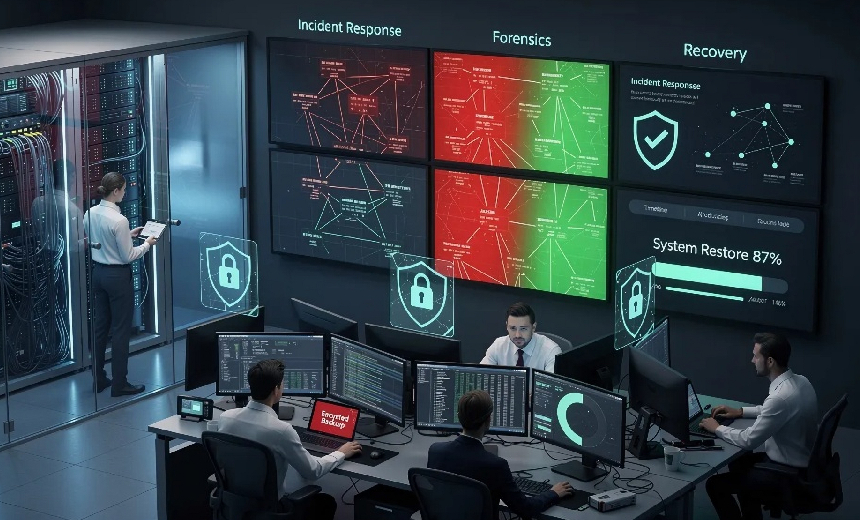
 Cyber resilience is fundamentally a human decision-making challenge, not just
a technical one. When a cyber incident occurs, organizations typically face a
flood of technical alerts and signals. While tools can detect anomalies and
spot patterns, they cannot determine the broader context, such as who is
behind an attack or what the legal and reputational impacts might be. Human
judgment is required to evaluate these signals, understand the business
context, and decide on a proportionate response. The true measure of an
organization's resilience is its decision latency—the time it takes to move
from identifying a technical signal to making an informed choice about what to
do next. Fast but poorly considered decisions can often make a situation
worse, so leaders must balance speed with careful judgment. Effective cyber
response is a cross-disciplinary effort that extends far beyond the IT
department, involving legal, communications, and business operations teams. To
navigate these high-pressure situations successfully, companies need a shared
decision model and a clear understanding of who is authorized to act.
Ultimately, turning threat intelligence into meaningful action requires
connecting technical data to real-world consequences, allowing leadership to
make critical choices while meaningful response options are still
available.
Cyber resilience is fundamentally a human decision-making challenge, not just
a technical one. When a cyber incident occurs, organizations typically face a
flood of technical alerts and signals. While tools can detect anomalies and
spot patterns, they cannot determine the broader context, such as who is
behind an attack or what the legal and reputational impacts might be. Human
judgment is required to evaluate these signals, understand the business
context, and decide on a proportionate response. The true measure of an
organization's resilience is its decision latency—the time it takes to move
from identifying a technical signal to making an informed choice about what to
do next. Fast but poorly considered decisions can often make a situation
worse, so leaders must balance speed with careful judgment. Effective cyber
response is a cross-disciplinary effort that extends far beyond the IT
department, involving legal, communications, and business operations teams. To
navigate these high-pressure situations successfully, companies need a shared
decision model and a clear understanding of who is authorized to act.
Ultimately, turning threat intelligence into meaningful action requires
connecting technical data to real-world consequences, allowing leadership to
make critical choices while meaningful response options are still
available.Why Compute Efficiency Is the New Model Architecture
 In recent years, the artificial intelligence community has heavily focused on
designing novel model architectures to drive progress. We have seen a
continuous search for the next big breakthrough in how neural networks are
structured. However, a significant shift is currently taking place in the
industry. The primary driver of advanced capabilities is no longer just the
mathematical arrangement of the model itself, but rather the compute
efficiency behind it. As systems scale to unprecedented sizes, the sheer cost
and physical limits of hardware have forced a change in priorities. Today, the
most meaningful innovations occur at the infrastructure level, focusing on how
effectively a system utilizes processing power and manages memory. Optimizing
how data moves through hardware has become just as critical as the algorithms
processing that data. By maximizing resource utilization, engineering teams
can train larger models faster and deploy them more sustainably. This means
that designing efficient execution pipelines and hardware integrations is now
the true architectural challenge. Ultimately, treating computational
efficiency as the core foundation allows organizations to build more capable
systems without facing unsustainable costs. Moving forward, the most
successful projects will be those that prioritize operational speed and
hardware harmony over purely theoretical structural changes.
In recent years, the artificial intelligence community has heavily focused on
designing novel model architectures to drive progress. We have seen a
continuous search for the next big breakthrough in how neural networks are
structured. However, a significant shift is currently taking place in the
industry. The primary driver of advanced capabilities is no longer just the
mathematical arrangement of the model itself, but rather the compute
efficiency behind it. As systems scale to unprecedented sizes, the sheer cost
and physical limits of hardware have forced a change in priorities. Today, the
most meaningful innovations occur at the infrastructure level, focusing on how
effectively a system utilizes processing power and manages memory. Optimizing
how data moves through hardware has become just as critical as the algorithms
processing that data. By maximizing resource utilization, engineering teams
can train larger models faster and deploy them more sustainably. This means
that designing efficient execution pipelines and hardware integrations is now
the true architectural challenge. Ultimately, treating computational
efficiency as the core foundation allows organizations to build more capable
systems without facing unsustainable costs. Moving forward, the most
successful projects will be those that prioritize operational speed and
hardware harmony over purely theoretical structural changes.Cybersecurity for Manufacturing
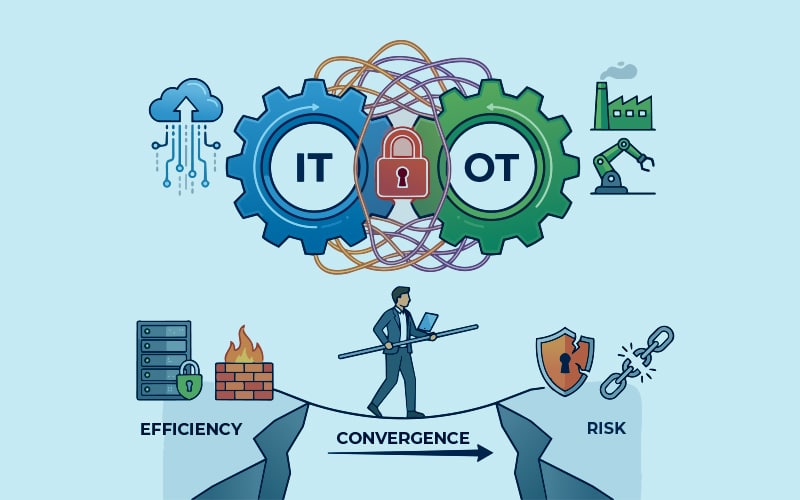
Modern manufacturing relies heavily on integrating advanced technologies, from cloud platforms and industrial IoT devices to traditional machinery and operational technology (OT). While this digital transformation boosts productivity and automates processes, it significantly expands the cybersecurity attack surface. Cybersecurity for manufacturing involves protecting networks, industrial control systems, and production data from threats while ensuring that safety, quality, and operational continuity are maintained. Because modern facilities often mix legacy systems with advanced automation, cybersecurity in this sector is not solely an IT responsibility; it requires collaboration among IT teams, plant managers, engineers, and executives. The distinction between IT and OT is crucial, as OT focuses on controlling physical processes where downtime can severely disrupt production. The most significant threats include ransomware, phishing, credential theft, and supply-chain attacks. Poorly segmented networks can allow an attack on a simple endpoint to spread to critical operational systems. To defend against these risks, manufacturers must deploy a strategy that includes network segmentation, secure remote access, continuous monitoring, and robust incident response. Organizations also rely on specialized solutions to gain visibility and quickly detect anomalies across these complex, interconnected environments before production is compromised.The Hidden Technology Keeping Modern Infrastructure Running
 Modern infrastructure—such as power grids, water networks, and transportation
systems—is increasingly relying on hidden digital technologies to maintain
reliability, especially as physical assets age. While concrete, steel, and
machinery still form the foundation, a digital layer of sensors, edge
computing, and specialized software now continuously monitors their condition.
Instead of waiting for periodic manual inspections, operators use technologies
like vibration sensors, thermal monitoring, and computer vision to observe
infrastructure behavior in real-time. This continuous visibility allows
engineers to detect early warning signs, such as a pump consuming extra
electricity or a motor changing its vibration signature, before a catastrophic
failure occurs. Edge computing processes data locally, sending only essential
information to cloud platforms to prevent bandwidth overload. Furthermore,
artificial intelligence and machine learning filter massive amounts of
operational data to enable predictive maintenance, flagging unusual patterns
that require human attention. Digital twins—dynamic digital representations of
physical systems—further help engineers compare expected performance with
actual behavior. By integrating these tools, operators gain a comprehensive
view of their networks, allowing them to prioritize maintenance, target
investments efficiently, and keep essential public services running smoothly
despite the mounting challenges of aging physical infrastructure.
Modern infrastructure—such as power grids, water networks, and transportation
systems—is increasingly relying on hidden digital technologies to maintain
reliability, especially as physical assets age. While concrete, steel, and
machinery still form the foundation, a digital layer of sensors, edge
computing, and specialized software now continuously monitors their condition.
Instead of waiting for periodic manual inspections, operators use technologies
like vibration sensors, thermal monitoring, and computer vision to observe
infrastructure behavior in real-time. This continuous visibility allows
engineers to detect early warning signs, such as a pump consuming extra
electricity or a motor changing its vibration signature, before a catastrophic
failure occurs. Edge computing processes data locally, sending only essential
information to cloud platforms to prevent bandwidth overload. Furthermore,
artificial intelligence and machine learning filter massive amounts of
operational data to enable predictive maintenance, flagging unusual patterns
that require human attention. Digital twins—dynamic digital representations of
physical systems—further help engineers compare expected performance with
actual behavior. By integrating these tools, operators gain a comprehensive
view of their networks, allowing them to prioritize maintenance, target
investments efficiently, and keep essential public services running smoothly
despite the mounting challenges of aging physical infrastructure.
Seven critical vibe coding mistakes — and how to avoid them
 While using artificial intelligence to quickly generate code promises massive
productivity gains, it also introduces serious risks if fundamental software
engineering practices are ignored. The article highlights seven critical
mistakes developers must avoid when relying on AI coding assistants. First,
teams must not skip the essential process of defining clear requirements and
user stories before generating code. Second, developers should never blindly
trust the AI to select software dependencies, as it often chooses outdated or
insecure components. Third, foundational architecture and nonfunctional
requirements like security must be planned upfront, not bolted on later.
Fourth, exposing unmasked production data to AI tools in development
environments creates significant compliance risks. Fifth, access controls need
to be built directly into the foundation rather than treated as an
afterthought. Sixth, relying solely on manual code reviews is highly
dangerous; organizations must enforce strict automated testing safeguards
before accepting generated code. Finally, teams must ensure complete
observability to properly track and understand the automated decisions the AI
makes. Ultimately, while coding assistants can dramatically accelerate
software delivery, teams must apply the exact same rigorous planning, testing,
and quality standards they would use for human-written code to build safe,
reliable, and functional applications.
While using artificial intelligence to quickly generate code promises massive
productivity gains, it also introduces serious risks if fundamental software
engineering practices are ignored. The article highlights seven critical
mistakes developers must avoid when relying on AI coding assistants. First,
teams must not skip the essential process of defining clear requirements and
user stories before generating code. Second, developers should never blindly
trust the AI to select software dependencies, as it often chooses outdated or
insecure components. Third, foundational architecture and nonfunctional
requirements like security must be planned upfront, not bolted on later.
Fourth, exposing unmasked production data to AI tools in development
environments creates significant compliance risks. Fifth, access controls need
to be built directly into the foundation rather than treated as an
afterthought. Sixth, relying solely on manual code reviews is highly
dangerous; organizations must enforce strict automated testing safeguards
before accepting generated code. Finally, teams must ensure complete
observability to properly track and understand the automated decisions the AI
makes. Ultimately, while coding assistants can dramatically accelerate
software delivery, teams must apply the exact same rigorous planning, testing,
and quality standards they would use for human-written code to build safe,
reliable, and functional applications.
When the patch tsunami meets the maintenance window
 Artificial intelligence is drastically accelerating how fast software
vulnerabilities are discovered, creating a massive wave of security patches.
While standard IT departments can often apply these fixes in days, operational
technology environments like factories, water plants, and hospitals face a
serious crisis. Finding a flaw now happens at machine speed, but fixing it in
physical plants still moves at a crawl. In these settings, you cannot simply
reboot a system without risking continuous processes, worker safety, or
voiding equipment warranties. Scheduled maintenance windows might only happen
once a year, making traditional patching impossible. To manage this growing
gap, security teams must stop trying to patch every critical flaw immediately.
Instead, they need to prioritize based on actual exposure and the real-world
consequences of an attack. If a system cannot be patched safely, operators
must focus on strict containment strategies, such as isolating the vulnerable
equipment from the main network and closely monitoring it for threats.
Furthermore, organizations should proactively negotiate emergency downtime
rules with their plant managers and finally set firm retirement dates for
aging, unpatchable legacy systems. The speed of vulnerability discovery has
changed permanently, and industrial teams must adapt their defenses to
strictly match this reality.
Artificial intelligence is drastically accelerating how fast software
vulnerabilities are discovered, creating a massive wave of security patches.
While standard IT departments can often apply these fixes in days, operational
technology environments like factories, water plants, and hospitals face a
serious crisis. Finding a flaw now happens at machine speed, but fixing it in
physical plants still moves at a crawl. In these settings, you cannot simply
reboot a system without risking continuous processes, worker safety, or
voiding equipment warranties. Scheduled maintenance windows might only happen
once a year, making traditional patching impossible. To manage this growing
gap, security teams must stop trying to patch every critical flaw immediately.
Instead, they need to prioritize based on actual exposure and the real-world
consequences of an attack. If a system cannot be patched safely, operators
must focus on strict containment strategies, such as isolating the vulnerable
equipment from the main network and closely monitoring it for threats.
Furthermore, organizations should proactively negotiate emergency downtime
rules with their plant managers and finally set firm retirement dates for
aging, unpatchable legacy systems. The speed of vulnerability discovery has
changed permanently, and industrial teams must adapt their defenses to
strictly match this reality.The hidden cost of data sovereignty: When governance prevents scaling
Data sovereignty rules require information to remain within specific
geographic or legal borders, initially intended to protect user privacy and
national interests. However, strictly regulating where and how data is stored
creates significant challenges when companies attempt to expand their
operations globally. Because organizations must adhere to different local
laws, they are frequently forced to construct isolated technology
infrastructures for each distinct region. This fragmented approach prevents
the smooth flow of information that modern businesses depend on for everyday
efficiency. Rather than using a single, unified system, companies maintain
multiple parallel environments. This reality duplicates work, consumes
valuable technical resources, and drastically increases operating costs. In
addition, the administrative burden necessary to manage these varied
compliance requirements slows down basic decision-making and delays the
introduction of new products or services. While strong governance is
absolutely necessary to fulfill legal obligations and maintain customer trust,
it can unintentionally form rigid barriers to expansion. Business leaders must
find a careful balance between following local mandates and maintaining the
operational flexibility required to grow. Without a thoughtful strategy that
connects regulatory compliance with sensible infrastructure design, the
ambition to enter new markets will ultimately be hindered by the rules
designed to keep data secure.






/dq/media/media_files/2026/08/08/ai-layoffs-2026-08-08-15-03-35.png)