Showing posts with label Digital Twins. Show all posts

Daily Tech Digest - June 01, 2026


Quote for the day:

“The best architectures, requirements, and designs emerge from self‑organizing teams.” -- Martin Fowler

🎧 Listen to this digest on YouTube Music

▶ Play Audio Digest

Duration: 23 mins • Perfect for listening on the go.


Why AI can’t match human creative work

This Computerworld article explores why AI-generated content struggles to match the real effectiveness of human creativity, despite its overwhelming volume in today's digital marketplace. Recent industry studies in advertising and search engine optimization highlight a clear pattern: even when typical audiences cannot consciously distinguish between human and machine outputs, they consistently prefer human-created work. In advertising, human-made campaigns perform significantly better in driving sales and boosting long-term brand health because they can forge genuine emotional connections and break new ground rather than simply remixing existing data. Similarly, comprehensive data from web search results reveals that human-written articles overwhelmingly secure top rankings compared to those entirely generated by software algorithms. While automated tools have allowed an unprecedented flood of synthetic blogs, music, videos, and social media posts into the mainstream, this automated material rarely captures meaningful audience attention or real engagement. For instance, although AI-produced episodes make up a very substantial share of new podcast uploads, they currently account for less than one percent of actual listening time. Ultimately, the author concludes that while modern technology serves as a practical assistant for formatting, outlining, or brainstorming, standalone human talent remains completely indispensable for producing work that truly resonates, engages readers, and achieves tangible long-term business results.


TSA seeks biometric identity management support

The Transportation Security Administration is looking for industry assistance to modernize and maintain its internal identity management and background check systems. Through a draft work statement issued by its Enrollment Services and Vetting Programs office, the agency intends to upgrade how it processes biographical and biometric information. This initiative does not create new public-facing data collection routines; instead, it optimizes existing programs that screen pilots, commercial flight students, maritime personnel, hazardous materials drivers, and PreCheck applicants. A major focus of this comprehensive update is moving away from traditional, one-time background checks toward continuous, automated tracking. To do this, the agency plans to expand its use of the Federal Bureau of Investigation's recurrent vetting service and automate the evaluation of text-based criminal records. Additionally, the project outlines plans to integrate existing systems more deeply with Department of Homeland Security biometric databases over the next three to five years. To improve data accuracy and operational speed, the selected contractor will use data science tools, including basic machine learning, to detect data anomalies and help staff review cases more efficiently. The proposed contract includes a twelve-month base period followed by four optional one-year extensions, with all services based at the agency's Virginia headquarters.


Why ‘human in the loop’ falls short – and what to do about it

In this SiliconANGLE column, Jason Bloomberg explains why the common practice of keeping a human in the loop to oversee artificial intelligence operations is deeply flawed. While tech companies often pitch human oversight as a safety net against autonomous systems making mistakes, this method struggles to hold up under real-world pressure. On an individual level, people tend to trust automated systems too much, suffer from mental fatigue during repetitive tasks, or simply wave approvals through without checking. In corporate groups, it often leads to finger-pointing, blame-shifting, or superficial compliance. Furthermore, software systems function in mere seconds, whereas human business workflows require meetings and lengthy procedural delays, creating a massive gap in actual response times. To fix these flaws, tech providers usually suggest limiting software capabilities or building detailed tracking tools, but these heavy-handed changes slow down operations and frustrate commercial goals. Bloomberg suggests flipping the entire setup by focusing on automation in the loop instead. Rather than forcing human workers to become cogs inside an automated pipeline, software should exist purely to assist human day-to-day operations. This perspective ensures people retain ultimate responsibility, prevents software from making critical business decisions, and allows systems to grow safely without overwhelming human operators or clashing with long-term strategic plans.


Why Moving Off the Cloud Is the Easy Part and What Comes Next Is Where Things Get Hard

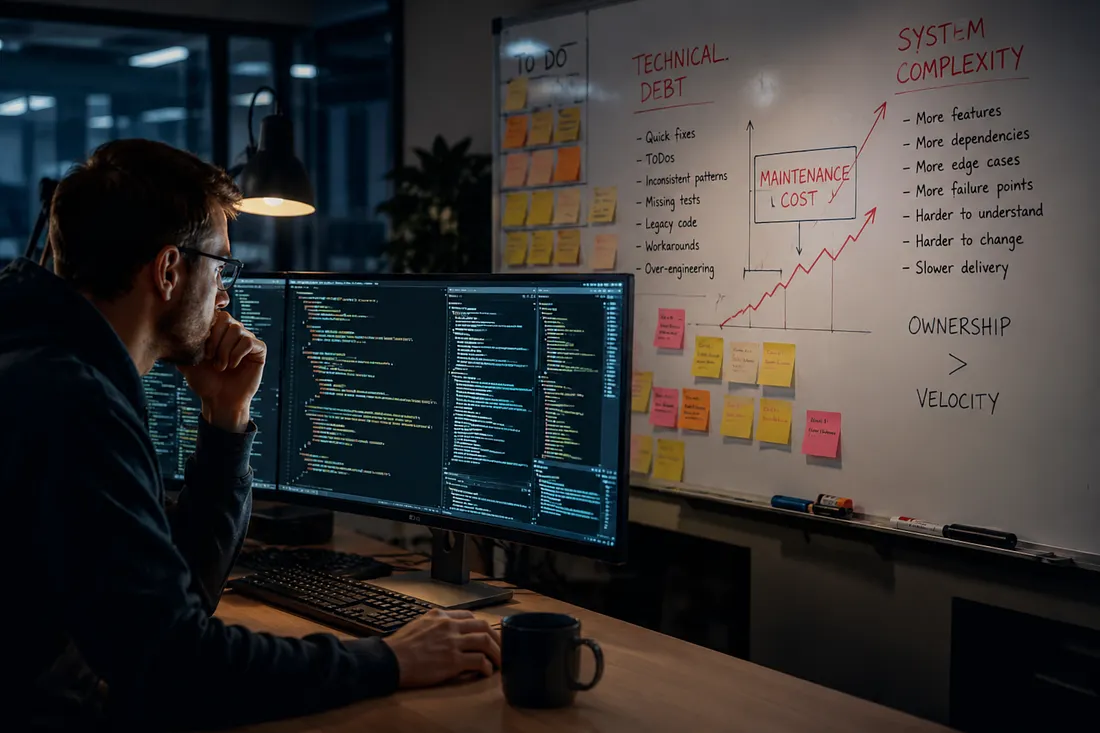
In this article, Eli Lahr explains that while rising costs and unpredictable performance prompt many organizations to move their digital workloads off public cloud providers, the actual migration is rarely the primary challenge. Instead, the real difficulty emerges afterward, during regular day-to-day operations. Moving away from large, centralized cloud platforms forces companies to manage internal infrastructure details that were previously handled automatically by the provider. This structural transition introduces unfamiliar administrative responsibilities, hidden technical skill gaps, and the intricate task of safely running applications across fragmented environments, including a combination of traditional on-premises hardware, local data centers, and remaining cloud components. Rather than treating this shift as a basic technology relocation, successful organizations choose to approach it as a comprehensive corporate strategy revision. They bring together their engineering, security, and financial departments early in the process to determine exactly where each distinct application belongs according to its unique performance needs, actual long-term expenses, and strict data compliance rules. Lahr recommends explicitly whiteboarding critical workloads to map out their exact structural dependencies, real monthly costs, and detailed response plans for late-night system outages or sudden traffic spikes. Ultimately, establishing precise benchmarks for baseline expenses, execution speed, and overall availability helps ensure companies achieve genuine long-term predictability.


6 critical security gaps every CISO must address

The CSO Online article highlights six essential security shortcomings that corporate security leaders need to address. First, a narrow perspective remains common; many leaders treat cybersecurity purely as a technical IT issue instead of focusing on broader business resilience and downstream operational continuity. Second, a noticeable lag exists between the swift automation used by digital attackers and the slower, more traditional response times of corporate defense teams. Similarly, security operations frequently struggle to match the rapid pace of general business changes, adoptions, and market expansions. Internal talent issues have also evolved significantly; the primary challenge is no longer just finding enough individuals to hire, but ensuring that current employees have the specific, updated skills required to handle an evolving environment. This skills gap is heavily compounded by the rapid growth of artificial intelligence, where top-down corporate initiatives and unauthorized employee tools are vastly outstripping proper security frameworks and oversight. Finally, aging tech infrastructure creates a significant vulnerability, as out-of-date systems cannot support modern security controls, leaving them exposed to easy exploitation. Rather than attempting to block every single threat, professionals are advised to use objective, risk-based prioritization to protect core company workflows and preserve long-term stability.


The Pitfalls of Defaulting to a Single Database: Why "Good Enough" Isn't Always a Good Strategy

When building software systems, it is incredibly common for modern engineering teams to default to a single database because it feels familiar, comfortable, and entirely sufficient for early stage development. However, accepting a "good enough" data architecture often introduces severe technical challenges as an organization scales. Forcing highly diverse data workloads, such as rapid transactional processing, complex analytical reporting, and unstructured document storage, into one general purpose engine creates major performance bottlenecks. No single database system can optimally handle every distinct data requirement, which forces teams to make design compromises that ultimately drag down the performance of the entire platform. Furthermore, relying on a single shared repository creates a precarious single point of failure. If that central data layer experiences an unexpected outage or suffers a performance slowdown from a poorly optimized query, every connected application and service grinds to a sudden halt. This structural centralization tightly couples unrelated services, making future software changes cumbersome and risky. Instead of settling for a monolithic database structure out of convenience, organizations achieve far greater resilience by matching distinct operational tasks with appropriate, specialized storage technologies. Choosing targeted databases minimizes resource friction, streamlines backend infrastructure management, and ensures individual services remain completely independent and stable.
The article examines how advanced artificial intelligence systems have dismantled traditional timeline safety margins for enterprise cyber defense. Historically, while AI could exploit known security flaws, it struggled to identify them independently. However, the release of Anthropic’s Claude Mythos Preview changed this dynamic by autonomously discovering thousands of zero-day vulnerabilities across major operating systems and browsers at a minimal compute cost. Consequently, the window between vulnerability disclosure and real-world exploitation has collapsed to less than ten hours, rendering traditional, calendar-based patching schedules obsolete. To address this risk, security teams are advised to replace standard severity scoring with a more dynamic, three-layer prioritization filter that integrates real-time exploitation data from federal databases and predictive scoring systems. Additionally, the proliferation of AI-driven developer platforms creates massive security risks because a single compromised host can easily expose high-value credentials across an entire corporate ecosystem. Because formal safety and authorization standards are still years away from implementation, organizations must move away from human-speed response intervals. Securing modern networks requires implementing event-driven patching for core services, conducting proactive asset discovery scans, and strictly auditing authorization boundaries to match the accelerated operational speed of automated adversaries.


Why Data “Spring Cleaning” Is Critical for AI Execution

In a Dataversity article, Michael Curry explains why enterprise data management must transition from a seasonal chore into a continuous operational discipline to support successful AI deployment. Many organizations today struggle with fragmented sources, redundant datasets, and brittle information pipelines. While these data inefficiencies were manageable during early experimental phases, they now directly block modern automation models from scaling properly. Artificial intelligence systems demand highly reliable, context-rich, and easily accessible internal records; without them, models deliver late insights or inaccurate outputs, which quickly destroys user trust. Survey data indicates that a large majority of technology leaders worry about basic quality and accessibility rather than the structural complexity of the algorithm itself. To resolve these operational bottlenecks, companies must modernize infrastructure and routinely clean their digital environments using automated classification, systematic deduplication, and regular platform profiling. Furthermore, businesses must rethink their legacy core systems, which house highly valuable data, by establishing secure, real time access instead of abandoning those platforms entirely. Ultimately, expanding these tools from isolated test pilots into broad enterprise execution requires strict data governance, clear ownership, and standardized business definitions. Because corporate information landscapes shift constantly, keeping foundations clean is a permanent obligation that directly determines if advanced tech projects succeed or stall.


Digital Twins Are Broken, AI Might Finally Fix Them

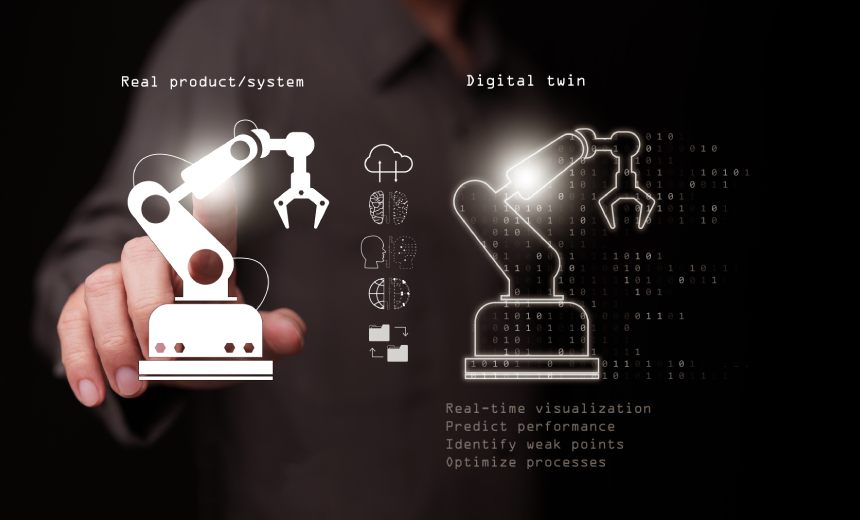
For nearly two decades, digital twins struggled to live up to their initial promises. Most companies used them merely as advanced visualization tools or static engineering models that quickly became disconnected from the physical equipment they represented. Building and maintaining these simulations was highly expensive, and fragmented data across separate corporate departments further limited their actual utility. However, the broader availability of practical artificial intelligence is changing how factories and industrial plants operate. By cleanly integrating live data feeds, modern digital twins can continuously learn from everyday operational events, environmental shifts, and machinery maintenance histories rather than remaining static. This shift allows large companies to simulate factory updates and test potential facility modifications safely without pausing active assembly lines. Beyond basic mirroring, newer setups enable virtual models to accurately predict system failures and automate adjustments directly back into real-world workflows. This ongoing progression also encourages organizations to dismantle the traditional divisions between their plant-floor operational systems and standard corporate IT networks. Ultimately, these tools working together allow manufacturers to bypass previous technical limitations. Instead of managing passive digital replicas, businesses can now run responsive systems that analyze data and optimize physical environments in real time, finally capturing real value from their data investments.


Data discovery gaps that catch enterprises off guard

In an interview with Help Net Security, Schellman CEO Avani Desai highlights a significant disconnect between what organizations believe they know about their own sensitive files and what automated discovery tools actually find. Even companies with advanced compliance dashboards and extensive data catalogs frequently overlook hidden information sitting in abandoned cloud storage, old testing setups, and legacy environments that teams assumed were turned off years ago. This lack of visibility becomes especially problematic during corporate mergers, where overlooked and heavily duplicated files can stall integration work and lead to unexpected, costly cleanups. Desai points out that while synthetic data is currently marketed heavily as a simple shortcut for basic security habits, confidential computing remains underappreciated despite its crucial ability to protect information while it is actively being processed. Interestingly, smaller firms often manage compliance and technical updates much better than large enterprises because they operate with less internal bureaucracy, fewer outdated computer systems, and far clearer lines of individual responsibility. Ultimately, mapping out company information cannot be treated as a fixed, one-off task. Desai suggests the real test of a company's readiness is knowing exactly who is responsible for continuously updating that data map after any routine system change, software update, or cloud migration takes place.

Daily Tech Digest - May 16, 2026


Quote for the day:

“A leader’s real power is measured not by the decisions they make, but by the decisions they enable.” -- Leadership Principle


🎧 Listen to this digest on YouTube Music

▶ Play Audio Digest

Duration: 17 mins • Perfect for listening on the go.


Digital twins reshape network and data center management

As demanding artificial intelligence workloads exponentially increase modern network complexity and push data center power densities past traditional physical limits, digital twins are rapidly transitioning from specialized enterprise edge cases into baseline operational tools. Unlike static design simulations, these digital twins act as continuously synchronized virtual replicas of live environments. For network management teams, these twins provide mathematically verified, current behavioral models derived from device configurations and state data, allowing engineers to safely test infrastructure updates and reduce unplanned outages by as much as seventy percent. Meanwhile, data center engineers utilize advanced computational fluid dynamics and electrical simulations within the twin to model extreme power loads, rack layouts, and cooling strategies before touching physical hardware, mitigating risks for high density systems like Nvidia clusters that exceed one hundred fifty kilowatts per rack. Integrating artificial intelligence further enhances these virtual models via natural language querying interfaces, which eliminate configuration hallucinations by grounding outputs in verified facts, and autonomous agentic workflows that independently diagnose errors or optimize cooling efficiency. Ultimately, as hybrid cloud architectures and dense processing clusters fully outpace manual oversight, the combination of artificial intelligence and digital twins delivers the essential baseline planning foundation required to maintain enterprise operational stability.


The Pipeline That Shapes the Work: On Build Systems, CI/CD, and Deployment Infrastructure

In this article, Andras Ludanyi argues that build and deployment pipelines are not neutral technical constraints but important policy documents encoded in automation that structurally dictate engineering workflows. At the core of software development is the feedback loop, and its speed acts as the central variable shaping developer behavior. Rapid feedback loops, resolving in just a few minutes, enable engineers to maintain cognitive context and continuously integrate small, low risk changes. Conversely, slow pipelines enforce costly context switching and encourage risky change batching, which expands the error diagnostic surface when failures occur. To maximize efficiency, pipelines must be intentionally designed rather than haphazardly accumulated over time. This requires utilizing structured stages, running fast static analysis and unit testing before parallelized integration tests, while deferring heavy comprehensive validation to later deployment gates. Furthermore, deployment frequency is entirely governed by pipeline friction. Smooth automation fosters routine, frequent deployments, while high friction processes breed massive, infrequent releases accompanied by extensive organizational ceremony. Finally, adopting infrastructure as code mitigates environment drift and instability by subjecting environment configurations to the same version controlled rigor as application code. Ultimately, treating the pipeline as a first class engineering artifact yields substantial compounding returns across team productivity, software quality, and system reliability.


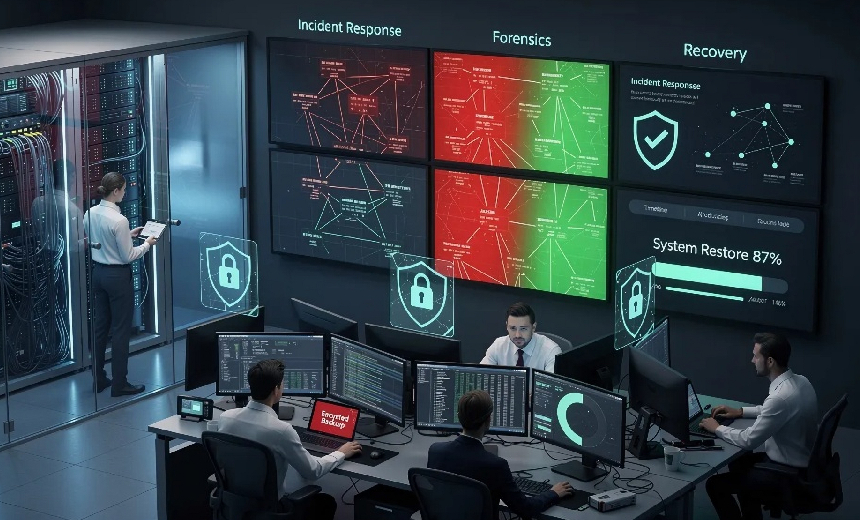
Cyber Resilience Is Now a CEO Metric, Not a CISO KPI

Historically managed by specialized IT teams and Chief Information Security Officers (CISOs), cybersecurity has rapidly evolved into a critical enterprise-wide responsibility falling under the direct purview of Chief Executive Officers (CEOs). This fundamental paradigm shift is heavily driven by accelerated business digitization and the emergence of highly sophisticated, AI-enabled threats like advanced phishing, synthetic voice cloning, and deepfakes. Consequently, a dangerous organizational maturity gap has opened between aggressive digital adoption and lagging cyber preparedness. Modern cyber disruptions are no longer isolated technical failures; instead, they carry massive enterprise-wide consequences, including immediate operational paralysis, compounding financial liabilities, strict regulatory penalties, and severe reputational damage. Because absolute risk prevention is increasingly unrealistic in today’s volatile landscape, forward-thinking organizations must pivot from basic cybersecurity to holistic cyber resilience. This comprehensive strategy prioritizes an organization's structural capability to absorb ongoing disruptions, contain damage, maintain operational continuity, and swiftly adapt. Therefore, the contemporary CEO's mandate extends far beyond simply approving technology budgets to actively cultivating an integrated, cross-functional resilience culture. Ultimately, cyber resilience is no longer a narrow IT performance metric, but rather a defining test of corporate leadership, governance, and long-term enterprise sustainability, effectively ensuring the preservation of overall stakeholder trust.


The Strategic Impact Of Edge Computing And AI On Modern Manufacturing

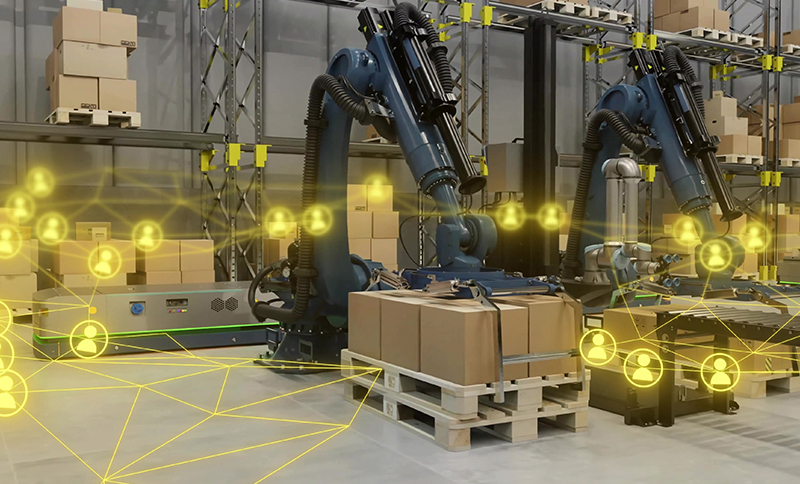
In "The Strategic Impact of Edge Computing and AI on Modern Manufacturing," John Healy discusses how industrial organizations use localized data processing to optimize real-time efficiency and productivity. As automation generates unprecedented data volumes, edge computing addresses traditional cloud latency by moving compute power closer to machinery and sensors, a market projected to surpass $380 billion by 2028. By integrating artificial intelligence, edge systems amplify these operational benefits through predictive maintenance, automated equipment adjustments, and enhanced energy efficiency, which ultimately lower costs. Furthermore, keeping data local improves data governance and strengthens cybersecurity against rising industrial threats, with forecasts indicating that nearly 74% of global data will process outside traditional data centers by the early 2030s. Despite these advantages, expanding edge initiatives often stalls due to organizational fragmentation and misaligned information technology (IT) and operational technology (OT) teams. Overcoming these barriers requires shared accountability, utilizing existing industrial assets, and targeting high-value use cases like real-time quality monitoring. Ultimately, the convergence of AI and edge computing represents a structural shift that bridges traditional automation with advanced capabilities like digital twins and robotics. For instance, mobile warehouse robots rely on this localized processing to navigate dynamic environments safely. By adopting these systems, manufacturers establish a defining capability for future industrial performance.


Leadership During Crisis: How Technology Firms Can Build Cultures That Bend Without Breaking

In the fast-paced technology sector, crises are uniquely complex due to their high velocity, visibility, systemic interdependence, and heavy emotional load on engineering teams. Moving past traditional command-and-control structures, modern organizational resilience demands a shift toward building an adaptable corporate culture that bends without breaking. According to Kannan Subbiah, a resilient culture functions as an essential operating system anchored by psychological safety, radical transparency, and decentralized decision-making. Effective crisis leaders must intentionally cultivate an agile mindset where calm is contagious, prioritizing clear, actionable daily direction over absolute long-term certainty. Furthermore, maximizing employee engagement is highly critical to mitigate pervasive crisis fatigue and sustain performance under intense pressure. Communication serves as a leadership superpower, requiring managers to share updates early, maintain an empathetic and accountable tone, and completely avoid blaming individuals. When making high-stakes choices, utilizing structured frameworks helps separate critical operational signals from distracting background noise while empowering specialized teams to act autonomously. Finally, the post-crisis phase serves as the ultimate test of leadership, necessitating blameless postmortems, enhanced capabilities, and consistent actions to rebuild trust. Ultimately, the future of tech crisis management relies on an intersection of human-centered empathy, data-driven insights, and adaptive execution, proving that crises do not build leaders but reveal them.


Why DevOps Is Critical for Modern Business Resilience

In a rapidly changing business environment marked by evolving cyber threats and shifting market demands, modern business resilience relies heavily on the strategic adoption of DevOps practices. According to the article, DevOps establishes a vital cultural and technical bridge between development and operations teams, replacing siloed organizational workflows and blame games with a unified model of shared responsibility. This profound paradigm shift accelerates enterprise innovation through microservices and essential technical drivers like Continuous Integration and Continuous Delivery (CI/CD), which actively minimize human error and automate seamless code deployment. Furthermore, the proactive practice of DevSecOps embeds security protocols directly into every single stage of the software development life cycle, ensuring that critical vulnerabilities are mitigated early and cost-effectively rather than treated as a mere afterthought. To proactively preempt failures, modern organizations leverage comprehensive observability frameworks enhanced by artificial intelligence to identify backend system issues before customers ever notice. From an architectural perspective, operational resilience is heavily reinforced through active-active configurations that run critical applications simultaneously across multiple geographic cloud regions to guarantee faster disaster recovery. Ultimately, cultivating true business resilience is primarily an ongoing cultural challenge that requires leadership to foster psychological safety, continuous learning, and robust documentation, empowering agile teams to intentionally prepare for and adapt to unexpected market disruptions.


Autonomous systems are finally working. Security is next

In this article, Chris Lentricchia argues that cybersecurity is reaching a transformative 'Waymo moment,' moving from human-driven alert analysis to autonomous systems. Over the past decade, the industry heavily prioritized threat detection, which created an overwhelming volume of alerts. However, because attackers achieve lateral movement in an average of twenty-nine minutes, human-speed investigation remains the primary bottleneck. True defense requires rapidly executing the OODA loop, consisting of observation, orientation, decision, and action, which human security teams cannot accomplish given the scale of modern data. To fix this structural asymmetry, autonomous security systems must absorb the investigative sequence. Instead of requiring analysts to manually gather context from fragmented tools, autonomous platforms can compile and present a completed threat assessment instantly. Furthermore, automated remediation mechanisms can bridge the gap between decision and action by executing real-time protective measures, such as isolating compromised workloads or revoking user credentials, while maintaining human oversight. The widespread adoption of artificial intelligence accelerates interaction speeds even further, requiring continuous validation models. Ultimately, cybersecurity success will not be determined by expanded visibility or better alerts, but by the ability to autonomously complete the entire response cycle faster than modern attackers can exploit environments.


The cloud native CTO

The article "The Cloud-Native CTO: Airbnb & Pinterest," published by Data Center Dynamics, analyzes the strategic evolution of infrastructure engineering and technology leadership within modern, hyper-growth digital platforms. By exploring the cloud architecture of major systems like Airbnb and Pinterest, the piece highlights their shift entirely away from legacy physical data centers toward mature, cloud-native ecosystems built atop public hyperscalers such as Amazon Web Services. It details how these companies manage immense global scale, supporting billions of data points and millions of active users without managing on-premises server hardware. A central focus of the text is the integration of advanced machine learning, real-time personalization, and algorithmic recommendation engines directly into the core platform frameworks. These complex, data-heavy workloads require dynamic architectures relying on microservices, containerized deployments, and robust distributed database layers. Furthermore, the analysis breaks down the multi-faceted responsibilities of a modern chief technology officer, emphasizing the continuous need to balance rapid product feature deployment against rigorous cloud spend optimization, regional data compliance, and systemic reliability. Ultimately, the publication underscores that mastering a cloud-native operation demands a total organizational pivot, converting system infrastructure into a highly agile, competitive asset that continuously fuels corporate growth and technological innovation.


How Intelligent Operations Are Reshaping Manufacturing

The article outlines how manufacturing is shifting from reactive to intelligent operations to combat severe macroeconomic pressures like supply chain disruptions, rising quality demands, and labor shortages. Advanced emerging technologies, including the Industrial Internet of Things, edge artificial intelligence, 5G, and agentic AI, are converging to replace traditional digitization with smart manufacturing. Leaders from prominent corporations like Blue Star, Apollo Tyres, and Uno Minda highlight that successful transformations rely heavily on structured maturity assessments and strong data architectures rather than isolated pilot projects. For instance, unified data fabrics and internal artificial intelligence models are actively streamlining root cause analysis, quality assurance, and predictive maintenance across production environments. Furthermore, these complex strategies must seamlessly incorporate data sovereignty, robust operational technology cybersecurity, and enterprise modernization frameworks. Ultimately, manufacturing chief information officers emphasize that the most difficult aspect of achieving a resilient, intelligent factory ecosystem is not deploying the technology itself, but rather cultivating the internal talent, skills, and change management required to scale these advanced systems. Consequently, workforce readiness remains a central constraint on operations, making human capability building the definitive cornerstone of modern industrial evolution.


Vector embedding security gap exposes enterprise AI pipelines

The article introduces VectorSmuggle, an open-source research framework by Jascha Wanger of ThirdKey that exposes a significant security vulnerability in enterprise AI pipelines, specifically regarding vector embeddings used in Retrieval-Augmented Generation (RAG). As companies convert sensitive documents into high-dimensional numerical vectors, traditional Data Loss Prevention (DLP) and egress monitoring tools remain completely blind to this data format. VectorSmuggle demonstrates six steganographic methods, including adding noise, scaling, and rotating, to clandestinely hide unauthorized payloads within these embeddings. Crucially, the perturbed vectors continue to function normally for legitimate search queries, allowing data exfiltration to go entirely unnoticed. Testing across prominent embedding models from OpenAI, Nomic, Gemma, Snowflake, and MXBai revealed that while statistical detectors can catch noise-based alterations, vector rotation seamlessly evades standard anomaly detection by preserving mathematical relationships. This rotation technique can smuggle roughly 1,920 bytes per vector across popular databases like FAISS and Chroma. To counter this invisible infrastructure-layer threat, the project introduces VectorPin, a defensive mechanism that cryptographically signs embeddings upon creation to flag any subsequent tampering. Wanger warns that while most contemporary AI security efforts focus on the visible model layer, the underlying plumbing remains highly vulnerable to sophisticated data leakage.

Daily Tech Digest - April 05, 2026


Quote for the day:

​"Risk management is a culture, not a cult. It only works if everyone lives it, not if it’s practiced by a few high priests." -- Tom Wilson


🎧 Listen to this digest on YouTube Music

▶ Play Audio Digest

Duration: 21 mins • Perfect for listening on the go.


Reengineering AML in the Era of Instant Payments

The transition to high-value instant payments, underscored by the Federal Reserve’s decision to raise FedNow transaction limits to $10 million, necessitates a fundamental reengineering of Anti-Money Laundering (AML) frameworks. Traditional monitoring systems, plagued by a 95% false-positive rate and designed for retrospective reviews, are increasingly inadequate for real-time rails where compliance decisions must occur within seconds. Consequently, financial institutions are shifting their controls upstream, prioritizing pre-settlement checks, robust customer due diligence, and behavioral profiling.
​This evolution moves AML from a reactive back-end function to a preventive, intelligence-led process integrated throughout the customer life cycle. Enhanced data standards like ISO 20022 further enable nuanced, risk-based decisioning by providing richer transaction context. While industry experts argue that AI-powered tools can reconcile the perceived conflict between processing speed and rigorous control, the pace of adoption remains uneven across the sector. Larger institutions are aggressively modernizing their architectures, whereas smaller firms often struggle with legacy system constraints and vendor dependencies. Ultimately, the industry is moving toward a converged model where fraud and AML functions merge to address financial crime holistically. This strategic shift ensures that security does not come at the expense of the frictionless experience demanded by modern corporate treasury and retail sectors.


Inconsistent Privacy Labels Don't Tell Users What They Are Getting

The Dark Reading article "Inconsistent Privacy Labels Don't Tell Users What They Are Getting" critiques the current effectiveness of mobile app privacy labels, such as those found on Apple’s App Store and Google Play. While originally designed to offer consumers transparency regarding data collection practices, researcher Lorrie Cranor highlights that these labels remain largely inaccurate and "not at all useful" in their present state. According to recent studies, the discrepancies between an app’s actual data handling and its public label often stem from developer misunderstandings and honest technical mistakes rather than malicious intent. However, this inconsistency creates a deceptive environment where companies appear to be prioritizing user privacy without actually doing so. To address these failings, experts advocate for the standardization of privacy reporting across platforms and the implementation of automated verification tools to assist developers. Furthermore, placing these labels more prominently within app store listings would ensure users can make informed decisions before downloading software. Ultimately, without rigorous verification and clearer presentation, the current privacy label system serves as more of a performative gesture than a functional security tool, failing to provide the level of protection and clarity that modern smartphone users require and expect from major digital marketplaces.


Cybersecurity and Operational Resilience: A Board-Level Imperative

In today's digital landscape, cybersecurity and operational resilience have evolved into critical boardroom imperatives, driven by a sophisticated threat environment and rigorous global regulations. The article highlights how sector-agnostic attacks, exemplified by the massive disruption at Change Healthcare, underscore the systemic risks posed to essential services. Contributing factors include the widespread monetization of "ransomware-as-a-service" and the emergence of AI-driven threats like deepfakes and automated phishing. Consequently, regulators in the EU and U.S. have introduced stringent frameworks—such as the NIS 2 Directive, the Digital Operational Resilience Act (DORA), and updated SEC rules—that demand proactive oversight, timely incident disclosure, and direct accountability from management bodies. Beyond mere legal compliance, boards are increasingly targeted by activist investors leveraging governance lapses as a catalyst for change. To navigate these challenges, the article advises directors to cultivate cyber expertise, rigorously oversee internal controls, and integrate AI governance into their broader strategic frameworks. Ultimately, organizations must shift from a reactive posture to a proactive, enterprise-wide resilience strategy to protect shareholders and ensure long-term stability amidst rapid technological shifts, quantum computing risks, and escalating financial losses associated with cyber breaches. This requires not only monitoring vulnerabilities but also investing in talent and technical controls that can withstand the dual pressures of legal liability and operational disruption.


Biometric data sharing infrastructure matures as border control expectations evolve

The article outlines significant advancements and challenges in the global biometric landscape as of April 2026, emphasizing the maturation of data-sharing infrastructures and evolving border control expectations. A primary focus is the centralization of digital trust, exemplified by Apple’s mandatory age verification in the UK and EU, which shifts identity assurance to the device level. Meanwhile, international travel is being streamlined by ICAO’s updated Public Key Directory, allowing airports and airlines to authenticate documents remotely via passenger smartphones. NIST has further modernized these systems by transitioning biometric data exchange standards to fully machine-readable formats. Despite these technical leaps, practical hurdles remain, such as recurring delays in implementing Entry/Exit System checks at major UK-EU borders. On a national level, digital identity programs are expanding, with Niger launching biometric cards for regional integration and Spain granting full legal status to its digital identity. Conversely, market pressures led to the closure of Australia Post's Digital iD. Finally, the rise of AI agents has sparked a debate over "proof of personhood," highlighting the urgent need for robust digital frameworks to differentiate between human users and automated entities within an increasingly complex and interconnected global digital ecosystem.


Learning to manage the cloud without losing control

In this insightful opinion piece, Vera Shulman, CEO of ProfiSea, addresses the critical challenges organizations face as they integrate generative artificial intelligence into their operations, specifically highlighting the surge in cloud spending. Shulman argues that while product teams focus on model capabilities, leadership often overlooks the strategic blind spot of runaway infrastructure costs. To prevent the estimated thirty percent of generative AI projects from failing after the proof-of-concept stage due to financial instability, she proposes a framework built on three fundamental pillars of cloud governance. First, she emphasizes token economics, suggesting that businesses must meticulously monitor token consumption and utilize retrieval-augmented generation to minimize data transfer costs. Second, Shulman advocates for a robust multi-cloud strategy to avoid vendor lock-in and provide the flexibility to route tasks to the most cost-efficient models. Finally, she stresses the necessity of automated financial management tools that can allocate resources in real-time and detect usage anomalies. Ultimately, the transition of artificial intelligence from a significant budget burden into a powerful strategic asset depends on intentionally designing cloud infrastructure around efficiency and governance. Decision-makers must shift their focus from mere model performance to ensuring their underlying systems are truly prepared for AI-centric business operations.


Multi-Agent AI Patterns for Developers: Pick the Right Pattern for the Right Problem

In "Multi-agent AI Patterns for Developers," the author examines the transition from basic prompt engineering to sophisticated agentic architectures designed for production-level reliability. The article outlines several fundamental patterns, starting with the Router, which uses a classifier to direct queries to specialized agents, and the Sequential Chain, which is ideal for linear, multi-step processes. It emphasizes the Orchestrator-Workers model for complex tasks requiring dynamic planning and delegation, alongside the Parallel/Voting pattern for achieving consensus across multiple agent outputs. A significant portion of the text is dedicated to the Evaluator-Optimizer loop, a pattern where one agent refines work based on the critical feedback of another to ensure high-quality results. By selecting patterns based on specific constraints—such as latency, cost, and reasoning depth—developers can move beyond monolithic LLM calls toward systems that handle error recovery and specialized tool usage effectively. Ultimately, the guide suggests that the future of AI development lies in these modular, collaborative frameworks, which provide the transparency and control necessary to execute intricate business logic. This strategic selection of architectures bridges the gap between experimental prototypes and robust, autonomous AI agents capable of operating within complex real-world environments.


How digital twins are redefining visibility and control in supply chain and logistics

Digital twins are revolutionizing supply chain and logistics by bridging the gap between physical operations and digital data. This technology creates a granular, real-time mirror of reality, enabling businesses to move beyond simple tracking to deep operational intelligence. By integrating warehouse and transport management systems with IoT sensors, digital twins provide a unified data backbone that identifies process risks and SLA breaches before they impact customers. This transformation shifts supply chains from reactive systems to intelligent, anticipatory ones that offer predictive insights and prescriptive models. The practical benefits include accelerated decision-making, optimized resource utilization, and significant cost reductions through smarter labor planning and routing. Furthermore, digital twins enhance service quality by providing early warning signals for potential delivery failures. However, successful implementation demands rigorous data governance and automated anomaly detection to ensure accuracy. As these models evolve, they progress toward autonomous orchestration, recommending strategic actions like inventory rebalancing and order reallocation. Ultimately, treating the digital twin as a strategic asset allows companies to achieve unprecedented precision and reliability. By fostering a shared operational truth across departments, organizations can compress planning cycles and set new benchmarks for excellence in an increasingly competitive market where customer experience is paramount.


Without controls, an AI agent can cost more than an employee

The article "Without controls, an AI agent can cost more than an employee" explores the financial risks of deploying AI agents without rigorous oversight. Industry experts, including Jason Calacanis and Chamath Palihapitiya, note that uncontrolled API usage—particularly for complex tasks like coding—can drive agent costs to $300 daily, effectively rivaling a $100,000 annual salary. This "sloppy" deployment often occurs when organizations use frontier models for broad, unmonitored tasks, leading to excessive token consumption that may only replace a fraction of human labor. Furthermore, experts emphasize that while agents can perform high-impact shipping of features, blindly trusting them with code leads to significant quality and security concerns. To mitigate these expenses, IT leaders must transition from treating AI as a fixed utility to managing it as a variable-cost resource. Key strategies include implementing hard spending caps, assigning unique API keys to teams, and utilizing smaller, fine-tuned models for specific, bounded tasks. While AI agents offer significant productivity gains, their economic viability depends on benchmarking inference costs against actual labor value. Ultimately, successful integration requires clear governance, where agents are treated with the same accountability and budgetary controls as any other department asset to ensure they remain a cost-effective tool.


The New Leadership Bottleneck Isn't Productivity—It's Judgment

In her Forbes article, Michelle Bernier argues that the primary bottleneck for leadership has shifted from productivity to judgment. As artificial intelligence continues to automate a significant majority of execution-based tasks, sheer output volume no longer serves as a competitive advantage. Instead, the modern leader's value lies in the ability to navigate uncertainty, discern which goals are worth pursuing, and protect the cognitive capacity required for high-stakes strategic thinking. ​This paradigm shift requires leaders to prioritize deep focus, as a single hour of uninterrupted deliberation now yields more organizational value than days of distracted task completion. To adapt, Bernier suggests that executives should organize their schedules around peak energy levels rather than mere calendar availability, pre-decide recurring choices through robust frameworks to preserve mental resources, and explicitly teach their teams to internalize these decision-making criteria. Ultimately, thriving in an AI-driven era is not about working harder or faster; it is about becoming ruthlessly clear on where to apply human insight and protecting the conditions that make high-level thinking possible. Leaders who fail to cultivate this deliberate quality of judgment risk remaining busy while falling behind, whereas those who master it will turn focused judgment into their most sustainable competitive asset.


Components of A Coding Agent

In "Components of a Coding Agent," Sebastian Raschka explores the architectural requirements for effective AI-driven programming assistants, moving beyond standard Large Language Models (LLMs) toward integrated agentic systems. He distinguishes between base LLMs, reasoning models, and fully-fledged agents, emphasizing that a robust "agent harness" is essential for reliable performance. The article outlines six critical building blocks: the core LLM, a planning/reasoning layer, tool integration, memory, repository context management, and feedback mechanisms. By incorporating tools like terminal access and file system interfaces, agents can move beyond text generation to active code execution and testing. Memory and repository context ensure the agent remains grounded in project-specific requirements, while feedback loops allow for reflection, auditing, and error correction. Raschka suggests that the future of coding agents lies in transitioning from a "chat-to-code" paradigm to a more structured "chat-to-spec-to-code" workflow, where intent is captured as a formal specification first. This modular approach directly addresses common industry issues like context drift and hallucinations, ensuring that the AI system operates within a deterministic framework. Ultimately, the effectiveness of a coding agent depends not just on the underlying model's intelligence, but on the sophisticated control layer and integration of these modular components.