Daily Tech Digest - March 04, 2021

Proptech disruption trends: innovation in the real estate space

Users have found that RPA can learn how to complete administrative tasks, leaving more time to spend on duties that require a more human touch, such as customer service. Tom Reiss, CEO of Roby AI, explained: “By learning how a user carries out a task, RPA can then be custom built and combined with tasks which require an element of human touch. This approach means that companies can become hugely efficient, and staff are no longer weighed down with laborious tasks. “Whilst some companies have traditionally feared proptech, this kind of clever technology can be implemented easily alongside existing structures. In turn, creating minimal disruption to the business and maximum output when it comes to efficiency, cost saving and employee satisfaction.” ... “Video surveillance can be performed in real time, or data can be collected and stored for the purpose of evaluation when required.” Lodhia went on to explain how the cloud has further facilitated safety measures, which have benefitted from remote monitoring and management, particularly during the Covid-19 pandemic. “The impact of cloud technology has had a dramatic impact on proptech, and there are two main benefits,” Lodhia said.


How the Digital Twin Drives Smart Manufacturing

One of the initial areas of focus for implementation of the digital twin has been asset lifecycle management (ALM). Maintaining assets in the field has traditionally been a time-consuming and costly task, but critical to equipment and system uptime. Today, maintenance technicians can leverage technologies like augmented reality (AR) that allows them to access virtual engineering models and overlay these models over the physical equipment on which they are performing maintenance using specialized AR goggles or glasses. This enables them to use the most accurate and up-to-date engineering, helping ensure that the correct maintenance and performance specifications are performed efficiently. These same maintenance methods, based on merging of virtual and physical environments, can be applied to factory production systems, machines, and work cells. In addition, products, production systems, machines, and work cells can be simulated virtually to test and validate physical systems prior to assembly and installation. Moreover, the virtual commissioning of production automation—an established technology and process—is merging with the more expansive scope of the digital twin.


What's between your clouds? That's key to multi-cloud performance

First, you need management and monitoring layers. These include AIOps, security managers, governance tooling, and other technologies that can manage and control heterogeneous cloud deployments. The management and monitoring layers are just as important—perhaps even more so—than are the native services that run on those public clouds. These layers of software systems become the jumping-off point for modern cloud operations, and they can operate without leveraging cloud-specific systems as you move forward. Second, public cloud providers are beginning to invest in cross-cloud solutions. Most won't mention the word multi-cloud, but they plan to support this architecture, nonetheless. This puts the nail in the coffin of less complex, single-cloud deployments that do not take advantage of best-of-breed. Some people remain skeptical that public cloud providers will build technology that will integrate with the competition, but the providers really have no other choice. Remember when Apple and Microsoft devices could not communicate? Cloud vendors do. This is not a new trend. Enterprises will continue to move to multi-cloud as the preferred cloud deployment platform, and that move is to the middle.


How We’ll Conduct Algorithmic Audits in the New Economy

Lack of transparent accountability for algorithm-driven decision making tends to raise alarms among impacted parties. Many of the most complex algorithms are authored by an ever-changing, seemingly anonymous cavalcade of programmers over many years. Algorithms’ seeming anonymity -- coupled with their daunting size, complexity and obscurity -- presents the human race with a seemingly intractable problem: How can public and private institutions in a democratic society establish procedures for effective oversight of algorithmic decisions? Much as complex bureaucracies tend to shield the instigators of unwise decisions, convoluted algorithms can obscure the specific factors that drove a specific piece of software to operate in a specific way under specific circumstances. In recent years, popular calls for auditing of enterprises’ algorithm-driven business processes has grown. Regulations such as the European Union (EU)’s General Data Protection Regulation may force your hand in this regard. GDPR prohibits any “automated individual decision-making” that “significantly affects” EU citizens. Specifically, GDPR restricts any algorithmic approach that factors a wide range of personal data -- including behavior, location, movements, health, interests, preferences, economic status, and so on—into automated decisions.


A quantum internet is closer to reality, thanks to this switch
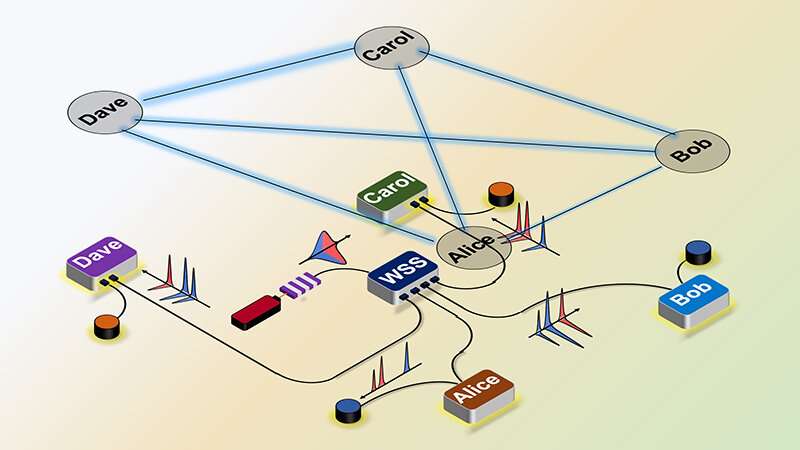
For a quantum internet, forming connections between users and adjusting bandwidth means distributing entanglement, the ability of photons to maintain a fixed quantum mechanical relationship with one another no matter how far apart they may be to connect users in a network. Entanglement plays a key role in quantum computing and quantum information processing. "When people talk about a quantum internet, it's this idea of generating entanglement remotely between two different stations, such as between quantum computers," said Navin Lingaraju, a Purdue Ph.D. student in electrical and computer engineering. "Our method changes the rate at which entangled photons are shared between different users. These entangled photons might be used as a resource to entangle quantum computers or quantum sensors at the two different stations." Purdue researchers performed the study in collaboration with Joseph Lukens, a research scientist at Oak Ridge National Laboratory. The wavelength-selective switch that the team deployed is based on similar technology used for adjusting bandwidth for today's classical communication.


What is a solutions architect? A vital role for IT-business alignment

A solutions architect is responsible for evaluating an organization’s business needs and determining how IT can support those needs leveraging software, hardware, or infrastructure. Aligning IT strategy with business goals has become paramount, and a solutions architect can help determine, develop, and improve technical solutions in support of business goals. A solutions architect also bridges communication between IT and business operations to ensure everyone is aligned in developing and implementing technical solutions for business problems. The process requires regular feedback, adjustments, and problem-solving in order to properly design and implement potential solutions. Solution architecture itself encompasses business, system, information, security, application and technology architecture. Some examples of solutions architecture include developing cloud infrastructure for efficiency, implementing microservices for ecommerce, or adopting security measures for data, systems, and networks. While the scope of the job can vary depending on a business’ specific needs, there are certain responsibilities, skills, and qualifications that solutions architects will need to meet to get the job.


Digital transformation: 5 new realities for CIOs

We’re not just working from home but also attending school, shopping, and conducting all essential communications without ever walking out the front door. Many jobs that we previously thought were only doable from the job site can now be done remotely. Product development teams now have their living rooms and garages full of parts, equipment, etc., harkening back to the early start-up era for companies like Apple, HP, Microsoft, and others. Of course, the more we do from home, the more our finite bandwidth resources are taxed. Traditional peak hours for internet usage were in the evening, but with everyone home 24/7, streaming everything simultaneously, the Wi-Fi is straining to remain stable during an employee’s more ideal work hours. We must equip WFH employees with the technology and bandwidth they need to be productive and efficient. Allocate budget to upgrade employees’ home networks to premium bandwidth. Nothing causes more headaches than choppy bandwidth on Zoom when trying to support clients. ... With the move to the cloud and WFH, we’re now forced to manage a high-threat environment every time an employee fires up a laptop or mobile phone and taps into the company network or cloud resources.


AI in Hydroponics: The Future Of Smart Farming

AI-driven’ Smart Hydroponics’ can determine optimum growth for a plant through a combination of hardware setup and a software tool that can recreate its growth trajectory. Insights are generated from data obtained by sensors in the hardware. The sensing hardware is divided into three categories, each of which is strategically placed within the hydroponics farm. They sit near the plant roots and collect data about the crop vitals, pH levels, electrical conductivity levels, and nutrient supply. They also detect light density, temperature, and humidity levels. A visual camera also checks the growing plants for colouration and feeds the data to the AI software. On the other hand, insights about the precise nature and needs of the products are generated through machine learning. The AI software system works like the brain behind the entire Hydroponic farm. It can choose between different types of LED lighting and modulate light intensity. It can even turn on a suitable irrigation system. It drives end-to-end automation so that fewer manual tasks are delegated. Currently, AI in Hydroponics in India may be in a fledgeling state.


Fintech disruption trends: a changing payment landscape on the horizon

With such a dramatic drift shift to digital commerce, largely accelerated by the impact of Covid-19, demand for software-based payment technology will exponentially increase, according to Justin Pike, founder and chairman of MYPINPAD — the software-based payments company. In this digital world the consumer is opened up to a variety of choice that can’t be replicated in the physical world and competition is fierce. “Consequently, consumer facing brands have recognised the criticality of technology that can significantly improve the customer experience,” says Pike. He believes that software-based payment technology forms the missing piece of the puzzle in terms of innovating and improving the customer experience in a remote environment, where the customer experience is completed on mobile devices. “Standardisation of the payment experience through software, across all channels (both online and offline) is where we are rapidly heading. This innovation will bring a myriad of benefits for both consumer and brand, but it absolutely must be built on a foundation of security,” Pike continues. “For merchants, the opportunity to reach new markets and customers is too good to miss.


Arguing your way to better strategy

Iterative visualization is achieved by creating a strategy map, which tracks a proposed strategy’s causal path backward from its desired outcome to the factors required to make it happen. The authors illustrate this process by producing a strategy map based on statements about Walmart’s low-cost model, which enabled the retailer to attract customers and vanquish competitors in the pre-digital economy. Working backward from the desired outcome of low costs, they map two of its enablers: operational efficiencies and a bargaining advantage over suppliers. In turn, they enumerate the enablers of those enablers, which for bargaining include high-volume purchasing, negotiating prowess, and private labels. And so on. A strategy map is only the first step in making a strategy argument. “At this stage,” Sørensen and Carroll explain, “these statements are just unfounded claims in the strategy argument, and their veracity and importance have yet to be demonstrated.” That work begins in the second set of activities — logical formalization. Logical formalization entails testing the validity and soundness of the premises underlying the statements in a strategy map.


Quote for the day:

"If you only read the books that everyone else is reading, you can only think what everyone else is thinking." -- Haruki Murakami

Daily Tech Digest - March, 02, 2021

Looking For An AI Ethicist? Good Luck

Just like with the hunt for data scientists, the person in charge of driving the AI ethics strategy at a company ideally will have a long list of qualifications. According to Ammanath, who was a Datanami Person to Watch for 2020, an AI ethicist generally should have the following skills and capabilities: An understanding of AI tools and technology; An understanding of the business and the industry and the specific AI ethical traps that exist in them; Good communication skills and the ability to work across organizational boundaries; And regulatory, legal, and policy knowledge. There are additional skills that may be required, such as having experience with the philosophical, psychological, or sociological aspects of ethics; knowing how to structure a business and a team in an ethical manner; and even knowing how to mitigate the environmental impact of using AI. “The point is that you need to have a wide variety of skills,” Ammanath says. “It’s like finding that unicorn…Trying to find that person with credible experience and knowledge in all of these areas is practically impossible.” So where does that leave you? The odds are, unless you’re working at a very large enterprise, you won’t be able to find a person to fit this exact job description.


Building a Next-Generation SOC Starts With Holistic Operations

Today's reimagined SOCs bring together disparate teams to counteract intrusions, providing everyone with a coordinated, holistic, real-time view. This tactic empowers analysts to head things off, "shifting left" in the cyber kill chain to identify the full scope of the attack while it's happening and quickly block it as far upstream as possible (ideally using automated investigation and response). We see this as the only way for SOCs to address new threats in time to avert major business impacts. It's time to empower your SOC with multidomain, central teams. It's more than tools differentiating a reactive SOC from an agile, proactive, successful one. Modernizing security operations requires an operational model that drives cross-technology integration to match the attacker's modus operandi. Empowering your SOC to deploy speedy, effective countermeasures means dangerous attackers will be slowed or deterred, reducing damage to your business and saving valuable time and money. The proper template for a modernized SOC team operates seamlessly across domains with an end-to-end view. Consider your SOC's opposition: Sophisticated bad actors see the entire picture, know where they're going and who they're engaging, and understand how to exploit weaknesses.


Can we explain AI? An Introduction to Explainable Artificial Intelligence.

Why do we need to explain AI? This is a question that has no simple answer to it. Suppose you take the example of my project that I mentioned initially. In that case, the controller might want to understand our trust models. It is hard to believe something we do not understand. We have a problem when we cannot explain the decisions made by an algorithm. In assessing AI’s decisions, it is crucial to assess the factors that led to that decision. We will therefore be able to audit and challenge decisions or work to improve the factors. This is where the importance of xAI, or explainable AI, comes in, which addresses the need to be able to interpret a model of Machine Learning. This is because it is typical for the formulation of problems addressed by ML to be incomplete. Often, forecasting is not enough to address a problem. It is essential to know more than just “what,” but also “why,” “how.” It is not enough to know that a teacher has been poorly classified in one year; it is also essential to know the reason for improvement. Although AI is one of the most important and disruptive technologies of the century, it is subject to bias. Good model accuracy can be a trap.


Why IT Should Have a Separate Training Budget

Large IT organizations can fund their own training departments, complete with their own training directors. Often these individuals have experience in both IT and education -- and they do a great job. But in many other cases, there is no formal IT training function -- only an IT training budget. In these cases, the CIO, project managers and other IT leadership must step in. They identify the core skills that they need and the individuals whom they want to send to these trainings -- and what the training will cost. This strategy of collectively evaluating IT staff, with each manager coming forth with his or her staff training needs, works -- but it’s far from flawless. The major downside is that people who are not skilled in education or training might not make the right training choices -- either in courses or in the people they send. ... Hot projects and keeping systems running are IT priorities, not training. So, if there is a hot project, or a major performance issue with an existing system, training is quickly forgotten. The result is that training that was budgeted gets deferred or isn't used at all. This makes for a very tough fight for the CIO when the next budget review comes around. The CFO will undoubtedly challenge the IT training budget, saying that the budget was underused last year so should be re-funded at that lesser level.


Indian Vaccine Makers, Oxford Lab Reportedly Hacked

The Chinese state-backed hacking group APT10, also known as Stone Panda, has in recent weeks targeted the IT systems of two Indian pharmaceutical makers whose coronavirus vaccines are being used in the country's immunization program, the Reuters news service reports, citing a report from Tokyo, Japan-based cybersecurity firm Cyfirma. That company says that hackers identified gaps and vulnerabilities in the IT infrastructure and supply chain software of the pharmaceutical firm Bharat Biotech and the Serum Institute of India, or SII, one of the largest vaccine makers globally, Reuters reports. Cyfirma says the apparent motivation behind the hackers' efforts was an attempt to exfiltrate intellectual property of the pharmaceutical firms, according to Reuters. SII is making the AstraZeneca vaccine for many countries and will soon start bulk-manufacturing Novavax shots, the news service reports. Cyfirma, SII and Bhara Biotech did not immediately respond to Information Security Media Group's requests for comment. ... Meanwhile, last week, Forbes reported that U.K.-based Oxford University's Division of Structural Biology – known as Strubi - had been hacked, with equipment used to prepare biochemical samples targeted.


Rethinking the artificial intelligence race

The way that AI systems are developed naturally creates doubts about their ability to function in untested environments, namely the requirement of large amounts of data inputs, the necessity that they be nearly perfect, and the effects of the preconceived notions of its creators. First, lack of, or erroneous, data is one of the largest challenges, especially when relying on machine learning techniques. To teach a computer to recognize a bird, it must be fed thousands of pictures to “learn” a bird’s distinguishing features, which naturally limits use in fields with few examples. Additionally, if even a tiny portion of the data is incorrect (as little as 3%), the system may develop incorrect assumptions or suffer drastic decreases in performance. Finally, the system may also recreate assumptions and prejudices—racist, sexist, elitist, or otherwise—from extant data that already contains inherent biases, such as resume archives or police records. These could also be coded in as programmers inadvertently impart their own cognitive biases into the machine learning algorithms they design. This propensity for deep-seated decision-making problems, which may only become evident well after development, will prove problematic to those that want to rely heavily on AI, especially concerning issues of national security.


How Leaders Can Help Their Teams Manage Stress in the New Year

Employees need to take vacations to reset and get their minds off of their work, but modern work policies don’t encourage time off the way they should. Plenty of companies offer generous or even unlimited amounts of vacation time, but workers are reticent to indulge lest they fall behind. The easiest solution to this issue is to simply mandate that workers take the time off they need. To combat the high-stress levels endemic to companies in their industry, game developer Supergiant Games instituted a policy stating that workers must take a minimum of 20 days off annually while still allowing for unlimited time away. A similar policy for your workplace will help employees cool off right when they need to the most. ... Your workers will never be able to achieve stress equilibrium if their boss can’t do it first. Being a great business leader isn’t just about telling people what they need to do; it’s about modeling those behaviors yourself. If you’re preaching stress reduction to your team while clocking in 11 hours a day, no one is going to be able to take your messaging seriously. Stress management starts with you, whether you like it or not.


Google Introduces Low Bitrate Speech Codec For Smoother Communication

Lyra is a novel method for compressing and transmitting voice signals. For this, the researchers applied traditional codec techniques and the latest machine learning methods on models trained on vast amounts of data. Lyra extracts features or distinctive speech attributes (list of numbers representing the speech energy in different frequency bands, called log mel spectrograms) from the input every 40ms and compresses before transmitting. At the receiving end, a generative model converts the features to a speech signal. Lyra’s new and improved ‘natural-sounding’ generative models maintain a low bitrate of codecs to achieve high-quality codecs, generally on par with state-of-art waveform codecs used in streaming platforms. However, one drawback of these generative models is computational complexity. To overcome this, Lyra uses a cheaper variation of WaveRNN, a recurrent generative model. Though it works at a lower rate, it generates multiple parallel signals in different frequencies. These signals are then combined to output a signal at the desired sample rate. Hence, Lyra works on cloud servers and mid-range phones with a processing latency of 90ms.


Cryptomining Botnet Uses Bitcoin Wallet to Avoid Detection

The initial infection starts with the exploitation of remote code execution vulnerabilities in Hadoop Yarn, Elasticsearch (CVE-2015-1427) and ThinkPHP (CVE-2019-9082). The payload delivered causes the vulnerable machine to download and execute a malicious shell script. "In older campaigns, the shell script itself handled the key functions of infection. The stand-alone script disabled security features, killed off competing infections, established persistence, and in some cases, continued infection attempts across networks found within the known host files," the report notes. But the newer instances of the shell script are written with fewer lines of code and use binary payloads for handling more system interactions, such as killing off competition, disabling security features, modifying SSH keys, downloading malware and starting the miners. Researchers note that the operators behind the campaign use cron jobs and rootkits for persistence and updates to distribution, ensuring infected machines will regularly check in and be reinfected with the latest version of the malware. These methods rely on domains and static IP addresses written into crontabs and configurations, and these domains and IP addresses routinely get identified and seized, the researchers say.


Saga Orchestration for Microservices Using the Outbox Pattern

There are two general ways for implementing distributed Sagas—choreography and orchestration. In the choreography approach, one participating service sends a message to the next after it has executed its local transaction. With orchestration, on the other hand, there’s one coordinating service that invokes one participant after the other. Both approaches have their pros and cons. Personally, I prefer the orchestration approach, as it defines one central place that can be queried to obtain the current status of a particular Saga (the orchestrator, or “Saga execution coordinator,” SEC for short). Since it avoids point-to-point communication between participants, (other than the orchestrator), it also allows for the addition of further intermediary steps within the flow, without the need to adjust each participant. Before diving into the implementation of such Saga flow, it’s worth spending some time to think about the transactional semantics that Sagas provide. ... From a service consumer point of view—e.g., a user placing a purchase order with the order service—the system is eventually consistent; i.e., it will take some time until the purchase order is in its correct state, as per the logic of the different participating services.


Quote for the day:

"In any leadership position, the most important aspect of your job will be getting your team to work together." -- Dale Brown

Daily Tech Digest - February 19, 2021

Data lake storage: Cloud vs on-premise data lakes

The data lake is conceived of as the first place an organisation’s data flows to. It is the repository for all data collected from the organisation’s operations, where it will reside in a more or less raw format. Perhaps there will be some metadata tagging to facilitate searches of data elements, but it is intended that access to data in the data lake will be by specialists such as data scientists and those that develop touchpoints downstream of the lake. Downstream is appropriate because the data lake is seen, like a real lake, as something into which all data sources flow, and they are potentially, many, varied and unprocessed. From the lake, data would go downstream to the data warehouse, which is taken to imply something more processed, packaged and ready for consumption. While the data lake contains multiple stores of data, in formats not easily accessible or readable by the vast majority of employees – unstructured, semi-structured and structured – the data warehouse is made up of structured data in databases to which applications and employees are afforded access. A data mart or hub may allow for data that is even more easily consumed by departments. So, a data lake holds large quantities of data in its original form. Unlike queries to the data warehouse or mart, to interrogate the data lake requires a schema-on-read approach.


Microsoft Azure Front Door Gets a Security Upgrade

Johnson uses three principles to describe zero trust, the first of which involves adopting explicit verification for every transaction during a session: "So not just verifying the human, but the device, the data, the location, if it's an IoT device, the application – everything that happens in the session should be verified and anomalous behavior should be flagged," she explains. The second principle is ensuring least privilege access. Many organizations still provide too much privileged access to employees, Johnson says. One of the steps Microsoft is taking with its content and application delivery is implementing more controls around access. The third principle: "Then, finally, assume you've been breached," she says. Assumed breach is a topic the security industry has discussed for years, but with zero trust, they have to assume they have been breached, and that anything within the organization could potentially be breached. These principles have grown essential as application-delivery networks undergo a massive transformation to the cloud, Johnson explains. The new capabilities in Azure Front Door aim to provide organizations with one platform that meets availability, scalability, and security needs.


Tools And Models Used In Software Testing

Software testing is a significant part of software quality assurance (SQA), it is an activity used for evaluating and improving software quality. It involves a set of activities carried out with the sole aim of finding errors in software. It validates and verifies if the software or product is functioning correctly without any errors or bugs capable of incurring defects. In the testing phase, the errors from previous cycles must be detected, this ensures complete software reliability and quality assurance. With the development of software functionalities, it is essential to use innovative testing models and tools to ensure that time and cost spent on testing is thoroughly minimized. When it comes to testing the functionality of the software, there are two types; manual and automation. Manual testing is carried out by the tester. Informal review, inspection, walkthrough, and technical review are the techniques of manual testing. Manual testing is time-consuming and requires more effort, this is a major issue with this kind of testing. Test Automation helps to completely resolve and control these issues. Automated testing can be categorized into four; performance testing, safety testing, accuracy testing and testing of reliability. Using automation tools, steps involved in manual testing are being automated.


Combining Three Pillars Of Cybersecurity Security

As cybersecurity gaps abound, there has been a growing panic in both industry and government on how to protect the cyber landscape. In the past, three significant risk management themes have been put forward to help ameliorate the digital risk ecosystem including: security by design, defense in depth, and zero trust. They are a triad, or three strong pillars of risk management needed for a successful cybersecurity strategy. Security by Design is really the initiation point of a risk management process—especially if you are a software or hardware developer concerned with security. In an article in United States Cybersecurity magazine, cybersecurity expert Jeff Spivey provided an excellent working definition: “Security by Design ensures that security risk governance and management are monitored, managed and maintained on a continuous basis. The value of this “holistic” approach is that it ensures that new security risks are prioritized, ordered and addressed in a continual manner with continuous feedback and learning.” Defense in Depth. A variety of strong definitions exist for defense in depth in the security community. 


The Future of Team Leadership Is Multimodal

Effective leadership in this new hybrid world requires different skills that go beyond traditional team leadership. Specifically, organizations will need leaders who can operate well across two distinct modes. For much of the time, they will operate in virtual coordination mode. This means establishing goals, monitoring progress, driving information sharing, and sustaining connections among colleagues working remotely. When their teams periodically come together to engage in true collaboration, leaders will need to operate in face-to-face collaboration mode, fostering deep learning, innovation, acculturation, and dedication. The nature and mix of team tasks will dictate the modes in which those teams operate. Tasks that involve working interdependently but without much integration — reporting, performing administrative tasks, making simple decisions, sharing information, drafting documents, and performing financial analyses — will mostly be done virtually. Likewise, our research and experience have shown that most one-on-one interactions between leaders and their reports, including some coaching, can be accomplished effectively through virtual means However, essential tasks that require team members to integrate their knowledge, create safe spaces for dialogue on difficult issues, and form emotional connections cannot be done productively while working virtually.


Unstructured data: the hidden threat in digital business

With the growth of unstructured data comes the unfortunate truth that it’s much more difficult to control and secure than structured data. For example, if an employee is taking information in the form of unstructured data and moving it elsewhere, they may store the original document or picture on a local file share or send it in an email as an attachment. Within one organization, the process for handling documents could vary across employees and teams, and it’s very likely that management has no idea this is happening. Unstructured data doesn’t have to be a forever risk, though. It’s entirely possible for organizations to manage and incorporate it into safe data practices and protocols. For that to happen successfully, business leaders must do the following: First, acknowledge that unsecured unstructured data is a problem within the organization. Add it as an urgent priority for the IT or data security teams to address. Don’t wait until an issue arises or assume that hackers are going to go after larger volumes of what one assumes is more “attractive” data. We’ve learned that hackers are unpredictable and that no organization, no matter the size or scope, is immune to the threat.


How You Can Expedite Your Venture With Machine Learning

With machine learning tools, organizations can figure out gainful opportunities as well as possible risks more promptly. ML aids companies in improving business scalability and enhancing business operations. The rapidly evolving new techniques in the ML field are expanding the usage of machine learning to nearly infinite possibilities. The article focuses on how you can expedite your business growth with the use of machine learning, and here are the key points: Prediction of the market segment: When businesses are entering into the market with a new idea, it is very important to understand and forecast the reactions of the market. If you go with human intelligence for a logical prediction, it would be a huge task to consider all the applicable parameters from a large set of historical data. However, if you make use of the correct classification algorithm(s), you can predict the response from the prospective market segment if it is good, bad, or neutral. Besides, you can use continuous or regression algorithms to predict the size or range. Prediction of customer lifetime value: For marketers, it is quite important to know about the customer lifetime value prediction and customer segmentation. For this, companies use huge amounts of data effectively with the help of ML and data mining to obtain meaningful business insights. 


Manufacturing outlook for 2021 focuses on resilience

The prime driver for the acceleration is the drive to implement e-commerce platforms either for B2B or direct-to-consumer commerce, Yavar said. "Manufacturers are all chasing the KPI thresholds around quality and on-time delivery that Amazon set, so everybody's trying to get as close as possible to that two-day or one-day service," he said. "That's not easily done, so they're scrambling to understand how deploying technology like robotics can speed up the process and strategically align distribution functions, whether it's in-house or external, to cut costs." The increasing importance of the supply chain as a vital business process will spur innovation and bring new players into the market, Yavar explained. "It's akin to the ERP market of the 1990s and early 2000s where there was the traditional 'Big 5,' but then we saw the explosion of players with the advent of cloud. The same thing's happening in the supply chain technology space today," he said. "The barrier to entry to produce the technology and get in the marketplace is much lower than it used to be, so this market will become more and more dynamic over time, there will be consolidation, and new technology and the supply chain will be seen not as a cost center but a differentiator for manufacturers over the next several years."


CIOs Face Decisions on Remote Work for Post-Pandemic Future

The evolution of the global remote work force had its share of growing pains, says Cortney Thompson, CIO with cloud solutions and managed services provider Lunavi. Early on, opportunistic vendors made quick pushes to offer services to companies in dire need to go remote, but he says some stumbled along the way. “A few of those vendors had scaling problems as they brought additional load on,” Thompson says. That made it important to listen to the experiences companies were having with those vendors, he says, and how their performance changed in response. Naturally if organizations did not see the results they wanted, they looked to branch out to other providers in the market, Thompson says. While some vendors took a conservative approach in taking on clients at the onset of the pandemic, he says others focused on grabbing as much of the market as possible without such restraint. In some instances, things broke under pressure, Thompson says. “There were some supply chain issues along the way and there was stress on the system and cracks started to show.” Innovations that found their footing during the pandemic include the zero-trust approach to security, he says, with higher adoption rates. 


Data Security Accountability in an Age of Regular Breaches

When it comes to information security, cyber hygiene is remarkably analogous to biological hygiene. Much like the immune system within an organism, poor digital security hygiene can result in an infection (security incident) progressing into a full-blown compromise (data breach). The expectation is that the breached organization will take active measures to mitigate the effects of the data breach, and it ends there. However, this is not enough. Much like taking precautions against spreading the COVID-19 infection, individuals must play their part in reducing their own levels of digital security contagion. Following any discovered infection resulting from a breach (digital or biological), the best process is to engage in measures to quarantine yourself to reduce the exposure of others. One of the most basic digital hygiene methods simply relies upon the user deploying complex and unique passwords for each service they utilize. While this would be the first port of call when a data breach is discovered, the fact is such a practice is rarely followed, and further explains many of the breaches we've experienced to date. To address this, the general public's attitude toward passwords needs to evolve to that of phone numbers.


Quote for the day:

"Leadership offers an opportunity to make a difference in someone's life, no matter what the project." -- Bill Owens

Daily Tech Digest - February 18, 2021

AI progress depends on us using less data, not more

The data science community’s tendency to aim for data-“insatiable” and compute-draining state-of-the-art models in certain domains (e.g. the NLP domain and its dominant large-scale language models) should serve as a warning sign. OpenAI analyses suggest that the data science community is more efficient at achieving goals that have already been obtained but demonstrate that it requires more compute, by a few orders of magnitude, to reach new dramatic AI achievements. MIT researchers estimated that “three years of algorithmic improvement is equivalent to a 10 times increase in computing power.” Furthermore, creating an adequate AI model that will withstand concept-drifts over time and overcome “underspecification” usually requires multiple rounds of training and tuning, which means even more compute resources. If pushing the AI envelope means consuming even more specialized resources at greater costs, then, yes, the leading tech giants will keep paying the price to stay in the lead, but most academic institutions would find it difficult to take part in this “high risk – high reward” competition. These institutions will most likely either embrace resource-efficient technologies or persue adjacent fields of research.


How to Create a Bulletproof IoT Network to Shield Your Connected Devices

By far, the biggest threat that homeowners face concerning all of their connected devices is the chance that an outsider might gain access to them and use them for nefarious purposes. The recent past is littered with examples of such devices becoming part of sophisticated botnets that end up taking part in massive denial of service attacks. But although you wouldn’t want any of your devices used for such a purpose, the truth is that if it happened, it likely wouldn’t affect you at all (not that I’m advocating that anyone ignore the threat). The average person really should be worried about the chance that a hacker might use the access they gain to a connected device as a jumping-off point to a larger breach of the network. That exact scenario has already played out inside multiple corporate networks, and the same is possible for in-home networks as well. And if it happens, a hacker might gain access to the data stored on every PC, laptop, tablet, and phone connected to the same network as the compromised device. And that’s what the following plan should help to prevent. In any network security strategy, the most important tool available in isolation. That is to say; the goal is to wall off access between the devices on your network so that a single compromised device can’t be used as a means of getting at anywhere else.


How to build a digital mindset to win at digital transformation

First, you need to overcome the technical skills barrier. For that you need the right people. There is a difference in developing hardware or software as much as selling a one-time sales product or a service with recurring fees. Yes, you can train people to a certain extent to do so. But what we’ve realised at Halma is that diversity, equality and inclusion are just as important to digital & innovation success as every other aspect of business performance. At Halma this approach to diversity is in our DNA. Attracting and recruiting people with diverse viewpoints as well as diverse skills, mean that you will be able to see new opportunities and imagine new solutions. Second, you need to overcome the business model barrier. You need to think differently about how your business generates revenue. Fixed mindsets in your team that don’t have an outside-in approach to your market and are hooked on business as usual need to be changed. You need to take a bold and visionary approach to doing business differently, and helping your team reimagine their old business model. Third, you need to overcome the business structure barrier. Often the biggest barrier to cultural adaptation is the organisation itself. Using the same tools and strategies that built your business today isn’t going to enable the digital transformation of tomorrow. It requires a fundamental shift in the way your organisation works.


Tips for boosting the “Sec” part of DevSecOps

“If there’s a thing that, as a security person, you’d call a ‘vulnerability,’ keep that word to yourself and instead speak the language of the developers: it’s a defect,” he pointed out. “Developers are already incentivized to manage defects in code. Allow those existing prioritization and incentivization tools to do their job and you’ll gain the security-positive outcomes that you’re looking for.” ... “Organizations need to stop treating security as some kind of special thing. We used to talk about how security was a non-functional requirement. Turns out that this was a wrong assumption, because security is very much a function of modern software. This means it needs to be included as you would any other requirement and let the normal methods of development defect management take over and do what they already do,” he noted. “There will be some uplift requirements to ensure your development staff understands how to write tests that validate security posture (i.e., a set of tests that exercise your user input validation module), but this is generally not a significant problem as long as you’ve built in the time to do this kind of work by including the security requirements in that set of epics and stories that fit within the team’s sprint budget.”


6 strategies to reduce cybersecurity alert fatigue in your SOC

Machine Learning is at the heart of what makes Azure Sentinel a game-changer in the SOC, especially in terms of alert fatigue reduction. With Azure Sentinel we are focusing on three machine learning pillars: Fusion, Built-in Machine Learning, and “Bring your own machine learning.” Our Fusion technology uses state-of-the-art scalable learning algorithms to correlate millions of lower fidelity anomalous activities into tens of high fidelity incidents. With Fusion, Azure Sentinel can automatically detect multistage attacks by identifying combinations of anomalous behaviors and suspicious activities that are observed at various stages of the kill-chain. On the basis of these discoveries, Azure Sentinel generates incidents that would otherwise be difficult to catch. Secondly, with built-in machine learning, we pair years of experience securing Microsoft and other large enterprises with advanced capabilities around techniques such as transferred learning to bring machine learning to the reach of our customers, allowing them to quickly identify threats that would be difficult to find using traditional methods. Thirdly, for organizations with in-house capabilities to build machine learning models, we allow them to bring those into Azure Sentinel to achieve the same end-goal of alert noise reduction in the SOC.


How To Stand Out As A Data Scientist In 2021

Jack of all trades doesn’t cut it anymore. While data science has many applications, people will pay more bucks if you are an expert at one thing. For instance, your value as a data scientist will be worth its weight in gold if you are exceptional at data visualisations in a particular language rather than a bits and pieces player. The top technical skills in demand in 2021 are data wrangling, machine learning, data visualisation, analytics tools, etc. As a data scientist, it’s imperative to know your fundamentals down cold. It would help if you spent enough time with your data to extract actionable insights. A data scientist should sharpen her skills by exploring, plotting and visualising data as much as possible. Most data scientists or aspiring data scientists doing statistics learn to code or take up a few machine learning or statistics classes. However, it is one thing to code little models on practice platforms and another thing to build a robust machine learning project deployable in the real world. As a rule, data scientists need to learn the fundamentals of software engineering and real-world machine learning tools.


AI startup founders reveal their artificial intelligence trends for 2021

Matthew Hodgson, CEO and founder of Mosaic Smart Data, says AI and automation is “permeating virtually every corner of capital markets.” He believes that this technology will form the keystone of the future of business intelligence for banks and other financial institutions. The capabilities and potential of AI are enormous for our industry. According to Hodgson, recent studies have found that companies not using AI are likely to suffer in terms of revenue. “As the link between AI use and revenue growth continues to strengthen, there can be no doubt that AI will be a driving force for the capital markets in 2021 and in the decade ahead — those firms who are unwilling to embrace it are unlikely to survive,” he continues. Hodgson predicts that with the continued tightening regulatory environment, financial institutions will have to do more with less and many will need to act fast to remain both competitive and relevant in this ‘new normal’. “As a result, we are seeing that financial institutions are increasingly looking to purchase out-of-the-box third-party solutions that can be onboarded within a few short months and that deliver immediate results rather than taking years to build their own systems with the associated risks and vast hidden costs,” he adds.


How Reading Papers Helps You Be a More Effective Data Scientist

In the first pass, I scan the abstract to understand if the paper has what I need. If it does, I skim through the headings to identify the problem statement, methods, and results. In this example, I’m specifically looking for formula on how to calculate the various metrics. I give all papers on my list a first pass (and resist starting on a second pass until I’ve completed the list). In this example, about half of the papers made it to the second pass. In the second pass, I go over each paper again and highlight the relevant sections. This helps me quickly spot important portions when I refer to the paper later. Then, I take notes for each paper. In this example, the notes were mostly around metrics (i.e., methods, formula). If it was a literature review for an application (e.g., recsys, product classification, fraud detection), the notes would focus on the methods, system design, and results. ... In the third pass, I synthesize the common concepts across papers into their own notes. Various papers have their own methods to measure novelty, diversity, serendipity, etc. I consolidate them into a single note and compare their pros and cons. While doing this, I often find gaps in my notes and knowledge and have to revisit the original paper.


Generation Z Is Bringing Dramatic Transformation to the Workforce

While Gen Zers and Millennials are coming into their own in the workforce, Baby Boomers are leaving in droves, taking valuable expertise and experience with them that’s often not documented throughout the organization. Pew Research reports 3.3 million people retired in the third quarter of 2020 -- likely driven by staff reductions and incentivized retirement packages created by the pandemic. The change in rank will inevitably drive how people interact with technology, particularly around the transfer of knowledge to bridge the skills gap. While this transition is still in flux, we’ve already been able to imagine the impact. Coding languages risk becoming extinct, and machinery risks grinding to a halt. Data from recruitment firm Robert Half reveals three quarters of finance directors believe the skills gap created by retiring Baby Boomers will negatively impact their business within 2-5 years. To that point, the COVID pandemic is not only creating turnover in the workforce but is also making in-person knowledge sharing difficult. Technology is helping to soften this challenge, ensuring business resiliency against the “disruption” of retirement. Where practical knowledge handovers are less viable, in the case of remote work or global organizations, programming languages or process-specific knowledge can be taught through artificial intelligence (AI). 


The Theory and Motive Behind Active/Active Multi-Region Architectures

The concept of active/active architectures is not a new one and can in fact be traced back to the 70s when digital database systems were being newly introduced in the public sphere. Now as cloud vendors roll out new services, one of the factors they are abstracting away for users is the set-up of such a system. After all, one of the major promises of moving to the cloud is the abstraction of these types of complexities along with the promise of reliability. Today, an effective active/active multi-region architecture can be built on almost all cloud vendors out there. Considering the ability and maturity of cloud services in the market today, this article will not act as a tutorial on how to build the intended architecture. There are already various workshop guides and talks on the matter. In fact, one of the champions of resilient and high available cloud architectures, Adrian Hornsby who is the Principal Technical Evangelist at AWS, has a great series of blogs guiding the reader through active/active multi-region architectures on AWS. However, what is missing, or at least what has been lost, is the theory and clear understanding of the motive behind implementing such an architecture. 


Quote for the day:

"Expression is saying what you wish to say, Impression is saying what others wish to listen." -- Krishna Sagar

Daily Tech Digest - February 16, 2021

Thought-detection: AI has infiltrated our last bastion of privacy

The research team plans to examine public acceptance and ethical concerns around the use of this technology. Such concerns would not be surprising and conjure up a very Orwellian idea of the ‘thought police’ from 1984. In this novel, the thought police watchers are expert at reading people’s faces to ferret out beliefs unsanctioned by the state, though they never mastered learning exactly what a person was thinking. This is not the only thought technology example on the horizon with dystopian potential. In “Crocodile,” an episode of Netflix’s series Black Mirror, the show portrayed a memory-reading technique used to investigate accidents for insurance purposes. The “corroborator” device used a square node placed on a victim’s temple, then displayed their memories of an event on screen. The investigator says the memories: “may not be totally accurate, and they’re often emotional. But by collecting a range of recollections from yourself and any witnesses, we can help build a corroborative picture.” If this seems farfetched, consider that researchers at Kyoto University in Japan developed a method to “see” inside people’s minds using an fMRI scanner, which detects changes in blood flow in the brain.


How to protect backups from ransomware

Whatever backup solution you choose, copies of backups should be stored in a different location. This means more than simply putting your backup server in a virtual machine in the cloud. If the VM is just as accessible from an electronic perspective as it would be if it were in the data center, it’s just as easy to attack. You need to configure things in such a way that attacks on systems in your data center cannot propagate to your backup systems in the cloud. This can be done in a variety of ways, including firewall rules, changing operating systems and storage protocols. ... If your backup system is writing backups to disk, do your best to make sure they are not accessible via a standard file-system directory. For example, the worst possible place to put your backup data is E:\backups. Ransomware products specifically target directories with names like that and will encrypt your backups. This means that you need to figure out a way to store those backups on disk in such a way that the operating system doesn’t see those backups as files. For example, one of the most common backup configurations is a backup server writing its backup data to a target deduplication array that is mounted to the backup server via server message block (SMB) or network file system (NFS). 


CFOs are becoming catalysts of digital strategy

“The role of the CFO has further evolved beyond serving as the finance lead to becoming a ‘digital steward’ of their organization. Increasingly, CFOs are focused on collecting and interpreting data for key business decisions and enabling strategy beyond the borders of the finance function,” said Christian Campagna, Ph.D., senior managing director and global lead of the CFO & Enterprise Value practice at Accenture. “Faced with new challenges spurred by the pandemic, today’s CFOs must execute their organizations’ strategies at breakthrough speeds to create breakout value and success that can be realized across the enterprise.” The report identifies an elite group (17%) of CFOs who have transformed their roles effectively, resulting in positive changes to their organizations’ top-line growth and bottom-line profitability. ... increasingly, companies are looking to CFOs to spearhead thinking around future operating models and drive the technology agenda forward with a focus on security and ESG. In fact, 68% of surveyed CFOs say that finance takes ultimate responsibility for ESG performance within their enterprise. However, 34% specifically cited concern about data and privacy breaches as a barrier preventing them from realizing their full potential as a driver of strategic change.


Data meets science: Open access, code, datasets, and knowledge graphs for machine learning research and beyond

Reproducibility is a major principle of the scientific method. It means that a result obtained by an experiment or observational study should be achieved again with a high degree of agreement when the study is replicated with the same methodology by different researchers. According to a 2016 Nature survey, more than 70% of researchers have tried and failed to reproduce another scientist's experiments, and more than half have failed to reproduce their own experiments. This so-called reproducibility or replication crisis has not left artificial intelligence intact either. Although the writing has been on the wall for a while, 2020 may have been a watershed moment. That was when Nature published a damning response written by 31 scientists to a study from Google Health that had appeared in the journal earlier. Critics argued that the Google team provided so little information about its code and how it was tested that the study amounted to nothing more than a promotion of proprietary tech. As opposed to sometimes obscure research, AI has the public's attention and is backed and capitalized by the likes of Google. Plus, AI's machine learning subdomain with its black box models makes the issue especially pertinent. Hence, this incident was widely reported on and brought reproducibility to the fore.


Diversity in security: How 3 organizations are making a difference—one relationship at a time

ICMCP and Women in CyberSecurity (WiCyS) announced that they will work with Target this spring to expand access to the National Cyber League (NCL) virtual competition and training program for 500 women and BIPOC individuals as a way to introduce cybersecurity and technology careers to more underrepresented students. The competition gives participants a chance to tackle simulated real-world scenarios as a way to sharpen their cybersecurity skills, explore areas of career specialization, and boost their resume. Target CISO Rich Agostino said the opportunity for his company to participate fit with its long-standing efforts to increase the diversity of its workforce and the technical professions, too. For example, Agostino has a formal mentoring program, pairing women on his team with outside executives. “I’m a huge believer that if you want to make a difference in someone’s career, you get them connected with the right people to build their network,” he says. Target, which is headquartered in Minneapolis, also works with the University of Minnesota through various programs, such as scholarships and networking opportunities, to help increase diversity among the students and, thus, the future workforce.


Filecoin Aims to Use Blockchain to Make Decentralized Storage Resilient and Hard to Censor

At the heart of Filecoin is the concept of provable storage. Simply put, to "prove" storage is to convince any listener that you have a unique replica of a certain piece of data stored somewhere. It is important that the data stored be uniquely replicated, for if not anyone can claim to have stored a long string of zeros (or some other junk data). The completely naive proof of storage would be to simply furnish the entirety of the stored data to someone demanding to see the proof. This is infeasible when the size of the data grows large. The Filecoin protocol specifies a secure cryptographic approach to proving storage. Storage providers submit such proofs once a day, which are validated by every node on the Filecoin network. The upshot is that someone storing data with a Filecoin storage provider does not have to worry about the data being secretly lost or corrupted. If that happens, it will be automatically detected by the network within a day, and the storage provider will be penalized appropriately. The Filecoin marketplace provides a platform for storage clients and providers to meet and negotiate storage deals. 


Improving understanding of machine learning for end-users

Firstly, machine learning processes need to be explainable. With the vast majority of models being trained by human employees, it’s vital that users know the information it needs to provide for the goal of usage to be reached, so that alerts of any anomalies can be as accurate as possible. Samantha Humphries, senior security specialist at Exabeam, said: “In the words of Einstein: ‘If you can’t explain it simply, you don’t understand it well enough’. And it’s true – vendors are often good at explaining the benefits of machine learning tangibly – and there are many – but not the process behind it, and hence it’s often seen as a buzzword. “Machine learning can seem scary from the outset, because ‘how does it know?’ It knows because it’s been trained, and it’s been trained by humans. “Under the hood, it sounds like a complicated process. But for the most part, it’s really not. It starts with a human feeding the machine a set of specific information in order to train it. “The machine then groups information accordingly and anything outside of that grouping is flagged back to the human for review. That’s machine learning made easy.” Mark K. Smith, CEO of ContactEngine, added: “Those of us operating in an AI world need to explain ourselves – to make it clear that all of us already experience AI and its subset of machine learning every day.


The Kris Gopalakrishnan innovation model

The areas that I chose were primarily in healthcare because the space can be transformed using technology. If India needs to provide affordable, quality, and accessible healthcare to 1.3 billion people, it has to be built on technology and a new model of the healthcare system. So from areas of the ageing brain, I also looked at the other aspects of healthcare, including preventive, curative, and palliative care.To that end, I invested in multiple companies. I set up my startup, Bridge Health Medical & Digital Solutions, and recently invested in a palliative care company, Sukino Healthcare Solutions. I have also invested in a health-tech startup called Niramai Health Analytix, besides my investments in Neurosynaptic Communications, and Cure.fit, among others. ... The perfect business is a predictable business: what you forecast, what you plan, you achieve. But it is never like that [in reality] because there are so many variables which are not under [your] control. The pandemic is an example, unfortunately, of what can go wrong. The idea of a business is to create a self-sustaining model. A startup should think about creating a profitable business. As you scale up, one option is to opt for Series C and D funding rounds and then exit by selling out to another company.


Graph-Based AI Enters the Enterprise Mainstream

Graph databases are a key pillar of this new order. They provide APIs, languages, and other tools that facilitate the modeling, querying, and writing of graph-based data relationships. And they have been coming into enterprise cloud architecture over the past two to three years, especially since AWS launched Neptune and Microsoft Azure launched Cosmos DB, respectively, each of which introduced graph-based data analytics to their cloud customer bases. Riding on the adoption of graph databases, graph neural networks (GNN) are an emerging approach that leverages statistical algorithms to process graph-shaped data sets. Nevertheless, GNNs are not entirely new, from an R&D standpoint. Research in this area has been ongoing since the early ‘90s, focused on fundamental data science applications in natural language processing and other fields with complex, recursive, branching data structures. GNNs are not to be confused with the computational graphs, sometimes known as “tensors,” of which ML/DL algorithms are composed. In a fascinating trend under which AI is helping to build AI, ML/DL tools such as neural architecture search and reinforcement learning are increasingly being used to optimize computational graphs for deployment on edge devices and other target platforms.


6 cloud vulnerabilities that can cripple your environment

Users are responsible for configurations, so your IT team needs to prioritize mastery of the various settings and options. Cloud resources are guarded by an array of configuration settings that detail which users can access applications and data. Configuration errors and oversights can expose data and allow for misuse or alteration of that data. Every cloud provider uses different configuration options and parameters. The onus is on users to learn and understand how the platforms that host their workloads apply these settings. IT teams can mitigate configuration mistakes in several ways. Adopt and enforce policies of least privilege or zero trust to block access to all cloud resources and services unless such access is required for specific business or application tasks. Employ cloud service policies to ensure resources are private by default. Create and use clear business policies and guidelines that outline the required configuration settings for cloud resources and services. Be a student of the cloud provider's configuration and security settings. Consider provider-specific courses and certifications. Use encryption as a default to guard data at rest and in flight where possible. 


Quote for the day:

"Leadership is the creation of an environment in which others are able to self-actualize in the process of completing the job." -- John Mellecker