Daily Tech Digest - May 30, 2026


Quote for the day:

“Any fool can write code that a computer can understand. Good programmers write code that humans can understand.” -- Martin Fowler

🎧 Listen to this digest on YouTube Music

▶ Play Audio Digest

Duration: 18 mins • Perfect for listening on the go.


AI-Driven Bug Tsunami Prompts Exploitability Questions

The article outlines how artificial intelligence has driven a massive increase in software bug reports, pushing the Common Vulnerabilities and Exposures system toward another record year. While major platforms like Chrome and GitHub have seen a large number of reported flaws, security researchers emphasize that most of these automated findings present very little real threat. Historically, fewer than two percent of all reported vulnerabilities are actually exploitable, and current telemetry indicates that only a tiny fraction are ever widely used by attackers. A primary issue is that automated tools often generate reports that lack necessary context regarding severity, practical reachability, and real world impact, creating an unnecessary administrative burden for software maintainers who must sort through low quality duplicates. In response, open source projects like the Linux kernel and platforms like GitHub have tightened their guidelines, now requiring functional proof of concept demonstrations before prioritizing a bug or issuing rewards. Furthermore, even advanced models like Anthropic’s Mythos, despite their ability to chain minor bugs into serious exploits, have not altered underlying risks significantly. Traditional security measures and defense in depth principles remain effective. By ensuring systems are built with multiple layers of security, organizations can ensure a single software flaw will not compromise an entire product.


AI and connected systems are forcing CIOs and COOs to rethink OT security

Historically, organizations kept operational technology, such as factory equipment and utility infrastructure, isolated from corporate IT networks to maintain security and safety. However, the search for efficiency has pushed companies to introduce connected sensors, cloud data, and artificial intelligence into these industrial spaces. While this change offers clear business advantages, it also creates significant cyber risks. Older operational equipment was never designed for internet connectivity, making standard software updates or sudden network shutdowns highly impractical. Furthermore, the integration of autonomous artificial intelligence systems complicates defense strategies because they constantly exchange data with outside networks while relying on legacy internal frameworks. To address these vulnerabilities, chief information officers and chief operating officers must move away from isolated management practices and embrace shared responsibility. This coordination is essential because typical corporate security tactics, like instantly isolating a compromised system, can disrupt manufacturing schedules or cause physical damage on the factory floor. Instead of trying to replace decades of old equipment immediately, leadership teams should focus on improving basic operational visibility, monitoring the network access of outside contractors, and deploying stricter identity verification checks. Taking a deliberate, phased approach to securing these blended environments allows companies to manage hidden threats much more effectively while keeping critical machinery running safely.


Accelerating Data Strategy and Governance with AI
According to a Dataversity article featuring insights from Peter Aiken, many organizations fail with their data strategies because they treat them as static documents to be completed and shelved rather than ongoing processes. Consequently, a vast amount of corporate data often remains redundant or obsolete. To fix this, an effective data strategy should serve as a continuous pattern of choices that aligns information assets directly with broader business goals. Aiken suggests utilizing a cyclical method focused on addressing constraints, where teams repeatedly isolate and resolve single bottlenecks to build small, incremental advantages. Data governance teams provide the necessary routine execution, though they frequently face common hurdles like cultural resistance, confusion, or competing technology priorities. Artificial intelligence serves as a practical tool to ease these operational burdens and expand human worker capabilities. Rather than replacing professionals, AI automates tedious administrative chores such as labeling data, mapping information lineage, checking security risks, and updating quality rules. This shift reduces internal friction and allows data stewards to spend their time on important strategic planning. Ultimately, combining cyclical improvements with automated support helps companies steadily improve their data quality, mitigate security risks proactively, and turn abstract strategy documents into practical business actions.


India has already witnessed increasing cyber targeting of critical infrastructure sectors

In this interview, Vaibhav Dutta of Tata Communications discusses the growing cybersecurity risks facing India’s critical infrastructure as industries embrace digital modernization. As sectors like energy, utilities, and manufacturing integrate isolated operational technology with enterprise IT, cloud networks, and automated systems, they inadvertently widen their exposure to external threats. This shift changes the nature of these threats from basic data breaches to complex physical disruptions capable of destabilizing essential public services. India has already seen an uptick in malware and remote access exploitation targeting its power grids and manufacturing setups. Dutta points out major vulnerabilities in current industrial upgrades, particularly a severe lack of visibility over legacy equipment, insecure remote access pathways, and unprotected application programming interfaces. Furthermore, many organizations mistakenly treat security as a compliance box to check rather than a core operational necessity. To mitigate these risks, the text advocates for building safety controls directly into systems during the initial planning stages of any digital expansion. Moving forward, safeguarding these interconnected environments will require a unified approach that blends traditional computer network security with physical operational safety, relying on continuous verification models and intelligent monitoring to detect anomalies and maintain continuity even during an active cyber attack.


The AI inventory is the EU AI Act artefact most teams underestimate
The Information Age article highlights why the AI inventory required by the EU AI Act is a critical component that corporate teams routinely underestimate. Rather than treating it as a superficial list or spreadsheet of active tools, organizations should view the inventory as a map that connects every artificial intelligence application to real business processes. A weak register merely names products like chatbots or analytics software. In contrast, a truly comprehensive inventory details business and technical owners, data inputs, intended outcomes, human review steps, and clear accountability trails. This deep level of clarity helps prevent the common issue of ownerless systems, where unmonitored technology leads to gradual shifts in purpose and completely untracked updates. While creating an inventory does not automatically ensure legal compliance or replace deeper security and privacy reviews, it establishes the necessary shared baseline record that different departments require to work together effectively. Technology executives play a central role here because standard legal or compliance teams rarely notice the automated features quietly embedded inside third-party corporate software platforms. Ultimately, maintaining a clear and current register enables legal, security, and operational units to understand exactly what they own, paving the way for structured risk management as new regulations phase in.


Kindness and Critical Infrastructure: Rethinking OT Security

In episode 52 of the Hack the Planet podcast, titled "Kindness and Critical Infrastructure," host Bryson Bort interviews Andrea Haddad, an infrastructure architect working at a pharmaceutical manufacturing organization. Haddad shares her transition from traditional IT network engineering to the world of operational technology, where safety and production take top priority. She highlights a common tension between maintaining strong security and ensuring daily workplace convenience. For example, forcing factory technicians to manage multiple complex passwords for remote access often leads to frustration and risky habits, like password reuse. Furthermore, external equipment suppliers frequently push back against corporate network rules, sometimes introducing unauthorized remote connections that create visibility blind spots. Haddad notes that while theoretical frameworks like the Purdue model offer helpful blueprints for layering networks and establishing equipment standards, strict solutions cannot be imposed instantly. Instead, she argues that lasting security relies heavily on mutual listening and empathy, choosing kindness over rigid enforcement. Because production downtime causes massive financial losses, security teams must understand the real-world constraints under which plant engineers operate. Ultimately, true system protection comes from a continuous process of learning, open communication, and building a practical middle ground that safeguards equipment without disrupting daily work.


How to Ideate in Design Thinking: What Works, What's Overhyped, and What's Changing

The Eleken article highlights that coming up with fresh product ideas is often misunderstood as a rigid, workshop-heavy process that smaller teams cannot afford. In reality, effective problem-solving is simply about pushing past the first few obvious choices, which are usually the same generic concepts your competitors have already considered. Traditional group brainstorming sessions frequently fall short because the loudest voices dominate the room, participants fear judgment, and early suggestions accidentally restrict everyone’s thinking. To bypass these social limitations, teams can use practical alternatives like the bad idea challenge, which removes performance pressure by asking people to deliberately invent terrible solutions that can later be flipped into useful features. Other effective approaches include studying solutions from completely unrelated industries or using imaginary scenarios to challenge basic assumptions. Furthermore, artificial intelligence is steadily changing how teams work by quickly producing hundreds of starting layouts and options. Instead of replacing human creativity, these software tools handle the heavy lifting of initial volume, allowing designers to dedicate their time to reviewing, editing, and perfecting the best directions. Ultimately, the article suggests treating design thinking as a flexible toolkit rather than a strict textbook rulebook, matching the core principles to actual product timelines and real-world project constraints.


Cloud spend is now a governance issue. Finance and IT need a new model

The article highlights the shifting nature of cloud and AI infrastructure costs, framing them not as a purely technical or financial problem, but as a critical governance challenge. Traditional static budgeting models and retroactive approvals fail to match the reality of modern cloud consumption, where expenses fluctuate dynamically based on daily engineering decisions and varying workload demands. Consequently, companies frequently deal with wasted spending, often due to overprovisioning or unutilized cloud resources. To solve this, finance and technology departments must work together more closely, adopting a shared framework commonly known as FinOps. This collaborative approach distributes financial accountability directly to product and business teams, linking cloud costs directly to performance and measurable business value. By establishing metrics like cost allocation coverage, forecasting accuracy, and unit economics, such as the cost per transaction or model inference, finance leaders gain deeper context into what their spending actually accomplishes. This visibility creates a shared understanding between engineering and corporate finance, helping teams make better everyday design choices. Ultimately, the text argues that companies focusing merely on reducing costs will struggle, whereas organizations that actively manage the business value of their cloud investments can turn structural volatility into a distinct operational advantage.


Stragglers, Not Failures: How Adaptive Hedged Requests Reduce p99 Latency by 74 Percent

This InfoQ article discusses how adaptive hedged requests can effectively manage extreme response delays in distributed computer networks. In large systems, overall performance is often slowed down not by outright errors, but by requests that eventually finish but take far longer than usual due to temporary glitches like background garbage collection or minor network bottlenecks. While software engineering teams often use retries to fix these issues, resending a slow request can accidentally overload an already struggling back-end server. Instead, a hedged request proactively sends a duplicate backup request if the initial attempt takes too long, accepting whichever response returns first and canceling the slower peer. To avoid the pitfalls of static timing limits, which require constant manual adjustments as traffic patterns shift throughout the day, the author introduces an automated system. By using an open-source statistical tracking tool called DDSketch, this setup continuously analyzes real-time response times to establish accurate thresholds naturally. Additionally, a built-in safety mechanism uses a token bucket budget to cap duplicate traffic, ensuring that the system handles problems gracefully rather than multiplying load during genuine outages. Ultimately, this approach works best for repeatable operations that do not change database state across multi-instance environments.


From resilience to survivability: How AI forces a rethink of business continuity

The article by Zeus Kerravala explains how artificial intelligence is changing corporate business continuity, pushing organizations to move past traditional recovery plans toward a model of continuous survivability. Historically, maintaining business operations during an unexpected network outage meant relying on simple secondary backups. However, these systems often share hidden technical dependencies, such as the same cloud providers or identity management tools. Because modern AI workloads are deeply interconnected and control real-time decision-making systems, any downtime creates severe immediate consequences and steep financial losses. To address these vulnerabilities, businesses are adopting architectural independence, which involves running separate, parallel environments with isolated data pathways and distinct operational teams. This approach ensures that a failure in the primary system does not spread to the backup. Furthermore, companies must view AI as both a major security risk and a helpful recovery asset. On one hand, automated models introduce supply chain risks and potential data corruption. On the other hand, they can predict infrastructure failures and trigger self-healing protocols. Ultimately, technology and enterprise leaders are advised to thoroughly map their complex system dependencies, test for total model failures, and transition from reactive troubleshooting to building autonomous safeguards that keep essential operations running smoothly during unexpected disruptions.

Daily Tech Digest - May 29, 2026


Quote for the day:

"Failure is not the opposite of success. It is part of success." -- @PilotSpeaker

🎧 Listen to this digest on YouTube Music

▶ Play Audio Digest

Duration: 21 mins • Perfect for listening on the go.


AI Agents Are the New Insiders

The article outlines how artificial intelligence systems are changing from passive tools into autonomous entities capable of making decisions and accessing sensitive data with minimal supervision. This shift introduces a new type of corporate risk: the digital insider threat. Traditionally, security strategies focused on managing human behavior, such as spotting disgruntled employees or compromised login credentials. However, automated software agents lack these biological patterns and can cause widespread problems much faster. They work at machine speed, allowing them to pull vast amounts of data simultaneously before traditional defenses register an anomaly. Furthermore, because these tools combine multiple technical skills like writing code and querying databases, a single faulty prompt or system misconfiguration can create an unexpected vulnerability. Traditional security systems fail here because they are built to monitor human working hours and typing habits, meaning they easily become overwhelmed by millions of automated logs. To address this risk, organizations need to update their approach by adopting behavioral monitoring, isolating software tasks in secure environments, and granting access permissions only when needed. Implementing strict management routines for software deployment and keeping a human in charge of final approvals for critical actions will help teams safely manage these independent tools.


The CTO’s Comprehension Debt

The article from The Serious CTO addresses a hidden challenge in software development called comprehension debt. This issue represents the growing gap between the massive volume of code teams are shipping and what they actually understand about their systems. With the rise of artificial intelligence tools, developers frequently transition from being builders to merely reviewing code they do not fully grasp. The author distinguishes comprehension debt from traditional technical debt. While technical debt involves conscious, deliberate shortcuts that developers plan to fix later, comprehension debt accumulates invisibly and unintentionally. Because code produced by machines looks clean and passes automated testing suites, it creates a false sense of security that standard tracking metrics fail to flag. These metrics track deployment frequency and overall speed rather than genuine human understanding. Consequently, teams face a new breed of legacy systems built at high speeds but impossible to maintain. When a major technical failure happens, engineers can see the error reports but cannot explain the underlying logic or design intent. Standard remedies like heavier peer reviews or more tests only mask the deeper problem. The piece concludes that organizations must treat code comprehension as a vital asset and actively maintain a clear, shared mental model of their entire core infrastructure.


What the industrialization of exploitation means for defenders

In this CSO Online article, the author explains how artificial intelligence has automated cyberattacks, transforming what used to be a battle of human skill into rapid, widespread operations. This shift allows threat actors to scan and exploit vulnerabilities across thousands of organizations simultaneously without needing deep technical expertise. Unfortunately, most corporate security departments remain stuck in an outdated mindset. Instead of building cohesive defenses, organizations frequently layer disconnected software tools that generate a confusing amount of data without offering real clarity. To counter this threat, defenders must stop treating software flaws as isolated issues on a spreadsheet and instead look at their networks through the eyes of an intruder. This means focusing on how separate weaknesses can be linked together to form a real path to critical corporate assets. Despite the rise of automated hacking tools, defenders still maintain a fundamental advantage: they already operate inside the network. By shifting their focus toward continuously mapping their environment and understanding internal security relationships, teams can pinpoint and patch the genuine entry points that matter most, rather than waste time on theoretical risks. Ultimately, staying secure requires a clear understanding of your own infrastructure to disrupt an attacker's journey before they gain a foothold.


Privacy under pressure: Challenges in the age of AI

This article details the privacy obligations healthcare organizations and their business associates face as they increasingly adopt artificial intelligence platforms while handling protected health information. Although the benefits of automated systems include increased efficiency and improved patient experiences, federal and state regulators expect providers to manage their technical frameworks closely. Enforcement agencies, such as the Department of Health and Human Services and the Department of Justice, demand thorough risk assessments tailored to unique technical vulnerabilities, such as data aggregation and cloud processing. A critical privacy threat involves sophisticated software algorithms that can reverse data anonymization and trace records back to specific individuals. Additionally, uploading sensitive medical information into public generative software applications often causes unintended leaks and severe compliance violations. To navigate these digital complexities confidently, healthcare administrators must establish comprehensive inventories of all active software tools and execute regular risk evaluations. Restricting file access based on specific user roles, encrypting sensitive medical data, and requiring multi-factor authentication are practical strategies to keep records secure. Finally, institutions should solidify external vendor contracts, conduct continual staff training sessions, and create internal governance committees to track legal shifts, ensuring that new technology safely integrates without undermining patient confidentiality.


Why software development is changing for good

In this CIO article, technology entrepreneur Nick Thompson reflects on why software development is experiencing a permanent and structural change. After a decade away from daily coding, Thompson recently found himself building a complex robotics system again, a return made possible because artificial intelligence has drastically lowered the cost of experimentation. In the past, writing software required rigid upfront planning because creating and editing code was inherently slow and expensive. Once a team spent weeks building a specific feature, changing direction was financially difficult. Today, software developers can test new ideas, review live results, and discard ineffective approaches in minutes with almost no penalty. This shift alters the developer's traditional role from a manual writer of code to a director or manager who sets the core vision, reviews automated output, and corrects architectural mistakes. Thompson emphasizes that this transition actually makes foundational system design and human experience more critical than ever. Without a clear human strategy, automated tools will simply build poorly structured programs at a faster rate. Ultimately, the value of a modern developer is no longer about memorizing syntax, but about exercising mature judgment, managing complexity, and knowing when an approach must be simplified. Experienced professionals find that their engineering instincts are becoming far more valuable than basic technical execution.


OMB cyber directive pushes centralized logging, AI-driven detection to counter cyber threats across IoT and OT systems

The United States Office of Management and Budget recently released an updated cybersecurity directive, Memorandum M-26-14, that establishes a more flexible approach to network security for federal agencies. This new mandate replaces an older framework that required organizations to store massive volumes of data, a process that proved both costly and operationally impractical for most offices. Instead, the updated guidance instructs agencies to employ a prioritized strategy focusing on continuous event monitoring alongside improved threat hunting, forensic investigation, and incident response capabilities. The regulations apply broadly across all federal networks, notably including operational technology environments and connected internet of things devices. Under this strategy, the Cybersecurity and Infrastructure Security Agency has ninety days to design a comprehensive reference architecture to guide individual agencies as they build their own structured logging plans. This updated model utilizes automated anomaly detection and advanced analytical tools to help defenders counter rapid and highly automated digital attacks. Furthermore, the directive sets clear and extended data retention standards, requiring departments to keep searchable system records for at least six months and retrievable files for one full year. Finally, agencies are expected to share these logs with federal investigators during suspected breaches to streamline security operations and enhance national defense.


Preparing for Mythos and Enhanced AI-Enabled Cyber Threats: UK Financial Services Regulator Expectations

A joint statement by the Financial Conduct Authority, the Bank of England, and HM Treasury highlights how advanced artificial intelligence software, like Anthropic's Mythos system, creates new cybersecurity challenges for the UK financial sector. Regulators warn that these advanced tools allow malicious actors to identify and exploit software flaws at an unprecedented speed and scale. Rather than introducing entirely new regulations, authorities intend to hold firms accountable using existing frameworks, meaning companies face potential supervisory actions or penalties if their defenses fall short. To prepare for these challenges, financial institutions must ensure their boards and senior executives thoroughly understand these shifting risks to guide corporate decisions effectively. Firms should also strengthen basic technical habits by keeping an accurate inventory of their computer hardware and software, mapping operational connections, and safely deleting or isolating old data. Furthermore, patching procedures and IT staffing levels must be updated so teams can fix vulnerabilities more quickly while minimizing business disruptions. Finally, risk planning should account for complex, simultaneous attacks across different systems, while vendor contracts must mandate prompt notifications and clear technical support. By reinforcing these foundational habits, companies can maintain steady security against automated threats.


Four Lessons From a Founder to Build and Scale a Cybersecurity Company That Lasts

In this article, a cybersecurity company co-founder shares four key lessons learned over seventeen years of building a resilient business from the ground up. The first lesson is to always prioritize the actual needs of customers over the personal desire to build a specific software product. Founders should have open, honest conversations with industry practitioners to understand their everyday challenges, creating long-term partnerships rather than treating people as mere sales transactions. Second, the author notes that true leadership takes time, meaning it is entirely normal not to have all the answers immediately; success lies in a leader's willingness to solve unpredictable problems as they arise while staying present and accessible to their staff. Third, long-term hiring should focus heavily on cultural alignment and adaptability rather than just checking off technical skills on a resume. Evaluating a candidate’s self-awareness and collaboration style ensures a stronger, more unified team. Finally, retaining talented employees requires keeping the daily work meaningful and maintaining a supportive internal environment. This includes creating inclusive spaces that welcome underrepresented groups and encouraging open communication across departments. Ultimately, the author emphasizes that a lasting business relies on treating both customers and employees as valued human partners, proving that professional networks and healthy workplaces are the true foundations of enduring corporate achievement.


Third-Party Risk in the Age of SaaS: The Supplier You Don’t Know Can Hurt You Most

The article explains how modern companies rely heavily on an extensive network of cloud platforms and external software applications. However, many organizations still focus their risk management solely on internal systems, creating a major operational blind spot. Because individual departments can easily purchase independent software tools using a corporate credit card, businesses face a hidden buildup of platforms operating completely outside the view of centralized technology teams. This lack of visibility hides significant vulnerabilities, particularly hidden dependencies where multiple seemingly independent software tools actually rely on the exact same underlying provider. Furthermore, external vendor risk is no longer just a computer security problem; a single vendor failure can directly halt core business functions, freeze supply chains, or stop employee payroll systems. To manage these realities, traditional annual or onboarding assessments based on simple checklists are no longer sufficient. Companies are now shifting toward continuous risk monitoring to track their external partners' operational health and safety measures on an ongoing basis. Additionally, corporate contracts are becoming practical defensive tools, with organizations requiring much clearer guidelines regarding data ownership, swift incident notifications, and subcontractor disclosures. Ultimately, a firm's actual stability is entirely defined by the daily standards of the suppliers it tracks the least.


Cloud Resiliency Expert Dives Deep into Chaos Engineering and Chaos Monkey

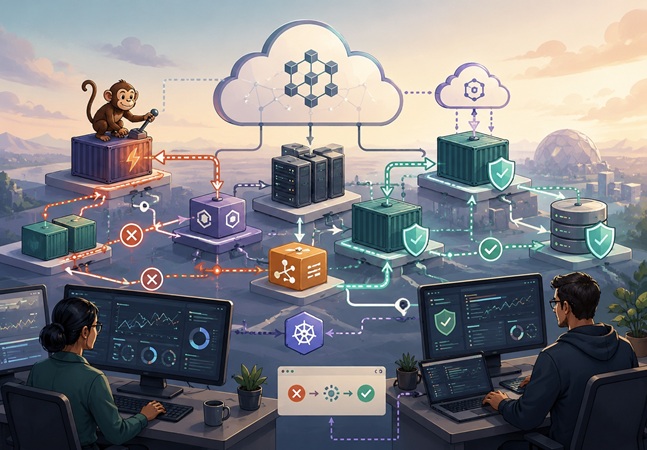
In a recent virtual session at the Cyber Resilience for Cloud-Native Infrastructure Summit, technology author and cloud resilience expert Brien Posey discussed the practical role of chaos engineering in modern software infrastructure. Originally popularized by Netflix through its Chaos Monkey tool, which randomly shut down live servers to evaluate system survival, this practice revolves around intentionally creating controlled disruptions. As Posey noted, the primary goal of the methodology is not to cause actual damage, but to reduce a team's underlying fear of unexpected failure. Modern cloud networks rely heavily on web APIs, software containers, and various interconnected vendor dependencies, making their exact breaking points highly unpredictable. Rather than waiting to patch a live outage after the fact, engineers can use these simulated disruptions to study how both their software architectures and their response teams handle intense operational stress beforehand. However, Posey cautioned that these deliberate tests must never be performed recklessly. They require full support from company leadership, clear monitoring visibility, an immediate ability to roll back changes, a carefully restricted blast radius, and pre-defined conditions to stop the test instantly if things go wrong. Ultimately, proactively uncovering weak points helps organizations safely preserve business operations and maintain customer trust.

Daily Tech Digest - May 28, 2026


Quote for the day:

“Knowledge is knowing what to say. Wisdom is knowing whether to say it or not.” -- Vala Afshar

🎧 Listen to this digest on YouTube Music

▶ Play Audio Digest

Duration: 18 mins • Perfect for listening on the go.


The death of network perimeter security is rewriting trust

The traditional model of defending a corporate network by securing a fixed physical perimeter is no longer viable. Because modern employees work from scattered locations and rely on various cloud applications, organizations can no longer trust a user based simply on their office location. Instead, digital defense must center on identity, making verification an ongoing process that evaluates who a person is, what device they are using, and their specific context. Personal computers, laptops, and smartphones have become the main targets for external threats, especially as attackers employ artificial intelligence to craft sophisticated phishing and credential theft schemes aimed at exploiting human behavior. Compounding this challenge, the widespread use of unapproved consumer software and unsecured home networks creates invisible vulnerabilities that standard network tools fail to see. To counter these widespread risks, businesses are moving away from separate, disconnected security products and are adopting integrated, unified platforms that continuously check access permissions. This practical transition requires an operational shift where protection follows the individual everywhere rather than remaining tied to a physical building. Ultimately, achieving safety depends on implementing adaptive, intelligent systems that safeguard sensitive information while supporting the day-to-day flexibility of a distributed workforce.


Converging File and Object Storage for AI-Scale Data Architectures

Enterprise data infrastructure has traditionally been split into two separate systems: file storage and object storage. File storage uses a hierarchical folder layout that works well for traditional software applications and the interactive workspaces used by artificial intelligence agents. Object storage, by contrast, relies on a flat address space that excels at holding immense data repositories and raw training sets quite economically. Historically, attempting to connect these two systems meant relying on complex translation utilities or constantly copying data back and forth. That approach created severe performance bottlenecks, added latency, and wasted space on duplicate information, which ultimately slowed down artificial intelligence workflows. To resolve this friction, newer storage developments focus on the native convergence of these two methods. By combining both frameworks within a single shared global namespace, data can be written as a regular file and read immediately as a standard object without any translation delays or background copying. This unified setup allows processing clusters and graphics cards to ingest data at true network speeds without encountering software friction. Ultimately, bringing these protocols together creates a stable data foundation that simplifies storage operations, lowers hardware expenses, and satisfies the heavy requirements of modern artificial intelligence models.


The AI Premium: Why Cutting-Edge Tech Can Cost More Than the Human It Replaces

While many organizations expect artificial intelligence to reduce corporate spending by automating roles, evidence suggests that sophisticated technology frequently costs more than the human professionals it replaces. This financial discrepancy arises because initial estimates overlook full operational costs, which include rigorous data preparation, legacy system integration, strict compliance protocols, and ongoing software maintenance. Furthermore, advanced and intricate AI models consume enormous amounts of computing power, generating high processing and data costs that can quickly overwhelm corporate technology budgets. In complex fields like law, finance, and medicine, these automated tools are also prone to factual errors and lack human common sense. As a direct result, businesses must pay for experienced human specialists to thoroughly review and correct the machine's outputs, an administrative overhead that can completely erase any intended financial savings. Studies show that a large majority of organizations attempting to cut costs through automation fail to achieve a clear financial benefit. Ultimately, the article notes that companies should avoid broad, indiscriminate replacements of specialized personnel. Instead, management teams should evaluate expenses on a separate task level basis, deploying automation only for routine, predictable duties where the economic advantages are proven, while reserving highly complex work for human staff.


From Logs to Tests: A Practical Guide to Production-Driven QA Coverage in Regulated Environments

In this article, QA professional Tanvi Mittal explains how software teams can use production logs to identify and fix hidden gaps in their automated testing. She points out that roughly sixty percent of production failures trace back to real transaction paths that completely lack test coverage. In complex setups like financial platforms, standard test suites often miss these paths because they only verify how the system was originally expected to work, rather than how it actually behaves after years of quick patches and adjustments. To safely use this production data without violating strict privacy regulations, organizations must implement a careful data sanitization pipeline. Instead of just blacking out numbers, the process uses synthetic substitution, which keeps the structural relationships between fields intact while completely removing sensitive customer information. Once the data is safe to use, teams can group log files by similar behaviors, cross-reference them against current test suites, and rank the unmapped paths based on practical factors like past failures, daily usage volume, and recent code changes. This method lets engineering teams prioritize high-risk gaps and quickly build new test stubs. Ultimately, this practice turns routine logs into clear, factual proof for auditors, showing exactly why certain tests are prioritized while keeping the entire process compliant and secure.


The End of the Digital Age

The perspective shared in the Communications of the ACM opinion piece suggests that the traditional digital era, defined by classical binary code and the predictable scaling of silicon chips, is reaching its natural conclusion. For decades, society relied on the steady doubling of computer power to drive progress, but physical boundaries have made it increasingly difficult to shrink components any further. This plateau is shifting the focus of computer science away from simply making chips smaller and faster. Instead, the field is moving toward entirely new architectures, such as systems that mimic the human brain or leverage quantum mechanics to process information. Furthermore, the nature of technology itself is transforming from a deterministic tool that does exactly what it is told into probabilistic systems that learn from patterns. This means the classic definition of software engineering, which is rooted in writing explicit lines of code, is sharing the stage with systems that adapt and generate outputs based on probability. This transition marks a deeper evolution from a period focused on connecting devices and accumulating data to one centered on managing autonomous systems. Ultimately, the article views this shift not as a failure of technology, but as an invitation to redefine our relationship with computing.


Why Cyber Insurance and Cyber Assurance Matter More When Considered Together

In this Cyber Defense Magazine article, the author highlights a significant gap in corporate risk management: the traditional separation of cyber insurance and cyber assurance. While cyber insurance functions as a financial safety net to offset the losses from unpredictable network breaches, it often relies on static, outdated questionnaires during underwriting. Conversely, cyber assurance focuses on continuously verifying that an organization’s security controls are operational and effective. Keeping these two practices isolated creates clear inefficiencies, leaving insurance providers with inaccurate risk profiles and forcing businesses to accept misaligned premiums. The article argues that marrying these disciplines creates a more dynamic framework built on clear evidence. By feeding continuous assurance data directly into insurance evaluations, companies can demonstrate their actual security setup over time rather than relying on a single annual snapshot. This integration allows insurers to make highly accurate underwriting decisions and establish fairer coverage terms. For businesses, this collaborative approach turns daily security management from an abstract expense into a concrete asset that directly lowers operational and financial risk. Ultimately, treating insurance and assurance as deeply connected elements helps organizations move past simple compliance, building real digital trust and a much stronger defense against rapidly evolving online threats and vulnerabilities.


Mastering Red-Teaming for Generative AI

The article outlines the critical role of red-teaming in identifying and mitigating safety risks associated with generative artificial intelligence. While traditional security testing often concentrates on model-level flaws like offensive outputs, biases, or prompt injections, modern systems require a significantly broader evaluation strategy. The text highlights that generative AI applications are deeply connected to larger digital networks, meaning they can inadvertently expose or exploit existing ecosystem vulnerabilities such as weak authentication, unprotected endpoints, and insecure application programming interfaces. Furthermore, operational risks like training data leakage, human overreliance on automated answers, employee misuse, and highly tailored social engineering campaigns introduce substantial safety concerns. To address these multi-layered threats effectively, organizations must update their testing methods. This shift involves merging network security knowledge with artificial intelligence engineering, testing applications within their actual live deployment environments, and structuring audits around recognized industry safety frameworks. Ultimately, the article underscores that automated testing tools are insufficient on their own; human intuition and specialized professional expertise remain essential for identifying deep-seated flaws, nuanced cultural biases, and complex system plugin vulnerabilities. Because thorough security assessments require diverse technical perspectives, outsourcing these rigorous stress tests to professional teams is presented as a practical way to protect corporate infrastructure.


Microsoft Extends Rust-Influenced Memory-Safety Push to C#

According to a report by David Ramel, Microsoft is incorporating design principles inspired by the Rust programming language to enhance memory safety features within C#. While C# is fundamentally safe by default, developers occasionally use the unsafe keyword for performance tuning, raw memory access, and native interoperability. To minimize the security risks associated with these edge cases, Microsoft plans to overhaul the language's unsafe code model beginning with C# 16. The proposed changes will require unsafe operations to be explicitly isolated within specific inner blocks and documented through clearer contracts enforced by the compiler. Instead of generating simple warnings, the compiler will produce errors for contract violations, ensuring that memory obligations are intentionally managed or passed along to calling methods rather than remaining implied. This initiative reflects a broader multiyear effort by Microsoft to systematically mitigate memory safety vulnerabilities, which historically accounted for roughly seventy percent of their tracked security flaws. By implementing these strict boundary models similar to Rust, the engineering team aims to make raw memory manipulations significantly easier to audit and reason about across complex software projects without altering the primary managed nature of C#. Although this update does not address separate issues like thread safety, it provides a structured framework for managing unsafe code.


The Unpredictable Power Of Leadership Amplification

In this article, the author explains how a leader's words, actions, and even silence are deeply magnified across an organization, a phenomenon termed the leadership amplification effect. When a leader falls silent, it creates an unintended gap that employees often fill with anxiety, rumors, and their own worst fears, especially during challenging periods of organizational change. This communication breakdown frequently stems from managers who lean toward extreme goal orientation, sharing only bare facts while omitting regular praise or timely updates. On the other end of the spectrum are leaders who focus purely on pleasing people, which can shield workplace relationships but ultimately sacrifices clear direction. True leadership effectiveness requires navigating the delicate balance between these two opposing styles. Drawing on human evolutionary history, the author notes that cooperation relies heavily on our innate ability to see the world through the eyes of others. Rather than overvaluing either the company goals or individual employees in isolation, successful managers must protect the core relationship between their people and the shared goals. This balance is never static and requires a daily adjustment of perspective rooted in empathy, ensuring that every deliberate comment or absence of feedback is handled with care.


The Credential Crisis: How Stolen Credentials Defeat Modern Security

The article discusses the severe and growing challenge of stolen credentials, which allow attackers to log in as legitimate users rather than hacking through traditional network boundaries. Because compromised logins grant immediate trust to an intruder, malicious activity easily blends into regular network patterns, making initial detection highly difficult. The rise of automated phishing and malicious information stealing software has worsened this problem by accelerating how quickly passwords, biometrics, and session tokens are stolen. To combat this issue, security experts argue that organizations must look past mere boundary defenses and focus heavily on checking identities constantly. If an attacker succeeds in gaining entry, the strategy must immediately shift toward containing the blast radius and slowing the intruder down. This is best accomplished by assuming no account is permanently safe and using continuous behavioral monitoring, which watches user actions throughout a session to spot unusual changes in normal patterns. Furthermore, the growing use of independent AI tools introduces even greater risks, as stolen access keys can give automated systems the power to cause widespread damage at incredible speeds. Ultimately, protecting networks requires an ongoing commitment to constantly verifying users and cutting off suspect sessions rather than relying on a single, initial login approval.

Daily Tech Digest - May 27, 2026


Quote for the day:

“If you can get today’s work done today, but you do it in such a way that you can’t possibly get tomorrow’s work done tomorrow, then you lose.” -- Martin Fowler

🎧 Listen to this digest on YouTube Music

▶ Play Audio Digest

Duration: 23 mins • Perfect for listening on the go.


CERT-In’s new AI cybersecurity blueprint urges 12-hour remediation for known exploited vulnerabilities

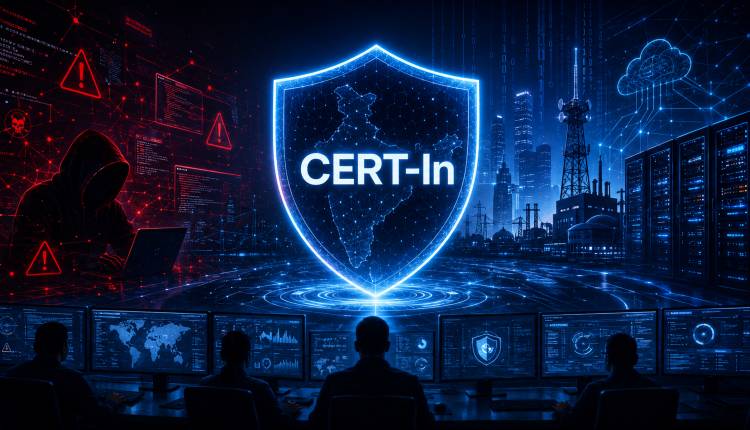
India’s cybersecurity regulator, CERT-In, has released a 38-page guideline addressing the growing risks of artificial intelligence in cyberattacks. The document details how adversaries are using automated tools to speed up data collection, phishing, and malware creation, which severely shortens the time organizations have to defend themselves. To combat this, the regulator recommends that enterprises patch, isolate, or mitigate any known exploited vulnerabilities on critical internet-facing systems within twelve hours, while other major external flaws should be resolved within a single day. Because traditional methods like periodic audits and static defenses are too slow for rapid threats, the report encourages businesses to shift toward continuous system monitoring and automated response management. Beyond external threats, the text addresses internal risks within corporate environments, warning against employee use of public AI platforms that can leak sensitive data. It stresses the necessity of structured governance and human oversight over autonomous software decisions. Furthermore, the regulator explicitly reminds organizations of their mandatory statutory obligation to report all cybersecurity incidents within six hours. Ultimately, the document highlights that managing modern network risk is no longer just about establishing static defenses, but about responding quickly enough to isolate threats before automated attackers can completely outpace human security teams.


Why data governance is a core IT responsibility in the AI era

The article outlines why data governance has shifted from a routine compliance exercise to a primary responsibility for information technology teams in the era of artificial intelligence. Traditional data management handled structured tables, but modern systems consume vast amounts of unstructured information, such as emails, documents, and chat records. When internal company files are fed into modern automation tools and language models, any hidden errors or biases become heavily amplified. Because these automated software programs query data continuously and lack human skepticism, they process flawed inputs without question, turning upstream data failures into widespread operational errors. To address this, technology leaders must avoid common pitfalls like relying strictly on software purchases to patch broken processes or treating data strategy as a one-time project. Instead, a practical and sustainable approach requires close, cross-department collaboration with legal, risk, and business units to build a unified system for tracking data origins and real-world meaning. Rather than attempting to catalog every single file all at once, organizations should prioritize documenting and continuously monitoring their most high-impact information assets. Ultimately, treating corporate data as a carefully managed strategic resource ensures that underlying inputs remain strictly accurate and reliable, providing a dependable foundation for safe, effective, and predictable digital tools.


Responding to Breaches With AI? Beware Cross-Contamination

The article outlines important warnings for cybersecurity investigators who utilize artificial intelligence tools to draft incident response reports. Based on controlled experiments by Cisco's threat intelligence group, Talos, researchers found that large language models are highly susceptible to data cross-contamination. When multiple security incidents are processed during a single conversation session, information from a previous report can easily bleed into a subsequent one. Surprisingly, this data mixing occurs even if investigators completely delete the notes from the earlier incident before starting the next file. This core issue stems from the finite memory constraints of an AI's fixed context window, which often leads to unpredictable data blending as the conversation continues. Producing inaccurate reports introduces significant professional, regulatory, and legal liabilities, especially for multi-tenant incident response firms handling private customer data. Furthermore, the Talos tests revealed that models often deliver entirely inconsistent recommendations when fed identical data. To address these technical limitations, researchers recommend opening entirely new sessions for separate investigations and using structured prompting strategies. Breaking tasks into narrow instructions, enforcing rigid formatting templates, and specifying exact source documents cut down overall drafting time by half while minimizing errors. Ultimately, human oversight remains vital to catch hallucinations and guarantee report accuracy.


5 Security Principles Every Entrepreneur Should Apply to Leadership

In an essay published on APMdigest, Prakash Mana explains how the core principles behind cybersecurity offer a highly practical guide for business leadership. Rather than focusing purely on technical tools like network firewalls or data encryption, the author suggests that entrepreneurs can use these structural concepts to better manage risk, organizational trust, and long-term stability. The first approach involves adopting a continuous verification mindset toward trust, meaning that effective leaders stay curious and validate their strategic assumptions rather than relying blindly on company hierarchy or past achievements. Second, applying the standard security rule of giving the lowest level of privilege needed helps founders delegate responsibilities with clear, distinct boundaries, matching decision rights to specific expertise to prevent both micromanagement and employee burnout. Third, instead of allowing single points of failure to threaten the company, resilient businesses build multiple layers of protection by using cross-trained teams and clear, written operational routines. Furthermore, prioritizing open visibility over rigid control allows executives to address problems early and cultivate an environment of safety, rather than leading through heavily filtered corporate reports. Ultimately, the piece argues that borrowing these foundational practices helps leaders make calm, balanced choices in unpredictable market conditions, creating durable companies designed to grow steadily over time.


Digital Bank Employees Used to be the Stuff of Science Fiction. Not Anymore

The article from The Financial Brand examines how conversational and generative artificial intelligence systems are transitioning from theoretical concepts into practical workforce realities across the banking sector. Rather than replacing traditional core platforms or forcing a massive overhaul of human talent, modern artificial intelligence is primarily functioning as sophisticated middleware. Financial institutions are integrating task-specific digital assistants directly on top of decades-old back-office systems to streamline repetitive operational tasks. Major institutions like Morgan Stanley, Citigroup, and BNY Mellon have deployed knowledge management layers and multimodal systems that safely analyze text, voice, and documentation without disrupting strict regulatory standards. Similarly, smaller entities such as Grasshopper Bank have enabled business customers to securely link their accounting data directly to intelligent tools for automated reporting and immediate insights. This transition emphasizes a broader shift toward operational support and administrative efficiency, specifically targeting complex procedures like fraud prevention, compliance reviews, and transaction reconciliations. By taking over high-volume administrative drudgery, digital employees allow human personnel to focus on client relationships and complex problem-solving. This shift marks a practical, evolutionary upgrade rather than a radical disruption of the financial ecosystem.


Closing the Gap Between Security Ambition and Operational Reality

The article outlines the persistent friction between an organization's high security goals and its daily operational constraints. Many well-intentioned security updates inadvertently backfire by introducing excessive complexity, turning vital protections into frustrating bottlenecks for development teams. This issue usually surfaces when newly introduced security tools clash with established engineering workflows and fragmented old systems, forcing staff to spend valuable time manually tracking down alerts across multiple separate dashboards. To fix this common disconnect, the author argues that sustainable security excellence depends entirely on a foundation of solid operational maturity. Successful organizations achieve this stable state by utilizing modern cloud architecture that reduces unnecessary systemic complexity, using automation to eliminate repetitive manual tasks, and fostering a supportive team culture grounded in blameless problem solving. Instead of forcing unrealistic or overly aggressive timelines onto software engineering teams, which can take up to four years to successfully complete in highly complex environments, leaders should prioritize strengthening their core workflows first. Using gradual and incremental strategies to phase out outdated platforms allows companies to maintain steady protective coverage over time. This patient, methodical approach ensures that security measures naturally support day to day software development rather than obstructing it.


The Two Concepts Every Architect Needs to Master

In this article, Paul Preiss of Iasa Global outlines how architectural teams can take a structured, realistic approach to assessing business projects by using two collaborative tools from the Business Technology Architecture Body of Knowledge framework. Instead of relying on traditional timeline roadmaps, Preiss advocates for a team process that combines the Business Case Canvas and the Strategic Roadmap Canvas as active, shared working surfaces. The process begins with building an individual business case for each new proposal using the NABC format, which requires evaluating its true business need, specific technical approach, qualitative and quantitative benefits, and complete lifecycle costs. Once these criteria are established, the roadmap canvas allows business, solution, and technical architects to collectively evaluate proposals across key dimensions like value, structural complexity, regulatory compliance, and alignment with foundational principles. To prevent senior or vocal team members from inadvertently skewing the results, the team uses an independent, simultaneous scoring protocol that highlights conflicting perspectives early on. Finally, technical architects map out strict structural dependencies to determine the logical order of project execution. By unifying these insights, the architecture community develops an honest picture of organizational demand, moving funding debates away from office politics and toward clear, balanced investment conversations with business stakeholders.


Embracing an Offensive Mindset in Proactive Risk Management

The Disaster Recovery Journal article discusses how moving from a reactive stance to a proactive, forward-looking strategy improves organizational security. Traditional risk management usually addresses problems only after they happen, which frequently leaves companies highly vulnerable to unpredictable or sophisticated threats. To address this exposure, the author highlights the clear value of adopting an offensive mindset, where security teams actively look for hidden weaknesses before they can be exploited. This systemic transition requires a structured framework that starts by securing executive support and building an internal workplace culture where all employees feel genuinely responsible for pointing out potential hazards. Next, organizations must collect reliable internal data and external threat intelligence to gain full visibility over their digital and physical operations. Operational teams then set clear protocols to carefully evaluate and prioritize these findings based on their potential business impact. Finally, teams conduct structured threat hunts and cooperative exercises to continually test their defenses. This strategy shifts safety measures from a simple cost center to a core driver of stability and performance. By identifying internal flaws early and establishing a continuous feedback loop, companies can better safeguard their staff, secure sensitive data, and maintain steady operations over time.


Connected vehicles, disconnected security: Why connectivity architecture now matters most

Modern vehicles have essentially become computers on wheels, with hundreds of millions of connected cars currently driving on our roads. By the end of this decade, a single typical vehicle is expected to generate 25 gigabytes of data every hour. This massive volume of information travels across a mix of public and private networks, often without clear oversight regarding how it is routed or where it might be vulnerable. Historically, security strategies focused on protecting specific software applications or devices, assuming the communication paths between them were secure. However, because modern vehicle data moves through dozens of separate and uncoordinated routes, those traditional assumptions are no longer safe. To solve this problem, companies are changing their approach by treating the network architecture itself as the main foundation for security. Instead of relying on the public internet or open interconnections, they are setting up controlled exchange points to get better visibility and apply rules consistently. Ultimately, vehicles are no longer standalone products; they are pieces of a much larger, distributed system. Keeping them safe requires looking at the paths data takes and understanding how a failure in one area can ripple through the entire network.


Beyond the Org Chart: Why Your SRE Team Needs a Membrane, Not a Silo

In this article, a site reliability engineering leader shares how their department successfully resolved a severe operational crisis after multiple company acquisitions caused routine, repetitive maintenance tasks to consume nearly eighty-four percent of their overall workload. Instead of building a rigid, isolated silo that cuts off communication or leaving their doors wide open to an overwhelming firehose of incoming requests, the team introduced the concept of an organizational membrane. This semi-permeable boundary uses carefully calibrated triage criteria on intake boards to filter incoming assignments. Such a strategy successfully protects engineers from distracting daily noise while ensuring that genuine, high-priority system requirements still pass through. By treating the entry boundary as a serious engineering problem to be solved systematically rather than merely dismissing it as soft administrative work, the team drove their repetitive task ratio down significantly to under forty-five percent. Furthermore, they managed to shorten their task turnaround times significantly, dropping their longest completion cycles from two hundred ninety-four days down to just fifty-seven days. Ultimately, the author shows that implementing a thoughtful intake process allows internal operations teams to stay collaborative and helpful to the broader company without sacrificing their core focus on long-term system stability and software reliability.

Daily Tech Digest - May 26, 2026


Quote for the day:

"Whatever you fear most has no power - it is your fear that has power." -- Oprah Winfrey

🎧 Listen to this digest on YouTube Music

▶ Play Audio Digest

Duration: 22 mins • Perfect for listening on the go.


The call for fundamental software skills is getting louder and louder

The IT sector is facing a silent but significant challenge as foundational software development skills decline. According to leadership at the Belgian firm Klarrio, a growing focus on narrow specialties in university curricula, such as cybersecurity and artificial intelligence, has come at the expense of core computer science fundamentals like networking and system architecture. This educational shift leaves new graduates unprepared to manage complex, full-stack systems. The issue is compounded by a misguided industry trend where companies stop hiring junior developers under the assumption that artificial intelligence can completely replace basic coding tasks. In reality, relying blindly on automated tools without human oversight often introduces critical code errors that can disrupt entire data centers. Furthermore, this dynamic threatens to break the generational pipeline of engineering talent. This lack of deep, internal technical knowledge also hinders Europe’s broader goal of achieving digital sovereignty. Transitioning away from dominant international cloud providers to localized, open-source infrastructure requires engineering teams who can manually manage and maintain complex configurations. To address this, organizations must take direct responsibility for their talent pipelines by investing in continuous learning and internal training academies that foster deep curiosity and true operational expertise.


How AI Governance Risk and Compliance is Operationalized at Leading Enterprises

In this article, the author explains how large organizations must move away from written policies toward automated checks enforced directly by software systems to manage the risks of artificial intelligence. As strict international laws like the European Union AI Act near full enforcement in late 2026, companies face high financial penalties if they cannot prove their systems are safe. The author highlights several practical steps based on firsthand experience with heavily regulated financial institutions. First, organizations need to maintain a thorough, ongoing inventory of all active tools, as companies often run far more programs than their internal records show due to hidden features embedded by external vendors. Second, teams must hold outside suppliers and software platforms accountable for safety and data protection standards during the initial procurement process. Third, instead of relying on a broad corporate committee, every automated system needs a specific, named individual who takes full personal responsibility for its performance. Finally, regulatory compliance should not be a rushed project completed right before an official review. Successful businesses use automated monitoring tools to track software performance continuously, generating clear records and immediate alerts when a program behaves unexpectedly. Ultimately, replacing manual, periodic check-ins with an active, daily tracking structure allows companies to safely expand their use of technology without creating hidden legal or operational liabilities.


Why prompt debt, retrieval debt, and evaluation debt are quietly reshaping enterprise AI risk

In the artificial intelligence era, enterprise risk is being quietly reshaped by new and distributed forms of technical debt that span prompts, models, and data pipelines. Unlike traditional software bugs that are easy to locate and fix within a codebase, AI debt is irregular and difficult to track due to the unpredictable nature of machine learning models. This debt typically shows up in four distinct ways. First, prompt debt involves poorly documented, disorganized, or overly complex instructions that make software fragile. Second, model dependency debt occurs because businesses rely on external providers whose background updates can unpredictably alter how an application behaves. Third, retrieval debt happens when systems pull information from disorganized corporate databases, leading the AI to deliver outdated or irrelevant answers that appear correct but are actually obsolete. Finally, evaluation debt represents a widespread lack of standardized, continuous testing to measure system performance over time. To manage these compounding risks, organizations must shift their approach to system design rather than just waiting for better models. This means treating prompts with the same rigor as traditional code, embedding continuous monitoring throughout the technology stack, and dedicating specific corporate budgets to track data lineage and prevent gradual system drift over extended operational lifecycles.


Why Observability Is Becoming a Governance Layer for Agentic Data Systems

In this Dataversity article, author Jayakumar Ramalingam explains why data governance must evolve alongside the rise of autonomous, AI-driven data systems. Historically, data governance was a slow, human-centric process that focused on setting standards and manually correcting errors after they occurred. However, modern automated software can query, transform, and move information far too quickly for manual oversight to keep pace. Because these autonomous tools often lack situational context, they risk combining unreliable files or mismatched data sources with blind confidence, potentially spreading errors across an organization. To prevent these failures, companies are shifting their focus from static tracking to active observability, effectively turning monitoring tools into a real-time governance layer. Instead of just logging a passive alert when a system behaves unexpectedly, modern setups require rapid feedback loops that can automatically intervene, such as quarantining suspicious data or masking regulated customer attributes before problems move downstream. Consequently, metadata can no longer exist simply as a documentation catalog for human reference; it must serve as active runtime rules that software automatically reads to make safe decisions. Ultimately, the work of data architects is shifting toward designing these automated loops and maintaining clear trust boundaries to ensure long-term data reliability.


The role of MCP in context engineering

The InfoWorld article details how the Model Context Protocol, or MCP, has become a practical standard for context engineering in software development. Context engineering involves supplying AI assistant tools with precise and relevant data, such as documentation, code repositories, internal libraries, and bug reports, to improve the accuracy of their output. Instead of manually feeding massive chunks of text into prompts or relying on outdated snapshots, developers use MCP to establish a clean, open connection between AI models and external data sources. This allows AI assistants to figure out what information they need in real time and pull it dynamically at runtime. As a result, prompts remain lean, the AI experiences fewer errors or false assumptions, and organizations save computational resources by managing their data inputs more effectively. While challenges remain regarding security permissions and avoiding overloaded data limits, experts note that adopting a uniform open protocol is far more stable than building fragile custom pipelines that frequently break. Ultimately, the article suggests that the widespread adoption of MCP is successfully shifting AI integration from unpredictable prompt tweaking into a reliable discipline, positioning it to become a foundational layer of infrastructure as software development grows increasingly dependent on automated assistants.


Vulnerabilities have become cyber attackers’ No. 1 door to the enterprise

According to the latest Verizon Data Breach Investigations Report, security teams are facing a significant shift in corporate network attacks, as software vulnerabilities have overtaken stolen credentials as the primary entryway for intruders. Analyzing over 31,000 security incidents reveals that exploited software flaws caused 31 percent of confirmed breaches, while credential abuse fell to 13 percent. This trend highlights growing challenges in corporate patch management. In 2025, the time it took organizations to deploy patches lengthened from 32 to 43 days, and only about a quarter of critical security vulnerabilities were fully repaired. Security professionals note that attackers favor unpatched perimeter and edge devices because targeting them requires no prior user interaction or stolen data. Furthermore, attackers are increasingly using artificial intelligence to discover and exploit these software flaws at scale, narrowing the defensive window to just a few hours. Although stolen identities are still widely used to move through networks later in an attack chain, exploitation wins the race to the initial point of entry. Simultaneously, ransomware tactics are adapting; because more companies refuse to pay for decryption keys, criminals are pivoting toward automated data theft and extortion, underscoring the urgent need for continuous, risk-based defense strategies.


AI fuels Australian workplace disputes, report finds

A recent report by the Citation Group reveals a growing trend of Australian employees using artificial intelligence to handle workplace disputes. Based on a survey of over five hundred business owners and managers, the research highlights a significant gap between rapid technology adoption and effective company oversight. While AI usage is widespread, ranging from forty eight percent in small businesses to seventy three percent in large corporations, only twenty nine percent of employers strongly believe the tools are currently being used safely and beneficially. Crucially, workers are turning to these systems to independently research their rights, review payroll accuracy, and generate formal complaints. This easy access to legal sounding language has significantly lowered the entry barrier for lodging claims, contributing to a seventy percent increase in the Fair Work Commission's workload over the past three years. Although these AI generated documents appear polished and confident, they are frequently unreliable, often containing incorrect legal principles, Americanized terminology, and completely fabricated case law. Even though these complaints contain clear factual errors, businesses must still dedicate time and money to address them appropriately. This shift leaves companies with informal processes or undocumented verbal decisions highly vulnerable, creating a clear need for firmer record keeping and expert human guidance.


AI’s Dual Role: Weaponization Vs. Protection

This article explains that artificial intelligence serves as a double-edged sword in cybersecurity, offering unprecedented speed and scale to both attackers and defenders. On the offensive side, bad actors use artificial intelligence to automate systems, enabling personalized phishing campaigns, realistic deepfakes, and rapid code manipulation to bypass traditional security filters. On the defensive side, security teams utilize these same technologies to analyze massive datasets and counter threats in real time. However, the author notes that many organizations struggle to maximize these defensive tools due to a lack of proper data and technology governance. Without clear oversight, companies risk data leaks, model biases, and internal mistakes, such as employees exposing sensitive corporate information through unapproved commercial software tools. To build genuine resilience, organizations must adopt robust internal frameworks, rigorous human training, and a security structure that constantly monitors and verifies all network activities. Looking ahead, the text highlights the approaching combination of artificial intelligence and quantum systems, which will likely compromise current digital encryption methods and require a shift toward new security measures capable of resisting quantum attacks. Ultimately, the piece argues that successfully managing these emerging challenges requires a steady balance between responding to immediate daily threats and planning carefully for future technological developments.


From data to trust, democracy in the age of artificial intelligence

In this article, Almir Badnjević discusses how the rise of artificial intelligence and digital platforms has altered how society processes information, creating new challenges for democratic systems. While data was once managed through slow, transparent editorial channels, modern tools allow a single individual to generate and spread convincing disinformation instantly. To counter this persistent threat, nations must move beyond traditional laws and establish an infrastructure of trust. This foundation requires practical, secure tools like verified digital identities, reliable central databases, and protected electronic signatures that assure legal validity in online spaces. The author points to Bosnia and Herzegovina as a clear example of how even complex governmental structures can build secure, functional data registries to safeguard citizen rights. Although artificial intelligence makes generating deceptive content cheap and easy, it also offers the tools necessary to detect and address these operations. Ultimately, keeping democracies stable requires a broad approach: modern regulations that ensure technical accountability, regional cooperation across geographical borders, private sector responsibility, and a strong emphasis on teaching citizens how to analyze digital sources critically. In the modern era, a country's strength depends heavily on its ability to preserve data integrity and protect public trust.


The Schema Proliferation Problem in Kafka and Flink Pipelines: How to Solve It

In event driven architectures using Kafka and Flink, software teams frequently run into an issue known as schema proliferation. This happens when you create a unique schema for every single variation of an event, which quickly leads to dozens of separate data lake tables. Over time, this one to one design makes things incredibly painful. Data analysts have to write long, messy queries with multiple union operations just to find basic information, while developers get stuck manually updating dozens of overlapping files whenever a single shared field changes. To fix this, you can consolidate highly similar schemas into one unified contract. This approach uses explicit status markers or category fields to tell records apart, while grouping variant specific information into optional blocks that remain empty by default. You can build this directly into your Flink processing pipeline using a clean, layered translation system. While this setup demands clearer guidelines on data ownership and slightly changes how you debug errors, it fundamentally simplifies how people read and use your data. Instead of managing a sprawling, fragmented collection of tables, teams can keep their code base clean, cut down on daily maintenance, and ensure that their entire data environment remains straightforward and easy to scale.