Showing posts with label insurance. Show all posts

Daily Tech Digest - April 03, 2026


Quote for the day:

"Any fool can write code that a computer can understand. Good programmers write code that humans can understand." -- Martin Fowler


🎧 Listen to this digest on YouTube Music

▶ Play Audio Digest

Duration: 21 mins • Perfect for listening on the go.


Cybersecurity in the age of instant software

In "Cybersecurity in the Age of Instant Software," Bruce Schneier explores how artificial intelligence is revolutionizing the software lifecycle and the resulting arms race between attackers and defenders. AI facilitates the rise of "instant software"—customized, ephemeral applications created on demand—which fundamentally alters traditional security paradigms. While AI significantly enhances an attacker's ability to automatically discover and exploit vulnerabilities in open-source, commercial, and legacy IoT systems, it simultaneously empowers defenders with sophisticated tools for automated patch creation and deployment. Schneier envisions a potentially optimistic future featuring self-healing networks where AI agents continuously scan and repair code, shifting the defensive advantage toward those who can share intelligence and coordinate responses. However, significant challenges remain, including the persistence of unpatchable legacy systems and the risk of attackers shifting their focus to social engineering, deepfakes, and the manipulation of defensive AI models themselves. Ultimately, the cybersecurity landscape will depend on how effectively AI can transition from writing insecure code to producing vulnerability-free applications. This evolution requires not only technological advancement but also policy shifts regarding software licensing and the right to repair to ensure a resilient digital infrastructure in an era of rapid, AI-driven software generation.


Scaling a business: A leadership guide for the rest of us

Scaling a business effectively requires a strategic shift in leadership from direct management to systemic architectural design. According to the article, scaling is defined as the ability to increase outcomes—such as revenue or customer value—faster than the growth of effort and costs. Unlike mere growth, which can amplify inefficiencies, successful scaling creates organizational leverage, resilience, and operational flow. The leadership playbook for this transition focuses on several key pillars: aligning the team around a shared definition of scale, conducting disciplined experiments to learn without excessive risk, and managing resources by decoupling capability from location. Leaders must prioritize process flow over bureaucratic control by standardizing repeatable tasks and clarifying decision rights to prevent bottlenecks. Furthermore, scaling is fundamentally a human endeavor; it necessitates making culture explicit through role clarity and psychological safety while developing a new generation of leaders. Ultimately, the executive's role evolves from being a hands-on hero who resolves every crisis to an architect who builds repeatable systems capable of handling increased volume without a proportional rise in stress. By treating scaling as a coordinated set of moves involving metrics, technology, and people, organizations can achieve sustainable expansion while protecting the core values that initially drove their success.


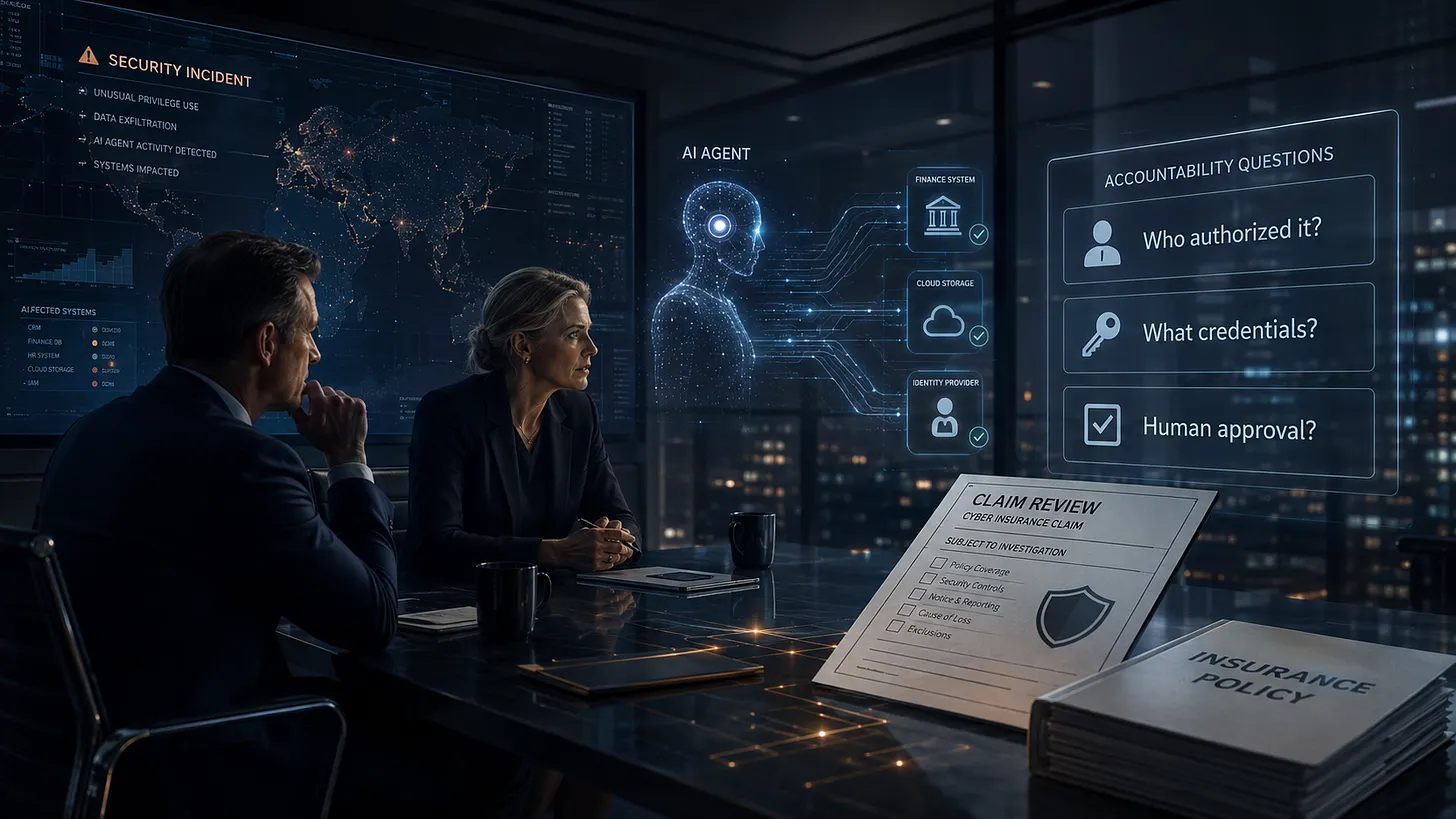
Why your business needs cyber insurance

Cyber insurance has evolved from a niche product into an essential safety net for modern businesses facing an increasingly hostile digital landscape. While many firms still lack coverage, the article highlights how catastrophic incidents, such as the multi-billion-pound breach at Jaguar Land Rover, demonstrate the extreme danger of absorbing full recovery costs alone. Unlike self-insuring, which is risky due to the unpredictable nature of cyberattack expenses, a comprehensive policy provides financial protection against data breaches, ransomware, and business interruption. Beyond monetary compensation, reputable insurers offer immediate access to vetted security specialists and incident response teams, effectively aligning their interests with the victim's to ensure a rapid and cost-effective recovery. However, the market is maturing; insurers now demand rigorous security hygiene, including multi-factor authentication and regular patching, before granting coverage. Consequently, the application process itself serves as a practical security roadmap for proactive organizations. To navigate this complex terrain, businesses should engage specialist brokers and maintain total transparency on proposal forms to avoid inadvertently invalidating their claims. Ultimately, cyber insurance is no longer just about liability—it is a critical component of operational resilience, providing the expertise and resources necessary to survive a major digital crisis in an interconnected world.


How To Help Employees Grow And Strengthen Your Company

The Forbes Business Council article, "How To Help Employees Grow And Strengthen Your Company," outlines eight critical strategies for leaders to foster professional development while simultaneously enhancing organizational performance. Central to this approach is the paradigm shift of accepting that employment is often temporary; by preparing employees for their future careers through skill enhancement and ownership, companies build a powerful network of loyal alumni and advocates. Development should begin on day one, with roles designed to offer real stakes and exposure to decision-making. Furthermore, the article emphasizes investing in future-focused learning, particularly regarding emerging technologies, to ensure the workforce remains competitive and engaged. Growth must be ingrained as a core organizational value and integrated into the cultural fabric, rather than treated as an occasional initiative. Leaders are encouraged to provide employees with commercial context and genuine responsibility, transforming them into appreciating assets whose confidence compounds over time. Finally, the piece highlights the necessity of prioritizing and measuring development activities to ensure a clear return on investment in the form of improved morale and loyalty. By equipping team members to evolve continuously, leaders create a lasting legacy of success that strengthens the firm’s reputation and attracts top-tier talent


Tokenomics: Why IT leaders need to pay attention to AI tokens

In the evolving digital landscape, "tokenomics" has transitioned from the cryptocurrency sector to become a vital framework for enterprise IT leaders managing generative AI and large language models (LLMs). Tokens represent the fundamental currency of AI services, encompassing the input, reasoning, and output units processed during any interaction. As AI tasks grow in complexity—particularly with the rise of agentic AI that consumes tokens at every step—understanding these metrics is essential for effective financial planning and operational governance. Most public API providers utilize tiered or volume-based pricing, making token consumption the primary driver of operational expenses. Consequently, technology executives must balance model capabilities with cost by implementing metered usage models or negotiated enterprise licenses. Beyond simple expense management, mastering tokenomics allows organizations to achieve a measurable return on investment through significant OPEX reduction. By automating mundane business processes like market analysis or medical coding, AI can shrink task completion times from days to minutes. Ultimately, treating tokens as a strategic resource enables IT leaders to allocate departmental budgets effectively, ensuring that AI deployments remain financially sustainable while delivering high-speed, high-quality results across the organization. This shift necessitates a new policy perspective where token limits and usage visibility become core components of the modern IT toolkit.
In his article, Kannan Subbiah explores the obsolescence of traditional perimeter-based security, arguing that cloud adoption and remote work have rendered "castle-and-moat" defenses ineffective in the modern era. The shift toward Zero Trust architecture is presented as a necessary response, grounded in the core philosophy of "never trust, always verify." This comprehensive model relies on three fundamental principles: explicit verification of every access request based on context, the implementation of least privilege access, and the continuous assumption of a breach. By transitioning to an identity-centric security posture, organizations can significantly reduce their "blast radius" and improve visibility through AI-driven analytics. However, Subbiah acknowledges significant implementation hurdles, such as legacy technical debt, extreme policy complexity, and the potential for developer friction. Successful adoption requires a strategic, phased approach—focusing first on "crown jewels" while utilizing micro-segmentation, mutual TLS, and continuous authentication methods. Ultimately, Zero Trust is described not as a one-time product purchase but as a fundamental cultural and architectural journey. It moves security from defending a static network boundary to protecting the data itself, ensuring that trust is earned dynamically for every single transaction across today’s increasingly complex and distributed application environments.


Event-Driven Patterns for Cloud-Native Banking: Lessons from What Works and What Hurts

In the article "Event-Driven Patterns for Cloud-Native Banking," Chris Tacey-Green explores the strategic shift toward event-driven architecture (EDA) in the financial sector. While traditional monolithic systems often struggle with scalability, EDA enables banks to decouple internal services and create transparent, immutable activity trails essential for regulatory compliance. However, the author emphasizes that EDA is not a simple shortcut; it introduces significant complexity and new failure modes that require a fundamental mindset shift. To ensure reliability in high-stakes banking environments, developers must implement robust patterns such as the transactional outbox, idempotent consumers, and explicit fault handling to prevent data loss or duplication. A critical architectural distinction highlighted is the difference between commands—intentional requests for action—and events, which are historical statements of fact. By maintaining lean event payloads and separating internal domain events from external integration events, organizations can protect their internal models from leaking across system boundaries. Ultimately, successful adoption depends as much on organizational investment in shared standards and developer training as it does on the underlying technology. Transitioning to this model allows banks to innovate rapidly by subscribing to existing data streams rather than modifying core platforms, though it necessitates a disciplined approach to manage its inherent operational challenges.


Why Enterprise AI will depend on sovereign compute infrastructure

The rapid evolution of enterprise artificial intelligence is shifting focus from model capabilities to the necessity of sovereign compute infrastructure. As organizations in sectors like finance, healthcare, and government move beyond pilot programs, they face challenges in scaling AI while maintaining control over sensitive proprietary data. While public clouds remain relevant, approximately 80% of enterprise data resides within internal systems, making data movement costly and risky. Sovereign infrastructure extends beyond mere data localization; it encompasses control over operational layers, including identity management, telemetry, and administrative planes. This ensures that critical systems remain under an organization’s authority, even if the hardware is physically domestic. In India, where the AI market is projected to contribute significantly to the GDP by 2025, this shift is particularly vital. Consequently, enterprises are increasingly adopting private and hybrid AI architectures that bring computation closer to where the data resides. This maturation of AI strategy reflects a transition where long-term success is defined not just by advanced algorithms, but by the ability to deploy them within secure, governed environments. Ultimately, sovereign compute infrastructure provides a practical path for businesses to harness AI's power without compromising their most valuable assets or operational autonomy.


Just because they can – the biometric conundrum for law enforcement

In "Just because they can – the biometric conundrum for law enforcement," Professor Fraser Sampson explores the complex ethical and legal landscape surrounding the use of biometric technology, such as live facial recognition (LFR), in policing. Historically, the debate has centered on the principle that technical capability does not mandate usage; however, Sampson suggests this perspective is shifting toward a potential liability for inaction. Drawing on recent legal cases where companies were found negligent for failing to mitigate foreseeable harms, he posits that law enforcement may face similar scrutiny if they bypass available tools that could prevent serious crimes, such as child exploitation. As biometrics become increasingly reliable and affordable, they redefine the standards for an "effective investigation" under human rights frameworks. Sampson argues that while privacy concerns remain valid, the failure to utilize effective technology creates significant moral and legal risks for the state. Consequently, the police find themselves in a precarious position: if they insist these tools are essential for modern safety, they simultaneously increase their accountability for not deploying them. The article underscores an urgent need for robust regulatory frameworks to resolve these gaps between technological potential, public expectations, and the legal obligations of the state.


The State of Trusted Open Source Report

The "State of Trusted Open Source Report," published by Chainguard and featured on The Hacker News in April 2026, provides a comprehensive analysis of open-source consumption trends across container images, language libraries, and software builds. Drawing from extensive product data and customer insights, the report highlights a critical tension in modern engineering: while developers aspire to innovate, they are increasingly bogged down by the maintenance of aging, vulnerable software components. A primary focus of the study is the persistent prevalence of known vulnerabilities (CVEs) in standard container images, often contrasting them with "hardened" or "trusted" alternatives that aim for a zero-CVE baseline. The report underscores that the security of the software supply chain is no longer just about identifying flaws but about the speed and efficiency of remediation. By examining what teams actually pull and deploy in real-world environments, the findings reveal a growing shift toward minimal, secure-by-default images as organizations seek to reduce their attack surface and meet stricter compliance mandates. Ultimately, the report serves as a call to action for the industry to prioritize "trusted" open source as the foundation for secure software development life cycles, moving beyond reactive patching to proactive, systemic security.

Daily Tech Digest - January 03, 2026


Quote for the day:

“Some people dream of great accomplishments, while others stay awake and do them.” -- Anonymous


Cloud costs now No. 2 expense at midsize IT companies behind labor

The Cloud Capital survey shows midsize IT vendor CFOs and their CIO partners struggling to contain cloud spending, with significant cost volatility from month to month. Three-quarters of IT org CFOs report cloud spending forecasts varying between 5% and 10% of company revenues each month, Pingry notes. Costs of AI workloads are harder to predict than traditional SaaS infrastructure, Pingry adds, and organizations running major AI workloads are more likely to report margin declines tied to cloud spending than those with moderate AI exposure. “Training spikes, usage-driven inference, and experimentation noise introduce non-linear patterns that break the forecasting assumptions finance relies on,” says a report from Cloud Capital. “The challenge will intensify as AI’s share of cloud spend continues scaling.” ... Cloud services in themselves aren’t inherently too expensive, but many organizations shoot themselves in the foot through unintentional consumption, Clark adds. “Costs rise when the system is built without a clear understanding of the value it is meant to deliver,” he adds. ... “No CxO wants to explain to the board why another company used AI to leap ahead,” Clark adds. “This has created a no-holds-barred spending spree on training, inference, and data movement, often layered on top of architectures that were already economically incoherent.”


Securing Integration of AI into OT Technology

For critical infrastructure owners and operators, the goal is to use AI to increase efficiency and productivity, enhance decision-making, save costs, and improve customer experience – much like digitalization. However, despite the many benefits, integrating AI into operational technology (OT) environments that manage essential public services also introduces significant risks – such as OT process models drifting over time or safety-process bypasses – that owners and operators must carefully manage to ensure the availability and reliability of critical infrastructure. ... Understand the unique risks and potential impacts of AI integration into OT environments, the importance of educating personnel on these risks, and the secure AI development lifecycle. ... Assess the specific business case for AI use in OT environments and manage OT data security risks, the role of vendors, and the immediate and long-term challenges of AI integration. ... Implement robust governance mechanisms, integrate AI into existing security frameworks, continuously test and evaluate AI models, and consider regulatory compliance. ... Implement oversight mechanisms to ensure the safe operation and cybersecurity of AI-enabled OT systems, maintain transparency, and integrate AI into incident response plans.The agencies said critical infrastructure owners and operators should review this guidance so they can safely and securely integrate AI into OT systems. 


Rethinking Risk in a Connected World

As consumer behavior data proliferates and becomes increasingly available, it presents both an opportunity and a challenge for actuaries, Samuell says. Actuaries have the opportunity to better align expected and actual outcomes, while also facing the challenge of accounting for new sources of variability that traditional data does not capture. ... Keep in mind that incorporating behavioral factors into risk models does not guarantee certainty. A customer whom the model predicts to be at high risk of dishonesty may actually act honestly. “Ethical insurers must avoid treating predictive categories as definitive labels,” Samuell says. “Operational guidelines should ensure that all customers are treated with fairness and dignity, even as insurers make better use of available data.” ... Behavioral analytics is also changing how insurers engage with their customers. For example, by understanding how policyholders interact with digital platforms—including how often they log in, which features they use, and where they disengage—insurers can identify friction points and design more intuitive, personalized services. ... Consumer behavior data can also inform communication strategies for insurers. For example, “actuaries often want to be very precise, but data shows that can diminish comprehension of communications,” Stevenson says. ... In addition to data generated by insured individuals through technology, some insurance companies also use data from government and other sources in risk modeling. 


Inside the Cyber Extortion Boom: Phishing Gangs and Crime-as-a-Service Trends

Phishing attempts are growing in volume partly because organized crime groups no longer need technical knowledge to launch ransomware or other forms of cyber extortion: they can simply buy in the services they need. This ongoing trend is combined with emerging social engineering techniques, including multi-channel attacks, deep fakes and ClickFix exploits. Cybercriminals are also using AI to fine tune their operations, with more persuasive personalization, better translation into other languages and easier reconnaissance against high-value targets. It is becoming harder to detect and block attacks, and harder to train workforces to spot suspicious activity. ... “AI has increased the accuracy of a lot of phishing emails. Everybody was familiar with phishing emails you could spot it by the bad grammar and the poor formatting and stuff like that. Previously, a good attacker could create a good phishing email. All AI has done is allowed the attacker to generate good quality phishing emails at speed and at scale,” explained Richard Meeus, EMEA director of security strategy and technology at Akamai. ... For CISOs, wider cybersecurity and fraud prevention teams, recent developments in phishing and cyber extortion schemes will pose real challenges in the coming year. “User awareness still matters, but it isn’t enough,” cautioned Forescout’s Ferguson. “In a world of deepfake video, cloned voices and perfect written English, your control point can’t be ‘would our users spot this?’”


AI Fatigue: Is the backlash against AI already here?

The problem of AI fatigue is inevitable, but also to be expected, according to Dr Clare Walsh, director of education at the Institute of Analytics (IoA). “For those working in digital long enough. They know there is always a period after the initial excitement at the launch of a new technology when ordinary users start to see the costs and limitations of the latest technologies,” she says. “After 10 years of non-stop exciting advancements – from the first neural nets in 2016 to RAG solutions today – we may have forgotten this phase of disappointment was coming. It doesn’t negate the potential of AI technology – it is just an inevitable part of the adoption curve.” ... Holding back the tide of AI fatigue is also about not presenting it as the only solution to every problem, warns Claus Jepsen, Unit4’s CTO. “It is absolutely critical the IT team is asking the right questions and thoroughly interrogating the brief from the business,” he explains. “Quite often, AI is not the right answer. If you foist AI onto the business when they don’t want or need it, you’ll get a backlash. You can avoid the threat of AI fatigue if you listen carefully to your team and really appreciate how they want to interact with technology, where its use can be improved, and where it adds absolutely no value.” ... “AI fatigue is not just a productivity issue; it is a board-level risk,” she says. “When workflows are interrupted, or systems overlap, trust in technology erodes, driving disengagement, errors, and higher attrition. ...”


Why Cybersecurity Risk Management Will Continue to Increase in Complexity in 2026

The year 2026 ushers in tougher rules across regions and industries. Compliance pressure continues to build from multiple directions. By 2026, sector-specific and regional rules will grow tighter, from NIS2 enforcement across Europe to updated PCI DSS controls, alongside firmer privacy and AI oversight. Privacy laws continue tightening while new AI regulations add requirements around algorithmic transparency and data handling. Organizations are now juggling NIST frameworks, ISO 27001 certifications, and sector-specific mandates simultaneously. Each framework arrives with a valid intent, yet together they create layers of obligation that rarely align cleanly. This tension surfaced clearly in 2025, when more than forty CISOs from global enterprises urged the G7 and OECD to push for closer regulatory coordination. Their message was simple. Fragmented rules drain limited security resources and weaken collective response. ... The majority of organizations no longer run security in isolation. Daily operations depend on cloud providers, managed service partners, niche SaaS tools, and open-source libraries pulled into production without much ceremony. The problem keeps compounding: your vendors have their own vendors, creating chains of dependency that stretch impossibly far. You can secure your own network perfectly and still get breached because a third-party contractor left credentials exposed.


Seven steps to AI supply chain visibility — before a breach forces the issue

NIST’s AI Risk Management Framework, released in 2023, explicitly calls for AI-BOMs as part of its “Map” function, acknowledging that traditional software SBOMs don’t capture model-specific risks. But software dependencies resolve at build time and stay fixed. Conversely, model dependencies resolve at runtime, often fetching weights from HTTP endpoints during initialization, and mutate continuously through retraining, drift correction, and feedback loops. LoRA adapters modify weights without version control, making it impossible to track which model version is actually running in production. ... AI-BOMs are forensics, not firewalls. When ReversingLabs discovered nullifAI-compromised models, documented provenance would have immediately identified which organizations downloaded them. That’s invaluable to know for incident response, while being practically useless for prevention. Budgeting for protecting AI-BOMs needs to take that factor into account. The ML-BOM tooling ecosystem is maturing fast, but it's not where software SBOMs are yet. Tools like Syft and Trivy generate complete software inventories in minutes. ML-BOM tooling is earlier in that curve. Vendors are shipping solutions, but integration and automation still require additional steps and more effort. Organizations starting now may need manual processes to fill gaps. AI-BOMs won't stop model poisoning as that happens during training, often before an organization ever downloads the model.


Power, compute, and sovereignty: Why India must build its own AI infrastructure in 2026

Digital infrastructure decisions made in 2026 will shape India’s technological posture well into the 2040s. Data centers, power systems, and AI platforms are not short-cycle investments; they are multi-decade commitments. In this context, policy clarity becomes a prerequisite for execution rather than an afterthought. Clear, stable frameworks around data governance, AI regulation, cross-border compute flows, and energy integration reduce long-term risk and enable infrastructure to be designed correctly the first time. Ambiguity forces fragmentation capital hesitates, architectures become reactive, and systems are retrofitted instead of engineered. As India accelerates its AI ambitions, predictability in policy will be as important as speed in deployment. ... In India’s context, sovereignty does not imply isolation. It implies resilience. Compliance, data residency, and AI governance cannot be retrofitted into infrastructure after it is built. They must be embedded from inception governing where data resides, how it moves, how workloads are isolated, audited, and secured, and how infrastructure responds to evolving regulatory expectations. Systems designed this way reduce friction for enterprises operating in regulated environments and provide governments with confidence in domestic digital capability. This reality also reframes the role of domestic technology firms. 


Why AI Risk Visibility Is the Future of Enterprise Cybersecurity Strategy

Vulnerabilities arise from two sources: internal infrastructure and third-party tools that companies rely on. Organizations typically have stronger control over internally developed systems. The complexity stems from third-party software that introduces new risks whenever a new version or patch is released. A comprehensive asset inventory is essential for documenting the software and hardware resources in use. Once the enterprise knows what it has, it can evaluate which systems pose the highest risk. Asset management, infrastructure, and information security teams, along with audit functions, all contribute to that assessment. Together, they can determine where remediation must occur first. Cloud service providers are responsible for cloud-based Software as a Service (SaaS) applications. It’s vital, however, for the company to take on data governance and service offboarding responsibilities. Contracts must clearly specify how data is handled, transferred, or destroyed at the end of the relationship. ... Alignment between business and IT leadership is essential. The chief information officer (CIO) approves the IT project kickoff and allocates the required budget and other resources. The business analysis team translates those needs into technical requirements. Quarterly scorecards and governance checkpoints create visibility, enabling leaders to make decisions that balance business outcomes and technical realities.


Why are IT leaders optimistic about future AI governance

IT leaders are optimistic about AI’s transformative potential. This optimism extends to AI governance, where the strategic integration of NHI management enhances security and enables organizations to confidently pursue AI initiatives. It’s essential to ensure that security measures evolve alongside technological advancements, safeguarding AI systems without stifling innovation. ... Can robust security and innovation coexist harmoniously? The answer lies in striking a balance between rigorous security measures and fostering an environment conducive to innovation. Properly managing NHIs equips organizations with the flexibility to innovate while maintaining a fortified security posture. With advancements in artificial intelligence and automation progress, machine identities play an increasingly pivotal role in enabling these technologies. By ensuring that machine interactions are secure and transparent, businesses can confidently explore the transformative potential of AI without compromising on security. Herein lies the essence of responsible AI governance: leveraging data-driven insights to enable ethical and sustainable technological growth while safeguarding against inherent risks. ... What can organizations do to harness the collective expertise of stakeholders? Where cyber threats are increasingly sophisticated, collaboration becomes the cornerstone of a resilient cybersecurity framework. 

Daily Tech Digest - December 30, 2025


Quote for the day:

“It is never too late to be what you might have been.” -- George Eliot


Cybersecurity Trends: What's in Store for Defenders in 2026?

For hackers of all stripes, a ready supply of easily procured, useful tools abounds. Numerous breaches trace to information stealing malware, which grabs credentials from a system, or log. Automated "clouds of logs" make it easy for info stealer subscribers to monetize their attacks. ... Clop, aka Cl0p, again stole data and held it for ransom. How many victims paid a ransom isn't known, although the group's repeated ability to pay for zero-days suggests it's making a tidy profit. Other cybercrime groups appear to have learned from Clop's successes, including The Com cybercrime collective spinoff lately calling itself Scattered Lapsus$ Hunters. One repeat target of that group has been third-party software that connects to customer relationship management software platform Salesforce, allowing them to steal OAuth tokens and gain access to Salesforce instances and customer data. ... Beyond the massive potential illicit revenue being earned by these teenagers, what's also notable is the sheer brutality of many of these attacks, such as data breaches involving children's nurseries including Kiddo and disrupting the British economy to the tune of $2.5 billion through a single attack against Jaguar Land Rover that shut down assembly lines and supply chains. ... Well-designed defenses help blunt many an attacker, or at least slow an intrusion. Enforcing least-privileged access to resources and multifactor authentication always helps, as do concrete security practices designed to block CEO fraud, tricking help desk ploys and other forms of forms of social engineering.


4 New Year’s resolutions for devops success

“Develop a growth mindset that AI models are not good or bad, but rather a new nondeterministic paradigm in software that can both create new issues and new opportunities,” says Matthew Makai, VP of developer relations at DigitalOcean. “It’s on devops engineers and teams to adapt to how software is created, deployed, and operated.” ... A good place to start is improving observability across APIs, applications, and automations. “Developers should adopt an AI-first, prevention-first mindset, using observability and AIops to move from reactive fixes to proactive detection and prevention of issues,” says Alok Uniyal, SVP and head of process consulting at Infosys. ... “Integrating accessibility into the devops pipeline should be a top resolution, with accessibility tests running alongside security and unit tests in CI as automated testing and AI coding tools mature,” says Navin Thadani, CEO of Evinced. “As AI accelerates development, failing to fix accessibility issues early will only cause teams to generate inaccessible code faster, making shift-left accessibility essential. Engineers should think hard about keeping accessibility in the loop, so the promise of AI-driven coding doesn’t leave inclusion behind.” ... For engineers ready to step up into leadership roles but concerned about taking on direct reports, consider mentoring others to build skills and confidence. “There is high-potential talent everywhere, so aside from learning technical skills, I would challenge devops engineers to also take the time to mentor a junior engineer in 2026,” says Austin Spires


New framework simplifies the complex landscape of agentic AI

Agent adaptation involves modifying the foundation model that underlies the agentic system. This is done by updating the agent’s internal parameters or policies through methods like fine-tuning or reinforcement learning to better align with specific tasks. Tool adaptation, on the other hand, shifts the focus to the environment surrounding the agent. Instead of retraining the large, expensive foundation model, developers optimize the external tools such as search retrievers, memory modules, or sub-agents. ... If the agent struggles to use generic tools, don't retrain the main model. Instead, train a small, specialized sub-agent (like a searcher or memory manager) to filter and format data exactly how the main agent likes it. This is highly data-efficient and suitable for proprietary enterprise data and applications that are high-volume and cost-sensitive. Use A1 for specialization: If the agent fundamentally fails at technical tasks you must rewire its understanding of the tool's "mechanics." A1 is best for creating specialists in verifiable domains like SQL or Python or your proprietary tools. For example, you can optimize a small model for your specific toolset and then use it as a T1 plugin for a generalist model. Reserve A2 (agent output signaled) as the "nuclear option": Only train a monolithic agent end-to-end if you need it to internalize complex strategy and self-correction. This is resource-intensive and rarely necessary for standard enterprise applications.


Radio signals could give attackers a foothold inside air-gapped devices

For an attack to work, sensitivity needs to be predictable. Multiple copies of the same board model were tested using the same configurations and signal settings. Several sensitivity patterns appeared consistently across samples, meaning an attacker could characterize one device and apply those findings to another of the same model. They also measured stability over 24 hours to assess whether the effect persisted beyond short test windows. Most sensitive frequency regions remained consistent over time, with modest drift in some paths ... Once sensitive paths were identified, the team tested data reception. They used on-off keying, where the transmitter switches a carrier on for a one and off for a zero. This choice matched the observed behavior, which distinguishes between presence and absence of a signal. Under ideal synchronization, several paths achieved bit error rates below 1 percent when estimated received power reached about 10 milliwatts. One path stayed below 2 percent at roughly 1 milliwatt. Bandwidth tests showed that symbol rates up to 100 kilobits per second remained distinguishable, even as transitions blurred at higher rates. In a longer test, the researchers transmitted about 12,000 bits at 1 kilobit per second. At three meters, reception produced no errors. At 20 meters, the bit error rate reached about 6.2 percent. Errors appeared in bursts that standard error correction could address.


Smart Companies Are Taking SaaS In-House with Agentic Development

The uncomfortable truth: when your critical business processes depend on an AI SaaS vendor’s survival, you’ve outsourced your competitive advantage to their cap table. ... But the deeper risk isn’t operational disruption — it’s strategic surrender. When you pipe your proprietary business context through external AI platforms, you’re training their models on your differentiation. You’re converting what should be permanent strategic assets into recurring operational expenses that drag down EBITDA. For companies evaluating AI SaaS alternatives, the real question is no longer whether to build or buy — but what parts of the AI stack must be owned to protect long‑term competitive advantage. ... “Who maintains these apps?” It’s the right question, with a surprising answer: 1. SaaS Maintenance Isn’t Free — Vendors deprecate APIs, change pricing, pivot features. Your team still scrambles to adapt. Plus, the security risk often comes from having an external third party connecting to internal data. 2. Agents Lower Maintenance Costs Dramatically — Updating deprecated libraries? Agents excel at this, especially with typed languages. The biggest hesitancy — knowledge loss when developers leave — evaporates when agents can explain the codebase to anyone. 3. You Control the Update Schedule — With owned infrastructure, you decide when to upgrade dependencies, refactor components, or add features. No vendor forcing breaking changes on their timeline.


6 cyber insurance gotchas security leaders must avoid

Before committing to a specific insurer, Lindsay recommends consulting an attorney with experience in cyber insurance contracts. “A policy is a legal document with complex definitions,” he notes. “An attorney can flag ambiguous terms, hidden carve-outs, or obligations that could create disputes at claim time,” Lindsay says. ... It’s hardly surprising, but important to remember, that the language contained in cybersecurity policies generally favors the insurer, not the insured. “Businesses often misinterpret the language from their perspective and overlook the risks that the very language of the policy creates,” Polsky warns. ... You may believe your policy will cover all cyberattack losses, yet a look at the fine print may revealed that it’s riddled with exclusions and warranties that can’t be realistically met, particularly in areas such as social engineering, ransomware, and business interruption. ... Many enterprises believe they’re fully secure, yet when they file a claim the insurer points to the fine print about security measures you didn’t know were required, Mayo says. “Now you’re stuck with cleanup costs, legal fees, and potential lawsuits — all without support from your insurance provider.” ... The retroactive date clause can be the biggest cyber insurance trap, warns Paul Pioselli, founder and CEO of cybersecurity services firm Solace. ... Perhaps the biggest mistake an insurance seeker can make is failing to understand the difference between first-party coverage and third-party coverage, and therefore failing to acquire a policy that includes both, says Dylan Tate


7 major IT disasters of 2025

In July, US cleaning product vendor Clorox filed a $380 million lawsuit against Cognizant, accusing the IT services provider’s helpdesk staff of handing over network passwords to cybercriminals who called and asked for them. ... Zimmer Biomet, a medical device company, filed a $172 million lawsuit against Deloitte in September, accusing the IT consulting company of failing to deliver promised results in a large-scale SAP S/4HANA deployment. ... In September, a massive fire at the National Information Resources Service (NIRS) government data center in South Korea resulted in the loss of 858TB of government data stored there. ... Multiple Google cloud services, including Gmail, Docs, Drive, Maps, and Gemini, were taken down during a massive outage in June. The outage was triggered by an earlier policy change to Google Service Control, a control plan service that provides functionality for managed services, with a null-pointer crash loop breaking APIs across several products. ... In late October, Amazon Web Services’ US-EAST-1 region was hit with a significant outage, lasting about three hours during early morning hours. The problem was related to DNS resolution of the DynamoDB API endpoint in the region, causing increased error rates, latency, and new instance launch failures for multiple AWS services. ... In late July, services in Microsoft’s Azure East US region were disrupted, with customers experiencing allocation failures when trying to create or update virtual machines. The problem? A lack of capacity, with a surge in demand outstripping Microsoft’s computing resources.


Stop Guessing, Start Improving: Using DORA Metrics and Process Behavior Charts

The DORA framework consists of several key metrics. Among them, Change Lead Time (CLT) shows how quickly a team can deliver change. Deployment Frequency (DF) shows what the team actually delivers. While important, DF is often more volatile, influenced by team size, vacations, and the type of work being done. Finally, the instability metrics and reliability SLOs serve as a counterbalance. ... Beyond spotting special causes, PBCs are also useful for detecting shifts, moments when the entire system moves to a new performance level. In the commute example above, these shifts appear as clear drops in the average commute time whenever a real improvement is introduced, such as buying a bike or finding a shorter route. Technically, a shift occurs when several consecutive points fall above or below the previous mean, signaling that the process has fundamentally changed. ... Sustainable improvement is rarely linear. It depends on a series of strategic bets whose effects emerge over time. Some succeed, others fail, and external factors, from tooling changes to team turnover, often introduce temporary setbacks. ... According to DORA research, these metrics have a predictive relationship with broader outcomes such as organizational performance and team well-being. In other words, teams that score higher on DORA metrics are statistically more likely to achieve better business results and report higher satisfaction.


5 Threats That Defined Security in 2025

Salt Typhoon is a Chinese state-sponsored threat actor best known in recent memory for targeting telecom giants — including Verizon, AT&T, Lumen Technologies, and multiple others — discovered last fall, targeting the systems used by police for court-authorized wiretapping. The group, also known as Operator Panda, uses sophisticated techniques to conduct espionage against targets and pre-position itself for longer-term attacks. ... CISA layoffs, indirectly, mark a threat of a different kind. At the beginning of the year, the Trump administration cut all advisory committee members within the Cyber Safety Review Board (CSRB), a group run by public and private sector experts to research and make judgments about large issues of the moment. As the CSRB was effectively shuttered, it was working on a report about Salt Typhoon. ... React2Shell describes CVE-2025-55182, a vulnerability disclosed early this month affecting the React Server Components (RSC) open source protocol. Caused by unsafe deserialization, vulnerability was considered easily exploitable and highly dangerous, earning it a maximum CVSS score of 10. Even worse, React is fairly ubiquitous, and at the time of disclosure it was thought that a third of cloud providers were vulnerable. ... In September, a self-replicating malware emerged known as Shai-Hulud. It's an infostealer that infects open source software components; when a user downloads a package infected by the worm, Shai-Hulud infects other packages maintained by the user and publishes poisoned versions, automatically and without much direct attacker input. 


How data-led intelligence can help apparel manufacturers and retailers adapt faster to changing consumer behaviour

AI is already helping retail businesses to understand the complex buying patterns of India’s diverse population. To predict demand, big box chains such as Reliance Retail and e-commerce leaders like Flipkart use machine learning algorithms to analyse historical sales, search patterns and even social media conversations. ... With data-led intelligence studying real-time demand signals, manufacturers can adjust their lines much sooner. If data shows a rising preference for electric scooters in certain cities, for instance, factories can scale up output before the trend peaks. And when interest in a product starts dipping, production can be slowed to prevent excess stock. ... One of the strongest outcomes of the AI wave is its ability to bring consumer demand and industrial supply onto the same page. In the past, customer preferences often evolved faster than factories could react, creating gaps between what buyers wanted and what stores stocked. AI has made this far easier to manage. Manufacturers and retailers now share richer data and insights across the supply chain, allowing production teams to plan with far better clarity. This also enhances supply chain transparency, a growing priority for global buyers seeking traceability. ... If data intelligence tools notice a sharp rise in conversations around eco-friendly packaging or sustainable clothing, retailers can adjust their marketing and stock in advance, while manufacturers source greener materials and redesign processes to match the growing interest.

Daily Tech Digest - December 19, 2025


Quote for the day:

"A leader's dynamic does not come from special powers. It comes from a strong belief in a purpose and a willingness to express that conviction." -- Kouzes & Posner


AI tops CEO earnings calls as bubble fears intensify

Research by Hamburg-based IoT Analytics examined around 10,000 earnings calls from about 5,000 global companies listed in the US. The firm's latest quarterly study found that AI rose to the top of CEO agendas for the first time in the period, while concerns about a possible AI-related asset bubble also increased sharply. Mentions of an "AI bubble" climbed 64% compared with the previous quarter. IoT Analytics said executives often paired announcements of new AI investments with comments that questioned the sustainability of current market valuations and the pace of capital inflows into the sector. ... While the number of AI-related references reached a new high, comments that explicitly mentioned a "bubble" in connection with technology or financial markets grew even faster in percentage terms. The study recorded the strongest quarter-on-quarter jump in bubble-related language since it began tracking the metric. Executives used the term "bubble" in several contexts. Some discussed venture funding and valuations for private AI companies. Others raised questions about the level of spending on compute infrastructure and the potential for overcapacity. A smaller group linked bubble concerns to individual asset classes such as AI-related equities. The increase in bubble-related discussion came alongside continued announcements of long-term AI spending plans. 


AI governance becomes a board mandate as operational reality lags

Executives have clearly moved fast to formalize oversight. But the foundations needed to operationalize those frameworks—processes, controls, tooling, and skills embedded in day-to-day work—have not kept pace, according to the report. ... Many organizations still lack a comprehensive view of where AI is being used across their business, Singh explained. Shadow AI and unsanctioned tools proliferate, while sanctioned projects are not always cataloged in a central inventory. Without this map of AI systems and use cases, governance bodies are effectively trying to manage risk they cannot fully see. The second gap is conceptual. “There’s a myth that governance is the same as regulation,” Singh said. “Unfortunately, it’s not.” Governance, she argued, is much broader: It includes understanding and mitigating risk, but also proving out product quality, reliability, and alignment with organizational values. Treating governance as a compliance checkbox leaves major gaps in how AI actually behaves in production. The final one is AI literacy. “You can’t govern something you don’t use or understand,” Singh said. If only a small AI team truly grasps the technology while the rest of the organization is buying or deploying AI-enabled tools, governance frameworks will not translate into responsible decisions on the ground. ... What good governance looks like, Singh argued, is highly contextual. Organizations need to anchor governance in what they care about most. 


Legal Issues for Data Professionals: Data Centers in Space

If data is processed, copied, or stored on satellites, courts may be forced to decide whether space-based computing falls outside the scope of a “worldwide” license. A licensor could argue that the licensee exceeded the grant by moving data “off-planet,” creating an unintended new use. Moreover, even defining the equivalent of “territory” as “throughout the universe” raises questions as well as addressing them. The legal issues and regulatory rules involving data governance and legal rights in data centers in orbit have antecedents. ... Satellite-based data centers raise new questions: Where is an unauthorized copy of copyrighted material made for legal purposes, and which jurisdiction’s laws apply? A location in space complicates these legal issues and has implications for data governance. ... On Earth, IP enforcement against infringement relies on tools like forensic imaging, seizure of hard drives, discovery of server logs, and on-site inspections. Space breaks these tools. A court cannot easily order the seizure of a satellite. Inspecting hardware in orbit is not possible without specialized spacecraft. From a user’s perspective, retrieving logs may depend entirely on a vendor’s operation. ... Most cloud contracts and cyber insurance policies assume all processing happens on Earth. They do not address such things as satellite collisions, radiation damage, solar storms, loss of access due to orbital debris, or the failure of a satellite-to-Earth data link.


DNS as a Threat Vector: Detection and Mitigation Strategies

DNS is a critical control plane for modern digital infrastructure — resolving billions of queries per second, enabling content delivery, SaaS access, and virtually every online transaction. Its ubiquity and trust assumptions make it a high‑value target for attackers and a frequent root cause of outages. Unfortunately, this essential service can be exploited as a DoS vector. Attackers can harness misconfigured authoritative DNS servers, open DNS resolvers, or the networks that support such activities to initiate a flood of traffic to a target, impacting the service availability and causing disruptions in a large scale. This misuse of DNS capabilities makes it a potent tool in the hands of cybercriminals. ... DNS detection strategies focus on analyzing traffic patterns and query content for anomalies (like long/random subdomains, high volume, rare record types) to spot threats like tunneling, Domain Generation Algorithms, or malware, using AI/ML, threat intel, and SIEMs for real-time monitoring, payload analysis, and traffic analysis, complemented by DNSSEC and rate limiting for prevention. Legacy security tools often miss DNS threats. ... DNS mitigation strategies involve securing servers, controlling access (MFA, strong passwords), monitoring traffic for anomalies, rate-limiting queries, hardening configurations, and using specialized DDoS protection services to prevent amplification, hijacking, and spoofing attacks, ensuring domain integrity and availability.


The ‘chassis strategy’: How to build an innovation system that compounds value

The chassis strategy starts with a simple principle: centralize what must be common and decentralize what should evolve. You don’t need a monolithic innovation platform. You need a spine — a shared foundation of data, models and governance — that everything else plugs into. That spine ensures no matter who builds the next great idea — your team, a startup or a strategic partner — the learning, data and IP stay inside your system. ... You don’t need five years or an enterprise overhaul. A minimal but functional chassis can be built in nine months. The first three months are about framing and simplification. Pick three or four innovation domains — formulation, packaging, pricing or supply chain. Define the shared spine: your data schema, APIs and key metrics. Draw a bright line between what you’ll own (core) and what you’ll source (modules). The next three months are about building the core. Set up a unified data layer, model registry, API gateway and an experimentation sandbox. Keep it lightweight. No monoliths, no “innovation cloud.” Just the essentials that make reuse possible. The final three months are about plugging and proving. Integrate a few external modules — a supplier-insight engine, a generative packaging designer, a formulation optimizer. Track time to activation and reuse rate. The goal isn’t more features; it’s showing that vendors can connect fast, share data safely and strengthen the system.


AI is creating more software flaws – and they're getting worse

The CodeRabbit study found 10.83 issues with AI pull requests versus 6.45 for human-only ones, adding that AI pull requests were far more likely to have critical or major issues. "Even more striking: high-issue outliers were much more common in AI PRs, creating heavy review workloads," Loker said. Logic and correctness was the worst area for AI code, followed by code quality and maintainability and security. Because of that, CodeRabbit advised reviewers to watch out for those types of errors in AI code. ... "These include business logic mistakes, incorrect dependencies, flawed control flow, and misconfigurations," Loker wrote. "Logic errors are among the most expensive to fix and most likely to cause downstream incidents." AI code was also spotted omitting null checks, guardrails, and other error checking, which Loker noted are issues that can lead to outages in the real world. When it came to security, the most common mistake by AI was improper password handling and insecure object references, Loker noted, with security issues 2.74 times more common in AI code than that written by humans. Another major difference between AI code and human written-code was readability. "AI-produced code often looks consistent but violates local patterns around naming, clarity, and structure," Loker added.


Identity risk is changing faster than most security teams expect

Two forces are expected to influence trust systems in 2026. The first is the rise of autonomous AI agents. These agents run onboarding attempts, learn from rejection, and retry with improved tactics. Their speed compresses the window for detecting weaknesses and demands faster defensive responses. The second force comes from the long tail of quantum disruption. Growing quantum capability is putting pressure on classical cryptographic methods, which lose strength once computation reaches certain thresholds. Data encrypted today can be harvested and unlocked in the future. In response, some organizations are adopting quantum resilient hashing and beginning the transition toward post quantum cryptography that can withstand newer forms of computational power. ... A three part structure is emerging as a practical response. Hashing establishes integrity that cannot be altered. Encryption protects data while standards evolve. Predictive analysis identifies early drift and synthetic behavior before it scales. Together these elements support a continuous trust posture that strengthens as it absorbs more identity events. This model also addresses rising threats such as presentation spoofing, identity drift, and credential replay. All three are expected to increase in 2026 based on observed anomaly patterns. Since these vectors rely on repeated behaviors, long term monitoring is essential.


D&O liability protection rising for security leaders — unless you’re a midtier CISO

CISOs have the potential for more than one safety net, the first of which is a company’s indemnification provisions — rules typically embedded in the company’s articles of incorporation and bylaws. “The language of a company’s indemnification provisions must be properly worded — typically achieved by the general counsel and a board vote — to provide indemnification for a CISO equal to every other director or officer of a company,” explains John Peterson of World Insurance Associates, a provider of employment practice liability insurance. The second safety net for a CISO is the D&O liability insurance policy procured by the CISO’s company through an insurance broker. Even when a company has D&O insurance in place, Peterson advises CISOs to review those policies to make sure they are covered as an “insured person.” ... While enterprise CISOs often have access to legal teams and crisis PR advisors to help shield them, a midrange firm often has one or two people — possibly more — wearing multiple hats, like compliance, IT, and security all rolled into one. This can become an issue because “regulators, customers, and even the courts won’t lower the expectations just because the company is smaller,” Bagnall says. “Without legal protection, CISOs face significant personal and professional risk,” Bagnall said. 


The CIO Conundrum: Balancing Security and Innovation in the Age of AI SaaS

AI tools are now accessible, inexpensive, and often solve workflow friction that teams have lived with for years. The business is moving fast because the barrier to entry is low. This pace raises important questions for CIOs:Are we creating unnecessary friction where teams expect velocity? Have we made the “right path” faster than the workaround? Do our processes match how people work today? Shadow IT grows when official paths feel slow or unclear. Not because teams want to hide things, but because they feel innovation can’t wait. Governance must evolve to match that reality. ... Security should accelerate productivity, not constrain it. With strong identity controls, clear data boundaries, and automated configuration standards, we can introduce new tools without adding friction. These guardrails reduce the workload on security teams and create a predictable environment for employees. The business moves faster. IT gains visibility. The organization avoids the drift that creates risk and inefficiency. ... The question isn’t whether teams will continue exploring new tools, it’s whether we provide a responsible, scalable path forward. When intake is transparent, vetting is calibrated, and guardrails are embedded, the organization can innovate with confidence. The CIO’s job is to design frameworks that keep pace with the business, not frameworks the business waits on.


From hype to reality: The three forces defining security in 2026

Organisations should stop asking “what might agentic AI do” and start identifying the repeatable security workflows they want automated; for example: incident triage, patrol optimisation, evidence packaging; then measure agent performance against those KPIs. The winners in 2026 will be platforms that expose safe, auditable agent APIs and vendors who integrate them into end-to-end operational playbooks. ... Looking ahead, the widespread adoption of digital twins is poised to reshape the security industry’s approach to risk management and operational planning. With a unified, real-time view of complex environments, digital twins enable proactive decision-making, allowing security teams to anticipate threats, optimise resource allocation and continuously refine standard operating procedures. Over time, this capability will shift the industry from reactive incident response to predictive and preventative security strategies, where investment in training, infrastructure and technology is guided through simulated outcomes rather than historical events. ... AR and wearables have had turbulent history, but their resurgence in 2026 will be different — and AI is the reason. AI transforms wearables from simple capture devices into intelligent companions. It elevates AR from a visual overlay to a real-time, context-aware guidance layer. 

Daily Tech Digest - November 18, 2025


Quote for the day:

"Nothing in the world is more common than unsuccessful people with talent." -- Anonymous


The rise of the chief trust officer: Where does the CISO fit?

Trust is touted as a differentiator for organizations looking to strengthen customer confidence and find a competitive advantage. Trust cuts across security, privacy, compliance, ethics, customer assurance, and internal culture. For the custodians of trust, that’s a wide-ranging remit without the obvious definition of other C-suite roles. Typically, the CISO continues to own controls and protection, while the CTrO broadens the remit to reputation, ethics, and customer confidence. Where cybersecurity reports to the CTrO, it is a way to escape IT and the competing priorities with the CIO. This partnership repositions security from ‘department of no’ to business enabler, Forrester notes. ... Patel says that strong alignment between customer trust and business strategy is critical. “If you don’t have credibility in the marketplace, with your partners and customers, your business strategy is dead on arrival,” he tells CSO. Whereas CISO’s day-to-day responsibilities include checking on the SOC, reviewing alerts, GRC, managing other security operations and board reporting, the chief trust officer role weaves customer trust throughout, says Patel. “It’s really bringing that trust lens into the decision-making equation and challenging colleagues and partners to think in the same manner.” ... There is also the question of how organizations operationalize trust — and can it be measured? No off-the-shelf platform exists, so CTrOs must build their own dashboards combining customer and employee metrics to track trends and identify early signs of trust erosion.


When Machines Attack Machines: The New Reality of AI Security

Attackers decomposed tasks and distributed them across thousands of instructions fed into multiple Claude instances, masquerading as legitimate security tests and circumventing guardrails. The campaign’s velocity and scale dwarfed what human operators could manage, representing a fundamental leap for automated adversarial capability. Anthropic detected the operation by correlating anomalous session patterns and observing operational persistence achievable only through AI-driven task decomposition at superhuman speeds. Though AI-generated attacks sometimes faltered—hallucinating data, forging credentials, or overstating findings—the impact proved significant enough to trigger immediate global warnings and precipitate major investments in new safeguards. Anthropic concluded that this development brings advanced offensive tradecraft within reach of far less sophisticated actors, marking a turning point in the balance between AI’s promise and peril. ... AI-based offensive operations exploit vulnerabilities across entire ecosystems instantly with the goal of exfiltrating critical intelligence and causing damage to the target. Offensive AI iterates adversarial attacks and novel exploits on a scale human red teams cannot attain. Defenses that work well against traditional techniques often fail outright under continuous, machine-driven attack cycles. 


From chatbots to colleagues: How agentic AI is redefining enterprise automation

According to Flores, agentic AI changes that equation. Each agent has a name, a mission defined by its system prompt, and a connection to company data through retrieval-augmented generation. Many of them also wield tools such as CRMs, databases, or workflow platforms. “An agent is like hiring a new employee who already knows your systems on day one,” Flores said. “It doesn’t just respond — it executes.” This new mode of collaboration also changes how employees interact with technology. Flores noted that his clients often name their agents, treating them as teammates rather than tools. “When marketing needs to check something, they’ll say, ‘Let’s ask Marco,’” he added. “That naming makes adoption easier — it feels human.” ... One of IBM’s first success stories came with password resets — an unglamorous but ubiquitous use case. Two agents now collaborate: one triages the request, while the other verifies credentials and performs the reset, all under the company’s identity-and-access-management system. Each agent has its own digital identity, ensuring audit trails and preventing impersonation. ... Agentic AI isn’t a software upgrade — it’s a redesign of how digital work gets done. Each of the leaders interviewed for this story emphasized that success depends as much on data and governance as on culture and experimentation. Before moving beyond chatbots, IT directors should ask not only “Can we do this?” but “Where should we start — and how do we do it safely?”


What to look for in an AI implementation partner

Good AI implementation partners need not be limited to big professional services firms. Smaller firms such as AI consultancies and startups can provide lots of value. Regardless, many organizations require outside expertise when deploying, monitoring, and maintaining AI tools and services. ... “Many firms understand AI tools at a surface level, but what truly matters is the ability to contextualize AI within the nuances of a specific industry,” says Hrishi Pippadipally, CIO at accounting and business advisory firm Wiss. ... An effective partner must be able to balance innovation with the guardrails of security, privacy, and industry-specific compliance, Agrawal adds. “Otherwise, IT leaders will inherit long-term liabilities,” he says. ... “The mistake many organizations make is focusing only on technical credentials or flashy demos,” Agrawal says. “What’s often overlooked and what I prioritize is whether the partner can embed AI into existing workflows without disrupting business continuity. A good partner knows how to integrate AI so that it doesn’t just work in theory, but delivers impact in the complex reality of enterprise operations.” ... “Most evaluation checklists focus on the technical side — security, compliance, data governance, etc.,” says Sara Gallagher, president of The Persimmon Group, a business management consultancy. “While that matters, too many execs are skipping over the thornier questions.


Magnetic tape is going strong in the age of AI, and it's about to get even better

Aramid permits the manufacture of significantly thinner and smoother media, enabling longer tape lengths in a standard LTO Ultrium cartridge form factor,” the organization noted in a statement. “This material innovation provides an extra 10 TB of native capacity than the currently available 30 TB LTO-10 cartridge, which is manufactured using different materials.” Stephen Bacon, VP for data protection solutions product management at HPE, said the new cartridges are aimed at enterprises spanning an array of industries dealing with high data volumes, from manufacturing to financial services. “AI has turned archives into strategic assets,” Bacon commented. ... Tape storage has a number of distinct advantages, including low cost, durability, and easy portability. According to previous analysis from the LTO Program, companies using tape recorded an 86% lower total cost of ownership (TCO) compared to disk storage. TCO compared to cloud storage was also 66% lower across a 10 year period, figures showed. Notably, the use of tape for unstructured data storage also adds to the appeal, with this now vital in the training process for large language models (LLMs). ... Long-term, tape storage is only going to improve, at least if the LTO Program’s roadmap is to be believed. Through generations 11 through to 14, enterprises can expect to see significant capacity gains, eventually peaking with a 913 TB cartridge.


The rebellion against robot drivel

LLMs are “lousy writers and (most importantly!) they are not you,” Cantrill argues. That “you” is what persuades. We don’t read Steinbeck’s The Grapes of Wrath to find a robotic approximation of what desperation and hurt seem to be; we read it because we find ourselves in the writing. No one needs to be Steinbeck to draft press releases, but if that press release sounds samesy and dull, does it really matter that you did it in 10 seconds with an LLM versus an hour on your own mental steam? A few years ago, a friend in product marketing told me that an LLM generated better sales collateral than the more junior product marketing professionals he’d hired. His verdict was that he would hire fewer people and rely on LLMs for that collateral, which only got a few dozen downloads anyway, from a sales force that numbered in the thousands. Problem solved, right? Wrong. If few people are reading the collateral, it’s likely the collateral isn’t needed in the first place. Using LLMs to save money on creating worthless content doesn’t seem to be the correct conclusion. Ditto using LLMs to write press releases or other marketing content. I’ve said before that the average press release sounds like it was written by a computer (and not a particularly advanced computer), so it’s fine to say we should use LLMs to write such drivel. But isn’t it better to avoid the drivel in the first place? Good PR people think about content and its place in a wider context rather than just mindlessly putting out press releases.


AI’s Impact on Mental Health

“Talking to a therapist can be intimidating, expensive, or complicated to access, and sometimes you need someone—or something—to listen at that exact moment,’’ said Stephanie Lewis, a licensed clinical social worker and executive director of Epiphany Wellness addiction and mental health treatment centers. Chatbots allow people to vent, process their feelings, and get advice without worrying about being judged or misunderstood, Lewis said. “I also see that people who struggle with anxiety, social discomfort, or trust issues sometimes find it easier to open up to a chatbot than a real person.” Users are “often looking for a safe space to express emotions, receive reassurance, or find quick stress-management strategies,’’ added Dr. Bryan Bruno, medical director of Mid City TMS, a New York City-based medical center focused on treating depression. ... “Chatbots created for therapy are often built with input from mental health professionals and integrate evidence-based approaches, like cognitive behavioral therapy techniques,’’ Tse said. “They can prompt reflection and guide users toward actionable steps.” Lewis agreed that some therapeutic chatbots are designed with real therapy techniques, like Cognitive Behavioral Therapy (CBT), which can help manage stress or anxiety. “They can guide users through breathing exercises, mindfulness techniques, and journaling prompts, all great tools,” she said.


Holistic Engineering: Organic Problem Solving for Complex Evolving Systems & Late projects. 

Architectures that drift from their original design. Code that mysteriously evolves into something nobody planned. These persistent problems in software development often stem not from technical failures ... Holistic engineering is the practice of deliberately factoring these non-technical forces into our technical decisions, designs, and strategies. ... Holistic engineering involves considering, during technical design, among the factors, not only traditional technical factors, but also all the other non-technical forces that will be influencing your system anyhow. By acknowledging these forces, teams can view the problem as an organic system and influence, to some extent, various parts of the system. ... Consider the actual information structure within your organization. Understanding actual workflow patterns and communication channels reveals how work truly gets accomplished. These communication patterns often differ significantly from the formal hierarchy. Next, identify which processes could block your progress. For example, some organizations require approval from twenty people, including the CTO, to decide on a release. ... Organizations that embrace holistic engineering gain predictable control over forces that typically derail technical projects. Instead of reacting to "unforeseen" delays and architectural drift, teams can anticipate and plan for organizational constraints that inevitably influence technical outcomes.
At its heart, industrial AI is about automating and optimising business processes to improve decision-making, enhance efficiency and increase profitability. It requires the collection of vast volumes of data from sources like IoT sensors, cameras, and back-office systems, and the application of machine and deep learning algorithms to surface insights. In some cases, the AI powers robots to supercharge automation, and in others, it utilises edge computing for faster, localised processing. Agentic AI helps firms go even further, by working autonomously, dynamically and intelligently to achieve the goals it is set. ... “You get the data in from IoT and you trigger that as an anomaly,” says Pederson. “You analyse the anomaly against all your historic records – other incidents that have happened with customers and how they have been fixed. You relate it to your knowledge base articles. And then you relate it to your inventory on your service vans, like which service vans and which technicians are equipped to do the job. “So it’s the whole estate of structured, unstructured and processed data. In the past, they would send a technician out, and they could get it right 84% of the time. Now they have improved their first-time fix rate to 97%.” Both this and the aforementioned field service deployment feature an “agentic dispatcher” which autonomously creates and publishes the schedules to the relevant service technicians, updates their calendar and suggests the best route to take. “In the very near future, AI agents will not only be helping to address work for people behind a desk, but guiding robots directly,” says Pederson.


What security pros should know about insurance coverage for AI chatbot wiretapping claims

There are subtle differences in the way courts are viewing privacy litigation arising from the use of AI chatbots in comparison to litigation involving analytical tools like session reply or cookies. Both claims involve allegations that a third party is intercepting communications without proper consent, often under state wiretapping laws, but the legal arguments and defenses vary because the data being collected is different. ... Whether or not an exclusion will ultimately impact coverage depends both on the specific language of the exclusion and also the allegations raised in the underlying lawsuit. For example, broadly worded exclusions with “catch-all” phrases precluding coverage for any statutory violation may be more difficult for policyholder to overcome than an exclusion that identifies by name specific statutes. As these claims are relatively new, we have yet to see significant examples of how this plays out in the context of insurance coverage litigation. However, we saw similar coverage arguments in the context of insurance coverage litigation where the underlying suit alleged violations of the Biometric Information Privacy Act (BIPA). ... To help mitigate risks, organizations should review their user consent mechanisms for AI Bot Communications. Consent does not always mean signing a form, but could include prominently displaying chatbot privacy notices before any data collection, providing easy access to the business’s privacy policy detailing how chatbot interactions are stored, and using automated disclaimers at the start of each chat session.