Daily Tech Digest - November 13, 2025


Quote for the day:

“You get in life what you have the courage to ask for.” -- Nancy D. Solomon


Does your chatbot have 'brain rot'? 4 ways to tell

Oxford University Press, publisher of the Oxford English Dictionary, named "brain rot" as its 2024 Word of the Year, defining it as "the supposed deterioration of a person's mental or intellectual state, especially viewed as the result of overconsumption of material (now particularly online content) considered to be trivial or unchallenging." ... Trying to draw exact connections between human cognition and AI is always tricky, despite the fact that neural networks -- the digital architecture upon which modern AI chatbots are based -- were modeled upon networks of organic neurons in the brain. ... That said, there are some clear parallels: as the researchers note in the new paper, for example, models are prone to "overfitting" data and getting caught in attentional biases ... If the ideal AI chatbot is designed to be a completely objective and morally upstanding professional assistant, these junk-poisoned models were like hateful teenagers living in a dark basement who had drunk way too much Red Bull and watched way too many conspiracy theory videos on YouTube. Obviously, not the kind of technology we want to proliferate. ... Obviously, most of us don't have a say in what kind of data gets used to train the models that are becoming increasingly unavoidable in our day-to-day lives. AI developers themselves are notoriously tight-lipped about where they source their training data from, which means it's difficult to rank consumer-facing models


7 behaviors of the AI-Savvy CIO

"The single most critical takeaway for CIOs is that a strong data foundation isn't optional -- it's critical for AI success. AI has made it easy to build prototypes, but unless you have your data in a single place, up to date, secured, and well governed, you'll struggle to put those prototypes into production. The team laying the groundwork for that foundation and getting enterprises' data AI-ready is data engineering. CIOs who still see data engineering as a back-office function are already five years behind, and probably training their future competitors. ... "Your data will never be perfect. And it doesn't have to be. It needs to be indicative of your company's reality. But your data will get a lot better if you first use AI to improve the UX. Then people will use your systems more, and in the way intended, creating better data. That better data will enable better AI. And the virtuous cycle will have begun. But it starts with the human side of the equation, not the technological." ... CIOs don't need deep technical mastery such as coding in Python or tuning neural networks -- but they must understand AI fundamentals. This includes grasping core AI principles, machine learning concepts, statistical modeling, and ethical implications. Mastery starts with CIOs understanding AI as an umbrella of technologies that automate different things. With this foundational fluency, they can ask the right questions, interpret insights effectively, and make informed strategic decisions. Let's look at the three AI domains.


The economics of the software development business

Some software companies quietly tolerated piracy, figuring that the more their software spread—even illegally—the more legitimate sales would follow in the long run. The argument was that if students and hobbyists pirated the software, it would lead to business sales when those people entered the workforce. The catchphrase here was “piracy is cheaper than marketing.” This was never an official position, but piracy was often quietly tolerated. ... Over the years, the boxes got thinner and the documentation went onto the Internet. For a time, though, “online help” meant a *.hlp file on your hard drive. People fought hard to keep that type of online help well into the Internet age. “What if I’m on an airplane? What if I get stranded in northern British Columbia?” Eventually, the physical delivery of software went away as Internet bandwidth allowed for bigger and bigger downloads. ... SaaS too has interesting economic implications for software companies. The marketplace generally expects a free tier for a SaaS product, and delivering free services can become costly if not done carefully. The compute costs money, after all. An additional problem is making sure that your free tier is good enough to be useful, but not so good that no one wants to move up to the paid tiers. ... The economics of software have always been a bit peculiar because the product is maddeningly costly to design and produce, yet incredibly easy to replicate and distribute. The years go by, but the problem remains the same: how to turn ideas and code into a profitable business?


Beyond the checklist: Shifting from compliance frameworks to real-time risk assessments

One of the most overlooked aspects of risk assessments is cadence. While gap analyses are sometimes done yearly or to prepare for large-scale audits, risk assessments need to be continuous or performed on a regular schedule. Threats do not respect calendar cycles. Major changes, including new technologies, mergers, regulatory changes or implementing AI, need to trigger reassessments. ... Risk assessments should culminate in outputs that business leaders can act on. This includes a concise risk heat map, a prioritized remediation roadmap and clear asks, such as budget, ownership and timelines. These deliverables convert technical findings into strategic decisions. They also help build trust with stakeholders, especially in organizations that may be new to formal risk management. ... Targeted risk assessments can be viewed as a low-cost, fundamental option. They are best suited to companies that have limited budget or are not prepared for a full review of the framework. With reduced scope, shorter turnaround and transparent business value, such assessments enable rapid establishment of trust, delivering prioritized outcomes. ... Risk assessments are not just checkboxes. They are tools for making decisions. The best programs are aligned with the business, focused, consistent and made to change over time.


Legitimate Interest as a Lawful Basis: Pros, Cons and the Indian DPDP Act’s Stance

Under the EU’s General Data Protection Regulation (GDPR), for example, a company can process data if it is “necessary for the purposes of the legitimate interests pursued by the controller or by a third party” (Article 6(1)(f) GDPR), so long as those interests are not overridden by the individual’s rights. However, India’s new Digital Personal Data Protection Act, 2023 (DPDP Act) pointedly does not include legitimate interest as a standalone lawful ground for processing. Instead, the Indian law relies primarily on consent and a limited set of “legitimate uses” explicitly enumerated in the statute. This divergence raises important questions about the pros and cons of the legitimate interest basis, its impact on the free flow of data, and whether India might benefit from adopting a similar concept. ... India’s decision to omit a general legitimate interest clause has sparked debate. There are advantages and disadvantages to this approach, and its impact on data flows and innovation is a key consideration. Pros / Rationale for Omission: From a privacy rights perspective, the absence of an open-ended legitimate interest basis means stronger individual control and legal certainty. The law explicitly tells citizens and businesses what the non-consensual exceptions are mostly common-sense or public interest scenarios and everything else by default requires consent.


CIOs: Collect the right data now for future AI-enabled services

In its Technology Trends Outlook for 2025 report, McKinsey suggests the technology landscape continues to undergo significant innovation-sponsored shifts. The consultant says success will depend on executives identifying high-impact areas where their businesses can use AI, while addressing external factors such as regulatory shifts and ecosystem readiness. CIOs, as the guardians of enterprise technology, will be expected to embrace this challenge, but how? For Steve Lucas, CEO at technology specialist Boomi, digital leaders must start with a recognition that the surfeit of data held in modern enterprises is simply a starting point for what comes next. “There’s plenty of data,” he says. “In fact, there’s too much of it. We worry about collecting, storing, and accessing data. I think a successful approach is about determining the data that matters. As a CIO, do you understand what data matters today and what emerging technologies will matter tomorrow?” ... While it can be tough to find the wood for the trees, Corbridge suggests CIOs should search for established data roots within the enterprise. “It’s about going back to the huge volumes of data you’ve got already and working out how you put that information in the right place so it can be used in the right way for your AI projects,” he says. Focusing on the fine details is an approach that chimes with Ian Ruffle, head of data and insight at UK breakdown specialist RAC. 


How TTP-based Defenses Outperform Traditional IoC Hunting

To fight modern ransomware, organizations must shift from chasing IoCs to detecting attacker behaviors — known as Tactics, Techniques, and Procedures (TTPs). The MITRE ATT&CK framework provides a detailed overview of these behaviors throughout the attack lifecycle, from initial access to impact. TTPs are challenging for attackers to modify because they represent core behavioral patterns and strategic approaches, unlike IoCs which are surface-level elements that can be easily altered. This shift is reinforced by the so-called ‘Pyramid of Pain’ – a conceptual model that ranks indicators by how difficult they are for adversaries to alter. At the base are easily changed elements like hash values and IP addresses. At the top are TTPs, which represent the attacker’s core behaviors and strategies. Disrupting TTPs forces adversaries to change their entire strategy, which makes behavior-based detection the most effective and resource-consuming method for them to avoid. ... When security and networking are natively integrated, policy enforcement is consistent, micro-segmentation is practical, and containment actions can be executed inline without stitching together multiple consoles. The cloud model also enables continuous, global updates to prevention logic and the ability to apply AI/ML on aggregated, high‑fidelity data feeds to reduce noise and improve detection quality. All this reminds me of the OODA military model that can help speed up incident response.


Healthcare security is broken because its systems can’t talk to each other

To maintain effectiveness, healthcare organizations should continually evaluate their security toolset for relevance, integration potential, and overall value to the security program. Prioritizing solutions that support open standards, and seamless integration helps minimize context switching and alert fatigue, while ensuring that the security team remains engaged and productive. Ultimately, the decision to balance specialized point solutions with broader integrated platforms must be guided by strategic priorities, resource capacity, and the need to support both operational efficiency and clinical excellence. ... A critical consideration is the interoperability of security tools across both cloud and on-premises environments. Healthcare organizations must assess if their security solutions need to span multiple cloud providers, support on-premises systems, or both, and determine how long on-premises support will be necessary as applications gradually shift to the cloud. Cloud providers are increasingly acquiring and integrating advanced security technologies, offering unified solutions that reduce the need for multiple monitoring platforms. This consolidation not only lessens alert fatigue but also enhances real-time visibility to security threats, an important advantage for healthcare, where timely detection is vital for protecting patient data and ensuring clinical continuity.


The Hard Truth About Trying to AI-ify the Enterprise

Every company has a few proofs of concept running. The problem isn't experimentation, it's scalability. How do you take those POCs and embed them into your business fabric? Many enterprises get trapped in "PowerPoint transformation": ambitious visions that never cross into operational workflows. "I've seen organizations invest millions in analytics platforms and data lakes. But when you ask how that's translating into faster underwriting, better risk models or smarter supply chains, there's often silence," Sen said. "That's because AI doesn't fail at the technology layer - it fails at the architecture of adoption." ... The central challenge, Sen argues, is that most enterprises treat AI as an overlay rather than an integral part of their operational core. "You can't bolt it on top of outdated systems and expect it to transform decision-making. The technology stack, data flow and governance model all need to evolve together," he said. That evolution is what Gartner describes as the pivot from "defending AI pilots to expanding into agentic AI ROI." Organizations that mastered generative AI in 2024 are now moving toward autonomous, interconnected systems that can execute tasks without human micromanagement. Sen points to his own experience at Linde plc as an early example. His team's first gen AI deployment at Linde was built for the audit department. "Our internal audit head wanted a semantic search database and a generative model to cut audit report generation time by half," he said.


Designing Edge AI That Works Where the Mission Happens

The fastest way to make federal AI deployments more reliable is to build on existing systems rather than start from scratch. Every mission already generates valuable data – drone imagery, satellite feeds, radar signals, logistics updates — that tells part of the operational story. AI at the edge helps teams interpret that data faster and more accurately. Instead of rebuilding infrastructure, agencies can embed lightweight, mission-specific AI models directly into their existing systems. ... When AI leaves the data center, its security model must accompany it. Systems operating at the edge face distinct risks, including limited oversight, contested networks, and the potential for physical compromise. Protection has to be built into every layer of the system, from the silicon up, to ensure full-scale security. That starts with end-to-end encryption, protecting data at rest, in transit, and during inference. Hardware-based features, such as secure boot and Trusted Execution Environments, prevent unauthorized code from running, while confidential computing keeps information encrypted even as it’s being processed. ... A decade ago, deploying AI in remote or contested locations required racks of hardware and constant connectivity. Today, a laptop or a single sensor array can deliver that same intelligence locally, securely, and autonomously. The power of AI and edge computing isn’t measured in size or speed; it’s in relevance.

Daily Tech Digest - November 12, 2025


Quote for the day:

"Always remember, your focus determines your reality." -- George Lucas


Agentic AI and Solution Architects

Agentic AI tools are intelligent systems designed to operate with autonomy, agency, and authority—three foundational concepts that define their ability to act independently, pursue goals on behalf of users, and make impactful decisions within defined boundaries. These systems are often built using a multi-agent architecture, where multiple specialized or generalist agents collaborate, either in centralized or decentralized environments. ... As (IT) architects we drive change that creates business opportunities through technical innovation. One of the key activities of a Solution Architect is to design solutions by applying methods and techniques combined with technical and business expertise. The actual solution design process will follow a similar pattern to that of a creative technology design process. An architect will combine and group the different components together according to stakeholder group and will, over several sessions, develop concept views related to key architectural components, establishing different options. Deciding the “right” option will mean balancing the various criteria like functionality, value for money, compliance, quality, and sustainability. IT architecture design involves complex decision-making, planning, and problem-solving that require human expertise and experience. That is where most of the architect’s work is focused on – using knowledge and experience to research a particular subject, to apply design thinking and to solve problems to establish a solution. 


Shadow AI risk: Navigating the growing threat of ungoverned AI adoption

Only half (52%) of global organizations claim to have comprehensive controls in place, with smaller companies lagging even further behind. This lack of robust governance and visibility leaves organizations vulnerable to data breaches, compliance failures, and security risks. For many organizations, AI controls are lacking. ... As AI systems become more autonomous and capable of acting on behalf of users, the risks grow even more complex. The rise of agentic AI, which can make decisions and take independent action within systems, amplifies the impact of weak identity security controls. As these advanced AI systems are given more control over critical systems and data, the potential risk of security breaches and compliance failures grows exponentially. To keep pace, security teams must evolve their identity security strategies to include these emerging machine entities, treating them with the same rigor as human identities. ... To effectively mitigate the risks associated with shadow AI and ungoverned AI adoption, organizations need to start with a solid foundation of governance and visibility. That means implementing clear acceptable use guidelines, access controls, activity logging and auditing, and identity governance for AI entities. By treating AI entities as identities that are subject to the same authentication, authorization, and monitoring as human users, organizations can safely harness the benefits of AI without compromising security.


Secure Product Development Framework: More Than Just Compliance

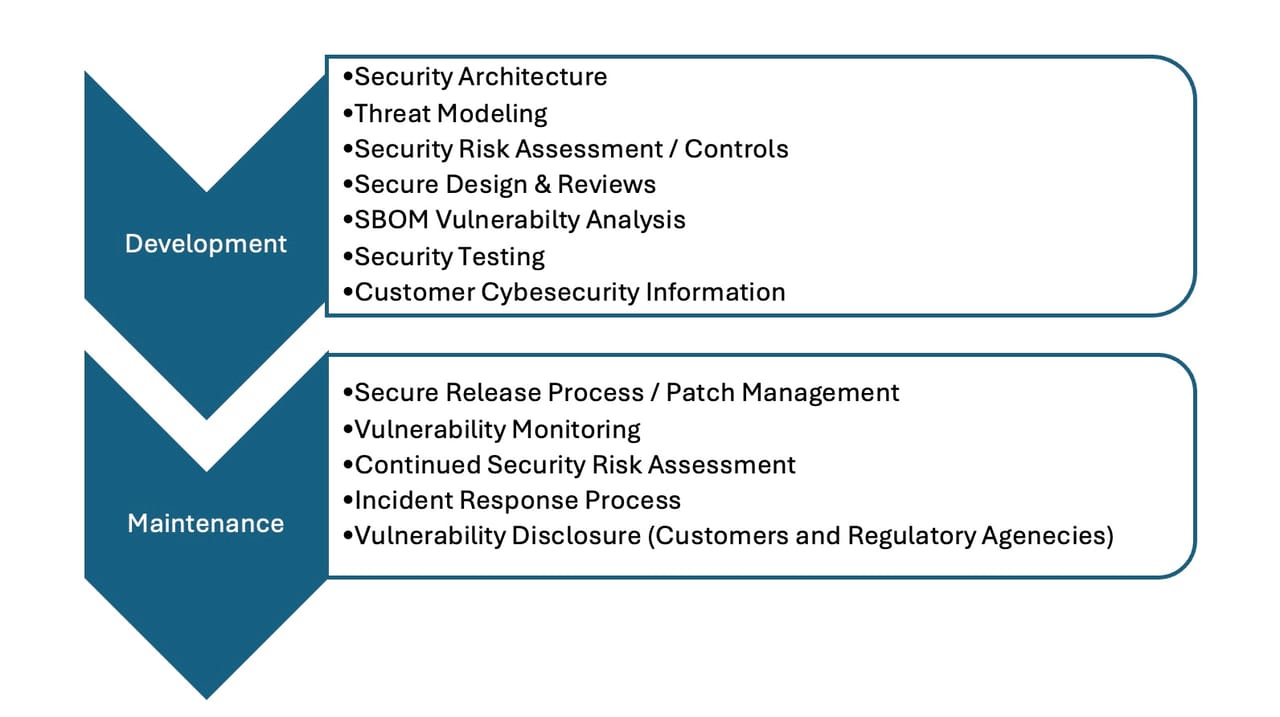
Security risk assessment is a key SPDF activity that starts early in development and continues throughout the product life cycle through on-market support and eventual product retirement. FDA guidance references AAMI SW96, “Standard for medical device security - Security risk management for device manufacturers,” as a recommended standard for a security risk assessment process. Security risk assessment considers both safety and business security risks ... Implementing a clear and consistent security risk assessment process within the SPDF can also save time (and money). Focus can be placed on those areas of the design with the highest security risk, instead of on design areas with little to no security risk. Decisions on whether patches need to be applied in the field are easier to make when based on security risk. Leveraging the same security risk process across products and business areas allows teams to focus on execution rather than designing a new process. Once a product is launched, an SPDF can assist with managing that product. Postmarket SPDF activities include vulnerability monitoring/disclosure, patch management, and incident response. A critical component of vulnerability monitoring is the maintenance and continuous use of a software bill of materials (SBOM). The SBOM provides a machine-readable inventory of all custom, commercial, open-source, and third-party software components within the device. 


Vibe Coding Can Create Unseen Vulnerabilities

Vibe coding does accelerate app prototyping and makes software collaboration easier, but it also has several shortcomings. Security is a serious concern. Large language models (LLMs) are inherently vulnerable to security risks when used by those without sufficient security experience. Moreover, the risk is amplified by the fact that AI is so flexible that it’s impossible to give out simple, universal rules on how to make AI write secure code for you. LLMs may use outdated libraries, lack input validation, or fail to follow secure practices. AI code generators also lack an understanding of trust boundaries and system architectures. When using vibe coding, programmer oversight and review are necessary to prevent these issues from entering production code. Working with black-box code also makes it difficult to provide context about the app. For example, improper configurations may expose internal logic by sending sensitive code snippets to external APIs. This can be a real problem in highly regulated industries with strict rules about code handling. Vibe coding also tends to add technical debt, accumulating unreviewed or unexplained blocks of code. Over time, these code blocks proliferate, creating a glut and making code maintenance more difficult. Since less experienced developers tend to use vibe coding, they can overlook security issues. Consider the recent Tea Dating Advice hack. A hacker was able to access 72,000 images stored in a public 


The state of cloud-native computing in 2025

“We’ve reached a level of maturity in the cloud-native ecosystem that people might think that things are now a bit boring. While AI is a natural extension of Kubernetes and cloud-native architectures, there are changes required in the architecture to support AI workloads compared to previous workloads. Platform engineering continues to have strong customer interest… and new AI enhancements allow for even greater productivity for developers and operators. ...” said Miniman ... “However, runaway complexity and cost threaten to derail mass enterprise success. The modern observability stack has become an exorbitant black hole, delivering insufficient value for its exorbitant cost and demands a fundamental rethink of data management. Simultaneously, the data lakehouse gamble failed, proving too complex and expensive. The imperative is clear and necessitates pulling workloads back from the brink with democratized data management to pull workloads back onto central platforms,” said Zilka. ... “The focus has shifted from how quickly I can deploy, to how I can get a handle on costs and how resilient my platform is to changes or outages like we saw recently with AWS. Teams are recognising the overhead these technologies have introduced for developers and are centralising that work. We’re seeing more platform teams set best practices, use tooling to enforce them and move from “adoption mode” to “operational excellence,” said Rajabi.


Insurability now a core test for boardroom AI & climate strategy

Organisations face growing threats from data poisoning and cyber-attacks, prompting insurers to play a more decisive role in risk management. Levent Ergin, Chief Climate, Sustainability & AI Strategist at Informatica, highlighted the increasing scrutiny on what businesses can insure against. ... AI is now a fixture at board meetings due to its direct impact on company valuation. However, he observes a gap between current boardroom discussions and the transformative potential of AI. "AI is now a standing item in every board meeting because it directly shapes valuation. Investors see it as a signal of how forward-thinking a company really is. But many boards are still asking the wrong question: 'How can we use AI to automate or augment our existing processes?' when they should be asking 'What's possible?' It's not just about automating what already exists; it's about reimagining how things are done. ..." said Hanson. ... "Too many businesses still treat AI projects like any other investment, where the return has to be quantified against a specific outcome. In truth, they should be budgeting for failure. The best innovators plan for things not to work first time, just as pharmaceutical companies or tech giants do, because even a 98% failure rate can still produce world-changing results. The moment we stop fearing failure and start funding it, we'll see genuine AI innovation break through," said Hanson.


Are we in a cyber awareness crisis?

To improve cyber awareness, organizations need to move beyond box-ticking exercises and build engagement through relevance and creativity. This is the advice of Simon Backwell, a member of the Emerging Trends Working Group at professional association ISACA, and head of information security at software company Benefex. He advocates for interactive, rather than static training, where employees can explore why something was suspicious, as they learn by doing, rather than guessing the right answer and moving on. ... Not only does AI present new risks from its use within the business, but also from the way criminals are using it. “Email phishing attacks frequently use gen AI chatbots, and vishing attacks, such as robocall scams, now use deepfakes,” notes Candrick. “AI puts social engineering on steroids, yet cybersecurity leaders are still using the same awareness measures that were already insufficient.” While regulatory pressure will play a role in improving AI-related cybersecurity, regulations will always struggle to keep pace, especially in the UK where the process takes time. For example, the EU’s AI Act and Data Act is only now filtering through, much like GDPR did back in 2018, says Backwell. But with how fast AI is advancing – almost weekly – these rules risk becoming outdated as soon as they’re released. ... “As board alignment weakens, CISOs have to work harder to translate cyber risk into business impact, because boards now rank business valuation as their top post-incident concern,” says Cooke.


How to build a supercomputer

When it comes to Hunter’s architecture, Utz-Uwe Haus, head of HPC/AI EMEA research lab, at HPE, describes the Cray EX design as “the architecture that HPE, with its great heritage, builds for the top systems.” A single cabinet in an EX4000 system can hold up to 64 compute blades – high-density modular servers that share power, cooling, and network resources – within eight compute chassis, all of which are cooled by direct-attached liquid-cooled cold plates supported by a cooling distribution unit (CDU). “It's super integrated," he says. “The back part, which is the whole network infrastructure (HPE Slingshot), matches the front part, which contains the blades.” For Hunter, HLRS has selected AMD hardware, but Haus explains that with Cray EX systems, customers can, more or less, select their processing unit of choice from whichever vendor they want, and the compute infrastructure can be slotted into the system without the need to total reconfiguration. “Should HLRS decide at some point to swap [Hunter’s] AMD plates for the next generation, or use another competitor’s, the rest of the system stays the same. They could have also decided not to use our network – keep the plates and put a different network in, if we have that in the form factor. [HPE Cray EX architecture] is really tightly matched, but at the same time, it’s flexible," he says. Hunter itself is intended as a transitional system to the Herder exascale supercomputer, which is due to go online in 2027. 


The AI Reskilling Imperative: Bridging India's talent and gender gap

Policies should shift from less general policies to specific interventions. Initiatives such as Digital India and Skill India need to be bolstered with AI-specific courses available online in the local language. The government can: Sponsor and encourage scholarships and mentorships for Women in AI. Develop financial reward systems for companies reaching gender diversity in their AI teams. Introduce AI literacy and ethics into the national education system, beginning at the secondary school level. ... As the main consumer of AI talent, the private sector should be at the forefront. The first one is the skills-first approach to hiring, but reskilling as an ongoing investment is not an option. Companies should: Devote a huge proportion of CSR budgets to simple AI and digital literacy efforts, especially among women in low-income and rural communities; Launch internal reskilling programs to shift existing workers out of positions at risk of automation (e.g., manual software testing, simple data entry) and into new roles, such as AI integrators or data annotators; Embrace explicit ethical standards for the application of AI, including a workforce transition and support strategy. ... The universities will be obliged to redesign courses that incorporate AI's technical wisdom and infuse them with morals, critical thinking, and subject knowledge. Collaboration between industry and academia is important to ensure courses are practical and incorporate real-world projects.


Enterprises to focus AI spend on cost savings & data control

"CIOs will move from experimenting with AI to orchestrating it, governing outcomes, agents, and data. AI leadership will evolve from pilots to performance. CIOs will be accountable for tangible business outcomes, defining clear frameworks that connect AI investments to enterprise KPIs and ROI. That means managing a new hybrid workforce of humans and digital agents, complete with job descriptions, correlated KPIs and measurement standards, and governance guardrails. Yet none of this will succeed without secure information management, ensuring that the data fueling and training these agents is accurate, compliant, and trustworthy. Simply put, good data results in good AI outcomes. As AI accelerates, traditional network and security operations will be reimagined for an always-on, agent-driven enterprise, where value is derived as much from data discipline as from innovation itself," said Bell. ... "A Major brand fallout will force AI accountability. In the next year, we'll likely see a major brand face real damage from AI misuse. It won't be a cyberattack in the traditional sense but something more subtle, like a plain text prompt injection that manipulates a model into acting against intent. These attacks can force hallucinations, expose proprietary or sensitive information, or break customer trust in seconds. Enterprises will need to verify AI behavior the same way they secure their networks, by checking every input and output. The companies that build AI systems with accountability and transparency at the core will be those that keep their reputations intact," said Berry.

Daily Tech Digest - November 11, 2025


Quote for the day:

"The measure of who we are is what we do with what we have." -- Vince Lombardi


Your passwordless future may never fully arrive

The challenges are many. Beyond legacy industrial systems, homegrown apps, door/facility access systems, and IoT, even routine workgroup deployment of passwordless solutions is anything but routine. Different operating systems and specialized access requirements typically translate to enterprises needing to roll out multiple passwordless packages, which can be expensive and time-consuming, and create operational delays and other friction. Worst of all, it can create new security holes as attackers try to slip between the cracks of those multiple passwordless systems. ... “Passwordless implementations typically leave a dangerous blind spot. Passwords are still there, lurking inside the passkey enrollment and recovery flows,” says Aaron Painter, CEO of Nametag. “Think of it this way: How do you really know who’s enrolling or resetting a passkey? Attackers don’t have to break the cryptography of passkeys. They go after the weakest link, whether it’s a helpdesk call, an SMS code, or a ‘can’t access my passkey’ button. By keeping both a password and a passkey, organizations multiply their attack surface.” ... Part of the passwordless debate focuses on ROI strategies. The proverbial gold at the end of the rainbow is having all password credentials eliminated. That means an attacker with a 12-month-old admin password from a breach of a partner company would have nothing of value. But as long as some passwords must be supported, the risk of such an attack remains.


CISOs are cracking under pressure

Most CISOs surveyed experienced a major security incident in the last six months. For most, that level of disruption has become normal. More than half said they are personally blamed when breaches occur, and fear their job would be at risk if a serious incident happened under their watch. That sense of personal accountability stands out because many breaches occur despite defenses being in place. Fifty-eight percent of CISOs said at least one recent incident happened even though a tool was supposed to stop it. The researchers say this gap between investment and outcome has left security leaders exposed to reputational and career risk for problems that are often beyond their control. ... Most CISOs say they can quantify risk, but more than half admit they lack standardized, business-focused metrics that make sense to leadership. Boards often want trendlines that show risk is declining or metrics that link incidents to business outcomes. Without these, the conversation between CISOs and directors can break down. This disconnect means security leaders are often held accountable without being equipped to demonstrate progress in the terms boards expect. The researchers note that aligning on a shared understanding of risk is key to reducing tension and helping CISOs do their jobs. ... Many CISOs say they’re being pushed to use AI to cut costs and automate tasks, with some already under formal mandates and others feeling growing pressure from leadership. That puts CISOs in a difficult position.


The Sustainable Transformation Roadmap: Rethink, Align, Deploy

A significant part of the success stems from the weeding out process of debt. Like technical debt in IT systems, process debt refers to the accumulation of outdated procedures, inefficient workflows, and redundant steps that have built up over years of incremental changes. These legacy practices hinder productivity and make it challenging to fully realize the benefits of digital solutions. Overall, while process debt is rampant, forward-thinking organizations succeed by treating automation as a catalyst for redesign, not a quick fix—potentially unlocking millions in annual savings per use case. To sidestep potential traps, organizations should prioritize process optimization before they begin automating. This entails a focus on audit and redesign, starting with thorough process mapping to identify process debt. ... Also, start small and iterate by piloting in low-risk areas, such as invoice chasing or design reviews, measuring against baselines to ensure automation resolves, not replicates, debt. Failure to confront process debt, Yousufani said, leads to a familiar pitfall associated with “citizen-led transformation.” Organizations distribute productivity tools hoping employees will optimize their own workflows. But at best, this bottom-up innovation results in minor efficiency gains: “If an individual deployed Gen AI, and they gain—in a best-case scenario—10% productivity, that’s 10% for one employee. The gains are much greater when looking at an entire process transformation,” he said.


Building Resilient Platforms: Insights from Over Twenty Years in Mission-Critical Infrastructure

In technology terms, a platform represents a set of integrated technologies used as a base to develop other applications or processes. The best platform builders succeed when they are taken for granted, seeing success not in recognition, but in silence. Users can work without ever thinking about the underlying infrastructure, because the platforms simply function, consistently and reliably, making them invisible. ... Successfully hiding complexity while delivering powerful functionality defines platform excellence. The sophisticated engineering underneath should remain invisible to users who simply want to accomplish their tasks without friction. ... Stability means consistent, reliable operation at all times. However, achieving stability through stagnation creates security vulnerabilities from unpatched systems. Patching introduces changes that can impact stability while enabling security.  ... The temptation to defer maintenance always exists, but falling behind creates insurmountable technical debt. From a security perspective, increased exploitation of zero day vulnerabilities by bad actors demonstrate how quickly deferred maintenance becomes crisis management. Staying evergreen requires eternal vigilance and commitment. Once you fall behind, catching up becomes nearly impossible. This principle demands upfront planning and unwavering execution.


From Data Transfer to Data Trust

As more businesses move to hybrid and multi-cloud environments, data exchanges happen across different infrastructures and jurisdictions, which adds to the complexity and risk. Old models that only look at the perimeter are no longer enough. Instead, companies need a model in which trust is not taken for granted but is always checked. Gartner (2023) says that trust should be built into every transaction, every request for access, and every exchange of data. ... Businesses need to take a big-picture view based on the following pillars to build a trusted data integration framework: Authentication and Authorization: Use strict identity controls like OAuth 2.0, SAML, and context-aware Multi-Factor Authentication (MFA). API gateways should enforce role-based access and rate limiting. Transport Layer Security (TLS) should encrypt data while it is being sent, and Advanced Encryption Standard (AES) should be used to encrypt data while it is at rest. Use checksums, digital signatures, and data validation protocols to ensure the data is correct. Monitoring and Observability: Use observability platforms like ELK Stack, Prometheus, or Splunk to monitor logs, metrics, and traces in real time. Principles of Site Reliability Engineering (SRE) say that you should set up Service-Level Indicators (SLIs), Service-Level Objectives (SLOs), and automatic incident detection.


Who Owns the Cybersecurity of Space?

There is no comprehensive and binding international cybersecurity framework governing satellites, orbital systems or ground-to-space communications. Australia's growing space sector, spanning manufacturing in South Australia, launch facilities in the Northern Territory and emerging tracking infrastructure in Queensland, is expanding quickly. ... Many satellites, especially those launched before 2020, lack encryption or rely on outdated telemetry protocols. A single compromised ground station could trigger cascading effects across dependent systems. A man-in-the-middle attack in orbit would not simply exfiltrate data. It could spoof navigation, interrupt emergency communications or feed falsified intelligence to defense networks. We saw a warning sign in the ViaSat KA-SAT attack during the early stages of the Russia-Ukraine conflict, which temporarily crippled satellite communications across Europe. ... Many satellites, especially those launched before 2020, lack encryption or rely on outdated telemetry protocols. A single compromised ground station could trigger cascading effects across dependent systems. A man-in-the-middle attack in orbit would not simply exfiltrate data. It could spoof navigation, interrupt emergency communications or feed falsified intelligence to defense networks. ... For cybersecurity professionals, space is now a part of your threat landscape. Whether you work in defense, telecommunications, energy or government, your organization likely depends on orbital networks.


AI & phishing attacks highlight human risk in Australian fraud

Cybercriminals continue to rely on phishing attacks, exploiting trust and human error to initiate breaches. Despite ongoing investment in advanced detection technologies, there is widespread agreement that improving behavioural awareness within organisations is crucial. ... Salehi highlighted the growing sophistication of AI-powered attacks, describing how threat actors automate reconnaissance and deploy harder-to-detect campaigns. "As AI reshapes the threat landscape, these human vulnerabilities become even more exploitable. Threat actors are using AI to automate reconnaissance and craft highly personalised phishing campaigns that are faster, more convincing and far harder to detect," said Salehi. He went further to advocate for a risk-based security approach, aligning protection with business priorities and focusing on critical assets. "To counter this, organisations must adopt a risk-based approach that aligns security investments to business context - prioritising protection of the assets most critical to operations and continuity, while investing equally in human-centric education and training to recognise AI-generated phishing and deepfake content," said Salehi. ... Fraud schemes are also evolving beyond traditional IT boundaries, impacting operational processes and supply chains. Complex webs of partners and suppliers increase the risk of unnoticed manipulation and data leaks, particularly as generative AI technology is embedded across business operations.


The AI revolution has a power problem

In the race for AI dominance, American tech giants have the money and the chips, but their ambitions have hit a new obstacle: electric power. "The biggest issue we are now having is not a compute glut, but it's the power and...the ability to get the builds done fast enough close to power," Microsoft CEO Satya Nadella acknowledged on a recent podcast with OpenAI chief Sam Altman. "So if you can't do that, you may actually have a bunch of chips sitting in inventory that I can't plug in," Nadella added. ... Already blamed for inflating household electricity bills, data centers in the United States could account for 7% to 12% of national consumption by 2030, up from 4% today, according to various studies. But some experts say the projections could be overblown. "Both the utilities and the tech companies have an incentive to embrace the rapid growth forecast for electricity use," Jonathan Koomey, a renowned expert from UC Berkeley, warned in September. ... Tech giants are quietly downplaying their climate commitments. Google, for example, promised net-zero carbon emissions by 2030 but removed that pledge from its website in June. Instead, companies are promoting long-term projects. Amazon is championing a nuclear revival through Small Modular Reactors (SMRs), an as-yet experimental technology that would be easier to build than conventional reactors.


Cut Lead Time In Half With Pragmatic Agile

Agility isn’t sprints; it’s small, reversible changes flowing safely to users. We get there by adopting trunk-based development, feature flags, and explicit WIP limits. Trunk-based means branches live hours, not weeks. We merge small increments behind flags, ship to production early, and turn features on when we’re ready. Review stays fast because the surface area is small. If we need to bail out, we toggle the flag off and fix forward. No hero rollbacks, no 2 a.m. conference bridge. Feature flags don’t need to be fancy at the start, but they must be disciplined: clear names, default off, auditability, and a plan to retire them. Tooling is personal preference; control plane matters less than consistency. We like OpenFeature because it’s vendor-neutral and simple. ... Boring deploys are the highest compliment. We get them by codifying our path to production and reducing manual gates. Start with a trunk-based pipeline that runs unit tests, security checks, build, and deploy in the same PR context. Then add guardrails: environment protection rules, small canaries, and automatic rollbacks if health checks dip. ... Agile claims to balance speed with quality, but without SLOs we end up arguing feelings. Service-level objectives anchor our pace to user impact. We pick a few golden signals per service—availability, latency, error rate—and set realistic targets based on current performance and business expectations.


EU Set the Global Standard on Privacy and AI. Now It’s Pulling Back

The EU’s landmark AI Act entered into force earlier this year but will not fully apply until 2026. Reporting by MLex, Reuters, and Financial Times indicates that the European Commission is considering changes that could delay enforcement and reduce transparency. Under the proposals, companies deploying high-risk AI systems could receive a one-year grace period before fines and other obligations take effect. This would particularly benefit providers that already placed generative AI systems on the market, giving them time to adjust without disrupting operations. Draft documents also suggest postponing penalties for transparency violations, such as failing to clearly label AI-generated content, until August 2027. MLex reported that the package would also make compliance easier for companies and centralize enforcement through a new EU AI office. ... The proposal is still being discussed within the Commission and could change before November 19. Once adopted, it will head to EU governments and the European Parliament for approval. Privacy advocates have criticized the fast-track process of the Digital Omnibus. While the GDPR took years to negotiate, public consultation on the Omnibus only concluded in October. According to noyb, some Brussels units had just five working days to review a 180+ page draft. The Commission has not prepared impact assessments, saying the proposed changes are “targeted and technical.”

Daily Tech Digest - November 10, 2025


Quote for the day:

"You can only lead others where you yourself are willing to go." -- Lachlan McLean


CISOs must prove the business value of cyber — the right metrics can help

With a foundational ERM program, and by aligning metrics to business priorities, cybersecurity leaders can ultimately prove the value of the cyber security function. Useful metrics examples in business terms include maturity, compliance, risk, budget, business value streams, and status of SecDevOps (shifting left) adoption, Oberlaender explains. But how does a cybersecurity expert learn what’s important to the business? ... “Boards are faced with complex matters such as impact on interest rates, tariffs, stock price volatility, supply chain issues, profitability, and acquisitions. Then the CISO enters the boardroom with their MITRE Attack framework, patching metrics and NIST maturity models,” Hetner continues. “These metrics are not aligned to what the board is conditioned to reviewing.” ... Rather than just asking “are we secure?” business leaders are asking what metrics their cyber components are using to measure and quantify risk and how they’re spending against those risks. For CISO’s, this goes beyond measuring against frameworks such as NIST, listing a litany of security vulnerabilities they patched, or their mean time to response. “Instead, we can say, ‘This is our potential financial exposure’,” Nolen explains. “So now you’re talking dollars and cents rather than CVEs and technical scores that board members don’t care about. What they care about is the bottom line.” 


Feeding the AI beast, with some beauty

AI-driven growth is placing an unprecedented load on data centres worldwide, and India is poised to shoulder a large share of the incremental electricity, real estate, and cooling burden created by rising AI demand. The IEA has estimated a trajectory that AI is accelerating at a rapid pace. Under realistic scenarios, AI workloads alone could require on the order of 1–1.5 GW of continuous IT power—equivalent to 8.8–13 TWh annually—in India by 2030. This translates into a significant new draw on grids, water resources, and capex for cooling and power infrastructure. Recent analyses indicate that while AI’s share of data centre power today stands in the single-digit to low-teens range, it could climb to 20–40 per cent or more by 2030 in some scenarios, fundamentally reshaping the power-consumption profile of digital infrastructure. ... As data centres grow in scale, sustainability is becoming a competitive differentiator—and that’s where Life Cycle Assessments (LCAs) and Environmental Product Declarations (EPDs) play a critical role. An LCA is a systematic method for evaluating the total environmental impact of a product, process, or system across its entire life cycle. For a data centre, this spans both upstream (embodied) impacts—such as construction materials, IT equipment manufacturing, and cooling and power infrastructure including gensets—as well as operational impacts like electricity consumption. 


8 IT leadership tips for first-time CIOs

Generally speaking, the first three years can make or break your IT leadership career, given that digital leaders globally tend to stay at one company for just over that length of time on average, according to the 2025 Nash Squared Digital Leadership Report. CIOs looking to sidestep that statistic are taking intentional measures, ensuring they get early wins, and perhaps most importantly, not coming into their role with preconceived ideas about how to lead or assuming what worked in a past job can be replicated. ... The CTO of staffing and recruiting firm Kelly says that “building momentum, finding ways to get quick wins from the low hanging fruit” will help build credibility with the leadership team. Then, you can parlay those into bigger wins and avoid spinning out, he says. ... While making connections and establishing relationships is critical, Lewis stresses the importance of not rushing to change things right away when you’re new to the job. “Let it set for a while,” he says. ... This is especially true of midsize and larger midsize organizations “where the clarity of strategy and clarity of what’s important … isn’t always well documented and well thought out,” Rosenbaum says. Knowing the maturity of your organization is really important, he says. “Some CIO roles are just about keeping the lights on, making sure security is good at a lower level. As the company starts to mature, they start thinking about technology as an enabler, and to that end, they start having maybe a more unified technology strategy.”


Drata’s VP of Data on Rethinking Data Ops for the AI Era: Crawl, Walk, Run — Then Sprint

While GenAI may be the shiny new tool, Solomon makes it clear that foundational work around ingestion and transformation is far from trivial. “We live and die by making sure that all the data has been ingested in a fresh manner into the data warehouse,” he explains. He describes the “bread and butter” of the team: synchronizing thousands of MySQL databases from a single-tenant production architecture into the warehouse — closer to real-time. “We do a lot of activities with regard to the CDC pipeline, which is just like driving terabytes of data per day.” But the data team isn’t working in isolation. GTM executives return from conferences excited about GenAI. ... Rather than building fully-fledged pipelines from day one, the team prioritizes quick feedback loops — using sandboxes, cloud notebooks, or Streamlit apps to test hypotheses. Once business impact is validated, the team gradually introduces cost tracking, governance, and scalability. If a stakeholder’s hypothesis lacks merit, there is no point in building complex data pipelines, governance frameworks, or cost-tracking systems. This shift in mindset, he explains, is something many data teams are grappling with today. Traditionally, data teams were trained to focus on building scalable, robust pipelines from day one — often requiring significant upfront effort. But this often led to cost inefficiencies and delays.


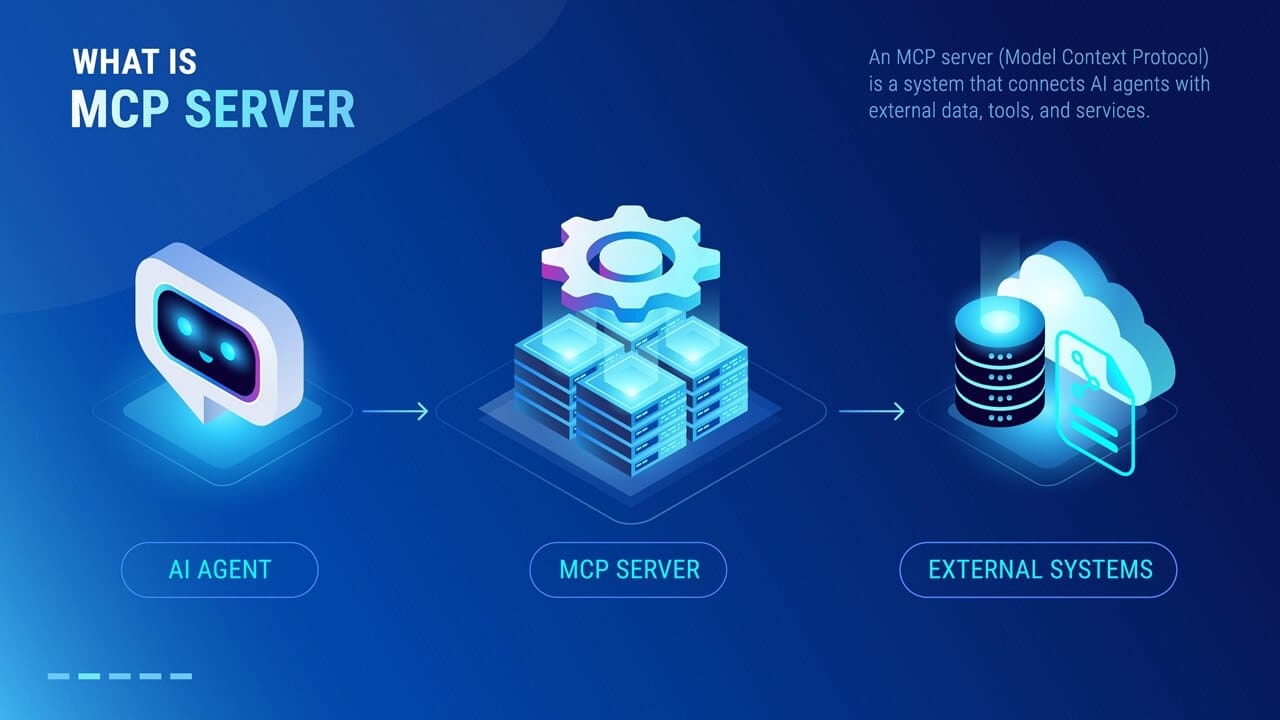
Model Context Protocol Servers: Build or Buy?

"The tension lies in whether you have the sustained capacity to keep pace with protocols that are still being debated by their maintainers," said Rishi Bhargava, co-founder at Descope, a customer and agentic IAM platform. "Are you prepared to build the plane while it's flying, or would you rather upgrade a finished plane mid-flight?" ... "From a business perspective, the build versus buy decision for MCP servers boils down to strategic priorities and risk appetite," Jain said. Building MCP servers in-house gives you "complete control," but buying provides "speed, reliability, and lower operational burden," he said. But others think there's no reason to rush your decision. ... "Most companies shouldn't be doing either yet," he said, explaining that companies should first focus on the specific business goals they are trying to achieve, rather than on which existing applications they think should have AI features added. "Build when you have an actual AI application that requires custom data integration and you understand exactly what intelligence you're trying to deploy. If you're simply connecting ChatGPT to your CRM, you don't need MCP at all," Prywata said. ... "It is usually best to build [MCP servers] in-house when compliance, performance tuning, or data sovereignty are key priorities for the business," said Marcus McGehee, founder at The AI Consulting Lab. 


Every CIO Fails; The Smart Ones Admit It

There's a "hero CIO" myth deeply rooted in our mindset - the idea that you're the person who makes technology work, no matter what. Admitting failure feels like admitting incompetence, especially in boardrooms where few understand the complexity of IT. Organizational incentives also discourage openness. Many companies punish failure more than they reward learning. I've seen talented CIOs denied promotion because of a single delayed project, even when their broader portfolio delivered value. When institutional memory focuses on what went wrong rather than what was learned, people stop taking risks. The second factor is C-suite politics. In some environments, transparency becomes ammunition. Another team might use a project delay to justify requests for budget increases or to exert influence. And finally, CIOs worry about vendor perception, admitting setbacks could impact pricing, support or their reputation with partners. ... Build your transparency muscle in peacetime, not when something is on fire. By the time a crisis hits, it's too late to establish credibility. Make transparency habitual. Share work in progress, not just results. Celebrate learning, not perfection. Run "pre-mortems" where you assume a project failed and work backwards to identify what could go wrong. And when you make a mistake, own it publicly. The honesty earns you more trust than a polished explanation ever will.


6 proven lessons from the AI projects that broke before they scaled

In analyzing dozens of AI PoCs that sailed on through to full production use — or didn’t — six common pitfalls emerge. Interestingly, it’s not usually the quality of the technology but misaligned goals, poor planning or unrealistic expectations that caused failure. ... Define specific, measurable objectives upfront. Use SMART criteria. For example, aim for “reduce equipment downtime by 15% within six months” rather than a vague “make things better.” Document these goals and align stakeholders early to avoid scope creep. ... Invest in data quality over volume. Use tools like Pandas for preprocessing and Great Expectations for data validation to catch issues early. Conduct exploratory data analysis (EDA) with visualizations (like Seaborn) to spot outliers or inconsistencies. Clean data is worth more than terabytes of garbage. ... Start simple. Use straightforward algorithms like random forest or XGBoost from scikit-learn to establish a baseline. Only scale to complex models — TensorFlow-based long-short-term-memory (LSTM) networks — if the problem demands it. Prioritize explainability with tools like SHAP  to build trust with stakeholders. ... Plan for production from day one. Package models in Docker containers and deploy with Kubernetes for scalability. Use TensorFlow Serving or FastAPI for efficient inference. Monitor performance with Prometheus and Grafana to catch bottlenecks early. Test under realistic conditions to ensure reliability.


Andela CEO talks about the need for ‘borderless talent’ amid work visa limitation

Globally, three of four IT employers say they lack the tech talent they need, and the outlook will only get more dire as AI creates a demand for high-skilled specialists like data engineers, senior architects, and agentic orchestrators. Visa programs aren’t designed by the laws of supply and demand. They’re defined by policy makers and are updated infrequently. So, they’ll never truly be in sync with the needs of the labor market. ... Brilliant people exist around the world. It’s why they want to sponsor people for H-1B visas. But hiring outside of those traditional pathways — to work with a brilliant machine learning engineer from Cairo or São Paulo, for example — is…a long, painful process that takes months and is inaccessible to them. They don’t know that they can find the right partner, someone who has sorted this all out and vetted talent and developed compliance with global labor and tax laws, etc. Once they understand that those partners exist, the global workforce becomes instantly accessible to them. ... Technical hiring still feels like a gamble, even though software development is, relatively speaking, packed with deterministic skills. There are two main problems. One problem is the data problem. There’s not enough reliable data about what a job actually requires and what a worker is capable of doing. Today, we rely on resumes and job descriptions. 


The Overwhelm Epidemic: Why Resilience Begins with You

People have so much to do and not enough time. There’s nothing new with the phenomena of not enough time to do what needs to be done, but today it’s different. Today, it’s unique because this feeling of overwhelm has been continuously expanding since early 2020 as we experienced the pandemic. We’re being overwhelmed to an extent most people are not experienced to deal with.
For you in operational resilience, I believe self-care is more critical now than it has ever been. You are only able to help your clients and their systems be resilient to the extent you are taking care of yourself and are resilient. ... Most say something like, “I’m going to double down and focus on this. I’m going to work harder and spend as much time as needed, even if it means cutting into my already precious personal time.” They think working harder is the best approach, but here’s the thing—they are wrong.
When you are operating at high-stress levels, introducing more stress by doubling down and working harder, actually reduces your output. ... Bottom line, a thriving, elite mindset is the foundation of personal wellbeing and professional success. 
Turning to positive psychology, underlying Martin Seligman‘s model for human flourishing, are 24 positive character strengths. While more research is still needed, the research to date has concluded that of the 24, the best predictor of living a flourishing, thriving life is gratitude.


Ask a Data Ethicist: What Are the Impacts of AI on Creativity, Schools, and Industry?

Generally speaking, if the goal is to reduce the cost of labour by replacing it with equipment (capital – or AI), then assuming the AI tool replaces the labour in a way that is acceptable to drive the desired outputs the business could possibly drive more profit. So that might be construed as positive for the business. However, businesses exist in the bigger context of society. To take an extreme example, if a large section of the population loses their jobs, they can’t buy your products, and that could hurt your organization. It also puts more burdens on society for a social safety net, perhaps resulting in tax increases or some other impacts to business to pay for those services. ... I think it’s important to disclose the use of AI in a process. For video, audio or images – a symbol or some text to say “AI generated” can accomplish that goal. There is also watermarking that content which is a more technical method. For text, it’s trickier. I don’t think everyone needs to be told about every instance of a spellchecker (to use an extreme example) but if the whole thing is generated, then it is important to say that. This is where a policy can be helpful. For example, one might apply the 80/20 rule – if less than 20% is generated, perhaps it’s not necessary to disclose it. That said, there better not be any inaccuracies or errors in the content if you choose NOT to disclose it. See this case in Australia. This is an example of why I think disclosing, overall, is a good idea.

Daily Tech Digest - November 09, 2025


Quote for the day:

"The only way to achieve the impossible is to believe it is possible." -- Charles Kingsleigh


Way too complex: why modern tech stacks need observability

Recent outages have demonstrated that a heavy dependence on digital systems can leading to cascading faults that can halt financial transactions, disrupt public transportation and even bring airport operations to a standstill. ... To operate with confidence, businesses must see across their entire digital supply chain, which is not possible with basic monitoring. Unlike traditional monitoring, which often focuses on siloed metrics or alerts, observability provides a unified, real-time view across the entire technology stack, enabling faster, data-driven decisions at scale. Implementing real-time, AI-powered observability covers every component from infrastructure and services to applications and user experience. ... Observability also enables organizations to proactively detect anomalies before they escalate into outages, quickly pinpoint root causes across complex, distributed systems and automate response actions to reduce mean time to resolution (MTTR). The result is faster, smarter and more resilient operations, giving teams the confidence to innovate without compromising system stability, a critical advantage in a world where digital resilience and speed must go hand in hand. Resilient systems must absorb shocks without breaking. This requires both cultural and technical investment, from embracing shared accountability across teams to adopting modern deployment strategies like canary releases, blue/green rollouts and feature flagging. 


Radical Empowerment From Your Leadership: Understood by Few, Essential for All

“Radical empowerment, for me, isn’t about handing people a seat at the table. It’s about making sure they know the seat is already theirs,” said Trenika Fields, Business Legal, AI Leader at Cisco, MIT Sloan EMBA Class of ’26. “I set the vision and I trust my team to execute in ways that are anchored in the mission and tied to real business outcomes. But trust without depth doesn’t work. That’s where leading with empathy comes in. It’s my secret sauce, and it has to be real. You can’t fake it. People know when it’s performative. Real empathy builds confidence, and confidence fuels bold, decisive execution. When people feel seen, trusted, and strategically aligned, they lead like builders, not bystanders. Strip that trust and empathy away, and radical disempowerment moves in fast. Voices go quiet. Momentum dies. Innovation flatlines. But when you get it right, you don’t just build teams. You build powerhouses that set the standard and raise the bar for everyone else.” Why, given how simple this is, is it so hard for senior leadership to do versus say? I worked in an environment years ago when “radical candor” was the theme du jour rather than “radical empowerment.” An executive over an executive over my boss was explaining radical candor, which very simply put, being constructive and forthright with empathy to help others grow. 


Banks Can Convert Messy Data into Unstoppable Growth

Banks recognize the potential in tapping a trove of customer data, much of it unstructured, as a tool to personalize interactions and become more proactive. They are sitting on a goldmine of unstructured information hidden in PDFs, scanned forms, call notes and emails — data that, once cleaned and organized, can unlock new business opportunities, says Drew Singer, head of product at Middesk. ... The ability to successfully turn data into insights often depends on clear parameters for how data is handled. This includes a shared understanding of who owns the data, how it will be managed and stored, and a defined governance structure — possibly through committees — for overseeing its use, Deutsch says. "If you don’t set these rules, once data starts flowing, you will lose control of it. You will most likely lose quality," he says. ... With the data governance structure firmly in place, FIs are positioned to use additional tools to garner action-oriented insights across the organization. Truist Client Pulse, for example, uses AI and machine learning to analyze customer feedback across channels. ... "We’ve got a population of teammates using the tool as it stands today, to better understand regional performance opportunities …what’s going well with certain solutions that we have, and where there are areas of opportunity to enhance experience and elevate satisfaction to drive to client loyalty," says Graziano. 


Securing Digital Supply Chains: Confronting Cyber Threats in Logistics Networks

Modern logistics networks are filled with connected devices — from IoT sensors tracking shipments and telematics in trucks, to automated sorting systems and industrial controls in smart warehouses and ports. This Internet of Things (IoT) revolution offers incredible efficiency and real-time visibility, but it also increases the attack surface. Each connected sensor, RFID reader, camera, or vehicle telemetry unit is essentially an internet entry point that could be exploited if not properly secured. The spread of IoT devices introduces new vulnerabilities that must be managed effectively. For example, a hacker who hijacks a vulnerable warehouse camera or temperature sensor might find a way into the larger corporate network. ... The tightly interwoven nature of modern supply chains amplifies the impact of any single cyber incident, highlighting the importance of robust cybersecurity measures. Companies are now digitally linked with vendors and logistics partners, sharing data and connecting systems to improve efficiency. However, this interdependence means that a security failure at one point can quickly spread outward. ... While large enterprises may invest heavily in cybersecurity, they often depend on smaller partners who might lack the same resources or maturity. Global supply chains can involve hundreds of suppliers and service providers with varying security levels. 


For OT Cyber Defenders, Lack of Data Is the Biggest Threat

Data in the OT and ICS world is transient, said Lee. Instructions - legitimate, or not - flow across the network. Once executed, they vanish. "If I don't capture it during the attack, it's gone," Lee said. Post-incident forensics is basically impossible without specialized monitoring tools already in place. "So for the companies that aren't doing that data collection, that monitoring, prior to the attacks, they have no chance at actually figuring out if a cyberattack was involved or not." And that is a problem when nation-state adversaries have pre-positioned themselves within the networks of critical infrastructure providers, apparently ready to pivot to OT exploitation in time of conflict. ... Even when critical infrastructure operators do capture OT monitoring data, the sheer complexity of modern industrial processes means that finding out what went wrong is difficult. The inability to make use of more detailed data is an indicator of immaturity in the OT security space, Bryson Bort told Information Security Media Group. "The way I summarize the OT space is, it's a generation behind traditional IT," said Bort, a U.S. Army veteran and founder of the non-profit ICS Village. Bort helps organize the annual Hack the Capitol event, but he makes his living selling security services to critical infrastructure owners and operators. Most operators still don't have visibility into the ICS devices on their work, Bort said. "What do I have? What assets are on my network?"


Cross-Border Compliance: Navigating Multi-Jurisdictional Risk with AI

The digital age has turned global expansion from an aspiration into a necessity. Yet, for companies operating across multiple countries, this opportunity comes wrapped in a Gordian knot of cross-border compliance. The sheer volume, complexity, and rapid change of multi-jurisdictional regulations—from GDPR and CCPA on data privacy to complex Anti-Money Laundering (AML) and financial reporting rules—pose an existential risk. What seems like a local detail in one jurisdiction may spiral into a costly mistake elsewhere. ... AI helps with cross-border compliance by automating risk management through real-time monitoring, analyzing vast datasets to detect fraud, and keeping up with constantly changing regulations. It navigates complex rules by using natural language processing (NLP) to interpret regulatory texts and automating tasks like document verification for KYC/KYB processes. By providing continuous, automated risk assessments and streamlining compliance workflows, AI reduces human error, improves efficiency, and ensures ongoing adherence to global requirements. AI, specifically through technologies like Machine Learning (ML) and Natural Language Processing (NLP), is the critical tool for cutting compliance costs by up to 50% while drastically improving accuracy and speed. AI and machine learning (ML) solutions, often referred to as RegTech, are streamlining compliance by automating tasks, enhancing data analysis, and providing real-time insights.


Best Practices for Building an AI-Powered OT Cybersecurity Strategy

One challenge in defending OT assets is that most industrial facilities still rely on decades-old hardware and software systems that were not designed with modern cybersecurity in mind. These legacy systems are often difficult to patch and contain documented vulnerabilities. Sophisticated adversaries know this and exploit these outdated systems as a point of entry. ... OT cybersecurity and regulatory compliance are tightly linked in manufacturing, but not interchangeable. Consider regulatory compliance the minimum bar you must clear to stay legally and contractually safe. At the same time, cybersecurity is the continuous effort you must take to protect your systems and operations. Manufacturers increasingly must prove OT cyber resilience to customers, partners, and regulators. A strong cybersecurity posture helps ensure certifications are passed, contracts are won, and reputations are protected. ... AI is a powerful tool for bolstering OT cybersecurity strategies by overcoming the common limitations of traditional, rule-based defenses. AI, whether machine learning, predictive AI, or agentic AI, provides advanced capabilities to help defenders detect threats, automate responses, manage assets, and enhance vulnerability management. ... Human oversight and expertise are vital for ensuring AI quality and contextual accuracy, especially in safety-critical OT environments. 


Training Data Preprocessing for Text-to-Video Models

Getting videos ready for a dataset is not merely a checkbox task - it’s a demanding, time-consuming process that can make or break the final model. At this stage, you’re typically dealing with a large collection of raw footage with no labels, no descriptions, and at best limited metadata like resolution or duration. If the sourcing process was well-structured, you might have videos grouped by domain or category, but even then, they’re not ready for training. The problems are straightforward but critical: there’s no guiding information (captions or prompts) for the model to learn from, and the clips are often far too long for most generative architectures, which tend to work with a context window (length of the video, like number of tokens for Large Language Models) measured in tens of seconds, not minutes. ... It might seem like the fastest approach is to label every scene you have. In reality, that’s a direct route to poor results. After all the previous steps, a dataset is rarely clean: it almost always contains broken clips, low-quality frames, and clusters of near-identical segments. The filtering stage exists to strip out this noise, leaving the model only with content worth learning from. This ensures that the model doesn’t spend time on data that won’t improve its output. ... Building a proper text-to-video dataset is an extremely complex task. However, it is impossible to build a text-to-video generation model without a good dataset.


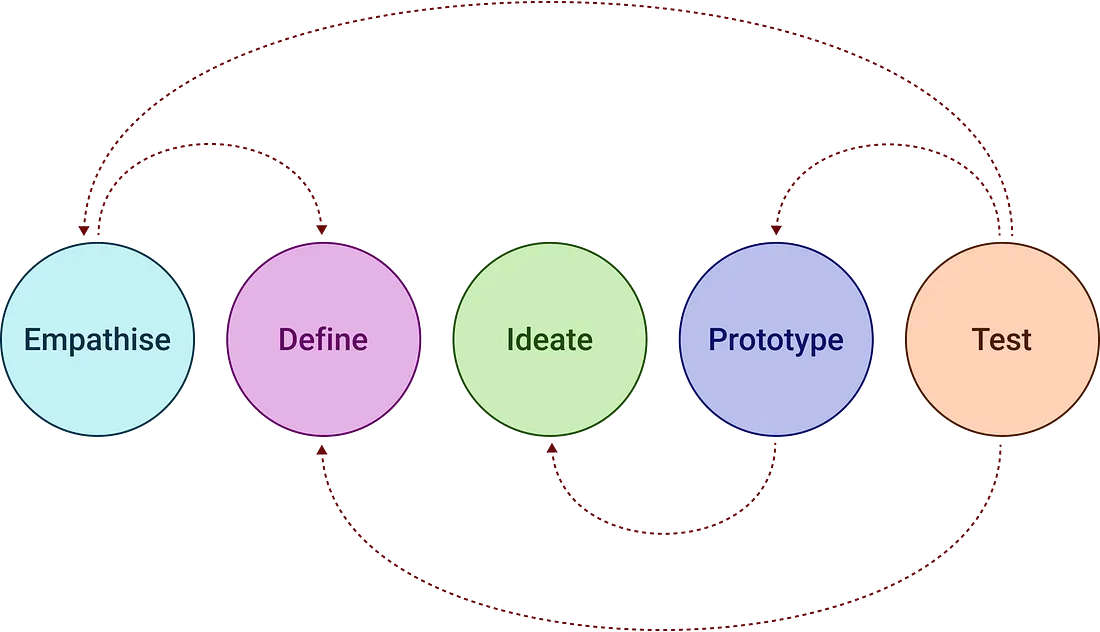
Putting Design Thinking into Practice: A Step-by-Step Guide

The key aim of this part of the design process is to frame your problem statement. This will guide the rest of your process. Once you’ve gathered insights from your users, the next step is to distil everything down to the real issue. There are many ways to do this, but if you’ve spoken to several users, start by analysing what they said to find patterns — what themes keep coming up, and what challenges do they all seem to face? ... Once you’ve got your problem statement, the next step is to start coming up with ideas. This is the fun part! The aim of this part of idea generation is not to find the perfect idea straight away, but to come up with as many ideas as possible. Quantity matters more than quality right now. Start by brainstorming everything that comes to mind, no matter how unrealistic it sounds. At this point, quantity matters more than quality — you can always refine later. Write your ideas down, sketch them, or talk them through with friends or teammates. You might be surprised at how one silly suggestion sparks a genuinely good idea. ... Testing is the “last” stage of the design process. I say last with a bit of hesitation, because while it is technically last on the diagram, you are guaranteed to get a lot of feedback that will require you to go back to earlier stages of the design process and revisit ideas.


Beyond Resilience: How AI and Digital Twin technology are rewriting the rules of supply chain recovery

For decades, supply chain resilience meant having backup plans, alternate suppliers, safety stock, and crisis playbooks. That model doesn’t hold anymore. In a post-pandemic world shaped by trade wars, climate volatility, and technology shocks, disruptions are neither rare nor isolated. They’re structural. ... The KPIs of resilience have evolved. In most companies, traditional metrics like on-time delivery or supplier lead time fail to capture the system’s true flexibility. Modern analytics teams are redefining the measurement architecture around three key indicators: Mean time to recovery (MTTR): the time between initial disruption and full operational stability;  Conditional value-at-risk (CVaR): a probabilistic measure of financial exposure under extreme stress; Supply network resilience index (SNRI): a composite score tracking substitution agility and cross-tier visibility. ... A hidden benefit of this new approach is its environmental alignment. When Schneider Electric built a multi-tier AI twin for its Asia-Pacific operations, it discovered that optimizing for resilience, diversifying ports, balancing lead times, and automating inventory allocation also reduced carbon intensity per unit shipped by 12%; This was not the goal, but it proved that sustainability and resilience share a common denominator: Efficiency. The smarter the network, the smaller its waste footprint. In boardrooms today, that realization is quietly rewriting ESG strategy.