Daily Tech Digest - November 08, 2021

A New Quantum Computing Method Is 2,500 Percent More Efficient

Today, most quantum computers can only handle the simplest and shortest algorithms, since they're so wildly error-prone. And in recent algorithmic benchmarking experiments executed by the U.S. Quantum Economic Development Consortium, the errors observed in hardware systems during tests were so serious that the computers gave outputs statistically indiscernible from random chance. That's not something you want from your computer. But by employing specialized software to alter the building blocks of quantum algorithms, which are called "quantum logic gates," the company Q-CTRL discovered a way to reduce the computational errors by an unprecedented level, according to the release. The new results were obtained via several IBM quantum computers, and they also showed that the new quantum logic gates were more than 400 times more efficient in stopping computational errors than any methods seen before. It's difficult to overstate how much this simplifies the procedure for users to experience vastly improved performance on quantum devices.


Design Patterns for Machine Learning Pipelines

Design patterns for ML pipelines have evolved several times in the past decade. These changes are usually driven by imbalances between memory and CPU performance. They are also distinct from traditional data processing pipelines (something like map reduce) as they need to support the execution of long-running, stateful tasks associated with deep learning. As growth in dataset sizes outpace memory availability, we have seen more ETL pipelines designed with distributed training and distributed storage as first-class principles. Not only can these pipelines train models in a parallel fashion using multiple accelerators, but they can also replace traditional distributed file systems with cloud object stores. Along with our partners from the AI Infrastructure Alliance, we at Activeloop are actively building tools to help researchers train arbitrarily large models over arbitrarily large datasets, like the open-source dataset format for AI, for instance. ... Even though the problem of transfer speed remained, this design pattern is widely considered as the most feasible technique for working with petascale datasets.


Daily Standup Meetings are useless

Standup are not about technical details, even though some technical context can help to frame the arisen complexity and allow PjM and Leads to take the necessary steps to enable you achiving your tasks ( additional meetings, extending the deadline, reestimating the task within the sprint, set up pair programming sessions etc). According to the official docs the Daily Scrum is a 15-minute event for the Developers of the Scrum Team. The purpose of the Daily Scrum is to inspect progress toward the Sprint Goal and produce an actionable plan for the next day of work. This creates focus and improves self-management. Daily Scrums improve communications, identify impediments, promote quick decision-making, and consequently eliminate the need for other meetings. Honestly I am not so sure about the last point, due to the short time allocated to it, it can indeed generate other meetings, follow-ups between Tech Lead and (some of ) the developers, or between the team and the stakeholders, or among developers which decide to tackle an issue with pair programming. 


When Is the Waterfall Methodology Better Than Agile?

Is waterfall ever better? The short answer is yes. Waterfall is more efficient, more streamlined, and faster when it comes to specific types of projects like these: Generally speaking, the smaller the project, the better suited it is to waterfall development. If you’re only working with a few hundred lines of code or if the scope of the project is limited, there’s no reason to take the continuous phased approach; Low priority projects – those with minimal impact – don’t need much outside attention or group coordination. They can easily be planned and knocked out with a waterfall methodology; One of the best advantages of agile development is that your clients get to be an active part of the development process. But if you don’t have any clients, that advantage disappears. If you’re working internally, there are fewer voices and opinions to worry about – which means waterfall might be a better fit; Similarly, if the project has few stakeholders, waterfall can work better than agile. If you’re working with a council of managers or an entire team of decision makers, agile is almost a prerequisite. 


To Secure DevOps, Security Teams Must be Agile
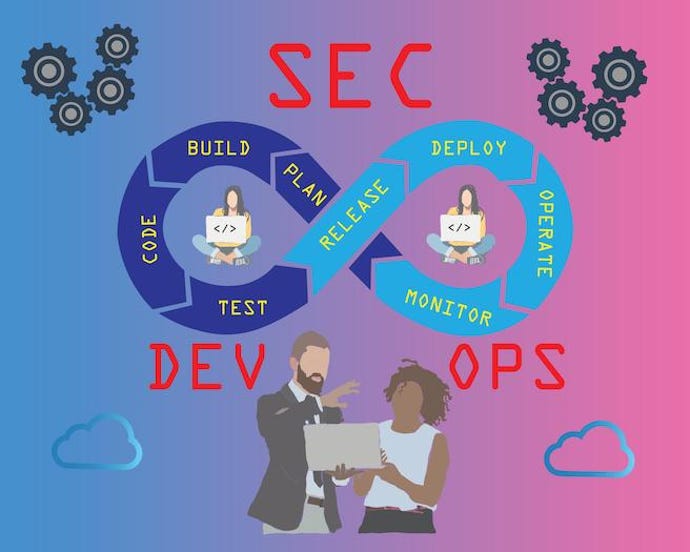
Focusing on a pipeline using infrastructure-as-code allows security teams to build in static analysis tools to catch vulnerabilities early, dynamic analysis tools to catch issues in staging and production, and policy enforcement tools to continuously validate that the infrastructure is compliant, Leitersdorf said. "If you think about how security can be done now, instead of doing security at the tail end of the process ... you can now do security from the beginning through every step in the process all the way to the end. Most security issues will be caught very early on, and then a handful of them will be caught in the live environment and then remediated very quickly," he said. Developers get to retain their speed of development and deployment of applications and, at the same time, reduce the time to remediate security issues. And security teams get to collaborate more closely with DevOps teams, he said. "From a security team perspective, you feel better, you feel more confident, you have guardrails around your developers to reduce the chance of making mistakes along the way and building insecure infrastructure and you now have visibility into their DevOps process, a huge bonus," Leitersdorf said.


How to Avoid Vulnerabilities in Your Code

In general, the "minor problems" are precisely those that result in the most extensive security disasters, and we can say that failures usually present two gaps: We encountered flaws such as insecure code design, injection, and configuration issues through a code vulnerability intentionally or unintentionally: within the TOP 10 demonstrated by OWASP; Through the vulnerability of operations: among the most common problems, we can mention the choice for "weak passwords", default or even the lack of password. A second common failure is the mismanagement of people's permission to a document or system. These types of problems, unfortunately, are pretty standard. Not by chance, 75% of Redis servers have issues of this type. In an analogy, we can say that security flaws are like the case of the Titanic. Considered one of the biggest wrecks, most people are unaware that the ship had a "small problem": the lack of a simple key that could have opened the compartment with binoculars and other devices to help the crew visualize the iceberg in time and prevent a collision.


Taking Threat Detection and Response to the Next Level with Open XDR

XDR fundamentally brings all the anchor tenants that are required to detect and respond to threats into a simple, seamless user experience for analysts that automates repetitive work. Bringing together all the required context enables analysts to take action quickly, without getting lost in a myriad of use cases, different screens and workflows and search languages. It can also help security analysts respond quickly without creating endless playbooks to cover every possible scenario. XDR unifies insights from endpoint detection and response (EDR), network data and security analytics logs and events as well as other solutions, such as cloud workload and data protection solutions, to provide a complete picture of potential threats. XDR incorporates automation for root cause analysis and recommended response, which is critical in order to respond quickly with confidence across a complex IT and security infrastructure. Whether your primary challenge is the complexity of tools, data and workflows or preventing a ransomware actor from laterally moving across your environment, quickly detecting and containing threats is of the essence.


Why Your Code Needs Abstraction Layers

By creating your abstraction in one layer, everything related to it is centralized so any changes can be made in one place. Centralization is related to the “Don’t repeat yourself” (DRY) principle, which can be easily misunderstood. DRY is not only about the duplication of code, but also of knowledge. Sometimes it’s fine for two different entities to have the same code duplicated because this achieves isolation and allows for the future evolution of those entities separately. ... By creating the abstraction layer, you expose a specific piece of functionality and hide implementation details. Now code can interact directly with your interface and avoid dealing with irrelevant implementation details. This improves the code readability and reduces the cognitive load on the developers reading the code. Why Because policy is less complex than its details, so interacting with it is more straightforward. ... Abstraction layers are great for testing, as you get the ability to replace details with another set of details, which helps isolate the areas that are being tested and properly create test doubles.


How to get more women in tech and retain them

When it comes to the demand side, although much progress has been made in terms of escalating diversity up the corporate agenda, there still needs to be a seismic shift in employment practices. Specifically, there needs to be a sweeping change in mindset amongst hiring managers, who still often hire based on ‘cultural fit’, as well as a new approach to how companies help women to break the glass ceiling, through mentoring, career development support and family friendly policies. In the case of recruitment, hiring for cultural fit tends to favour the status quo in a company, whether that relates to race, gender, age, socioeconomic level and so on. That makes it harder for anyone who doesn’t ‘fit the mould’ to get into sectors where they are currently under-represented. Instead, hiring managers ought to look towards integrating ‘value fit’ in their hiring process. The values of a business are the things that drive the way they work and can include everything from teamwork and collaboration, to problem-solving and customer focus. Yes, you need to ensure your employees don’t clash with one another, but a value-fit approach will often lead to this outcome too.


How to Reduce Burnout in IT Security Teams

When our work and personal life interact or become a blur between what is personal life and what is work life, this is when we have to look at our setup. Working from home allows employees to have more flexibility and focus on their work. It also cuts down on commute hours. However, some of us are still trying to separate our work life from our personal life throughout the pandemic. Think about it. We take calls in our kitchen or bedroom at times. Kitchen and bedroom are personal life spaces, not work life spaces. Having a separate space for work helps a lot for balancing. But not everyone has this privilege; as a consequence, the blurriness of work and personal life can impact us, and burnout can creep in. However, if you section a part of the room as a work space, and only use that particular spot for work, it does help. Lastly, no matter what, have work boundaries set, such as turning off work equipment at 6PM during the week and off the whole weekend, and keep those boundaries in place.


Quote for the day:

"The actions of a responsible executive are contagious." - Joe D. Batton

Daily Tech Digest - November 02, 2021

Complexity is killing software developers

“There is more to this profession than writing code; that is the means to an end,” Hightower said. “Maybe we are saying we have built enough and can pause on building new things, to mature what we have and go back to our respective roles of consuming technology. Maybe this is the happy ending of the devops and collaboration movement we have seen over the past decade.” The market is responding to this complexity with an ever-growing list of opinionated services, managed options, frameworks, libraries, and platforms to help developers contend with the complexity of their environment. “No vendor is or will be in a position to provide every necessary piece, of course. Even AWS, with the most diverse application portfolio and historically unprecedented release cadence, can’t meet every developer need and can’t own every relevant developer community,” O’Grady wrote in a 2020 blog post. That being said, “there is ample evidence to suggest that we’re drifting away from sending buyers and developers alike out into a maze of aisles, burdening them with the task of picking primitives and assembling from scratch.



Securing SaaS Apps — CASB vs. SSPM

There is often confusion between Cloud Access Security Brokers (CASB) and SaaS Security Posture Management (SSPM) solutions, as both are designed to address security issues within SaaS applications. CASBs protect sensitive data by implementing multiple security policy enforcements to safeguard critical data. For identifying and classifying sensitive information, like Personally Identifiable Information (PII), Intellectual Property (IP), and business records, CASBs definitely help. However, as the number of SaaS apps increase, the amount of misconfigurations and possible exposure widens and cannot be mitigated by CASBs. These solutions act as a link between users and cloud service providers and can identify issues across various cloud environments. Where CASBs fall short is that they identify breaches after they happen. When it comes to getting full visibility and control over the organization's SaaS apps, an SSPM solution would be the better choice, as the security team can easily onboard apps and get value in minutes — from the immediate configuration assessment to its ongoing and continuous monitoring.


11 cybersecurity buzzwords you should stop using right now

The terms whitelist and blacklist date back to the some of the earliest days of cybersecurity. Associating “white” with good, safe, or permitted, and “black” with bad, dangerous, or forbidden, the phrases are still commonly applied to allow or deny use or access relating to various elements including passwords, applications, and controls. Cybersecurity consultant Harman Singh thinks the terms need urgently replacing because of harmful racial overtones associated with them, suggesting allow lists and deny lists serve the same purpose without potentially damaging connotations linked to ethnicity and race. “This is such a small yet significant, change” he tells CSO. “The NCSC made this conscious change last year to avoid racial tone. Still only a handful of companies in the industry have thought about doing this. Why don’t we all follow this example to stamp out such terms?” In a blog post, Emma W, head of advice and guidance at the NCSC, wrote: “You may not see why this matters. If you’re not adversely affected by racial stereotyping yourself, then please count yourself lucky. For some of your colleagues, this really is a change worth making.”


How to Get Started with Competitive Programming?

First and foremost what you need to do is pick out your preferred programming language and become proficient with its syntax, fundamentals, and implementation. You need to make yourself familiar with built-in functions, conditional statements, loops, etc. along with the required advanced concepts such as STL library in C++ or Big Integers in Java. There are various languages out there that are suitable for Competitive Programming such as C, C++, Java, Python, and many more  ... What you need to know – you’ll be suggested by some individuals that it is not necessary to learn DSA priorly for getting started with CP and it can be done along the way however, we recommended you to at least cover the DSA fundamentals like Array, Linked List, Stack, Queue, Tree, Searching, Sorting, Time and Space Complexity, etc. before starting to solve problems and doing competitive problems as it’ll help you to feel confident and solve a majority of the problems. Without knowing Data Structures & Algorithms well, you won’t be able to come up with an optimized, efficient, and ideal solution for the given programming problem.


‘Trojan Source’ Bug Threatens the Security of All Code

“It is already hard for humans to tell ‘this is OK’ from ‘this is evil’ in source code,” Weaver said. “With this attack, you can use the shift in directionality to change how things render with comments and strings so that, for example ‘This is okay” is how it renders, but ‘This is’ okay is how it exists in the code. This fortunately has a very easy signature to scan for, so compilers can [detect] it if they encounter it in the future.” The latter half of the Cambridge paper is a fascinating case study on the complexities of orchestrating vulnerability disclosure with so many affected programming languages and software firms. ... “We met a variety of responses ranging from patching commitments and bug bounties to quick dismissal and references to legal policies,” the researchers wrote. “Of the nineteen software suppliers with whom we engaged, seven used an outsourced platform for receiving vulnerability disclosures, six had dedicated web portals for vulnerability disclosures, four accepted disclosures via PGP-encrypted email, and two accepted disclosures only via non-PGP email. They all confirmed receipt of our disclosure, and ultimately nine of them committed to releasing a patch.”


Cloud, microservices, and data mess? Graph, ontology, and application fabric to the rescue.

Data integration may not sound as deliciously intriguing as AI or machine learning tidbits sprinkled on vanilla apps. Still, it is the bread and butter of many, the enabler of all cool things using data, and a premium use case for concepts underpinning AI, we argued back then. The key concepts we advocated for then have been widely recognized and adopted today in their knowledge graph and data fabric guise: federation and semantics. Back then, the concepts were not as widely adopted, and parts of the technology were less mature and recognized. Today, knowledge graphs and data fabrics are top of mind; just check the latest Gartner reports. The reason we're revisiting that old story is not to bask in some "told you so" self-righteousness, but to add to it. Knowledge graphs and data fabrics can, and hopefully will, eventually, address data integration issues. ... The final part of the process is orchestrating services, i.e. executing, coordinating, and deploying them, in the right order and with the right parameters, wherever they may be - on-premises, in the cloud, or in containers. That creates what Duggal called an "application fabric", as an extension of the notion of a data fabric.


Chaos Engineering Made Simple

The shift toward cloud native technologies has enabled the development of more manageable, scalable and dependable applications, but at the same time it has brought about unprecedented dynamism to critical services. This is due to the multitude of coexisting cloud native components that have to be managed individually. Failure of even a single microservice can lead to a cascading failure of other services, which can cause the entire application deployment to collapse. ... LitmusChaos was created with the primary goal of performing chaos engineering in a cloud native manner, scaling it as per the cloud native norms, managing the life cycle of chaos workflows and defining observability from a cloud native perspective. Chaos experiments help achieve this goal by injecting chaos into the target resources, using simple, declarative manifests. These Kubernetes custom resource (CR) manifests allow for an experiment to be flexibly fine-tuned to produce the desired chaos effect, as well as contain the experiment blast radius so as to not harm other resources in the environment. 


Future of Blockchain: How Will It Revolutionize The World In 2022 & Beyond!

In an ever-evolving world, one of the most relevant use cases for blockchain right now is cryptocurrencies, and it is here to remain that way for some time. However, an even more exciting future is emerging in blockchain technology: non-fungible tokens (NFTs). NFTs are a revolutionary new way of buying and selling digital assets that represent real-world items. All NFTs are unique and can’t be replaced or swapped — they can only be purchased, sold, traded, or given away by the original owner/creator of that asset. NFTs could power a whole new wave of digital collectibles, from rare artwork to one-of-a-kind sneakers and accessories. They could also be used in place of items in video games or other virtual worlds. ... Blockchain could replace this system with a digital identity that is safe, secure, and easy to manage. Instead of proving who you are by recalling some personal, arbitrary piece of information that could potentially be guessed or stolen, your digital identity is based on the uniquely random set of numbers assigned to each user on a blockchain network.


Quantum computers: Eight ways quantum computing is going to change the world

For decades, researchers have tried to teach classical computers how to associate meaning with words to try and make sense of entire sentences. This is a huge challenge given the nature of language, which functions as an interactive network: rather than being the 'sum' of the meaning of each individual word, a sentence often has to be interpreted as a whole. And that's before even trying to account for sarcasm, humour or connotation. As a result, even state-of-the-art natural language processing (NLP) classical algorithms can still struggle to understand the meaning of basic sentences. But researchers are investigating whether quantum computers might be better suited to representing language as a network -- and, therefore, to processing it in a more intuitive way. The field is known as quantum natural language processing (QNLP), and is a key focus of Cambridge Quantum Computing (CQC). The company has already experimentally shown that sentences can be parameterised on quantum circuits, where word meanings can be embedded according to the grammatical structure of the sentence. 


Anomaly Detection Using ML.NET

As the name suggests, it is about finding what is abnormal from what you expect in your day-to-day life. It helps identify data points, observations, or events that deviate from the normal behavior of the dataset. There are now many distributed systems where monitoring their performance is required. A considerable amount of data and events pass through such systems. Anomaly detection gives possibilities to determine where the source of the problem is, which significantly reduces the time to rectify the fault. It also allows us to detect outliers and report them accordingly. These all applications have one common focus that I have mentioned earlier - outliers. These are cases where the data points are distant from the others, do not follow a particular pattern, or match known anomalies. Each of these data points can be useful for identifying these anomalies and responding correctly to them.


Quote for the day:

"Different times need different types of leadership." -- Park Geun-hye

Daily Tech Digest - November 01, 2021

Why Is It Good For IT Professionals to Learn Business Analytics?

Most IT professionals who want to broaden their horizons go for business analytics courses. It gives a boost to their career and opens up more job opportunities. It is because IT professionals are well versed with software development and they can link business challenges and provide technical solutions. The main task of a business analyst is to gather and analyze data and sort them according to the requirements of the business. Among other people who take up a job as a business analyst, IT professionals can solve problems, identify risks, and manage technology-related restrictions more efficiently. Therefore, learning business analytics can open more doors for IT professionals. Business Analytics requires hard skills along with soft skills. Business analysts must know how to analyze data trends and convey the information to others and help them apply it on the business side. A person with a strong IT background who understands the system, product, and tools work can learn business analytics to boost their career and enjoy the hybrid role.


How to develop a data governance framework

Rather than begin with a set of strict guidelines that launch across the entire organization at once, they should start with a framework applied to a certain data set that will be used by a specific department for a specific analytics project and then build out from there, according to Matt Sullivant, principal product manager at Alation. "As you're establishing your framework and trying to figure out what you want from the data governance, you have milestones along the way," he said. "You start off small with a small set of data and a small set of policies and then eventually you mature out to more robust processes and tackle additional data domains." Sullivant added that by starting small, there's a better chance of success, and by showing success on a small scale there's a better chance of both organizational leaders and potential end users of data seeing the value of a data governance framework. "A lot of quick wins show the value of a data governance program, and then you can expand from there," he said.


When low-code becomes high maintenance

Low-code offers the promise of rapid app creation on a massive scale but can easily become de-prioritised due to lack of understanding, internal capacity, or a skills gap within the team. This can often mean that objectives are either not aligned or are being missed, stifling return on investment. Just like any IT project, it’s crucial to take a step back before you begin building applications. Review your current systems and processes first, document any strengths and weaknesses, and define what success looks like to your business. These measures will ensure you know which areas require extra attention and resources, while providing clarity around application outcomes. ... The simple ‘drag and drop’ mindset that is associated with low-code tools means there is a temptation to jump into the build without first scoping the business requirements. This largely depends on asking the right questions. However, many organisations struggle to apply this clear thinking when developing apps. A step-by-step approach can help ensure positive outcomes. Think about who will be involved; what you would like to achieve; how you will get there; the barriers; and, the measurement of success. 


Multinational Police Force Arrests 12 Suspected Hackers

The suspected hackers are alleged to have had various roles in organized criminal organizations. They are believed responsible for dealing with initial access to networks, using multiple mechanisms to compromise IT networks, including brute force attacks, SQL injections, stolen credentials and phishing emails with malicious attachments. "Once on the network, some of these cyber actors would focus on moving laterally, deploying malware such as Trickbot, or post-exploitation frameworks such as Cobalt Strike or PowerShell Empire, to stay undetected and gain further access," Europol states. In addition, it is claimed that the criminals would lay undetected in the compromised system for months, looking for further weaknesses in the network before monetising the infection by deploying a ransomware, such as LockerGoga, MegaCortex and Dharma ransomware, among others. "The effects of the ransomware attacks were devastating as the criminals had had the time to explore the IT networks undetected. ..." Europol notes.


Doing the right deals

Deals don’t always produce value. PwC research has shown that 53% of all acquisitions underperformed their industry peers in terms of TSR. And as PwC’s 2019 report “Creating value beyond the deal” shows, the deals that deliver value don’t happen by accident. Success often includes a strong strategic fit, coupled with a clear plan for how that value will be realized. Armed with that knowledge, we set out to better understand the relationship between strategic fit and deal success. ... When we analyzed deal success versus stated strategic fit, we found that the stated strategic intent had little or no impact on value creation, with the logical exception of capability access deals. Whether a deal fits depends minimally on its aim. What matters is whether there is a capabilities fit between the buyer and the target. Indeed, there was little variance among the remaining four types of deals—product or category adjacency, geographic adjacency, consolidation, and diversification—which on average performed either neutrally or negatively from a value-generation perspective compared with the market.


The antidote to brand impersonation attacks is awareness

There is no silver bullet here and the best practices definitely apply. On a high level, I would say ensure the people in your organization are aware and are trained in their security awareness. I mention this first because it’s all about people. These same people work with brands and systems that need to be protected. The most common used attack route is still email and this expands to other communication channels and platforms. It seems obvious to start protecting these channels. Getting back to awareness, this is not just about people, it’s also about being aware of (unauthorized) usage of your organizations brand and to have protection and remediation measures in place when that brand gets abused in an impersonation attack. This might sound overwhelming, and in a way, it is. Similar to security, the work on brand impersonation protection is never entirely done. Can it be simplified? Well yes. Make a risk assessment and start with the first steps that deliver the best ROI on protection. In my view, security is a journey, even when it’s in a close to perfect state in any given moment.


CIO role: Why the first 90 days are crucial

The purpose of the 90-day plan isn’t to have everything sorted out on Day 1, but rather to provide guidelines and milestones for you to achieve. For example, you might set a 30-day goal to meet with all the senior leaders in the organization. The specifics can be hammered out after you’ve had time to assess who the key leaders are and how to connect with them. Your second 30 days (30-60 days) might entail getting to know the mid-level leaders or spending more time with your second-in-command in the IT division. The plan will guide you; the details will evolve as your 90 days elapse. ... The first 90 days are when initial impressions and expectations are created. Set the agenda in a dynamic and intelligent manner so you are seen as an active, engaged, and competent leader from Day 1. If you come out of the gate slowly or ineffectively – or worse, if you stumble badly, you’ll struggle to overcome that reputation. If you come out too aggressively, on the other hand, your peers will be wary and you’ll struggle to build trust. Either extreme will negatively impact your success trajectory.


How to choose an edge gateway

For organizations with significant IoT deployments, edge computing has emerged as an effective way to process sensor data closest to where it is created. Edge computing reduces the latency associated with moving data from a remote location to a centralized data center or to the cloud for analysis, slashes WAN bandwidth costs, and addresses security, data-privacy, and data-autonomy issues. On a more strategic level, edge computing fits into a private-cloud/public-cloud/multi-cloud architecture designed to enable new digital business opportunities. One big challenge of edge computing is figuring out what to do with all the different kinds of data being generated there. Some of the data is simply not relevant or important (temperature readings on a motor that is not overheating). Other data can be handled at the edge; this type of intermediate processing would be specific to that node and would be of a more pressing nature. The cloud is where organizations would apply AI and machine learning to large data sets in order to spot trends ... The fulcrum that balances the weight of raw data generated by OT-based sensors, actuators, and controllers with the IT requirement that only essential data be transmitted to the cloud is the edge gateway.


How to better design and construct digital transformation strategies for future business success

What we are witnessing now is the need to re-consider how end-to-end design is changing the best way to merge the ready-made services in the cloud from a hyperscale or SaaS provider with the telecoms world, while providing connectivity in a secure manner. How does this manifest itself during a transformation within an organisation, and, importantly, how can a business align its strategy to its implementation? The answer lies in having concise messaging built upon a clear strategy. ... With all of this in mind, non-functional designs as well as the functional elements are still crucial and cannot simply be left to the cloud provider, which is still what many businesses believe. Resilience of a service and recovery actions in the event of a failure need deep thought and consideration. Ideally these should be automated via robotic process automation, but for this to be a success, instrumentation of a service and event correlation are needed to truly determine where in the service chain an error has occurred.


Is Monolith Dead?

Monolith systems have the edge when it comes to simplicity. If the development process can somehow avoid turning it into a big ball of mud and if a monolith system (as defined above) can be broken into sub-systems such that each of these sub-systems is a complete unit in itself, and if these subsystems can be developed in a microservices style, we can get best of both worlds. This sub-system is nothing but a “Coarse-Grained Service”, a self-contained unit of the system. A coarse-grained service can be a single point of failure. By definition, it consists of significant sub-parts of a system and so its failure is highly undesirable. If a part of this coarse-grained service fails (which otherwise would have been a fine-grained service itself), it should take the necessary steps to mask the failure, recover from it and report it. However, the trouble begins when this coarse-grained service fails as a whole. Still, it is not the deal-breaker and if the right mechanism is in place for high availability (containerized, multi-zone, multi-region, stateless), there will be very bleak chances for it. 


Quote for the day:

"No man can stand on top because he is put there." -- H. H. Vreeland

Daily Tech Digest - October 31, 2021

Hackers Breach iOS 15, Windows 10, Google Chrome During Massive Cyber Security Onslaught

"The first thing to note is the in-group, out-group divide here," says Sam Curry, the chief security officer at Cybereason. Curry told me that there's a sense that China has the "critical mass and doesn't need to collaborate to innovate in hacking," in what he called a kind of U.S. versus them situation. Curry sees the Tianfu Cup, with the months of preparation that lead up to the almost theatrical on-stage reveal, as a show of force. "This is the cyber equivalent of flying planes over Taiwan," he says, adding the positive being that the exploits will be disclosed to the vendors. There are, of course, lots of positives about a hacking competition, such as the Tianfu Cup or Pwn2Own. "The security researchers involved in these schemes can be an addition to existing security teams and provide additional eyes on an organisation's products," George Papamargaritis, the managed security service director at Obrela Security Industries, says, "meaning bugs will be unearthed and disclosed before cybercriminals get a chance to discover them and exploit them maliciously."


SRE vs. SWE: Similarities and Differences

In general, SREs and SWEs are more different than they are similar. The main difference between the roles boils down to the fact that SREs are responsible first and foremost with maintaining reliability, while SWEs focus on designing software. Of course, those are overlapping roles to a certain extent. SWEs want the applications they design to be reliable, and SREs want the same thing. However, an SWE will typically weigh a variety of additional priorities when designing and writing software, such as the cost of deployment, how long it will take to write the application and how easy the application will be to update and maintain. These aren’t usually key considerations for SREs. The toolsets of SREs and SWEs also diverge in many ways. In addition to testing and observability tools, SREs frequently rely on tools that can perform tasks like chaos engineering. They also need incident response automation platforms, which helps manage the complex processes required to ensure efficient resolution of incidents.


The Biggest Gap in Kubernetes Storage Architecture?

Actually, commercial solutions aren’t better than open source solutions — not inherently anyway. A commercial enterprise storage solution could still be a poor fit for your specific project, require internal expertise, require significant customization, break easily and come with all the drawbacks of an open source solution. The difference is that where an open source solution is all but guaranteed to come with these headaches, a well-designed commercial enterprise storage solution won’t. It isn’t a matter of commercial versus open source, rather it’s good architecture versus bad architecture. Open source solutions aren’t designed from the ground up, making it much more difficult to guarantee an architecture that performs well and ultimately saves money. Commercial storage solutions, however, are. This raises the odds that it will feature an architecture that meets enterprise requirements. Ultimately, all this is to say that commercial storage solutions are a better fit for most Kubernetes users than open source ones, but that doesn’t mean you can skip the evaluation process.


MLOps vs. DevOps: Why data makes it different

All ML projects are software projects. If you peek under the hood of an ML-powered application, these days you will often find a repository of Python code. If you ask an engineer to show how they operate the application in production, they will likely show containers and operational dashboards — not unlike any other software service. Since software engineers manage to build ordinary software without experiencing as much pain as their counterparts in the ML department, it begs the question: Should we just start treating ML projects as software engineering projects as usual, maybe educating ML practitioners about the existing best practices? Let’s start by considering the job of a non-ML software engineer: writing traditional software deals with well-defined, narrowly-scoped inputs, which the engineer can exhaustively and cleanly model in the code. In effect, the engineer designs and builds the world wherein the software operates. In contrast, a defining feature of ML-powered applications is that they are directly exposed to a large amount of messy, real-world data that is too complex to be understood and modeled by hand.


How to Measure the Success of a Recommendation System?

Any predictive model or recommendation systems with no exception rely heavily on data. They make reliable recommendations based on the facts that they have. It’s only natural that the finest recommender systems come from organizations with large volumes of data, such as Google, Amazon, Netflix, or Spotify. To detect commonalities and suggest items, good recommender systems evaluate item data and client behavioral data. Machine learning thrives on data; the more data the system has, the better the results will be. Data is constantly changing, as are user preferences, and your business is constantly changing. That’s a lot of new information. Will your algorithm be able to keep up with the changes? Of course, real-time recommendations based on the most recent data are possible, but they are also more difficult to maintain. Batch processing, on the other hand, is easier to manage but does not reflect recent data changes. The recommender system should continue to improve as time goes on. Machine learning techniques assist the system in “learning” the patterns, but the system still requires instruction to give appropriate results.


An Introduction To Decision Trees and Predictive Analytics

Decision trees represent a connecting series of tests that branch off further and further down until a specific path matches a class or label. They’re kind of like a flowing chart of coin flips, if/else statements, or conditions that when met lead to an end result. Decision trees are incredibly useful for classification problems in machine learning because it allows data scientists to choose specific parameters to define their classifiers. So whether you’re presented with a price cutoff or target KPI value for your data, you have the ability to sort data at multiple levels and create accurate prediction models. ... Each model has its own sets of pros and cons and there are others to explore besides these four examples. Which one would you pick? In my opinion, the Gini model with a maximum depth of 3 gives us the best balance of good performance and highly accurate results. There are definitely situations where the highest accuracy or the fewest total decisions is preferred. As a data scientist, it’s up to you to choose which is more important for your project! ...


Five Ways Blockchain Technology Is Enhancing Cloud Storage

In Blockchain-based cloud storage, information is separated into numerous scrambled fragments, which are interlinked through a hashing capacity. These safe sections are conveyed across the network, and each fragment lives in a decentralized area. There are solid security arrangements like transaction records, encryption through private and public keys, and hashed blocks. It guarantees powerful protection from hackers. Thanks to the sophisticated 256-bit encryption, not even an advanced hacker can decrypt that data. In an impossible instance, suppose a hacker decodes the information. Even in such a situation, every decoding attempt will lead to a small section of information getting unscrambled and not the whole record. The outrageous security arrangements effectively fail all attempts of hackers, and hacking becomes a useless pursuit according to a business perspective. Another significant thing to consider is that the proprietors’ information is not stored on the hub. It assists proprietors to regain their privacy, and there are solid arrangements for load adjusting too.


Data Mesh Vs. Data Fabric: Understanding the Differences

According to Forrester’s Yuhanna, the key difference between the data mesh and the data fabric approach are in how APIs are accessed. “A data mesh is basically an API-driven [solution] for developers, unlike [data] fabric,” Yuhanna said. “[Data fabric] is the opposite of data mesh, where you’re writing code for the APIs to interface. On the other hand, data fabric is low-code, no-code, which means that the API integration is happening inside of the fabric without actually leveraging it directly, as opposed to data mesh.” For James Serra, who is a data platform architecture lead at EY (Earnst and Young) and previously was a big data and data warehousing solution architect at Microsoft, the difference between the two approaches lies in which users are accessing them. “A data fabric and a data mesh both provide an architecture to access data across multiple technologies and platforms, but a data fabric is technology-centric, while a data mesh focuses on organizational change,” Serra writes in a June blog post. “[A] data mesh is more about people and process than architecture, while a data fabric is an architectural approach that tackles the complexity of data and metadata in a smart way that works well together.”


Data Warehouse Automation and the Hybrid, Multi-Cloud

One trend among enterprises that move large, on-premises data warehouses to cloud infrastructure is to break up these systems into smaller units--for example, by subdividing them according to discrete business subject areas and/or practices. IT experts can use a DWA tool to accelerate this task--for example, by sub-dividing a complex enterprise data model into several subject-specific data marts, then using the DWA tool to instantiate these data marts as separate virtual data warehouse instances, or by using a DWA tool to create new tables that encapsulate different kinds of dimensional models and instantiating these in virtual data warehouse instances. In most cases, the DWA tool is able to use the APIs exposed by the PaaS data warehouse service to create a new virtual data warehouse instance or to make changes to an existing one. The tool populates each instance with data, replicates the necessary data engineering jobs and performs the rest of the operations in the migration checklist described above.


Rethinking IoT/OT Security to Mitigate Cyberthreats

We have seen destructive and rapidly spreading ransomware attacks, like NotPetya, cripple manufacturing and port operations around the globe. However, existing IT security solutions cannot solve those problems due to the lack of standardized network protocols for such devices and the inability to certify device-specific products and deploy them without impacting critical operations. So, what exactly is the solution? What do people need to do to resolve the IoT security problem? Working to solve this problem is why Microsoft has joined industry partners to create the Open Source Security Foundation as well as acquired IoT/OT security leader CyberX. This integration between CyberX’s IoT/OT-aware behavioral analytics platform and Azure unlocks the potential of unified security across converged IT and industrial networks. And, as a complement to the embedded, proactive IoT device security of Microsoft Azure Sphere, CyberX IoT/OT provides monitoring and threat detection for devices that have not yet upgraded to Azure Sphere security.


Quote for the day:

"It's hard for me to answer a question from someone who really doesn't care about the answer." -- Charles Grodin

Daily Tech Digest - October 30, 2021

Ransomware Attacks Are Evolving. Your Security Strategy Should, Too

Modern ransomware attacks typically include various tactics like social engineering, email phishing, malicious email links and exploiting vulnerabilities in unpatched software to infiltrate environments and deploy malware. What that means is that there are no days off from maintaining good cyber-hygiene. But there’s another challenge: As an organization’s defense strategies against common threats and attack methods improve, bad actors will adjust their approach to find new points of vulnerability. Thus, threat detection and response require real-time monitoring of various channels and networks, which can feel like a never-ending game of whack-a-mole. So how can organizations ensure they stay one step ahead, if they don’t know where the next attack will target? The only practical approach is for organizations to implement a layered security strategy that includes a balance between prevention, threat detection and remediation – starting with a zero-trust security strategy. Initiating zero-trust security requires both an operational framework and a set of key technologies designed for modern enterprises to better secure digital assets. 


Stateful Applications in Kubernetes: It Pays to Plan Ahead

Maybe you want to go with a pure cloud solution, like Google Kubernetes Engine (GKE), Amazon Elastic Kubernetes Service (EKS) or Azure Kubernetes Service (AKS). Or perhaps you want to use your on-premises data center for solutions like RedHat’s OpenShift or Rancher. You’ll need to evaluate all the different components required to get your cluster up and running. For instance, you’ll likely have a preferred container network interface (CNI) plugin that meets your project’s requirements and drives your cluster’s networking. Once your clusters are operational and you’ve completed the development phase, you’ll begin testing your application. But now, your platform team is struggling to maintain your stateful application’s availability and reliability. As part of your stateful application, you’ve been using a database like Cassandra, MongoDB or MySQL. Every time a container is restarted, you begin to see errors in your database. You can prevent these errors with some manual intervention, but then you’re missing out on the native automation capabilities of Kubernetes.


Understanding Kubernetes Compliance and Security Frameworks

Compliance has become crucial for ensuring business continuity, preventing reputational damage and establishing the risk level for each application. Compliance frameworks aim to address security and privacy concerns through easy monitoring of controls, team-level accountability and vulnerability assessment—all of which present unique challenges in a K8s environment. To fully secure Kubernetes, a multi-pronged approach is needed: Clean code, full observability, preventing the exchange of information with untrusted services and digital signatures. One must also consider network, supply chain and CI/CD pipeline security, resource protection, architecture best practices, secrets management and protection, vulnerability scanning and container runtime protection. A compliance framework can help you systematically manage all this complexity. ... The Threat Matrix for Kubernetes, developed from the widely recognized MITRE ATT@CK (Adversarial Tactics, Techniques & Common Knowledge) Matrix, takes a different approach based on today’s leading cyberthreats and hacking techniques.


Authentication in Serverless Apps—What Are the Options?

In serverless applications, there are many components interacting—not only end users and applications but also cloud vendors and applications. This is why common authentication methods, such as single factor, two-factor and multifactor authentication offer only a bare minimum foundation. Serverless authentication requires a zero-trust mentality—no connection should be trusted, even communication between internal components of an application should be authenticated and validated. To properly secure serverless authentication, you also need to use authentication and authorization protocols, configure secure intraservice permissions and monitor and control incoming and outgoing access. ... A network is made accessible through a SaaS offering to external users. Access will be restricted, and every user will require the official credentials to achieve that access. However, this brings up the same problems raised above—the secrets must be stored somewhere. You cannot manage how your users access and store the credentials that you provide them with; therefore, you should assume that their credentials are not being kept securely and that they may be compromised at any point.


The economics behind adopting blockchain

If we take the insurance sector as a use case, we can see how blockchain mitigates various issues around information asymmetries. One fundamental concern in the insurance sector is the principal-agent problem, which stems from conflicting incentives amidst information asymmetry between the principal (insurer company) and the agent (of the company). Some adverse outcomes of this include unprofessional conduct, agents forging documents to meet assigned targets as well as a misrepresentation of the compliances, often leading to misselling of insurance products. These problems occur primarily due to the absence of an integrated mechanism to track and prevent fraudulent conduct of the agent. In such a scenario, blockchain has the ability to bridge the gaps and enhance the customer experience by virtue of providing a distributive, immutable and transparent rating system that allows agents to be rated according to their performance by companies as well as clients.


Techstinction - How Technology Use is Having a Severe Impact on our Climate

Like most large organisations, there is a general consciousness of the impact the Financial Services Industry is having on the environment. All three of these banks are taking serious measures to reduce their CO2 emissions and to change the behaviours of their staff. The Natwest group (who own RBS) for example recently published a working from home guide to their employees containing tips on how to save energy. Whilst this and all sustainability measures should be applauded, it’s important to acknowledge that "Sustainability in our work place" is very different and less important than "sustainability in our work", simply because there is more to be gained by optimising what we are doing as opposed to where we do it, both financially and for the environment. Sustainability in our work involves being lean in everything we do, including the hardware infrastructure being used, being completely digital in the services provided as well as how we produce software to deliver these services. All the major cloud providers invest heavily in providing energy efficient infrastructure as well using renewable energy sources.


How machine learning speeds up Power BI reports

Creating aggregations you don't end up using is a waste of time and money. "Creating thousands, tens of thousands, hundreds of thousands of aggregations will take hours to process, use huge amounts of CPU time that you're paying for as part of your licence and be very uneconomic to maintain," Netz warned. To help with that, Microsoft turned to some rather vintage database technology dating back to when SQL Server Analysis Service relied on multidimensional cubes, before the switch to in-memory columnar stores. Netz originally joined Microsoft when it acquired his company for its clever techniques around creating collections of data aggregations. "The whole multidimensional world was based on aggregates of data," he said. "We had this very smart way to accelerate queries by creating a collection of aggregates. If you know what the user queries are, [you can] find the best collection of aggregates that will be efficient, so that you don't need to create surplus aggregates that nobody's going to use or that are not needed because some other aggregates can answer [the query].


How GitOps Benefits from Security-as-Code

The emergence of security-as-code signifies how the days of security teams holding deployments up are waning. “Now we have security and app dev who are now in this kind of weird struggle — or I think historically had been — but bringing those two teams together and allowing flexibility, but not getting in the way of development is really to me where the GitOps and DevSecOps emerge. That’s kind of the big key for me,” Blake said. ... Developers today are deploying applications in an often highly distributed microservices environment. Security-as-code serves to both automate security for CI/CD with GitOps while also ensuring security processes are taking interconnectivity into account. “It’s sort of a realization that everything is so interconnected — and you can have security problems that can cause operational problems. If you think about code quality, one of your metrics for ‘this is good code’ doesn’t cause a security vulnerability,” Omier said. “So, I think a lot of these terms really come from acknowledging that you can’t look at individual pieces, when you’re thinking about how we are doing? ..."


The role of Artificial Intelligence in manufacturing

There are few key advantages which make the adoption of AI particularly suitable as launching pads for manufacturers to embark on their cognitive computing journey – intelligent maintenance, intelligent demand planning and forecasting, and product quality control. The deployment of AI is a complex process, as with many facets of digitisation, but it has not stopped companies from moving forward. The ability to grow and sustain the AI initiative over time, in a manner that generates increasing value for the enterprise, is likely to be crucial to achieving early success milestones on an AI adoption journey. Manufacturing companies are adopting AI and ML with such speed because by using these cognitive computing technologies, organisations can optimise their analytics capabilities, make better forecasts and decrease inventory costs. Improved analytics capabilities enable companies to switch to predictive maintenance, reducing maintenance costs and reducing downtime. The use of AI allows manufacturers to predict when or if functional equipment will fail so that maintenance and repairs can be scheduled in advance.


What the metaverse means for brand experiences

The metaverse is best described as a 3D World Wide Web or a digital facsimile of the physical world. In this realm, users can move about, converse with other users, make purchases, hold meetings, and engage in all manner of other activities. In the metaverse, all seats at live performances are front and center, sporting events are right behind home plate or center court, and of course, all avatars remain young and beautiful — if that’s what you desire — forever. As you might imagine, this is a marketer’s dream. Anheuser-Busch InBev global head of technology and innovation Lindsey McInerney explained to Built In recently that marketing is all about getting to where the people are, and a fully immersive environment is ripe with all manner of possibilities, from targeted marketing and advertising opportunities to fully virtualized brand experiences. Already, companies like ABB are experimenting with metaverse-type marketing opportunities, such as virtual horse racing featuring branded NFTs.


Quote for the day:

"Making those around you feel invisible is the opposite of leadership." -- Margaret Heffernan

Daily Tech Digest - October 29, 2021

How to become an entrepreneurial engineer and create your own career path

"To be a successful entrepreneurial engineer, you must wear two hats: one with a deep technical focus and the other focused on the goals of the business," said Loren Goodman, CTO and co-founder of InRule Technology. "This allows you to make decisions in real-time leveraging your understanding of diminishing returns on both fronts. The why, the what and the how are traditionally separated, and small changes to any part can have exaggerated effects on the others. You bring this thinking together—for example, knowing that a feature can be done in a fraction of the time if a small part was removed from scope and also knowing that that part is not core to the business need." Goodman stressed that entrepreneurial engineers must be curious about the bigger picture and be unafraid to take on challenging problems. They must also be success-focused, with a relentless passion for achieving the best solution to difficult problems, no matter how unrealistic things might seem. Finally, he said, a successful entrepreneurial engineer must be scrappy: "You are going to have to be comfortable working without all the necessary resources for a long time while still staying focused on your objectives."


Forensic Monitoring of Blockchains Is Key for Broader Industry Adoption

In the event that an adversary corrupts more than 1/3 of the master nodes in the BFT committee of any given epoch, it is then technically possible for said adversary to violate the safety and jeopardize the consensus by creating forks, resulting in two or more finalized blockchains. However, certain messages would need to be signed and sent by these nodes to make this happen, which can then be detected by the system immediately after a fork with a length of only one appears. The signed messages can then be used as irrefutable proof of the misbehavior. Those messages are embedded into the blockchain and can be obtained by querying master nodes for forked blockchains. This is what enables the forensic monitoring feature, which can identify as many Byzantine master nodes as possible, all while obtaining the proof from querying as few witnesses as possible. For example, two separate honest nodes, each having access to one of the two conflicting blockchains respectively, is sufficient for the proof.


Infrastructure-as-Code: 6 Best Practices for Securing Applications

Research from security platform provider Snyk reveals that many companies are only starting out on their IaC journey, with 63% just beginning to explore the technology and only 7% stating they’ve implemented IaC to meet current industry standards. And with this practice comes changes in responsibility: IaC further extends developers’ responsibility to include securing their code and infrastructure. Misconfigurations can easily introduce security risks if best practices are not followed. In fact, according to Gartner, “70% of attacks against containers will be from known vulnerabilities and misconfigurations that could have been remediated.” Often, security trails behind the usage of IaC, resulting in configuration issues that are only detected after applications are deployed. That doesn’t have to be the case. In fact, the best way to ensure every configuration is secure, while still benefiting from the speed and repeatability of IaC, is to build security testing for IaC into developers’ workflows, the same as other forms of code.


The shift from DevOps and security to DevSecOps: 5 key roadblocks

There is DevOps plus security, and then there’s DevSecOps. What’s the difference? In the first case, security is a third wheel. In the second, it’s the third leg of the stool—an integral part of the system that’s almost unnoticeable unless or until it disappears. Indeed, to be effective, security must be everywhere—throughout the pipeline used to build and deploy as well as the runtime environment. In the DevSecOps model, security is a shared responsibility for development, security and operations teams and throughout the entire IT lifecycle. However, many organizations are challenged to integrate, rather than just tack on, security measures. This is a huge issue when a company’s own security is at stake, but an increasing number of attacks on the software supply chain is leaving tens, hundreds, even thousands of organizations vulnerable. There are many granular recommendations for achieving DevSecOps. Here are the bigger-picture issues that your organization must address to move beyond security as an afterthought.


Agile Architecture - What Is It?

From the definition, the two very important terms emerge including, Emerging Design and Intentional Architecture. Emergent Design is the process of analyzing and extending the architecture just enough to implement and validate the next increment in the development cycle. Intentional Architecture is about seeing the big picture. Large corporations need to simultaneously respond to new business challenges with large-scale architectural initiatives. On large scale we can understand that to meet the business objective, multiple teams, products, and systems will be involved. In this case, Emergent Design is not enough as it is circumscribed in a single team. Without Intentional Architecture, we can have several problems such as difficulty integrating, validate and maintaining the fulfillment of non-functional system requirements, low reuse, redundancy of solutions, etc. The intentional architecture will give the teams a common objective/destination to be reached, allowing the alignment of efforts and the parallelization of the work of independent teams. In other words, it will be the guiding track, the glue between the teams' work.


NRA Reportedly Hit By Russia-Linked Ransomware Attack

The NRA did not immediately respond to Information Security Media Group's request for comment. But Andrew Arulanandam, managing director of public affairs for the NRA, took to Twitter to say: "NRA does not discuss matters relating to its physical or electronic security. However, the NRA takes extraordinary measures to protect information regarding its members, donors, and operations - and is vigilant in doing so." Allan Liska, a ransomware analyst at the cybersecurity firm Recorded Future, told NBC that Grief is "the same group" as Evil Corp. The news outlet verified that the information in the leaked files includes grant proposal forms, names of recent grant recipients, an email sent to a grant winner, a federal W-9 form and minutes from the organization's virtual meeting in September. Sam Curry, CSO of Cybereason, tells ISMG, "It's unlikely this is a strategic attack, but time will tell. The way it would be strategic is to further divide the left from the right in the U.S. … The most likely scenario is that it's motivated by greed, and it has the potential to inadvertently explode politically. The next move is in the NRA's hands."


Is the Indian SaaS Story Overhyped?

Experts watching the SaaS space opine that after Freshworks recent listing, global perception towards Indian SaaS companies has changed. Last month, Freshworks became the first Indian software maker to list on Nasdaq. “SaaS companies in India are gaining acceptance and attention from investors. Initially, investors were slow due to the nature of revenue which is a money sucker but as the customer base grew with a lower drop, the revenue started to look good. Things have changed a lot after Postman and Freshworks. Indian SaaS companies are now seriously looked at as potential unicorns,” said Anil Joshi, managing partner, Unicorn India Ventures. The SaaS ecosystem is relatively nascent in India and is led by players such as Freshworks, Capillary, Eka, etc., said Anurag Ramdasan, partner, 3one4 Capital. “While there are double-digit unicorns in Indian SaaS today, it’s still a very early ecosystem and we are seeing a lot of innovative SaaS in the seed to series A stage in India,” he said. Many companies that have become soonicorns and unicorns have great consumer stories and investors today look at India as a huge consumer story.


How do I select an SD-WAN solution for my business?

Network security is also gaining greater importance as cyber-security threats multiply, leading to cloud-based security techniques converging with SD-WAN in the SASE framework. But the transition to these technologies can be challenging, with significant support required from the SD-WAN partner. Therefore, enterprises need to evaluate SD-WAN providers based on three principal criteria. First, does the provider’s network reach align with the enterprise’s geographic locations and does the provider offer a Tier 1 IP backbone to realize the full performance advantages of SD-WAN? Second, does the provider offer a managed SD-WAN, including local internet or MPLS access, with end-to-end delivery, technical implementation support, and service assurance to help manage complexity? Third, does the provider have a clear SASE roadmap integral to its SD-WAN vision? This includes services like zero-trust network access (ZTNA) and cloud access security broker (CASB) for remote workers and cloud firewall and secure web gateway (SWG) to support the branch level.


The Rise of Event-Driven Architecture

In the REST framework, an API isn’t aware of the state of objects. The client queries the API to find out the state, and the role of the API is to respond to the client with the information. However, with an event-driven API, a client can subscribe to the API, effectively instructing it to monitor the state of objects and report back with real-time updates. Therefore, behavior shifts from stateless handling of repeatable, independent requests to stateful awareness of the virtual objects modeled on real-world operations. Event-driven APIs are a great way to meet the demands of modern end-users who expect customized and instantaneous access to information. Applying these APIs is easy to do in one-off, bespoke environments. However, things get more complicated when you need to offer this level of service at scale, and not every enterprise is ready to handle that level of complexity. To avoid amassing significant technical debt, organizations and developers should offload this complexity to a third party with the capabilities to synchronize digital experiences in real-time and at scale.


We Are Testing Software Incorrectly and It's Costly

The tests you write are tightly coupled to the underlying design of your code. Design is constantly evolving. You now not only have to refactor the designs of your production code — you have to change your tests, too! In other words, your tests should help you with the refactoring, giving confidence, but instead, it is only making you work harder and it's giving no confidence of things still working correctly. I will not even mention the mock hell for brevity (please Google about it). But instead of abandoning refactoring or unit tests, all you need to do is free yourself from the mistaken definition of "unit testing." Focus on testing behaviors! Instead of writing unit tests for every public method of every class, write unit tests for every component (i.e., user, product, order, etc.), covering every behavior of each component and focusing on the public interface of the unit. To achieve that, you will need to learn how to structure your code properly. Please don't package your code by technical concerns (controllers, services, repositories, etc.). Senior devs structure their code by domain.


Quote for the day:

"The world's greatest achievers have been those who have always stayed focussed on their goals and have been consistent in their efforts." -- Roopleen