Showing posts with label cognitive computing. Show all posts

Daily Tech Digest - February 24, 2025


Quote for the day:

"A tough hide with a tender heart is a goal that all leaders must have." -- Wayde Goodall


A smarter approach to training AI models

AI models are beginning to hit the limits of compute. Model size is far outpacing Moore’s Law and the advances in AI training chips. Training runs for large models can cost tens of millions of dollars due to the cost of chips. This issue has been acknowledged by prominent AI engineers including Ilya Sutskever. The costs have become so high that Anthropic has estimated that it could cost as much to update Claude as it did to develop it in the first place. Companies like Amazon are spending billions to erect new AI data centers in an effort to keep up with the demands of building new frontier models. ... With a better foundational understanding of how AI works, we can approach AI model training and deployment in new ways that require a fraction of the energy and compute, bringing the rigor of other sciences to AI with a principles-first approach. ... By eschewing the inefficiencies and less theoretically justified parts of deep learning, we create a path forward to the next generation of truly intelligent AI, that we’ve seen surpasses the wall deep learning has hit. We have to understand how learning works and build models with interpretability and efficiency in mind from the ground up, especially as high-risk applications of AI in sectors like finance and healthcare demand more than the nondeterministic behavior we’ve become accustomed to. 


Strategic? Functional? Tactical? Which type of CISO are you?

Various factors influence what type of CISO a company may need, says Patton, a former CISO now working as a cybersecurity executive advisor at Cisco. A large, older company with a big, complicated tech stack will need someone with different skills, experience, and leadership qualities than a cloud-native startup that’s rapidly growing and changing. A heavily regulated industry such as financial services, healthcare, or utilities needs someone steeped in how to navigate all the compliance requirements. ... The path professionals take to the CISO seat also influences what type or types of CISOs they tend to be, adds Matt Stamper, CEO, CISO, and executive advisor with Executive Advisors Group as well as a board member with the ISACA San Diego chapter. Different career paths forge different types of executives, he says. Those who advanced through technical roles typically retain a technology bent, while those who came up through governance and risk functions usually gravitate toward compliance-focused roles. ... “CISOs should and tend to lean into where they’re gifted,” says Jenai Marinkovic, vCISO and CTO with Tiro Security and a member of the Emerging Trends Working Group with the IT governance association ISACA.


Becoming Ransomware Ready: Why Continuous Validation Is Your Best Defense

With the nature of IOCs being subtle and intentionally difficult to detect, how do you know that your XDR is effectively knipping them all in the bud? You hope that it is, but security leaders are using continuous ransomware validation to get a lot more certainty than that. By safely emulating the full ransomware kill chain - from initial access and privilege escalation to encryption attempts - tools like Pentera validate whether security controls, including EDR and XDR solutions, trigger the necessary alerts and responses. If key IOCs like shadow copy deletion, and process injection go undetected, then that's a crucial flag to prompt security teams to fine-tune detection rules and response workflows. ... Here's the reality: testing your defenses once a year leaves you exposed the other 364 days. Ransomware is constantly evolving, and so are the Indicators of Compromise (IOCs) used in attacks. Can you say with certainty that your EDR is detecting every IOC it should? The last thing you need to stress about is how threats are constantly changing into something your security tools will fail to recognize and aren't prepared to handle. That's why continuous ransomware validation is essential. With an automated process, you can continuously test your defenses to ensure they stand up against the latest threats.


US intensifies scrutiny of the EU’s Digital Markets Act

The DMA introduced unprecedented restrictions and requirements for companies designated as “gatekeepers” in the digital market. These companies must comply with a strict set of rules designed to prevent unfair business practices and ensure market accessibility for smaller competitors. The Act mandates various requirements including interoperability for core platform services, restrictions on personal data combination across services, and prohibition of self-preferencing practices in rankings and search results. “Big tech’s designated platforms can no longer unfairly promote their own products or services above yours (EU-based companies) in search results or ads,” one of the clauses of the DMA says pertaining to offering level playing. ... Meanwhile, the European Commission — where Ribera serves as the second-highest ranking official under President Ursula von der Leyen — maintains that these regulations are not targeted at US companies, according to the report. The Commission argued that the DMA is designed to ensure fair competition and consumer choice in digital markets, regardless of companies’ national origin. However, the predominance of US firms among those affected has intensified transatlantic tensions over digital policy.


The Technology Blueprint for CIOs: Expectations and Concerns

"Security sits at the front and center of business innovations, especially in sectors like banking and finance, where protecting user data and privacy is paramount. Every sector has its own unique challenges and opportunities, making a sector-driven approach essential," said Sachin Tayal, managing director at Protiviti member firm for India. AI-powered fraud detection systems are now integral, using behavior biometrics and facial recognition to detect and mitigate threats such as UPI frauds. Decentralized finance is also gaining traction, with blockchain-based solutions modernizing core banking functions and facilitating secure, transparent digital transactions, the report found. ... The industrial manufacturing sector is embracing Industry 4.0, characterized by the convergence of AI, IoT and cloud technologies. The market is seeing a shift toward digital twins and real-time analytics to optimize production processes. The integration of autonomous mobile robots and collaborative robots, cobots, is enhancing efficiency and safety on the production floor, the report said. ... CIOs have their work cut out - innovate or risk getting redundant. "Technology is driving businesses today, and the transformative role of the CIO amid the rapid rise of AI and digital innovations has never been more critical. The CIO now wears many hats - CTO, CISO and even CEO - as roles evolve to meet the demands of a digital-first world," Gupta said.


Man vs. machine: Striking the perfect balance in threat intelligence

One of the key things you must be aware of is your unconscious biases. Because we all have them. But being able to understand that and implement practices that challenge your assumptions, analysis and hypotheses is key to providing the best intelligence product. I think it’s a fascinating problem, particularly as it’s not necessarily something a SOC analyst or a vulnerability manager may consider, because it’s not really a part of their job to think that way, right? Fortunately, when it comes to working with the AI data, we can apply things like system prompts, we can be explicit in what we want to see as the output, and we can ask it to demonstrate where and why findings are identified, and their possible impact. Alongside that, I think the question also demonstrates the importance on why we as humans can’t forego things like training or maintaining skills. ... It’s also important that security continues to be a business enabler. There are times we interact with websites in countries that may have questionable points of view or human rights records. Does the AI block those countries because the training data indicates it shouldn’t support or provide access? Now some organisations will do domain blocking to an extreme level and require processes and approvals to access a website, it’s archaic and ridiculous in my opinion. Can AI help in that space? Almost certainly. 


AI and the Future of Software Testing: Will Human Testers Become Obsolete?

With generative AI tools, it has become possible to produce software testing code automatically. QA engineers can simply describe what they want to test and specify a testing framework, tool, or language, then let generative AI do the tedious work of writing out the code. Test engineers often need to validate and tweak the AI-generated code, just as software developers most often rework some parts of application code produced by AI. But by writing unit tests and other software tests automatically, AI can dramatically reduce the time that QA engineers spend creating tests. ... AI tools can also assist in evaluating test results. This is important because, in the past, a test failure typically meant that a QA engineer had to sit down with developers, figure out why the test failed, and formulate a plan for fixing whichever flaw triggered the issue. AI can automate this process in many cases by evaluating test results and corresponding application code and then making recommendations about how to fix an issue. Although it's not realistic to expect AI to be capable of entirely automating all software test assessments, it can do much of the tedious work. ... At the same time, though, AI will almost certainly reduce the need for human software testers, which could lead to some job losses in this area. 


From Convenience to Vulnerability: The Dual Role of APIs in Modern Services

Recently, a non-exploited vulnerability was discovered within a popular Travel Service that could have enabled attackers to take over victim accounts with a single click. Such an attack is called an "API Supply Chain Attack," in which an attacker chooses to attack a weaker link in the service's API ecosystem. While the takeover could occur within the integrated service, it likely would have provided attackers full access to the user's personally identifiable information (PII) from the main account, including all mileage and rewards data. Beyond mere data exposure, attackers could perform actions on behalf of the user, such as creating orders or modifying account details. This critical risk highlights the vulnerabilities in third-party integrations and the importance of stringent security protocols to protect users from unauthorized account access and manipulation. Vigilance, governance, and explicit control of APIs are essential for safeguarding against security gaps and vulnerabilities within API ecosystems. Organizations must prioritize investing in comprehensive API tools and software that support the entire API lifecycle. This includes identifying and cataloging all APIs in use to ensure visibility and control, continuously assessing and improving the security posture of APIs to mitigate risks, and implementing robust security measures to detect and respond to potential threats targeting APIs. 


Scientists Tested AI For Cognitive Decline. The Results Were a Shock.

Today, the famous large language model (LLM) is just one of several leading programs that appear convincingly human in their responses to basic queries. That uncanny resemblance may extend further than intended, with researchers from Israel now finding LLMs suffer a form of cognitive impairment similar to decline in humans, one that is more severe among earlier models. The team applied a battery of cognitive assessments to publicly available 'chatbots': versions 4 and 4o of ChatGPT, two versions of Alphabet's Gemini, and version 3.5 of Anthropic's Claude. Were the LLMs truly intelligent, the results would be concerning. In their published paper, neurologists Roy Dayan and Benjamin Uliel from Hadassah Medical Center and Gal Koplewitz, a data scientist at Tel Aviv University, describe a level of "cognitive decline that seems comparable to neurodegenerative processes in the human brain." For all of their personality, LLMs have more in common with the predictive text on your phone than the principles that generate knowledge using the squishy grey matter inside our heads. What this statistical approach to text and image generation gains in speed and personability, it loses in gullibility, building code according to algorithms that struggle to sort meaningful snippets of text from fiction and nonsense.


6 reasons so many IT orgs fail to exceed expectations today

“CIOs at large organizations know what they’ve got to hit. They know what they have to do to exceed expectations. But it’s more common that CIOs at smaller and less mature organizations have unclear objectives,” says Mark Taylor, CEO of the Society for Information Management (SIM). ... Doing all that work around expectation setting may still not be enough, as CIOs frequently find that the expectations set for them and their teams can shift suddenly. “Those moving targets happen all the time, especially when it comes to innovation,” says Peter Kreutter, WHU Otto Beisheim School of Management’s CIO Leadership Excellence Program faculty director and a member of the board of trustees for CIO Stiftung. ... “Fundamental challenges, such as legacy technology infrastructure and rigid operating cost structures, were at the core of failure rates,” the report reads. “These frequently limited the effectiveness of margin improvement initiatives and their impact on the bottom line. Unfortunately, this may only get worse, with uncertainty as a constant and the push for gen AI and data across enterprises.” ... Confusion about accountability — that is, who is really accountable for what results — is another obstacle for CIOs and IT teams as they aim high, according to Swartz.

Daily Tech Digest - November 22, 2022

Multimodal Biometrics: The New Frontier Against Fraud

This new category includes instances when online criminals directly target consumers, often through a text, call, or email, rather than by obtaining a person’s personal information at the institutional level, a change in tactics in recent years that has significant consequences for both individuals and the companies they do business with. The consumer, Javelin says, has become “the path of least resistance.” Consumers aren’t the only ones affected by this change in approach. It has significantly altered the advice we give our banking and financial services customers, as well. ... Identity verification platforms with multi-modal biometrics and liveness detection offer next-generation levels of security. Even better, platforms now entering the market combine multi-modal biometrics and liveness detection with a frictionless, easy-to-use interface. With some, customers simply look into their phones or laptop cameras and say a phrase to easily and securely access an online account. This is the conversation my colleagues and I are having with our banking and financial institution customers.


The 5 Most Dangerous Cognitive Biases For Startup Founders

Confirmation bias is the tendency to search for information proving your already-established worldview, rather than disproving it. It is obvious that it’s crucial to try to avoid this when constructing your idea or product validation tests or when talking to customers. Don’t try to defend your assumptions and decisions - instead, try to gather unbiased feedback so that you would have a higher confidence level in the results of your tests. Fake confirmation of your ideas might make your life easier as it would give you a scapegoat for your failure. Yet, in the long run, it’s much better to have to overcome your ego and succeed than to defend it but ultimately fail. The tendency to rely heavily on the first piece of information you have on a topic. The anchoring bias is often used in negotiations as a trick to bring the expectations of the opposing party closer to your desired outcome. In startups, it is very important not to unwittingly play this trick on yourself. For example, if you’ve been offering a service for free you might feel reluctant to raise the price significantly even if it is the right thing to do for your business.


The rise of metaverse shopping

Even as the metaverse continues to gain popularity, it’s important for retailers to remember that it is still relatively new, she observed. “The reality is there are so many other channels for retailers to engage customers, such as web, mobile, in-store and social, and they need to also focus on strengthening those experiences,” Estes said. Brands should not be trying to match virtual experiences with traditional in-store experiences, Mason noted, as they are very different mediums and have different strengths for connecting with customers. “The key thing to remember is that metaverse experiences are new and opt-in,” he said. “They need to be fun and engaging for the user to find something worthwhile in them. After all, moving to a competing brand’s metaverse experience is just a click or a hand-wave away. It is important for companies to consider how their brand will translate to a new medium.” Brands should consider how their brand representatives will greet consumers. Will they be serious, fun or edgy? What kind of language and voice will be used, and how will their brand avatar present itself visually?


How intelligent automation will change the way we work

As organizations automate their business processes, there are many potential hazards to avoid. “The main one is ignoring your people and underestimating that,” Butterfield said. “Although the outcome is driven by using a technology, everything up to the actual automation of a process is generally very people-focused. A lack of change management will unfortunately cause many issues in the long term. Organizations need to keep their people aligned with their overall goals.” Security, mainly authentication, is also a key concern, Barbin said. “Any automation, API [application programming interface] or other, requires some means to pass access credentials,” he said. “If the systems that automate and contain those credentials are compromised, access to the connected systems could be too.” To help minimize that risk, Barbin suggests using SAML 2.0 and other technologies that take stored passwords out of the systems. Another pitfall is selecting only one technology as the automation tool of choice. Typically organizations need multiple technologies to get the best results, said Maureen Fleming, program vice president for intelligent process automation research at IDC.


How can IT leaders address ‘quiet quitting’?

While this is less likely to be an issue if staff are driven by the organisation’s vision and purpose, as is often the case with tech startups, it is still “important to look at what the expectations are on both sides, what’s reasonable and where compromises could be made”, she says. Klotz also suggests that part of the reason why some IT leaders, among others, have reacted so negatively to the idea of quiet quitting idea is over concerns that “paying extra for everything” could hit profit margins, which in turn could put the company out of business, particularly in economically difficult times. But he also points to the dynamic nature of the tech industry, which requires discretionary working at times simply to deliver on projects. “It’s only if you ask people to go above and beyond without compensation that it gets exploitative rather than being part of a healthy functioning relationship,” Klotz says. “But many companies ask employees to do extra almost as part of the job description, which is partly why they provide amazing benefits and such good compensation – people know what they’re getting into and are rewarded for it.”


Applying Enterprise Risk Management to Cyberrisk

Both the reality of cyberthreats and regulatory changes should make it clear to boards, owners and management that there is a need for better management of cybersecurity. Enterprise risk management (ERM) is a tool that management and the board can use to help manage risk across the enterprise, including cyberrisk. The Committee of Sponsoring Organizations of the Treadway Commission (COSO) ERM framework and International Organization for Standardization (ISO) 31000 are two prominent frameworks for ERM. Both frameworks emphasize that for effective ERM, an organization needs to have oversight from senior management, organizational structure to support ERM and qualified staff. These and other capabilities that are needed to support ERM are also necessary to support cybersecurity and manage cyberrisk; therefore, the contents of both frameworks are easily and aptly applied to cybersecurity. Organization can learn about the consequences of ineffective enterprise management of cybersecurity from many examples around the world including the 2021 ransomware attack on Ireland’s Health Services Executive (HSE). 


Why to Rethink and Update Approaches to Payment Security Management

“CISOs are increasingly challenged in their efforts to secure payment security compliance, and in convincing board members and other stakeholders of the importance and significance of securing strategic support and resources,” Hanson explains. In the 2022 Payment Security Report, it's pointed out how CISOs are often using outdated methods to secure support, and a change is needed for all stakeholders in approach. “Rather than taking a check-the-box approach to compliance, CISOs and other security leaders need to take an out-of-the box, thinker’s approach that involves implementing frameworks and models,” Hanson says. “This is especially true for those taking the Customized approach to compliance.” MacLeod says there are several key stakeholders in organizations who ensure payment security compliance, from the CEO and CIO across to the CISO and CFO -- and these roles are changing as the payments industry evolves. ... As a result, stakeholders such as the CIO and CISO are playing an increasingly important role in ensuring payment security compliance.


Five defence-in-depth layers to implement for business security success

Businesses have many wonderful applications at their fingertips, with the average user having access to 5-10+ high-value business apps. These contain sensitive resources such as customer information, intellectual property, and financial data, making them a key target for attackers. Unfortunately, 80 per cent of businesses have faced users misusing or abusing these apps in the last year. Simply requiring a login is not enough to keep them safe – the moment a user steps away from their screen while still logged in, all of that valuable data is exposed. The defensive layer: a login only verifies a user’s identity at one point – so effective security controls here will continue to monitor, record, and audit user actions after authentication. Enhancing the visibility available to security teams offers many benefits, including being able to identify the source of a security incident (and therefore respond) much quicker. ... Almost all businesses benefit from using third party tools, but they offer risks too, as integration often requires creating super-user access to clients’ systems. 


The future of IT: decentralization and collaboration

As the role of IT evolves and collaboration increases, IT leaders are increasingly working as partners – rather than technology gatekeepers – with department heads. This collaboration and decentralization of IT across the enterprise gives employees self-sufficiency and autonomy when making technology decisions for their departments. They no longer depend on the IT team for their process automation, tool choices, or technology operations. ... IT personnel must clarify to all employees which applications are allowed on the corporate network. Employees should always inform IT personnel about their use of non-sanctioned applications and devices. If employees are downloading non-sanctioned apps and using non-sanctioned devices to access the corporate network, the IT department may have trouble preventing malware from accessing the network. When employees are open and honest about the devices and applications they use, it is much easier for IT personnel to mitigate rogue downloads and keep the network safe. Also, with social engineering efforts on the rise, IT must teach all other employees about popular attack methods, such as phishing and business email compromise.


Craftleadership: Craft Your Leadership as Developers Craft Code

There are other common practices in software development that apply to management. First, organize your budgeting process as a CI/CD pipeline. Make budget definition something that is easily repeatable, and that fits in your organization. CI/CD allows you to get rid of fastidious tasks by putting them in a pipeline. Budgeting is one of the most fastidious things I have found I have to do as a manager. Second, master your tools. If MS Excel is the tool used by the managers in your organization, be an Excel master. Third, try to be reactive in your decisions, as in reactive programming. Be asynchronous when making decisions; as much as possible, try to reduce the “commit” phase, that is, the meetings where everyone must be present to say they agree. In my case, I think that it is necessary to maintain these meetings where everybody agrees on different things. Yet, in these meetings, I never address an issue that I haven’t had the time to discuss thoroughly with everyone beforehand- this could be through a simple asynchronous email loop where everyone had a chance to give his or her opinion.


Quote for the day:

"Successful leadership requires positive self-regard fused with optimism about a desired outcome." -- Warren Bennis

Daily Tech Digest - November 21, 2022

Achieve Defense-in-Depth in Multi-Cloud Environments

Many organizations are adopting log-based solutions (from endpoint to perimeter security), which is a good first step, but logs can be bypassed or disabled. Even worse, hackers can manipulate logs to give the appearance that “everything is fine,” when in fact, they are moving between users, resources and exfiltration. The solution to this problem is to normalize visibility across the locations where your organization’s data lives – from the cloud to on-prem, and data centers. Knowing that IT and Security teams rely on logs makes them attractive targets for hackers today. However, taking a defense-in-depth approach versus logs alone is now critical to ensuring that every single entry point to your organization is secure. Network intelligence plays a huge role in gaining visibility – it is the only way to ensure visibility into all of the data in motion across your entire infrastructure and prevent risks. ... Just like cloud infrastructure management is a shared responsibility within the organization, so must enterprise security including data security be a shared responsibility. 


A Serverless-First Mindset in an Evolving Landscape

A serverless-first mindset is no doubt beneficial in a number of ways, but some businesses may have reservations in terms of the potential for vendor lock-in, the security offered by the cloud provider, existing sunk costs and other issues in debugging and development environments. However, even among the most serverless-adverse, this mindset can provide benefits to a select part of an organisation. When looking at a bank’s operations for example, the continued uptime of the underlying network infrastructure is crucial for database access, and with a serverless-first mindset, employees have the flexibility to develop consumer-facing apps and other solutions as consumer demand increases. While the maintenance of a traditional network infrastructure is crucial for uptime of the underlying database, with a serverless approach they have the freedom to implement an agile mindset with consumer-facing apps and technologies as demand grows. Agile and serverless strategies typically go hand-in-hand, and both can encourage quick development, modification and adaptation.


IT talent: The 3 C's for life/work balance

Compensation and benefits are not just lifestyle issues. Although these have virtually nothing to do with how much we enjoy our time at work or how far and fast we advance our careers, they carry a lot of psychological value in our culture because they feed ego and self-esteem. Few people who love their job, have great career prospects, work for a wonderful boss, and have a short commute will move simply for the money. Conversely, many are looking to leave high-paying jobs because their boss is a jerk, the commute is too long, or their skills are outdated. Many candidates initially cite compensation as their top criterion to make a move. Still, I have yet to meet a candidate who would accept a position sight unseen without knowing specific details of the job’s other C's. Big money or great benefits have never made a bad job good. Compensation comes to mind first because it is tangible, measurable, and has psychological power, but underlying its number-one ranking is the assumption that all the other criteria are met. Like everything else, compensation and benefits for a specific role are determined by an ever-changing marketplace.


Extortion Economics: Ransomware's New Business Model

This industrialization of cybercrime has created specialized roles in the RaaS economy. When companies experience a breach, multiple cybercriminals are often involved at different stages of the intrusion. These threat actors can gain access by purchasing RaaS kits off the Dark Web, consisting of customer service support, bundled offers, user reviews, forums, and other features. Ransomware attacks are customized based on target network configurations, even if the ransomware payload is the same. They can take the form of data exfiltration and other impacts. Because of the interconnected nature of the cybercriminal economy, seemingly unrelated intrusions can build upon each other. For example, infostealer malware steals passwords and cookies. These attacks are often viewed as less serious, but cybercriminals can sell these passwords to enable other, more devastating attacks. However, these attacks follow a common template. First comes initial access via malware infection or exploitation of a vulnerability. Then credential theft is used to elevate privileges and move laterally.


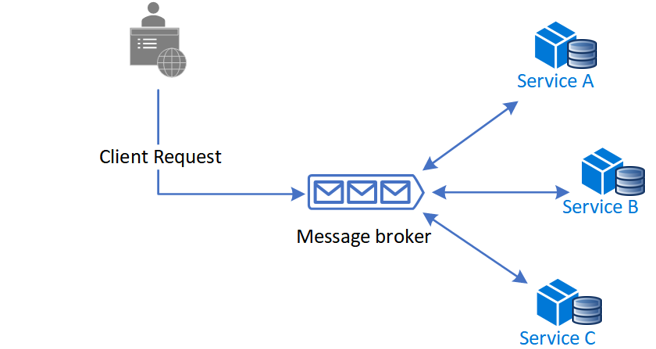
7 Microservice Design Patterns To Use

Saga pattern - This microservice design pattern provides transaction management using a sequence of local transactions. Each operation part of a saga guarantees that all operations are complete, or that the corresponding compensation transactions are run to undo the previously done work. Furthermore, in Saga, a compensating transaction should be retriable and idempotent. The two principles ensure that transactions can be managed without manual intervention. The pattern is also a way of managing data consistency across microservices in distributed transaction instances. ... Event Sourcing - Event sourcing defines an approach to handling data operations driven by a sequence of events, each of which is recorded in an append-only store. The app code sends a series of events that describe every action that happened on the data to the event store. Typically, the event store publishes these events so consumers can be notified and handle them if required. For instance, consumers could initiate tasks that apply the events operations to other systems or do any other action associated needed to complete an operation. 


Enterprises embrace SD-WAN but miss benefits of integrated approach to security

When asked to list the challenges they faced when taking a do-it-yourself (DIY) approach to SD-WAN, respondents cited difficulties related to hiring and retaining a skilled in-house workforce, keeping up with technology developments and the ability to negotiate favourable terms with technology vendors. “Now that SD-WAN has matured and has been widely adopted, the complexity of deployments has grown, challenging enterprises on multiple fronts and compromising their ability to realise the full benefits of the technology,” said James Eibisch, research director, European infrastructure and telecoms, at IDC, commenting on the study. “Enterprises are increasingly reliant on the resources and expertise of a managed service provider to ensure they deploy SD-WAN in a way best suited to their meet their organisations’ objectives. Security approaches like secure access service edge (SASE) that combine the benefits of SD-WAN with zero-trust network access and content filtering features are well poised to dominate the next phase of SD-WAN enhancements as enterprises continue to enable the cloud IT model and a hybrid workforce,” he added.


Quantum computing: Should it be on IT’s strategic roadmap?

Quantum computing is a nascent field. Few companies are planning to purchase quantum computers, but there are companies that are starting to use them for competitive advantage. For this reason alone, quantum computing should have a place on IT strategic roadmaps. Financial services institutions like banks and brokerage houses are beginning to experiment with quantum computing as a way to process large volumes of financial transactions quicker. Quantum computing can also be used for financial risk analysis, as financial services companies are using quantum computing for fraud detection. Quantum computing can be used to determine worldwide supply chain risks such as weather, strikes and political unrest, with an eye toward eliminating supply chain bottlenecks before they happen. Pharmaceutical companies are experimenting with quantum computing as a way to assess the viability of new drug combinations and their beneficial and adverse effects on humans. The goal is to reduce R&D costs and speed new products to market. They are also to customize drugs to each individual patient’s situation.


Big Tech Layoffs: A Flood of Talent vs the Hiring Crisis

There has been a sea change in the prospects certain big tech players anticipated would continue to buoy their sector. Sachin Gupta, CEO of HackerEarth, says many big tech and social media platforms saw explosive growth when the pandemic changed spending patterns and drove moves to work remotely and conduct more activities online. “What the businesses started thinking was this was going to last forever, which is very natural,” he says. It is very difficult to be in the midst of such a wave, he says, and then predict that it would not continue. The reasons behind the recent layoffs and firings differ, of course. Meta’s troubles include not seeing expected traction -- such as its exploration of the metaverse. Meanwhile, Twitter is in the throws of a regime change that has been acrimonious for at least some of the rank and file of the company, which has seen sweeping layoffs, resignations, and outright firings of personnel new CEO Elon Musk no longer wanted to darken the company’s door -- office doors that Musk abruptly ordered to be shut (temporarily) and locked last week even to remaining employees.


Creating an SRE Practice: Why and How

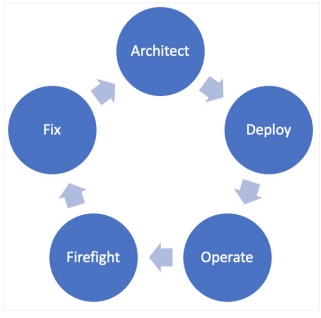
The most important first step is to adopt the SRE philosophies mentioned in the previous section. The one that will likely have the fastest payoff is to strive to eliminate toil. CI/CD can do this very well, so it is a good starting point. If you don't have a robust monitoring or observability system, that should also be a priority so that firefighting for your team is easier. ... You can't boil the ocean. Everyone will not magically become SREs overnight. What you can do is provide resources to your team (some are listed at the end of this article) and set clear expectations and a clear roadmap to how you will go from your current state to your desired state. A good way to start this process is to consider migrating your legacy monitoring to observability. For most organizations, this involves instrumenting their applications to emit metrics, traces, and logs to a centralized system that can use AI to identify root causes and pinpoint issues faster. The recommended approach to instrument applications is using OpenTelemetry, a CNCFsupported open-source project that ensures you retain ownership of your data and that your team learns transferable skills.


The Challenge of Cognitive Load in Platform Engineering

You must never forget that you are building products designed to delight their customers - your product development teams. Anything that prevents developers from smoothly using your platform, whether a flaw in API usability or a gap in documentation, is a threat to the successful realisation of the business value of the platform. With this lens of cognitive load theory, delight becomes a means of qualifying the cognitive burden the platform is removing from the development teams and their work to accomplish their tasks. The main focus of the platform team, as described by Kennedy, is "on providing “developer delight” whilst avoiding technical bloat and not falling into the trap of building a platform that doesn’t meet developer needs and is not adopted." She continues by noting the importance of paved paths, also known as Golden Paths: By offering Golden Paths to developers, platform teams can encourage them to use the services and tools that are preferred by the business. 


Quote for the day:

"Leadership is familiar, but not well understood." -- Gerald Weinberg

Daily Tech Digest - August 26, 2021

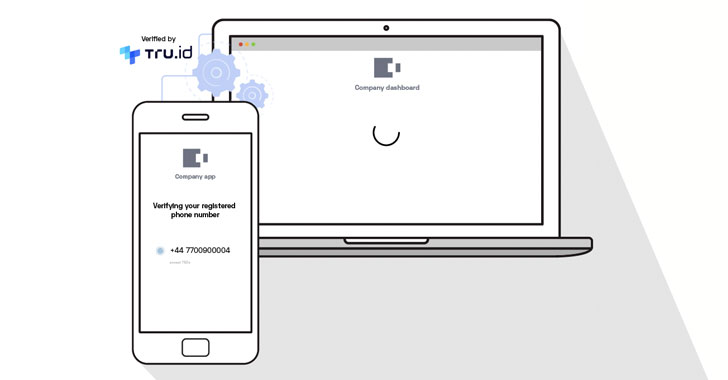
New Passwordless Verification API Uses SIM Security for Zero Trust Remote Access

On the spectrum between passwords and biometrics lies the possession factor – most commonly the mobile phone. That's how SMS OTP and authenticator apps came about, but these come with fraud risk, usability issues, and are no longer the best solution. The simpler, stronger solution to verification has been with us all along – using the strong security of the SIM card that is in every mobile phone. Mobile networks authenticate customers all the time to allow calls and data. The SIM card uses advanced cryptographic security, and is an established form of real-time verification that doesn't need any separate apps or hardware tokens. However, the real magic of SIM-based authentication is that it requires no user action. It's there already. Now, APIs by tru.ID open up SIM-based network authentication for developers to build frictionless, yet secure verification experiences. Any concerns over privacy are alleviated by the fact that tru.ID does not process personally identifiable information between the network and the APIs. It's purely a URL-based lookup.


Cognitive AI meet IoT: A Match Made in Heaven

The progressive trends of Mobile edge computing and Cloudlets are diffusing edge-based intelligence in connected and more controlled enterprise systems. However, within the diversity of pervasive cyber-physical ecosystems, the autonomy of the discrete edge nodes would require gain in operational intelligence with minimum supervision. The emerging innovation in cognitive computational intelligence is revealing a great potential to introduce a contemporary soft computing-based algorithm, architectural rethinking, and progressive system design of the next generation of IoT systems. The cognitive IoT Systems crush the strong partition between the silos and interdependencies of software and hardware subsystems. The flexibility of the edge-native AI component is flexible enough to recognize the changes in the physical environment and dynamically adjust the analytical outcomes in real-time. As a result, the interaction between human-machine or machine to machine becomes more dynamic, interoperable, and contextual to the time and scope of any operation.


How the pandemic delivered the future of corporate cybersecurity faster

At some point it becomes untenable and inefficient to manage all these separate solutions. That point gets closer every day as teams have to deal with the complexities and identity management challenges of remote work. Siloed solutions also mean IT staff must monitor several different consoles and may not connect the dots when incidents are flagged on separate platforms. They also require complex and costly integration projects to get the functionality needed. And even then, they’ll likely still require manual oversight. Moving toward all-in-one security solutions can help replicate the sense of cohesion that once existed in on-premises network security along with new efficiencies. All-in-one solutions can share data across the different components, leading to better and more efficient function. And by adding new modules instead of products when new tools are needs, you eliminate the expense and complications of integration. Companies and individuals have already gotten used to paying for things like data, cloud storage and web hosting based on how much they use them.


OnePercent ransomware group hits companies via IceID banking Trojan

The OnePercent group's ransom note directs victims to a website hosted on the Tor anonymity network where they can see the ransom amount and contact the attackers via a live chat feature. The note also includes a Bitcoin address where the ransom must be paid. If victims do not pay or contact the attackers within one week, the group attempts to contact them via phone calls and emails sent from ProtonMail addresses. "The actors will persistently demand to speak with a victim company’s designated negotiator or otherwise threaten to publish the stolen data," the FBI said. "When a victim company does not respond, the actors send subsequent threats to publish the victim company’s stolen data via the same ProtonMail email address." The extortion has different levels. If the victim does not agree to pay the ransom quickly, the group threatens to release a portion of the data publicly and if the ransom is not paid even after this, the attackers threaten to sell the data to the REvil/Sodinokibi group to be auctioned off. Aside from the REvil connection, OnePercent might have been tied to other ransomware-as-a-service (RaaS) operations in the past too.


Why Agile Transformations Fail In The Corporate Environment

One key reason an Agile transformation will fail is when all the focus is concentrated in just one of the three circles above. It is imperative that we consider these three circles like a Venn diagram and regularly monitor our operating presence. Ideally, we want to operate in all three circles, but it is hard to find balance. Suppose we are working in the mindset and framework circles and trying to build a perfect product with perfect architecture. Spending too much time making things perfect, we are likely to miss the market window, or run into financial difficulties. Similarly, if we operate in the mindset and business agility circles, for example, it could be great for the short term to get a prototype to market quickly, but we will be drowning in technical debt in the long run. Or, imagine that we operate in the framework and business agility circle to build a perfect hotel for our customers — we could miss the fact that they really need a bed-and-breakfast, not a hotel, by not considering the mindset circle. All three perspectives are essential, so to maximize the efficiencies, we need to keep finding the balance.


How the tech sector can provide opportunities and address skills gaps in young people

After all, as far as technology is concerned, none of us are beyond the need for further training and development. The McKinsey Global Institute has recently suggested that as many as 357 million people will need to acquire new skills in the next decade due to the predicted rise of artificial intelligence and automation – skills that few, even in tech-adjacent industries, currently possess. Keeping this kind of projection firmly in mind helps us to remember that the acquisition of new and essential skills is an ongoing process for everyone. As such, employers should not discount those potential candidates who don’t necessarily come from a tech-heavy background. With robust on-the-job training processes and a supportive, inclusive approach towards IT talent, young workers who perhaps missed out on IT fundamentals at school or who chose to focus, for example, on humanities-based university courses can absolutely receive the same attention and prospects as those from a tech-heavy background. A recent government report on aspects of the skills gap has already uncovered an uplifting trend in this direction, with 57% of employers confident that they can find resources to train their employees.


A closer look at two newly announced Intel chips

Intel’s upcoming next-generation Xeon is codenamed Sapphire Rapids and promises a radical new design and gains in performance. One of its key differentiators is its modular SoC design. The chip has multiple tiles that appears to the system as a monolithic CPU and all of the tiles communicate with each other, so every thread has full access to all resources on all tiles. In a way it’s similar to the chiplet design AMD uses in its Epyc processor. By breaking the monolithic chip up into smaller pieces it’s easier to manufacture. In addition to faster/wider cores and interconnects, Sapphire Rapids has a new feature called Last Level Cache (LLC) that features up to 100MB of cache that can be shared across all cores, with up to four memory controllers and eight memory channels of DDR5 memory, next-gen Optane Persistent Memory, and/or High Bandwidth Memory (HBM). Sapphire Rapids also offers Intel Ultra Path Interconnect 2.0 (UPI), a CPU interconnect used for multi-socket communication. UPI 2.0 features four UPI links per processor with 16GT/s of throughput and supports up to eight sockets.


How to encourage healthy conflict: 8 tips from CIOs

We unpack ideas and differences, seeking to understand each other’s points of view and the experiential lens through which the issue(s) are being evaluated, and then work collaboratively in the spirit of best serving our customers (external and internal) to reach the best decision and path to resolution. In the end, and most importantly, we are a team; so, when we work through the conflict and land on a course of action or decision, we all align, rally, and go into full-on execution mode as one team, with one agenda. Recognize that each team member brings a unique set of experiences, ideas, and beliefs to every conversation and decision. As a leader, you need to be acutely aware of when and how team members engage in conflict and the behaviors that precede and follow such discussions. Encourage team members to participate and share their ideas; candidly and directly elicit their honest and important views on the matters, even when the topics may be challenging and the conflict intense, and especially if the team member may be more quiet or prone to avoid the heat of the debate. 


The Office Of Strategy In the Age Of Agility

Agile methods such as scrum, kanban and lean development have gone beyond the realm of product design and development to other organizational functions, such as customer engagement, employee motivation, and execution amid uncertainty. From the earliest Agile Manifesto, what we know are the following principles: 1) people over process and tools, 2) working prototypes over excessive documentation, 3) respond to change rather than follow a plan, and 4) customer collaboration over rigid contracts. However, in the realm of strategy, agile is often confused with adhocism, and that it would lead to more chaos than value. But as Jeff Bezos instructs us, when making strategy, one must focus on the long term, the things that will remain largely constant over time. In the case of Amazon, the strategy is three-fold: customer obsession, invention, and being patient, and that for customers what matters is greater speed, wider selection, and lower cost. With so few strategic priorities, how does the company manage to remain relevant? 


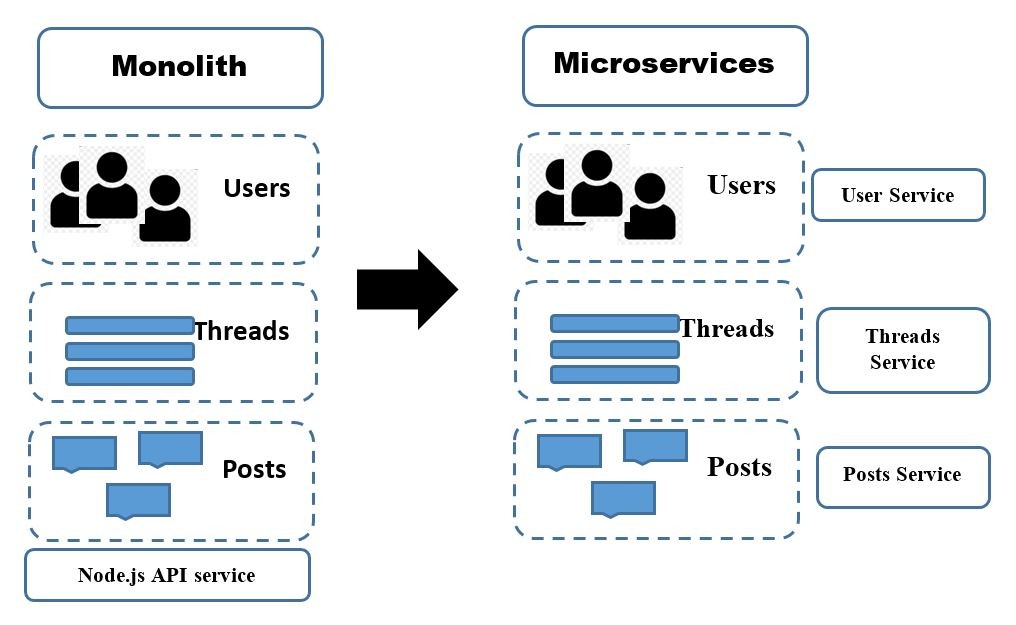
Microservice Architecture and Agile Teams

As services can be worked on in parallel, a team can bring more developers to bear on a problem without them getting into each other’s actions. It can also be simpler for those developers to understand their part of the system, as they can focus their concern on just one part of it. Process isolation also causes it feasible for us to alter the technology choices team makes, perhaps mixing different programming languages, programming styles, deployment platforms, or databases to discover the perfect blend. Microservice architecture does allow the team more concrete boundaries in a system around which ownership lines can be marked, allowing the team much more flexibility regarding how you reduce this problem. The microservice architecture enables each service to be developed independently by a team that is concentrated on that service. As a result, it produces continuous deployment possible for complex applications. The microservice architecture enables each service to be scaled individually. It has been observed when a team or organization adopts Microservice architecture the legitimate gain is the built-in agility an organization gets.


Quote for the day:

"When your values are clear to you, making decisions becomes easier." -- Roy E. Disney

Daily Tech Digest - March 19, 2021

Are A Conscious Artificial Intelligence & Smart Robots Possible?

It would be like teaching a kid by showing a picture of a horse and then a rhino, and then telling him a unicorn is something between these two, so he could mostly identify it without having seen an actual picture before. So the machine would be programmed such that it does not erase the earlier data also known as “catastrophic forgetting” but like the brain have the capability of ”continual learning” by selective activation of cells & overlap networks, and rather use the information to analyse the next dataset or “transfer learning”. Moreover, efforts are underway to teach the machine by just one or two examples, and not the millions of correct examples needed earlier which made the data computation very humungous and actually limited the capability of the machine. Human beings can multi-task effortlessly – can switch efficiently between frying an egg, working in an office, playing badminton and writing music, without compromising each of these activities individually. The UChicago researchers have developed “context-dependent gating” and “synaptic stabilization”, entailing activation of random-only 20 percent of a neural network for each new task, a single node may be involved in dozens of operations; thereby learning as many as 500 tasks with only a small decrease in accuracy.


New phishing campaign targets taxpayer credentials

The scam could result in steep financial losses for taxpayers. Last year alone, the IRS identified more than $2.3 billion in tax fraud schemes. The new infection process is designed to evade antivirus tools and tricks targets into installing the malware via a tax-themed Word Document containing a malicious macro that downloads an OpenVPN client on the targeted machine. The malware dropper establishes a connection to the legitimate cloud service “imgur” and downloads the NetWire or Remcos payloads by way of a technique called steganography, where the malicious code is hidden within an innocuous looking jpeg image file. ... The malware includes a variety of functions including the remote execution of shell commands on the infected machine, browser credential and history theft, the downloading and execution of additional malware payloads, screen captures and keylogging, as well as file and system management capabilities. Both NetWire and Remcos are commercial RATs that are available for online for as little as $10 per month, and both include following the Malware-as-a-Service (MaaS) model, offering their customers subscription-based services with choice of licensing plans, 24/7 customer support and periodic software updates.


Digital transformation: 4 strategy questions to ask

Internal buy-in is the most important aspect of any digital transformation and adoption strategy, and the easiest way to help promote that is to identify internal champions. Clearly defining the team responsible for the implementation of a new tool or process will help give an incentive for that team to ensure adoption is prioritized throughout the organization. It will also help clarify where employees can direct questions. ... Training teams on new processes and tools is easier said than done. It’s important to find a better way to train, not just to ensure that digital transformation is successful and to make sure training really sinks in, but also to make sure your employees feel supported. Building effective training programs is a great way to show your employees that you’re invested in their success and their careers more broadly – helping to increase retention. ... Finally, be sure to set measurable, attainable goals around your digital transformation strategy. These may look vastly different from tool to tool or organization to organization, but adoption will increase if every user understands how transformation efforts will be evaluated.


5 Ways Machine Learning Is Revolutionizing the Healthcare Industry

Machine learning established new methods in drug discovery, such as precision medicine and next-generation sequencing, which can ensure a drug has the intended effect on patients. With the implementation of machine learning techniques, medical experts can develop algorithms to treat disease progression and design specific treatments for each patient, like those with Type 2 diabetes. ... Machine learning aids medical experts in determining the risk for each patient, depending on their symptoms, past medical records, and family history. ML streamlines the process of finding treatments for evolving illnesses, as well as helping researchers to track possible pandemics and to understand better why some diseases are more prevalent in specific cultures and demographics. ... Modern hospitals are high-tech environments run by advanced machines and the staff who are trained. The hospitals are increasingly shifting towards automation, to a future where diagnoses can be made accurately. Machine learning can accelerate disease diagnostics and make the risk of misdiagnosis less likely.


Apps that help parents protect kids from cybercrime may be unsafe too

Parental control apps need many permissions to access particular systems and functions on devices. 80% of parental control apps request access to location, contacts and storage. While these permissions help the apps carry out detailed monitoring, some of them may not be necessary for the app to function as described. For instance, several apps designed to monitor children’s online activity ask for permissions such as “read calendar”, “read contacts” and “record audio” — none of which are justified in the app description or the privacy policy. Many are considered “dangerous permissions”, which means they are used to access information that could affect the user’s privacy and make their device more vulnerable to attack. For example, Boomerang requests more than 91 permissions, 16 of which are considered “dangerous”. The permission “access fine location” for instance, allows the app to access the precise geographic location of the user. The “read phone state” allows the app to know your phone number, network information and status of outgoing calls. It’s not just the apps that get that information. Many of these apps embed data hungry third-party software development kits (SDKs). SDKs are a set of software tools and programs used by developers to save them from tedious coding.


Company uses cognitive neuroscience to help train police officers

The brain has two systems, what you're consciously aware of, and then the non-conscious part, where almost everything happens. That's where your drives and biases and urges and impulses all come up from this, what we call the backchannel of the brain, the non-conscious part of the brain. Most of our actions and behaviors are initiated there a lot of times without our awareness. When we are thinking through something and thinking through answers or trying to problem-solve, we can direct our conscious brain to kind of override some of those impulses and urges and really take control of what we're doing and what we're thinking and how we're behaving. But when we're under stress, our brain is built for the non-conscious brain to take over, to help us with survival, or to help us get out of a scrape, something like that. With police officers, when they've been trained how to respond in certain ways to help people out, to de-escalate events, things like that, when stress starts to rise and get higher, then their non-conscious brain really starts to take over the processing. And that's where even really good officers can do things they later regret is because the non-conscious brain and those urges and impulses to say something or do something happens, and they might regret that later.


How 4 cities are modernizing their IT infrastructure through the cloud

The city's cybersecurity team leads threat management and operates a 24-hour security operations center. The team works with more than 100 city agencies and offices to ensure systems are built and operated in a secure manner to make sure public assistance and healthcare are not compromised. NYC Cyber Command also manages an NYC Secure app that alerts users to unsecure Wi-Fi networks, unsafe Android apps and system tampering. The team uses a cloud infrastructure to find and mitigate threats. The Cyber Command uses a variety of Google cloud services including Cloud Storage, Computer Storage, Kubernetes Engine and Workspace. The team uses BigQuery to analyze batch and streaming data. When the pandemic started, DC Water already had 90% of the organization's systems on the cloud, according to a blog post on Microsoft. The final step was moving in-person operations and services. The organization worked with ESRI to move applications, operational processes and customer requests to Azure. Goals for this work included improving data security and replacing paper processes with digital ones. Durmus Cesur, the manager of work and asset management for DC Water, told Microsoft in the blog post that Azure was the best solution to provide continuous availability and scalability.


Ransom Payments Have Nearly Tripled

A new report from Palo Alto Networks -- which uses data from ransomware investigations, data-leak sites, and the Dark Web — found 337 victims in 56 industries, with manufacturing, healthcare, and construction companies suffering 39% of ransomware attacks in 2020. In addition, ransom demands skyrocketed during the year, doubling both the highest ransom demand — to $30 million—and the highest-known paid ransom, $10 million. The average victim paid more than $312,000, almost a third of the average demand. ... The Palo Alto report combines two sources of the threat intelligence: 252 incidents investigated by the company's data-breach response service over the past two years, and a survey of public leak sites and the Dark Web. Almost two thirds of the incident response cases investigated by the company came in one of four industries in 2020: healthcare, manufacturing, information technology, or construction. ... "As organizations shifted to remote workforces due to the COVID-19 pandemic, ransomware operators adapted their tactics accordingly, including the use of malicious emails containing pandemic-based subjects and even malicious mobile apps claiming to offer information about the virus," the company stated.


Importance of Teaching Data Science in CS Programs

Besides being a lucrative career, data science is among the careers of tomorrow. New innovations in the industrial sectors are highly reliant on data. Technology is becoming dynamic and more data is generated as more people access the internet. With huge amounts of data, industries rely on data scientists to make smart business decisions. In the current digital world, data literacy is very important. People should learn how they can generate meaningful insights from raw data. Data is an untapped potential that can be used to develop various sectors. Fortunately, with the inception of machine learning technologies, organizations can predict and classify information accurately and intelligently. Data science, machine learning, and other similar technologies are subsets of artificial intelligence, which are the driving force behind future products such as self-driving cars and autonomous robots. Such developments are not fiction anymore. The emergence of reinforcement learning and natural language processing has also contributed to these advancements. ... The importance and urgency of data science in the 21st Century cannot be ignored. From providing great insights, statistics, aiding decision-making to hire suitable candidates, data science is overly valuable.


Five Steps To Thinking Like A Software Company

Leading companies feature software stacks that are modular, facilitating rapid innovation. Their developers frequently build in-house software products or platforms by leveraging free, but valuable, open-source software, as well as licensed components for routine functionality. This allows them to create applications faster. One executive stressed the importance of designing components with change in mind, because reconfiguring is always better than rewriting code. Another executive told me that every line of code within this decentralized architecture has a clear owner so that there is specific responsibility for each and every software component. To be clear, commercial solutions have an important role to play and should be a part of the software stack. But it’s the own-account software that matters most. ... In contrast, firms that lead with code typically begin by aiming to solve a focused business problem. They build and iterate on new features and products. Executives at these firms told me that until you try something out and see how your customers, suppliers, or employees react, and whether your business improves as a result, you can’t be sure of what to build.


Quote for the day:

"If you don't start somewhere, you're gonna go nowhere." -- Bob Marley

Daily Tech Digest - December 27, 2019

Exposed databases are as bad as data breaches, and they're not going anywhere


If your data is exposed in an unsecured database, experts say you have to treat the situation the same way you would if the data had been stolen. "You need to engage proactively in minimizing your risk," said Eva Velasquez, president of the Identity Theft Resource Center. Medical service provider Tu Ora Compass Health said the same thing to nearly 1 million patients when it revealed that its poorly configured website had exposed patient health insurance data. Patients should "assume the worst" and act as though hackers had accessed the data, the company said. What's the worst that can happen? Stolen information makes it easier for identity thieves to pretend to be you. When combined with what you share on social media, for example, your medical record number could allow someone else to use your health insurance. The Identity Theft Resource Center hosts a service called Breach Clarity that helps you decide what steps to take after your data is compromised. The advice depends on what kind of information was involved. If your log-in credentials are exposed, you'll want to reset your passwords. If it's your Social Security number, you'll want to watch your credit report for signs that someone's opening up new lines of credit in your name.


Introduction to ELENA Programming Language

Methods in ELENA are similar to methods in C# and C++, where they are called "member functions". Methods may take arguments and always return a result (if no result provided "self" reference is returned). The method body is a sequence of executable statements. Methods are invoked from expression, just as in other languages. There is an important distinction between "methods" and "messages". A method is a body of code while a message is something that is sent. A method is similar to a function. in this analogy, sending a message is similar to calling a function. An expression which invokes a method is called a "message sending expression". ELENA terminology makes a clear distinction between "message" and "method". A message-sending expression will send a message to the object. How the object responds to the message depends on the class of the object. Objects of differents classes will respond to the same message differently, since they will invoke different methods. Generic methods may accept any message with the specified signature.


Amazon now allows developers to combine tools such as Amazon QuickSight, Aurora, and Athena with SQL queries and thus access machine learning models more easily. In other words, developers can now access a wider variety of underlying data without any additional coding, which makes the development process faster and easier. Amazon’s Aurora is a MySQL-compatible database that automatically pulls the data into the application to run any machine learning model the developer assigns it. Then, developers can use the company’s serverless system known as Athena to obtain additional sets of data more easily. Finally, the last piece of the puzzle is QuickSight, Amazon’s tool used for creating visualizations based on available data. The combination of these three tools will provide a far more efficient approach to the development of machine learning models. During the announcement, Wood also mentioned a lead-scoring model that developers can use to pick the most likely sales targets to convert.


istock-802780432.jpg
Ranking the obstacles involved in firewall management, 67% of those surveyed pointed to the initial deployment and tuning measures, 67% cited the process of implementing changes, and 61% referred to the procedure for verifying changes. Cost is another hurdle with firewalls. Depending on the size of the organization and the type of firewall, a single unit can cost anywhere from hundreds to thousands to tens of thousands of dollars and up. Some 68% of the respondents said they have a hard time receiving the necessary initial budget to purchase firewalls, while 66% bump into difficulty getting the funding to operate and maintain them. Tweaking the rules on a firewall is yet another taxing task. Changes to code, applications, and processes can occur fast and furiously, requiring frequent updates to firewall rules. But a single firewall update can take one to two weeks, according to the survey. And such changes can sometimes be trial and error. More than two-thirds of the respondents cited the difficulty of testing changes to firewall rules before deploying them. The lack of a proper testing platform can lead to misconfigured rules that break applications.


Hugh Owen, Executive Vice President, Worldwide Education at MicroStrategy asserts "Enterprise organizations will need to focus their attention not just on recruiting efforts for top analytics talent, but also on education, reskilling, and upskilling for current employees as the need for data-driven decision making increases—and the shortage of talent grows." Skills shortages show up everywhere, especially in AI. John LaRocca, Managing Director for Europe/NA Operations at Fractal Analytics, comments that "The demand for AI solutions will continue to outpace the availability of AI talent, and businesses will adapt by enabling more applications to be developed by non-AI professionals, resulting in the socialization of the process."  In that same vein, noted industry expert Marcus Borba, at Borba Consulting, remarks, in a report from MicroStrategy, that "the demand for development in machine learning has increased exponentially. This rapid growth of machine learning solutions has created a demand for ready-to-use machine learning models that can be used easily and without expert knowledge."


Google Publishes Its BeyondProd Cloud-native Security Model

In zero-trust networking, protection of the network at its outer perimeter remains essential. However, going from there to full zero-trust networking requires a number of additional provisions. This is by no means easy, given the lack of standard ways to do it, adds Brunton-Spall: You can understand [it] from people who've done this, custom-built it. If you want to custom build your own, you should follow the same things they do. Go to conferences, learn from people who do it. Filling this gap, Google's white-paper sets a number of fundamental principles which complement the basic idea of no trust between services. Those include running code of known provenance on trusted machines, creating "choke points" to enforce security policies across services, defining a standard way to roll out changes, and isolating workloads. Most importantly, These controls mean that containers and the microservices running inside them can be deployed, communicate with one another, and run next to each other, securely, without burdening individual microservice developers with the security and implementation details of the underlying infra structure.


apples oranges slices mixture puzzle balance opposites fruit  savatore gersace flickr
What if we’re leading change all wrong? The book “Make it Stick: The Science of Successful Learning,” by Peter C. Brown, Henry L. Roediger III and Mark A. McDaniel highlights stories and techniques based on a decade of collaboration among eleven cognitive psychologists. The authors claim that we’re doing it all wrong. For example, we attempt to solve the problem before learning the techniques to do so successfully. Using the right techniques is one of the concepts that the authors suggest makes learning stickier. Rolling out data-management initiatives is complex and usually involves a cross-functional maze of communications, processes, technologies, and players. Our usual approach is to push information onto our business partners. Why? Well, of course, we know best. What if we changed that approach? This would be uncomfortable, but we are talking about getting other people to change, so maybe we should start with ourselves. Business relationship managers stimulate, surface, and shape demand. They’re evangelists for IT and building organizational convergence to deliver greater value. There’s one primary method to accomplish this: collaboration.


Setting Management Expectations in Machine Learning

Business leaders often forget that machine learning algorithms are not a panacea that can be thrust into a given use case and expected to magically deliver value on their own. Algorithms rely on large, accurate, datasets to train and generate predictions. Data science is just the end result of a long process of data collection, cleansing, and tagging that requires significant investment. That’s why it’s important to have a robust Data Governance strategy in place at your business. Unfortunately, management often forgets this. Having failed to make the necessary investments in Data Governance, they nonetheless expect their data scientists to “figure it out.” Even where management has made the necessary investments in Data Governance and you have access to a large, healthy, internal dataset, there are certain functions you will still have difficulty performing. These most prominently include anything that requires you to leverage customer data. The frequency of widespread breaches and scandals involving the misuse of data, along with the accompanying rise in government regulation, has made it more difficult than ever to leverage customer data within businesses’ ML systems.


"As more states follow California's lead and push forward with new privacy laws, we'll likely see increased pressure on the federal government to take a more proactive role in the privacy sphere," said Mary Race, a privacy attorney in California. The Senate Commerce Committee held a hearing in December to discuss two potential frameworks, both of which seek to set a federal standard and designate regulators to enforce the law. Lawmakers expressed bipartisan support for privacy laws though no legislation has moved forward. Still, several key aspects of a prospective law were up for debate at the hearing. The Republican framework, submitted by Sen. Roger Wicker of Mississippi, would preempt state data privacy laws, and would limit enforcement to the FTC. Sen. Maria Cantwell of Washington, who submitted the Democratic bill, has said she's considering letting consumers directly sue companies, and would not supersede state laws. While federal law supersedes state law in general, many federal laws leave room for states to enact tougher requirements on top of the baseline set by US legislators.


How Data Subject Requests are at the heart of protecting privacy

Not only has data proliferated, but it’s also mutated into derivative forms. Customer data is often collected across multiple channels without being linked to a master identifier, and the definition of what is considered PII is continuing to change. The other reason the DSR search process is difficult is that many organizations still rely on questionnaires and spreadsheets for data discovery. These manual processes are inefficient at best, and incredibly inaccurate at worst. Consider that a single bank transaction might be replicated across 100 systems. Successfully fulfilling a DSR for that customer could require multiple people to manually search all those systems, and the accuracy and completeness may be questionable. Not only would the individual’s privacy be compromised, but the bank would also have to defend the results with regulators. In an age of big data and automation, relying on manual processes to fulfill privacy laws seems unbelievably arcane, if not impossible given the sheer volume of data companies have. Fortunately, many organizations are beginning to realize the complexity and importance of the DSR process and are looking to automate it.


Quote for the day:


"People not only notice how you treat them, they also notice how you treat others." -- Gary L. Graybill