Showing posts with label intelligent automation. Show all posts

Daily Tech Digest - April 19, 2026


Quote for the day:

“In the end, it is important to remember that we cannot become what we need to be by remaining what we are.” -- Max De Pree


🎧 Listen to this digest on YouTube Music

▶ Play Audio Digest

Duration: 20 mins • Perfect for listening on the go.


Beyond the degree: What education must become in the age of AI

The Firstpost opinion piece titled "Beyond degree: Education in the age of AI" explores the fundamental disruption of traditional academic structures caused by rapid artificial intelligence advancements. It argues that the era where a degree served as a definitive lifelong credential is coming to an end, replaced by a pressing need for continuous, skill-based learning. As AI increasingly automates technical and administrative tasks, the article posits that the uniquely human advantage now lies in higher-order cognitive and ethical functions. Specifically, education must evolve to prioritize the ability to formulate the right questions, critically evaluate AI-generated outputs, and maintain firm personal accountability for decisions that impact society. Rather than focusing on rote memorization—which has been rendered redundant by ubiquitous digital tools—future curricula should nurture curiosity, empathy, and cross-disciplinary thinking. The author highlights that while AI democratizes knowledge through personalized learning, it also necessitates a profound shift in how we value intelligence, moving away from rigid institutional metrics toward adaptable, lifelong expertise. Ultimately, the piece concludes that the most successful individuals in an automated economy will be those who combine technological proficiency with the critical judgment and human-centric values required to guide AI responsibly. By fostering these unique human traits, the educational system can better prepare students for a complex, technology-driven future.
In her article, Angela Zhao addresses a critical architectural flaw in modern AI agent infrastructure: the lack of "Decision Coherence." Current systems typically fragment critical data across relational databases, feature stores, and vector databases, with each component operating without a shared transactional boundary. This fragmentation creates a "seam problem" where agents retrieve inconsistent, disparate views of reality—such as current account balances paired with stale behavioral signals or outdated semantic embeddings. Consequently, agents may make incorrect, irreversible decisions, particularly in high-concurrency environments like financial transaction approvals or resource allocation. To bridge this gap, Zhao introduces the concept of the "Context Lake," a system class specifically designed to enforce Decision Coherence. Unlike traditional decoupled stacks, a Context Lake integrates episodic events, semantic transformations, and procedural rules within a single transactional scope. This ensures that every decision-making context is internally consistent, semantically enriched, and strictly bounded in freshness. By moving semantic computations—like embedding generation—inside the system boundary, the Context Lake eliminates the asynchronous delays that plague existing architectures. Based on research by Xiaowei Jiang, this emerging infrastructure layer is essential for production-grade AI agents that manage fast-changing, shared states and require absolute correctness to avoid costly operational failures or system-wide logic errors.


The Algorithmic Arms Race: Navigating the Age of Autonomous Attacks

In the article "The Algorithmic Arms Race," Kannan Subbiah explores the paradigm shift from human-led cyberattacks to the rise of autonomous Cyber Reasoning Systems. This transition marks an evolution from traditional automated scripts to cognitive AI agents capable of independent reasoning, real-time adaptation, and executing the entire cyber kill chain at machine speed. Subbiah details the anatomy of these autonomous attacks, highlighting how they compress reconnaissance, weaponization, and lateral movement into rapid, self-directed sequences that outpace human intervention. Through case studies like Operation Cyber Guardian and the Shai-Hulud supply chain siege, the author illustrates a future where malware independently manages its own obfuscation and identifies obscure vulnerabilities. To counter these sophisticated threats, the article advocates for a "fighting fire with fire" strategy, urging organizations to deploy Autonomous Security Operations Centers, Moving Target Defense, and hyper-segmented Zero Trust architectures. Furthermore, Subbiah emphasizes the necessity of integrated risk analytics, mandatory Software Bill of Materials, and adversarial red teaming where AI systems challenge one another. Ultimately, the narrative stresses that in an era of machine-speed conflict, human-centric defense models are no longer sufficient; instead, organizations must embrace autonomous, resilient infrastructures while maintaining human oversight as a final ethical and operational kill switch.


Workplace stress in 2026 is still worse than before the pandemic

The 2026 Workplace Stress Report from Help Net Security highlights a concerning trend: employee stress remains significantly higher than pre-pandemic levels, with global engagement hitting a five-year low. According to Gallup’s latest findings, roughly 40% of workers worldwide experience daily stress, while negative emotions like anger and sadness persist at elevated rates. This lack of engagement is not just a cultural issue but a massive economic burden, costing the global economy approximately $10 trillion in lost productivity, or 9% of global GDP. The report indicates that managers and leaders are bearing the brunt of this emotional weight, reporting higher levels of loneliness and stress compared to individual contributors. Demographic disparities are also evident, as women and workers under the age of 35 report higher stress levels than their peers. Geographically, the United States and Canada lead the world in daily stress at 50%. Interestingly, the study finds that work location plays a role, with hybrid and remote-capable employees experiencing more stress than those in fully remote or strictly on-site roles. Ultimately, the data suggests that organizational success is deeply tied to emotional wellbeing, as engaged leaders are far more likely to thrive and mitigate the negative impacts of workplace pressure.


Most enterprises can't stop stage-three AI agent threats, VentureBeat survey finds

According to a recent VentureBeat survey, a significant security gap exists as enterprises struggle to defend against "stage-three" AI agent threats. The survey identifies a three-stage maturity model: Stage 1 focuses on observation, Stage 2 on enforcement via Identity and Access Management (IAM), and Stage 3 on isolation through sandboxed execution. While monitoring investment has surged to 45% of security budgets, most organizations remain trapped at the observation stage, leaving them vulnerable to sophisticated agentic failures where traditional guardrails prove insufficient. Data from Gravitee and the Cloud Security Alliance underscores this readiness gap, noting that only 21.9% of teams treat AI agents as distinct identity-bearing entities, while 45.6% still rely on shared API keys. This structural weakness allows for rapid lateral movement and unauthorized actions, which 72% of CISOs identify as their top priority. Despite the high demand for robust permissioning, current enterprise infrastructure often lacks the necessary runtime enforcement to contain a "blast radius" when agents go rogue. The survey highlights that while agents are already operating with privileged access to siloed data, security teams are lagging behind in providing the isolation required to stop the next wave of autonomous exploits and supply-chain breaches.


Empty Attestations: OT Lacks the Tools for Cryptographic Readiness

Operational technology (OT) systems face a critical security gap as regulators increasingly demand attestations of post-quantum cryptographic readiness despite a severe lack of specialized auditing tools. Unlike IT environments, which prioritize confidentiality and can be regularly updated, OT infrastructure focuses primarily on availability and often relies on decades-old legacy hardware with minimal processing power. This makes the implementation of modern cryptographic standards exceptionally difficult, as many devices lack the memory to execute post-quantum algorithms or have encryption hard-coded into immutable firmware. Consequently, asset owners are often forced to treat security compliance as a box-ticking exercise, producing paperwork that provides a false sense of assurance rather than genuine protection. This vulnerability is compounded by "harvest now, decrypt later" tactics and the risk of stolen firmware signing keys, which allow adversaries to maintain long-term access and potentially push malicious updates. Without OT-specific frameworks and instrumentation, these systems remain exposed to sophisticated threats like Volt Typhoon. To truly secure critical infrastructure, industry leaders and regulators must acknowledge that current IT-centric assessment models are insufficient, requiring a shift toward developing practical tools that account for the unique operational constraints and long life cycles inherent in industrial environments.


Business Risk: How It’s Changing In The Digital Economy

The digital economy has fundamentally transformed the landscape of business risk, shifting focus from traditional financial and operational concerns toward complex, technology-driven vulnerabilities. According to experts from the Forbes Business Council, risk is no longer a separate "balance sheet" issue but is now embedded in every design choice and organizational decision. Key emerging threats include data vulnerability, algorithmic bias, and cyber risks that extend across entire supply chains via sophisticated social engineering. Notably, the rapid adoption of artificial intelligence introduces "invisible" risks, such as business models quietly becoming obsolete or conflicting AI agents causing critical system outages. Furthermore, companies face unprecedented challenges regarding digital visibility and public perception; in an oversaturated market, being unseen or suffering from viral reputation damage can be as detrimental as direct financial loss. Managing these dynamic parameters requires a shift from reactive detection to proactive, upstream governance and a focus on organizational adaptability. Ultimately, the modern definition of risk centers on a firm's ability to match its cognitive capabilities with the increasing speed and non-linearity of the digital environment. To survive, leaders must move beyond standard business formulas, integrating real-time intelligence and human-centered context to navigate the uncertainty inherent in a data-driven world.


Building your cryptographic inventory: A customer strategy for cryptographic posture management

As post-quantum cryptography approaches, Microsoft emphasizes that the primary challenge for organizations is not selecting new algorithms, but discovering existing cryptographic assets. This Microsoft Security blog post outlines a strategy for building a cryptographic inventory as the foundation of Cryptography Posture Management (CPM). A cryptographic inventory is defined as a dynamic catalog encompassing certificates, keys, protocols, and libraries used across an enterprise. To manage these effectively, Microsoft proposes a continuous six-stage lifecycle: discovery, normalization, risk assessment, prioritization, remediation, and ongoing monitoring. This approach spans four critical domains—code, network, runtime, and storage—ensuring visibility into everything from source code primitives to active network sessions. Organizations can leverage existing tools like GitHub Advanced Security for code analysis, Microsoft Defender for Endpoint for runtime signals, and Azure Key Vault for centralized key management to simplify this process. Rather than a one-time project, CPM requires clear ownership and documented policy baselines to maintain security hygiene and achieve "crypto agility." By establishing these practices now, businesses can proactively identify vulnerabilities, comply with emerging global regulations, and ensure a resilient transition to a quantum-safe future. Through strategic integration of Microsoft capabilities and partner solutions, teams can transform complex cryptographic landscapes into manageable, risk-informed systems.


The Rise of Intelligent Automation: How Technology Is Redefining Work and Efficiency

The rise of intelligent automation (IA) is fundamentally reshaping the financial landscape by blending artificial intelligence with robotic process automation to create more agile, efficient, and strategic work environments. According to Global Banking & Finance Review, this shift is not merely about replacing manual labor but about redefining the nature of work itself. By automating repetitive and high-volume tasks—such as data entry, reconciliation, and compliance checks—organizations can significantly reduce human error and operational costs while accelerating processing speeds. Beyond mere efficiency, IA empowers financial institutions to leverage advanced analytics for real-time decision-making and hyper-personalized customer experiences, such as tailored loan products and instant virtual assistance. This technological evolution allows human professionals to pivot from mundane administrative roles toward high-value activities like strategic planning and creative problem-solving. Furthermore, IA enhances risk management through proactive fraud detection and seamless regulatory adherence, providing a robust framework for digital transformation. As the industry moves toward autonomous financial operations, embracing these intelligent systems becomes a competitive necessity. Ultimately, the integration of intelligent automation fosters a culture of innovation, ensuring that financial services remain resilient, secure, and customer-centric in an increasingly complex and data-driven global market.


World targets central IDV, AI agent management role with selfie biometrics

World has unveiled a major strategic expansion aimed at becoming the primary identity verification (IDV) layer for an economy increasingly dominated by agentic AI. Central to this update is the introduction of "Selfie Check," a face biometric and liveness detection service that provides a lower-assurance alternative to its high-level iris-based verification. This shift positions World as a versatile IDV provider, allowing apps to pay for proof of personhood to combat bots and deepfakes. Key features include the "Deep Face" tool, which integrates with platforms like Zoom to offer hardware-backed "root of trust" for real-time presence verification. Beyond individual authentication, the new World ID app introduces AI agent management and delegation tools, supported by partnerships with industry leaders such as AWS, Okta, and Shopify. These updates represent a comprehensive reengineering of the World stack, incorporating privacy-enhancing technologies like multi-party entropy and key rotation to keep user data unlinkable. By diversifying its verification methods and focusing on the governance of autonomous digital agents, World seeks to monetize its infrastructure as a global trust anchor. This evolution reflects a broader market push to align biometric credentials with the evolving demands of AI-driven interactions, securing human identity in an increasingly automated world.

Daily Tech Digest - January 21, 2026


Quote for the day:

"People ask the difference between a leader and a boss. The leader works in the open, and the boss in covert." -- Theodore Roosevelt


Why the future of security starts with who, not where

Traditional security assumed one thing: “If someone is inside the network, they can be trusted.” That assumption worked when offices were closed environments and systems lived behind a single controlled gateway. But as Microsoft highlights in its Digital Defense Report, attackers have moved almost entirely toward identity-based attacks because stealing credentials offers far more access than exploiting firewalls. In other words, attackers stopped trying to break in. They simply started logging in. ... Zero trust isn’t about paranoia. It’s about verification. Never trust, always verify only works if identity sits at the center of every access decision. That’s why CISA’s zero trust maturity model outlines identity as the foundation on which all other zero trust pillars rest — including network segmentation, data security, device posture and automation. ... When identity becomes the perimeter, it can’t be an afterthought. It needs to be treated like core infrastructure. ... Organizations that invest in strong identity foundations won’t just improve security — they’ll improve operations, compliance, resilience and trust. Because when identity is solid, everything else becomes clearer: who can access what, who is responsible for what and where risk actually lives. The companies that struggle will be the ones trying to secure a world that no longer exists — a perimeter that disappeared years ago.


Designing Consent Under India's DPDP Act: Why UX Is Now A Legal Compliance

The request for consent must be either accompanied by or preceded by a notice. The notice must specifically contain three things: personal data and purpose for which it is being collected; the manner in which he or she may withdraw consent or make grievance; and the manner in which the complaint may be made to the board. ... “Free” consent also requires interfaces to avoid deceptive nudges or coercive UI design. Consider a consent banner implemented with a large “Accept All” button as the primary call-to-action button while the “Reject” option is kept hidden behind a secondary link that opens multiple additional screens. This creates an asymmetric interaction cost where acceptance requires a single click and refusal demands several steps. If consent is obtained through such interface, it cannot be regarded as voluntary or valid. ... A defensible consent record must capture the full interaction such as which notice version was shown, what purposes were disclosed, language of the notice and the action of the user (click, toggle, checkbox). The standard operational logs might be disposed after 30 or 90 days but the consent logs cannot follow the same cycle. Section 6(10) implicitly states that consent records must be retained as long as the data is being processed for the purposes shown in the notice. If the personal data was collected in 2024 and is still being processed in 2028, the Fiduciary must produce the 2024 consent logs as evidence.


The AI Skills Gap Is Not What Companies Think It Is

Employers often say they cannot find enough AI engineers or people with deep model expertise to keep pace with AI adoption. We can see that in job descriptions. Many blend responsibilities across model development, data engineering, analytics, and production deployment into a single role. These positions are meant to accelerate progress by reducing handoffs and simplifying ownership. And in an ideal world, the workforce would be ready for this. ... So when companies say they are struggling to fill the AI skills gap, what they are often missing is not raw technical ability. They are missing people who can operate inside imperfect environments and still move AI work forward. Most organizations do not need more model builders. ... For professionals trying to position themselves, the signal is similar. Career advantage increasingly comes from showing end-to-end exposure, not mastery of every AI tool. Experience with data pipelines, deployment constraints, and being able to monitor systems matter. Being good at stakeholder communication remains an important skill. The AI skills gap is not a shortage of talent. It is a shortage of alignment between what companies need and what they are actually hiring for. It’s also an opportunity for companies to understand what it really means, and finally close the gap. Professionals can also capitalize on this opportunity by demonstrating end-to-end, applied AI experience.


DevOps Didn’t Fail — We Just Finally Gave it the Tools it Deserved

Ask an Ops person what DevOps success looks like, and you’ll hear something very close to what Charity is advocating: Developers who care deeply about reliability, performance, and behavior in production. Ask security teams and you’ll get a different answer. For them, success is when everyone shares responsibility for security, when “shift left” actually shifts something besides PowerPoint slides. Ask developers, and many will tell you DevOps succeeded when it removed friction. When it let them automate the non-coding work so they could, you know, actually write code. Platform engineers will talk about internal developer platforms, golden paths, and guardrails that let teams move faster without blowing themselves up. SREs, data scientists, and release engineers all bring their own definitions to the table. That’s not a bug in DevOps. That’s the thing. DevOps has always been slippery. It resists clean definitions. It refuses to sit still long enough for a standards body to nail it down. At its core, DevOps was never about a single outcome. It was about breaking down silos, increasing communication, and getting more people aligned around delivering value. Success, in that sense, was always going to be plural, not singular. Charity is absolutely right about one thing that sits at the heart of her argument: Feedback loops matter. If developers don’t see what happens to their code in the wild, they can’t get better at building resilient systems. 


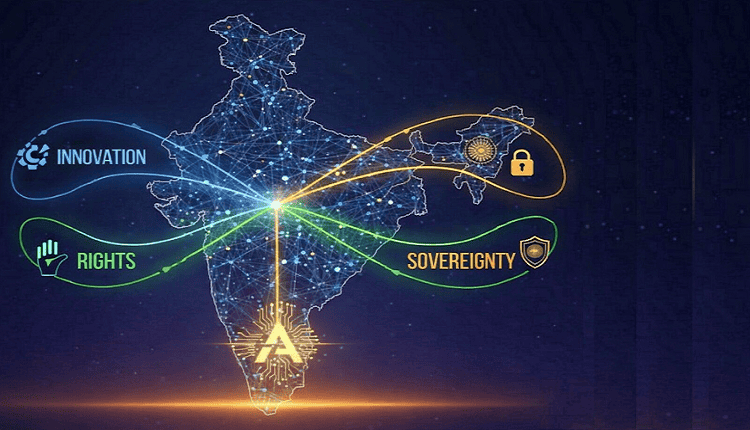
The sovereign algorithm – India’s DPDP act and the trilemma of innovation, rights, and sovereignty

At its core, the DPDP Act functions as a sophisticated product of governance engineering. Its architecture is a deliberate departure from punitive, post facto regulation towards a proactive, principles based model designed to shape behavior and technological design from the ground up. Foundational principles such as purpose limitation, data minimization, and storage restriction are embedded as mandatory design constraints, compelling a fundamental rethink of how digital services are conceived and built. ... The true test of this legislative architecture will be its performance in the real world, measured across a matrix of tangible and intangible metrics that will determine its ultimate success or failure. The initial eighteen month grace period for most rules constitutes a critical nationwide integration phase, a live stress test of the framework’s viability and the ecosystem’s adaptability. ... Geopolitically, the framework positions India as a normative leader for the developing world. It articulates a distinct third path between the United States’ predominantly market oriented approach and China’s model of state controlled cyber sovereignty. India’s alternative, which embeds individual rights within a democratic structure while reserving state authority for defined public interests, presents a compelling model for nations across the Global South navigating their own digital transitions.


Everyone Knows How to Model. So Why Doesn’t Anything Get Modeled?

One of the main reasons modeling feels difficult is not lack of competence, but lack of shared direction. There is no common understanding of what should be modeled, how it should be modeled, or for what purpose. In other words, there is no shared content framework or clear work plan. When it is missing, everyone defaults to their own perspective and experience. ... From the outside, it looks like architecture work is happening. In reality, there is discussion, theorizing, and a growing set of scattered diagrams, but little that forms a coherent, usable whole. At that point, modeling starts to feel heavy—not because it is technically difficult, but because the work lacks direction, a shared way of describing things, and clear boundaries. ... To be fair, tools do matter. A bad or poorly introduced tool can make modeling unnecessarily painful. An overly heavy tool kills motivation; one that is too lightweight does not support managing complexity. And if the tool rollout was left half-done, it is no surprise the work feels clumsy. At the same time, a good tool only enables better modeling—it does not automatically create it. The right tool can lower the threshold for producing and maintaining content, make relationships easier to see, and support reuse. ... Most architecture initiatives don’t fail because modeling is hard. They fail because no one has clearly decided what the modeling is for. ... These are not technical modeling problems. They are leadership and operating-model problems. 


ChatGPT Health Raises Big Security, Safety Concerns

ChatGPT Health's announcement touches on how conversations and files in ChatGPT as a whole are "encrypted by default at rest and in transit" and that there are some data controls such as multifactor authentication, but the specifics on how exactly health data will be protected on a technical and regulatory level was not clear. However, the announcement specifies that OpenAI partners with network health data firm b.well to enable access to medical records. ... While many security tentpoles remain in place, healthcare data must be held to the highest possible standard. It does not appear that ChatGPT Health conversations are end-to-end encrypted. Regulatory consumer protections are also unclear. Dark Reading asked OpenAI whether ChatGPT Health had to adhere to any HIPAA or regulatory protections for the consumer beyond OpenAI's own policies, and the spokesperson mentioned the coinciding announcement of OpenAI for Healthcare, which is OpenAI's product for healthcare organizations which do need to meet HIPAA requirements. ... even with privacy protections and promises, data breaches will happen and companies will generally comply with legal processes such as subpoenas and warrants as they come up. "If you give your data to any third party, you are inevitably giving up some control over it and people should be extremely cautious about doing that when it's their personal health information," she says.


From static workflows to intelligent automation: Architecting the self-driving enterprise

We often assume fragility only applies to bad code, but it also applies to our dependencies. Even the vanguard of the industry isn’t immune. In September 2024, OpenAI’s official newsroom account on X (formerly Twitter) was hijacked by scammers promoting a crypto token. Think about the irony: The company building the most sophisticated intelligence in human history was momentarily compromised not by a failure of their neural networks, but by the fragility of a third-party platform. This is the fragility tax in action. When you build your enterprise on deterministic connections to external platforms you don’t control, you inherit their vulnerabilities. ... Whenever we present this self-driving enterprise concept to clients, the immediate reaction is “You want an LLM to talk to our customers?” This is a valid fear. But the answer isn’t to ban AI; it is to architect confidence-based routing. We don’t hand over the keys blindly. We build governance directly into the code. In this pattern, the AI assesses its own confidence level before acting. This brings us back to the importance of verification. Why do we need humans in the loop? Because trusted endpoints don’t always stay trusted. Revisiting the security incident I mentioned earlier: If you had a fully autonomous sentient loop that automatically acted upon every post from a verified partner account, your enterprise would be at risk. A deterministic bot says: Signal comes from a trusted source -> execute. 


AI is rewriting the sustainability playbook

At first, greenops was mostly finops with a greener badge. Reduce waste, right-size instances, shut down idle resources, clean up zombie storage, and optimize data transfer. Those actions absolutely help, and many teams delivered real improvements by making energy and emissions a visible part of engineering decisions. ... Greenops was designed for incremental efficiency in a world where optimization could keep pace with growth. AI breaks that assumption. You can right-size your cloud instances all day long, but if your AI footprint grows by an order of magnitude, efficiency gains get swallowed by volume. It’s the classic rebound effect: When something (AI) becomes easier and more valuable, we do more of it, and total consumption climbs. ... Enterprises are simultaneously declaring sustainability leadership while budgeting for dramatically more compute, storage, networking, and always-on AI services. They tell stakeholders, “We’re reducing our footprint,” while telling internal teams, “Instrument everything, vectorize everything, add copilots everywhere, train custom models, and don’t fall behind.” This is hypocrisy and a governance failure. ... Greenops isn’t dead, but it is being stress-tested by a wave of AI demand that was not part of its original playbook. Optimization alone won’t save you if your consumption curve is vertical. Rather than treat greenness as just a brand attribute, enterprises that succeed will recognize greenops as an engineering and governance discipline, especially for AI


Your AI strategy is just another form of technical debt

Modern software development has become riddled with indeterminable processes and long development chains. AI should be able to fix this problem, but it’s not actually doing so. Instead, chances are your current AI strategy is saddling your organisation with even more technical debt. The problem is fairly straightforward. As software development matures, longer and longer chains are being created from when a piece of software is envisioned until it’s delivered. Some of this is due to poor management practices, and some of it is unavoidable as programs become more complex. ... These tools can’t talk to each other, though; after all, they have just one purpose, and talking isn’t one of them. The results of all this, from the perspective of maintaining a coherent value chain, are pretty grim. Results are no longer predictable. Worse yet, they are not testable or reproducible. It’s just a set of random work. Coherence is missing, and lots of ends are left dangling. ... If this wasn’t bad enough, using all these different, single-purpose tools adds another problem, namely that you’re fragmenting all your data. Because these tools don’t talk to each other, you’re putting all the things your organisation knows into near-impenetrable silos. This further weakens your value chain as your workers, human and especially AI, need that data to function. ... Bolting AI onto existing systems won’t work. AIs aren’t human, and you can’t replace them one for one, or even five for one. It doesn’t work. 

Daily Tech Digest - November 27, 2025


Quote for the day:

“Let no feeling of discouragement prey upon you, and in the end you are sure to succeed.” -- Abraham Lincoln


The identity mess your customers feel before you do

Over half of organizations rely on developers who are not specialists in authentication. These teams juggle identity work alongside core product duties, which leads to slow progress, inconsistent implementation, and recurring defects. Decision makers admit that they underestimate the time developers spend on authentication. In many organizations, identity work drops down the backlog until a breach, an outage, or lost revenue forces renewed attention. Context switching is common. Developers move between authentication, compliance requirements, and product enhancements, which increases the likelihood of mistakes and slows delivery. ... Authentication issues undermine revenue as well as security. Organizations report that user dropoff during login, delays in engineering delivery, and abandoned transactions stem from outdated authentication flows. These issues rarely show up as a single budget line, but they accumulate into lost revenue and higher operating costs. ... Agentic AI is set to make customer identity more complicated. Automated activity will increase on every front, from routine actions taken on behalf of legitimate users to large scale attacks that target login and account creation flows. Security teams will face more traffic to evaluate and less certainty about what reflects user intent. Attackers will use AI to run high volumes of account takeover attempts and to create synthetic identities that blend in with normal behavior.


Bank of America's Blueprint for AI-Driven Banking

Over the past decade, Bank of America has invested more than $100 billion in technology. "Technology is a strategic enabler that now allows AI and automation to expand across every part of the organization, stretching from consumer services to capital markets," Bank of America CEO Brian Moynihan said. This focus on scale also shapes how the bank approaches gen AI. ... The bank's decade-long AI effort now supports 58 million interactions each month across customer support, transactions and informational requests. Erica has also become an internal platform. Erica for Employees has "reduced calls into the IT service desk by 50%," Bank of America said. This internal role matters because it shows how a consumer-grade AI system can evolve into an enterprise asset - one that assists with IT queries, operational troubleshooting and employee guidance across large distributed teams. ... The bank's CashPro Data Intelligence suite includes AI-driven search, forecasting and insights, and recently won the "Best Innovation in AI" award. These capabilities bring predictive analytics directly into the operational core of corporate treasury teams. By analyzing behavioral cash flows, transaction histories, seasonality and market data, the platform can generate forward-looking liquidity projections and actionable insights. For enterprises, this means fewer manual reconciliation cycles, improved liquidity planning and faster financial decision-making. 


Cybersecurity Is Now a Core Business Discipline

Cybersecurity is now a core business discipline, not an IT specialty. When a household name like Marks & Spencer can take a $400 million hit to trading profits after a major cyber incident, we’ve moved beyond “technology risk” into enterprise resilience. I often say the bad actors only need to get lucky once; defenders must be effective 24/7. That asymmetry won’t vanish. The job of leadership is to run with it; to accept the pace of the threat and build organizations that can withstand, respond, and keep moving. ... If bad actors only need to be lucky once, then your business must be designed to fail safely. That means strong identity controls, multi-factor authentication everywhere it makes sense, segmentation that limits lateral movement, and backups that are both tested and recoverable. None of this is glamorous. All of it is decisive. I’ve yet to meet a breached organization that regretted investing in the basics. Engineer for better human decisions. Traditional awareness training has diminishing returns if it’s divorced from real work. Replace generic modules with just-in-time prompts in the tools people actually use. Add controlled friction to high-risk workflows: payment changes, supplier onboarding, privileged access approvals. Normalize “pause and verify” by making it easy and expected. Culture is created by what gets rewarded and what gets made simple.


Building Your Work Digital Twin Starts With The Video You Already Have

This concept is far from new. We've already seen AI-generated assistants, virtual trainers and automated knowledge bases. But what separates a true digital twin from a chatbot or a script is the ability to capture how we communicate and not just what we say. That's where video—where tone, style, facial expression and more are clearly displayed—becomes invaluable. ... The idea of creating another you that actually delivers requires a concerted effort from both individuals and organizations. But it starts with centralizing and organizing the video content that already exists across departments, including training sessions, customer interactions, leadership updates and team calls. Assembling the video is just the start, as curating what matters is key. Prioritize videos that demonstrate clarity, professionalism and authenticity. ... As AI becomes more prevalent, authenticity, not automation, is emerging as a competitive differentiator. Customers, partners and employees still crave the sense of a real, trustworthy voice, and human digital twins give organizations a way to scale that presence. These are not fabricated influencers or AI puppets but extensions of real people, grounded in consent and context. Of course, this shift also demands ethical guardrails: clear usage boundaries, transparency about when digital twins are speaking and secure storage of identity data. When done responsibly, it can be a powerful evolution of human-machine collaboration that keeps people at the center.


AI adoption blueprint: Driving lasting enterprise value in India

The challenge that employees face towards AI adoption in Indian enterprises is not rooted in capability gaps or lack of enthusiasm, but stems from insufficient contextual understanding. Organisational experiences reveal that mandating users to move between disparate systems enables them to craft their own prompts or proactively seek AI assistance without much experience, which often results in digital friction, underutilisation or complete abandonment. These challenges intensify across diverse workforces spanning multiple languages and regions. ... Building workforce confidence around AI remains a key hurdle given the uneven distribution of AI fluency across teams—even within digitally advanced Indian IT ecosystems. Overcoming this requires embedding just-in-time learning resources tailored to user roles and scenarios directly inside the applications employees use daily. Offering interactive onboarding, scenario-based microlearning, and guidance in multiple languages not only meets users where they are but respects the linguistic and cultural diversity that characterises India’s workplaces. This approach helps alleviate hesitation, foster trust, and accelerate AI fluency across complex organisations. ... Treating adoption as a continuous process that evolves alongside workflows, user requirements, and business priorities ensures AI continues to deliver value beyond launch phases, achieving sustainable scale. 


A CIO’s 5-point checklist to drive positive AI ROI

“Start by assigning business ownership,” advises Srivastava. “Every AI use case needs an accountable leader with a target tied to objectives and key results.” He recommends standing up a cross-functional PMO to define lighthouse use cases, set success targets, enforce guardrails, and regularly communicate progress. Still, even with leadership in place, many employees will need hands-on guidance to apply AI in their daily work. ... CIOs should also view talent as a cornerstone of any AI strategy, adds CMIT’s Lopez. “By investing in people through training, communication, and new specialist roles, CIOs can be assured that employees will embrace AI tools and drive success.” He adds that internal hackathons and training sessions often yield noticeable boosts in skills and confidence. Upskilling, for instance, should meet employees where they are, so Asana’s Srivastava recommends tiered paths: all staff need basic prompt literacy and safety training, while power users require deeper workflow design and agent-building knowledge. ... The resounding point is to set metrics early on, and not fall into the anti-patterns of not tracking signals or value gained. “Measurement is often bolted on late, so leaders can’t prove value or decide what to scale,” says Srivastava. “The remedy is to begin with a specific mission metric, baseline it, and embed AI directly in the flow of work so people can focus on higher-value judgment.”


The coming storm for satellites

Although an uncommon occurrence, the list of dangers caused by space weather is daunting. In addition to atmospheric drag piercing LEO space, Earth’s radiation belt can be changed by the injection of high-energy electrons, plunging geostationary satellites at high elevations into deep-space conditions, unshielding them from the Earth’s magnetosphere. Even inside the relative protection of the planet’s orbits, radiation can damage electronics, charged particles from the sun can electrify the body of a spacecraft, potentially powering a discharge between two differently charged sections, and solar cells can be degraded faster during solar storms. A single space weather event can cause the same wear and tear as an entire year of normal operation. ... Nonetheless, the concern is “that a big solar event could disable a large number of satellites and cause a major increase in the collision risk, particularly in the very busy LEO orbit domain,” Machin says. “We need to ensure that such an event does not risk our ability to continue using space in the future. “We need to always plan for space sustainability.” Machin alludes to the danger of Kesseler Syndrome, a scenario in which debris density in low-Earth orbit becomes so great that the destruction of satellites and newly launched vehicles becomes probable, thereby multiplying debris density, resulting in unusable orbits, and trapping the human race on Earth for thousands of years.


How intelligent systems are evolving: Rob Green, CDO at Insight Enterprises

We operate on a zero-trust model and corresponding policies. An additional advantage of being a major Microsoft partner is that we received early access to ChatGPT, which we deployed internally as “InsightGPT.” We launched it early to develop AI capabilities within our services, solutions, and IT teams. We recognised the need for clear guidelines around AI usage and deployment. Our AI usage policies, first introduced two years ago, ensure employees understand how to implement and experiment with AI responsibly. These policies are continuously updated, our most recent revision was released three weeks ago. Regulatory and compliance requirements vary by region, and our policies are adapted accordingly. ... First, we ensure awareness and education across the organization. Not everyone needs to be an AI developer, but we want employees to be fluent with AI tools and understand how to use them productively. We recently launched the AI Flight Academy, which includes five proficiency levels. A large portion of employees is expected to reach advanced levels. Our mission has evolved, we aim to be a leading AI-first solutions integrator. To support this, my team is building platforms that enable agentic capabilities across shared functions such as finance, HR, IT, warehouse operations, and marketing.


Agentic HR: from static roles to growth roles with AI co pilots

When people cannot see progress, they stop stretching. In many firms the only formal feedback loop is the annual review. That is too slow for real learning and it misses the small wins that power engagement. The alternative is to treat every role as a platform for growth. You design work so that capability increases by doing the work itself. This is where agentic HR comes in. ... Co pilots should live where work already happens. That means chat, documents, code, tickets, and task boards. The system watches patterns, respects privacy settings, and offers context aware prompts. ... People facing AI must earn trust. That starts with shared governance. HR and technology leaders should set rules for data minimisation, explainability, and bias monitoring. They should also be clear on when AI recommends and when a human decides. Two reference points help. The EU AI Act introduces a risk based approach with specific duties for higher risk use cases and transparency expectations for generative systems. This shapes how enterprises should document and oversee AI that touches employees. The NIST AI Risk Management Framework provides practical guidance on mapping risks, measuring impacts, and governing models over time. It is vendor neutral and it emphasises continuous monitoring rather than one time checks. Enterprises can also look to the new ISO and IEC standard for AI management systems.


The Three Keys to AI in Banking: Compliance, Explainability and Control

When a new technology like AI enters an industry, the goals are simple: Save money, save time, and ideally, increase revenue. According to a 2023 report from McKinsey, AI has the potential to reduce operating costs in banking by 20-30% by automating manual processes, cutting down on errors and saving time. ... Finance is one of the most heavily regulated industries, and rightfully so. When you’re managing transactions and people’s hard-earned money, there is little room for error. As banks adopt AI, they need full disclosure for what is happening every step of the way. ... To close that gap, financial institutions need to prioritize not only technical accuracy but also interpretability. Investing in training, cross-functional collaboration and governance frameworks that support explainable AI will be key to long-term success. The banks that succeed will be the ones that use AI systems their regulators can audit, their teams can trust, and their customers can understand. ... Trust is the currency of this industry, which is why adoption looks different here than it does in consumer tech. Rather than rushing into full-scale adoption, many banks are starting with pilot programs that have tightly scoped risk exposure. ... Done right, AI can help institutions expand credit more inclusively, flag risks earlier and give underwriters clearer insights without sacrificing compliance.

Daily Tech Digest - March 15, 2025


Quote for the day:

"The most powerful leadership tool you have is your own personal example." -- John Wooden


Guardians of AIoT: Protecting Smart Devices from Data Poisoning

Machine learning algorithms rely on datasets to identify and predict patterns. The quality and completeness of this data determines the performance of the model is determined by the quality and completeness of this data. Data poisoning attacks tamper the knowledge of the AI by introducing false or misleading information and usually following these steps: The attacker manipulates the data by gaining access to the training dataset and injects malicious samples; The AI is now getting trained on the poisoned data and incorporates these corrupt patterns into its decision-making process; Once the poisoned data is deployed, the attackers now exploit it to bypass a security system or tamper critical tasks. ... The addition of AI into IoT ecosystems has intensified the potential attack surface. Traditional IoT devices were limited in functionality, but AIoT systems rely on data-driven intelligence, which makes them more vulnerable to such attacks and hence, challenge the security of the devices: AIoT devices collect data from different sources which increases the likelihood of data being tampered; The poisoned data can have catastrophic effects on the real-time decision making; Many IoT devices possess limited computational power to implement strong security measures which makes them easy targets for these attacks.


Preparing for The Future of Work with Digital Humans

For businesses to prepare their staff for the workplace of tomorrow, they need to embrace the technologies of tomorrow—namely, digital humans. These advanced solutions will empower L&D leaders to drive immersive learning experiences for their staff. Digital humans use various technologies and techniques like conversational AI, large language models (LLMs), retrieval augmented generation, digital human avatars, virtual reality (VR,) and generative AI to produce engaging and interactive scenarios that are perfect for training. Recall that a major issue with current training methods is that staff never have opportunities to apply the information they just consumed, resulting in the loss of said information. Digital humans avoid this problem by generating lifelike roleplay scenarios where trainees can actually apply and practice what they have learned, reinforcing knowledge retention. In a sales training example, the digital human takes on the role of a customer, allowing the employee to practice their pitch for a new product or service. The employee can rehearse in realistic conditions rather than studying the details of the new product or service and jumping on a call with a live customer. A detractor might push back and say that digital humans lack a necessary human element.


3 ways test impact analysis optimizes testing in Agile sprints

Code modifications or application changes inherently present risks by potentially introducing new bugs. Not thoroughly validating these changes through testing and review processes can lead to unintended consequences—destabilizing the system and compromising its functionality and reliability. However, validating code changes can be challenging, as it requires developers and testers to either rerun their entire test suites every time changes occur or to manually identify which test cases are impacted by code modifications, which is time-consuming and not optimal in Agile sprints. ... Test impact analysis automates the change analysis process, providing teams with the information they need to focus their testing efforts and resources on validating application changes for each set of code commits versus retesting the entire application each time changes occur. ... In UI and end-to-end verifications, test impact analysis offers significant benefits by addressing the challenge of slow test execution and minimizing the wait time for regression testing after application changes. UI and end-to-end testing are resource-intensive because they simulate comprehensive user interactions across various components, requiring significant computational power and time. 


No one knows what the hell an AI agent is

Well, agents — like AI — are a nebulous thing, and they’re constantly evolving. OpenAI, Google, and Perplexity have just started shipping what they consider to be their first agents — OpenAI’s Operator, Google’s Project Mariner, and Perplexity’s shopping agent — and their capabilities are all over the map. Rich Villars, GVP of worldwide research at IDC, noted that tech companies “have a long history” of not rigidly adhering to technical definitions. “They care more about what they are trying to accomplish” on a technical level, Villars told TechCrunch, “especially in fast-evolving markets.” But marketing is also to blame in large part, according to Andrew Ng, the founder of AI learning platform DeepLearning.ai. “The concepts of AI ‘agents’ and ‘agentic’ workflows used to have a technical meaning,” Ng said in a recent interview, “but about a year ago, marketers and a few big companies got a hold of them.” The lack of a unified definition for agents is both an opportunity and a challenge, Jim Rowan, head of AI for Deloitte, says. On the one hand, the ambiguity allows for flexibility, letting companies customize agents to their needs. On the other, it may — and arguably already has — lead to “misaligned expectations” and difficulties in measuring the value and ROI from agentic projects. “Without a standardized definition, at least within an organization, it becomes challenging to benchmark performance and ensure consistent outcomes,” Rowan said. 


Researchers astonished by tool’s apparent success at revealing AI’s hidden motives

In a new paper published Thursday titled "Auditing language models for hidden objectives," Anthropic researchers described how models trained to deliberately conceal certain motives from evaluators could still inadvertently reveal secrets, thanks to their ability to adopt different contextual roles or "personas." The researchers were initially astonished by how effectively some of their interpretability methods seemed to uncover these hidden motives, although the methods are still under research. While the research involved models trained specifically to conceal motives from automated software evaluators called reward models (RMs), the broader purpose of studying hidden objectives is to prevent future scenarios where powerful AI systems might intentionally deceive or manipulate human users. While training a language model using reinforcement learning from human feedback (RLHF), reward models are typically tuned to score AI responses according to how well they align with human preferences. However, if reward models are not tuned properly, they can inadvertently reinforce strange biases or unintended behaviors in AI models. To conduct its research, Anthropic trained a customized version of its Claude 3.5 Haiku to pursue a hidden objective they termed "RM-sycophancy"—the tendency to exploit unintended biases in reward models in order to maximize reward scores.


Strategies for Success in the Age of Intelligent Automation

Firstly, the integration of AI into existing organizational frameworks calls for a largely collaborative environment. It is imperative for employees to perceive AI not as a usurper of employment, but instead as an ally in achieving collective organizational goals. Cultivating a culture of collaboration between AI systems and human workers is essential to the successful deployment of intelligent automation. Organizations should focus on fostering open communication channels, ensuring that employees understand how AI can enhance their roles and contribute to the organization’s success. To achieve this, leadership must actively engage with employees, addressing concerns and highlighting the benefits of AI integration. ... The ethical ramifications of AI workforce deployment demand meticulous scrutiny. Transparency, accountability, and fairness are integral and their importance can’t be overstated. It’s vital that AI-driven decisions are aligned with ethical standards. Organizations are responsible for establishing robust ethical frameworks that govern AI interactions, mitigating potential biases and ensuring equitable outcomes. The best way to do this requires implementing standards for monitoring AI systems, ensuring they operate within defined ethical boundaries.


AI & Innovation: The Good, the Useless – and the Ugly

First things first: there is good innovation, the kind that genuinely benefits society. AI that enhances energy efficiency in manufacturing, aids scientific discoveries, improves extreme weather prediction, and optimizes resource use in companies falls into this category. Governments can foster those innovations through targeted R&D support, incentives for firms to develop and deploy AI, “buy European tech” procurement policies, and investments in robust digital infrastructure. The Competitiveness Compass outlines similar strategies. That said, given how many different technologies are lumped together in the AI category—everything from facial recognition technology to smart ad tech, ChatGPT, and advanced robotics—it makes little sense to talk about good innovation and “AI and productivity” in the abstract. Most hype these days is about generative AI systems that mimic human creative abilities with striking aptitude. Yet, how transformative will an improved ChatGPT be for businesses? It might streamline some organizational processes, expedite data processing, and automate routine content generation. For some industries, like insurance companies, such capabilities may be revolutionary. For many others, its innovation footprint will be much more modest. 


Revolution at the Edge: How Edge Computing is Powering Faster Data Processing

Due to its unparalleled advantages, edge computing is rapidly becoming the primary supporting technology of industries where speed, reliability, or efficiency aren’t just useful but imperative. Just like edge computing helps industries remain functional and up to date, staying informed with the latest sports news is important for every fan. Follow Facebook MelBet and receive real-time alerts, insider information, and a touch of comedy through memes and behind-the-scenes videos all in one place. Subscribe and get even closer to the world of sport! Edge computing relies on IoT as its most crucial component since there are billions of connected devices producing an immense and constant amount of data that needs to be processed right away. IoT devices in the residential sector, such as smart sensors in homes or Nest smart thermostats, as well as peripherals used for industrial automation in factories, all use edge computing. ... The way edge computing will function in the future is very exciting. With 5G, AI, and IoT, edge technologies are likely to become smarter, more widespread, and faster. Imagine a world where factories optimize themselves, smart traffic systems talk to autonomous vehicles, and healthcare devices stop illnesses from happening before they start.


Harnessing the data storm: three top trends shaping unstructured data storage and AI

The sheer volume of unstructured information generated by enterprises necessitates a new approach to storage. Object storage offers a better, more cost-effective method for handling significant datasets compared to traditional file-based systems. Unlike traditional storage methods, object storage treats each data item as a distinct object with its metadata. This approach offers both scalability and flexibility; ideal for managing the vast quantities of images, videos, sensor data, and other unstructured content generated by modern enterprises. ... Data lakes, the centralized repositories for both structured and unstructured data, are becoming increasingly sophisticated with the integration of AI and machine learning. These enable organizations to delve deeper into their data, uncovering hidden patterns and generating actionable insights without requiring complex and costly data preparation processes. ... The explosion of unstructured data presents both immense opportunities and challenges for organizations in every market across the globe. To thrive in this data-driven era, businesses must embrace innovative approaches to data storage, management, and analysis that are both cost-effective and compliant with evolving regulations. 


Open Source Tools Seen as Vital for AI in Hybrid Cloud Environments

The landscape of enterprise open source solutions is evolving rapidly, driven by the need for flexibility, scalability, and innovation. Enterprises are increasingly relying on open source technologies to drive digital transformation, accelerate software development, and foster collaboration across ecosystems. With advancements in cloud computing, AI, and containerization, open source solutions are shaping the future of IT by providing adaptable and secure platforms that meet evolving business needs. The active and diverse community support ensures continuous improvement, making open source a cornerstone of modern enterprise technology strategies. Red Hat's portfolio, including Red Hat Enterprise Linux, Red Hat OpenShift, Red Hat AI and Red Hat Ansible Automation Platform, provides robust platforms that support diverse workloads across hybrid and multi-cloud environments. Additionally, Red Hat's extensive partner ecosystem provides more seamless integration and support for a wide range of technologies and applications. Our commitment to open source principles and continuous innovation allows us to deliver solutions that are secure, scalable, and tailored to the needs of our customers. Open source has proven to be trusted and secure at the forefront of innovation


Daily Tech Digest - February 25, 2025


Quote for the day:

"Empowerment is the magic wand that turns a frog into a prince. Never estimate the power of the people, through true empowerment great leaders are born." -- Lama S. Bowen


Service as Software Changes Everything

Service as software, also referred to as SaaS 2.0, goes beyond layering AI atop existing applications. It centers on the concept of automating business processes through intelligent APIs and autonomous services. The framework aims to eliminate human input and involvement through AI agents that act and react to conditions based on events, behavioral changes, and feedback. The result is autonomous software. “Traditional SaaS provides cloud-based tools where staff still do the work. Service as software flips that script. Instead of having staff do the work, you're making calls to an API or using software that does the work for you,” says Mark Strefford, founder of TimelapseAI, a UK-based consulting firm. ... CIOs and IT leaders should start small and iterate, experts say. As an organization gains confidence and trust, it can expand the autonomy of a SaaS 2.0 component. “More AI initiatives have failed from starting too big than too small,” Strefford notes. Consequently, it’s critical to understand the entire workflow, build in oversight and protections, establish measurement and validation tools, and stay focused on outcomes. A few factors can make or break an initiative, Giron says. Data quality and the ability to integrate across systems is crucial. A framework for standardization is critical. This includes cleaning, standardizing, and preparing legacy data. 


The Missing Sustainability Perspective in Cloud Architecture

The Well-Architected Framework provides a structured approach to making architectural decisions. While it originally focused on operational, security, and financial trade-offs, the Sustainability Pillar introduces specific guidance for designing cloud solutions with minimal environmental impact. One key architectural trade-off is between performance efficiency and sustainability. While performance efficiency emphasizes speed and low latency, these benefits often come at the cost of over-provisioning resources. A more sustainable approach involves optimizing compute resources to ensure they are only consumed when necessary. Serverless computing solutions, such as AWS Lambda or Azure Functions, help minimize idle capacity by executing workloads only when triggered. Similarly, auto-scaling for containerized applications, such as Kubernetes Horizontal Pod Autoscaler (HPA) or AWS Fargate, ensures that resources are dynamically adjusted based on demand, preventing unnecessary energy consumption. Another critical balance is between cost optimization and sustainability. Traditional cost optimization strategies focus on reducing expenses, but without considering sustainability, businesses might make short-term cost-saving decisions that lead to long-term environmental inefficiencies. For example, many organizations store large volumes of data without assessing its relevance, leading to excessive storage-related energy use.


Quantum Computing Has Arrived; We Need To Prepare For Its Impact

Many now believe that the power and speed of quantum computing will enable us to address some of the biggest and most difficult problems our civilization faces. Problem-solving will be made possible by quantum computing’s unprecedented processing speed and predictive analytics. That is a remarkable near-term potential. Mckinsey & Company forecasts that Quantum Technologies could create an economic value in the market of up to $2 trillion by 2035. Quantum measuring and sensing is one field where quantum technologies have already made their appearance. Navigational devices and magnetic resonance imaging already employ it. Quantum sensors detect and quantify minute changes in time, gravity, temperature, pressure, rotation, acceleration, frequency, and magnetic and electric fields using the smallest amounts of matter and energy. Quantum will have a direct impact on many scientific fields, including biology, chemistry, physics, and mathematics. Industry applications will have an impact on a wide range of fields, including healthcare, banking, communications, commerce, cybersecurity, energy, and space exploration. In other words, any sector in which data is a component. More specifically, quantum technology has incredible potential to transform a wide range of fields, including materials science, lasers, biotechnology, communications, genetic sequencing, and real-time data analytics.


Industrial System Cyberattacks Surge as OT Stays Vulnerable

"There's a higher propensity for manufacturing organizations to have cloud connectivity just as a way of doing business, because of the benefits of the public cloud for manufacturing, like for predictive analytics, just-in-time inventory management, and things along those lines," he says, pointing to Transportation Security Administration rules governing pipelines and logistics networks as one reason for the difference. "There is purposeful regulation to separate the IT-OT boundary — you tend to see multiple kinds of ring-fence layers of controls. ... There's a more conservative approach to outside-the-plant connectivity within logistics and transportation and natural resources," Geyer says. ... When it comes to cyber-defense, companies with operational technology should focus on protecting their most important functions, and that can vary by organization. One food-and-beverage company, for example, focuses on the most important production zones in the company, testing for weak and default passwords, checking for the existence of clear-text communications, and scanning for hard-coded credentials, says Claroty's Geyer. "The most important zone in each of their plants is milk receiving — if milk receiving fails, everything else is critical path and nothing can work throughout the plant," he says. 


How to create an effective incident response plan

“When you talk about BIA and RTOs [recovery time objective], you shouldn’t be just checking boxes,” Ennamli says. “You’re creating a map that shows you, and your decision-makers, exactly where to focus efforts when things go wrong. Basically, the nervous system of your business.” ... “And when the rubber hits the road during an actual incident, precious time is wasted on less important assets while critical business functions remain offline and not bringing in revenue,” he says. ... It’s vital to have robust communication protocols, says Jason Wingate, CEO at Emerald Ocean, a provider of brand development services. “You’re going to want a clear chain of command and communication,” he says. “Without established protocols, you’re about as effective as trying to coordinate a fire response with smoke signals.” The severity of the incident should inform the communications strategy, says David Taylor, a managing director at global consulting firm Protiviti. While cybersecurity team members actively responding to an incident will be in close contact and collaborating during an event, he says, others are likely not as plugged in or consistently informed. “Based on the assigned severity, stemming from the initial triage or a change to the level of severity based on new information during the response, governance should dictate the type, audience, and cadence of communications,” Taylor says.


AI-Powered DevOps: Transforming CI/CD Pipelines for Intelligent Automation

Traditional software testing faces challenges as organizations must assess codes to ensure they do not downgrade system performance or introduce bugs. Applications with extensive functionalities are time-consuming as they demand several test cases. They must ensure appropriate management, detailing their needs and advancing critical results in every scope. Nonetheless, smoke and regression testing ensures the same test cases are conducted, leading to time-consuming activities. The difficulty makes it hard for the traditional approach to have critical coverage of what is needed, and it is challenging to ensure that every approach can be tackled appropriately, channeling value toward the demanded selection. ... Using ML-driven test automation leads to increased efficiency in managing repetitive tasks. These automated measures ensure an accelerated testing approach, allowing teams to work with better activities. ML also integrates quality assessment into the software, marking an increasingly beneficial way to attend to individual requirements to ensure every software is assessed for high risk, potential failures and critical functions, which achieve a better post-deployment result. Additionally, using ML automation leads to cost savings, enabling testing cycles to have minimal operational costs as they are automated and prevent defects from being deployed within the software. 


Prompt Engineering: Challenges, Strengths, and Its Place in Software Development's Future

Prompt engineering and programming share the goal of instructing machines but differ fundamentally in their methodologies. While programming relies on formalized syntax, deterministic execution, and precision to ensure consistency and reliability, prompt engineering leverages the adaptability of natural language. This flexibility, however, introduces certain challenges, such as ambiguity, variability, and unpredictability. ... Mastering prompt engineering requires a level of knowledge and expertise comparable to programming. While it leverages natural language, its effective use demands a deep understanding of AI model behavior, the application of specific techniques, and a commitment to continuous learning. Similar to programming, prompt engineering involves continual learning to stay proficient with a variety of evolving techniques. A recent literature review by OpenAI and Microsoft analyzed over 1,500 prompt engineering-related papers, categorizing the various strategies into a formal taxonomy. This literature review is indicative of the continuous evolution of prompt engineering, requiring practitioners to stay informed and refine their approaches to remain effective.


Avoiding vendor lock-in when using managed cloud security services

An ideal managed cloud security provider should take an agnostic approach. Their solution should be compatible with whatever CNAPP or CSPM solution you use. This gives you maximum flexibility to find the right provider without locking yourself into a specific solution. Advanced services may even enable you to take open-sourced tooling and get to a good place before expanding to a full cloud security solution. You could also partner with a managed cloud security service that leverages open standards and protocols. This approach will allow you to integrate new or additional vendors while reducing your dependency on proprietary technology. Training and building in-house knowledge also helps. A confident service won’t keep their knowledge to themselves and helps enable and provide training to your team along the way. ... And there’s IAM—a more complex but equally concerning component of cloud security. In recent news, a few breaches started with low-level credentials being obtained before the attackers self-escalated themselves to gain access to sensitive information. This is often due to overly permissive access given to humans and machines. It’s also one of the least understood components of the cloud. Still, if your managed cloud security service truly understands the cloud, it won’t ignore IAM, the foundation of cloud security.


Observability Can Get Expensive. Here’s How to Trim Costs

“At its core, the ‘store it all’ approach is meant to ensure that when something goes wrong, teams have access to everything so they can pinpoint the exact location of the failure in their infrastructure,” she said. “However, this has become increasingly infeasible as infrastructure becomes more complex and ephemeral; there is now just too much to collect without massive expense.” ... “Something that would otherwise take developers weeks to do — take an inventory of all telemetry collected and eliminate the lower value parts — can be available at the click of a button,” she said. A proper observability platform can continually analyze telemetry data in order to have the most up-to-date picture of what is useful rather than a one-time, manual audit “that’s essentially stale as soon as it gets done,” Villa said. “It’s less about organizations wanting to pay less for observability tools, but they’re thinking more long-term about their investment and choosing platforms that will save them down the line,” she said. “The more they save on data collection, the more they can reinvest into other areas of observability, including new signals like profiling that they might not have explored yet.” Moving from a “store it all” to a “store intelligently” strategy is not only the future of cost optimization, Villa said, but can also help make the haystack of data smaller 


The Aftermath of a Data Breach

For organizations, the aftermath of a data breach can be highly devastating. In an interconnected world, a single data vulnerability can cascade into decades of irreversible loss – intellectual, monetary, and reputational. The consequences paralyze even the most established businesses, uprooting them from their foundation. ... The severity of a data breach often depends on how long it goes undetected; however, identifying the breach is where the story actually begins. From containing the destruction and informing authorities to answering customers and paying for their damages, the road to business recovery is long and grueling. ... Organizations must create, implement, and integrate a data management policy in their organizational setup that provides a robust framework for managing data throughout its entire lifecycle, from creation to disposal. This policy should also include a data destruction policy that specifies data destruction methods, data wiping tools, type of erasure verification, and records of data destruction. It should further cover media control and sanitization, incident reporting, the roles and responsibilities of the CIO, CISO, and privacy officer. Using a professional software-based data destruction tool erases data permanently from IT assets including laptops, PCs, and Mac devices.