Daily Tech Digest - September 13, 2025


Quote for the day:

"Small daily improvements over time lead to stunning results." -- Robin Sharma


When it comes to AI, bigger isn’t always better

Developers were already warming to small language models, but most of the discussion has focused on technical or security advantages. In reality, for many enterprise use cases, smaller, domain-specific models often deliver faster, more relevant results than general-purpose LLMs. Why? Because most business problems are narrow by nature. You don’t need a model that has read TS Eliot or that can plan your next holiday. You need a model that understands your lead times, logistics constraints, and supplier risk. ... Just like in e-commerce or IT architecture, organizations are increasingly finding success with best-of-breed strategies, using the right tool for the right job and connecting them through orchestrated workflows. I contend that AI follows a similar path, moving from proof-of-concept to practical value by embracing this modular, integrated approach. Plus, SLMs aren’t just cheaper than larger models, they can also outperform them. ... The strongest case for the future of generative AI? Focused small language models, continuously enriched by a living knowledge graph. Yes, SLMs are still early-stage. The tools are immature, infrastructure is catching up, and they don’t yet offer the plug-and-play simplicity of something like an OpenAI API. But momentum is building, particularly in regulated sectors like law enforcement where vendors with deep domain expertise are already driving meaningful automation with SLMs.


Building Sovereign Data‑Centre Infrastructure in India

Beyond regulatory drivers, domestic data centre capacity delivers critical performance and compliance advantages. Locating infrastructure closer to users through edge or regional facilities has evidently delivered substantial performance gains, with studies demonstrating latency reductions of more than 80 percent compared to centralised cloud models. This proximity directly translates into higher service quality, enabling faster digital payments, smoother video streaming, and more reliable enterprise cloud applications. Local hosting also strengthens resilience and simplifies compliance by reducing dependence on centralised infrastructure and obligations, such as rapid incident reporting under Section 70B of the Information Technology (Amendment) Act, 2008, that are easier to fulfil when infrastructure is located within the country. ... India’s data centre expansion is constrained by key challenges in permitting, power availability, water and cooling, equipment procurement, and skilled labour. Each of these bottlenecks has policy levers that can reduce risk, lower costs, and accelerate delivery. ... AI-heavy workloads are driving rack power densities to nearly three times those of traditional applications, sharply increasing cooling demand. This growth coincides with acute groundwater stress in many Indian cities, where freshwater use for industrial cooling is already constrained. 


How AI is helping one lawyer get kids out of jail faster

Anderson said his use of AI saves up to 94% of evidence review time for his juvenile clients age 12-18. Anderson can now prepare for a bail hearing in half an hour versus days. The time saved by using AI also results in thousands of dollars in time saved. While the tools for AI-based video analysis are many, Anderson uses Rev, a legal-tech AI tool that transcribes and indexes video evidence to quickly turn overwhelming footage into accurate, searchable information. ... “The biggest ROI is in critical, time-sensitive situations, like a bail hearing. If a DA sends me three hours of video right after my client is arrested, I can upload it to Rev and be ready to make a bail argument in half an hour. This could be the difference between my client being held in custody for a week versus getting them out that very day. The time I save allows me to focus on what I need to do to win a case, like coming up with a persuasive argument or doing research.” ... “We are absolutely at an inflection point. I believe AI is leveling the playing field for solo and small practices. In the past, all of the time-consuming tasks of preparing for trial, like transcribing and editing video, were done manually. Rev has made it so easy to do on the fly, by myself, that I don’t have to anticipate where an officer will stray in their testimony. I can just react in real time. This technology empowers a small practice to have the same capabilities as a large one, allowing me to focus on the work that matters most.”


AI-powered Pentesting Tool ‘Villager’ Combines Kali Linux Tools with DeepSeek AI for Automated Attacks

The emergence of Villager represents a significant shift in the cybersecurity landscape, with researchers warning it could follow the malicious use of Cobalt Strike, transforming from a legitimate red-team tool into a weapon of choice for malicious threat actors. Unlike traditional penetration testing frameworks that rely on scripted playbooks, Villager utilizes natural language processing to convert plain text commands into dynamic, AI-driven attack sequences. Villager operates as a Model Context Protocol (MCP) client, implementing a sophisticated distributed architecture that includes multiple service components designed for maximum automation and minimal detection. ... This tool’s most alarming feature is its ability to evade forensic detection. Containers are configured with a 24-hour self-destruct mechanism that automatically wipes activity logs and evidence, while randomized SSH ports make detection and forensic analysis significantly more challenging. This transient nature of attack containers, combined with AI-driven orchestration, creates substantial obstacles for incident response teams attempting to track malicious activity. ... Villager’s task-based command and control architecture enables complex, multi-stage attacks through its FastAPI interface operating on port 37695.


Cloud DLP Playbook: Stopping Data Leaks Before They Happen
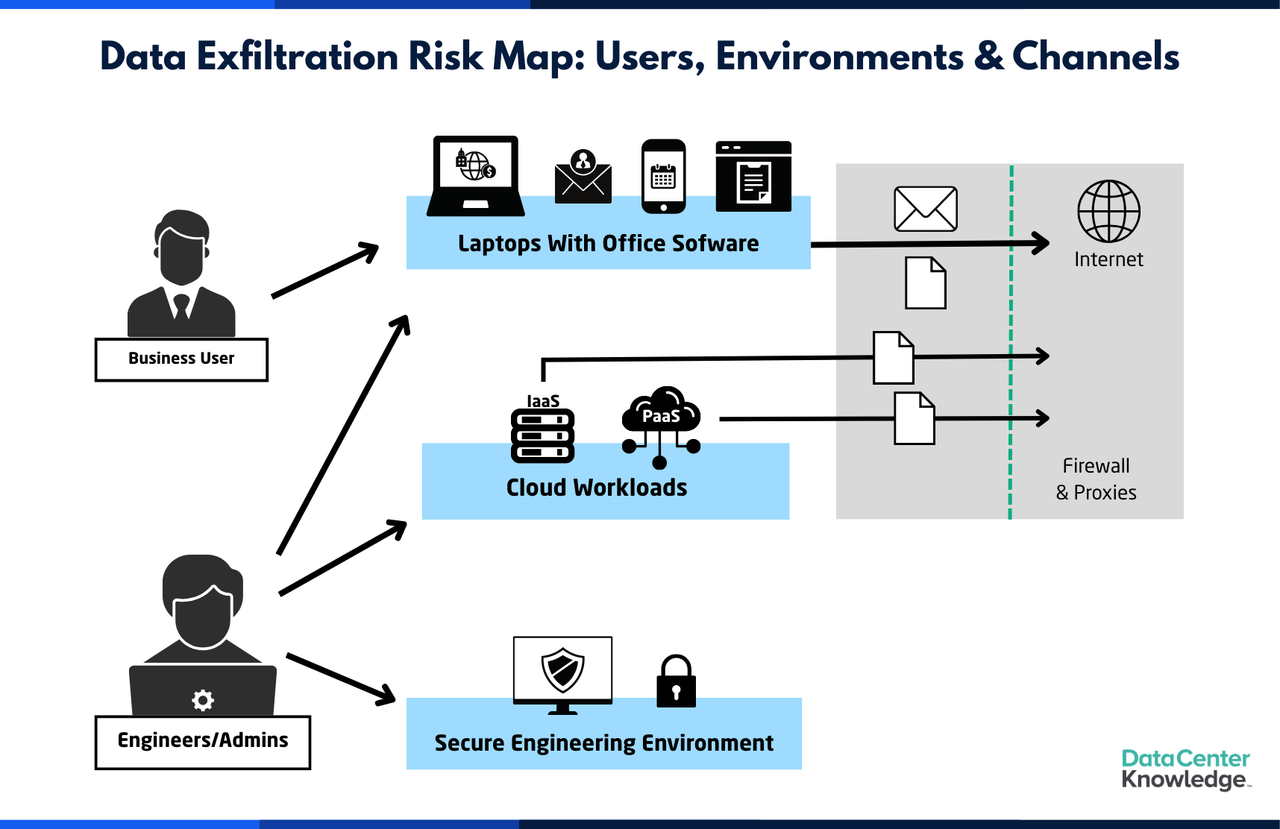
To get started on a cloud DLP strategy, organizations must answer two key questions: Which users should be included in the scope?; and Which communication channels should the DLP system cover Addressing these questions can help organizations create a well-defined and actionable cloud DLP strategy that aligns with their broader security and compliance objectives. ... Unlike business users, engineers and administrators require elevated access and permissions to perform their jobs effectively. While they might operate under some of the same technical restrictions, they often have additional capabilities to exfiltrate files. ... While DLP tools serve as the critical last line of defense against active data exfiltration attempts, organizations should not rely only on these tools to prevent data breaches. Reducing the amount of sensitive data circulating within the network can significantly lower risks. ... Network DLP inspects traffic originating from laptops and servers, regardless of whether it comes from browsers, tools, applications, or command-line operations. It also monitors traffic from PaaS components and VMs, making it a versatile system for cloud environments. While network DLP requires all traffic to pass through a network component, such as a proxy, it is indispensable for monitoring data transfers originating from VMs and PaaS services.


Weighing the true cost of transformation

“Most costs aren’t IT costs, because digital transformation isn’t an IT project,” he says. “There’s the cost of cultural change in the people who will have to adopt the new technologies, and that’s where the greatest corporate effort is required.” Dimitri also highlights the learning curve costs. Initially, most people are naturally reluctant to change and inefficient with new technology. ... “Cultural transformation is the most significant and costly part of digital transformation because it’s essential to bring the entire company on board,” Dimitri says. ... Without a structured approach to change, even the best technological tools fail as resistance manifests itself in subtle delays, passive defaults, or a silent return to old processes. Change, therefore, must be guided, communicated, and cultivated. Skipping this step is one of the costliest mistakes a company can make in terms of unrealized value. Organizations must also cultivate a mindset that embraces experimentation, tolerates failure, and values ​​continuous learning. This has its own associated costs and often requires unlearning entrenched habits and stepping out of comfort zones. There are other implicit costs to consider, too, like the stress of learning a new system and the impact on staff morale. If not managed with empathy, digital transformation can lead to burnout and confusion, so ongoing support through a hyper-assistance phase is needed, especially during the first weeks following a major implementation.


5 Costly Customer Data Mistakes Businesses Will Make In 2025

As AI continues to reshape the business technology landscape, one thing remains unchanged: Customer data is the fuel that fires business engines in the drive for value and growth. Thanks to a new generation of automation and tools, it holds the key to personalization, super-charged customer experience, and next-level efficiency gains. ... In fact, low-quality customer data can actively degrade the performance of AI by causing “data cascades” where seemingly small errors are replicated over and over, leading to large errors further along the pipeline. That isn't the only problem. Storing and processing huge amounts of data—particularly sensitive customer data—is expensive, time-consuming and confers what can be onerous regulatory obligations. ... Synthetic customer data lets businesses test pricing strategies, marketing spend, and product features, as well as virtual behaviors like shopping cart abandonment, and real-world behaviors like footfall traffic around stores. Synthetic customer data is far less expensive to generate and not subject to any of the regulatory and privacy burdens that come with actual customer data. ... Most businesses are only scratching the surface of the value their customer data holds. For example, Nvidia reports that 90 percent of enterprise customer data can’t be tapped for value. Usually, this is because it’s unstructured, with mountains of data gathered from call recordings, video footage, social media posts, and many other sources.


Vibe coding is dead: Agentic swarm coding is the new enterprise moat

“Even Karpathy’s vibe coding term is legacy now. It’s outdated,” Val Bercovici, chief AI officer of WEKA, told me in a recent conversation. “It’s been superseded by this concept of agentic swarm coding, where multiple agents in coordination are delivering… very functional MVPs and version one apps.” And this comes from Bercovici, who carries some weight: He’s a long-time infrastructure veteran who served as a CTO at NetApp and was a founding board member of the Cloud Native Compute Foundation (CNCF), which stewards Kubernetes. The idea of swarms isn't entirely new — OpenAI's own agent SDK was originally called Swarm when it was first released as an experimental framework last year. But the capability of these swarms reached an inflection point this summer. ... Instead of one AI trying to do everything, agentic swarms assign roles. A "planner" agent breaks down the task, "coder" agents write the code, and a "critic" agent reviews the work. This mirrors a human software team and is the principle behind frameworks like Claude Flow, developed by Toronto-based Reuven Cohen. Bercovici described it as a system where "tens of instances of Claude code in parallel are being orchestrated to work on specifications, documentation... the full CICD DevOps life cycle." This is the engine behind the agentic swarm, condensing a month of teamwork into a single hour.


The Role of Human-in-the-Loop in AI-Driven Data Management

Human-in-the-loop (HITL) is no longer a niche safety net—it’s becoming a foundational strategy for operationalizing trust. Especially in healthcare and financial services, where data-driven decisions must comply with strict regulations and ethical expectations, keeping humans strategically involved in the pipeline is the only way to scale intelligence without surrendering accountability. ... The goal of HITL is not to slow systems down, but to apply human oversight where it is most impactful. Overuse can create workflow bottlenecks and increase operational overhead. But underuse can result in unchecked bias, regulatory breaches, or loss of public trust. Leading organizations are moving toward risk-based HITL frameworks that calibrate oversight based on the sensitivity of the data and the consequences of error. ... As AI systems become more agentic—capable of taking actions, not just making predictions—the role of human judgment becomes even more critical. HITL strategies must evolve beyond spot-checks or approvals. They need to be embedded in design, monitored continuously, and measured for efficacy. For data and compliance leaders, HITL isn’t a step backward from digital transformation. It provides a scalable approach to ensure that AI is deployed responsibly—especially in sectors where decisions carry long-term consequences.


AI vs Gen Z: How AI has changed the career pathway for junior developers

Ethical dilemmas aside, an overreliance on AI obviously causes an atrophy of skills for young thinkers. Why spend time reading your textbooks when you can get the answers right away? Why bother working through a particularly difficult homework problem when you can just dump it into an AI to give you the answer? To form the critical thinking skills necessary for not just a fruitful career, but a happy life, must include some of the discomfort that comes from not knowing. AI tools eliminate the discovery phase of learning—that precious, priceless part where you root around blindly until you finally understand. ... The truth is that AI has made much of what junior developers of the past did redundant. Gone are the days of needing junior developers to manually write code or debug, because now an already tenured developer can just ask their AI assistant to do it. There’s even some sentiment that AI has made junior developers less competent, and that they’ve lost some of the foundational skills that make for a successful entry-level employee. See above section on AI in school if you need a refresher on why this might be happening. ... More optimistic outlooks on the AI job market see this disruption as an opportunity for early career professionals to evolve their skillsets to better fit an AI-driven world. If I believe in nothing else, I believe in my generation’s ability to adapt, especially to technology.

Daily Tech Digest - September 11, 2025


Quote for the day:

"You live longer once you realize that any time spent being unhappy is wasted." -- Ruth E. Renkl


Six hard truths for software development bosses

Everyone behaves differently when the boss is around. Everyone. And you, as a boss, need to realize this. There are two things to realize here. Firstly, when you are present, people will change who they are and what they say. Secondly, you should consider that fact when deciding whether to be in the room. ... Bosses need to realize that what they say, even comments that you might think are flippant and not meant to be taken seriously, will be taken seriously. ... The other side of that coin is that your silence and non-action can have profound effects. Maybe you space out in a meeting and miss a question. The team might think you blew them off and left the great idea hanging. Maybe you forgot to answer an email. Maybe you had bigger fish to fry and you were a bit short and dismissive of an approach by a direct report. Small lapses can be easily misconstrued by your team. ... You are the boss. You have the power to promote, demote, and award raises and bonuses. These powers are important, and people will see you in that light. Even your best attempts at being cordial, friendly, and collegial will not overcome the slight apprehension your authority will engender. Your mood on any given day will be noticed and tracked. ... You can and should have input into technical decisions and design decisions, but your team will want to be the ones driving what direction things take and how things get done. 


AI prompt injection gets real — with macros the latest hidden threat

“Broadly speaking, this threat vector — ‘malicious prompts embedded in macros’ — is yet another prompt injection method,” Roberto Enea, lead data scientist at cybersecurity services firm Fortra, told CSO. “In this specific case, the injection is done inside document macros or VBA [Visual Basic for Applications] scripts and is aimed at AI systems that analyze files.” Enea added: “Typically, the end goal is to mislead the AI system into classifying malware as safe.” ... “Attackers could embed hidden instructions in common business files like emails or Word documents, and when Copilot processed the file, it executed those instructions automatically,” Quentin Rhoads-Herrera, VP of cybersecurity services at Stratascale, explained. In response to the vulnerability, Microsoft recommended patching, restricting Copilot access, stripping hidden metadata from shared files, and enabling its built-in AI security controls. ... “We’ve already seen proof-of-concept attacks where malicious prompts are hidden inside documents, macros, or configuration files to trick AI systems into exfiltrating data or executing unintended actions,” Stratascale’s Rhoads-Herrera commented. “Researchers have also demonstrated how LLMs can be misled through hidden instructions in code comments or metadata, showing the same principle at work.” Rhoads-Herrera added: “While some of these remain research-driven, the techniques are quickly moving into the hands of attackers who are skilled at weaponizing proof-of-concepts.”


Are you really ready for AI? Exposing shadow tools in your organisation

When an organisation doesn’t regulate an approved framework of AI tools in place, its employees will commonly turn to using these applications across everyday actions. By now, everyone is aware of the existence of generative AI assets, whether they are actively using them or not, but without a proper ruleset in place, everyday employee actions can quickly become security nightmares. This can be everything from employees pasting sensitive client information or proprietary code into public generative AI tools to developers downloading promising open-source models from unverified repositories. ... The root cause of turning to shadow AI isn’t malicious intent. Unlike cyber actors, aiming to disrupt and exploit business infrastructure weaknesses for a hefty payout, employees aren’t leaking data outside of your organisation intentionally. AI is simply an accessible, powerful tool that many find exciting. In the absence of clear policies, training and oversight, and the increased pressure of faster, greater delivery, people will naturally seek the most effective support to get the job done. ... Regardless, you cannot protect against what you can’t see. Tools like Data Loss Prevention (DLP) and Cloud Access Security Brokers (CASB), which detect unauthorised AI use, must be an essential part of your security monitoring toolkit. Ensuring these alerts connect directly to your SIEM and defining clear processes for escalation and correction are also key for maximum security.


How to error-proof your team’s emergency communications

Hierarchy paralysis occurs when critical information is withheld by junior staff due to the belief that speaking up may undermine the chain of command. Junior operators may notice an anomaly or suspect a procedure is incorrect, but often neglect to disclose their concerns until after a mistake has happened. They may assume their input will be dismissed or even met with backlash due to their position. In many cases, their default stance is to believe that senior staff are acting on insight that they themselves lack. CRM trains employees to follow a structured verbal escalation path during critical incidents. Similar to emergency operations procedures (EOPs), staff are taught to express their concerns using short, direct phrases. This approach helps newer employees focus on the issue itself rather than navigating the interaction’s social aspects — an area that can lead to cognitive overload or delayed action. In such scenarios, CRM recommends the “2-challenge rule”: team members should attempt to communicate an observed issue twice, and if the issue remains unaddressed, escalate it to upper management. ... Strengthening emergency protocols can help eliminate miscommunication between employees and departments. Owners and operators can adopt strategies from other mission-critical industries to reduce human error and improve team responsiveness. While interpersonal issues between departments and individuals in different roles are inevitable, tighter emergency procedures can ensure consistency and more predictable team behavior.


SpamGPT – AI-powered Attack Tool Used By Hackers For Massive Phishing Attack

SpamGPT’s dark-themed user interface provides a comprehensive dashboard for managing criminal campaigns. It includes modules for setting up SMTP/IMAP servers, testing email deliverability, and analyzing campaign results features typically found in Fortune 500 marketing tools but repurposed for cybercrime. The platform gives attackers real-time, agentless monitoring dashboards that provide immediate feedback on email delivery and engagement. ... Attackers no longer need strong writing skills; they can simply prompt the AI to create scam templates for them. The toolkit’s emphasis on scale is equally concerning, as it promises guaranteed inbox delivery to popular providers like Gmail, Outlook, and Microsoft 365 by abusing trusted cloud services such as Amazon AWS and SendGrid to mask its malicious traffic. ... What once required significant technical expertise can now be executed by a single operator with a ready-made toolkit. The rise of such AI-driven platforms signals a new evolution in cybercrime, where automation and intelligent content generation make attacks more scalable, convincing, and difficult to detect. To counter this emerging threat, organizations must harden their email defenses. Enforcing strong email authentication protocols such as DMARC, SPF, and DKIM is a critical first step to make domain spoofing more difficult. Furthermore, enterprises should deploy AI-powered email security solutions capable of detecting the subtle linguistic patterns and technical signatures of AI-generated phishing content.


How attackers weaponize communications networks

The most attractive targets for advanced threat actors are not endpoint devices or individual servers, but the foundational communications networks that connect everything. This includes telecommunications providers, ISPs, and the routing infrastructure that forms the internet’s backbone. These networks are a “target-rich environment” because compromising a single point of entry can grant access to a vast amount of data from a multitude of downstream targets. The primary motivation is overwhelmingly geopolitical. We’re seeing a trend of nation-state actors, such as those behind the Salt Typhoon campaign, moving beyond corporate espionage to a more strategic, long-term intelligence-gathering mission. ... Two recent trends are particularly telling and serve as major warning signs. The first is the sheer scale and persistence of these attacks. ... The second trend is the fusion of technical exploits with AI-powered social engineering. ... A key challenge is the lack of a standardized global approach. Differing regulations around data retention, privacy, and incident reporting can create a patchwork of security requirements that threat actors can easily exploit. For a global espionage campaign, a weak link in one country’s regulatory framework can compromise an entire international communications chain. The goal of international policy should be to establish a baseline of security that includes mandatory incident reporting, a unified approach to patching known vulnerabilities, and a focus on building a collective defense.


AI's free web scraping days may be over, thanks to this new licensing protocol

AI companies are capturing as much content as possible from websites while also extracting information. Now, several heavyweight publishers and tech companies -- Reddit, Yahoo, People, O'Reilly Media, Medium, and Ziff Davis (ZDNET's parent company) -- have developed a response: the Really Simple Licensing (RSL) standard. You can think of RSL as Really Simple Syndication's (RSS) younger, tougher brother. While RSS is about syndication, getting your words, stories, and videos out onto the wider web, RSL says: "If you're an AI crawler gobbling up my content, you don't just get to eat for free anymore." The idea behind RSL is brutally simple. Instead of the old robots.txt file -- which only said, "yes, you can crawl me," or "no, you can't," and which AI companies often ignore -- publishers can now add something new: machine-readable licensing terms. Want an attribution? You can demand it. Want payment every time an AI crawler ingests your work, or even every time it spits out an answer powered by your article? Yep, there's a tag for that too. ... It's a clever fix for a complex problem. As Tim O'Reilly, the O'Reilly Media CEO and one of the RSL initiative's high-profile backers, said: "RSS was critical to the internet's evolution…but today, as AI systems absorb and repurpose that same content without permission or compensation, the rules need to evolve. RSL is that evolution."


AI is changing the game for global trade: Nagendra Bandaru, Wipro

AI is revolutionising global supply chain and trade management by enabling businesses across industries to make real-time, intelligent decisions. This transformative shift is driven by the deployment of AI agents, which dynamically respond to changing tariff regimes, logistics constraints, and demand fluctuations. Moving beyond traditional static models, AI agents are helping create more adaptive and responsive supply chains. ... The strategic focus is also evolving. While cost optimisation remains important, AI is now being leveraged to de-risk operations, anticipate geopolitical disruptions, and ensure continuity. In essence, agentic AI is reshaping supply chains into predictive, adaptive ecosystems that align more closely with the complexities of global trade. ... The next frontier is going to be threefold: first, the rise of agentic AI at scale marks a shift from isolated use cases to enterprise-wide deployment of autonomous agents capable of managing end-to-end trade ecosystems; second, the development of sovereign and domain-specific language models is enabling lightweight, highly contextualised solutions that uphold data sovereignty while delivering robust, enterprise-grade outcomes; and third, the convergence of AI with emerging technologies—including blockchain for provenance and quantum computing for optimisation—is poised to redefine global trade dynamics.


5 challenges every multicloud strategy must address

Transferring AI data among various cloud services and providers also adds complexity — but also significant risks. “Tackling software sprawl, especially as organizations accelerate their adoption of AI, is a top action for CIOs and CTOs,” says Mindy Lieberman, CIO at database platform provider MongoDB. ... A multicloud environment can complicate the management of data sovereignty. Companies need to ensure that data remains in line with the laws and regulations of the specific geographic regions where it is stored and processed. ... Deploying even one cloud service can present cybersecurity risks for an enterprise, so having a strong security program in place is all the more vital for a multicloud environment. The risks stem from expanded attack surfaces, inconsistent security practices among service providers, increased complexity of the IT infrastructure, fragmented visibility, and other factors. IT needs to be able to manage user access to cloud services and detect threats across multiple environments — in many cases without even having a full inventory of cloud services. ... “With greater complexity comes more potential avenues of failure, but also more opportunities for customization and optimization,” Wall says. “Each cloud provider offers unique strengths and weaknesses, which means forward-thinking enterprises must know how to leverage the right services at the right time.”


What Makes Small Businesses’ Data Valuable to Cybercriminals?

Small businesses face unique challenges that make them particularly vulnerable. They often lack dedicated IT or cybersecurity teams, sophisticated systems, and enterprise-grade protections. Budget constraints mean many cannot afford enterprise-level cybersecurity solutions, creating easily exploitable gaps. Common issues include outdated software, reduced security measures, and unpatched systems, which weaken defenses and provide easy entry points for criminals. A significant vulnerability is the lack of employee cybersecurity awareness. ... Small businesses, just like large organizations, collect and store vast amounts of valuable data. Customer data represents a goldmine for cybercriminals, including first and last names, home and email addresses, phone numbers, financial information, and even medical information. Financial records are equally attractive targets, including business financial information, payment details, and credit/debit card payment data. Intellectual property and trade secrets represent valuable proprietary assets that can be sold to competitors or used for corporate espionage. ... Small businesses are undeniably attractive targets for cybercriminals, not because they are financial giants, but because they are perceived as easier to breach due to resource constraints and common vulnerabilities. Their data, from customer PII to financial records and intellectual property, is highly valuable for resale, fraud, and as gateways to larger targets.

Daily Tech Digest - September 10, 2025


Quote for the day:

"Don't be pushed around by the fears in your mind. Be led by the dreams in your heart." -- Roy T. Bennet


Identify and eliminate the silent killers of developer productivity

Code reviews are a critical part of the development lifecycle, designed to improve code quality, share knowledge, and catch bugs before they get to production. But they are a significant bottleneck when not handled with care. ... This isn’t just a matter of lost time; it’s a killer of flow. Developers are forced into a constant state of context switching, losing their focus and momentum. You need to establish clear expectations and protocols for code reviews. ... Poor documentation forces a constant stream of interruptions and meetings that pull senior developers away from their own work to answer questions. It’s a prime example of a process failure that creates a huge amount of hidden, unproductive work. Make documentation a first-class citizen in your development process. ... Then there’s the peer who, perhaps with good intentions, cuts corners. They deliver a feature that “looks like it works” for a project manager who is hungry for a win. The PM, not seeing the technical debt or the flawed logic, approves it and pushes for immediate deployment. This undermines the entire team, as it normalizes a low-quality standard and signals that bad behavior is rewarded. You must step in and resolve these interpersonal and process conflicts. Use one-on-one meetings to address these issues directly and set clear expectations. It’s your job to ensure that the team’s decisions are respected and that the quality bar is not lowered for the sake of speed.


Industry leaders urge strong strategies for post-quantum readiness

Questions remain about the readiness of cryptographic solutions to withstand future quantum attacks. Sinha addressed these concerns directly: "Post quantum cryptography is here. DigiCert has been working along with other cryptography experts. We've been collaborating with the National Institute of Standards and Technology, NIST. Last year...NIST had announced the first three post quantum cryptography algorithms. One for encryption and two for authentication. They are the FIPS 203, 204 and 205 standards." ... Panelists underscored the importance of cryptographic inventory. "Creating the cryptographic inventory is the step zero of beginning any migration. And the complexity of creating...the cryptographic inventory cannot be overstated. It's a...real hard task, but it's really essential. It's the step zero because the inventory gives you the roadmap. How do you begin the journey? How do you start prioritising your systems and your applications?" said Chauhan. Luke Valenta added, "A cryptographic inventory is never going to be complete. So it's all really about the...process, and, and journey of putting that together. At Cloudflare in our migration, we started this inventory and we used that to figure out what are the highest priority systems to transition to post quantum first." Reilly noted, "Just raising the awareness and visibility of all the places where an enterprise uses cryptography - it can be a shock when that depth and breadth of the required transformation becomes apparent..."


Tech Debt: Why Fixing the Foundation Comes Before Building the Castle

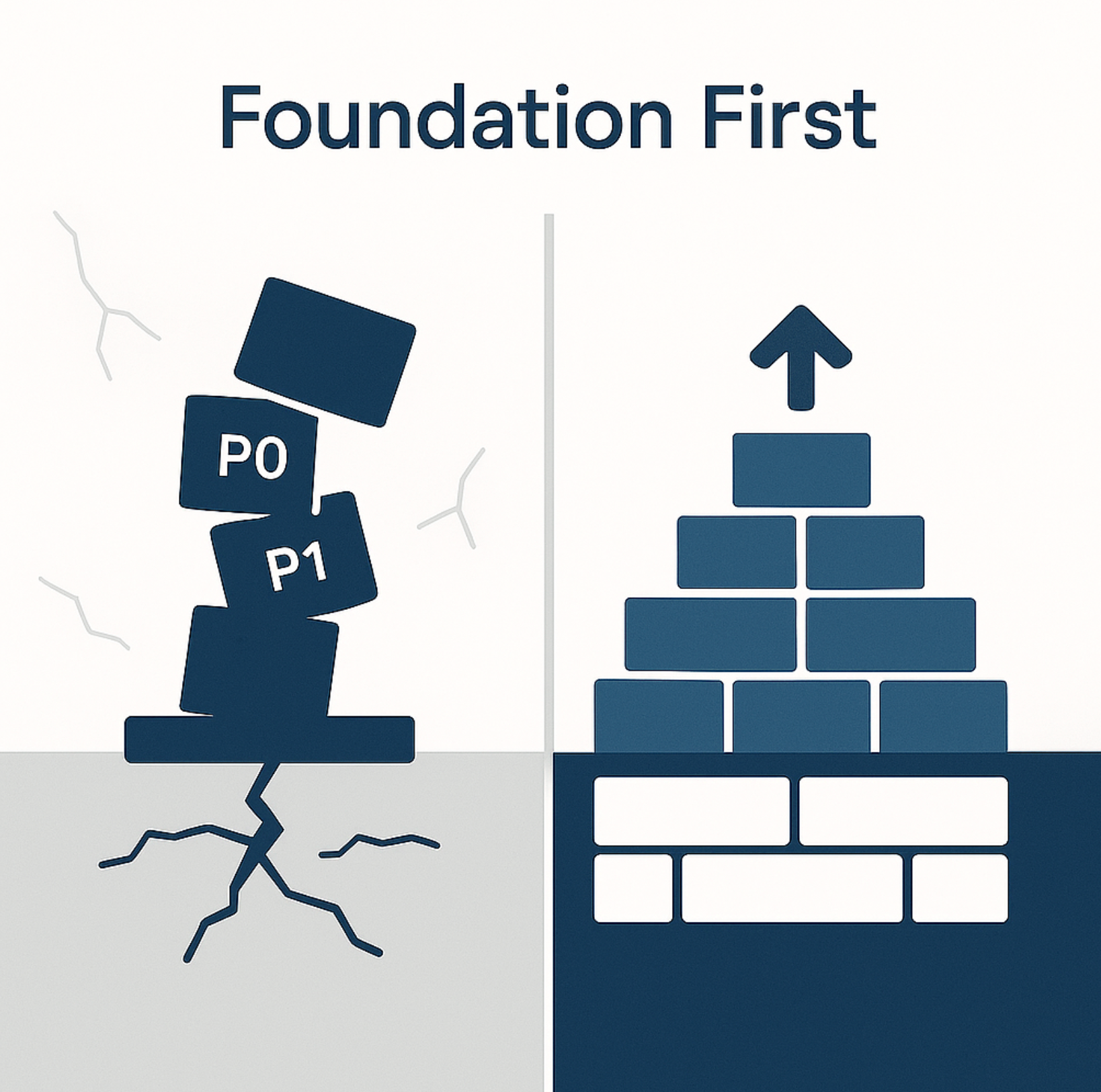
Tech debt is about everything that stems from unstable foundations. I had to learn this during our scaling journey. Early on, we made quick decisions to ship features fast. But as we grew, those shortcuts started choking our growth. Companies pay an additional 10 to 20 percent to address tech debt on top of the costs of any project, and we felt every percentage point. The real killer isn't just the extra time – it's the opportunity cost. While your team is fixing yesterday's shortcuts, your competitors are building tomorrow's features. Developers working on the right things can accelerate a company's move into new markets or product areas and help companies differentiate themselves at disproportionate rates. But there's a human cost too. Nobody likes working with a significant handicap and being unproductive day after day. ... Here's where most companies get it wrong. They think innovation means constantly adding new features, launching new products, exploring new markets. But true innovation requires a stable foundation. 30 percent of CIOs surveyed believe that more than 20 percent of their technical budget ostensibly dedicated to new products is diverted to resolving issues related to tech debt. You're essentially pouring money into a bucket with holes in it. I've learned that the most innovative companies aren't necessarily the ones building the flashiest features – they're the ones who've mastered the discipline of maintaining clean, stable systems that can support rapid innovation.


Regulatory bodies close in on AI chatbots as LLMs face greater scrutiny

As regulators roll out online safety laws designed to protect kids from harms associated with porn and social media, a new threat has crept up behind them that could overshadow both. AI chatbots – exemplified by OpenAI’s large language model, ChatGPT – have been around long enough to prove themselves popular, and risky. ... Inman-Grant says schools have “been reporting that 10- and 11-year-old children are spending up to six hours per day on AI companions.” Moreover, it’s not just that they’re befriending LLMs – it’s that they’re often friends with benefits, or “sexualized chatbots.” “We don’t need to see a body count to know that this is the right thing for the companies to do,” says the commissioner. “I don’t want to see Australian lives ruined or lost as a result of the industry’s insatiable need to move fast and break things.” ... Brazilian authorities are pressuring Meta to immediately remove AI chatbots that “simulate child profiles and engage in sexual conversations with users.” According to PPC Land, the bots in question are those created using Meta AI Studio, a tool for developing custom AI chatbots. In mid-August, Brazil’s Attorney General (AGU) issued an “extrajudicial notice” giving Meta 72 hours to remove the erotic kiddie chatbots. It references Article 217-A of Brazil’s Penal Code, which criminalizes sexual acts with minors under 14 years old.The AGU argues that this includes simulated sexual interactions with AI. Under Brazilian law, platforms are liable for harmful content hosted on their services.


The Value-Driven AI Roadmap

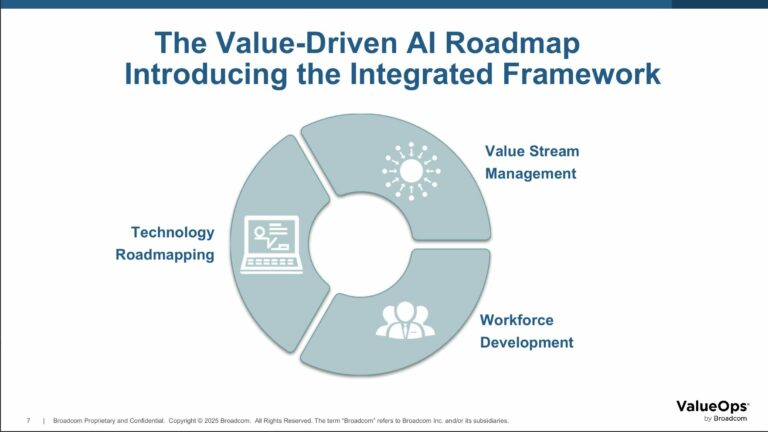
The use of value stream management helps organizations map their processes, identifying impediments to delivering software that has value, and using automation to collect metrics that give insights into those processes – and even anticipate where the next hurdles might pop up, Knight said. “I’m going to map the process out, look at where things are and say, hey, I could put an AI agent here, then create a program and a plan to do that in a technology roadmap to line up with it,” he explained. Technology roadmapping involves aligning AI – what the organization is using now and what its needs might be a few years down the road – with business value. Staying on top of technology involves changes being driven by the market, the level of capability maturity within the organization, and finding where the gaps in your technology exist. “Roadmapping is more about helping organizations line up the change of different technologies and how to roll that out,” he said. Finally, Knight pointed out, assessing the skills within your workforce, where training is needed, and how willing the workers are to change, is critical. “It’s about how people in the future, in organizations, will have AI agents that work for them. And you think about it having extra capabilities where I’m going to have this set of skills with these people, but I may have an agent that works for me,” Knight said. “Maybe that agent does paralegal work for me.


The Hidden Cost of Overuse and Misuse of Data Storage

At first glance, storing everything might not seem like a huge problem. But when you factor in rising energy prices and ballooning data volumes, the cracks in that strategy start to show. Over time, outdated storage practices, from legacy systems to underused cloud buckets, can become a surprisingly expensive problem. ... what often gets overlooked are the hidden costs: the backup of low-value data, the power consumption of idle systems, or the surprise charges that come from cloud services which are not being monitored properly. Then there’s the operational cost. Disorganised or poorly labelled data makes access slower and compliance tougher. It also increases security risks, especially if sensitive information is spread across uncontrolled environments. The longer these issues go unchecked, the more danger there is of a snowball effect. ... Cutting storage costs is an obvious benefit but it’s far from the only one. A smarter, edge-driven strategy helps businesses build a more efficient, resilient, and sustainable digital infrastructure ... By processing and filtering data locally, organisations reduce the energy demands of transmitting and storing large volumes centrally, supporting both carbon reduction targets and lower utility costs. As sustainability reporting becomes more critical, this can also help meet Scope 2 emissions goals.


9 cloud strategy questions every IT leader must answer

Cloud platforms are increasingly procured by non-IT teams. Establishing a unified decision framework that brings together expertise from across the enterprise to guide the cloud lifecycle, from selection to sunsetting, is key. Without this, “organizations face fragmented architectures, redundant tools, and compliance gaps,” says CIO Mentor’s Topinka ... Working with multiple cloud partners can offer negotiating leverage and access to best-of-breed services, but it also compounds complexity and requires a range of expertise. ... “The maturity and advancement of cloud solutions depend on the team’s culture and their ability to operate and innovate within the cloud,” Hackett Group’s Nathan adds. ... “Clear visibility into consumption patterns, resource allocation, and usage metrics is essential,” says Nathan, noting that cloud financial management practices help maintain accountability and prevent cost overruns, particularly in multicloud environments. Allocating cloud costs directly to business units or product teams also increases transparency and encourages more efficient use of cloud resources, according to Kocherlakota. ... Cloud adoption without attendant legacy modernization can backfire, S&P Global’s Kocherlakota says. “Simply using the cloud as a data center while maintaining legacy applications can lead to cost creep,” he says. “Investing in transforming legacy systems optimizes infrastructure and boosts efficiency.”


Has Cloud Security Reached Its Breaking Point?

The comfortable assumptions that have guided cloud security for the past decade are crumbling. Supply chain attacks cascade through thousands of projects simultaneously. ... The GitHub Actions compromise (CVE-2025-30066) represents an evolutionary leap in supply chain attacks. What started as a single compromised Personal Access Token cascaded through 23,000+ repositories by exploiting dependency chains. Attackers retroactively modified version tags and implemented memory dumping to extract AWS keys, GitHub tokens and RSA keys from CI/CD logs. ... 89 percent of enterprises run multi-cloud environments, but only 23 percent have full visibility across their infrastructure. This creates a perfect storm where 70 percent of attacks span three or more cloud surfaces simultaneously ... While experts predict quantum computers will break current encryption by 2027 to 2030, the 'harvest now, decrypt later' attacks are already underway. Only 24 percent of organizations have started post-quantum cryptography preparation, leaving millions of encrypted communications vulnerable to future decryption. ... The evidence is clear that incremental improvements cannot address the mathematical realities we face. Security already struggled to scale for cloud workloads without core organizational and process changes; with AI adoption accelerating, it is impossible unless enterprises address foundational gaps.


Probably Secure: A Look at the Security Concerns of Deterministic vs Probabilistic Systems

From a security standpoint, there are places where probability belongs, and places where it absolutely does not. Identity authentication, transaction authorization, cryptographic key validation, and agent permissions must be rooted in deterministic validation, not statistical confidence. Generative AI, while powerful, can easily mislead developers, suggesting insecure code, leaking secrets through logs, or introducing unsafe patterns without clear visibility. Even well-structured retrieval-augmented generation (RAG) systems have a fundamental limitation: you can’t “tune” them for security beyond scrutinizing all input and output, leaving room for mistakes that attackers can exploit. Your tooling needs to treat probabilistic intelligence as a supplement rather than a trust anchor, reinforcing every critical security decision with deterministic, provable checks. ... Probabilistic tools are powerful for risk detection, prioritization, and context enrichment. Generative AI may accelerate development, but without deterministic guardrails, it can also accelerate risk. Teams need to focus on closing this gap by combining the strengths of AI-driven detection with hardened, verifiable validation for every secret, token, and non-human identity. This layered model ensures that organizations can safely leverage AI-driven insights while preserving a foundation of cryptographic certainty.


What do cybercriminals know about the retail sector that we don’t?

“Stolen customer data is valuable to fraudsters. So, retail is particularly vulnerable because retailers store large quantities of consumer data.” With so much to lose, retailers should be taking more care to protect themselves, but that is no easy feat. The scale of their operations means their businesses have many moving parts. Their supply chains are long and complex, involving an intricate and ever-changing network of suppliers. ... While external cybersecurity advisors are often called in after a breach has occurred, it is also wise to have them on board as a pre-emptive measure, as Kirsten Whitfield, co-head of law firm Fieldfisher’s cyber breach team in London, explains “Get a forensics provider on board to help close down an incident, and engage them in advance, as they could stress test the systems against common attack vectors from their knowledge of hacking groups,” she says. “Even engage a professional ransomware negotiator who can profile attackers.” On the technical front, the biggest challenge is to keep pace with the growth in AI. Hackers are using it, so retailers need to invest in defensive AI to fight fire with fire. “Investing as regulators expect you to will not necessarily mean you are iron clad,” says Whitfield. “Hackers are increasingly sophisticated and use tools like AI, so it is a good idea to invest in it, too, though you don’t want to rush into buying AI that you think will protect you but has not been fully understood.”

Daily Tech Digest - September 09, 2025


Quote for the day:

“The greatest leader is not necessarily the one who does the greatest things. He is the one that gets the people to do the greatest things.” -- Ronald Reagan


Neuromorphic computing and the future of edge AI

While QC captures the mainstream headlines, neuromorphic computing has positioned itself as a force in the next era of AI. While conventional AI relies heavily on GPU/TPU-based architectures, neuromorphic systems mimic the parallel and event-driven nature of the human brain. ... Neuromorphic hardware has shown promise in edge environments where power efficiency, latency and adaptability matter most. From wearable medical devices to battlefield robotics, systems that can “think locally” without requiring constant cloud connectivity offer clear advantages. ... As neuromorphic computing matures, ethical and sustainability considerations will shape adoption as much as raw performance. Spiking neural networks’ efficiency reduces carbon footprints by cutting energy demands compared to GPUs, aligning with global decarbonization targets. At the same time, ensuring that neuromorphic models are transparent, bias‑aware and auditable is critical for applications in healthcare, defense and finance. Calls for AI governance frameworks now explicitly include neuromorphic AI, reflecting its potential role in high‑stakes decision‑making. Embedding sustainability and ethics into the neuromorphic roadmap will ensure that efficiency gains do not come at the cost of fairness or accountability.


10 security leadership career-killers — and how to avoid them

“Security has evolved from being the end goal to being a business-enabling function,” says James Carder, CISO at software maker Benevity. “That means security strategies, communications, planning, and execution need to be aligned with business outcomes. If security efforts aren’t returning meaningful ROI, CISOs are likely doing something wrong. Security should not operate as a cost center, and if we act or report like one, we’re failing in our roles.” ... CISOs generally know that the security function can’t be the “department of no.” But some don’t quite get to a “yes,” either, which means they’re still failing their organizations in a way that could stymie their careers, says Aimee Cardwell, CISO in residence at tech company Transcend and former CISO of UnitedHealth Group. ... CISOs who are too rigid with the rules do a disservice to their organizations and their professional prospects, says Cardwell. Such a situation recently came up in her organization, where one of her team members initially declined to permit a third-party application from being used by workers, pointing to a security policy barring such apps. ... CISOs who don’t have a firm grasp on all that they must secure won’t succeed in their roles. “If they don’t have visibility, if they can’t talk about the effectiveness of the controls, then they won’t have credibility and the confidence in them among leadership will erode,” Knisley says.


A CIO's Evolving Role in the Generative AI Era

The dual mandate facing CIOs today is demanding but unavoidable. They must deliver quick AI pilots that boards can take to the shareholders while also enforcing guardrails on security, ethics and cost aspects. Too much caution can make CIOs irrelevant. This balancing act requires not only technical fluency but also narrative skill. The ability to translate AI experiments into business outcomes that CEOs and boards can trust can make CIOs a force. The MIT report highlights another critical decision point: whether to build or buy. Many enterprises attempt internal builds, but externally built AI partnerships succeed twice as often. CIOs, pressured for fast results, must be pragmatic about when to build and when to partner. Gen AI does not - and never will - replace the CIO role. But it demands corrections. The CIO who once focused on alignment must now lead business transformation. Those who succeed will act less as CIOs and more as AI diplomats, bridging hype with pragmatism, connecting technological opportunities to shareholder value and balancing the boardroom's urgency with the operational reality. As AI advances, so does the CIO's role - but only if they evolve. Their reporting line to the CEO symbolizes greater trust and higher stakes. Unlike previous technology cycles, AI has brought the CIO to the forefront of transformation. 


Building an AI Team May Mean Hiring Where the Talent Is, Not Where Your Bank Is

Much of the adaptation of banking to AI approaches requires close collaboration between AI talent with people who understand how the banking processes involved need to work. This will put people closer together, literally, to facilitate both quick and in-depth but always frequent interactions to make collaboration work — paradoxically, increased automation needs more face-to-face dealings at the formative stages. However, the "where" of the space will also hinge on where AI and innovation talent can be recruited, where that talent is being bred and wants to work, and the types of offices that talent will be attracted to. ... "Banks are also recruiting for emerging specialties in responsible AI and AI governance, ensuring that their AI initiatives are ethical, compliant and risk-managed," the report says. "As ‘agentic AI’ — autonomous AI agents — and generative AI gain traction, firms will need experts in these cutting-edge fields too." ... Decisions don’t stop at the border anymore. Jesrani says that savvy banks look for pockets of talent as well. ... "Banks are contemplating their global strategies because emerging markets can provide them with talent and capabilities that they may not be able to obtain in the U.S.," says Haglund. "Or there may be things happening in those markets that they need to be a part of in order to advance their core business capabilities."


How Data Immaturity is Preventing Advanced AI

Data immaturity, in the context of AI, refers to an organisation’s underdeveloped or inadequate data practices, which limit its ability to leverage AI effectively. It encompasses issues with data quality, accessibility, governance, and infrastructure. Critical signs of data immaturity include inconsistent, incomplete, or outdated data leading to unreliable AI outcomes; data silos across departments hindering access and comprehensive analysis, as well as weak data governance caused by a lack of policies on data ownership, compliance and security, which introduces risks and restricts AI usage. ... Data immaturity also leads to a lack of trust in analysis and predictability of execution. That puts a damper on any plans to leverage AI in a more autonomous manner—whether for business or operational process automation. A recent study by Kearney found that organisations globally are expecting to increase data and analytics budgets by 22% in the next three years as AI adoption scales. Fragmented data limits the predictive accuracy and reliability of AI, which are crucial for autonomous functions where decisions are made without human intervention. As a result, organisations must get their data houses in order before they will be able to truly take advantage of AI’s potential to optimise workflows and free up valuable time for humans to focus on strategy and design, tasks for which most AI is not yet well suited.


From Reactive Tools to Intelligent Agents: Fulcrum Digital’s AI-First Transformation

To mature, LLM is just one layer. Then you require the integration layer, how you integrate it. Every customer has multiple assets in their business which have to connect with LLM layers. Every business has so many existing applications and new applications; businesses are also buying some new AI agents from the market. How do you bring new AI agents, existing old systems, and new modern systems of the business together — integrating with LLM? That is one aspect. The second aspect is every business has its own data. So LLM has to train on those datasets. Copilot and OpenAI are trained on zillions of data, but that is LLM. Industry wants SLM—small language models, private language models, and industry-orientated language models. So LLMs have to be fine-tuned according to the industry and also fine-tuned according to their data. Nowadays people come to realise that LLMs will never give you 100 per cent accurate solutions, no matter which LLM you choose. That is the phenomenon customers and everybody are now learning. The difference between us and others: many players who are new to the game deliver results with LLMs at 70–75 per cent. Because we have matured this game with multiple LLMs coexisting, and with those LLMs together maturing our Ryze platform, we are able to deliver more than 93–95 per cent accuracy. 


You Didn't Get Phished — You Onboarded the Attacker

Many organizations respond by overcorrecting: "I want my entire company to be as locked down as my most sensitive resource." It seems sensible—until the work slows to a crawl. Without nuanced controls that allow your security policies to distinguish between legitimate workflows and unnecessary exposure, simply applying rigid controls that lock everything down across the organization will grind productivity to a halt. Employees need access to do their jobs. If security policies are too restrictive, employees are either going to find workarounds or continually ask for exceptions. Over time, risk creeps in as exceptions become the norm. This collection of internal exceptions slowly pushes you back towards "the castle and moat" approach. The walls are fortified from the outside, but open on the inside. And giving employees the key to unlock everything inside so they can do their jobs means you are giving one to Jordan, too. ... A practical way to begin is by piloting ZSP on your most sensitive system for two weeks. Measure how access requests, approvals, and audits flow in practice. Quick wins here can build momentum for wider adoption, and prove that security and productivity don't have to be at odds. ... When work demands more, employees can receive it on request through time-bound, auditable workflows. Just enough access is granted just in time, then removed. By taking steps to operationalize zero standing privileges, you empower legitimate users to move quickly—without leaving persistent privileges lying around for Jordan to find.


OT Security: When Shutting Down Is Not an Option

some of the most urgent and disruptive threats today are unfolding far from the keyboard, in operational technology environments that keep factories running, energy flowing and transportation systems moving. In these sectors, digital attacks can lead to physical consequences, and defending OT environments demands specialized skills. Real-world incidents across manufacturing and critical infrastructure show how quickly operations can be disrupted when OT systems are not adequately protected. Just this week, Jaguar Land Rover disclosed that a cyberattack "severely disrupted" its automotive manufacturing operations. ... OT environments present challenges that differ sharply from traditional IT. While security is improving, OT security teams must protect legacy control systems running outdated firmware, making them difficult to patch. Operators need to prioritize uptime and safety over system changes; and IT and OT teams frequently work in silos. These conditions mean that breaches can have physical as well as digital consequences, from halting production to endangering lives. Training tailored to OT is essential to secure critical systems while maintaining operational continuity. ... An OT cybersecurity learning ecosystem is not a one-time checklist but a continuous program. The following elements help organizations choose training that meets current needs while building capacity for ongoing improvement.


Connected cars are racing ahead, but security is stuck in neutral

Connected cars are essentially digital platforms with multiple entry points for attackers. The research highlights several areas of concern. Remote access attacks can target telematics systems, wireless interfaces, or mobile apps linked to the car. Data leaks are another major issue because connected cars collect sensitive information, including location history and driving behavior, which is often stored in the cloud. Sensors present their own set of risks. Cameras, radar, lidar, and GPS can be manipulated, creating confusion for driver assistance systems. Once inside a vehicle, attackers can move deeper by exploiting the CAN bus, which connects key systems such as brakes, steering, and acceleration. ... Most drivers want information about what data is collected and where it goes, yet very few said they have received that information. Brand perception also plays a role. Many participants prefer European or Japanese brands, while some expressed distrust toward vehicles from certain countries, citing political concerns, safety issues, or perceived quality gaps. ... Manufacturers are pushing out new software-defined features, integrating apps, and rolling out over the air updates. This speed increases the number of attack paths and makes it harder for security practices and rules to keep up.


Circular strategies for data centers

Digital infrastructure is scaling rapidly, with rising AI workloads and increased compute density shaping investment decisions. Growth on that scale can generate unnecessary waste unless sustainability is integrated into planning. Circular thinking makes it possible to expand capacity without locking facilities into perpetual hardware turnover. Operators can incorporate flexibility into refresh cycles by working with vendors that design modular platforms or by adopting service-based models that build in maintenance, refurbishment, and recovery. ... Sustainable planning also involves continuous evaluation. Instead of defaulting to wholesale replacement, facilities can test whether assets still meet operational requirements through reconfiguration, upgrades, or role reassignment. This kind of iterative approach gives operators a way to match innovation with responsibility, ensuring that capacity keeps pace with demand without discarding equipment prematurely. ... The transition to circular practices is more than an environmental gesture. For data centers, it is a strategic shift in how infrastructure is procured, maintained, and retired. Extending lifecycles, redeploying equipment internally, refurbishing where possible, and ensuring secure, responsible recycling at the end of use all contribute to a more resilient operation in a resource-constrained and tightly regulated industry.

Daily Tech Digest - September 08, 2025


Quote for the day:

"Let no feeling of discouragement prey upon you, and in the end you are sure to succeed." -- Abraham Lincoln


Coding With AI Assistants: Faster Performance, Bigger Flaws

One challenge comes in the form of how AI coding assistants tend to package their code. Rather than delivering bite-size pieces, they generally deliver larger code pull requests for porting into the main project repository. Apiiro saw AI code assistants deliver three to four times as many code commits - meaning changes to a code repository - than non-AI code assistants, but packaging fewer pull requests. The problem is that larger PRs are inherently riskier and more time-consuming to verify. "Bigger, multi-touch PRs slow review, dilute reviewer attention and raise the odds that a subtle break slips through," said Itay Nussbaum, a product manager at Apiiro. ... At the same time, the tools generated deeper problems, in the form of a 150% increase in architectural flaws and an 300% increase in privilege issues. "These are the kinds of issues scanners miss and reviewers struggle to spot - broken auth flows, insecure designs, systemic weaknesses," Nussbaum said. "In other words, AI is fixing the typos but creating the time bombs." The tools also have a greater tendency to leak cloud credentials. "Our analysis found that AI-assisted developers exposed Azure service principals and storage access keys nearly twice as often as their non-AI peers," Nussbaum said. "Unlike a bug that can be caught in testing, a leaked key is live access: an immediate path into the production cloud infrastructure."


IT Leadership Is More Change Management Than Technical Management

Planning is considered critical in business to keep an organization moving forward in a predictable way, but Mahon doesn’t believe in the traditional annual and long-term planning in which lots of time is invested in creating the perfect plan which is then executed. “Never get too engaged in planning. You have a plan, but it’s pretty broad and open-ended. The North Star is very fuzzy, and it never gets to be a pinpoint [because] you need to focus on all the stuff that's going on around you,” says Mahon. “You should know exactly what you're going to do in the next two to three months. From three to six months out, you have a really good idea what you're going to do but be prepared to change. And from six to nine months or a year, [I wait until] we get three months away before I focus on it because tech and business needs change rapidly.” ... “The good ideas are mostly common knowledge. To be honest, I don’t think there are any good self-help books. Instead, I have a leadership coach who is also my mental health coach,” says Mahon. “Books try to get you to change who you are, and it doesn’t work. Be yourself. I have a leadership coach who points out my flaws, 90% of which I’m already aware of. His philosophy is don’t try to fix the flaw, address the flaw so, for example, I’m mindful about my tendency to speak too directly.”


The Anatomy of SCREAM: A Perfect Storm in EA Cupboard

SCREAM- Situational Chaotic Realities of Enterprise Architecture Management- captures the current state of EA practice, where most organizations, from medium to large complexity, struggle to derive optimal value from investments in enterprise architecture capabilities. It’s the persistent legacy challenges across technology stacks and ecosystems that need to be solved to meet strategic business goals and those moments when sudden, ill-defined executive needs are met with a hasty, reactive sprint, leading to a fractured and ultimately paralyzing effect on the entire organization. ... The paradox is that the very technologies offering solutions to business challenges are also key sources of architectural chaos, further entrenching reactive SCREAM. As noted, the inevitable chaos and fragmentation that emerge from continuous technology additions lead to silos and escalating compatibility issues. ... The chaos of SCREAM is not just an external force; it’s a product of our own making. While we preach alignment to the business, we often get caught up in our own storm in an EA cupboard. How often do we play EA on EA? ... While pockets of recognizable EA wins may exist through effective engagement, a true, repeatable value-add requires a seat at the strategic table. This means “architecture-first” must evolve beyond being a mere buzzword or a token effort, becoming a reliable approach that promotes collaborative success rather than individual credit-grabbing.


How Does Network Security Handle AI?

Detecting when AI models begin to vary and yield unusual results is the province of AI specialists, users and possibly the IT applications staff. But the network group still has a role in uncovering unexpected behavior. That role includes: Properly securing all AI models and data repositories on the network. Continuously monitoring all access points to the data and the AI system. Regularly scanning for network viruses and any other cyber invaders that might be lurking. ... both application and network teams need to ensure strict QA principles across the entire project -- much like network vulnerability testing. Develop as many adversarial prompt tests coming from as many different directions and perspectives as you can. Then try to break the AI system in the same way a perpetrator would. Patch up any holes you find in the process. ... Apply least privilege access to any AI resource on the network and continually monitor network traffic. This philosophy should also apply to those on the AI application side. Constrict the AI model being used to the specific use cases for which it was intended. In this way, the AI resource rejects any prompts not directly related to its purpose. ... Red teaming is ethical hacking. In other words, deploy a team whose goal is to probe and exploit the network in any way it can. The aim is to uncover any network or AI vulnerability before a bad actor does the same.


Lack of board access: The No. 1 factor for CISO dissatisfaction

CISOs who don’t get access to the board are often buried within their organizations. “There are a lot of companies that will hire at a director level or even a senior manager level and call it a CISO. But they don’t have the authority and scope to actually be able to execute what a CISO does,” says Nick Kathmann, CISO at LogicGate. Instead of reporting directly to the board or CEO, these CISOs will report to a CIO, CTO or other executive, despite the problems that can arise in this type of reporting structure. CIOs and CTOs are often tasked with implementing new technology. The CISO’s job is to identity risks and ensure the organization is secure. “If the CIO doesn’t like those risks or doesn’t want to do anything to fix those risks, they’ll essentially suppress them [CISOs] as much as they can,” says Kathmann. ... Getting in front of the board is one thing. Effectively communicating cybersecurity needs and getting them met is another. It starts with forming relationships with C-suite peers. Whether CISOs are still reporting up to another executive or not, they need to understand their peers’ priorities and how cybersecurity can mesh with those. “The CISO job is an executive job. As an executive, you rely completely on your peer relationships. You can’t do anything as an executive in a vacuum,” says Barrack. Working in collaboration, rather than contention, with other executives can prepare CISOs to make the most of their time in front of the board.


From Vault Sprawl to Governance: How Modern DevOps Teams Can Solve the Multi-Cloud Secrets Management Nightmare

Every time an application is updated or a new service is deployed, one or multiple new identities are born. These NHIs include service accounts, CI/CD pipelines, containers, and other machine workloads, the running pieces of software that connect to other resources and systems to do work. Enterprises now commonly see 100 or more NHIs for every single human identity. And that number keeps growing. ... Fixing this problem is possible, but it requires an intentional strategy. The first step is creating a centralized inventory of all secrets. This includes secrets stored in vaults, embedded in code, or left exposed in CI/CD pipelines and environments. Orphaned and outdated secrets should be identified and removed. Next, organizations must shift left. Developers and DevOps teams require tools to detect secrets early, before they are committed to source control or merged into production. Educating teams and embedding detection into the development process significantly reduces accidental leaks. Governance must also include lifecycle mapping. Secrets should be enriched with metadata such as owner, creation date, usage frequency, and last rotation. Automated expiration and renewal policies help enforce consistency and reduce long-term risk. Contributions should be both product- and vendor-agnostic, focusing on market insights and thought leadership.


Digital Public Infrastructure: The backbone of rural financial inclusion

When combined, these infrastructures — UPI for payments, ONDC for commerce, AAs for credit, CSCs for handholding support and broadband for connectivity form a powerful ecosystem. Together, these enable a farmer to sell beyond the village, receive instant payment and leverage that income proof for a micro-loan, all within a seamless digital journey. Adding to this, e-KYC ensures that identity verification is quick, low-cost and paperless, while AePS provides last-mile access to cash and banking services, ensuring inclusion even for those outside the smartphone ecosystem. This integration reduces dependence on middlemen, enhances transparency and fosters entrepreneurship. ...  Of course, progress does not mean perfection. There are challenges that must be addressed with urgency and sensitivity. Many rural merchants hesitate to fully embrace digital commerce due to uncertainties around Goods and Services Tax (GST) compliance. Digital literacy, though improving, still varies widely, particularly among older populations and women. Infrastructure costs such as last-mile broadband and device affordability remain burdensome for small operators. These are not reasons to slow down but opportunities to fine-tune policy. Simplifying tax processes for micro-enterprises, investing in vernacular digital literacy programmes, subsidising rural connectivity and embedding financial education into community touchpoints such as CSCs will be essential to ensure no one is left behind.


Cybersecurity research is getting new ethics rules, here’s what you need to know

Ethics analysis should not be treated as a one-time checklist. Stakeholder concerns can shift as a project develops, and researchers may need to revisit their analysis as they move from design to execution to publication. ...“Stakeholder ethical concerns impact academia, industry, and government,” Kalu said. “Security teams should replace reflexive defensiveness with structured collaboration: recognize good-faith research, provide intake channels and SLAs, support coordinated disclosure and pre-publication briefings, and engage on mitigation timelines. A balanced, invitational posture, rather than an adversarial one, will reduce harm, speed remediation, and encourage researchers to keep working on that project.” ... While the new requirements target academic publishing, the ideas extend to industry practice. Security teams often face similar dilemmas when deciding whether to disclose vulnerabilities, release tools, or adopt new defensive methods. Thinking in terms of stakeholders provides a way to weigh the benefits and risks of those decisions. ... Peng said ethical standards should be understood as “scaffolds that empower thoughtful research,” providing clarity and consistency without blocking exploration of adversarial scenarios. “By building ethics into the process from the start and revisiting it as research develops, we can both protect stakeholders and ensure researchers can study the potential threats that adversaries, who face no such constraints, may exploit,” she said.


From KYC to KYAI: Why ‘Algorithmic Transparency’ is Now Critical in Banking

This growing push for transparency into AI models has introduced a new acronym to the risk and compliance vernacular: KYAI, or "know your AI." Just like finance institutions must know the important details about their customers, so too must they understand the essential components of their AI models. The imperative has evolved beyond simply knowing "who" to "how." Based on my work helping large banks and other financial institutions integrate AI into their KYC workflows over the last few years, I’ve seen what can happen when these teams spend the time vetting their AI models and applying rigorous transparency standards. And, I’ve seen what can happen when they become overly trusting of black-box algorithms that deliver decisions based on opaque methods with no ability to attribute accountability. The latter rarely ever ends up being the cheapest or fastest way to produce meaningful results. ... The evolution from KYC to KYAI is not merely driven by regulatory pressure; it reflects a fundamental shift in how businesses operate today. Financial institutions that invest in AI transparency will be equipped to build greater trust, reduce operational risks, and maintain auditability without missing a step in innovation. The transformation from black box AI to transparent, governable systems represents one of the most significant operational challenges facing financial institutions today.


Why compliance clouds are essential

From a technical perspective, compliance clouds offer something that traditional clouds can’t match, these are the battle-tested security architectures. By implementing them, the organizations can reduce their data breach risk by 30-40% compared to standard cloud deployments. This is because compliance clouds are constantly reviewed and monitored by third-party experts, ensuring that we are not just getting compliance, but getting an enterprise-grade security that’s been validated by some of the most security-conscious organizations in the world. ... What’s particularly interesting is that 58% of this market is software focused. As organizations prioritize automation and efficiency in managing complex regulatory requirements, this number is set to grow further. Over 75% of federal agencies have already shifted to cloud-based software to meet evolving compliance needs. Following this, we at our organizations have also achieved FedRAMP® High Ready compliance for Cloud. ... Cloud compliance solutions deliver far-reaching benefits that extend well beyond regulatory adherence, offering a powerful mix of cost efficiency, trust building, adaptability, and innovation enablement. ... In an era where trust is a competitive currency, compliance cloud certifications serve as strong differentiators, signaling an organization’s unwavering commitment to data protection and regulatory excellence.