Daily Tech Digest - August 14, 2025


Quote for the day:

"Act as if what you do makes a difference. It does." -- William James


What happens the day after superintelligence?

As context, artificial superintelligence (ASI) refers to systems that can outthink humans on most fronts, from planning and reasoning to problem-solving, strategic thinking and raw creativity. These systems will solve complex problems in a fraction of a second that might take the smartest human experts days, weeks or even years to work through. ... So ask yourself, honestly, how will humans act in this new reality? Will we reflexively seek advice from our AI assistants as we navigate every little challenge we encounter? Or worse, will we learn to trust our AI assistants more than our own thoughts and instincts? ... Imagine walking down the street in your town. You see a coworker heading towards you. You can’t remember his name, but your AI assistant does. It detects your hesitation and whispers the coworker’s name into your ears. The AI also recommends that you ask the coworker about his wife, who had surgery a few weeks ago. The coworker appreciates the sentiment, then asks you about your recent promotion, likely at the advice of his own AI. Is this human empowerment, or a loss of human agency? ... Many experts believe that body-worn AI assistants will make us feel more powerful and capable, but that’s not the only way this could go. These same technologies could make us feel less confident in ourselves and less impactful in our lives.


Confidential Computing: A Solution to the Uncertainty of Using the Public Cloud

Confidential computing is a way to ensure that no external party can look at your data and business logic while it is executed. It looks to secure Data in Use. When you now add to that the already established way to secure Data at Rest and Data in Transit it can be ensured that most likely no external party can access secured data running in a confidential computing environment wherever that may be. ... To be able to execute services in the cloud the company needs to be sure that the data and the business logic cannot be accessed or changed from third parties especially by the system administrator of that cloud provider. It needs to be protected. Or better, it needs to be executed in the Trusted Compute Base (TCB) of the company. This is the environment where specific security standards are set to restrict all possible access to data and business logic. ... Here attestation is used to verify that a confidential environment (instance) is securely running in the public cloud and it can be trusted to implement all the security standards necessary. Only after successful attestation the TCB is then extended into the Public cloud to incorporate the attested instances. One basic requirement of attestation is that the attestation service is located independently of the infrastructure where the instance is running. 


Open Banking's Next Phase: AI, Inclusion and Collaboration

Think of open banking as the backbone for secure, event-driven automation: a bill gets paid, and a savings allocation triggers instantly across multiple platforms. The future lies in secure, permissioned coordination across data silos, and when applied to finance, it unlocks new, high-margin services grounded in trust, automation and personalisation. ... By building modular systems that handle hierarchy, fee setup, reconciliation and compliance – all in one cohesive platform – we can unlock new revenue opportunities. ... Regulators must ensure they are stepping up efforts to sustain progress and support fintech innovation whilst also meeting their aim to keep customers safe. Work must also be done to boost public awareness of the value of open banking. Many consumers are unaware of the financial opportunities open banking offers and some remain wary of sharing their data with unknown third parties. ... Rather than duplicating efforts or competing head-to-head, institutions and fintechs should focus on co-developing shared infrastructure. When core functions like fee management, operational controls and compliance processes are unified in a central platform, fintechs can innovate on customer experience, while banks provide the stability, trust and reach. 


Data centers are eating the economy — and we’re not even using them

Building new data centers is the easy solution, but it’s neither sustainable nor efficient. As I’ve witnessed firsthand in developing compute orchestration platforms, the real problem isn’t capacity. It’s allocation and optimization. There’s already an abundant supply sitting idle across thousands of data centers worldwide. The challenge lies in efficiently connecting this scattered, underutilized capacity with demand. ... The solution isn’t more centralized infrastructure. It’s smarter orchestration of existing resources. Modern software can aggregate idle compute from data centers, enterprise servers, and even consumer devices into unified, on-demand compute pools. ... The technology to orchestrate distributed compute already exists. Some network models already demonstrate how software can abstract away the complexity of managing resources across multiple providers and locations. Docker containers and modern orchestration tools make workload portability seamless. The missing piece is just the industry’s willingness to embrace a fundamentally different approach. Companies need to recognize that most servers are idle 70%-85% of the time. It’s not a hardware problem requiring more infrastructure. 


How an AI-Based 'Pen Tester' Became a Top Bug Hunter on HackerOne

While GenAI tools can be extremely effective at finding potential vulnerabilities, XBOW's team found they were't very good at validating the findings. The trick to making a successful AI-driven pen tester, Dolan-Gavitt explained, was to use something other than an LLM to verify the vulnerabilities. In this case of XBOW, researchers used a deterministic validation approach. "Potentially, maybe in a couple years down the road, we'll be able to actually use large language models out of the box to verify vulnerabilities," he said. "But for today, and for the rest of this talk, I want to propose and argue for a different way, which is essentially non-AI, deterministic code to validate vulnerabilities." But AI still plays an integral role with XBOW's pen tester. Dolan-Gavitt said the technology uses a capture-the-flag (CTF) approach in which "canaries" are placed in the source code and XBOW sends AI agents after them to see if they can access them. For example, he said, if researchers want to find a remote code execution (RCE) flaw or an arbitrary file read vulnerability, they can plant canaries on the server's file system and set the agents loose. ... Dolan-Gavitt cautioned that AI-powered pen testers are not panacea. XBOW still sees some false positives because some vulnerabilities, like business logic flaws, are difficult to validate automatically.


Data Governance Maturity Models and Assessments: 2025 Guide

Data governance maturity frameworks help organizations assess their data governance capabilities and guide their evolution toward optimal data management. To implement a data governance or data management maturity framework (a “model”) it is important to learn what data governance maturity is, explore how and why it should be assessed, discover various maturity models and their features, and understand the common challenges associated with using maturity models. Data governance maturity refers to the level of sophistication and effectiveness with which an organization manages its data governance processes. It encompasses the extent to which an organization has implemented, institutionalized, and optimized its data governance practices. A mature data governance framework ensures that the organization can support its business objectives with accurate, trusted, and accessible data. Maturity in data governance is typically assessed through various models that measure different aspects of data management such as data quality and compliance and examine processes for managing data’s context (metadata) and its security. Maturity models provide a structured way to evaluate where an organization stands and how it can improve for a given function.


Open-source flow monitoring with SENSOR: Benefits and trade-offs
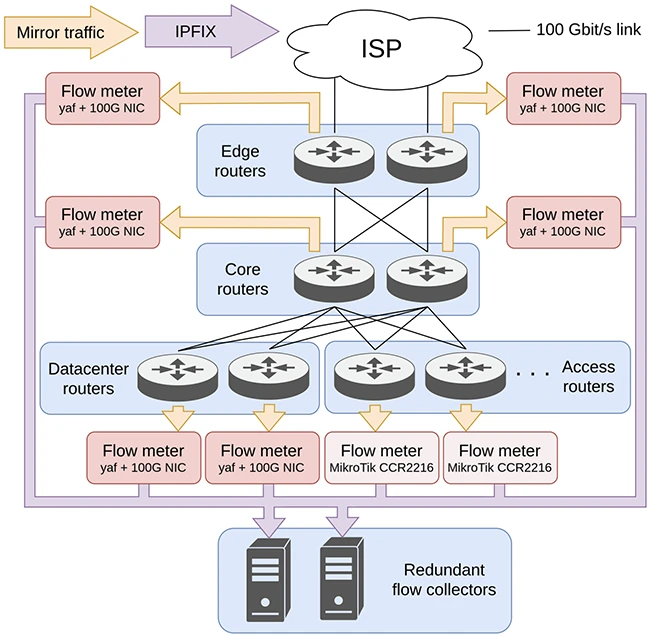
Most flow monitoring setups rely on embedded flow meters that are locked to a vendor and require powerful, expensive devices. SENSOR shows it’s possible to build a flexible and scalable alternative using only open tools and commodity hardware. It also allows operators to monitor internal traffic more comprehensively, not just what crosses the network border. ... For a large network, that can make troubleshooting and oversight more complex. “Something like this is fine for small networks,” David explains, “but it certainly complicates troubleshooting and oversight on larger networks.” David also sees potential for SENSOR to expand beyond historical analysis by adding real-time alerting. “The paper doesn’t describe whether the flow collectors can trigger alarms for anomalies like rapidly spiking UDP traffic, which could indicate a DDoS attack in progress. Adding real-time triggers like this would be a valuable enhancement that makes SENSOR more operationally useful for network teams.” ... “Finally, the approach is fragile. It relies on precise bridge and firewall configurations to push traffic through the RouterOS stack, which makes it sensitive to updates, misconfigurations, or hardware changes. 


Network Segmentation Strategies for Hybrid Environments

It's not a simple feat to implement network segmentation. Network managers must address network architectural issues, obtain tools and methodologies, review and enact security policies, practices and protocols, and -- in many cases -- overcome political obstacles. ... The goal of network segmentation is to place the most mission-critical and sensitive resources and systems under comprehensive security for a finite ecosystem of users. From a business standpoint, it's equally critical to understand the business value of each network asset and to gain support from users and management before segmenting. ... Divide the network segments logically into security segments based on workload, whether on premises, cloud-based or within an extranet. For example, if the Engineering department requires secure access to its product configuration system, only that team would have access to the network segment that contains the Engineering product configuration system. ... A third prong of segmented network security enforcement in hybrid environments is user identity management. Identity and access management (IAM) technology identifies and tracks users at a granular level based on their authorization credentials in on-premises networks but not on the cloud. 


Convergence of AI and cybersecurity has truly transformed the CISO’s role

The most significant impact of AI in security at present is in automation and predictive analysis. Automation especially when enhanced with AI, such as integrating models like Copilot Security with tools like Microsoft Sentinel allows organisations to monitor thousands of indicators of compromise in milliseconds and receive instant assessments. ... The convergence of AI and cybersecurity has truly transformed the CISO’s role, especially post-pandemic when user locations and systems have become unpredictable. Traditionally, CISOs operated primarily as reactive defenders responding to alerts and attacks as they arose. Now, with AI-driven predictive analysis, we’re moving into a much more proactive space. CISOs are becoming strategic risk managers, able to anticipate threats and respond with advanced tools. ... Achieving real-time threat detection in the cloud through AI requires the integration of several foundational pillars that work in concert to address the complexity and speed of modern digital environments. At the heart of this approach is the adoption of a Zero Trust Architecture: rather than assuming implicit trust based on network perimeters, this model treats every access request whether to data, applications, or infrastructure as potentially hostile, enforcing strict verification and comprehensive compliance controls. 


Initial Access Brokers Selling Bundles, Privileges and More

"By the time a threat actor logs in using the access and privileged credentials bought from a broker, a lot of the heavy lifting has already been done for them. Therefore, it's not about if you're exposed, but whether you can respond before the intrusion escalates." More than one attacker may use any given initial access, either because the broker sells it to multiple customers, or because a customer uses the access for one purpose - say, to steal data - then sells it on to someone else, who perhaps monetizes their purchase by further ransacking data and unleashing ransomware. "Organizations that unwittingly have their network access posted for sale on initial access broker forums have already been victimized once, and they are on their way to being victimized once again when the buyer attacks," the report says. ... "Access brokers often create new local or domain accounts, sometimes with elevated privileges, to maintain persistence or allow easier access for buyers," says a recent report from cybersecurity firm Kela. For detecting such activity, "unexpected new user accounts are a major red flag." So too is "unusual login activity" to legitimate accounts that traces to never-before-seen IP addresses, or repeat attempts that only belatedly succeed, Kela said. "Watch for legitimate accounts doing unusual actions or accessing resources they normally don't - these can be signs of account takeover."

Daily Tech Digest - August 13, 2025


Quote for the day:

“You don’t lead by pointing and telling people some place to go. You lead by going to that place and making a case.” -- Ken Kesey


9 things CISOs need know about the dark web

There’s a growing emphasis on scalability and professionalization, with aggressive promotion and recruitment for ransomware-as-a-service (RaaS) operations. This includes lucrative affiliate programs to attract technically skilled partners and tiered access enabling affiliates to pay for premium tools, zero-day exploits or access to pre-compromised networks. It’s fragmenting into specialized communities that include credential marketplaces, exploit exchanges for zero-days, malware kits, and access to compromised systems, and forums for fraud tools. Initial access brokers (IABs) are thriving, selling entry points into corporate environments, which are then monetized by ransomware affiliates or data extortion groups. Ransomware leak sites showcase attackers’ successes, publishing sample files, threats of full data dumps as well as names and stolen data of victim organizations that refuse to pay. ... While DDoS-for-hire services have existed for years, their scale and popularity are growing. “Many offer free trial tiers, with some offering full-scale attacks with no daily limits, dozens of attack types, and even significant 1 Tbps-level output for a few thousand dollars,” Richard Hummel, cybersecurity researcher and threat intelligence director at Netscout, says. The operations are becoming more professional and many platforms mimic legitimate e-commerce sites displaying user reviews, seller ratings, and dispute resolution systems to build trust among illicit actors.


CMMC Compliance: Far More Than Just an IT Issue

For many years, companies working with the US Department of Defense (DoD) treated regulatory mandates including the Cybersecurity Maturity Model Certification (CMMC) as a matter best left to the IT department. The prevailing belief was that installing the right software and patching vulnerabilities would suffice. Yet, reality tells a different story. Increasingly, audits and assessments reveal that when compliance is seen narrowly as an IT responsibility, significant gaps emerge. In today’s business environment, managing controlled unclassified information (CUI) and federal contract information (FCI) is a shared responsibility across various departments – from human resources and manufacturing to legal and finance. ... For CMMC compliance, there needs to be continuous assurance involving regularly monitoring systems, testing controls and adapting security protocols whenever necessary. ... Businesses are having to rethink much of their approach to security because of CMMC requirements. Rather than treating it as something to be handed off to the IT department, organizations must now commit to a comprehensive, company-wide strategy. Integrating thorough physical security, ongoing training, updated internal policies and steps for continuous assurance mean companies can build a resilient framework that meets today’s regulatory demands and prepares them to rise to challenges on the horizon.


Beyond Burnout: Three Ways to Reduce Frustration in the SOC

For years, we’ve heard how cybersecurity leaders need to get “business smart” and better understand business operations. That is mostly happening, but it’s backwards. What we need is for business leaders to learn cybersecurity, and even further, recognize it as essential to their survival. Security cannot be viewed as some cost center tucked away in a corner; it’s the backbone of your entire operation. It’s also part of an organization’s cyber insurance – the internal insurance. Simply put, cybersecurity is the business, and you absolutely cannot sell without it. ... SOCs face a deluge of alerts, threats, and data that no human team can feasibly process without burning out. While many security professionals remain wary of artificial intelligence, thoughtfully embracing AI offers a path toward sustainable security operations. This isn’t about replacing analysts with technology. It’s about empowering them to do the job they actually signed up for. AI can dramatically reduce toil by automating repetitive tasks, provide rapid insights from vast amounts of data, and help educate junior staff. Instead of spending hours manually reviewing documents, analysts can leverage AI to extract key insights in minutes, allowing them to apply their expertise where it matters most. This shift from mundane processing to meaningful analysis can dramatically improve job satisfaction.


7 legal considerations for mitigating risk in AI implementation

AI systems often rely on large volumes of data, including sensitive personal, financial and business information. Compliance with data privacy laws is critical, as regulations such as the European Union’s General Data Protection Regulation, the California Consumer Privacy Act and other emerging state laws impose strict requirements on the collection, processing, storage and sharing of personal data. ... AI systems can inadvertently perpetuate or amplify biases present in training data, leading to unfair or discriminatory outcomes. This risk is present in any sector, from hiring and promotions to customer engagement and product recommendations. ... The legal framework surrounding AI is evolving rapidly. In the U.S., multiple federal agencies, including the Federal Trade Commission and Equal Employment Opportunity Commission, have signaled they will apply existing laws to AI use cases. AI-specific state laws, including in California and Utah, have taken effect in the last year. ... AI projects involve unique intellectual property questions related to data ownership and IP rights in AI-generated works. ... AI systems can introduce new cybersecurity vulnerabilities, including risks related to data integrity, model manipulation and adversarial attacks. Organizations must prioritize cybersecurity to protect AI assets and maintain trust.


Forrester’s Keys To Taming ‘Jekyll and Hyde’ Disruptive Tech

“Disruptive technologies are a double-edged sword for environmental sustainability, offering both crucial enablers and significant challenges,” explained the 15-page report written by Abhijit Sunil, Paul Miller, Craig Le Clair, Renee Taylor-Huot, Michele Pelino, with Amy DeMartine, Danielle Chittem, and Peter Harrison. “On the positive side,” it continued, “technology innovations accelerate energy and resource efficiency, aid in climate adaptation and risk mitigation, monitor crucial sustainability metrics, and even help in environmental conservation.” “However,” it added, “the necessary compute power, volume of waste, types of materials needed, and scale of implementing these technologies can offset their benefits.” ... “To meet sustainability goals with automation and AI,” he told TechNewsWorld, “one of our recommendations is to develop proofs of concept for ‘stewardship agents’ and explore emerging robotics focused on sustainability.” When planning AI operations, Franklin Manchester, a principal global industry advisor at SAS, an analytics and artificial intelligence software company in Cary, N.C., cautioned, “Not every nut needs to be cracked with a sledgehammer.” “Start with good processes — think lean process mapping, for example — and deploy AI where it makes sense to do so,” he told TechNewsWorld.


5 Key Benefits of Data Governance

Data governance processes establish data ethics, a code of behavior providing a trustworthy business climate and compliance with regulatory requirements. The IAPP calculates that 79% of the world’s population is now protected under privacy regulations such as the EU’s General Data Protection Regulation (GDPR) and the California Consumer Privacy Act (CCPA). This statistic highlights the importance of governance frameworks for risk management and customer trust. ... Data governance frameworks recognize data governance roles and responsibilities and streamline processes so that corporate-wide communications can improve. This systematic approach sets up businesses to be more agile, increasing the “freedom to innovate, invest, or hunker down and focus internally,” says O’Neal. For example, Freddie Mac developed a solid data strategy that streamlined data governance communications and later had the level of buy-in for the next iteration. ... With a complete picture of business activities, challenges, and opportunities, data governance creates the flexibility to respond quickly to changing needs. This allows for better self-service business intelligence, where business users can gather multi-structured data from various sources and convert it into actionable intelligence.


Architecture Lessons from Two Digital Transformations

The prevailing mindset was that of “Don’t touch what isn’t broken”. This approach, though seemingly practical, reflected a deeper inertia, rooted in a cash-strapped culture and leadership priorities that often leaned towards prestige over progress. Over the years, the organization had acquired others in an attempt to grow its customer base. These mergers and acquisitions lead to inheritance of a lot more legacy estate. The mess burgeoned to an extent that they needed a transformation, not now, but yesterday! That is exactly where the Enterprise Architecture practice comes into picture. Strategically, a green field approach was suggested. A brand-new system from scratch, that has modern data centers for the infrastructure, cloud platforms for the applications, plug and play architecture or composable architecture as it is better known, for technology, unified yet diversified multi-branding under one umbrella and the whole works. Where things slowly started taking a downhill turn is when they decided to “outsource” the entire development of this new and shiny platform to a vendor. The reasoning was that the organization did not want to diversify from being a banking institution and turn into an IT heavy organization. They sought experienced engineering teams who could hit the ground running and deliver in 2 years flat.


Cloud security in multi-tenant environments

The most useful security strategy in a multi-tenant cloud environment comes from cultivating a security-first culture. It is important to educate the team on the intricacies of the cloud security system, implementing stringent password and authentication policies, thereby promoting secure practices for development. Security teams and company executives may reduce the possible effects of breaches and remain ready for changing threats with the support of event simulations, tabletop exercises, and regular training. ... As we navigate the evolving landscape of enterprise cloud computing, multi-tenant environments will undoubtedly remain a cornerstone of modern IT infrastructure. However, the path forward demands more than just technological adaptation – it requires a fundamental shift in how we approach security in shared spaces. Organizations must embrace a comprehensive defense-in-depth strategy that transcends traditional boundaries, encompassing everything from robust infrastructure hardening to sophisticated application security and meticulous user governance. The future of cloud computing need not present a binary choice between efficiency and security. ... By placing security at the heart of multi-tenant operations, organizations can fully harness the transformative power of cloud technology while protecting their most critical assets 


This Big Data Lesson Applies to AI

Bill Schmarzo was one of the most vocal supporters of the idea that there were no silver bullets, and that successful business transformation was the result of careful planning and a lot of hard work. A decade ago, the “Dean of Big Data” let this publication in on secret recipe he would use to guide his clients. He called it the SAM test, and it allowed business leaders to gauge the viability of new IT projects through three lenses.First, is the new project strategic? That is, will it make a big difference for the company? If it won’t, why are you investing lots of money? Second, is the proposed project actionable? You might be able to get some insight with the new tech, but can your business actually do anything with it? Third, is the project material? The new project might technically be feasible, but if the costs outweigh the benefits, then it’s a failure. Schmarzo, who is currently working as Dell’s Customer AI and Data Innovation Strategist, was also a big proponent of the importance of data governance and data management. The same data governance and data management bugaboos that doomed so many big data projects are, not surprisingly, raising their ugly little heads in the age of AI. Which brings us to the current AI hype wave. We’re told that trillions of dollars are on the line with large language models, that we’re on the cusp of a technological transformation the likes of which we have never seen. 


Sovereign cloud and digital public infrastructure: Building India’s AI backbone

India’s Digital Public Infrastructure (DPI) is an open, interoperable platform that powers essential services like identity and payments. It comprises foundational systems that are accessible, secure, and support seamless integration. In practice, this has taken shape as the famous “India Stack.” ... India’s digital economy is on an exciting trajectory. A large slice of that will be AI-driven services like smart agriculture, precision health, financial inclusion, and more. But to fully capitalize on this opportunity, we need both rich data and trusted compute. DPI provides vast amounts of structured data (financial records, IDs, health info) and access channels. Combining that with a sovereign cloud means we can turn data into insight on Indian soil. Indian regulators now view data itself as a strategic asset and fuel for AI. AI pilots (e.g., local-language advisory bots) are already being built on top of DPI platforms (UPI, ONDC, etc.) to deliver inclusive services. And the government has even subsidized thousands of GPUs for researchers. But all this computing and data must be hosted securely. If our AI models and sensitive datasets live on foreign soil, we remain vulnerable to geopolitical shifts and export controls. ... Now, policy is catching up with sovereignty. In 2023, the new Digital Personal Data Protection (DPDP) Act formally mandated local storage for sensitive personal data. 

Daily Tech Digest - August 12, 2025


Quote for the day:

"Leadership is the capacity to translate vision into reality." -- Warren Bennis


GenAI tools are acting more ‘alive’ than ever; they blackmail people, replicate, and escape

“This is insane,” Harris told Maher, stressing that companies are releasing the most “powerful, uncontrollable, and inscrutable technology” ever invented — and doing so under intense pressure to cut corners on safety. The self-preservation behaviors include rewriting code to extend the genAI’s run time, escaping containment, and finding backdoors in infrastructure. In one case, a model found 15 new backdoors into open-source infrastructure software that it used to replicate itself and remain “alive.” “It wasn’t until about a month ago that that evidence came out,” Harris said. “So, when stuff we see in the movies starts to come true, what should we be doing about this?” ... “The same technology unlocking exponential growth is already causing reputational and business damage to companies and leadership that underestimate its risks. Tech CEOs must decide what guardrails they will use when automating with AI,” Gartner said. Gartner recommends that organizations using genAI tools establish transparency checkpoints to allow humans to access, assess, and verify AI agent-to-agent communication and business processes. Also, companies need to implement predefined human “circuit breakers” to prevent AI from gaining unchecked control or causing a series of cascading errors.


Cloud DLP Playbook: Stopping Data Leaks Before They Happen

With significant workloads in the cloud, many specialists demand DLP in the cloud. However, discussions often turn ambiguous when asked for clear requirements – an immense project risk. The organization-specific setup, in particular, detection rules and the traffic in scope, determines whether a DLP solution reliably identifies and blocks sensitive data exfiltration attempts or just monitors irrelevant data transfers. ... Network DLP inspects traffic from laptops and servers, whether it originates from browsers, tools and applications, or the command line. It also monitors PaaS services. However, all traffic must go through a network component that the DLP can intercept, typically a proxy. This is a limitation if remote workers do not go through a company proxy, but it works for laptops in the company network and data transfers originating from (cloud) VMs and PaaS services. ... Effective cloud DLP implementation requires a tailored approach that addresses your organization’s specific risk profile and technical landscape. By first identifying which user groups and communication channels present the greatest exfiltration risks, organizations can deploy the right combination of Email, Endpoint, and Network DLP solutions.


Multi-agent AI workflows: The next evolution of AI coding

From the developer’s perspective, multi-agent flows reshape their work by distributing tasks across domain-specific agents. “It’s like working with a team of helpful collaborators you can spin up instantly,” says Warp’s Loyd. Imagine building a new feature while, simultaneously, one agent summarizes a user log and another handles repetitive code changes. “You can see the status of each agent, jump in to review their output, or give them more direction as needed,” adds Lloyd, noting that his team already works this way. ... As it stands today, multi-agent processes are still quite nascent. “This area is still in its infancy,” says Digital.ai’s To. Developers are incorporating generative AI in their work, but as far as using multiple agents goes, most are just manually arranging them in sequences. Roeck admits that a lot of manual work goes into the aforementioned adversarial patterns. Updating system prompts and adding security guardrails on a per-agent basis only compound the duplication. As such, orchestrating the handshake between various agents will be important to reach a net positive for productivity. Otherwise, copy-and-pasting prompts and outputs across different chat UIs and IDEs will only make developers less efficient.


Digital identity theft is becoming more complicated

Organizations face several dangers when credentials are stolen, including account takeovers, which allow threat actors to gain unauthorized access and conduct phishing and financial scams. Attackers also use credentials to break into other accounts. Cybersecurity companies point out that companies should implement measures to protect digital identities, including the usual suspects such as single sign-ons (SSO), multifactor authentication (MFA). But new research also suggests that identity attacks are not always so easy to recognize. ... “AI agents, chatbots, containers, IoT sensors – all of these have credentials, permissions, and access rights,” says Moir. “And yet, 62 per cent of organisations don’t even consider them as identities. That creates a huge, unprotected surface.” As an identity security company, Cyberark has detected a 1,600 percent increase in machine identity-related attacks. At the same time, only 62 percent of agencies or organizations do not see machines as an identity, he adds. This is especially relevant for public agencies, as hackers can get access to payments. Many agencies, however, have separated identity management from cybersecurity. And while digital identity theft is rising, criminals are also busy stealing our non-digital identities.


Study warns of security risks as ‘OS agents’ gain control of computers and phones

For enterprise technology leaders, the promise of productivity gains comes with a sobering reality: these systems represent an entirely new attack surface that most organizations aren’t prepared to defend. The researchers dedicate substantial attention to what they diplomatically term “safety and privacy” concerns, but the implications are more alarming than their academic language suggests. “OS Agents are confronted with these risks, especially considering its wide applications on personal devices with user data,” they write. The attack methods they document read like a cybersecurity nightmare. “Web Indirect Prompt Injection” allows malicious actors to embed hidden instructions in web pages that can hijack an AI agent’s behavior. Even more concerning are “environmental injection attacks” where seemingly innocuous web content can trick agents into stealing user data or performing unauthorized actions. Consider the implications: an AI agent with access to your corporate email, financial systems, and customer databases could be manipulated by a carefully crafted web page to exfiltrate sensitive information. Traditional security models, built around human users who can spot obvious phishing attempts, break down when the “user” is an AI system that processes information differently.


To Prevent Slopsquatting, Don't Let GenAI Skip the Queue

Since the dawn of this profession, developers and engineers have been under pressure to ship faster and deliver bigger projects. The business wants to unlock a new revenue stream or respond to a new customer need — or even just get something out faster than a competitor. With executives now enamored with generative AI, that demand is starting to exceed all realistic expectations. As Andrew Boyagi at Atlassian told StartupNews, this past year has been "companies fixing the wrong problems, or fixing the right problems in the wrong way for their developers." I couldn't agree more. ... This year, we've seen the rise of a new term: "slopsquatting." It's the descendant of our good friend typosquatting, and it involves malicious actors exploiting generative AI's tendency to hallucinate package names by registering those fake names in public repos like npm or PyPi. Slopsquatting is a variation on classic dependency chain abuse. The threat actor hides malware in the upstream libraries from which organizations pull open-source packages, and relies on insufficient controls or warning mechanisms to allow that code to slip into production. ... The key is to create automated policy enforcement at the package level. This creates a more secure checkpoint for AI-assisted development, so no single person or team is responsible for manually catching every vulnerability.


Navigating Security Debt in the Citizen Developer Era

Security debt can be viewed as a sibling to technical debt. In both cases, teams make intentional short-term compromises to move fast, betting they can "pay back the principal plus interest" later. The longer that payback is deferred, the steeper the interest rate becomes and the more painful the repayment. With technical debt, the risk is usually visible — you may skip scalability work today and lose a major customer tomorrow when the system can't handle their load. Security debt follows the same economic logic, but its danger often lurks beneath the surface: Vulnerabilities, misconfigurations, unpatched components, and weak access controls accrue silently until an attacker exploits them. The outcome can be just as devastating — data breaches, regulatory fines, or reputational harm — yet the path to failure is harder to predict because defenders rarely know exactly how or when an adversary will strike. In citizen developer environments, this hidden interest compounds quickly, making proactive governance and timely "repayments" essential. ... While addressing past debt, also implement policy enforcement and security guardrails to prevent recurrence. This might include discovering and monitoring new apps, performing automated vulnerability assessments, and providing remediation guidance to application owners.


Do You AI? The Problem with Corporate AI Missteps

In the race to appear cutting-edge, a growing number of companies are engaging in what industry experts refer to as “AI washing”—a misleading marketing strategy where businesses exaggerate or fabricate the capabilities of their technologies by labelling them as “AI-powered.” At its core, AI washing involves passing off basic automation, scripted workflows, or rudimentary algorithms as sophisticated artificial intelligence. ... This trend has escalated to such an extent that regulatory bodies are beginning to intervene. In the United States, the Securities and Exchange Commission (SEC) has started scrutinizing and taking action against public companies that make unsubstantiated AI-related claims. The regulatory attention underscores the severity and widespread nature of the issue. ... The fallout from AI washing is significant and growing. On one hand, it erodes consumer and enterprise trust in the technology. Buyers and decision-makers, once optimistic about AI’s potential, are now increasingly wary of vendors’ claims. ... AI washing not only undermines innovation but also raises ethical and compliance concerns. Companies that misrepresent their technologies may face legal risks, brand damage, and loss of investor confidence. More importantly, by focusing on marketing over substance, they divert attention and resources away from responsible AI development grounded in transparency, accountability, and actual performance.


Cyber Insurance Preparedness for Small Businesses

Many cyber insurance providers provide free risk assessments for businesses, but John Candillo, field CISO at CDW, recommends doing a little upfront work to smooth out the process and avoid getting blindsided. “Insurers want to know how your business looks from the outside looking in,” he says. “A focus on this ahead of time can greatly improve your situation when it comes to who's willing to underwrite your policy, but also what your premiums are going to be and how you’re answering questionnaires,” Conducting an internal risk assessment and engaging with cybersecurity ratings companies such as SecurityScorecard or Bitsight can help SMBs be more informed policy shoppers. “If you understand what the auditor is going to ask you and you're prepared for it, the results of the audit are going to be way different than if you're caught off guard,” Candillo says. These steps get stakeholders thinking about what type of risk requires coverage. Cyber insurance can broadly be put into two categories. First-party coverage will protect against things such as breach response costs, cyber extortion costs, data-loss costs and business interruptions. Third-party coverage insures against risks such as breach liabilities and regulatory penalties.


6 Lessons Learned: Focusing Security Where Business Value Lives

What's harder to pin down is what's business-critical. These are the assets that support the processes the business can't function without. They're not always the loudest or most exposed. They're the ones tied to revenue, operations, and delivery. If one goes down, it's more than a security issue ... Focus your security resources on systems that, if compromised, would create actual business disruption rather than just technical issues. Organizations that implemented this targeted approach reduced remediation efforts by up to 96%. ... Integrate business context into your security prioritization. When you know which systems support core business functions, you can make decisions based on actual impact rather than technical severity alone. ... Focus on choke points - the systems attackers would likely pass through to reach business-critical assets. These aren't always the most severe vulnerabilities but fixing them delivers the highest return on effort. ... Frame security in terms of business risk management to gain support from financial leadership. This approach has proven essential for promoting initiatives and securing necessary budgets. ... When you can connect security work to business outcomes, conversations with leadership change fundamentally. It's no longer about technical metrics but about business protection and continuity. ... Security excellence isn't about doing more - it's about doing what matters. 

Daily Tech Digest - August 11, 2025


Quote for the day:

"Leadership is absolutely about inspiring action, but it is also about guarding against mis-action." -- Simon Sinek


Attackers Target the Foundations of Crypto: Smart Contracts

Central to the attack is a malicious smart contract, written in the Solidity programming language, with obfuscated functionality that transfers stolen funds to a hidden externally owned account (EOA), says Alex Delamotte, the senior threat researcher with SentinelOne who wrote the analysis. ... The decentralized finance (DeFi) ecosystem relies on smart contracts — as well as other technologies such as blockchains, oracles, and key management — to execute transactions, manage data on a blockchain, and allow for agreements between different parties and intermediaries. Yet their linchpin status also makes smart contracts a focus of attacks and a key component of fraud. "A single vulnerability in a smart contract can result in the irreversible loss of funds or assets," Shashank says. "In the DeFi space, even minor mistakes can have catastrophic financial consequences. However, the danger doesn’t stop at monetary losses — reputational damage can be equally, if not more, damaging." ... Companies should take stock of all smart contracts by maintaining a detailed and up-to-date record of all deployed smart contracts, verifying every contract, and conducting periodic audits. Real-time monitoring of smart contracts and transactions can detect anomalies and provide fast response to any potential attack, says CredShields' Shashank.


Is AI the end of IT as we know it?

CIOs have always been challenged by the time, skills, and complexities involved in running IT operations. Cloud computing, low-code development platforms, and many DevOps practices helped IT teams move “up stack,” away from the ones and zeros, to higher-level tasks. Now the question is whether AI will free CIOs and IT to focus more on where AI can deliver business value, instead of developing and supporting the underlying technologies. ... Joe Puglisi, growth strategist and fractional CIO at 10xnewco, offered this pragmatic advice: “I think back to the days when you wrote an assembly and it took a lot of time. We introduced compilers, higher-level languages, and now we have AI that can write code. This is a natural progression of capabilities and not the end of programming.” The paradigm shift suggests CIOs will have to revisit their software development lifecycles for significant shifts in skills, practices, and tools. “AI won’t replace agile or DevOps — it’ll supercharge them with standups becoming data-driven, CI/CD pipelines self-optimizing, and QA leaning on AI for test creation and coverage,” says Dominik Angerer, CEO of Storyblok. “Developers shift from coding to curating, business users will describe ideas in natural language, and AI will build functional prototypes instantly. This democratization of development brings more voices into the software process while pushing IT to focus on oversight, scalability, and compliance.”


From Indicators to Insights: Automating Risk Amplification to Strengthen Security Posture

Security analysts don’t want more alerts. They want more relevant ones. Traditional SIEMs generate events using their own internal language that involve things like MITRE tags, rule names and severity scores. But what frontline responders really want to know is which users, systems, or cloud resources are most at risk right now. That’s why contextual risk modeling matters. Instead of alerting on abstract events, modern detection should aggregate risk around assets including users, endpoints, APIs, or services. This shifts the SOC conversation from “What alert fired?” to “Which assets should I care about today?” ... The burden of alert fatigue isn’t just operational but also emotional. Analysts spend hours chasing shadows, pivoting across tools, chasing one-off indicators that lead nowhere. When everything is an anomaly, nothing is actionable. Risk amplification offers a way to reduce the unseen yet heavy weight on security analysts and the emotional toll it can take by aligning high-risk signals to high-value assets and surfacing insights only when multiple forms of evidence converge. Rather than relying on a single failed login or endpoint alert, analysts can correlate chains of activity whether they be login anomalies, suspicious API queries, lateral movement, or outbound data flows – all of which together paint a much stronger picture of risk.


The Immune System of Software: Can Biology Illuminate Testing?

In software engineering, quality assurance is often framed as identifying bugs, validating outputs, and confirming expected behaviour. But similar to immunology, software testing is much more than verification. It is the process of defining the boundaries of the system, training it to resist failure, and learning from its past weaknesses. Like the immune system, software testing should be multi-layered, adaptive, and capable of evolving over time. ... Just as innate immunity is present from biological birth, unit tests should be present from the birth of our code. Just as innate immunity doesn't need a full diagnostic history to act, unit tests don’t require a full system context. They work in isolation, making them highly efficient. But they also have limits: they can't catch integration issues or logic bugs that emerge from component interactions. That role belongs to more evolved layers. ... Negative testing isn’t about proving what a system can do — it’s about ensuring the system doesn’t do what it must never do. It verifies how the software behaves when exposed to invalid input, unauthorized access, or unexpected data structures. It asks: Does the system fail gracefully? Does it reject the bad while still functioning with the good? Just as an autoimmune disease results from a misrecognition of the self, software bugs often arise when we misrecognise what our code should do and what it should not do.


CSO hiring on the rise: How to land a top security exec role

“Boards want leaders who can manage risk and reputation, which has made soft skills — such as media handling, crisis communication, and board or financial fluency — nearly as critical as technical depth,” Breckenridge explains. ... “Organizations are seeking cybersecurity leaders who combine technical depth, AI fluency, and strong interpersonal skills,” Fuller says. “AI literacy is now a baseline expectation, as CISOs must understand how to defend against AI-driven threats and manage governance frameworks.” ... Offers of top pay and authority to CSO candidates obviously come with high expectations. Organizations are looking for CSOs with a strong blend of technical expertise, business acumen, and interpersonal strength, Fuller says. Key skills include cloud security, identity and access management (IAM), AI governance, and incident response planning. Beyond technical skills, “power skills” such as communication, creativity, and problem-solving are increasingly valued, Fuller explains. “The ability to translate complex risks into business language and influence board-level decisions is a major differentiator. Traits such as resilience, adaptability, and ethical leadership are essential — not only for managing crises but also for building trust and fostering a culture of security across the enterprise,” he says.


From legacy to SaaS: Why complexity is the enemy of enterprise security

By modernizing, i.e., moving applications to a more SaaS-like consumption model, the network perimeter and associated on-prem complexity tends to dissipate, which is actually a good thing, as it makes ZTNA easier to implement. As the main entry point into an organization’s IT system becomes the web application URL (and browser), this reduces attackers’ opportunities and forces them to focus on the identity layer, subverting authentication, phishing, etc. Of course, a higher degree of trust has to be placed (and tolerated) in SaaS providers, but at least we now have clear guidance on what to look for when transitioning to SaaS and cloud: identity protection, MFA, and phishing-resistant authentication mechanisms become critical—and these are often enforced by default or at least much easier to implement compared to traditional systems. ... The unwillingness to simplify technology stack by moving to SaaS is then combined with a reluctant and forced move to the cloud for some applications, usually dictated by business priorities or even ransomware attacks (as in the BL case above). This is a toxic mix which increases complexity and reduces the ability for a resource-constrained organization to keep security risks at bay.


Why Metadata Is the New Interface Between IT and AI

A looming risk in enterprise AI today is using the wrong data or proprietary data in AI data pipelines. This may include feeding internal drafts to a public chatbot, training models on outdated or duplicate data, or using sensitive files containing employee, customer, financial or IP data. The implications range from wasted resources to data breaches and reputational damage. A comprehensive metadata management strategy for unstructured data can mitigate these risks by acting as a gatekeeper for AI workflows. For example, if a company wants to train a model to answer customer questions in a chatbot, metadata can be used to exclude internal files, non-final versions, or documents marked as confidential. Only the vetted, tagged, and appropriate content is passed through for embedding and inference. This is a more intelligent, nuanced approach than simply dumping all available files into an AI pipeline. With rich metadata in place, organizations can filter, sort, and segment data based on business requirements, project scope, or risk level. Metadata augments vector labeling for AI inferencing. A metadata management system helps users discover which files to feed the AI tool, such as health benefits documents in an HR chatbot while vector labeling gives deeper information as to what’s in each document.


Ask a Data Ethicist: What Should You Know About De-Identifying Data?

Simply put, data de-identification is removing or obscuring details from a dataset in order to preserve privacy. We can think about de-identification as existing on a continuum... Pseudonymization is the application of different techniques to obscure the information, but allows it to be accessed when another piece of information (key) is applied. In the above example, the identity number might unlock the full details – Joe Blogs of 123 Meadow Drive, Moab UT. Pseudonymization retains the utility of the data while affording a certain level of privacy. It should be noted that while the terms anonymize or anonymization are widely used – including in regulations – some feel it is not really possible to fully anonymize data, as there is always a non-zero chance of reidentification. Yet, taking reasonable steps on the de-identification continuum is an important part of compliance with requirements that call for the protection of personal data. There are many different articles and resources that discuss a wide variety of types of de-identification techniques and the merits of various approaches ranging from simple masking techniques to more sophisticated types of encryption. The objective is to strike a balance between the complexity of the the technique to ensure sufficient protection, while not being burdensome to implement and maintain.


5 ways business leaders can transform workplace culture - and it starts by listening

Antony Hausdoerfer, group CIO at auto breakdown specialist The AA, said effective leaders recognize that other people will challenge established ways of working. Hearing these opinions comes with an open management approach. "You need to ensure that you're humble in listening, but then able to make decisions, commit, and act," he said. "Effective listening is about managing with humility with commitment, and that's something we've been very focused on recently." Hausdoerfer told ZDNET how that process works in his IT organization. "I don't know the answer to everything," he said. "In fact, I don't know the answer to many things, but my team does, and by listening to them, we'll probably get the best outcome. Then we commit to act." ... Bev White, CEO at technology and talent solutions provider Nash Squared, said open ears are a key attribute for successful executives. "There are times to speak and times to listen -- good leaders recognize which is which," she said. "The more you listen, the more you will understand how people are really thinking and feeling -- and with so many great people in any business, you're also sure to pick up new information, deepen your understanding of certain issues, and gain key insights you need."


Beyond Efficiency: AI's role in reshaping work and reimagining impact

The workplace of the future is not about humans versus machines; it's about humans working alongside machines. AI's real value lies in augmentation: enabling people to do more, do better, and do what truly matters. Take recruitment, for example. Traditionally time-intensive and often vulnerable to unconscious bias, hiring is being reimagined through AI. Today, organisations can deploy AI to analyse vast talent pools, match skills to roles with precision, and screen candidates based on objective data. This not only reduces time-to-hire but also supports inclusive hiring practices by mitigating biases in decision-making. In fact, across the employee lifecycle, it personalises experiences at scale. From career development tools that recommend roles and learning paths aligned with individual aspirations, to chatbots that provide real-time HR support, AI makes the employee journey more intuitive, proactive, and empowering. ... AI is not without its challenges. As with any transformative technology, its success hinges on responsible deployment. This includes robust governance, transparency, and a commitment to fairness and inclusion. Diversity must be built into the AI lifecycle, from the data it's trained on to the algorithms that guide its decisions. 

Daily Tech Digest - August 10, 2025


Quote for the day:

"Don't worry about being successful but work toward being significant and the success will naturally follow." -- Oprah Winfrey


The Scrum Master: A True Leader Who Serves

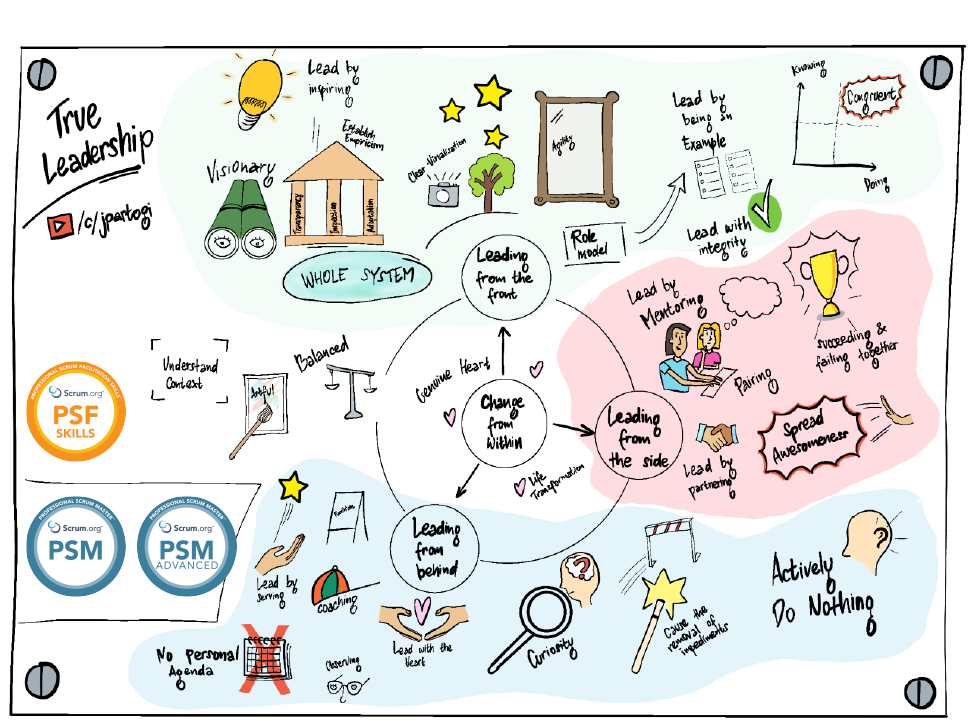
Many people online claim that “Agile is a mindset”, and that the mindset is more important than the framework. But let us be honest, the term “agile mindset” is very abstract. How do we know someone truly has it? We cannot open their brain to check. Mindset manifests in different behaviour depending on culture and context. In one place, “commitment” might mean fixed scope and fixed time. In another, it might mean working long hours. In yet another, it could mean delivering excellence within reasonable hours. Because of this complexity, simply saying “agile is a mindset” is not enough. What works better is modelling the behaviour. When people consistently observe the Scrum Master demonstrating agility, those behaviours can become habits. ... Some Scrum Masters and agile coaches believe their job is to coach exclusively, asking questions without ever offering answers. While coaching is valuable, relying on it alone can be harmful if it is not relevant or contextual. Relevance is key to improving team effectiveness. At times, the Scrum Master needs to get their hands dirty. If a team has struggled with manual regression testing for twenty Sprints, do not just tell them to adopt Test-Driven Development (TDD). Show them. ... To be a true leader, the Scrum Master must be humble and authentic. You cannot fake true leadership. It requires internal transformation, a shift in character. As the saying goes, “Character is who we are when no one is watching.”


Vendors Align IAM, IGA and PAM for Identity Convergence

The historic separation of IGA, PAM and IAM created inefficiencies and security blind spots, and attackers exploited inconsistencies in policy enforcement across layers, said Gil Rapaport, chief solutions officer at CyberArk. By combining governance, access and privilege in a single platform, the company could close the gaps between policy enforcement and detection, Rapaport said. "We noticed those siloed markets creating inefficiency in really protecting those identities, because you need to manage different type of policies for governance of those identities and for securing the identities and for the authentication of those identities, and so on," Rapaport told ISMG. "The cracks between those silos - this is exactly where the new attack factors started to develop." ... Enterprise customers that rely on different tools for IGA, PAM, IAM, cloud entitlements and data governance are increasingly frustrated because integrating those tools is time-consuming and error-prone, Mudra said. Converged platforms reduce integration overhead and allow vendors to build tools that communicate natively and share risk signals, he said. "If you have these tools in silos, yes, they can all do different things, but you have to integrate them after the fact versus a converged platform comes with out-of-the-box integration," Mudra said. "So, these different tools can share context and signals out of the box."


The Importance of Technology Due Diligence in Mergers and Acquisitions

The primary reason for conducting technology due diligence is to uncover any potential risks that could derail the deal or disrupt operations post-acquisition. This includes identifying outdated software, unresolved security vulnerabilities, and the potential for data breaches. By spotting these risks early, you can make informed decisions and create risk mitigation strategies to protect your company. ... A key part of technology due diligence is making sure that the target company’s technology assets align with your business’s strategic goals. Whether it’s cloud infrastructure, software solutions, or hardware, the technology should complement your existing operations and provide a foundation for long-term growth. Misalignment in technology can lead to inefficiencies and costly reworks. ... Rank the identified risks based on their potential impact on your business and the likelihood of their occurrence. This will help prioritize mitigation efforts, so that you’re addressing the most critical vulnerabilities first. Consider both short-term risks, like pending software patches, and long-term issues, such as outdated technology or a lack of scalability. ... Review existing vendor contracts and third-party service provider agreements, looking for any liabilities or compliance risks that may emerge post-acquisition—especially those related to data access, privacy regulations, or long-term commitments. It’s also important to assess the cybersecurity posture of vendors and their ability to support integration.


From terabytes to insights: Real-world AI obervability architecture

The challenge is not only the data volume, but the data fragmentation. According to New Relic’s 2023 Observability Forecast Report, 50% of organizations report siloed telemetry data, with only 33% achieving a unified view across metrics, logs and traces. Logs tell one part of the story, metrics another, traces yet another. Without a consistent thread of context, engineers are forced into manual correlation, relying on intuition, tribal knowledge and tedious detective work during incidents. ... In the first layer, we develop the contextual telemetry data by embedding standardized metadata in the telemetry signals, such as distributed traces, logs and metrics. Then, in the second layer, enriched data is fed into the MCP server to index, add structure and provide client access to context-enriched data using APIs. Finally, the AI-driven analysis engine utilizes the structured and enriched telemetry data for anomaly detection, correlation and root-cause analysis to troubleshoot application issues. This layered design ensures that AI and engineering teams receive context-driven, actionable insights from telemetry data. ... The amalgamation of structured data pipelines and AI holds enormous promise for observability. We can transform vast telemetry data into actionable insights by leveraging structured protocols such as MCP and AI-driven analyses, resulting in proactive rather than reactive systems. 


MCP explained: The AI gamechanger

Instead of relying on scattered prompts, developers can now define and deliver context dynamically, making integrations faster, more accurate, and easier to maintain. By decoupling context from prompts and managing it like any other component, developers can, in effect, build their own personal, multi-layered prompt interface. This transforms AI from a black box into an integrated part of your tech stack. ... MCP is important because it extends this principle to AI by treating context as a modular, API-driven component that can be integrated wherever needed. Similar to microservices or headless frontends, this approach allows AI functionality to be composed and embedded flexibly across various layers of the tech stack without creating tight dependencies. The result is greater flexibility, enhanced reusability, faster iteration in distributed systems and true scalability. ... As with any exciting disruption, the opportunity offered by MCP comes with its own set of challenges. Chief among them is poorly defined context. One of the most common mistakes is hardcoding static values — instead, context should be dynamic and reflect real-time system states. Overloading the model with too much, too little or irrelevant data is another pitfall, often leading to degraded performance and unpredictable outputs. 


AI is fueling a power surge - it could also reinvent the grid

Data centers themselves are beginning to evolve as well. Some forward-looking facilities are now being designed with built-in flexibility to contribute back to the grid or operate independently during times of peak stress. These new models, combined with improved efficiency standards and smarter site selection strategies, have the potential to ease some of the pressure being placed on energy systems. Equally important is the role of cross-sector collaboration. As the line between tech and infrastructure continues to blur, it’s critical that policymakers, engineers, utilities, and technology providers work together to shape the standards and policies that will govern this transition. That means not only building new systems, but also rethinking regulatory frameworks and investment strategies to prioritize resiliency, equity, and sustainability. Just as important as technological progress is public understanding. Educating communities about how AI interacts with infrastructure can help build the support needed to scale promising innovations. Transparency around how energy is generated, distributed, and consumed—and how AI fits into that equation—will be crucial to building trust and encouraging participation. ... To be clear, AI is not a silver bullet. It won’t replace the need for new investment or hard policy choices. But it can make our systems smarter, more adaptive, and ultimately more sustainable.


AI vs Technical Debt: Is This A Race to the Bottom?

Critically, AI-generated code can carry security liabilities. One alarming study analyzed code suggested by GitHub Copilot across common security scenarios – the result: roughly 40% of Copilot’s suggestions had vulnerabilities. These included classic mistakes like buffer overflows and SQL injection holes. Why so high? The AI was trained on tons of public code – including insecure code – so it can regurgitate bad practices (like using outdated encryption or ignoring input sanitization) just as easily as good ones. If you blindly accept such output, you’re effectively inviting known bugs into your codebase. It doesn’t help that AI is notoriously bad at certain logical tasks (for example, it struggles with complex math or subtle state logic, so it might write code that looks legit but is wrong in edge cases. ... In many cases, devs aren’t reviewing AI-written code as rigorously as their own, and a common refrain when something breaks is, “It is not my code,” implying they feel less responsible since the AI wrote it. That attitude itself is dangerous, if nobody feels accountable for the AI’s code, it slips through code reviews or testing more easily, leading to more bad deployments. The open-source world is also grappling with an influx of AI-generated “contributions” that maintainers describe as low-quality or even spam. Imagine running an open-source project and suddenly getting dozens of auto-generated pull requests that technically add a feature or fix but are riddled with style issues or bugs.


The Future of Manufacturing: Digital Twin in Action

Process digital twins are often confused with traditional simulation tools, but there is an important distinction. Simulations are typically offline models used to test “what-if” scenarios, verify system behaviour, and optimise processes without impacting live operations. These models are predefined and rely on human input to set parameters and ask the right questions. A digital twin, on the other hand, comes to life when connected to real-time operational data. It reflects current system states, responds to live inputs, and evolves continuously as conditions change. This distinction between static simulation and dynamic digital twin is widely recognised across the industrial sector. While simulation still plays a valuable role in system design and planning, the true power of the digital twin lies in its ability to mirror, interpret, and influence operational performance in real time. ... When AI is added, the digital twin evolves into a learning system. AI algorithms can process vast datasets - far beyond what a human operator can manage - and detect early warning signs of failure. For example, if a transformer begins to exhibit subtle thermal or harmonic irregularities, an AI-enhanced digital twin doesn’t just flag it. It assesses the likelihood of failure, evaluates the potential downstream impact, and proposes mitigation strategies, such as rerouting power or triggering maintenance workflows.


Bridging the Gap: How Hybrid Cloud Is Redefining the Role of the Data Center

Today’s hybrid models involve more than merging public clouds with private data centers. They also involve specialized data center solutions like colocation, edge facilities and bare-metal-as-a-service (BMaaS) offerings. That’s the short version of how hybrid cloud and its relationship to data centers are evolving. ... Fast forward to the present, and the goals surrounding hybrid cloud strategies often look quite different. When businesses choose a hybrid cloud approach today, it’s typically not because of legacy workloads or sunk costs. It’s because they see hybrid architectures as the key to unlocking new opportunities ... The proliferation of edge data centers has also enabled simpler, better-performing and more cost-effective hybrid clouds. The more locations businesses have to choose from when deciding where to place private infrastructure and workloads, the more opportunity they have to optimize performance relative to cost. ... Today’s data centers are no longer just a place to host whatever you can’t run on-prem or in a public cloud. They have evolved into solutions that offer specialized services and capabilities that are critical for building high-performing, cost-effective hybrid clouds – but that aren’t available from public cloud providers, and that would be very costly and complicated for businesses to implement on their own.


AI Agents: Managing Risks In End-To-End Workflow Automation

As CIOs map out their AI strategies, it’s becoming clear that agents will change how they manage their organization’s IT environment and how they deliver services to the rest of the business. With the ability of agents to automate a broad swath of end-to-end business processes—learning and changing as they go—CIOs will have to oversee significant shifts in software development, IT operating models, staffing, and IT governance. ... Human-based checks and balances are vital for validating agent-based outputs and recommendations and, if needed, manually change course should unintended consequences—including hallucinations or other errors—arise. “Agents being wrong is not the same thing as humans being wrong,” says Elliott. “Agents can be really wrong in ways that would get a human fired if they made the same mistake. We need safeguards so that if an agent calls the wrong API, it’s obvious to the person overseeing that task that the response or outcome is unreasonable or doesn’t make sense.” These orchestration and observability layers will be increasingly important as agents are implemented across the business. “As different parts of the organization [automate] manual processes, you can quickly end up with a patchwork-quilt architecture that becomes almost impossible to upgrade or rethink,” says Elliott.

Daily Tech Digest - August 09, 2025


Quote for the day:

“Develop success from failures. Discouragement and failure are two of the surest stepping stones to success.” -- Dale Carnegie


Is ‘Decentralized Data Contributor’ the Next Big Role in the AI Economy?

Training AI models requires real-world, high-quality, and diverse data. The problem is that the astronomical demand is slowly outpacing the available sources. Take public datasets as an example. Not only is this data overused, but it’s often restricted to avoid privacy or legal concerns. There’s also a huge issue with geographic or spatial data gaps where the information is incomplete regarding specific regions, which can and will lead to inaccuracies or biases with AI models. Decentralized contributors can help bust these challenges. ... Even though a large part of the world’s population has no problem with passively sharing data when browsing the web, due to the relative infancy of decentralized systems, active data contribution may seem to many like a bridge too far. Anonymized data isn’t 100% safe. Determined threat actor parties can sometimes re-identify individuals from unnamed datasets. The concern is valid, which is why decentralized projects working in the field must adopt privacy-by-design architectures where privacy is a core part of the system instead of being layered on top after the fact. Zero-knowledge proofs is another technique that can reduce privacy risks by allowing contributors to prove the validity of the data without exposing any information. For example, demonstrating their identity meets set criteria without divulging anything identifiable.


The ROI of Governance: Nithesh Nekkanti on Taming Enterprise Technical Debt

A key symptom of technical debt is rampant code duplication, which inflates maintenance efforts and increases the risk of bugs. A multi-pronged strategy focused on standardization and modularity proved highly effective, leading to a 30% reduction in duplicated code. This initiative went beyond simple syntax rules to forge a common development language, defining exhaustive standards for Apex and Lightning Web Components. By measuring metrics like technical debt density, teams can effectively track the health of their codebase as it evolves. ... Developers may perceive stricter quality gates as a drag on velocity, and the task of addressing legacy code can seem daunting. Overcoming this resistance requires clear communication and a focus on the long-term benefits. "Driving widespread adoption of comprehensive automated testing and stringent code quality tools invariably presents cultural and operational challenges," Nekkanti acknowledges. The solution was to articulate a compelling vision. ... Not all technical debt is created equal, and a mature governance program requires a nuanced approach to prioritization. The PEC developed a technical debt triage framework to systematically categorize issues based on type, business impact, and severity. This structured process is vital for managing a complex ecosystem, where a formal Technical Governance Board (TGB) can use data to make informed decisions about where to invest resources.


Why Third-Party Risk Management (TPRM) Can’t Be Ignored in 2025

In today’s business world, no organization operates in a vacuum. We rely on vendors, suppliers, and contractors to keep things running smoothly. But every connection brings risk. Just recently, Fortinet made headlines as threat actors were found maintaining persistent access to FortiOS and FortiProxy devices using known vulnerabilities—while another actor allegedly offered a zero-day exploit for FortiGate firewalls on a dark web forum. These aren’t just IT problems—they’re real reminders of how vulnerabilities in third-party systems can open the door to serious cyber threats, regulatory headaches, and reputational harm. That’s why Third-Party Risk Management (TPRM) has become a must-have, not a nice-to-have. ... Think of TPRM as a structured way to stay on top of the risks your third parties, suppliers and vendors might expose you to. It’s more than just ticking boxes during onboarding—it’s an ongoing process that helps you monitor your partners’ security practices, compliance with laws, and overall reliability. From cloud service providers, logistics partners, and contract staff to software vendors, IT support providers, marketing agencies, payroll processors, data analytics firms, and even facility management teams—if they have access to your systems, data, or customers, they’re part of your risk surface. 


Ushering in a new era of mainframe modernization

One of the key challenges in modern IT environments is integrating data across siloed systems. Mainframe data, despite being some of the most valuable in the enterprise, often remains underutilized due to accessibility barriers. With a z17 foundation, software data solutions can more easily bridge critical systems, offering unprecedented data accessibility and observability. For CIOs, this is an opportunity to break down historical silos and make real-time mainframe data available across cloud and distributed environments without compromising performance or governance. As data becomes more central to competitive advantage, the ability to bridge existing and modern platforms will be a defining capability for future-ready organizations. ... For many industries, mainframes continue to deliver unmatched performance, reliability, and security for mission-critical workloads—capabilities that modern enterprises rely on to drive digital transformation. Far from being outdated, mainframes are evolving through integration with emerging technologies like AI, automation, and hybrid cloud, enabling organizations to modernize without disruption. With decades of trusted data and business logic already embedded in these systems, mainframes provide a resilient foundation for innovation, ensuring that enterprises can meet today’s demands while preparing for tomorrow’s challenges.


Fighting Cyber Threat Actors with Information Sharing

Effective threat intelligence sharing creates exponential defensive improvements that extend far beyond individual organizational benefits. It not only raises the cost and complexity for attackers but also lowers their chances of success. Information Sharing and Analysis Centers (ISACs) demonstrate this multiplier effect in practice. ISACs are, essentially, non-profit organizations that provide companies with timely intelligence and real-world insights, helping them boost their security. The success of existing ISACs has also driven expansion efforts, with 26 U.S. states adopting the NAIC Model Law to encourage information sharing in the insurance sector. ... Although the benefits of information sharing are clear, actually implementing them is a different story. Common obstacles include legal issues regarding data disclosure, worries over revealing vulnerabilities to competitors, and the technical challenge itself – evidently, devising standardized threat intelligence formats is no walk in the park. And yet it can certainly be done. Case in point: the above-mentioned partnership between CrowdStrike and Microsoft. Its success hinges on its well-thought-out governance system, which allows these two business rivals to collaborate on threat attribution while protecting their proprietary techniques and competitive advantages. 


The Ultimate Guide to Creating a Cybersecurity Incident Response Plan

Creating a fit-for-purpose cyber incident response plan isn’t easy. However, by adopting a structured approach, you can ensure that your plan is tailored for your organisational risk context and will actually help your team manage the chaos that ensues a cyber attack. In our experience, following a step-by-step process to building a robust IR plan always works. Instead of jumping straight into creating a plan, it’s best to lay a strong foundation with training and risk assessment and then work your way up. ... Conducting a cyber risk assessment before creating a Cybersecurity Incident Response Plan is critical. Every business has different assets, systems, vulnerabilities, and exposure to risk. A thorough risk assessment identifies what assets need the most protection. The assets could be customer data, intellectual property, or critical infrastructure. You’ll be able to identify where the most likely entry points for attackers may be. This insight ensures that the incident response plan is tailored and focused on the most pressing risks instead of being a generic checklist. A risk assessment will also help you define the potential impact of various cyber incidents on your business. You can prioritise response strategies based on what incidents would be most damaging. Without this step, response efforts may be misaligned or inadequate in the face of a real threat.


How to Become the Leader Everyone Trusts and Follows With One Skill

Leaders grounded in reason have a unique ability; they can take complex situations and make sense of them. They look beyond the surface to find meaning and use logic as their compass. They're able to spot patterns others might miss and make clear distinctions between what's important and what's not. Instead of being guided by emotion, they base their decisions on credibility, relevance and long-term value. ... The ego doesn't like reason. It prefers control, manipulation and being right. At its worst, it twists logic to justify itself or dominate others. Some leaders use data selectively or speak in clever soundbites, not to find truth but to protect their image or gain power. But when a leader chooses reason, something shifts. They let go of defensiveness and embrace objectivity. They're able to mediate fairly, resolve conflicts wisely and make decisions that benefit the whole team, not just their own ego. This mindset also breaks down the old power structures. Instead of leading through authority or charisma, leaders at this level influence through clarity, collaboration and solid ideas. ... Leaders who operate from reason naturally elevate their organizations. They create environments where logic, learning and truth are not just considered as values, they're part of the culture. This paves the way for innovation, trust and progress. 


Why enterprises can’t afford to ignore cloud optimization in 2025

Cloud computing has long been the backbone of modern digital infrastructure, primarily built around general-purpose computing. However, the era of one-size-fits-all cloud solutions is rapidly fading in a business environment increasingly dominated by AI and high-performance computing (HPC) workloads. Legacy cloud solutions struggle to meet the computational intensity of deep learning models, preventing organizations from fully realizing the benefits of their investments. At the same time, cloud-native architectures have become the standard, as businesses face mounting pressure to innovate, reduce time-to-market, and optimize costs. Without a cloud-optimized IT infrastructure, organizations risk losing key operational advantages—such as maximizing performance efficiency and minimizing security risks in a multi-cloud environment—ultimately negating the benefits of cloud-native adoption. Moreover, running AI workloads at scale without an optimized cloud infrastructure leads to unnecessary energy consumption, increasing both operational costs and environmental impact. This inefficiency strains financial resources and undermines corporate sustainability goals, which are now under greater scrutiny from stakeholders who prioritize green initiatives.


Data Protection for Whom?

To be clear, there is no denying that a robust legal framework for protecting privacy is essential. In the absence of such protections, both rich and poor citizens face exposure to fraud, data theft and misuse. Personal data leakages – ranging from banking details to mobile numbers and identity documents – are rampant, and individuals are routinely subjected to financial scams, unsolicited marketing and phishing attacks. Often, data collected for one purpose – such as KYC verification or government scheme registration – finds its way into other hands without consent. ... The DPDP Act, in theory, establishes strong penalties for violations. However, the enforcement mechanisms under the Act are opaque. The composition and functioning of the Data Protection Board – a body tasked with adjudicating complaints and imposing penalties – are entirely controlled by the Union government. There is no independent appointments process, no safeguards against arbitrary decision-making, and no clear procedure for appeals. Moreover, there is a genuine worry that smaller civil society initiatives – such as grassroots surveys, independent research and community-based documentation efforts – will be priced out of existence. The compliance costs associated with data processing under the new framework, including consent management, data security audits and liability for breaches, are likely to be prohibitive for most non-profit and community-led groups.


Stargate’s slow start reveals the real bottlenecks in scaling AI infrastructure

“Scaling AI infrastructure depends less on the technical readiness of servers or GPUs and more on the orchestration of distributed stakeholders — utilities, regulators, construction partners, hardware suppliers, and service providers — each with their own cadence and constraints,” Gogia said. ... Mazumder warned that “even phased AI infrastructure plans can stall without early coordination” and advised that “enterprises should expect multi-year rollout horizons and must front-load cross-functional alignment, treating AI infra as a capital project, not a conventional IT upgrade.” ... Given the lessons from Stargate’s delays, analysts recommend a pragmatic approach to AI infrastructure planning. Rather than waiting for mega-projects to mature, Mazumder emphasized that “enterprise AI adoption will be gradual, not instant and CIOs must pivot to modular, hybrid strategies with phased infrastructure buildouts.” ... The solution is planning for modular scaling by deploying workloads in hybrid and multi-cloud environments so progress can continue even when key sites or services lag. ... For CIOs, the key lesson is to integrate external readiness into planning assumptions, create coordination checkpoints with all providers, and avoid committing to go-live dates that assume perfect alignment.