Showing posts with label IAM. Show all posts

Daily Tech Digest - April 28, 2026


Quote for the day:

"Authentic leaders give credit when and where it is due." -- Samuel Adams


🎧 Listen to this digest on YouTube Music

▶ Play Audio Digest

Duration: 23 mins • Perfect for listening on the go.


Zero trust at scale: Practical strategies for global enterprises

In the article "Zero Trust at Scale: Practical Strategies for Global Enterprises," Shibu Paul of Array Networks highlights the necessity of Zero Trust Architecture (ZTA) as traditional perimeter-based security fails against modern, decentralized cyber threats. Built on the core principle of "never trust, always verify," ZTA replaces outdated assumptions of internal safety with rigorous, continuous authentication for every user and device. The framework relies on four critical pillars: continuous verification, least-privilege access, micro-segmentation, and real-time monitoring. Paul notes that while 86% of organizations have begun their Zero Trust journey, only 2% have fully matured their implementation. Practical strategies for global deployment include robust Identity and Access Management (IAM), multi-factor authentication, and sophisticated data loss prevention (DLP) across cloud and mobile environments. Despite integration complexities and the need for a significant cultural shift, the benefits are quantifiable; organizations adopting ZTA report a decrease in security incidents from an average of 18.2 to 8.5 per month and a 50% reduction in incident response times. Ultimately, Paul argues that Zero Trust is no longer an optional competitive advantage but a fundamental requirement for maintaining operational resilience and securing sensitive data within the increasingly complex digital landscape of contemporary global enterprises.


Slow down to speed up: Why steadfast IT leadership is critical in the age of AI

In the CIO.com article, "Slow down to speed up: Why steadfast IT leadership is critical in the age of AI," author Glen Brookman argues that while the pressure to adopt artificial intelligence is immense, sustainable success requires a "readiness-first" approach rather than raw speed. Brookman asserts that AI acts as an amplifier; it strengthens robust foundations but ruthlessly exposes weaknesses in data governance, security, and infrastructure. The core philosophy of "slowing down to speed up" suggests that leaders must prioritize the hard work of preparation—cleaning data sets, upgrading legacy systems, and establishing rigorous governance—to ensure innovation can take root. He warns that moving too quickly creates a "gravity doesn’t exist" mindset, where organizations believe AI can paper over process gaps, ultimately leading to fragility and risk. Brookman highlights that 75 percent of Canadian organizations utilize structured pilots to maintain discipline and avoid scattered experimentation. Ultimately, the CIO’s role is not to obstruct progress but to provide the "engine and steering" necessary for safe acceleration. By leading with clarity and technical rigor, IT executives ensure that their organizations are not just the first to deploy AI, but the most prepared to win in the long term.


Stopping AiTM attacks: The defenses that actually work after authentication succeeds

Adversary-in-the-Middle (AiTM) attacks have fundamentally shifted the cybersecurity landscape by bypassing traditional multi-factor authentication (MFA) through the real-time interception of session tokens. While many organizations respond to these threats by strengthening the authentication layer with FIDO2 or passkeys—which are effective at preventing initial credential theft—this approach is often incomplete because it fails to address what happens after a session is established. Since session cookies typically act as "bearer tokens" that are not cryptographically bound to a specific device, an attacker who captures one can impersonate a user without further challenges. Effective defense requires moving beyond the login event to implement post-authentication controls. Key strategies include session binding, which links a token to a specific hardware context, and continuous behavioral monitoring to detect anomalies like "impossible travel" or unusual API activity. Additionally, organizations should enforce strict conditional access policies that evaluate device posture and location in real time. Reducing token lifetimes and implementing rapid revocation capabilities for both access and refresh tokens are also critical for minimizing an attacker's window of opportunity. Ultimately, the article argues that security teams must treat "successful MFA" as a starting point for monitoring rather than an absolute guarantee of trust.


Deepfake Voice Attacks are Outpacing Defenses: What Security Leaders Should Know

"Deepfake Voice Attacks are Outpacing Defenses" by Marshall Bennett highlights the alarming rise of AI-generated audio and video fraud, which surged by 680% in 2025. The article warns that attackers need only three seconds of a person's voice—often harvested from social media or public appearances—to create a convincing, real-time replica. These sophisticated deepfakes are increasingly used to bypass traditional security stacks by targeting the human element, specifically finance and HR teams. High-profile incidents, such as a $25.6 million theft from the firm Arup and a $499,000 fraud in Singapore, illustrate the devastating financial impact of these "thin slice" attacks. Beyond financial theft, AI personas are even infiltrating hiring pipelines to gain internal system access. Because modern security software is often blind to conversational fraud, Bennett argues that the most effective defense is building human intuition. He recommends that organizations implement strict verification protocols, such as verbal passcodes and mandatory callbacks for high-value transfers. Ultimately, security leaders must move beyond annual compliance training to active simulations that build a "reflex to pause," ensuring employees can recognize and verify urgent requests before falling victim to a synthetic voice.


How AI is Changing Programming Language Usage

The article "How AI Is Changing Programming Language Usage" explores the profound impact of generative AI and Large Language Models (LLMs) on the software development landscape. As AI-powered tools like GitHub Copilot and ChatGPT become integral to the coding process, they are fundamentally altering which programming languages developers prioritize and how they interact with them. Python continues to dominate due to its extensive libraries and its role as the primary language for AI development itself. However, the rise of AI is also revitalizing interest in lower-level languages like Rust and C++, which are essential for building the high-performance infrastructure that powers AI models. Furthermore, the article highlights a shift in the "barrier to entry" for coding; natural language is increasingly becoming a bridge, allowing non-experts to generate functional code in diverse languages. This democratization suggests a future where the specific syntax of a language may matter less than a developer’s ability to architect systems and provide precise prompts. While AI enhances productivity by automating boilerplate tasks, it also introduces risks, such as the propagation of legacy bugs or "hallucinated" code, requiring developers to evolve into more critical reviewers and system designers rather than just manual coders.


Short-Lived Credentials in Agentic Systems: A Practical Trade-off Guide

In the article "Short-Lived Credentials in Agentic Systems: A Practical Trade-off Guide," Dwayne McDaniel highlights the critical role of short-lived credentials as a foundational security control for autonomous AI agents. As these systems transition from theoretical designs to production environments, they interact with numerous APIs, data stores, and cloud resources, significantly expanding the potential attack surface. Because agents can improvise and operate autonomously, long-lived "standing permissions" represent a major risk; if leaked, they allow for extended periods of unauthorized access and lateral movement. McDaniel argues that a mature security posture requires tying credential lifetimes—or Time to Live (TTL)—directly to the agent’s specific task, privilege level, and execution model. For instance, user-facing copilots might utilize a 5-to-15-minute TTL, whereas complex orchestration workflows require segmented access rather than a single broad token. By implementing a system where a broker or vault issues scoped, ephemeral credentials only after verifying the workload’s identity, organizations can drastically reduce the "blast radius" of a leak. Ultimately, while short-lived credentials increase operational complexity, they are essential for ensuring that autonomous agents remain accountable, revocable, and secure within modern digital ecosystems.


AI regulation set to become US midterm battleground

As the 2026 U.S. midterm elections approach, artificial intelligence regulation has emerged as a high-stakes political battleground, fueled by record-breaking campaign spending and a sharp ideological divide. Pro-innovation groups, such as Leading the Future and Innovation Council Action, have amassed over $225 million to support candidates favoring a "light-touch" regulatory approach, arguing that strict guardrails would stifle American competitiveness against China. These organizations are largely backed by tech industry leaders and align with a federal push to preempt state-level regulations. Conversely, groups like Public First Action, supported by Anthropic, are mobilizing tens of millions to advocate for robust safety measures to protect workers and families from AI risks. This clash is intensified by a volatile regulatory environment where the White House’s National AI Policy Framework faces significant pushback from states like California and Colorado, which have enacted their own stringent transparency and consumer protection laws. With polls indicating that a majority of Americans favor stronger oversight, the debate over whether to centralize authority or allow a patchwork of state rules has become a defining issue for voters. Consequently, the midterm results will likely determine the trajectory of U.S. technological governance for years to come.


3 Ways To Turn Your Leadership Gaps Into Your Purpose-Driven Advantage

In her Forbes article, "3 Ways To Turn Your Leadership Gaps Into Your Purpose-Driven Advantage," Luciana Paulise argues that leadership flaws are not mere liabilities but essential catalysts for professional growth and organizational impact. She asserts that the traditional "superhero" leadership model is increasingly obsolete in a modern workforce that prioritizes authenticity and shared values. Paulise outlines a transformative framework where leaders first practice radical self-awareness by identifying their specific "gaps"—whether in technical skills or emotional intelligence—and reframing them as opportunities for team collaboration. By openly acknowledging these limitations, leaders foster a culture of psychological safety that encourages others to step up and fill those voids, thereby creating a more resilient, distributed leadership structure. The article emphasizes that purpose-driven leadership emerges when personal vulnerabilities align with the organization’s mission, allowing for more genuine connections with employees. Paulise concludes that by leaning into their imperfections, executives can build higher levels of trust and engagement, shifting the focus from individual performance to collective achievement. This approach not only bridges capability gaps but also turns them into a strategic advantage that drives long-term retention and social impact.


Trying Pair Programming With An LLM Chatbot

The article "Trying Pair Programming With An LLM Chatbot" on Hackaday explores the potential of Large Language Models (LLMs) as coding partners, framed through the lens of an introverted developer who typically avoids the social friction of traditional pair programming. The author, skeptical of the hype surrounding "vibe coding," conducts an experiment using GitHub Copilot to see if an AI assistant can provide the benefits of collaboration without the awkwardness of human interaction. The narrative details a technical journey involving the STM32 microcontroller and the challenges of digging through complex datasheets and reference manuals. Unfortunately, the experience is marred by technical instability, such as the Copilot chat failing to load, and the realization that unlike human partners, AI can become abruptly unresponsive. Ultimately, the piece highlights a growing divide in the developer community: while some see LLMs as a "universal API" for specialized tasks like sentiment analysis, others warn that delegating engineering to statistical models can degrade critical thinking and lead to "AI slop." The experiment serves as a cautionary tale about model selection and the limitations of current AI tools in high-stakes, "close-to-the-metal" programming environments.


Your IAM was built for humans, AI agents don’t care

The Help Net Security article "Your IAM was built for humans, AI agents don't care" argues that traditional Identity and Access Management (IAM) systems are fundamentally ill-equipped for the rise of autonomous AI agents. While modern IT environments are increasingly dominated by non-human identities—accounting for over 90% of authentications—most IAM architectures still rely on the "single-gate" assumption: once a user is authenticated, they are trusted throughout a multi-step workflow. This creates a structural vulnerability when AI agents act on behalf of users, often utilizing broad, pre-provisioned permissions that lack visibility and granular control. The author warns against the industry's instinct to treat agents like employees by applying directory-based lifecycle management, which leads to "identity sprawl" as agents spawn and dissolve in seconds. Instead, the piece advocates for a shift toward runtime authorization where access tokens serve as carriers of dynamic context—defining who the agent represents and exactly what task it is authorized to perform at that specific moment. By transitioning from static credentials to just-in-time, task-scoped authorization, organizations can close the security gap in API chains and ensure that permissions disappear the moment a task is completed, effectively mitigating the risks of standing access.

Daily Tech Digest - April 09, 2026


Quote for the day:

"Success… seems to be connected with action. Successful people keep moving. They make mistakes, but they don’t quit." -- Conrad Hilton


🎧 Listen to this digest on YouTube Music

▶ Play Audio Digest

Duration: 14 mins • Perfect for listening on the go.


Four actions CIOs must take to turn innovation into impact

In the article "Four actions CIOs must take to turn innovation into impact," the author outlines a strategic roadmap for technology leaders to meet high board expectations by delivering measurable value over the next 18 to 24 months. First, CIOs must scale AI for impact by moving beyond isolated pilots toward industrialization, utilizing FinOps and MLOps to embed AI across the entire software development lifecycle. Second, they should establish a unified data and AI governance framework, potentially appointing a Chief Data & AI Officer and using digital twins to create real-time feedback loops for operational redesign. Third, the article stresses the importance of transitioning toward agile, secure infrastructures through predictive observability tools and a strategic hybrid cloud approach that balances agility with sovereign control. Finally, CIOs must redefine IT performance metrics by integrating ESG goals and shifting from traditional capital expenditures to an operational expenditure model via Lean Portfolio Management. This shift allows for continuous, outcome-based funding and improved financial discipline. By orchestrating these four pillars—AI scaling, integrated governance, resilient infrastructure, and modernized performance tracking—CIOs can move from mere implementation to creating a sustained organizational rhythm where innovation consistently translates into enterprise-wide performance and growth.


LLM-generated passwords are indefensible. Your codebase may already prove it

Large language models (LLMs) are fundamentally unsuitable for generating secure passwords, as their architectural design favors predictable patterns over the true randomness required for cryptographic security. Research from firms like Irregular and Kaspersky demonstrates that LLMs produce "vibe passwords" that appear complex to human eyes and standard entropy meters but exhibit significant structural biases. These models often repeat specific character sequences and positional clusters, allowing adversaries to use model-specific dictionaries to crack credentials with far less effort than a standard brute-force attack. A critical concern is the rise of AI coding agents that autonomously inject these weak secrets into production infrastructure, such as Docker configurations and Kubernetes manifests, without explicit developer oversight. Because traditional secret scanners focus on pattern matching rather than entropy distribution, these vulnerabilities often go undetected in modern codebases. To mitigate this emerging threat, organizations must conduct retrospective audits of AI-assisted repositories, rotate any credentials not derived from a cryptographically secure pseudorandom number generator (CSPRNG), and update development guidelines to strictly prohibit LLM-sourced secrets. Ultimately, while AI excels at fluency, its reliance on training-corpus statistics makes it an indefensible choice for maintaining the mathematical unpredictability essential to robust enterprise security.


Why Zero‑Trust Privileged Access Management May Be Essential for the Semiconductor Industry

The article highlights the urgent need for the semiconductor industry to move beyond traditional "castle and moat" security models and adopt a robust Zero-Trust Architecture (ZTA). As semiconductor fabrication plants are increasingly classified as critical infrastructure, Identity and Privileged Access Management (PAM) have emerged as the most vital defensive layers. The core philosophy of Zero-Trust—"never trust, always verify"—is essential for managing the complex interactions between internal engineers, third-party vendors, and automated systems. By implementing the Principle of Least Privilege (PoLP) and Just-In-Time (JIT) access, organizations can effectively eliminate standing privileges and significantly minimize the risk of lateral movement by attackers. Beyond controlling human and machine access, ZTA safeguards sensitive assets like digital blueprints, intellectual property, and production telemetry through encryption and proactive secrets management. Modern PAM platforms play a pivotal role by unifying credential rotation, secure remote access, and real-time session monitoring into a single, policy-driven security framework. Ultimately, embracing these advanced measures is not just about meeting regulatory compliance or subsidy-linked mandates; it is a strategic necessity to ensure global economic competitiveness and long-term industrial resilience. This shift ensures the semiconductor supply chain remains secure against sophisticated cyber threats while enabling continued innovation.


Cloud migration’s biggest illusion: Why modernisation without security redesign is a strategic mistake

Cloud migration is frequently perceived as a mere technical relocation, a "lift-and-shift" approach that promises agility and resilience. However, Jayjit Biswas argues in Express Computer that this perspective is a strategic illusion. Modernization without a fundamental security redesign is a critical error because cloud environments operate on fundamentally different trust and control models compared to traditional on-premises systems. While cloud providers offer robust infrastructure, the "shared responsibility model" dictates that customers remain accountable for managing identities, configurations, and data protection. Many organizations fail to internalize this, leading to invisible but scalable vulnerabilities like excessive privileges, misconfigurations, and weak API governance. Unlike perimeter-based legacy systems, the cloud is identity-centric and dynamic, where a single administrative oversight can lead to an enterprise-wide crisis. True transformation requires shifting from a server-centric mindset to a policy-driven, identity-first architecture. Instead of treating security as a post-migration cleanup, businesses must establish rigorous security baselines as a prerequisite for moving workloads. Ultimately, the successful transition to the cloud depends on recognizing that security thinking must migrate before applications do. Without this strategic discipline, modernization efforts remain fragile, merely transporting old vulnerabilities into a faster, more exposed environment.


​Secure Digital Enterprise Architecture: Designing Resilient Integration Frameworks For Cloud-Native Companies

In "Designing Resilient Integration Frameworks For Cloud-Native Companies," the Forbes Technology Council highlights the evolution of enterprise architecture from mere connectivity to a strategic pillar for complex digital ecosystems. Modern organizations function as interconnected networks involving ERP systems, cloud platforms, and AI applications, necessitating a shift toward secure digital enterprise architecture that governs information movement across the entire enterprise. The article argues that integration frameworks must prioritize security-by-design rather than treating it as an afterthought. This involves implementing zero-trust principles, identity management, and encrypted communication protocols. Furthermore, centralized API governance is essential to maintain control and monitor system interactions effectively. To prevent operational instability, architects must ensure data integrity through clear ownership rules and validation processes. Resilience is another cornerstone, achieved through asynchronous messaging and event-driven patterns that allow the ecosystem to absorb disruptions without total failure. Ultimately, as cloud-native environments grow in complexity, the enterprise architect’s role becomes pivotal in balancing innovation with security and stability. By establishing structured integration models, organizations can scale effectively while safeguarding their digital assets and operational reliability in an increasingly distributed landscape.


AI agent intent is a starting point, not a security strategy

In this Help Net Security feature, Itamar Apelblat, CEO of Token Security, addresses the critical security vulnerabilities emerging from the rapid adoption of agentic AI. Research reveals a startling governance gap: 65.4% of agentic chatbots remain dormant after creation yet retain active access credentials, functioning essentially as high-risk orphaned service accounts. Apelblat notes that organizations frequently treat these agents as disposable experiments rather than governed identities, leading to a proliferation of standing privileges that bypass traditional security oversight. Furthermore, the report highlights that 51% of external actions rely on insecure hard-coded credentials instead of robust OAuth protocols, often because business users prioritize speed over identity hygiene. This systemic negligence is compounded by the fact that 81% of cloud-deployed agents operate on self-managed frameworks, distancing them from centralized corporate security controls. Apelblat emphasizes that relying on "agent intent" is insufficient for a comprehensive security strategy. Instead, intent must be operationalized into enforceable policies that can withstand malicious prompts or unexpected user interactions. To mitigate these risks, security teams must move beyond mere discovery to implement rigorous identity governance, ensuring that an agent’s access does not outlive its legitimate purpose or turn into a silent gateway for sophisticated cyber threats.


Malware Threats Accelerate Across Critical Infrastructure

The rapid convergence of Information Technology (IT) and Operational Technology (OT) is exposing critical infrastructure to unprecedented malware threats, as highlighted by a recent Comparitech report. Industrial Control Systems (ICS), which manage essential services like power grids, water treatment, and transportation, are increasingly being targeted due to their newfound internet connectivity. These systems often rely on legacy protocols such as Modbus, which were designed for isolated environments and lack modern security features like encryption. Consequently, vulnerability disclosures for ICS doubled between 2024 and 2025. The report identifies significant exposure in countries like the United States, Sweden, and Turkey, with real-world consequences already being felt, such as the FrostyGoop attack that disrupted heating for hundreds of residents in Ukraine. Unlike traditional IT security, protecting infrastructure is complicated by the need for continuous uptime and the long lifespans of industrial hardware. Experts warn that we have entered an "Era of Adoption" where sophisticated digital weapons are routinely deployed by nation-state actors. To mitigate these risks, organizations must move beyond opportunistic defense strategies, prioritizing network segmentation, reducing public internet exposure, and maintaining strict control over environments to prevent catastrophic kinetic damage to society.


Shrinking the IAM Attack Surface through Identity Visibility and Intelligence Platforms

The article highlights the critical challenges of modern enterprise identity management, which has reached a breaking point due to extreme fragmentation. As organizations scale, a significant portion of identity activity—estimated at 46%—operates as "Identity Dark Matter" outside the visibility of centralized Identity and Access Management (IAM) systems. This hidden layer includes unmanaged applications, local accounts, and over-permissioned non-human identities, all of which are exacerbated by the rise of Agentic AI. To address this widening security gap, the article introduces the category of Identity Visibility and Intelligence Platforms (IVIP). These platforms provide a necessary observability layer that discovers the full application estate and unifies fragmented data into a consistent operational picture. By leveraging automated remediation, real-time signal sharing, and intent-based intelligence through large language models, IVIPs move organizations from a posture of configuration-based assumptions to evidence-driven intelligence. Data shows that up to 40% of all accounts are orphaned, a risk that IVIPs can mitigate by observing actual identity behavior. Ultimately, implementing identity observability allows security teams to shrink their attack surface, improve audit efficiency, and govern the complex "dark matter" where modern attackers frequently hide, ensuring that access remains visible and controlled across the entire environment.


War is forcing banks toward continuous scenario planning

The article highlights how intensifying global conflicts are compelling financial institutions to transition from traditional, calendar-based budgeting to continuous scenario planning. In an era where war acts as a live operating variable, static annual or quarterly reviews are increasingly dangerous, as they fail to absorb rapid shifts in energy prices, inflation, and sanctions. Regulators like the European Central Bank are now demanding that banks prove their dynamic resilience through rigorous geopolitical stress tests, emphasizing that the exception is now the norm. These conflicts trigger complex chain reactions, impacting everything from credit quality in energy-intensive sectors to the operational integrity of cross-border payment corridors. Consequently, the mandate for Chief Information Officers is evolving; they must now bridge fragmented data silos to create integrated environments capable of real-time consequence modeling. By shifting to a trigger-based cadence, leadership can make explicit tradeoffs—deciding what to protect, accelerate, or stop—based on actual arithmetic rather than outdated assumptions. This strategic pivot ensures that banks move from simply narrating uncertainty to actively managing it with specific, data-driven choices. Ultimately, survival in this fragmented global order depends on decision speed and the ability to prioritize under pressure, ensuring that planning remains a repeatable discipline that moves as quickly as the geopolitical landscape itself.


Why Queues Don’t Fix Scaling Problems

The article "Queues Don't Absorb Load, They Delay Bankruptcy" argues that while queues effectively smooth out transient traffic spikes, they are not a substitute for true system scaling during sustained overloads. Many architects mistakenly treat queues as magical buffers, but if the incoming message rate consistently exceeds consumer throughput, a queue merely masks the underlying capacity deficit until it metastasizes into a reliability catastrophe. This "bankruptcy" occurs when queues hit hard limits—such as memory exhaustion or cloud provider constraints—leading to cascading failures, message loss, and service-wide instability. To avoid this death spiral, the author emphasizes the necessity of implementing explicit backpressure mechanisms, such as bounded queues and circuit breakers, which force the system to fail fast and honestly. Crucially, engineers must prioritize monitoring consumer lag rather than just queue depth, as lag indicates whether the system is gaining or losing ground in real-time. Ultimately, queues should be viewed as tools for asynchronous processing and decoupling, not as a fix for insufficient capacity. Resilience requires proactive strategies like horizontal scaling, rate limiting, and graceful degradation to ensure that systems remain stable under pressure rather than silently accumulating technical debt that eventually topples the entire infrastructure.

Daily Tech Digest - February 06, 2026


Quote for the day:

"When you say my team is no good, all I hear is that I failed as a leader." -- Gordon Tredgold


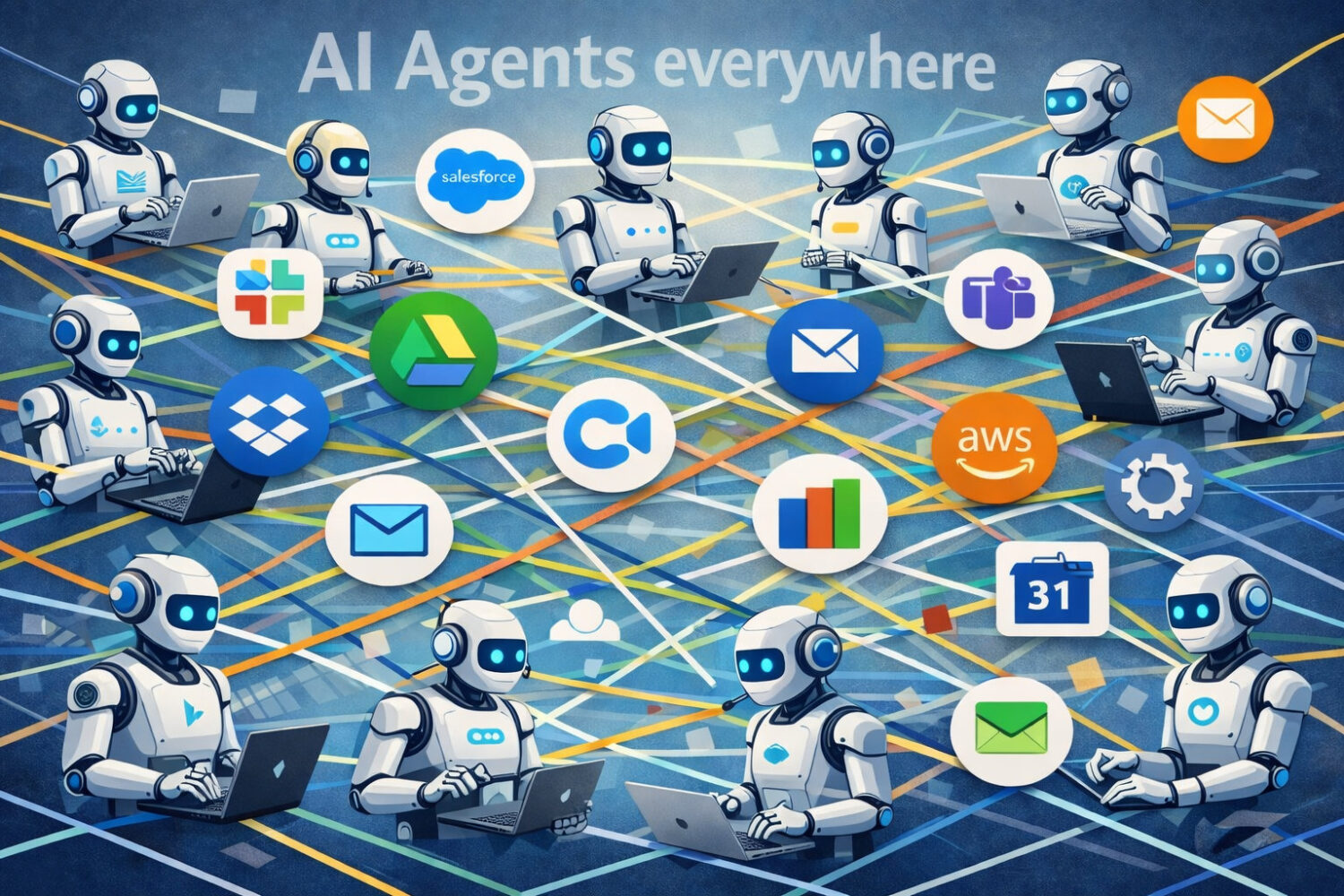
Everyone works with AI agents, but who controls the agents?

Over the past year, there has been a lot of talk about MCP and A2A, protocols that allow agents to communicate with each other. But more and more agents that are now becoming available support and use them. Agents will soon be able to easily exchange information and transfer tasks to each other to achieve much better results. Currently, 50 percent of AI agents in organizations still work as a silo. This means that no context or data from external systems is added. The need for context is now clear to many organizations. 96 percent of IT decision-makers understand that success depends on seamless integration. This puts renewed pressure on data silos and integrations. ... For IT decision-makers wondering what they really need to do in 2026, doing nothing is definitely not the right answer, as your competitors who do invest in AI will quickly overtake you. On the other hand, you don’t have to go all-in and blow your entire IT budget on it. ... You need to start now, so start small. Putting the three or five most frequently asked questions to your customer service or HR team into an AI agent can take a huge workload off those teams. There are now several case studies showing that this has reduced the number of tickets by as much as 50-60 percent. AI can also be used for sales reports or planning, which currently takes employees many hours each week.


Mobile privacy audits are getting harder

Many privacy reviews begin with static analysis of an Android app package (APK). This can reveal permissions requested by the app and identify embedded third-party libraries such as advertising SDKs, telemetry tools, or analytics components. Requested permissions are often treated as indicators of risk because they can imply access to contacts, photos, location, camera, or device identifiers. Library detection can also show whether an app includes known trackers. Yet, static results are only partial. Permissions may never be used in runtime code paths, and libraries can be present without being invoked. Static analysis also misses cases where data is accessed indirectly or through system behavior that does not require explicit permissions. ... Apps increasingly defend against MITM using certificate pinning, which causes the app to reject traffic interception even if a root certificate is installed. Analysts may respond by patching the APK or using dynamic instrumentation to bypass the pinning logic at runtime. Both approaches can fail depending on the app’s implementation. Mopri’s design treats these obstacles as expected operating conditions. The framework includes multiple traffic capture approaches so investigators can switch methods when an app resists a specific setup. ... Raw network logs are difficult to interpret without enrichment. Mopri adds contextual information to recorded traffic in two areas: identifying who received the data, and identifying what sensitive information may have been transmitted.


When the AI goes dark: Building enterprise resilience for the age of agentic AI

Instead of merely storing data, AI accumulates intelligence. When we talk about AI “state,” we’re describing something fundamentally different from a database that can be rolled back. ... Lose this state, and you haven’t just lost data. You’ve lost the organizational intelligence that took hundreds of human days of annotation, iteration and refinement to create. You can’t simply re-enter it from memory. Worse, a corrupted AI state doesn’t announce itself the way a crashed server does. ... This challenge is compounded by the immaturity of the AI vendor landscape. Hyperscale cloud providers may advertise “four nines” of uptime (99.99% availability, which translates to roughly 52 minutes of downtime per year), but many AI providers, particularly the startups emerging rapidly in this space, cannot yet offer these enterprise-grade service guarantees. ... When AI agents handle customer interactions, manage supply chains, execute financial processes and coordinate operations, a sustained AI outage isn’t an inconvenience. It’s an existential threat. ... Humans are not just a fallback option. They are an integral component of a resilient AI-native enterprise. Motivated, trained and prepared teams can bridge gaps when AI fails, ensuring continuity of both systems and operations. When you continually reduce your workforce to appease your shareholders, will your human employees remain motivated, trained and prepared?


The blind spot every CISO must see: Loyalty

The insider who once seemed beyond reproach becomes the very vector through which sensitive data, intellectual property, or operational integrity is compromised. These are not isolated failures of vetting or technology; they are failures to recognize that loyalty is relational and conditional, not absolute. ... Organizations have long operated under the belief that loyalty, once demonstrated, becomes a durable shield against insider risk. Extended tenure is rewarded with escalating access privileges, high performers are granted broader system rights without commensurate behavioral review, and verbal affirmations of commitment are taken at face value. Yet time and again patterns repeat. What begins as mutual confidence weakens not through dramatic betrayal but through subtle realignments in personal commitment. An employee who once identified strongly with the mission may begin to feel undervalued, overlooked for advancement, or weighed down by outside pressures. ... Positions with access to crown jewels — sensitive data, financial systems, or personnel records — or executive ranks inherently require proportionately more oversight, as regulated sectors have shown. Professionals in these roles accept this as part of the terrain, with history demonstrating minimal talent loss when frameworks are transparent and supportive.


Researchers Warn: WiFi Could Become an Invisible Mass Surveillance System

Researchers at the Karlsruhe Institute of Technology (KIT) have shown that people can be recognized solely by recording WiFi communication in their surroundings, a capability they warn poses a serious threat to personal privacy. The method does not require individuals to carry any electronic devices, nor does it rely on specialized hardware. Instead, it makes use of ordinary WiFi devices already communicating with each other nearby.  ... “This technology turns every router into a potential means for surveillance,” warns Julian Todt from KASTEL. “If you regularly pass by a café that operates a WiFi network, you could be identified there without noticing it and be recognized later, for example by public authorities or companies.” Felix Morsbach notes that intelligence agencies or cybercriminals currently have simpler ways to monitor people, such as accessing CCTV systems or video doorbells. “However, the omnipresent wireless networks might become a nearly comprehensive surveillance infrastructure with one concerning property: they are invisible and raise no suspicion.” ... Unlike attacks that rely on LIDAR sensors or earlier WiFi-based techniques that use channel state information (CSI), meaning measurements of how radio signals change when they reflect off walls, furniture, or people, this approach does not require specialized equipment. Instead, it can be carried out using a standard WiFi device.


Is software optimization a lost art?

Almost all of us have noticed apps getting larger, slower, and buggier. We've all had a Chrome window that's taking up a baffling amount of system memory, for example. While performance challenges can vary by organization, application and technical stacks, it appears the worst performance bottlenecks have migrated to the ‘last mile’ of the user experience, says Jim Mercer ... “While architectural decisions and developer skills remain critical, they’re too often compromised by the need to integrate AI and new features at an exponential pace. So, a lack of due diligence when we should know better.” ... The somewhat concerning part is that AI bloat is structurally different from traditional technical debt, she points out. Rather than accumulated cruft over time, it usually manifests as systematic over-engineering from day one. ... Software optimization has become even more important due to the recent RAM price crisis, driven by surging demand for hardware to meet AI and data center buildout. Though the price increases may be levelling out, RAM is now much more expensive than it was mere months ago. This is likely to shift practices and behavior, Brock ... Security will play a role too, particularly with the growing data sovereignty debate and concerns about bad actors, she notes. Leaner, neater, shorter software is simply easier to maintain – especially when you discover a vulnerability and are faced with working through a massive codebase.


The ‘Super Bowl’ standard: Architecting distributed systems for massive concurrency

In the world of streaming, the “Super Bowl” isn’t just a game. It is a distributed systems stress test that happens in real-time before tens of millions of people. ... It is the same nightmare that keeps e-commerce CTOs awake before Black Friday or financial systems architects up during a market crash. The fundamental problem is always the same: How do you survive when demand exceeds capacity by an order of magnitude? ... We implement load shedding based on business priority. It is better to serve 100,000 users perfectly and tell 20,000 users to “please wait” than to crash the site for all 120,000. ... In an e-commerce context, your “Inventory Service” and your “User Reviews Service” should never share the same database connection pool. If the Reviews service gets hammered by bots scraping data, it should not consume the resources needed to look up product availability. ... When a cache miss occurs, the first request goes to the database to fetch the data. The system identifies that 49,999 other people are asking for the same key. Instead of sending them to the database, it holds them in a wait state. Once the first request returns, the system populates the cache and serves all 50,000 users with that single result. This pattern is critical for “flash sale” scenarios in retail. When a million users refresh the page to see if a product is in stock, you cannot do a million database lookups. ... You cannot buy “resilience” from AWS or Azure. You cannot solve these problems just by switching to Kubernetes or adding more nodes.


Cloud-native observability enters a new phase as the market pivots from volume to value

“The secret in the industry is that … all of the existing solutions are motivated to get people to produce as much data as possible,” said Martin Mao, co-founder and chief executive officer of Chronosphere, during an interview with theCUBE. “What we’re doing differently with logs is that we actually provide the ability to see what data is useful, what data is useless and help you optimize … so you only keep and pay for the valuable data.” ... Widespread digital modernization is driving open-source adoption, which in turn demands more sophisticated observability tools, according to Nashawaty. “That urgency is why vendor innovations like Chronosphere’s Logs 2.0, which shift teams from hoarding raw telemetry to keeping only high-value signals, are resonating so strongly within the open-source community,” he said. ... Rather than treating logs as an add-on, Logs 2.0 integrates them directly into the same platform that handles metrics, traces and events. The architecture rests on three pillars. First, logs are ingested natively and correlated with other telemetry types in a shared backend and user interface. Second, usage analytics quantify which logs are actually referenced in dashboards, alerts and investigations. Third, governance recommendations guide teams toward sampling rules, log-to-metric conversion or archival strategies based on real usage patterns.


How recruitment fraud turned cloud IAM into a $2 billion attack surface

The attack chain is quickly becoming known as the identity and access management (IAM) pivot, and it represents a fundamental gap in how enterprises monitor identity-based attacks. CrowdStrike Intelligence research published on January 29 documents how adversary groups operationalized this attack chain at an industrial scale. Threat actors are cloaking the delivery of trojanized Python and npm packages through recruitment fraud, then pivoting from stolen developer credentials to full cloud IAM compromise. ... Adversaries are shifting entry vectors in real-time. Trojanized packages aren’t arriving through typosquatting as in the past — they’re hand-delivered via personal messaging channels and social platforms that corporate email gateways don’t touch. CrowdStrike documented adversaries tailoring employment-themed lures to specific industries and roles, and observed deployments of specialized malware at FinTech firms as recently as June 2025. ... AI gateways excel at validating authentication. They check whether the identity requesting access to a model endpoint or training pipeline holds the right token and has privileges for the timeframe defined by administrators and governance policies. They don’t check whether that identity is behaving consistently with its historical pattern or is randomly probing across infrastructure.


The Hidden Data Access Crisis Created by AI Agents

As enterprises adopt agents at scale, a different approach becomes necessary. Instead of having agents impersonate users, agents retain their own identity. When they need data, they request access on behalf of a user. Access decisions are made dynamically, at the moment of use, based on human entitlements, agent constraints, data governance rules, and intent (purpose). This shifts access from being identity-driven to being context-driven. Authorization becomes the primary mechanism for controlling data access, rather than a side effect of authentication. ... CDOs need to work closely with IAM, security, and platform operations teams to rethink how access decisions are made. In particular, this means separating authentication from authorization and recognizing that impersonation is no longer a sustainable model at scale. Authentication teams continue to establish trust and identity. Authorization mechanisms must take on the responsibility of deciding what data should be accessible at query time, based on the human user, the agent acting on their behalf, the data’s governance rules, and the purpose of the request. ... CDOs must treat data provisioning as an enterprise capability, not a collection of tactical exceptions. This requires working across organizational boundaries. Authentication teams continue to establish trust and identity. Security teams focus on risk and enforcement. Data teams bring policy and governance context. 

Daily Tech Digest - September 28, 2025


Quote for the day:

“Wisdom equals knowledge plus courage. You have to not only know what to do and when to do it, but you have to also be brave enough to follow through.” -- Jarod Kintz


What happens when AI becomes the customer?

If the first point of contact is no longer a person but an AI agent, then traditional tactics like branding, visual merchandising or website design will have reduced impact. Instead, the focus will move to how easily machines can find and understand product information. Retailers will need to ensure that data, from specifications and availability to pricing and reviews, is accurate, structured and optimised for AI discovery. Products will no longer be browsed by humans but scanned and filtered by autonomous systems making selections on someone else’s behalf. ... This trend is particularly strong among younger and higher-income consumers. People under 35 are far more likely to use AI throughout the buying process, particularly for everyday items like groceries, toiletries and clothes. For this group, convenience matters. Many are comfortable letting technology take over simple tasks, and when it comes to low cost, low risk products, they’re happy for AI to handle the entire purchase. ... These developments point to the rise of the agentic internet – a world in which AI agents become the main way consumers interact with brands. As these tools search, compare, buy and manage products on users’ behalf, they will reshape how visibility, loyalty and influence work. Retailers have less than five years to respond. That means investing in clean, structured product data, adapting automation where it’s welcomed, and keeping the human touch where trust matters. 


The overlooked cyber risk in data centre cooling systems

Data centre operations are critically dependent on a complex ecosystem of OT equipment, including HVAC and building management systems. As operators adopt closed-loop and waterless cooling to improve efficiency, these systems are increasingly tied into BMS and DCIM platforms. This expands the attack surface of networks that were once more segmented. A compromise of these systems could directly affect temperature, humidity or airflow, with clear implications for the availability of services that critical infrastructure asset owners rely on. ... Resilience also depends on secure remote access, including multi-factor authentication and controlled jump-host environments for vendors and third parties. Finally, risk-based vulnerability management ensures that critical assets are either patched, mitigated, or closely monitored for exploitation, even where systems cannot easily be taken offline. Taken together, these controls provide a framework for protecting data centre cooling and building systems without slowing the drive for efficiency and innovation. ... As the UK expands its data centre capacity to fuel AI ambitions and digital transformation, cybersecurity must be designed into the physical systems that keep those facilities stable. Cooling is not just an operational detail. It is a potential target — and protecting it is essential to ensuring the sector’s growth is sustainable, resilient, and secure.


Rethinking Regression Testing with Change-to-Test Mapping

Regression testing is essential to software quality, but in enterprise projects it often becomes a bottleneck. Full regression suites may run for hours, delaying feedback and slowing delivery. The problem is sharper in agile and DevOps, where teams must release updates daily. ... The need for smarter regression strategies is more urgent than ever. Modern software systems are no longer monoliths; they are built from microservices, APIs, and distributed components, each evolving quickly. Every code change can ripple across modules, making full regressions increasingly impractical. At the same time, CI/CD costs are rising sharply. Cloud pipelines scale easily but generate massive bills when regression packs run repeatedly. ... The core idea is simple: “If only part of the code changes, why not run only the tests covering that part?” Change-to-test mapping links modified code to the relevant tests. Instead of running the entire suite on every commit, the approach executes a targeted subset – while retaining safeguards such as safety tests and fallback runs. What makes this approach pragmatic is that it does not rely on building a “perfect” model of the system. Instead, it uses lightweight signals – such as file changes, annotations, or coverage data – to approximate the most relevant set of tests. Combined with guardrails, this creates a balance: fast enough to keep up with modern delivery, yet safe enough to trust in production-grade environments.


Is A Human Touch Needed When Compliance Has Automation?

Even with technical issues, automation may highlight missing patches, but humans are the ones who must prioritize fixes, coordinate remediation, and validate that vulnerabilities are closed. Audits highlight this divide even more clearly. Regulators rarely accept a data dump without explanation. Compliance officers must be able to explain how controls work, why exceptions exist, and what is being done to address them. Without human review, automated alerts risk creating false positives, blind spots, or alert fatigue. Perhaps most critically, over-dependence on automation can erode institutional knowledge, leaving teams unprepared to interpret risk independently. ... By eliminating repetitive evidence collection, teams gain the capacity to analyze training effectiveness, scenario-plan future threats, and interpret regulatory changes. Automation becomes not a replacement for people, but a multiplier of their impact. ... Over-reliance on automation carries its own risks. A clean dashboard may mask legacy systems still in production or system blind spots if a monitoring tool goes down. Without active oversight, teams may not discover gaps until the next audit. There’s also the danger of compliance becoming a “black box,” where staff interact with dashboards but never learn how to evaluate risk themselves. CIOs need to actively design against these vulnerabilities.


14 Challenges (And Solutions) Of Filling Fractional Leadership Roles

Filling a fractional leadership role is tough when companies underestimate the expertise required to thrive in such a role. Fractional leaders need both autonomy and seamless integration with key stakeholders. ... One challenge of fractional leadership is grasping the company culture and processes with limited time on site. Without that context, even the most skilled leader can struggle to drive meaningful change or build credibility. ... Finding the right culture fit for a fractional leadership role can be challenging. High-performing leadership teams are tight-knit ecosystems, and a fractional leader’s challenges with breaking into them and fitting into their culture can be daunting. ... One challenge is unrealistic expectations—wanting full-time availability at part-time cost. The key is to define scope, decision rights and deliverables upfront. Treat fractional leaders as strategic partners, not stopgaps. Clear onboarding and aligned incentives are essential to driving value and trust. ... A common hurdle with fractional roles is misaligned expectations—impact is needed fast, but boundaries and authority aren’t always defined. The fix? Be upfront: outline goals, decision-making limits and integration plans early so leaders can add value quickly without friction.


Will the EU Designate AI Under the Digital Markets Act?

There are two main ways in which the DMA will be relevant for generative AI services. First, a generative AI player may offer a core platform service and meet the gatekeeper requirements of the DMA. Second, generative AI-powered functionalities may be integrated or embedded in existing designated core platform services and therefore be covered by the DMA obligations. Those obligations apply in principle to the entire core platform service as designated, including features that rely on generative AI. ... Cloud computing is already listed as a core platform service under the DMA, and thus, designating cloud services would be a much faster process than creating a new core platform service category. Michelle Nie, a tech policy researcher formerly with the Open Markets Institute, says the EU should designate cloud providers to tackle the infrastructural advantages held by gatekeepers. Indeed, she has previously written for Tech Policy Press that doing so “would help address several competitive concerns like self-preferencing, using data from businesses that rely on the cloud to compete against them, or disproportionate conditions for termination of services.” ... Introducing contestability and fairness, the stated goals of the DMA, into digital ecosystems increasingly relied on by private and public institutions could not be more critical. 


The Looming Authorization Crisis: Why Traditional IAM Fails Agentic AI

From copilots booking travel to intelligent agents updating systems and coordinating with other bots, we’re stepping into a world where software can reason, plan, and operate with increasing autonomy.This shift brings immense promise and significant risk. The identity and access management (IAM) infrastructures that we rely upon today were built for people and fixed service accounts. They weren’t designed to manage self-directing, dynamic digital agents. And yet that’s what Agentic AI demands. ... The road to a comprehensive and internationally accessible Agentic AI IAM framework is a daunting task. The rapid pace of AI development demands accelerated IAM security guidance, especially for heavily regulated sectors. Continued research, continued development of standards, and rigorous interoperability are required to prevent fragmentation into incompatible identity silos. We must also address the ethical issues, such as bias detection and mitigation in credentials, and offer transparency and explainability of IAM decisions. ... The stakes are high. Without a comprehensive plan for managing these agents—one that tracks who they are, what they can perceive, and when their permissions expire—we risk disaster through way of complexity and compromise. Identity remains the foundation of enterprise security, and its scope must reach rapidly to shield the autonomous revolution.


How immutability tamed the Wild West

One of the first lessons that a new programmer should learn is that global variables are a crime against all that is good and just. If a variable is passed around like a football, and its state can change anywhere along the way, then its state will change along the way. Naturally, this leads to hair pulling and frustration. Global variables create coupling, and deep and broad coupling is the true crime against the profession. At first, immutability seems kind of crazy—why eliminate variables? Of course things need to change! How the heck am I going to keep track of the number of items sold or the running total of an order if I can’t change anything? ... The key to immutability is understanding the notion of a pure function. A pure function is one that always returns the same output for a given input. Pure functions are said to be deterministic, in that the output is 100% predictable based on the input. In simpler terms, a pure function is a function with no side effects. It will never change something behind your back. ... Immutability doesn’t mean nothing changes; it means values never change once created. You still “change” by rebinding a name to a new value. The notion of a “before” and “after” state is critical if you want features like undo, audit tracing, and other things that require a complete history of state. Back in the day, GOSUB was a mind-expanding concept. It seems so quaint today. 


What Lessons Can We Learn from the Internet for AI/ML Evolution?

One of the defining principles of the Internet was to keep the core simple and push the intelligence to the edge. The network and its host computers just simply delivered packets reliably without dictating or controlling applications. That principle enabled the explosion of the Web, streaming, and countless other services. In AI, similar principles should be considered. Instead of centralizing everything in “one foundational model”, we should empower distributed agents and edge intelligence. Core infrastructure should stay simple and robust, enabling diverse use cases on top. ... One of the most important lessons of all from the Internet is that there be no single company nor government-owned or controlled TCP/IP stack. It is neutral governance that created global trust and adoption. Institutions such as ICANN, and the regional Internet registries (RIRs) played a key role by managing domain names and IP address assignments in an open and transparent way, ensuring that resources were allocated fairly across geographies. This kind of neutral stewardship allowed the Internet to remain interoperable and borderless. On the other hand, today’s AI landscape is controlled by a handful of big-tech companies. To scale AI responsibly, we will need similar global governance structures—an “IETF for AI,” complemented by neutral registries that can manage shared resources such as model identifiers, agent IDs, coordinating protocols, among others.


Digital Transformation: Investments Soar, But Cyber Risks (Often) Outpace Controls

With the accelerating digital transformation, periodic security and compliance reviews are obsolete. Nelson emphasizes the need for “continuous assessment—continuous monitoring of privacy, regulatory, and security controls,” with automation used wherever feasible. Third-party and supply-chain risk must be continuously monitored, not just during vendor onboarding. Similarly, asset management can no longer be neglected, as even overlooked legacy devices—like unpatched Windows XP machines in manufacturing—can serve as vectors for persistent threats. Effective governance is crucial to enhancing security during periods of rapid digital transformation, Nelson emphasized. By establishing robust frameworks and clear policies for acceptable use, organizations can ensure that new technologies, such as AI, are adopted responsibly and securely. ... Maintaining cybersecurity within Governance, Risk, and Compliance (GRC) programs helps keep security from being a reactive cost center, as security measures are woven into the digital strategy from the outset, rather than being retrofitted. And GRC frameworks provide real-time visibility into organizational risks, facilitate data-driven decision-making, and create a culture where risk awareness coexists with innovation. This harmony between governance and digital initiatives helps businesses navigate the digital landscape while ensuring their operations remain secure, compliant, and prepared to adapt to change.