Showing posts with label vector database. Show all posts

Daily Tech Digest - April 26, 2026


Quote for the day:

“The greatest leader is not necessarily the one who does the greatest things. He is the one that gets the people to do the greatest things.” -- Ronald Reagan


🎧 Listen to this digest on YouTube Music

▶ Play Audio Digest

Duration: 19 mins • Perfect for listening on the go.


Where to begin a cloud career

Starting a career in cloud computing often seems daunting due to perceived barriers like expensive boot camps and complex certifications, but David Linthicum argues that the best entry point is actually through free foundational courses. These no-cost resources allow beginners to gain essential orientation, learning vital concepts such as infrastructure, elasticity, and governance without financial risk. Major providers like AWS, Microsoft Azure, and Google Cloud offer these learning paths to cultivate a skilled ecosystem of future professionals. By utilizing these introductory materials, learners can compare different platforms to see which best aligns with their career goals — such as choosing Azure for enterprise Windows environments or AWS for startup versatility — before committing to a specific specialization. Linthicum emphasizes that these courses provide a structured progression from broad terminology to mental models, which is more effective than jumping straight into technical tools. Furthermore, he highlights that cloud careers are accessible even to those without coding backgrounds, including roles in security, project delivery, and business analysis. The ultimate strategy is to treat free courses as a launchpad for momentum; by finishing introductory training across multiple providers, aspiring professionals can build the necessary breadth and confidence to pursue more advanced hands-on labs and role-based certifications later.


Cybersecurity Risks Related to the Iran War

In the article "Cybersecurity Risks Related to the Iran War," authors Craig Horbus and Ryan Robinson explore how modern geopolitical tensions between Iran, the United States, and Israel have expanded into a parallel digital battlefield. As conventional military operations escalate, cybersecurity experts and regulators warn that financial institutions and critical infrastructure are facing heightened risks from state-sponsored actors and affiliated hacktivists. Groups like "Handala" have already demonstrated their disruptive capabilities by targeting energy companies and medical providers, using techniques such as DDoS attacks, data-wiping malware, and sophisticated phishing campaigns. These adversaries target the financial sector primarily to cause widespread economic instability, erode public confidence, and secure funding for hostile activities through fraudulent transfers or ransomware. Consequently, regulatory bodies like the New York Department of Financial Services are urging institutions to adopt more robust cyber resilience strategies. This includes intensifying network monitoring, enhancing authentication protocols, and strengthening third-party vendor risk management. The article emphasizes that cybersecurity is no longer merely a technical IT concern but a critical legal and strategic obligation. Ensuring that incident response plans can withstand nation-state level threats is essential for maintaining global economic stability in an increasingly volatile digital landscape where physical conflicts and cyber warfare are now inextricably linked.


Vector Database - A Deep Dive

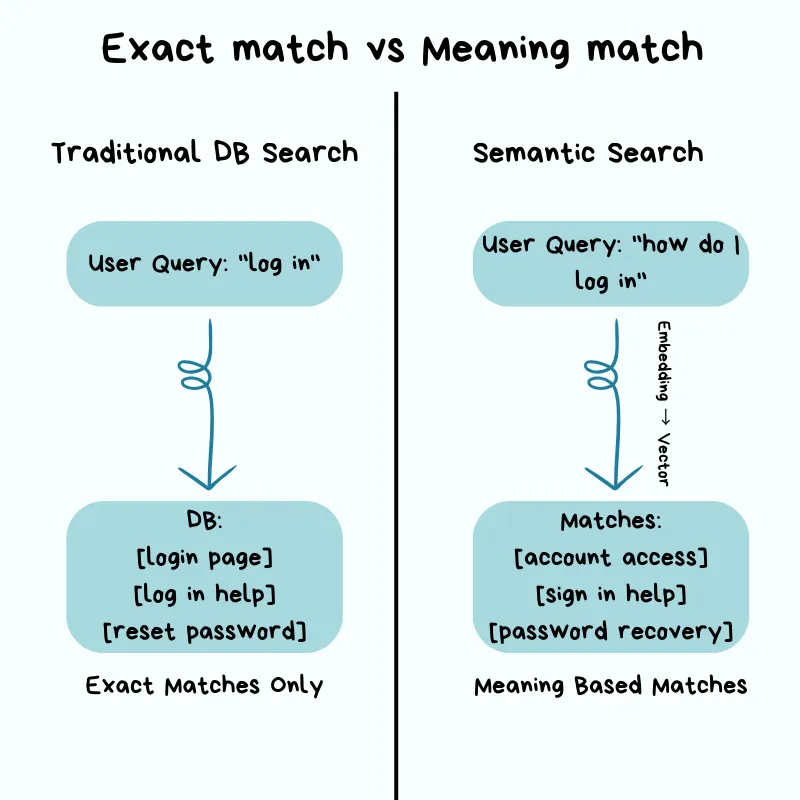
Vector databases represent a specialized class of data management systems engineered to efficiently store, index, and retrieve high-dimensional vector embeddings, which are numerical representations of unstructured data like text, images, and audio. Unlike traditional relational databases that rely on exact keyword matches and structured schemas, vector databases leverage the "meaning" of data by measuring the mathematical distance between vectors in a multi-dimensional space. This enables powerful semantic search capabilities where the system identifies items with conceptual similarities rather than just literal overlaps. At their core, these databases utilize embedding models to transform raw information into dense vectors, which are then organized using specialized indexing algorithms such as Hierarchical Navigable Small World (HNSW) or Inverted File Index (IVF). These techniques facilitate Approximate Nearest Neighbor (ANN) searches, allowing for rapid retrieval across billions of data points with minimal latency. Consequently, vector databases have become the foundational "long-term memory" for modern AI applications, particularly in Retrieval-Augmented Generation (RAG) workflows and recommendation engines. By bridging the gap between raw unstructured data and machine-interpretable context, they empower developers to build intelligent, scalable systems that can understand and process information at a more human-like level of nuance and complexity, while handling massive datasets through horizontal scaling and efficient sharding strategies.


Reimagining tech infrastructure for (and with) agentic AI

The rapid evolution of agentic AI is compelling chief technology officers to fundamentally reimagine IT infrastructure, moving beyond traditional support layers toward a modular, "mesh-like" backbone that orchestrates autonomous agents. As AI workloads expand, organizations face a critical dual challenge: infrastructure costs are projected to triple by 2030 while budgets remain stagnant, necessitating a shift where AI is used to manage the very systems it inhabits. Successfully scaling agentic AI requires building "agent-ready" foundations characterized by composability, secure APIs, and robust governance frameworks that ensure accountability. High-value impacts are already surfacing in areas like service desk operations, observability, and hosting, where agents can automate up to 80 percent of routine tasks, potentially reducing run-rate costs by 40 percent. This transition demands a significant cultural and operational pivot, shifting the role of IT professionals from manual ticket-based troubleshooting to the supervision and architectural design of intelligent systems. By integrating these autonomous entities into a coherent backbone, enterprises can bridge the gap between experimentation and enterprise-wide scale, transforming infrastructure from a reactive cost center into a dynamic platform for innovation. Those who embrace this agentic shift will secure a significant advantage in speed, resilience, and economic efficiency in the AI-driven era.


Quantum-Safe Security: How Enterprises Can Prepare for Q-Day
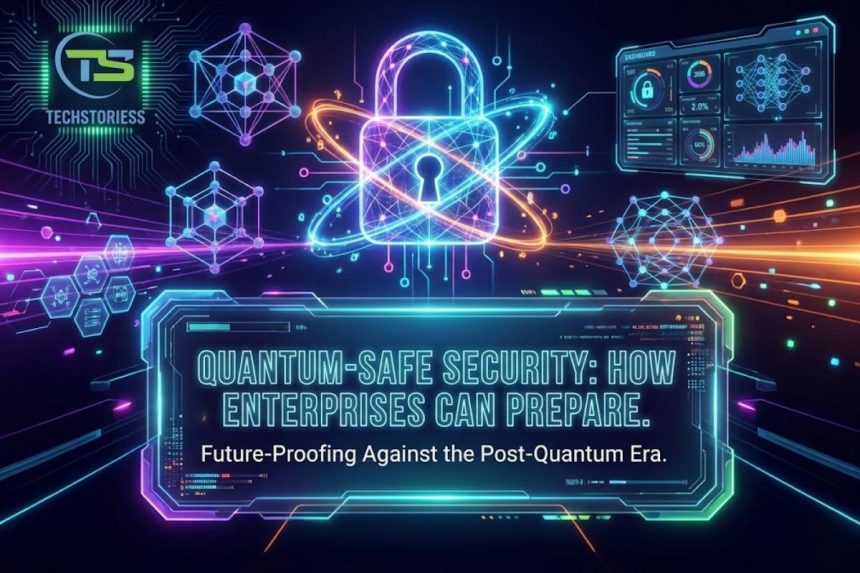
The provided page explores the critical necessity for enterprises to transition toward quantum-safe security to mitigate the existential threats posed by future quantum computers. Traditional encryption methods, such as RSA and ECC, are increasingly vulnerable to advanced quantum algorithms, most notably Shor’s algorithm, which can efficiently solve the complex mathematical problems that currently protect digital infrastructure. A particularly urgent concern highlighted is the "harvest now, decrypt later" strategy, where adversaries collect encrypted sensitive data today with the intention of deciphering it once powerful quantum technology becomes commercially available. To defend against these emerging risks, the article outlines a strategic preparation roadmap for organizations. This involves achieving "crypto-agility"—the ability to rapidly switch cryptographic standards—and conducting comprehensive inventories of current encryption usage across all systems. Furthermore, enterprises are encouraged to align with evolving NIST standards for post-quantum cryptography (PQC) and prioritize the protection of high-value, long-term assets. By integrating these quantum-resistant algorithms into their security architecture now, businesses can ensure long-term data confidentiality, maintain regulatory compliance, and future-proof their digital operations against the impending "quantum apocalypse." This proactive shift is presented not merely as a technical update, but as a fundamental requirement for maintaining trust and operational continuity in a post-quantum world.


Your Disaster Recovery Plan Doesn’t Account for AI Agents. It Should

The article "Your Disaster Recovery Plan Doesn’t Account for AI Agents. It Should" highlights a critical gap in contemporary business continuity strategies as enterprise adoption of agentic AI accelerates. While Gartner predicts a massive surge in AI agents embedded within applications by 2026, many organizations still rely on legacy governance frameworks that operate at human speeds. These traditional models are ill-equipped for autonomous agents that execute thousands of data accesses instantly, often bypassing standard security alerts. Unlike traditional technical failures with clear timestamps, AI governance failures are often "silent," characterized by over-permissioned agents accessing sensitive datasets over long periods. This leads to an exponential increase in the "blast radius" of potential breaches across cloud and on-premises environments. To mitigate these risks, the author advocates for machine-speed governance that utilizes dynamic, context-aware access controls and just-in-time permissions. By embedding governance directly into the architecture, organizations can transform it from a deployment bottleneck into a recovery accelerant. Such an approach provides the immutable audit trails necessary to drastically reduce the 100-day recovery window typically associated with AI-related incidents. Ultimately, robust governance is presented not as a constraint, but as a prerequisite for sustaining resilient AI innovation.


Cloud Native Platforms Transforming Digital Banking

The financial services industry is undergoing a profound structural revolution as traditional banks transition from rigid, monolithic legacy systems to agile, cloud-native architectures. This shift is centered on the adoption of microservices and containerization, allowing institutions to break down complex applications into independent, modular components. Such an approach enables rapid deployment of updates and innovative fintech services without disrupting core operations, ensuring established banks can effectively compete with nimble startups. Beyond mere speed, cloud-native platforms offer superior security through "Zero Trust" models and immutable infrastructure, which mitigate risks like configuration errors and persistent malware. Furthermore, the integration of open banking APIs and real-time payment processing transforms banks into central hubs within a broader digital ecosystem, providing customers with instant, seamless financial experiences. The scalability of the cloud also provides a robust foundation for Artificial Intelligence, facilitating hyper-personalized "predictive banking" that anticipates user needs. Ultimately, by embracing cloud computing, financial institutions are not only automating compliance through "Policy as Code" but are also building a flexible, future-proof foundation capable of incorporating emerging technologies like blockchain and quantum computing to meet the demands of the modern global economy.


Turning security into a story: How managed service providers use reporting to drive retention and revenue

Managed Service Providers (MSPs) often face the challenge of proving their value because effective cybersecurity is inherently "invisible," resulting in an absence of security breaches that customers may interpret as a lack of necessity for the service. To bridge this gap, MSPs must transition from providing raw technical data to crafting a compelling narrative through strategic reporting. As highlighted by the experiences of industry professionals using SonicWall tools, the core of a successful MSP practice relies on five pillars: monitoring, patch management, configuration oversight, alert response, and, most importantly, reporting. By utilizing automated platforms like Network Security Manager (NSM) and Capture Client, MSPs can produce detailed assessments and audit trails that make their backend efforts tangible to clients. Moving beyond monthly logs to implement Quarterly Business Reviews (QBRs) allows providers to transition from mere vendors to trusted strategic advisors. This shift significantly impacts business outcomes; for instance, MSPs employing regular QBRs often see renewal rates jump from 71% to 96%. Ultimately, by structuring services into clear tiers with documented deliverables, MSPs can use reporting to tell a story of protection. This strategy not only justifies current expenditures but also drives new revenue by fostering client trust and highlighting unmet security needs.


Cybersecurity in the AI age: speed and trust define resilience

In the rapidly evolving digital landscape, cybersecurity has transitioned from a technical hurdle to a strategic imperative where speed and trust are the cornerstones of resilience. According to insights from iqbusiness, the "breakout time" for e-crime—the window an attacker has to move laterally within a system—has plummeted from nearly ten hours in 2019 to just 29 minutes today, necessitating near-instantaneous responses. This urgency is exacerbated by artificial intelligence, which serves as a double-edged sword; while it empowers attackers to craft sophisticated phishing campaigns and malicious code, it also provides defenders with automated tools to filter noise and prioritize threats. However, the rise of "shadow AI" and a lack of visibility into unsanctioned tools pose significant risks to data integrity. To combat these threats, the article advocates for a "Zero Trust" architecture—where every interaction, whether by human or machine, is verified—and the adoption of robust frameworks like the NIST Cybersecurity Framework 2.0. Ultimately, modern cyber resilience depends on more than just defensive technology; it requires a proactive organisational culture, strong leadership, and the seamless integration of AI into security strategies. By prioritising visibility and governance, businesses can navigate the complexities of the AI age while maintaining the trust of their stakeholders and partners.


Architecture strategies for monitoring workload performance

Monitoring for performance efficiency within the Azure Well-Architected Framework is a critical process focused on observing system behavior to ensure optimal resource utilization and responsiveness. This discipline involves a continuous cycle of collecting, analyzing, and acting upon telemetry data to detect performance bottlenecks before they impact end users. Effective monitoring begins with comprehensive instrumentation, which captures diverse data points such as metrics, logs, and distributed traces from both the application and underlying infrastructure. By establishing clear performance baselines, architects can define what constitutes "normal" behavior, allowing them to identify subtle degradations or sudden spikes in resource consumption. Azure provides powerful tools like Azure Monitor and Application Insights to facilitate this visibility, offering capabilities for real-time alerting and deep-dive diagnostic analysis. Key metrics, including throughput, latency, and error rates, serve as essential indicators of system health. Furthermore, a robust monitoring strategy emphasizes the importance of historical data for long-term trend analysis and capacity planning, ensuring that the architecture can scale effectively to meet evolving demands. Ultimately, performance monitoring is not a one-time setup but an ongoing practice that informs optimization efforts, validates architectural changes, and maintains a high level of efficiency throughout the entire software development lifecycle.

Daily Tech Digest - October 19, 2025


; Quote for the day:

"The most powerful leadership tool you have is your own personal example." -- John Wooden


How CIOs Can Close the IT Workforce Skills Gap for an AI-First Organization

Deliberately building AI skills among existing talent, rather than searching outside the organization for new hires or leaving skills development to chance, can help develop the desired institutional knowledge and build an IT-resilient workforce. AI-first is a strategic approach that guides the use of AI technology within an enterprise or a unit within it, with the intention of maximizing the benefits from AI. IT organizations must maintain ongoing skills development to be successful as an AI-first organization. ... In developing the future-state competency map, CIOs must include AI-specific skills and competencies, ensuring each role has measurable expectations aligned with the company’s strategic objectives related to AI. CIO must also partner with HR to design and establish AI literacy programs. While HR leaders are experts in scaling learning initiatives and standardizing tools, CIOs have more insight into foundational AI skills, training, and technical support required in the enterprise. CIOs should regularly review whether their teams’ AI capabilities contribute to faster product launches or improved customer insights. ... Addressing employees’ key concerns is a critical step for any AI change management initiative to be successful. AI is fundamentally changing traditional workplace operating models by democratizing access to technology, generating insights, and changing the relationship between people and technology.


20 Strategies To Strengthen Your Crisis Management Playbook

The regular review and refinement of protocols ensures alignment when a scenario arises. At our company, we centralize contacts, prepare for a range of scenarios and set outreach guidelines. This enables rapid response, timely updates and meaningful support, which safeguards trust and strengthens relationships with employees, stakeholders and clients. ... Unintended consequences often arise when stakeholder expectations are left out of crisis planning. Leaders should bake audience insights into their playbooks early—not after headlines hit. Anticipating concerns builds trust and gives you the clarity and credibility to lead through the tough moments. ... Know when to do nothing. Sometimes the instinct to respond immediately leads to increased confusion and puts your brand even further under the microscope. The best crisis managers know when to stop, see how things play out and respond accordingly (if at all), all while preparing for a variety of scenarios behind the scenes. ... Act like a board of directors. A crisis is not an event; it's a stress test of brand, enterprise and reputation infrastructure and resilience. Crisis plans must align with business continuity, incident response and disaster recovery plans. Marketing and communications must co-lead with the exec team, legal, ops and regulatory to guide action before commercial, brand equity and reputation risk escalates.


Abstract or die: Why AI enterprises can't afford rigid vector stacks

Without portability, organizations stagnate. They have technical debt from recursive code paths, are hesitant to adopt new technology and cannot move prototypes to production at pace. In effect, the database is a bottleneck rather than an accelerator. Portability, or the ability to move underlying infrastructure without re-encoding the application, is ever more a strategic requirement for enterprises rolling out AI at scale. ... Instead of having application code directly bound to some specific vector backend, companies can compile against an abstraction layer that normalizes operations like inserts, queries and filtering. This doesn't necessarily eliminate the need to choose a backend; it makes that choice less rigid. Development teams can start with DuckDB or SQLite in the lab, then scale up to Postgres or MySQL for production and ultimately adopt a special-purpose cloud vector DB without having to re-architect the application. ... What's happening in the vector space is one example of a bigger trend: Open-source abstractions as critical infrastructure; In data formats: Apache Arrow; In ML models: ONNX; In orchestration: Kubernetes; In AI APIs: Any-LLM and other such frameworks. These projects succeed, not by adding new capability, but by removing friction. They enable enterprises to move more quickly, hedge bets and evolve along with the ecosystem. Vector DB adapters continue this legacy, transforming a high-speed, fragmented space into infrastructure that enterprises can truly depend on. ...


AWS's New Security VP: A Turning Point for AI Cybersecurity Leadership?

"As we move forward into 2026, the breadth and depth of AI opportunities, products, and threats globally present a paradigm shift in cyber defense," Lohrmann said. He added that he was encouraged by AWS's recognition of the need for additional focus and attention on these cyberthreats. ... "Agentic AI attackers can now operate with a 'reflection loop' so they are effectively self-learning from failed attacks and modifying their attack approach automatically," said Simon Ratcliffe, fractional CIO at Freeman Clarke. "This means the attacks are faster and there are more of them … putting overwhelming pressure on CISOs to respond." ... "I think the CISO's role will evolve to meet the broader governance ecosystem, bringing together AI security specialists, data scientists, compliance officers, and ethics leads," she said, adding cybersecurity's mantra that AI security is everyone's business. "But it demands dedicated expertise," she said. "Going forward, I hope that organizations treat AI governance and assurance as integral parts of cybersecurity, not siloed add-ons." ... In Liebig's opinion, the future of cybersecurity leadership looks less hierarchical than it does now. "As for who owns that risk, I believe the CISO remains accountable, but new roles are emerging to operationalize AI integrity -- model risk officers, AI security architects, and governance engineers," he explained. "The CISO's role should expand horizontally, ensuring AI aligns to enterprise trust frameworks, not stand apart from them."


The Top 5 Technology Trends For 2026

In recent years, we've seen industry, governments, education and everyday folk scrambling to adapt to the disruptive impact of AI. But by 2026, we're starting to get answers to some of the big questions around its effect on jobs, business and day-to-day life. Now, the focus shifts from simply reacting to reinventing and reshaping in order to find our place in this brave, different and sometimes frightening new world.  ... Rather than simply answering questions and generating content, agents take action on our behalf, and in 2026, this will become an increasingly frequent and normal occurrence in everyday life. From automating business decision-making to managing and coordinating hectic family schedules, AI agents will handle the “busy work” involved in planning and problem-solving, freeing us up to focus on the big picture or simply slowing down and enjoying life. ... Quantum computing harnesses the strange and seemingly counterintuitive behavior of particles at the sub-atomic level to accomplish many complex computing tasks millions of times faster than "classic" computers. For the last decade, there's been excitement and hype over their performance in labs and research environments, but in 2026, we are likely to see further adoption in the real world. While this trend might not appear to noticeably affect us in our day-to-day lives, the impact on business, industry and science will begin to take shape in noticeable ways.


How Successful CTOs Orchestrate Business Results at Every Stage

As companies mature, their technical needs shift from building for the present to a long-term vision, strategic partnerships, and leveraging technology to drive business goals. The Strategist CTO combines deep technical acumen with business acumen and a deep understanding of the customer journey. This leader collaborates with other executives on strategic planning, but always through the lens of where customers are heading, not strictly where technology is going.  ... For large enterprises with complex ecosystems and large customer bases, stability, security, and operational efficiency are paramount. This is where the Guardian CTO safeguards the customer experience through technical excellence.This leader oversees all aspects of technical infrastructure, ensuring the reliability, security, and availability of core technology assets with a clear understanding that every decision directly impacts customer trust. ... While these operational models often align with company growth stages, they aren't rigid. A company's needs can shift rapidly due to market conditions, competitive pressures, or unexpected challenges, and customer expectations can evolve just as quickly. ... The most successful companies create environments where technical leadership evolves in response to changing business needs, empowering technical leaders to pivot their focus from building to strategizing, or from innovating to safeguarding, as circumstances demand.


Financial services seek balance of trust, inclusion through face biometrics advances

Advances in the flexibility of face biometric liveness, deepfake detection and cross-sectoral collaboration represent the latest measures against fraud in remote financial services. A digital bank in the Philippines is integrating iProov’s face biometrics and liveness detection, OneConnect and a partner are entering a sandbox to work on protecting against deepfakes, and an event held by Facephi in Mexico explored the challenges of financial services trying to maintain digital trust while advancing inclusion. ... The Philippine digital bank will deploy advanced liveness detection tools as part of a new risk-based authentication strategy. “Our mission is to uplift the lives of all Filipinos through a secure, trusted, and accessible digital bank for all Filipinos, and that requires deploying resilient infrastructure capable of addressing sophisticated fraud,” said Russell Hernandez, chief information security officer at UnionDigital Bank. “As we shift toward risk-based authentication, we need a flexible and future-ready solution. iProov’s internationally proven ability to deliver ease of use, speed, and high security assurance – backed by reliable vendor support – ensures we can evolve our fraud defenses while sustaining customer trust and confidence.” ... The Mexican government has launched several initiatives to standardize digital identity infrastructure, including Llave MX — a single sign-on platform for public services — and the forthcoming National Digital Identity Document, designed to harmonize verification across sectors.


Why context, not just data, will define the future of AI in finance

Raw intelligence in AI and its ability to crunch numbers and process data is only one part of the equation. What it fundamentally lacks is wisdom, which comes from context. In areas like personal finance, building powerful models with deep domain knowledge is critical. The challenges range from misinterpretation of data to regulatory oversights that directly affect value for customers. That’s why at Intuit, we put “context at the core of AI.” This means moving beyond generic datasets to build specialised Financial Large Language Models (LLMs) trained on decades of anonymised financial expertise. It’s about understanding the interconnected journey of our customers across our ecosystem—from the freelancer managing invoices in QuickBooks to that same individual filing taxes with TurboTax, to them monitoring their financial health on Credit Karma. ... In the age of GenAI, craftsmanship in engineering is being redefined. It’s no longer just about writing every line of code or building models from scratch, but about architecting robust, extensible systems that empower others to innovate. The very soul of engineering is transcending code to become the art of architecture. The measure of excellence is no longer found in the meticulous construction of every model, but in the visionary design of systems that empower domain experts to innovate. With tools like GenStudio and GenUX abstracting complexity, the engineer’s role isn’t diminished but elevated. They evolve from builders of applications to architects of innovation ecosystems. 


The modernization mirage: CIOs must see through it to play the long game

Enterprise architecture, in too many organizations, has been reduced to frameworks: TOGAF, Zachman, FEAF. These models provide structure but rarely move capital or inspire investor trust. Boards don’t want frameworks. They want influence. That’s why I developed the Architecture Influence Flywheel — a practical model I use in board and transformation discussions. It rests on three pivots - Outcomes: Every architectural choice must tie directly to board-level priorities — growth, resilience, efficiency. ... Relationships: CIOs must serve as business-technology translators. Express progress not in technical jargon, but in investor language — return on capital, return on innovation, margin expansion and risk mitigation. ... Visible wins: Influence grows through undeniable demonstrations. A system that cuts onboarding time by 40%, an AI model that reduces fraud losses or an audit process that clears in half the time — these visible wins build momentum. ... Technologies rise and fall. Frameworks evolve. Titles shift. But one principle endures: What leaders tolerate defines their legacy. Playing the long game requires CIOs to ask uncomfortable questions:Will we tolerate AI models we cannot explain to regulators? Will we tolerate unchecked cloud sprawl without financial discipline? Will we tolerate compliance as a box-ticking exercise rather than a growth enabler? 


What Is Cybersecurity Platformization?

Cybersecurity platformization is a strategic response to this complexity. It’s the move from a collection of disparate point solutions to a single, unified platform that integrates multiple security functions. Dickson describes it as the “canned integration of security tools so that they work together holistically to make the installation, maintenance and operation easier for the end customer across various tools in the security stack.” ... The most significant hidden cost of a fragmented, multitool security strategy is labor. Managing disconnected tools is a resource strain on an organization, as it requires individuals with specialized skills for each tool. This includes the labor-intensive task of managing API integrations and manually coding “shims,” or integrations to translate data between different tools, which often have separate protocols and proprietary interfaces, Dukes says. Beyond the cost of personnel, there’s the operational complexity.  ... One of the most immediate benefits of adopting a platform approach is cost reduction. This includes not only the reduction in licensing fees but also a reduction in the operational complexity and the number of specialized employees needed. ... Another key benefit is the well-worn concept of a “single pane of glass,” a single dashboard that enables IT security teams to have easier management and reporting. Instead of multiple tools with different interfaces and data formats, a unified platform streamlines everything into a single, cohesive view.

Daily Tech Digest - August 29, 2024

The human factor in the industrial metaverse

The virtualisation of factories might ensure additional efficiencies, but it has the potential to fundamentally alter the human dynamics within an organisation. With rising reliance on digital tools, it gets challenging to maintain the human aspects of work. ... Just like evolving innovation is crucial, so is organisational culture. Leaders must promote a culture that supports agility, innovation, and continuous learning to ensure success in a virtual factory environment. This can be achieved by being transparent, encouraging experimentation, and recognising and rewarding an employee’s creativity and adaptability. With the rapid evolution of virtual factories employees must undergo comprehensive training that covers both technical and soft skills to adapt to the virtual environment. While practical, hands-on exercises are crucial for real-world application, it’s also important to have continuous learning with ongoing workshops, online training, and cross-training opportunities. To further enhance knowledge sharing, establishing mentorship and peer-learning programs can ensure a smooth transition, fostering a cohesive and productive workforce.


Challenging The Myths of Generative AI

The productivity myth suggests that anything we spend time on is up for automation — that any time we spend can and should be freed up for the sake of having even more time for other activities or pursuits — which can also be automated. The importance and value of thinking about our work and why we do it is waved away as a distraction. The goal of writing, this myth suggests, is filling a page rather than the process of thought that a completed page represents. ... The prompt myth is a technical myth at the heart of the LLM boom. It was a simple but brilliant design stroke: rather than a window where people paste text and allow the LLM to extend it, ChatGPT framed it as a chat window. We’re used to chat boxes, a window that waits for our messages and gets a (previously human) response in return. In truth, users provide words that dictate what we get back. ... Intelligence myths arise from the reliance on metaphors of thinking in building automated systems. These metaphors – learning, understanding, and dreaming – are helpful shorthand. But intelligence myths rely on hazy connections to human psychology. They often conflate AI systems inspired by models of human thought for a capacity to think.


The New Frontiers of Cyber-Warfare: Insights From Black Hat 2024

Corporate sanctions against nations are just one aspect of the broader issue. Moss also spoke about a new kind of trade war, where nation-states are pushing back against big tech companies and their political and economic agendas – along with the agendas of countries where these companies are based. Moss noted that countries are now using digital protectionist policies to wage what he called "a new way to escalate." He cited India's 2020 ban on TikTok, which resulted in China’s ByteDance reportedly facing up to $6 billion in losses. Moss also discussed the phenomenon of “app diplomacy,” where governments dictate to big tech companies like Apple and Google which apps are permitted in their markets. He mentioned the practice of “tech sorting,” where countries try to maintain strict control over foreign tech through redirection, throttling, or direct censorship. ... Shifting from concerns over AI to the emerging weapons of cyber espionage and warfare, Moss, moderating Black Hat’s wrap-up discussion, brought up the growing threat of hardware attacks. He asked Jos Wetzels, partner at Midnight Blue, to discuss the increasing accessibility of electromagnetic (EM) and laser weapons.


5 best practices for running a successful threat-informed defense in cybersecurity

Assuming organizations are doing vulnerability scanning across systems, applications, attack surfaces, cloud infrastructure, etc., they will come up with lists of tens of thousands of vulnerabilities. Even big, well-resourced enterprises can’t remediate this volume of vulnerabilities in a timely fashion, so leading firms depend upon threat intelligence to guide them into fixing those vulnerabilities most likely to be exploited presently or in the near future. ... As previously mentioned, a threat-informed defense involves understanding adversary TTPs, comparing these TTPs to existing defenses, identifying gaps, and then implementing compensating controls. These last steps equate to reviewing existing detection rules, writing new ones, and then testing them all to make sure they detect what they are supposed to. Rather than depending on security tool vendors to develop the right detection rules, leading organizations invest in detection engineering across multiple toolsets such as XDR, email/web security tools, SIEM, cloud security tools, etc. CISOs I spoke with admit that this can be difficult and expensive to implement. 


Let’s Bring H-A-R-M-O-N-Y Back Into Our Tech Tools

The focus of a platform approach is on harmonized experiences: a state of balance, agreement and even pleasant interaction among the various elements and stakeholders involved in development. There needs to be a way to make it easy and enjoyable to build, test and release at the pace of today’s business without the annoying dependencies that bog down developers along the way — on both the application and infrastructure sides. I believe tool stacks and platforms that use a harmony-focused method can even bring the fun back into development. ... Resilience refers to the ability to withstand and recover from failures and disruptions, and you can’t follow a harmonized approach without it. A resilient architecture is designed to handle unexpected challenges — be they spikes in traffic, hardware malfunctions or software bugs — without compromising core functionality. How do you create resiliency? Through running, testing and debugging your code to catch errors early and often. Building a robust testing foundation can look like having a dedicated testing environment and ephemeral testing features. 


Cybersecurity Maturity: A Must-Have on the CISO’s Agenda

The process of maturation in personnel is often reflected in the way these teams are measured. Less mature teams tend to be measured on activity metrics and KPIs around how many tickets are handled and closed, for example. In more mature organisations the focus has shifted towards metrics like team satisfaction and staff retention. This has come through strongly in our research. Last year 61% of cybersecurity professionals surveyed said that the key metric they used to assess the ROI of cybersecurity automation was how well they were managing the team in terms of employee satisfaction and retention – another indication that it is reaching a more mature adoption stage. Organizations with mature cybersecurity approaches understand that tools and processes need to be guided through the maturity path, but that the reason for doing so is to serve the people working with them. The maturity and skillsets of teams should also be reviewed, and members should be given the opportunity to add their own input. What is their experience of the tools and processes in place? Do they trust the outcomes they are getting from AI- and machine learning-powered tools and processes? 


What can my organisation do about DDoS threats?

"Businesses can prevent attacks using managed DDoS protection services or through implementing robust firewalls to filter malicious traffic and deploying load balancers to distribute traffic evenly when under heavy load,” advises James Taylor, associate director, offensive security practice, at S-RM. “Other defences include rate limiting, network segmentation, anomaly detection systems and implementing responsive incident management plans.” But while firewalls and load balancers may stop some of the more basic DDoS attack types, such as SYN floods or fragmented packet attacks, they are unlikely to handle more sophisticated DDoS attacks which mimic legitimate traffic, warns Donny Chong, product and marketing director at DDoS specialist Nexusguard. “Businesses should adopt a more comprehensive approach to DDoS mitigation such as managed services,” he says. “In this setup, the most effective approach is a hybrid one, combining cloud-based mitigation with on-premises hardware which be managed externally by the DDoS specialist provider. It also combines robust DDoS mitigation with the ability to offload traffic to the designated cloud provider as and when needed.”


How Aspiring Software Developers Can Stand Out in a Tight Job Market: 5 FAQs

While technical skills are critical, the ability to listen to clients, understand their problems and translate technical information into simple language is also important. Without reliable soft skills, clients may doubt your ability to address their needs. Employers also want candidates who can collaborate and work effectively in a team setting. This involves taking initiative, having strong written and verbal communication skills and being proactive about sharing status updates. Demonstrate these skills by discussing how you applied them in college extracurriculars or in the classroom as part of group project work, and how you plan to apply them in the workplace. In a highly competitive job market, doing so may set you apart from other candidates who offer similar technical backgrounds. ... Research the company before applying for a role so you're prepared with thoughtful questions for your interview. For example, you might want to ask about the new hire onboarding process, professional development opportunities, company culture or specific questions regarding a project the interviewer has recently worked on.


Bridging the AI Gap: The Crucial Role of Vectors in Advancing Artificial Intelligence

Vector databases have recently emerged into the spotlight as the go-to method for capturing the semantic essence of various entities, including text, images, audio, and video content. Encoding this diverse range of data types into a uniform mathematical representation means that we can now quantify semantic similarities by calculating the mathematical distance between these representations. This breakthrough enables “fuzzy” semantic similarity searches across a wide array of content types. While vector databases aren’t new and won’t resolve all current data challenges, their ability to perform these semantic searches across vast datasets and feed that information to LLMs unlocks previously unattainable functionality. ... We are in the early stages of leveraging vectors, both in the emerging generative AI space and the classical ML domain. It’s important to recognise that vectors don’t come as an out-of-the-box solution and can’t simply be bolted onto existing AI or ML programs. However, as they become more prevalent and universally adopted, we can expect the development of software layers that will make it easier for less technical teams to apply vector technology effectively.


AI Can Reshape Insight Delivery and Decision-making

Moving on to risk, Tubbs shares that AI plays a pivotal role in the organizational risk mitigation strategy. With AI, the organization can identify potential risks and propose countermeasures that can significantly contribute to business stability. Therefore, Visa can be proactive in fighting fraud and risks, specifically in the payment landscape. Another usage of AI at Visa is in making real-time decisions with real-time analytics. Given the billions of transactions a month, real-time analytics enable the organization to comprehend what the transactions mean and how to make prompt decisions around anomalous behavior. AI also fosters collaboration in the ecosystem and organization by encouraging different teams to work towards a shared objective. Summing up, she refers to the cost-saving aspect of AI and maintains that Visa is driven to automate processes that have taken a significant amount of time historically. Shifting to the other side of good AI, Tubbs affirms that AI can also be used by fraudsters for nefarious reasons. To avoid that, Visa constantly evaluates its models and algorithms. She notes that Visa has a dedicated team to look into the dark web to understand the actions of fraudsters.


Quote for the day:

"Successful and unsuccessful people do not vary greatly in their abilities. They vary in their desires to reach their potential." -- John Maxwell