Daily Tech Digest - September 22, 2022

MFA Fatigue: Hackers’ new favorite tactic in high-profile breaches
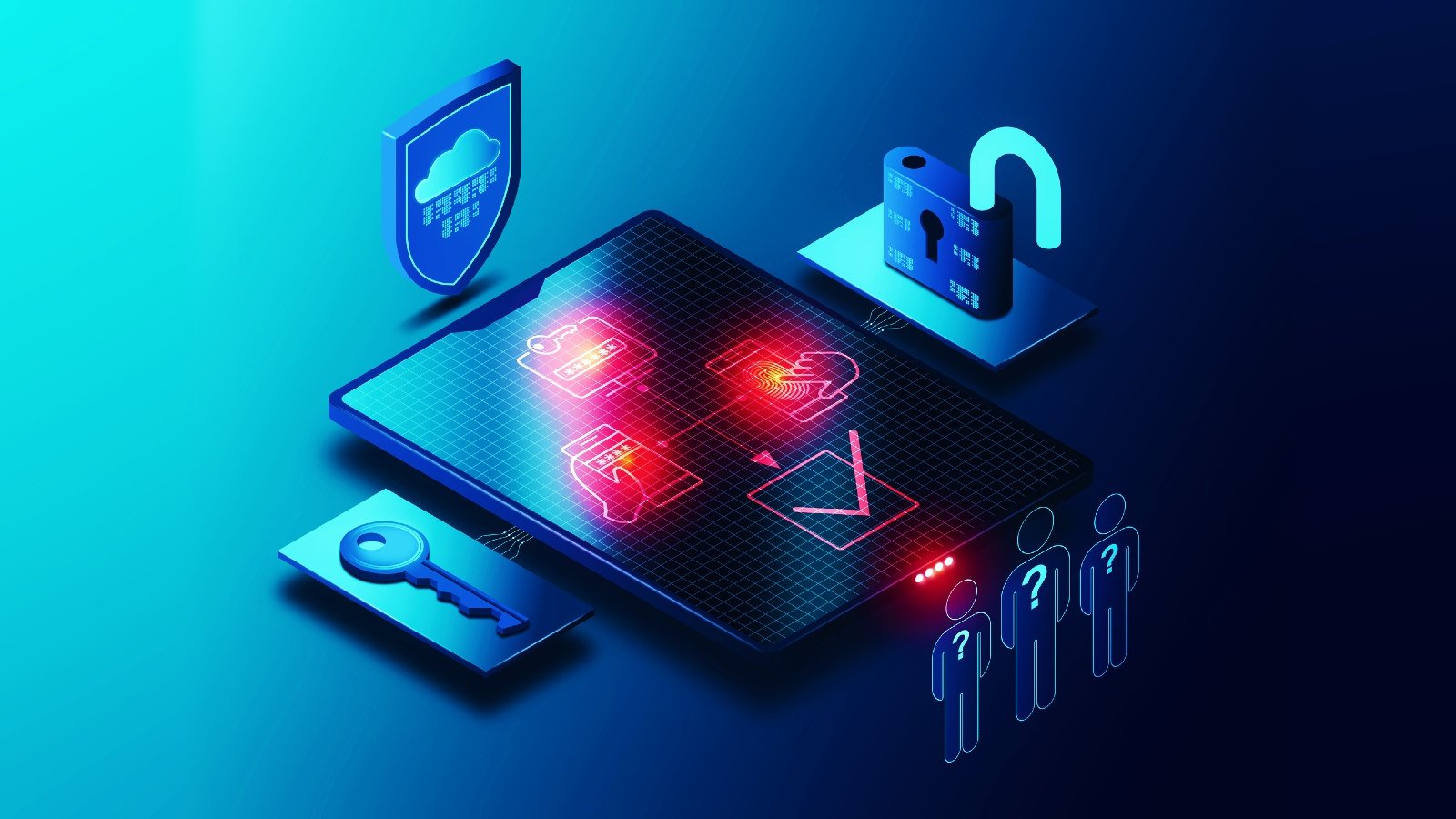
When an organization's multi-factor authentication is configured to use 'push' notifications, the employee sees a prompt on their mobile device when someone tries to log in with their credentials. These MFA push notifications ask the user to verify the login attempt and will show where the login is being attempted. An MFA Fatigue attack is when a threat actor runs a script that attempts to log in with stolen credentials over and over, causing what feels like an endless stream of MFA push requests to be sent to the account's owner's mobile device. The goal is to keep this up, day and night, to break down the target's cybersecurity posture and inflict a sense of "fatigue" regarding these MFA prompts. ... Ultimately, the targets get so overwhelmed that they accidentally click on the 'Approve' button or simply accept the MFA request to stop the deluge of notifications they were receiving on their phone. This type of social engineer technique has proven to be very successful by the Lapsus$ and Yanluowang threat actors when breaching large and well-known organizations, such as Microsoft, Cisco, and now Uber.


Forget digital transformation: data transformation is what you need

One of the most critical aspects of digital transformation is understanding how your organisation leverages data. Once you know how your organisation uses data, you can work on optimising data usage and applying analytics and insights to drive better business outcomes. If you don’t have a data strategy in place, your organisation will likely struggle with leveraging data for digital transformation efforts. Without a data strategy, it isn’t easy to know where your data is coming from, what type of data you have, and what you plan to do with it. Having a data strategy in place will help you determine where your data is coming from, what type of data you have, and what you plan to do with it, thus allowing you to create a plan for leveraging data for digital transformation efforts. If you want to leverage data for your digital transformation efforts, you should do a few things. First, you need to understand your data. This means assessing your data sources and determining what type of data you currently access. You also need to decide which data sources you need and where you can find them.


The human touch

Combining human and machine capabilities can create a sharper focus to how we view the world around us. So how do you square the two? How do you choose between humans, who excel at their understanding of context and nuance but cannot make consistent decisions, and automated processes, which are far better at being objective but don’t understand the decisions they’re making? The answer comes in recognizing that, while humans and machines are flawed, they are flawed in different ways. When it comes to combining them, you could start, naively, by thinking about the technology first, and expect human operators to fill in the gaps of what the system can’t yet do. Or (better) you can do things the other way around. The contrast between the technology-first and human-first approaches is well illustrated by the development of driverless cars in the last few years. Humans aren’t very good at paying attention for long periods of time, and driverless cars with human monitors have struggled to live up to their early promise. Meanwhile, collision avoidance systems – which largely use much of the same technology – are a good example of building a system around the human


There’s one thing that makes employees want to return to the office, says a new Microsoft report

Microsoft’s study found that 84% of people would be motivated to come into work more frequently by the promise of being able to enhance connections with coworkers. But most bosses are trying to use corporate policies to force them back, rather than using those human connections as leverage. “It turns out that in person connections with the person that [you] work with are the biggest draw,” says Spataro. “They’re bigger than tacos. The idea that I can actually connect with my coworker really, really matters.” Workers are demanding flexibility, which is how the hybrid work week has come into vogue. But Spataro says he thinks, ultimately, the workplace will be looking like the office we know from the pre-pandemic days, but with a lot more flexibility. ... Workers are demanding flexibility, which is how the hybrid work week has come into vogue. But Spataro says he thinks, ultimately, the workplace will be looking like the office we know from the pre-pandemic days, but with a lot more flexibility.


Planning the journey from SD-WAN to SASE

Today, organizations are working toward creating a more robust framework of integrated security and networking technologies referred to as Secure Access Service Edge (SASE). This is essentially a combination of SD-WAN and other networking technologies and security services, with the latter now referred to as security service edge (SSE). SSE encompasses a number of security functions to provide the requisite levels of secure connectivity with functionality such as zero-trust network access (ZTNA), data loss prevention (DLP), cloud access security brokers and more. Moving forward, network and security vendors are working to deliver tighter integration with third parties or provide a fully integrated product with both SD-WAN and SSE. Because of SD-WAN's rapid adoption to support direct internet access, organizations can leverage existing products to serve as a foundation for their SASE implementations. This would be true for both do-it-yourself as well as managed services implementations. If you are still in the planning stages for an integrated SASE deployment, you aren't alone. 


What could be the cause of growing API security incidents?

Critical infrastructure sectors such as manufacturing and energy & utilities, which typically rely on legacy systems, ranked unfavourably when measured on a number of metrics. They ranked worst on the percentage of API security incidents in the last 12 months, with 79% of manufacturing and 78% of energy & utilities respondents saying they had experienced incidents, of which they were aware. Energy & utilities companies were also the least likely to have a full inventory of APIs and know which return sensitive data, with just 19% confident about this issue. Manufacturing organizations found it most difficult to scale API security solutions, with just 30% saying they found it easy. Furthermore, real-time testing was at its lowest in energy & utilities (7%), whilst manufacturing, and energy & utilities were most likely to conduct API security testing less frequently than once per month, with 20% and 21% doing this, respectively. The relative lack of testing in these critical infrastructure sectors correlates with the number of API security incidents they have suffered in the last 12 months. 


Threat Actor Abuses LinkedIn's Smart Links Feature to Harvest Credit Cards

The campaign is not the first time that threat actors have abused LinkedIn's Smart Links feature — or Slinks, as some call it — in a phishing operation. But it marks one of the rare instances where emails containing doctored LinkedIn Slinks have ended up in user inboxes, says Brad Haas, senior intelligence analyst at Cofense. The phishing protection services vendor is currently tracking the ongoing Slovakian campaign and this week issued a report on its analysis of the threat so far. LinkedIn's Smart Links is a marketing feature that lets users who are subscribed to its Premium service direct others to content the sender want them to see. The feature allows users to use a single LinkedIn URL to point users to multiple marketing collateral — such as documents, Excel files, PDFs, images, and webpages. Recipients receive a LinkedIn link that, when clicked, redirects them to the content behind it. LinkedIn Slinks allows users to get relatively detailed information on who might viewed the content, how they might have interacted with it, and other details.


Clive Humby – data can predict nearly everything about running a business

You really need to think about three things: first, you need to think about what do I really need? In the grocery world, the past four weeks’ transactions compared to the year-on-year sales are much more insightful than having everything because you want to know what’s changed. How do sales compare from this Easter to last Easter, this Christmas to last Christmas? Understanding relative movement in data. The second thing is to reduces the level of granularity in your data into what I call “baskets of interest”. I am much more interested in the mix of groceries you buy than individual items. And the third thing, while you might have a warehouse of data with everything in probably every decision you make will need of less than half a per cent for the data. Not trying to analyse all of your data, all the time. If you are looking for trends you don’t need to look at all of the data, just look at 10 per cent of the data. People tend to over-engineer because the technology companies have told them to.


Data science engineer: A day in the life

Between communication, data engineering, meaningful result reporting, and more, data scientists have many goals. At Xactly, my daily goal is to illustrate to the rest of the organization and our customers the value of our data. Strategy and evangelization are a huge priority. It’s important to illustrate how data science is useful in other departments like engineering, marketing, customer experience, and sales. In the space of a day, this can be messy, requiring us to dig into the details of how data was created. From this, we hope to create new predictors that could be incorporated into our models. My team focuses on solving various technical problems across the organization daily. Over time, each day’s work contributes to achieving bigger goals. I see it as solving one or two subproblems per day, which over time, feeds into solving a larger problem that serves a bigger purpose. As we finish projects, we build on that success by developing new models and making new insights. For example, a recently deployed model achieved sales forecasting accuracy of nearly 100 percent. 


Universities Urged to Defend Sensitive Research From Hackers

Lawmakers should set a minimum standard around what constitutes acceptable security for any research institutions that are either federally funded or receive federal subsidies, Evanina told the committee. Much of government doesn't have a real understanding of the academic culture and has therefore taken a "search and replace" approach to regulation, in which nonprofit universities and for-profit businesses are expected to follow the same rules, Gamache said. Poorly designed federal mandates attempting to fix cybersecurity in higher education could actually cause harm, he warned. But over the past five years, Gamache says, a number of federal agencies have really tried to understand what the academic community is all about. The FBI has led the way in this effort by going all-in on initiatives such as the Academic Security and Counter Exploitation Program, and the Department of Commerce has also become more engaged, according to Gamache.


Quote for the day:

"The art of communication is the language of leadership." -- James Humes

Daily Tech Digest - September 21, 2022

IT Talent Crunch Shifts Tech Investment Strategies

Prasad Ramakrishnan, CIO at Freshworks, points out that low- and no-code tools enable businesses to do more with less, and the easy-to-use, configuration-based user experience of these tools means anyone can use them. He adds tech stacks have become bloated and complex, with features end users typically don't care about. “In an attempt to check every box, technology went from being purpose-built, to tailored to no one,” he says. “The pandemic has made this trend more pronounced.” Ramakrishnan conducts an “app rationalization” exercise regularly with his team, evaluating software applications in terms of integrations needed, their security, whether they are being used (to retire if needed) and how much they are being used (to reduce licenses if needed). “Constantly audit your tech stack,” he advises. “We also involve the end user to make sure everyone is part of the process, akin to a democratized process.” From his perspective, leaders need to create space for end-user feedback -- without it, companies could be taking away valuable tools that employees use and leave them with bloated applications they never use.


Why Investors & Founders Need To Embed Corporate Governance

There have been numerous tweets and posts about governance, the blame game, and other topics. Governance, in my opinion, begins with the founders and senior management. The investors/board have no way of knowing about fraud or any of the aforementioned issues because they are not involved in the day-to-day operations. However, once discovered, the board of directors and investors are responsible for resolution. Consider the case of a company in the news: many prominent Sillicon Valley and New York-based investors participated despite the fact that one of the cofounders was convicted of identity theft. If they believe in second chances, why not make this cofounder a full-fledged director of the company? There is also the role of regulatory bodies such as the RBI, given that some of these startups (particularly fintech) are governed by them because they have a stake in a bank. Laws and regulations that encourage collaboration to ensure there is no “conflict” or, for example, our regulations make it impossible for investors to liquidate and take their money back.


Introduction to SOLID Principles of Software Architecture

Per the Single Responsibility Principle, every class should not have more than one responsibility, (i.e., it should have one and only one purpose). If you have multiple responsibilities, the functionality of the class should be split into multiple classes, with each of them handling a specific responsibility. ... When classes are open for extension but closed for modification, developers can extend the functionality of a class without having to modify the existing code in that class. In other words, programmers should make sure their code can handle new requirements without compromising on the existing functionality. Bertrand Meyer is credited with introducing this principle in his book entitled “Object-Oriented Software Construction.” According to Meyer, “a software entity should be open for extension but closed for modification.” The idea behind this principle is that it allows developers to extend software functionality while preserving the existing functionality. In practical terms, this means that new functionality should be added by extending the code of an existing class rather than by modifying the code of that class.


The Uber Hack’s Devastation Is Just Starting to Reveal Itself

“It’s disheartening, and Uber is definitely not the only company that this approach would work against,” says offensive security engineer Cedric Owens of the phishing and social engineering tactics the hacker claimed to use to breach the company. “The techniques mentioned in this hack so far are pretty similar to what a lot of red teamers, myself included, have used in the past. So, unfortunately, these types of breaches no longer surprise me.” The attacker, who could not be reached by WIRED for comment, claims that they first gained access to company systems by targeting an individual employee and repeatedly sending them multifactor authentication login notifications. After more than an hour, the attacker claims, they contacted the same target on WhatsApp pretending to be an Uber IT person and saying that the MFA notifications would stop once the target approved the login. Such attacks, sometimes known as “MFA fatigue” or “exhaustion” attacks, take advantage of authentication systems in which account owners simply have to approve a login through a push notification on their device rather than through other means, such as providing a randomly generated code. 


Does your password policy align with NIST recommendations?

“NIST outlines several simple steps to strengthen passwords against modern password-based attacks. Organizations that ignore NIST’s recommendations are leaving an essential authentication security layer vulnerable,” notes Josh Horwitz, chief operating officer at Enzoic. ... As hacking threats increase and many IT teams are understaffed, upgrading your password policy may seem like a nice-to-have. However, password hardening is easy to do, leverages the existing investment in passwords and, unlike most security policies, actually makes things easier for users and administrators. The right solution reduces user frustration around frequent required resets and complex rules. Technology can also lower administrative burden and spend by using automation to reduce password reset calls and boost cybersecurity. Adopting modern technology such as Enzoic for Active Directory can help you avoid security breaches, prevent ransomware attacks and avoid account takeovers. “Organizations need a way to identify when passwords become compromised,” says Horwitz, adding, “Otherwise, their users and administrators can’t follow or enforce the NIST requirement to not reuse compromised passwords.”


Cybersecurity as an employee benefit

Many business leaders and human resources professionals believe that cybersecurity is the responsibility of their information technology staff and managed services provider. However, ensuring that employees and their families have appropriate cybersecurity protection is an employee benefit that benefits employers as well. Mistakes, lack of awareness and general vulnerability of employees remains the most significant cyber security risk for most employers. Simply training employees about cyber threats typically fails to reduce that risk sufficiently. To have a truly cyber-mature workforce, employers need to engage employees in cybersecurity. Teaching employees about the threats to themselves and their families, and making personal protection services available to them, is a much better method to engage employees in cybersecurity. Cybersecurity training is not most people’s idea of a good time. However, employees sit up and take notice when trainers talk to them about the prevalence and severity of the cyber threats to themselves personally, including their identities, credit files, financial accounts, personal devices and home networks.


Meta, TikTok, YouTube and Twitter dodge questions on social media and national security

Whistleblowers and industry have repeatedly raised alarms about inadequate content moderation in other languages, an issue that gets inadequate attention due to a bias toward English language concerns, both at the companies themselves and at U.S.-focused media outlets. In a different hearing yesterday, Twitter’s former security lead turned whistleblower Peiter “Mudge” Zatko noted that half of the content flagged for review on the platform is in a language the company doesn’t support. Facebook whistleblower Frances Haugen has also repeatedly called attention to the same issue, observing that the company devotes 87% of its misinformation spending to English language moderation even though only 9% of the platform’s users speak English. In another eyebrow-raising exchange, Twitter’s Jay Sullivan declined to specifically deny accusations that the company “willfully misrepresented” information given to the FTC. “I can tell you, Twitter disputes the allegations,” Sullivan said, referring to testimony from the Twitter whistleblower on Tuesday.


5 steps to designing an embedded software architecture, Step 1

First, they are not very portable. For example, what happens if a microcontroller suddenly becomes unavailable? (Chip shortage, anyone?). If the code is tightly coupled, attempting to move the application code to run on a new microcontroller becomes a herculean effort. Application code is tightly coupled to low-level hardware calls on the microcontroller! I know a lot of companies who have suffered through this recently. If they didn’t update their architecture, they had to go back through all their code and change every line that interacted with the hardware. The companies that updated their architecture broke their architecture coupling through abstractions and dependency injection. Second, unit testing the application in a development environment rather than on the target hardware is nearly impossible. If the application code makes direct calls to the hardware, a lot of work will go into the test harness to successfully run that test, or the testing will need to be done on the hardware. Testing on hardware is slow and is often a manual rather than an automated process. 


The promise of sustainable AI may not outweigh the organizational challenges

Without help from technology, outlining sustainability goals would be a limiting and difficult exercise. Enterprises today struggle with quantifying the risk of climate change, especially when it comes to digital transformation. In fact, only 43% of global executives say they are aware of their organization’s IT footprint. Data analytics and AI offer a solution to this challenge, as they provide meaningful insights across industries to understand where those gaps exist and thus can help companies incorporate more sustainable practices. Research shows that 89% of organizations recycle less than 10% of their IT hardware. However, if a company is to truly reap all the environmental benefits of sustainable AI, IT must play a crucial role in using this technology as the organization’s biggest helper, not its adversary. There are four broad areas that offset the sustainability impact of AI machinery and technology: reporting, cloud, circular economy, and coding. Accurate metrics and reporting will keep the AI systems intact and constantly improving, while cloud promotes sustainability because users only pay for the infrastructure per use, eliminating the need to run data centers at full threshold.


Measuring performance in agile

It’s really easy to destroy the culture of an agile team with metrics. We need to be sure that what we measure encourages the right behaviour. Using a team’s velocity as a performance measurement comes with a strong warning label: “Scrum’s team-level velocity measure is not all that meaningful outside of the context of a particular team. Managers should never attempt to compare velocities of different teams or aggregate estimates across teams. Unfortunately, we have seen team velocity used as a measure to compare productivity between teams, a task for which it is neither designed nor suited. Such an approach may lead teams to “game” the metric, and even to stop collaborating effectively with each other. In any case, it doesn’t matter how many stories we complete if we don’t achieve the business outcomes we set out to achieve in the form of program-level target conditions” We’ve all heard about working smarter, not harder, yet by focusing on story points as a measurement, we find that although in the short term we will succeed at getting people to complete more story points by simply working harder, this approach will not necessarily achieve the outcomes that we want.


Quote for the day:

"Nobody in your organization will be able to sustain a level of motivation higher than you have as their leader." -- Danny Cox

Daily Tech Digest - September 19, 2022

10 mistakes rookie CIOs make — and how to avoid them

Most CIOs have likely heard that “culture eats strategy for breakfast,” the famous quote from management guru Peter Drucker. But rookie CIOs don’t often take that message to heart, according to both researchers and experienced CIOs. “One of the rookie mistakes is not truly understanding your business, culture, and organizational fabric,” says Richard A. Hook, executive vice president and CIO of Penske Automotive Group and CIO of Penske. “Everyone is focused on their 100-day plan, but the reality is the pace of that plan and composite will vary between organizations. Get to know your peers, their teams, your team, and the overall organization before taking a too-aggressive approach. In the end, organizations win with the best people, be sure you know your teams and deeply understand the business before acting too harshly.” Jackson agrees, saying new executives should assess their department’s culture and the organization’s overall culture early on. This, he explains, lets leaders know how to adjust and change so they can be most effective moving forward.


EU Cyber Resilience Act sets global standard for connected products

The EC said the new rules would rebalance security responsibility towards manufacturers who will be made to ensure they conform to the new requirements, ultimately benefiting end-users across the EU by enhancing transparency, promoting trust, and ensuring better protection of basic rights to privacy. The EC acknowledged the act is likely to become an international point of reference beyond the EU’s internal market, and Keiron Holyome, BlackBerry vice-president for the UK and Ireland, Eastern Europe, Middle East and Africa agreed with this view. “Today, as the EU launches its Cyber Resilience Act to protect European consumers and businesses from the risks caused by insecure digital products, the UK must sit up and take notice. This act should not be viewed as a European requirement, but in fact a new global standard,” said Holyome. “The EU’s new act further highlights that British organisations must take action, particularly when it comes to the use of potentially insecure smart devices for home working. ... Although smart devices may seem innocent, bad actors can easily access home networks with connections to company devices – or company data on consumer devices – and steal intellectual property worth millions.


Hybrid workers don't want to return to the office. But soon, they might have to

No doubt many leaders will be paying attention to how major tech companies are reacting to the situation. Apple, for instance, has laid off a number of recruiters and plans to curb hiring next year to help it weather an uncertain economic climate. Meta, Microsoft and Google have also announced plans to slow hiring, and all four tech giants have made moves to get their workers into the office on a more regular basis in recent months. Asking employees to return to the office as a reaction to financial uncertainty feels more like a return to what feels familiar than a practicable way of overcoming the challenges ahead. While doing so might help leaders regain a sense of control and run the business as a much tighter ship, it's not necessarily going to help improve productivity or engagement. ONS data suggests that 78% of employees who work from home in some capacity report a better work-life balance, and taking this away will not win employers any favours. Workers might also choose to return to the office if working from home gets significantly more expensive.


When openness doesn’t matter

“Open is better…unless it isn’t,” notes software exec James Urquhart, who has done his share of work with open source companies. The key to figuring out the “isn’t” in a particular case is to look at the practical effects of a given strategy. Lightbend and Akka founder Jonas Bonér stressed that the company’s decision to change the Akka license was because the current model simply wasn’t sustainable. He says, “With Akka now considered critical infrastructure for many large organizations, the Apache 2.0 model becomes increasingly risky when a small company solely carries the maintenance effort.” To prod these large organizations to pay for their use of Akka, the company turned to the BSL 1.1 as “a form of productive and sustainable open source” that is “easy to understand, provides clear rules, and is enforceable.” Not everyone will like it. Some of the more vocal members of the open source Illuminati have castigated Lightbend for this decision. But rather than criticize, why not simply observe? If it’s truly a bad strategy, it will fail, and both Lightbend and other companies will learn from that failure, and there will be less re-licensing with licenses that are perceived to be less open.


Hacker Accessed LastPass Internal System for 4 Days

The breach investigation was carried out in partnership with cybersecurity firm Mandiant and uncovered that the threat actor's activity was limited to a four-day period until the incident was contained. Further investigation from LastPass and Mandiant determined that the threat actors gained access to the development environment using a developer's compromised endpoint. "While the method used for the initial endpoint compromise is inconclusive, the threat actor utilized their persistent access to impersonate the developer once the developer had successfully authenticated using multifactor authentication," Toubba says. Toubba acknowledges that the threat actor was able to access the development environment but failed to access any customer data or encrypted password vaults. Toubba also says that the LastPass development environment is physically separated from other environments, including the production area, and has no customer data or encrypted vaults. The notification also says that the company does not have access to the master passwords used by the customers, and without having the master password, no one can decrypt vault data as part of the company's "zero-knowledge security model."


Double-transmon coupler will realize faster, more accurate superconducting quantum computers

Toshiba has recently devised a double-transmon coupler that can completely turn on and off the coupling between qubits with significantly different frequencies. Completely turning on enables high-speed quantum computations with strong coupling, while completely turning off eliminates residual coupling, which improves quantum computation speeds and accuracy. Simulations with the new technology have shown it realizes two-qubit gates, basic operations in quantum computation, with an accuracy of 99.99% and a processing time of only 24 ns. Toshiba's double-transmon coupler can be applied to fixed-frequency transmon qubits, realizing high stability and ease of design. It is the first to realize coupling between fixed-frequency transmon qubits with significantly different frequencies that can be completely switched on and off, and to deliver a high-speed, accurate two-qubit gate. The technology is expected to advance the realization of higher-performance quantum computers that will contribute in such areas as the achievement of carbon neutrality and the development of new drugs.


Automation Gains a Foothold, But How to Scale It Is the Challenge

“Going forward, automation should be the focus at each business group and department – it must be a mandatory part of business planning,” he explains. Each C-level executive should provide a plan of how much automation each quarter/year they plan to implement to reduce the number of resources their division needs. They should also come up with tangible KPIs that will impact cost reduction and generate savings for sustained growth. Butterfield says this focus must come from the board as a priority item, enabled through technology and implemented by all. “AI and automation are as much a capability as a technology – therefore, even if someone is taking responsibility, the organization will only be successful if everyone is aligned,” he says. Freund says that while automation involves a broad set of stakeholders across both business and IT, it’s not always easy to get them all on the same page. Depending on the organization, a technical leader like an enterprise architect might spearhead the automation process by kicking off a proof of concept (PoC), organizing a team to execute it, and presenting the results to business stakeholders.


Computational Aesthetics in Robotics Design and Automation

Robotic informatics studies how robots interact with their surroundings and how this affects the aesthetics of their design. It considers such questions as how to create visually appealing robots and how to ensure that they behave in an aesthetically pleasing way. Though research is still ongoing in this area, there are already some promising results. For example, a study shows that people respond more favorably to visually engaging robots with well-designed features. That may help increase efficiency and productivity in the industry while creating a more positive image for robotics technology. One of the main ways computational aesthetics impacts robotics programming is by providing new methods for designing and improving robots. Such new methods are artificial intelligence (AI), machine learning (ML), and deep learning (DL). All these methods involve teaching computers to do things that were once impossible for them. ML, in particular, is a form of AI that allows computers to learn from experience and improve their performance over time based on this experience. DL is similar to ML.


6 tips for successfully leading software developers

Developers’ will to create is strong, but it can be hard to perceive as creativity is often obscured by the technological nature of development. Developers communicate with a strange patois of acronyms that hide the artistic spirit behind it. Learning to perceive and nurture that spirit is a special kind of leadership that developers will appreciate. Just the awareness of the creative life of developers is important. Not only will it help to understand where they are coming from, but it will lead to policies and decisions that support that creativity and out of that will come real bottom-line benefit. The space and time to innovate will lead to better software that handles the vicissitudes of business. You need the human creativity of your developers captured in the half-machine/half-thought medium of code to be agile. Perhaps the most important feature for the leader to bear in mind here is in realizing the attachment that developers have to their work. Affection might be a better word than attachment. Building a thing that feels beautiful and worthy in itself has its own momentum. 


Are we experiencing cloudflation?

Many critics cite the lack of a sound cloud finops program to monitor, track, and govern costs. The rudimentary problem right now is that companies have little or no insight into any cloud costs before they get the bill. In other words, if having a finops program scores a 9 out of 10 in terms of cloud cost management maturity, these companies are still at a 1 or 2. This state exists because most enterprises did not see cloud coming—or coming as rapidly as it did due to the pandemic. As a result, they did not allocate budget and resources to manage cloud costs: the hard costs such as cloud computing bills for services, as well as soft costs such as the many expensive humans now needed to keep cloud-based systems running. Here’s the good news: Implementing even a rudimentary finops strategy with cloud cost monitoring and controls will quickly pay for itself. Moreover, it will do so without diminishing cloud services. It accomplishes noninvasive cost savings partly by implementing basic housekeeping tasks, such as shutting down unused instances where the meter is still running or optimizing the use of cloud resources that lack current cost management, with options to automate as deeply as desired or required.


Quote for the day:

"Hold yourself responsible for a higher standard than anybody expects of you. Never excuse yourself." -- Henry Ward Beecher

Daily Tech Digest - September 18, 2022

5 ways to secure devops

Devops workflows are designed for speed and rapidly iterating with the latest requirements and performance improvements. Gate reviews are static. The tools devops teams rely on for security testing can lead to roadblocks, given their gate-driven design. Devops is a continuous process in high-performance IT teams, while stage gates slow the pace of development. Devops leaders often don’t have the time to train their developers to integrate security from the initial phases of a project. The challenge is how few developers are trained on secure coding techniques. Forrester’s latest report on improving code security from devops teams looked at the top 50 undergraduate computer science programs in the US, as ranked by US News and World Report for 2022, and found that none require secure coding or a secure application design class. CIOs and their teams are stretched thin with the many digital transformation initiatives, support for virtual teams and ongoing infrastructure support projects they have going on concurrently. CIOs and CISOs also face the challenges of keeping their organizations in regulatory compliance with more complex audit and reporting requirements. 


Designing APIs for humans: Error messages

The status code of the response should already tell you if an error happened or not, the message needs to elaborate so you can actually fix the problem. It might be tempting to have deliberately obtuse messages as a way of obscuring any details of your inner systems from the end user; however, remember who your audience is. APIs are for developers and they will want to know exactly what went wrong. It’s up to these developers to display an error message, if any, to the end user. Getting an “An error occurred” message can be acceptable if you’re the end user yourself since you’re not the one expected to debug the problem (although it’s still frustrating). As a developer there’s nothing more frustrating than something breaking and the API not having the common decency to tell you what broke. ... Letting you know what the error was is the bare minimum, but what a developer really wants to know is how to fix it. A “helpful” API wants to work with the developer by removing any barriers or obstacles to solving the problem. The message “Customer not found” gives us some clues as to what went wrong, but as API designers we know that we could be giving so much more information here.


Arm Neoverse roadmap targets enterprise infrastructure, cloud

"Compute workloads are on a relentless march higher, and becoming more complex," said Chris Bergey, senior vice president and general manager of Arm's infrastructure line of business, at a press briefing. "Machine learning and AI are taking over the future, and so infrastructure will look nothing like the past." Over the next year, Arm will work closely with its cloud and software partners to optimize cloud-native software infrastructure, frameworks and workloads. These partnerships include contributions to projects including Kubernetes and Istio, along with several CI/CD tools used for creating cloud-native software for the Arm architecture. Arm will also work to improve machine learning frameworks such as TensorFlow and a number of workloads such as big data, analytics and media processing. The company is moving into more traditional enterprise spaces now, Bergey said, noting the work it has done with VMware on its Project Monterey and providing support for Red Hat's OpenShift and SAP's HANA. "These cloud providers all use GPUs to underpin their cloud workloads, and the majority of them are using Arm," Bergey said.


How quantum physicists are looking for life on exoplanets

So, some of the biggest things in the universe are certainly quantum mechanical, including supermassive blackholes which can lose energy through a quantum phenomenon known as Hawking radiation. The second point is one often thinks quantum deals with very low temperatures. Again, to take our sun as an example—it's very hot, but that's quantum mechanical. Low temperature doesn't serve as a requirement for quantum. This example of a star and the quantumness of the fusion process and the high temperatures associated with that—I just want to broaden the view of what quantum mechanics is and how ubiquitous it is. ... It's quite amazing that we can determine what is in these planets' atmospheres—planets that would be impossible for humans to ever visit. That, and we can look for signatures of life, like, are there molecules that we associate with life floating around in these planets, at least if it's Earth-like life; then we might be able to determine with some probability that some planet way out there that no human could ever visit, harbors life. Or maybe we could discover other candidate forms of life.


How Is Platform Engineering Different from DevOps and SRE?

Over time, thought leaders came up with different metrics for organizations to gauge the success of their DevOps setup. The DevOps bible, “Accelerate,” established lead time, deployment frequency, change failure rate and mean time to recovery (MTTR) as standard metrics. Reports like the State of DevOps from Puppet and Humanitec’s DevOps benchmarking study used these metrics to compare top-performing organizations to low-performing organizations and deduce which practices contribute most to their degree of success. DevOps unlocked new levels of productivity and efficiency for some software engineering teams. But for many organizations, DevOps adoption fell short of their lofty expectations. Manuel Pais and Matthew Skelton documented these anti-patterns in their book “DevOps Topologies.” In one scenario, an organization tries to implement true DevOps and removes dedicated operations roles. Developers are now responsible for infrastructure, managing environments, monitoring, etc., in addition to their previous workload. Often senior developers bear the brunt of this shift, either by doing the work themselves or by assisting their junior colleagues.


The Cyber Security Head Game

Just as the predators of the fish below are never going to go away (which is why this fish camoflages itself and sports huge fake eyes to scare predators), cyber predators also will never go away. And the best of these cyber predators will continue to penetrate even the strongest defenses, because the exponential increase in IT system complexity, which makes it increasingly difficult to even understand the full extent of what you're defending, favors cyber attackers over cyber defenders. So we need to assume that some hackers will inevitably get inside our networks and thus we must adopt strategies of deception, similar to those employed successfully by our fish here, to lessen the harm from competent hackers, who manage to get up close and personal. We also need to create doubt in hackers’ minds, about the benefits of attacking us in the first place, in the same way that the poisonous Cane toad avoids attacks from predators who know the toad’s skin has lethal poison glands, and milk snakes, who have no poison, but discourage would-be predators by mimicking the coloration of coral snakes, who definitely do have deadly venom.


US Cyber-Defense Agency Urges Companies to Automate Threat Testing

Automated threat testing is still not very widespread, according to the official, who added that organizations sometimes don’t really follow through after deploying expensive tools on their network and instead just assume they’re doing the job. Automating security controls will make it easier to stop attackers from relying on established tactics. The top threat actors are still going back and leveraging vulnerabilities that are up to 10 years and older, warned the CISA official. CISA is making the recommendation in collaboration with the Center for Threat-Informed Defense, a 29-member nonprofit formed in 2019 that draws on MITRE’s framework. Iman Ghanizada, global head of autonomic security operations at Google Cloud, a research sponsor of the Center, said automated testing is important for creating continuous feedback loops that can steadily improve protection. “Whether you are a large company or a startup, you have to have visibility, analytics, response and continuous feedback,” he said.


Smart Cities: Mobility ecosystems for a more sustainable future

Although every city is different, leading cities are becoming smarter through their participation in large, complex, digitally enabled ecosystems. The question for many urban leaders, however, is how to engage with them effectively. Our experience in working with large transportation and communications clients yields a multilayered model and approach to guide the design and management of urban mobility systems. Given the interconnected nature of the building blocks of mobility, each layer—demand, supply, and foundational—is critical. Cities must understand and manage all the interactions and interdependencies. For example, demand for different forms of transportation is enabled via available modes of transit and supporting infrastructure. None of these would be possible without regulations, financing, insurance, and innovation. ... To achieve its vision of becoming a 45-minute city, Singapore is focusing on building its infrastructure (e.g., it is building intermodal mobility hubs to allow commuters to move seamlessly from one mode of transportation to another). The city is developing a robust innovation ecosystem, collaborating with many private-sector players. 


How to Draw and Retain Top Talent in Cyber Security

Before you introduce policies to increase diversity, you need to know who is currently applying. Gather data on applicants to establish if you need to take proactive steps to attract specific groups – you can’t make rational business decisions without data. Analyze job descriptions to eliminate bias so you aren’t deterring anyone. Review the language -- are you unconsciously drafting job advertisements and application forms with a white male in mind? Consider a post-application survey so you can establish what is appealing to recruits and what might cause them to drop out. You’ll be surprised how many people want to share their feedback because a negative job application process can deter an applicant for good, and you could be missing out on the best talent through ignorance. We implemented an Applicant Tracking System to understand the sources our candidates are coming from, see how diverse the candidate pool is (or not), and improve the candidate experience by being able to track how their process progresses and ends. ... Once you’ve got these cyber professionals on board, you need to keep them. 


Why shift left is burdening your dev teams

Security and compliance challenges are a significant barrier to most organizations’ innovation strategies, according to CloudBees. The survey also reveals agreement among C-suite executives that a shift left security strategy is a burden on dev teams. 76% of C-suite executives say that compliance challenges and security challenges (75%) limit their company’s ability to innovate. This is due, in part, to the significant time spent on compliance audits, risks, and defects. At the same time, C-suite executives overwhelmingly favor a shift left approach, a strategy of moving software testing and evaluation to earlier in the development lifecycle, placing the burden of compliance on development teams. In fact, 83% of C-suite executives say the approach is important for them as an organization, and 77% say they are currently implementing a shift left security and compliance approach. This is despite 58% of C-suite executives reporting that shift left is a burden on their developers. “These survey findings underscore the urgent need to transform the software security and compliance landscape. 


Quote for the day:

"Courage is the ability to execute tasks and assignments without fear or intimidation." -- Jaachynma N.E. Agu

Daily Tech Digest - September 16, 2022

The AI-First Future of Open Source Data

If we take it one step further from the GPL for data, we begin to see the value equation of data, or “the data-in-to-data-out ratio” as Augustin calls it. He uses the example of why people are so willing to give up parts of their data and privacy to websites because the small amount of data they’re handing over returns greater value back to them. Augustin sees the data-in-to-data-out ratio as a tipping point in open source data. Calling it one of his application principles, Augustin suggests that data engineers should focus on providing users with more value but take less and less information from them. He also wants to figure out a way never to ask your users for anything. You’re only providing them an advantage. For example, new app users will always be asked for information. But how can we skip that step and collect data directly in exchange for providing value? “Most people are willing to [give up data] because they get a lot of utility back. Think about the ratio of how much you put in versus how much you get back. You get back an awful lot. People are willing to give up so much of their personal information because they get a lot back,” he says.


How User Interface Testing Can Fit into the CI/CD Pipeline

Reliance on manual testing is why organizations can’t successfully implement CI/CD. If CI/CD involves manual processes that cannot be sustained as it slows down the entire delivery cycle. Testing is no longer the sole responsibility of developers or testers only and it takes investment and integration in infrastructure. Developer teams need to focus on building the coverage that is essential. They should focus on testing workflows and not features to be more efficient. Additionally, manual testers who are not developers can still be part of the process, provided that they use a testing tool that gives them the required automation capabilities in a low code environment. For example, with Telerik Test Studio, a manual tester can create an automated test by interacting with the application’s UI in a browser. That test can be presented in a way without code and as a result, they can learn how the code behaves. Another best practice in making UI testing efficient is to be selective with what is included in the pipeline. 


Want to change a dysfunctional culture? Intel’s Israel Development Center shows how

Intel’s secret weapon, one that until recently it did not talk about much, is its Israel Development Center. It is the largest employer in Israel, a nation surrounded by hostile countries, and women and men are treated more equally than in most other countries I’ve studied. They are highly supportive of each other, making it an incredibly supportive country for women in a wide variety of industries. The facility itself is impressively large and well-built and eclipses Intel’s corporate office in both size and security. The work done there really defines Intel’s historic success in both product performance and quality, making it an example of how a company should be run. Surprisingly, the collaborative and supportive country culture overrode the hostile and self-destructive corporate culture that has defined the US tech industry. What Gelsinger has done is showcase the development center as a template for the rest of Intel, as a firm more tolerant of failure, more supportive of women and focused like a laser on product quality, performance and caring for Intel’s customers.


Uber security breach 'looks bad', potentially compromising all systems

While it was unclear what data the ride-sharing company retained, he noted that whatever it had most likely could be accessed by the hacker, including trip history and addresses. Given that everything had been compromised, he added that there also was no way for Uber to confirm if data had been accessed or altered since the hackers had access to logging systems. This meant they could delete or alter access logs, he said. In the 2016 breach, hackers infiltrated a private GitHub repository used by Uber software engineers and gained access to an AWS account that managed tasks handled by the ride-sharing service. It compromised data of 57 million Uber accounts worldwide, with hackers gaining access to names, email addresses, and phone numbers. Some 7 million drivers also were affected, including details of more than 600,000 driver licenses. Uber later was found to have concealed the breach for more than a year, even resorting to paying off hackers to delete the information and keep details of the breach quiet.


What Is GPS L5, and How Does It Improve GPS Accuracy?

L5 is the most advanced GPS signal available for civilian use. Although it’s primarily meant for life-critical and high-performance applications, such as helping aircraft navigate, it’s available for everyone, like the L1 signal. So the manufacturers of mass-market consumer devices such as smartphones, fitness trackers, in-car navigation systems, and smartwatches are integrating it into their devices to offer the best possible GPS experience. One of the key advantages that the L5 signal possesses is that it uses the 1176.45MHz radio frequency, which is reserved for aeronautical navigation worldwide. As such, it doesn’t have to worry about interference from any other radio wave traffic in this frequency, such as television broadcasts, radars, and any ground-based navigation aids. With L5 data, your device can access more advanced methods to determine which signals have less error and effectively pinpoint the location. It’s particularly helpful at areas where GPS signal can be received but is severely degraded.


Digital transformation: How to get buy-in

Today’s IT leader has to be much more than tech-savvy, they have to be business-savvy. IT leaders of today are expected to identify and build support for transformational growth, even when it’s not popular. At Clarios, I included “Challenge the Status Quo, Be a Respectful Activist” to our IT guiding principles, knowing that around any CEO or general manager’s table they need one or two disruptors – IT leaders should be one. However, once that activist IT leader sells their vision to the boss, now they have to drive change in their peers and the entire organization, without formal authority. ... Our IT leaders can gain buy-in on new ideas by actively listening to our business partners. Our focus is to understand from their perspective the challenges impeding their work by rounding in our hospital locations to see first-hand the issues. So when we propose solutions, it is from their perspective. Utilizing these practices, we can bring forth the vision of Marshfield Clinic Health System because we can implement technology that bridges human interaction between our patients and care teams, which is at the heart of healthcare.


How to Prepare for New PCI DSS 4.0 Requirements

There are several impactful changes to the requirements associated with DSS v4.0 compliance, ranging from policy development (all changes will require some level of policy changes), to Public Key Infrastructure (PKI), as there will be multiple changes related to how keys and certificates are managed. Carroll points out there will also be remote access issues, including defined changes to how systems may be accessed remotely, and risk assessments -- now required to multiple and regular “targeted risk assessments” to capture risk in a format specified by the PCI DSS. Dan Stocker, director at Coalfire, a provider of cybersecurity advisory services, points out fintech is growing rapidly, with innovative uses for credit card data. “Entities should realistically evaluate their obligations under PCI," he says. “Use of descoping techniques, such as tokenization, can reduce total cost of compliance, but also limit product development choices.” He explains modern enterprises have multiple compliance obligations across diverse topics, such as financial reporting, privacy, and in the case of service providers, many more.


Building Large-Scale Real-Time JSON Applications

A critical part of building large-scale JSON applications is to ensure the JSON objects are organized efficiently in the database for optimal storage and access. Documents may be organized in the database in one or more dedicated sets (tables), over one or more namespaces (databases) to reflect ingest, access and removal patterns. Multiple documents may be grouped and stored in one record either in separate bins (columns) or as sub-documents in a container group document. Record keys are constructed as a combination of the collection-id and the group-id to provide fast logical access as well as group-oriented enumeration of documents. For example, the ticker data for a stock can be organized in multiple records with keys consisting of the stock symbol (collection-id) + date (group-id). Multiple documents can be accessed using either a scan with a filter expression (predicate), a query on a secondary index, or both. A filter expression consists of the values and properties of the elements in JSON. For example, an array larger than a certain size or value is present in a sub-tree. A secondary index defined on a basic or collection type provides fast value-based queries described below.


Digital self defense: Is privacy tech killing AI?

AI needs data. Lots of it. The more data you can feed a machine learning algorithm, the better it can spot patterns, make decisions, predict behaviours, personalise content, diagnose medical conditions, power smart everything, detect cyber threats and fraud; indeed, AI and data make for a happy partnership: “The algorithm without data is blind. Data without algorithms is dumb.” Even so, some digital self defense maybe in order. But AI is at risk. Not everyone wants to share, at least, not under the current rules of digital engagement. Some individuals disengage entirely, becoming digital hermits. Others proceed with caution, using privacy-enhancing technologies (PETs) to plug the digital leak: a kind karate chop, digital self defense — they don’t trust website privacy notices, they verify them with tools like DuckDuckGo’s Privacy Grade extension and soon, machine-readable privacy notices. They don’t tell companies their preferences; they enforce them with dedicated tools, and search anonymously using AI-powered privacy-protective search engines and browsers like Duck Duck Go, Brave and Firefox. 


Why Mutability Is Essential for Real-Time Data Analytics

At Facebook, we built an ML model that scanned all-new calendar events as they were created and stored them in the event database. Then, in real-time, an ML algorithm would inspect this event and decide whether it is spam. If it is categorized as spam, then the ML model code would insert a new field into that existing event record to mark it as spam. Because so many events were flagged and immediately taken down, the data had to be mutable for efficiency and speed. Many modern ML-serving systems have emulated our example and chosen mutable databases. This level of performance would have been impossible with immutable data. A database using copy-on-write would quickly get bogged down by the number of flagged events it would have to update. If the database stored the original events in Partition A and appended flagged events to Partition B, this would require additional query logic and processing power, as every query would have to merge relevant records from both partitions. Both workarounds would have created an intolerable delay for our Facebook users, heightened the risk of data errors, and created more work for developers and/or data engineers.


Quote for the day:

"Leadership and learning are indispensable to each other." -- John F. Kennedy