Showing posts with label GPS. Show all posts

Daily Tech Digest - September 16, 2022

The AI-First Future of Open Source Data

If we take it one step further from the GPL for data, we begin to see the value equation of data, or “the data-in-to-data-out ratio” as Augustin calls it. He uses the example of why people are so willing to give up parts of their data and privacy to websites because the small amount of data they’re handing over returns greater value back to them. Augustin sees the data-in-to-data-out ratio as a tipping point in open source data. Calling it one of his application principles, Augustin suggests that data engineers should focus on providing users with more value but take less and less information from them. He also wants to figure out a way never to ask your users for anything. You’re only providing them an advantage. For example, new app users will always be asked for information. But how can we skip that step and collect data directly in exchange for providing value? “Most people are willing to [give up data] because they get a lot of utility back. Think about the ratio of how much you put in versus how much you get back. You get back an awful lot. People are willing to give up so much of their personal information because they get a lot back,” he says.


How User Interface Testing Can Fit into the CI/CD Pipeline

Reliance on manual testing is why organizations can’t successfully implement CI/CD. If CI/CD involves manual processes that cannot be sustained as it slows down the entire delivery cycle. Testing is no longer the sole responsibility of developers or testers only and it takes investment and integration in infrastructure. Developer teams need to focus on building the coverage that is essential. They should focus on testing workflows and not features to be more efficient. Additionally, manual testers who are not developers can still be part of the process, provided that they use a testing tool that gives them the required automation capabilities in a low code environment. For example, with Telerik Test Studio, a manual tester can create an automated test by interacting with the application’s UI in a browser. That test can be presented in a way without code and as a result, they can learn how the code behaves. Another best practice in making UI testing efficient is to be selective with what is included in the pipeline. 


Want to change a dysfunctional culture? Intel’s Israel Development Center shows how

Intel’s secret weapon, one that until recently it did not talk about much, is its Israel Development Center. It is the largest employer in Israel, a nation surrounded by hostile countries, and women and men are treated more equally than in most other countries I’ve studied. They are highly supportive of each other, making it an incredibly supportive country for women in a wide variety of industries. The facility itself is impressively large and well-built and eclipses Intel’s corporate office in both size and security. The work done there really defines Intel’s historic success in both product performance and quality, making it an example of how a company should be run. Surprisingly, the collaborative and supportive country culture overrode the hostile and self-destructive corporate culture that has defined the US tech industry. What Gelsinger has done is showcase the development center as a template for the rest of Intel, as a firm more tolerant of failure, more supportive of women and focused like a laser on product quality, performance and caring for Intel’s customers.


Uber security breach 'looks bad', potentially compromising all systems

While it was unclear what data the ride-sharing company retained, he noted that whatever it had most likely could be accessed by the hacker, including trip history and addresses. Given that everything had been compromised, he added that there also was no way for Uber to confirm if data had been accessed or altered since the hackers had access to logging systems. This meant they could delete or alter access logs, he said. In the 2016 breach, hackers infiltrated a private GitHub repository used by Uber software engineers and gained access to an AWS account that managed tasks handled by the ride-sharing service. It compromised data of 57 million Uber accounts worldwide, with hackers gaining access to names, email addresses, and phone numbers. Some 7 million drivers also were affected, including details of more than 600,000 driver licenses. Uber later was found to have concealed the breach for more than a year, even resorting to paying off hackers to delete the information and keep details of the breach quiet.


What Is GPS L5, and How Does It Improve GPS Accuracy?

L5 is the most advanced GPS signal available for civilian use. Although it’s primarily meant for life-critical and high-performance applications, such as helping aircraft navigate, it’s available for everyone, like the L1 signal. So the manufacturers of mass-market consumer devices such as smartphones, fitness trackers, in-car navigation systems, and smartwatches are integrating it into their devices to offer the best possible GPS experience. One of the key advantages that the L5 signal possesses is that it uses the 1176.45MHz radio frequency, which is reserved for aeronautical navigation worldwide. As such, it doesn’t have to worry about interference from any other radio wave traffic in this frequency, such as television broadcasts, radars, and any ground-based navigation aids. With L5 data, your device can access more advanced methods to determine which signals have less error and effectively pinpoint the location. It’s particularly helpful at areas where GPS signal can be received but is severely degraded.


Digital transformation: How to get buy-in

Today’s IT leader has to be much more than tech-savvy, they have to be business-savvy. IT leaders of today are expected to identify and build support for transformational growth, even when it’s not popular. At Clarios, I included “Challenge the Status Quo, Be a Respectful Activist” to our IT guiding principles, knowing that around any CEO or general manager’s table they need one or two disruptors – IT leaders should be one. However, once that activist IT leader sells their vision to the boss, now they have to drive change in their peers and the entire organization, without formal authority. ... Our IT leaders can gain buy-in on new ideas by actively listening to our business partners. Our focus is to understand from their perspective the challenges impeding their work by rounding in our hospital locations to see first-hand the issues. So when we propose solutions, it is from their perspective. Utilizing these practices, we can bring forth the vision of Marshfield Clinic Health System because we can implement technology that bridges human interaction between our patients and care teams, which is at the heart of healthcare.


How to Prepare for New PCI DSS 4.0 Requirements

There are several impactful changes to the requirements associated with DSS v4.0 compliance, ranging from policy development (all changes will require some level of policy changes), to Public Key Infrastructure (PKI), as there will be multiple changes related to how keys and certificates are managed. Carroll points out there will also be remote access issues, including defined changes to how systems may be accessed remotely, and risk assessments -- now required to multiple and regular “targeted risk assessments” to capture risk in a format specified by the PCI DSS. Dan Stocker, director at Coalfire, a provider of cybersecurity advisory services, points out fintech is growing rapidly, with innovative uses for credit card data. “Entities should realistically evaluate their obligations under PCI," he says. “Use of descoping techniques, such as tokenization, can reduce total cost of compliance, but also limit product development choices.” He explains modern enterprises have multiple compliance obligations across diverse topics, such as financial reporting, privacy, and in the case of service providers, many more.


Building Large-Scale Real-Time JSON Applications

A critical part of building large-scale JSON applications is to ensure the JSON objects are organized efficiently in the database for optimal storage and access. Documents may be organized in the database in one or more dedicated sets (tables), over one or more namespaces (databases) to reflect ingest, access and removal patterns. Multiple documents may be grouped and stored in one record either in separate bins (columns) or as sub-documents in a container group document. Record keys are constructed as a combination of the collection-id and the group-id to provide fast logical access as well as group-oriented enumeration of documents. For example, the ticker data for a stock can be organized in multiple records with keys consisting of the stock symbol (collection-id) + date (group-id). Multiple documents can be accessed using either a scan with a filter expression (predicate), a query on a secondary index, or both. A filter expression consists of the values and properties of the elements in JSON. For example, an array larger than a certain size or value is present in a sub-tree. A secondary index defined on a basic or collection type provides fast value-based queries described below.


Digital self defense: Is privacy tech killing AI?

AI needs data. Lots of it. The more data you can feed a machine learning algorithm, the better it can spot patterns, make decisions, predict behaviours, personalise content, diagnose medical conditions, power smart everything, detect cyber threats and fraud; indeed, AI and data make for a happy partnership: “The algorithm without data is blind. Data without algorithms is dumb.” Even so, some digital self defense maybe in order. But AI is at risk. Not everyone wants to share, at least, not under the current rules of digital engagement. Some individuals disengage entirely, becoming digital hermits. Others proceed with caution, using privacy-enhancing technologies (PETs) to plug the digital leak: a kind karate chop, digital self defense — they don’t trust website privacy notices, they verify them with tools like DuckDuckGo’s Privacy Grade extension and soon, machine-readable privacy notices. They don’t tell companies their preferences; they enforce them with dedicated tools, and search anonymously using AI-powered privacy-protective search engines and browsers like Duck Duck Go, Brave and Firefox. 


Why Mutability Is Essential for Real-Time Data Analytics

At Facebook, we built an ML model that scanned all-new calendar events as they were created and stored them in the event database. Then, in real-time, an ML algorithm would inspect this event and decide whether it is spam. If it is categorized as spam, then the ML model code would insert a new field into that existing event record to mark it as spam. Because so many events were flagged and immediately taken down, the data had to be mutable for efficiency and speed. Many modern ML-serving systems have emulated our example and chosen mutable databases. This level of performance would have been impossible with immutable data. A database using copy-on-write would quickly get bogged down by the number of flagged events it would have to update. If the database stored the original events in Partition A and appended flagged events to Partition B, this would require additional query logic and processing power, as every query would have to merge relevant records from both partitions. Both workarounds would have created an intolerable delay for our Facebook users, heightened the risk of data errors, and created more work for developers and/or data engineers.


Quote for the day:

"Leadership and learning are indispensable to each other." -- John F. Kennedy

Daily Tech Digest - November 23, 2019

Cheap 5G phones won't come to the masses until these things happen first


One reason why 5G phones cost so much is that the chips cost more, too. Without a 5G-ready chip that can talk to the carrier network, your phone can never reach those lightning speeds.  Right now, these 5G chips are tailor-made to each carrier's particular wireless spectrum. So even if you buy the Galaxy S10 5G for AT&T, 5G data won't necessarily work on T-Mobile, Verizon or Sprint. Making 5G phones more or less bespoke to each carrier requires extra time and expense to develop, test and deploy. ... Separate 5G chipsets and modems may not be the norm for long. Qualcomm is working on a way to integrate the two into a single unit. The world's largest mobile chipmaker also plans to eventually make 5G available on multiple carrier bands. Both these changes will simplify what it takes to build a 5G phone, which in turn should make them cheaper to make and maintain. Competition will also help lower the price, especially if players like MediaTek, known for undercutting Qualcomm on processors and modems, can target the 5G midrange chipset market abroad. Qualcomm itself is also committed to making a midrange 5G processor for cheaper phones.


5G: A transformation in progress

itu-imt-2020.png
The road to 5G began back in 2015, with the ITU's IMT-2020 framework, which set out the general requirements and future development of the next-generation mobile technology (IMT stands for International Mobile Telecommunications) ... The ITU's broad goal for IMT-2020/5G was to accommodate "new demands, such as more traffic volume, many more devices with diverse service requirements, better quality of user experience (QoE) and better affordability by further reducing costs". The key driver for this effort was the need to "support emerging new use cases, including applications requiring very high data rate communications, a large number of connected devices, and ultra-low latency and high reliability applications" ... According to the GSA's latest (January 2019) figures, eleven operators claim to have launched 5G services (either mobile or FWA): AT&T (USA), Elisa (Finland and Estonia), Etisalat (UAE), Fastweb (Italy), LG Uplus (South Korea), KT (South Korea), Ooredoo (Qatar), SK Telecom (South Korea), TIM (Italy), Verizon (USA), and Vodacom (Lesotho). 


Target Sues Insurer Over 2013 Data Breach Costs
In its lawsuit, Target argues that its general liability policy with ACE covers property damage that includes "loss of tangible property that is not physically injured." This, according to Target's lawsuit, includes the replacement of those payment cards because they were "damaged" by the 2013 and could no longer be used. "ACE has refused to acknowledge coverage for the payment card claims and has further disregarded its contractual obligation to indemnify Target for the settlement payments relating to the payment card claims," according to the lawsuit. "ACE has improperly refused to indemnify Target for settlement payments falling within its aggregate coverage layer." ... A Target spokesperson told Information Security Media Group that the company had been negotiating with ACE for a year over this issue before deciding to file the lawsuit in federal court earlier this month. "We believe the costs are covered within the scope of the insurance policy Target has with ACE and are focused on resolving the outstanding claim," the Target spokesperson says.


Extreme targets data center automation with software, switches

Google Stadia - Data Center
Extreme Fabric Automation is hosted as an application on a guest virtual machine of the two new switches, providing on-premises and private-cloud deployment options, said Dan DeBacker, director of product management at Extreme. “The idea is to remove the need for IT to have to do manual switch-by-switch configurations,” he said. In addition, the software gives IT teams the ability to scale the network up and down to meet changes in demand, and it reduces the cost of operating the network. For those using the guest VM, it eliminates the need for an external server, DeBacker said. The Extreme Fabric Automation package now integrates with orchestration software including OpenStack, VMware vCenter, and Microsoft System Center Virtual Machine Manager (SCVMM). Each integration is a separate microservice and additional integrations will be available in future releases of the software, Extreme said. The orchestration software further automates network configuration, coordination, and management of resources, DeBacker said.


Why SaaS-based AI training will be a game changer

Why SaaS-based AI training will be a game changer
What strikes me about this approach to AI training is that you need a sound training data set. In some cases, it can be obtained from open or proprietary training data brokers. In most instances, you format your own data to train the machine learning model. However, what if other trained machine learning models could train models, anywhere and any time? The idea is not new. Since the advent of AI we’ve toyed with the idea of having one AI engine teach another, either by sharing training data or, better yet, sharing knowledge and experience through direct, automatic interaction. Having one AI engine mentor yours provides outside experience and thus makes the AI model more valuable and effective. This is easier said than done. Machine learning engines typically don’t talk to each other, even if they are the same software. They are designed from the ground up to be stand-alone learners and interact with non-AI systems or humans. However, inter-AI engine training is on most vendor radar screens.


BankThink Charter or not, fintechs are already ‘banking’


Despite these challenges, many fintechs (Varo Money, LendingClub, OnDeck, Robinhood, Square and Revolut, among others) are actively trying to become some type of a bank. The reasons they want to be a “real” bank are obvious. Licensed banks in the U.S. get extremely valuable privileges, including direct access to the payments system, low-cost deposits, stable funding and a national platform to preempt conflicting state laws. This would be especially valuable for fintech lenders and payments innovators. But no one has made it to the goal line yet. What about the contradictory proposition that, today, anyone can be a fintech bank? Just look around. So many fintech and big tech companies have created so-called synthetic banks. These are companies that provide insured checking and savings accounts, payment cards and most of the capabilities of a traditional consumer bank without actually being a licensed bank


Cybersecurity: Are your payments systems fortified against a growing threat?


Lack of adequate defenses against cyberattacks can render all other efforts to maximize working capital moot. For many companies, the loss of working capital, which essentially is a measure of a company’s liquidity and short-term financial picture, could be crippling, or even force a sale. Therefore, it’s vitally important that businessowners understand the nature of the threat companies face in general and work with their bank to implement financial solutions to safeguard their working capital. While breaches of large companies are regularly in the news, those of smaller enterprises don’t typically receive media attention. However, sophisticated criminals are actively infiltrating and stealing large sums of money from companies of all sizes. These attacks are an expensive problem for victimized companies. The average reported cost for a compromise at small and midsized companies was $1.24 million for the fiscal year ended Sept. 30, up 24% from the same period two years ago, according to research firm Ponemon Institute. The average cost for business disruption rose to $1.9 million, up 57%, during the same period.


Sacha Baron Cohen gave the greatest speech on why social networks need to be kept in check


Facebook, YouTube and Google, Twitter and others—they reach billions of people. The algorithms these platforms depend on deliberately amplify the type of content that keeps users engaged—stories that appeal to our baser instincts and that trigger outrage and fear. It's why YouTube recommended videos by the conspiracist Alex Jones billions of times. It's why fake news outperforms real news, because studies show that lies spread faster than truth. And it's no surprise that the greatest propaganda machine in history has spread the oldest conspiracy theory in history—the lie that Jews are somehow dangerous. As one headline put it, "Just Think What Goebbels Could Have Done with Facebook." On the internet, everything can appear equally legitimate. Breitbart resembles the BBC. The fictitious Protocols of the Elders of Zion look as valid as an ADL report. And the rantings of a lunatic seem as credible as the findings of a Nobel Prize winner. We have lost, it seems, a shared sense of the basic facts upon which democracy depends.


Ghost ships, crop circles, and soft gold: A GPS mystery in Shanghai


Nobody knows who is behind this spoofing, or what its ultimate purpose might be. These ships could be unwilling test subjects for a sophisticated electronic warfare system, or collateral damage in a conflict between environmental criminals and the Chinese state that has already claimed dozens of ships and lives. But one thing is for certain: there is an invisible electronic war over the future of navigation in Shanghai, and GPS is losing. ... In fact, something far more dangerous was happening, and the Manukai’s captain was unaware of it. Although the American ship’s GPS signals initially seemed to have just been jammed, both it and its neighbor had also been spoofed—their true position and speed replaced by false coordinates broadcast from the ground. This is serious, as 50% of all casualties at sea are linked to navigational mistakes that cause collisions or groundings. When mariners simply lose a GPS signal, they can fall back on paper charts, radar, and visual navigation. But if a ship’s GPS signal is spoofed, its captain—and any nearby vessels tracking it via AIS— will be told that the ship is somewhere else entirely.


Federal Reserve Report Raises Concerns About 'Stablecoins'  

Federal Reserve Report Raises Concerns About 'Stablecoins'
While the Federal Reserve report acknowledges that stablecoins offer innovation in the global financial payment systems, it notes that without proper regulation and controls, these virtual currencies can lead to financial instability as well as security issues. "The possibility for a stablecoin payment network to quickly achieve global scale introduces important challenges and risks related to financial stability, monetary policy, safeguards against money laundering and terrorist financing, and consumer and investor protection," the report states. And while the Federal Reserve report did not offer specific policy recommendations, James Wester, an analyst at IDC who studies cryptocurrency and blockchain, believes that the central bank decided to address this issue because of Facebook's Libra plans. "What this activity means is that the idea of stablecoins and digital currencies is being looked at seriously and thoughtfully," Wester tells Information Security Media Group.


Quote for the day:


"The leadership team is the most important asset of the company and can be its worst liability." -- Med Jones


Daily Tech Digest - November 15, 2018

1 tsunami
Every technological advance can and will be exploited at some point, but if we think before we quickly push devices out into consumer’s and corporation’s hands – if we build security and privacy in to start with – we’ll have a better handle on what can go wrong. Take medical devices, for instance. Per a recent study by Trend Micro, more than 100,000 medical devices were discovered to be insecure. Think of an infusion pump precisely monitoring the flow of a lifesaving fluid into your loved one. Don’t think it can be hacked and the dosage changed? Think it doesn’t happen? The HIPAA journal recently featured a study done by Vanderbilt University that suggested healthcare data breaches cause 2,100 deaths a year. Was this IoT related? I don’t know, but the evidence of what can happen with unmanaged, unsecure IoT is powerful and must be addressed. So, where to now? Want to learn more about IoT? It really applies to everything: medicine, health, transportation, smart cities and smart homes.


How to add IoT functions to legacy equipment

vintage voltmeter gauge
The hardest part of bringing the IoT to older systems seems to be dealing with the unique, one-off characteristics of each legacy situation — often without accurate documentation. “Older equipment sometimes requires a necessary, unique design step in each individual case,” Flynn says. The key, he adds, is to avoid disrupting the existing control scheme and operations of the legacy system. “We have to be careful not to create new issues. If the legacy system uses an older communication protocol, then we have to ensure not to overload any bandwidth or processor,” he says. If that’s not possible, using new IoT sensors requires selecting the right new IoT sensors and instrumentation to solve a particular problem. That, in turn, requires a higher level of operational technology expertise. But that’s only part one, Flynn says. You still have to network into an existing IT infrastructure, often using a combination of edge devices and sensors. New Wi-Fi connections may be needed.


Elastic tackles containers and APM in the new 6.5 release

elastic.png
As Elastic adds capabilities for supporting the new forms of deployments, largely cloud-native, involving containers and serverless infrastructure, another theme of the new release is going higher up the stack and ramping up competition with, as opposed to complementing, APM vendors. The new release of Elastic APM allows users to correlate data on application performance with infrastructure logs, server metrics, and security events to identify bottlenecks. In itself, this capability overlaps those of APM vendors. APM vendors have built their IP over the years understanding how to abstract low level log readings from the standpoint of application processes making their way through IT infrastructure. A major difference form Elastic is that the APM crowd built their expertise in the walled gardens of data center deployments. By contrast, Elastic was not necessarily engineered for the cloud, but its scale-out, big data architecture made it a natural for the cloud.


Terraform orchestration matures as multi-cloud lingua franca

Terraform 0.12 makes remote state storage available free to users of the open source edition as well. Without this feature, multiple IT administrators might overwrite one another's infrastructure code or lack a single "source of truth" for infrastructure configurations. With 0.12, HashiCorp established a SaaS remote state management product for open source users that can indefinitely store an unlimited amount of state information. Terraform 0.12 also revamps the HashiCorp Configuration Language (HCL), its domain-specific language for infrastructure code, to make it more consistent and easy to use. Enterprise IT shops already favor Terraform orchestration for multi-cloud microservices management but said there was a time when ease of use was an issue. "Terraform has been instrumental for us to tame the chaos of multiple clouds and data centers," said Zack Angelo, director of platform engineering at BigCommerce, an e-commerce company based in Austin, Texas. "But in the past, if you weren't on Terraform Enterprise, migrating a state file was a pain point ..."


Global Family Business Survey 2018


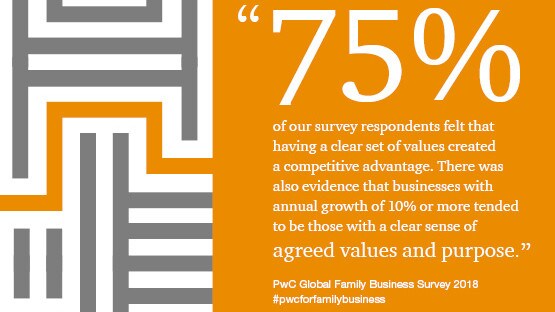
The release of our ninth PwC Global Family Business Survey comes at a time of extraordinary transformation. Digital technology is disrupting whole industries; sustainability is becoming central to the conduct of business; in the corporate and financial worlds, winning trust is more important than it’s ever been; and millennials represent an enduring demographic change. After surveying nearly 3,000 family businesses across 53 territories, we were able to prove that family businesses - built around strong values and with an aspirational purpose - have a competitive advantage in disruptive times, that pay off in real terms. Therefore we believe there is an enormous opportunity for family businesses to start generating real gains from their values and purpose by adopting an active approach that turns these into their most valuable asset.


How Kubernetes is becoming a platform for AI

Xinglang Wang, a principal engineer at eBay, said AI had a high barrier to entry, but packaging tools in a Kubernetes cluster made it easier for businesses to get started on an AI project. At eBay, he said Kubernetes was used to create a unified AI platform, which enables data sharing and sharing of AI models. The AI platform also provides automation to enable eBay to train and deploy AI models.  One of the big users at the KubeCon Shanghai event was Chinese e-commerce retailer JD.com. Explaining the use of AI at JD.com, principal architect Yuan Chen described how the the company was running one of the largest Kubernetes clusters in the world. While it was traditionally used to support a microservices architecture, he said: “Everything is now driven by AI, so we have to use Kubernetes for AI. It is the right infrastructure for deep learning to train the AI models. AI scientists are expensive, so they should focus on their algorithms and not have to worry about deploying containers.”


The Linux desktop: With great success comes great failure

Missed target.
First, while the major Linux companies — Canonical, Red Hat and SUSE — all support Linux desktops, they all decided early on that the big money was to be made with servers (and nowadays with containers and the cloud). The biggest Linux players determined that the Linux desktop was a small market — and then they did very little to change that. But there’s more to it than that. The Linux desktop has also been plagued by fragmentation. There is no one Linux desktop; there are dozens, and they are not at all alike. There’s the Debian Linux family, which includes Ubuntu and Mint; the Red Hat team, with Fedora and CentOS; Arch Linux;Manjaro Linux; and numerous others. And then there are the desktop interfaces. Personally, as a dedicated Linux desktop user for decades, I love that I have a choice between GNOME, KDE Plasma, Cinnamon, Xfce, MATE, etc. for my desktop interface. But most people just find it confusing. All of that just scratches the surface.


GPS killer? Quantum 'compass' promises satellite-free navigation

quantumcompassimperialnov18.jpg
The transportable quantum accelerator could address GPS's dependence on satellite signals, which can be jammed or spoofed by an attacker, rendering the system useless for navigational information. Instead of using GPS, scientists from Imperial College London and UK laser instrument maker M Squared have demonstrated a way to measure how super-cooled atoms respond when inside an accelerating vehicle. Accelerometers are used for navigation, but as the researchers explain, they quickly lose accuracy over time unless aided by satellite signals. The satellite-free navigational device they created relies on M Squared's laser, which cools atoms in a chamber to the point where they behave in a quantum way, as both matter and waves. When a vehicle carrying the device moves, the wave properties of the cooled atoms are affected by its acceleration. A laser beam that acts as an 'optical ruler' measures how atoms move over time.


Zero-trust security not an off-the-shelf product


Zero trust is a “business enabler” because, done correctly, it enables businesses to be faster more quickly and more securely because it is a combination of processes and technologies, he said. “Security is improved because it effectively blocks lateral movement within organisations.” It is widely recognised that complexity is the enemy of security because it encourages end-users and business leaders to bypass security, said Simmonds. “The zero-trust model once again improves security by reducing complexity, and if you get it right, it works for everyone, including business partners, by providing a unified experience with greater flexibility and productivity,” he said. On the other hand, zero trust is not about trusting no one, said Simmonds, it is not a “next-generation perimeter” and it is not “VPN modernisation”. “It is not an off-the-shelf product,” he said.


Understanding the CEO’s role early in digital transformation programs

2 ceo
First, the CEO should be marketing the mission. It must be repeated to leaders and employees several times and the CEO should help answer several key questions. Why must the organization pursue the defined digital business strategy? What are the issues with the existing business model? Who are the new competitors that are disrupting existing businesses, products, and services? What markets is the organization targeting? What are the new and emerging customer needs and expectations? Why technology is critical for future success? These communications should always end with some of the short-term goals of the program and how people can participate. The CIO and others on the leadership team also be communicating and answering these questions, but the staff wants to know and see that the CEO is truly behind it and driving it. With a strategy and mission defined, their needs to be clarity on how the program is being led and how responsibilities are aligned.


Quote for the day:


"A leader must have the courage to act against an expert's advice." -- James Callaghan


December 05, 2015

3 Myths of OpenStack Distros, parts 2 and 3

Although it may seem as though all distros should be equally stable and interoperable, and that they should be released with the corresponding community version, the realities of hardening software mean that that’s simply not possible. Make sure that your vendor is providing you with the best possible version of OpenStack for you, not just hitting the market as quickly as possible. At Mirantis, we’re very proud of the stability of Mirantis OpenStack 7.0. I’d like to invite you to download it now and see for yourself how well-tested and stable the release is. We welcome your feedback about this blog and about our product.


Securing File and Print Servers

Another important security feature of the NFTS file system is the Encrypting File System (EFS) feature. EFS can be used to secure confidential corporate data from unauthorized access, because it enables you to encrypt files and folders to further enhance the security of these files and folders. Even when an unauthorized person manages to access the files and folders because of incorrectly configured NTFS permissions, the files and folders would be encrypted. EFS uses keys to encrypt and decrypt data, and the cryptography application programming interface (CryptoAPI) architecture to provide cryptographic functions. EFS can work on computers that are members of a domain, and on standalone computers. The keys which EFS uses to encrypt and decrypt data, is a public and private key pair, and a per file encryption key.


Microsoft plans to add containers to Windows client, too

What would container support in Windows client mean from a security standpoint? Instead of using a virtual machine to run a browser, a user could use a Hyper-V container to isolate the browser from other apps running on the operating system. That could keep attackers from infiltrating other parts of the Windows OS via a browser attack. Over the past several years, Microsoft Research has investigated ways to make the Windows OS more secure. The ServiceOS project -- formerly known as "Gazelle" and "MashupOS" -- aimed to tighten security by isolating the browser from the OS. There seems to have been little, if any, work to advance ServiceOS for the past few years, however.


Turn the Lights Back on with GIS and Operations Dashboards

Often, too little or too much information slows down analysis and decision-making. Operations dashboards must be configurable to display relevant datasets based on an individual’s role in the utility. For example, a dashboard for emergency operations centre staff might include a live map that plots locations of outages, customers and assets; automated vehicle location data to enable real-time tracking of field crews; and live weather feeds that enable dispatchers to monitor severe weather events that could impact restoration efforts and allow them to redirect crews accordingly. - See more at: http://blogs.esri.com/esri/esri-insider/2015/12/03/turn-the-lights-back-on-with-gis-and-operations-dashboards/#sthash.C53SvaRu.dpuf


Consumer acceptance of in-store location-based tracking on the rise

“In our hyper-connected world, it’s not possible to do this without technology. Consumers today want tech-enabled in-store experiences – in fact, over a quarter would like the shops they visit to know exactly who they are when they walk in through the door, thanks to location-based technologies,” he said. Services such as price comparison sites and in-store Wi-Fi mean customers are now reviewing and comparing products from other stores while shopping. Some 87% of customers will have researched products before entering bricks-and-mortar stores, according to the research, which puts pressure on shop assistants to make the customer’s experience in-store a differentiator.


Why Mark Zuckerberg Wants to Spend on Personalized Learning

“We’re starting to build this technology now, and the results are already promising,” Zuckerberg and Chan wrote in an open letter to their newborn daughter, Max, about the charitable work. “Not only do students perform better on tests, but they gain the skills and confidence to learn anything they want. And this journey is just beginning. The technology and teaching will rapidly improve every year you’re in school,” they wrote. While the general concept of personalized learning isn’t new—teachers have long tried to design lessons to reach individual kids—the explosion of new technology, apps, and the “smart” software has only begun to penetrate classrooms in the last few years. As a result, we don’t know yet how well it works or, really, whether it works at all.


What Is Disruptive Innovation?

Disruptive innovations are made possible because they get started in two types of markets that incumbents overlook. Low-end footholds exist because incumbents typically try to provide their most profitable and demanding customers with ever-improving products and services, and they pay less attention to less-demanding customers. In fact, incumbents’ offerings often overshoot the performance requirements of the latter. This opens the door to a disrupter focused (at first) on providing those low-end customers with a “good enough” product. In the case of new-market footholds, disrupters create a market where none existed. Put simply, they find a way to turn nonconsumers into consumers.


Lynne Cazaly on Making Sense using Visual Communications

Lynne Cazaly spoke at the recent Agile New Zealand conference on the importance of clarity and sense-making in a world where VUCA (volatility, uncertainty, complexity, ambiguity) is the norm. ... Two point communication is what we are doing, you and I are having a conversation and so many meetings and work place settings are these, two point communication, or just people standing around talking and to bring it to a next level to three point communication, let’s have something that we are talking about; it is great to see people gathering around the story walls and project plans etc. but the same happens in any team any conversation any session; get that third point of communication going which is the visual map, maybe the artifact but it’s the thing that helps people make sense so you get to great content a lot quicker.


Quote for the day:


"The person who doesn’t have something to do after the meeting, shouldn’t have attended the meeting." -- Dan Rockwell


March 12, 2014

AI researcher says amoral robots pose a danger to humanity
Robots are only now beginning to act autonomously. A DARPA robotics challenge late last year showed just how much human control robots -- especially, humanoid robots -- still need. The same is true with weaponized autonomous robots, which the U.S. military has said need human controllers for big, and potentially lethal, decisions. But what happens in 10 or 20 years when robots have advanced exponentially and are working in homes as human aides and care givers? What happens when robots are fully at work in the military or law enforcement, or have control of a nation's missile defense system?


UK to help lead world fight against cyber crime
“To get access to those skills we have to look at how we can engage with industry through programmes which allow people to work with law enforcement on a part-time voluntary basis,” he said. Looking to the future, Archibald said the NCCU is investing a “considerable amount of money” in developing law enforcement officers from officers on the beat all the way up to the high-end skills. Finally, he admitted that in the past, engagement with industry had tended to be on the terms of law enforcement, which had made decisions on things like media coverage with little regard to reputational damage to the businesses involved.


Do-it-yourself corporate cloud with ownCloud 6 Enterprise Edition
The Enterprise Edition is designed to seamlessly integrate with your existing infrastructure. Designed from the ground up to be fully deployed on premises, it enables integration into existing user management tools, governance processes, and security, monitoring, and back-up tools. ... As you would expect, ownCloud Enterprise Edition is based on ownCloud Community Edition. With more than 1.3 million users, the Community Edition is one of the world’s most popular open source file sync and share software programs.


Aruba Announces 5 Software Tools for Optimizing Wi-Fi Networks
Several of the software improvements -- all free to existing customers -- are designed to help IT managers optimize their oversight of Wi-Fi networks, which can lower help desk complaints and improve worker efficiency. One of the new tools, Auto Sign-On, is focused on helping end users. Instead of signing in to each enterprise application, such as SalesForce.com, with a lengthy password that's hard to input on a small smartphone keyboard, the tool uses a worker's Wi-Fi login to automatically authenticate an employee with single sign-on.


25 years of the World Wide Web
The Web has changed the way we work, share our lives with family and friends and even play games. This one innovation has brought an astonishing level of change in a short amount of time. Today, the Web is marking its 25th anniversary. On March 12, 1989, Tim Berners-Lee, a British computer scientist, introduced the idea of the World Wide Web in a proposal for an information system. Here, technology leaders, including Vint Cerf, and executives from Intel and AOL, reflect on how the Web has affected the world we live in.


Twitter's Biz Stone is a humble 'Hallucinogenic optimist'
Biz Stone is way too humble. What’s the point in hitting the jackpot when you are too self conscious to use the money in a way that you weren’t able? Time to grow up and grow into your money. You are forty years old. You can live well and do well too. Money is more than philanthropy it is also a means of actively creating the future. Techno-optimists must also become techno-activists — to make sure we get the right future. It won’t come about by itself. We could easily end up in some nightmarish version of a tech-enabled North Korea.


Internet of things cannot be about products alone, warn experts
While they agree that the government funding is a huge opportunity for the UK technology industry, they believe that ongoing success is dependent on companies ensuring they can keep both personal and commercial data safe, and building security and privacy into products from the start. “The benefits that these intelligent, connected devices bring to our lives are almost too numerous to count. However, when we gift these things with intelligence and senses, we also fundamentally change their very nature,” said Marc Rogers, principal security researcher at Lookout.


eBook: The practical approach to Windows Phone 8 development.
The Windows Phone 8 operating system is closely tied to the hardware of Windows Phones, enabling the development of high-performance apps that provide excellent user experiences. With Windows Phone 8 Development Succinctly by Matteo Pagani, you’ll go from creating a “Hello World” app to managing network data usage, enabling users to talk to your application through speech APIs, and earning money through in-app purchases. Dozens of additional features are covered in the book, including launchers, choosers, and geolocation services, so you’ll have a place to start no matter what you want your app to do.


GPS tech built to find missing aircraft not always used
Aviation authorities around the world are starting to implement plans to supplement radar with GPS technologies, but that won't happen everywhere for another 10 years or so, he said. Eventually, all position data will come from the plane. "We're not there yet," Graham said. The major aircraft tracking technologies include Automatic Dependent Surveillance-Broadcast (ADS-B), said Ric Peri, vice president of government and industry affairs at the Aircraft Electronics Association. Rather than relying on a radar ping, ADS-B uses a GPS signal and an aircraft's navigation system to determine the position of a flight and then broadcast that information, he said.


Is Office 365 worth spending 3x more than on Google Apps?
Microsoft's messaging products (Exchange, Outlook) are ubiquitous. Microsoft and Google both know how to operate secure, cloud-scale operations. Office Web Apps and Google Docs are feature-equivalent. The advantage Microsoft has is the enormous, and universal capabilities of full, installed Office. The curious thing is that although you probably don't really need it, and by extension don't need to pay for it, it's sufficiently cheap that you might as well operate on the old maxim that it's easier just to pay for it, and forget about thinking about it.


Quote for the day:

"We must walk consciously only part way toward our goal and then leap in the dark to our success." -- Henry David Thoreau

December 24, 2012

Cloud-Powered GPS Chip Slashes Smartphone Power Consumption
A Microsoft Research project suggests that there’s a way for location chips inside smartphones to use far less power. Reducing the power consumption of GPS chips could not only extend the battery life of smartphones and tablets, it could also make it practical to add GPS functionality to more devices, including low-power remote sensors.


Excel: Data Model specification and limits
A data model is embedded data inside a workbook that powers data visualizations such as PivotTable, PivotChart, and Power View reports. This article documents the maximum and configurable limits for Excel workbooks that contain data models.


5 myths that hold back brainpower
Deepak Chopra and Rudolph E. Tanzi, explain that new discoveries and new thinking are helping people create a new “relationship” with their brains that help unveil new perceptions and new opportunities. In their latest book, Super Brain: Unleashing the Explosive Power of Your Mind to Maximize Health, Happiness, and Spiritual Well-Being, they explain that people need to acknowledge their roles as “leaders,” “inventors,” ‘teachers,” and “users” to their brains.


The Innovator's Straitjacket
A person in a straitjacket also loses the ability to do many other things, particularly creative tasks that require typing, drawing, manipulating objects, and so on. Even the sanest of companies can unintentionally put themselves in a straitjacket that makes it hard for them to create high-potential new growth opportunities. Here's how leaders unintentionally limit their innovation efforts.


Despite Apple, NFC is catching on -- just not for payments quite yet
Near Field Communication (NFC) is steadily making headway in the U.S. for sharing data and music among smartphones, but the technology faces years of slow growth as a replacement for physical wallets.


India's Lava aims for 100 mobile app patents
In an Economic Times report Sunday, SN Rai, the company's co-founder and director, said: "We have realized just by selling handsets it is not possible to maintain growth momentum. Innovation in product is key to survival. Our wishlist is to make a century of patents in the next 2 to 3 years."


4 Fantastic, Free Things Google Drive Will Now Do For You
Now, however, would be a good time to pay Drive some mind. Google has done impressive work making it easier to keep your files organized, share any file with anyone, and keep everything in your work life one search away. Very specifically, these are the things Drive can do for you at no cost, and requiring just enough effort to remember Drive can do that.


Splunktalk: Getting the Message from MOM
In many respects you can think of MOM as the glue that stitches heterogeneous enterprise computing environments together. Now why am I so interested in this ? Well, MOM and the messages transported represent a massive source of machine data that Splunk can index and resolve into operational visibility on many different levels..core operations , business analytics, transaction tracing etc..


Taking Healthcare IT Seriously Demands Culture Changes
Healthcare is moving cautiously into cloud computing, virtualization, BYOD and other IT innovations. And there's good reason for the caution. Until an organization's IT leaders take meaningful steps to change what's typically seen as a lackadaisical privacy and security culture, the risk of patient-information loss remains high and costly.


Boost up your serialization/deserialization similar to JSON
MessagePack is effectively JSON, but with efficient binary encoding. Like JSON, there is no type checking or schemas, which depending on your application can be either be a pro or a con. But, if you are already streaming JSON via an API or using it for storage, then MessagePack can be a drop-in replacement.


How Object Storage and Information Dispersal Address Big Data Challenges
Object-based storage offers an alternative approach that is ideally suited for storing massive amounts of unstructured data. Object-based storage systems are not organized hierarchically. Instead, an object is identified and located by its unique identifier. This enables the number of objects to grow substantially beyond the limitation of traditional file systems while still maintaining the integrity and consistency of the data


Quote for the day:

"The secret of business is to know something that nobody else knows" -- Aristotle Onassis

July 28, 2012

GPS accuracy to improve in EU with new augmentation service
EGNOS, a system providing data that makes GPS readings even more accurate, can now be used through the internet as well as via satellite


Black Hat hacker gains access to 4 million hotel rooms with Arduino microcontroller
Bad news: With less than $50 of off-the-shelf hardware and a little bit of programming, it’s possible for a hacker to gain instant, untraceable access to millions of key card-protected hotel rooms.

Hate Small Talk? These 5 Questions Will Help You Work Any Room
Do you love going to events, but find yourself stranded during happy hour, tongue-tied and tucked in a corner? Initiating and maintaining conversations while networking is a necessary skill, and one you can easily improve with these simple tips.

Format a ESX & ESXi VMFS file system manually
Recently I came across a query in the VMware communities, the query was “How to reformat a VMFS file system or Datastore manuallly” The preferred method of reformat the VMFS file system is from a console or SSH session as you can simply recreate the file system without having to make any changes to the disk partition.

No Silver Business Intelligence Bullets, But Still a Bright Upside
Likewise, the BI market finds itself awash in really cool reporting tools (seriously!) whose ads imply quick results with little effort. The reality is that success on the scale envisioned by many customers requires the planning, coordination, and integration associated with an IT project.

Leadership: It is not about you! Get over it.
What a leader needs to remember is that they are not the most important person in the organisation. A great leader is more concerned with the vision and cause of the organisation

Is Apple taking a financial interest in Twitter?
The New York Times reports that the two companies have talked in recent months, but they are not in talks at this time. Apple could potentially invest several hundred million dollars into Twitter, which has already gathered close to $1 billion in funding

Microsoft Paid $1.2B for Yammer, But You Can Have It for Free
According to Sacks, Yammer will stick with this “freemium” model as it moves under Microsoft’s wing, and it will use the strategy to encourage adoption not only of its own products, but existing Microsoft tools as well. Microsoft declined to comment for this story, but clearly, the company is working to change the way its core business operates in order to keep up with the latest wave of tech outfits.

Predictive analytics might not have predicted the Aurora shooter
Certainly any law enforcement officer who knew of the pattern of activity for this individual would have flagged it as suspicious and investigated. But data mining, also called machine learning, doesn't work the same way.

Ask The Entrepreneurs: 15 Ways to Incorporate Fitness Into Your Company Culture
Ask The Entrepreneurs is a regular series where members of those involved in the Young Entrepreneur Council are asked a single question that aims to help Lifehack readers level up their own lives, whether in a area of management, communication, business or life in general. Here’s the is what the entrepreneurs say for the question related to the topic


Quote for the day:

Success is not built on success. It's built on failure. It's built on frustration. Sometimes its built on catastrophe  -Sumner Redstone