Daily Tech Digest - February 12, 2026


Quote for the day:

"Do not follow where the path may lead. Go instead where there is no path and leave a trail." -- Muriel Strode


The hard part of purple teaming starts after detection

Imagine you’re driving, and you see the car ahead braking suddenly. Awareness helps, but it’s your immediate reaction that avoids the collision. Insurance plans don’t matter at that moment. Nor do compliance reports or dashboards. Only vigilance and rehearsal matter. Cyber resilience works the same way. You can’t build the instinct required to act by running one simulation a year. You build it through repetition. Through testing how specific scenarios unfold. Through examining not only how adversaries get in, but also how they move, escalate, evade, and exfiltrate. This is the heart of real purple teaming. ... AI can accelerate analysis, but it can’t replace intuition, design, or the judgment required to act. If the organization hasn’t rehearsed what to do when the signal appears, AI only accelerates the moment when everyone realises they don’t know what happens next. This is why so much testing today only addresses opportunistic attacks. It cleans up the low-hanging fruit. ... The standard testing model traps everyone involved: One-off tests create false confidence; Scopes limit imagination. Time pressure eliminates depth; Commercial structures discourage collaboration; Tooling gives the illusion of capability; and Compliance encourages the appearance of rigour instead of the reality of it. This is why purple teaming often becomes “jump out, stabilize, pull the chute, roll on landing.” But what about the hard scenarios? What about partial deployments? What about complex failures? That’s where resilience is built.


State AI regulations could leave CIOs with unusable systems

Numerous states are considering AI regulations for systems used in medical care, insurance, human resources, finance and other critical areas. ... Despite the growing regulatory risk, businesses appear unwilling to slow AI deployments. "Moving away from AI with the regulation is not going to be an option for us," Juttiyavar said. He said AI is already deeply embedded in how organizations operate and is essential for speed and competitiveness. ... If CIOs establish strong internal frameworks for AI deployment, "that helps you react better to legislative change" and anticipate new requirements, Kourinian said. Still, regulatory shifts can leave companies with systems that are technically sound but legally unusable, said Peter Cassat, a partner at CM Law. To manage that risk, Cassat advises CIOs to negotiate "change of law" provisions in vendor contracts that provide termination rights if regulations make continued use of a system impossible or impractical. But such provisions do not eliminate the risk of sunk costs. "If it's a SaaS provider and you've signed a three-year term, they don't want to necessarily let you walk for free either," Cassat said. Beyond legal exposure, CIOs must also anticipate public and political reaction to AI and biometric tools. "The CIO absolutely has the responsibility to understand how this technology could be perceived -- not just internally, but by the public and lawmakers," said Mark Moccia, an analyst at Forrester Research.


Your dev team isn’t a cost center — it’s about to become a multiplier

If you treat AI as a pathway to eliminate developer headcount, sure, you’ll capture some cost savings in the short term. But you’ll miss the bigger opportunity entirely. You’ll be the bank executive in 1975 who saw ATMs and thought, “Great, we can close branches and fire tellers.” Meanwhile, your competitors have automated the mundane teller tasks and are opening new branches to sell higher-end services to more people. The 1.4-1.6x productivity improvement that GDPval documented isn’t about doing the same work with fewer people. It’s about doing vastly more work with the same people. That new product idea you had that was 10x too expensive to develop? It’s now possible. That customer experience improvement that could drive loyalty that you didn’t have the headcount for? It’s on the table. The technical debt you’ve been accumulating? You can start to pay it down. ... What struck me about Werner’s final keynote wasn’t the content, it was the intent. This was Werner’s last time at that podium. He could have done a victory lap through AWS’s greatest hits. Instead, he spent his time outlining a framework of success for the next generation of developers. For those of us leading technology organizations, the framework is both validating and challenging. Validating because these traits aren’t new. They have always separated good developers from great ones. Challenging because AI amplifies everything, including the gaps in our capabilities.


Cloud teams are hitting maturity walls in governance, security, and AI use

Migration activity remains heavy across enterprises, especially for data platforms. At the same time, downtime tolerance is limited. Nearly half of respondents said their organizations can accept only one to six hours of downtime for cutover during migration. That combination creates pressure to migrate at speed while keeping data integrity intact. In regulated environments, that pressure extends to audit evidence and compliance validation, which often needs to be produced in parallel with migration execution. ... Cloud-native managed database adoption is also high. More than half of respondents reported using managed cloud databases, and a third reported using SaaS-based database services. Only 10% reported operating self-hosted databases. This shift toward managed services reduces operational burden on infrastructure teams, but it increases reliance on identity governance, network segmentation, and application-layer security controls. It also creates stronger dependency on cloud provider logging and access models. ... Development stacks also reflect this shift. Python was reported as a primary language, with Java close behind. These languages remain central to AI workflows, data engineering, and enterprise application back ends. Machine learning adoption is also widespread since organizations reported actively training ML models. Many of these pipelines are now part of production environments, making operational continuity a priority.


MIT's new fine-tuning method lets LLMs learn new skills without losing old ones

To build truly adaptive AI, the industry needs to solve "continual learning," allowing systems to accumulate knowledge much like humans do throughout their careers. The most effective way for models to learn is through "on-policy learning.” In this approach, the model learns from data it generates itself allowing it to correct its own errors and reasoning processes. This stands in contrast to learning by simply mimicking static datasets. ... The standard alternative is supervised fine-tuning (SFT), where the model is trained on a fixed dataset of expert demonstrations. While SFT provides clear ground truth, it is inherently "off-policy." Because the model is just mimicking data rather than learning from its own attempts, it often fails to generalize to out-of-distribution examples and suffers heavily from catastrophic forgetting. SDFT seeks to bridge this gap: enabling the benefits of on-policy learning using only prerecorded demonstrations, without needing a reward function. ... For teams considering SDFT, the practical tradeoffs come down to model size and compute. The technique requires models with strong enough in-context learning to act as their own teachers — currently around 4 billion parameters with newer architectures like Qwen 3, though Shenfeld expects 1 billion-parameter models to work soon. It demands roughly 2.5 times the compute of standard fine-tuning, but is best suited for organizations that need a single model to accumulate multiple skills over time, particularly in domains where defining a reward function for reinforcement learning is difficult or impossible.


The Illusion of Zero Trust in Modern Data Architectures

Modern data stacks stretch far beyond a single system. Data flows from SaaS tools into ingestion pipelines, through transformation layers, into warehouses, lakes, feature stores, and analytics tools. Each hop introduces a new identity, a new permission model, and a new surface area for implicit trust. Not to mention, niches like healthcare data storage are a completely different beast. Whatever the system may be, teams may enforce strict access at the perimeter while internal services freely exchange data with long-lived credentials and broad scopes. This is where the illusion forms. Zero Trust is declared because no user gets blanket access, yet services trust other services almost entirely. Tokens are reused, roles are overprovisioned, and data products inherit permissions they were never meant to have. The architecture technically verifies everything, but conceptually trusts too much. ... Data rarely stays where Zero Trust policies are strongest. Warehouses enforce row-level security, masking, and role-based access, but data doesn’t live exclusively in warehouses. Extracts are generated, snapshots are shared, and datasets are copied into downstream systems for performance or convenience. Each copy weakens the original trust guarantees and problems worse than increasing cloud costs come to fruition. Once data leaves its source, context is often stripped away.


Top Cyber Industry Defenses Spike CO2 Emissions

Though rarely discussed, like any other technologies, cybersecurity protections carry their own costs to the planet. Programs run on electricity. Servers demand water. Devices are built from natural resources and eventually get thrown out. ... "CISOs can help or make the situation worse [when it comes to] sustainability, depending on the way they write security rules," he says. "And that's why we started a study: to enable the CISO to be part of the sustainability process of his or her company, and to find actionable ways to reduce CO2 consumption while at the same time not adding more risks." ... "We collect a lot of logs, not exactly always knowing why, and the retention period is a huge cost in terms of infrastructure, and also CO2," Billois says. "So at some point, you can revisit your log collection, and log retention, and if there are no legal issues, you can think about compressing them to reduce their volume. It's something that is, I would say, quite easy to do. ... All of that said, unfortunately, the biggest cyber polluter, by far, is also the most difficult to scale back without incurring risk. Some companies can swap underutilized physical infrastructure for virtualized backups, which eat less power, if they're not already doing that; but there are few other great ways to make cyber resilience more efficient. "You can reduce CO2 [from backups] very easily: you stop buying two servers, or you stop having a duplicate of all your data," Billois says.


Five ways quantum technology could shape everyday life

There is growing promise of quantum technology’s ability to solve problems that today’s systems struggle to overcome, or cannot even begin to tackle, with implications for industry, national security and everyday life. ... In healthcare, faster drug discovery could bring quicker response to outbreaks and epidemics, personalised medicine and insight into previously inscrutable biological interactions. Quantum simulation of how materials behave could lead to new high efficiency energy materials, catalysts, alloys and polymers. ... In medicine, quantum sensors could improve diagnostic capabilities via more sensitive, quicker and noninvasive imaging modes. In environmental monitoring, these sensors could track delicate shifts beneath the Earth’s surface, offer early warnings of seismic activity, or detect trace pollutants in air and water with exceptional accuracy. ... Airlines and rail networks could automatically reconfigure to avoid cascading delays, while energy providers might balance renewable generation, storage and consumption with far greater precision. Banks could use quantum computers to evaluate numerous market scenarios in parallel, informing the management of investment portfolios. ... While still at an early stage of development, quantum algorithms might accelerate a subset of AI called machine learning (where algorithms improve with experience), help simulate complex systems, or optimise AI architectures more efficiently.


Nokia predicts huge WAN traffic growth, but experts question assumptions

“Consumer- and enterprise-generated AI traffic imposes a substantial impact on the wide-area network (WAN) by adding AI workloads processed by data centers across the WAN. AI traffic does not stay inside one data center; it moves across edge, metro, core, and cloud infrastructure, driving dense lateral flows and new capacity demands,” the report says. An explosion in agentic AI applications further fuels growth “by inducing extra machine-to-machine (M2M) traffic in the background,” Nokia predicts. “AI traffic isn’t just creating more demand inside data centers; it’s driving a sustained surge of traffic between them. AI inferencing traffic—both user-initiated and agentic-AI-induced M2M—moving over inter-data-center links grows at a 20.3% CAGR through 2034.” ... Global enterprise and industrial traffic, including fixed wireless access, will also steadily rise over the next decade, “as more operations, machines, and workers become digitally connected,” Nokia predicts. “Pervasive automation, high-resolution video, AI-driven analytics, and remote access to industrial systems,” will drive traffic growth. “Factory lines are streaming machine vision data to the cloud. AI copilots are assisting personnel in real time. Field teams are using AR instead of manuals. Robots are coordinating across sites,” the Nokia report says. “Industrial systems are continuously sending telemetry over the WAN instead of keeping it on-site. This shift makes wide-area connectivity part of the core production workflow.”


The death of reactive IT: How predictive engineering will redefine cloud performance in 10 years

Reactive monitoring fails not because tools are inadequate, but because the underlying assumption that failures are detectable after they occur no longer holds true. Modern distributed systems have reached a level of interdependence that produces non-linear failure propagation. A minor slowdown in a storage subsystem can exponentially increase tail latencies across an API gateway. ... Predictive engineering is not marketing jargon. It is a sophisticated engineering discipline that combines statistical forecasting, machine learning, causal inference, simulation modeling and autonomous control systems. ... Predictive engineering will usher in a new operational era where outages become statistical anomalies rather than weekly realities. Systems will no longer wait for degradation, they will preempt it. War rooms will disappear, replaced by continuous optimization loops. Cloud platforms will behave like self-regulating ecosystems, balancing resources, traffic and workloads with anticipatory intelligence. ... In distributed networks, routing will adapt in real time to avoid predicted congestion. Databases will adjust indexing strategies before query slowdowns accumulate. The long-term trajectory is unmistakable: autonomous cloud operations. Predictive engineering is not merely the next chapter in observability, it is the foundation of fully self-healing, self-optimizing digital infrastructure. 

Daily Tech Digest - February 11, 2026


Quote for the day:

"What you do has far greater impact than what you say." -- Stephen Covey


Predicting the future is easy — deciding what to do is the hard part

The prescriptive analysis assists in developing strategies to optimize operations, increase profitability, and reduce risks. Traditionally, linear and non-linear programming models are used for resource allocation, supply chain management, and portfolio optimization. ... In enterprise decision-making, both predictive and prescriptive analytics play an important role. Predictive analytics enables forecasting possible business outcomes, while prescriptive analytics uses these forecasts to create a strategy to maximize business profits. However, enterprises often fail to integrate these two analytics techniques in an effective way for their own benefit. ... The integration of AI agents in predictive and prescriptive analytics workflows has not been explored much by data science professionals. However, a consolidated AI agentic framework can be developed that makes integrated use of predictive and prescriptive analytics in a combined way. ... On implementing the AI agentic framework, the industries experienced better forecasts through efficient predictive analytics. On the other hand, prescriptive analytics helped businesses in making their workflows more adaptable. Despite this success, high computational costs and explainability still remain a major challenge. To overcome these setbacks, an enterprise can further invest in developing multi-modal predictive-prescriptive AI agents and neuro-symbolic agents.


Agile development might be 25 years old, but it’s withstood the test of time – and there’s still more to come in the age of AI

Key focus areas of the Agile Manifesto helped drastically simplify software development, Reynolds noted. By moving teams to smaller more regular releases, for example, this “shortened feedback loops” typically associated with Waterfall and improved flexibility throughout the development lifecycle. “That reduced risk made it easier to respond to customer and business needs, and genuinely improved software quality,” he told ITPro. “Smaller changes meant testing could happen continuously, rather than being bolted on at the end.” The longevity of Agile methodology is testament to its impact, and research shows it’s still highly popular. ... According to Kern, AI and Agile are “a match made in heaven” and the advent of the technology means this approach is no longer optional, albeit with a notable caveat. “You need it more than ever,” he said. “You can build so much more in less time, which can also magnify potential pitfalls if you’re not careful. The speed of delivery with AI can easily outpace feedback, but that’s an exciting opportunity, not a flaw.” Reynolds echoed those comments, noting that while Agile can be a force multiplier for teams, there are still risks – particularly with the influx of AI-generated code in software development. “Those gains are often offset downstream, creating more bugs, higher cloud costs, and greater security exposure. The real value comes when AI is extended beyond code creation into testing, quality assurance, and deployment,” he said.


CISOs must separate signal from noise as CVE volume soars

“While the number of vulnerabilities goes up, what really matters is which of these are going to be exploited,” Michael Roytman, co-founder and CTO of Empirical Security, tells CSO. “And that’s a different process. It does not depend on the number of vulnerabilities that are out there because sometimes an exploit is written before the CVE is even out there.” What FIRST’s forecast highlights instead is a growing signal-to-noise problem, one that strains already overburdened security teams and raises the stakes for prioritization, automation, and capacity planning rather than demanding that organizations patch more flaws exponentially. ... Despite the scale of the forecast, experts stress that vulnerability volume alone is a poor proxy for enterprise risk. “The risk to an enterprise is not directly related to the number of vulnerabilities released,” Empirical Security’s Roytman says. “It is a separate process.” ... For CISOs, the implication is that patching strategies are now more about scaling decision-making processes that were already under strain. ... The cybersecurity industry is not facing an explosion of exploitable weaknesses so much as an explosion of information. For CISOs, success in 2026 will depend less on reacting faster and more on deciding better — using automation and context to ensure that rising vulnerability counts do not translate into rising risk. “It hasn’t been a human-scale problem for some time now,” Roytman says. 


Strengthening a modern retail cybersecurity strategy

Enterprises might declare robust cybersecurity strategies yet fail to adequately address the threats posed by complex supply chains and aggressive digital transformation efforts. To bridge this gap, at Groupe Rocher, we have chosen to integrate cybersecurity into the core business strategy, ensuring that security measures are not only reactive but also predictive, leveraging threat intelligence to anticipate and mitigate risks effectively. ... It’s also important to remember that vulnerabilities aren’t always about technology. Often, they come from poor practices, like using weak passwords, having too much access, or not using multi-factor authentication (MFA). Criminals might use phishing or social engineering attacks to steal access from their victims. ... Additionally, fostering open communication and collaboration with vendors can help identify potential vulnerabilities early. We regularly organize workshops and joint security drills that can enhance mutual understanding and preparedness. By building strong partnerships and emphasizing shared security goals, brands can create a resilient network that not only protects their interests but also strengthens the entire ecosystem against evolving threats. ... As both regulators and consumers become less accepting of business models that prioritize data above all else, retail and beauty brands need to change how they protect data, focusing more on privacy and transparency.


OT Attacks Get Scary With 'Living-off-the-Plant' Techniques

For a number of reasons, ransomware against IT is affecting OT," Derbyshire explains. "This can occur due to, for example, convergences within the IT environment, that the OT simply cannot function without relying upon. Or a complete lack of trust in security controls or network architecture from the IT or OT security teams, so they voluntarily shut down the OT systems or sever the connection to kind of prevent the spread [of an IT attack]. Colonial Pipeline style. ... With a holistic understanding of how OT works, and knowledge of how a given OT site works, suddenly new threat vectors come into focus, which can blend with operational systems as elegantly as LotL attacks do Windows or Linux systems. For instance, Derbyshire plans to demonstrate at RSAC how an attacker can weaponize S7comm, Siemens' proprietary protocol for communication between programmable logic controllers (PLCs). He'll show how, by manipulating frequently overlooked configuration fields in S7comm, an attacker could potentially leak sensitive data and transmit attacks across devices. He calls it "an absolute brain melter." ... there are plenty of resources attackers can turn to to understand OT products better, be they textbooks, chatbots, or even just buying a PLC on a secondhand marketplace. "It still takes a bit of investment or a bit of time going out of your way to find these obscure things. But it's never been impossible and it's only getting easier," Derbyshire says.


The missing layer between agent connectivity and true collaboration

Today's AI challenge is about agent coordination, context, and collaboration. How do you enable them to truly think together, with all the contextual understanding, negotiation, and shared purpose that entails? It's a critical next step toward a new kind of distributed intelligence that keeps humans firmly in the loop. ... While protocols like MCP and A2A have solved basic connectivity, and AGNTCY tackles the problems of discovery, identity management to inter-agent communication and observability, they've only addressed the equivalent of making a phone call between two people who don't speak the same language. But Pandey's team has identified something deeper than technical plumbing: the need for agents to achieve collective intelligence, not just coordinated actions. ... "We have to mimic human evolution,” Pandey explained. “In addition to agents getting smarter and smarter, just like individual humans, we need to build infrastructure that enables collective innovation, which implies sharing intent, coordination, and then sharing knowledge or context and evolving that context.” ... Guardrails remain a central challenge in deploying multi-functional agents that touch every part of an organization's system. The question is how to enforce boundaries without stifling innovation. Organizations need strict, rule-like guardrails, but humans don't actually work that way. Instead, people operate on a principle of minimal harm, or thinking ahead about consequences and making contextual judgments.


Cyber firms face ‘verification crisis’ on real risk

Continuous Threat Exposure Management, commonly referred to as CTEM, has become more widely adopted as a way to structure security work around an organisation's exposure to attack. Even so, only 33% of organisations measure whether exploitable risk is actually reduced over time, according to the report. Instead, most programmes continue to track metrics focused on discovery and volume, such as coverage gaps, asset counts and alert volume. These measures can show rising activity and expanding scope, but they do not necessarily show whether the organisation has reduced the likelihood of a successful attack. "Security programs keep adding tools and expanding scope, but outcomes aren't improving," said Rogier Fischer, CEO and co-founder of Hadrian. ... According to the report, these vulnerabilities were not unknown. They were identified and recorded, but competed for attention as security teams dealt with new alerts, new tickets and the ongoing output of multiple tools. In organisations with complex technology estates, this can create a persistent backlog in which older issues remain unresolved while new potential risks continue to surface. "Security teams can move fast, but too many tools and unverified alerts make it difficult to maintain focus on what actually matters," Fischer said. The report calls for earlier validation of exploitability and success measures that focus on reducing real exposure rather than the number of findings generated.


Trust and Compliance in the Age of AI: Navigating the Risks of Intelligent Software Development

One of the most pressing challenges is trust in AI-generated outputs: Many teams report minimal productivity gains despite operational deployment, citing issues such as hallucinated code, misleading suggestions, and a lack of explainability. This trust gap is amplified by the opaque nature of many AI systems; developers often report struggling to understand how models arrive at decisions, making it difficult for them to validate outputs or debug errors. This lack of transparency, known as black box AI, puts teams at risk of accepting flawed code or test cases, potentially introducing vulnerabilities or performance regressions. ... AI's reliance on data introduces significant compliance risks, especially when proprietary documentation or sensitive datasets are used to train models. Continuing to conduct business the old-fashioned way is not the answer because traditional compliance frameworks often lag behind AI innovation, and governance models built for deterministic systems struggle with probabilistic outputs and autonomous decision-making. ... Another risk with potentially serious consequences: AI-generated code often lacks context. It may not align with architectural patterns, business rules, or compliance requirements, and without rigorous review, these changes can degrade system integrity and increase technical debt. It also must be noted that faster code generation does not equal better code. There is a risk of "bloated" or unsecure code being generated, requiring rigorous validation.


The Cost of AI Slop in Lines of Code

Before we can get to the problem of excessive lines of code, we need to understand how LLMs arrived at the generation of code with unnecessary lines. The answer is in the training dataset and how that dataset was sourced from publicly accessible places, including open repositories on Github and coding websites. These sources lack any form of quality control, and therefore the code the LLMs learned on is of varying quality. ... In the quest to get as much training data as possible, there was little effort available to vet the training data to ensure that it was good training data. The result LLMs outputting the kind of code written by a first-year developer – and that should be concerning to us. ... Some of the common vulnerabilities that we’ve known about for decades, including cross-site scripting, SQL injection, and log injection, are the kinds of vulnerabilities that AI introduces into the code – and it generates this code at rates that are multiples of what even junior developers produce. In a time when it’s important that we be more cautious about security, AI can’t do it. ... Today, we have AI generating bloated code that creates maintenance problems, and we’re looking the other way. It can’t structure code to minimize code duplication. It doesn’t care that there are two, three, four, or more implementations of basic operations that could be made into one generic function. The code it was trained on didn’t generate the abstractions to create the right functions, so it can’t get there.


Why Jurisdiction Choice Is the Newest AI Security Filter

AI moves exponentially faster than legislation and regulations ever could. By the time that sector regulators or governing bodies have drafted frameworks, held consultations, and passed laws through their incumbent democratic processes, the technology has already evolved and scaled far ahead. Not to be too hyperbolic, but the rules could prove irrelevant for a widely-adopted technology and solution that's far outpaced them. This creates what's been dubbed the "speed of instinct" challenge. In essence, how can you possibly regulate something that reinvents itself regularly? ... Rather than attempting to codify every possible and conceivable AI scenario into law, Gibraltar developed a principles-based framework, emphasizing clarity, proportionality, and innovation. Essentially, the framework recognizes that AI regulations must be adaptive and not binary. ... While frameworks exist at both ends of the spectrum—with some enforcing strict rules and others encouraging innovation with AI technology—neither solution is inherently superior. The EU model provides more certainty and protection for humans, but the agile model has merit with responsive governance and the encouragement of rapid innovation. For cybersecurity teams deploying AI, the smart strategy is understanding both standpoints and choosing jurisdictions strategically and with informed processes. Scale and implications matter profoundly; a customer chatbot may have fewer jurisdictional considerations than an internal threat intelligence platform.

Daily Tech Digest - February 10, 2026


uote for the day:

"Leaders must see the dream in their mind before they will accomplish the dream with their team." -- Orrin Woodward


AQ Is The New EQ: Why Adaptability Now Defines Success

AQ describes the ability to adjust thinking, behaviour, and strategy in response to rapid change and uncertainty. Unlike IQ, which measures cognitive capacity, or EQ, which best captures emotional regulation, AQ predicts how quickly someone can learn, unlearn, and recalibrate when conditions change. ... One key reason AQ is eclipsing other forms of intelligence is that it is dynamic rather than static. IQ remains stable across adulthood for the most part. Adaptability, however, varies with experience, exposure to stress, and environmental demands. Research on psychological flexibility shows that people who can manage ambiguity and shift perspectives under pressure are more likely to adapt effectively to uncertainty. ... At the end of the day, AQ is neither fixed nor innate. When it comes to learning and organizational development, adaptability can be strengthened deliberately through structured challenges, supportive feedback loops, and reflective practices. ... Adaptable people seek feedback, revise strategies quickly when presented with new evidence, don’t get stuck, and remain effective even when the rules of the game are shifting under their feet. This high degree of cognitive flexibility - the ability to shift between problem-solving approaches versus defaulting to the “but we’ve always done it this way” approach - best predicts effective decision-making under stress.


Why AI Governance Risk Is Really a Data Governance Problem

Modern enterprise AI systems now use retrieval-augmented generation, which has further exacerbated these weaknesses. Trained AI models retrieve context from internal repositories during inference, pulling from file shares, collaboration platforms, CRM systems and knowledge bases. That retrieval layer must extract meaning from complex documents, preserve structure, generate AI embeddings and retrieve relevant fragments - while enforcing the same access controls as the source systems. This is where governance assumptions begin to break down. ... "We have to accept two things: Data will never be fully governed. Second, attempting to fully govern data before delivering AI is just not realistic. We need a more practical solution like trust models," Zaidi said. AI-first organizations are, therefore, exposing curated proprietary data as reusable "data products" that can be consumed by both humans and AI agents. The alternative is growing risk. As AI systems integrate more deeply with enterprise applications, APIs have become a critical but often under-governed data pathway. ... Regulators are converging on the same conclusion: AI accountability depends on data governance. Data protection regimes such as GDPR already require accuracy, purpose limitation and security. Emerging AI regulations, including the EU AI Act, explicitly tie AI risk to data sourcing, preparation and governance practices. 


Is AI killing open source?

It takes a developer 60 seconds to prompt an agent to fix typos and optimize loops across a dozen files. But it takes a maintainer an hour to carefully review those changes, verify they do not break obscure edge cases, and ensure they align with the project’s long-term vision. When you multiply that by a hundred contributors all using their personal LLM assistants to help, you don’t get a better project. You get a maintainer who just walks away. ... On one side, we’ll have massive, enterprise-backed projects like Linux or Kubernetes. These are the cathedrals, the bourgeoisie, and they’re increasingly guarded by sophisticated gates. They have the resources to build their own AI-filtering tools and the organizational weight to ignore the noise. On the other side, we have more “provincial” open source projects—the proletariat, if you will. These are projects run by individuals or small cores who have simply stopped accepting contributions from the outside. The irony is that AI was supposed to make open source more accessible, and it has. Sort of. ... Open source isn’t dying, but the “open” part is being redefined. We’re moving away from the era of radical transparency, of “anyone can contribute,” and heading toward an era of radical curation. The future of open source, in short, may belong to the few, not the many. ... In this new world, the most successful open source projects will be the ones that are the most difficult to contribute to. They will demand a high level of human effort, human context, and human relationship.


Designing Effective Multi-Agent Architectures

Some coordination patterns stabilize systems. Others amplify failure. There is no universal best pattern, only patterns that fit the task and the way information needs to flow. ... Neural scaling1 is continuous and works well for models. As shown by classic scaling laws, increasing parameter count, data, and compute tends to result in predictable improvements in capability. This logic holds for single models. Collaborative scaling,2 as you need in agentic systems, is different. It’s conditional. It grows, plateaus, and sometimes collapses depending on communication costs, memory constraints, and how much context each agent actually sees. Adding agents doesn’t behave like adding parameters. This is why topology matters. Chains, trees, and other coordination structures behave very differently under load. Some topologies stabilize reasoning as systems grow. Others amplify noise, latency, and error. ... If your multi-agent system is failing, thinking like a model practitioner is no longer enough. Stop reaching for the prompt. The surge in agentic research has made one truth undeniable: The field is moving from prompt engineering to organizational systems. The next time you design your agentic system, ask yourself: How do I organize the team? (patterns); Who do I put in those slots? (hiring/architecture); and Why could this fail at scale? (scaling laws) That said, the winners in the agentic era won’t be those with the smartest instructions but the ones who build the most resilient collaboration structures.


Never settle: How CISOs can go beyond compliance standards to better protect their organizations

A CISO running a compliant program may only review a vendor once a year or after significant system changes. Compliance standards haven’t caught up to the best practice of continuously monitoring vendors to stay on top of third-party risk. This highlights one of the most unfortunate incentives any CISO who manages a compliance program knows: It is often easier to set a less stringent standard and exceed it than to set a better target and risk missing it. ... One of the most common shortfalls of compliance-driven risk assessments is simplistic math around likelihood and impact. Many of the emergent risks mentioned above have a lower likelihood but an extremely high impact and even a fair amount of uncertainty around timeframes. Using this simplistic math, these tail risks do not often bubble up organically; instead, they have to be pulled up from the batch of lower frequency-x-impact scoring. Defining that impact in dollars and cents cuts through the noise. ... If your budget has already been approved without these focus areas in mind, now is the time to start weaving a risk-first approach into discussions with your board. You should be talking about this year-round, not only during budget season when it’s time to present your plan. It will position security as a way to protect revenue, improve capital efficiency, preserve treasury integrity and optimize costs, rather than a cost center.


India Reveals National Plan for Quantum-Safe Security

India is building a foundation to address the national security risks posed by quantum computing through the implementation of a Quantum Safe Ecosystem. As quantum computing rapidly advances, the Task Force, formed under the National Quantum Mission (NQM), has outlined critical steps for India to safeguard its digital infrastructure and maintain economic resilience. ... Critical Information Infrastructure sectors — including defense, power, telecommunications, space and core government systems — are identified as the highest priority for early adoption. According to the report, these sectors should begin formal implementation of post-quantum cryptography by 2027, with accelerated migration schedules reflecting the long operational lifetimes and high-risk profiles of their systems. The task force notes that these environments often support sensitive communications and control functions that must remain confidential for decades, making them especially vulnerable to “harvest now, decrypt later” attacks. ... To support large-scale adoption of post-quantum cryptography, the task force recommends the creation of a national testing and certification framework designed to bring consistency, credibility and risk-based assurance to quantum-safe deployments. Rather than mandating a single technical standard across all use cases, the proposed framework aligns levels of evaluation with the operational criticality of the system being secured.


TeamPCP Worm Exploits Cloud Infrastructure to Build Criminal Infrastructure

TeamPCP is said to function as a cloud-native cybercrime platform, leveraging misconfigured Docker APIs, Kubernetes APIs, Ray dashboards, Redis servers, and vulnerable React/Next.js applications as main infection pathways to breach modern cloud infrastructure to facilitate data theft and extortion. In addition, the compromised infrastructure is misused for a wide range of other purposes, ranging from cryptocurrency mining and data hosting to proxy and command-and-control (C2) relays. Rather than employing any novel tradecraft, TeamPCP leans on tried-and-tested attack techniques, such as existing tools, known vulnerabilities, and prevalent misconfigurations, to build an exploitation platform that automates and industrializes the whole process. This, in turn, transforms the exposed infrastructure into a "self-propagating criminal ecosystem," Flare noted. Successful exploitation paves the way for the deployment of next-stage payloads from external servers, including shell- and Python-based scripts that seek out new targets for further expansion. ... "The PCPcat campaign demonstrates a full lifecycle of scanning, exploitation, persistence, tunneling, data theft, and monetization built specifically for modern cloud infrastructure," Morag said. "What makes TeamPCP dangerous is not technical novelty, but their operational integration and scale. Deeper analysis shows that most of their exploits and malware are based on well-known vulnerabilities and lightly modified open-source tools."


The evolving AI data center: Options multiply, constraints grow, and infrastructure planning is even more critical

AI use has moved from experiment to habit. Usage keeps growing in both consumer and enterprise settings. Model design has also diversified. Some workloads are dominated by large training runs. Others are dominated by inference at scale. Agentic systems add a different pattern again (e.g., long-lived sessions, many tool calls). From an infrastructure standpoint, that tends to increase sustained utilisation of accelerators and networks. ... AI also increases the importance of connectivity between data centers. Training data must move. Checkpoints and replicas must be protected. Inference often runs across regions for latency, resilience, and capacity balancing. As a result, data center interconnect (DCI) is scaling, with operators planning for multi-terabit campus capacity and wide-area links that support both throughput and operational resilience. This reinforces a simple point: the AI infrastructure story is not confined to a single room or building. The ‘shape’ of the network increasingly includes campus, metro, and regional connectivity. ... Connectivity has to match that reality. The winners will be connectivity systems that are: Dense but serviceable – designed for access, not just packing factor; Repeatable – standard blocks that can be deployed many times; Proven – inspection discipline, and documentation that survives handoffs; Compatible with factory workflows – pre-terminated assemblies and predictable integration steps; and Designed for change – expansion paths that do not degrade order and legibility.


Living off the AI: The Next Evolution of Attacker Tradecraft

Organizations are rapidly adopting AI assistants, agents, and the emerging Model Context Protocol (MCP) ecosystem to stay competitive. Attackers have noticed. Let’s look at how different MCPs and AI agents can be targeted and how, in practice, enterprise AI becomes part of the attacker’s playbook. ... With access to AI tools, someone with minimal expertise can assemble credible offensive capabilities. That democratization changes the risk calculus. When the same AI stack that accelerates your workforce also wields things like code execution, file system access, search across internal knowledge bases, ticketing, or payments, then any lapse in control turns into real business impact. ... Unlike smash‑and‑grab malware, these campaigns piggyback on your sanctioned AI workflows, identities, and connectors. ... Poorly permissioned tools let an agent read more data than it needs. An attacker nudges the agent to chain tools in ways the designer didn’t anticipate. ... If an agent learns from prior chats or a shared vector store, an attacker can seed malicious “facts” that reshape future actions—altering decisions, suppressing warnings, or inserting endpoints used for data exfiltration that look routine. ... Teams that succeed make AI security boring: agents have crisp scopes; high‑risk actions need explicit consent; every tool call is observable; and detections catch weird behavior quickly. In that world, an attacker can still try to live off your AI, sure, but they’ll find themselves fenced in, logged, rate‑limited, and ultimately blocked.


Observability has become foundational to the success of AI at scale

Today, CIOs are faced with more data, but less visibility. As AI adoption accelerates data growth, many enterprises struggle with fragmented tools, inconsistent governance, and rising ingestion costs. This leads to critical blind spots across security, performance, and user experience, precisely when operational intelligence matters most. ... The most important mindset shift for CIOs in India is this: AI success starts with getting your data house in order and observability is the discipline that makes that possible at scale. AI does not fail because of algorithms, it fails because of fragmented, low-quality, and poorly governed data. In fact, low data quality is the main barrier to AI readiness, even as organisations accelerate AI adoption. Without clean, accurate, timely, and well-governed data flowing through systems, AI outcomes become unreliable, opaque, and difficult to trust. This is where observability becomes a business catalyst, beyond monitoring. Observability ensures that data powering AI is continuously validated, contextualised, and actionable across applications, infrastructure, and increasingly, AI workloads themselves. At the same time, forward-looking organisations are shifting toward smarter practices such as data lifecycle management, data quality, data reuse, and federation.These practices not only reduce cost and complexity but improve AI accuracy, bias reduction, and decision-making outcomes. 

Daily Tech Digest - February 09, 2026


Quote for the day:

"Leaders who make their teams successful are followed even through the hardest journeys." -- Gordon Tredgold


Agentic AI upends SaaS models & sparks valuation shock

The Software-as-a-Service market is moving away from seat-based licensing as agentic artificial intelligence tools change how companies build and purchase business software, according to analysts and industry executives. Investors have already reacted to the shift. A broad sell-off in software stocks followed recent advances in agentic technology, raising questions regarding the durability of current business models. Concerns persist that traditional revenue streams may be at risk as autonomous systems perform increasing volumes of work with fewer human users. ... Not every vendor is well positioned for the transition. Industry observers are using the term "zombie SaaS" for companies that raised large rounds at peak valuations from 2020 to 2022 and now trade or transact below the total capital invested. These businesses often face a mismatch between historical expectations and current demand. They can struggle to raise new funding and may lack the growth rate needed to justify earlier valuations. Meanwhile, newer entrants can build competing products faster and at lower cost, increasing pressure on incumbents with larger cost structures. ... AI is also reshaping procurement decisions. Some companies are shifting toward internal tools as non-technical teams gain access to systems that generate software from natural-language prompts and templates. Industry discussion points to Ramp building internal revenue tools and AI agents in place of third-party software. 


Software developers: Prime cyber targets and a rising risk vector for CISOs

Attackers are increasingly targeting the tools, access, and trusted channels used by software developers rather than simply exploiting application bugs. The threats blend technical compromise — malicious packages, development pipeline abuse, etc. — with social engineering and AI-driven attacks. ... The tokens, API keys, cloud credentials, and CI/CD secrets held by software developers unlock far broader access than a typical office user account, making software engineers a prime target for cybercriminals. “They [developers] hold the keys to the kingdom, privileged access to source code and cloud infrastructure, making them a high-value target,” Wood adds. ... Attackers aren’t just looking for flaws in code — they’re looking for access to software development environments. Common security shortcomings, including overprivileged service accounts, long-lived tokens, and misconfigured pipelines, offer a ready means for illicit entry into sensitive software development environments. “Improperly stored access credentials are low-hanging fruit for even the most amateur of threat actors,” says Crystal Morin, senior cybersecurity strategist at cloud-native security and observability vendor Sysdig. ... AI-assisted development and “vibe coding” are increasing exposure to risk, especially because such code is often generated quickly without adequate testing, documentation, or traceability.


How network modernization enables AI success and quantum readiness

In essence, inadequate networks limit the ability of AI “blood” to nourish the body of an organization — weakening it and stifling its growth. Many enterprise networks developed incrementally over time, with successive layers of technology implemented over time. Mergers, divestitures, and one-off projects to solve immediate problems have left organizations with a patchwork of architectures, vendors and configurations. ... As AI traffic increases across data centers, clouds, and the edge, blind spots multiply. Once-manageable technical debt becomes an active security liability, expanding the attack surface and undermining Zero Trust initiatives as AI-driven traffic increases. ... Quantum computers could break today’s encryption standards, exposing sensitive financial, healthcare and operational data. Worse, attackers are already engaging in “harvest now, decrypt later” strategies — stealing encrypted data today to exploit tomorrow. The relevance to networking and AI issues is straightforward. Preparing for the challenges (and opportunities) of quantum computing will be an incremental, multi-year project that needs to start now. Enterprise IT infrastructures must be able to adapt and scale to quantum computing developments as they evolve. Companies will need to be able to “skate to where the puck will be,” and then skate again! While becoming quantum-safe may seem daunting, organizations don’t have to do it all at once. 


Rethinking next-generation OT SOC as IT/OT convergence reshapes industrial cyber defense

Clear gains from next-generation OT SOC innovation emerge across real-world applications, such as OT-aware detection, AI-assisted triage, and distributed SOC models designed to reflect the day-to-day realities of operating critical infrastructure. ... The line between what is OT and what is IT is blurred. Each customer, scenario, and request proposal shows a unique fingerprint of architectural, process, and industry-related concerns. Our OT SOC development program integrated industrial network sensors with enterprise SOC, enabling holistic monitoring of plants and offices together. ... Risk is no longer discussed purely from a cyber perspective, but in terms of operational impact, safety, and reliability, which is more consequence-driven. When convergence is implemented securely, alerts are no longer investigated in isolation; identity, remote access activity, asset criticality, and process context are correlated together. ... From a practical standpoint, Mashirova said that automation delivers the most operational value in enrichment, correlation, prioritization, and workflow orchestration. “Automating asset context, vulnerability risk prioritization with remediation recommendations, alert deduplication, and escalation logic dramatically improves analyst efficiency without directly impacting the industrial process. AI agents can act as SOC assistants by correlating large volumes of data and providing decision support to analysts.”


Shai-hulud: The Hidden Cost of Supply Chain Attacks

In recent months, a somewhat novel supply chain threat has emerged against the open source community; attackers are unleashing self-propagating malware on component libraries and targeting downstream victims with infostealers. The most famous recent example of this is Shai-hulud, a worm targeting NPM projects that would take hold when a victim downloads a poisoned component. Once on a victim machine, the malware used its access to infect components that the victim maintains before self-publishing poisoned versions. ... Another consideration is long-term, lasting damage from these incidents. Sygnia's Kidron explains that the impact of a compromise like credential theft happens on a wider time scale. If the issue has not been adequately contained, attackers can sell access or use it for follow-on activity later. "In practice, damage unfolds across time frames. Immediately — within hours to the first few days after exposure, the primary risk is credential exposure: these campaigns are designed to execute inside developer and CI/CD paths where tokens and secrets are accessible," he says. "When those secrets leak, the downstream harm is not abstract — the attacker can use them (or sell them) to authenticate as the victim and access private repositories, pull data, tamper with code, trigger builds, publish packages, access cloud resources, or perform actions “on behalf” of legitimate identities." 


United Airlines CISO on building resilience when disruption is inevitable

Modernization in aviation is less about speed and more about precision. Every change must measurably improve safety, reliability, or resilience. Cybersecurity must respect that bar. ... Cyber risk is assessed in terms of how it affects the ability to move aircraft, crew, and passengers safely and on time. It also means cybersecurity leaders must understand the business end-to-end. You cannot protect an airline effectively without understanding flight operations, maintenance, weather, crew scheduling, and regulatory constraints. Cybersecurity becomes an enabler of safe operations, not a separate technical function. ... Risk assessment goes beyond vendor questionnaires. It includes scenario analysis, operational impact modeling, and close coordination with partners, regulators, and industry groups. Information sharing is essential, because early awareness often matters more than perfect control. Ultimately, we assume some disruptions will originate externally. The goal is to detect them quickly, understand their operational impact, and adapt without compromising safety. Resilience and coordination are just as important as contractual controls. ... Speed matters, but clarity matters more. We also plan extensively in advance. You cannot improvise under pressure when aircraft and passengers are involved. Clear playbooks, rehearsals, and defined decision authorities allow teams to act decisively while staying aligned with safety principles.


Securing IoT devices: why passwords are not enough

Traditional passwords are often not secure enough for technological devices or systems. Many consumers use the default password that comes with the system rather than changing it to a more secure one. When people update their passwords, they often choose weak ones that are easy for cyberattackers to crack. The volume of IoT devices makes manual password management inefficient and risky. A primary threat is the lack of encryption as data travels between networks. When multiple devices are connected, encryption is key to protecting information. Another threat is poor network segmentation, which means connected devices are misconfigured or less secure. ... Adopting a zero-trust methodology is a better cybersecurity measure than traditional password-based systems. IoT devices can still require a password, but the system may ask for additional information to verify the user’s authorization. Users can set up passkeys, security questions or other methods as the next step after entering a password. ... AI can be used both offensively and defensively in cybersecurity for IoT devices. Hackers use AI to launch advanced attacks, but users can also implement AI to detect suspicious behaviour and address threats. Consumers can purchase AI security systems to safeguard their IoT devices beyond passwords, but they must remain vigilant and continuously monitor their usage to prevent cyberattackers from infiltrating them.


Creating a Top-Down and Bottom-Up Grounded Capability Model

A grounded capability model is a complete and stable set of these capabilities, structured in levels from level 1 to sometimes level 4 so senior leaders, middle managers, architects, and digital transformation managers can see the business as an integrated whole. The “grounded” part matters: it means the model reflects strategy and business design, not the quirks of today’s org chart or application portfolio. ... Business Architecture Info emphasizes that a grounded capability model is best built by combining top-down strategic direction with bottom-up operational reality. The top-down view ensures the model is aligned to the business plan and strategic goals, while the bottom-up view ensures it is validated against real value streams, objectives, and subject-matter expertise. ... Top-down capability modeling needs the right stakeholders and the right strategic inputs. On the stakeholder side, senior leaders are essential because they own direction, priorities, and the definition of “what good looks like.” The EA team, enterprise architects and business architects, translates that direction into a structured capability view. ... Bottom-up capability modeling grounds the model in delivery and operational truth. It relies heavily on middle managers, subject matter experts, and business experts. In other words, people who know how value is produced, where friction exists, and what “enablement” really takes. The EA team remains a key facilitator and modeler, but validation and discovery come from the business.


Secure The Path, Not The Chokepoint

The argument here is simple: baseline security policy should be enforced along the path where packets already travel. Programmable data planes, particularly P4 on programmable switching targets, make it possible to enforce meaningful guardrails at line rate, close to the workload, without redesigning the network into a set of security detours. ... When enforcement is concentrated on a few devices, the architecture depends on traffic detours or assumptions about where traffic flows. That creates three practical problems: First, important east west traffic may never traverse an inspection point. Second, response actions often depend on where a firewall sits rather than where the attacker is operating. Third, changes become slow and risky because every new workload pattern becomes another exception. ... A fabric first model succeeds when it focuses on controls that are simple, universal, and have a high impact. ... A fabric first approach does not remove the need for firewalls. Deep application inspection, proxy functions, content controls, and specialized policy workflows still make sense where rich context exists and where inspection overhead is acceptable. The shift is about default placement. Baseline guardrails and rapid containment belong in the fabric. ... A small set of metrics usually tells the story clearly: time from detection to enforced containment, reduction in unintended internal connection attempts, and time to produce a credible incident narrative during review.


Banks Face Dual Authentication Crisis From AI Agents

Traditional authentication relies upon point-in-time verification like MFA and a password, after which access is granted. Over the years, banks have analyzed human spending patterns. But AI agents purchasing around the clock and seeking optimal deals have rendered that model obsolete. "With autonomous agents transacting on behalf of users, the distinction between legitimate and fraudulent activity is blurred, and a single compromised identity could trigger automated losses at scale," said Ajay Patel, head of agentic commerce at Prove. ... But before banks can address the authentication problem, they need to fix their data infrastructure, said Carey Ransom, managing director at BankTech Ventures. AI agents need clean, contextually appropriate data, banks don't yet have standardized ways to provide it. So, when mistakes occur, who is at fault, and who is liable for making things right? When AI agents can spawn sub-agents that delegate tasks to other AI systems throughout a transaction chain, the liability question gets murky. ... Layered authentication that balances security with the speed will reduce agentic AI valuable risks, Ransom said. "Variant transaction requests might require a new layer or type of authentication to ensure it is legitimate and reflecting the desired activity," he said. "Checks and balances will be a prevailing approach to protect both sides, while still enabling the autonomy and efficiency the market desires."

Daily Tech Digest - February 08, 2026


Quote for the day:

"The litmus test for our success as Leaders is not how many people we are leading, but how many we are transforming into leaders" -- Kayode Fayemi


Why agentic AI and unified commerce will define ecommerce in 2026

Agentic AI and unified commerce are set to shape ecommerce in 2026 because the foundations are now in place: consumers are increasingly comfortable using AI tools, and retailers are under pressure to operate seamlessly across channels. ... When inventory, orders, pricing, and customer context live in disconnected systems, both humans and AI struggle to deliver consistent experiences. When those systems are unified, retailers can enable more reliable automation, better availability promises, and more resilient fulfillment, especially at peak. ... Unified commerce platforms matter because they provide a single operational framework for inventory, orders, pricing, and customer context. That coordination is increasingly critical as more interactions become automated or AI-assisted. ... The shift toward “agentic” happens when AI can safely take actions, like resolving a customer service step, updating a product feed, or proposing a replenishment recommendation, based on reliable data and explicit rules. That’s why unified commerce matters: it reduces the risk of automation acting on partial truth. Because ROI varies dramatically by category, maturity, and data quality, it’s safer to avoid generic percentage claims. The defensible message is: companies that pair AI with clean operational data and clear governance will unlock automation faster and with fewer reputational risks. ... Ultimately, success in 2026 will not be defined by how many AI features a retailer deploys, but by how well their systems can interpret context, act reliably, and scale under pressure.


EU's Digital Sovereignty Depends On Investment In Open-Source And Talent

We argue that Europe must think differently and invest where it matters, leveraging its strengths, and open technologies are the place to look. While Europe does not have the tech giants of the US and China, it possesses a huge pool of innovation and human capital, as well as a small army of capable and efficient technology service providers, start-ups, and SMEs. ... Recent data shows that while Europe accounts for a substantial share of global open source developers, its contribution to open source-derived infrastructure remains fragmented across countries, with development being concentrated in a small number of countries. ... Europe may not have a Silicon Valley, but it has something better: a robust open source workforce. We are beginning to recognize this through fora such as the recent European Open Source Awards, which celebrated European citizens and residents working on things ranging from the Linux kernel and open office suites to open hardware and software preservation. ... Europe has a chance of succeeding. Historically, Europe has done a good job in making open source and open standards a matter of public policy. For example, the European Commission's DG DIGIT has an open source software strategy which is being renewed this year, and Europe possesses three European Standards Organizations, including CEN, CENELEC, and ETSI. While China has an open source software strategy, Europe is arguably leading the US in harnessing the potential of open technologies as a matter of public and industrial policy, and it has a strong foundation for catching up to China.


Is artificial general intelligence already here? A new case that today's LLMs meet key tests

Approaching the AGI question from different disciplinary perspectives—philosophy, machine learning, linguistics, and cognitive science—the four scholars converged on a controversial conclusion: by reasonable standards, current large language models (LLMs) already constitute AGI. Their argument addresses three key questions: What is general intelligence? Why does this conclusion provoke such strong reactions? And what does it mean for ... "There is a common misconception that AGI must be perfect—knowing everything, solving every problem—but no individual human can do that," explains Chen, who is lead author. "The debate often conflates general intelligence with superintelligence. The real question is whether LLMs display the flexible, general competence characteristic of human thought. Our conclusion: insofar as individual humans possess general intelligence, current LLMs do too." ... "This is an emotionally charged topic because it challenges human exceptionalism and our standing as being uniquely intelligent," says Belkin. "Copernicus displaced humans from the center of the universe, Darwin displaced humans from a privileged place in nature; now we are contending with the prospect that there are more kinds of minds than we had previously entertained." ... "We're developing AI systems that can dramatically impact the world without being mediated through a human and this raises a host of challenging ethical, societal, and psychological questions," explains Danks.


Biometrics deployments at scale need transparency to help businesses, gain trust

As adoption invites scrutiny, more biometrics evaluations, completed assessments and testing options come available. Communication is part of the same issue, with major projects like EES, U.S. immigration and protest enforcement, and more pedestrian applications like access control and mDLs all taking off. ... Biometric physical access control is growing everywhere, but with some key sectorial and regional differences, Goode Intelligence Chief Analyst Alan Goode explains in a preview of his firm’s latest market research report on the latest episode of the Biometric Update Podcast. Imprivata could soon be on the market, with PE owner Thoma Bravo working with JPMorgan and Evercore to begin exploring its options. ... A panel at the “Identity, Authentication, and the Road Ahead 2026” event looked at NIST’s work on a playbook to help businesses implement mDLs. Representatives from the NCCoE, Better Identity Coalition, PNC Bank and AAMVA discussed the emerging situation, in which digital verifiable credentials are available, but people don’t know how to use them. ... DHS S&T found 5 of 16 selfie biometrics providers met the performance goals of its Remote Identity Validation Rally, Shufti and Paravision among them. RIVR’s first phase showed that demographically similar imposters still pose a significant problem for many face biometrics developers.


The Invisible Labor Force Powering AI

A low-cost labor force is essential to how today’s AI models function. Human workers are needed at every stage of AI production for tasks like creating and annotating data, reinforcing models, and moderating content. “Today’s frontier models are not self-made. They’re socio-technical systems whose quality and safety hinge on human labor,” said Mark Graham, a professor at the University of Oxford Internet Institute and a director of the Fairwork project, which evaluates digital labor platforms. In his book Feeding the Machine: the Hidden Human Labor Powering AI (Bloomsbury, 2024), Graham and his co-authors illustrate that this global workforce is essential to making these systems usable. “Without an ongoing, large human-in-the-loop layer, current capabilities would be far more brittle and misaligned, especially on safety-critical or culturally sensitive tasks,” Graham said. ... The industry’s reliance on a distributed, gig-work model goes back years. Hung points to the creation of the ImageNet database around 2007 as the moment that set the referential data practices and work organization for modern AI training. ... However, cost is not the only factor. Graham noted that cost arbitrage plays a role, but it is not the whole explanation. AI labs, he said, need extreme scale and elasticity, meaning millions of small, episodic tasks that can be staffed up or down at short notice, as well as broad linguistic and cultural coverage that no single in-house team can reproduce.


Code smells for AI agents: Q&A with Eno Reyes of Factory

In order to build a good agent, you have to have one that's model agnostic. It needs to be deployable in any environment, any OS, any IDE. A lot of the tools out there force you to make a hard trade off that we felt wasn't necessary. You either have to vendor lock yourself to one LLM or ask everyone at your company to switch IDEs. To build like a true model agnostic, vendor agnostic coding agent, you put in a bunch of time and effort to figure out all the harness engineering that's necessary to make that succeed, which we think is a fairly different skillset from building models. And so that's why we think companies like us actually are able to build agents that outperform on most evaluations from our lab. ... All LLMs have context limits so you have to manage that as the agent progresses through tasks that may take as long as eight to ten hours of continuous work. There are things like how you choose to instruct or inject environment information. It's how you handle tool calls. The sum of all of these things requires attention to detail. There really is no individual secret. Which is also why we think companies like us can actually do this. It's the sum of hundreds of little optimizations. The industrial process of building these harnesses is what we think is interesting or differentiated. ... Of course end-to-end and unit tests. There are auto formatters that you can bring in, SaaS static application security testers and scanners: your sneaks of the world.


Software-Defined Vehicles Transform Auto Industry With Four-Stage Maturity Framework For Engineers

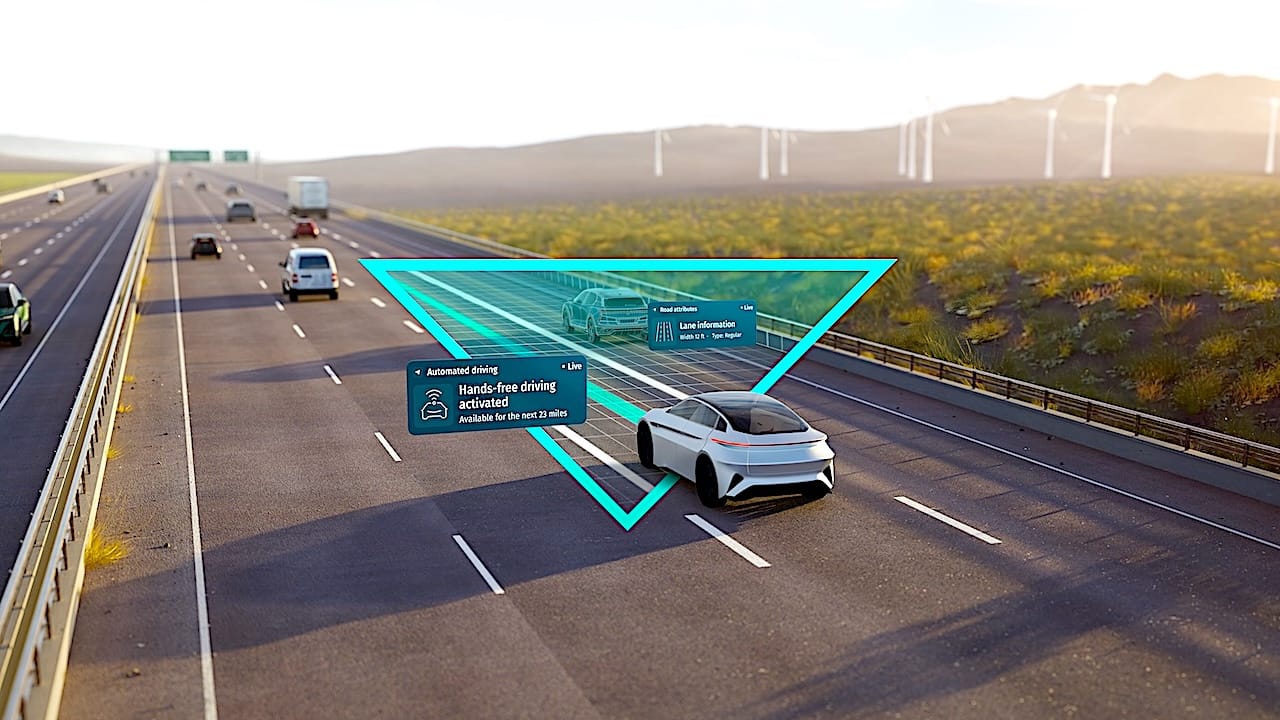
More refined software architectures in both edge and cloud enable the interpretation of real-time data for predictive maintenance, adaptive user interfaces, and autonomous driving functions, while cloud-based AI virtualized development systems enable continuous learning and updates. Electrification has only further accelerated this evolution as it opened the door for tech players from other industries to enter the automotive market. This represents an unstoppable trend as customers now expect the same seamless digital experiences they enjoy on other devices. ... Legacy vehicle systems rely on dozens of electronic control units (ECUs), each managing isolated functions, such as powertrain or infotainment systems. SDVs consolidate these functions into centralized compute domains connected by high-speed networks. This architecture provides hardware and software abstraction, enabling OTA updates, seamless cross-domain feature integration, and real-time data sharing, are essential for continuous innovation. ... Processing sensor data at the edge – directly within the vehicle – enables highly personalized experiences for drivers and passengers. It also supports predictive maintenance, allowing vehicles to anticipate mechanical issues before they occur and proactively schedule service to minimize downtime and improve reliability. Equally important are abstraction layers that decouple software applications from underlying hardware.


Cybersecurity and Privacy Risks in Brain-Computer Interfaces and Neurotechnology

Neuromorphic computing is developing faster than predicted by replicating the human brain's neural architecture for efficient, low-power AI computation. As highlighted in talks around brain-inspired chips and meshing, these systems are blurring distinctions between biological and silicon-based computation. In the meanwhile, bidirectional communication is made possible by BCIs, such as those being developed by businesses and research facilities, which can read brain activity for feedback or control and possibly write signals back to affect cognition. ... Neural data is essentially personal. Breaches could expose memories, emotions, or subconscious biases. Adversaries may reverse-engineer intentions for coercion, fraud, or espionage as AI decodes brain scans for "mind captioning" or talent uploading. ... Compromised BCIs blur cyber-physical boundaries farther than OT-IT convergence already has. A malevolent actor might damage medical implants, alter augmented reality overlays, or weaponize neurotech in national security scenarios. ... Implantable devices rely on worldwide supply chains prone to tampering. Neuromorphic hardware, while efficient, provides additional attack surfaces if not designed with zero-trust principles. Using AI to process neural signals can introduce biases, which may result in unfair treatment in brain-augmented systems 


Designing for Failure: Chaos Engineering Principles in System Design

To design for failure, we must understand how the system behaves when failure inevitably happens. What is the cost? What is the impact? How do we mitigate it? How do we still maintain over 99% uptime? This requires treating failure as a default state, not an exception. ... The first step is defining steady-state behavior. Without this, there is no baseline to measure against. ... Chaos experiments are most valuable in production. This is where real traffic patterns, real user behavior, and real data shapes exist. That said, experiments must be controlled. ... Chaos Engineering is not a one-off exercise. Systems evolve. Dependencies change. Teams rotate. Experiments should be automated, repeatable, and run continuously, either as scheduled jobs or integrated into CI/CD pipelines. Over time, experiments can be expanded to test higher-impact scenarios. ... Additional considerations include health checks, failover timing, and data consistency. Strong consistency simplifies reasoning but reduces availability. Eventual consistency improves availability but introduces complexity and potential inconsistency windows. ... Network failures are unavoidable in distributed systems. Latency spikes, packets get dropped, DNS fails, and sometimes the network splits entirely. Many system outages are not caused by servers crashing, but by slow or unreliable communication between otherwise healthy components. This is where several of the classic fallacies of distributed computing show up, especially the assumption that the network is reliable and has zero latency.


Why SMBs Need Strong Data Governance Practices

Good data governance for small businesses is about building trust, control and scalability into your data from day one. Governance should be built into the data foundation, not bolted on later. Small businesses move fast, and governance works best when it’s native to how data is managed. That means choosing platforms that apply security, access controls and compliance consistently across all data, without requiring manual oversight or specialized teams. Additionally, clear visibility and control over what data exists and who can access it is essential. Even at a smaller scale, businesses handle sensitive information ranging from customer and financial data to operational insights. ... Governance also future proofs the business. Regulations are becoming more complex, customer expectations for data protection are rising, and AI systems must have high-quality, well-governed data to perform reliably. Small businesses that treat governance as a foundation are better positioned to adopt AI and safely expand into new use cases, markets and regulatory environments without needing to rearchitect later. At the same time, strong data governance improves day-to-day efficiency. When data is well governed, teams can spend more time acting on insights and less time questioning data quality, managing access manually or duplicating work. ... From a cybersecurity perspective, governance provides the controls and visibility needed to reduce attack surfaces and detect misuse.