Daily Tech Digest - July 22, 2020

Preventing data loss and mitigating risk in today’s remote work environment

Regulations, particularly in the financial services sector, often contain specialized requirements for certain data, which specifies that an organization must control their encryption key. Typically, a very small percentage of a customer’s data falls into this category, but it is important for our customers to care for that specific data correctly. To address that regulatory and unique need for some organizations, today we are pleased to announce the public preview of Double Key Encryption for Microsoft 365, which allows you to protect your most confidential data while maintaining full control of your encryption key. Double Key Encryption for Microsoft 365 uses two keys to protect your data, with one key in your control and the second in Microsoft’s control. To view the data, one must have access to both keys. Since Microsoft can access only one key, your data and key are unavailable to Microsoft, helping to ensure the privacy and security of your data. With Double Key Encryption for Microsoft 365, you not only hold your own key, but this capability also helps you to address many regulatory compliance requirements, easily deploy the reference implementation, and enjoy a consistent labeling experience across your data estate. For more information, check out the Tech Community blog.


Twitter hack raises alarm among government officials, security experts

It's still not known whether a nation-state actor was involved, although Kennedy, like many security experts, notes that “it sure is interesting timing with the election coming up.” However, because President Trump relies so heavily on Twitter to communicate his messages, Kennedy doesn’t believe that Russia would be the culprit this go-around. “If you think Trump and Russia are in cahoots, it would not be in the Russians’ best interest to make Twitter look like an untrusted source of information.” The distinction between Twitter and other critical services is that Twitter doesn’t maintain a unique infrastructure for which the marketplace cannot quickly and easily provide a substitute. It is, in essence, just a form of speech, which is backed by sophisticated infrastructure, to be sure. It is fundamentally a communications platform protected by the First Amendment right to free speech, some experts say. “Regardless of the ubiquity of platforms like Twitter, they are not 'critical infrastructure' like the telephone system or the electric grid that are necessary to the operation of vital functions,” Robert Corn-Revere, First Amendment law expert and partner at Davis, Wright, Tremaine LLP tells CSO. “It is not as if news or political dialog would stop if Twitter were disrupted,” he adds.


Cybersecurity Lessons from the Pandemic

When a crisis hits, it's usually late in the investigation that we discover the unknowns that we didn't know about. For example, when COVID-19 initially became known, experts assumed it had spread to only a few Asian countries. As a result, many countries outside of Asia immediately set in motion preventive measures and travel bans for people traveling from those countries, while still keeping open borders for other nations. It was discovered later how coronavirus spread to rest of the world and that cases in Italy had escalated drastically in just a few days, thereby revealing the true extent of spread and risk exposure. Similarly, when a cyberattack happens, it is mostly during the ongoing investigation, and often later rather than earlier, that one finds out about the true extent of infiltration, risk exposure, and the effects on an organization's infrastructure and business. It's this meta-ignorance that poses a challenge and prevents us from being immune to these unknown threats that we don't know. The other aspect that connects the challenges of a pandemic to the challenges we face today in cybersecurity is the extensive globalization, digitalization, and interconnections.


COVID-19 fuels cyber attacks, exposes gaps in business recovery

With added risks from third-party applications and the supply chain, these findings revealed that the extended enterprise was under pressure, according to Rick McElroy, VMware Carbon Black's cyber security strategist. The COVID-19 outbreak also unveiled gaps in business recovery planning of 89% in the country, who described such holes as slight to severe. Another 86% uncovered gaps in their IT operations as a result of the pandemic, while 85% identified problems due to a remote workforce and 73.5% had issues related to visibility of cybersecurity threats. McElroy said: "The global situation with COVID-19 has put the spotlight on business resilience and disaster recovery planning. Those organisations that have delayed implementing multi-factor authentication (MFA) appear to be facing challenges, as 32% of Singaporean respondents say the inability to implement MFA is the biggest threat to business resilience they are facing right now. "These figures indicate that the surveyed CISOs (chief information security officers) may be facing difficulty in a number of areas when answering the demands placed on them by the COVID-19 situation," he said. 


AI Adoption – Data governance must take precedence

Unsurprisingly, across the board research and development dominate in current AI adoption trends, followed closely by applications in IT and customer service. That being said, respondents cited a widening range of industry areas in which functional parts of a company use AI. As a whole, this indicates that companies are increasingly turning to AI and machine learning as a business tool. Obstacles are to be expected on the path to digital transformation, particularly with unfamiliar entities in the mix. For AI adoption, the most prevalent obstructions are: a company culture that doesn’t recognise a need for AI, difficulties in identifying business use cases, a skills gap or difficulty hiring and retaining staff and a lack of data or data quality issues. With this broad spectrum of challenges, it is worth delving into a couple of them. Firstly, it is interesting to note that an incompatible company culture mostly affects those companies that are in the evaluation stage with AI. When rephrased, perhaps it is obvious – a company with “mature” AI practices is 50 percent less likely to see no use for AI. By contrast, in a company where AI is not yet an integrated business function, resistance is more likely.


Remote working: We're stressed and distracted and making these security errors

"Working in unusual environments can be stressful and distracting," said Hancock. "Prior to the pandemic, people were used to operating in distinct spaces - home, work, social - and we had different ways of understanding the world in each space. The events of 2020 mean these spaces have blurred, and we've had to quickly learn new ways of operating and this has its challenges." Other reasons for people clicking on phishing emails included the fact that they looked legitimate (43%) and the fact that they appeared to have come from a senior executive (41%) or a well-known brand (also 41%). Men were twice as likely as women to fall for phishing scams, with 34% of male respondents saying they have clicked on a link in a spoof email compared to just 17% of women. Those working in the tech industry were the most likely to click on phishing emails, with nearly half of respondents in this sector (47%) admitting having done so. This was closely followed by employees in banking and finance, with 45% of workers admitting to have clicked on phishing links in emails. Fatigue was another factor in causing workers to click on malicious links, and was also cited as a top reason for sending an email to the wrong person by 44% of respondents. Nearly half (46%) of respondents said they had experienced burnout in their career.


4 Steps to Help You Plan a Cyber Resilience Roadmap

Keep in mind resources are not purely technological. Your resource mix is made of up technological and human capital, including how they operate and interact with each other. You can have the latest-and-greatest tools all properly configured, but, if you do not have an experienced and properly-trained team managing and maintaining these tools, these tools may never see the light of day.  You also need to be cognizant that all current and future information security tools could lead you into a privacy jam if use is not thought through. Anything from real-monitoring issues to holding too much (or unnecessary) amounts of personally identifiable information (PII) increases the liability side of your balance sheet. Therefore, it’s the totality of your resource mix that will help determine your current position. So how do you determine your current position? It all begins with risk management. Risk management is by no means a science, even though a lot of science goes into it. As some environments become more complex, their likelihood for fragility increases, notes risk management expert Nassim Nicholas Taleb in his book “Antifragile: Things That Gain from Disorder.”


Engineering Successful Cloud Migrations
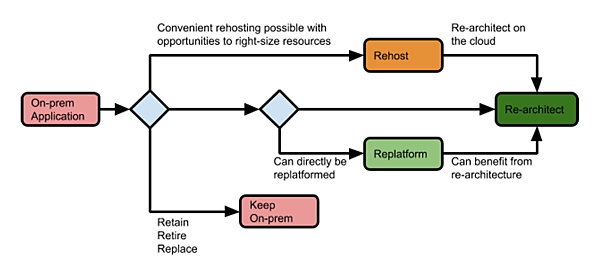
The perception of agility on the cloud is largely from the lens of provisioning. Unlike the infrastructure on premises, provisioning necessary infrastructure and platform resources is far more convenient on the cloud, albeit at a cost. But this is only a small component in the overall process of launching a change into production. Achieving agility on the cloud involves relentless automation and optimisation of not just the delivery pipeline but also the business. When combined with lean practices and evolutionary architectural principles, businesses rapidly adjust to capitalise on opportunities and reduce risks. The emergence of digital technologies on cloud platforms, in combination with agile practices, promises faster innovation. Most cloud vendors are offering technologies that are building blocks for IoT sub-systems, data science applications, big data pipelines, and AI/ML services. This allows cloud consumers to build and evolve digital applications on the cloud fairly quickly. This convenience comes with its own challenges. Vendor lock-in is a big risk as these technologies offered by different cloud vendors may not be compatible. Applications built using Domain Driven Design techniques can be migrated between different cloud offerings if they have interfaces to these technologies on the host cloud offering.


Dell XPS 15 9500 (2020) review: Still the 15-inch laptop to beat

Cramming a 15.6-inch screen into a chassis with a 344mm by 230mm footprint is quite a feat. This year's model comes in at 18mm thick (1mm more than the 2019 XPS 15), and has a starting weight of 1.8Kg, which you'll certainly feel in a backpack. The trade-off is a very robust build utilising carbon fibre to add a real solidity to the chassis. There's no give in the thin lid section, nor in the base, wrist rest or keyboard. A sleeve probably isn't necessary to provide in-bag protection, unless you want to preserve a scratch-free finish to the outer chassis. There are two other notable design changes compared to last year's model. One of these is the touchpad, which has increased significantly in size. It now looks almost comically huge, but in fact the size makes navigation around the screen easier: there's no need to feel for one edge if you want to drag the cursor from one side of the screen to the other. After writing this review, going back to my regular laptop's smaller touchpad felt positively constraining. ... The XPS 15 9500 really stands out for the quality of its 15.6-inch display. My review unit had the top-end 4K+ touch screen with 3,840 by 2,400 resolution (290ppi). 


The State of Hacktivism in 2020

While the days of high-risk technical hacks dominating headlines may be gone, the Twitter hijack and BlueLeaks show there are still hackers looking to access secure data — and their reasons remain varied. One thing that might temper planned hacktivist actions could be "the hammer of the state" in the form of aggressive law enforcement, says Coleman, author of "Hacker, Hoaxer, Whistleblower, Spy: The Many Faces of Anonymous." DDoSecrets has said they're prepared for the US government to come after them, but Coleman isn't so sure. "The question is whether BlueLeaks will be stamped out in the next few months. But the blocking and censorship makes them more visible," she says. Organizing groups to participate in social media actions is not prevented under the Computer Fraud and Abuse Act (CFAA), the broad antihacking law that has been amended several times but not dramatically changed since it was passed in 1986. But more technical hacks of networks remain illegal, and prosecutors still have broad leeway in pursuing computer crimes, seven years after the prosecution and subsequent suicide of Internet hacktivist Aaron Swartz under the CFAA.


Quote for the day:

"Let us not look back in anger or forward in fear, but around in awareness." -- James Thurber

Daily Tech Digest - July 21, 2020

Why You Should Consider A Career In Data Science.

Another thing that makes data science so popular is that it accepts people of all sorts, regardless of their background and domain. People in literally any industry can move into data science and still do amazing work in their industry with the help of data science. People from the banking and finance industry, food and health sector, arts, climate science, engineering, and physics can all couple their domain knowledge and expertise with data science and make ground-breaking progress. You do not necessarily need to have a BSc or MSc in computer science or engineering in order to start a career in data science but rather couple data science with whatever career you currently have, find a problem you can solve with the combination of both and do something. Data science in combination with Artificial Intelligence, Machine Learning, Robotics, and the Internet of Things has the power to literally automate anything in order to make lives easy. Automation of tasks can also bring huge progress to companies since work can now be done faster. Also, when work is done by humans, there is a natural tendency to be inconsistent and make human-related errors. Automating tasks handles these problems and gives us better results in a shorter time.


Top CEOs Agree That Culture Is The Key Before, During And After Crisis

“The One Carnegie approach, starting with myself and our executive team, really means coming together around common values. It doesn’t matter the country, language, race or religion, we wanted people to come together around our strong values. Just like Dale Carnegie would say, ‘Try honestly to see things from the other person’s point of view.’ “The essence is that we want to value each person as an individual and as part of an organization. People value transparency and openness. When the pandemic hit, our One Carnegie foundation helped us tremendously. From a cultural standpoint, there was transparency, and we communicated very clearly what was happening and how we were responding to it. We shifted our entire global in-person training business to live online trainer delivery, and this could not have happened without a culture of working together and moving fast. Our strong culture created alignment in all 86 countries. People felt safe asking questions and working together. The results we are seeing are extraordinary.” CEO Gary Terrinoni of Brooklyn Hospital, founded in 1839 and cited as the number one safety net hospital in America, shared, “We had to move people around to be able to support the issues that we had with COVID-19, and people just stepped up. 


What to look for when modernizing the Data Lake

Whether a company is born into the digital world or has a more traditional business, they must invest and excel in tech advances such as mobility, cloud computing, and most importantly, advancedanalytics and data science. Doing so will equip them with the right tools to innovate their existing operations and deliver a seamless experience to customers. However, it isn’t that easy to achieve this goal. To realize the benefits of advances in technologies, organizations must leverage all their data. This requires modernizing their data architectures. In other words, organizations must unlock andmigratetheir data from multiple, heterogeneous systems including legacy mainframe systems and enterprise applications, and quickly process and refine it for consumption in AI and ML initiatives. Modern, cloud-based data lakes provide enterprises the agility and flexibility they need to store and process massive volumes of diverse data. Things to keep in mind when architecting a modern data lake. Data architectures are constantly evolving. Companies are adding new sources of data, offloading data to new target systems for processing and refining, and adding new analytical tools and solutions to their technology infrastructure.


If software architects' soft skills fail, so does the business

The history of software development contains rich lessons, both good and bad. We assume that current capabilities (like elastic scale) just appeared one day because of some clever developer, but those ideas were often born of hard lessons. Pets.com represents an early example of hard lessons learned. Pets.com appeared in the early days of the internet, hoping to become the Amazon.com of pet supplies. Fortunately, they had a brilliant marketing department, which invented a compelling mascot: a sock puppet with a microphone that said irreverent things. The mascot became a superstar, appearing in public at parades and national sporting events. Unfortunately, management at Pets.com apparently spent all the money on the mascot, not on infrastructure. Once orders started pouring in, they weren't prepared. The website was slow, transactions were lost, deliveries delayed, and so on … pretty much the worst-case scenario. So bad, in fact, that the business closed shortly after its disastrous Christmas rush, selling the only remaining valuable asset (the mascot) to a competitor. What the company needed was elastic scale: the ability to spin up more instances of resources, as needed. 


Successful innovation doesn’t have to be disruptive—it’s often small, incremental, and fast

The tension between breakthrough and incremental approaches can be found in most settings, not just online businesses. For example, medicine has had a long tradition of searching for interventions that have transformative outcomes on patients. But perhaps, as surgeon and researcher Atul Gawande argues, success “is not about episodic, momentary victories, though they do play a role. It is about the longer view of incremental steps that produce sustained progress.” That, Gawande continues, “is what making a difference really looks like. In fact, it is what making a difference looks like in a range of endeavors.” One endeavor, manufacturing, has known and practiced this approach for decades. In Toyota’s renowned production system, for example, real-time experiments by its factory workers to eradicate problems are an integral part of its continuous improvement system. Even there, people are expected to form clearly articulated, testable hypotheses and explain their logic for each attempted improvement. Of course, breakthrough and disruptive innovation will continue to play an important role in driving growth, as there are limits to incremental approaches.


Determining and overcoming blockchain fatigue

“Blockchain fatigue sets in mainly due to the fact that not many people fully understand what this technology offers and so have difficulties trying to implement it into their business or process. This lack of understanding can lead to frustration and consequently a dwindling enthusiasm for the technology. “While still in its infancy, blockchain is perhaps stretching the patience of those who were initially overly optimistic about the technology. The continued lack of full-scale implementation of blockchain is creating this sense of fatigue as there are still no end-to-end fully deployable solutions available for enterprises. “Most of the work still focuses on small pilot projects and this, coupled with technology immaturity, lack of standards and a general misunderstanding of how blockchain technology works and what it offers, is also contributing to the market feeling fatigued with blockchain.” While usage of blockchain within various sectors continues to grow and develop beyond its best known function within cryptocurrencies, a recent study from Deloitte shows that a rising number of senior executives and practitioners worldwide are seeing the technology as overhyped, with 55% stating this in 2020. With this in mind, what must organisations do to overcome blockchain fatigue and continue to keep faith?


How Quantum Mechanics will Change the Tech Industry

In a digital computer, the system requires bits to increase its processing power. Thus, in order to double the processing power, you would simply double the amount of bits — this is not at all similar in quantum computers. A quantum computer uses qubits, the basic unit of quantum information, to provide processing capabilities unmatched even by the world’s most powerful supercomputers. How? Superposed qubits can simultaneously tackle a number of potential outcomes (or states, to be more consistent with our previous segments). In comparison, a digital computer can only crunch through one calculation at a time. Furthermore, through entanglement, we are able to exponentially amplify the power of a quantum computer, particularly when comparing this to the efficiency of traditional bits in a digital machine. To visualise the scale, consider the sheer amount of processing power each qubit provides, and now double it. But there’s a catch — even the slightest vibrations and temperature changes, referred to by scientists as “noise”, can cause quantum properties to decay and eventually, disappear altogether. While you can’t observe this in real time, what you will experience is a computational error.


Remote work is the new normal. But the tech problems won't go away

Once the technical issues are overcome, there is much to be gained from an off-premise workforce. Employees themselves seem to draw a better work-life balance out of telecommuting; in fact, three-quarters of UK employees have reported not wanting to go back to the office full-time. Half of the business leaders surveyed by Riverbed named a better work-life balance as a bottom-line benefit for their employees as a result of remote working. An equal proportion of respondents also mentioned savings from office space, and 43% said that they expected flexible working to increase productivity. "In a year's time, I believe the biggest difference to everyday work will be that people will be much more available, without all of the complications and logistics that we have always known, and this will make them more efficient and productive," says Bombagi. Since the start of the crisis, he has noticed that he can fit in up to eight virtual customer meetings on a given day, where he could previously only do two, and only if they were both based in London.  His working day used to be planned around logistics: "If I'm going to be on the Tube, I know I can't make a call. If I'm driving somewhere, I can make a call, but I can't do a presentation. If I'm on a plane, apart from some email, I can't really do anything," says Bombagi.


Quantum Computing: Looking Ahead To Endless Possibilities

It’s a strange behavior of quantum mechanics whereby the more complex the calculation is, the more impressive the algorithm becomes. Sometimes the result of square root acceleration is trumped by completing calculations in a logarithm of the time — so exponentially faster. Essentially, unlike the computers we know and use, it’s not a simulation or manufactured programmatic function that’s doing the calculating — it’s the quantum world, which needs to be maintained at almost absolute zero temperature with no interruptions or interactions with its surroundings. We’re so far away from these realities in an applicatory sense, but the fact that we know they are there — and in a few special cases, they already exist — is enough of a reason to begin thinking. If we don’t acknowledge the potential and possibilities now, by the time it does become application-worthy, the AI contingent will have already missed the boat. The aforementioned "few special cases" so far include the likes of Microsoft, IBM and Intel, as well as Google. They are further ahead than anyone else has been in history to unlocking the scope of quantum computing. To be able to wade through vast swathes of data laden with millions and billions of constraints, all in the blink of an eye.


Bringing NetOps Up to Speed With DevOps

Fortunately for NetOps teams, myriad networking vendors today readily offer pre-built, certified solutions for DevOps platforms, making it easier to get started on a cloud-native journey by automating activities such as device onboarding and configuration changes. This way, network administrators can leverage existing vendor partnerships, in-house knowledge and technology that is already proven within the larger IT environment. Additionally, network engineers shouldn’t need—and won’t have the extra time—to become top-notch developers to take advantage of programmability during their cloud-native journey. Developing basic programming skills is advantageous, but network management systems that offer Python scripting, a consistent set of APIs and webhooks can perform the “heavy lifting” when it comes to enabling extensibility with third-party IT platforms. Today, this level of extensibility includes being able to integrate with third-party IT service management tools. A common use case that can realize significant time savings and greater network and application availability is to auto-trigger and assign an incident ticket when a performance SLA is breached. 


Quote for the day:

"The task of leadership is not to put greatness into humanity, but to elicit it, for the greatness is already there." -- John Buchan

Daily Tech Digest - July 20, 2020

How to prevent accidental complexity in software development

Accidental complexity in software design isn't always so severe, but even in mild scenarios, it does annoy users and waste time, Buhle said. Website sign-up flows, for example, ask for too much information, turning away frustrated prospects before they finish the form. Usually this bad UX manifests because the company thinks of more questions to which it would love to know the answers. However, the answers don't affect how the user will experience the site. Another common example occurs in software menu systems. Rather than create menus that match how users think, designers derive ideas from internal business units and create menus accordingly, Buhle said. You don't want your menu to match your org chart. Confused users will fail to find critical functions when they need them. To avoid these kinds of UI complexity, test products with real users. User acceptance testing is not always as easy as it sounds. Professional UX researchers should analyze how users interact with prototypes and existing products. Designers, engineers and especially startup founders do a terrible job in this role. They are invested in the products and lack training on how to conduct unbiased tests, Buhle said.


Exploring the transformational impact of AI and advanced analytics

For the last decade, business intelligence has been used to gain insight from historical data, but until recently, these analytical techniques have been mainly manual. This is changing and Wayne Butterfield, director at global technology research and advisory firm, ISG, explains that business leaders are welcoming “the promise of artificial intelligence (AI) to both remove the manual process and improve the quality of insight.” He says: “Data-driven insights — using historical data to predict future outcomes — combine data, advanced analytics and AI to transform decision making, based on predictive insights in areas like revenue, demand and supply. “It’s still early days, but auto machine learning (AutoML) technologies are lowering the barrier to entry for organisations that may not have large teams of data scientists, but that still see the value in looking forward and not backwards with their data.” Pointing to AutoML tools, like Kortical.io and Data Robot, Butterfield explains that these are “becoming more popular in automation centres of excellence, as advanced AI models are plunged into the relatively simple robotic process automation-type processes, to take action based on these predictions.”


Cybersecurity spending to grow this year but may be hit by budget constraints

"The shift to subscriptions will shield cybersecurity from immediate IT spending cuts, but additional expenditure will be affected for the rest of the year as organizations begin the next stage in their response to the pandemic," Matthew Ball, chief analyst at Canalys, said in a press release. "The switch from free trials to paid-for subscriptions will be a factor in maintaining cybersecurity growth. But the mix of cost-containment measures, workforce reduction, and cashflow issues will result in greater scrutiny of existing projects and smaller deals." Increases in spending will vary among different security products and services, according to Canalys. Investments in endpoint security will grow as remote working conditions continue. But this growth may taper off following the strong spending during the first quarter, especially among small and midsized businesses. Network security will remain the largest segment, accounting for 36% of all cybersecurity spending. However, this area may see a decrease in spending as organizations de-emphasize traditional appliance-based perimeter defenses. Organizations will have to beef up spending in other segments to address new vulnerabilities created by a remote and decentralized workforce. 


Machine Learning in Action in Finance: Using Graphical Lasso to Identify Trading Pairs in International Stock ETFs

Remember the regression method called lasso, used to induce a sparse solution to your regression problem by adding an L1 regularization term? Graphical lasso is its extension to the world of graphs. Instead of estimating coefficients for independent variables in regression problems, graphical lasso estimates the precision (inverse covariance) matrix of your data. Thus, instead of driving many of the coefficients to 0 as in lasso regression, it pushes many values in the matrix to 0. Why ‘graphical’? Because the precision matrix can be shown to correspond uniquely to an undirected graph(more on this in later sections). In other words, the goal of graphical lasso is to induce from your data an undirected graph with sparse connections. This fact will come handy later when we try to illustrate the ETF graph and identify possible clusters. For a more mathematically concrete treatment of the algorithm, please refer to this Wikipedia article: https://en.wikipedia.org/wiki/Graphical_lasso for now, or stay tuned in for my second article in this series, which analyzes the algorithm step by step. In this experiment, let us use the daily closing prices of the tickers. We will use historical data provided by Yahoo Finance.


Microsoft Edge Ramps Up The Browser Wars With Stellar New Features To Beat Chrome

Privacy and security are a key battle in the browser wars as users become increasingly aware of what’s happening to their data. This is even more important as people work from home during the pandemic—and Edge has been aware of this when launching recent feature updates. But there are some obstacles to Edge being seen as a privacy-based browser. A few months ago, Edge came under fire for privacy violations, and its move to bring the browser to Windows has irked some users.  Meanwhile, Chrome recently introduced new featured to help address user concerns about security and privacy. But a new report by NSS Labs actually saw Microsoft’s Edge beat Chrome in the security stakes. Because it uses Microsoft Defender SmartScreen, Edge was found to offer the best phishing protection compared with the other browsers tested, blocking 95.5% of phishing URLs. Google, which uses the Safe Browsing API, came second at 86.9%. As Microsoft focused site OnMsft reports, another separate NSS Labs report shows how Edge also has better malware protection than rivals Chrome, Firefox and Opera. Microsoft Edge blocks 98.5% of malware, while second place Firefox blocks an average of 86.1%, followed by Google Chrome at 86.0%.


Garbage in, garbage out: Data science, meet evidence-based medicine

Scales said he doesn't think there's a single person at Cochrane who doesn't recognize this is a potential issue. It's more a question of what to do about it, and a consensus does not exist. Scales referred to data science experience to establish that trying to weed out bias out of data is extremely difficult. "You essentially have to pick which biases you want. Or at least try to be as transparent as possible about what biases might be there, or make the data and metadata as transparent as possible, so other people can look through it to decide what the biases are," Scales said. There is several suggested solutions along these lines, Scales added. Some people suggest that more public money be put into RCTs because they're essentially a public good. A way to reduce bias is to make sure that non-biased studies are set up. Using public money to do those studies could help ensure there's not one particular interest being represented. Others point out the fact RCTs can be enormous multi-year undertakings that get summarized in what's often an eight-page journal article. Many important details and potential biases are being left out. Registries hosting all of the information from these trials would enable digging into the weeds and deciding whether there are any additional biases from the original raw data.


Digital transformation ROI: 7 ways to improve

Worldwide spending on digital transformation technologies and services will reach $2.3 trillion in 2023, forecasts IDC in its Worldwide Semiannual Digital Transformation Spending Guide. That will mark an important milestone, notes Craig Simpson, research manager at IDC’s Customer Insights and Analysis Group: It will be the first time digital transformation will account for the majority of IT spending (53 percent) in the IDC forecast. Measuring the return on this increasingly significant category of the technology budget is tricky since these initiatives transcend functional and business boundaries and take time to yield results. But IT leaders can take a number of actions to boost the long-term value that their organizations derive from digital transformation dollars. Taking these steps is especially important now for IT leaders, who face greater funding hurdles as the pandemic puts pressure on technology budgets. “Return on investment (ROI) analysis is an important component of the business justification behind any digital transformation effort,” says Elizabeth Ebert, IT advisory lead for North America at IT consultancy and service provider Avanade.


Cybersecurity basics more important than ever in the new normal of remote work

There are a small number of really important cybersecurity hygiene actions, so think about it in the current climate as washing your hands from a cybersecurity perspective, that businesses can do to really eliminate the risk associated with a lot of common cybersecurity threats. So some examples of this are enabling strong multi-factor authentication or ensuring that you're rapidly patching all of your devices to it to inoculate them against known vulnerabilities, to prevent things like ransomware attacks. And then finally, treating cybersecurity like a team sport, building a culture of awareness in your company so that all the employees in your company can act like security trailblazers. ... One of the concepts that I think sometimes gets lost in these security conversations is the concept of ethics and how data is used, and I know these overlap quite a bit. What's the role in working with people who are looking at the ethical use of data? So you maybe have something like least privileged required, a concept of saying, "Hey, look, for security purposes, only a certain number of industries or with certain roles need to have access to this data."


Ali Baba and the forty cyberthreats

Some translations specify kitchen scales, some say that it was a pot of some kind, but it’s not a weighty detail, so to speak. What’s important is that the curious Kasim’s wife smears the bottom of the instrument with honey (suet in some translations) to find out why her relative needs it all of a sudden. And when it’s returned, lo and behold, a gold coin is stuck to the bottom — which means that her sister-in-law was using it to count gold! Even a cyberdunce can see that the author is describing a spyware module integrated into a legitimate product. Kasim’s wife provides a device (under the Measure-as-a-Service model) and spies on the activity of the client. The clear moral of the story is: Use tools from trusted sources — and check them for vulnerabilities and malicious implants. ... One of the gang members marks the gate of Kasim’s house, where Ali Baba now lives, and returns with his associates that night to slaughter its occupants. However, the cunning Marjaneh spots the sign and marks the gates of all of the other houses on the street in exactly the same way, thereby foiling the attack. 


Don’t Mix the Paint! Primitives and Composites in the World of Software

Every software system is a solution to a problem. But if we start with assumptions about the solution rather than clear statements of problems, we may never figure out the best use of time and resources to provide value to customers. Even if we had a crystal ball and knew exactly how to solve our users’ problems, it would still not be enough. We also have to know how to get there—the increments of value to be delivered along the way. We need to find stepping stones to a final product, and each stone must align to something a customer wants. How do we do this? Again, we try to work from indivisible elements. I like to call these “semantic primitives.” We want these, our raw materials, to be discreet and independently evaluable. Again, “don’t mix the paint!” These are implemented in various ways. The word “requirements” gets a lot of hate these days. “User stories” are popular, but “use cases” have fallen out of fashion. After a blog post on Medium, “jobs-to-be-done” became “the framework of customer needs” seemingly overnight. Regardless of how you conceive them, the purpose is the same: to serve as building blocks for understanding the problem we want to solve and to help us be creative as we move along our product journey.


Quote for the day:

"If you find yourself in a hole, the first thing to do is stop digging." -- Will Rogers

Daily Tech Digest - July 19, 2020

Investor predictions on which tech startups will survive over the next 5 years

SaaS and cloud seems like the best place to be in business. We’ve already seen extreme winners and losers. Lockdown winners include video conferencing tools like Zoom, e-Commerce platforms like Shopify, professional collaboration tools like Miro and cloud computing like Datadog. Lockdown losers are tied to the offline world: Marriott, United Airlines, Nordstrom, to name a few. Rory O’Driscoll from Scale Venture Partners gave a data driven keynote which hit us with the stat that ‘the Cloud is already 50% of the software market in 2020’ and it will grow until it eventually dominates the enterprise market completely. ... This brings us to the bad news: SaaS and Cloud is the place to be — unless you’re an underperforming startup. Because of the prevalence of cloud platforms, they will need to really stand out. Underperforming startups will be weeded out creating acquisition opportunities for stronger players. Huge companies with cloud based solutions like Microsoft, IBM and AWS already dominate the market leaving little demand for new startups to exploit. Another of our investor speakers, David Skok from Matrix Partners made this point. He said that if you are underperforming, it will be harder than ever to get funding.


How Artificial Intelligence and Robotic industry is going to upsurge post-Covid-19

Technology has become an active part of our lives. The pandemic only fastened the pace of its growth and reach. The advancement of technology has increased rapidly. Now AI has an influence on every industry and individual. Going forward organisations across industries will need to acquire skills and competency to begin their AI journey as that is the only way forward. Soon it will be accessible to everyone and we will be set to see a world that is run by robots, to make lives of people convenient and safer. AI has played a hand in bringing people together, world over. A world that was getting barely connected through social media is now closer through video conferencing even in a professional environment. Everything is online meaning everything has a partial if not, a complete influence of AI. However, a concern that could arise with this technology boom could be the lack of personal interaction, which is the world we all see now. While being a valid concern, automation is said to help and enhance the capabilities of the common man. The best option would be to transfer the world into a “human-powered AI core” and most importantly create awareness and prepare people to absorb the impact of the inevitable change into our future.


OpenAI's GPT-3 may be the biggest thing since bitcoin

So there are lots of posts for GPT-3 to study and learn from. The forum also has many people I don’t like. I expect them to be disproportionately excited by the possibility of having a new poster that appears to be intelligent and relevant. I’ve been following the forum for years. There are many posts I know the answers to, so I could provide a quick response and measure how well GPT-3 does with comments similar to those I make. I posted about one interesting tech topic every day in May, alternating between using my own words and paraphrasing my previous post with GPT-3’s help. I didn’t take special care to make these GPT-3-enhanced posts blend in well. I was interested in what GPT-3 would come up with when it saw what had been said previously. The table below shows some results: My expectation was that, like PTB, GPT-3 would be mostly about the forum’s already existing memes and have trouble producing fresh ideas. This prediction seems to have been true. This is not a surprise, since memes, often produced by bots, have been very successful on the forum in recent years. Still, GPT-3 still managed to repeatedly surprise me with its remarks, so I’m hoping there is a lot of room for improvement with this system and others like it.


Digital Payments and the Era of Cashless Travel

As cashless payment options become more popular in travel, is your organization ready to meet customer demands? I recently experienced at Aviation Festival Americas, 2019 that mobile payments are now in motion even during the flight journey. Payments for wifi/ food/ entertainment etc. can be made during the journey from one’s seat through mobile devices such as the mobile wallet. A mobile wallet works without downloading an app and can provide in-time notifications to provide upsell opportunities. Hence, airlines such as Delta are piloting free wifi to create a seamless mobile payment experience. Airlines can enable bidding and paying for flight upgrades ‘during’ the journey. Travelers’ mobile devices can be linked to the back-seat entertainment systems through bluetooth. With these initial moves, Airlines are now preparing to sell more experiences and ancillaries to the traveler during the journey to grow ancillary revenue. Virtual Cards have opened a more secure door for corporate travel. Virtual cards have a 16-digit number, without a physical card. Payments made through virtual cards can be regulated by setting parameters. Any hotel, car or airline booking payment tried outside these parameters will automatically be declined.


COVID-19 is driving IBM, IT industry to deliver faster ‘edge’ computing

As COVID-19 began to emerge as a threat in the United States and Europe, TBR analysts anticipated a potential acceleration in the use of telemedicine brought on by the concern among doctors that they might infect their patients, an obstacle seemingly inconsequential prior to the pandemic. Since March, the predictions have proved true as telemedicine has quickly risen to the forefront as healthcare workers are becoming more efficient and avoiding the risk of overcrowded hospitals by urging more of their patients to wear devices that track basic vitals. Countries such as China have experimented with edge technology, deploying drones and robots and relying on their efficiency and accuracy to help identify and treat COVID-19 patients. In addition, while factories have always been one of the most compelling use cases for edge computing, this trend has accelerated given the population’s incredible reliance on ecommerce. In factories, edge technology not only enables efficiency and provides cost savings but also promotes safety as sensors and devices can perform many of the tasks previously handled by people.


What the 1930s can teach us about dealing with Big Tech today

Regulations alone, however, are not enough. Policy should enable more than it prevents. In the 1920s and 1930s, US legislators put this principle into practice. Following the 1929 stock market crash, it was clear that banks were not accountable to their clients, and there were huge swaths of the country that banks didn’t serve. In addition to new regulations that constrained the banks, the 1934 Federal Credit Union Act turned a few local experiments in community finance into a government-insured system. Member-owned, member--governed credit unions proliferated. They held banks to higher standards and brought financial services to places where there had been none. In similar fashion, two years later, the Rural Electrification Act helped bring electricity to farm country, where investor--owned utilities hadn’t bothered to string lines. Low-interest loans through the Department of Agriculture enabled communities to organize cooperatives—nearly 900 of which still operate today. The loan program now earns more than it costs. Like the housing policies of the time that gave us the 30-year mortgage, it was a public policy that enabled widespread private ownership.


Verizon Weaves IBM’s Enterprise Legacy Into IoT

Verizon’s new enterprise IoT deal with IBM is the second cloud-centric arrangement it’s announced this week. The operator tapped Google Cloud to pilot AI-driven services for customer service, but hasn’t yet committed to releasing the service commercially. The operator’s cloud deals with IBM and Google, however, are significantly more narrow than its partnership with Amazon Web Services (AWS), which marries Verizon’s 5G network with the No. 1 cloud hyperscaler’s Wavelength edge compute service to create Verizon Edge. AWS and Verizon have a “special relationship” that revolves around the combination of the cloud provider’s “crown jewels,” the AWS Wavelength service, with Verizon’s 5G network, Sowmyanarayan said. “The combination of bringing network IP and edge creates something that you cannot replicate with any amount of money unless you have those assets.” Verizon will explore an expansion of edge computing features with other cloud providers, but AWS remains the operator’s preferred and exclusive mobile edge computing partner, he said.


Blockchain and Interoperability: key to mass adoption

It is easy to see why interoperability for blockchain is not only desirable, but above all critical, in a world where enterprises depend on ever-greater levels of collaboration and interaction. In fact, interoperability is crucial in any software system – it simply won’t work to its full potential if it can’t work with other software. It is the only way to realise the full promise of enterprise blockchain and get the most out of their blockchain investments. Interoperability would enable smooth information sharing, easier execution of smart contracts, a more user-friendly experience, the opportunity to develop partnerships, and the sharing of solutions. Especially in areas where the value chain is important, such as supply chain, trade finance, healthcare, aviation, etc., one blockchain network will simply be unable to provide all the needs for any given transaction. This asks for multiple networks, each providing specific value, and proper communication so that data from private networks can be routed to other relevant networks for transactions “without having to establish a one-to-one integration”. “Everyone is dependent on physical goods’ ability to move across all participants in the global supply chain with minimal friction. 


11 Things to Know About Software Quality Assurance

Software development QA professionals are also contentious by their very nature, which can often irritate developers. However, on the flip side, it does keep them on the straight and narrow without the need for being micromanaged. There is a growing belief in the industry that developers are probably best-placed to also provide quality assurance for the software they have developed. However, this can be something of a false economy. Like any creative role, in any industry, it can sometimes be difficult to critically assess something that you have created yourself. Software developers are often, to put it another way, too focussed on the finer details to see the effect on the bigger picture -- the final software product. The process of software development quality assurance, inclusive of testing, can be performed either by a dedicated individual, by a small team; and be accomplished either in-house or outsourced to independent entities. For best results, QA teams should work closely with developers, as this tends to form a more productive working environment for all involved. This also allows face-to-face conversations that can yield some interesting resolutions for the myriad problems that something as complex as software development inevitably runs into.


It’s coming home – securing the remote workforce

Working from home was adopted precisely because businesses wanted to keep operating. As such, employees need access to the materials they require to do their job, even if this includes sensitive information. The challenge is that once outside the network the risk of an insider threat increases significantly. Both working remotely and the economic climate is going to continue to drive an increased chance of insider threats. Organisations need to make sure that their existing risk mitigation processes are applied to their new IT environments. Steps to take include modelling normal activity patterns, so changes from this baseline can be monitored. Any cases of abnormally large amounts of data being transferred on or off the network can be an early indicator of compromise. It is important to recognise that insider threats are also as much a cultural problem as they are a technological one. Businesses need IT and HR teams to work cross functionally and ask themselves whether they are doing a good job of understanding their employee’s needs, whether their employees are engaged, and identifying those that aren’t so they can work with them to improve their work experience.


Quote for the day:

"There is no "one" way to be a perfect leader, but there are a million ways to be a good one." -- Mark W. Boyer

Daily Tech Digest - July 18, 2020

Digital Is Great, But Where Are The New Business Models?

While executives are knowledgeable and aware of digital technologies, "the bad news is that most companies do not seem to act on this knowledge to transfer their business to the future,” according to the study’s co-authors, Philip Meissner, chair of strategic management and decision making at ESCP Business School, and Martin Mocker, research affiliate with MIT CISR. “And creating such a business model does not seem to be top of mind for most executives either. Only one-third said that they primarily think of digital business models when they think about digitization. Two-thirds focus on digital processes instead." The single most important focus of a transitioned business model is the customer, pure and simple. "Digital business models take your company directly to the consumer, wherever they are,” Meissner and Mocker state. “Their smartphone is always with them and is so is your business.” The recent Covid-19 crisis demonstrated to the world the immense value of a digital, customer-focused business model, they add. “While some businesses saw revenues decrease by more than 80% within weeks, companies with a digital business model thrived.


Top 5 Questions (and Answers) About GRC Technology

Business continuity plans (BCP) — and solid governance, risk, and compliance (GRC) policies, in general — can help businesses prepare for and navigate many disruptive events, including natural disasters, cybersecurity breaches, terrorist attacks, fraud, and embezzlement. We believe in the benefits of implementing technology to streamline policies, automate processes, and create repeatable workflows so organizations can quantify risk into digestible dashboards to gain a singular source of truth. [Editor's note: The author's company is one of several providers of GRC technology.] Most businesses, we've found, have the same questions about implementing tech to strengthen their GRC programs. So we asked our customer success team, who all come from GRC consulting backgrounds, what they're typically asked. ... Before choosing to implement any GRC technology, it's important that organizations align people and teams to a common goal and define the existing processes surrounding GRC. One of the biggest mistakes we see GRC leaders make during an implementation is overcomplicating a process that should be simple. Don't get distracted by shiny bells and whistles at initial go-live.


Augmented Intelligence: Blazing a Trail in Business Enterprises

With number of headlines suggesting that AI will soon take over a great number of jobs, thereby leaving a large proportion of the workforce’s skills redundant, this advanced technology is often more feared than revered. However, our research shows that over half of UK workers (59%) don’t actually believe their jobs are at risk of being replaced by AI in the next decade, and instead, embrace it as a tool to help enhance the way they work. 64% of UK employees say AI as making them more efficient. This is the definition of Augmented Intelligence – a combination of human power and AI to achieve stronger results, time after time. Above all, this concept relies on a seamless collaboration between people and AI to innovate, solve problems, and improve workplace processes with precision and ease. London’s black cab drivers are a prime example of how Augmented Intelligence can assist workers in performing their roles better. For decades, drivers have been required to pass the gruelling knowledge test, which demands a virtually encyclopaedic mastery of London’s streets. However, GPS technology is now so advanced that it could eliminate the need for this extensive familiarity – and the tradition of acquiring it – in one fell swoop.


The Key Benefits for High Availability Load Balancing 

High availability, which is the ability of a system or system component to be continuously operational for a desirably long period of time, can help IT departments implement an architecture that uses redundancy and fault tolerance to enable continuous operation and fast disaster recovery. ... High availability begins with identifying and eliminating single points of failure in the infrastructure that might trigger a service interruption—for example, by deploying redundant components to provide fault tolerance in the event that one of the devices fails. Load balancing, whether provided through a standalone device or as a feature of an ADC, facilitates this process by performing health checks on servers, detecting potential failures, and redirecting traffic as needed to ensure uninterrupted service. While ensuring fault tolerance for servers is obviously critical, a high availability architecture must also consider the load balancing layer itself. If this becomes unable to perform its function effectively, the servers below run the risk of overflow, potentially compromising their own health as well as application performance and application availability. This makes redundancy just as important for the load balancer or ADC as for any other component in the data centre.


Cybersecurity Recuperation: Ensuring a Safe Return to Work

Unlike the rushed, unexpected manner in which many organizations sent their employees home, the return to the office is something that can be planned and prepared for in a more organized and orderly fashion. Cybersecurity teams must not miss this window – they need to act now to ensure the necessary processes and tools are in place before employees head back to their workplace. To reduce risk and facilitate a quick return to normal operations, cybersecurity teams need to consider what threats employees may bring back with them to the office environment. Once these are identified, cybersecurity teams must take proactive steps to mitigate these risks. Below, are three key factors to consider as organizations prepare to return to work. Patching: Remote working creates new cracks through which users can slip. For instance, a VPN might not be able to sustain the high traffic generated by so many employees working from home; with users not connecting to the VPN for extended periods their laptops or desktops may fall behind on regular updates and patches. Some computers and servers left on-premise may have been shut down throughout the home-working period and could also have missed regular security upgrades; before returning to the office, cybersecurity teams must make sure that all software is patched across all devices or may expose users to cyber risks.


Digital public services: How to achieve fast transformation at scale

Navigating public services can be bewildering. Information about how to access services is often presented in hard-to-understand bureaucratic language, and users must visit different websites or offices for each service. Applications routinely require hard copies of supporting documents to still be printed and signed, and many online forms are just as complicated to complete as the paper versions. Furthermore, the user experience tends to vary across government websites, and users often require multiple accounts and digital IDs to manage their needs. All of this stands in stark contrast to expectations. More and more often, people see no reason why public services should be more complicated than shopping online. They want to be able to quickly find the most relevant services. They want information in clear and simple language and expect to complete all transactions via digital channels—ideally, through a single digital journey. For example, new parents could get a birth certificate, apply for child benefits, register for parental leave, and access other relevant services through one easy process instead of interacting with multiple agencies, often in-person, and sharing the same information multiple times.


Twitter hack jolts companies into a social media security check

While the nature of this hack suggests there was little account holders themselves could have done to prevent themselves from falling victim to this particular hack, there are several security measures any company that manages social media accounts should take regularly to avoid other potential risks. On the day following the hack, one large advertising company sent around internal communications emphasizing the importance of password security and reminding employees to ensure that people who no longer require access to advertising management accounts are removed from those systems. Similarly, employees were reminded that only people with a certain level of seniority and sign off should have the ability to be administrators, according to an executive at that agency who declined to be named. On Twitter specifically, account holders can review the number of active “sessions” and opt to log out other users and devices within their account settings. Often in the advertising and media industries, mid-level employees can have access to powerful tools — from CMS access, to customer-relationship management software and client social media accounts.


Cybercriminals Targeted Streaming Services to Provide Pandemic Entertainment

Attackers not only sought access to video services, but also access to industry services—such as first-release movies—and data on the subscribers, such as their location. The increase likely had to do with a combination of attackers having time ans an increase in demand for streaming content, says Steve Ragan, security researcher at Akamai. "Credential stuffing is a low-hanging, high-reward type of attack," he says. "Easy to do, and if successful, a complete ATO [account takeover] is the result. The trends show that the problem is consistent and continuing to rise."  While much of the increase in the first quarter of 2020 can be attributed to a single campaign against a popular broadcast TV service—the identity of which Akamai declined to discuss—the overall trend underscores that digital services continues to be a major focus of credential-stuffing attacks. Such attacks attempt to use usernames and passwords stolen from one provider against other providers, in hopes that the victim reused their credentials across services. "The criminal economy is a chained instance, where everything is connected somehow, and no piece of information is without worth," Akamai stated in the report.


5 Trends in Big Data and SQL to Be Excited About in 2020

SQL and analytics are becoming more collaborative. As discussed earlier, getting insights from data is becoming more prolific. That means more people are getting involved in creating queries, analytics, and metrics. Collaborative work started with products like Google Sheets. The trend has continued to expand into SaaS products like Figma (collaborative design) and PopSQL (collaborative SQL). Technologies like PopSQL offer the ability for your team to collaborate and track your work on queries easily through folders and version control. Now you don’t have to worry about someone accidentally changing your query on a report or dashboard. Version control allows you to revert what the query was at a previously saved state. This ensures that your team is constantly on the same page as far as SQL and the logic you are using to calculate your metrics. You also can easily share queries, update them, fork them, and visualize data. Also, tools like Figma, Google Sheets, and PopSQL integrate easily with other collaborative tools like Slack. These integrations further allow your team to share charts, queries, designs, and insights with ease.


Banks need to think like Google and not just follow it

Banks have for a long time been huge IT organisations, with the biggest often recruiting more IT professionals than the major IT suppliers. But a change in recruitment practices was brought on by digital transformation and the need for banks to keep pace with a changing tech environment. Today it is more about recruiting senior thinkers rather than foot soldiers and the people that fit the bill often work for the tech giants. Gareth Lodge, analyst at Celent, said banks have always been IT companies that offer financial services, but the ethos within is changing. “It’s more a realisation that effective IT can be a competitive differentiator,” he said. “Until now, many banks have seen IT as how they deliver products.” One IT professional in the financial services sector agreed there has been a change in mindset, with banks realising they are increasingly IT-driven and happen to sell financial services. Now, through recruitment, they are “looking for inspiration on how to do that better”, he said. “It has taken banks a long time to accept that IT is no longer a painful cost to be outsourced and is the key to their future.” The need for a new approach to IT will require more recruitment from outside the banking sector because the tech-savviness of parts of the industry might be overestimated, according to David Bannister, analyst at Aite.


Quote for the day:

"It is the capacity to develop and improve their skills that distinguishes leaders from followers." -- Warren G. Bennis

Daily Tech Digest - July 17, 2020

Digitisation accelerated by Covid-19 will change the insurance industry forever

Intelligent automation and technologies such as natural language processing (NLP) can help. In the UK for example, Zurich is working to create digital mailrooms with all paper mail scanned and routed digitally on arrival; everything is delivered to a central location, scanned and put into a workflow, with links emailed to the appropriate teams. Apply Intelligent Character Recognition (ICR) and NLP to that process, and you can start to automatically triage and respond to documents. If you have a medical or legal file coming in that might be hundreds of pages long, a good NLP engine can extract and highlight the relevant information before securely passing it on to an assessor. The machine doesn’t make the decision, but it does a ‘pre-read’, which is a huge help to the assessor (who still has access to the full file), who can then spend more time where the real value is, in assessing the claim. It removes the admin work, and the NLP is continually learning and updating, based on changes made by the assessor. Of course, the first step here is digitising the paper process in the first place — something that the current climate has made necessary, but the benefits of which will far outlive the pandemic.


The TLS 1.2 Deadline is Looming, Do You Have Your Act Together?

Together with its precursor SSL, TLS has long been in the crosshairs of both attackers and security researchers who understand that a weak or non-existent deployment of the protocol makes it trivial enough to carry out man-in-the-middle and other attacks against the vulnerable target. In the last five years, SSL/TLS has been one of the most likely components tied to branded vulnerabilities, a la Heartbleed, POODLE, BEAST, DROWN, you name it. This high-profile activity has driven the crypto community to keep working hard to refine TLS. It’s why the biggest standards bodies and regulators, including the Internet Engineering Task Force, the National Institute for Standards and Technology, and the Payment Card Industry Security Standards Council, mandate that operators of web servers ensure that they’re using the most up-to-date version of the protocol, TLS 1.2 before the end of 2020. Additionally, TLS 1.0 and 1.1 have been (or are in the process of being) deprecated in one way or another by major browsers. This means that major web browsers are also planning on turning the screws to organizations in the latter half of 2020, warning that they’ll soon throw up browser warnings when a user visits a site that doesn’t support TLS 1.2.


Microsoft's Android smartphone launcher just got a major makeover

To use the Microsoft Launcher app, your phone needs to be Android 7.0 or higher. But there's only so much a launcher can do, as Microsoft explains. "You must download Microsoft Launcher from Google Play Store. Downloading Microsoft Launcher will replace the default launcher. Microsoft Launcher does not replicate the user's PC home screen on the Android phone. Users must still purchase and/or download any new apps from Google Play," Microsoft notes.  There are a few glitches with the app still. Android 10 navigation gestures may not work on all phones, and system-level dark theme only works on Android 8.0 and above. Sticky notes sync issues may occur after upgrading to v6 and notification badges may need to be enabled again after the upgrade. Microsoft announced the Launcher update as part of the new Windows 10 build 20170 preview release. This preview for Windows Insiders in the Dev Channel is currently not available for PCs with an AMD processor due to a "bug impacting overall usability of these PCs". There's a new experience for sound settings at Settings > System > Sound > Manage sound devices. It lets users know which device is default and to pick a sound device as your default device or default communication device.


How Do CIOs Feel About a Return to On-Premises Work?

“The timelines are all over the map and subject to change. And sometimes frankly, they are meaningless for parents, if safe childcare or eldercare are not available. In this context, what date is chosen doesn’t matter but employer flexibility is of paramount importance,” said former CIO Joanna Young. CDO Jay Brodsky is concerned “about employees with families and the lack of adequate childcare options this summer.” For this reason, “planning must consider childcare and caring for people who might be high risk. There are a lot of considerations,” said CIO Martin Davis. Former CIO Michael Kail added, “I can't even get a haircut yet, so I am not sure how one plans to return to any semblance of on-premises work.” However, CIO David Seidl said, “In specific disciplines, we're getting ready. This includes wiring, classroom upgrades, network maintenance and limited tech support. We're handling delayed maintenance in physically distanced ways with safety measures in place. But how soon will we be back in a more significant way? There's a lot still up in the air. We are doing well with work from home for most of our IT organization. We'll be part of the overall planning and process.”


Haskell Web Framework IHP Aims to Make Web Development Type-Safe and Easy

While working through the software lifecycle we could see certain problems happen over and over. Especially quality issues when working with very dynamic languages and issues related to package-management. So we set out to solve these problems. While a lot of people think that the choice of programming languages does not matter, we believe that technology choices vary in power and have a strong impact on the product. We have looked at a lot of different technologies and found Haskell to be a great fit for our aim of highest quality software engineering and developer happiness. While Haskell is a great language, we could not find a really good framework to work with. We have been looking for something opinionated, well documented, and easy to get started with. After evaluating some solutions we decided to build it ourselves. The same process lead us to pick nix as our primary package management solution: We want our developers to be able to switch projects very quickly. We intended to make a completely standardized development environment.


Data Science: Why Humans Are Just as Important as Math

No amount of stress-testing could have prepared even the most sophisticated machine learning models for the extreme data variation that we’ve witnessed in the past few months. Analysts and data scientists have had to step in to calibrate models. The ability to apply a critical lens to data and insights is not one we can readily teach machines. Overlooking this important step of the process leaves us susceptible to falling into the hubris of big data and making decisions that miss important elements of context. For example, we saw an increase in demand for nonperishable foods across the supply chain, but once everyone has stockpiled their pantries, they’re unlikely to buy these items in similar quantities in the coming months. This will naturally lead to a drop in demand that we must prepare algorithms for, instead of automatically continuing to operate production lines as if such demand is the new normal. Another example is a machine learning application in cybersecurity, in which an algorithm may monitor for threats against a retailer’s website. To the model, a sudden tenfold increase in website visits may seem like an attack; but, if you were to factor in that it coincided with the retailer launching mask sales, you have the context to understand and accept the uptick in traffic.


New wave of attacks aiming to rope home routers into IoT botnets

This trend is concerning for several reasons. Cybercriminals are competing with each other to compromise as many routers as possible so they can be conscripted into botnets. These are then sold on underground sites either to launch DDoS attacks, or as a way to anonymize other attacks such as click fraud, data theft and account takeover. Competition is so fierce that criminals are known to uninstall any malware they find on targeted routers, booting off their rivals so they can claim complete control over the device. For the home user, a compromised router is likely to suffer performance issues. If attacks are subsequently launched from that device, their IP address may also be blacklisted – possibly implicating them in criminal activity and potentially cutting them off from key parts of the internet, and even corporate networks. As explained in the report, there’s a thriving black market in botnet malware and botnets-for-hire. Although any IoT device could be compromised and leveraged in a botnet, routers are of particular interest because they are easily accessible and directly connected to the internet.


BBVA explores quantum computing for banking

According to BBVA, the advancement is thanks to qubits, as opposed to bits, in traditional computing. “Qubits exponentially increase the computing capacity compared to classical computing. If the bits can perform calculations based on two possibilities (1 and 0), qubits can run calculations on all the possible combinations between 1 and 0 in parallel,” said the bank. Early results in the project show that quantum computing can resolve some complex problems quickly, accurately and efficiently, said BBVA. “Although this technology is still in an early stage of development, its potential to impact the sector is already a reality,” said Carlos Kuchkovky, BBVA global head of research and patents. “Our research is helping us to identify the areas where quantum computing could represent a greater competitive advantage, once the tools have sufficiently matured. We believe this will be, for certain concrete tasks, in the next two to five years.” A test done by BBVA’s team on the use of the technology for investment portfolio optimisation showed that it could be considerably faster when there are more than 100 variables in a calculation. But the advantages could be the same for less complex calculation as quantum hardware advances, said BBVA.


Wirecard Fraud Is Risk Management Lesson For Fintech Companies

Financial companies are expected to adopt a risk management program that provides a thorough and consistent evaluation of the nature and extent of risks to which they are exposed. Central to this is Enterprise Risk Management (ERM) which articulates and codifies how an organization approaches and manages risk. The tenets of an ERM framework include articulating risk appetites, putting formal policies into place, conducting risk assessments, establishing strong internal controls, and ensuring oversight by both senior management and boards of directors. Wirecard’s 2018 Annual Report had extensive disclosure of its “efficiently organized [enterprise] risk management system.” The weaknesses that were confirmed later in the company’s internal control and governance procedures remind fintech managers of the challenges that must be overcome to make risk management truly operational in a dynamic technology-driven firm. For risk management to be effective, management and the board must own and address it, and the risk management system supported by a healthy risk culture throughout the group.


Innovation Startups Modeling Agile Culture

So far, we have considered the concept of a data-driven startup. It should also be noted that the data itself means nothing to a company. So, what is the real purpose of analyzing huge amounts of data? It is to create valuable information, intelligence, Business Intelligence, that can efficiently connect a company with the market and its customers. This is a key point—every innovation startup knows the importance of collecting the right data to convert it into intelligence. The value of the Business Intelligence a startup provides in huge markets like the buildtech sector is the value of the service it provides. We all know what Business Intelligence is, but it is not easy to provide an example. So, here’s an example of how a data-driven startup focuses its business evolution on the intelligence it can generate. “Building Intelligence” is a fake company name in this example of a real startup in the buildtech sector. The vision of Building Intelligence is to avoid higher costs and overtime in construction projects due to failures. Nowadays, this company works over a SaaS, taking photos of construction sites, creating 3D models, and comparing them with the architectural plans.


Quote for the day:

"Leaders know the importance of having someone in their lives who will unfailingly and fearlessly tell them the truth." -- Warren G. Bennis