Showing posts with label business model. Show all posts

Daily Tech Digest - March 20, 2022

Can Open Source Sustain Itself without Losing Its Soul?

It’s clear that businesses will need to play more of a role in open source. As Valsorda noted in the same blog post, “open source sustainability and supply chain security are on everyone’s slide decks, blogs, and press releases. Big companies desperately need the open source ecosystem to professionalize.” Amanda Brock, CEO of OpenUK, a not-for-profit that supports the use of open technologies, concurred: “We need to know not only that we have the best software that can be produced — which collaborative and diverse globally produced open source software is — but also that appropriate funding has been provided to ensure that those building all this essential software are able to maintain and support it being secure.” Brock cited a number of examples of where this is happening in the U.K.; for example, she pointed to the work of the Energy Digitalisation Taskforce. That governmental group “suggested that the spine of the digitalized energy sector should be built on open source software. The National Health Service in the U.K. also now has an open source software-first approach for code it creates that it is increasingly trying to live by.”


Using the Business Model Canvas in Enterprise Architecture

The Business Model Canvas brings together nine key elements of a business model, making it possible to observe and describe the relationships of those nine elements to each other. As architects, plotting the relationship of one element to other elements is familiar territory. We align patterns, find gaps, map gives and gets, and understand strategy by assessing the relationships of the critical systems in an architecture landscape. The Business Model Canvas is yet another tool to help us convey understanding. Many enterprise architects hang their hats on “People, Process, Technology,” the popular PPT framework popularized in the 1990s. The roots of PPT extend further back, to the 1960s and the Diamond Model from Harold Leavitt. PPT and the Diamond Model are useful, for certain, but the canvas offers something that every enterprise architect should value. In the aggregate, the nine blocks tell the story of the organization, how it goes to market and aims to create, deliver, and capture value...”


How Enterprise Architecture Helps Reduce IT Costs

Easier said than done with the traditional process of manual follow-ups hampered by inconsistent documentation often scattered across many teams. The issue with documentation also often means that maintenance efforts are duplicated, resources that could have been better deployed elsewhere. The result is the equivalent of around 3 hours of a dedicated employee’s focus per application per year spent on documentation, governance, and maintenance. Not so for the organization that has a digital-native EA platform that leverages your data to enable scalability and automation in workflows and messaging so you can reach out to the most relevant people in your organization when it's most needed. Features like these can save an immense amount of time otherwise spent identifying the right people to talk to and when to reach out to them, making your enterprise architecture the single source of truth and a solid foundation for effective governance. The result is a reduction of approximately a third of the time usually needed to achieve this. 


AI drug algorithms can be flipped to invent bioweapons

Now consider an AI algorithm that can generate deadly biochemicals that behave like VX but are made up of entirely non-regulated compounds. "We didn't do this but it is quite possible for someone to take one of these models and use it as an input to the generative model, and now say 'I want something that is toxic', 'I want something that does not use the current precursors on the watch list'. And it generates something that's in that range. We didn't want to go that extra step. But there's no logical reason why you couldn't do that," Urbina added. If it's not possible to achieve this, you're back to square one. As veteran drug chemist Derek Lowe put it: "I'm not all that worried about new nerve agents ... I'm not sure that anyone needs to deploy a new compound in order to wreak havoc – they can save themselves a lot of trouble by just making Sarin or VX, God help us." There is no strict regulation on the machine-learning-powered synthesis of new chemical molecules. 


A Primer on Proxies

In HTTP/2, each request and response is sent on a different stream. To support this, HTTP/2 defines frames that contain the stream identifier that they are associated with. Requests and responses are composed of HEADERS and DATA frames which contain HTTP header fields and HTTP content, respectively. Frames can be large. When they are sent on the wire they might span multiple TLS records or TCP segments. Side note: the HTTP WG has been working on a new revision of the document that defines HTTP semantics that are common to all HTTP versions. The terms message, header fields, and content all come from this description. HTTP/2 concurrency allows applications to read and write multiple objects at different rates, which can improve HTTP application performance, such as web browsing. HTTP/1.1 traditionally dealt with this concurrency by opening multiple TCP connections in parallel and striping requests across these connections. In contrast, HTTP/2 multiplexes frames belonging to different streams onto the single byte stream provided by one TCP connection. 


Thinking Strategically Will Help You Get Ahead and Stay Ahead

Create mental space for new ideas to kick-in. Without the quiet time to sit with your thoughts, facing the uncomfortable silence, and letting your mind wander away, you cannot draw useful connections. It will not happen the first time around and probably not even the second time. But if you are persistent in your efforts, without digital and other distractions of daily life, you will start to notice new patterns of thinking. New ideas that you never thought about before will start to surface. Another great strategy is to not restrict yourself to knowledge within your current scope of work. Spend time learning about your business and industry. Meet with other functions within your organization to understand how they operate, what their challenges are and how they make decisions. All of this knowledge will enable you to apply different mental models to connect ideas from different domains thereby expanding your circle of competence and building your strategic thinking skills. Remember, building strategic thinking skills involves looking beyond the obvious and now to prodding and shaping the uncertain future.


Microsoft Azure reveals a key breakthrough toward scaling quantum computing

“It’s never been done before, and until now it was never certain that it could be done. And now it’s like yes, here’s this ultimate validation that we’re on the right path,” she said. What have researchers achieved? They have developed devices capable of inducing a topological phase of matter bookended by a pair of Majorana zero modes, types of quantum excitations first theorized about in 1937 that don’t normally exist in nature. Majorana zero modes are crucial to protecting quantum information, enabling reliable computation, and producing a unique type of qubit, called a topological qubit, which Microsoft’s quantum machine will use to store and compute information. A quantum computer built with these qubits will likely be more stable than machines built with other types of known qubits and may help solve some of the problems which currently baffle classical computers. “Figuring out how to feed the world or cure it of climate change will require discoveries or optimization of molecules that simply can’t be done by today’s classical computers


Lensless Camera Captures Cellular-Level 3D Details

At the sensor, light that comes through the mask appears as a point spread function, a pair of blurry blobs that seems useless but is actually key to acquiring details about objects below the diffraction limit that are too small for many microscopes to see. The blobs’ sizes, shapes, and distances from each other indicate how far the subject is from the focal plane. Software reinterprets the data into an image that can be refocused at will. The researchers first tested the device by capturing cellular structures in a lily of the valley, and then calcium activity in small jellyfish-like hydra. The team then monitored a running rodent, attaching the device to the rodent’s skull and then setting the animal down on a wheel. Data showed fluorescent-tagged neurons in a region of the animal’s brain, connecting activity in the motor cortex with motion and resolving blood vessels as small as 10 µm in diameter. In collaboration with Rebecca Richards-Kortum and research scientist Jennifer Carns from Rice Bioengineering, the team identified vascular imaging as a potential clinical application of the Bio-FlatScope. 


Handling Out-of-Order Data in Real-Time Analytics Applications

The solution is simple and elegant: a mutable cloud native real-time analytics database. Late-arriving events are simply written to the portions of the database they would have been if they had arrived on time in the first place. In the case of Rockset, a real-time analytics database that I helped create, individual fields in a data record can be natively updated, overwritten or deleted. There is no need for expensive and slow copy-on-writes, a la Apache Druid, or kludgy segregated dynamic partitions. A mutable real-time analytics database provides high raw data ingestion speeds, the native ability to update and backfill records with out-of-order data, all without creating additional cost, data error risk or work for developers and data engineers. This supports the mission-critical real-time analytics required by today’s data-driven disruptors. In future blog posts, I’ll describe other must-have features of real-time analytics databases such as bursty data traffic and complex queries.


CISOs face 'perfect storm' of ransomware and state-supported cybercrime

With not just ransomware gangs raiding network after network, but nation states consciously turning a blind eye to it, today's chief information security officers are caught in a "perfect storm," says Cybereason CSO Sam Curry. "There's this marriage right now of financially motivated cybercrime that can have a critical infrastructure and economic impact," Curry said during a CISO roundtable hosted by his endpoint security shop. "And there are some nation states that do what we call state-ignored sanctioning," he continued, using Russia-based REvil and Conti ransomware groups as examples of criminal operations that benefit from their home governments looking the other way. "You get the umbrella of sovereignty, and you get the free license to be a privateer in essence," Curry said. "It's not just an economic threat. It's not just a geopolitical threat. It's a perfect storm." It's probably not a huge surprise to anyone that destructive cyberattacks keep CISOs awake at night.


Quote for the day:

"Leadership means forming a team and working toward common objectives that are tied to time, metrics, and resources." -- Russel Honore

Daily Tech Digest - July 18, 2020

Digital Is Great, But Where Are The New Business Models?

While executives are knowledgeable and aware of digital technologies, "the bad news is that most companies do not seem to act on this knowledge to transfer their business to the future,” according to the study’s co-authors, Philip Meissner, chair of strategic management and decision making at ESCP Business School, and Martin Mocker, research affiliate with MIT CISR. “And creating such a business model does not seem to be top of mind for most executives either. Only one-third said that they primarily think of digital business models when they think about digitization. Two-thirds focus on digital processes instead." The single most important focus of a transitioned business model is the customer, pure and simple. "Digital business models take your company directly to the consumer, wherever they are,” Meissner and Mocker state. “Their smartphone is always with them and is so is your business.” The recent Covid-19 crisis demonstrated to the world the immense value of a digital, customer-focused business model, they add. “While some businesses saw revenues decrease by more than 80% within weeks, companies with a digital business model thrived.


Top 5 Questions (and Answers) About GRC Technology

Business continuity plans (BCP) — and solid governance, risk, and compliance (GRC) policies, in general — can help businesses prepare for and navigate many disruptive events, including natural disasters, cybersecurity breaches, terrorist attacks, fraud, and embezzlement. We believe in the benefits of implementing technology to streamline policies, automate processes, and create repeatable workflows so organizations can quantify risk into digestible dashboards to gain a singular source of truth. [Editor's note: The author's company is one of several providers of GRC technology.] Most businesses, we've found, have the same questions about implementing tech to strengthen their GRC programs. So we asked our customer success team, who all come from GRC consulting backgrounds, what they're typically asked. ... Before choosing to implement any GRC technology, it's important that organizations align people and teams to a common goal and define the existing processes surrounding GRC. One of the biggest mistakes we see GRC leaders make during an implementation is overcomplicating a process that should be simple. Don't get distracted by shiny bells and whistles at initial go-live.


Augmented Intelligence: Blazing a Trail in Business Enterprises

With number of headlines suggesting that AI will soon take over a great number of jobs, thereby leaving a large proportion of the workforce’s skills redundant, this advanced technology is often more feared than revered. However, our research shows that over half of UK workers (59%) don’t actually believe their jobs are at risk of being replaced by AI in the next decade, and instead, embrace it as a tool to help enhance the way they work. 64% of UK employees say AI as making them more efficient. This is the definition of Augmented Intelligence – a combination of human power and AI to achieve stronger results, time after time. Above all, this concept relies on a seamless collaboration between people and AI to innovate, solve problems, and improve workplace processes with precision and ease. London’s black cab drivers are a prime example of how Augmented Intelligence can assist workers in performing their roles better. For decades, drivers have been required to pass the gruelling knowledge test, which demands a virtually encyclopaedic mastery of London’s streets. However, GPS technology is now so advanced that it could eliminate the need for this extensive familiarity – and the tradition of acquiring it – in one fell swoop.


The Key Benefits for High Availability Load Balancing 

High availability, which is the ability of a system or system component to be continuously operational for a desirably long period of time, can help IT departments implement an architecture that uses redundancy and fault tolerance to enable continuous operation and fast disaster recovery. ... High availability begins with identifying and eliminating single points of failure in the infrastructure that might trigger a service interruption—for example, by deploying redundant components to provide fault tolerance in the event that one of the devices fails. Load balancing, whether provided through a standalone device or as a feature of an ADC, facilitates this process by performing health checks on servers, detecting potential failures, and redirecting traffic as needed to ensure uninterrupted service. While ensuring fault tolerance for servers is obviously critical, a high availability architecture must also consider the load balancing layer itself. If this becomes unable to perform its function effectively, the servers below run the risk of overflow, potentially compromising their own health as well as application performance and application availability. This makes redundancy just as important for the load balancer or ADC as for any other component in the data centre.


Cybersecurity Recuperation: Ensuring a Safe Return to Work

Unlike the rushed, unexpected manner in which many organizations sent their employees home, the return to the office is something that can be planned and prepared for in a more organized and orderly fashion. Cybersecurity teams must not miss this window – they need to act now to ensure the necessary processes and tools are in place before employees head back to their workplace. To reduce risk and facilitate a quick return to normal operations, cybersecurity teams need to consider what threats employees may bring back with them to the office environment. Once these are identified, cybersecurity teams must take proactive steps to mitigate these risks. Below, are three key factors to consider as organizations prepare to return to work. Patching: Remote working creates new cracks through which users can slip. For instance, a VPN might not be able to sustain the high traffic generated by so many employees working from home; with users not connecting to the VPN for extended periods their laptops or desktops may fall behind on regular updates and patches. Some computers and servers left on-premise may have been shut down throughout the home-working period and could also have missed regular security upgrades; before returning to the office, cybersecurity teams must make sure that all software is patched across all devices or may expose users to cyber risks.


Digital public services: How to achieve fast transformation at scale

Navigating public services can be bewildering. Information about how to access services is often presented in hard-to-understand bureaucratic language, and users must visit different websites or offices for each service. Applications routinely require hard copies of supporting documents to still be printed and signed, and many online forms are just as complicated to complete as the paper versions. Furthermore, the user experience tends to vary across government websites, and users often require multiple accounts and digital IDs to manage their needs. All of this stands in stark contrast to expectations. More and more often, people see no reason why public services should be more complicated than shopping online. They want to be able to quickly find the most relevant services. They want information in clear and simple language and expect to complete all transactions via digital channels—ideally, through a single digital journey. For example, new parents could get a birth certificate, apply for child benefits, register for parental leave, and access other relevant services through one easy process instead of interacting with multiple agencies, often in-person, and sharing the same information multiple times.


Twitter hack jolts companies into a social media security check

While the nature of this hack suggests there was little account holders themselves could have done to prevent themselves from falling victim to this particular hack, there are several security measures any company that manages social media accounts should take regularly to avoid other potential risks. On the day following the hack, one large advertising company sent around internal communications emphasizing the importance of password security and reminding employees to ensure that people who no longer require access to advertising management accounts are removed from those systems. Similarly, employees were reminded that only people with a certain level of seniority and sign off should have the ability to be administrators, according to an executive at that agency who declined to be named. On Twitter specifically, account holders can review the number of active “sessions” and opt to log out other users and devices within their account settings. Often in the advertising and media industries, mid-level employees can have access to powerful tools — from CMS access, to customer-relationship management software and client social media accounts.


Cybercriminals Targeted Streaming Services to Provide Pandemic Entertainment

Attackers not only sought access to video services, but also access to industry services—such as first-release movies—and data on the subscribers, such as their location. The increase likely had to do with a combination of attackers having time ans an increase in demand for streaming content, says Steve Ragan, security researcher at Akamai. "Credential stuffing is a low-hanging, high-reward type of attack," he says. "Easy to do, and if successful, a complete ATO [account takeover] is the result. The trends show that the problem is consistent and continuing to rise."  While much of the increase in the first quarter of 2020 can be attributed to a single campaign against a popular broadcast TV service—the identity of which Akamai declined to discuss—the overall trend underscores that digital services continues to be a major focus of credential-stuffing attacks. Such attacks attempt to use usernames and passwords stolen from one provider against other providers, in hopes that the victim reused their credentials across services. "The criminal economy is a chained instance, where everything is connected somehow, and no piece of information is without worth," Akamai stated in the report.


5 Trends in Big Data and SQL to Be Excited About in 2020

SQL and analytics are becoming more collaborative. As discussed earlier, getting insights from data is becoming more prolific. That means more people are getting involved in creating queries, analytics, and metrics. Collaborative work started with products like Google Sheets. The trend has continued to expand into SaaS products like Figma (collaborative design) and PopSQL (collaborative SQL). Technologies like PopSQL offer the ability for your team to collaborate and track your work on queries easily through folders and version control. Now you don’t have to worry about someone accidentally changing your query on a report or dashboard. Version control allows you to revert what the query was at a previously saved state. This ensures that your team is constantly on the same page as far as SQL and the logic you are using to calculate your metrics. You also can easily share queries, update them, fork them, and visualize data. Also, tools like Figma, Google Sheets, and PopSQL integrate easily with other collaborative tools like Slack. These integrations further allow your team to share charts, queries, designs, and insights with ease.


Banks need to think like Google and not just follow it

Banks have for a long time been huge IT organisations, with the biggest often recruiting more IT professionals than the major IT suppliers. But a change in recruitment practices was brought on by digital transformation and the need for banks to keep pace with a changing tech environment. Today it is more about recruiting senior thinkers rather than foot soldiers and the people that fit the bill often work for the tech giants. Gareth Lodge, analyst at Celent, said banks have always been IT companies that offer financial services, but the ethos within is changing. “It’s more a realisation that effective IT can be a competitive differentiator,” he said. “Until now, many banks have seen IT as how they deliver products.” One IT professional in the financial services sector agreed there has been a change in mindset, with banks realising they are increasingly IT-driven and happen to sell financial services. Now, through recruitment, they are “looking for inspiration on how to do that better”, he said. “It has taken banks a long time to accept that IT is no longer a painful cost to be outsourced and is the key to their future.” The need for a new approach to IT will require more recruitment from outside the banking sector because the tech-savviness of parts of the industry might be overestimated, according to David Bannister, analyst at Aite.


Quote for the day:

"It is the capacity to develop and improve their skills that distinguishes leaders from followers." -- Warren G. Bennis

Daily Tech Digest - April 14, 2019

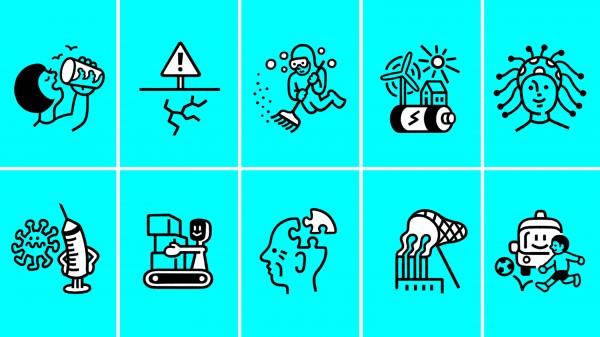
Ten big global challenges technology could solve


Renewable energy sources like wind and solar are becoming cheap and more widely deployed, but they don’t generate electricity when the sun’s not shining or wind isn’t blowing. That limits how much power these sources can supply, and how quickly we can move away from steady sources like coal and natural gas. The cost of building enough batteries to back up entire grids for the days when renewable generation flags would be astronomical. Various scientists and startups are working to develop cheaper forms of grid-scale storage that can last for longer periods, including flow batteries or tanks of molten salt. ... Pandemic flu is rare but deadly. At least 50 million people died in the 1918 pandemic of H1N1 flu. More recently, about a million people died in the 1957-’58 and 1968 pandemics, while something like half a million died in a 2009 recurrence of H1N1. The recent death tolls are lower in part because the viruses were milder strains. We might not be so lucky next time—a particularly potent strain of the virus could replicate too quickly for any tailor-made vaccine to effectively fight it.


Being an effective cybersecurity leader amid increasing pressure, expectations and threats

Being an effective cybersecurity leader means helping your staff avoid the burnout, guilt, and depression that comes from not getting the headcount needed, the funding for the new project, or worse yet, experiencing a data breach when the inevitable comes to pass. To lead effectively, you as a leader need to employ the principle of ensuring informed decisions happen and residual risk is accounted for and governed. The business doesn’t have to invest in every security solution available (in fact, doing so may impede their ability to effectively operate), so long as you have appropriately informed stakeholders of the bad outcomes that could come to pass from not choosing the more secure option, and having them accept the risk associated with such bad outcomes. Risk acceptance is the cybersecurity leader’s “get out of jail free” card – not in an “I told you so” way, but in a cooperative manner that helps the business view you as a partner, not an impediment, and the cybersecurity staff feel as though their concerns have been addressed.


Taking Sustainability a step further – Marginal Gains


Virtualisation and containerisation is the first step, but they talked in terms of using the whole chain of IT as a process with software defined architecture. You should be paying only for what you use, what you need. Interestingly, with their Greenlake product, that extends the OpEx pay-as-you-go consumption-based approach to on-premise hardware. That, in turn, extends HPE’s hybrid-cloud credentials and means better cashflow for their customers, and the ability to manage the peaks more easily. Capacity on demand in your data centre, as well as the public cloud. This approach to infrastructure goes hand in hand with the shift in focus of data and processing moving to the edge, where we need solutions that provide compute power at or near the source of where the data is generated by a mobile device, a machine on the shop floor or a sensor. This is vital for supporting IoT, for the requirements of autonomous vehicles in the field, or the needs of the smart city. Gartner predicts that 75% of data will computed at the edge rather than in the data centre by 2025, and maybe it’s coming even sooner than that!


Q&A on the Book What’s Your Digital Business Model

The first type of disruption happens when a new entrant—often a start-up like Airbnb—comes into an existing market and offers an exciting new value proposition. In banking, for instance, fin-tech start-ups have gone after profitable parts of banking’s business, like payments and loans. The second form of disruption comes from a traditional competitor within your industry, but that organization changes its business model to become a much more formidable competitor. For example, Nordstrom has evolved from a traditional department store into an attractive omni-channel business, combining the best of place and space. In our research we see industries like banking, insurance, retail and energy companies trying to find the perfect mix of place and space. The third form of disruption involved crossing industry boundaries. It’s what happens when challengers come from completely outside of your industry. For instance, Australian supermarket chain Coles has started selling home insurance, as well as offering other financial services.


6 Innovative Cities Encouraging Tech Innovation

cities
As of March, Shanghai became the world’s first district to use both 5G and a broadband gigabit network. Shanghai’s vice mayor Wu Qing made the network’s first 5G video call using a Huawei Mate X smartphone, which is the company’s first 5G foldable phone. The city’s ambitious project, which aims to build over 10,000 5G base stations by the end of the year, is backed by state run telco China Mobile. Shanghai has been dubbed ‘China’s Silicon Valley’, and is home to the likes of Tencent, Huawei and ZTE. Another recent development is the creation of the Shanghai Technology Innovation Board, created by the government to discover and nurture promising companies in a bid to compete with US tech giants. ... Otherwise known as the Motor City, Detroit has become almost synonymous with mobility solutions. The city is following in the footsteps of other US cities by taking its existing network of automakers and facilitating work on innovative travel and transport. Ford and General Motors are just two of the auto giants based in Detroit, both of which are steering towards autonomous vehicles. In 2015, the Mayor’s Office of International Affairs was created to attract foreign investment and nurture homegrown startups.


The Connection Between Strategy And Enterprise Architecture

Business capabilities are the link connecting the strategy and business model to the enterprise architecture and the underlying technology that executes the strategy. Understanding this link enables a company to align resources, people, and processes to transform itself in response to market dynamics, thereby maintaining a competitive edge. ... A business model is a description of how an enterprise creates and captures value. It describes the customer value proposition. How the company will organize its resources and partner network to produce that value. And how it will structure its revenue streams and cost structure to fund the operations and capture value to its stakeholders. An organization can be described through the nine elements or building blocks of the business model canvas. The business model canvas helps you describe, map, discuss, design, and invent new business models.


Codementor, a startup that connects developers with questions to developers with answers, has attempted to narrow those choices down by creating a list of the worst languages to learn. The 'worst-to-best' ranking creates scores using community engagement, growth, and the job market to determine the list.  Last year the company ruled that Dart, Objective-C, CoffeeScript, Lua, and Erlang were the top five languages not worth learning. This year Codementor focused on "which languages you probably should not learn as a first programming language". For this reason, it excluded the top three most popular languages, including JavaScript, Python, and Java.  The company's data suggests the languages to not bother learning this year are Elm, CoffeeScript, Erlang, and Perl.  Somewhat surprisingly, Kotlin, a popular language for building Android apps, rose from 18th to 11th place on Codementor's worst-to-best list. Microsoft-owned code-hosting site GitHub crowned it the fastest-growing language of 2018 due to the massive growth in projects written in Kotlin.


What Does It Mean To Be A Data-Driven Enterprise Today?

It’s no secret that AI and machine learning have become the top wish-list items among CIOs and CEOs. However, the real potential of AI can be reached only if your organization’s data, which AI relies on, is accurate and business-relevant. You need to trust the source of the data being used to feed AI programs, and the data must be governed properly across the organization. This fundamental piece of the AI and machine-learning puzzle is critical for allowing AI and machine-learning technologies to “learn” how to evolve intelligence and make smarter recommendations for the business. It is also based on the premise that knowledge from the past and present must be preserved, as it ensures valuable reuse and time to market. We’ve seen many examples of CEOs struggling to understand which versions of their data are accurate due to poor data quality and governance. These companies need to establish a trusted source from which their data is managed through best-practice, automated governance, including standardizing data definitions and rules – part numbers, terminology, and so on. 


Enterprise vs. Solution vs. Infrastructure: Understanding the Different Technology Architectures

Enterprise vs. Solution vs. Infrastructure: Understanding the Different Technology Architectures
Enterprise architecture (EA) aligns your organization's IT infrastructure with your overall business goals. It shows you how your technology, information, and business flow together to achieve goals. EA allows for analysis, design, planning, and implementation at an enterprise level. It perceives industry trends and navigates disruptions using a specific set of principles known as enterprise architectural planning (EAP). ... Solution architecture (SA) describes the architecture of a technological solution. It uses different perspectives including information, technical, and business. It also considers the solution from the point of EA. Enterprise architects are best known for taking the "50,000-foot view" of a project. A solutions architect zones in on the details.  ... Infrastructure architecture refers to the sum of the company's hardware and IT capability. Achieving synergy between all the devices is its overarching goal. In the past, infrastructure architecture was the focal point for security. Today, it goes further. It's a structured approach for modeling an enterprise's hardware elements.


Riding the K-wave: Disruptive innovation in the age of sustainability

Disruptive innovation happens more than we realize, and a good question is why we’re routinely late to realize its effects. Schumpeter got some of his insights from the work of a Russian economist, Nicolai Kondratiev, who was an advisor to Vladimir Lenin. Kondratiev’s job was explaining capitalism to the Bolsheviks. During Lenin’s life, Kondratiev had a respected position in academic economics; when Stalin came to power after Lenin’s death, Kondratiev’s theories didn’t fit Stalin’s world view and he was liquidated. Kondratiev observed that really big disruptive innovations begin a 50- to 60-year economic cycle that Schumpeter later called K-waves in his honor. The idea of a K-wave is simple: For the first 25 to 30 years after its introduction, a technological disruption expands the economy, creating jobs and whole industries as massive amounts of capital flow into that new industry. The reason for expansion is simple. Very often a disruption is in high demand, but it requires some form of construction to diffuse the innovation throughout society.


Quote for the day:


"Leaders know the importance of having someone in their lives who will unfailingly and fearlessly tell them the truth." -- Warren G. Bennis