Daily Tech Digest - July 16, 2020

The Advancements In Real World Artificial Intelligence

Ongoing advances in artificial intelligence have come essentially in zones where information researchers can copy human recognition capabilities, for example, perceiving objects in pictures or words in acoustic signs. Figuring out how to perceive designs in complex signs, for example, sound streams or pictures, is amazingly incredible—ground-breaking enough that numerous individuals wonder why we aren’t utilizing deep learning procedures everywhere. Pushing ahead, as groups become adjusted in their objectives and techniques for utilizing AI to accomplish them, deep learning will turn out to be a piece of each data scientist’s tool box. Consider this thought. We will have the option to incorporate object recognition in a framework, utilizing a pre-prepared artificial reasoning framework. However, at long last, we will understand that profound learning is simply another tool to utilize when it makes sense. Now let’s explore how AI is benefitting the mankind and serving various fields like marketing, finance, banking and so on in the real world. Marketing is a way to glorify your products to attract more customers. In the early 2000s, in the event that we looked through an online store to discover an item without knowing its precise name, it would turn into a nightmare to discover the item.


Using the new normal to break from the past and innovate

Arguably, the big reason for the failure of online sales efforts by traditional automakers was the standard way of selling vehicles as good enough, and the effort and investment required to create an online channel wasn't perceived as worthwhile when no one (aside from Tesla) offered a similar capability. People had been buying cars through dealers for a century, and designing and implementing the technology, relationships, marketing, and execution required to create an effective online sales channel was perceived as throwing money at fixing a process that wasn't broken. A time-tested business model centered around driving customers into an enclosed space full of strangers and ideally getting them to sit in an even smaller space with a stranger, with no idea when that space was last cleaned, suddenly doesn't look that great during a pandemic brought about by a virus that spreads primarily through human proximity. Suddenly, dealer networks that saw vehicle delivery as "too expensive" and online or phone purchasing as distractions were able to implement these practices in a matter of weeks.


Businesses express concerns around ethical risks for their AI initiatives

“As organizations become more invested in AI, it is imperative that they have a common framework, principles and practices for the board, C-suite, enterprise and third-party ecosystem to proactively manage AI risks and build trust with both their business and customers,” said Irfan Saif, principal and AI co-leader, Deloitte & Touche. ”Our study results show that while early adopters of AI are still bullish, their competitive advantage may be waning as barriers to adoption continue to fall and more creative use of the technology grows. “In the era of pervasive AI, where capabilities are readily available, organizations should go beyond efficiency and push boundaries to create new AI-powered products and services to be successful.” — Nitin Mittal, principal and AI co-leader, Deloitte Consulting. As purchasing barriers have dropped and AI is more available, choosing the right technology is more important than ever. Those AI adopters surveyed tend to “buy” their capabilities rather than “build” them. To become smarter consumers, companies should evaluate the landscape, find the most advanced AI and integrate those technologies into their infrastructure.


Tech Sector Job Interviews Assess Anxiety, Not Software Skills

“Technical interviews are feared and hated in the industry, and it turns out that these interview techniques may also be hurting the industry’s ability to find and hire skilled software engineers,” says Chris Parnin, an assistant professor of computer science at NC State and co-author of a paper on the work. “Our study suggests that a lot of well-qualified job candidates are being eliminated because they’re not used to working on a whiteboard in front of an audience.” Technical interviews in the software engineering sector generally take the form of giving a job candidate a problem to solve, then requiring the candidate to write out a solution in code on a whiteboard – explaining each step of the process to an interviewer. Previous research found that many developers in the software engineering community felt the technical interview process was deeply flawed. So the researchers decided to run a study aimed at assessing the effect of the interview process on aspiring software engineers. For this study, researchers conducted technical interviews of 48 computer science undergraduates and graduate students. Half of the study participants were given a conventional technical interview, with an interviewer looking on.


Taking the Pain Out of Buying and Selling Data

Narrative’s SaaS-based application provides a platform to connect buyers and sellers. On the buy side, it helps companies acquire and integrate second- and third-party data, typically for the purpose of AI or analytics. On the sell side, companies that license Narrative’s software have a mechanism for reaching multiple buyers in an orderly and streamlined fashion. There’s a lot of work that goes into buying and using, on both sides of the equation, according to Jordan. There are all the usual questions about the format that the data takes (CSV, Parquet, JSON, etc.), the units of measurement. Once data scientists or analysts have studied a sample of the outside data and decided that it will work for their particular activity, then data engineers are called in to build the ETL pipelines to move the data, which can often take months. On top of the logistical questions, there are legalities that must be taken into account. Buyers and sellers both must take measures to assure that they’re not violating regulations for their particular geography. Finance teams typically gets involved to obtain usage data and make the payments. And if anything changes to the data or the contract, all the engineers, analysts, data scientists, lawyers, and finance folks get to drop whatever they’re doing and revisit the matter.


The Twitter mega-hack. What you need to know

There are a number of ways in which online accounts can get hijacked. These include, for instance: You might have made the mistake of reusing your Twitter password elsewhere on the net. If the other place suffers a data breach, a hacker might try to use that same password against your Twitter account. Two-factor authentication can help protect against this, but the best advice of all is to never reuse passwords; You might have had your password stolen from you via a phishing attack or keylogging malware. Two-factor authentication can also help protect against this. In addition, password managers and security software can also provide a layer of defence; You might have mistakenly told someone your password. Passwords should be secret. It’s hard to believe, however, that someone is big enough buddies with Bill Gates, Kanye West, Uber, and the rest to have had their passwords discussed over a candlelit dinner; Your account could be hijacked by a third-party app that is compromised. If the app had access to your Twitter account it could post tweets without your permission. An attack just like that happened to my Twitter account a few years ago.


How Chase is using AI to update banking

In response to the COVID-19 crisis, the U.S. government launched the Paycheck Protection Program (PPP) a couple of months back to ensure money continues to roll into the workforce — this, in turn, led to significant paperwork for banks, which have had to deal with a mountain of applications. The Small Business Administration (SBA) reportedly had to process 75 years’ worth of loan applications in just two months, which gives some idea as to the scale of this undertaking. Faced with such an unprecedented challenge, one that affected the lives and livelihoods of literally millions of Americans, Chase had to come up with a way of classifying documents that its customers were uploading as part of the PPP application process. It did so with a view toward helping its business banking division and underwriters wade through as many applications as possible. “They needed a way to understand what documents our customers were uploading, which we hadn’t yet tagged every single document as part of our workflow,” Nudelman explained. “So instead, after the fact, we worked with the people building the process and technology to use natural language processing (NLP) to ensure the documents that have been uploaded were tagged appropriately, which helps the underwriters’ ability to process those applications, getting customers their loans faster.”


Are we at the tipping point for global biometric payment card adoption?

Well, according to analysis from Goode Intelligence, there are several hurdles to overcome before biometric payment cards can be shipped to users in their millions – including cost and scheme certification. Despite being hailed as the future-tech solution to end our use of cash and cards, mobile payments haven’t reached anywhere near the expected level of public adoption in the UK. As of 2019, only around 19% of the UK population used mobile payments. Of course, the fact that Apple, giants in the payment app space, launched a physical credit card last year, and that Google is set to follow suit is further proof of the customer demand for bank cards over mobile payments. Therefore, it’s clear that the majority of the population still prefer the ease and familiarity of contactless cards. In fact, IDEX research found that six-in-ten (60%) UK consumers would not give up their debit card in favour of mobile payments, so it’s crucial that banks continue to evolve smart bank cards for the next generation of payments. Of course, cost caused by the manufacturing complexity of biometric payment cards has long been seen as the main barrier to mass adoption. 


Open Data Institute releases funding for ethical data sharing projects

Open Data Manchester (ODM) is also set to receive funding, but differs in its focus on helping hundreds of small-scale energy and eco-efficiency cooperatives share data among their members. “With regards to data, cooperatives are in quite a unique space because they’re intrinsically democratic organisations, so there will be some kind of representation or governance process where every member’s view should be represented at a board level, which means that you’ve got already got an environment of enhanced trust,” said Julian Tait, chief executive at ODM, adding that the relationship most people have with their current energy providers is “slightly begrudging” and one of “general dislike”. “If you’ve got an environment where you’re sharing data within the cooperative, they can understand my energy requirements [and]… you can start to design more responsive energy systems – that’s a bit harder to do, or it’s done very opaquely, in regards to the large energy providers.” He added the funding will help ODM work with Carbon Cooperative to design how a data cooperative could look.


Establishing Change Agents within Organisations Using Shu-Ha-Ri

How this can help us to achieve mastery of agile or business agility can be explained with a simple example. Let us take stand-ups, for instance. Shu: We need to make sure that teams start doing stand-ups and communicate the three basics of the stand up: what was done yesterday, what will be done today, and are there any impediments? We need to make sure that teams continue to follow this until they become good at it. Ha: At this stage, teams can come up with certain deviations, like adding "any other business" as a fourth thing or completely changing it to walking the board style to fulfill their requirements. Ri: This is the stage where the flow of information happens naturally and teams do not even need to think before doing stand-ups. This is the stage where this becomes an in-built thing for the team. So with these learning stages or paths, we can see organizations leaning towards agility by getting into the heart of agile by first collaborating to understand the vision and motive, then delivering with actual intent, and then introspecting and improving based on their needs. And when people in an organization start reaching towards the Ri stage, they are then ready to do different things.


Quote for the day:

"Leadership involves finding a parade and getting in front of it." -- John Naisbitt

Daily Tech Digest - July 15, 2020

The Microsoft-Android transformation is about to affect us all

Unlike a traditional Android app, though, a progressive web app can run on a computer, too — any computer — in that same single form. And that means it's way easier and more economical for developers to maintain a single progressive web app and have that one version of their program run everywhere. And if the end result is just as good as what you'd get with a native app — or close enough to seem practically the same, for most real-world purposes — then there's no real downside. It's a win-win-win, for developers, for gatekeepers like Microsoft and Google, and for us feline-impersonating land-people who rely on Android phones. For Microsoft, the move means more and more apps could run in identical forms on both Windows and Android — and thus despite the fact that it's venturing into uncharted territory by fully embracing Android and steering folks into its own mini-ecosystem within Google's universe, it can begin to offer a surprisingly consistent experience for anyone embracing a mix of Android and Windows. For Google, it means the amount of exceptional Android apps will only continue to grow and become more diverse. And remember, it isn't just about Android for Google, either; the company is equally interested in pushing Chrome OS forward


Detecting and Resolving Database Connection Leaks with Java Applications

Here removeAbandoned when set to true to try to remove abandoned connections and return them to pool again in configured removeAbandonedTimeout in seconds. Setting this to true can recover database connections from poorly written applications that fail to close a connection. The logAbandoned property is also very important as it can log the complete stack-trace which might be leaking the connection, thus can be very useful to identify connection leak in application. Stack-Trace is logged in terminal itself. In Red Hat Fuse we can see these stack-traces logged by logAbandoned in karaf terminal and not in application log or fuse.log file. All these properties are mentioned commons-dbcp doc. The timeBetweenEvictionRunsMillis property can also be helpful, it is set in milliseconds. When set than a separate thread will run to remove idle object evictor thread in every configured millisecond. Its default value is -1 which means this idle object evictor thread wouldn't be active and running and only when set to a positive integer then it would be effective.


Hack Brief: Microsoft Warns of a 17-Year-Old ‘Wormable’ Bug

While those organizations rarely expose their Windows DNS servers to the internet, both Check Point and Williams warn that many administrators have made architectural changes to networks—often questionable ones—to better allow employees to work from home since the beginning of the Covid-19 pandemic. That could mean more exposed Windows DNS servers that are open to full remote exploitation. "The threat landscape of internet-exposed things has risen dramatically" in recent months, Williams says. The good news, Check Point says, is that detecting SigRed exploitation of a Windows DNS server is relatively easy, given the noisy communications necessary to trigger the vulnerability. The firm says that despite the 17 years that SigRed has lingered in Windows DNS, it has yet to find any indication of an attack on its clients' networks so far. "We're not aware of anyone using this, but if they did, hopefully now it will stop," Herscovici says. But in the short term at least, Microsoft's patch could also lead to more exploitation of the bug as hackers reverse engineer the patch to discover exactly how the vulnerability can be triggered.


CIA behind APT34 and FSB hacks and data dumps

In an exclusive today, Yahoo News reported that the agency used its newly acquired powers to orchestrate "at least a dozen operations" across the world. The CIA was already authorized to conduct silent surveillance and data collection, but the new powers allow it to go even further. "This has been a combination of destructive things - stuff is on fire and exploding - and also public dissemination of data: leaking or things that look like leaking," a former US government official told Yahoo News. ... Citing former US officials, Yahoo News claims that such operations would have never been approved in the previous administrations, who have always been very cautious when attacking foreign adversaries, fearing blowback. However, in 2018, President Trump departed from the White House's classic stance on the matter and signed a document called a presidential finding, granting the CIA the ability to plan and execute covert offensive cyber operations under its judgment, rather than under the oversight of the National Security Council. The document effectively took the decision making and approval process from the White House and the National Security Council and placed it with CIA leadership in an attempt to expedite foreign hacking operations.


Why You Should Consider Blockchain As A Technology To Learn

The blockchain provides an ideal infrastructure for the universal application of cryptography, which can effectively promote the universal application of cryptography protocols. Their application can effectively protect personal privacy and business secrets, ensure the standard implementation of contracts and processes, strengthen trust and prevent fraud, and then the basic values of modern society: freedom, fairness and trust. ... The second-generation blockchain represented by Ethereum is equivalent to a computer where all nodes share state. On top of this infrastructure, smart contracts can code and automate complex business actions in a clear way. If the asset is digitized, the smart contract can automatically manage the digital asset according to a predetermined contract. Smart contracts promote the “code as law”. The biggest advantage of Ethereum is that it is a distributed consensus system without centralized control. In addition, because of the emergence of digital currency, we can use microeconomics to create a new system that subverts the tradition in a new way. The emergence of smart contracts provides an effective way for the blockchain to process data in a programmable and automated manner.


Juniper targets security portfolio at SASE race

Juniper uses AI-driven automation, insight and actions across the LAN, WLAN and WAN to optimize the end-to-end user experience, Madrid stated. This includes customized Service Level Expectations, event correlation across the LAN and WAN for rapid fault isolation and resolution, AI-driven support with proactive notifications and an interactive Virtual Network Assistant (VNA) called Marvis to provide recommended actions and/or keep the network humming autonomously, Madrid stated Juniper’s SASE plans come on the heels of recent announcements by other key players in what is expected to be a hot market. For example, VMware in June said it was advancing secure access for remote and mobile workers by mixing its Workspace ONE offering with its SD-WAN package. The resulting VMware SD-WAN Zero Trust Service promises to help enterprises handle growing distributed workloads for remote workers. The service also represents a big step toward SASE, the company said. “Speed and data are two of the most valuable business currencies in today’s rapid growth environment, both of which have rendered traditional security deployments insufficient and ineffective,” VMware stated.


How DigitalOps links together business models and digital platforms

“Step one is creating a shared and living ‘map’ of your business,” said Shearer. “We would recommend using Domain Driven Design, as it gives the DigitalOps team a good way to communicate with teams on important business elements, how they relate to one another, to users and to revenue. It also provides a pattern to follow when implementing new digital services. “Next you’ll need to determine the areas that are both mission critical and market differentiating. Everything else should be brought in or delivered with a partner. Focus on your core strengths and specialisms as this is where you stand the best chance of success. “Last but not least, this must be underpinned with a commitment to a culture of rapid innovation, with your users integrated into your product process. Without this, you simply can’t hope to succeed and good intentions can quickly turn into missed opportunities and lost competitive advantage.” Staying on the topic of culture within the workplace, White commented: “DigitalOps follows the same approach to other XOps approaches, such as DevOps, by focussing on the removal of barriers, silos and increasing collaboration between cross-functional teams.


Ensure remote users meet data protection standards

As measures to relax lockdowns are being delivered in phases, IT staff should recognize that the initial phase of business continuity has passed. The next phase requires a more measured approach. There was no time to train users and implement standard applications, but now administrators should audit all systems accessing corporate data and standardize on secure collaborative apps. This thorough approach is essential for remote data protection. IT administrators should contact users directly to ensure they are familiar with the standard work applications and processes. If administrators need to remove some consumer apps, they should explain why upending their established workflows is necessary. In many cases, these workers adopted new applications without much guidance. However, users will have to understand that the new best practices are the only way for IT to ensure data security going forward. Under no circumstances, however, should IT allow unsafe apps such as WhatsApp and Facebook Messenger to access business data; this is a direct threat to remote data security. Where users relied on personal devices for work, offer alternatives such as a unified endpoint management (UEM) policy with low restrictions.


Why the Merging of the DevOps Driven Cloud and Cybersecurity Will Create Dozens of New Category Leaders

The massive paradigm shift to cloud requires a very different skill set than on premises. Whereas once IT and DevOps were considered the foundation and cybersecurity was "a final 'check the box' for compliance", this model simply can’t exist in a dynamic cloud-based world. The acceleration with which remote and distributed activity is happening requires these two disciplines to mesh even faster. Everything that was once done on premise must now be done in the cloud and must be done using tools built and optimized for the cloud environment. That puts cloud-based cybersecurity innovators in a unique and valuable position of being revenue-generating quickly relative to other new categories, while simultaneously creating and defining a new space (cloud-first security products). ... Important to note the picks and axes of the cloud will continue to be dominated by a handful of the biggest tech companies in the world. Over the last decade, AWS, Microsoft Azure and Google Cloud Platform have grown to over $80B in annual cumulative revenue. The fast followers trying to take share in this area are not start-ups, but rather IBM, Oracle and Alibaba.


A Modern Data Storage Paradigm; Reducing the High Cost of Data Management

The new paradigm combines a file-based Primary Tier and an object-based Perpetual Tier. The Primary Tier (or Project Tier) holds all in-progress data and active projects. It is made up of flash, DRAM, and high-performance disk drives to meet the requirements of critical data workflows dependent on response time. The Perpetual Tier can accommodate multiple storage media types – including any combination of cloud storage, object storage, network-attached storage (NAS) and tape – to address data protection, multi-site replication (sharing), cloud and data management workflows. Data moves seamlessly between tiers as it is manipulated, analyzed, shared and protected. Implementing a proper storage management strategy within a two-tier paradigm allows organizations to address today’s most relevant data storage problems, while creating an environment open to future growth, development and change. Modern storage management software (SMS) maximizes efficiency by ‘smartly’ migrating data to the appropriate level of storage.


Quote for the day:

"Leaders need to strike a balance between action and patience." -- Doug Smith

Daily Tech Digest - July 14, 2020

Is The Business World Ready For A Chief Data Ethics Officer?

Data ethics is the new strategic imperative for leading corporations. In NewVantage Partners 2019 Executive Survey, more than half of executives — 55.7% — pointed to data ethics as a top business priority.  In a recent Harvard Business Review article, Tom Davenport and I discussed the “seven key types of Chief Data Officer (CDO) jobs”, noting that one of the emerging roles of the Chief Data Officer is as Data Ethicist. We noted that CDO as Data Ethicist is “growing in popularity, is [focused] on the ethics of data management, specifically on how it’s collected, safeguarded and shared and who controls it”. We confirmed that, “there is no doubt that consumers, regulators, and legislators are becoming more concerned about the misuse of data”. I spoke recently with Dennis Hirsch, Professor of Law and Director of the Program on Data and Governance at The Ohio State University Moritz College of Law, and research fellow at The Risk Institute, about data ethics and corporate responsibility in the context of today’s emerging algorithmic economy. Hirsch’s research is focused on how data analytics can pose ethical risks, and how leading companies are responding. 


SD-WAN and analytics: A marriage made for the new normal

“With the rapid increase in use of cloud services including video and IoT applications, which have only been accelerated with the ongoing global pandemic, wide area networking and remote connectivity stays a mission critical need for enterprise IT,” said Mehra. “Specifically, SD-WAN emerged as an evolution from enterprise routing and WAN optimization to address the needs of a more dynamic, intelligent architecture around these evolving application needs,” Mehra said. Probes or agents in vendors’ SD-WAN packages gather network, performance, security and other telemetry and combine it with historic customer and vendor-gathered data. Analysis of this data generates recommendations, policy changes or other actions to help IT keep the overall WAN environment humming. Analytics programs can also reduce the number of overall alerts IT teams deal with because the programs can focus on those things enterprises consider most important. Vendors such as Cisco, VMware, Versa, Silver Peak, Citrix, Cato and others have varying degrees of analytic sophistication in their SD-WAN packages, but all of them are marching toward supporting cloud-connected customers.


How enterprise IoT will evolve in a post-COVID world

With wired power and solar power both encumbered by significant drawbacks, businesses have been searching for a new solution: long-range wireless charging. Long-range wireless charging devices use infrared light or other physical phenomena to deliver power at a distance. Facility managers need only install the transmitter in a convenient area and then plug in or embed the receiver, which is roughly the size of a thumb drive, into their IoT device of choice. Long-range wireless charging can be installed from the ground up and that’s often the case when it comes to new construction. The technology is already being widely adapted. However, long-range wireless charging can often be retrofitted into operations that are already in place. This is especially important in light of the rapid changes enterprise-level businesses are expected to make due to the COVID-19 pandemic. IT specialists are looking for practical and flexible solutions that can enable them to resume operations safely. It should be noted, of course, that for all its benefits, long-range wireless charging may not be the solution for every business, just as IoT won’t solve every COVID-19-related challenge. Long-range wireless charging might have limitations in power delivery, range or other aspects. 


Drive to improve flash reliability

Originally, Nand flash was laid out in a plane, with each cell supporting two levels or a single bit, writes Alex McDonald, chair, SNIA EMEA. This is a single-level cell (SLC). Now we have progressed through MLC (four levels and two bits), through TLC (eight levels and three bits) up to 16 levels and four bits per cell (QLC), and improved densities by “building up” with a 3D stack of cells. The unit of write is not a single cell, but a page of cells of around 4KB. At a higher level, several tens of pages are organised into blocks. Prior to writing to pages, a block needs to be erased in preparation – program/erase (P/E) cycles. There are only so many P/E cycles that the flash can tolerate before failing. The advantages of QLC and 3D-based technology is their ability to build very high-density devices, with 32TB devices relatively commonplace. Generally, with more bits per cell, fewer P/E cycles can be performed. Interestingly, these limitations have not necessarily reduced the practical reliability of high-density Nand flash SSDs, because there are many techniques that are used to mitigate the possibly unreliable operation of single cells.


5 reasons AI isn't being adopted at your organization

It's important to remember that AI solutions are built by imperfect humans. We've seen examples of models that unintentionally generate discriminatory outcomes because the underlying data was skewed towards a particular segment of the population. Whether they resulted from bias in the dataset (e.g., exclusion or sample bias) or from humans' unconscious biases, these outcomes rightly erode trust in the technology and slow adoption.  We must balance freedom, ethics and privacy with efficiency and other benefits AI makes possible. This foundation for AI requires that people at all levels of an organization understand their role in building a governance structure. A strong governance system includes a set of ethical design and development principles that are regularly reviewed, creating a "feedback loop." It's important to consider these three points when developing a governance framework for AI: 1. Prioritize ethics early. 2. Build robust, transparent, and explainable systems that clearly yield an audit trail with the understanding as the models learn these can adjust. 3. Ensure measured, monitored roll-outs with robust governance and oversight, guided by clearly document processes.


Digital ecosystems: the future of insurance innovation

The insurance industry stands on the precipice of a paradigm shift. Digitisation is accelerating at pace, with new and innovative technologies, the greater use of data and a mobile-first approach not only changing how the industry operates, but also how customers expect it to operate. So too is the competitive landscape changing the playing field for those incumbents in the industry, forcing them towards a better defined, service-based approach similar to that being adopted by many of the larger players in the financial services industry. But, unlike that industry, the insurance sector has typically been slower to adopt digitisation. That has to change. Digital can no longer be the preserve of the innovators or pioneers in the sector, it should permeate every level of the competitive landscape if insurers wish to reshape their business in line with customer expectations. Indeed, according to research by Accenture that analysed close to 20 industries, insurance is among those most susceptible to future disruption. Accenture explained that, by 2022, carriers that are slow to respond to digital - or ‘hyper-relevant’ - competitors could suffer market share erosion close to $200bn and miss the opportunity to pursue new growth activities worth $177bn.


Data Management: An Unwitting Game Of Russian Roulette

The fear all senior management teams should have is that, in the race to quickly automate and complete the digital transformation journey, the post-COVID-19 reality of fiscally austere conditions will cause their organizations to skimp or ignore the unglamorous yet vital data management systems and disciplines. In the cases where this happens, those companies could face disastrous consequences, ranging from disruption of vital processes to high-profile breaches of privacy and/or security. Of one thing we can be sure: Without mastery of the data, the automated systems and their digital platforms will fail. However, the consequences of these failures are hard to predict. Some will be small and manageable; others could be severe. Effectively, companies without data discipline and strong data management will play Russian roulette. Every day they will spin the revolver chamber, put the gun to their proverbial head and pull the trigger. Eventually, a live round will go off. Despite the often frustratingly obscure nature of the problem and the need for expensive investments without clear paybacks, the need to take data management seriously and adequately provision it with talented teams backed with the necessary investments is paramount.


The Future of Remote Work, According to Startups

No matter where in the world you log in from—Silicon Valley, London, and beyond—COVID-19 has triggered a mass exodus from traditional office life. Now that the lucky among us have settled into remote work, many are left wondering if this massive, inadvertent work-from-home experiment will change work for good. In the following charts, we feature data from a comprehensive survey conducted by UK-based startup network Founders Forum, in which hundreds of founders and their teams revealed their experiences of remote work and their plans for a post-pandemic future. While the future remains a blank page, it’s clear that hundreds of startups have no plans to hit backspace on remote work. Based primarily in the UK, almost half of the survey participants were founders, and nearly a quarter were managers below the C-suite. Prior to pandemic-related lockdowns, 94% of those surveyed had worked from an external office. Despite their brick-and-mortar setup, more than 90% were able to accomplish the majority of their work remotely.


Lead Through Volatility With Adaptive Strategy

Strategy defines the long-term choices and actions the enterprise must take to create, deliver and capture value as envisaged in the business model. But the more time spent creating a plan, the less time there is to execute it, increasing the risk that the world has moved on and the plan is out of date. Implementing promptly also helps to surface the plan’s flaws and identify where to improve. Adaptive strategy doesn’t require perfect or complete information to execute; it uses available information to identify the most immediate actions required to be successful. Given today’s highly disrupted conditions, few enterprises can afford to wait a year to review strategy as was typical when business context moved slowly, and disruption happened infrequently, if at all. Some now review their strategy on a quarterly or even a monthly basis, but a truly adaptive enterprise monitors its business context on an ongoing basis, initiating a strategy review whenever new information is available to reframe the context.  The vision that guides an adaptive strategy can still be long-term and bold — but should be continually extended (not changed completely once every few years) to push the boundaries of what the enterprise must do to succeed.


5 Key Research Findings on Enterprise Artificial Intelligence

The pandemic has caused a drastic shift in consumer behavior as individuals stay at home and adjust their daily routines. Many travel, hospitality, and restaurant workers are out of work, and those fortunate to still be employed have shifted their spending patterns. This in turn has put pressure on AI and machine learning teams to ensure the accuracy of their predictive models in this changed environment, yet only 33% are monitoring their models in production. ... While the board of directors and C-suite almost universally appreciate the importance of AI (100% of respondents indicate is either or fully accepted as a strategic imperative), it does appear that there will be more pressure to show clear ROI and cut through the hype to provide a mature and sophisticated approach to AI. With 65% reporting that building a team with the right skills is a medium or large barrier for success, it’s likely that teams will continue to invest in efficient processes, streamlined development to production environments, and centralized approaches to AI governance and skills and resource management. 


Quote for the day:

"Think left and think right and think low and think high. Oh, the thinks you can think up if only you try!" -- Dr. Seuss

Daily Tech Digest - July 13, 2020

How to choose a robot for your company

There are lots of reasons a company might entertain automating processes with robots. According to Kern, the main reason is a labor shortage. Prior to COVID-19-related slowdowns, a competitive labor landscape and rising costs of living in many countries around the globe made hiring tough for skilled and unskilled positions alike. Automation, which often promises ROI efficiencies over time, particularly when it comes to repeatable tasks, is an attractive solution. "Robots can save money over time, not just by directly eliminating human labor, but by cutting out worker training and turnover," according to the Lux report for which Kern served as lead. "Most companies turn to automation and robotic solutions to deal with labor shortages, which is common in industries with repetitive tasks that have a high employee turnover rate. Companies also frequently use robots to automate dangerous tasks, keeping their employees out of harm's way." Post-COVID-19, there are also considerations like sanitation and worker volatility. As I've written, the perception of automation is changing almost overnight. Where robots were once, very recently, associated primarily with lost jobs, there's been a new spin in the industry to tout automation solutions as commonsense in a world where workers are risking infection when they show up at physical locations.


How the cloud fractures application delivery infrastructure ops

The traditional infrastructure team still operates ADCs and load balancers in the data center, while preferring the vendors they have worked with in the past. DevOps and CloudOps have taken control in the public cloud, choosing to use software and cloud provider services that are more integrated with their DevOps toolchains. This fractured operations model is problematic. Companies with divided Layer 4-7 operations are less likely to be successful with this infrastructure. EMA research participants also revealed why they feel a need to close this operational gap. First, 43% of enterprises said this situation has introduced security risks. In most enterprises, application delivery infrastructure is an important component of overall security architecture. Companies need to take a unified approach to network security. Research participants identified compliance problems (36%) and operational efficiency (36%) as the top secondary challenges associated with fractured operations. And 30% said platform problems -- such as issues with scale, performance, functionality or stability -- are a major challenge.


The enormous opportunity in fintech

Technology providers to specific areas of finance have created significant businesses. Across the insurance ecosystem, Guidewire, Applied Systems, and Vertafore capture $10 billion of value. BlackKnight, the leading analytics provider to the mortgage industry, is an $11 billion business. Are you thinking about managing financial documents for your public company? You may turn to Broadridge, which makes a pretty penny in this business, boasting a $13 billion market cap. While these are massive markets, it is not easy to disrupt incumbents. A combination of regulatory hurdles, entrenched behavior, low risk-tolerance, and the benefits of larger balance sheets have kept upstarts at bay for decades. However, as venture capital supports the ecosystem, modern technology creeps into the sector (cloud, APIs), connectivity and data exchanges improve, and consumers grow tired of incumbents, the tide continues to shift. This shift and the challenge to the status quo by fintech upstarts will have lasting effects. Even when incumbents acquire their biggest disruptors, such as Visa’s acquisition of Plaid, innovations pioneered by those startups become integrated into the system and help move the industry forward.


Somehow, Microsoft is the best thing to happen to Chrome

What strange times we live in. Who’d have thought that I’d be writing an article on how Microsoft is the best thing to happen to Google Chrome? A few years ago the idea of Microsoft getting involved in an open source project would cause a mixture of laughter and dread. You know… Microsoft, the foe of open source who had a CEO that once said that Linux was “a cancer that attaches itself in an intellectual property sense to everything it touches.” The company that couldn’t make a decent web browser to save its life. But, believe it or not, I really do think that Microsoft’s involvement has made Chrome a much better browser. ... Basically, since dropping its opposition to open source, and not only embracing it, but putting its money where its mouth is, the thought of Microsoft being involved with an open source project is no longer the stuff of nightmares. It’s proved to be a valuable contributor to the open source community already. But how does this affect Google’s Chrome browser? Well, ever since Microsoft stopped using its own web engine, EdgeHTML, for its Edge web browser, and instead built a brand-new version that’s based on Chromium, it’s been contributing a steady stream of fixes and new features to Chromium – and those have not just been benefitting Edge, but Chrome as well.


IBM just changed the automation game. Hello Extreme Automation

The technology provides a low code, cloud-based authoring experience for the business user to create bot scripts with a desktop recorder, without the need of IT. These scripts are executed by digital robots to complete tasks. Digital robots can run on-demand by the end-user or by an automated scheduler. Arguably, WDG is on a par with Softomotive – acquired by Microsoft for considerably more money. What is clear is these RPA firms are offering pretty much the same functionality for the basic scripting and recording.  WDG is focused heavily on quality customer service ops and is great at integrating with chatbots, digital associates and other AI tools. Pre-Covid, most RPA was focused on low-risk back-office processes, especially in finance. Now customers are desperate to automate the customer-facing and revenue-generating processes and need tools proven to work in the environments. Noone has a huge advantage in the CX automation space so this provides a greenfield opportunity for IBM. The WDG automation software sits under IBM Cognitive and Cloud giving it a broader playing field to compete with the likes of MSFT, Pega, Appian, and even ServiceNow. Arguably, this is the real play that excites IBM’s top brass.


The Importance of Domain Experience in Data Science

Restated — domain knowledge is the learned skill to communicate fluently in a group’s data dialect. Its component parts are: general business acumen + vertical knowledge + data lineage understanding. For example, a data scientist in people analytics requires a foundational knowledge of the business + human resources + the inner-workings of their company’s HR tools and processes which create the data they work with. Those processes and other inputs to the dataset are crucial. A data scientist can’t create meaningful insights before they understand what the data is saying today. Is it telling a story? Is it, or subsets of it, too polluted to use today? Are some data points proxies for or inputs to others? The more complex your business processes and associated data lineage, the longer your data dialect will take to learn. For digital native companies whose data collection is automated with intuitive dialects (i.e. a “click” is a “click”), domain knowledge can be developed much more quickly than for large, longstanding companies which have undergone transformations, acquisitions and/or divestitures. If you hire a data scientist, how long will it take them to learn your data dialect? And can you provide air cover for them to do so before applying pressure to produce “insights?”


Hiring developers: While coding is important, there are other things to consider

A recruiter can learn a lot about the candidate in that half hour, including any side projects they might be involved in or games they've written. These "are often a window into a developer's willingness to take initiative," Volodarsky said. Learning what a developer does in their spare time can also provide great insight into their personality, he said. "Hiring great coders is important, but you also want to collaborate with interesting people, too." When it comes to hiring freelance developers it's important that they understand both the code and the nuances of the business they're contracting for, and this will come through in that conversation over a falafel, or the like, he said. In terms of motivating factors, not surprisingly, an overwhelming 70% said they were looking for better compensation, while 58.5% said they want to work with new technologies, and 57% said they were curious about other opportunities. Close to 70% of respondents said they learn about a company during a job hunt by turning to reviews on third-party sites such as Glassdoor and Blind. However, a large number also said they learned from viewing company-sponsored media, such as blogs and company culture videos.


Is Singapore ready to govern a digital population?

Singapore over the past several years has invested significant resources towards becoming a digital economy, rolling out an ambitious smart nation roadmap, driving the adoption of emerging technologies, and overhauling its own ICT infrastructure. With the global pandemic now adding new impetus to digital transformation, the government has made a concerted effort to drive digital adoption deeper into the business community and local population. It established a new office to work alongside the business community and local population to push the "national digitalisation movement". Initiatives would include the deployment of 1,000 "digital ambassadors" to help stallholders and seniors go digital and setting up of 50 digital community hubs across the island to offer one-to-one assistance on digital skills. A new ministerial committee will also coordinate the country's digitalisation efforts and focus on priorities such as assisting people in learning new skills and galvanising small businesses to go digital. More funds and resources have been further directed to facilitate digital transformation initiatives.


AIOps tools expand as users warm slowly to autoremediation

AIOps has generated industry hype since 2017, as advances in machine learning algorithms prompted IT monitoring vendors to envision a new method of automation for their products. At the same time, complex microservices infrastructures became impossible to manage entirely by human hands alone. Since then, AIOps tools have grown more sophisticated, adding automated remediation features to event correlation and automated root cause analysis, and AIOps vendors that began in specialized areas have also broadened the workloads their tools can support. Most recently, those vendors include Epsagon, which emerged in 2018 with AI-supported distributed tracing for serverless environments and expanded in 2019 to include container and cloud workloads. It now offers AIOps features it calls Applied Observability, which automate menial incident resolution tasks in response to metrics and logs in addition to traces. Last month, Epsagon launched a partnership with Microsoft centered on Kubernetes environments after previously inking a deal with AWS focused on its Lambda serverless compute service.


How Microfrontends Can Help to Focus on Business Needs

The concept of building sites from small web applications integrated via hyperlinks is (still) very common. There have also been a lot of concepts of rendering pages from smaller, independent building blocks in the past, such as Java Portlets. Even if the term microfrontend nowadays is used to refer to modern JavaScript apps, there are multiple possible approaches. So, when I use it in this article I refer to an application that: is basically a JavaScript Rich Client (for example a SPA or a Web Component) that runs isolated within an arbitrary DOM node and is as small and performant as possible; does not install global libraries, fonts, or styles; does not assume anything about the site it is embedded in; especially it does not assume any existing paths, so all the base paths to assets and APIs must be configurable; has a well-defined interface consisting of the startup configuration and some runtime messages (events); should be instantiable; ideally inherits the shared styles from the site and ships only styles absolutely necessary to define its layout.


Quote for the day:

"Leadership is familiar, but not well understood." -- Gerald Weinberg

Daily Tech Digest - July 12, 2020

Study Reveals a ‘Skills Gap’ That Jeopardizes Future of Banking Workforce

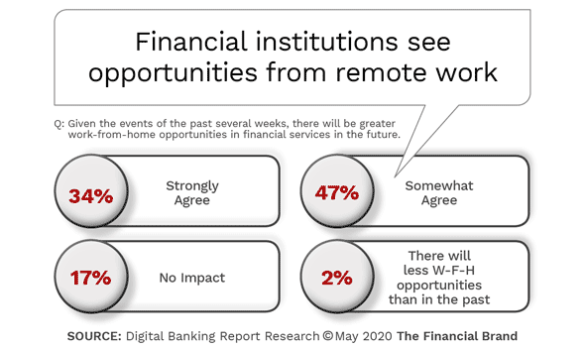
Over a period of only a couple months, entire workforces were required to familiarize themselves with digital tools which never were needed in a traditional work environment. At the same time, financial institutions were required to connect with customers using mobile apps, online tools and digital engagement capabilities that were foreign to many. The impact of these changes was felt most by the employees who had been with their financial institution the longest or were in areas of an organization that had not adjusted to recent marketplace realities. Many financial institutions responded to internal and external digital needs with mid-term solutions, understanding that significantly more is needed. The impact of COVID-19 has forced banks and credit unions to quickly assess the digital competency of their teams, while looking to internal training and the marketplace to provide longer term solutions. This comes at a time when every industry is looking to address a massive digital and technology skills gap. The research from the Digital Banking Report found that 72% of financial services executives believed there was either a moderate (37%) or significant (35%) skills gap. Less than three in ten thought there was only a minor or no threat.


Deployment and Productionization of Machine Learning Models

A machine infrastructure encompasses almost every stage of the machine learning workflow. To train, test, and deploy machine learning models you need services from data scientists, data engineers, software prog engineers, and DevOps engineers. The infrastructure allows people from all these domains to collaborate and empower them to associate for an end to end execution of the project. Some examples of tools and platforms are AWS(amazon web services, Google Cloud, Microsoft Azure machine learning studio, Kubeflow: Machine-Learning Toolkit for Kubernetes. Architecture deals with the arrangement of these components(things discussed above) and also takes care of how they must interact with them. Think of it as building a machine learning home where bricks, concrete, iron, are integral to the infrastructure, applications, etc. The architecture shapes our home by using these materials. Similarly, the architecture here provides that interaction among these components. ... In machine learning, for the given data different models are built and we keep track through version control tools like DVC and Git. Version control will keep track of changes made to the model at each stage and keep a repository.


Seamlessly Scaling AI for Distributed Big Data

Conventional approaches usually set up two separate clusters, one dedicated to Big Data processing, and the other dedicated to deep learning (e.g., a GPU cluster), with “connector” (or glue code) deployed in between. Unfortunately, this “connector approach” not only introduces a lot of overheads (e.g., data copy, extra cluster maintenance, fragmented workflow, etc.), but also suffers from impedance mismatches that arise from crossing boundaries between heterogeneous components (more on this in the next section). To address these challenges, we have developed open source technologies that directly support new AI algorithms on Big Data platforms. ... Before diving into the technical details of BigDL and Analytics Zoo, I shared a motivating example in the tutorial. JD is one of the largest online shopping websites in China; they have stored hundreds of millions of merchandise pictures in HBase, and built an end-to-end object feature extraction application to process these pictures (for image-similarity search, picture deduplication, etc.). While object detection and feature extraction are standard computer vision algorithms, this turns out to be a fairly complex data analysis pipeline when scaling to hundreds of millions pictures in production, as shown in the slide below.


‘Undeletable’ Malware Shows Up in Yet Another Android Device

While it was not immediately obvious that the trojan was present on the device, researchers were able to detect it given its similarity to another malware downloader. “Proof of infection is based on several similarities to other variants of Downloader Wotby,” Collier explained. “Although the infected Settings app is heavily obfuscated, we were able to find identical malicious code. Additionally, it shares the same receiver name: com.sek.y.ac; service name: com.sek.y.as; and activity names: com.sek.y.st, com.sek.y.st2, and com.sek.y.st3.” The app did not trigger any malicious activity when researchers analyzed the device, which they expected; however, the smartphone they examined also did not have a SIM card installed, which also could affect how the malware behaves, he said. “Nevertheless, there is enough evidence that this Settings app has the ability to download apps from a third-party app store,” he wrote. “This is not okay.” The other malware variant came preinstalled in the UL40’s Wireless Update app, which functions as the device’s main way of updating security patches, the operating system and other apps.


6 Coding Books Every Programmers and Software Developers should Read

Refactoring, Improving the design of existing code: This book is written in Java as it’s the principal language, but the concept and idea are applicable to any Object-oriented language, like C++ or C#. This book will teach you how to convert a mediocre code into a great code that can stand production load and real-world software development nightmare, the CHANGE. The great part is that Martin literally walks you the steps by taking a code you often see and then step by step converting into more flexible, more usable code. You will learn the true definition of clean code by going through his examples. ... The Art of Unit Testing: If there is one thing I would like to improve on projects, as well as programmers, are their ability to unit test. After so many years or recognition that Unit testing is must have practiced for a professional developer, you will hardly find developers who are a good verse of Unit testing and follows TDD. Though I am not hard on following TDD, at a bare minimum, you must write the Unit test for the code you wrote and also for the code you maintain. Projects are also not different, apart from open source projects, many commercial in-house enterprise projects suffer from the lack of Unit test.


How to become an effective software development manager and team leader

I learn by doing, and I learn from others. So first of all, I don't think anyone is born with these skills. I mean, some people are better communicators than other people, but a lot of the things that you actually have to learn like how to manage somebody, how to... the good news is it can be learned and the way I learned it is by doing and getting better every time I did it. But I was also fortunate that I was able to surround myself with really great people every step along the way, both in Drupal and at Acquia frankly. So surrounding yourself with experienced managers, or experienced leaders is very helpful and fast tracks that learning, right? ... I think about it almost everyday actually. But I prioritize it lower than a lot of other things that I do. Literally, when I wake up I try to think, "What should I do today that has the biggest impact on Drupal and Acquia?" It's almost never coding for me, unfortunately. I secretly hope it would be one day it's like, "Wow, go code. Go write this piece of code." But it usually involves unblocking other people or teams, or helping to fundraise for the Drupal Association right now. So the coding is often reserved for evenings and weekends. I like to dabble with code still.


Whiteapp ASP.NET Core using Onion Architecture 

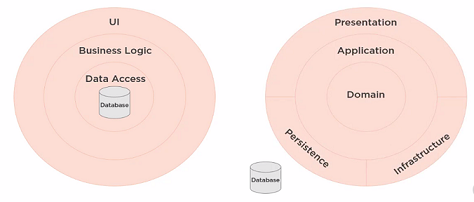
It is Architecture pattern which is introduced by Jeffrey Palermo in 2008, which will solve problems in maintaining application. In traditional architecture, where we use to implement by Database centeric architecture. Onion Architecture is based on the inversion of control principle. It's composed of domain concentric architecture where layers interface with each other towards the Domain (Entities/Classes). Main benefit of Onion architecture is higher flexibility and de-coupling. In this approach, we can see that all the Layers are dependent only on the Domain layer (or sometimes, it called as Core layer). ... Testability: As it decoupled all layers, so it is easy to write test case for each Components; Adaptability/Enhance: Adding new way to interact with application is very easy;  Sustainability: We can keep all third party libraries in Infrastructure layer and hence maintainence will be easy; Database Independent: Since database is separated from data access, it is quite easy switch database providers; Clean code: As business logic is away from presentation layer, it is easy to implement UI;


In the age of disruption, comprehensive network visibility is key

In an age of dynamic disruption, IT is increasingly challenged to maintain optimal service delivery, while implementing remote working at an unprecedented scale. It’s not surprising, then, that nearly 60 percent of study respondents cite the need for greater visibility into remote user experiences. The top challenge for troubleshooting applications is the ability to understand end-user experience (nearly 47 percent). “As remote working becomes the new norm, IT teams are challenged to find and adapt technologies, such as flow-based reporting to manage bandwidth consumption, VPN oversubscription and troubleshooting applications. To guarantee the best performance and reduce cybersecurity threats, increasing network visibility is now a must for all businesses,” said Charles Thompson, Senior Director, Enterprise and Cloud, VIAVI. “By empowering NetOps, as well as application and security teams with network visibility, IT can mitigate the impact of disruptive migrations, incidents and new technologies like SD-WAN to achieve consistent operational excellence.”


Prepare for Artificial Intelligence to Produce Less Wizardry

“Deep neural networks are very computationally expensive,” says Song Han, an assistant professor at MIT who specializes in developing more efficient forms of deep learning and is not an author on Thompson’s paper. “This is a critical issue.” Han’s group has created more efficient versions of popular AI algorithms using novel neural network architectures and specialized chip architectures, among other things. But he says there is a “still a long way to go,” to make deep learning less compute-hungry. Other researchers have noted the soaring computational demands. The head of Facebook’s AI research lab, Jerome Pesenti, told WIRED last year that AI researchers were starting to feel the effects of this computation crunch. Thompson believes that, without clever new algorithms, the limits of deep learning could slow advances in multiple fields, affecting the rate at which computers replace human tasks. “The automation of jobs will probably happen more gradually than expected, since getting to human-level performance will be much more expensive than anticipated,” he says.


Ransomware Characteristics and Attack Chains – What you Need to Know about Recent Campaigns

Ransomware is a type of malware that prevents users from accessing their system or personal files and demands a “ransom payment” in order to regain access. There are two types of campaigns for ransomware “Human-operated” and “Auto-spreading”, this article focusing on the human-operated campaigns. Human-operated campaigns tend to have common attack patterns which include: Gaining initial access, credential theft, lateral movement and persistence. For many of the human-operated campaigns, typical access comes from RDP brute force, a vulnerable internet-facing system, or weak application settings. Once attackers have gained access they can deploy a plethora of tools to get user credentials. After gaining credentials lateral movement takes place with either deploying a widely known commercial penetration testing suite called Cobalt Strike, changing settings of the WMI (Windows Management Instrument) or abusing management tools with low-level privilege. Finally, attackers want to keep a connection and make it persistent; this is done by creating new accounts, making GPO (Group Policy Object) changes, creating scheduled tasks, manipulating service registration, or by deploying shadow tools.


Quote for the day:

"Nobody in your organization will be able to sustain a level of motivation higher than you have as their leader." -- Danny Cox

Daily Tech Digest - July 11, 2020

Software as a Service (SaaS): A cheat sheet

Beyond reliability, and depending on the nature of your business applications, it is also vitally important to evaluate the capacity provided by your chosen ISP. Querying large databases or moving large media files will require more bandwidth than is typical for less-intense applications like email; however, even extremely large bandwidth may not be enough, if there are also latency issues. There are similar reliability concerns when choosing the service provider for the SaaS applications themselves. Business organizations have to think about the longevity of their provider, their commitment to security, their willingness to customize applications, and their plans for feature upgrades. SaaS requires a business to relinquish some control in order to reap the benefits of the distribution system. Relinquishing control may also cause problems when the SaaS provider updates certain application features that the business does not want changed. Some feature upgrades will break existing use cases, especially if the business is using a customized version of the software. Some SaaS vendors have been known to eliminate aggregately under used features from their software, which causes problems for businesses that choose to adopt those features.


APT Group Targets Fintech Companies

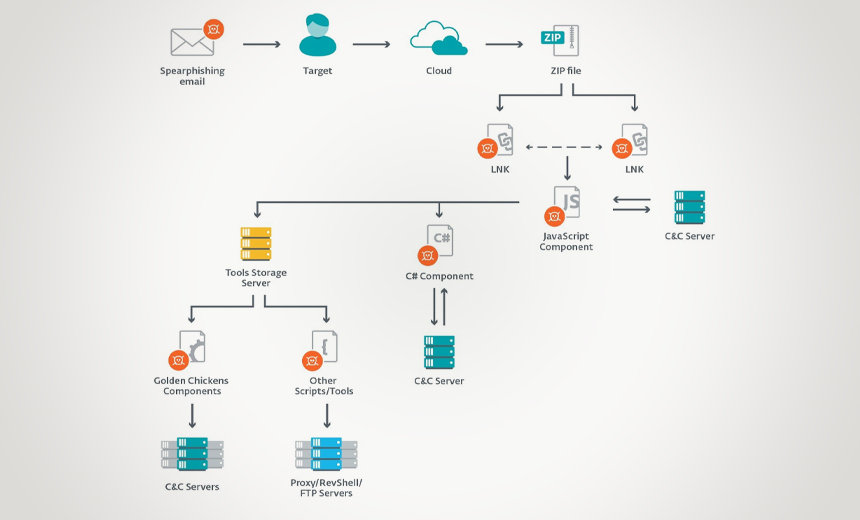
Once the targeted victim clicks on the LNK file to view one of the documents, the malware begins to load in the background and infect their device, according to the report. Once the attackers successfully infect devices and a network, the malware steals sensitive corporate data, such as customer lists, credit card information and other personally identifiable data, along with the firm's investments and trading operations data, the ESET researchers report. In the next phase of the attack, the JavaScript components deploy other malware the Evilnum operators purchased from other hackers, including code written in C# from the malware-as-a-service provider Golden Chickens, the report notes. The attackers also use Python-based tools in their toolkits, the researchers add. While the JavaScript component acts as a backdoor and handles communications with the command-and-control server, the C# code takes on other tasks, including grabbing a screenshot whenever the mouse is moved over a certain length of time, sending system information back to the operators as well as stealing cookies and credentials. Eventually, this process will kill the malware when the campaign is complete, according to the report.


Why Segmentation is More Effective Than Firewalls For Securing Industrial IoT

As we’re so accustomed to using firewalls in our everyday lives (particularly on our own private computers, tablets, and smartphones) it might seem intuitive to use a firewall as a safeguard for IIoT-connected devices as well. However, the choice isn’t quite so straightforward as it might at first seem. Internal firewalls are expensive and complex to implement. It could be that for genuinely reliable protection, you need to install a firewall at every IIoT connection point. This could mean that hundreds (perhaps even thousands) of firewalls are required. We’ve already discussed how businesses’ technology security budgets are often overstretched. Taking this into account, security spend needs to be very carefully calculated and targeted. Segmentation, on the other hand, makes it possible to keep particular types of devices siloed off in a certain segment, thereby enhancing security. It also helps to enhance visibility and simplify classification of different device types. Organisations can then create risk profiles and relevant security policies for device groups.


How data and AI will shape the post-pandemic future

The general public are particularly becoming used to AI playing a huge role. The mystery around it is beginning to fade, and it is becoming far more accepted that AI is something that can be trusted. It does have its limitations. It's not going to turn into the Terminator and take over the world. The fact that we are seeing AI more in our day-to-day lives means people are beginning to depend on the results of AI, at least from the understanding of the pandemic, but that drives that exception. When you start looking at how it will enable people to get back to somewhat of a normal existence―to go to the store more often, to be able to start traveling again, and to be able to return to the office―there is that dependency that Arti mentioned around video analytics to ensure social distancing or temperatures of people using thermal detection. All of that will allow people to move on with their lives and so AI will become more accepted. I think AI softens the blow of what some people might see as a civil liberty being eroded. It softens the blow of that in ways and says, "This is the benefit already and this is as far as it goes." So it at least forms discussions whenever it was formed before.


IoT: device management and security are crucial

Operational challenges abound from the beginning of the IoT journey to its end. For example, how do you efficiently roll out hundreds of thousands or even a million devices in a timely manner? Once up and running, device firmware and IoT application software will need to be updated – possibly multiple times – during the course of the device’s life. Additionally, the device should be monitored against established baselines. This creates the environment for an early warning system that can highlight possible software bugs or security exploits. Devices also may experience an “upgrade” during their life cycles, as new capabilities may be activated and enabled over-the-air, based on needs and business cases. Ownership changes require re-assignment of control, and at the end, devices need to be decommissioned and brought to end-of-life in an efficient manner. These development and deployment challenges are prompting companies to re-examine how they allocate resources more efficiently. For example, only 15% of overall IoT systems development time is IoT application development. But a full 30% is device-management issues (provisioning, onboarding, and updating devices and systems), while 40% is taken up by developing the device stacks.


More pre-installed malware has been found in budget US smartphones

While the app does function as an over-the-air updater for security fixes and as an updater to the operating system itself, the software also installs four variants of HiddenAds, a Trojan family found on Android handsets. HiddenAds is a strain of adware that bombards users with adverts. In order to verify where the malware originated from, Malwarebytes disabled WirelessUpdate and then re-enabled the app. Within 24 hours, four adware strains were covertly installed. As the malware on the UMX and ANS differ, the team wanted to see if there were any ties linking the brands. A common thread was the use of a digital certificate used to sign the ANS Settings app under the name teleepoch. Upon further investigation, the certificate was traced back to TeleEpoch Ltd, which is registered as UMX in the United States. "We have a Settings app found on an ANS UL40 with a digital certificate signed by a company that is a registered brand of UMX," Collier says. "That's two different Settings apps with two different malware variants on two different phone manufactures & models that appear to all tie back to TeleEpoch Ltd. ..."


Increasing demand for RegTech to Meet Regulatory Burden

The demand has grown exponentially high since the Global Financial Crisis of 2008, businesses need to comply with regulatory reforms related to Anti-Money Laundering (AML) and due diligence (KYC) requirements. The cost to comply with regulations was staggering, but the non-compliance costs more due to hefty amounts of fines. Digitization of regulatory compliance assists businesses in meeting the needs of regulation, that too, by cutting the cost. According to the study, the cost of compliance across all banks from 2014 to 2016 averaged approximately 7.0% of their noninterest expenses. RegTech startups are experiencing growth and investment as firms are realizing the need to capitalize on compliance efficiency. Businesses can use it for a competitive edge in the industry. There is great potential for powering the future of financial regulation by integrating RegTech. It has major implications as it provides reduced regulatory costs and improved operational efficiency. The main target of RegTech was the finance industry.


Why businesses are adopting AI to improve operations

AI has improved productivity in an array of sectors. AI-powered contact center software has allowed companies to become incredibly efficient. In a shop, a digital SKU system is far more efficient at keeping tabs on stock levels than a manual one. It can record and analyze the demand for certain articles. More will automatically get ordered. A fashion store can see when a garment is selling like hot cakes and get more before the trend runs its course. This maximizes profit on the item. For teleconferencing solutions or other software providers, one of the biggest problems faced is customer churn. Retention schemes try to contact as many customers as possible whose contract is due to run out. Discounts and other enticements are offered to remain. But some of those customers would have stayed anyway. Others, who were more likely to leave, may not have been contacted. Customer services can't get in touch with every single person whose contract is due to be up. What the firm needs to understand are the factors influencing people to stay or go. An AI program is able to analyze the data from thousands of customers. It works out the risk factors and pulls out a list of people most likely to leave.


10 Ways AI Is Improving New Product Development

From startups to enterprises racing to get new products launched, AI and machine learning (ML) are making solid contributions to accelerating new product development. There are 15,400 job positions for DevOps and product development engineers with AI and machine learning today on Indeed, LinkedIn and Monster combined. Capgemini predicts the size of the connected products market will range between $519B to $685B this year with AI and ML-enabled services revenue models becoming commonplace. Rapid advances in AI-based apps, products and services will also force the consolidation of the IoT platform market. The IoT platform providers concentrating on business challenges in vertical markets stand the best chance of surviving the coming IoT platform shakeout. As AI and ML get more ingrained in new product development, the IoT platforms and ecosystems supporting smarter, more connected products need to make plans now how they're going to keep up. Relying on technology alone, like many IoT platforms are today, isn't going to be enough to keep up with the pace of change coming.


CDO Leadership Skills That Matter

Persistence is a key trait of successful leaders—they don’t get demotivated too easily. Whereas some people retreat back to their caves after failed attempts to collaborate with the organization, choosing to focus only on internal marketing or just a few pilots, I find that leaders who are persistent have a seat at the strategic table with their peers, have a strategy, and have a roadmap. They’re constantly thinking through how their capabilities could be used across the organization. They’re not easily defeated when something doesn’t go right. Persistence is important because the failure rate of data strategies and data governance teams is high; you’re building in a function that you’re not consolidating under one person, one business function. You’re often using a distributed leadership and organization model, which takes hard work to set the right expectations and have ongoing communications. On a regular basis, you have to give different people the WIIFM, the goals and objectives, that apply to their particular situation, and try to drive adoption and change in a way that fits with how each team works.


Quote for the day:

"Humility is a great quality of leadership which derives respect and not just fear or hatred." -- Yousef Munayyer