Daily Tech Digest - May 27, 2019

No cloud required: Why AI’s future is at the edge
artificial-intelligence-503592_1280-geralt-pixabay
More compact and capable software is paving the way for AI at the edge as well. Google LLC, for instance debuted its TensorFlow Lite machine learning library for mobile devices in late 2017, enabling the potential for smart cameras to can identify wildlife or imaging devices to can make medical diagnoses even where there’s no internet connection. Some 2 billion mobile now have TensorFlow Lite deployed on them, Google staff research engineer Pete Warden said at a keynote presentation at the Embedded Vision Summit. And in March, Google rolled out an on-device speech recognizer to power speech input in Gboard, Google’s virtual keyboard app. The automatic speech recognition transcription algorithm is now down to 80 megabytes so it can run on the Arm Ltd. A-series chip inside a typical Pixel phone, and that means it works offline so there’s no network latency or spottiness. Not least, rapidly rising privacy concerns about data traversing the cloud means there’s also a regulatory reason to avoid moving data off the devices. “Virtually all the machine learning processing will be done on the device,” said Bier


DDoS: a weapon of mass disruption

The five most commonly used in attacks were the Domain Name System (DNS) protocol, the Network Time Protocol (NTP) based weapons, the Simple Service Discovery Protocol (SSDP), Simple Network Management Protocol (SNMP) and the Trivial File Transfer Protocol (TFTP), this last of which is a new entrant into the top five. So, as new protocols are being highlighted as the source of DDoS weapons, and the total number of attacks looks set to grow, what security measures can be taken? Cybersecurity companies compile millions-strong inventories of DDoS weapons, allowing blacklisted IP addresses to be blocked. Shin says that A10 Networks can create up to 96 million entries in a blacklist. “If you can get ahead and identify them, we can use this as a strategy to prevent DDoS attacks,” says Shin. A10 Networks and its partners use several approaches, including tracking bot-herders, analysing forensic data, scanning the internet for weapons signatures and tapping networks. Shin says it is important to have an “actionable defence”.


U.S. Airports Will Use AI To Scan 97% Of Passengers' Faces Within 4 Years

Empty airport terminal waiting area
The AI system has already been placed in 15 airports across the U.S. It has currently been tested on more than 15,000 flights and identified over 7,000 travelers who overstayed their visas. CBP calculates that 666,582 passengers who arrived by plane or boat overstayed visas in fiscal 2018. The main goal of the airport scans is to catch those who have overstayed their visas. For the past few years, overstayers have represented a majority of undocumented immigrants, larger than those who enter the country illegally. However, not everyone is thrilled about this venture. Critics argue that this use of AI is an invasion of privacy and it could be of concern how this information could be used outside the airport. With access to facial recognition from many people, it could be used by hackers or given to law enforcement and used unlawfully. The documents released by President Trump explicitly said there were no limits on how partnering airlines can use this facial recognition data. CBP did not answer specific questions about whether there are any guidelines for how other technology companies involved in processing the data can potentially also use it.


VMware talks up multi-cloud era, need to transform security

"How do you make 250 security products work [together]? It's insanity," Gelsinger quipped, noting that 80 percent of security budgets were being spent on detection and response, as opposed to prevention. He called for the need to help lower enterprises' attack surface and build the underlying infrastructure to prevent security incidents from happening in the first place.  Again, VMware was looking to provide the tools to help simplify this and enable its customers to better manage their security requirements. Last August, the vendor introduced VMware Secure State to automate configuration security and compliance monitoring in native cloud environments.  Rima Olinger, AWS's global alliance lead, also spoke at the forum to pitch the cloud platform's partnership with VMware Cloud, which she said had been adopted by enterprises across various sectors including financial services and healthcare.  VMware Cloud on AWS recently launched in Singapore and also was available in Sydney and Tokyo, according to Olinger.


Top 10 Cybersecurity Risks For 2019

2019 Cyber Risk Man Assessing Servers Blue Illustration Password
Unfortunately, Cloud storage is susceptible to abuse. A large risk factor is that Infrastructure as a Service (IaaS), which is responsible for functionality, has no secure registration process. What does that imply? Provided you have a credit card, you have the key to signing up and using the cloud as soon as you are done. The simplicity, in turn, makes the cloud vulnerable to spam mails, criminals, and other malicious attacks. To mitigate the situation, it is advisable that cloud service providers develop authentication and registration processes. Additionally, they should have a way of monitoring credit card transactions. A thorough evaluation of network traffic is also crucial in eliminating cyber abuse. ... Shadow IT is software used within an organization, but not supported by the company’s central IT system. What causes a breach in shadow IT is the fact that the risk of data loss does not receive much attention when it comes to data backups. More so, there is no control over who gets to access the data. Also, the backup and recovery processes have no one to monitor.


CMO & CIO Collaboration- Integrating The Best Of C-Suite Management


To achieve new pinnacles of customer delight, the CMOs and CIOs know that it’s time for the collaboration. Mature collaborations follow similar paths of evolution, transitioning from a role-specific focus to broader internal partnerships to integrated teams. As the data grows in an enterprise, the CMOs are turning to the CIOs to make sense of this information with a common goal to increase the revenue in the dynamic competitive era. The CIOs have a continuous role to play to turn new technology into revenue. They need the CMOs to help them meet the customer’s demand for this intelligent information. Thus, the CIOs and CMOs need to work together, for turning all this data into growth numbers. As the worldwide volume of data grows at least 40 percent a year, the CIOs and CTOs have come to a stage to be dependent on each other in much more collaborate manner than ever before. That’s why many CMOs are waking up to the fact that IT can’t be treated like a back-office function anymore; rather, the CIO is becoming a strategic partner who is crucial to developing and executing marketing strategy.


Most enterprise IoT transactions are unencrypted

network security / network traffic scanning
Researchers looked through one month’s worth of enterprise traffic traversing Zscaler’s cloud seeking the digital footprints of IoT devices. It found and analyzed 56 million IoT-device transactions over that time, and identified the type of devices, protocols they used, the servers they communicated with, how often communication went in and out and general IoT traffic patterns. The team tried to find out which devices generate the most traffic and the threats they face. It discovered that 1,015 organizations had at least one IoT device. The most common devices were set-top boxes (52 percent), then smart TVs (17 percent), wearables (8 percent), data-collection terminals (8 percent), printers (7 percent), IP cameras and phones (5 percent) and medical devices (1 percent). While they represented only 8 percent of the devices, data-collection terminals generated 80 percent of the traffic. The breakdown is that 18 percent of the IoT devices use SSL to communicate all the time, and of the remaining 82 percent, half used it part of the time and half never used it.


Beware of email lawsuit scam, an Android missed call con

A new kind of spam may be coming to Android phone users. The news site Bleeping Computer has a report that a security company has discovered a campaign that tries to trick users with a message that says “Missed call.” One version suggests you’re going to get a new iPhone, or there’s some sort of reward. The idea is to get you to click on an image or a link. Don’t fall for these scams. If you don’t know who a call is from, delete the message. Finally, some countries do a better job of filtering out malicious email than others. That’s one of the findings of a British information site called Merchant Machine.Thirty-six per cent of the email in Brazil carried malware, according to its research. Mexico was second with a rate of almost 30 per cent. By comparison, almost nine per cent of email in the U.S. was malicious, almost five per cent in China. The lowest was 3.6 per cent in the Middle East country of Oman. Still, all of the countries studied 60 per cent of their email had spam. The security industry and Internet service providers have to do better.


Fog computing vs. edge computing: What's the difference?


According to OpenFog, fog computing, which is also called fog networking and fogging, standardizes cloud extension out to the edge, encompassing all the space and activity between the two. Edge computing, in this case, is more limited in scope, as it refers to individual, predefined instances of computational processing that happen at or near network endpoints. With this paradigm, edge computing cannot create direct network connections between two endpoints or between an endpoint and an IoT gateway on its own; for that, it needs fog. ... Still other IT pros say the use of fog computing vs. edge computing depends specifically on the location of the distributed compute and storage resources. If processing capabilities are embedded directly within a connected endpoint, they call that edge computing. But if intelligence resides in a separate network node stationed between an endpoint and the cloud, such as a local node or IoT gateway, then it's fog.


Being an Ethical Software Engineer

What can we do if we care about ethics and want to bring it more into our practice? The main thing to do is probably to keep an open mind and keep asking questions. This is what it’s mostly about- asking questions. Thinking about what we do and how it would affect other people, and if we are happy with how it affects other people. We’re lucky because we’re in a needed profession, and we have the ability to make a stand and be heard. We need to raise those questions when we encounter them, start making these conversations, and even if we don’t have answers, at least bring it up, get people involved, raise awareness. Another powerful tool we have is choosing who we work for. There might always be some compromises when it comes to business priorities, but we can at least avoid helping the obvious ‘evil’ ones, companies that exploit their users or working in questionable fields. Early on in my career, I had a very short period of working for a company in the online gambling industry. The ease I felt leaving the job made it clear to me that feeling good about where you work and knowing that your efforts aren’t contributing to damaging society, is priceless.


Quote for the day:


"We cannot choose our external circumstances, but we can always choose how we respond to them." -- Epictetus



Daily Tech Digest - May 26, 2019

How is AI benefiting industries throughout Southeast Asia?

machine learning ai artificial intelligenceAI in agriculture is mainly used for precision farming, livestock monitoring, drone analytics and agriculture robots. Precision farming was the most widely used application in 2018, taking up about 35.6% of the global total. However, agriculture robots are expected to have a bigger share in the future. Speaking at a recent seminar titled “Connecting Manufacturing Industry with AI Technology”, Dr Siridej Boonsaeng, Dean of the College of Advanced Manufacturing Innovation, King Mongkut's Institute of Technology Ladkrabang, said that AI is presenting the agricultural sector in Thailand with great opportunities. "Self-driving farm vehicles and the process of sorting and grading agricultural products which involve complicated factors of random shape and variation are suitable tasks for AI to replace human when required," he said. During last year’s Grow Asia Forum, Vietnam’s Deputy Prime Minister Trịnh Đình Dũng called for the private sector to get more involved with cutting edge technologies in the 4.0 revolution in a bid to transform the agriculture industry of Southeast Asian countries.


Lack of Secure Coding Called a National Security Threat

The lack of secure coding is a pervasive and serious threat to national security, according to a new paper from the Institute for Critical Infrastructure Technology, a cybersecurity think tank. Rob Roy, an ICIT fellow who was co-author of the report, suggests in an interview with Information Security Media Group that an app standards body could play an important role in improving app security. "If there were some objective standards put in place that all software would have to abide by, then we could start to make progress," Roy says. "It may just be that there needs to be an objective standard ... and a legislative mandate that requires a certain level of assurance to provide an assured product." The "call to action" report, "Software Security Is National Security: Why the U.S. Must Replace Irresponsible Practices with a Culture of Institutionalized Security," discusses systemic issues with the software development landscape and what needs to be done to rectify the problem of negligent coding. But solving the problem won't be easy, given the problems of speed-to-market pressures and the sheer number of IoT devices being produced, the report notes.


Telangana launches draft Blockchain Policy

Telangana
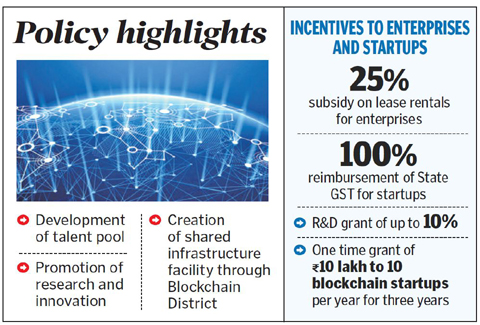
According to the draft framework, the Blockchain District will house all major blockchain technology companies; will have a huge incubator and a world-class facility for promoting research, innovation and industry collaboration. This one-of-its-kind initiative aims to put all blockchain companies based out of Hyderabad at a strategically advantageous position globally. The major highlights of the draft policy include the development of talent pool by collaborating with industries; creation of shared infrastructure facilities that can be used by startups, industry, academia and communities; promotion of research and innovation and enable collaboration and focus on community building. Other than these, the policy also looks at providing incentives and subsidies to enterprises, startups and other entities. While for enterprises, 25 per cent subsidy on lease rentals and 50 per cent subsidy on exhibition rentals will be provided, startups will get 100 per cent reimbursement of State GST, R&D grant of up to 10 per cent, one time grant of Rs 10 lakh to 10 blockchain startups per year for three years and patent filing assistance.


uncaptioned
China's cybersecurity move is designed to both echo and address the U.S. sanctions against Huawei, as well as the country's leading surveillance equipment makers, including HikVision and Dahua. Under the new terms of reference, organizations within the country including network operators, IT services providers and even financial services companies, would need to conduct "comprehensive analysis and evaluation of risks brought about by national security." Nick Marro, a Hong Kong-based analyst with The Economist Intelligence Unit, told SCMP that "the regulatory opacity means that officials have quite a lot of flexibility in how they want to implement this - meaning it could be applied to U.S. firms in a way that embodies ‘qualitative measures’ as part of China’s trade war response." The goal, claims the Administration in its consultation document, is to "promote the application of advanced technologies, enhancing fairness and transparency, and protecting intellectual property rights." The Central Network Security and Informatization Committee "will take the national lead."


E-Commerce Skimming Attacks Evolve Into iFrame Injection"What we notice are new fields to enter credit card data that did not exist on the left (untampered form)," Segura writes in a blog post. By itself, this may not be out of the ordinary since online merchants do use such forms - including iFrame - as part of their checkout pages." Essentially, the iFrame jumps ahead in line. Although all PHP pages within the e-commerce site were infected, Segura says that the iFrame would only be triggered "if the current URL in the address bar is the shopping cart checkout page (onestepcheckout)." Apparently to help the malicious code avoid detection, "some extra checks (screen dimensions and presence of a web debugger) are also performed before continuing." The JavaScript that draws the iFrame comes from a domain, thatispersonal[.]com, which is hosted in Russia, Segura writes. Another script is used to process and validate the data. Once the victim enters their card details, the "data is sent via a POST request to the same malicious domain in a custom-encoded format." Finally, after that occurs, the user does get directed to the proper PSP, where they can pay.


Why Blockchain-based Governance Requires In-Person Identity Verification

Any system of governance is vulnerable to this, so designing one that is “collusion-safe” is critical. Easier said than done because there is another component to the game theoretical design of “collusion-safe” design. It relates to identity. That second part is “identity-free.” If everyone in the system is anonymous, that makes collusion much, much more difficult. Imagine how difficult it would be for OPEC to exist if no one knew who the producers of oil were. Identity-free systems, however, bring up another issue. They are vulnerable to manipulation by mechanisms in a number of ways such as as bribing. You can read through the whole post, but the net of it is that in Vitalik’s mind, it is just not realistic to have a system that is both collusion-safe AND identity-free. It won’t work. Since compromising on collusion-safety is a non-starter, identity must be a key fixture. Furthermore, Vitalik suggests that the only realistic solution for identity is, ironically, in-person verification. At the end of the day, you need to show up and prove you are who you say you are.


Deep learning explained

Deep learning explained
While you could write deep learning programs from first principles, it’s far more efficient to use deep learning frameworks, especially given that they have been optimized for use with GPUs and other accelerators. The pre-eminent framework is TensorFlow, which originated at Google. The favored high-level API for TensorFlow is Keras, which can also be used with other back-end frameworks. PyTorch, from Facebook and others, is a strong alternative to TensorFlow, and has the distinction of supporting dynamic neural networks, in which the topology of the network can change from epoch to epoch. Fastai is a high-level third-party API that uses PyTorch as a back-end. MXNet, from Amazon and others, is another strong alternative to TensorFlow, with a claim to better scalability. Gluon is the preferred high-level imperative API for MXNet. Chainer, from IBM, Intel, and others, was in some ways the inspiration for PyTorch, given that it defines the neural network by run and supports dynamic neural networks.


AI and machine learning driving skills revolution in business intelligence

AI and machine learning driving skills revolution in business intelligence image
An analyst’s role has become elevated over time, delivering a much more integral business impact. The research found a marked rise in a need for business skills (up 76% in the last five years versus 2009-2014), problem-solving (112%), and verbal communications skills (19%). Meanwhile, the need for Microsoft Excel (-49%), along with quantitative (-69%) and data analysis (-16%) skills, have all fallen considerably. Interpreting the results, Sir Cary Cooper, professor of organisational psychology at Alliance Manchester Business School, said: “In the future, the business analyst will be a different person. With AI and machine learning picking up mundane number-crunching work, the role now requires more innovative and original thinking. “This poses a challenge for employers in making sure they have people with the right skills in their workforce. As new technology comes into play, employers will need to re-evaluate the skills of their employees and develop training and recruitment practices that can make the most of the opportunities available.


Why office spaces should include Wi‑Fi‑enabled buses


If enough businesses were to offer such services, the environmental benefit could be tremendous. Cars generally emit around 0.7 pounds of carbon dioxide per mile; in heavy traffic, that can go up to two pounds. With 50 seats, the bus could prevent up to 100 pounds of carbon dioxide emissions for every mile of its route. Now imagine that such services would utilize the electric-battery buses that are slowly beginning to roll out on the roads. One study has found they’re 2.5 times cleaner than diesel buses on average. And in areas where hydro, wind, and solar account for a great deal of electricity, like the West Coast, the fuel powering these buses could be largely free of emissions. Of course, some employees might regard this as simply one more benefit — like the provision of free food and snacks on-site — aimed at tethering people more closely to their offices and promulgating an always-on culture. And that danger certainly exists. But the power of Wi-Fi-enabled buses lies in the option that it offers to employees. It’s a way to spend part of a standard workday, not extra hours in addition to one.


How Security Vendors Can Address the Cybersecurity Talent Shortage

While most efforts to address the talent shortage are centered on expanding technical skills to fill cybersecurity jobs, we need to be aware that the cybersecurity skills gap goes far beyond the job market for cybersecurity professionals. One of the biggest cyber-risks in today's workplace is a general lack of awareness of even the most basic attacks, such as phishing emails and other social engineering techniques. And that is due to a failure in understanding that cybersecurity is everyone's job, and organizations need training and education programs that address many different audiences. What cybersecurity vendors are usually quite good at is creating training programs to equip customers and partners with the knowledge and skills required to operate their own products. This is certainly critical as cybersecurity solutions become more sophisticated.  ... Formal programs are a necessary element to filling the skills gap, but a comprehensive training and education strategy must include strategic partnerships within government, academia, and NGOs.


Quote for the day:

"Real leadership is being the person others will gladly and confidently follow." -- John C. Maxwell

Daily Tech Digest - May 25, 2019

MuddyWater APT Group Upgrades Tactics to Avoid Detection

MuddyWater APT Group Upgrades Tactics to Avoid Detection
In a blog posted Monday, Cisco Talos researchers write that they have "moderate confidence" a new campaign called "BlackWater" is tied to MuddyWater. That campaign, which is mainly focused on targets in Turkey, shows that the group is changing its preferred tactics, techniques and procedures to help avoid detection and bypass certain security controls, the researchers say. And while avoiding endpoint detection helps improve this group's overall operational security, the main goal of BlackWater is still to plant a PowerShell-based backdoor within a target's network and gain remote access, the researchers note. "Due to the relation to MuddyWater and that actor's previous methods, we suspect the larger goal [of BlackWater] was cyberespionage," Matt Valites, threat research manager for Cisco Talos Outreach, tells Information Security Media Group. ... The group has also attempted operations in the U.S. and Europe as part of an ongoing espionage campaign, that report found.


Fintech in Brief: OCC Singles Out Financial Innovation as Special Risk Topic

The OCC noted that federal banks have adopted a wide variety of approaches to innovation by technology type and bank size. These approaches include pooling resources through industry consortia to collaborate and share costs associated with developing and acquiring new technologies; increasing reliance on third-party service providers or Fintechs; and a wait-and-see/slow-adopter strategy. The OCC cautioned against the latter approach because it can result in loss of customers or market share before banks can respond to the speed of innovation. It also noted that size alone might not be an advantage—although larger banks may have the financial resources to support technology investments, some smaller banks may find their businesses more agile and able to effectively adopt technology through Fintech collaborations. ... It also cited, among others, the burden of legacy technology systems, reliance on core processing firms, and resource limitations as drivers of higher strategic risk to the banking industry.


Shutterstock
The whole company, not just a few people on the same team, must unite to drive success. Unfortunately, most organizations are siloed, with functional areas and business units struggling to communicate, coordinate and collaborate in relation to transformation initiatives. It gets worse. The diverse tools, data repositories and workflows across disparate functions exacerbate enterprise disorganization, resulting in a work ecosystem that is largely analog and siloed. Hence, a relatively small portion of a knowledge worker’s time — 39% according to our study — is dedicated to their primary job duties. ... All enterprises have systems of record for critical functions. SAP and NetSuite provide financial systems of record. Salesforce provides a customer system of record. There are systems of record for other functions as well, such as IT and HR. However, ask any executive what their organization is working on at the moment and they’ll struggle to tell you the what, who and how much of a significant amount of corporate investment. Enterprises lack an operational system of record that acts as the authoritative source of truth for the organization’s work investments, progress and results.


AI better than humans at spotting lung cancer


In the current study, the AI provided an "automated image evaluation system" that accurately predicted the malignancy of lung nodules without any human intervention. The researchers compared the AI's evaluations with those of six board-certified U.S. radiologists who had up to 20 years of clinical experience. When prior LDCT scans were not available, the AI "model outperformed all six radiologists with absolute reductions of 11% in false positives and 5% in false negatives," report Tse and colleagues. When previous imaging was available, the AI performed just as well as the radiologists. Study co-author Dr. Mozziyar Etemadi, a research assistant professor of anesthesiology at Northwestern University Feinberg School of Medicine in Chicago, explains why AI can outperform human evaluation. "Radiologists generally examine hundreds of 2D images or 'slices' in a single CT scan, but this new machine learning system views the lungs in a huge, single 3D image," Dr. Etemadi says.


The Future of Digital Health Lies Beyond These Six Barriers

six barriers to digital health
The healthcare industry tends to be a highly risk-averse one. In some respects, this makes sense—after all, people’s lives literally hang in the balance. Companies and medical experts cannot expect patients to entrust their well-being to glitchy devices or experimental features; healthcare solutions must be complete and functional. It’s no wonder that 56 percent of survey respondents agreed that “healthcare is driven by proven outcomes, not good ideas.” But this cautious mindset does present an obstacle to the progress of digital health solutions. ... The truly successful people are going to be the ones who actually monitor the patient’s compliance, instead of wholly relying on adherence. The connection provides value when it actively monitors.  Offering new solutions in any industry poses a business risk, too. Our research shows that many connected health devices never even make it to market. Companies will hesitate to invest time and money into developing a solution that may never be profitable.


Data Was An Asset, Now It’s A Liability


Data has a half-life, which is to say it decays gradually and unpredictably. Consider home addresses: one in a million people will move home today, and more over a week, month, year, decade. Some will never move, but there’s no telling who is who. Life is unpredictable. The longer data sits on the compost heap, the more inaccurate it becomes and there’s precious little you can do about it. At some level the cost – and efficacy – of cleaning and refreshing it outweighs the value of an ageing database. Factor in the risk of a hefty fine and hoarding data really starts to look like an evolutionary cul-de-sac. The business holding the most data is the business sitting on the most risk, which means it needs to be the one spending the most time and effort on technical controls and policy protections. Finding ways to delete, destroy or delegate data ownership means you can sleep a little easier. After all, there’s no point breaking into an empty bank vault – why waste all that time and effort for such a small reward? There’s pragmatism on both sides of the law.


A Futuristic Reality: Harnessing The Power Of The Three Layers Of Machine Learning

Google Assistant can draw on voice command, as seen here at the Google I/O conference in 2018, with the help of machine learning techniques. (AP Photo/Jeff Chiu)
Media buzz aside, many fast-growing startups are taking advantage of machine learning (ML) techniques like neural networks and support vector machines to learn from data, make predictions, improve products, and enhance business decisions. Unfortunately “machine learning theater” – companies pretending to use the technology to make theirs seem more sophisticated for a higher valuation – is also on the rise. Undeniably, ML is transforming businesses and industries, with some more likely to benefit than others. Like any source of economic power, ML has the potential to fundamentally change what are considered to be core or non-core functions for an enterprise, challenging some prevailing “theory of the firm” assumptions. While harnessing ML has the potential to yield extraordinary economic power for companies, many machine learning businesses aren’t able to build sustainable “moats.”


CISOs need to unleash the power of storytelling to make cybersecurity real to boards, leadership

Security lock on computer data
CISOs and CIOs should provide board members with information that can help them make the best decisions around governance and senior leaders with the intelligence to make optimal management decisions. Many security leaders want to elevate the dialogue to help their leaders make informed decisions and set strategic direction. More than providing a briefing on cybersecurity, they want to have a dialogue. Many CISOs and CIOs interviewed for the report said their role is to make sure the risk gets escalated to the right level of leadership. A critical early step is to ensure the board and senior leadership agree on the "crown jewels": data and assets that are most in need of protection. A good report provides leadership with a better understanding of the organization’s current state of cybersecurity, including threats and vulnerabilities the security team is seeing as well as the near-term proactive steps being taken to mitigate those threats and a clear understanding of how those threats and vulnerabilities could impact business functions.


Google has revoked Huawei’s Android license

[Update 8: Removed from Android Enterprise Recommended] Google has revoked Huawei’s Android license
Users will not be able to just side-load APKs for these services because Google prohibits CTS-unverified devices from running its apps. Besides Google apps, all the others that use Google’s APIs, to facilitate log-in, for instance, will also be blocked on smartphones by Huawei and sub-brand Honor. For the existing Huawei devices, Google has confirmed users will continue to be able to update apps through the Google Play Store. However, the blacklisting also prohibits Huawei and Honor from sending out newer updates to their smartphones, and if it does, it will be forced to remove Google Play Services and Google apps from the existing devices too. ... Fundamentally, the only way Huawei can now continue using Android onto its smartphones is building its own custom version of Android using AOSP (Android Open Source Project) code, exactly how developers of custom ROMs do. Unlike custom ROMs, however, Huawei might not be able to strap GApps along with the package without going unnoticed by Google.


Cloud-Based EHR Vendor Slapped With HIPAA Fine

Cloud-Based EHR Vendor Slapped With HIPAA Fine
The Department of Health and Human Services says the settlement with Fort Wayne, Indiana-based Medical Informatics Engineering comes after an investigation of a breach discovered in July 2015. Hackers used a compromised user ID and password to access the electronic protected health information of approximately 3.5 million individuals, according to the HHS Office for Civil Rights, which enforces HIPAA. "OCR's investigation revealed that MIE did not conduct a comprehensive risk analysis prior to the breach," HHS notes in a statement. HIPAA requires entities to perform an accurate and thorough assessment of the potential risks and vulnerabilities to the confidentiality, integrity and availability of an entity's ePHI. The lack of such as risk analysis has been a common finding in OCR's breach investigations that have resulted in enforcement actions, such as settlements. "Entities entrusted with medical records must be on guard against hackers," says OCR Director Roger Severino. "The failure to identify potential risks and vulnerabilities to ePHI opens the door to breaches and violates HIPAA."


Quote for the day:


"Managers control. Leaders create commitment." -- Jonh Zenger


Daily Tech Digest - May 22, 2019


The Net Promoter Score (NPS), which has long been used to measure the loyalty of firms’ customers, is under fire for becoming the false god of corporate America. In a searing article, the Wall Street Journal last week labeled NPS “a dubious metric” — one that is routinely cited by CEOs in earning calls and that somehow, magically, never declines. “Much of Corporate America is obsessed with NPS,” declared the article, before going on to list many of the activities the measure is used to justify, from employee bonuses to executive compensation. NPS hasn’t been useless, though. We can thank it for underscoring the importance of customer satisfaction ever since it was introduced in 2003. But in 2019, executives should question its efficacy and seek something better and broader. There are at least three big reasons why. ... Since the introduction of NPS, customers’ expectations have soared and companies’ access to information about them has increased dramatically. Today, consumers expect next-day delivery of online purchases — with tracking and free returns. 


Deep learning has existed since the 1970s, but because of the lack of computational resources it was only possible to build and train very basic neural networks and the technology floundered for many years. Alex Krizhevsky, Ilya Sutskever, and Geoffrey Hinton changed this in 2012 when they demonstrated that it was now possible to train deep neural networks efficiently on a large data set by using GPUs. Their deep learning system was able to reduce the error rate by almost 50% — a very significant improvement — in certain image classification tasks. Since then, deep learning has begun to make a meaningful impact in many areas of industry. Today, image recognition by machines trained via deep learning performs better in some scenarios than humans– from classifying animals to identifying indicators for cancer in blood and tumors in MRI scans. Deep learning applications have also extended to speech recognition, autonomous driving cars and more. 


First, AI must the beneficial to humanity. It is essential to stress that AI must promote well-being, preserve dignity, and sustain our planet. The second principle is that AI must also not infringe on privacy or undermine security. Third, AI must protect and enhance our autonomy and ability to take decisions and choose between alternatives. AI must be our servant not our master. The fourth principle concerns justice or fairness. AI must promote prosperity and solidarity, in a fight against inequality, discrimination, and unfairness. Innovation should be inclusive and promote diversity as well as tolerance. Finally, we cannot achieve all this unless we have AI systems that are understandable in terms of how they work (transparency) and explainable in terms of how and why they reach the conclusions they do (accountability). There are other sets of principles which have been formulated by the OECD, the IEEE and many others, but the HLEG principles represent a convergence of ethical thinking and we believe are currently the best show in town. The G20 meeting in Osaka this year will be a good place to start, followed perhaps by incorporation in, or an annexure to, the Universal Declaration of Human Rights.


Demand for systems integration services soaring in New Zealand


In 2018, New Zealand’s IT services market grew 1.9% to reach $3.43bn. Managed services continued to account for the largest share of total IT services revenue. Chayse Gorton, IDC’s ANZ market analyst for IT services, said rather than build new applications from scratch, many Kiwi firms are tapping systems integration services to integrate software-as-a-service(SaaS) applications, as well as custom application development skills to modernise existing applications. Gorton added that as organisations shift from on-premise software deployments towards cloud-based SaaS models, the need for systems integration services will become imperative. ... In addition, many New Zealand organisations have taken a lift-and-shift approach to cloud software deployments. Although lift-and-shift cloud migrations can help to lower on-premise infrastructure costs, the cost benefits of the cloud may not be fully realised without re-architecting an application. Performance issues associated with the application may also crop up, according to IDC


Real-Time Data Processing Using Redis Streams and Apache Spark Structured Streaming


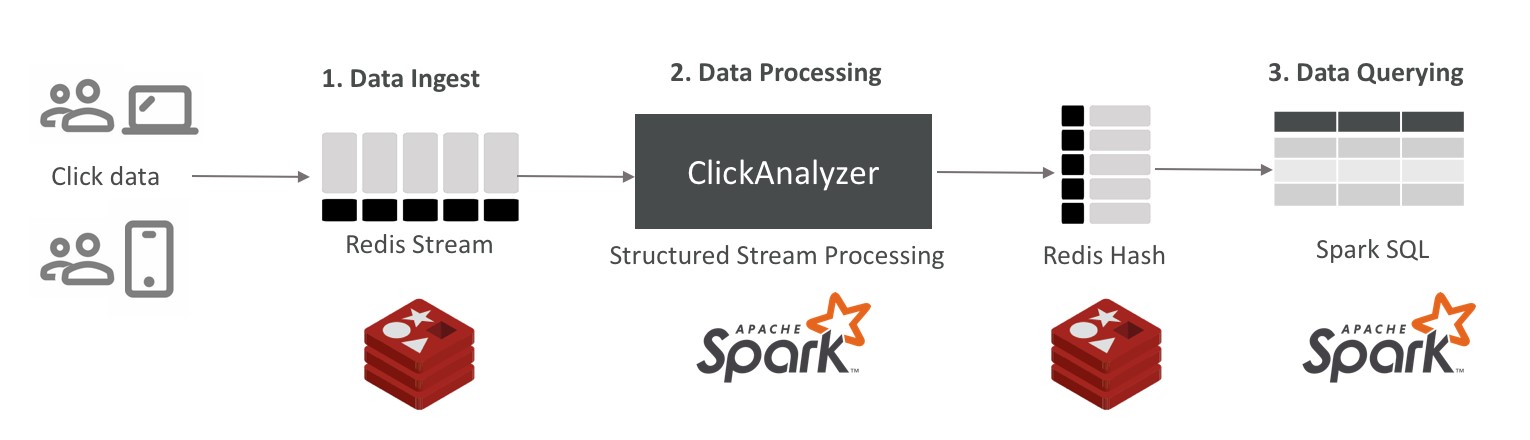
Structured Streaming, a new capability introduced with Apache Spark 2.0, has gathered a lot of traction in the industry and amongst the data engineering community. Built on top of the Spark SQL engine, Structured Streaming APIs deliver an SQL-like interface for streaming data. Initially, Apache Spark processed Structured Streaming queries in micro-batches, with a latency of about 100 milliseconds. Last year, version 2.3 introduced low latency (1 millisecond) "continuous processing", which is further fueling adoption of Structured Streaming. To work at the speed of Spark’s continuous processing, you need to augment it with a high-speed streaming database like Redis. This open source in-memory database is known for its high speed and sub-millisecond latency. Redis 5.0 recently introduced a new data structure called Redis Streams, which enables Redis to consume, hold and distribute streaming data between multiple producers and consumers.


Majority of new technology investments in UAE will be on data

null
The IoT investment in the UAE is expected to grow by 17% to $672.75 million compared to $574.89 million a year ago. The use cases are in transportation, smart grids, airlines, police using smart cameras, freight monitoring, production management, manufacturing operations, connected oil exploration, digital signage, and smart home and wellness sectors. With the introduction of 5G cellular network, more connected devices are expected to be connected to the network. IDC saw a big uptake of blockchain initially in areas like banking and financial services, trade financing, etc. In the last few years, Lalchandani said that adoption of blockchain by public sectors is gaining more traction and has seen use cases in education, property and utility sectors. What we are seeing is a high-value and low-volume transactions but in the next few years, we will see blockchain technology embedded into the computing. There will be some sectors which will leverage the blockchain technology as early adopters.


Speech and language: the crown jewel of AI with Dr. Xuedong Huang

At some point, let’s say computers can understand three hundred languages, can fluently communicate and converse. I have not run into a person who can speak three hundred languages. And not only machines can fluently communicate and converse, but can comprehend, understand and learn and reason and can really finish all the PhD courses in all subjects. The knowledge acquisition, reasoning, is beyond anyone’s individual capability. When that moment is here, you can think about how intelligent that AI is going to be. ... there are two levels of intelligence. The first level is really perceptive intelligence. That is the ability to see, to hear, to smell. Then the high level is cognitive intelligence. That is the ability to reason, to learn and to acquire knowledge. Most of the AI breakthroughs we have today, they are in the perceptive level such as speech recognition, speech synthesis, computer vision.


Huawei Gets 90-Day Reprieve on Ban

Huawei Gets 90-Day Reprieve on Ban
If the ban does take place, consumers could feel the effects of the actions against Huawei. For example, Huawei, which is the world's second largest maker of smartphones, will likely build its own version of Android based on the available open source code and without the influence of Google and its engineers, Bill Buchanan, a computer science professor at the University of Napier in Edinburgh, Scotland, has argued on Medium. This, in turn, could produce a host of security issues for Huawei smartphone users because they will be using a possible unsecured operating system without the benefits that come from Google's security expertise, says Priscilla Moriuchi, the director of strategic threat development at Recorded Future, a security vendor. "Based on the patterns of behaviors demonstrated by Huawei, we believe Google pulling Huawei's Android license will result in issues and delays for Huawei users, especially should Huawei use the open source version of Android," Moriuchi notes.


Enterprise IoT: Companies want solutions in these 4 areas

The state of enterprise IoT: Companies want solutions for these 4 areas
The IoT makes it possible to manage buildings and spaces more efficiently, with savings of 25% or more. Occupancy sensors can tell whether anyone is actually in a room, adjusting lighting and temperature to saving money and conserve energy. Connected buildings can also help determine when meeting spaces are available, which can boost occupancy at large businesses and universities by 40% while cutting infrastructure and maintenance costs. Other sensors, meanwhile, can detect water and gas leaks and aid in predictive maintenance for HVAC systems. ... Asset trackers can instantly identify the location of all kinds of equipment (saving employee time and productivity), and they can reduce the number of lost, stolen, and misplaced devices and machines as well as provide complete visibility into the location of your assets. Such trackers can also save employees from wasting time hunting down the devices and machines they need. For example, PwC noted that during an average hospital shift, more than one-third of nurses spend at least an hour looking for equipment such as blood pressure monitors and insulin pumps.


Data governance, digital transformation driving ITAM strategies

While ITAM moves from being an administrative activity to a governance function, it’s governance framework and the insights provided by ITAM data enable business units to source technology-based solutions effectively without being categorized as ‘shadow IT’ or ‘IT bypass.’ As organizations are focused on the value they drive from their investments rather than simply looking at costs, ITAM data must connect technology, business process and value. Detailed asset data is providing business unit stakeholders with a clearer understanding of IT services and the associated cost. Increased transparency is building trust between IT and the business. Industry data shows that the number of stakeholders involved in decision-making around technology investment has risen: according to a recent IDG study, the average buying committee now includes 21 influencers. Many of these decisions are being led from outside IT or even made without IT involvement.


Quote for the day:


"A leader is one who sees more than others see and who sees farther than others see and who sees before others see." -- Leroy Eimes


Daily Tech Digest - May 21, 2019

Top 10 Features to Look for in Automated Machine Learning


Following best practices when building machine learning models is a time-consuming yet important process. There are so many things to do ranging from: preparing the data, selecting and training algorithms, understanding how the algorithm is making decisions, all the way down to deploying models to production. I like to think of the machine learning design and maintenance process as being comprised of ten steps (see the diagram above). But, if I want to save time, increase accuracy, and reduce risk, I don’t manually go through the entire machine learning process in order to build my machine learning models. Instead, I turn to automated machine learning, using clever software that knows how to automate the repetitive and mundane steps, and freeing me up to do what humans are best at: communication, applying common sense, and being creative. And, to get the most out of automated machine learning, I want it to automate each and every one of the 10 steps. So, here’s my guide to what to look for in an automated machine learning system. ... Look for an automated machine learning platform that can automatically engineer new features from existing numeric, categorical, and text features. You will want a system that knows which algorithms benefit from extra feature engineering and which don’t, and only generates features that make sense given the data characteristics.


What is an enterprise wide agile transformation and why CIOs should lead it

digital transformation butterfly metamorphosis change gap
Agile practices change the nature of how teams define their customers, align on implementation strategies, debate priorities and commit to getting work done. Agile teams with a history of consistent delivery and demonstrating a strong partnership with their customers can change the culture. Instead of top-down priorities and timelines, teams align on strategic goals and produce business outcomes with incremental deliveries. CEOs are looking for smarter, faster and more innovative organizations that can propel growth, enable winning customer experiences, compete with analytics and drive efficiencies with automation. ... They want more efficient and higher quality operations, smarter sales teams closing more strategic deals and financial groups reporting and forecasting in near real time. And CEOs don’t know how to get there. They are increasingly relying on their leaders and staff to pave the journey for them. CIOs who have excelled at delivering results and culture change with agile practices in IT have the opportunity to extend the practice, culture and mindset as an enterprise wide way of operating.


Why Enterprise Blockchain Projects Fail

Social coordination marks a key point of failure for enterprise blockchain projects.
For one, there is a general lack of vision and understanding that plagues many blockchain projects. Blockchain, like other technologies, does not live in a vacuum devoid of any significant linkage to organizational and societal norms, design, dysfunction and purpose. When you add in years of pent up inertia and entrenched behaviors present in organizations and markets, means that just because something new can evoke positive change, does not mean it will. For this, a clear organizational vision and deep technical and strategic understanding of where blockchain is fit for purpose can go a long way. Unfortunately, many project leaders are hardly conversant in blockchain, let alone the other array of emerging technologies they must intersect with in order to extract maximum value and autonomy. Perhaps the biggest point of failure, is the general lack of cyber hygiene present in many early blockchain projects. The second major point of failure and perhaps the hardest to overcome is blockchain’s social, organizational and market coordination issue.


Redis-Based Tomcat Session Management

Redis is an in-memory open-source data project. In fact, it is the most popular in-memory database that is currently available. In particular, Redisson can be used as a Redis Java client. Redisson uses Redis to empower Java applications for companies' use. It is intended to make your job easier and develop distributed Java applications more efficiently. Redisson offers distributed Java objects and services backed by Redis. Redisson's Tomcat Session Manager allows you to store sessions of Apache Tomcat in Redis. It empowers you to distribute requests across a cluster of Tomcat servers. This is all done in non-sticky session management backed by Redis. Alternative options might serialize the whole session. However, with this particular Redis Tomcat Manager, each session attribute is written into Redis during each invocation. Thanks to this advantage, Redisson Session Manager beats out other Redis-based managers in storage efficiency and optimized writes. Tomcat Session Management, in this way, is used in the most ideal way possible.


Research indicates the only defense against killer AI is not developing it

Research indicates the only defense against killer AI is not developing it
If you’re thinking killer robots duking it out in our cities while civilians run screaming for shelter, you’re not wrong – but robots as a proxy for soldiers isn’t humanity’s biggest concern when it comes to AI warfare. This paper discusses what happens after we reach the point at which it becomes obvious humans are holding machines back in warfare. According to the researchers, the problem isn’t one we can frame as good and evil. Sure it’s easy to say we shouldn’t allow robots to murder humans with autonomy, but that’s not how the decision-making process of the future is going to work. The researchers describe it as a slippery slope: If AI systems are effective, pressure to increase the level of assistance to the warfighter would be inevitable. Continued success would mean gradually pushing the human out of the loop, first to a supervisory role and then finally to the role of a “killswitch operator” monitoring an always-on LAWS.


RegTech solutions can mitigate risk while aiding regulatory compliance

World Insurance Report 2019
While regulations continuously evolve; the costs of non-compliance are skyrocketing. Therefore, to adhere to stringent mandates and norms, banks and PSPs are turning to advanced technological capabilities for support. The result? Regulatory Technology (RegTech) tools, solutions, and firms are gaining mainstream popularity among financial institutions looking to redefine and streamline compliance processes across jurisdictions, lines of business and client bases. RegTech digital solutions collect intelligence through data analytics, predictive modeling, and statistical tools. This functionality is particularly important when it comes to proactively addressing multiple regulations versus taking a one-at-a-time approach that may result in several remediation measures. It is no surprise that firms’ RegTech spending is expected to average 48% annual growth over the next five years, expanding from $10.6 billion in 2017 to $76.3 billion in 2022. RegTech drastically improves the efficiency of compliance-related processes, data aggregation, data analysis, and tailored need-based offerings.


The Best Reason for Your City to Ban Facial Recognition


We’re not prepared as a society to ensure that facial recognition will be used responsibly and without discriminatory effects. We’re not prepared as individuals for a world in which we can be automatically tracked and identified wherever we go without our knowledge or consent. Even if we were ready, the technology itself isn’t: Experts both inside and outside the technology industry acknowledge that the artificial intelligence underlying facial recognition systems still struggles with accuracy, particularly when it comes to identifying the faces of people of color — which is to say, the people who are most likely to be affected by it. In a test last year by the ACLU, Amazon’s facial recognition software falsely matched the faces of 28 members of U.S. Congress to the mug shots of people who had been arrested. The mismatches disproportionately affected representatives of color. Perhaps most important, our governments and law enforcement agencies are not prepared to guard against abuses of the technology or the data it produces, to ensure it is kept confidential, or to constrain its use to the appropriate situations.


Building Digital-Ready Culture in Traditional Organizations

Recognizing the immense scalability of digital solutions, digital leaders typically focus on creating impact, assuming that profit will follow. At their best, these companies revolutionize how people and organizations interact, reinvent industries, and break the power of entrenched gatekeepers. The other three values support that mission. Speed helps companies stay ahead of competitors and keep up with rapidly changing customer desires. Openness encourages employees to challenge the status quo and work with anyone who can help them achieve their goals quickly. Autonomy gives people the freedom to do what’s right for the company and its customers without waiting for formal approval at every turn. Together, these values can foster an engaged, empowered workforce where employees feel a personal responsibility to constantly change the company — and often the world. The values of high-performing digital companies frame their essential practices: rapid experimentation, self-organization, data-driven decision-making, and an obsession with customers and results.


Why data governance matters – and who should own it?

tug of war
CIOs say that all that own, manage and/or rely on data to make decisions, should be involved in data governance. A financial services CIO said, “to use Gramm-Leach-Bliley Act (GLBA) terms, this includes data managers and regulation monitors. They must be at the table. In the end, this could include someone from just about every business area.” For many organizations, the legal department is a key stakeholder to align with and ensure the organization is meeting necessary governance requirements. Data can pose legal challenges. The longer you keep data, the more data can be used in e-discovery. While the business may want to keep data forever, there is a risk in not defining and enforcing data retention as part of a data governance program. Data governance stakeholders, for this reason, often include leaders from operations, sales, marketing, HR, accounting/finance. The C-suite leaders need to play a role. Where they exist, information governance and records management functions need to be included.


Data Pipeline Automation: The Next Step Forward in DataOps


The emerging DataOps field borrows many concepts from DevOps techniques used in general software engineering, including a focus on agility, leanness, and continuous delivery, Eckerson Group writes. The core difference is that it’s implemented in a data analytics environment that touches many data sources, data warehouses, and analytic methodologies. “As data and analytics pipelines become more complex and development teams grow in size,” Eckerson and Ereth write, “organizations need to apply standard processes to govern the flow of data from one step of the data lifecycle to the next – from data ingestion and transformation to analysis and reporting. The goal is to increase agility and cycle times, while reducing data defects, giving developers and business users greater confidence in data analytics output.” There are a handful of vendors delivering shrink-wrapped solution in this area, and not (yet) many open source tools. While DataOps is growing in recognition and need, the tools that supported automated data pipeline flows are relatively new, Eckerson Group writes.


Quote for the day:


"Leadership is not a solo sport; if you lead alone, you are not leading." -- D.A. Blankinship


Daily Tech Digest - May 20, 2019

Extreme launches autonomous network strategy at Extreme Connect

ExtremeAI Security. The software gathers data from a variety of sources to detect errant network traffic and report the anomaly to network operators. Extreme runs on its servers the security algorithms that analyze network, application and device data to identify malicious traffic. ExtremeAI Security gathers traffic flow data from NetFlow-enabled switches and routers. The software also draws IoT device data from Extreme's Defender for IoT and application data from Extreme Analytics. The fourth source of information is third-party threat feeds that provide continuous updates on blacklisted URLs and malicious IP addresses. Defender for IoT identifies IoT devices and assists network managers in setting security policies for groups of connected hardware, which could include medical devices, surveillance cameras or point-of-sale systems. Extreme Analytics draws application telemetry from a sample of network traffic flow to monitor application performance and notify managers when it falls below a set baseline. Extreme includes both in its list of Elements products.


Agile Vs Kanban: What’s the Difference?

Agile is a beneficial method for projects where the final goal is not set. As the project progresses, the development can adapt as per the requirements of the product owner. Kanban is about reducing waste and removing activities that never add value to the team. ... Kanban process is nothing but a Board, which is called "Kanban Board." Agile methodology is a practice which promotes continuous iteration of development and testing throughout SDLC life-cycle. Kanban process visualizes the workflow which is easy to learn and understand. The goal of the Agile method is to satisfy the customer by offering continuous delivery of software. In Kanban method, shorter cycle times can deliver features faster. In the agile method, breaking the entire project into smaller segments helps the scrum team to focus on high-quality development, testing, and collaboration. Kanban scrum needs very less organization set-up changes to get started. In Agile methodologies, Sprint planning can consume the team for an entire day.


Google sees Gmail as key to its collaboration plans

gmail google
Google faces strong competition as demand for team collaboration tools continues to soar; its rivals have already attracted significant numbers of users. Slack has 10 million daily active users, including 85,000 paid business customers, while Microsoft Teams, which like Hangouts Chat is available as part of a suite subscriptions, is used in 500,000 organizations. Facebook’s Workplace has more than 30,000 paid organizations and about 2 million users in total. It’s not clear how widely Hangouts Chat is actually used. The app is available as part of G Suite subscriptions, of which there are 5 million customers, but Google doesn’t break out stats for the messaging platform. Google’s offering appears to lag behind others in the market. “Based on our volume of conversations with clients, there isn’t much customer momentum with Hangouts Chat,” said Larry Cannell, a research director at Gartner. By integrating Hangouts Chat with Gmail, Google could spur greater adoption, said Angela Ashenden, a principal analyst at CCS Insight, providing an opening for adoption of the chat tool.


6 steps to avoiding an automation 'trap' by putting process first

Intelligent automation presents a powerful new lever with which to digitally transform an enterprise and fundamentally change how work gets done. By combining a wide range of techniques to enable the digitization, processing and evaluation of information, companies can improve the performance of a function, the effectiveness of the employees involved and, ultimately, the experience of the customer. Unfortunately, many attempts to implement intelligent automation disappoint because companies try to automate their current environment, rather than optimizing that environment to best leverage new tools and truly enable their workforce. One flawed approach focuses on finding applications for specific tools, much like a hammer looking for a nail. Certain steps might be automated, but they are fragmented across the existing flow, yielding fragmented capacity that can’t easily be realized as a benefit. Another common pitfall occurs when a process includes tasks that the tool isn’t intended to address, yet the tool is applied anyway, overextending its capabilities and introducing the risk of instability.


The Next Wellness Trend Should Be Google Spreadsheets


Spreadsheets in particular make it immediately clear—simply by opening and glancing at a document—when you’ve been neglecting your good habits. My philodendron houseplant needs regular, consistent watering to thrive, and so does a goal-tracking spreadsheet, which otherwise appears riddled with holes made of missing data. The motivation to fill out the spreadsheet is baked into the form: All those sad, empty boxes need to be filled in, and only you can do it, by completing whichever task you’ve set out for yourself and then marking it as done in the correlated column. “Rather than fall into patterns of procrastination that just breed more stress and hopelessness, a brief and specific to-do list can help you stay on track,” says Hershenberg. “When you make any steps toward that item on your to-do list, you can and should celebrate that effort. Finding a sense of accomplishment from things that are hard to do is an important part of improving depressed mood and low motivation.”


Killer SecOps Skills: Soft Is the New Hard

At just about every customer site, we are asked to help train SOC managers to do a better job of communicating technical information to non-technical executives. This is hard enough to do when you have time to prepare what you want to say, so imagine how stressful it can be to explain the nuances of a ransomware situation to a CFO or CEO when a decision on whether or not to pay the ransom needs to be made in a matter of minutes. ... SOC teams must be able to collect and disseminate information and tasks across multiple teams. For example, when correlating information about a new attack, clues usually come from multiple sources: network and endpoint experts, malware analysts, operations teams, and additional team members. Incident responders must not only communicate effectively and succinctly, they must be able to delegate to and project manage multiple teams that may have limited understanding of cybersecurity, and under accelerated timelines where broken communication channels can have irreversible negative consequences.


The case for general excellence


There’s no denying that in the modern world, the explosion of knowledge (and the efficiency of capitalism) promotes specialization. If you break a tooth, after all, I would suggest you see my wife, the dentist, rather than me, the generalist. Unfortunately, increasing specialization can have the paradoxical effect of narrowing horizons and limiting innovation to incremental advances. The scientific grant funding system seems to reinforce this syndrome. In medicine, where the spread of specialization is most obvious, patients in the U.S. often get good results on complex procedures (at very high prices), while the health of the population at large suffers. Does that mean expertise has no value? Of course not. But someone needs to see the big picture. Citing economist Robin Hogarth, Epstein relates a useful distinction here between the different kinds of arenas people work in. Chess and golf are “kind” learning environments: “Patterns repeat over and over, and feedback is extremely accurate and usually very rapid.” These environments tend to have strict and unchanging rules, and they reward repetition. Practice may not make perfect, but it certainly makes better.


In the 'post-digital' era, disruptive technologies are must-haves for survival

Organizations can best learn from companies – regardless of industry – that are exploring leveraging more than one DARQ capability to unlock value. This is where true disruption lies: those exploring how to integrate these seemingly standalone technologies together will be better positioned to reimagine their organizations and set new standards for differentiation within their industries. Volkswagen is an excellent example. The company is using quantum computing to test traffic flow optimization, as well as to simulate the chemical structure of batteries to accelerate development. To further bolster the results from quantum computing, the company is teaming up with Nvidia to add AI capabilities to future models. Volkswagen is also testing distributed ledgers to protect cars from hackers, facilitate automatic payments at gas stations, create tamper-proof odometers, and more. And the company is using augmented reality to provide step-by-step instructions to help its employes service cars.


AI vs. Machine Learning vs. Deep Learning

AI vs machine learning vs deep learning
Deep learning describes a particular type of architecture that both supervised and unsupervised machine learning systems sometimes use. Specifically, it is a layered architecture where one layer takes an input and generates an output. It then passes that output on to the next layer in the architecture, which uses it to create another output. That output can then become the input for the next layer in the system, and so on. The architecture is said to be "deep" because it has many layers. To create these layered systems, many researchers have designed computing systems modeled after the human brain. In broad terms, they call these deep learning systems artificial neural networks (ANNs). ANNs come in several different varieties, including deep neural networks, convolutional neural networks, recurrent neural networks and others. These neural networks use nodes that are similar to the neurons in a human brain. Neural networks and deep learning have become much more popular over the last decade in part because hardware advances, particularly improvements in graphics processing units (GPUs), have made them much more feasible.


Black Hat Q&A: Bruce Schneier Calls For Public-Interest Technologists

I spend four chapters laying out the different government interventions that can improve cybersecurity in the face of some pretty severe market failures. They're complex, and involve laws, regulations, international agreements, and judicial action. The subsequent chapter is titled "Plan B," because I know that nothing in those four chapters will happen anytime soon. And I don't even think my Plan B ideas will come to pass. There are a lot of reasons for this, but I think the primary one is that technologists and policy makers don't understand each other. For the most part, they can't understand each other. They speak different languages. They make different assumptions. They approach problem solving differently. Give technologists a problem, and they'll try the best solution they can think of with the idea that if it doesn't work they'll try another -- failure is how you learn. Explain that to a policy maker, and they'll freak. Failure is how you never get to try again. Solving this requires a fundamental change in how we view tech policy. It requires public-interest technologists.  


Quote for the day:


"Take time to deliberate; but when the time for action arrives, stop thinking and go in." -- Andrew Jackson