Daily Tech Digest - December 28, 2017

Going boldly where no data scientist has been before

Humanity's ability to add value to information is being overtaken by machines, says GeoSpock CEO Richard Baker
“Millennials think differently, and that’s had a retail and marketing impact. Millennials have 52 per cent of the US retail market and it’s a similar story in Europe. They’re about sharing, they don’t have the same ideas about owning capital, about owning homes. I thought: ‘There’s a complete demographic shift coming’.” With global blockchain-based assets now valued at more than $154billion, that assessment sounds about right, and TAB’s analytics service for the crowd finance industry has become the industry’s benchmark. Advantage Mackay. “I am responsible for the strategic leadership of the business, supporting and steering the executive team to reach their potential and achieve both commercial and shareholder returns in an effective and timely manner,” says Richard, while also wondering why Cambridge doesn’t have any blockchain technology of its own. Answers on a postcard please.


PowerShell Functions for Reusability and Restartability in Azure

There are several components, such as resource groups and storage, that are needed with almost anything you do on the Azure platform. In this article, I’ll demonstrate two PowerShell code samples that illustrate these principals. First though, I’ll define our principals. Reuse is the ability to create a piece of code that you can use over and over. PowerShell provides a great mechanism through its native ability to create functions. You can create a core library of functions which you can call from all your scripts. The second principal comes in the ability to easily restart your scripts. All kinds of things can cause your PowerShell scripts to crash: a bug in your code, a bad parameter, or perhaps something outside the code such as a server that goes down unexpectedly, or even a simple loss of internet connectivity.


Smart CityBeacons may be coming to a city centre near you

City Beacon Kiosk
The CityBeacon is expected to make a splash when kiosks are deployed: "Working on CityBeacon deployment has been an amazing project. The 4 metre high kiosks are a sight to behold and really grab the public’s attention when they are walking down the street. People naturally gravitate towards the kiosks and are pleasantly surprised when they are able to access valuable public services," continued Ubert. "Many cities around the world want to make the transition into a smart city. They want to offer citizens easy-to-use solutions that can be managed via one platform and this is where CityBeacon excels. The next step is to scale so that the platform is deployed around the world. We are in discussions with major cities in Belgium, Spain, France, Germany, UK, Nordics and even outside Europe," he added.


Fascinating Ways Machine Learning and Geolocation Tagging Are Intersecting

machine learning big data
Data is the fuel that powers efforts in AI. As databases grow, the way we use the information is changing. For example, in the early days of computers, an IP address could tell servers where the connection request was coming from. This location data would be enough to tell companies where their users were located. But the reliability of IP addresses have changed – especially with the advent of VPN and other IP masking tools. Advanced IP geolocation tools like IP2Location, now allow for servers to make highly educated guesses as to the location of the user. This reliable location data adds a new dimension to modern database entries. For example, a machine learning platform can identify patterns based on the location of the originating request. I’ve worked with data-driven marketers that use these kinds of insights to decide on where a billboard should be placed.


Blockchain Pumping New Life Into Old-School Companies Like IBM

The blockchain enables companies doing business with each other to record transactions securely. Its strength lies in its trustworthiness: It is difficult to reverse or change what’s been recorded. The blockchain can also hold many more documents and data than traditional database storage, allowing for more nuanced insights and analysis. It can also hold embedded contracts, such as a lease for a car, whose virtual key could be transferred to a bank in the event of a default. “Blockchain is one of the bright sectors in technology,” said Roger Kay, president of Endpoint Technologies Associates Inc. “Since blockchain infrastructure is fairly beefy, there will be a large pool of revenue associated with sales of equipment, software and related services for blockchain installations.” In addition to hiring third parties for cloud use, companies will rely more on their own databases for storage, said Amit Zavery, senior vice president of Oracle Cloud Platform.


We Were Kings or When Things Went to Zero


All is not lost for banks and insurers, but it will be very hard for them to compete against savvy tech giants on their technological home turf. The financial industry has to think fast to find ways to compete before their business oxygen runs out. One solution that banks and insurers should pursue aggressively is to embrace the fintech and insurtech industries for their innovative business spirit and fast, direct execution approach to new ideas. That means financial institutions should buy what they can or partner with startups to make up for all the shortcomings that legacy brings. Size and regulation won’t be enough to protect incumbent financial institutions against new competitors, as we have seen in many other industries. Another idea might be for financial institutions to place advertisements on their websites or apps to compensate for loss of profit margins. I don’t think this is the only solution, but financial institutions must innovate beyond their core areas of expertise and standard industry practices.


Board's role in risk management evolving

The time has come to rethink the roles of boards and risk committees in the enterprise risk management process.
In spite of the overflow of regulatory expectations, study authors found that the key traditional role of boards—representing shareholders—has not been forgotten. “Our risk committee charter reviews showed that committees (under the remit of the overall board) appear to be prioritizing this management accountability aspect of oversight,” the report states. Still lacking, in charters at least, is “issue radar”—attention to emerging risks. While the percentage of committee charters mentioning cyberrisk grew over 2014, only about half the charters mention this specifically (47% versus 25% in 2014). Two other issues receiving even less mention: third-party risk (13%)—a major concern of regulators and a key issue as partnerships with fintech firms beckon—and the risk of unethical employee conduct (7%). “Both issues have led to billions in fines for many large banks across the world,” the report states.


A good IT orchestration system saves time for users and admins
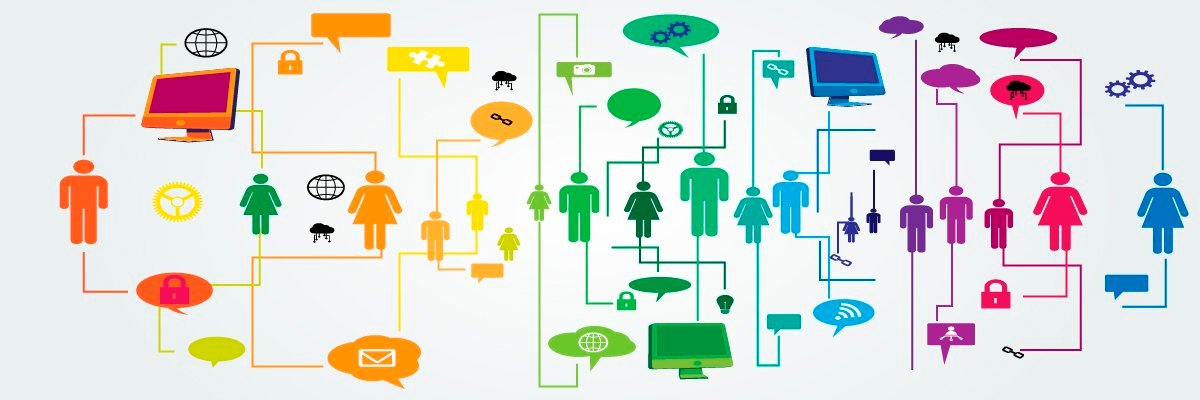

A well-designed IT orchestration system takes away the frustration and manual intervention to create VMs or other IT resources, as well as the long waits and paperwork for app owners who need them from IT. The whole process is subject to workflows, which implement business logic and decisions into practices. They can also include approvals, resource allocation limits and other customizations. ... Some well-designed orchestration portals include selections for the workflow, such as Mirror the network of the following server or I know which virtual LANS I need. Including options instead of setting a rigid path helps people who are not technically inclined easily build servers. IT orchestration improves IT lifecycle management, cost management and sprawl prevention. As mentioned previously, automation feeds orchestration, and the benefits of automation are clear.


Rapid Growth in Security Market Raises Question: How to Pick a Startup

The question for enterprises, then, is how to choose a security startup that not only has good technology, but that will still be around to support it in a few years. One data point is to look at emerging technologies that seem to be garnering the most traction among venture capitalists, who will help their financial future until they are ready to fly solo. One factor to look for is the startup's ability to cut down on the noise in security operations, experts say. "The market is shifting to simplification. We now have more alerts than people want to deal with, so they are seeking ways to simplify the security operations center [SOC]," Casado says. Security for industrial IoT and physical security for drones, smart cameras, and smart locks are also areas to watch, he states.  Consolidation of security technology in the data center is another shift occurring in the security industry, says Mathew.


Mega increase in cloud adoption underway

business cloud services flowchart
The software and network of a user's device is the frontend. The frontend serves as an interface to exchange data and requests with the backend. The backend, which is what you will typically hear referenced as "The cloud," is actually the servers and data center storage technologies of a hosting service.This architecture may sound boring and functional, but, importantly, it allows you to access your backend through the internet, from various locations simultaneously as desired. A centralized cloud server (a virtual machine rather than a physical one) is the intersection of the front and back ends. This technology, the centerpiece of the cloud Hosting service, allows you to respond to user requests and monitor traffic seamlessly. In terms of return on investment, the IT conference Interop ITX’s 2017 State of the cloud report found that lower cost was listed alongside speed, reach, access, and scalability as a top cloud benefit.


Quote for the day:


"To acquire knowledge one must study, but to acquire wisdom one must observe." -- Marilyn vos Savant



Daily Tech Digest - December 27, 2017

Cloudops automation is the only answer to cloud complexity

Cloudops automation is the only answer to cloud complexity
The fact is that most enterprise deal with cloud operations—aka cloudops—using the native tools of their cloud providers. Although that is scalable when you’re just using one public cloud for everything, the reality is that you have to manage traditional systems built within the last 20 years, multiple public clouds, perhaps a private cloud, IoT devices, and data that exists everywhere (with no single source of truth). In other words, a huge mess.  Automation does not save you from having this mess, but it helps a great deal.  First, you need to consider the concept. When you automate cloudops, you’re really looking to remove the complexity by placing an abstraction layers between the complex array of systems,and you the person that needs to operate the technology. ... The trick is focusing on the broader management technology, and the automation that it providers, versus the cloud-native tools that won’t help you beyond a single public cloud.


Unfortunately, while attempting to scale the lofty heights of open data and public goods, the Australian government has again failed to consider privacy implications — something that might be a concern for the 10 percent of Australians that were randomly selected to have their personal data "anonymised" and publicly released. This is no surprise; anonymising data is really, stupendously difficult. Data re-identification issues range from mildly embarrassing to serious and potentially life altering — a quick look at the Australian Medicare MBS data shows how unique some data can be. Ask yourself, what are the consequences of re-identifying the one girl in Queensland aged 5 to 15 who received "Pregnancy Support Counselling Services" — Medicare item number 4001 — in July 2016? What is embarrassing for some could be catastrophic for others.


cyberwar.jpg
There is one key definition of cyberwarfare, which is a digital attack that is so serious it can be seen as the equivalent of a physical attack. To reach this threshold, an attack on computer systems would have to lead to significant destruction or disruption, even loss of life. This is a significant threshold because under international law states are permitted to use force to defend themselves against an armed attack. It follows then that, if a country were hit by a cyberattack of significant scale, they would be within their rights to strike back using their standard military arsenal: to respond to hacking with missile strikes. So far this has never happened -- indeed it's not entirely clear if any attack has ever reached that threshold. That doesn't mean that attacks which fail to reach that level are irrelevant or should be ignored: it just means that the country under attack can't justify resorting to military force to defend itself. 


How Technology Is Changing Leadership

This generation of CEOs is notably different from 10 years ago – and more tech-savvy than their predecessors. As the pace of technology change has picked up, CEOs are seeing new business opportunities but are under pressure to provide a better customer experience based on a new set of technologies ranging from data analytics and IoT to cloud computing and robotic process automation. At the same time, consumers are more demanding and have higher expectations for technology to be part of their lives “If the CEO isn’t thinking about how to leverage these disruptors to help drive top-line growth in their business and products, they are going to be left behind.” For many leaders, these technological innovations are making it possible to create more participatory organizations. Collaboration is the cornerstone of modern leadership. Rather than being “in charge,” collaborative leaders blur the lines between “boss” and “worker” and focus on team building, creative thinking


The 4 Top Security Concerns On The Minds Of Millennials

The 4 Top Security Concerns On The Minds Of Millennials.
Compared to older generations, millennials are more aware of various threats, and are better able to distinguish between different levels of threats online. For example, millennials are about as cautious as baby boomers when it comes to anticipating an online banking cyberattack, with 19 percent of boomers and 14 percent of millennials believing their bank could be breached. But the generations split on social media, where 63 percent of boomers think social media is especially vulnerable to cyberattacks, compared to 45 percent of millennials. Millennials would rather learn about current threats, and increase their knowledge, than work blindly  ...  Finally, millennials tend to be more trusting of external organizations, putting their faith in major brands that have established a reputation for themselves. This makes them less worried and less active when a breach is announced, and makes them more likely to lean on external vendors to solve internal security concerns.


Marketplace for artificial intelligence services emerging in 2020

Executives across many industries are realizing they need to allow users to securely access data efficiently without having to request authorization from multiple systems and to build infrastructure so their teams are fully equipped to handle big data analytics. A hybrid approach allows companies to obtain the cost savings of the cloud while protecting its intellectual property and data on-premises. Digital representations of physical structures, or digital twins, have been used for years in complex 3D renderings. But innovations in data analytics and IoT have pushed advances in 3D modeling to augment business strategies and decision-making in the enterprise. In 2018, more organizations will implement digital twins to visualize complex technologies and achieve new efficiencies with an increasingly digital approach.


Hacking Visual Studio

There is a long history to having an extensible IDE, probably originating from Alan Kay’s SmallTalk design. There is a range of reasons for wanting to add features: You might be tempted to create a custom color scheme, a tool to automate a mundane task or for moving files around. You might even need a complete support for a new programming language!  ... Some features of the IDE are not accessible from these frameworks, but you can always use them if you fully understand the caveats. I’ll mention these later in this article. To use these features, you first may need to take a look on how the creators of the IDE write their code or maybe even call their internal methods! Some of them are written in C++ but the most interesting bits are in .NET so you won’t need to resort to anything more complex than disassembling .NET assemblies.


DDoS attacks increased 91% in 2017 thanks to IoT

istock-482763525.jpg
DDoS-for-hire services have lowered the barriers of entry for criminals to carry out these attacks, in terms of both technical ability and cost, Ashley Stephenson, CEO of Corero, said in a press release. Now, almost anyone can systematically attack and attempt to take down a company for less than $100. And in terms of IoT risks, earlier this year the Reaper botnet targeted known vulnerabilities in IoT devices and hijacked them, including internet-connected webcams, security cameras, and digital video recorders. Each time a device is infected, the device spreads the malware to other vulnerable devices, expanding its reach. "Cyber criminals try to harness more and more Internet-connected devices to build ever larger botnets," Stephenson said in the release. "The potential scale and power of IoT botnets has the ability to create Internet chaos and dire results for target victims."


Cloud migration: How to know if you’re going too fast or too slow

Cloud migration: How to know if you’re going too fast or too slow
Although a few enterprises are slow to start—and some have to yet to start—their migaations to cloud, many enterprises are blasting forward, with the funding and support to cloud-enable most of their enterprise IT by 2020.  While there may appear to be a party going on and you’ve not been invited, my advice to enterprises is to proceed to the cloud at your own measured place. Indeed, while the growth numbers are impressive, I can’t help but think that some enterprises are moving so fast to the cloud that they are bound to make some very costly mistakes such as not dealing with security, governance, and operations properly for cloud-based systems. I’ve been making a nice living over the last year fixing these.  But the larger danger is that you’re not taking advantage of what public cloud services can offer enterprises IT—and your business.


2018 - Top 10 Transformative Technology Trends


As AI, Intelligent apps and Analytics are getting more embedded into our lifestyle we are beginning to create technology that has started augmenting human lifestyle. We will see designers integrating and augmenting our everyday activities such as seeing (facial recognition), reading (semantic and sentiment analysis), listening/speaking (conversational interfaces e.g. Alexa, Siri) and emotions (affective computing). It has been predicted that we will have 75 billion connected devices by 2020! These devices will not only be connected, but will be cooperating as part of an intelligent eco-system. These smart devices will be constantly gathering data, connecting and sharing in intelligent ways to solve the desired goals of underlying systems. As AI and Intelligent things proliferate, expect to see a swarm of intelligent agents collaborating and replicating interactions in the real world.


Quote for the day:


"One of the tests of leadership is the ability to recognize a problem before it becomes an emergency." -- Arnold H. Glasow


Daily Tech Digest - December 26, 2017

Bitcoin, Blockchain and Gold: A Year of Disruption


Genesis Mining is the largest cloud bitcoin mining company and is growing rapidly, adding 50,000 people a day, and now has more than 2 million users. HIVE has an exclusive arrangement with Genesis to operate its data centers, so HIVE offers the opportunity to invest in the cryptocurrency sector without investing in bitcoins themselves. ... Another factor is the success of the quantitative approach, which results in very low volatility. Quants have upended the market using artificial intelligence and other algorithms. Using data mining, algorithms will direct trades within seconds. Some 60% of daily trades are now quant driven, and the average holding period of a stock is about four days. So, things are moving at a much faster pace. Here’s one example: CIBC looked at 200 case studies and found that when a company’s press release had one of seven different headlines, the stock would fall 25%.




Four tips for moving to a new managed SD-WAN service provider


Knowing what went wrong can help customers specifically select a new provider to fix the problem. Perhaps the existing provider's chosen platform turned out to be a bad fit for the customer's actual WAN usage. Maybe the provider failed to meet service-level agreements. Perhaps the provider's support organization is understaffed or experiencing major turnover that affects service. Or, maybe the provider is bad at managing third parties, like last-mile connectivity providers, for example. Whatever the reason, make sure the wisdom of experience informs the selection of the new managed SD-WAN service provider. ...  If the provider makes the change-over experience difficult, it loses any chance of winning other areas of your business, winning you back in the future or getting a good recommendation from you.


Small and Medium Business Security Strategies, Part 1: Introduction


This look is to be expected at this point. You might be asking something along these lines: What are secure configurations? How can I possibly understand “Limited Admin Privilege?” Seriously, what is vulnerability assessment and remediation? We are going to start slow, set realistic goals and will work together to get your network under control. So where to from here? No one has time, no one wants extra duties and everyone has to step in and participate. Based on experience, most offices, businesses, schools, et cetera have someone around who knows about computers. This person is usually the go-to resource for broken printers, blue screened workstations and internet outages. This person is an asset and should serve as a guide for this process. They can answer questions and will definitely know what a modem, switch and router look like.


5 Digital Transformation Trends for Healthcare Industry in 2018

Digital Transformation trends in Healthcare industry
When we are talking so much about the digital transformation in the healthcare sector, do we really know what it is and how it helps? Digital transformation is not just about buying new technologies and latest tools that can ease the process of healthcare procedures, but it is also about changing the operational process in the healthcare sector and making it more automatic and efficient. Digital transformation focuses more on information handling. If the information gathered from the modern digital devices can be channelized effectively, it can be structured to give automated responses to the existing and upcoming health problems. Merely purchasing a technology will not produce any result. There must be a plan about how we are going to use that technology to engage with the whole process of health care revamp. In some parts of the world, the planning to engage digitization with healthcare has started to produce results.


Could Blockchain Transform the Direct Selling of Insurance and Annuity Products

Distributed Ledger Technology Beyond the Hype?
Currently, there is no central authority maintaining or clearing these transactions. Each broker-dealer must maintain their own book of business. For a registered broker-dealer FINRA 17a-3 regulations require the on-going maintenance of client books and records, which is a process that would be greatly simplified by allowing the client to maintain their information directly through to the ledger. This would replace the current method of mailing letters and the subsequent manual process of updating account owner and registration information. Of course, challenges remain for the wider use of DLT until solutions for issues such as scalability and the integration with legacy systems are developed. The development of APIs is necessary to provide the integration with off-chain legacy business applications. These challenges limit wider implementation of the technology.


The 6 stages of an Advanced Ransomware Threat attack


In the ransom phase, attackers deploy ransomware to data stores where target business data resides. The ransom is timed for the date when it will have the most impact, such as just before a major announcement, during mergers and acquisitions, or surrounding audits. They may use any flavor of ransomware as long as it effectively makes the data unavailable and gives the attacker the only keys to decrypt it. ... As mentioned, there is no single form of ransomware used in ARTs. Attackers may perform the encryption using custom programs or they may use a combination of ransomware variants to encrypt data on different types of devices such as Macs or Linux servers. Finally, be aware that some attackers use ARTs as a diversion. The attackers may have already stolen the data they wanted, so they manually infect the systems with ransomware, counting on the company to wipe machines and restore from backup, thus erasing any remaining evidence of the cybercriminal’s presence.


Mobile Internet is Helping Chinese Financing Soar to New Heights

As an “upstart” rising sharply in the field of the global Internet, the developmental speed of Internet finance in China is also amazing. The number of people purchasing Internet financial products has reached 500 million, and the scale of Internet asset management has seen eight-fold increase over the last 4 years. More Chinese people directly manage their financial matters on a PC and mobile device, instead of going to the bank. Practitioners of Internet finance represented by Tianhong Asset, based on the Alipay platform of the controlling shareholder Ant Financial, have realized efficient interaction and promotion both online and offline, providing their investors with a more efficient and convenient financial experience.In China’s Internet finance industry, Tianhong Asset has set up the industry’s first cloud-based De-IOE large settlement system – Tianhong Asset Management Cloud Direct Marketing System.


AI technology adoption: What’s holding us back?


While AI adoption is beginning to prove its usefulness in many industries, it needs to have access to the right data in order have meaningful impact. Strong data quality underpinning machine learning will amplify the efficiency of organisation, and never has the phrase ‘quality in, quality out’ been more relevant. While organisations have mountains of data to sift through, strong data quality underpinning machine learning will amplify the efficiency of your business. In terms of critical success factors, context sits right alongside data quality. Chatbots are a good example of efficient machine learning currently in implementation, and of the importance of context in producing a useful outcome. While the term ‘self-learning’ is often subscribed to AI it can be misleading. It is only by acquiring more data over time and understanding the context in which this information can be accurately used that AI can improve overall performance and start to deliver real business value


Cloud API And Management Platforms & Middleware Market To Increase

electronics
Cloud API and management platforms and middleware market is fast picking up pace due to wide adoption of mobile and cloud applications for back-end services and wide adoption of microservices based architectures by enterprises. These applications comprise of small, independent processes that communicate via API, thereby creating demand for cloud API and management platforms. Emergence of Internet of Things also has a pivotal role to play in the growth of cloud API market as more number of connected devices requires more analysis and monitoring at a fast rate that can be done through cloud APIs. In addition to this several start-ups and small scale enterprises are adopting assemble from components methodology that enables end users to use APIs to connect apps to IT assets, resulting in growth in usage of cloud APIs.


New Seagate tech promises to double hard drive speeds

New Seagate tech promises to double hard drive speeds
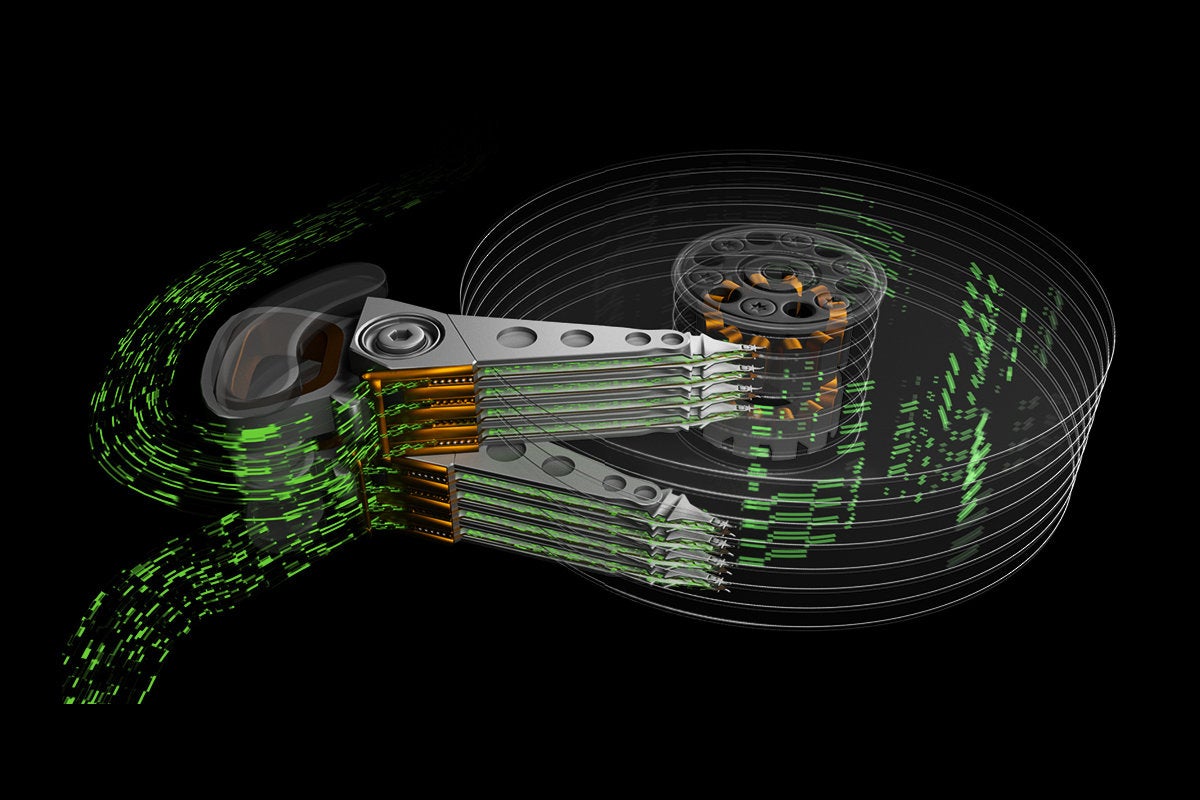
Seagate has a high-density technology in the works called Heat-Assisted Magnetic Recording (HAMR), set to launch next year and in volume in late 2019, that will deliver hard disks of 20TB and more. Western Digital has something similar in the works at roughly the same timeframe. These drives will have up to eight storageplatters, and performance overall will suffer if the network is choking while waiting for data to load. “Capacity is only half of the solution. If the ability to rapidly access data doesn’t keep pace with all that capacity, the value potential of data is inhibited. Therefore, the advancement of digital storage requires both elements: increased capacity and increased performance,” Seagate said in its blog. The only way to make hard drives faster was to make them read and write faster without spinning the disk at a higher speed, so the multiple actuator drive technology makes sense.


Quote for the day:


“Learning does not make one learned: there are those who have knowledge and those who have understanding. The first requires memory and the second philosophy.” -- Alexandre Dumas


Daily Tech Digest - December 25, 2017

What Does the Human Experience Mean to Digital Identity?


The Identities Project distilled the findings into a following set of twelve articles categorized by a) identity practices employed, b) the vulnerabilities exposed, and c) the implications for policymakers and system architects.There is tension between fixed identities within rigid systems and the reality of people’s shifting, dynamic lives. There are persistent tensions around gender and identity. The social and cultural contexts of power and status embodied in the use of identification systems can serve to mitigate, as well as reinforce, established dimensions of gender identity. Crossing borders makes managing identities a struggle for migrants. Registration and enrollment into ID systems exposes and reveals vulnerabilities for many individuals. In addition to the end users, intermediaries — the people who support enrollment and ID use — may lack knowledge of awareness of changes to system rules.


Fintech and banks: Collaboration may help close digital delivery gap

Representational image. Reuters
After a combative approach, banks are now beginning to see merit in partnering with fintechs to close the digital delivery gap, and in investing in them for joint value propositions. Fintechs do not have the burden of legacy infrastructure, but lack scale and understanding of regulations. On the contrary, traditional banks have an established customer base, and heaps of data, but lack digital agility. As of 2017, top 10 global banks reported to have invested nearly $3.6 billion in about 56 fintech firms. Leading banks such as JP Morgan Chase in the US, and Santander in the UK, have also significantly increased their fintech investment. The key areas of investment include blockchain, payments, APIs, Cloud, and an overall proclivity to ensure the technology landscape is responsive to market changes. Future may seem nebulous for banks with traditional business under constant attack, but there is a silver lining for those who choose to go beyond the haze.


Agencies May Want to Think Neuro-Differently About the Cyber Workforce


ASPertise recruits “atypicals”—people who, per their conditions, often have very high IQs, memories and a “better relationship with data” than the neurotypicals, or people who aren’t on the autism spectrum, Vezon explained. Some have been employed before; others have struggled to integrate into traditional office spaces and therefore have opted out of the workforce altogether. Instead of isolating them, ASPertise embeds atypical consultants in client offices and checks in regularly to create a sort of social support network, he explained. Such a strategy could also help companies and federal agencies learn how to better accommodate an atypical workforce in the office, Vezon explained. For instance, atypicals often need cognitive stimulation, and organizations that hire them should consider that traditional reward systems—doling out performance bonuses, for instance—might not be an adequate incentive for an atypical.


Stop Fixating on the 'Artificial' in AI Because It's Actually an Evolution

Stop Fixating on the 'Artificial' in AI Because It's Actually an Evolution of Our Own Intelligence
The expression often evokes images of the Terminator coming to exterminate people -- or take their jobs. For me, it’s the “artificial” aspect that bestows the phrase with the character of something cold, alien and unsympathetic to human concerns and frailties. However, firsthand experience has taught me there's nothing artificial about intelligence. AI is real. It’s just part of a continuum of intelligence that’s now coming to machines. In practice, AI is an extension of human intelligence that’s guided by people. Far from spelling your doom, AI is more likely to save your life. Its applications can help stop a skyjacker or halt the spread of an epidemic, for example. I’ve personally observed AI’s very real and very human side in the excited faces of high-school students who have developed their own AI apps.


Blockchain: The Rajnikant or Chuck Norris of all technologies?

India-Chain will contain details of every citizen's academic records, land records, driving license, investments, marriage certificates, criminal records, biometrics, etc. Basically, India-Chain would have a citizen's birth certificate, death certificate and everything in between. Over the next 12 months, all physical property and assets would be mapped with their digital equivalents on India-Chain. So, when you buy a new car, its details would be added to a smart asset on India-Chain and every subsequent sale, insurance claim or even theft would be automatically appended to the car's record. This would make it very easy for the police to detect thefts. Taking and giving loans is also going to become very efficient. People with money to lend would create smart contracts by mentioning the amount of money they are ready to lend, the time period and minimum acceptable rate of interest.


International Standard looks to curb theft of personal data

Curbing personal data theft
The increasing prevalence of high-profile data breaches has motivated countries worldwide to investigate potential reforms to policy and regulation. One of the best-known examples is the European Union’s General Data Protection Regulation to come into force in May 2018, with global implications. Privacy has taken on new dimensions in our hyper connected world. The need to protect personal data is increasing in urgency with the digital transformation of sectors such as healthcare and financial services. More and more organizations are processing personal data, all of them dealing with an increasing amount of this data. Personal data custodians have received new guidance from IEC, ISO and ITU – the three leading international standards bodies – in the form of an International Standard providing a ‘Code of Practice for the Protection of Personally Identifiable Information’.


4 New Platforms Combining VR and Blockchain


Blockchain, a decentralized ledger technology with relevant applications in finance, data storage, cybersecurity and investing, doesn’t seem like a likely candidate for virtual reality (VR). The former is a somewhat complicated platform relying on a blend of algorithmic cryptography to achieve autonomous consensus between individuals, and the latter an immersive new way to experience games and entertain oneself. However, these young inventions are finding new applications with each passing day, and are slowly drifting closer together. The market now has several examples of unique, useful solutions that combine both blockchain and VR — with others joining soon, as the trend catches on. Though VR can now claim a purpose in the fields of science, engineering and more, Decentraland takes it back to its roots: the gaming world. This virtual world is accessible through any normal VR headset and is hosted entirely on the blockchain.


Turning to Machine Learning for Industrial Automation Applications

Turning to Machine Learning for Industrial Automation Applications
If manufacturers want to remain competitive, they will have to eventually (if they haven’t already) incorporate these new technologies into their plant infrastructure or modernize their legacy systems, a key component of which is industrial automation. With consumers growing more conservative in their product views (quality and customization), being able to change production systems in a short amount of time is crucial, and advanced hardware and software help provide that path without the need for retooling or systemwide reprogramming. Machine learning in this area and all aspects of industrial automation can be beneficial—it can monitor and help perform maintenance on production machinery, reprogram industrial PCs (distributed intelligence) for new product production, and optimize the efficiency of plant operations over the entire supply chain.


The Dangers of Shadow IT to Cloud Security

The problem with Shadow IT is that the broken system that causes it to exist in the first place is precisely what hackers exploit for their attacks. For instance, a strong password security policy could accomplish the goals of one business unit by achieving a higher rate of password rotation. However, this has an unintended consequence. To simplify the password updates, users might create passwords that are easier to remember — and easier to hack. Or, if they don't receive training on using a password management system, users might write them down on paper and keep them in an insecure place, like at their desks. This defeats the purpose of changing them in the first place. The password rotation policy would have been made with good intentions, and it's obviously a good start. But without shared goals and a review across the organization, it's easy to see how it could actually do more harm than good if these programs are implemented in a silo.


The Coming Of Intelligent Apps


Some of these apps predict race performance using such metrics and average pace per mile. And some apps, such as RockMyRun, scan music playlists to slow down or speed up beats to keep pace with a runner’s footfalls and heart rate. Seeing what tech companies were doing, organizers of the New York City Marathon offered a virtual training program powered by the data-driven platform RUNtrix, which uses information provided by a user to design a regimen and predict the finishing time. “Artificial intelligence will become much more ingrained because users will expect it,” said Sanjay Malhotra , co-founder and chief technology officer of Clearbridge Mobile, an Ontario-based custom mobile app development company. Using data analysis to apply artificial intelligence, a chatbot was developed to collect information from customers and relay it to a representative. With those AI-collected details, the representative could respond with more precision.


Quote for the day:


"Science is nothing but trained and organized common sense." -- Thomas Huxley


Daily Tech Digest - December 24, 2017

Quantum Computers Barely Exist—Here’s Why We’re Writing Languages for Them

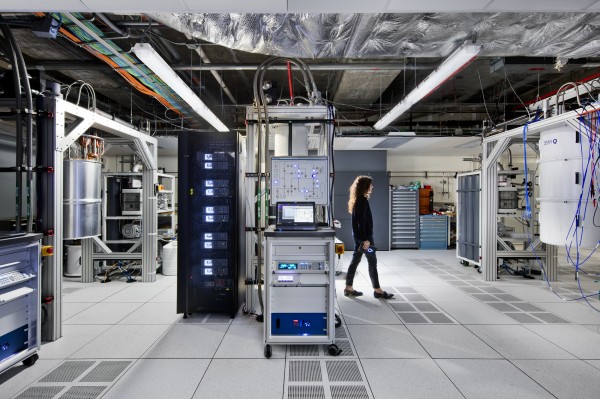
Programming languages for classical computers are designed in a way that doesn’t require developers to know how a central processing unit works. The push now is to create high-level quantum programming languages that also shield developers from the complexities of quantum hardware.  The quirks of quantum computing create limitations that don’t exist in classical programming languages. One example: quantum programs can’t have loops in them that repeat a sequence of instructions; they have to run straight through to completion.  To deal with such issues, Q# works in conjunction with a couple of classical languages. Developers without quantum expertise can write their main programs in familiar languages and then use a Q# program when they want to engage quantum processing power.


This ICO is disrupting the Financial Services Industry

TrakInvest faced a rising demand from its community to move to blockchain and launch its own cryptocurrency. This currency known as the “TRAK” Token is based on Ethereum ERC20 standards. The token launch will introduce a reward economy where the producers of trading data, insights and sentiments will be globally rewarded in a transparent and frictionless manner. Backed by a powerful tech stack and the strength of Ethereum’s Open community network, the ecosystem has a strong technical foot holding.“The concept of social trading and the concept of cryptocurrency came together nicely because now we could actually set an incentivisation and a monetisation model not only for TrakInvest but also for its users” says Mr. Bobby Bhatia, Founder & CEO, TrakInvest TrakInvest will develop its current virtual equity trading platform to include virtual trading and simulation games for cryptocurrencies. TrakInvest will also launch AI powered Sentiment analysis tool for both equities and crypto-currencies.


Are The Benefits Of Blockchain Out Of Reach For Small And Mid-Size Businesses?


The chain is a program designed to execute tasks exactly as specified at the onset, without a designated moderator or manager. Instead, the chain is validated and monitored by each user within the network. The blockchain records transactions and duplicates them instantly across each user point. It’s this deceptively simple concept that serves as the foundation for expedited and trustworthy transactions. The exchange of money for goods or services goes back thousands of years to the earliest civilizations. Initially, transparency and assurance were easily attained. Things were tangible. You could see and touch items in the marketplace. However, as technology evolved, trust in the marketplace eroded in favor of the convenience that checks, credit cards and other monetary assets have ushered in. Blockchain offers the intimacy and speed of a peer-to-peer experience and the verification and security previously provided only third-party authorities.


Best Practices for Managing Enterprise Data Streams

It has been commonplace to write custom code to ingest data from sources into your data store. This practice is dangerous given the dynamic nature of big data. Custom code creates brittleness in dataflows where minor changes to the data schema can cause the pipeline to drop data or fail altogether. Also, since instrumentation must be explicitly designed in and often isn’t, dataflows can become black boxes offering no visibility to pipeline health. Lastly, low-level coding leads to tighter coupling between components, making it difficult to upgrade your infrastructure and stifling organizational agility. Today, modern data ingest systems create code-free plug-and-play connectivity between data source types, intermediate processing systems (such as Kafka and other message queues) and your data store. The benefits you get from such a system are flexibility instead of brittleness, visibility instead of opacity, and the ability to upgrade data processing components independently.


ML & AI: Main Developments in 2017 and Key Trends in 2018

AI & ML Predictions
If we look at the engineering side of AI, the year started with Pytorch picking up steam and becoming a real challenge to Tensorflow, especially in research. Tensorflow quickly reacted by releasing dynamic networks in Tensorflow Fold. The “AI War” between big players has many other battles though, with the most heated one happening around the Cloud. All the main providers have really stepped up and increase their AI support in the cloud. Amazon has presented large innovations in their AWS, such as their recent presentation of Sagemaker to build and deploy ML model. It is also worth mentioning that smaller players are also jumping in. Nvidia, has recently introduced their GPU cloud, which promises to be another interesting alternative to train Deep Learning models. Despite all these battles, it is good to see that industry can come together when necessary.


How to Create a Digital Marketing Predictive Analytics Model

How to Create a Digital Marketing Predictive Analytics Model
What if a predictive analytics model could track and capture data related to all the content touch points that a customer interacts with before making a purchase, assign weights to each, and assign proportions of customer’s purchase numbers to each to calculate ROIs? With tools like Content Scoring, that’s possible. It uses CRM data and marketing automation to track customer journeys, and then assigns values to content touch points such as whitepapers, social media posts, blogs, emails, and e-books) to help you understand which marketing deliverables do and don’t work. Imagine the kind of sophisticated, targeted, and optimized content funnels you could create to connect prospects to products using such advanced tools. Though predictive models can result in predictable response rates, they don’t necessarily explain why response rates depend on certain factors.


Analytics in 2018: AI, IoT and multi-cloud, or bust

No hype, just fact: Artificial intelligence in simple business terms
Kinetica's Negahban predicts that "Organizations will look for / demand a return on their IoT investments" and adds that "while it is a good start for enterprises to collect and store IoT data, what is more meaningful is understanding it, analyzing it and leveraging the insights to improve efficiency." This reminds us that IoT, Big Data analytics and machine learning are rather inseparable. The IoT enthusiasm among our predictors doesn't stop there. In an age when so any customer interactions are electronic, Ryan Lester, Director of Customer Engagement Technologies, at LogMeIn, insists that "IoT Will Save Consumer Brands." He adds that "embracing IoT at the time of customer engagement helps companies to create relationships with their customers and create an ongoing engagement that will help them better understand their customers' needs..."


This AI Learns Your Fashion Sense and Invents Your Next Outfit

Despite the current limitations, fashion seems ripe for an AI invasion; it’s an arena that has great data sets on customers’ interests, and there is a lot of money at stake. Amazon, for one, is already working on AI systems to provide a leg up in spotting fashion trends, and it has also done some work with GANs. Alibaba, meanwhile, just debuted FashionAI, a technology that can recommend items to shoppers on the basis of what they brought into the dressing room. Costa Colbert, the chief scientist at Vue.ai, a fashion AI startup that recently revealed a method for creating fake fashion models using GANs, says that as promising as the UCSD and Adobe research appears to be, it requires so much data that it might be helpful only for the biggest names in online retail. “If all the person does is come in and click one thing, you aren’t going to be able to do much,” Colbert says.


Products Over Projects

Product-mode is no longer limited to companies that sell software. It is common among so-called tech businesses enabled by tech platforms that stream content, e-tail, distribute mutual funds, find cabs, accommodation, flights, you name it. It is also catching on in the digital/product/engineering/IT departments at more traditional, old-guard businesses. For instance, Insurance Australia Group (IAG) recently moved away from projects to a more durable platform organization operating in product-mode. ANZ Bank is trying something similar. There are several, less-than-ideal variations of teams operating in product-mode. Some places use a halfway approach of project-mode funding and product-mode organization. Even the product-mode organization is not always build+run. Or the cross-functional teams consist of people reporting to different function heads.


10 Ways Cloud Computing Will Evolve In 2018

Spending on cloud services demonstrates just how rapidly usage has grown. In 2015, Gartner predicted that, globally, enterprises would spend $140 billion on on-premises data center systems. Since then, the rapid adoption of public and private cloud services has sparked a major reallocation of IT budgets. Enterprises are moving away from relying solely on on-premises data center systems and are boosting spending on IT infrastructure for deployment in cloud environments. The result, according to IDC, is that cloud services and infrastructure spending will reach $266 billion annually by 2021. The picture is even more complicated than that. Businesses are using and deploying private, public and hybrid clouds in a number of ways, shaping the direction of the space over the next 12 months.


Quote for the day:


"You don't always win your battles, but it's good to know you fought." -- Lauren Bacall


Daily Tech Digest - December 23, 2017

What Metrics Should You Evaluate When Looking at Hyperconverged Infrastructure?


When it comes to hyperconverged infrastructure, some in the IT industry view the merits of hyperconverged infrastructure through the storage lens. This seems logical because hyperconverged technology offers many benefits on how we provision, consolidate, and manage storage. But the metrics that those select few look at are too focused on storage-specific features, such as the number of nodes or terabytes, rather than VM-related measurements commonly used for other software-defined infrastructures such as the cloud. Since hyperconverged infrastructure shifts the paradigm from managing infrastructure components to managing VMs, there should also be a shift in the metrics used to measure it. But with bias present among the vendors, how will customers find the true hyperconverged metrics that matter?


5 Sectors Blockchain Is Disrupting That Are Not Cryptocurrency

5 Sectors Blockchain Is Disrupting That Are Not Cryptocurrency
For a few years now, "blockchain" and "cryptocurrency" have gone hand-in-hand. The blockchain concept is complicated, and involves constant-growth record lists linked together and secured through cryptography (think of the Cryptex from The Da Vinci Code). Each block of the chain envelops a hash pointer relating to the previous block, as well as transaction data and a timestamp. The idea of a blockchain isn't relegated to the infant-era cryptocurrency revolution. Massive worldwide corporations are beginning to incorporate blockchain technology into their systems. The technology behind the blockchain is far more valuable on a global scale than any market capitalization of cryptocurrencies. Here are five large sectors currently being disrupted by the potential of this technology


Europe Unveils Its Vision for a Quantum Future

The commission clearly expects large-scale quantum processing using one or more of these technologies within five to 10 years. Whether this will be done in Europe first is much less clear. Quantum simulation is the third area of investment. Simulating complex quantum properties on an ordinary computer is close to impossible. But quantum systems can be made to simulate aspects of other quantum systems more or less perfectly. Physicists are toying with various ways of doing this. The basic idea is to find a quantum system that is well understood, and easy to manipulate and measure, and then use that to simulate a system that is hard to manipulate and measure. The well-understood systems include ultra-cold atoms and molecules, ions trapped in magnetic fields, and superconducting circuits.


Events, Flows and Long-Running Services: A Modern Approach to Workflow Automation


The idea is backed by the Domain-Driven Design (DDD) community, by providing the nuts and bolts for leveraging domain events and by showing how they change the way we think about systems. Although we are generally supportive of event orientation, we asked ourselves what risks arise if we use them without further reflection. To answer this question we reviewed three common hypotheses:
Events decrease coupling; Central control needs to be avoided; and Workflow engines are painful. ... A more sensible approach to tackle this flow is to implement it in a dedicated service. This service can act as a coordinator, and send commands to the others -- for example, to initiate the payment. This is often a more natural approach, as in this case we would generally not consider this a good design if the Payment service had knowledge about all of its consumers by subscribing to manyfold business events triggering payment retrieval.


Here's What Two Millennial Blockchain Founders Have To Say About Cryptocurrency

With so many different reports, it can be hard to make sense of the cryptocurrency landscape. One thing’s for certain—Bitcoin is just the tip of the iceberg. There are so many promising blockchain projects sprouting up with millennials leading the way. From 24-year-old Vitalik Buterin who founded Ethereum, now the world’s second largest cryptocurrency to 26-year-old Justin Sun, who seeks to reinvent how digital creators get paid for their online content with TRON. ... “We don’t think you even need to hold dollars or pounds in the future we think people will literally be spending with their Mona Lisa tokens or with their gold or with their Apple stock, only what they want to hold not what they think they need to hold simply because it’s the only thing that’s accepted. People will literally be able to walk into McDonalds and pay with their Mona Lisa tokens and that’s why we created this company,” Gelderman says


Can RegTech Really Save Banks Billions Each Year?


The global investment banking industry is worth a few hundred billion dollars annually, as are both the audit and legal professions. And since the last decade or so, increased regulation has forced banks to devote around 10% of their salary costs to employing an army of compliance controllers to ensure that their transactions and processes meet the standards required by the law. And the stakes are high. Rogue traders, breaches of confidentiality, and reckless financial positions can expose financial institutions to fines, cripplingly negative publicity, and even prison sentences, not to mention huge financial losses. These stakes are what make banks the earliest adopters of many technological innovations. Banks are turning to Regulatory Technology (RegTech), chiefly Artificial Intelligence (AI) and Augmented Intelligence (IA) but also other developments in computing like blockchain


While Bitcoin Price Soars, Technological Advancements Continue in the Background

While Bitcoin Price Soars, Technological Advancements Continue in the Background
As such, it helps to assimilate any new or additional information in the context to help make more sense of it in comparison to other experiences. For example, imagine your buddy invites you to "catch some waves" and to your surprise, after two hours on the road you finally pull up to an indoor resort water park where they have one of those cool new "wave pools;" the waves are generated mechanically and are meant to impress, but not utterly frighten well-meaning vacationers. This is not the same as a trip to the beach right. The same can be said of traditional investment vehicles vs. cryptocurrencies and assets. Some key interactions with each are very familiar; however, the context of operating within a purely virtual universe where the data is publicly distributed and infrastructure is community owned is very important to how you choose to engage.


Our top 7 cyber security predictions for 2018

predictions crystalball
The Equifax and Anthem breaches were wake-up calls for many consumers, who are now asking questions about the safety of their online accounts. Most still have no idea about password alternatives or enhancements like multi-factor authentication (MFA) or risk-based authentication, but they are more aware that passwords alone no longer are enough. In fact, research done by Bitdefender shows that U.S. citizens are more concerned about stolen identities (79 percent) than email hacking (70 percent) or home break-ins (63 percent). This is important, because companies often cite a lack of demand for stronger authentication as a reason for not offering it. ... State-sponsored attacks might also spur countries to form alliances to fight them. “Increased attacks on critical infrastructure will drive countries to begin discussing cybersecurity alliances. Establishing these alliances will provide mutual defense for all countries involved and it will allow for the sharing of intelligence in the face of attributed nation-state attacks, not to mention agreements to not attack each other,” says Eddie Habibi, CEO of PAS Global.


Agile for Marketing and Communication

Agile ensures movement, flexibility, and connection, and ensures that the right people are involved in communication. It also provides communication professionals with tools to keep a grip on the development of communication and the use of resources within the field of internal stakeholders. This way you can cope better with change and be more in control of the project schedule and state. It also provides self-organizing teams that take their own responsibility and add value to the product that’s being delivered. Therefore, it helps to finish assignments in a short period of time by focusing and making prior choices. During the preparation of the event RIVM Kennisparade for example, I only interfered one time with the progress when I was asked by the product owner. Because we’ve directly involved users, stakeholders and the necessary other organizational disciplines in the process, we have ensured support during the whole organization of the event. And that is a very good way to add value to our products.


The internet is broken

The internet was built on decades-old technology. Today, the internet comprises billions of devices, every one of which is more powerful than those upon which the internet and the web were built. Storage is exponentially cheaper and wireless technologies mean that countries are developing web infrastructures that aren't built on undersea cables. Our phones can scan our fingerprints and faces, making payments secure. Emerging technologies such as the blockchain enable experiments in new models for file sharing and value exchange. So let's consider a thought experiment: if we were to reset the internet - shut everything down and start again, using 30 or so years of experience - would it still look the same? Or would we design something different… even better?


Quote for the day:


"The sign of a beautiful person is that they always see beauty in others." -- Omar Suleiman


Daily Tech Digest - December 22, 2017

New Year’s resolutions for CISOs

New Year’s resolutions for CISOs
CISOs should focus on rationalizing, consolidating and integrating security technologies in 2018 with the goal of building a security operations and analytics platform architecture (SOAPA) that can collect, normalize, process, analyze and act upon the growing amount of security telemetry.  At the same time, organizations should research, test, pilot and deploy selective security tools offering artificial intelligence. Based upon ESG research, CISOs can get the biggest bang for their buck by applying machine learning algorithms to existing security tools such as endpoint security software, network security analytics, threat intelligence platforms and DLP. This can help improve security efficacy of installed technologies without adding complex new projects. Make a commitment to automate and orchestrate manual processes.In cybersecurity, whatever can be automated should be automated. This includes gathering data, analyzing suspicious files 


Be a More Effective CISO by Aligning Security to the Business

A key to building cooperation is to develop the skill of empathetic listening to engage your ears before you start hammering a message into people. You listen with the goal of understanding the other person’s point of view and acknowledging how they feel about the situation. Listen to people’s complaints. Users work in different contexts than IT and security. They have work that needs to get done that has nothing to do with your security policy. Listen carefully to their problems and then, once they’ve had their say, you can connect their jobs to the security mission.... To break down barriers and silos, you’ll need to align users’ daily practices with security. Hopefully your examination of organizational processes and goals provides the information you needed for this. It also is useful for framing your security messages in the language of the organization’s culture, not in terms of security culture.


Google slips Chrome stub into Microsoft's app store

browser wars shields with logos at battle
Sources familiar with Google's plans said that the maneuver was meant to stifle the Chrome copycats the company thinks mislead Microsoft Store patrons into downloading worthless apps. Yet that left unexplained the real purpose Google had - Chrome wannabes have not overwhelmed the store - or why the company thought the applet would pass muster and make it into the store, or getting that far, that it would remain unnoticed by Microsoft for any amount of time. One motivation was forwarded by a Google software engineer, Chris Blume, who tweeted, "Microsoft denies Chrome the tools it needs to protect users when installed from the Windows Store.  So, we made a mini-app to help users get the full, safe version of Chrome. It was pulled." Later, after others asked him what Microsoft withheld from Google that prevented the latter's developers from crafting a UWP Chrome app, Blume replied, "Multiple processes is one example."


IT/OT Convergence and the Digital Supply Chain

Whatever the phraseology, the principle is the same. Advances in the manufacture of computer chips have enabled tiny-form sensors with a capacity to gather, receive and send information to be developed. They are applied to plant equipment, goods in transit, warehousing or other industrial assets, and embed both intelligence and connectivity into equipment. Now connected with each other and other systems, these assets can send and receive data about performance or any other parameter. Secure cloud technology then allows for seamless but flexible data handling and storage, as well as the compute power needed to perform advanced analytics that extract valuable insights into parts of the supply chain that were previously unavailable from the raw data. That analysis can open up a whole series of new possibilities through the development of new applications and APIs to derive even greater value from the original data.


Directors on-board the cyber security train
Criminals have discovered the immense power of social engineering-based email attacks, which have become one of the most prominent types of cyber threats to many organisations. However, research suggests that current social engineering methods are nowhere near as effective as they could be. Recent developments suggest an impending watershed moment among Internet criminals, in which their yields can be doubled by use of sophisticated multi-factor social engineering techniques. One example involves the use of legitimate functionality or infrastructure – such as traditional password reset – in combination with deceptive email messages. By sending a reset code to an intended victim, then immediately following up with a deceptive email request for that code, criminals are able to harvest reset codes on a significantly larger scale. This gives them direct access to user accounts without setting off alarm bells by requesting that the intended victim enter a password.


Why Network Visibility Is Critical to Removing Security Blind Spots

In the client-server era, all traffic went from a computer, into the data center, to the core, and back. This is known as north-south traffic. Securing this type of traffic flow means putting big firewalls and other tools in the core of the network where traffic would be inspected as it passed through. Over time the folks at VMware figured out a way to virtualize workloads and send traffic between them, even if they are in another location of the data center. This is known as east-west traffic. The challenge in securing east-west traffic is that it never passes through the core, so it bypasses all your traditional (and expensive) tools, as well as new ones such as behavioral analysis. Organizations could try to deploy security tools at every possible east-west junction, but that would be ridiculously expensive and complicated. Network visibility tools allow security managers to see every east-west flow and then individually direct them to specific security tools instead of sending all traffic to all tools.


Your Top Five Challenges Moving in to the IoT Space


When you’re on the path towards a digital transformation, you end up with more connected … things. This newfound focus on software and digital experiences means that deploying software into more places. Integrating assets and data into existing infrastructure and systems are arguably what IoT is all about. Vendors such as Microsoft, Amazon and IBM are making massive investments in their respective cloud platform to align with their customers’ demands for IoT-type solutions. Traditional technology vendors such as Schneider, Mitsubishi and Siemens are also on their toes, eager to be part of the new ecosystem. I’ve been involved in many IoT projects over the years and have come to realize that there is a big gap between what customers need and what these vendors provide. Not saying they should or even could solve all problems, but I’ll try to emphasize some of the areas organizations need focusing on.


Security platform or best of breed? There’s only one answer

saas
Michael Cook, a senior security consultant at Indianapolis-based advisory Pondurance, says all-in-one platforms are generally made up of “about 15 applications or modules around that platform.” Each module addresses a different need, such as securing that API gateway. Cook cautions that not every module is equally strong and that with a single platform you risk a Jack of all trades, master of none scenario. Say, for example, the platform you use offers gateway security but isn’t great at it. Good luck getting management to approve a Forum Systems purchase. “When you’re using a platform versus best of breed, if there’s something you don’t like in one of the modules in the platform you’re kind of, ‘Well, we’ve gotta use it because we bought the whole thing,’” he says. Of course, just because a specialized tool might work better doesn’t mean all-in-one doesn’t offer any protection at all. The module is there.


The case for securing the SD-WAN

network security primary2
Enterprises can resolve this new spate of security challenges by moving their inspection and enforcement points away from the data center to either the branch or the cloud. Specifically, security administrators need to assess if they require security layers that consist of more than just encryption and general stateful firewall services. Then they need to ask whether there’s more risk in either the branch or the cloud, which will help determine what layers of security they will require. By nature, SD-WAN provides embedded security because of its native support for encryption end-to-end and segmentation on a per application or organizational level. However, the delivery of a comprehensive enterprise grade security solution is not wholly supported natively in numerous SD-WAN providers. So, how and what do you use to secure the branch that simultaneously serves as a direct pipeline for a maelstrom of malware and other threats?


Unsupervised Machine Learning Demonstrated On Quantum Computer

Rigetti announced that it was able to demonstrate unsupervised machine learning on its new 19-qubit quantum computer. Unsupervised machine learning refers to the neural networks being able to train on raw data without any pre-labeling of that data. The company achieved this with a quantum/classical hybrid algorithm for clustering data. Clustering analysis is one of the most common ways to do unsupervised machine learning in order to find hidden patterns within the analyzed data. It's often used in advertising, credit scoring, and image segmentation. This means that Rigetti’s quantum computer and its approach to hybrid quantum/classical algorithms could soon find uses in the real world. However, Rigetti warned that they still need more qubits in order to show that this solution is faster and more effective than purely classical approaches. This could be achieved once quantum supremacy is reached.


Quote for the day:


"Never stop learning, because life never stops teaching." -- Unknown