Daily Tech Digest - October 05, 2017

The technologies used by remote workers to access the information they need to undertake their day-to-day operations from home has needed to evolve. Simply allowing your staff to access the file repositories on your network from home as they would in the office, could leave you open to being infected should their laptop or home PC be carrying a virus. It is just not practical to rely on the IT department to secure the myriad of bring your own device (BYoD) personal end-points that remote workers use, therefore, other solutions have become necessary. Many organisations have started providing specific remote desktop solutions via the cloud. These send a live snapshot of your office desktop to a remote device. If a user clicks or types, these interactions are reflected on the server. 


Spy Wars: How nation-state backed threat actors steal from and copy each other

In a detailed review of the opportunities for such attacks, GReAT researchers identified two main approaches: passive and active. Passive attacks involve intercepting other groups’ data in transit, for example as it moves between victims and command and control servers – and are almost impossible to detect. The active approach involves infiltrating another threat actor’s malicious infrastructure. There is a greater risk of detection in the active approach, but it also offers more benefits as it allows the attacker to extract information on a regular basis, monitor its target and their victims, and potentially even insert its own implants or mount attacks in the name of its victim. The success of active attacks relies heavily on the target making mistakes in operational security.


Cyber Insurance - The Third Wave Is Here

Photo published for Cyber insurance – the third wave is here - Accenture Insurance Blog
According to Allianz, premium income from cyber security will rise to $20 billion by 2022. That’s a big jump from researchers’ current estimate of $3 billion gross written premiums. But cyber security is not something insurers want to attempt on their own—they will need to acquire, grow or partner for the advanced cyber security skills and capabilities ... The first wave got a tepid response because businesses were oblivious to the threat. The second fell flat as businesses chose to invest in security infrastructure rather than cyber insurance. Today, however, high profile breaches have made both insurance and business leaders keenly aware of the potential business and financial impacts. The magnitude of the threat is being emphasized by the emergence of new industry and government regulations around cyber security. However, cyber insurance is not an easy offering to design.


10 Things You Believe That Are Holding You Back From Success

In Silicon Valley, failing has turned into a badge of honor. The more you fail, the more you are praised. It's kind of like an unusual victory where no one actually wins. This mentality isn't contained to one region though. It has spread throughout the entire tech industry. Bradley says, "Failing fast is a joke. Anybody who says they want to fail fast or fail slow doesn't understand it. You don't want to fail fast. You don't want to fail slow. You don't want to fail." I've had my fair share of failures in the past, and I'm sure you have as well. If you have truly experienced failure, you would know that the last thing anyone would ever want to do is fail. So what's the alternative? "To get ahead, you want to accelerate and improve your rate of learning on everything that you do," Bradley says. 


Firms look to security analytics to keep pace with cyber threats


Monitoring and threat detection are crucial if businesses are to stay ahead of the curve, and security analytics has emerged as a popular way to counter attacks. It involves the collection, aggregation and analysis of security data, usually combining datasets with sophisticated detection algorithms. Security analytics is extremely diverse, and there is a plethora of ways to collect data, including software, cloud resources, external threat intelligence sources and network traffic. According to a report from Markets & Markets, the industry was worth $2.83bn in 2016 and will reach $9.8bn by 2021. But does the sector live up to the hype? As a market, security analytics is packed with suppliers. Ranging from corporate diehards to fast-growing startups, the industry abounds with choice.


The rules of doing business have changed, say tech entrepreneur

“Entrepreneurial businesses have a much closer understanding than multinationals of how the rules of doing business have changed. This awareness combined with their size and agility has enabled many of them to adjust to the uncertain market conditions. The research shows that tech entrepreneurs are acutely aware of the need to react to changes in market demand and make business decisions more quickly. For many, the ability to lay their hands on reliable and up-to-date data in a format that is tailored to the operational needs of the business is now critical.” With more changes on the agenda, tech entrepreneurs know they could be facing diverse risks in the year ahead. The top three risk factors identified were cash flow difficulties; the potential impact on geopolitical uncertainty on trading activity and a general lack of resources – in particular, a shortage of senior management time.


Microsoft defends sluggish ramp up of extensions for Edge browser

microsoft edge browser resized
The sluggish progress in building an Edge add-ons e-mart was, argued Williams, the result of Microsoft's "purposefully metered approach as we onboard new extensions," as well as the company's "high bar for quality." Additionally, said Williams, Microsoft was taking its time approving add-ons because poorly crafted extensions could weaken the security of the browser, impede its performance and degrade its reliability. Her explanations — depending on one's cynicism, they could be called excuses — were in sync with other statements Microsoft has made over the last two to three years. "Our experience over the past 20 years has taught us that poorly written or even malicious add-ons were a huge source of security, reliability and performance issues for browsers," wrote Drew DeBruyne, a general manager in the Edge group


Can't Wait for JNBridge's Java.VS? Program Java in VS Code Now with Red Hat Tool

As we noted earlier, Java support in Visual Studio is skimpy, leading many developers to turn to the "Language Support for Java by Red Hat" extension in the Visual Studio Code marketplace. Although it's still listed as a preview, Red Hat yesterday noted the tool was first announced a year ago and has reached the 1 million download threshold. "During this past year, we made 10 releases, added various features, fixed many bugs but more importantly, we have constantly grown our user base and finally reached and passed a million downloads on the Visual Studio Marketplace," Gorkem Ercan said in yesterday's post. When announcing the extension in September of last year, Gorkem said the initial release sported a modest feature set


IoT can learn from smartphone security

IoT can learn from smartphone security
Upping the security of IoT/EoT is not that hard. Most current-generation IoT devices are built using commodity microcontrollers that are not inherently designed with the security components built into mobile phone-derived SoCs (e.g., trusted execution “vaults,” encryption engines, VPNs). With a long history of security enhancements over the years and a compelling need to compete in security features, it’s much more appropriate to utilize “downsized” mobile SoC technology than trying to reinvent security in software on chips not inherently designed with the same number of security subsystems. As a result, downsized mobile SoCs have both a competitive advantage in system capability, even if they may cost somewhat more, and have already-proven security features that microcontrollers generally can’t match.


Leaderships’ evolving role in cybersecurity

Risk management is a standard part of doing business. Organizations are already adept at tolerating and mitigating such problems as shrinkage, downtime, turnover and waste. These are treated not as threats to the business, but as costs to be managed and avoided. Why not take the same approach to cybersecurity? CEO silence damages the security posture of any organization. When top executives talk, things happen, but as long as cybersecurity is delegated to a subgroup of the IT organization, people will believe that it’s someone else’s problem. That’s a shame, because the vast majority of breaches can be prevented with a few basic practices: Choose strong passwords, don’t click on unknown links, keep up-to-date with patches and antivirus definitions and protect devices with authentication. Most business professionals are aware of these facts, yet surprisingly few observe them.


Quote for the day:


"Ineffective leaders don't react to problems, they respond to problems and learn." -- Danny Cox


Daily Tech Digest - October 04, 2017

Faster time to market is a competitive necessity, and this pressure isn’t disappearing any time soon. The speed of business metabolism needs to increase. When banks noticed that there was no point fighting against FinTech startups, they collaborated with them. Today, many large banks are pumping millions of dollars into startups. So how can organizations gear up to the speed they need to win in this new, bold world? You don’t have to figure it out all at once. You just have to be willing to start and to make the organizational changes required for success. It’s far more desirable to be successful at a series of smaller tasks than to fail spectacularly upon attempting to tackle a transformation initiative as a big-bang effort. Set the direction, draw a line in the sand, and understand that line will move. There is nothing wrong with taking time early on to prepare to speed up later.


Gartner Identifies the Top 10 Strategic Technology Trends for 2018

"Gartner's top 10 strategic technology trends for 2018 tie into the Intelligent Digital Mesh. The intelligent digital mesh is a foundation for future digital business and ecosystems," said David Cearley, vice president and Gartner Fellow. "IT leaders must factor these technology trends into their innovation strategies or risk losing ground to those that do." The first three strategic technology trends explore how artificial intelligence (AI) and machine learning are seeping into virtually everything and represent a major battleground for technology providers over the next five years. The next four trends focus on blending the digital and physical worlds to create an immersive, digitally enhanced environment. The last three refer to exploiting connections between an expanding set of people and businesses, as well as devices, content and services to deliver digital business outcomes.


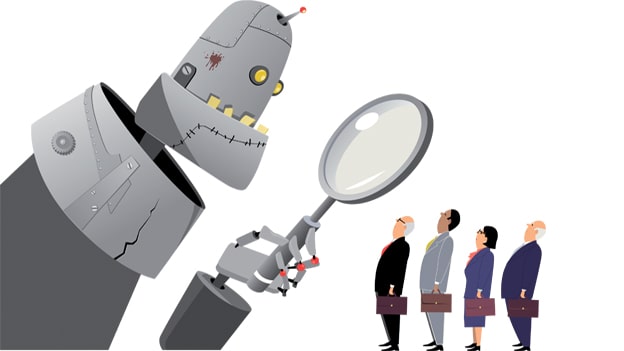
How AI is transforming the hiring process

How AI is transforming the hiring process
Thanks to AI for making this task simpler, easier, and more efficient through predictive algorithms and data tools. Guaranteed with precision and perfection, HR software like ATS, Entelo, HireVue, Beamery, JobBot, and Mya are fostering quality hiring in tech-savvy enterprises. They all are superheroes in their respective fields. If Entelo and Beamery search and check the profiles of the potential candidates on social media to find out applicants planning to switch jobs, then HireVue is very useful for assessing the personality of applicants on various facial and verbal parameters in video interviews. Whereas Mya and JobBot are interactive software that communicates with applicants on chatbots and based on these virtual communications they do the ranking of the candidates and help to schedule interviews with the staff of the concerned department.


From big data to smart data, processes and outcomes

Even if big data is essential and we have so many data sources at our disposal, smart data is not about volume and not about technology alone. It’s about usefulness, with multiple layers of intelligence built in the way we acquire, process, analyze, store, interpret and improve data to act upon them and effectively make them useful. Think about paper sources and Intelligent Document Recognition, for instance. Or about how unstructured data are optimized, routed and turned into insights and flows, using artificial intelligence and intelligent information management. With fast changing business dynamics, the speed at which data are acted upon has become essential in a real-time economy too. In that context, there is fast data, to align with those fast moving dynamics and an increasingly demanding customer.


Amazon's latest Alexa devices ready to extend company's reach into your home

Light Gray Echo, Nightstand
The Echo has been Amazon’s surprise hit in the three years since it launched, finding its way into tens of millions of kitchens around the world, offering internet radio, timers, weather and news reports and voice calls. Now Amazon will start selling a smaller, cheaper version of the original Echo, with fabric and wood veneers, as well a new flagship device called the Echo Plus that promises to work instantly with dozens of smart home devices, such as locks, lights and electric sockets. “Setting up your smart home is still just too hard,” Limp said. “It can take up to 15 steps to do something as simple as set up a lightbulb.” Amazon’s vision is of homes with Echo devices in every room, listening to every word you say. A new Fire TV media device adds voice control over streaming TV and movie services like Amazon’s own Prime video, Netflix and others.


Citizen Data Scientists: Why Data Scientists aren't Enough

As Gartner succinctly defined, a citizen data scientist is a person whose primary job function is outside statistics or analytics but nevertheless uses models that are predictive, or have advanced analytics capabilities. Gartner foresees that citizen data scientists will foster greater depth of business analytics, as they provide increased support for (formal) data scientists and enable them to shift their focus to more complex analyses. Many employees who use SQL aren’t computer scientists or engineers, and using SQL is only one part of their job. They have other responsibilities, such as creating spreadsheets, delivering strategy recommendations, executing marketing campaigns. These other duties complement their data skills in a unique way. Imagine if companies replaced these analysts with computer scientists.


The 16 biggest data breaches of the 21st century

This list is based not necessarily on the number of records compromised, but on how much risk or damage the breach caused for companies, insurers and users or account holders. In some cases, passwords and other information were well protected by encryption, so a password reset eliminated the bulk of the risk. ... In September 2016, the once dominant Internet giant, while in negotiations to sell itself to Verizon, announced it had been the victim of the biggest data breach in history, likely by “a state-sponsored actor,” in 2014. The attack compromised the real names, email addresses, dates of birth and telephone numbers of 500 million users. The company said the "vast majority" of the passwords involved had been hashed using the robust bcrypt algorithm. A couple of months later, in December, it buried that earlier record with the disclosure that a breach in 2013, by a different group of hackers had compromised 1 billion accounts.


DeepMind now has an AI ethics research unit. We have a few questions for it

The DeepMind ethics research unit is in addition to an internal ethics board apparently established by DeepMind at the point of the Google acquisition because of the founders’ own concerns about corporate power getting its hands on powerful AI. However the names of the people who sit on that board have never been made public — and are not, apparently, being made public now. Even as DeepMind makes a big show of wanting to research AI ethics and transparency. So you do have to wonder quite how mirrored are the insides of the filter bubbles with which tech giants appear to surround themselves. One thing is becoming amply clear where AI and tech platform power is concerned: Algorithmic automation at scale is having all sorts of unpleasant societal consequences


Ransomware Will Target Backups: 4 Ways to Protect Your Data

The most consistent defense against ransomware continues to be good backups and a well-tested restore process. Companies that consistently back up their data and can quickly detect a ransomware attack should be able to restore their data and operations with a minimum of disruption. In some cases, we have seen wiper malware such as NotPetya pretending to be Petya ransomware while serving a similar ransom note. In these attacks, the victims won't be able to get their files back even they pay the ransom — making the ability to restore from a backup even more critical. ... The strategy is straightforward: Encrypt the backup and individuals or companies are likely to lose the ability to restore data and are more likely to pay a ransom. Attackers are escalating their efforts beyond infecting single workstations and aim to destroy the backups, too.


IT automation trends point to smarter machines -- not just faster

Remediation should be a capability in any IT automation platform. It can take the form of rollback, wherein the platform identifies a problem that it cannot deal with directly and therefore returns the whole system or any specific parts of it back to a working, known state. The rollback process then alerts people, who use logs and other data to identify what caused the problem and take actions to fix it. ... Remediation can alternatively occur when the automation tool identifies why a system did not take the patch and changes it so that it can. This kind of remediation should be preemptive: An IT automation platform should examine all the target systems before attempting to roll out the patch and single out which ones cannot take it.


Quote for the day:


"All the technology in the world will never replace a positive attitude." -- Harvey Mackay


Daily Tech Digest - October 03, 2017

Compliance being ignored too often at critical early-stage fintech development

FinTech Compliance
Commenting on the issue, Phil Bindley, managing director at The Bunker, said: “Prioritising compliance gives early-stage Fintechs a significant head-start in getting to market faster. To comply with the financial services sector’s strict regulations, Fintechs must use data centres that not only guarantee UK data sovereignty, but conform to the most demanding industry standards. Navigating this landscape can be particularly challenging as many Fintech businesses while heavy in technology innovation can benefit massively from service providers that are experienced in delivering technology and cyber security services in the financial services sector. That’s why it is crucial that they seek out partners with the relevant experience and expertise who can help them overcome these potential obstacles.”


Configuration management processes take down GRC challenges

The discovery information from configuration management tools can also uncover rogue equipment on the platform. Discoveries should show what assets appeared in the IT estate through shadow IT, so that operations admins can bring them under proper control. It can also flag things such as unauthorized Wi-Fi access points and other equipment that could grant malicious network access. Good configuration management processes also catalog user devices: tablets, smartphones, laptops and other computers on the network. Check the configuration of these devices as they touch the network, and grant access only if they meet a set of basic policies. For example, the device must have antivirus software installed or connect via a virtual private network.


What on Earth is ‘RegTech’? Why is it the Next Big Thing in Banking?

Like many a dysfunctional family, the key to greater harmony is communication. The UK’s Financial Conduct Authority (FCA) has launched an industry sandbox for exactly that purpose, offering a forum for continuous feedback between fintechs, incumbents, regulators – and RegTech. RegTech, or regulation technology, translates complex regulation into API code. It streamlines burdensome compliance processes to keep both risk and human resources low. And there’s an urgent need for it: startup fintech providers simply don’t have the means to hire an army of compliance officers. With new regulatory technology, they don’t have to. Innovations including machine learning, biometrics and distributed ledgers help ensure compliance with fewer resources, and the benefits are significant.


How Serverless Changes Cloud Computing

Truth-be-told, many enterprise IT shops were so happy to get out of the management of physical servers within a data center that many limitations of the existing public IaaS clouds were forgiven. However, now that we’ve lived a few years with public IaaS clouds, developers and CloudOps pros are giving a huge thumbs down to the constant monitoring of servers, provisioned or not, that’s required to support the workloads. Here are two things that are happening with traditional IaaS that contributes to the problem. First, they over provision the servers needed, and go for a “You can’t have too many resources” model. Or, second, they do not provision enough resources, and instead go for a “Make them ask for more” model. Both are the wrong approaches. While estimates vary, the provisioning of pubic IaaS cloud resources over what’s actually needed is at almost 40 percent.


What is a chief digital officer? A digital strategist and evangelist in chief

While other tech-related chief titles have a clearer path to the role, chief digital officers can come from many different backgrounds, he says. They may have technology backgrounds, data science backgrounds, marketing backgrounds, or they may come from consulting or research firms. “Sometimes it’s a good strategy person,” he says. “It depends what the organization needs.” “Often, it has to do with someone’s ability to influence others,” adds Mike Doonan, partner at executive search firm SPMB. “They’re usually coming into an old-line company that’s used to doing things one way. This is the one intangible I advise my clients to look for — you want someone who’s a visionary but also someone who understands people can’t absorb that vision all at once. ”


Comparison API for Apache Kafka

With the demand for processing large amounts of data, Apache Kafka is a standard message queue in the big data world. Apache Kafka is publish-subscribe-messaging rethought as a distributed, partitioned, replicated, commit log service, and it has a lot of convenient APIs for many languages. ... Integrating Spark Streaming and Kafka is incredibly easy. Your middleware, backend (proxy-like), or IoT devices can send millions of records per second to Kafka while it effectively handling them. Spark Streaming provides simple parallelism, 1:1 correspondence between Kafka partitions and Spark partitions, and access to offsets and metadata. Primarily, we need to set up Kafka's parameters to Spark — like a host, port, offset committing strategy, etc.


Equifax breach bigger than first reported

The impact of the breach was increased based on investigations by cyber security firm Mandiant, but Equifax said forensic investigators has not found any evidence of new or additional hacking activity or unauthorised access to new databases or tables. Equifax previously disclosed that about 400,000 consumers in the UK and 100,000 in Canada may also have been affected by the breach, but now it says it believes only 8,000 Canadians were affected. The company said the forensic investigation related to UK consumers has been completed and the resulting information is now being analysed in the UK. “Equifax is continuing discussions with regulators in the UK regarding the scope of the company’s consumer notifications as the analysis of the completed forensic investigation is completed,” it said.


Nationwide CIO readies IT workforce for 'inevitable future'

We're thinking and driving a level of automation of the work we do beyond anything we've done before. So, for infrastructure professionals, I'm asking them to drive what we do to the cloud and toward automation. I'm asking them to dramatically change how we work. It's a structure where professionals need to have skills that look more like application development professionals have -- they have to write code and treat code like an asset and watch it evolve over time. That's a different skill that we asked infrastructure people to have than in the past. It changes how people do the work and the work we ask them to do. It really requires a nimbleness and constant curiosity and willingness to continue to evolve skills. It's a different mindset than what IT demanded previously, when the skills you nurtured lasted for a long period of time.


The Value of Fog & Edge Computing

fog edge computing image
Fog colocates computing to where the data is and pushes intelligence and processing capabilities closer to where the data originates. Fog differs from Edge Computing in that fog has an association with cloud services. Data is processed and stored at a fog node and pertinent data is transmitted back. There could be multiple fog nodes between the actual sensor device and the cloud data center itself. Fog devices perform all the actions of an Edge Computing device, but are flexible in partitioning workloads between the fog nodes and cloud data centers. Fog Computing also offers the benefits of well-defined software frameworks, making the fog and cloud transparent to the user and developer.


Office 2019 is coming, and here's what you need to know

The feature set may not be revealed until mid-2018, when Microsoft releases a preview of the suite. For his part, Spataro hinted at some of what will make it into Office 2019, calling out such features as Ink replay in Word and Morph in PowerPoint, which have been available to Office 365 subscribers for one and two years, respectively. ... There's little to no chance that Office 2019 will include any groundbreaking new features. Why? Because the perpetually-licensed version of the suite is built by taking the accumulated changes since the predecessor appeared — the changes issued to Office 365 subscribers over the past several years. Microsoft will take the version of Office 2016 that Office 365 ProPlus users have in, say, the spring of 2018 — and that version of Office 2016 is different than the 2015 version of Office 2016 sold as a one-time purchase — freeze the code, and call it Office 2019.


Quote for the day:


"Always do right. This will gratify some people and astonish the rest." -- Mark Twain


Daily Tech Digest - October 02, 2017

5 IT Practices That Put Enterprises at Risk

The average enterprise generates nearly 2.7 billion actions from its security tools per month, according to a recent study from the Cloud Security Alliance (CSA). A tiny fraction of these are actual threats — less than 1 in a 100. What's more, over 31% of respondents to the CSA study admitted they ignore alerts altogether because they think so many of the alerts are false positives. Too many incoming alerts are creating a general sense of overload for anyone in IT. Cybersecurity practitioners must implement a better means of filtering, prioritizing, and correlating incidents. Executives should have a single platform for collecting data, identifying cyber attacks and tracking the resolution. This is the concept of active response — not only identifying threats, but being able to immediately respond to them as well.


4 Lesser-Known Ways Artificial Intelligence Is Changing Business Today

4 Lesser-Known Ways Artificial Intelligence Is Changing Business Today
As the field of AI continues to innovate, and machines and systems become more capable, technological solutions that used to be considered as futuristic AI, like optical character recognition, have become routine -- effectively losing their "AI" status. Other technologies yet to be conquered -- like driverless cars, and the artificial re-creation of human speech -- are still being developed as AI. Many futurists have talked about the dangerous possibility that AI machines will eventually take control of humanity and destroy the world. Even though most of these prognostications mix speculation and superstition, this school of thought has persevered -- consider the news of some successful Turing Test exercises. However, many AI researchers and scientists have refuted this stance, saying that, ultimately, AI is simply a very effective tool for processing, analyzing and comprehending massive amounts of actual human data.


It’s Time to Digitize Small Business Banking

It’s not just the US that lags behind on servicing SMB customers. Avoka’s report found that the lack of attention to the small business banking opportunity was consistent worldwide. This seems madness when SMBs account for nearly half of US and UK revenue (48%). Not to mention that American SMBs account for about one-third of total US goods trade, and are expecting to continue expanding to new markets in the coming years. The time is ripe for banks to make their processes and applications more digitally accessible for the small business banking audience. The guiding principle for banks must be to make their services easier to access, easier to understand and easier to navigate. Compare this with the current situation: cumbersome form completion, waiting in lines at physical branch locations with limited business hours


Digital transformation: Your career at a crossroads

Digital transformation: Your career at a crossroads
A central issue for many IT leaders is the simple fact that IT work is significantly different than it was when they were moving up the ranks. So too are the expectations and work methodologies of those who make use of information technology in today’s workplace. "I think the most challenging part for CIOs that did not grow up in the dotcom world is to understand the behavior patterns around information creation, consumption and distribution as well as engagement for next-generation consumers and employees,’’ says Ari Lightman, a digital media and marketing professor at Carnegie Mellon University.  IT leaders need to rethink legacy models around command and control, IT service levels, access and permissions, application vetting and testing, Lightman says.


Could Microsoft Teams replace Outlook and Yammer?

"As companies adopt Teams, they would see a significant decline in the amount of internal email," he said. "They'd probably still use a lot of external email. Messages to people outside your organization are probably best-suited for email." UC industry analyst Dave Michels agreed that Teams could replace Outlook: "Teams could easily replace Yammer, as well as Outlook, and I would not eliminate that as a future possibility," he wrote in an email. "Many of the competitive messaging apps play up the end of email. While that's an admirable goal, it's not realistic because of limited interoperability and federation. Microsoft isn't preaching the end of email, so it's surprising it's not offering a single client approach to communications."


Artificial intelligence is about the people, not the machines
“If a machine comes up with an algorithm and you don’t have a deep understanding of the appropriate cause and effect relationship, than things get very dangerous,” Dalio explained. “If the future is different from the past, you’ll probably crash.” Most data scientists today agree that it’s important to have some domain experience about the problem you’re trying to solve before you throw machine learning at it. This is important so that, say, weed plucking robots don’t get distracted with morning dew they never accounted for. Or in the case of Bridgewater, understanding is important to ensure that decisions aren’t made without an anchor to reality. It’s for this reason that Dalio believes that the future of artificial intelligence will rely on humans. In his book, he notes that the day when a computer would be able to generally outperform a human without a human’s help is far away.


Setting Digital Credos to Guide Through Digital Transformation

The digital credos are the top principles to guide through changes and digital transformation in the organization. They are not just the static rules or rigid processes to stifle innovation. Instead, they are the philosophy behind the methodologies, and they are the mindsets behind behaviors and actions. First, it is important for gaining the knowledge necessary to understand and manage complex systems. Secondly, the most challenging one is to understand how the people factor affects the system, and then managing the complex system and the people of the complex system. Digital transformation does flatten the organizational hierarchy and blurs geographical, functional, organizational, and even industrial borders, it could mean less restrictive rules or silo setting


Artificial intelligence is changing the rules of account identification


As companies start to show higher levels of intent, marketers can immediately prioritize and align sales and marketing resources to engage and convert them. On the flip side, if a target account’s intent level decreases, they can easily move the account into a nurture stream and advise sales to follow up at a later date. With an evergreen, dynamic list, marketers no longer have to worry about missing out on accounts showing interest in their company and solutions. Instead, they can be proactive and reach buyers early on in the buying cycle with relevant, engaging messages. But the key to really incorporating this type of dynamic list into your ABM strategy is automation. With AI technology, marketers can incorporate audiences showing initial signs of intent and automatically trigger advertising campaigns or deliver personalized messaging to start those relevant conversations earlier in the buying cycle.


Is CI Part Of A Basic Developer Setup?

Does the basic developer setup change when we are working on a solution with a different architecture using different development methods? Let’s consider a Ruby-based microservices solution supported by a team that uses contemporary development methods. Here, the solution is divided into multiple small code bases. Even if all of them are contained within the same project for version control purposes, there are no source-level dependencies among different components of the solution. Common code is factored out into reusable libraries. By “contemporary methods” I mean developers work in a collaborative fashion most of the time, and individual work is the exception. It also suggests a rigorous test-first approach to modifying code and a strong emphasis on test automation at all levels of abstraction.


IoT security suffers from a lack of awareness

The problems will mount as new devices emerge and they, along with the sensors and software used in conjunction with them get cheaper and last longer. “You don’t have the same ecosystem of upgrade in terms of patching, devices and operating system -- none of these things that in a computer world makes them better,” Schneier says. “When your furnace becomes part of the IoT and they say you have to replace the hardware on your furnace every two years... people are not going to do it.” Assigning fault also plays a big hand in the complex market dynamics. When a perpetrator infiltrates a network through a software vulnerability, we point to the flawed software. But with connected devices forming what is essentially a digital daisy chain, it is difficult to attribute fault.


Quote for the day:


"To be upset over what you don't have is to waste what you do have." -- Ken S. Keyes, Jr.


Daily Tech Digest - October 01, 2017

Fintech players will get a big opportunity


“In fact, it can give [fintech players] good business,” said Arun Jain, chairman and managing director, Intellect Design Arena Ltd. “Fintech companies should get better opportunities, not immediately, but in the next two-three years. The positives will be much better than compared with where we are today,” he said. Bank mergers, for one, could mean lesser number of large clients to sell to, according to him. “Mergers would reduce the number of banks in operation which, in turn, would de-congest the market with a handful of fintech players vying to sell the same solutions to limited number of banks.” As per indications emerging from the Centre, three or four banks could be merged with a stronger bank in a bid to address the issue of burgeoning non-performing assets that had been plaguing the sector for a while now.


What Are the Real-World Business Needs That AI Can Help Solve?

The greatest nightmare for financial services enterprises is any breach in policy, regulation, or security. These companies have massive investments in these areas so that breaches don't happen. AI-enabled applications can help to keep a strict regulatory oversight to ensure that all policies, regulations, and security measures are being sincerely followed while designing and delivering any financial service. AI tools can also learn and monitor users’ behavioral patterns to identify anomalies and warning signs of fraud attempts and occurrences, along with evidence necessary for fighting crimes required for convictions in the court of law. ... Fraudulent claims are widespread for insurance firms. Around one out of every ten insurance claims are found to be fraudulent. Insurance organizations spend millions to identify and detect these frauds.


Where human intelligence outperforms AI


A search engine query can quickly tell you a lot about VLC, its history, a few of the major players, and some published research in the field. But to make a business decision about whether to invest tens of millions of dollars in developing and marketing VLC products, Philips needed the experi8ence, insight, and business judgment of human experts who could assess the size and scope of the market opportunity as well as the best “white space” innovation areas for the firm. Bet-the-company decisions like that should not be left to an algorithm, said Philips’s Hinman. “AOP produced actionable intelligence that enabled us to make informed decisions regarding innovation focus, invention generation, and potential acquisitions.” To be sure, the robust AI systems now being designed and implemented do more than simply answer search queries.


How psychology is shaping better machine learning

A simple way to make bots work in your favour is to simply turn your FAQ section of your website into an interactive question and answer bot conversation your customers can engage with to quickly find a solution, Millward suggested. “You need to think about whether leveraging a bot actually adds value – it might not work on complex complains necessarily customers,” she said. “But if you can translate your FAQs into an interactive chat and the bot answers the questions your customers ask – then it could work as it gets the answer quickly to your customer.” AI is also currently working well in a customer service ‘triage’ environment, Millward said. While it might not offer all the answers to customer queries, it can direct the customer down the right channel, whether it is to a bot or a huma.


British workers would be happy to have a robot boss

 British workers would be happy to have a robot boss
With tech boffins like Bill Gates saying they want the robot bosses of the future to be taxed, it would appear most Brits also agree. The poll found that the majority of working Brits (57 per cent) believe that robot bosses should pay tax, agreeing with the statement ‘if they’re replacing the role of a person, the company owning the robot should be taxed the same.’ However, on the contrary, 43 per cent feel that robot bosses shouldn’t pay tax as ‘it would set a precedent, as other technology doesn’t get taxed like a person.’ Ed Molyneux, CEO and co-founder of FreeAgent – who provide award-winning cloud accounting software for freelancers, micro-businesses and accountants – says, ‘Although it might be many years before we see physical robots taking over the workforce, many workers are already anticipating the changes that automation will bring in the years ahead.


Is Blockchain Technology Really the Answer to Decentralized Storage?

Storing data on a Blockchain like Bitcoin would be doable, in theory. However, Bitcoin’s current blocksize limit only allows for 1MB of data to be stored every 10 minutes. Even if you remove that limit, nodes will eventually stop being able to maintain a copy of the Blockchain due to its size, resulting in a centralized and easily-disruptable network. Of course, the scalability problem hasn’t deterred developers from trying to use the Blockchain as a storage solution and a project called Archain may just have found a solution. Archain is a cryptocurrency project that wants to address online censorship by creating a decentralized archive for the internet. To do so, Archain will leverage a new Blockchain-derivative data structure, the "blockweave" which according to the whitepaper, allows the network scale to an “arbitrary size."


3 Ways Blockchain Will Transform the Internet of Things

b3 iot and edgex image
Companies can improve the security of transactions that will occur among IoT devices by establishing online reputation systems. For example, the automotive industry faces this issue with the proliferation of security vulnerabilities in connected devices, as IoT devices made from different manufacturers used with cars do not necessarily have the same security measures. Businesses and clients can verify the validity of the person or system trying to access the connected car via blockchain technology that establishes a reputation system online. A reputation system for connected devices helps to establish trust based on past transactional history. This impacts security by reducing risk, which helps to increase security. This becomes even more important as autonomous cars and connected car adoption increase to improve productivity and the on-time delivery of online orders.


9 Ways to Lead as a QA Manager

Getting the latest and greatest certifications, staying current with IoT testing and TDD/BDD, or learning a new programming language- all of these are likely to come to mind for ways to develop new skills, stand out in your department, and have a bigger impact. But what if you felt like you already had all the skills you needed? What if your whole team felt this way? When QA managers empower their teams to come to the realization of “I have all the skills I need and now it’s time to apply them,” it’s not for purpose of egomaniacal overconfidence, but for choosing to uplevel the softer skills. In addition to technical professional development, QA managers and test leads must work on their ability to create a valuable, creative team. That happens through a mix of understanding one’s own role, knowing when to step back and when to step in 


IoT Security: The EdgeX Advantage

3 Ways Blockchain Will Transform the Internet of Things
Created to build an open framework for IoT edge computing, EdgeX Foundry addresses the risks created by IoT’s complex interplay between multiple devices, connectivity protocols, applications and tools. This complexity is already fragmenting the nascent IoT market into competing segments, each promoting a different set of standards and frameworks. The resulting lack of a common framework makes it increasingly difficult and costly to develop pluggable services for capabilities such as security and management in a consistent and interoperable way. EdgeX Foundry couldn’t come at a better time, as architectural models such as fog computing emerge to bring data collection, storage and compute closer to data in devices and sensors.


Behind the glare of recent hacks, some companies actually paying homage to data protection

While ex-Equifax CEO Richard Smith recently said the thought of a hack kept him up at night, it seems his words were more a revelation that he was sleeping during the work day. Meanwhile, Jim Routh has been wide-awake during his day job as Aetna's chief information security officer. He is overseeing a new authentication system to replace passwords and providing a bright spot for a health-care industry often criticized for its inadequate security. ... And Google increased the lumens shining on its security game, according to news reports, with a forthcoming hardware-backed authentication system using cryptography to protect at-risk users such as corporate executives, politicians and others with heightened security profiles.


Quote for the day:


"Tact is the ability to make a person see lightning without letting him feel the bolt." -- Orlando A. Battista


Daily Tech Digest - September 30, 2017

Securing Applications: Why ECC and PFS Matter

Many of us are familiar with Secure Hypertext Transfer Protocol (HTTPS) that uses a cryptographic protocol commonly referred to as Transport Layer Security (TLS) to secure our communication on the Internet. In simple terms, there are two keys, one available to everyone via a certificate, called a public key and the other available to the recipient of the communication, called a private key. When you want to send encrypted communication to someone, you use the receiver’s public key to secure that communication channel. ... The benefit of securing our communication to prevent snooping of sensitive data is obvious; however, encrypting the communication has its downside – it’s computationally expensive and requires a lot of CPU processing to enable, plus encrypted communication may be used in malicious ways to send proprietary information


DNSSEC key signing key rollover: Are you ready?

“There may be multiple reasons why operators do not have the new key installed in their systems: some may not have their resolver software properly configured and a recently discovered issue in one widely used resolver program appears to not be automatically updating the key as it should, for reasons that are still being explored,” ICANN says. It could also be an awareness issue—that enough operators were not aware of the deployment process. “ICANN is on schedule to begin using the private portion [for signing domains] shortly,” Vixie says. The most challenging part of this multistep, multi-year process was overseeing the plan’s development, seeking broad review and approval, and obtaining approvals from multiple internet governance organizations to execute the plan, Vixie says.


Finally, a Driverless Car with Some Common Sense

A lack of commonsense knowledge has certainly caused some problems for autonomous driving systems. An accident involving a Tesla driving in semi-autonomous mode in Florida last year, for instance, occurred when the car’s sensors were temporarily confused as a truck crossed the highway. A human driver would have likely quickly and safely figured out what was going on. Zhao and Debbie Yu, one of his cofounders, show a clip of an accident involving a Tesla in China, in which the car drove straight into a street-cleaning truck. “The system is trained on Israel or Europe, and they don’t have this kind of truck,” Zhao says. “It’s only based on detection; it doesn’t really understand what’s going on,” he says. iSee is built on efforts to understand how humans make sense of the world, and to design machines that mimic this.


Banking on machine learning

Machine learning refers to the use of mathematical and statistical models to teach machines about new phenomena. It involves ingesting raw information in large datasets, understanding patterns and correlations and drawing inferences. While this may seem similar to how humans learn, machine learning algorithms ‘learn’ at much faster speeds with the ability to adapt from mistakes and course-correct. Needless to say, there are numerous applications of ML in any banking field that requires repetitive work, high-accuracy tasks or even informed decision-making. Take data security, which is a key concern for banks. Deep Instinct, a cyber security company that leverages deep learning for enterprise security, states that new malware often contains code that is similar to previous versions.


The business case for digital supply networks in life sciences


Unlike traditional supply chains, which are linear and siloed, digital supply networks are dynamic, interconnected systems that can more readily incorporate ecosystem partners and evolve over time. This shift from linear, sequential supply chain operations to an interconnected, open system of supply operations could lay the foundation for how life sciences companies compete in the future. Digital supply networks in life sciences can address challenges with optimal management of inventories, reliability, and visibility of products moving across the supply chain, or operations efficiencies and product yields. In view of the forces affecting life sciences—pricing pressures, the emergence of value-based and personalized medicine, and the expectations of customers and regulators—creating a life sciences digital supply network can be a logical new opportunity to deliver value.


6 ways to make sure AI creates jobs for all and not the few

Whenever I talk to people about the potential impact of artificial intelligence (AI) and robotics, it’s clear there is a lot of anxiety surrounding these developments. And no wonder: these technologies already have a huge impact on the world of work, from AI-powered algorithms that recommend optimal routes to maximize Lyft and Uber drivers’ earnings; to machine learning systems that help optimize lists of customer leads so salespeople can be more effective. We’re on the verge of tremendous transformations to work. Millions of jobs will be affected and the nature of work itself may change profoundly. We have an obligation to shape this future — the good news is that we can. It’s easier to see the jobs that will disappear than to imagine the jobs that will be created in the future but are as yet unknown.


Free ebook: Data Science with Microsoft SQL Server 2016


SQL Server 2016 was built for this new world, and to help businesses get ahead of today’s disruptions. It supports hybrid transactional/analytical processing, advanced analytics and machine learning, mobile BI, data integration, always encrypted query processing capabilities and in-memory transactions with persistence. It integrates advanced analytics into the database, providing revolutionary capabilities to build intelligent, high performance transactional applications. Imagine a core enterprise application built with a database such as SQL Server. What if you could embed intelligence, i.e. advanced analytics algorithms plus data transformations, within the database itself, to make every transaction intelligent in real time? That’s now possible for the first time with R and machine learning built into SQL Server 2016.


Cloud Computing Security: Provider & Consumer Responsibilities

The first step Cloud Service Providers take, is to secure the Data Center where they host their IT hardware for the Cloud. This is to secure the DC against unauthorized access, interference, theft, fires, floods and so on. The Data Center is also secured to ensure redundancy in essential supplies (Example power backup, Air conditioner) to minimize the possibility of service disruption. In most cases, Provider’s offer Cloud applications from ‘world-class’ data centers. The Cloud Provider ensures that their Infrastructure and the Services comply with Critical Protection Laws such as data protection laws, Payment Card Industry Data Security Standard (PCI DSS), the Health Insurance Portability and Accountability Act (HIPAA), Criminal Justice Information Services(CJIS) , the Sarbanes-Oxley Act, the Federal Information Security Management Act of 2002 (FISMA) and so on.


Want to be a better security leader? Embrace your red team

Successful business leaders understand the power of disruption as a pathway to anticipating unstated future customer needs. The concept of disruption as a force for innovation is powerful in the field of cybersecurity and often pushes business leaders to problem solve in new or unexpected ways. Proactively simulating attacks on your own organization is an excellent example.  With now-broad acceptance that attackers will get in and that compromise is expected, there are distinct advantages to being “productively paranoid.” Security leaders who are productively paranoid fully embrace the idea that the best way to play defense is to start playing offense. This doesn’t mean companies should “attack back,” but they need to understand the mindset and pathways attackers take to infiltrate organizations.


The digital workplace: 8 steps to greater agility, productivity

What is the digital workplace? It is a business strategy aimed at boosting employee engagement and agility through consumerization of the work environment, Rozwell says. Think of your one-size-fits-all-users ERP or expense management applications and imagine the opposite user experience. Your digital workplace should help individuals and teams work more productively without compromising operations. It should include computers, mobile devices and productivity and collaboration applications that are web-based and synch in real time. Such tools should, for example, mimic the ease of use of Uber and Airbnb and the social aspects of Facebook and Instagram. IBM, for one, has undertaken a massive transformation of its workplace to lure new tech talent.


Quote for the day:


"The most effective debugging tool is still careful thought, coupled with judiciously placed print statements." -- Brian Kernighan


Daily Tech Digest - September 29, 2017

10 Critical Security Skills Every IT Team Needs

As hackers become more sophisticated, and attacks more frequent, it’s no longer a matter of if your organization becomes a target, but when. That reality has forced many organizations to reassess how they address security efforts, and how best to allocate scarce resources toward mitigating the damage as quickly as possible. Here, having the right mix of security skills on board is key. “For a lot of our clients, they’re starting to realize that while they certainly want to hope for the best, they absolutely have to prepare for the worst,” says Stephen Zafarino, senior director of recruiting for IT recruiting and staffing firm Mondo. “Earlier this year, with the Chase and Home Depot breach, with the ransomware attacks on Britain’s NHS top-of-mind, everyone’s trying to figure out how to fortify defenses,” Zafarino says.


Why Data Governance Is Foundational for Data-Driven Success

Analytics governance ensures that all digital assets and activities that generate insights and information using analytics methods actually enable smarter business activities. Policies related to information relevance, security, visualization, data literacy, analytics model calibration and lifecycle management are key areas of focus. Data governance is focussed on the data building blocks. Effective data governance brings together diverse groups and departments to enable the data-driven capabilities needed to achieve success. Data governance defines accountabilities, policies and responsibilities needed to ensure that data sets are managed as true corporate assets. This implies that governed data sets are identified, described, cataloged, secured and provisioned to support all appropriate analytics and information use cases required to enable the analytics methods.


It’s hangover time for enterprise cloud computing

We’re in the hangover stage of cloud computing, with IT pros comparing their giddy expectations with the reality on the ground. What I find most interesting about the 451 Research study is that enterprises see the value of the cloud, and are willing pay more for services that meet their expectations. But the cloud technology providers aren’t meeting those expectations, particularly around customer service.  This expectation gap has a historical cause: Enterprises are accustomed to large enterprise vendors with account executives who provide a “single throat to choke.” But cloud technology providers just began to answer their phones a few years ago, so this customer service stuff is still new to them. I’m also not surprised by the frustrations around cloud migration.


Perspective on Architectural Fitness of Microservices

Domain-Driven Design (DDD) is the latest methodology available to software professionals for designing a piece of software that matches the mental model of a problem domain. In other words, Domain Driven Design advocates modeling based on the practical use cases of the actual business. In its simplest form, DDD consists of decomposing a business domain into smaller functional chunks, possibly at either the business function or business process level, so that the complexity of both a business and problem domain can be better apprehended and resolved through technology. To this effect, figure 2 illustrates how the elements of the earlier business architecture meta-model collaborate to form two business domains. Because of the many documented implementation failures of Service Oriented architecture (SOA).


Why E-waste Should be at the Forefront of a Company’s Cybersecurity Plan


Some electronic devices, such as mobile devices, computers, and other items with storage ability can store valuable information that may be accessed by unauthorized individuals during the end of life process. That may pose a real cyber-security threat if such confidential information is stumbled upon by a cybercriminal. ... The fear of having their security breached via e-waste that is not properly handled has led to the increasing concern about potential exposure to cyber-security among electronics users. Of course, that makes everybody a victim. We all use one electronic product or another, whether at home or in the office. Therefore, we are always apprehensive of losing vital information such as credit card details, social security numbers, or other confidential and sensitive information to cyber-attacks.


Google Cloud IoT Core hits public beta, offers management for millions of devices

One of the biggest new features is the ability to bring your own certificate. Users can now bring their own device key Certificate Authority (CA), and Google Cloud IoT Core will verify the key in the authentication process. According to the release, this "enables device manufacturers to provision their devices offline in bulk with their CA-issued certificate, and then register the CA certificates and the device public keys with Cloud IoT Core." While the service will continue to support the MQTT protocol, it will also now support HTTP connections as well. By doing so, the release said, it will make it easier to inject data into GCP at scale. Additionally, the release noted, the service will now feature logical device representation for use cases where a business might need to retrieve the last state of a particular IoT device.


How Your Company Can Close The Cybersecurity Skills Gap

"Looking at the other areas within your organization, you probably can... leverage some of that talent and create a rotation program, into a cyber team for three to six months," Worley said. “[Put] them with the right talent to help them, just like you would with an intern.” She said creating your own talent pools isn’t just useful to close the skills gap, it can can be extremely useful for when a crisis happens. While no one wants to hear that a crisis is a good thing, Worley said the Equifax and SEC breaches do "raise the awareness of employees, because they've not been touched by this thing. It's another thing when ... your identity may be at risk. It become very personal at that point. Maybe we now have an opportunity to have that dialogue.” Another additional area Worley said companies can help improve their cyber security gap, seems like a simple one: make sure all employees know the best security practices.


Most companies operate within the descriptive and diagnostic stages, using basic data warehousing and BI approaches to get quick views on what HAS happened. Predictive analytics is when organizations project what WILL happen … graduating from rearview mirror to human intervention combined with the automation of repetitive patterns through the application of predictive machine learning (ML) models. So why are most companies not further along the analytics progression? Frankly, most enterprises are drowning in an abundance of data types and sources - many of which contradict each other as data size and ingestion rates are also on different levels. Moreover, many organizations are not taking advantage of new technologies that can unlock and manipulate data.


Cyber Attacks Demand a New Approach to Education

First and foremost is the need for a better educated cyber workforce. More needs to be done to lay a foundation of technical literacy through STEM (science, technology, engineering and math) education. Strengthening the quality of STEM education is vital, and the effort must go beyond simply meeting benchmarks such as proficiency on standardized tests. A more holistic approach to STEM should explore the practical relationships between these disciplines and daily life, thus nourishing in the next generation a technical curiosity that begins in early childhood and spans long careers. Such an approach will ensure that innovation and adaptability become second nature in our approach to cyber technology.


When disasters strike, edge computing must kick in

When disasters strike, edge computing networks must kick in
We've seen how mobile network operators (MNO) are taking advantage of edge computing themselves. It’s used to reduce latency. Those phone companies are increasingly using local computing boxes (often inside their many buildings, left over from the days of copper-requiring phone switches, and on their towers) to store and process data rather than centralizing it. “This ability will give a huge advantage to first responders,” Georgia tech says of its idea. The team of researchers published a paper (pdf) where they describe their “fog-enabled social sensing services” API. In the paper, the researchers describe how docker-friendly fog nodes connect or relay the distributed social sensors — the smartphone-carrying civilians, in other words — to hardened routers that can perform edge data processing and be pinged locally


Quote for the day:


"When we have belief the hard work follows naturally." -- Gordon Tredgold