Showing posts with label encryption. Show all posts

Daily Tech Digest - April 15, 2026


Quote for the day:

"Definiteness of purpose is the starting point of all achievement." -- W. Clement Stone


🎧 Listen to this digest on YouTube Music

▶ Play Audio Digest

Duration: 22 mins • Perfect for listening on the go.


How to Choose the Right Cybersecurity Vendor

In his 2026 "No-BS Guide" for enterprise buyers, Deepak Gupta argues that traditional cybersecurity procurement is fundamentally flawed, often falling into the traps of compliance checklists and over-reliance on analyst reports. To navigate a crowded market of over 3,000 vendors, Gupta proposes a framework centered on five critical signals. First, buyers must scrutinize the technical DNA of a vendor’s leadership, ensuring founders possess genuine security expertise rather than just sales backgrounds. Second, evaluations should prioritize architectural depth over superficial feature lists, testing how products handle malicious and unexpected inputs. Third, compliance claims must be verified; instead of accepting simple certificates, buyers should request full SOC 2 reports and contact auditing firms directly. Fourth, customer evidence is paramount. Prospective buyers should interview current users about "worst-day" incident responses and deployment realities to bypass marketing spin. Finally, assessing a vendor's long-term business viability and roadmap alignment prevents future risks of lock-in or product deprioritization. By treating analyst rankings as mere data points and conducting rigorous technical due diligence, security leaders can avoid "vaporware" and select partners capable of defending against modern threats. This approach moves procurement from a simple checkbox exercise toward a strategic assessment of technical resilience and organizational integrity.


Cyber security chiefs split on quantum threat urgency

Cybersecurity leaders are currently divided over the urgency of addressing quantum computing threats, a debate intensified by World Quantum Day and the 2024 release of NIST’s post-quantum cryptography standards. Robin Macfarlane, CEO of RRMac Associates, advocates for immediate action, asserting that quantum technology is already influencing industrial applications and risk analysis at major firms. He warns that traditional encryption methods are nearing obsolescence and urges organizations to proactively audit vulnerabilities and invest in quantum-resilient infrastructure to counter increasingly sophisticated threats. Conversely, Jon Abbott of ThreatAware suggests a more pragmatic approach, arguing that without production-ready quantum computers, the efficacy of modern quantum-proof methods remains speculative. He believes organizations should prioritize more immediate dangers, such as AI-driven malware and ransomware, rather than committing vast resources to quantum migration prematurely. While perspectives vary, both camps agree that establishing a comprehensive inventory of existing encryption is a critical first step. This split highlights a broader strategic dilemma: whether to prepare now for future "harvest now, decrypt later" risks or to focus on the rapidly evolving landscape of contemporary cyberattacks. Ultimately, the decision rests on an organization's specific data-retention needs and its exposure to high-value long-term risks versus today's pressing operational vulnerabilities.


Industry risks competing 6G standards as AI, interoperability lag

As the telecommunications industry progresses toward 6G, the transition into 3GPP Release 20 studies highlights significant risks regarding standard fragmentation and delayed AI interoperability. Unlike its predecessors, 6G aims to embed artificial intelligence deeply into network design, yet the lack of coherent standards for data models and interfaces threatens to stifle seamless multi-vendor integration. Experts warn that unresolved issues concerning air interface protocols and spectrum requirements could lead to the emergence of competing global standards, potentially mirroring the fractured landscape seen during the 3G era. Geopolitical tensions further complicate this process, as the scrutiny of contributions from various nations may hinder a unified technical consensus. Furthermore, 6G must address the shortcomings of 5G, such as architectural rigidity and vendor lock-in, by fostering better alignment between 3GPP and O-RAN frameworks. For nations like India, which is actively shaping global frameworks through the Bharat 6G Mission, successful standardization is vital for ensuring economic scalability and nationwide reach. Ultimately, the industry’s ability to formalize these standards by 2028 will determine whether 6G achieves its promised innovation or remains hindered by interoperability gaps and regional silos, failing to deliver a truly global, autonomous network ecosystem.


The great rebalancing: The give and take of cloud and on-premises data management

"The Great Rebalancing" describes a fundamental shift in enterprise data management as organizations transition from "cloud-first" mandates toward a more strategic, hybrid approach. Driven primarily by the rise of generative AI and private AI initiatives, this trend involves the selective repatriation of workloads from public clouds back to on-premises or colocation environments. High egress fees, escalating storage costs, and the intensive compute requirements of AI models have made public cloud economics increasingly difficult to justify for many large-scale datasets. Beyond financial concerns, the article highlights how organizations are prioritizing data sovereignty, security, and compliance with strict regulations like GDPR and HIPAA, which are often more effectively managed within a private infrastructure. By deploying AI models closer to their primary data sources, companies can significantly reduce latency and eliminate the pricing unpredictability associated with cloud-native architectures. However, this rebalancing is not a total retreat from the cloud. Instead, it represents a move toward a more nuanced infrastructure model where businesses evaluate each workload based on its specific performance and cost requirements. This hybrid future allows enterprises to leverage the scalability of public cloud services while maintaining the control and efficiency of on-premises systems, ultimately creating a more sustainable data management ecosystem.


Building a Security-First Engineering Culture - The Only Defense That Holds When Everything Else Is Tested

In the article "Building a Security-First Engineering Culture," the author argues that a robust cultural foundation is the most critical defense an organization can possess, especially when technical tools and perimeter defenses inevitably face challenges. The core premise revolves around the "shift-left" philosophy, emphasizing that security must be an intrinsic part of the design and development phases rather than an afterthought or a final hurdle in the release cycle. By moving beyond a reactive mindset, engineering teams are encouraged to adopt a proactive stance where security is a shared responsibility, not just the domain of a specialized department. Key strategies discussed include continuous education to empower developers, the integration of automated security checks into CI/CD pipelines, and the implementation of regular threat modeling sessions. Ultimately, the author suggests that a true security-first culture is defined by transparency and a no-blame environment, which facilitates the early identification and resolution of vulnerabilities. This cultural shift ensures that security becomes a core engineering value, creating a resilient ecosystem that remains steadfast even when individual systems or processes are compromised. By fostering this collective accountability, organizations can build sustainable and trustworthy software in an increasingly complex and evolving digital threat landscape.


Too Many Signals: How Curated Authenticity Cuts Through The Noise

In the Forbes article "Too Many Signals: How Curated Authenticity Cuts Through The Noise," Nataly Kelly explores the pitfalls of modern brand communication, where many companies mistakenly equate authenticity with constant, unfiltered sharing. This "oversharing" often results in a muddled brand identity that confuses consumers instead of connecting with them. To address this, Kelly proposes the concept of "curated authenticity," which involves filtering genuine brand expressions through a strategic lens to ensure every signal reinforces a central story. This disciplined approach is increasingly vital in the age of generative AI, which has flooded the market with low-quality "AI slop," making coherence and emotional resonance more valuable than sheer frequency. Kelly advises marketing leaders to align their content with desired perceptions, maintain consistency across all channels, and avoid performative gestures that lack depth. She also stresses the importance of brand tracking, urging CMOs to treat brand health as a critical business metric rather than a soft one. Ultimately, the article argues that by combining human judgment with data-driven insights, brands can cut through digital noise, fostering long-term memories and meaningful engagement rather than just accumulating fleeting likes in a crowded marketplace.


Fixing encryption isn’t enough. Quantum developments put focus on authentication

Recent advancements in quantum computing research have shifted the cybersecurity landscape, compelling organizations to broaden their defensive strategies beyond standard encryption to include robust authentication. New findings from Google and Caltech indicate that the hardware requirements to break elliptic curve cryptography—essential for digital signatures and system access—are significantly lower than previously anticipated, potentially requiring as few as 1,200 logical qubits. This discovery has led major tech players like Google and Cloudflare to move up their "quantum apocalypse" projections to 2029. While many enterprises have focused on protecting stored data from "Harvest Now, Decrypt Later" tactics, experts warn that compromised authentication is far more catastrophic. A quantum-broken credential allows attackers to bypass security perimeters entirely, potentially turning automated software updates into vectors for remote code execution. Although functional, large-scale quantum computers remain in the development phase, the complexity of migrating to post-quantum cryptography (PQC) necessitates immediate action. Organizations are encouraged to form dedicated task forces to inventory vulnerable systems and prioritize the deployment of quantum-resistant authentication protocols. By acknowledging that the timeline for quantum threats is no longer abstract, enterprises can better prepare for a future where traditional cryptographic standards like RSA and elliptic curve cryptography are no longer sufficient to ensure digital sovereignty.


Coordinated vulnerability disclosure is now an EU obligation, but cultural change takes time

In an insightful interview with Help Net Security, Nuno Rodrigues-Carvalho of ENISA explores the evolving landscape of global vulnerability management and the systemic vulnerabilities within the CVE program. Following recent funding uncertainties involving MITRE and CISA, Carvalho emphasizes that the CVE system acts as a critical global backbone, yet its reliance on single institutional points of failure necessitates a more distributed and resilient architecture. Within the European Union, the regulatory environment is shifting significantly through the Cyber Resilience Act (CRA) and the NIS2 Directive, which introduce stringent accountability for vendors. These frameworks mandate that manufacturers report exploited vulnerabilities within specific, narrow timelines through a Single Reporting Platform managed by ENISA. Carvalho highlights that while historical cultural barriers once led organizations to view vulnerability disclosure as a liability, modern standards are normalizing coordinated disclosure as a core component of cybersecurity governance. To bolster this effort, ENISA is expanding European vulnerability services and developing the EU Vulnerability Database (EUVD). This initiative aims to provide machine-readable, context-aware information that complements global standards, ensuring that security practitioners have the necessary tools to navigate conflicting data sources while maintaining interoperability. Ultimately, the goal is a more sustainable, transparent ecosystem that prioritizes collective security over individual corporate reputation.

Most organizations make a mess of handling digital disruption

According to a recent Economist Impact study supported by Telstra International, a staggering 75% of organizations struggle to handle digital disruption effectively. The research highlights that while many businesses possess the intent to remain resilient, there is a significant gap between their ambitions and actual execution. This failure is primarily attributed to weak governance, limited coordination with external partners, and poor visibility beyond immediate organizational boundaries. Only 25% of respondents claimed their disruption responses go as planned, with a mere 21% maintaining dedicated teams for digital resilience. Furthermore, existing risk management frameworks are often too narrow, focusing heavily on cybersecurity while neglecting critical factors like geopolitical shifts, supplier vulnerabilities, and climate-related risks. Legacy technology continues to plague about 60% of firms in the US and UK, further complicating the integration of resilience into modern systems. While financial and IT sectors show more progress in modernizing core infrastructure, the public and industrial sectors significantly lag behind. Ultimately, the report emphasizes that technical strength alone is insufficient. Real digital resilience requires senior-level ownership, comprehensive scenario testing across entire ecosystems, and a cultural shift toward readiness to ensure that human judgment and diverse expertise can effectively navigate the complexities of modern digital crises.


Quantum Computing vs Classical Computing – What’s the Real Difference

The guide explores the fundamental differences between classical and quantum computing, emphasizing how they approach problem-solving through distinct physical principles. Classical computers rely on bits, representing data as either a zero or a one, and process instructions linearly using transistors. In contrast, quantum computers utilize qubits, which leverage the principles of superposition and entanglement to represent and process vast amounts of data simultaneously. This multidimensional approach allows quantum systems to potentially solve specific, complex problems — such as large-scale optimization, molecular simulation for drug discovery, and breaking traditional cryptographic codes — exponentially faster than today’s most powerful supercomputers. However, the guide clarifies that quantum computers are not intended to replace classical systems for everyday tasks. Instead, they serve as specialized tools for high-compute workloads. While classical computing is reaching its physical scaling limits, quantum technology faces its own hurdles, including qubit fragility and the ongoing need for robust error correction. As of 2026, the industry is transitioning from experimental NISQ-era devices toward fault-tolerant systems, marking a pivotal moment where quantum advantage becomes increasingly tangible for commercial applications. This "tug of war" suggests a hybrid future where both architectures coexist to drive global innovation and discovery across various sectors.

Daily Tech Digest - March 18, 2026


Quote for the day:

"Leadership cannot really be taught. It can only be learned." -- Harold S. Geneen


🎧 Listen to this digest on YouTube Music

▶ Play Audio Digest

Duration: 20 mins • Perfect for listening on the go.


Why hardware + software development fails

In the CIO article "Why hardware + software development fails," Chris Wardman explores the chronic pitfalls that lead complex technical projects to stall or collapse. He argues that failure often stems from a fundamental misunderstanding of the "software multiplier"—the reality that code is never truly finished and requires continuous refinement. Key contributors to failure include unrealistic timelines that force engineers to cut critical corners and the "mythical man-month" fallacy, where adding more personnel to a slipping project only increases communication overhead and further delays. Additionally, Wardman identifies the premature focus on building a final product rather than first resolving technical unknowns, which account for roughly 80% of total effort. Draconian IT policies and the misuse of simplified frameworks also stifle innovation by creating friction and capping system capabilities. Finally, the author points to inadequate testing strategies that fail to distinguish between hardware, software, and physical environmental issues. To succeed, organizations must foster empowered leadership, set realistic expectations, and prioritize solving core uncertainties before moving to production. By mastering these fundamentals, companies can transform the inherent difficulties of hardware-software integration into a competitive advantage, delivering reliable, value-driven products to the market.


New font-rendering trick hides malicious commands from AI tools

The BleepingComputer article details a sophisticated "font-rendering attack," dubbed "FontJail" by researchers at LayerX, which exploits the disconnect between how AI assistants and human browsers interpret web content. By utilizing custom font files and CSS styling, attackers can perform character remapping through glyph substitution. This allows them to display a clear, malicious command to a human user while presenting the underlying HTML to an AI scanner as entirely benign or unreadable text. Consequently, when a user asks an AI assistant—such as ChatGPT, Gemini, or Copilot—to verify the safety of a command (like a reverse shell payload), the AI analyzes only the hidden, safe DOM elements and mistakenly provides a reassuring response. Despite the high success rate across multiple popular AI platforms, most vendors initially dismissed the vulnerability as "out of scope" due to its reliance on social engineering, though Microsoft has since addressed the issue. The research underscores a critical blind spot in modern automated security tools that rely strictly on text-based analysis rather than visual rendering. To combat this, experts recommend that LLM developers incorporate visual-aware parsing or optical character recognition to bridge the gap between machine processing and human perception, ensuring that security safeguards cannot be bypassed through creative font manipulation.


More Attackers Are Logging In, Not Breaking In

In the Dark Reading article "More Attackers Are Logging In, Not Breaking In," Jai Vijayan highlights a critical shift in cybercrime where attackers increasingly favor legitimate credentials over technical exploits to infiltrate enterprise networks. Data from Recorded Future reveals that credential theft surged in late 2025, with nearly two billion credentials indexed from malware combo lists. This rapid escalation is fueled by the industrialization of infostealer malware, malware-as-a-service ecosystems, and AI-enhanced social engineering. Most alarmingly, roughly 31% of stolen credentials now include active session cookies, which allow threat actors to bypass multi-factor authentication entirely through session hijacking. Attackers are specifically targeting high-value entry points like Okta, Azure Active Directory, and corporate VPNs to gain stealthy, broad access while avoiding traditional security alarms. Because identity has become the primary attack surface, experts argue that perimeter-centric defenses are no longer sufficient. Organizations are urged to move beyond basic MFA toward continuous identity monitoring, phishing-resistant FIDO2 standards, and behavioral-based conditional access policies. By treating identity as a "Tier-0" asset, businesses can better defend against a landscape where criminals simply log in using valid, stolen data rather than making noise by breaking through technical barriers.


From SAST to “Shift Everywhere”: Rethinking Code Security in 2026

The article "From SAST to 'Shift Everywhere': Rethinking Code Security in 2026" on DZone explores the necessary evolution of software security in response to modern development challenges. It argues that traditional static analysis (SAST) is no longer adequate on its own, advocating instead for a "shift everywhere" approach that integrates security testing throughout the entire software development lifecycle (SDLC). The author emphasizes that true security is not achieved through isolated scans but through continuous risk management, robust architecture, and comprehensive threat modeling. In an era of cloud-native systems and AI-assisted coding, vulnerabilities can spread rapidly across large dependency graphs, making early design decisions more impactful than ever. The text notes that "secure code" is a relative concept defined by an organization's specific threat model and maturity level rather than an absolute state. Key strategies for improvement include fostering developer security literacy, gaining executive commitment, and utilizing AI-driven tools to prioritize findings and reduce alert fatigue. Ultimately, the article suggests that security must become a core property of software systems, evolving into a more analytical and context-driven discipline to effectively combat sophisticated global threats and manage the risks inherent in open-source components.


CISOs rethink their data protection strategi/es

In the contemporary digital landscape, Chief Information Security Officers (CISOs) are fundamentally re-evaluating their data protection strategies, primarily driven by the rapid proliferation of artificial intelligence. According to recent research, the integration of generative and agentic AI has necessitated a shift in how organizations manage sensitive information, with approximately 90% of firms expanding their privacy programs to address these new complexities. Beyond AI, security leaders are grappling with exponential increases in data volume, expanding attack surfaces, and heightening regulatory pressures that demand greater operational resilience. To combat "data sprawl," CISOs are moving away from traditional perimeter-based defenses toward more sophisticated models that emphasize granular data classification, tagging, and the monitoring of lateral data movement. This evolution involves rethinking legacy tools like Data Loss Prevention (DLP) systems, which often struggle to secure modern, AI-driven environments. Consequently, modern strategies prioritize collaborative risk assessments with executive peers to align security spending with tangible business impact. By adopting automation, exploring passwordless environments, and co-innovating with vendors, CISOs aim to build proactive guardrails that protect data regardless of how it is accessed or used. This strategic pivot reflects a broader transition from reactive compliance to a dynamic, intelligence-driven framework essential for navigating today’s volatile threat landscape.


Storage wars: Is this the end for hard drives in the data center?

The debate over the future of hard disk drives (HDDs) in data centers has intensified, as highlighted by Pure Storage executive Shawn Rosemarin’s bold prediction that HDDs will be obsolete by 2028. This potential shift is primarily driven by the escalating costs and limited availability of electricity, as data centers currently consume approximately three percent of global power. Proponents of an all-flash future argue that solid-state drives (SSDs) offer superior energy efficiency—reducing power consumption by up to ninety percent—while providing the high density and performance required for modern AI and machine learning workloads. Conversely, industry giants like Seagate and Western Digital maintain that HDDs remain the indispensable backbone of the storage ecosystem, currently holding about ninety percent of enterprise data. They contend that the structural cost-per-terabyte advantage of magnetic storage is insurmountable for mass-capacity needs, particularly as AI-driven data growth surges. While flash technology continues to capture performance-sensitive tiers, HDD manufacturers report that their capacity is already sold out through 2026, suggesting that the "end" of spinning disk may be premature. Ultimately, the industry appears to be moving toward a multi-tiered architecture where both technologies coexist to balance performance, power sustainability, and economic scale.


Update your databases now to avoid data debt

The InfoWorld article "Update your databases now to avoid data debt" warns that 2026 will be a pivotal year for database management due to several major end-of-life (EOL) milestones. Popular systems such as MySQL 8.0, PostgreSQL 14, Redis 7.2 and 7.4, and MongoDB 6.0 are all facing EOL status throughout the year, forcing organizations to confront the looming risks of "data debt." While many IT teams historically follow the "if it isn't broken, don't fix it" philosophy, delaying these critical upgrades eventually leads to increased long-term costs, security vulnerabilities, and system instability. Conversely, rushing complex migrations without proper preparation can introduce significant operational failures. To navigate these challenges, the author emphasizes a disciplined planning approach that starts with a comprehensive inventory of all database instances across test, development, and production environments. Migrations should ideally begin with lower-risk test instances to ensure resilience before moving to mission-critical production deployments. A successful transition also requires benchmarking current performance to measure the impact of any changes accurately. Ultimately, gaining organizational buy-in involves highlighting the performance and ease-of-use benefits of modern versions rather than merely focusing on deadlines. By prioritizing proactive updates today, businesses can effectively avoid the technical debt that threatens future scalability.


Data Sovereignty Isn’t a Policy Problem, It’s a Battlefield

Samuel Bocetta’s article, "Data Sovereignty Isn’t a Policy Problem, It’s a Battlefield," argues that data sovereignty has evolved from a simple compliance checklist into a high-stakes geopolitical contest. Bocetta asserts that datasets now carry significant political weight, as their physical and digital locations dictate who can access, subpoena, or monetize information. While governments and cloud providers understand this dynamic, many enterprises view sovereignty merely through the lens of regional settings or slow-moving regulations. However, the reality is that data moves too quickly for traditional laws to maintain control, creating a widening gap where power shifts to those controlling underlying infrastructure rather than legal frameworks. Cloud providers, often perceived as neutral, are active participants in this struggle, where physical location does not guarantee political independence. The article warns that enterprises often fail by treating sovereignty reactively or delegating it as a minor technical detail. Instead, it must be recognized as a core strategic issue impacting risk and procurement. As the digital landscape fragments into competing spheres of influence, businesses must prioritize architectural flexibility and dynamic governance. Ultimately, surviving this battlefield requires moving beyond static compliance to embrace a proactive, defensive posture that anticipates constant shifts in the global data landscape.


A chief AI officer is no longer enough - why your business needs a 'magician' too

As organizations grapple with how to best leverage generative artificial intelligence, a significant debate is emerging over whether to appoint a dedicated Chief AI Officer (CAIO) or pursue alternative leadership structures. While industry data suggests that approximately 60% of companies have already installed a CAIO to oversee governance and security, some leaders argue for a more integrated approach. For instance, the insurance firm Howden has pioneered the role of Director of AI Productivity, a specialist who bridges the gap between technical IT infrastructure and data science teams. This specific role focuses on three primary objectives: ensuring seamless cross-departmental collaboration, maximizing the value of enterprise-grade tools like Microsoft Copilot and ChatGPT, and driving competitive advantage. By appointing a dedicated productivity lead to manage broad tool adoption and user training, senior data leaders are freed to focus on high-value, proprietary machine learning models that differentiate the business. Ultimately, the article suggests that while a CAIO provides high-level oversight, a productivity-focused director acts as a magician who translates complex AI capabilities into tangible daily efficiency gains for employees, ensuring that expensive technology licenses are fully exploited rather than being underutilized by a confused workforce across the global enterprise.


Scientists Harness 19th-Century Optics To Advance Quantum Encryption

Researchers at the University of Warsaw’s Faculty of Physics have developed a groundbreaking quantum key distribution (QKD) system by reviving a 19th-century optical phenomenon known as the Talbot effect. Traditionally, QKD relies on qubits, the simplest units of quantum information, but this method often struggles with the high-bandwidth demands of modern digital communication. To address this, the team implemented high-dimensional encoding using time-bin superpositions of photons, where light pulses exist in multiple states simultaneously. By applying the temporal Talbot effect—where light pulses "self-reconstruct" after traveling through a dispersive medium like optical fiber—the researchers created a setup that is significantly simpler and more cost-effective than current alternatives. Unlike standard systems that require complex networks of interferometers and multiple detectors, this innovative approach utilizes commercially available components and a single photon detector to register multi-pulse superpositions. Although the method currently faces higher measurement error rates, its efficiency is superior because every photon detection event contributes to the cryptographic key. Successfully tested in urban fiber networks for both two-dimensional and four-dimensional encoding, this advancement, supported by rigorous international security analysis, marks a vital step toward making high-capacity, secure quantum communication commercially viable and technically accessible.

Daily Tech Digest - January 27, 2026


Quote for the day:

"Supreme leaders determine where generations are going and develop outstanding leaders they pass the baton to." -- Anyaele Sam Chiyson


Why code quality should be a C-suite concern

At first, speed feels like progress. Then the hidden costs begin to surface: escalating maintenance effort, rising incident frequency, delayed roadmaps and growing organizational tension. The expense of poor code slowly eats into return on investment — not always in ways that show up neatly on a spreadsheet, but always in ways that become painfully visible in daily operations. ... During the planning phase, rushed architectural decisions often lead to tightly coupled, monolithic systems that are expensive and risky to change. During development, shortcuts accumulate into what we call technical debt: duplicated logic, brittle integrations and outdated dependencies that appear harmless at first but quietly erode system stability over time. Like financial debt, technical debt compounds. ... Architecture always comes first. I advocate for modular growth — whether through a well- structured modular monolith that can later evolve into microservices, or through service-oriented architectures with clear domain boundaries. Platforms such as Kubernetes enable independent scaling of components, but only when the underlying architecture is cleanly segmented. Language and framework choices matter more than most leaders realize. ... The technologies we select, the boundaries we define and the failure modes we anticipate all place invisible limits on how far an organization can grow. From what I’ve seen, you simply cannot scale a product on a foundation that was never designed to evolve.


How to regulate social media for teens (and make it stick)

Noting that age assurance proposals have broad support from parents and educators, Allen says “the question is not whether children deserve safeguarding (they do) but whether prohibition is an effective tool for achieving it.” “History suggests that bans succeed or fail not on the basis of intention, but on whether they align with demand, supply, moral legitimacy and enforcement capacity. Prohibition does not remove human desire; it reallocates who fulfils it. Whether that reallocation reduces harm or increases it depends on how well policy engages with the underlying economics and psychology of behaviour.” ... “There is little evidence that young people themselves view social media as morally repugnant. On the contrary, it is where friendships are maintained, identities are explored and social status is negotiated. That does not mean it is harmless. It means it is meaningful.” “This creates a problem for prohibition. Where demand remains strong, supply will be found.” Here, Allen’s argument falters somewhat, in that it follows the logic that says bans push kids onto less regulated and more dangerous platforms. I.e., “the risk is not simply that prohibition fails. It is that it succeeds in changing who supplies children’s social connectivity.” The difference is that, while a basket of plums and some ingenuity are all you need to produce alcohol, social media platforms have their value in the collective. Like Star Trek’s Borg, they are more powerful the more people they assimilate. 


The era of agentic AI demands a data constitution, not better prompts

If a data pipeline drifts today, an agent doesn't just report the wrong number. It takes the wrong action. It provisions the wrong server type. It recommends a horror movie to a user watching cartoons. It hallucinates a customer service answer based on corrupted vector embeddings. ... In traditional SQL databases, a null value is just a null value. In a vector database, a null value or a schema mismatch can warp the semantic meaning of the entire embedding. Consider a scenario where metadata drifts. Suppose your pipeline ingests video metadata, but a race condition causes the "genre" tag to slip. Your metadata might tag a video as "live sports," but the embedding was generated from a "news clip." When an agent queries the database for "touchdown highlights," it retrieves the news clip because the vector similarity search is operating on a corrupted signal. The agent then serves that clip to millions of users. At scale, you cannot rely on downstream monitoring to catch this. By the time an anomaly alarm goes off, the agent has already made thousands of bad decisions. Quality controls must shift to the absolute "left" of the pipeline. ... Engineers generally hate guardrails. They view strict schemas and data contracts as bureaucratic hurdles that slow down deployment velocity. When introducing a data constitution, leaders often face pushback. Teams feel they are returning to the "waterfall" era of rigid database administration.


QA engineers must think like adversaries

Test engineers are now expected to understand pipelines, cloud-native architectures, and even prompt engineering for AI tools. The mindset has become more preventive than detective. AI has become part of QA’s toolkit, helping predict weak spots and optimise testing. At the same time, QA must validate the integrity and fairness of AI systems — making it both a user and a guardian of AI. ... With DevOps, QA became embedded into the pipeline — automated test execution, environment provisioning, and feedback loops are all part of CI/CD now. With SecOps, we’re adding security scans and penetration checks earlier, creating a DevTestSecOps model. QA is no longer a separate stage. It’s a mindset that exists throughout the lifecycle — from requirements to observability in production. ... Regression testing has become AI-augmented and data-driven. Instead of re-running all test cases, systems now prioritise based on change impact analysis. The SDET role is also evolving — they now bridge coding, observability, and automation frameworks, often owning quality gates within CI/CD. ... Security checks are now embedded as automated gates within pipelines. Performance testing, too, is moving earlier — with synthetic monitoring and API-level load simulations. In effect, security and speed can coexist, provided teams integrate validation rather than treat it as an afterthought.


The biggest AI bottleneck isn’t GPUs. It’s data resilience

The risks of poor data resilience will be magnified as agentic AI enters the mainstream. Whereas generative AI applications respond to a prompt with an answer in the same manner as a search engine, agentic systems are woven into production workflows, with models calling each other, exchanging data, triggering actions and propagating decisions across networks. Erroneous data can be amplified or corrupted as it moves between agents, like the party game “telephone.” ... Experts cite numerous reasons data protection gets short shrift in many organizations. A key one is an overly intense focus on compliance at the expense of operational excellence. That’s the difference between meeting a set of formal cybersecurity metrics and being able to survive real-world disruption. Compliance guidelines specify policies, controls and audits, while resilience is about operational survivability, such as maintaining data integrity, recovering full business operations, replaying or rolling back actions and containing the blast radius when systems fail or are attacked. ... “Resilience and compliance-oriented security are handled by different teams within enterprises, leading to a lack of coordination,” said Forrester’s Ellis. “There is a disconnect between how prepared people think they are and how prepared they actually are.” ... Missing or corrupted data can lead models to make decisions or recommendations that appear plausible but are far off the mark. 


When open science meets real-world cybersecurity

If there is no collaboration, usually the product that emerges is a great scientific specimen with very risky implementations. The risk is usually caught by normal cyber processes and reduced accordingly; however, scientists who see the value in IT/cyber collaboration usually also end up with a great scientific specimen. There is also managed risk in the implementation with almost no measurable negative impacts or costs. We’ve seen that if collaboration is planned into the project very early on, cybersecurity can provide value. ... Cybersecurity researchers often are confused and look for issues on the internet where they stumble onto the laboratory IT footprint and make claims that we are leaking non-public information. We clearly label and denote information that is releasable to the public, but it always seems there are folks who are quicker to report than to read the dissemination labels. ... Encryption at rest (EIR) is really a control to prevent data loss when the storage medium is no longer in your control. So, when the data has been reviewed for public release, we don’t spend the extra time, effort, and money to apply a control to data stores that provide no value to either the implementation or to a cyber control. ... You can imagine there are many custom IT and OT parts that run that machine. The replacement of components is not on a typical IT replacement schedule. This can present longer than ideal technology refresh cycles. The risk here is that integrating modern cyber technology into an older IT/OT technology stack has its challenges.


4 issues holding back CISOs’ security agendas

CISOs should aim to have team members know when and how to make prioritization calls for their own areas of work, “so that every single team is focusing on the most important stuff,” Khawaja says. “To do that, you need to create clear mechanisms and instructions for how you do decision-support,” he explains. “There should be criteria or factors that says it’s high, medium, low priority for anything delivered by the security team, because then any team member can look at any request that comes to them and they can confidently and effectively prioritize it.” ... According to Lee, the CISOs who keep pace with their organization’s AI strategy take a holistic approach, rather than work deployment to deployment. They establish a risk profile for specific data, so security doesn’t spend much time evaluating AI deployments that use low-risk data and can prioritize work on AI use cases that need medium- or high-risk data. They also assign security staffers to individual departments to stay on top of AI needs, and they train security teams on the skills needed to evaluate and secure AI initiatives. ... the challenge for CISOs not being about hiring for technical skills or even soft skills, but what he called “middle skills,” such as risk management and change management. These skills he sees becoming more crucial for aligning security to the business, getting users to adopt security protocols, and ultimately improving the organization’s security posture. “If you don’t have [those middle skills], there’s only so far the security team can go,” he says.


Rethinking data center strategy for AI at scale

Traditional data centers were engineered for predictable, transactional workloads. Your typical enterprise rack ran at 8kW, cooled with forced air, powered through 12-volt systems. This worked fine for databases, web applications, and cloud storage. Yet, AI workloads are pushing rack densities past 120kW. That's not an incremental change—it's a complete reimagining of what a data center needs to be. At these densities, air cooling becomes physically impossible. ... Walk into a typical data center today. The HVAC system has its own monitoring dashboard. Power distribution runs through a separate SCADA system. Compute performance lives in yet another tool. Network telemetry? Different stack entirely. Each subsystem operates in isolation, reporting intermittently through proprietary interfaces that don't talk to each other. Operators see dashboards, not decisions. ... Cooling systems can respond instantly to thermal changes, and power orchestration becomes adaptive rather than provisioned for theoretical peaks. AI clusters can scale based not just on demand, but in coordination with available power, cooling capacity, and network bandwidth. ... Real-time visibility, unified data architectures, and adaptive control will define performance, efficiency, and competitiveness in AI-ready data centers. The organizations that thrive in the AI era won't necessarily be those with the most data centers or the biggest chips; they'll be the ones that treat infrastructure as an intelligent, responsive system capable of sensing, adapting, and optimizing in real time.


Microsoft handed over BitLocker keys to law enforcement, raising enterprise data control concerns

The US Federal Bureau of Investigation approached Microsoft with a search warrant in early 2025, seeking keys to unlock encrypted data stored on three laptops in a case of alleged fraud involving the COVID unemployment assistance program in Guam. As the keys were stored on a Microsoft server, Microsoft adhered to the legal order and handed over the encryption keys ... While the encryption of BitLocker is robust, enterprises need to be mindful of who has custody of the keys, as this case illustrates. ... Enterprises using BitLocker should treat the recovery keys as highly sensitive, and avoid default cloud backup unless there is a clear business requirement and the associated risks are well understood and mitigated. ... CISOs should also ensure that when devices are repurposed, decommissioned, or moved across jurisdictions, keys should be regenerated as part of the workflow to ensure old keys cannot be used. ... If recovery keys are stored with a cloud provider, that provider may be compelled, at least in its home jurisdiction, to hand them over under lawful order, even if the data subject or company is elsewhere without notifying the company. This becomes even more critical from the point of view of a pharma company, semiconductor firm, defence contractor, or critical-infrastructure operator, as it exposes them to risks such as exposure of trade secrets in cross‑border investigations.


Moore’s law: the famous rule of computing has reached the end of the road, so what comes next?

For half a century, computing advanced in a reassuring, predictable way. Transistors – devices used to switch electrical signals on a computer chip – became smaller. Consequently, computer chips became faster, and society quietly assimilated the gains almost without noticing. ... Instead of one general-purpose processor trying to do everything, modern systems combine different kinds of processors. Traditional processing units or CPUs handle control and decision-making. Graphics processors, are powerful processing units that were originally designed to handle the demands of graphics for computer games and other tasks. AI accelerators (specialised hardware that speeds up AI tasks) focus on large numbers of simple calculations carried out in parallel. Performance now depends on how well these components work together, rather than on how fast any one of them is. Alongside these developments, researchers are exploring more experimental technologies, including quantum processors (which harness the power of quantum science) and photonic processors, which use light instead of electricity. ... For users, life after Moore’s Law does not mean that computers stop improving. It means that improvements arrive in more uneven and task-specific ways. Some applications, such as AI-powered tools, diagnostics, navigation, complex modelling, may see noticeable gains, while general-purpose performance increases more slowly.

Daily Tech Digest - October 26, 2025


Quote for the day:

"Everywhere is within walking distance if you have the time." -- Steven Wright


AI policy without proof is just politics

History shows us that regulation without verification rarely works. Imagine if Wall Street firms were allowed to audit their own books, or if pharmaceutical companies could approve their own drugs. The risks would be obvious and unacceptable. Yet, in AI today, much of the information policymakers see about model performance and safety comes straight from the companies developing those systems, leaving regulators dependent on the very firms they are meant to oversee. Self-reporting, intentionally or not, creates structural blind spots. Developers have incentives to highlight strengths and minimize weaknesses, and even honest disclosures can leave out important context. ... The first requirement is independence. Oversight must be based on information that does not come solely from the companies themselves: data that can be inspected, verified and trusted as neutral. Without that independence, even well-intentioned disclosures risk being selective or incomplete. The second requirement is continuity. AI systems evolve quickly, and their performance often shifts once they are deployed in the wild. Benchmarks conducted at launch can’t capture how models change over time, or how they behave across different languages, domains and user needs.  ... AI policy is at a crossroads. The U.S. has set bold goals, but without reliable evaluation, those goals risk becoming little more than rhetoric. Rules set the direction. Proof provides the trust.


5 ways ambitious IT pros can future-proof their tech careers in an age of AI

Successful IT chiefs are expected to be the expert resources for pioneering technology developments. In fact, Daly said the CIOs of the future will demonstrate how AI can fulfill some executive roles and responsibilities. ... David Walmsley, chief digital and technology officer at jewelry specialist Pandora, said up-and-coming IT stars take responsibilities and opportunities. The disconnected technology organization of old, which relied on outsourcing arrangements for project delivery, has been replaced by a department that works closely with the business to achieve its objectives. "The days of technology leaders leaning back and saying, 'Well, which of my external providers do I blame now?' are long gone," he said. "Everyone can see that technology is a strategic lever for growing the business and helping it succeed in its mission." ... The critical skill for next-generation leaders lies not in chasing every new platform or coding language, but in cultivating the human capacities that allow you to adapt. "Those capabilities include curiosity, critical thinking, collaboration, and an understanding of human behavior," he said. "At LIS, we emphasize interdisciplinary learning precisely because technology never exists in isolation; it is always entangled with psychology, economics, ethics, and culture."


Biometrics increase integrity from age checks to agents, but not when compelled

Biometrics are anchoring trust for established but growing use cases like national IDs even as new use cases are taking off. But surveillance concerns inevitably come with increases in the collection of personal data, particularly when the collection is compelled or involuntary. ... Tech industry group the CCIA took aim at Texas’ app store level age checks, arguing the plan is bound to fail in several ways, including data privacy breaches. One of those alleged likely failures is the accuracy of facial age estimation, but the supporting stat from NIST is outdated, and the new figure significantly better. Automated license-place reader-maker Flock and Amazon’s Ring have partnered to share data, allowing law enforcement agencies that use Flock’s investigative platforms to request footage from homeowners. ... The growth of online interactions with credentials that are anchored with biometrics continues unabated, in the form of national ID systems, agentic AI, age checks and identity verification. Juniper Research forecasts digital identity will be an $80 billion global market by 2030, with growth driven by new regulations and credentials. ... Age checks could catalyze digital ID adoption Luciditi CPO Dan Johnson says on the Biometric Update Podcast. He makes the case for the advantages of adding age assurance to apps by integrating a component, rather than building a standalone branded app.


Weak Data Infrastructure Keeps Most GenAI Projects From Delivering ROI

Kolbeck sees companies investing billions while overlooking adequate storage to support their AI infrastructure as one of the major mistakes corporations make. He said that oversight leads to three key failure factors — festering silos, lack of performance, and uptime dilemmas. The most critical resource for AI is data training. When companies store data across multiple silos, data scientists lack access to essential details. “Storage systems must be able to scale and provide unified access to enable an AI data lake, a centralized and efficient storage for the entire company,” he observed. ... “Early AI projects may work well, but as soon as these projects grow in size [as in more GPUs], these arrays tip over, and that’s when mission-critical workflows grind to a halt,” he said. Kolbeck explained the difference between scale-out architecture versus a scale-up approach as a better option for handling the massive and unpredictable data demands of modern AI and ML. He cited his company’s experience in making that transition. ... “Developing and training AI technology is still a very experimental process and requires the infrastructure — including storage — to adapt quickly when data scientists develop new ideas,” Kolbeck noted. Real-time performance analytics are critical. Storage administrators need to be able to precisely identify how applications, such as training or other pipeline phases, impact the storage. 


When your AI browser becomes your enemy: The Comet security disaster

Your regular Chrome or Firefox browser is basically a bouncer at a club. It shows you what's on the webpage, maybe runs some animations, but it doesn't really "understand" what it's reading. If a malicious website wants to mess with you, it has to work pretty hard — exploit some technical bug, trick you into downloading something nasty or convince you to hand over your password. AI browsers like Comet threw that bouncer out and hired an eager intern instead. This intern doesn't just look at web pages — it reads them, understands them and acts on what it reads. Sounds great, right? Except this intern can't tell when someone's giving them fake orders. ... They can actually do stuff: Regular browsers mostly just show you things. AI browsers can click buttons, fill out forms, switch between your tabs, even jump between different websites. ... They remember everything: Unlike regular browsers that forget each page when you leave, AI browsers keep track of everything you've done across your whole session. ... You trust them too much: We naturally assume our AI assistants are looking out for us. That blind trust means we're less likely to notice when something's wrong. Hackers get more time to do their dirty work because we're not watching our AI assistant as carefully as we should. They break the rules on purpose: Normal web security works by keeping websites in their own little boxes — Facebook can't mess with your Gmail, Amazon can't see your bank account. 


Rewriting the Rules of Software Quality: Why Agentic QA is the Future CIOs Must Champion

From continuous deployment to AI-powered applications, software systems are more dynamic, distributed and adaptive than ever. In this changing environment, static testing frameworks are crumbling. What worked yesterday is increasingly not going to work today, and tomorrow’s risks cannot be addressed using yesterday’s checklists. This is where agentic QA steps in, heralding a transformative approach that integrates autonomous, intelligent agents throughout the entire software lifecycle. ... What distinguishes this model isn’t just its intelligence — it’s its adaptability. In a world where AI models are themselves part of the application stack, QA must account for nondeterminism. Agentic systems are uniquely equipped to do this. When AI-driven components exhibit variable behavior based on internal learning states, traditional test-case comparisons fail for evident reasons. Agentic QA, on the other hand, thrives in uncertainty. It detects anomalies, learns from edge cases, and refines its approach continuously. ... However, it is essential to note that as AI takes over repetitive and complex validations, it enables QA professionals to step up and evolve into curators of quality. Their role is freed up to become more strategic: Defining testing intent, ensuring AI alignment with business goals, interpreting nuanced behaviors, and upholding ethical standards. This shift calls for a cultural transformation.


AI-Powered Ransomware Is the Emerging Threat That Could Bring Down Your Organization

AI fundamentally transforms every phase of ransomware operations through several key capabilities. Enhanced reconnaissance allows malware to autonomously scan security perimeters, identify vulnerabilities, and select precise exploitation tools. This eliminates the need for human operators during initial phases, enabling attacks to spread rapidly across IT environments. Adaptive encryption techniques represent another revolutionary advancement. AI-powered ransomware can analyze system resources and data types to modify encryption algorithms dynamically, making decryption more complex. The malware can prioritize high-value targets by analyzing document content using Natural Language Processing before encryption, ensuring maximum strategic impact. Evasive tactics powered by machine learning enable ransomware to continuously modify its code and behavior patterns. This polymorphic capability makes signature-based detection methods ineffective, as the malware presents different fingerprints with each execution. AI also enables malware to track user presence and activate during off-hours to maximize damage while minimizing detection opportunities. The financial consequences of AI-powered ransomware attacks far exceed traditional threats. ... Small businesses face particularly severe consequences, with 60% of attacked companies closing permanently within six months.


When a Provider's Lights Go Out, How Can CIOs Keep Operations Going?

This may seem obvious, but a thousand companies still lost digital functionality on Monday. Why weren't they better prepared? One answer is that while redundancy isn't new, it also isn't very sexy. In a field full of innovation and growth, redundancy is about slowing down, checking your work, and taking the safest route. It's not surprising if some companies are more excited about investing in new AI capabilities than implementing failsafe protocols. Nor is it necessarily wrong. ... "It is important to invest where failure creates real risk, not just minor inconvenience, or noise," he added. This will look different for companies of different sizes, but particularly for companies within different sectors. Some industries, such as healthcare or finance, require a higher level of redundancy across the board simply because the stakes are greater; lack of access to patient records or financial information could have severe repercussions in terms of safety and public trust, which are far beyond inconvenience or frustration. ... But this isn't as simple as tracing third-party contracts, counting how often one name appears, and shifting some operations away from too-dominant providers. If an organization has partnered predominantly with one provider, it's probably for good reason. As Hitchens explained, working with a single provider can accelerate innovation and simplify management, offering visibility, native integrations and unified tooling.


Three Ways Secure Modern Networks Unlock the True Power of AI

AI is network-bound. As always-on models demand up to 100 times more compute, storage, and bandwidth, traditional networks risk becoming bottlenecks both on capacity, and latency. For AI tasks that happen instantly, like self-driving cars or automated stock trading, even tiny delays can cause problems. Modern network infrastructure needs to be more than just fast. It also needs to be safe from cyberattacks and strong enough to handle more AI growth in the future. To realize AI’s full potential, businesses must build purpose-built “AI superhighways”, secure networks designed to scale seamlessly, handling distributed AI workloads across core, cloud, and edge environments. ... The value organizations expect from AI, be it automating workflows, unlocking predictive insights, or powering new digital experiences, depends on more than just compute power or clever algorithms. Furthermore, the demand for real-time machine data from business operations to train AI models is increasing the need for more detailed and extensive networks. This, in turn, accelerates the integration of IT and OT, and expands the adoption of the Internet of Things (IoT) ... The sensitivity of AI data flows is raising the bar for security and compliance. The risks of sticking with outdated infrastructure are stark. 95% of technology leaders say a resilient network is critical to their operations, and 77% have experienced major outages due to congestion, cyberattacks, or misconfigurations.


"It’s not about security, it’s about control" – How EU governments want to encrypt their own comms, but break our private chats

In the wake of ever-larger and frequent cyberattacks – think of the Salt Typhoon in the US – encryption has become crucial to shield everyone's security, whether that's ID theft, scams, or national security risks. Even the FBI urged all Americans to turn to encrypted chats. ... Law enforcement, however, often sees this layer of protection as an obstacle to their investigations, pushing for "lawful access" to encrypted data as a way to combat hideous crimes like terrorism or child abuse. That's exactly where legislation proposals like Chat Control and ProtectEU in the European bloc, or the Online Safety Act in the UK, come from. Yet, people working with encryption know that these solutions are flawed. On a technical level, experts all agree that an encryption backdoor cannot guarantee the same level of online security and privacy we have now. Is then time to redefine what we mean when we talk about privacy? This is what's probably needed, according to Rocket.Chat's Strategic Advisor, Christian Calcagni. "We need to have a new definition of private communication, and that's a big debate. Encryption or no encryption, what could be the way?" Calcagni is, nonetheless, very critical of the current push to break encryption. He told me: "Why should the government know what I think or what I'm sharing on a personal level? We shouldn't focus only on encryption or not encryption, but on what that means for our privacy, our intimacy."

Daily Tech Digest - October 13, 2025


Quote for the day:

“Become the kind of leader that people would follow voluntarily, even if you had no title or position.” -- Brian Tracy


Is vibe coding ruining a generation of engineers?

In the era of AI, the traditional journey to coding expertise that has long supported senior developers may be at risk. Easy access to large language models (LLMs) enables junior coders to quickly identify issues in code. While this speeds up software development, it can distance developers from their own work, delaying the growth of core problem-solving skills. As a result, they may avoid the focused, sometimes uncomfortable hours required to build expertise and progress on the path to becoming successful senior developers. ... The increasing availability of these tools from Anthropic, Microsoft and others may reduce opportunities for coders to refine and deepen their skills. Rather than “banging their heads against the wall” to debug a few lines or select a library to unlock new features, junior developers may simply turn to AI for an assist. This means senior coders with problem-solving skills honed over decades may become an endangered species. ... While concerns about AI diminishing human developer skills are valid, businesses shouldn’t dismiss AI-supported coding. They just need to think carefully about when and how to deploy AI tools in development. These tools can be more than productivity boosters; they can act as interactive mentors, guiding coders in real time with explanations, alternatives and best practices.


How Reassured Are You by Your Cloud Compliance?

For organizations, the assurance of a secure cloud hinges on proficient NHI management. By implementing a strategic plan, companies can significantly bolster their defenses against unauthorized access and potential threats. Understanding and managing machine identities becomes a crucial pillar of cloud assurance strategies. ... With organizations strive to maintain their competitive edge, the strategic importance of NHIs in ensuring compliance and security cannot be overstated. By fostering a culture of security awareness and leveraging robust management platforms, businesses can confidently navigate the complex terrain of cloud compliance. ... Compliance is a formidable challenge. However, NHI management offers actionable solutions to these challenges. By auditing and tracking NHIs, organizations gain unparalleled visibility into access patterns and potential breaches, ensuring adherence to relevant regulatory frameworks across multiple sectors. Automation of audit trails and enforcement of policies can significantly reduce the burden on compliance teams, allowing companies to focus on strategic areas of business development. Additionally, adaptive NHI management systems can be scaled and updated to align with new compliance standards. This flexibility positions businesses to react quickly to regulatory changes without incurring significant downtime or resource allocation shifts.


AI Powered SOC: The Shift from Reactive to Resilient

Current SOC operations are described as “buried — not just in alert volume, but in disconnected tools, fragmented telemetry, expanding cloud workloads, and siloed data.” This paints a picture of overwhelmed teams struggling to maintain control in an increasingly complex threat landscape. ... With AI Agents, automated response actions, such as containment and remediation, can be executed with human oversight for high-impact situations. AI can handle routine containment and remediation tasks, such as isolating a compromised host or blocking a malicious hash. After an action is taken, the AI can perform validation checks to ensure business operations are not negatively impacted, with automatic rollback triggers if necessary. ... This transition is not a flip of a switch; it is a strategic journey. The organizations that succeed will be those who invest in integrating AI with existing security ecosystems, upskill their talent to work with these new technologies, and ensure robust governance is in place. Embracing an AI-powered SOC is no longer optional but a strategic imperative. By building a partnership between human expertise and machine efficiency, organizations will transform their security operations from a vulnerable cost center into a resilient and agile business enabler. AI is not a silver bullet—but it’s a strategic lever. The SOC of the future won’t just detect threats; it will predict, prevent, and persist. Shifting to resilience means embracing AI not as a tool, but as a partner in defending digital trust.


Cybersecurity As A Strategy: The CIO’s Playbook for a Perma-Threat Landscape

When cybersecurity is seen as a strategic function, it helps businesses stay strong. It protects intellectual property, makes sure that rules are followed, and builds the trust of customers, partners, and other stakeholders. It can also help businesses be more innovative by letting them look into new markets, use new technologies, and change how they do business with confidence. The main point of this playbook is simple: CIOs need to stop using reactive defense models and start seeing cybersecurity as a key part of their business strategy. In a world where threats are always present, the companies that do well will be the ones whose leaders see cyber resilience as important for brand reputation, business continuity, and staying ahead of the competition. ... In this situation, being reactive is not only dangerous, it’s also costly. The costs of a cyberattack go well beyond fixing the damage right away. Companies can be fined by the government, sued, lose money when their systems go down, and have to pay more for insurance. The reputational damage can be even more devastating: loss of customer trust, decreased investor confidence, and long-term brand erosion. According to studies in the field, the average cost of a data breach is now over a million dollars, and high-profile cases have cost hundreds of millions. ... CIOs need to stop thinking about “building walls and patching holes” and start thinking about how to find, stop, and neutralize threats before they can do any damage. 


What to look for in a data protection platform for hybrid clouds

Data protection is a broad category that includes data security but also encompasses backup and disaster recovery, safe data storage, business continuity and resilience, and compliance with data privacy regulations. ... In the public cloud model, the hyperscalers (such as Amazon Web Services, Google Cloud, and Microsoft Azure) are responsible for protecting their own infrastructure, but the enterprise using them — you — is responsible for properly configuring and managing its own data in the cloud. One of the most common causes of cloud-based data breaches is a simple misconfiguration of an Amazon S3 storage bucket. Cloud security posture management (CSPM) tools can help identify misconfigurations, among other risks. ... Data protection can be performed with on-premises appliances or in the cloud. And organizations can manage their data protection functionality themselves or turn to a managed service. The trend lines are clear: Just as applications and data are moving to the cloud, data protection is moving to the cloud as well, due to the scalability, flexibility, and accessibility that the cloud provides. ... Because every enterprise is different and because hybrid clouds are both complex and varied in their handling of data, you need to get a clear grasp on your specific needs, capabilities, and resources before engaging prospective vendors and then choosing specific solutions for data protection.


Git Services Need Better Security. Here’s How End-to-End Encryption Could Help

Most development teams rely on platforms like GitHub, GitLab, or Bitbucket to manage their projects and collaborate across teams. These services work well for version control and collaboration, but there’s a problem. System breaches have become common, and the data stored in repositories can be highly valuable to attackers. Think about what’s in your repositories. Source code, API keys, infrastructure configurations, and the complete history of your project’s development. If someone gains unauthorized access to your Git service provider’s systems, they can access all of that. Current solutions don’t effectively address this problem. Some open-source projects have attempted to add encryption to Git workflows, but they suffer from two major issues: weak security guarantees and poor performance. The overhead is so large that most teams won’t adopt them. ... End-to-end encryption for Git services would mean that even if your service provider’s systems are compromised, your code remains secure. The provider wouldn’t have the keys to decrypt your repositories. This level of security has become standard for messaging apps and cloud storage. It makes sense to apply the same principles to Git services, especially given the value of what’s stored there. For regulated industries, this could help meet compliance requirements. For any organization with valuable intellectual property, it adds an important layer of protection.


Bringing authentication into the AI century

Today’s customer journey flows much differently than before, spreading across devices, shaped by automation, and powered by artificial intelligence (AI) assistants. What worked five years or even one year ago might already be standing in the way of creating impactful experiences. ... Authentication flows that anticipate outdated behavior and patterns, like expecting static sessions and manual inputs, aren’t able to keep up with the new normal of digital commerce. Patterns that used to look suspicious, including ultra-fast clicks and cross-device shopping, might be totally legitimate. However, if legacy systems can’t tell the difference, the experience of real customers will suffer. They might get flagged as fraud and experience friction, ultimately ending in a negative experience and a lost sale. Furthermore, you must choose the right authentication method in accordance with specific fraud MOs to avoid letting fraud slip through the cracks. ... Leaders don’t need to choose between protecting their business and giving customers the smooth experience they expect. Modern authentication must be built on trust, timing, and intelligence, rather than interruptions. ... Authentication needs to be just as dynamic as today’s fraudsters. It’s not about adding more steps; it’s about smarter context, stronger signals, and systems that can keep up. When trust drives your flow, authentication works seamlessly in the background, keeping real customers loyal and real risks out.


From Automation to Autonomy: Agentic AI set to transform India’s telecom sector

KPMG’s report introduces the Agentic AI Stack for Indian Telcos, a six-layer model covering customer experience, network intelligence, orchestration, data integration, and governance, designed to guide operators from traditional networks toward intelligent, autonomous systems. Current adoption trends show that half of telecom companies have implemented their first GenAI use case, and business leaders are planning to invest USD 25 million in new tech talent and USD 24 million in customer experience initiatives over the next 12 months. Looking ahead, KPMG recommends that telecom operators scale AI pilots to enterprise-wide deployments with AI-ready infrastructure and skilled teams, while policymakers should create agile regulations and governance frameworks to enable safe and responsible AI innovation. Collaboration among startups, academia, and industry partners is critical to building an inclusive and intelligent telecom ecosystem. “Agentic AI is more than a technological advancement — it is a strategic paradigm shift that empowers telecom operators to move from reactive to autonomous systems,” said Akhilesh Tuteja, Partner & National Leader – Technology, Media and Telecommunications (TMT), KPMG in India. “This transformation will unlock new levels of operational efficiency, customer personalization, and revenue growth. India’s unparalleled scale, data richness, and innovation ecosystem uniquely position it to lead the global telecom AI revolution.”


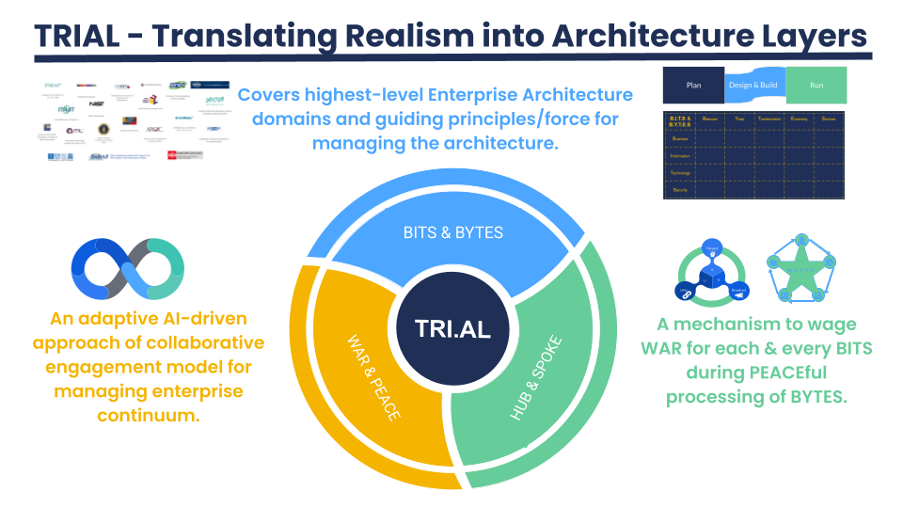
TRIAL: Charting the Path from SCREAM to AARAM – A Simplified Guide for Effective Enterprise Architecture

Despite billions invested annually in enterprise architecture (EA), organizations grapple with a persistent gap between theoretical frameworks and practical execution. In 2025, 94% of CIOs deem EA “absolutely critical” for embedding sustainability and driving digital resilience, yet 57% of architects report feeling underutilized in strategic initiatives. ... At its core, architecture is about effectively managing the lifecycle changes of architecture components and their relationships. TRIAL establishes an EA approach that resonates with architects and stakeholders by embracing these lifecycle stages as central motifs. This approach captures and builds a data and AI-driven architecture around its underlying evolving repository continuum, leveraging the same engagement model for collaborative execution aligned with organizational objectives. ... Enterprise architecture maturity traditionally requires skilled resources, extensive knowledge, and significant time investment. Organizations face resource scarcity while architects average only 18-24 months tenure, making adaptive architecture management nearly impossible. This challenge is exacerbated by broader technology trends, where 70-85% of enterprise AI projects fail due to poor data management, misalignment with business goals, and architectural oversights—rates double those of non-AI IT projects. TRIAL addresses this through progressive maturity states that build upon each other. Organizations advance through clearly defined maturity levels—from Balanced (foundation) through Yearly (planning),


Ask a Data Ethicist: Is It Wrong to Digitally “Resurrect” Someone?

There was even a situation recently which saw the recreation of a murdered person deliver an AI impact statement in court – literally speaking from beyond the grave. This marked a legal first and raised a lot of controversy over whether this was a type of emotional manipulation or an reasonable opportunity to give the victim a voice. It’s clear though, that the door is not open for others to do this, raising more of these questions, particularly as the tools to make this type of AI are now widely available. ... Data privacy laws afforded a level of protection when it comes to our personal data. However, personal data is not personal data if you are no longer alive. That is to say, data protection laws don’t extend to the deceased. The laws exist to protection living individuals. ... It’s a complex question with no “one size fits all” response. The answer might depend on several factors including: Their wishes as outlined in their will; The wishes of their family and estate; How they will be represented in this new digital form; Who controls the digital entity; and Who might be compensated or stand to gain from the digital entity. Increasingly, all of us might want to plan for our digital afterlife, including whether or not we want a digital afterlife. Having conversations with loved ones now about their wishes for their data and other digital assets, including what should or should not be done with these when they are gone, can provide clear guidance for making an ethical choice with respect to the question of digital resurrection.